Toner for natural grey hair can shift the tone but never lighten it, so purple shampoo (1–2 minutes) is the lowest-stakes place to start.
The condition: it only cancels yellow or brass, and grey mixed with darker strands will show less change. Pigmented toning shampoos sit 5–10 minutes and show patchiness faster.
1. Purple and Blue Shampoo
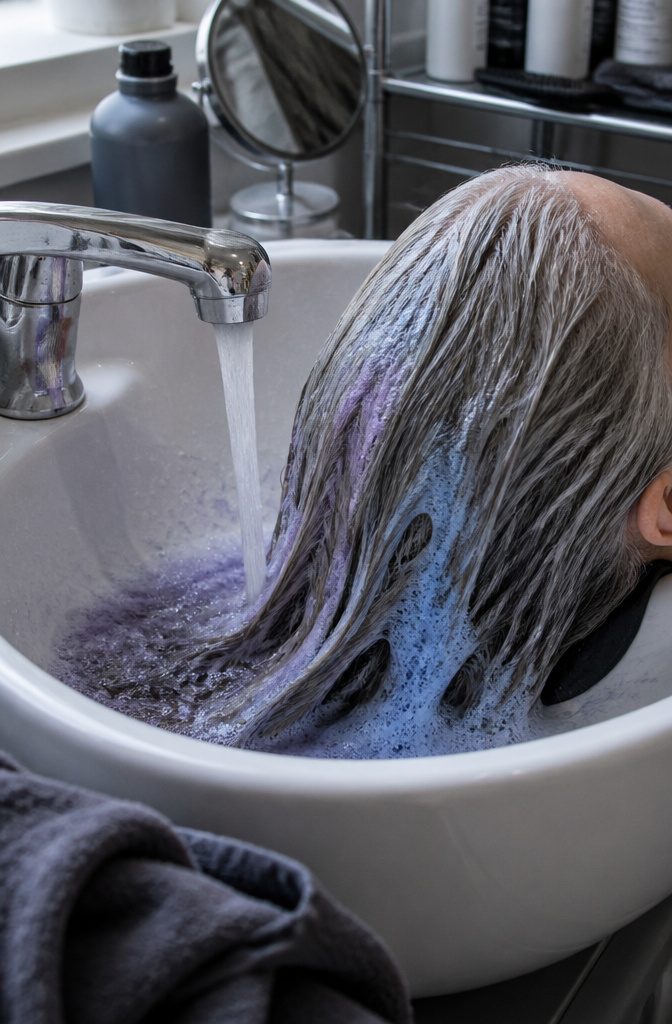
Purple shampoo is where I’d start, because it is the gentlest toning there is. It cancels yellow warmth since purple sits opposite yellow on the color wheel, and blue shampoo does the same for orange or brassy tones.
Wash as usual: lather, leave it on 1–2 minutes, rinse. The deposit stays subtle unless you leave it on longer or use it often.
Test it for 30 seconds on a hidden section first, then check the result in daylight.
Grey mixed with darker strands will show less change.
Cheap formulas can leave a purple cast, so spend a few extra dollars on a brand made for silver or grey hair. The aim is softer, cleaner grey, not blonde.
2. Pigmented Toning Shampoos
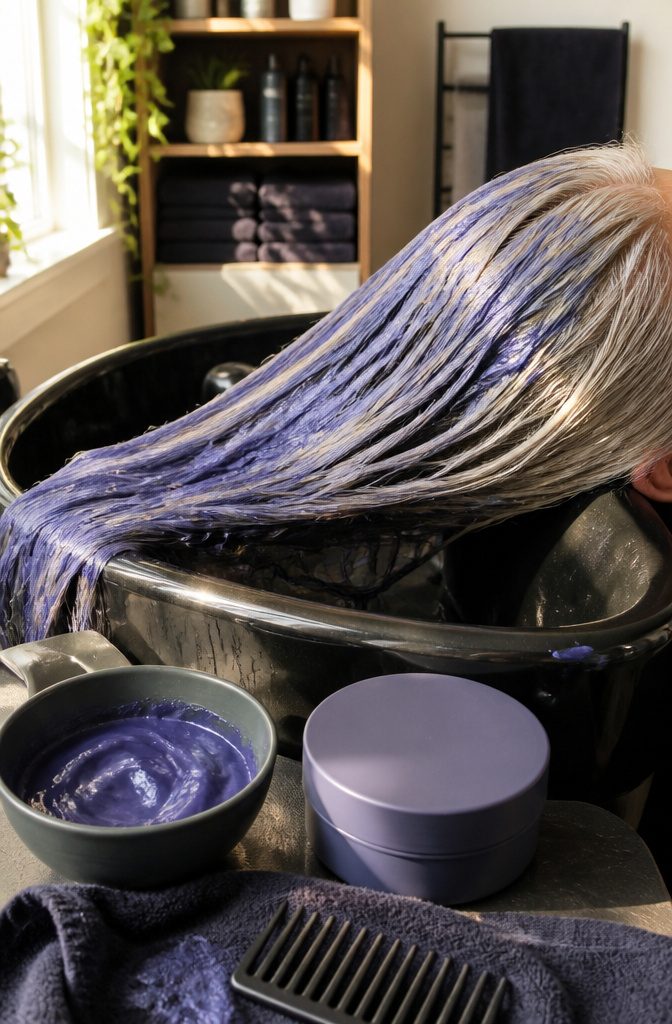
Toning shampoos deposit more pigment than ordinary purple or blue shampoo, and they’re made to sit on the hair for 5–10 minutes rather than rinse out after a quick lather.
That time lets the pigment settle on grey strands. They’re still semi-permanent and gentle, but they give you more control and a more noticeable change than a passing-through shampoo.
Many come in sets with a matching conditioner, and I’d use it. Toning can be slightly drying, so the pairing earns its place.
The cost of a stronger result is less forgiveness.
A full 10 minutes on uneven grey will show any patchiness more than a weaker shampoo would. I’d start at 5 minutes and add time only once you like what you see.
3. Semi-Permanent Toners and Glosses
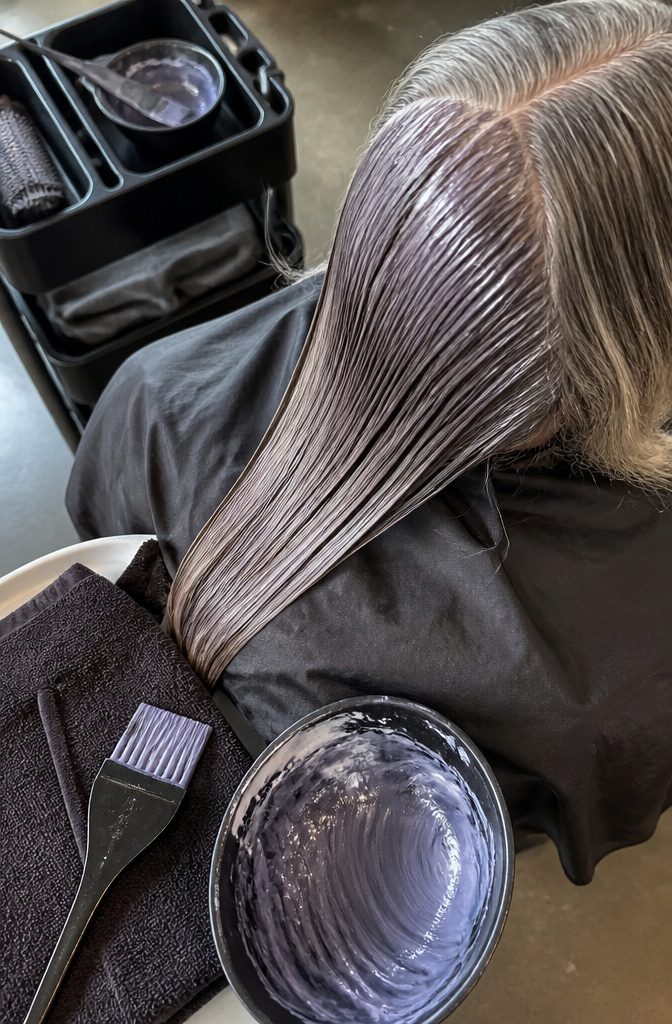
Semi-permanent and demi-permanent toners, glosses, and tinted shampoos and conditioners all deposit pigment on the outside of the hair shaft. None of them lifts color, so they can shift the tone of natural grey but never lighten it.
Apply a semi-permanent toner like a hair mask: section, coat roots to ends, leave it on 10–30 minutes, then rinse. Glosses have no grow-out line, since they just fade, usually in 6–8 weeks, so a miss is easy to live with.
Shelf examples include IGK Mixed Feelings toning drops ($29), Overtone Extreme Silver Healthy Color Duo ($42), Kristin Ess Signature Glosses (8 shades), and L’Oréal Paris Le Color Gloss (13 shades, $16, sometimes $12).
I’m listing them to show each format, not as picks for natural grey.
4. Salon Color for Grey
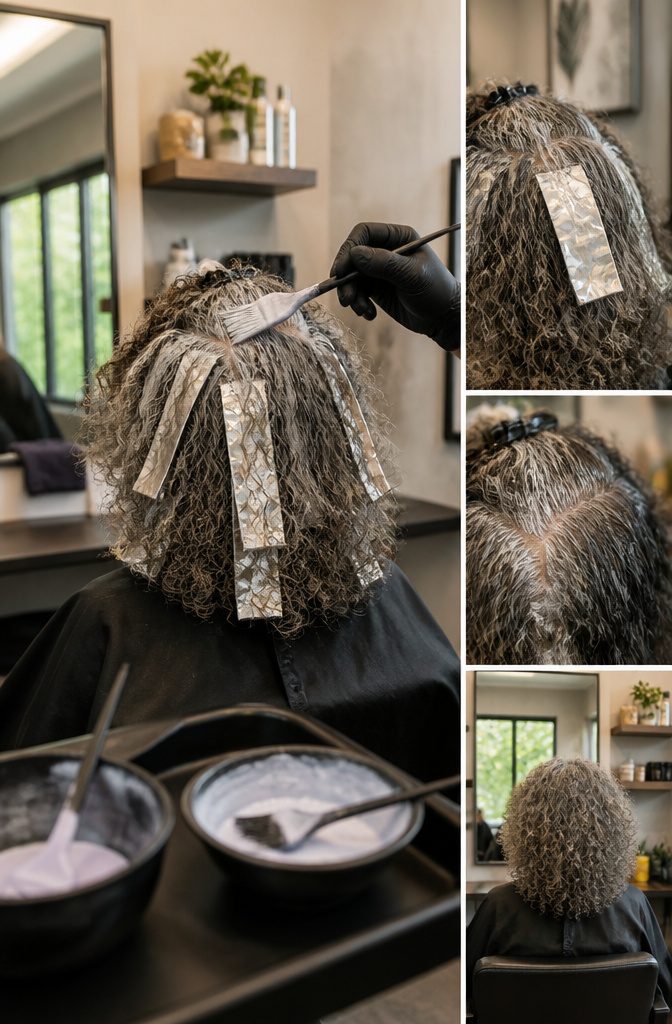
Pick by grey percentage and how light you want to go:
- Scattered, coarse, curly grey at about 50%: highlights first, then 9N with 5 vol toner on the wiriest grey outside the foils. Not for natural color darker than level 7.
- Color gel with 20 Vol, shades 10N–6N: 10 minutes under 20–30% grey, up to 30 minutes at 40–50% or more.
- 8NN, 6NN or 4NN with 20 Vol: double the pigment, and my pick for resistant grey.
- High-lift color like 100.11 with 30 Vol.
- Bleach plus toner at 70% grey and up, with level 10 ideal.
- Shadow root: a level 6 root with lighter lengths. At about 20% grey, that was a 5N root and 10B with 9.23 on the bleached lengths.
5. Matching Product to Goal
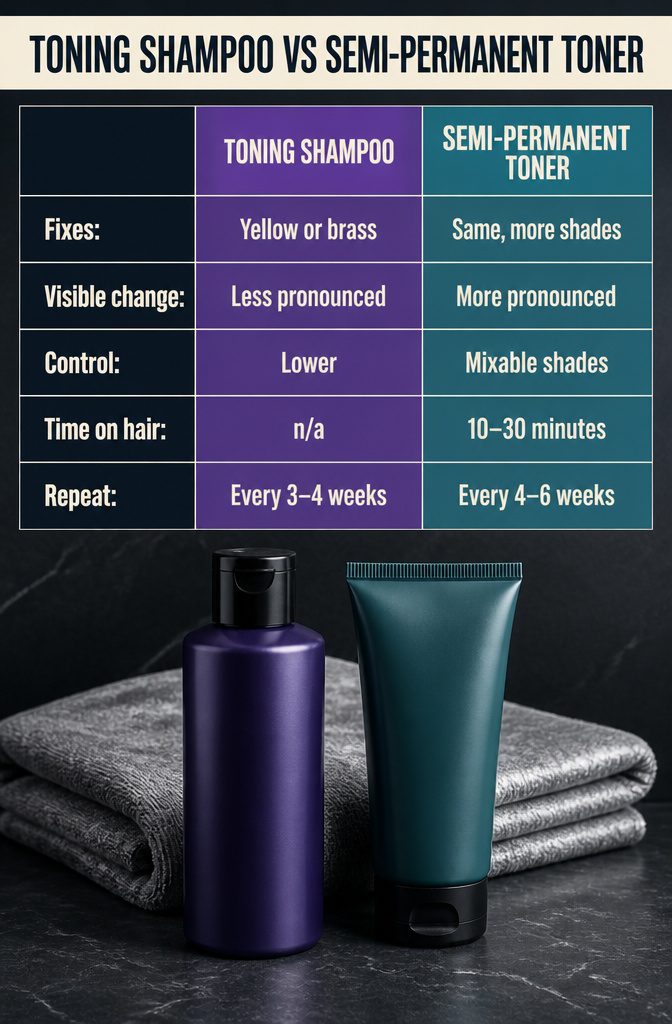
Purple cancels yellow and blue cancels orange or brass, so what separates these two options is strength.
| Toning shampoo | Semi-permanent toner | |
|---|---|---|
| Fixes | Yellow or brass | Same, more shades |
| Visible change | Less pronounced | More pronounced |
| Control | Lower | Mixable shades |
| Time on hair | n/a | 10–30 minutes |
| Repeat | Every 3–4 weeks | Every 4–6 weeks |
For a first try, the shampoo wins: it is the lowest-stakes way to see how your grey takes tone.
The semi-permanent toner wins once you know the shade you want. Softening natural grey starts with the shampoo.
Blending scattered grey with highlights needs toner on the strands the foils missed. Going blonde over grey means lifting first, then toning.
What Toner Does to Grey
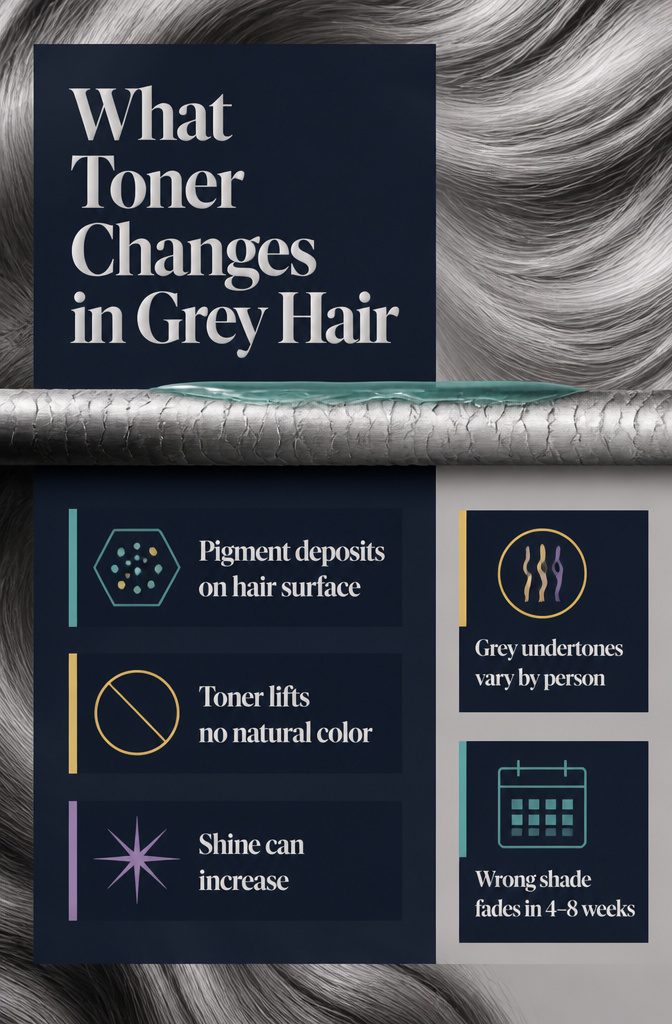
A toner deposits pigment on the surface of the hair shaft and lifts nothing.
Lightening takes bleach, so toner can shift the tone of grey but never make it lighter. It can also add shine.
Grey isn’t one color.
Some leans warm, yellowish or peachy, and some leans ashy or brassy, so the same product can fix one head and miss another. The word "toner" also covers more than a single bottle:
Demi-permanent colors, glosses, tinted shampoos, and conditioners can all be considered toners because they all contain pigments that adjust the tone of your hair.
— ELLE
I read that as good news. Straight, wavy, curly or coily, color-treated strands can use one, and a wrong pick fades in 4–8 weeks, depending on the product.
Application Steps and Fade Times
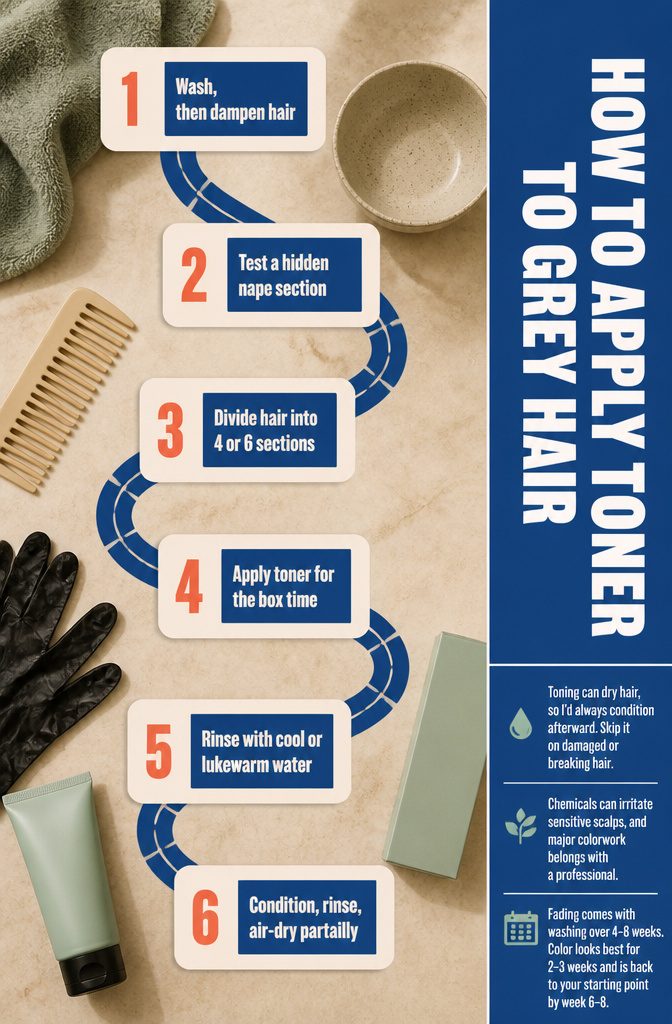
- Start with clean, damp hair. Dampness helps the product spread evenly.
- Test a small hidden chunk at the nape of your neck first.
- Divide hair into 4 sections, or 6 if it’s thick.
- Work through each section and leave the toner on for the exact time on the box.
- Rinse with cool or lukewarm water. Hot water opens the cuticle and pulls out color.
- Condition, rinse, and let hair air-dry partially. Wet hair reads darker than the finished shade.
Toning can dry hair, so I’d always condition afterward.
Skip it on damaged or breaking hair. Chemicals can irritate sensitive scalps, and major colorwork belongs with a professional.
Fading comes with washing over 4–8 weeks. Color looks best for 2–3 weeks and is back to your starting point by week 6–8.
Frequently Asked Questions
What is the best toner for natural grey hair?
For a first try, a purple or blue toning shampoo is the best pick because it is the gentlest option and shows how your grey takes tone.
Once you know the shade you want, a semi-permanent toner gives a stronger change with more control. Resistant grey at a salon often calls for a color like 8NN, 6NN or 4NN mixed with 20 Vol developer.
How long does toner last on grey hair?
Most toners fade over 4–8 weeks, depending on the product and how often you wash.
The color looks best for the first 2–3 weeks and is usually back to your starting point by week 6–8. Toning shampoos are typically repeated every 3–4 weeks and semi-permanent toners every 4–6 weeks.
Can I tone grey hair at home or should I see a professional?
Careful at-home toning works well with a toning shampoo or a semi-permanent toner, as long as you test a small hidden section first.
Major colorwork, such as bleaching to lighten grey or mixing salon color for stubborn strands, belongs with a professional. A wrong pick at home fades within 4–8 weeks, so a mistake is temporary.
What is a hair toner, and what kinds work on grey hair?
A toner is a pigment-containing treatment that adjusts the tone of your hair and can add shine.
It coats the outside of the hair shaft and lifts nothing, so it can shift grey but never lighten it. The main kinds for grey are purple and blue shampoos, pigmented toning shampoos, semi-permanent toners and glosses, and salon color.
What does toner do for grey hair?
It cancels unwanted warmth, so yellow, peachy or brassy grey looks cleaner and more silver.
It can also add shine and softness. In a salon, a toner can soften coarse grey strands that highlights missed, so the whole head blends together.
Can all hair types use toner on grey hair?
Yes.
Straight, wavy, curly and coily hair can all be toned. Grey mixed with darker strands will show less change than fully grey hair, and the highlight-blending technique isn’t recommended for natural color darker than level 7.
Are there any side effects of toning grey hair?
The most common problem is an unwanted temporary tint, such as a purple cast from a cheap formula or patchy color from leaving a strong shampoo on too long.
Toning can also dry hair, so follow it with conditioner and skip it on damaged or breaking hair. Chemicals in some toners can irritate a sensitive scalp, so do a patch test first.
What products can I use to tone grey hair at home?
Examples of each format include IGK Mixed Feelings toning drops ($29), Overtone Extreme Silver Healthy Color Duo ($42), Kristin Ess Signature Glosses, and L’Oréal Paris Le Color Gloss ($16).
These show what each type looks like on the shelf and aren’t picks specific to natural grey. A purple shampoo made for silver or grey hair is the easiest place to begin.