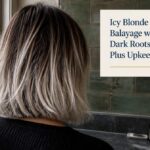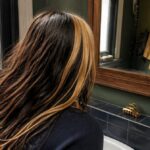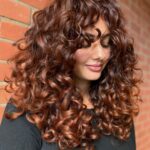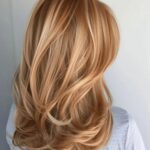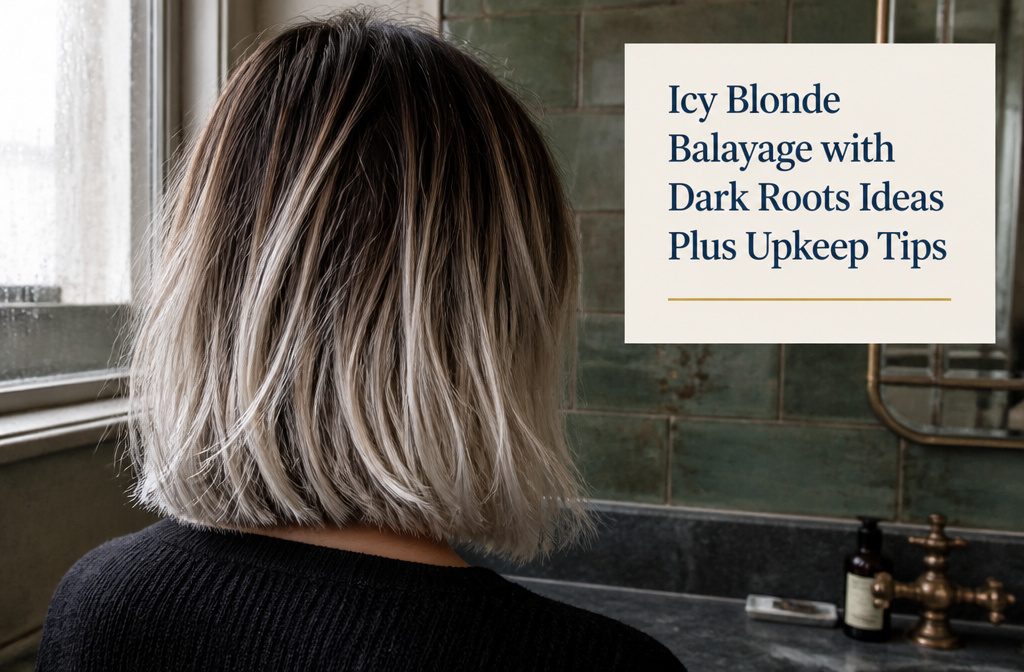
A dimensional bob wins if you want cool platinum ends without constant root touch-ups, because the natural brunette base makes grow-out look planned rather than overdue.
Skip it if you won’t tone the platinum every few weeks; untoned, the icy edge that makes the look work fades to yellow.
The bob puts the whole brown-to-platinum gradient in view at jaw length, so the contrast reads sharp instead of flat.
1. Dimensional Bob
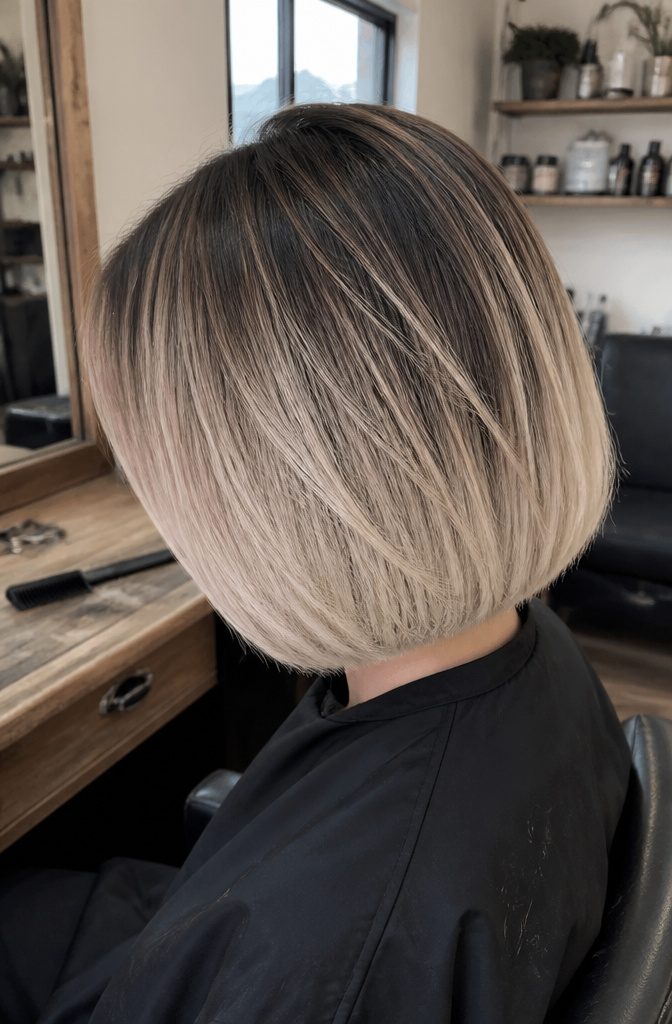
A natural brunette base keeps platinum from looking flat. The dark root sits against cool, pale ends, so the color reads as dimensional instead of one solid sheet of white.
Because the roots stay close to your own shade, the grow-out is soft, and that’s why this look counts as low maintenance.
A bob puts the whole brown-to-platinum gradient in view at the jaw. It also suits every face shape and complexion, so I’d pick it over a long platinum cut if you’re starting from brunette.
Skip it if you won’t keep the platinum toned. Left alone, the cool ends lose their icy edge, and that edge is the point of the look.
2. Long Creamy Blonde
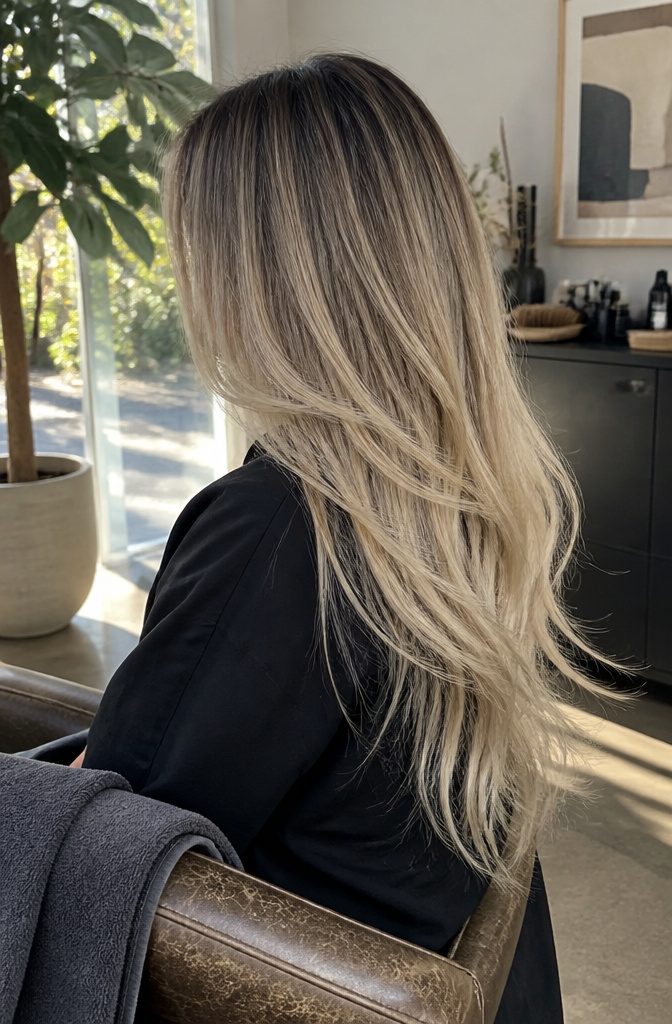
The layers do the real work here. When they start at cheekbone height and move outward, they carry the lighter tones around your face and give the color somewhere to flow instead of sitting flat against the length.
Volume helps too—the more hair you have, the more dimension you can fit into the sweep from dark roots through the blonde ends.
Earthy blonde reads softer than icy platinum because the undertone sits closer to beige or honey instead of pure silver. That warmth keeps the contrast from feeling sharp, even when your natural root is fairly dark.
If you want lift without the high-maintenance chill of ash tones, this is the version that forgives more between appointments and still photographs well in natural light.
3. Champagne Balayage
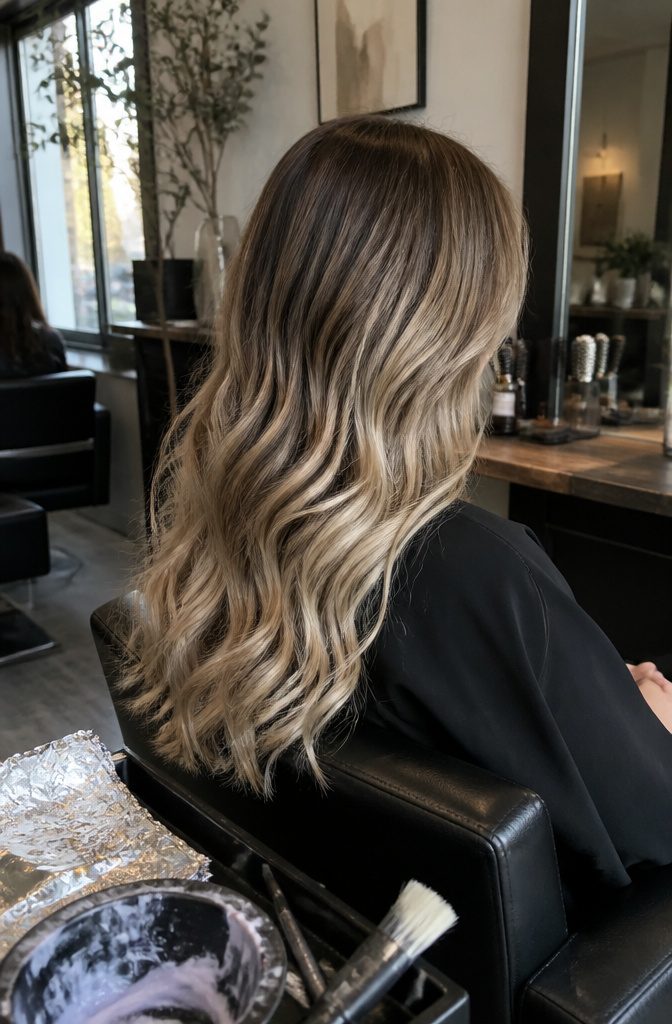
Champagne highlights blended with your natural brown give you the warmth of beige blonde without erasing dimension at the root.
The color sits somewhere between vanilla and honey, soft enough to read neutral in most light but still distinctly warm when the sun hits it.
Ask your colorist for highlights blended with your natural brown, not painted on top of it; the transition takes skill and a steady hand with the foilage placement, so this is one to book rather than attempt at home.
If you have never lightened your hair past two shades or worked with toner before, skip the DIY attempt.
The blend relies on controlled lift and a precise tone deposit, and a patchy result or brassy midlength is harder to fix than it is to pay for the appointment in the first place.
4. Brightened Beige Smudge
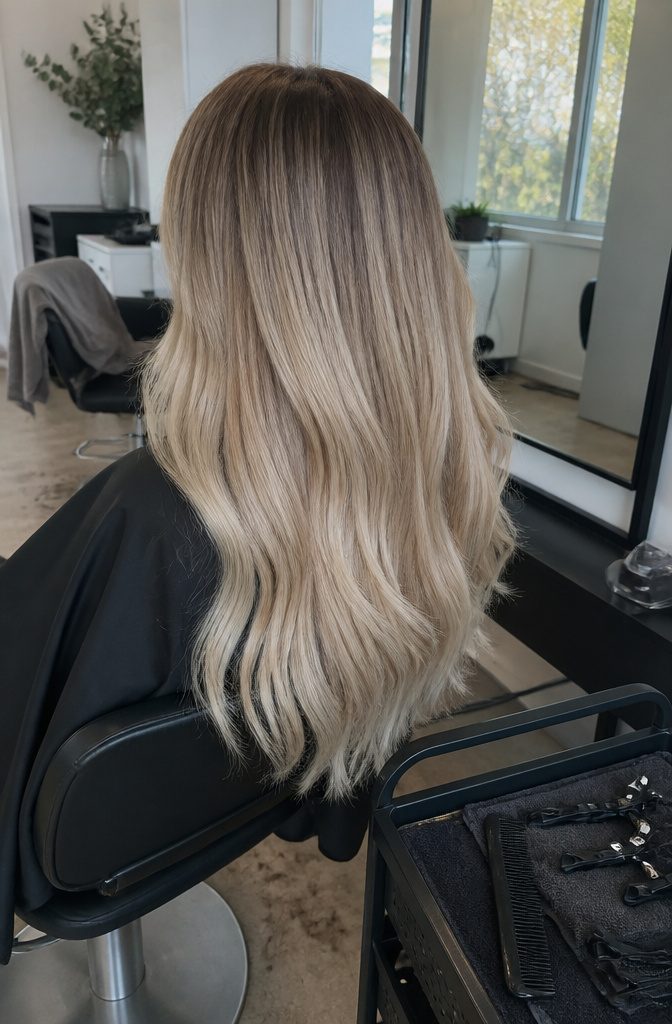
Mid-shaft highlights let you stretch three months between color appointments, since the grow-out looks like part of the design rather than neglect.
The beige smudge at the root softens where dark meets light, so you skip the visible line that screams "overdue." I find this wins if you want icy blonde ends but balk at salon visits every six weeks.
Placing the brightest lift at mid-shaft rather than at the scalp keeps your natural root visible from the start.
It reads as rooted blonde from day one, which means what grows in over the next two or three months still looks planned.
The smudge blurs the transition enough that regrowth blends instead of announcing itself, and you save the time and money that come with frequent touch-ups.
5. Buttery Brown Waves
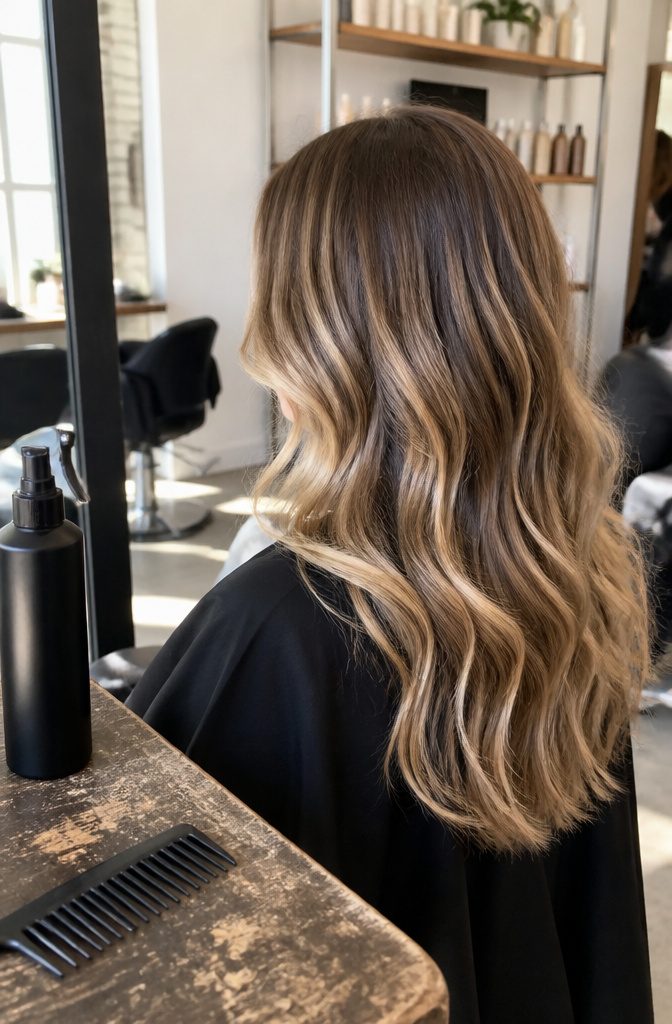
Wavy layers suit buttery highlights better than icy ones when the base leans brown rather than true dark. The warmth reads intentional instead of brassy, and tousling the layers into a messy, playful finish makes the blended placement look lived-in.
A texturizing spray fixes the wave pattern without weighing down the movement, which matters when the color sits on the warmer end of blonde and needs lift to keep from reading flat.
The styling step does most of the work here. Without the tousle, buttery tones on brown can collapse into a single mass of color.
Breaking up the sections with your fingers after the spray gives each highlight room to catch light separately, and that separation is what keeps the look from skewing too golden or too safe.
6. Vanilla Balayage
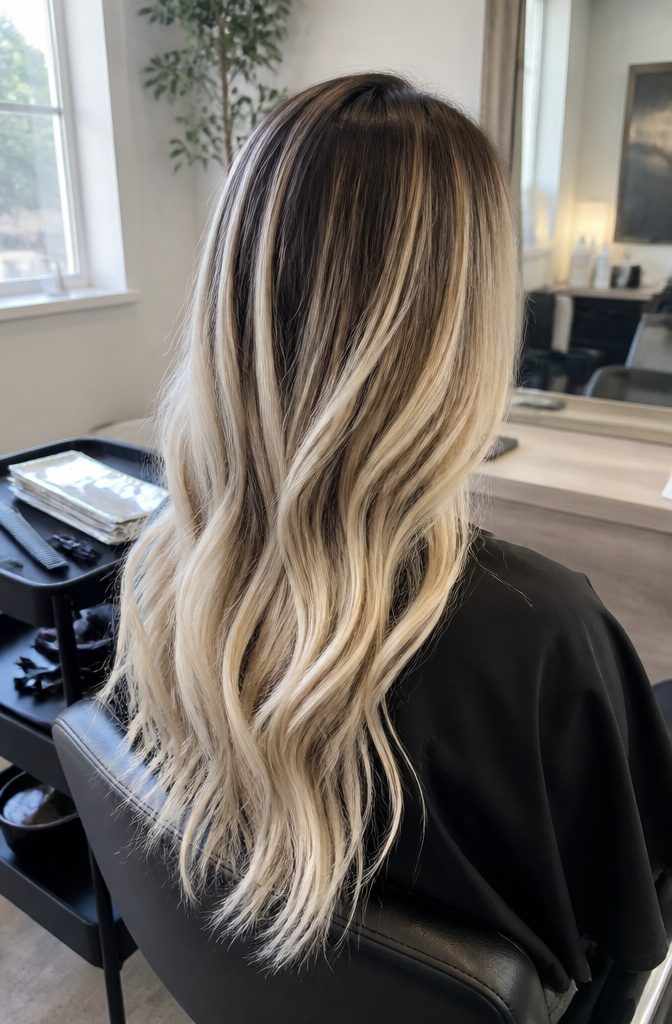
Chunky highlights work like architecture against a dark root. Rather than the scattered, feathered pieces you see in most balayage, vanilla balayage gives you visible ribbons of blonde set in bold slices through the length.
The contrast reads clearly, the root stays grounded, and the whole thing avoids the wispy, tentative look that comes from too much blending.
The placement alone is enough when you want sharp, graphic contrast. But if the jump from dark root to icy feels too stark, a light brown tone added between the two softens the transition without losing the chunky structure.
You still get the dimension, just with a warmer, less angular fade where the root meets the blonde.
7. Golden Curls With Shadow
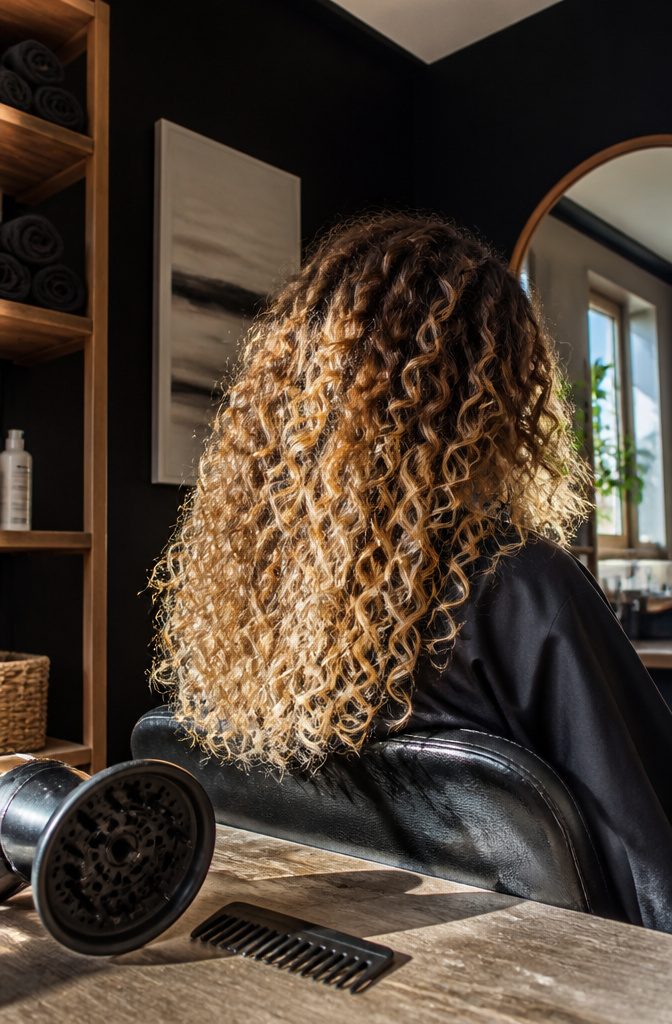
This sits outside the icy category, but curls make a case for warmth that straight hair can’t.
The spiral catches light at every angle, so each ringlet shows its own gradient from a chocolate or espresso root through honey and butter tones toward the ends.
The effect reads three-dimensional in a way that flat color never does, and the shadow at the base stops the gold from looking brassy or one-note.
The root effect here tends to blend rather than stop abruptly, since curls diffuse the line naturally. That makes regrowth less obvious between salon visits, which matters when you’re committing to maintenance every six to ten weeks.
The warmth also complements deeper skin tones without washing anyone out, though it does require a stylist comfortable working with textured hair and the right toning schedule to keep gold from tipping orange.
8. Bixie With Brown Undercut
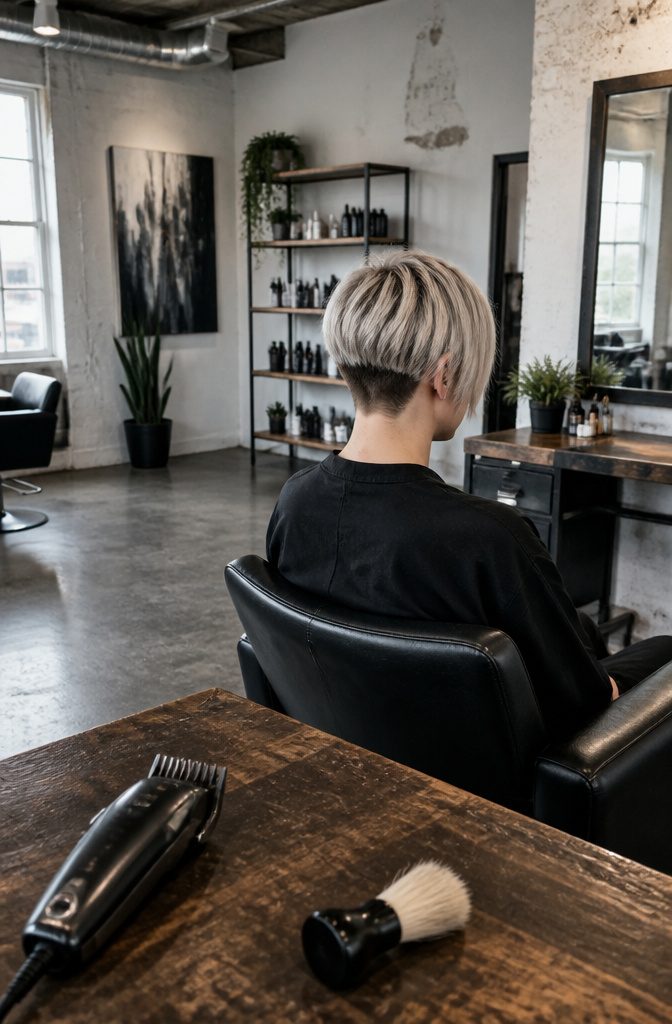
A nape undercut paired with stacked layers pushes the contrast about as far as it goes: dark roots and undercut beneath, icy balayage swept through the crown and sides, and the geometry does half the work before color even enters the conversation.
The bixie shape itself sits between pixie and bob, usually landing somewhere around ear or jaw length with enough bulk on top to balance a shaved nape. A long side fringe pulls the eye forward and lengthens rounder faces.
This works best if you already lean toward angular, graphic cuts and want the upkeep to show. The undercut needs clipping every three to four weeks or it grows soft and loses the edge that made the look work.
Skip this one if you prefer low-maintenance lengths or if a pixie feels too short; once the scissors go in, growing it back takes months of patience and several awkward stages.
9. Sun-Kissed Sombre
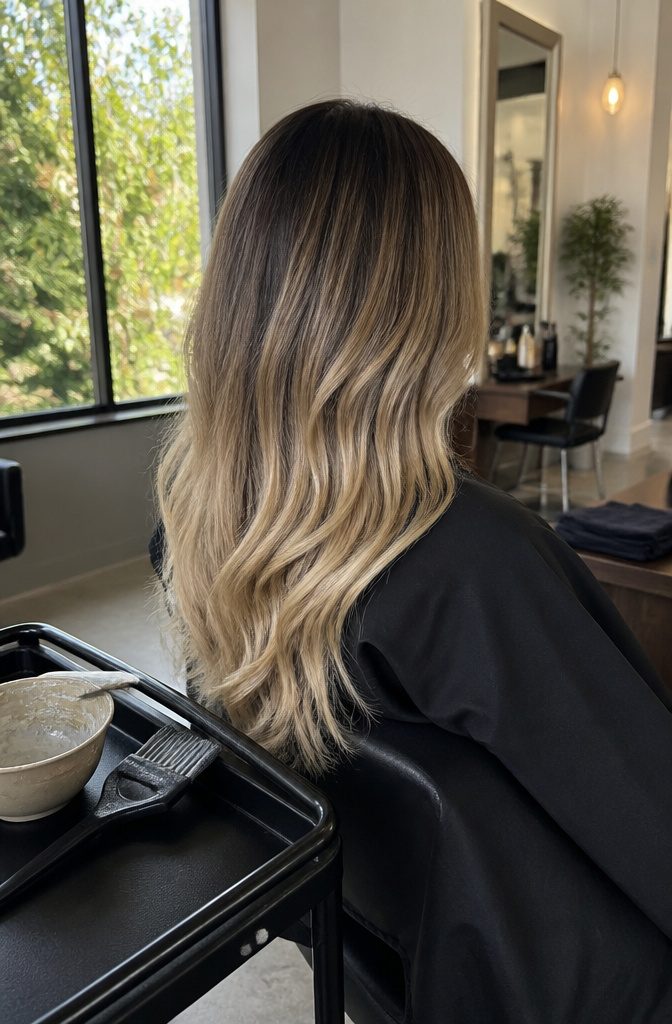
Sombre sits between balayage and ombre, blending blonde through the mid-lengths and ends without a visible line where dark meets light.
The base stays close to your natural root color, and the lightener is painted on with enough overlap that you never see where one shade stops and the next begins.
That lived-in quality is what makes it work: a harder ombre puts blonde at the bottom and nothing in between, and sombre fills that gap with gradual ribbons of tone.
Opt for a warm color melt with root shadow and lowlights to give depth to the color and create an impressive style.
Root shadow keeps the transition soft even as your hair grows, so you can stretch touch-ups to three or four months instead of racing back every six weeks.
The grow-out reads as intentional rather than overdue, which matters if upkeep is already tight.
10. Lived-In Shag
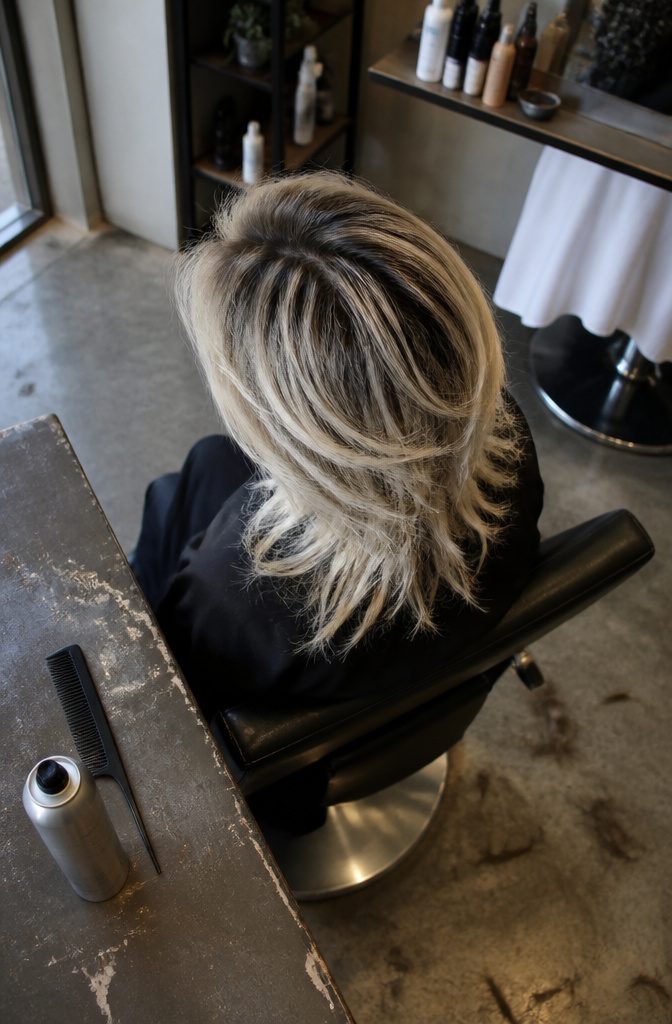
The dark root matters more on a shag than it does on longer, smoother cuts, because the shag lives on visible texture and movement.
Product and light backcombing lift the top layer away from the scalp, and the contrast between dark base and icy ends sharpens every piece. Without it, a blonde shag reads flat under the same styling routine.
Start with a texturizing spray or mousse on damp hair, concentrating midlengths to ends rather than soaking the root.
Once dry, section the crown and backcomb gently at the root using a fine-tooth comb, working in half-inch sections. You want separation more than height, so each piece catches light independently.
Finish with a flexible hold spray, never anything stiff, so the shag keeps its lived-in bend. The dark base anchors the whole thing visually and stops the backcombing from looking overdone.
11. Strawberry Melt
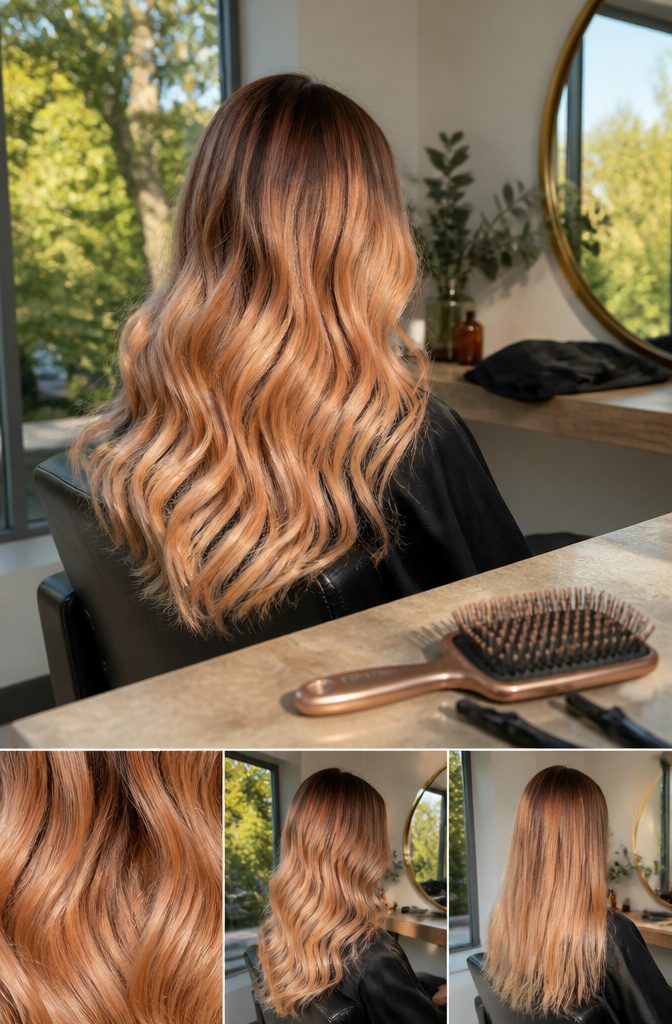
This look brings warmth into the icy-blonde category, and that makes it the odd one out if you came here for cool tones.
The color melt pairs root shadow with lowlights that pull strawberry and peach through the lengths, then finishes with beach waves that show off the dimensional fade.
The root shadow keeps regrowth subtle, but the lowlights themselves read warm in most light.
If you want ice, skip this one. The strawberry tones fight cool violet toners, and trying to keep it neutral means you’re toning constantly to knock back the warmth.
Better to save this look for when you actually want a sun-kissed blonde with pink or peach undertones, or to lean into it fully and let the warmth do its thing.
It suits warmer skin tones better than cool, and the waves help the melt read as intentional rather than grown out.
12. Beach Waves With Highlights
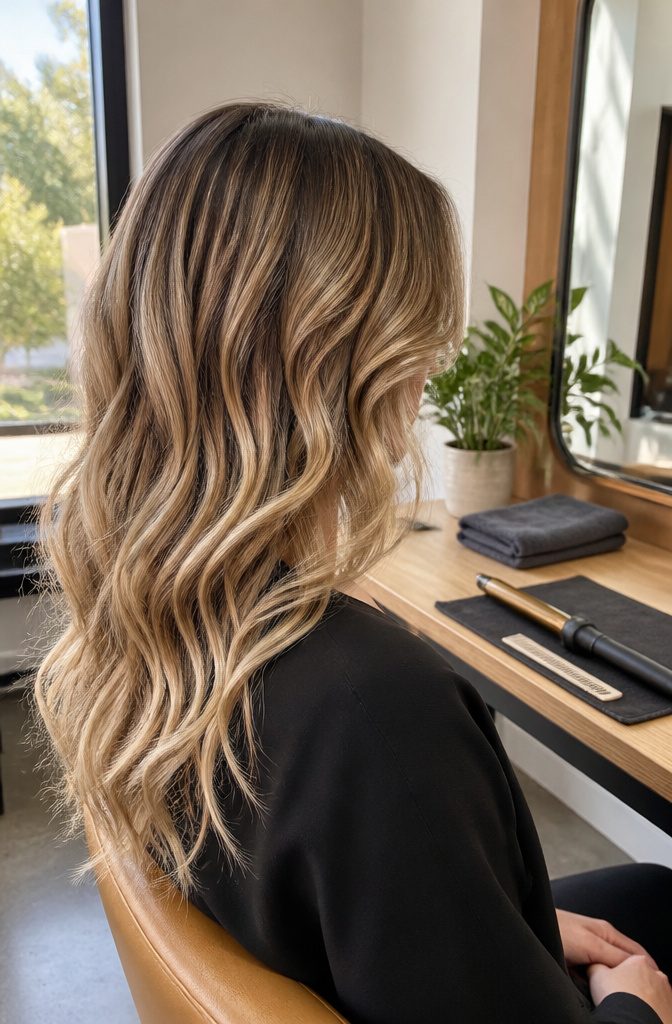
Waves spread the color across more surface area, and that makes balayage easier to see. When highlights sit on straight hair they show mostly at the part and the ends.
Curl or wave the same piece and suddenly you catch light on the barrel of each wave, which means more of the blonde actually registers when someone looks at you from across a room.
The color itself matters just as much as the styling. If your base is light brown, stick with light warm tones for the highlights.
Warm pulls warm, and the combination looks deliberate rather than like two unrelated colors sitting on the same head. Light beige and caramel both work, and either one brings enough contrast to show dimension without looking striped.
I would lean toward caramel if your skin tone is warm, since warm hair colors flatter warm skin. The match keeps everything cohesive, and the waves turn what could read as subtle into something that moves.
13. Platinum Bob on Black Base
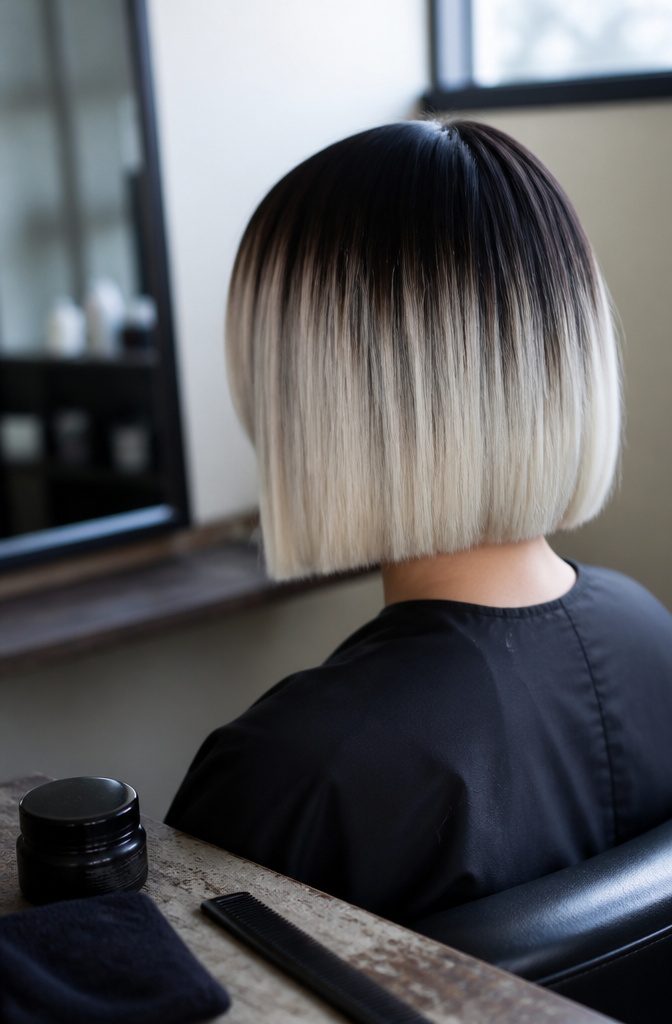
The contrast here is as extreme as rooted blonde gets: platinum ends against brown or black roots, with almost no gradient between them.
The color sits bright and cool right up to the part line, then drops to dark without asking for a transition.
That bluntness is the point. It reads modern and deliberate, and the bob length keeps it from tipping into heavy-metal territory.
The platinum asks for toner every few weeks, sometimes more often if your water runs hard or you swim. Without it, the ends pull yellow or brassy and the contrast you paid for disappears.
The roots stay low-maintenance by design, but the ends are high-touch. A bob makes the upkeep slightly easier than long hair would, since there is less length to treat and less breakage to manage as the color ages.
Still, platinum over a dark base means bleach, and bleach means fragility. I would plan for bond-building treatments and a gentler washing schedule than you ran before the color.
14. Iced Beige Smudge
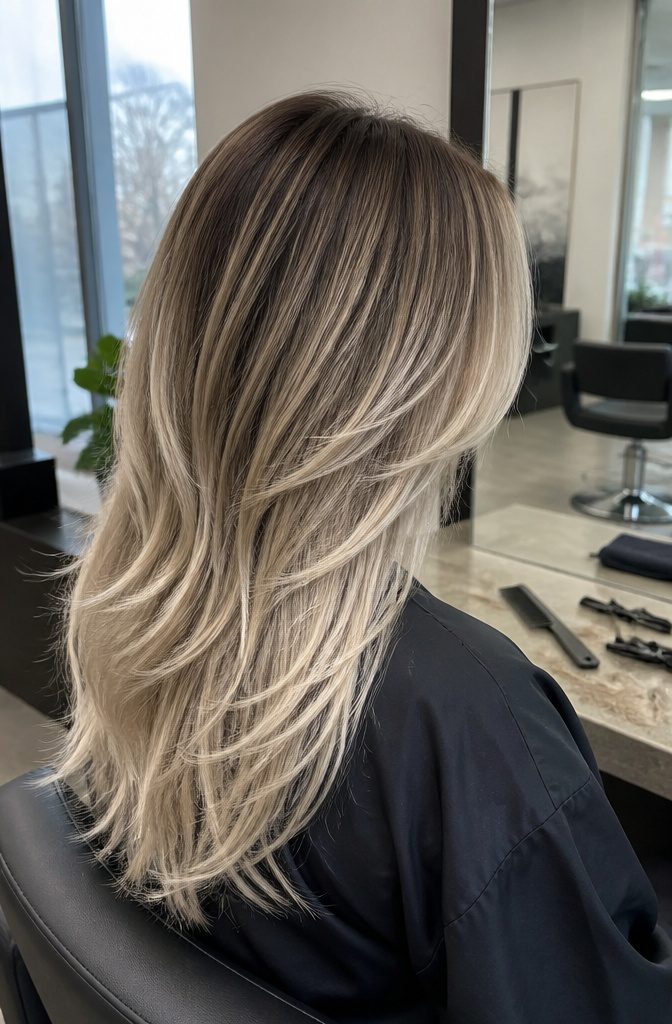
Face-framing layers pull the eye vertically, which makes them worth considering if you want to visually elongate a rounder face shape.
The color does the rest. A deep base paired with highlights gives the hair more apparent volume and texture, and when the highlights are cool-toned beige rather than warm gold, the whole effect reads icy and dimensional instead of soft.
The layers move when you turn your head, so the contrast between dark roots and light ends becomes part of the structure rather than sitting flat.
The look relies on placement around the face, so if your hair is all one length or mostly layered in the back, the impact drops.
This is the cooler version of a beige smudge, and the temperature difference matters when you’re trying to stay firmly in the icy blonde family.
15. Sophisticated Silver
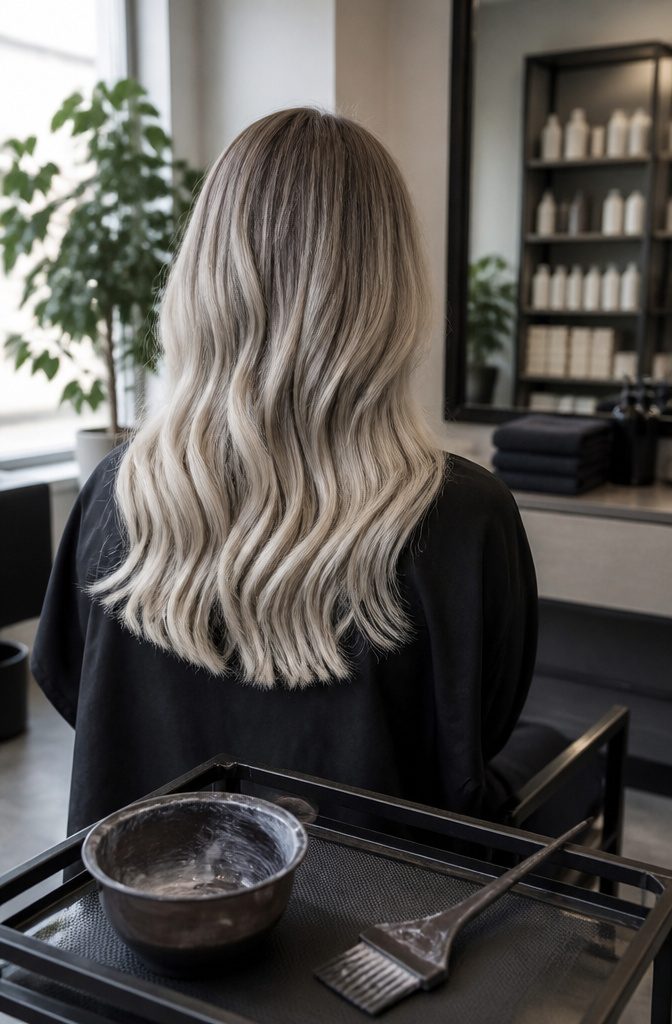
Silver and milky tones over a taupe base give icy blonde its softest edge, but the coolness decides whether the look lifts your face or drains it.
If your skin reads warm or you wear gold jewelry more easily than silver, this palette can pull ashen. It works best on neutral or cool undertones where the silver reads sophisticated rather than grey.
The taupe base softens the contrast compared to a true dark root, so you get dimension without the shock of platinum against black. The highlights themselves stay in the milky-silver family rather than pushing warmer into champagne or beige.
That means less brassiness as the toner fades, but it also means you need a stylist who can place the silver exactly where your natural undertone won’t fight it.
16. Long Smoky Waves
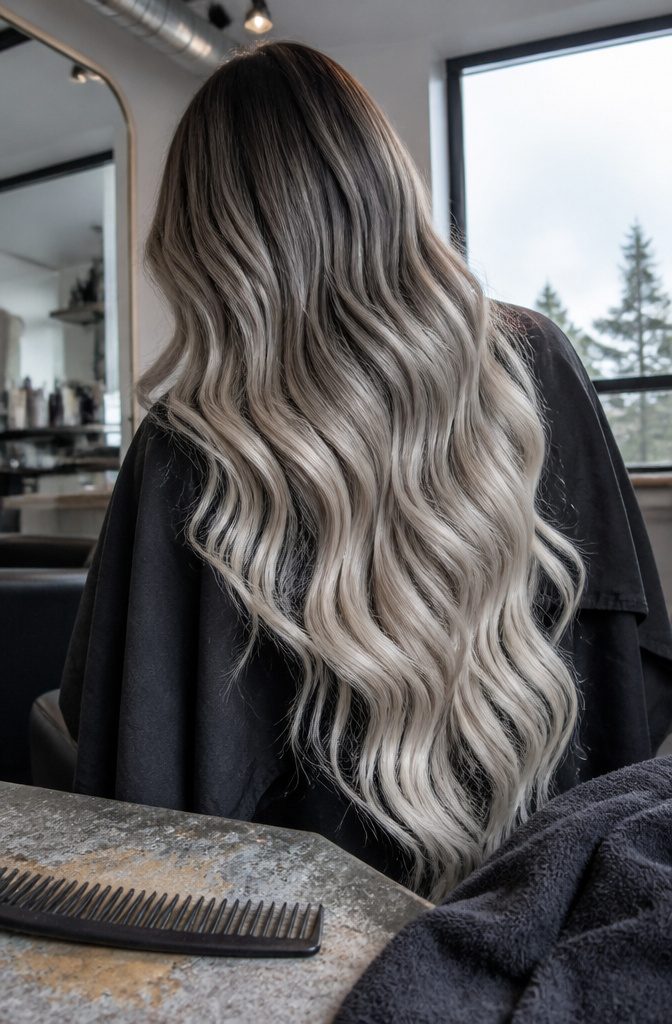
Long Smoky Waves
The ash tone is the part that makes this work.
When extra-long balayage strands pull smoky rather than warm, they sit against brunette roots without that yellow break you sometimes get mid-length. The contrast reads as intentional, not halfway grown out.
Length does two things here. First, it gives the colorist room to stretch the blend from brown through gray-toned mid-lengths into those icy ash ends, so the shift feels gradual even though the root-to-tip difference is stark.
Second, waves hold more dimension than straight hair when you’re working with this much tonal range.
The texture catches light differently along each curve, which makes the smoky sections look deeper and the pale ends look brighter without adding more color.
The brown base stays rich, the ash stays cool, and the whole thing looks more expensive than a single-process blonde ever could.
17. White Marble Bronde
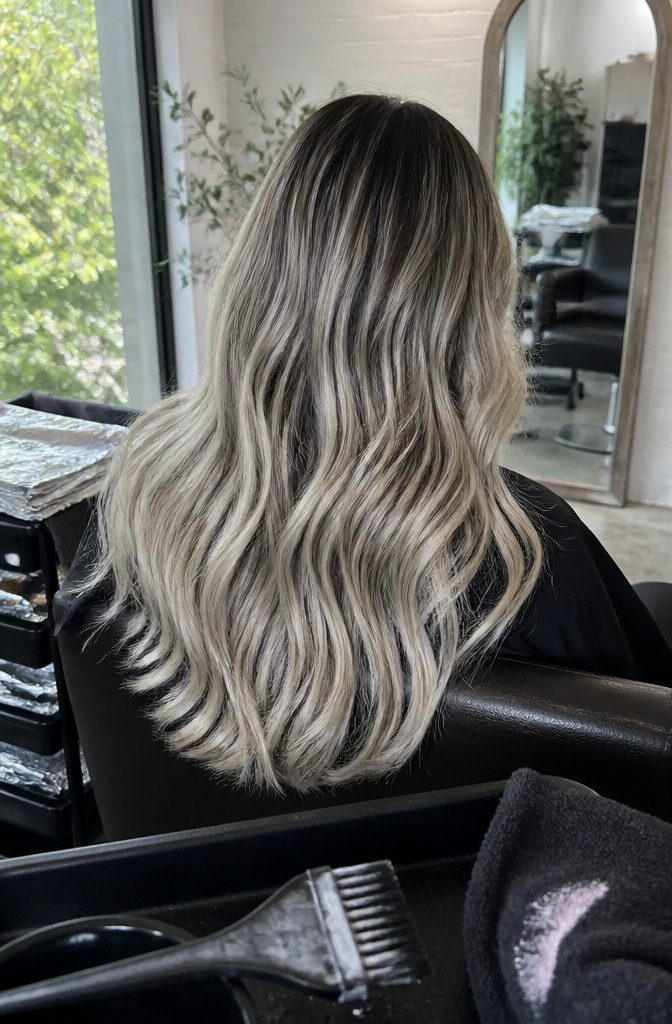
Lighter strands sit over a dirty base (read: medium to dark brown roots left intentionally in place) to build a cool-tone bronde that looks deliberate rather than grown-out.
The darker starting point gives the white marble pieces something to anchor to, and it stops the blonde from reading flat or washed-out against your scalp. Without that depth underneath, the platinum can lose dimension and look one-note.
The transition stays smooth because the balayage lifts gradually from root to mid-length before hitting full brightness at the ends.
Long wavy hair shows this blend best since the movement breaks up any hard lines between tones. I’d ask for cool-toned lightener only; warm or golden developer will fight the icy finish and muddy the marble effect you’re after.
18. Sandy Blonde for Black Women
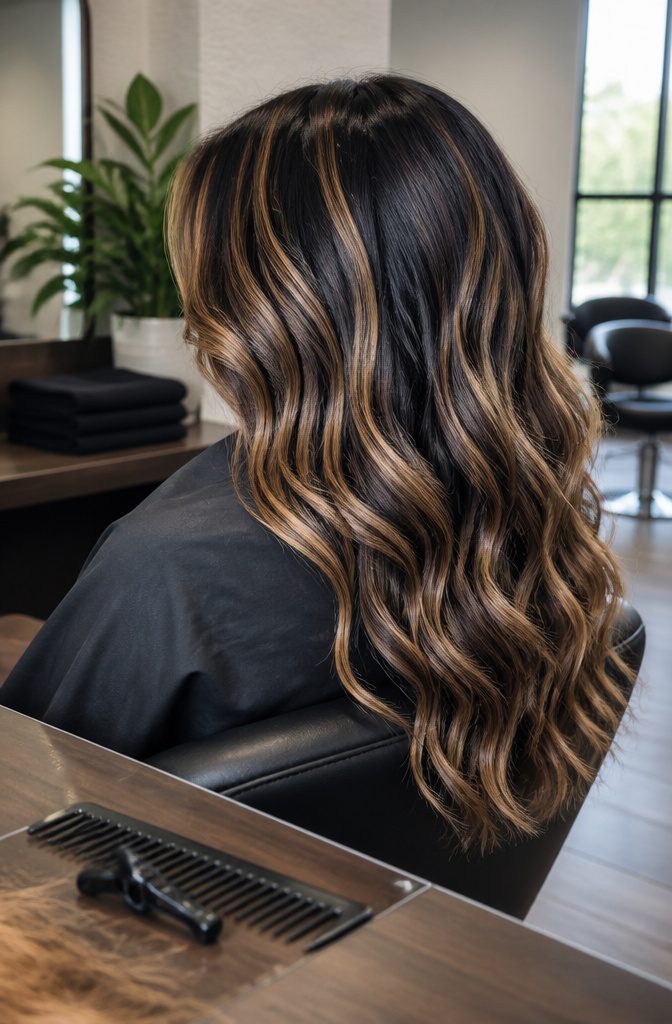
Sandy highlights over a black base create what the source calls a pretty catchy combination, especially for Black women who want to lift their natural color without committing to full blonde.
The sandy tone reads warm and grounded next to black, softer than platinum or ash, and it does exactly what balayage is meant to do: refresh the overall look without erasing the depth.
The contrast matters here. Black hair holds dimension better than lighter bases do, so even a few sandy ribbons through the lengths bring visible movement and catch light in a way that feels current.
The look skews dimensional rather than flat, and the warmth in the sandy tone keeps it from washing out darker skin tones the way cooler blondes sometimes can.
19. Shadowed Chamomile Bob
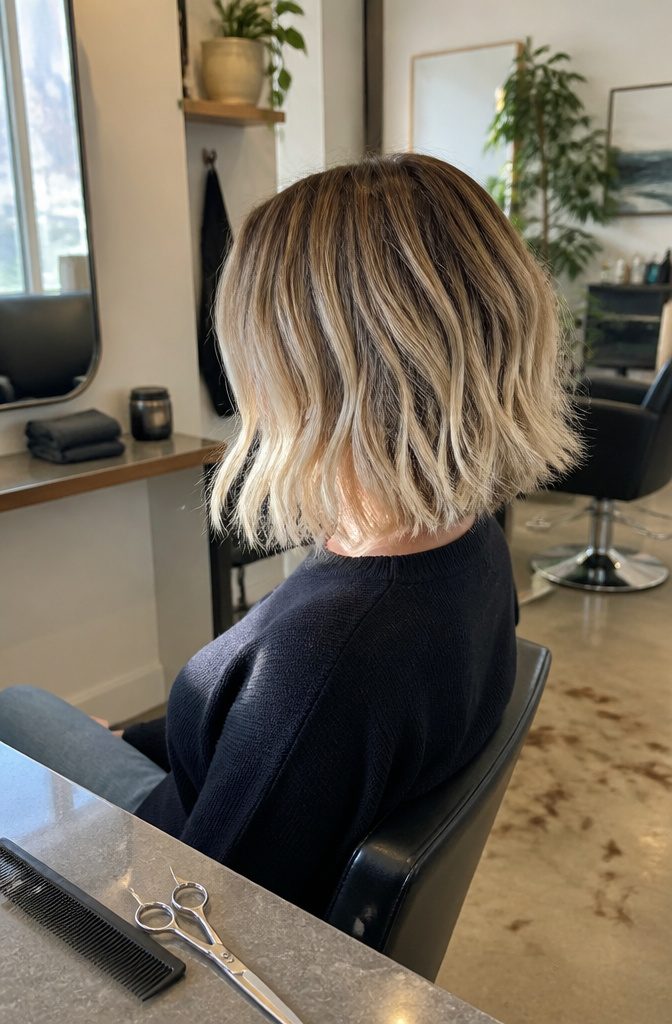
The choppy ends lift the chamomile tone so it reads bright instead of flat, and the shadowed root keeps the whole thing grounded enough to look purposeful rather than fried.
Chamomile sits a step warmer than platinum, closer to soft butter or the palest wheat, which makes it easier to maintain without constant toning.
The shadow at the root means you can stretch touch-ups longer, and on fine hair the darker base creates the illusion of more volume where the color meets the scalp.
The bob hits right at the shoulder, and those choppy ends keep it from looking too polished or serious. It reads young without reading juvenile, which is the balance that makes this cut work.
20. Silver Bronde
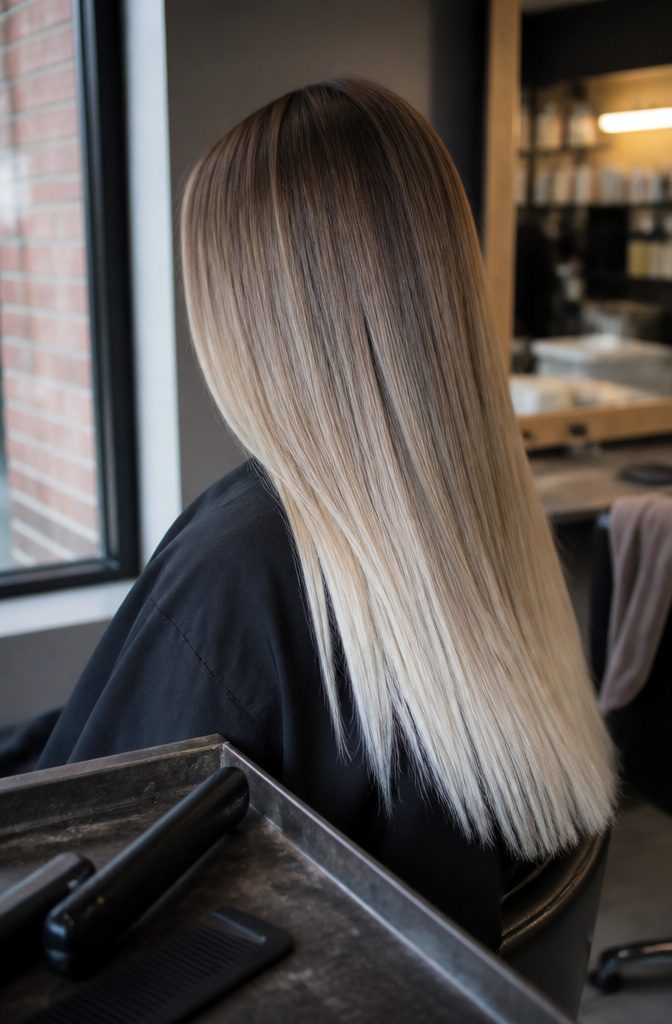
Sleek blonde hair with dark roots looks sharp on its own, but a drastic white-blonde shade steps the contrast into another territory altogether.
The white-blonde tips catch light the way mid-tone balayage doesn’t, and the result reads as intentional rather than grown out.
If your brows and eyes are brown, a lighter hair tone pulls the look together instead of leaving the face fighting the hair.
The styling choice matters here. You can take it straight and glassy for maximum impact, or work in a beachy wave if that suits how you actually wear your hair.
Either way, white-blonde tips deliver that extra oomph the look depends on. The moonbeam comparison gets used a lot, but it fits: this is winter-white hair that shows up across a room, not the soft vanilla most balayage lands on.
21. Face-Framing on a Brown Base
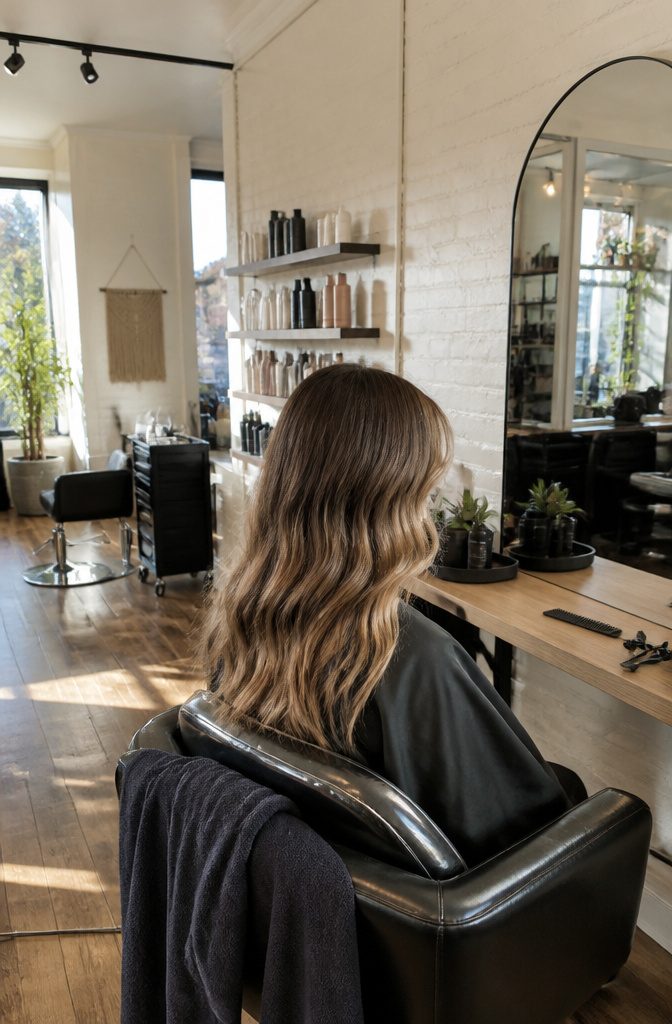
When your base is light to medium brown, light beige and caramel shades around the face do the heavy lifting without pulling the rest of your hair through a full bleach journey.
The warmth in beige and caramel sits naturally next to brown and reads as sun-kissed rather than graphic, so the grow-out never looks harsh.
If your skin leans warm (gold jewelry looks better on you than silver, foundation tends to have a yellow or golden undertone), these shades pick up the same warmth and make your complexion look clearer.
Cool-toned skin, on the other hand, can look washed out next to caramel; ashy beige or even a cooler champagne tone would be the better call there.
Face-framing on brown also means you can leave the back and underlayers untouched, which cuts down on maintenance and damage. The contrast adds dimension without the upkeep that comes with highlights through the entire head.
22. Bronde With Ribbon Highlights
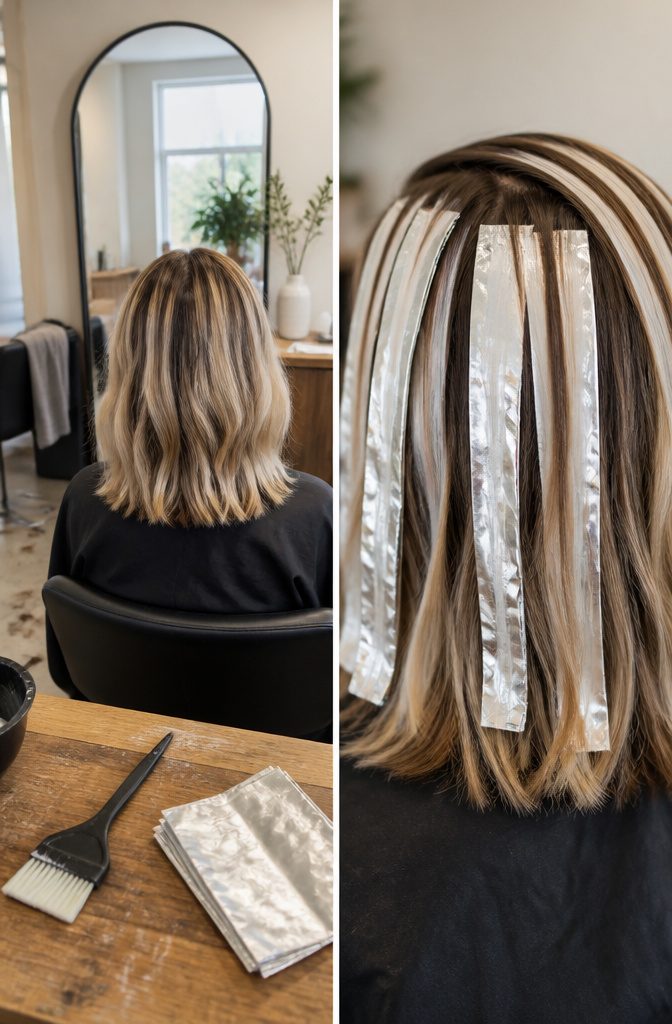
Ribbon highlights and lowlights give bronde its depth, and medium length shows off the contrast better than long layers that soften everything into one tone.
Ribbons are thin panels of color, not the fine scattered strands you get with foil highlights, so they stack darker and lighter sections side by side and keep the dimension visible even when hair moves.
The lowlights here bring the brown back in after the blonde is painted on, which is what holds the look together and stops it reading as a single flat color.
Medium hair sits at the shoulder or just past it, short enough that all the color work stays in the frame when you look straight on.
Longer hair spreads the ribbons out and dilutes the contrast; shorter cuts can make each panel too obvious. This length splits the difference and lets the shadow and the blonde sit next to each other without blending into mush.
23. Melted Toffee Fade
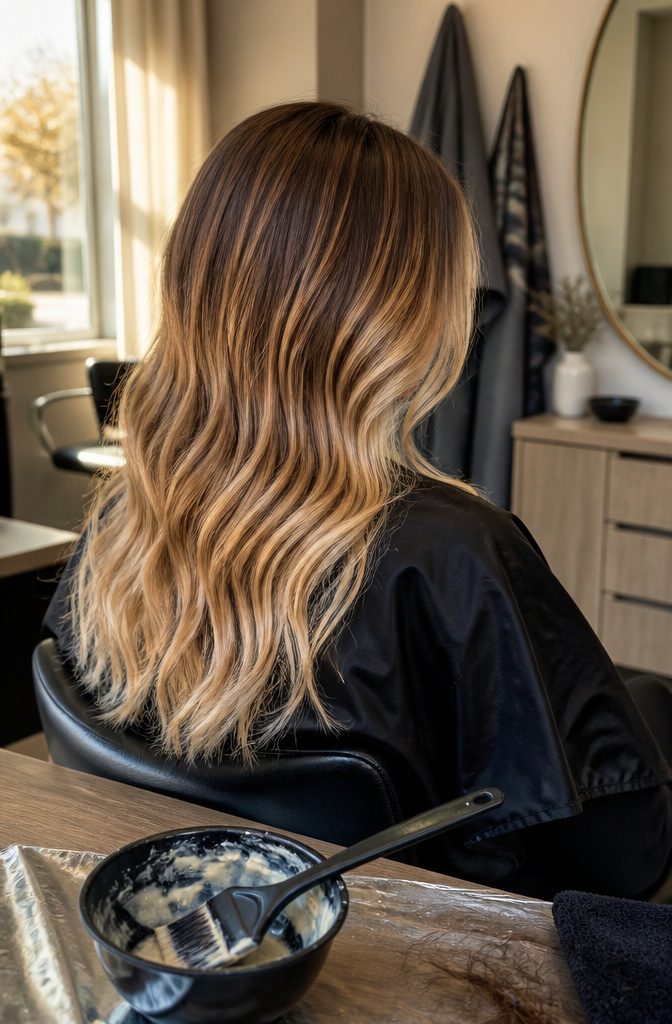
The fade here runs from darker roots through caramel midlengths to lighter ends, giving you the warmth of toffee without a hard line where one shade stops and the next begins.
Light caramel tones sit somewhere between honey and butterscotch, warm enough to read as lived-in but still bright enough to lift brown hair without going platinum. The melt happens gradually, so regrowth blends instead of announcing itself at the scalp.
Longer front pieces frame your face and pull the eye down, which elongates your face shape. The length difference matters because those front sections catch more of the lighter color, making the balayage work like contouring.
If your layers are all one length, you lose that face-framing effect and the fade reads more like an overall lightening than a dimensional placement.
24. Bright Dishwater Fade
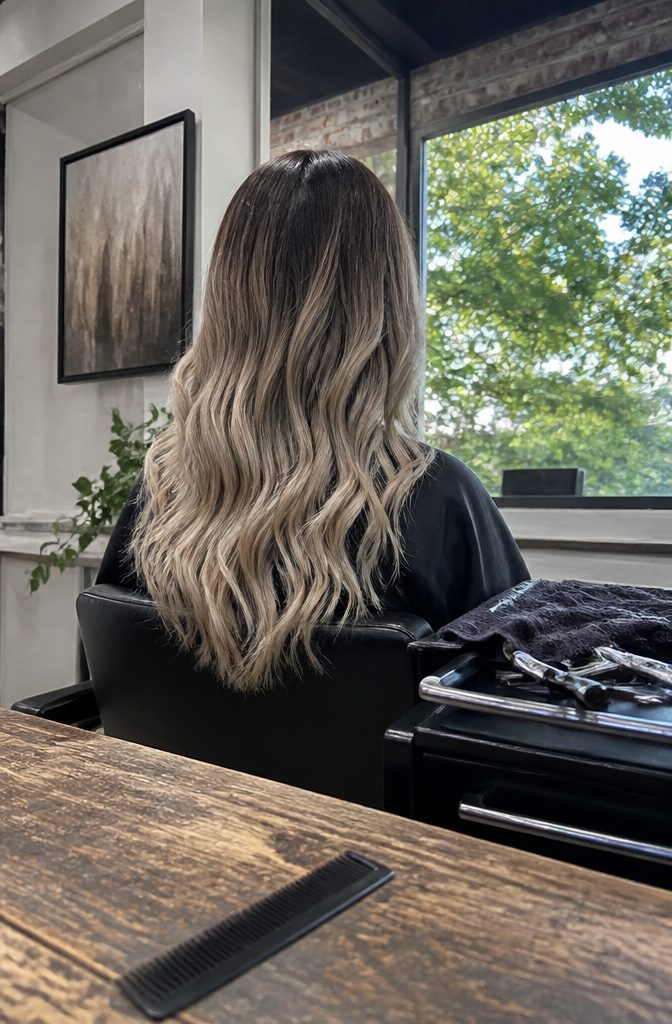
This one lets the balayage start lower on the head, so the dark root band runs longer before the blonde begins.
I like what that buys: fewer trips back to the chair, because the transition zone was already built in. Growth just adds to the depth at the top rather than creating a line you need to fix.
The lower placement works whether you wear your hair wavy or flat-ironed straight, and the lived-in effect reads deliberate either way.
Wavy hair tends to scatter the light through the pieces so the fade looks softer; straight hair shows the tonal shift more clearly but still keeps that blended, no-maintenance look.
Either way, you get added dimension without the upkeep schedule that comes with balayage painted higher up.
25. Peach Bronde
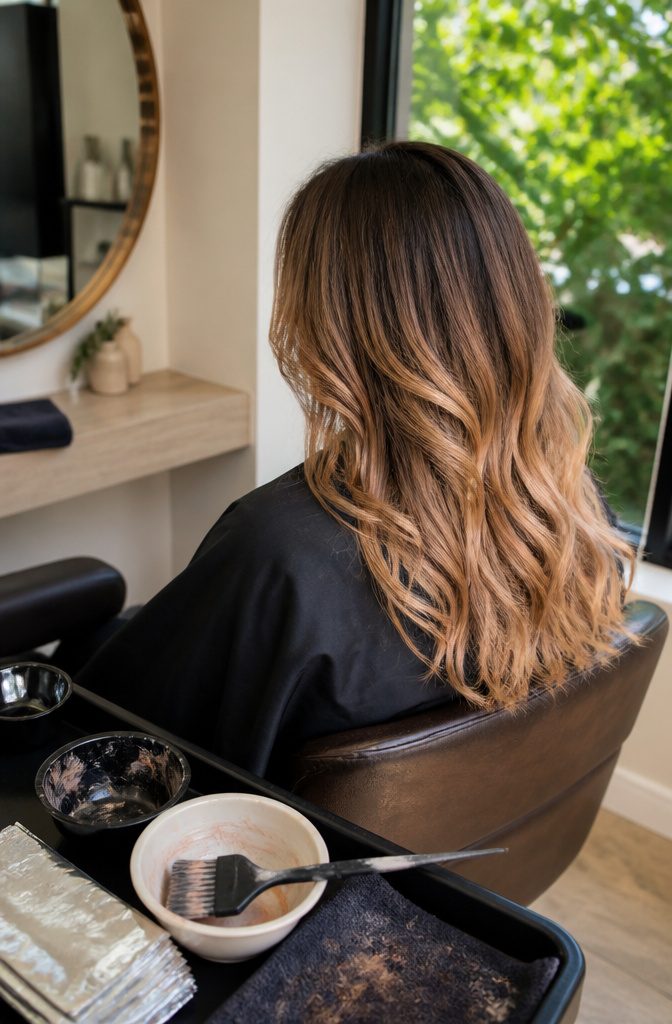
Peach bronde layers three to five complementary shades into the balayage rather than painting one flat tone from root to end.
The base stays dark, usually a natural or slightly warmed brown, while the colorist lifts sections to blonde and then tones them with peach, apricot and sometimes a touch of rose gold.
The result reads as a soft, dimensional warmth that catches light without looking brassy or overtly orange.
The warm tint is deliberate. If you came for a strictly cool icy blonde, peach bronde will disappoint; it leans into warmth rather than neutralizing it.
That makes it flattering on skin with golden or peachy undertones, but it can read too warm against very cool or rosy complexions.
The blend itself takes longer to paint than a simple foil because the colorist has to weave the different tones together so no single stripe dominates.
When it works, you get a lived-in look that grows out softly and needs fewer trips back for a root touch-up.
26. Toasted Coconut Waves
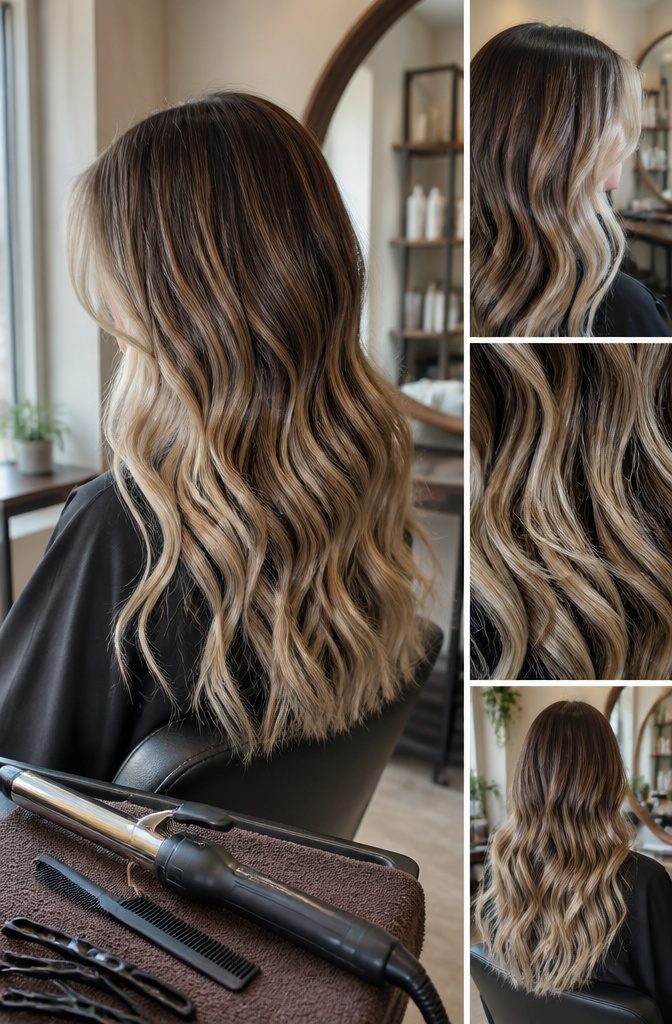
Money pieces sit right along your temples and the first inch or two of hair that frames your face, and when they’re lifted to bright icy blonde they act like spotlights.
The effect is stronger than full balayage because all that brightness concentrates where someone’s eye lands first. Waves bring out the contrast better than straight hair does.
Each bend catches the light differently, so you get flashes of pale blonde alternating with the deeper root color underneath. The money pieces stay visible at every angle instead of blending into a single flat tone.
Texture matters here more than it does with subtle balayage. If your hair looks flat or dull, bright highlights layered through wavy sections add dimension without committing to full bleach coverage.
27. Long Hair With Contouring
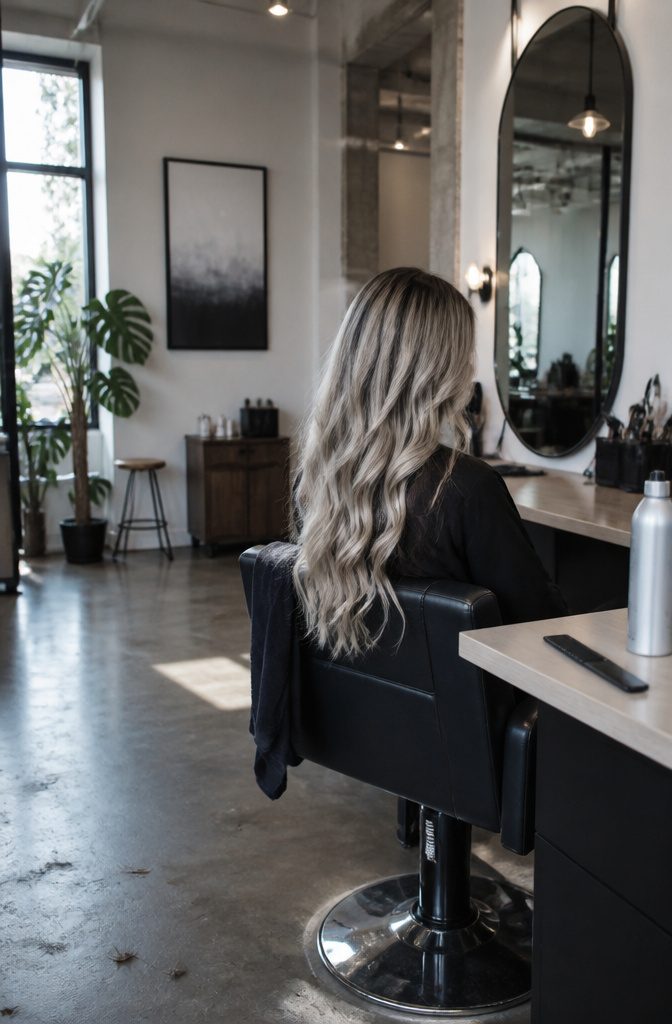
Shadow work on long hair gives you a built-in contour, the same way makeup does: darker tones near the roots and through the underlayers pull the eye toward the lighter sections that hit the crown, the lengths and the face.
Balayage lets you place the bright pieces where they matter, and the shadow technique keeps enough natural depth at the base that the whole thing reads as intentional rather than grown out by accident.
The contrast shapes what someone sees first.
Bleached lengths need a different conditioner than the roots do.
The lightener strips protein and moisture out of the hair shaft, so a good conditioner for bleached sections puts both back in. Skip it and the icy ends turn brittle and split faster than the rest of the cut.
Apply conditioner from mid-length down, avoiding the root zone where natural oils already do the job, and the color holds longer without the texture falling apart.
28. Blooming Bronde for Thin Hair
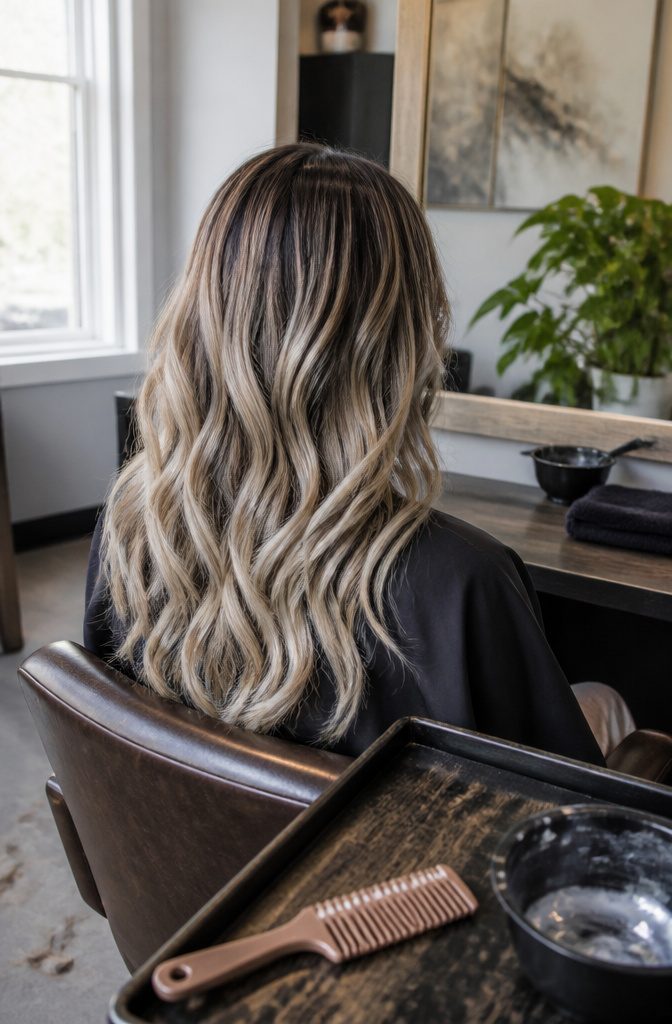
Ashy tones layered over brown create dimension that makes fine strands look thicker and fuller without adding weight.
The light-dark contrast tricks the eye into reading texture where there isn’t much, which is exactly what thin hair needs. You get movement without teasing or product buildup, and the color does the work.
The bronde mix sits cooler than most rooted blonde looks, leaning ash instead of caramel. That keeps it from pulling brassy as it fades, which matters when you’re stretching appointments.
Fine hair takes toner well, so the icy edge stays sharp longer than it would on coarser texture. Soft waves amplify the effect, but the volume reads even on straight hair because the placement itself adds depth.
29. Silver Pixie Bob
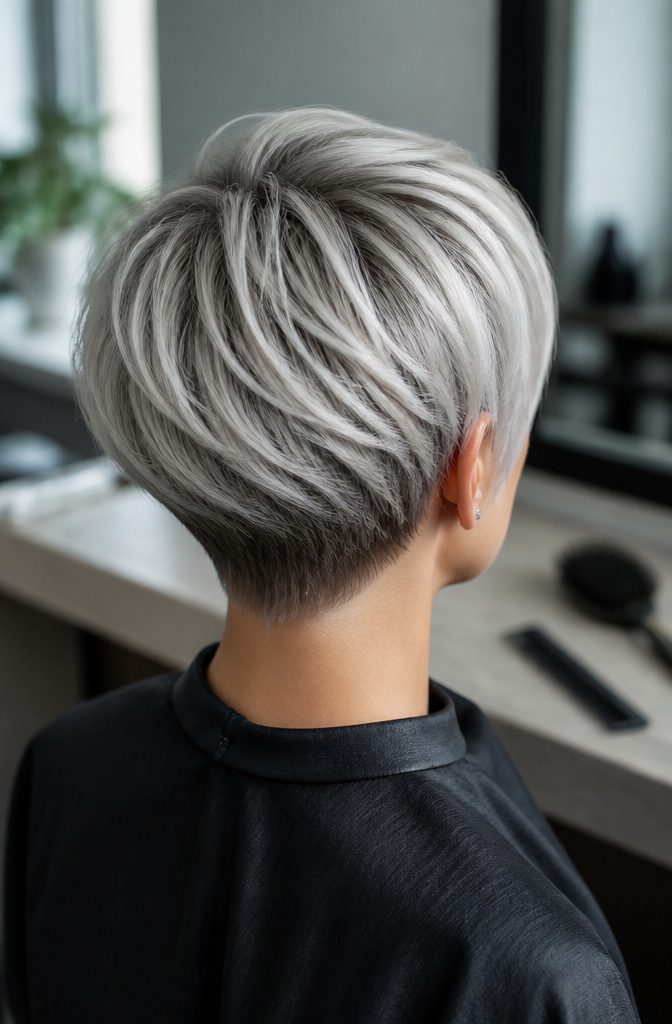
A stacked crop sits tight against the head and carves a sharp, tapered outline at the nape, which makes fine hair read fuller without added bulk.
The silvery and platinum shades layered through this bixie keep it cool and modern, a good match for anyone who wants rooted blonde without warmth creeping in.
Blow-dry your hair to one side for volume at the crown and you’re done.
Skip this if you’re after length or anything in the golden-blonde family. The cut only works short, and the palette leans icy by design.
30. Honey Curls for Brunettes
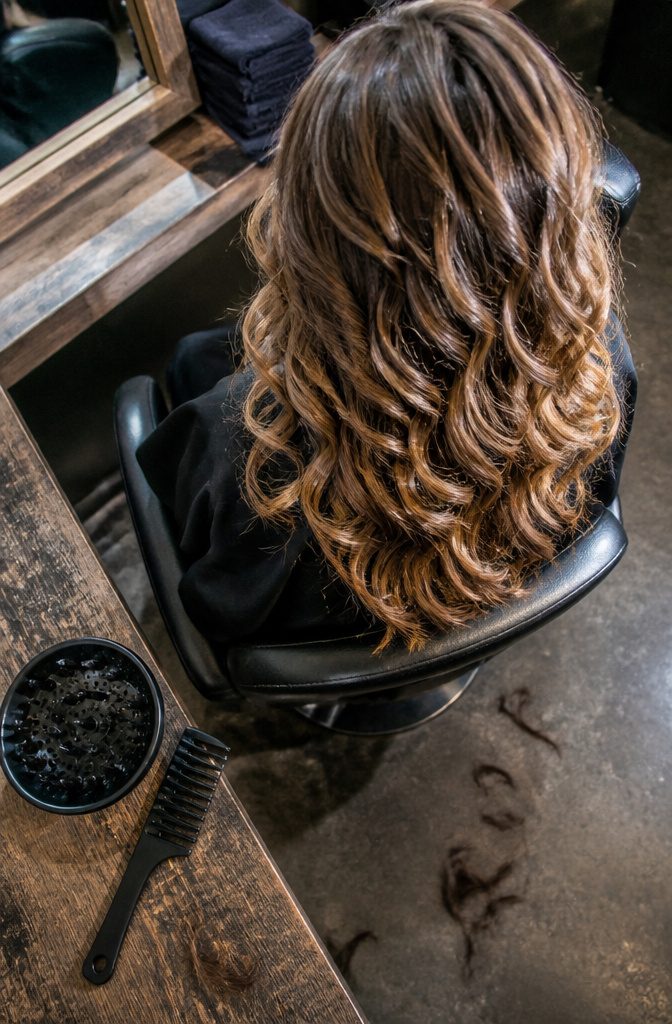
Honey tones read warmer than platinum or ash, and curls hold that warmth better than straight hair because each twist catches light differently.
The smudge technique softens the line where brown meets honey, so instead of a hard demarcation you get a gradual melt that looks intentional even six weeks out.
Mixing honey curls with a brown base keeps the darker pigment at the root, which means less damage overall since you’re not lifting the entire head to one shade.
The multi-tone effect also gives curls more depth when they stack, so each spiral looks defined rather than one flat color wrapping around itself.
I find this suits brunettes who want visible lightness without committing to cool platinum, and the smudged root means you can push appointments longer without the grow-out announcing itself.
Brown to Icy Blonde
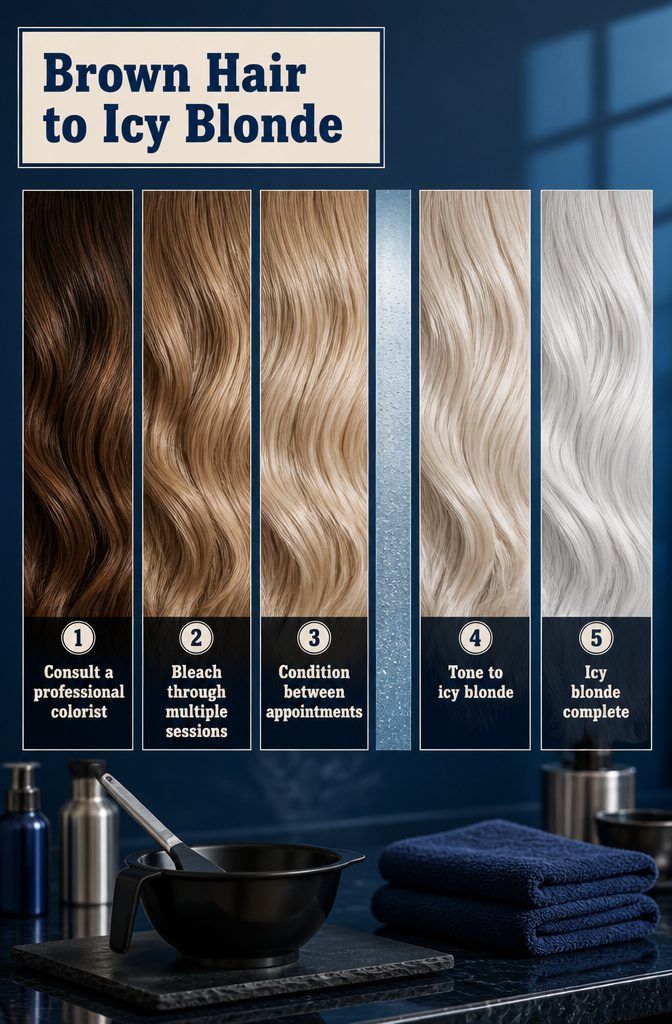
Going from brown to icy blonde is not a quick process and not one to try in your bathroom.
It usually involves multiple bleaching sessions, each lifting your natural pigment by a few levels, followed by toning to reach that cold, almost white finish and conditioning treatments between appointments to keep the hair from turning to straw.
A professional handles the timing and strength at each stage, adjusting the formula as your hair lightens to avoid damage and brassiness.
The dark roots you keep serve a purpose beyond convenience. They create contrast, anchor the bright ends with depth, and give the look that lived-in quality that makes a high-maintenance color feel wearable.
Balayage places the blonde where light would naturally hit, while root smudge, shadow or a color melt blends the brown into the icy lengths so there is no hard line where one stops and the other starts.
The result reads as soft and dimensional rather than grown-out or unfinished, and the contrast has a winter sharpness that suits the icy tone better than an all-over blonde would.
Reverse balayage does the opposite: darker ends, lighter roots. It works for anyone transitioning back from a fully lightened head without losing all the blonde at once, adding contrast in the other direction.
Upkeep and Toning
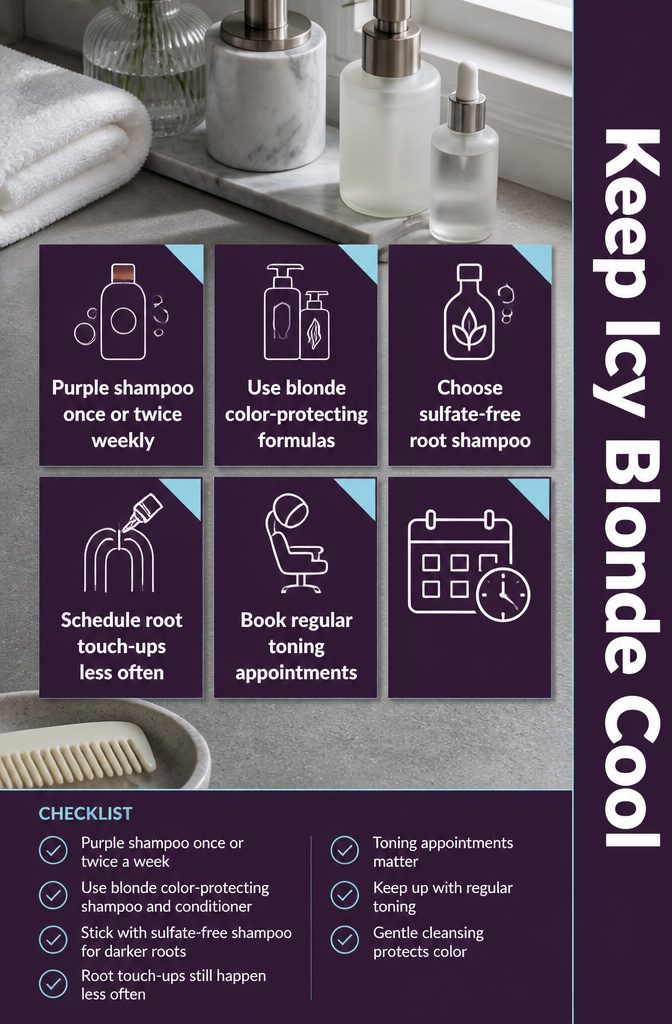
The dark root buys you time between salon visits, but the icy blonde still asks for regular attention to stay bright and cool.
- Purple shampoo once or twice a week keeps brassiness out of the blonde. It’s the first line of defense against warmth creeping back in.
- Use a blonde color-protecting shampoo and conditioner for the lightened sections. High-quality formulas designed for blonde hair hold the tone longer.
- Stick with sulfate-free shampoo for the darker roots. Sulfates strip color faster, and even natural roots benefit from gentler cleansing.
- Root touch-ups still happen, just not as often as all-over blonde. The contrast is built in, so you’re not racing the calendar every few weeks.
- Toning appointments matter. Icy blonde fades toward yellow or beige without regular toning, and at-home purple shampoo only does so much.
Frequently Asked Questions
What is the blonde hair trend with dark roots?
It’s a high-contrast look that pairs light blonde ends with your natural dark root, creating visible dimension without a flat, single-tone finish.
The dark base makes regrowth look intentional rather than overdue, so you can stretch salon visits to 3 or 4 months instead of touching up every 6 weeks.
The contrast also adds apparent volume and texture, especially when paired with layers or waves that show off the tonal shift from root to tip.
Is icy blonde hair hard to maintain?
Yes. The platinum ends need toner every few weeks to stay cool and bright instead of pulling yellow or brassy, especially if your water runs hard or you swim.
You’ll also need purple shampoo, bond-building treatments, and a gentler washing schedule to manage the fragility that comes with bleach. The dark roots stay low-maintenance by design, but the icy ends are high-touch.
What is reverse balayage blonde?
Reverse balayage adds darker tones to the ends while keeping the roots lighter, the opposite of traditional balayage.
It creates a striking contrast and works well for transitioning from fully lightened hair back to a more natural look without losing all the blonde.
How do you go from brown to icy blonde?
The process usually requires multiple bleaching sessions, toning, and conditioning treatments, and you should leave it to a professional.
Platinum over a dark base means bleach, and bleach means fragility, so plan for bond-building treatments and expect a multi-appointment journey if you’re starting from brunette.
Are dark roots with blonde hair in style?
Yes. The rooted blonde look reads as modern and lived-in rather than overgrown, and it’s become the go-to choice for anyone who wants the lift of blonde without the maintenance schedule that comes with full coverage.
The contrast adds dimension and depth, and the technique works across every hair length and texture.