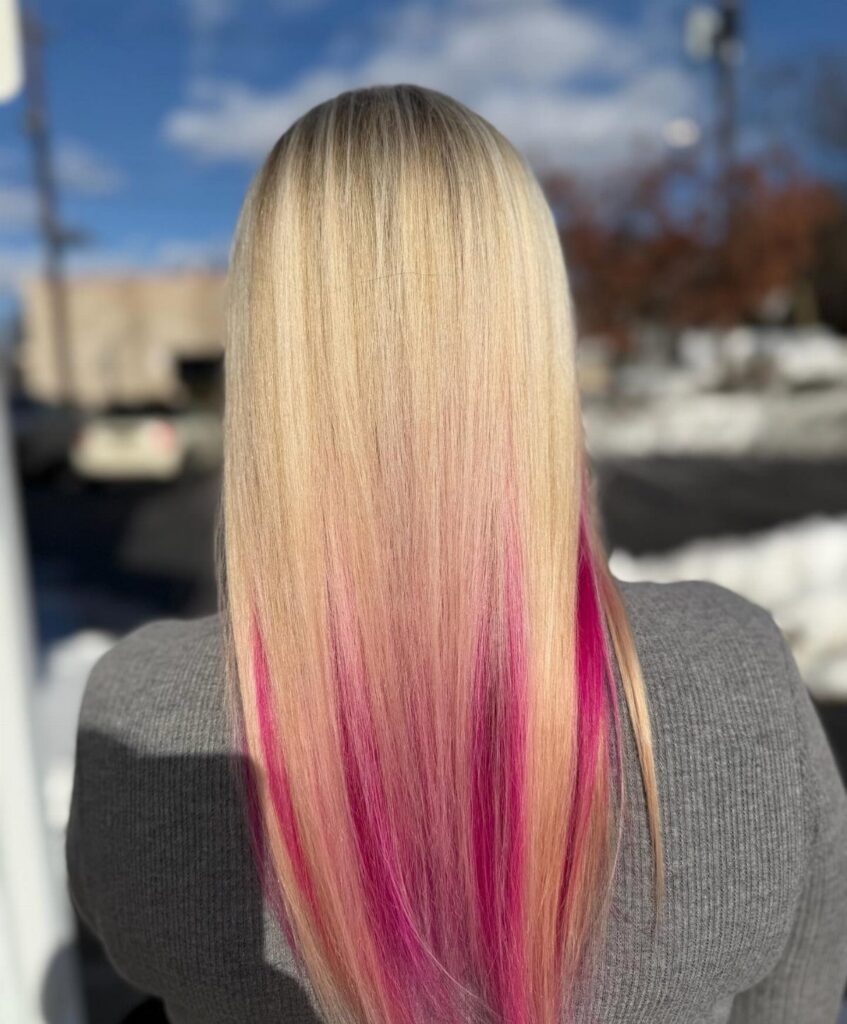
Cooler undertones suit pastels and magenta, anything with a bluish base that doesn’t pull warm, while peachy and coral pinks or rose gold look more natural on warmer skin.
1. Pastel Pink
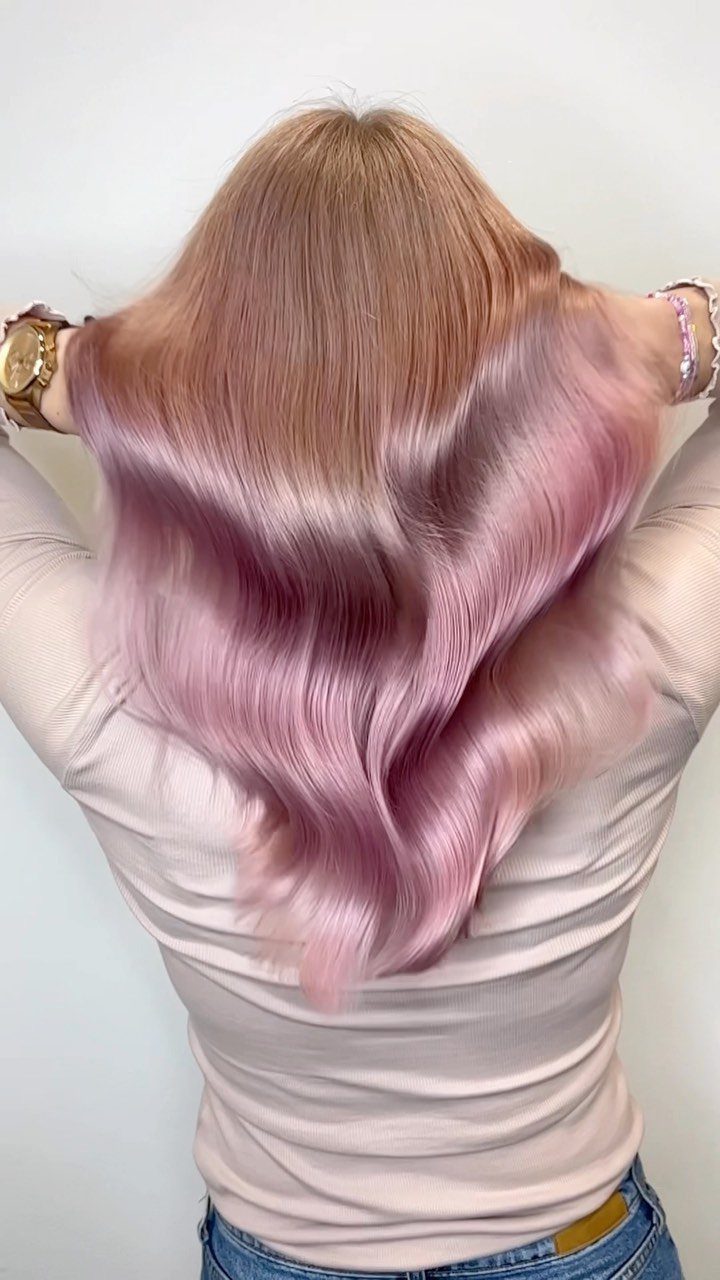
Blonde hair with pastel pink through the mid-lengths and ends keeps the color soft enough that it reads as a tint rather than a statement.
The pink sits just barely there, which suits anyone testing out pink for the first time who isn’t ready for a bold shade.
This gives the cleanest result on hair that’s already light blonde. Pastels need a pale base to show up, so darker hair needs lifting first before the pink goes on.
2. Pink Balayage
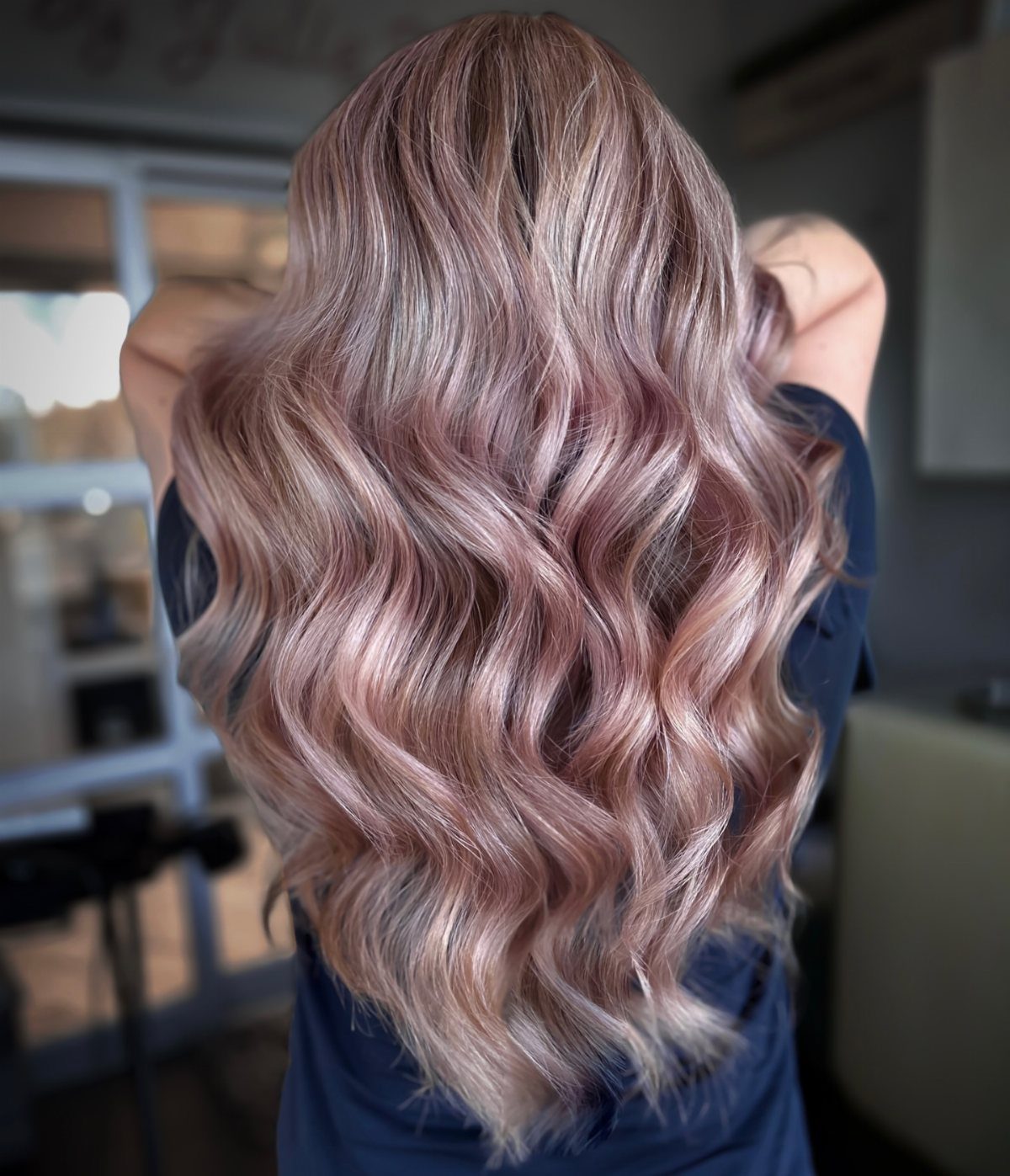
Balayage gives you pink that fades naturally into blonde with no harsh line. The color is painted on freehand, heavier at the ends and lighter as it moves up, so it grows out cleanly and doesn’t need constant touch-ups.
Ask for a dusty or mauve-toned pink for something that reads subtle. Brighter pinks work too, but they fade faster and need more frequent toning so the shade doesn’t slip into peachy or orange territory.
3. Rose Gold
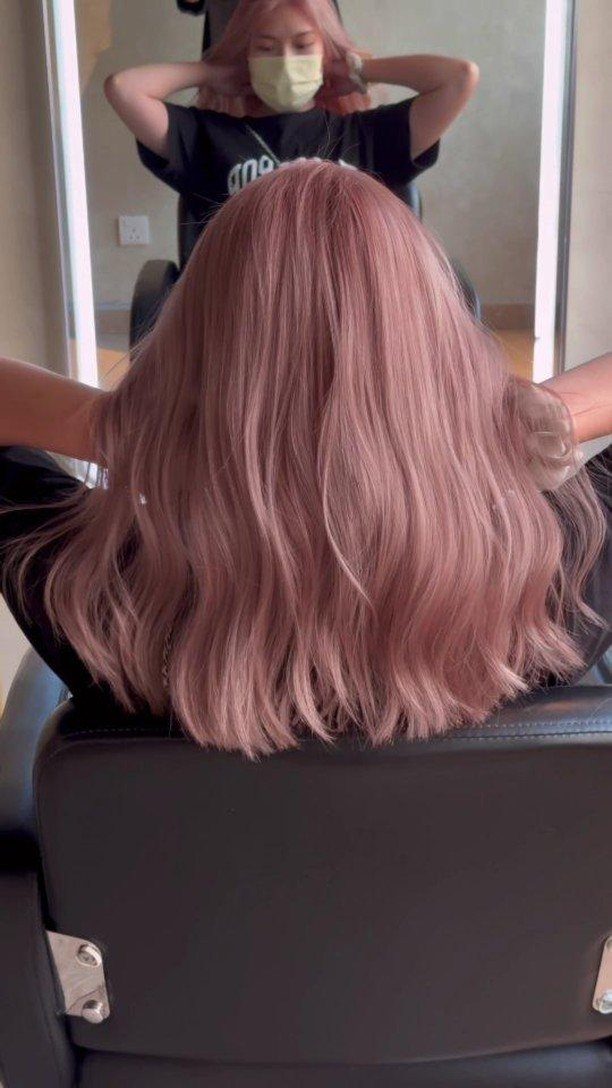
Rose gold sits somewhere between pink and copper, and the warmth in it catches light in a way that looks almost metallic.
It flatters most skin tones because the mix of gold and pink is forgiving, and it fades more gracefully than a straight pink.
Maintaining it means using a color-depositing conditioner once or twice a week. Without it, rose gold shifts toward a pale peachy blonde within a month.
4. Pastel Rose Tip Dye
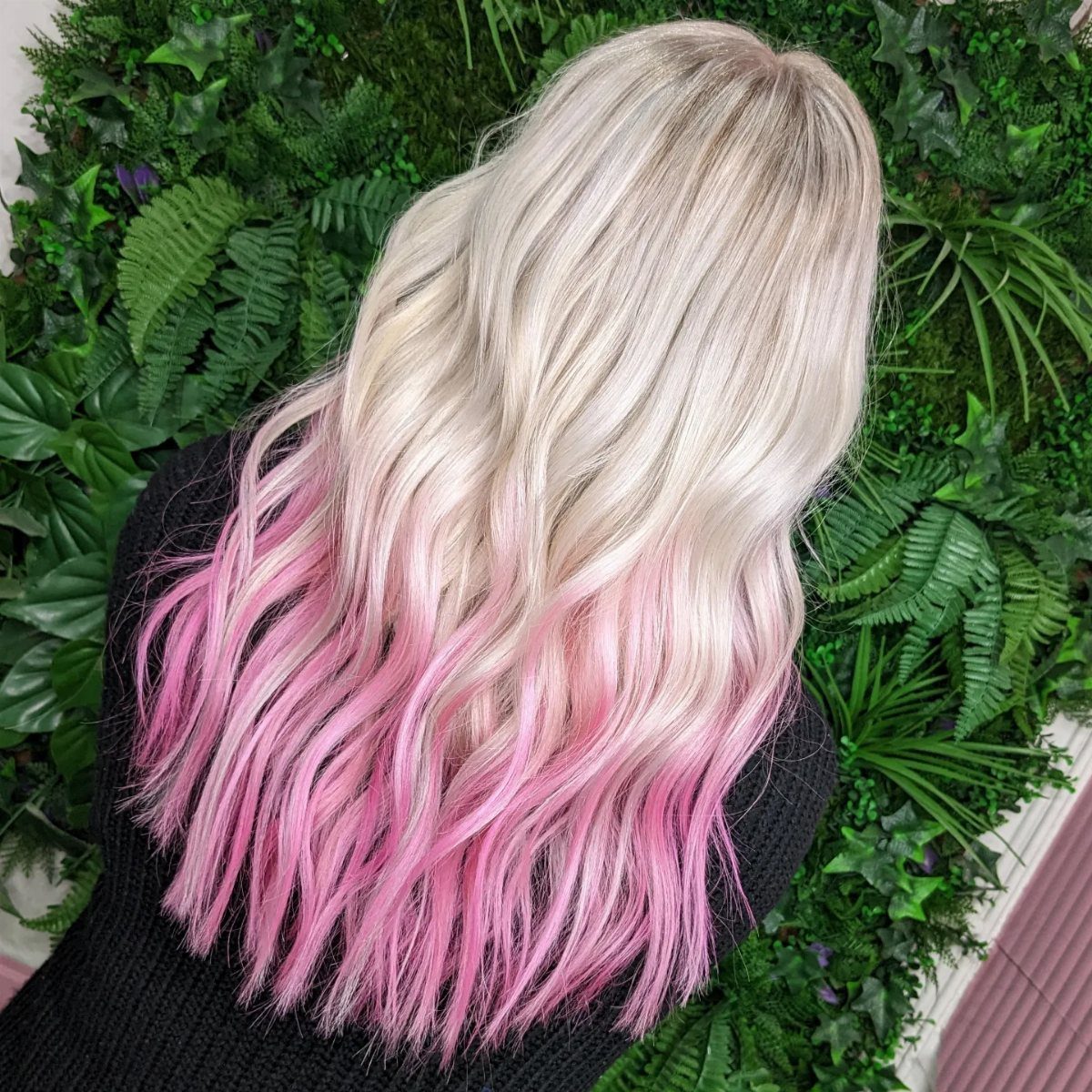
Concentrating the pink at the tips gives you the color without needing to lighten the whole head.
If your hair is already blonde, you can do this at home with a semi-permanent dye, applying it only where you want the pink to start.
The upside is that damaged ends can be trimmed off without losing the whole look. The downside is that pastel pinks wash out quickly, so plan on refreshing the color every 3 to 4 weeks.
5. Dusty Rose Waves on Black Hair
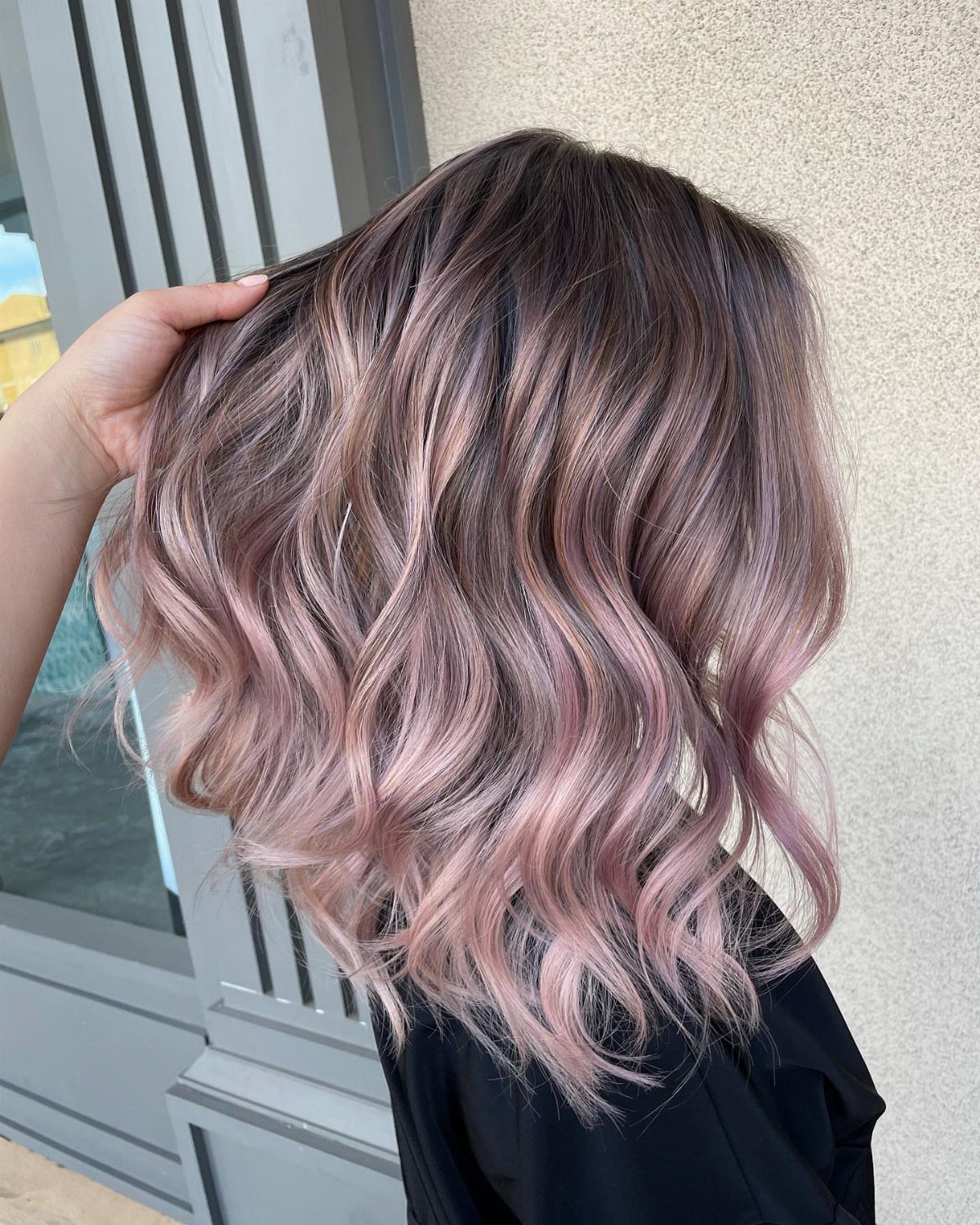
Dusty rose on black hair creates contrast without looking cartoonish. The muted, almost grayish pink keeps the look sophisticated, and the dark base makes the color pop without needing a full bleach.
Getting there takes time. Dark hair needs to be lightened to at least a pale yellow before the pink will show up true, and that usually means 2 sessions if you want to avoid serious damage.
6. Blush Pink
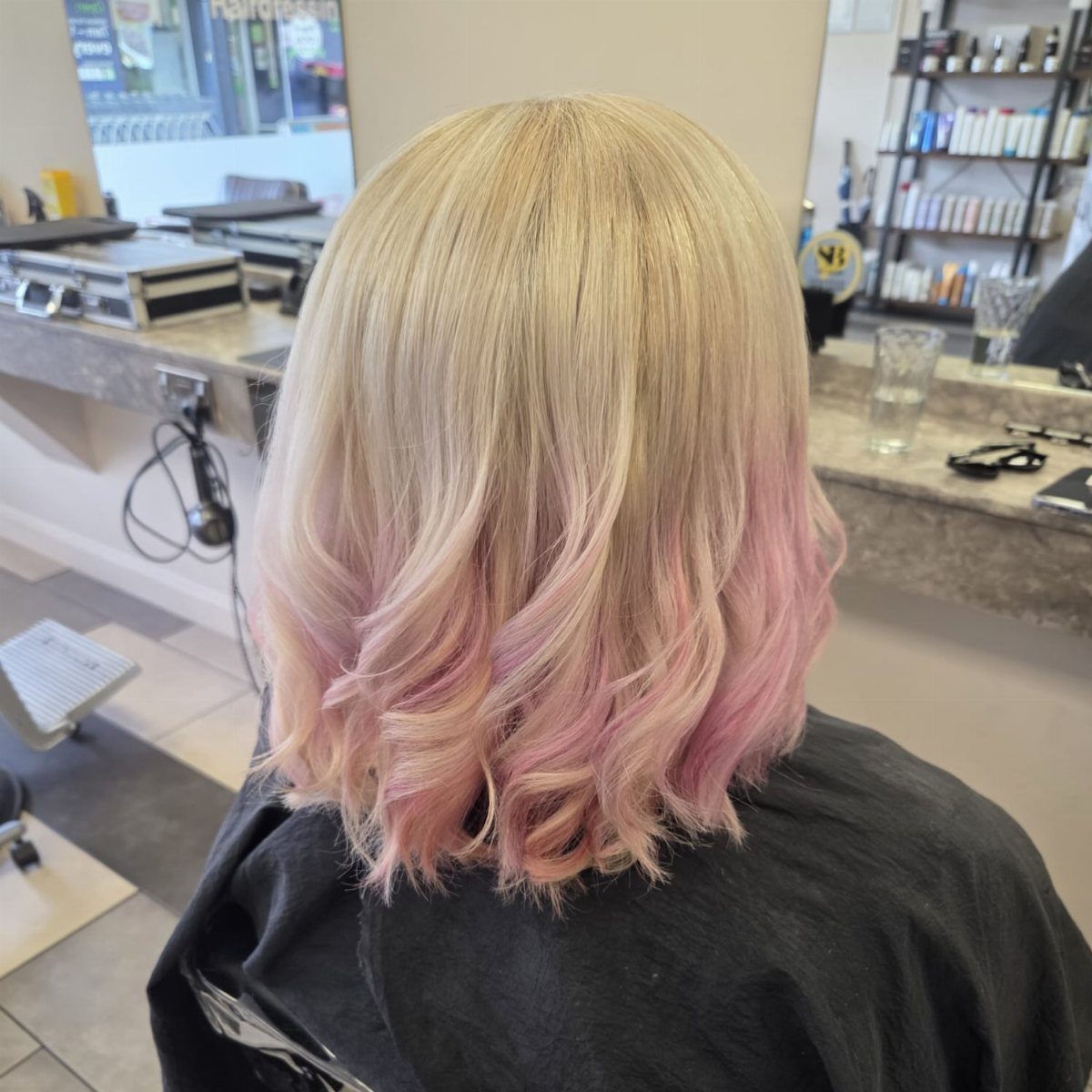
Blush pink blends so closely with blonde that the 2 colors melt together rather than sitting side by side.
It’s one of the easiest pinks to wear because it doesn’t scream for attention, and it suits anyone who wants pink but doesn’t want to explain it.
This shade fades the fastest because it’s so pale to start with. A purple-tinted shampoo can help keep blonde tones from going brassy, but you’ll need a separate pink conditioner to keep the blush from disappearing entirely.
7. Peekaboo Pink Highlights
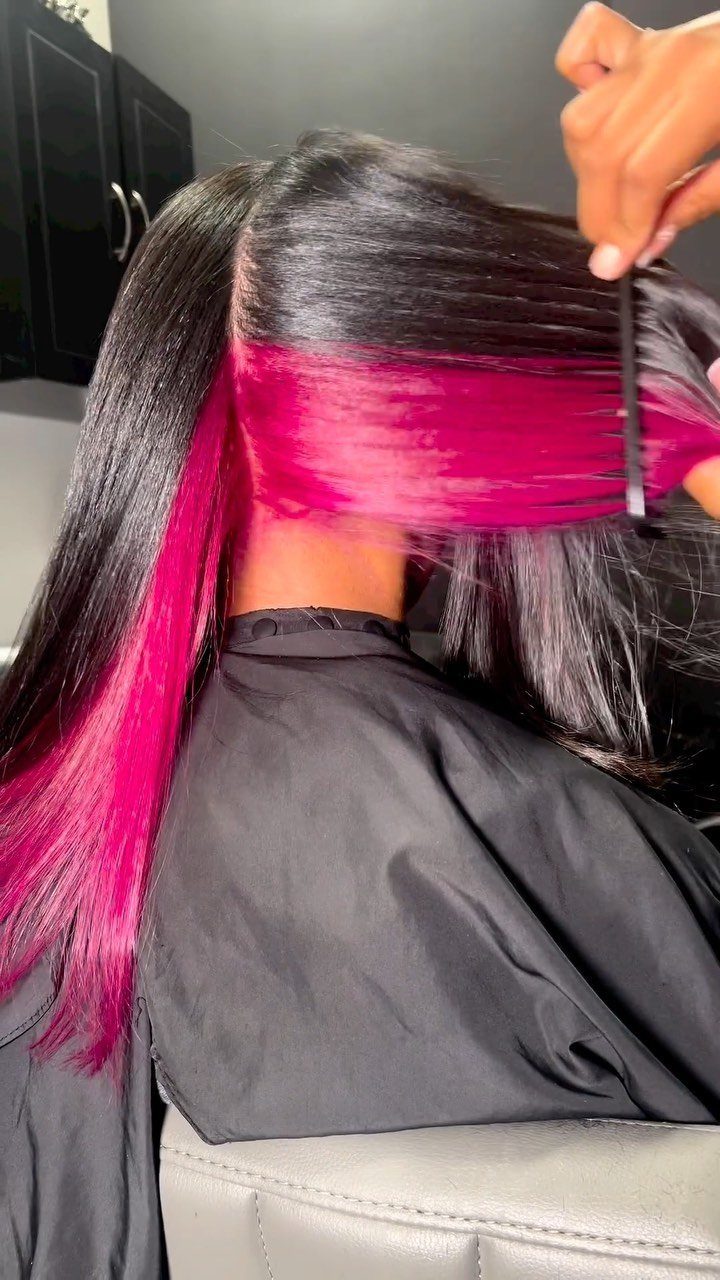
The color hides under the top layer, so it only shows when hair moves or gets clipped up. Black or dark brown hair makes the pink look brightest, since the contrast between the 2 is sharp.
If you wear your hair down most of the time, this keeps the pink subtle.
Tie it up or tuck it behind your ears and the color comes forward. It also means you can keep a conservative look when you need to without giving up the pink entirely.
8. Pink Ombre
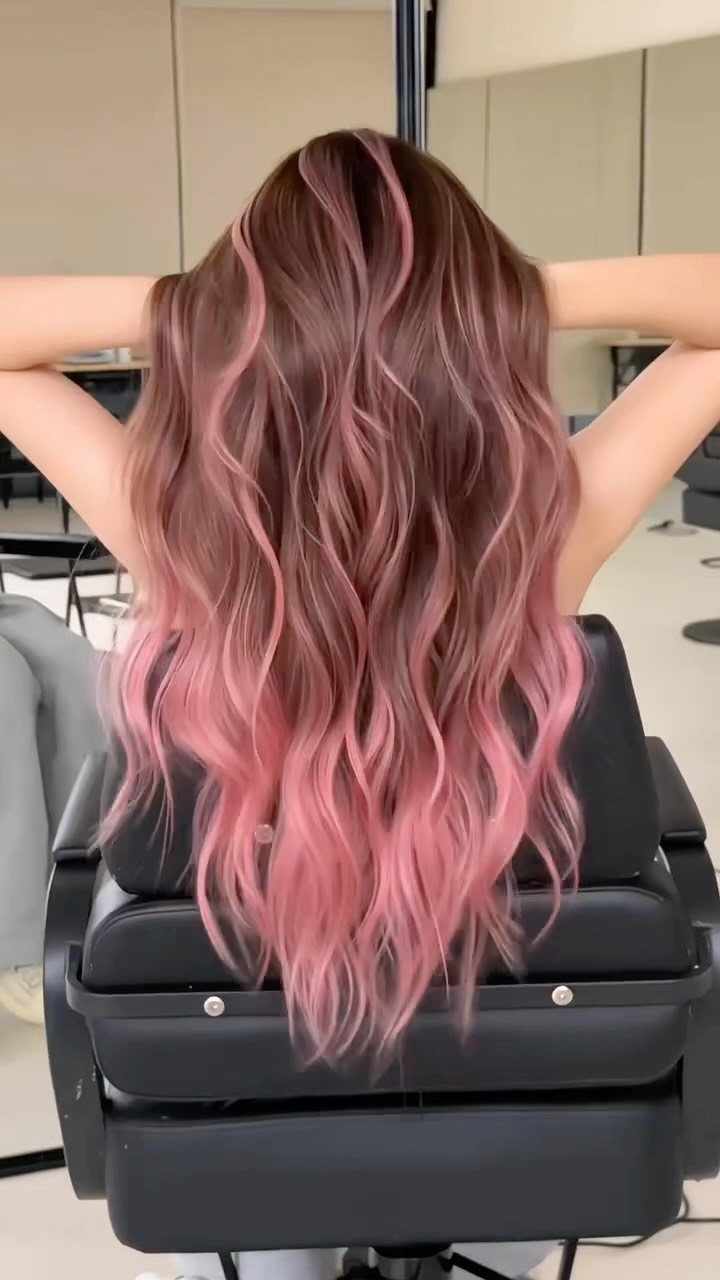
The color starts partway down and deepens toward the ends, so there’s a gradient instead of individual highlights. Ombre grows out more gracefully than allover color because the root area stays untouched.
Getting a smooth blend takes skill, so this is better done in a salon than at home. The pink can be soft or saturated depending on how light the base is and how much pigment gets applied.
9. Brown Blonde and Bright Rose Layers
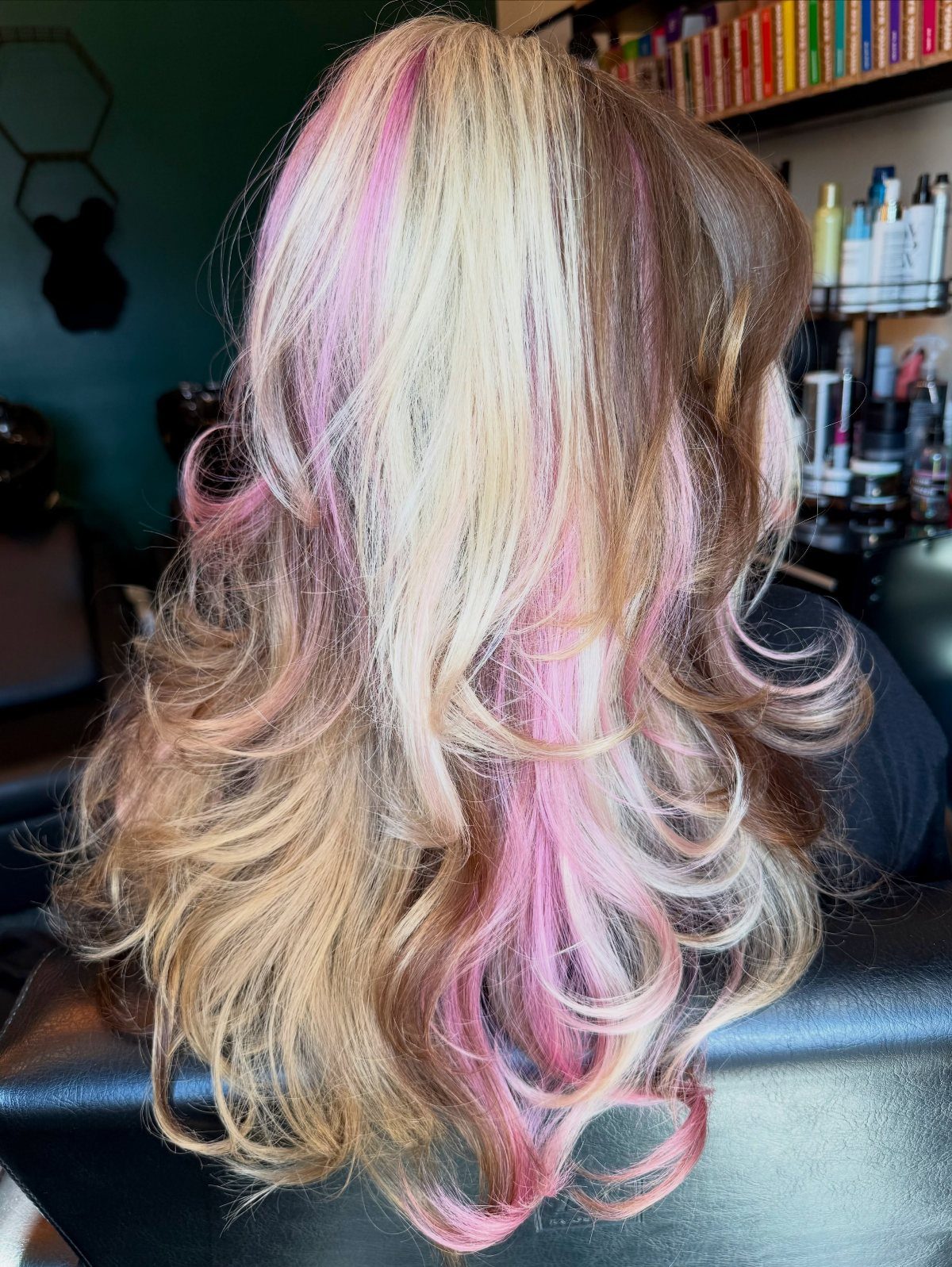
Combining brown, blonde and a muted rose in layers gives the color depth without looking flat.
The pink reads as part of the whole rather than sitting on top, and the mix of tones catches light differently depending on how the hair moves.
This works best on hair that’s already highlighted or has natural dimension. Adding one more color into an existing blend is less work than starting from a single flat shade.
10. Peach Blonde and Pastel Pink Pieces
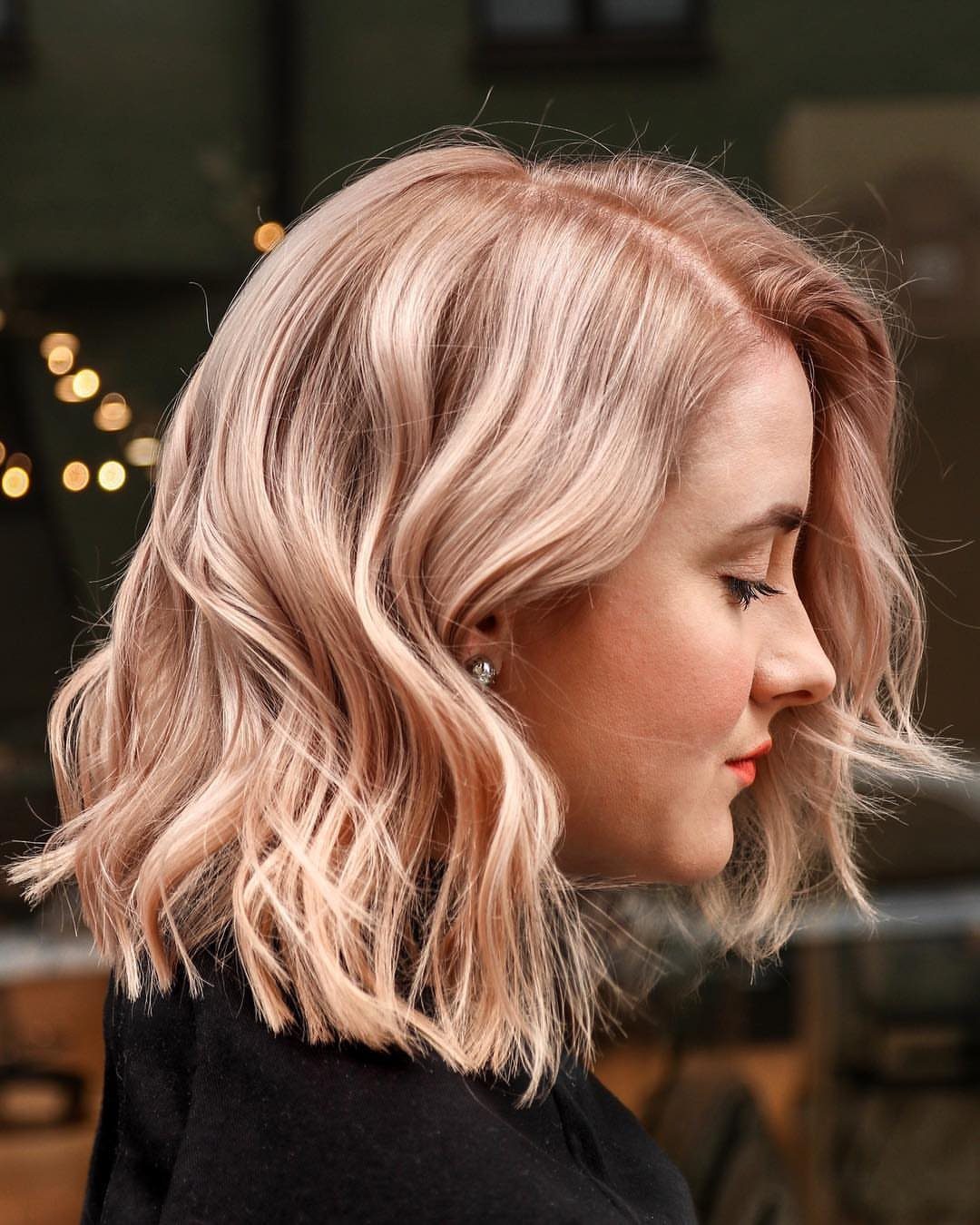
Mixing peach-toned blonde with pastel pink creates a warm, golden-pink finish that reads softer than straight pink on its own. The 2 colors sit close enough in tone that they blend rather than contrast, which keeps the look cohesive.
Both shades fade quickly, so you’ll need a color-depositing conditioner to keep the pink from washing out and a purple shampoo to stop the blonde from turning brassy.
11. Brown to Rosé Melt
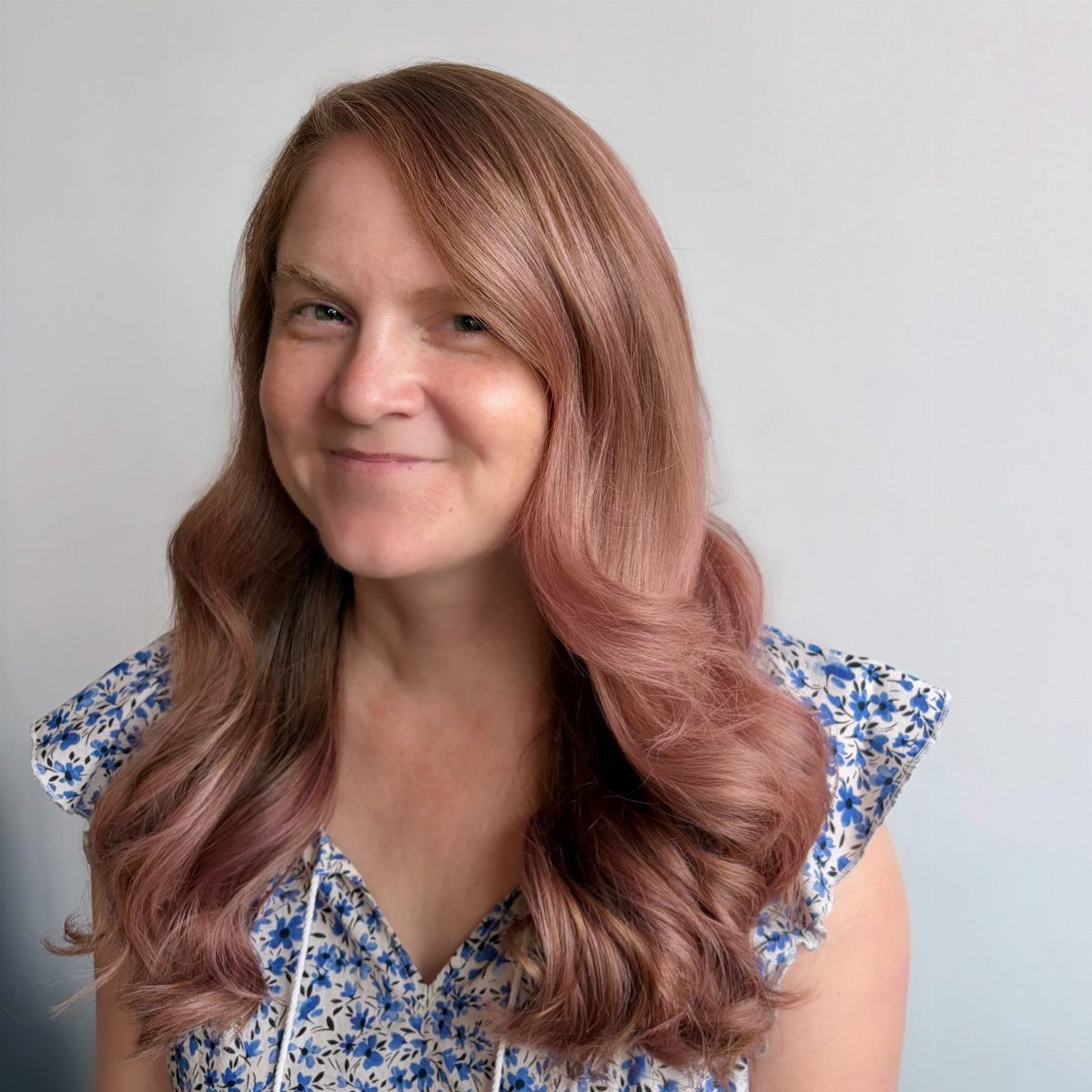
Starting with medium brown and melting into a dusty rose at the lengths gives you pink without losing the depth at the root.
The muted, slightly grayish tone of the rose keeps it from looking too sweet, and it suits warmer skin tones well.
Because the brown stays intact, regrowth isn’t as obvious as it would be with an allover blonde base. The pink will need refreshing every 4 to 6 weeks, but the root can be left alone.
12. Face-Framing Magenta Pieces
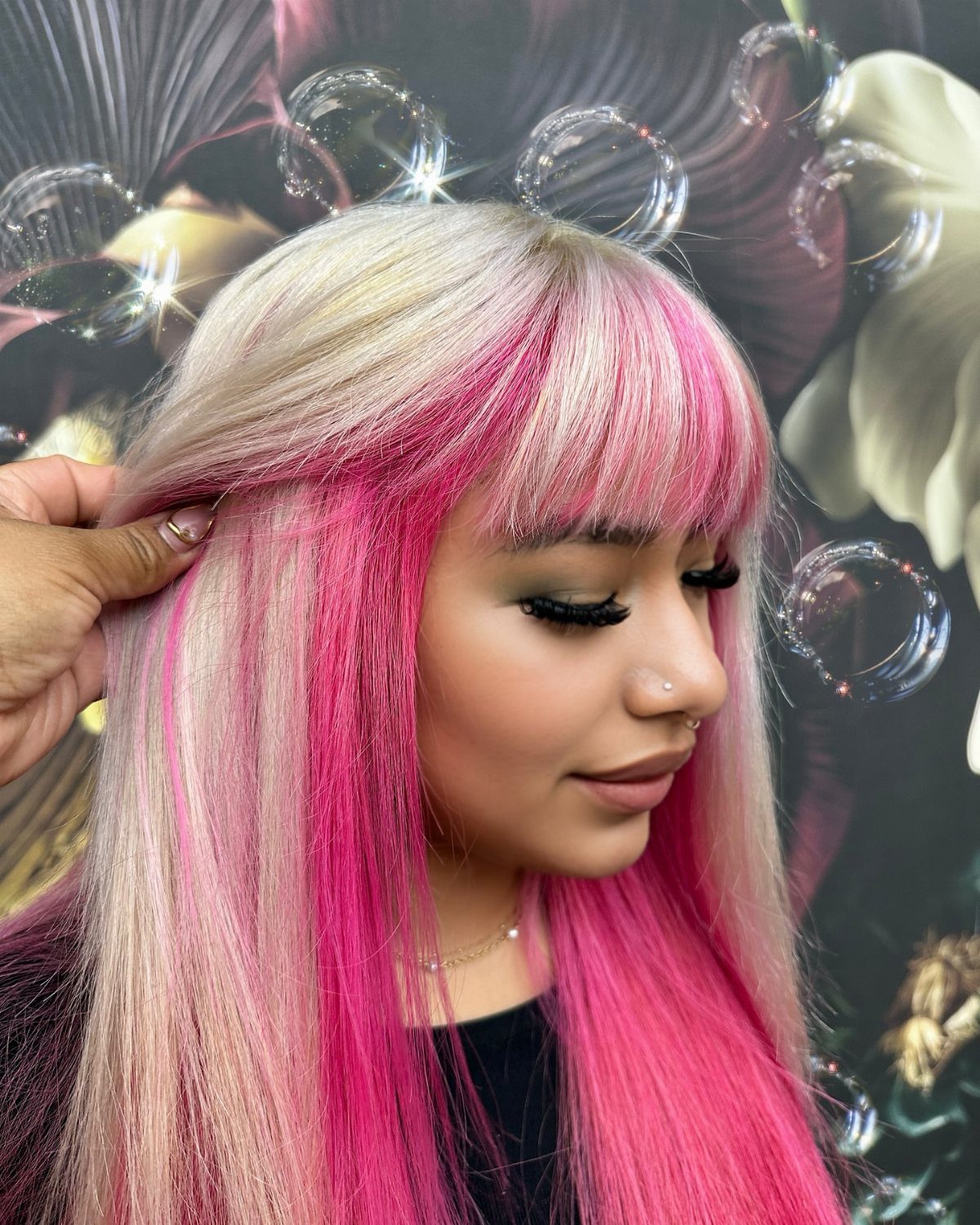
Bright magenta around the face draws attention without covering the whole head. The vivid color makes more impact than a pastel would, and placing it at the front means it shows up in every mirror and photo.
Magenta fades toward a cooler pink rather than going peachy, which makes it easier to maintain than warmer pinks. The color softens over time, and a gloss or refresh brings the intensity back.
13. Salmon Ombre Style
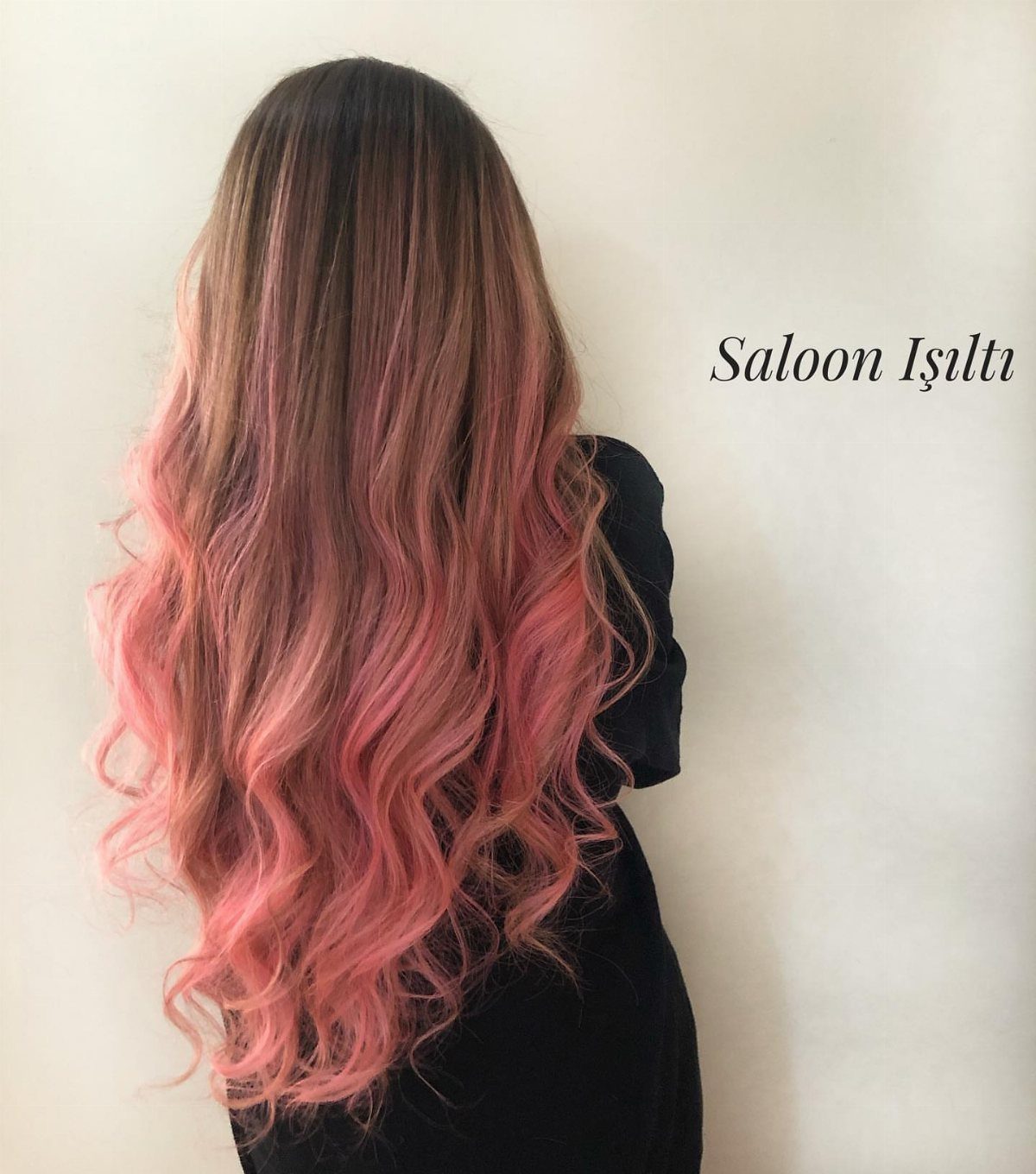
Salmon sits between coral and pink, and the warmth in it keeps the look wearable even when the color is saturated.
Starting with brown and transitioning through the mid-lengths means the fade happens gradually, so you get color without a harsh line.
Pick a transitional shade that connects the brown and salmon without a sudden jump.
Without it, the 2 colors can look disconnected rather than blended. A stylist will usually work in a peachy or light copper tone between the two to soften the jump.
14. Sunset Multi Pink Fusion
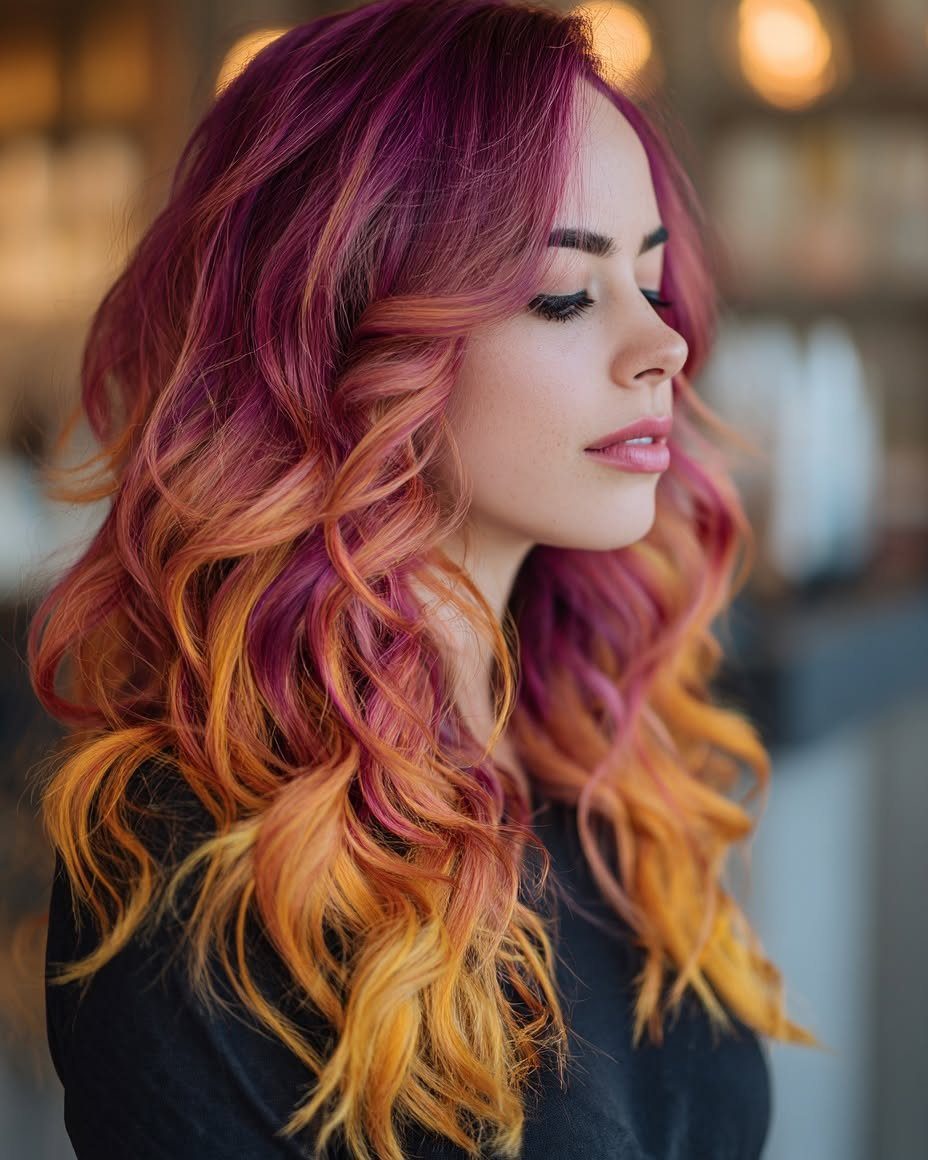
Layering magenta, pink and orange gives the color movement that a single shade can’t. The mix mimics how sunset colors bleed into each other, and the result reads as dimensional rather than flat.
This takes more upkeep than a single-color ombre because each shade fades at its own rate.
Magenta holds longer than the lighter pinks, and orange can shift toward yellow if the blonde underneath isn’t toned regularly. Pink fades faster than most colors, so you’ll be back in the chair more often than with natural tones.
15. Copper and Peachy-Pink Highlights
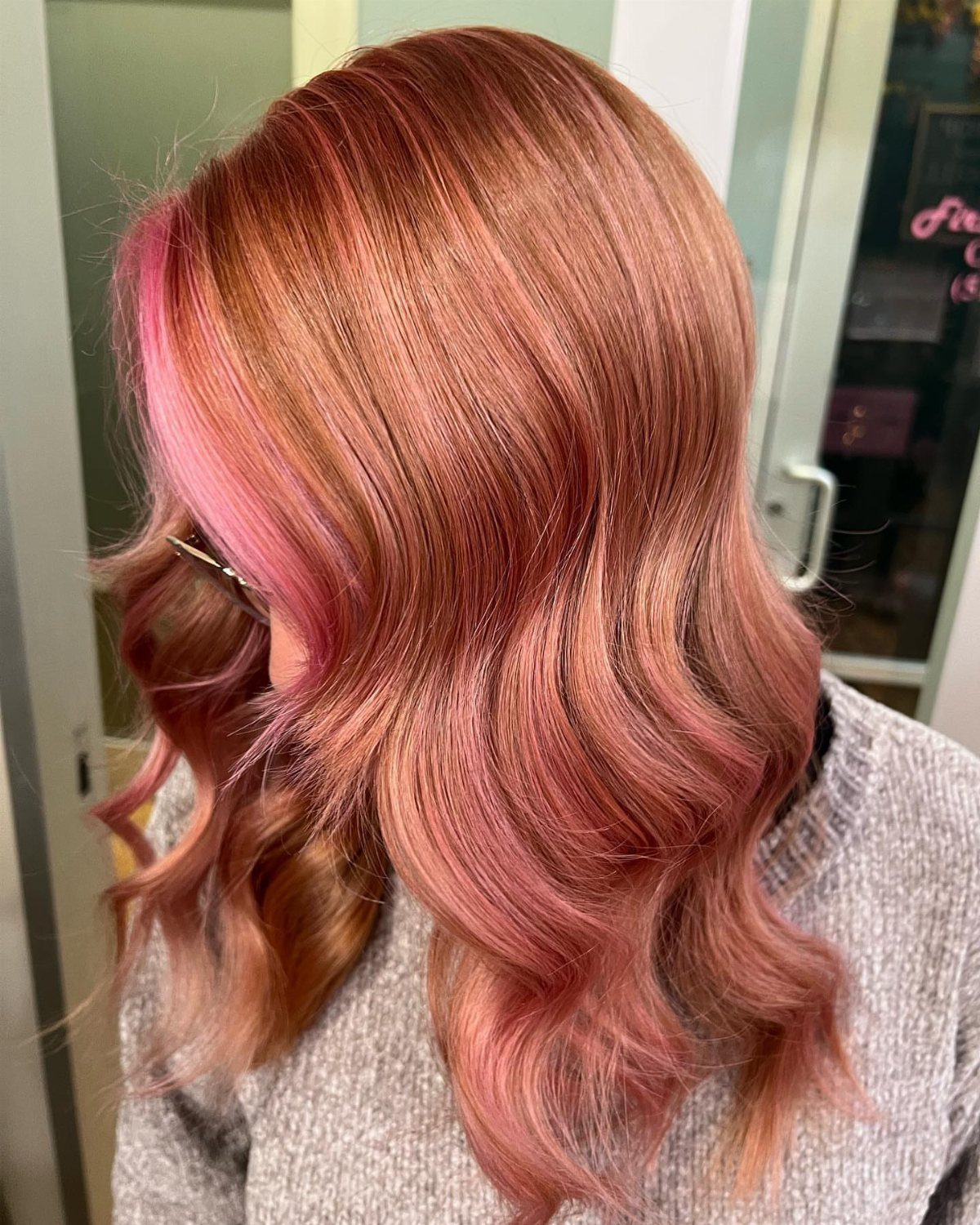
Copper acts as the bridge between brown and peachy-pink, so the colors sit together without clashing. The warmth in both tones keeps the look cohesive, and the peachy-pink reads as a soft accent rather than a statement.
This works well on hair that already has warm undertones.
Cooler-toned brown can pull the copper toward orange, which makes the peachy-pink look out of place. If your base is cool, a stylist can adjust the copper formula to keep it neutral.
16. Blue Purple and Pink Pastel Streaks
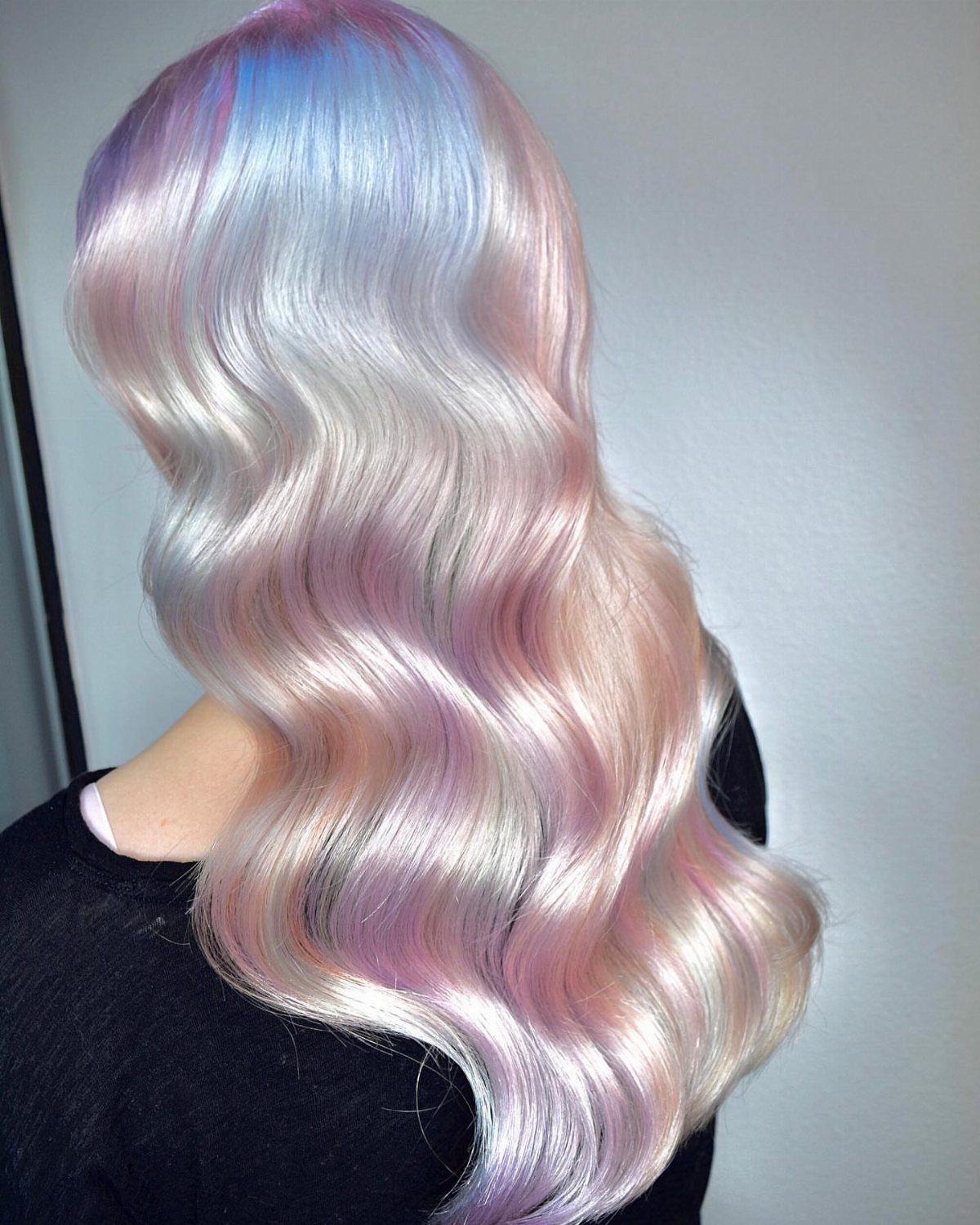
Mixing pastel blue, purple and pink gives the hair a shifting, iridescent quality where the color looks different depending on the light. The streaks stay distinct rather than blending, so each color holds its own.
All 3 shades need a very pale blonde base to show up true, and they fade quickly.
Pastel blue usually goes first, turning into a pale green if the blonde underneath has any warmth left. A silver shampoo helps keep the base cool enough that the colors stay clean.
17. Pastel Purple and Rose Melt
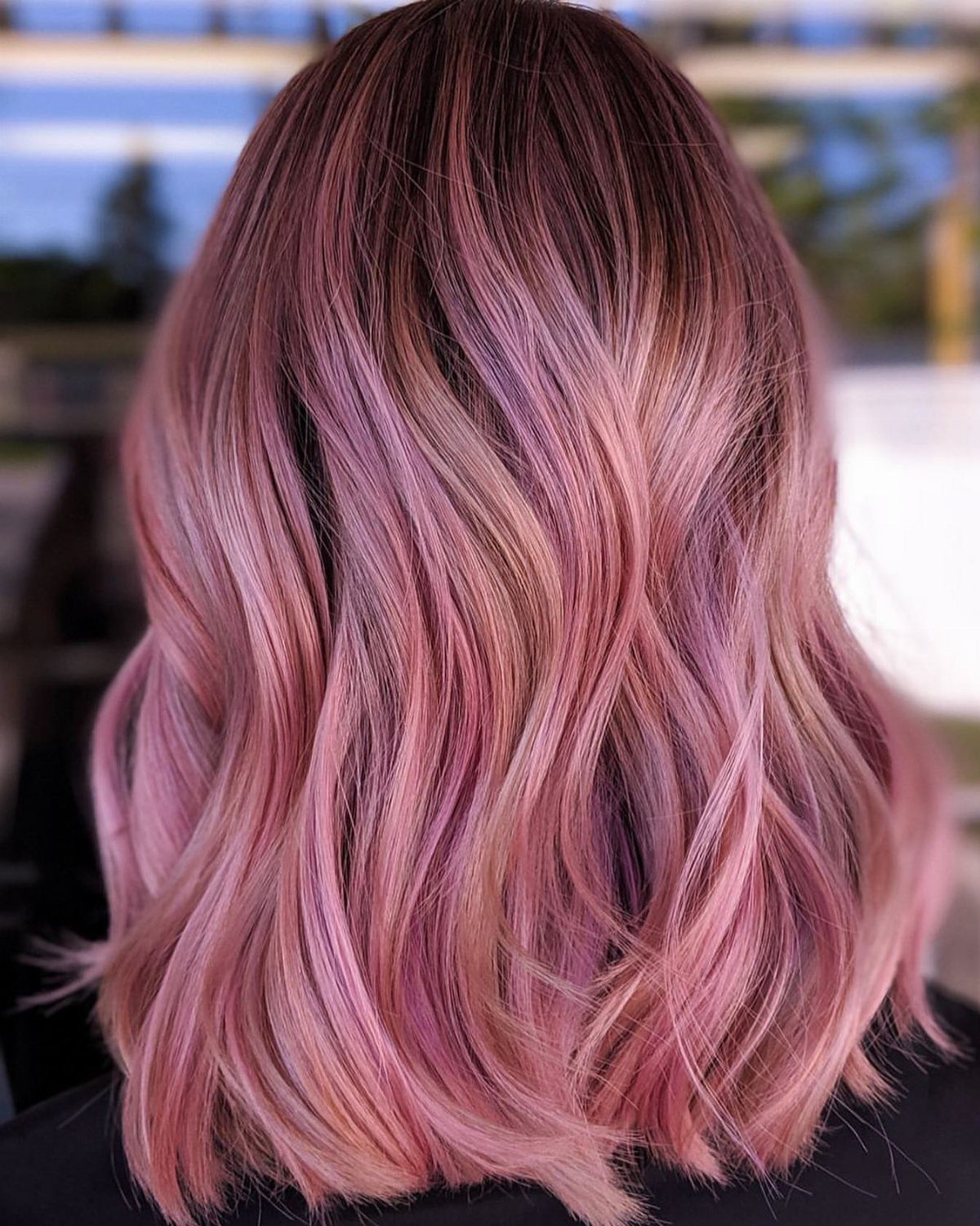
Blending pastel purple and rose through the lengths gives you two colors that read as one gradient.
The purple adds a cooler edge that keeps the rose from looking too sweet, and the blend means no hard line between the two.
Both shades need frequent toning to stay pastel.
Without it, the purple fades toward gray and the rose shifts peachy. A color-depositing mask that mixes both tones can stretch the time between salon visits to about 3 weeks.
18. Peachy Face Frame Streaks
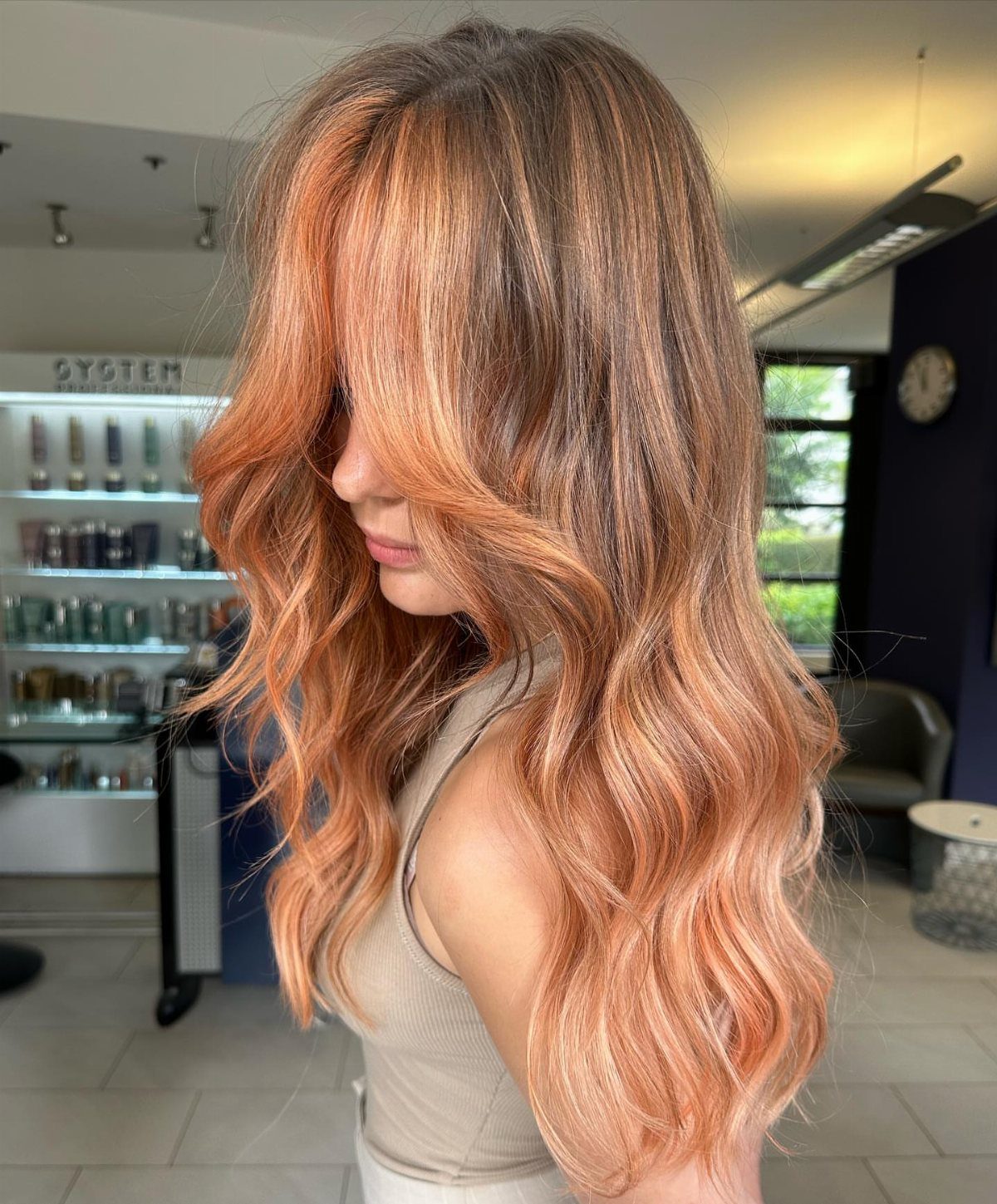
Placing peachy-pink only at the front keeps the color concentrated where it shows up most, so you get the effect without committing to a full head of highlights.
The peach tone warms up the face and suits most skin tones because it’s not too cool or too bright.
This is one of the easier pinks to maintain because there’s less of it to refresh. A color-depositing conditioner used once a week on just the front sections keeps the peachy tone from fading out completely.
19. Coral Pixie Cut
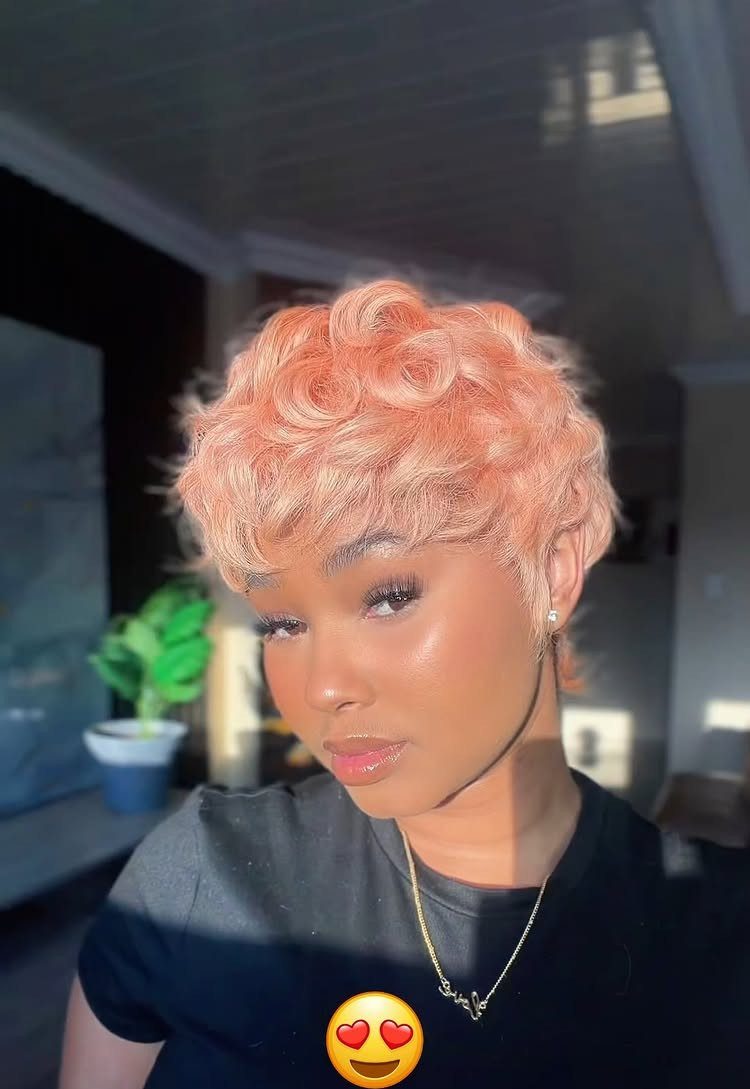
A pixie cut shows off coral in a way that longer hair can’t, since the color sits close to the face and the short length keeps all of it visible at once.
The curl adds texture that catches light differently depending on how it moves.
Coral leans warm and suits most skin tones, but it fades faster than cooler pinks.
20. Dirty Blonde Pink Babylights
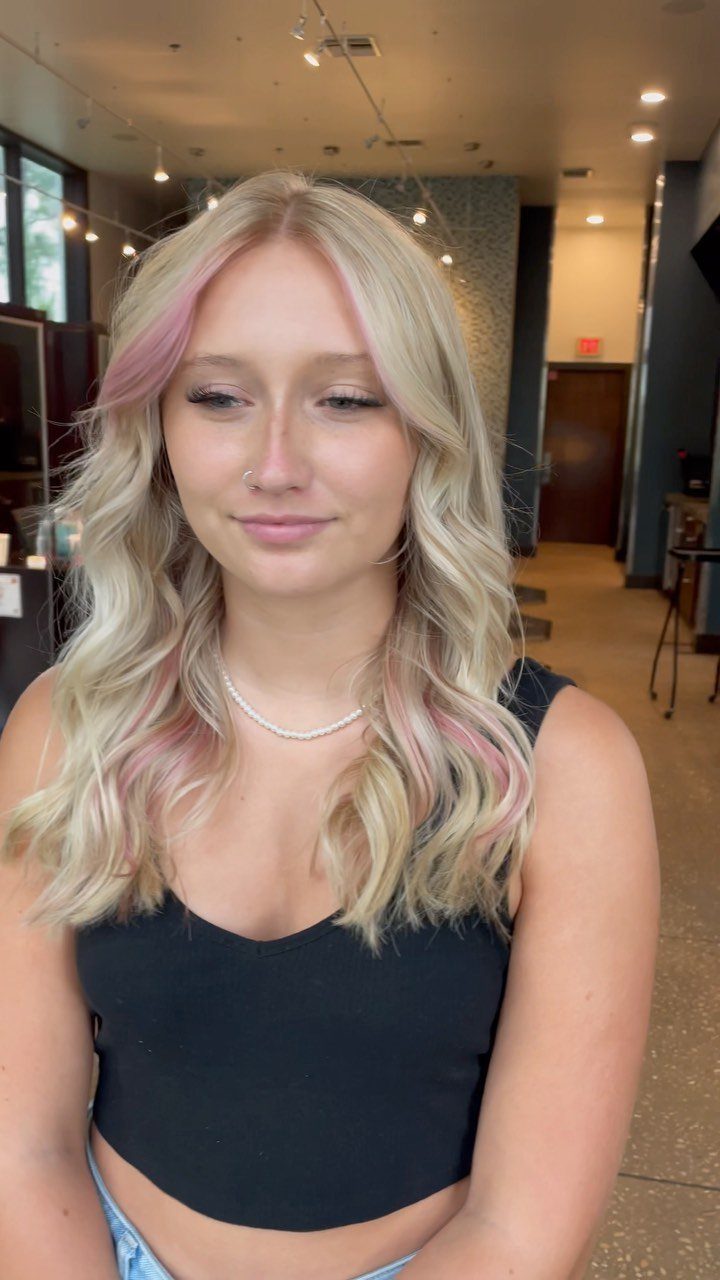
Babylights are fine enough that the pink reads as a tint rather than individual streaks. On dirty blonde, the color stays subtle because the base isn’t bright platinum, so the pink blends in rather than jumping out.
These are painted close to the root, which means regrowth shows sooner than it would with balayage. Refresh them before they start looking faded if you want the color to stay intentional.
21. Bright Pink Blonde Streaks
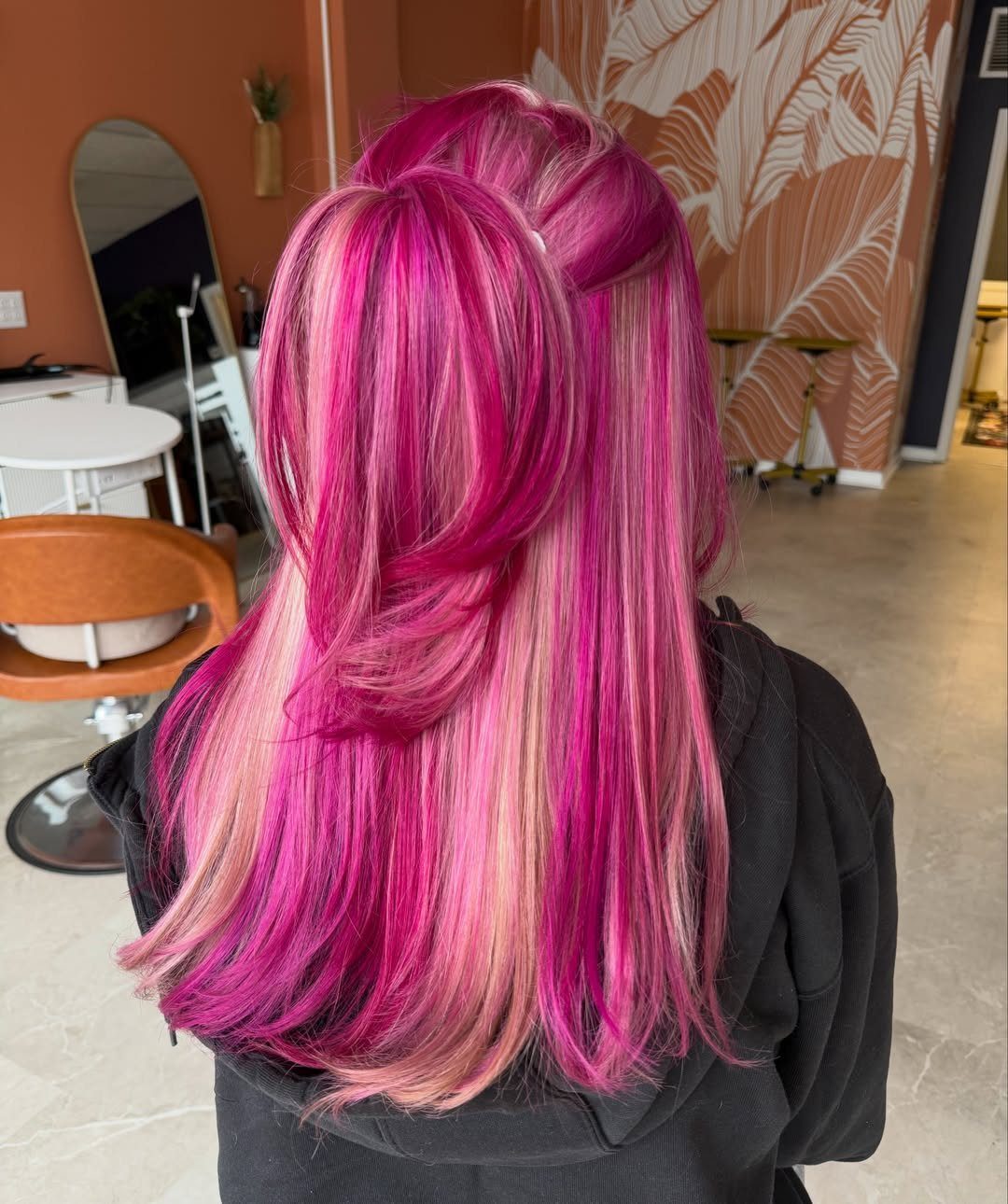
Layering vivid magenta and pink with blonde gives you streaks that stay distinct rather than melting together. The blonde acts as a break between the saturated tones, so each color holds its own instead of blending into one shade.
Long hair shows the full length of each streak, which makes the color more visible than it would be on a shorter cut.
The magenta will outlast the lighter pink as both fade, so you may need separate toners to keep them balanced.
22. Pink Streaks on a Blonde Bob
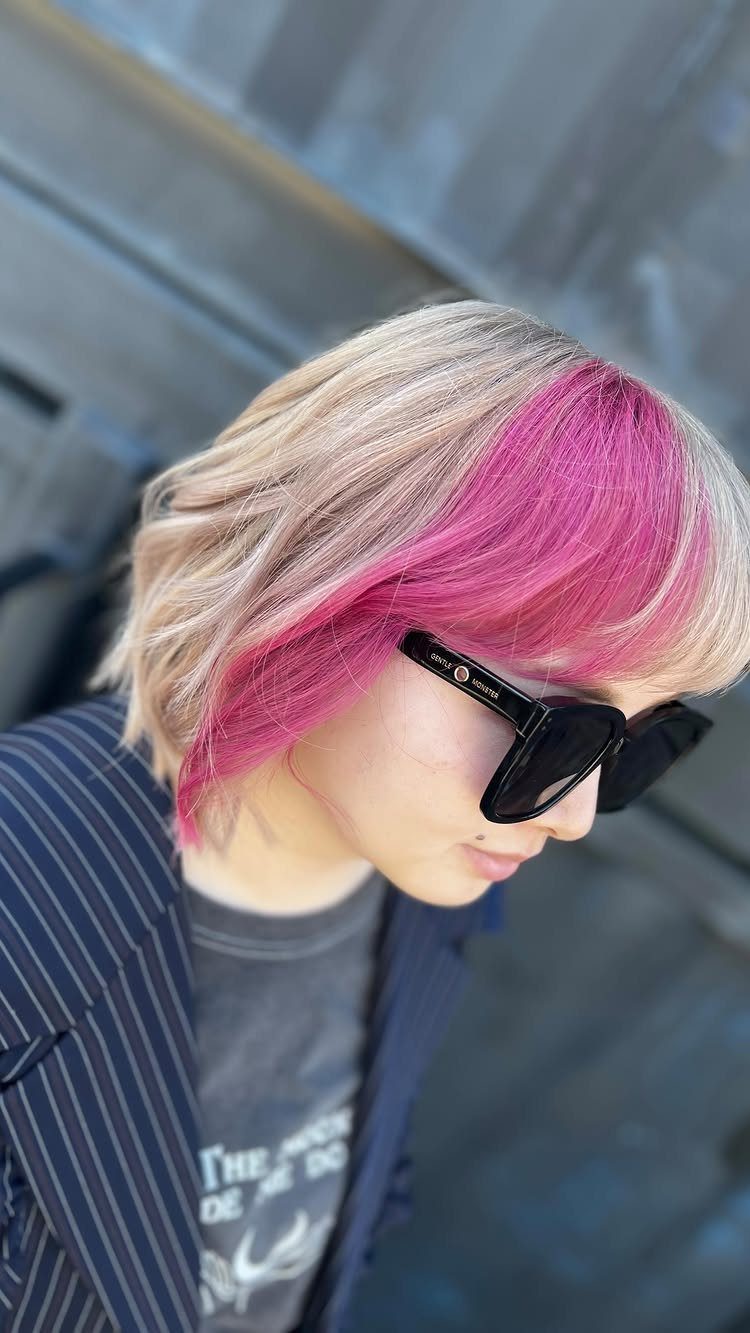
Concentrating the pink at the top and front of a bob means the color shows up even when the hair sits flat.
A short cut like this grows out faster than longer styles, so you’ll see regrowth within 6 weeks if the pink goes close to the root.
Vivid pink on a blonde base needs less maintenance than pastel because the pigment is stronger to start with.
23. Pink and Coral Blonde Braid
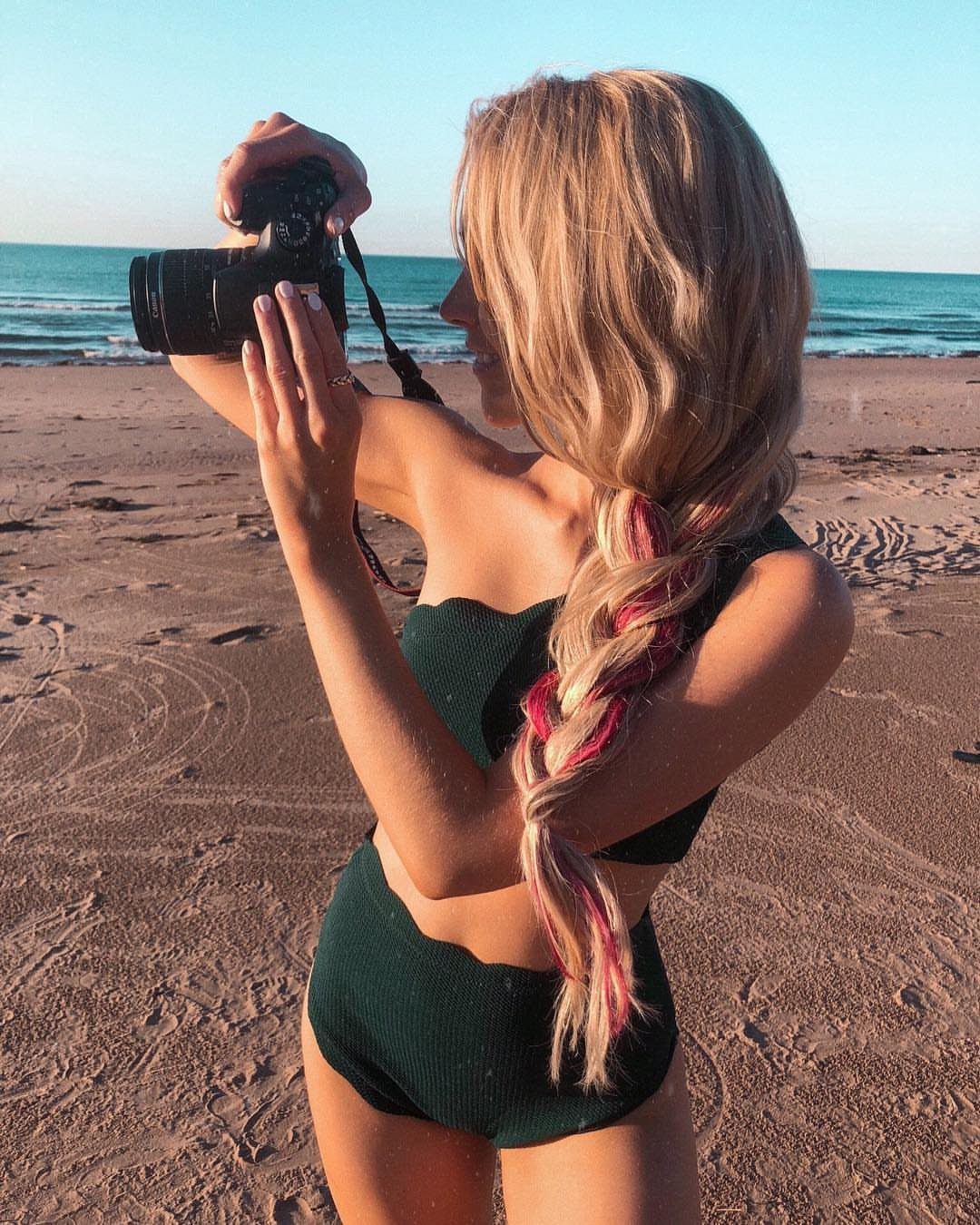
Braiding brings the pink and coral forward so both colors show at once instead of sitting in layers. The blonde base lets the brighter sections stand out without needing a lot of color to make an impact.
If you’re doing this at home, apply the pink and coral with a semi-permanent dye on pre-lightened sections.
The braid itself doesn’t need special care, but both shades will fade with washing, so sulfate-free shampoo helps them last a few extra weeks.
24. Pink Blonde on Dark Hair
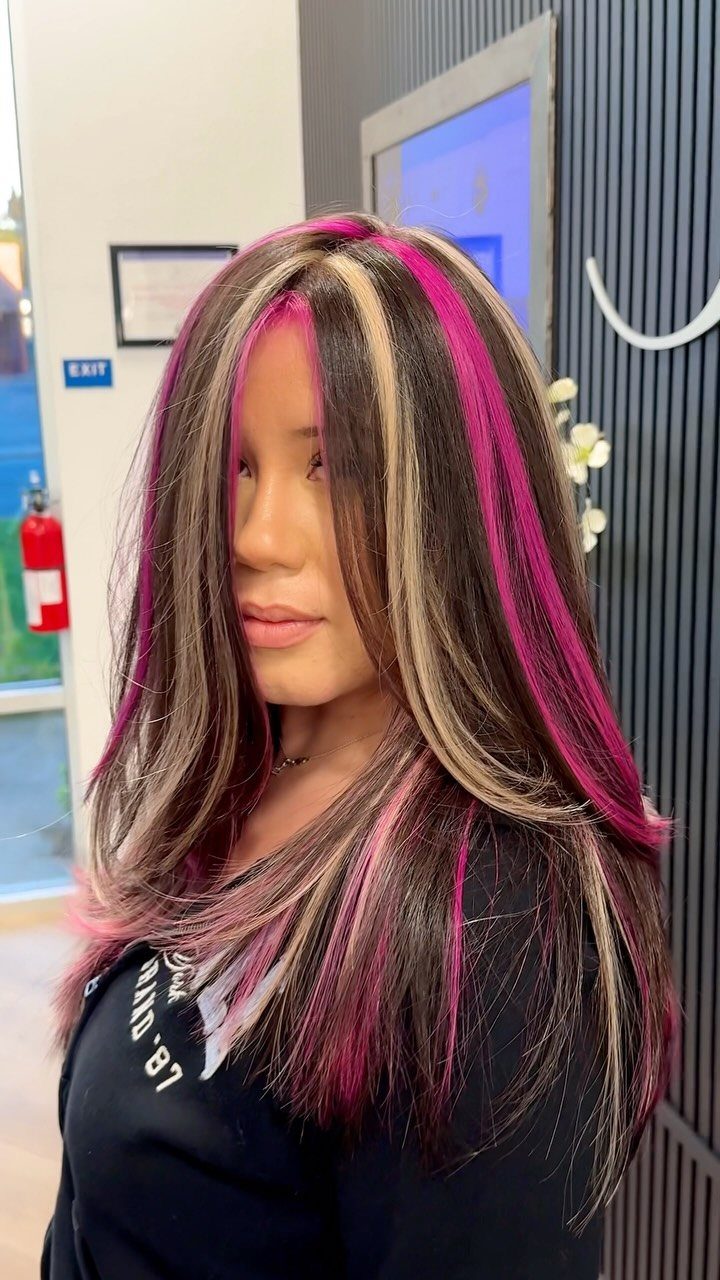
High contrast makes the pink and blonde read bold rather than soft, and the dark base means neither color gets lost. Getting there takes at least one bleach session to lift the sections light enough that the pink shows true.
The darker your starting color, the more time this takes. Very dark brown or black hair may need 2 sessions to reach a pale enough blonde for the pink to look vivid rather than muddy.
Keeping Pink Color Vibrant
Washing less often keeps pink from fading as fast. Twice a week is enough for most people, and cold water when rinsing helps close the cuticle so the color doesn’t slip out.
I stick to sulfate-free formulas that won’t strip the color out faster than it needs to fade. Drugstore formulas with sulfates strip semi-permanent color faster than anything else, so spending a bit more here pays off.
Keep heat tools at 350 degrees or lower, and don’t skip the heat protectant. High heat opens the cuticle and lets the pigment wash out faster, which means the pink fades to pale peach or disappears entirely within a few weeks.
The color fades noticeably after a few weeks, and by week 4 a gloss or toner brings the brightness back.
Shade and Complexion Matching
Cooler undertones suit pastels and magenta, anything with a bluish base that doesn’t pull warm. If silver jewelry looks better on you than gold, that’s the signal to stay in the cooler pink range.
If your skin leans warm, peachy and coral pinks or rose gold will look more natural than cool bubblegum shades.
These shades bring warmth to the face without clashing, and they’re easier to wear if your base blonde has any gold or honey tones left in it.
Neutral undertones can go either direction, so the choice comes down to how light the blonde base is and how bold you want the pink to read.
Medium and olive skin tones carry warmer pinks especially well because the contrast between skin and hair stays balanced.
Deeper skin tones make saturated fuchsia and magenta pop without looking cartoonish, since the richness of the color matches the depth of the complexion.
Frequently Asked Questions
Why does blonde hair with pink highlights work?
Blonde gives pink a neutral canvas so it reads true instead of muddy, whether you go barely-there pastel or full fuchsia.
The 2 tones together create dimension that pulls focus to your face, and pink flatters a wide range of undertones.
How do you choose the right shade of pink?
Match the pink to your skin tone first: cool undertones look best with pastels and magenta, warm tones suit peachy and coral shades, and deeper complexions carry saturated fuchsia well.
Your base blonde also matters, since lighter blondes blend easily with soft pastels while darker or honey-toned blondes need deeper or brighter pinks for contrast.
What are some ideas for blonde and pink hair?
Rose gold blends pink with copper for a warm metallic glow, pastel pink washed through the mid-lengths gives you a hint of color, and pink balayage melts into blonde so there’s no hard stop.
Face-framing magenta pieces make an impact without covering the whole head, and peekaboo highlights hide under the top layer so the color only shows when hair moves.
Can I achieve pink highlights without bleaching my hair?
If you’re already light blonde, lighter pinks can go straight on without more bleach.
How can I temporarily try pink highlights?
Temporary hair chalks, sprays, or semi-permanent dyes let you test the color without commitment. Semi-permanent formulas wash out over a few weeks, so you can see how the shade works with your skin tone and blonde base before going permanent.
Are pink highlights suitable for all hair types and textures?
Pink works across every hair type and texture, straight through to coily, because the color sits on top of whatever cut and curl pattern you have.
A stylist can dial in the placement and shade so the pink shows clearly on your specific texture and doesn’t get lost.