How much lift you want decides everything here: the list runs from black hair softened one or two shades into espresso, up to ash-blonde ends that need toner, purple shampoo and regular salon visits.
Because the lightest pieces stay within a few shades of your natural base, regrowth barely shows, and a dark brown balayage can usually wait around 4 months before it needs attention.
Warm browns like chestnut and caramel grow out gracefully, while cool blondes fade to brass without upkeep, so pick the tone whose maintenance fits your week.
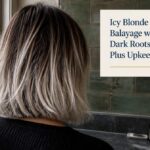
1. Dark Brown to Ash Blonde
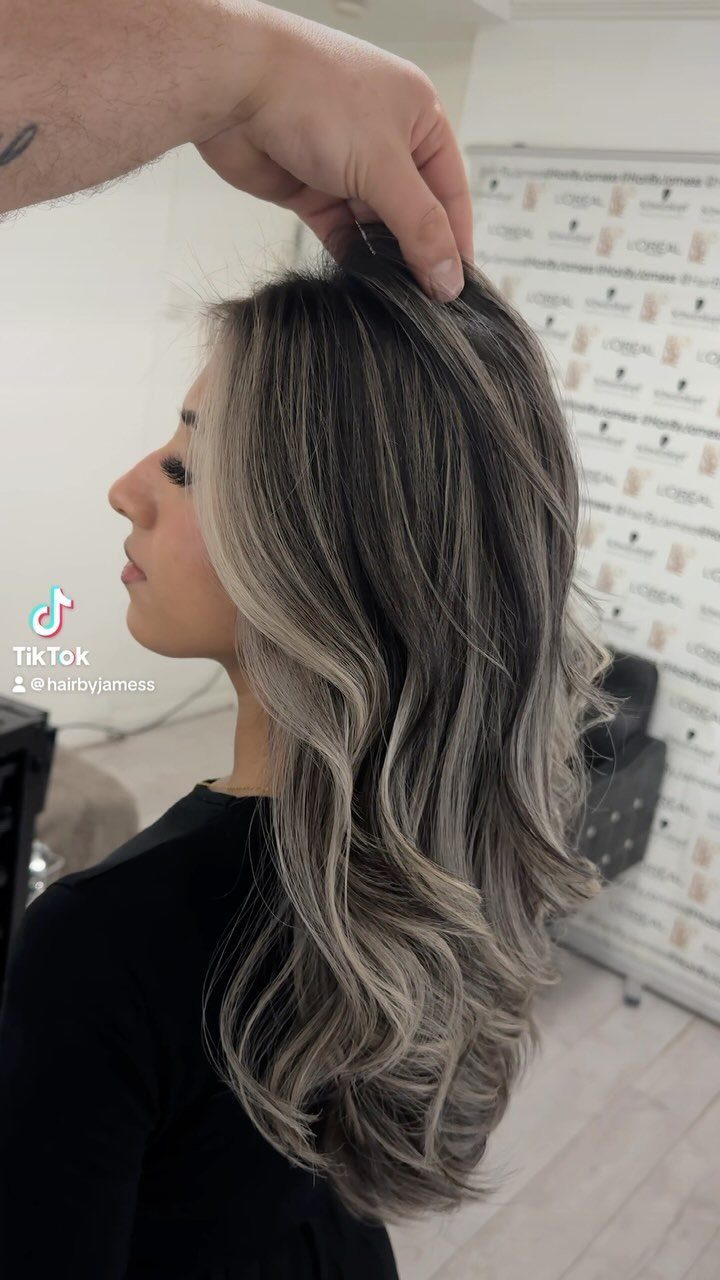
Ash-blonde ends on dark brown roots create a cool, high-contrast finish without needing full-color coverage. The placement concentrates color toward the lengths and tips, leaving the root zone untouched and stretching time between appointments.
Ask for ash or platinum toner to keep the blonde cool; without it, lifted dark brown often turns brassy orange. Face-framing pieces can stay darker or go blonde depending on how much contrast you want near your skin.
The coolness reads modern, but it’s harder to maintain than warm tones. Purple shampoo helps, and a gloss keeps the ash from fading.
2. Caramel Balayage
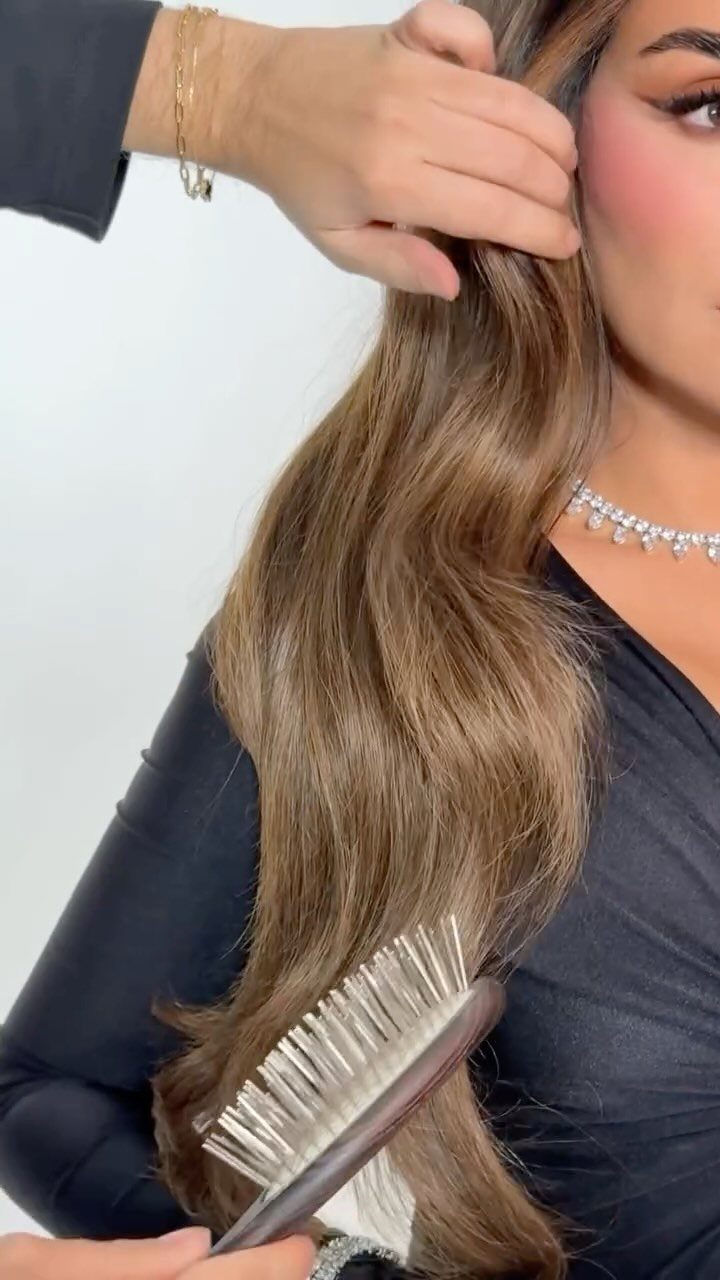
Caramel highlights lift dark brown hair just enough to add warmth without a dramatic shift in base color. The tone sits between honey and toffee, and because it’s only a few shades lighter than the root, regrowth blends naturally.
This works well on long hair because the color develops gradually down the length, mimicking how sun lightens hair over time. I’d go for this if you want visible color that still reads as brunette, not mixed or bronde.
It suits warm and neutral skin tones best. Cooler complexions might find caramel pulls too orange; in that case, ask for a cooler beige or mushroom brown instead.
3. Cinnamon Brown Balayage
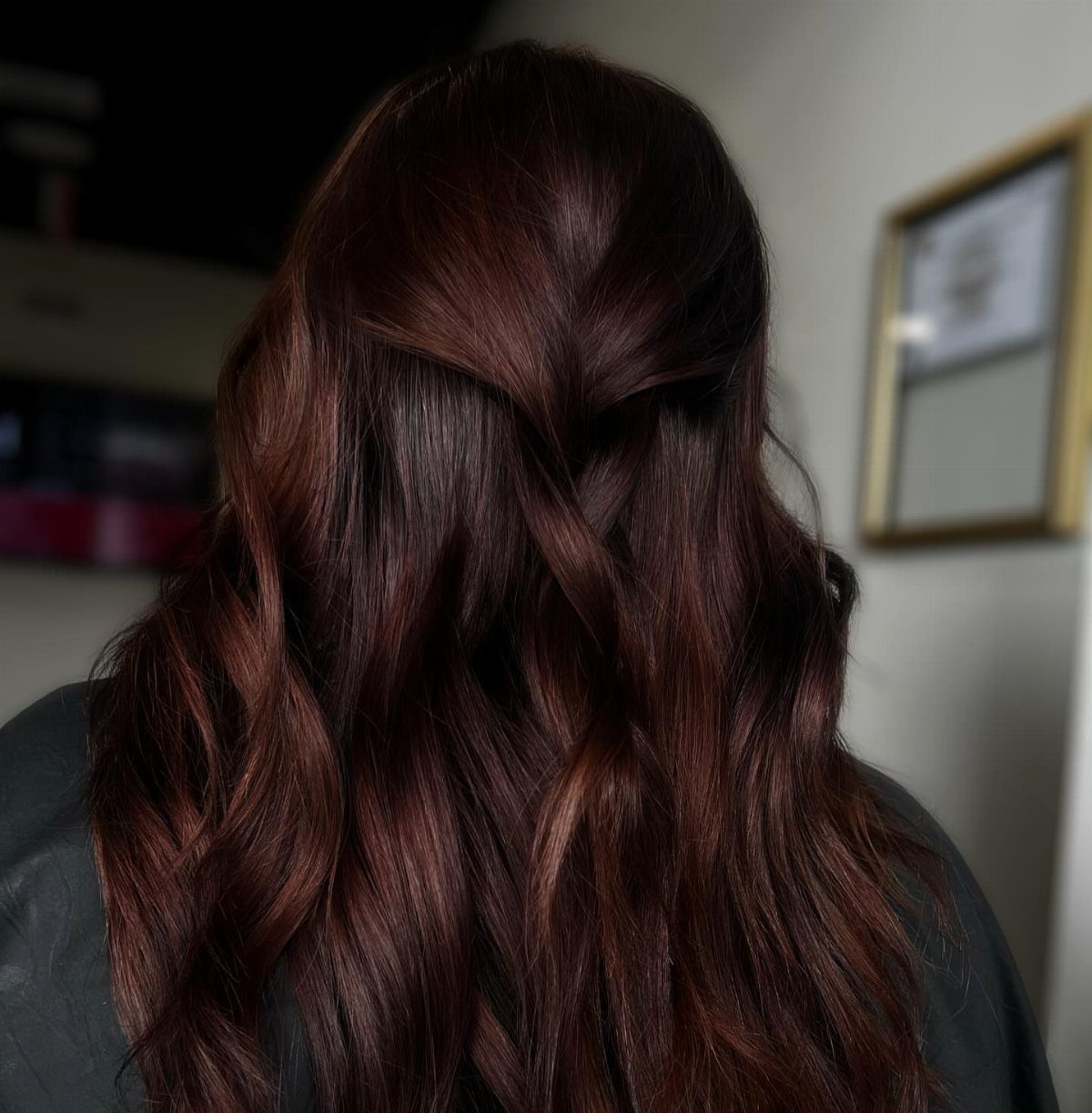
Cinnamon sits between auburn and brown, adding a warm reddish undertone that shows up most in direct light.
The color stays subtle because it’s painted onto a dark base, so you get dimension without an obvious stripe or block of color.
This one works if you want warmth but find copper or auburn too bold. The reddish tint warms up cooler browns and adds depth to hair that tends to look flat or one-dimensional.
It fades more gently than true red balayage because the base color is already warm. Touch-ups can stretch, and the grown-out version still looks intentional rather than like color that’s gone too long.
4. Chestnut Balayage
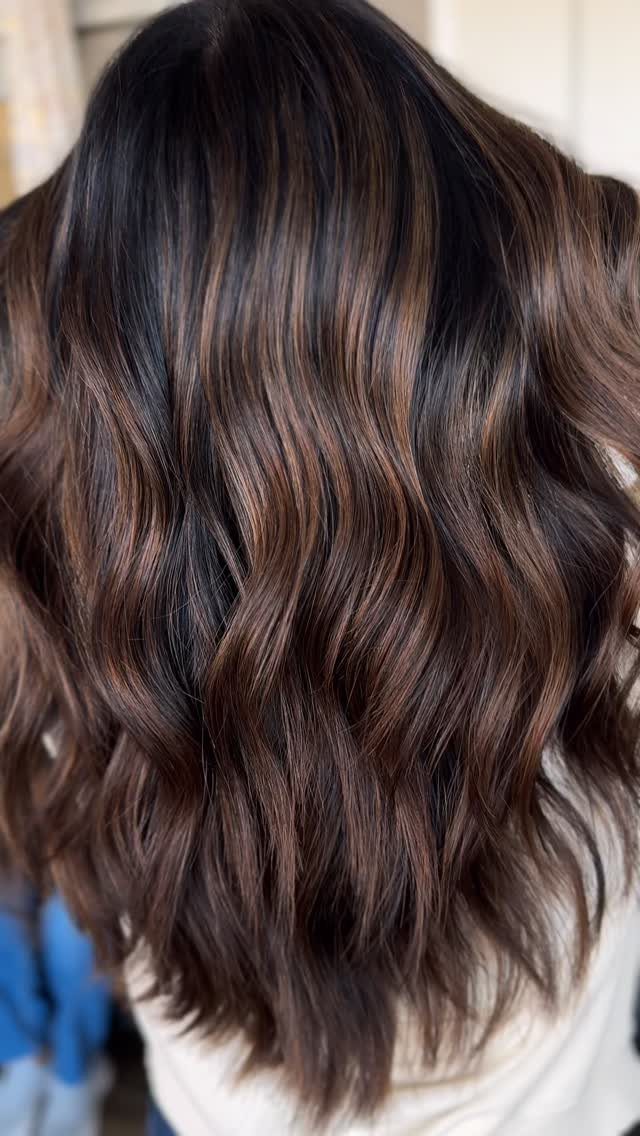
Chestnut balayage adds soft brown tones a few shades lighter than the base, creating lift without pulling the hair into caramel or blonde territory.
The result is subtle enough to pass as natural but adds enough contrast to break up solid color.
Because the tones are close to the root, this is one of the lowest-maintenance options. Regrowth blends naturally, and you can go longer if you’re fine with a softer transition.
I’d choose this if your base is already a medium to dark brown and you want dimension that reads understated. It suits most skin tones because the warmth stays muted, and it’s forgiving on hair that doesn’t lift evenly.
5. Copper Brown Balayage
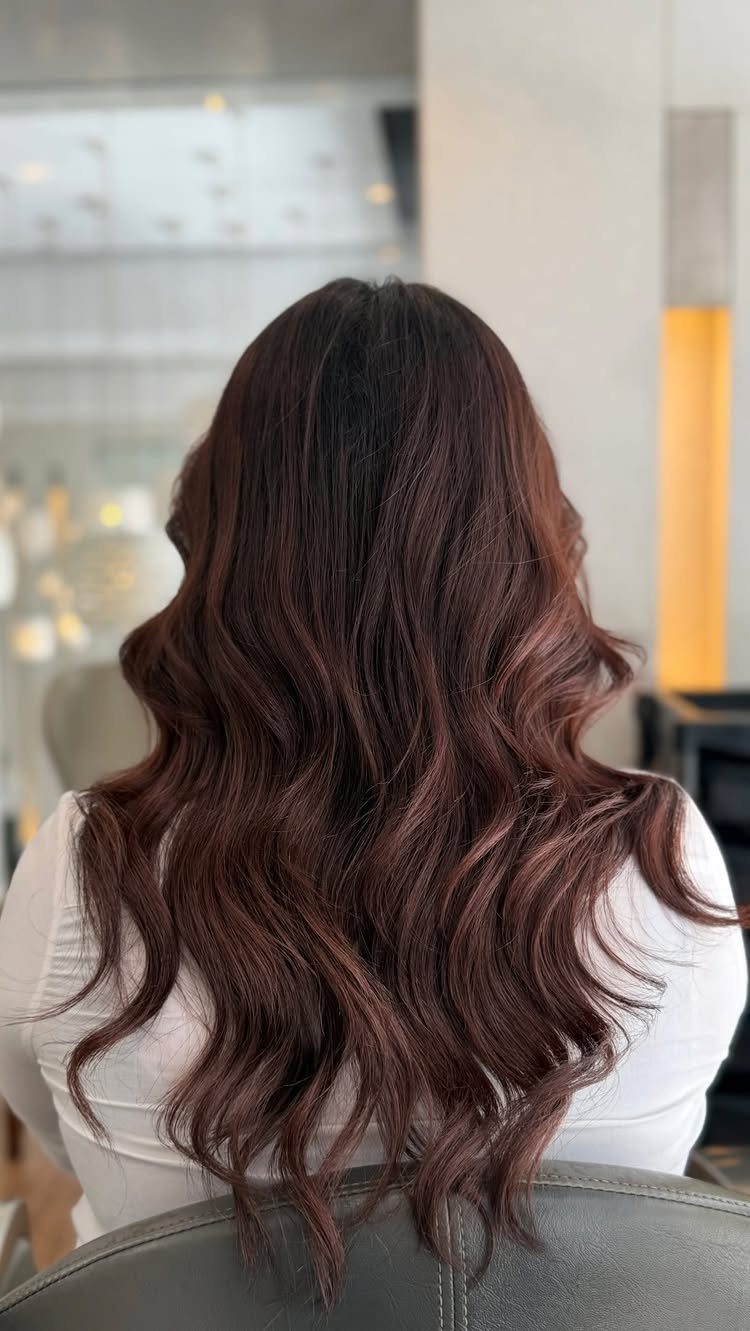
Copper balayage brings a bolder, fiery warmth to dark brown hair, with tones that lean orange-red rather than caramel or honey. The color shows up clearly against a brunette base and catches light in a way that softer highlights don’t.
If you have cool or pink undertones, copper can clash; ask for auburn or chestnut instead. The tone fades faster than neutral browns, so expect touch-ups more often if you want the vibrancy to stay.
It’s a good middle ground if full red feels too bold but you still want something with more punch than caramel.
The grow-out is gradual, and the root line stays soft as long as the color is painted rather than foiled.
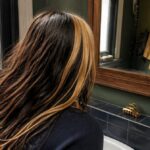
6. Blonde and Dark Brown
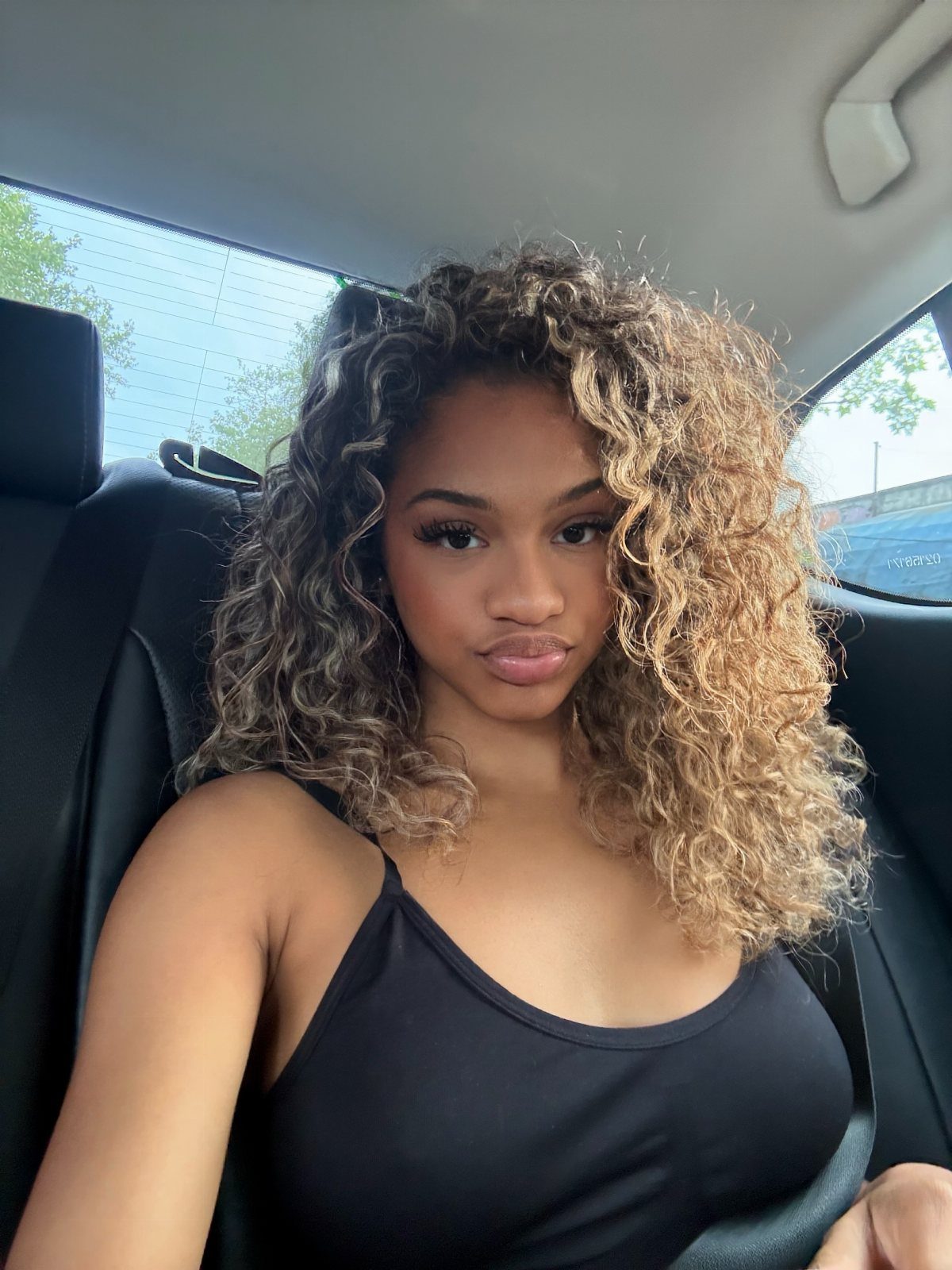
Blonde balayage on dark brown hair gives high contrast, and that lift shows most on long, curly lengths where the color spreads across multiple layers.
The blonde sits several shades lighter than the root, so the difference is visible even in low light.
This is higher maintenance than warm-toned balayage because the lift is greater and the blonde needs toning to stay cool or neutral. Touch-ups run more often than subtler balayage, and you’ll need purple or blue shampoo to prevent brassiness.
Curly hair shows the color in a scattered, dimensional way because each curl catches light differently. I’d go for this if you want noticeable contrast and are prepared to keep up with toning and trims to manage the lifted ends.
7. Chocolate Caramel Honey Balayage
Three tones in one head: chocolate at the root, caramel through the mid-lengths, honey catching near the ends. Because they sit so close together, the blend reads as one soft gradient rather than separate streaks.
On long waves this works well, since the bends in the hair show off each shade as it turns.
I’d pick it over a single-tone caramel if you like a little variety in your color. Ask your stylist to keep the honey to the lower lengths so the top stays rich and dark.
8. Subtle Layered Brunette Highlights
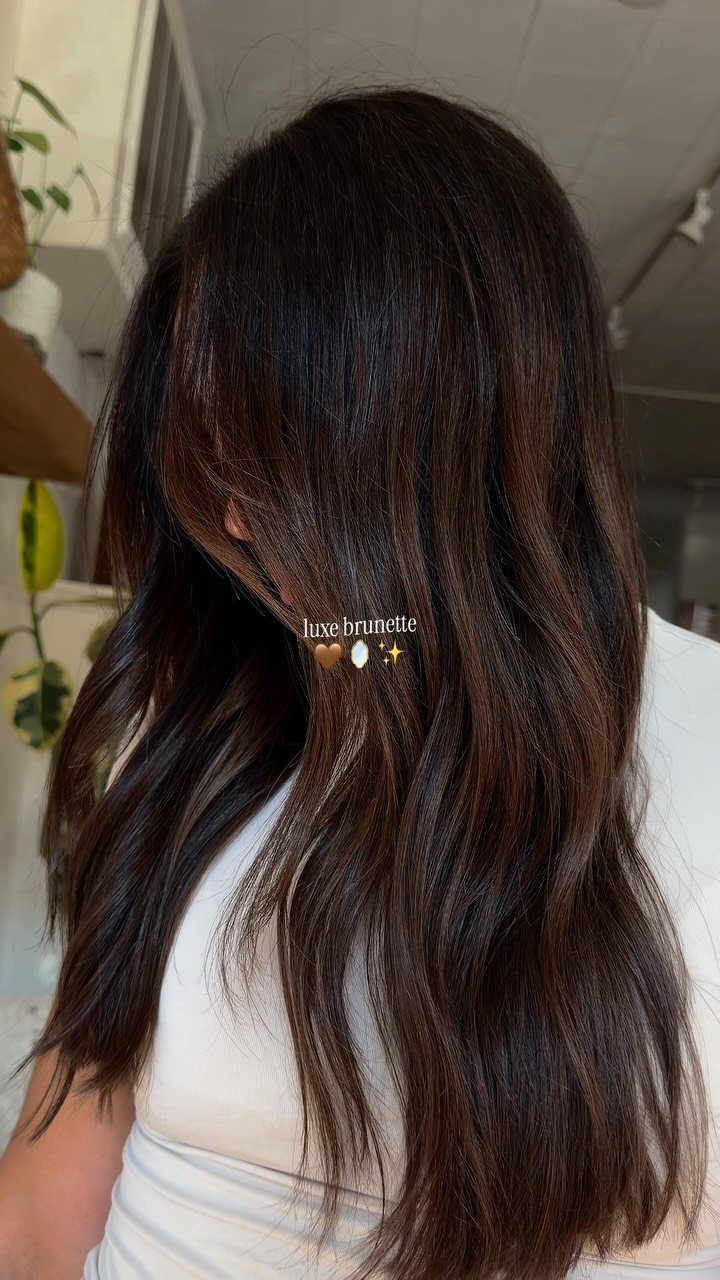
Layered highlights only show where the haircut makes them show. A few fine pieces placed on different layers add depth to long dark brown hair, yet the overall color still reads as one brunette.
This is the one I’d suggest if you want people to say your hair looks healthy, not colored. Ask for highlights only a shade or two lighter than your base, and skip heavy contrast.
9. Honey-brown Balayage Highlights
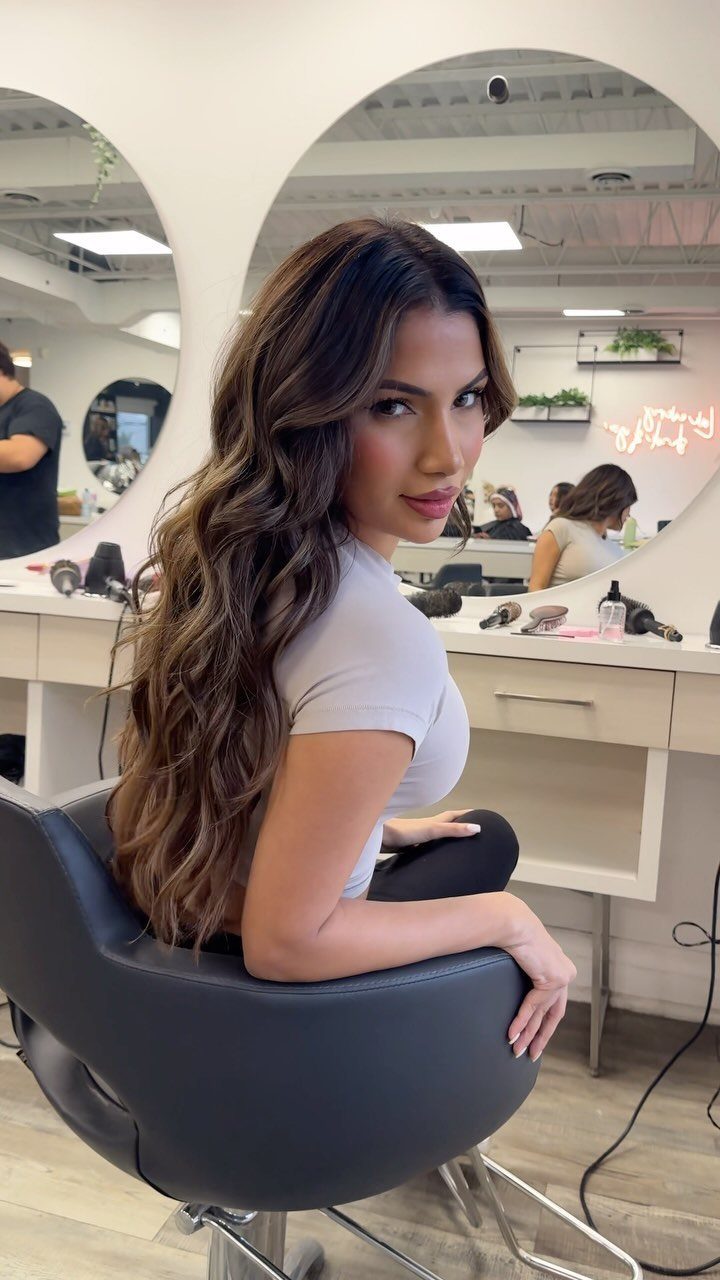
Honey-brown sits warmer and lighter than chestnut, with a golden glow that brightens dark brown hair without going blonde. On long waves, it adds a sweet, sunlit look through the lengths.
Bring a photo to your stylist and say "honey" rather than "caramel" so the tone leans golden.
I like it best on hair that’s already a medium to dark brown, where the warmth stands out clearly. Cool-toned skin may prefer a slightly less yellow honey.
10. Multi-toned Balayage
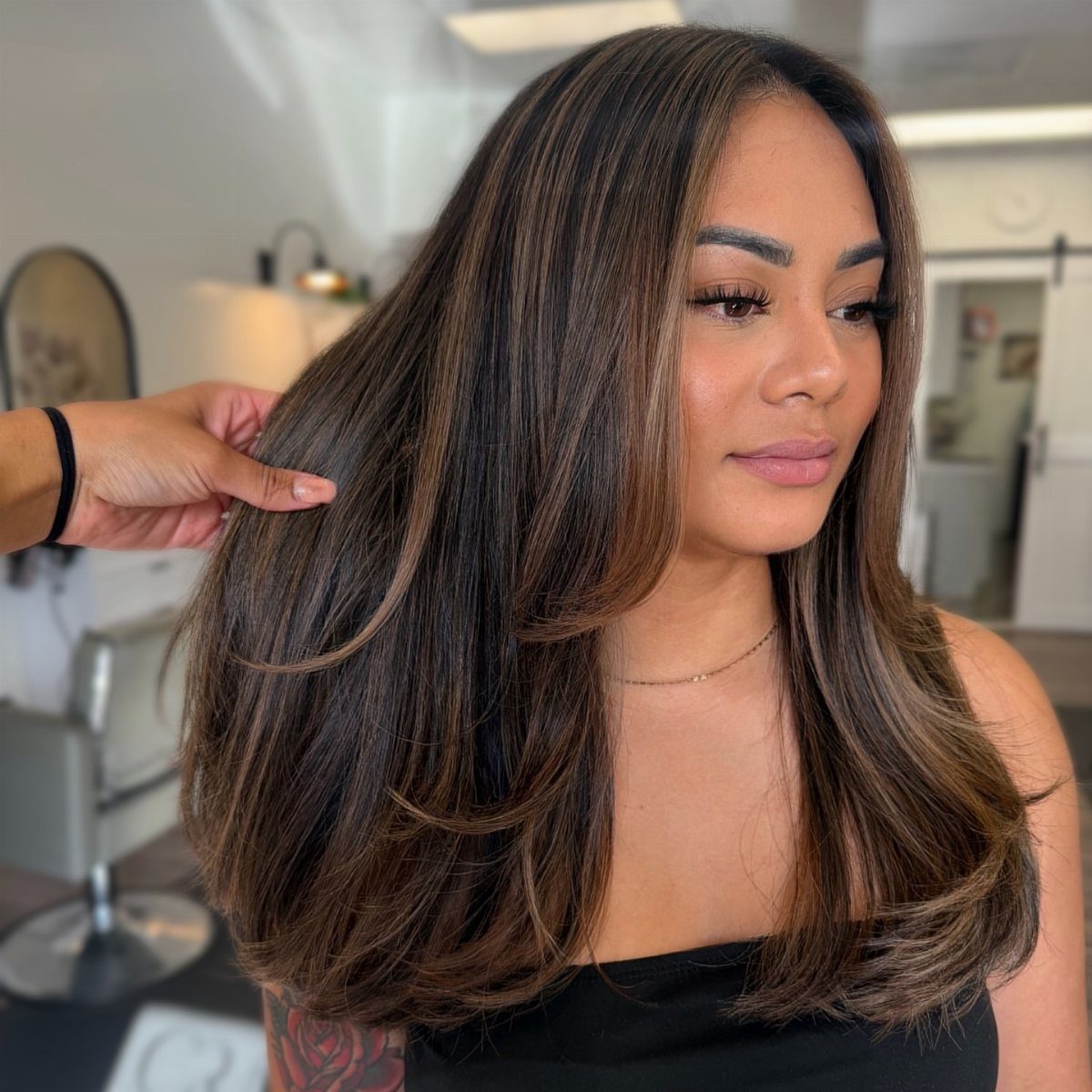
Several shades woven together give dark brown hair more depth than any single highlight color can. Mixing lighter and deeper tones through voluminous layers makes the hair look thicker and more dimensional.
When you book, ask for a few related shades instead of one, and let the stylist place them by layer.
I’d choose this if flat, one-note brown bores you. Expect a longer appointment than a simple balayage, since more tones mean more painting and more blending.
11. Warm Chocolate Copper Waves
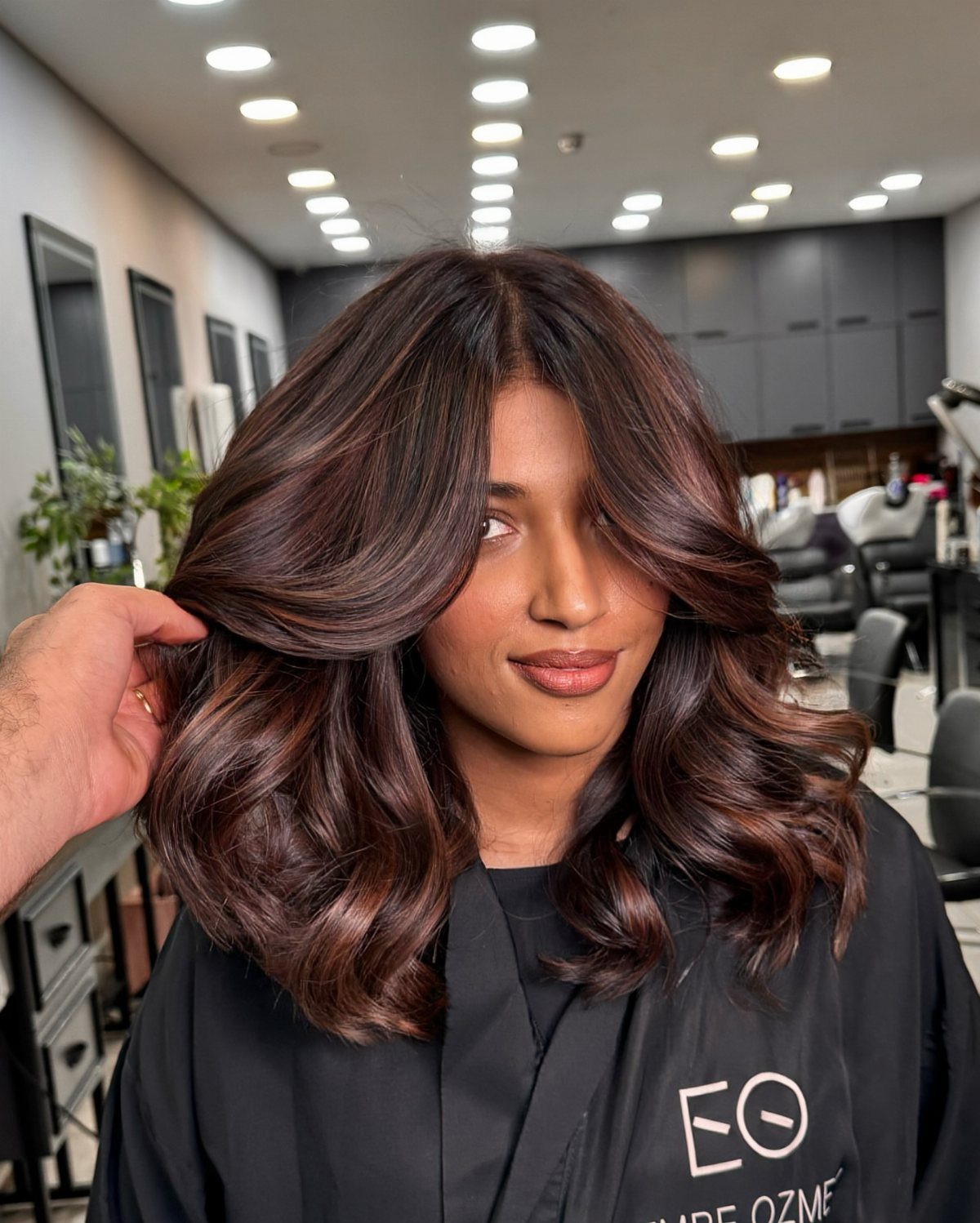
Copper threaded through chocolate brown gives glossy waves a reddish glow that shows most when the hair moves. It’s warmer and richer than plain brown, but softer than a full copper statement.
Ask for copper as an accent against a deep chocolate base so it stays a highlight, not the main color.
The copper shows up most when hair moves, so if you wear it straight most days you’ll see less of the warmth. I’d pick this over bright copper if you want warmth that still looks natural at work.
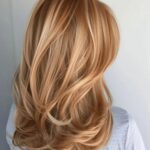
12. Bronde Balayage
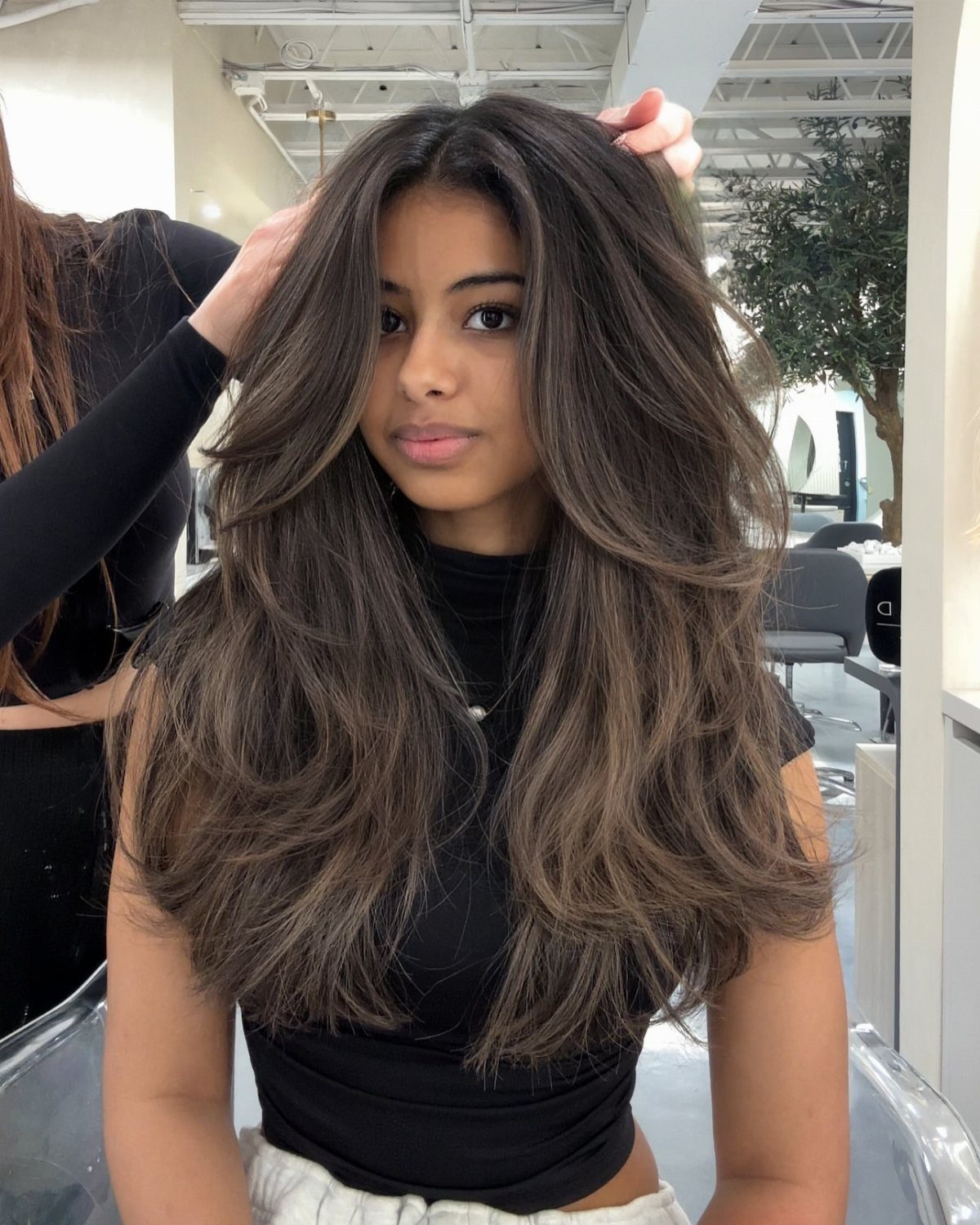
Bronde is the middle ground between brunette and blonde: golden-blonde pieces blended into a brown base so neither color takes over. The lived-in finish comes from soft, hand-painted placement with no hard lines near the root.
I’d ask for it if you can’t decide between going lighter and staying dark.
Tell your stylist you want it balanced, not chunky, and ask for a gloss to keep the golden tone even. Because the blend is gradual, regrowth looks gentle, so appointments can stretch out.
13. Black-to-dark-brown Balayage
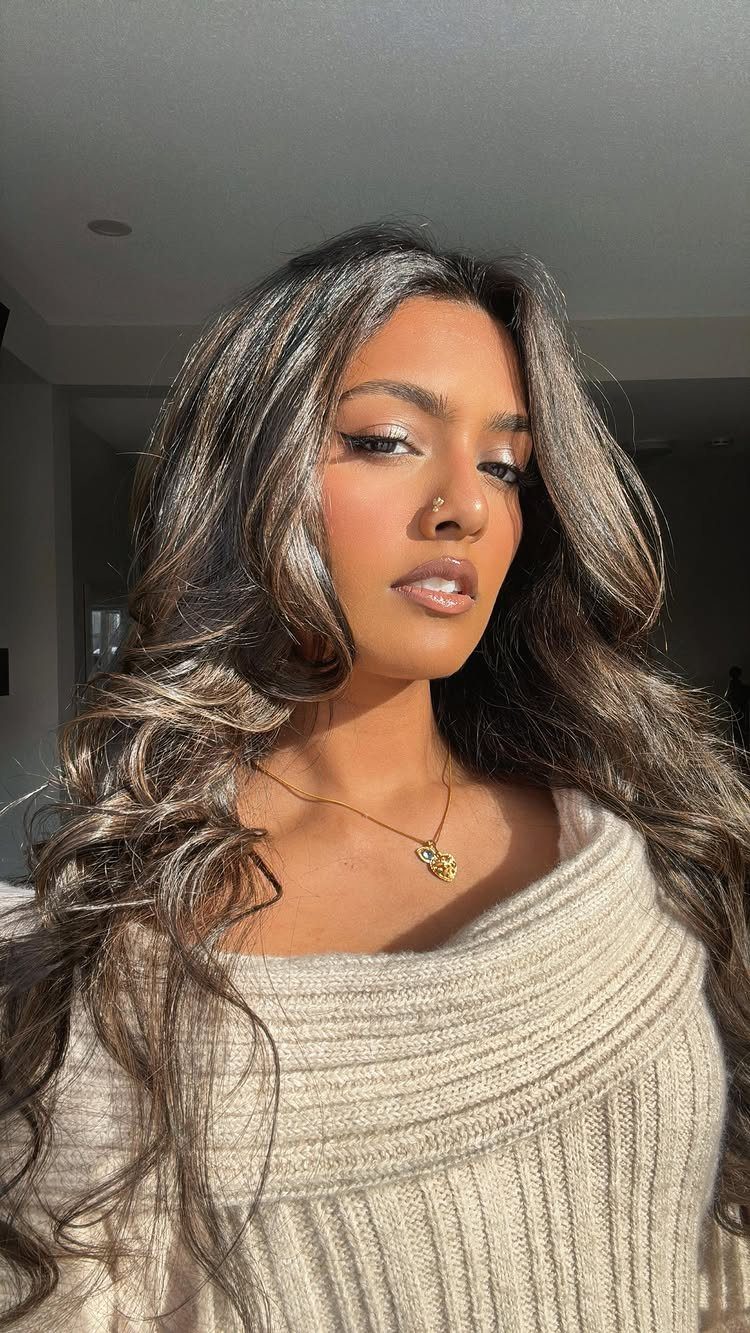
Lightening black hair just one or two shades into soft brown adds movement without a bold change in tone. The balayage sits close to the base color, so the shift reads as depth rather than contrast.
This is the one I’d pick if you want to soften solid black hair but aren’t ready for caramel or blonde.
The subtle lift shows most in direct light, and because the tones are so close, regrowth blends gently. Ask for dark chocolate or espresso brown so the highlights stay rich and don’t pull brassy.
14. Light Brown
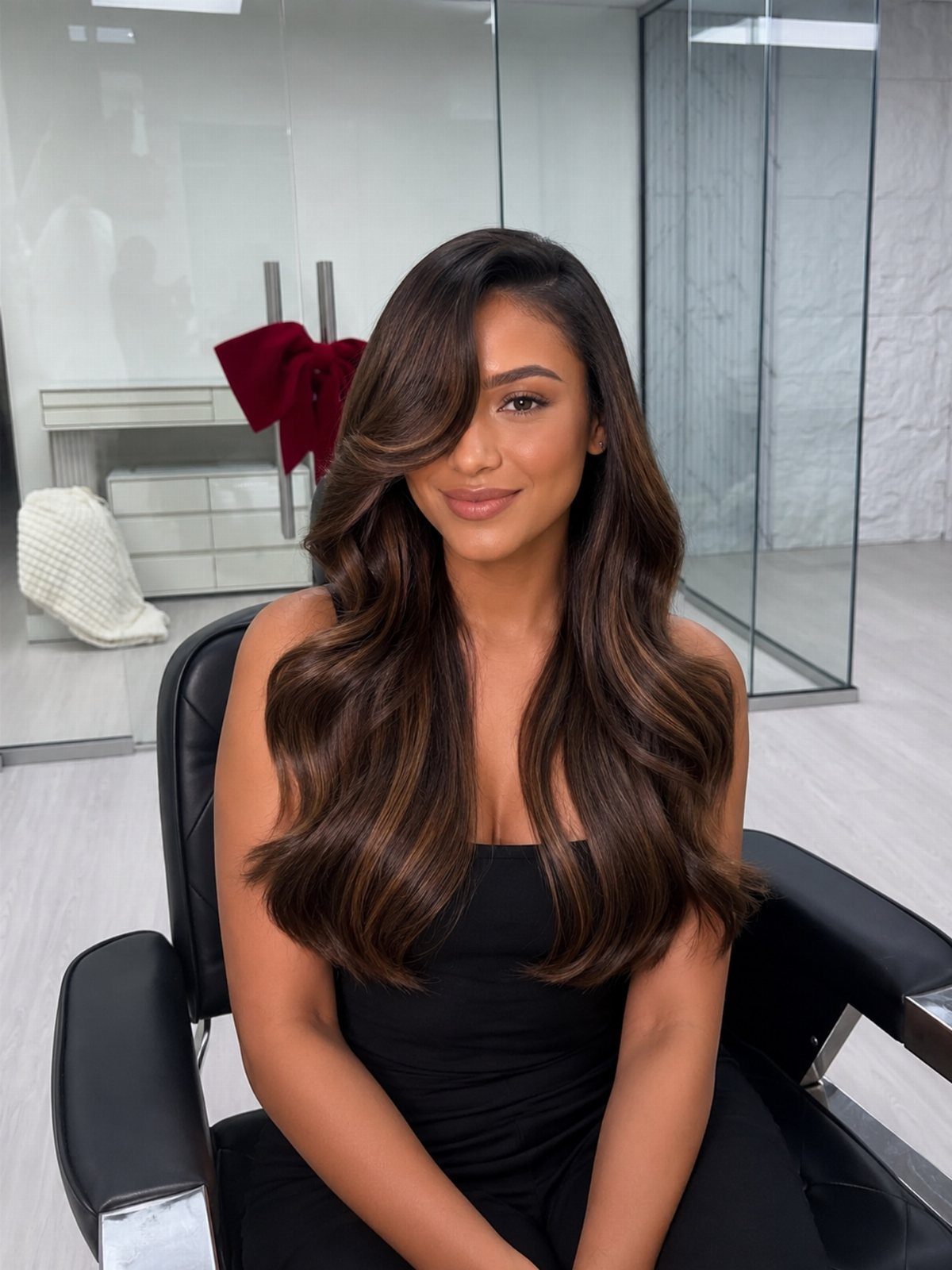
Light brown highlights give dark hair a lifted, dimensional finish without leaving brunette territory. The tone sits warmer than ash but cooler than caramel, adding softness that still reads natural.
The color is close enough to blend naturally as it grows, so touch-ups can stretch. I’d choose this over blonde if you want lift that doesn’t need constant maintenance or purple shampoo.
15. Medium Brown Balayage Straight Hair
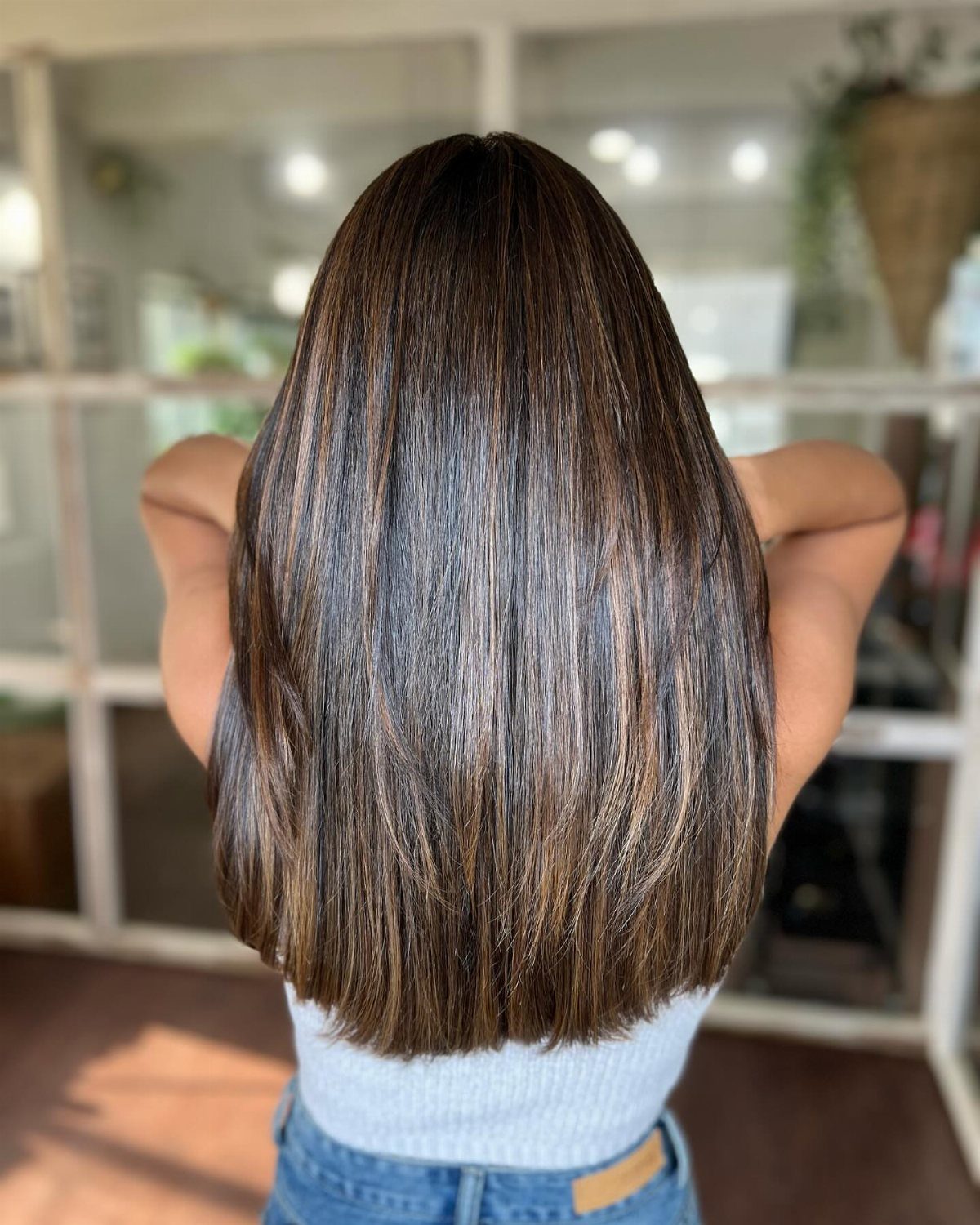
On straight hair, balayage shows as clean ribbons of color rather than scattered dimension. Caramel pieces through the lengths add warmth, and face-framing highlights brighten the complexion without needing heavy contrast.
Straight hair doesn’t hide regrowth the way waves or curls do, so placement matters.
Ask for softer, blended strokes near the root so the line stays gradual. I’d go for this if you wear your hair straight most days and want color that looks polished, not grown out, even after a few months.
16. Auburn Balayage on Dark Brown
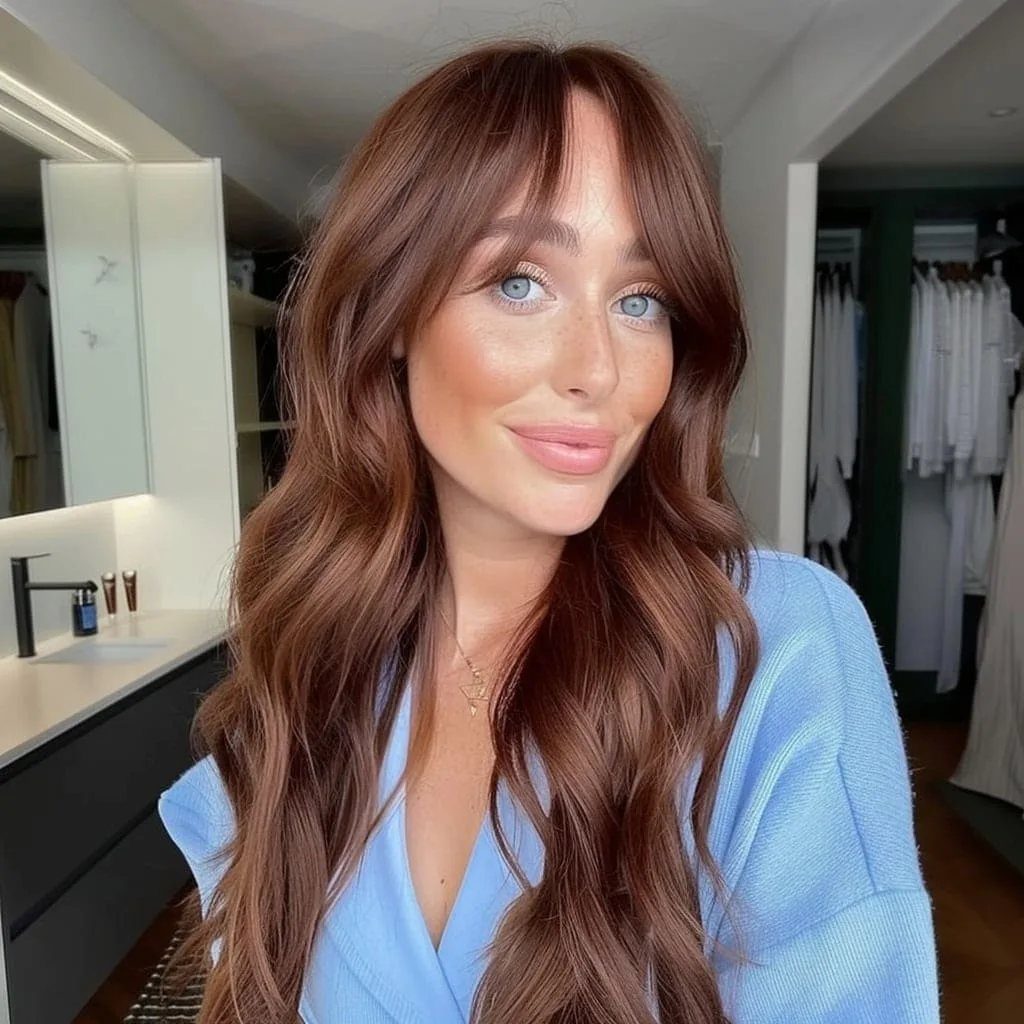
Auburn balayage brings a red-brown warmth that shows clearly against dark hair. The tone sits between copper and chestnut, adding richness without the bright orange punch of full copper.
I’d choose this if you like the idea of red but want something softer than a full auburn base.
17. Honey Auburn Brunette
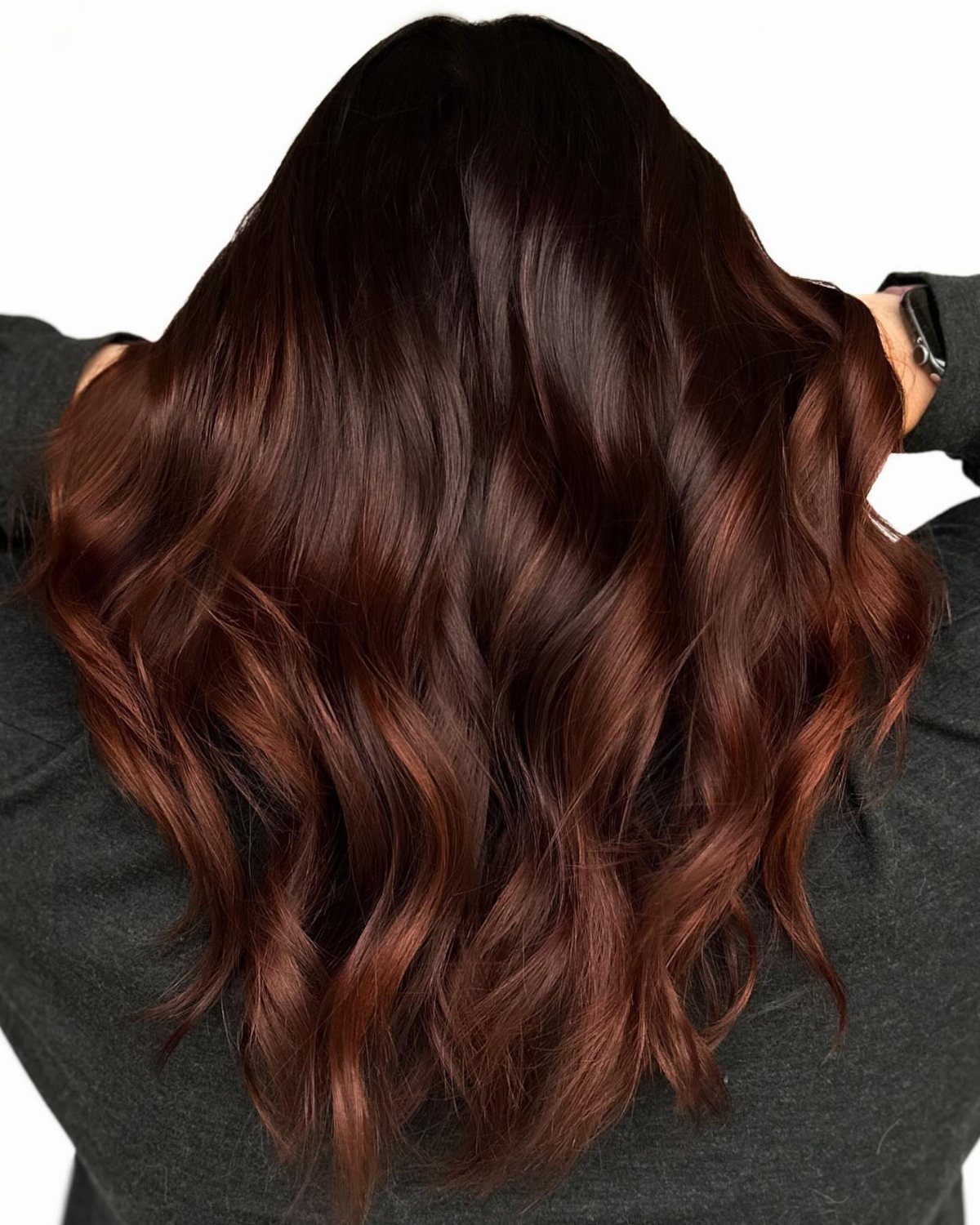
Honey and auburn woven together create a warm, dimensional look that reads as layered color rather than a single highlight tone.
The honey tones brighten from mid-shaft down, and the auburn fills in warmth where the base would otherwise flatten out.
This works well on medium-brown hair because the 2 tones sit close enough to blend naturally.
Ask for the auburn to stay subtle so the honey doesn’t look like a separate stripe. I’d pick this if you want warmth with variety, and you’re fine with a bit more upkeep than single-tone balayage.
18. Soft Brown Balayage
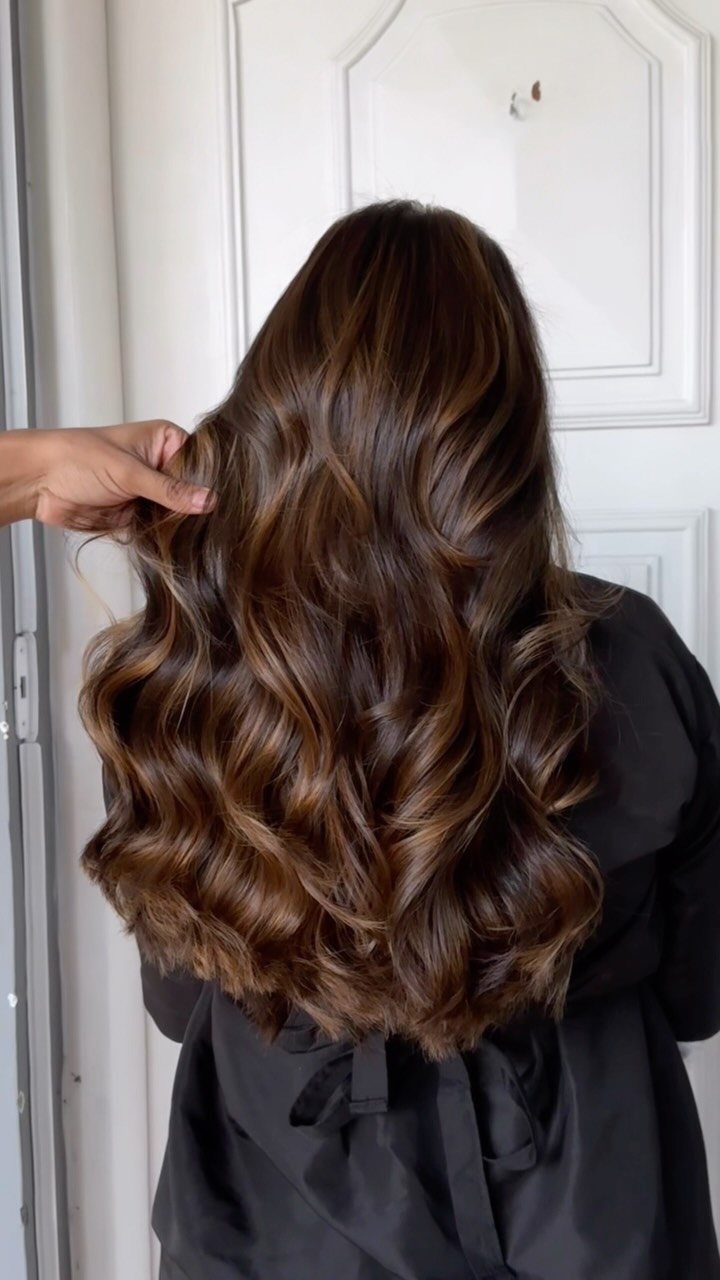
A light scattering of warm brown through dark hair adds just enough lift to brighten the face without a strong color statement.
I reach for this when dimension matters but the style itself should still look like solid brunette from a few feet back.
19. Face-framing Brunette Highlights
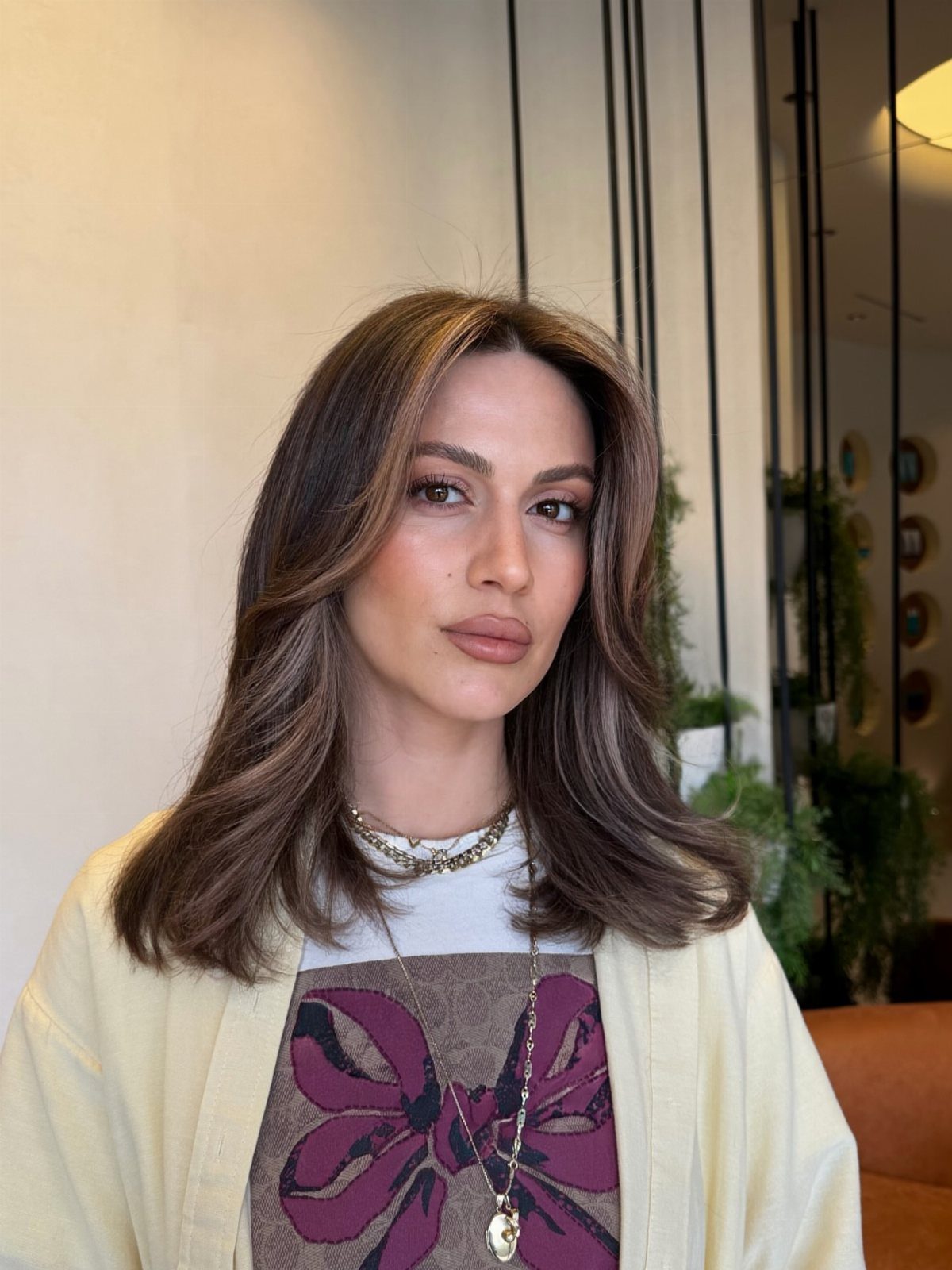
Face-framing pieces are the cheapest way to brighten a deep brunette base, because the color sits right where the light hits your skin. On layered, medium-length hair, those lighter strands also trace the cut and draw the eye upward.
For face-framing pieces, I’d tell your stylist to keep the lightness to the front sections and to stay within 2 shades of your base, so the brightness reads as soft light around your face and not a stripe.
I’d choose this over all-over balayage if you want a small change that still reads as brunette.
20. Sun-kissed Dark Brown Balayage
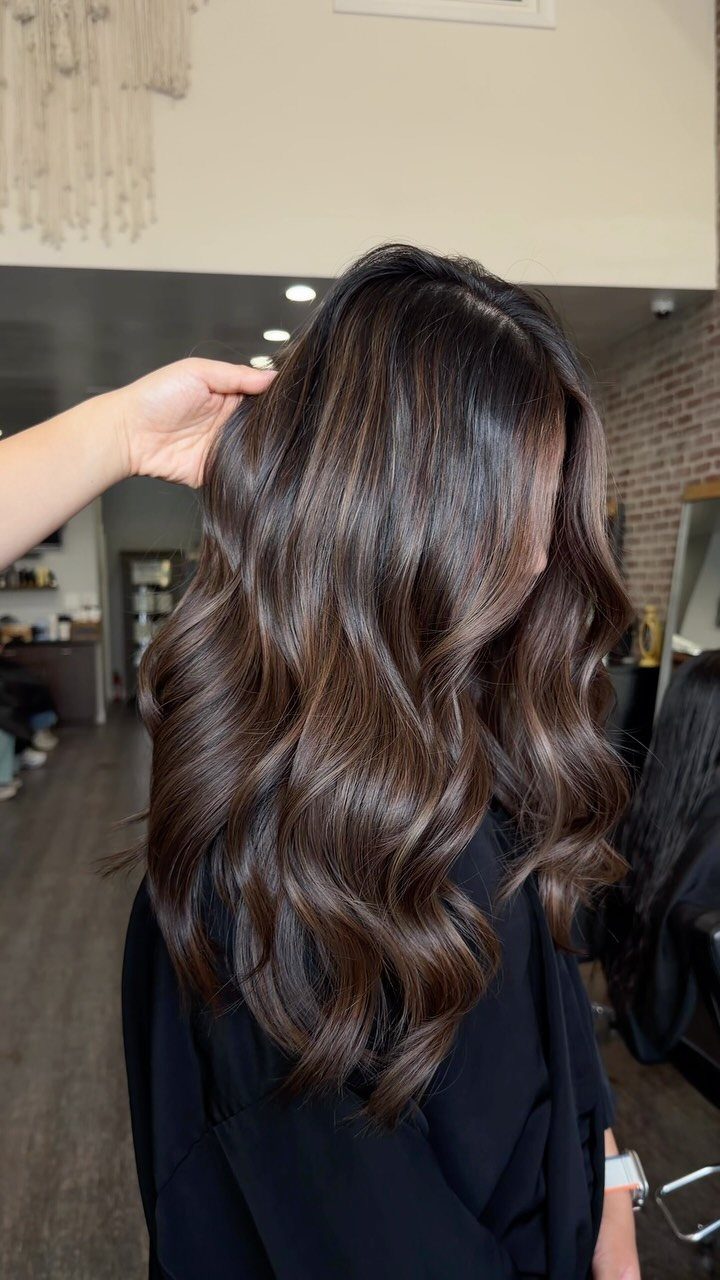
Long glossy waves are where sun-kissed balayage earns its name: lighter brown strands scattered through a dark base, brightest where the hair bends.
Ask for soft, uneven placement with the lightest pieces toward the ends, so it looks like summer did the work.
Keep the shade in the brown family rather than pushing toward blonde. I’d take this over a bold, high-contrast color if you want a beachy glow that doesn’t announce itself.
Waves help a lot here, since the movement shows off the dimension.
21. Espresso Balayage with Caramel Veiling
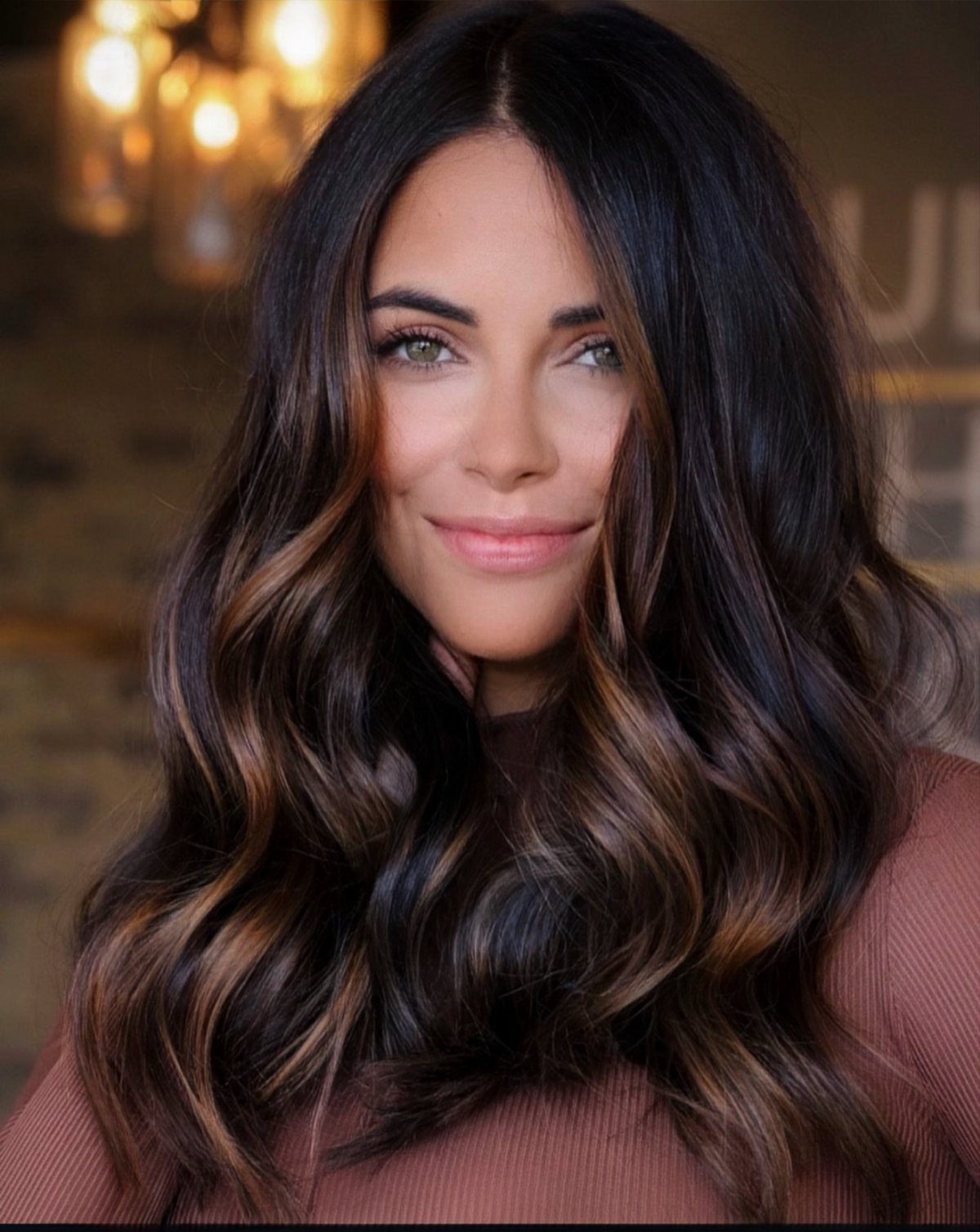
Deep espresso hair with thin caramel veils laid over it looks rich before the color even moves. The caramel stays sparse, so the base still dominates and the long waves read as dark, glossy brunette.
Tell your stylist you want a veil of caramel, not stripes. Fine, widely spaced pieces keep it soft.
A reddish auburn thread can be added as a separate option if you want more warmth, though I’d keep to caramel alone for a cleaner finish.
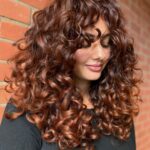
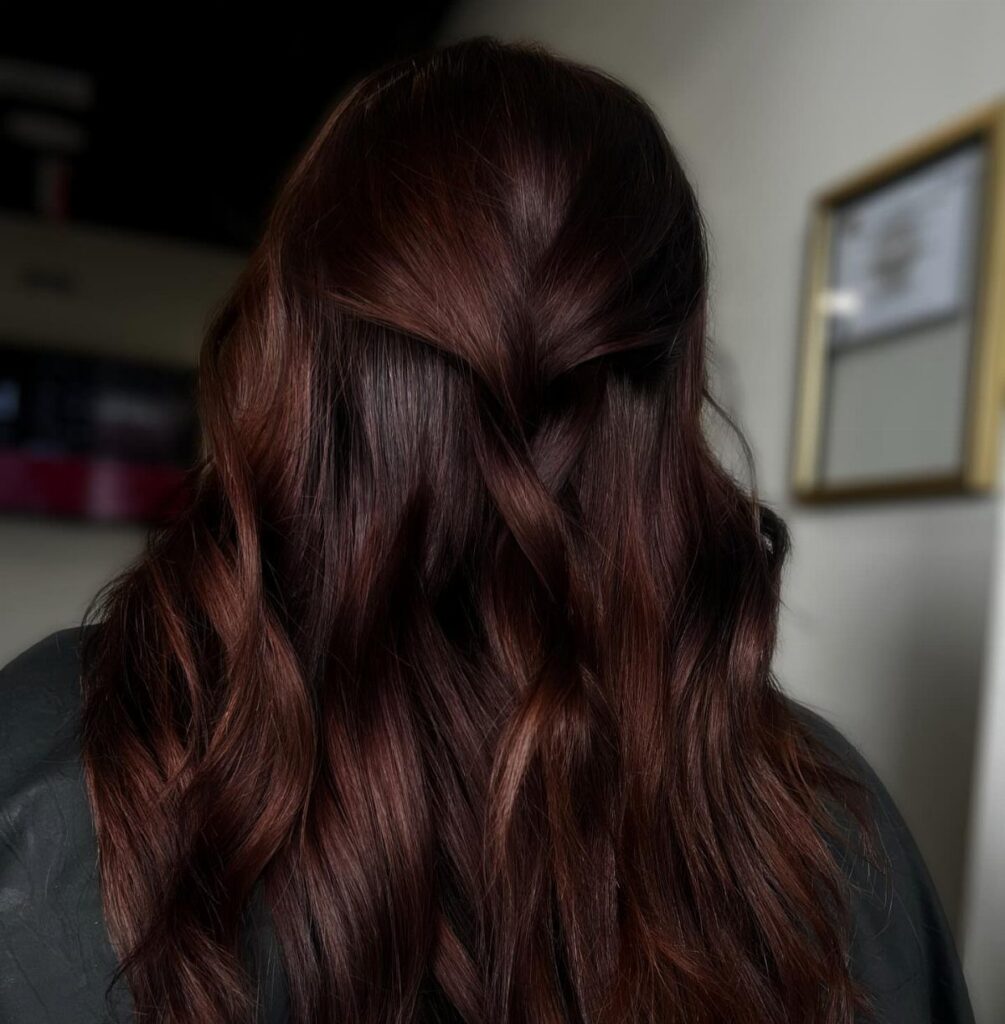
22. Dark Burgundy and Brown
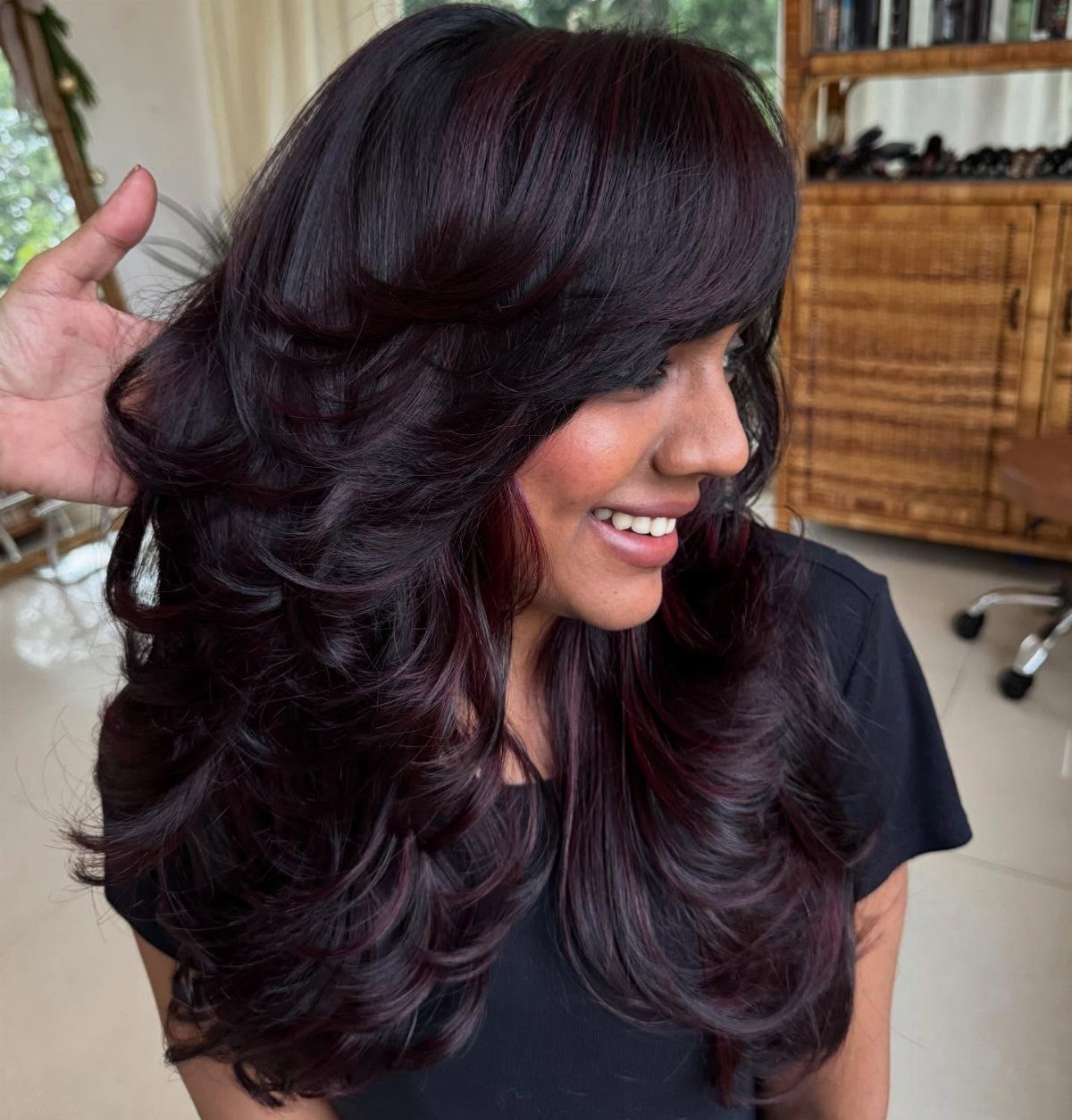
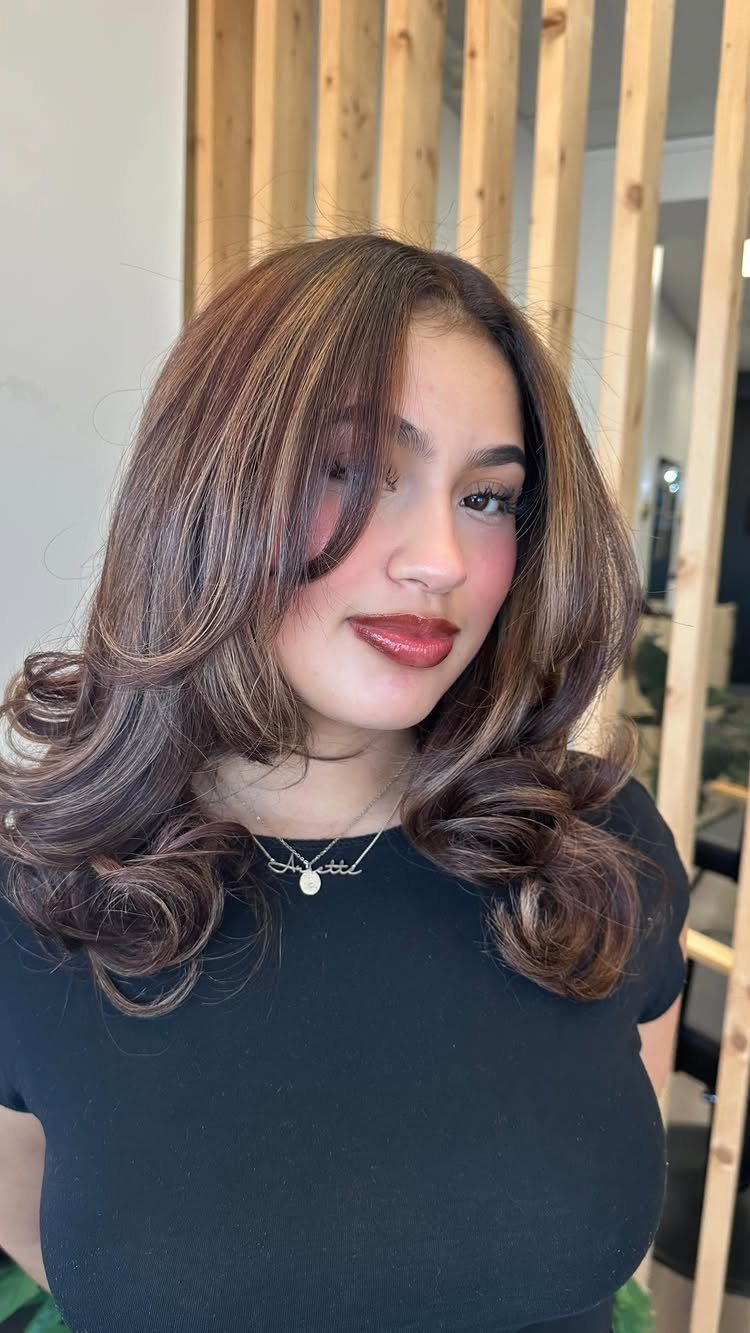
Burgundy through dark brown swaps the usual caramel for a wine-red depth, and on voluminous curls it shows up in flashes rather than solid bands. It sits well on layered cuts, where each curl picks up a little color.
Bring a photo and ask for burgundy rather than bright red, so it stays deep against the brown. Pink-leaning versions run more playful, and I’d go that way only if you want the color noticed.
Balayage and Traditional Highlights
Foils and balayage differ in how the lightener meets the hair.
Foils wrap each section tight, which gives crisp, even lift from the root. Balayage is painted by hand and left open to the air, so the color fades into your base instead of starting at a line.
If you want a soft gradient, ask for balayage. If you want brightness you can see right at the part, foils are the better tool.
Painted on heavier toward the bottom, balayage reads as a soft ombré: a few light strands through the mid-lengths, then most of the brightness pooling at the ends.
It looks less harsh than a traditional ombré. When you book, say how much of that color you want concentrated at the bottom.
One of the easiest and most low-maintenance hair-coloring techniques, balayage involves the stylist painting onto the hair with a brush dipped in lightener, rather than using foils (as is done with traditional highlights).
— Yahoo
Grow-out and Maintenance
Most dark brown balayage stays presentable for about 4 months if you use color-safe shampoo and keep heat styling in check.
Brown balayage fades from a darker base into lighter tones, so a grown-out head still looks intentional, and you can skip monthly root visits.
Easy upkeep does not mean no upkeep. Keep the lighter pieces looking fresh with products made for color-treated hair, used in your daily routine.
Ash shades ask for more. Expect regular salon visits and several products to hold the cool tone, so decide whether that routine fits your week before you commit.
If you want the least work, warmer browns win, since they grow out gracefully and need less at home.
Frequently Asked Questions
What is a brown balayage?
Brown balayage means a stylist paints lighter brown pieces freehand over a darker brown base, so the color melts into your natural root with no visible start line.
Shades run from chestnut and caramel to honey, copper and auburn. Since the lightener sits open to the air instead of being sealed in foil, the lift comes out soft and dimensional rather than striped.
What balayage looks good on dark brown hair?
Caramel, honey-brown and chestnut are the easiest picks, because they add warmth while still reading as brunette.
Copper, cinnamon and auburn suit you if you want a reddish glow. Ash blonde or blonde gives the most contrast but needs the most upkeep, and bronde sits between brunette and blonde if you can’t choose.
Does brown balayage fade?
Yes, but it fades gracefully. Color-safe shampoo and less heat styling can keep dark brown balayage looking good for about 4 months.
Because the lighter pieces grow out from a darker base, the grown-out look still seems deliberate; warm browns hold up better than ash tones, which take more care to keep cool.