Highlights on curly hair range from subtle ash brown dimension on short cuts to high-contrast blonde or vivid pink streaks on tight coils, and the right one comes down to how much lift your base can handle and how often you’re willing to refresh the color.
Darker starting points at level 3 or below need 2 rounds of lightener to reach gold, while caramel or copper can lift medium brown without bleach.
1. Copper Balayage
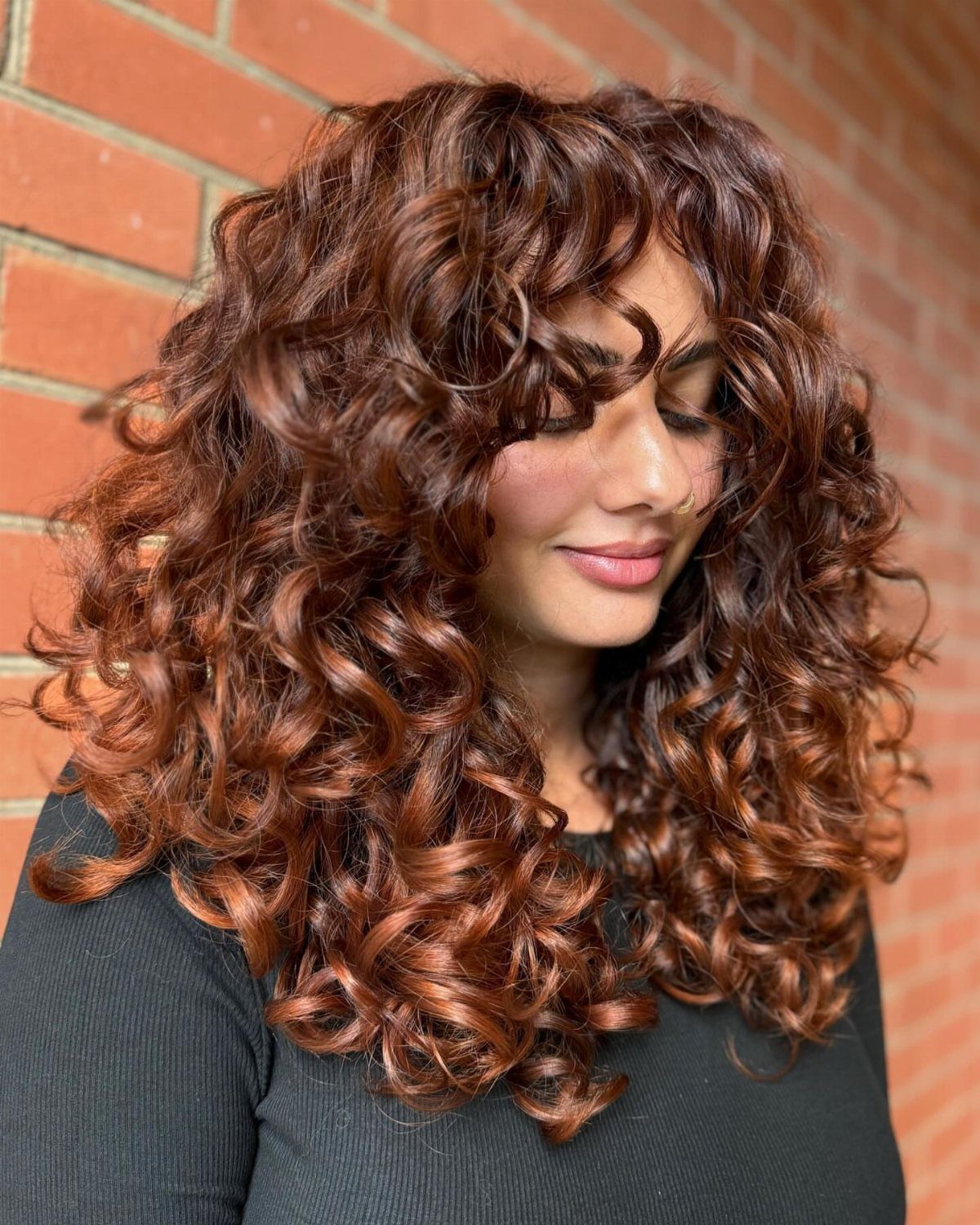
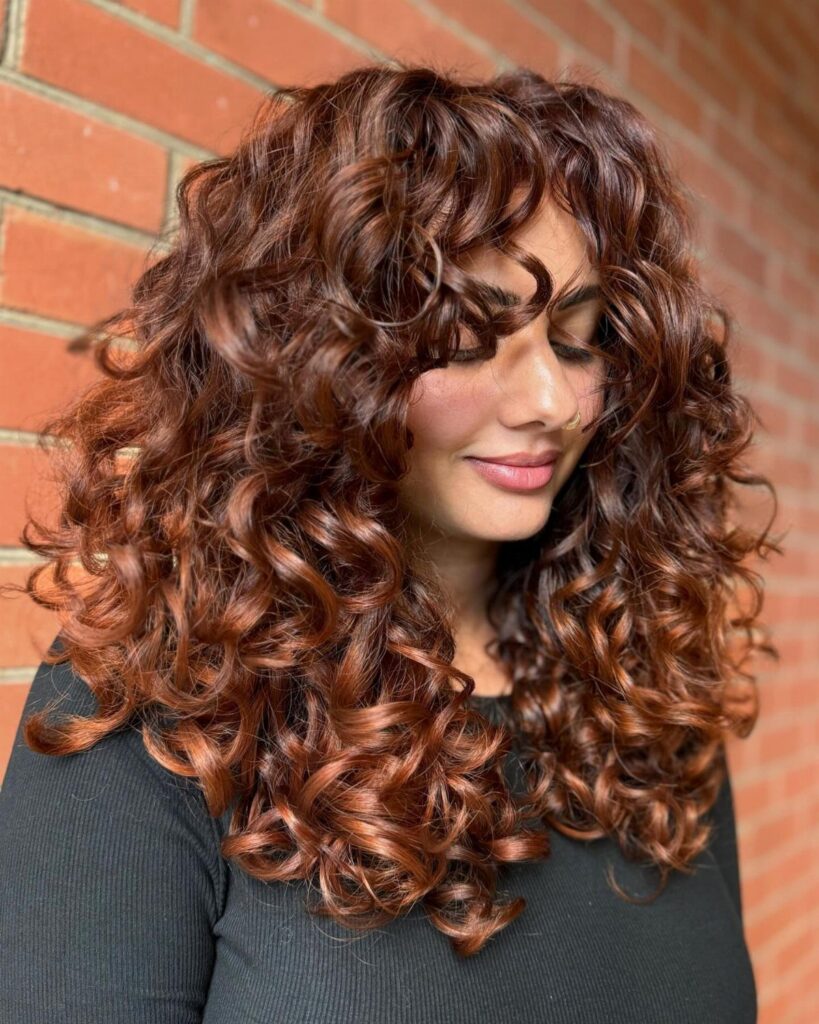
Copper highlights bring warmth forward on long curls and lift a dark brown starting point without going fully blonde.
The placement here follows a balayage sweep, painted midway through the curl rather than at the scalp, so the copper reads as movement instead of allover color.
Balayage on curls needs a colorist who sections by curl pattern, not straight-hair divisions, otherwise the lighter pieces land in unexpected places once the curl dries. The copper fades gradually toward a softer amber as the red tone drops out.
2. Golden Highlights
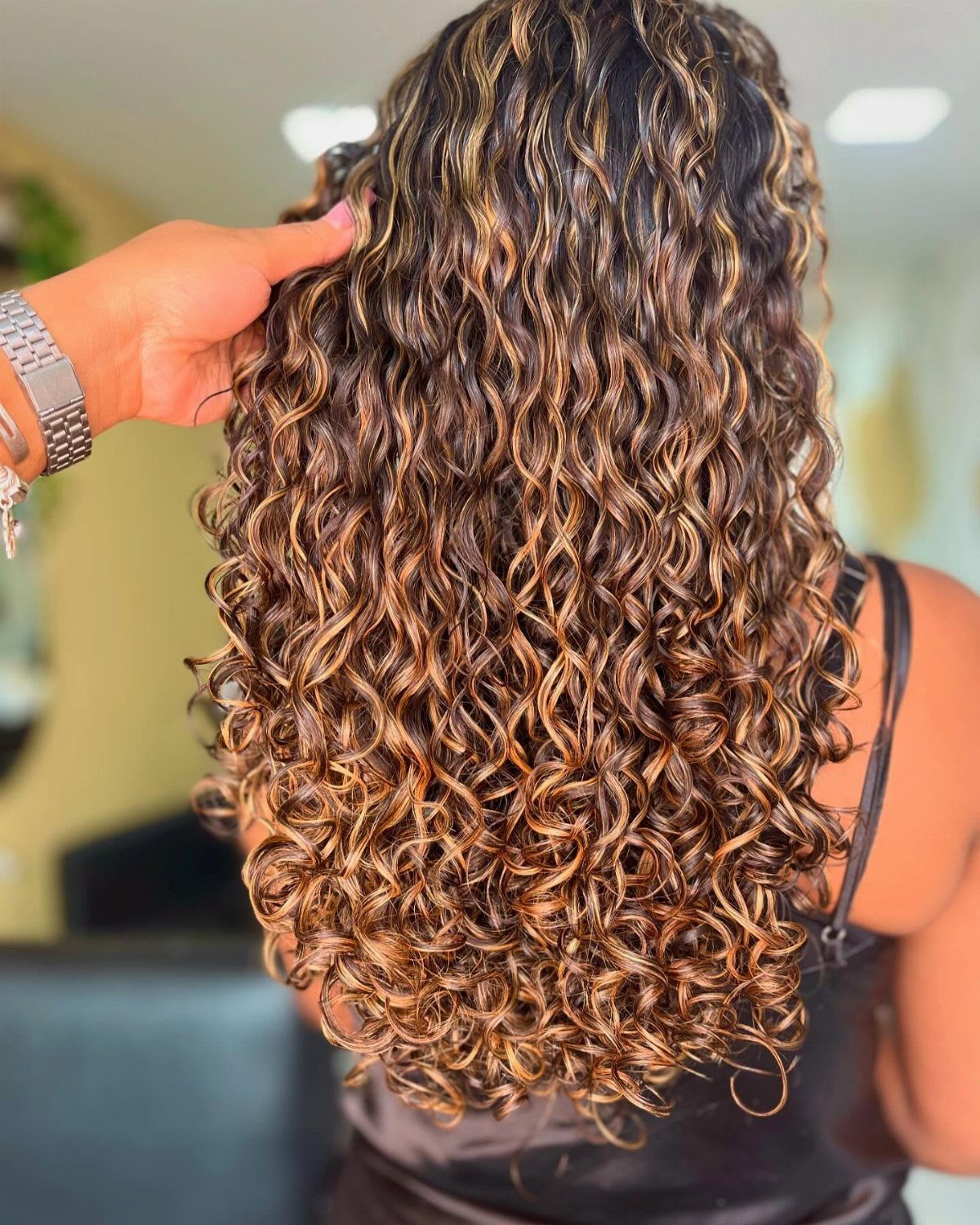
Golden highlights lift brunette curls without covering the natural depth underneath. The lighter strands scatter through the length rather than concentrating at the face, so it reads dimensional instead of framed.
When placed on curls, foil highlights need narrower sections than they would on straight hair, otherwise too much surface lifts at once and you end up with stripes.
Golden tones hold longer than ash, fading warm instead of brassy. A purple shampoo once a week keeps them from slipping too yellow.
Clouding is best for people who wear their hair curly all of the time because of how the scrunching hits the highs and lows of the strand.
— Hair.com
3. Golden Highlights on Dark Brown
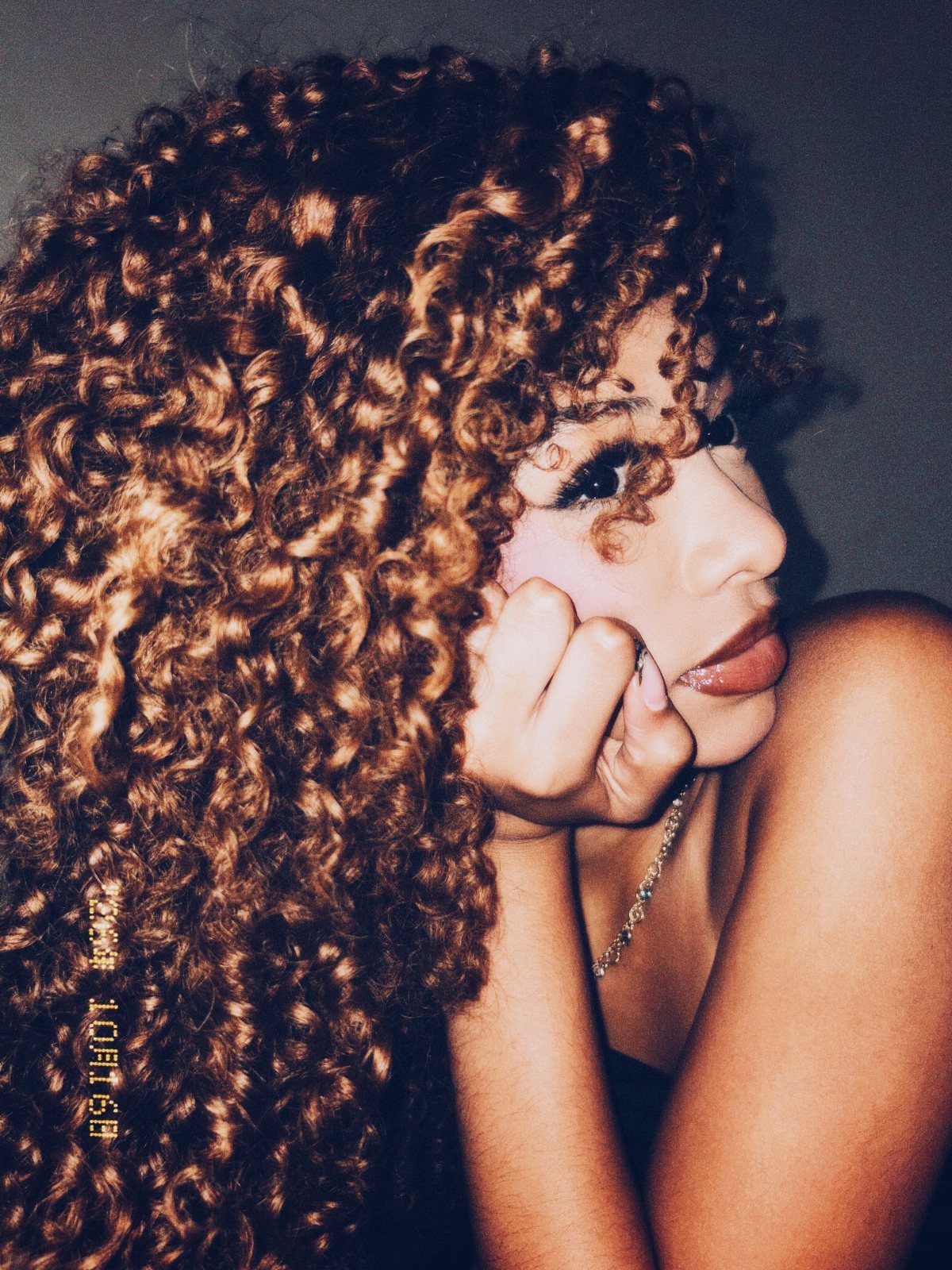
Golden pieces on a dark brown base give high contrast without bleaching the whole head. The roots stay untouched, which cuts down on salon visits and protects the curl at the scalp where it’s tightest.
The gap between the dark brown and the gold is bold enough that the highlights define each curl as it moves.
Darker starting points need more lift to reach gold, so expect 2 rounds of lightener at a level 3 or below. The gold holds its tone better than platinum and grows out softer.
4. Caramel Highlights
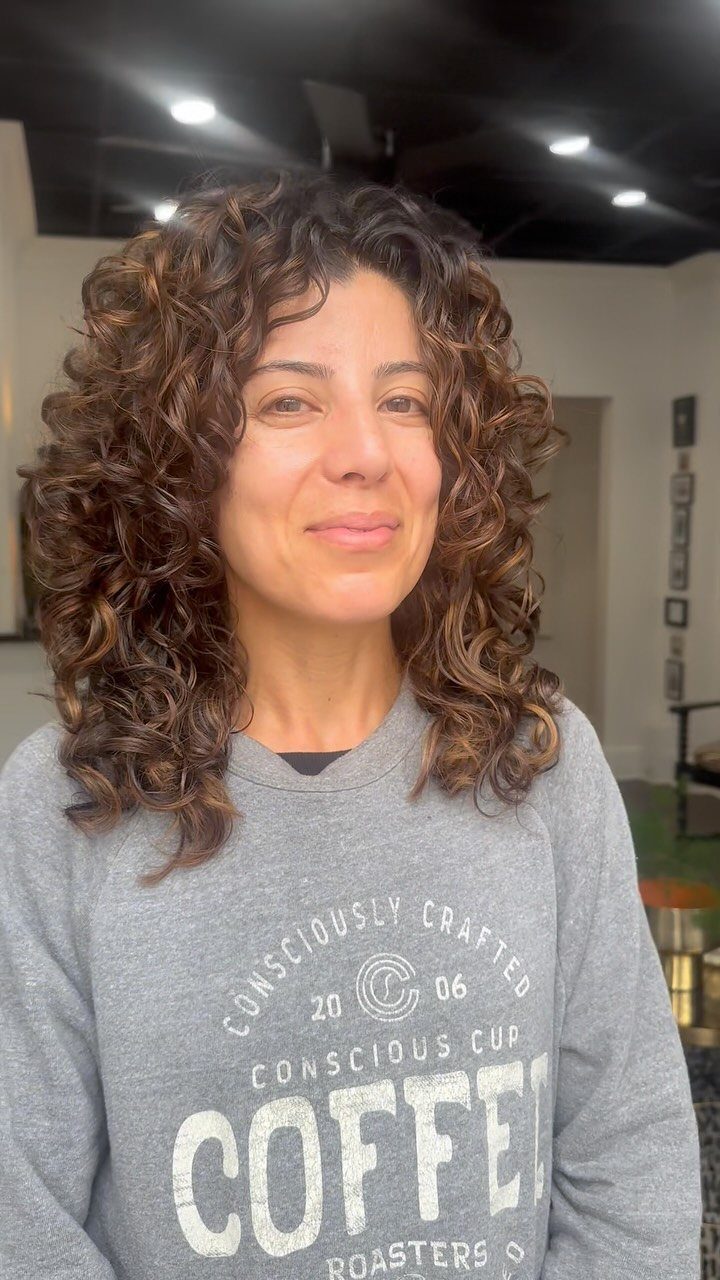
Caramel sits between honey and copper, warm enough to brighten without reading red. Caramel suits medium to dark brown curls because it lifts just enough to contrast without requiring heavy bleach.
The tone fades gradually toward toffee rather than dropping out fast, so it stays blended between appointments. I’d ask for balayage rather than foils if you want the caramel to look hand-painted instead of striped.
5. High-Contrast Highlights
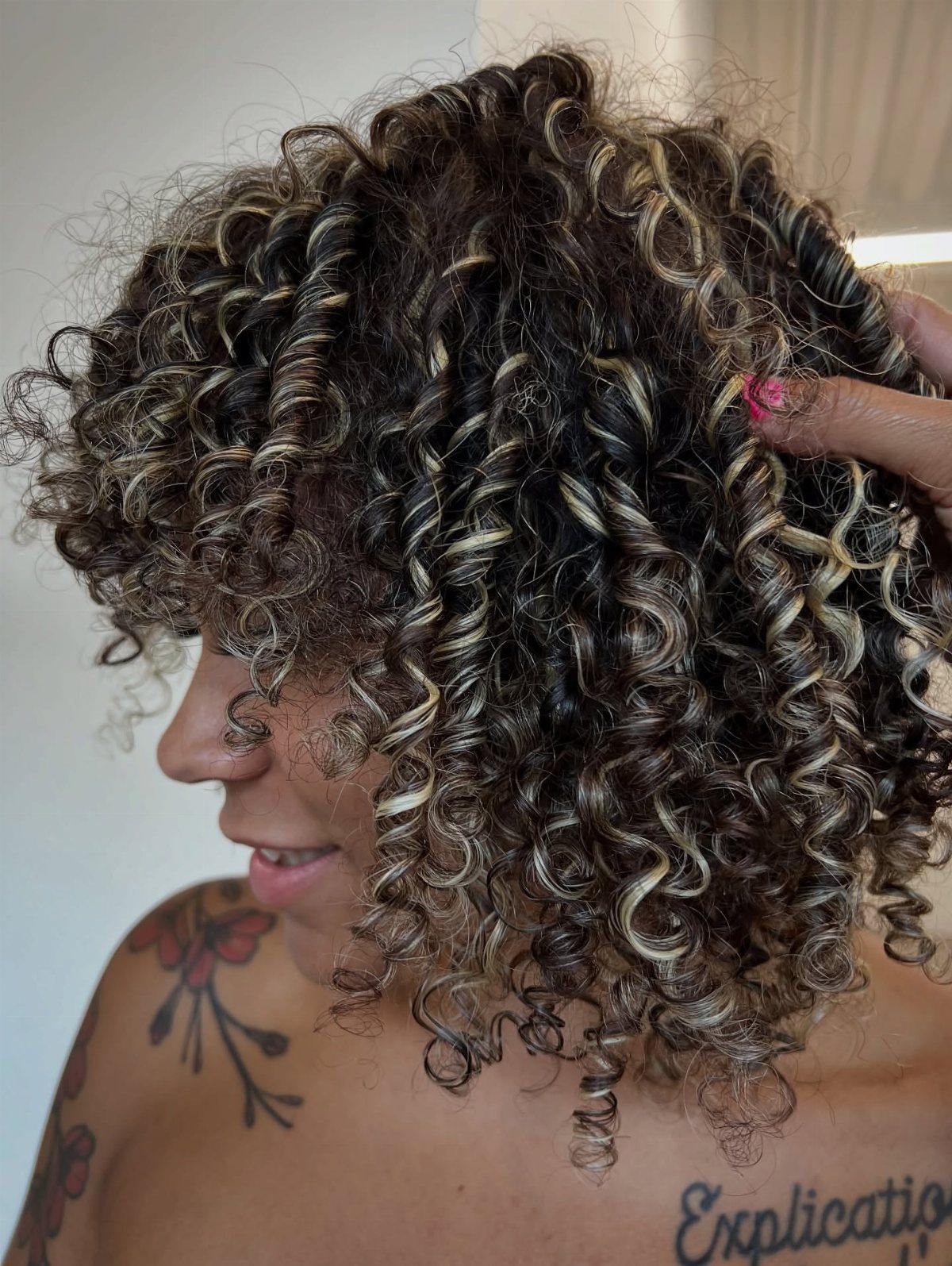
High-contrast highlights place light blonde or caramel strands next to a dark base with no gradual blend between the two. The sharp difference makes each curl more visible, especially on tighter patterns where dimension can disappear under one flat color.
This look needs regular toning because the lifted pieces can pull orange or brassy against the dark base if they’re not kept cool.
The contrast grows out with a harder line than soft balayage, so plan for more frequent touch-ups. If you want bold definition, this does it.
6. Blonde Curly Pixie
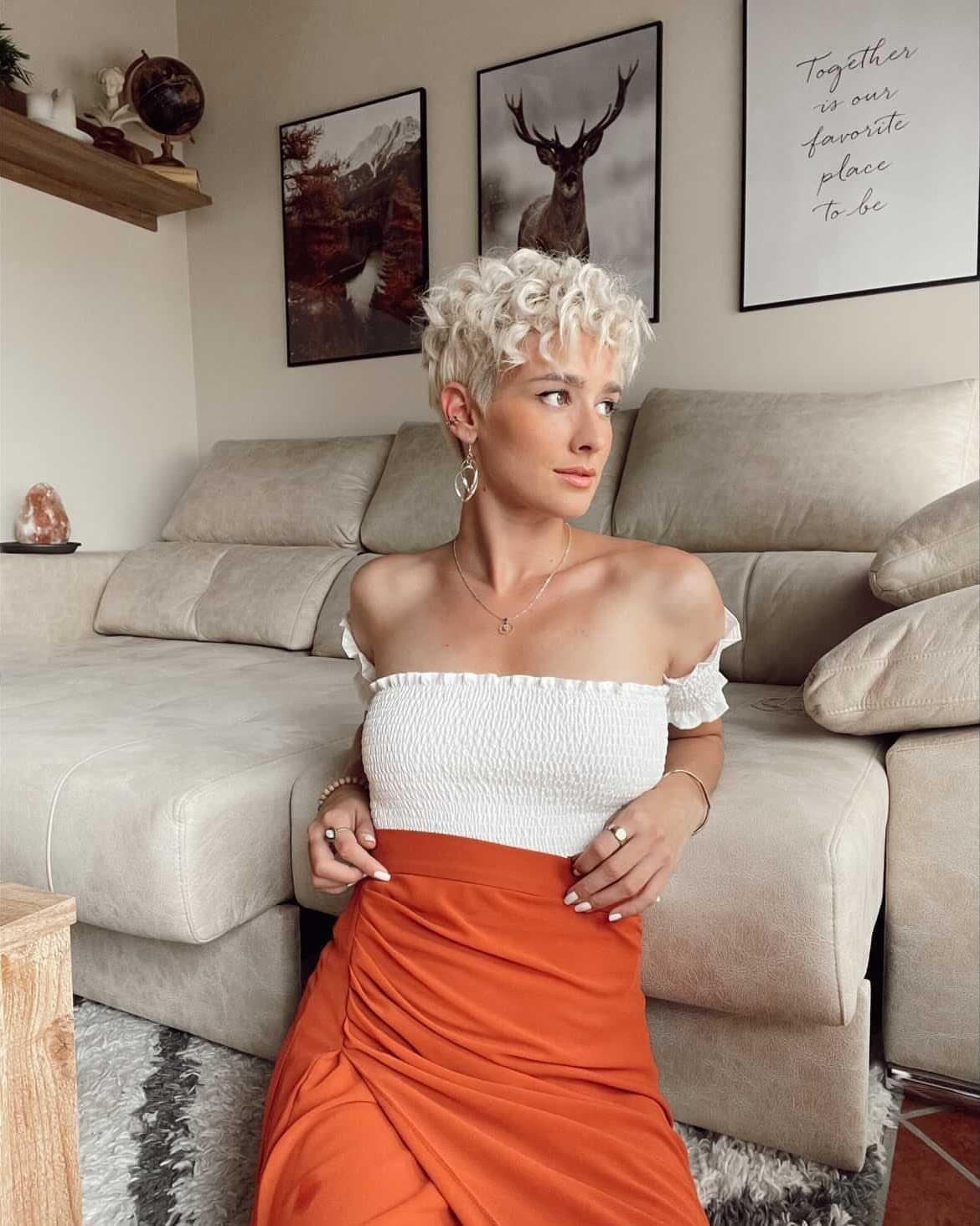
Short curls take color differently because there’s less length to blend through, so honey highlights and light blonde tips show up fast and stay bright.
The pixie length here keeps the color fresh with frequent trims, which means you’re cutting off faded ends regularly anyway.
Platinum and honey tones on tight curls need a good bond-building treatment during the lightening process, otherwise the curl loses its spring.
A curly pixie grows out into a longer curl, not a longer pixie, so the color changes shape as it grows.
7. Red Finger Coils
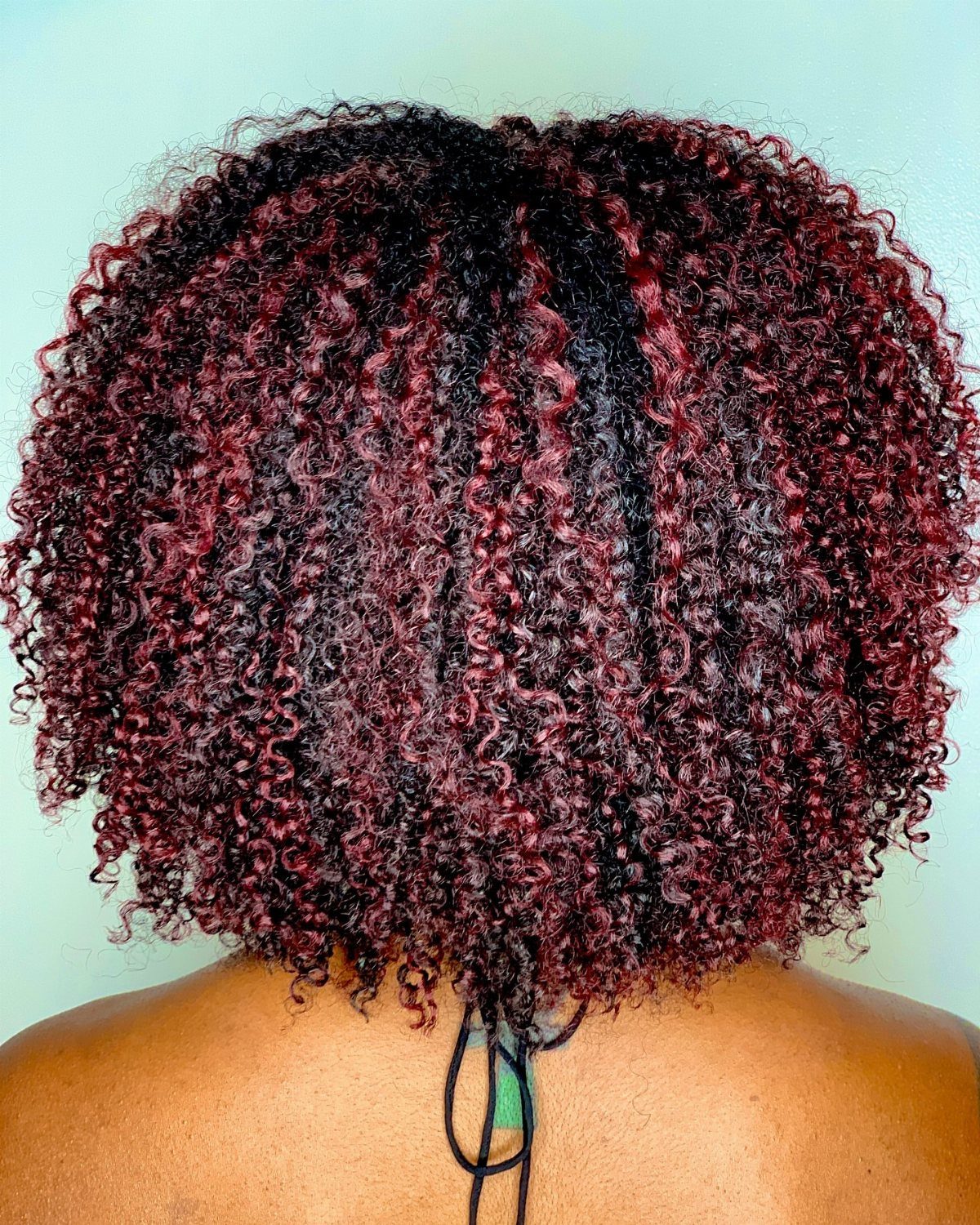
Red highlights lift against tight black coils and catch light where the curl twists, making the pattern more visible. The red reads strongest at the crown and back, where the coils sit close together and the color layers over itself.
On tighter curl patterns, red dye sits on the surface rather than fully penetrating, so it fades faster than it would on looser textures.
A color-depositing conditioner in copper or auburn between salon visits keeps the red from dropping to orange.
8. Red Type 3C Highlights
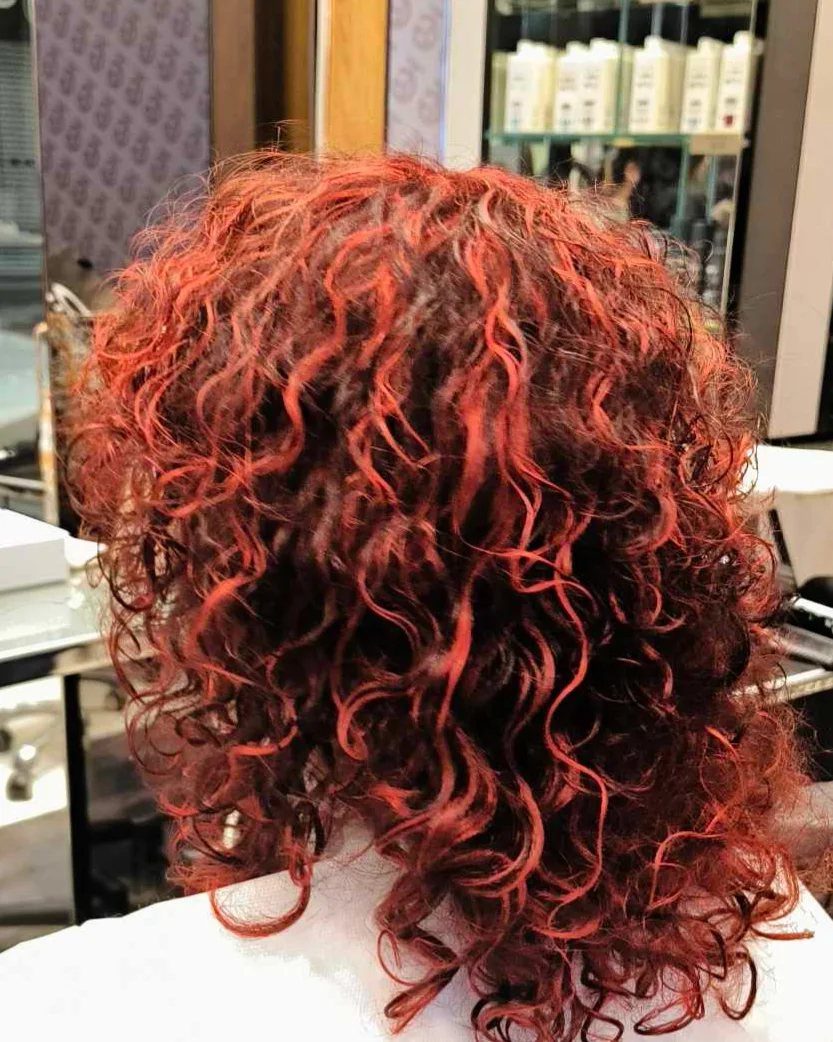
Bright red on natural black curls gives sharp contrast. Type 3C holds color well but can lose moisture fast during the dyeing process, so a deep conditioner the day before and a leave-in after help the curl bounce back.
The red fades toward burgundy rather than orange if you skip sulfates. This level of brightness needs regular refreshes as the red washes out.
9. Ash Brown Highlights
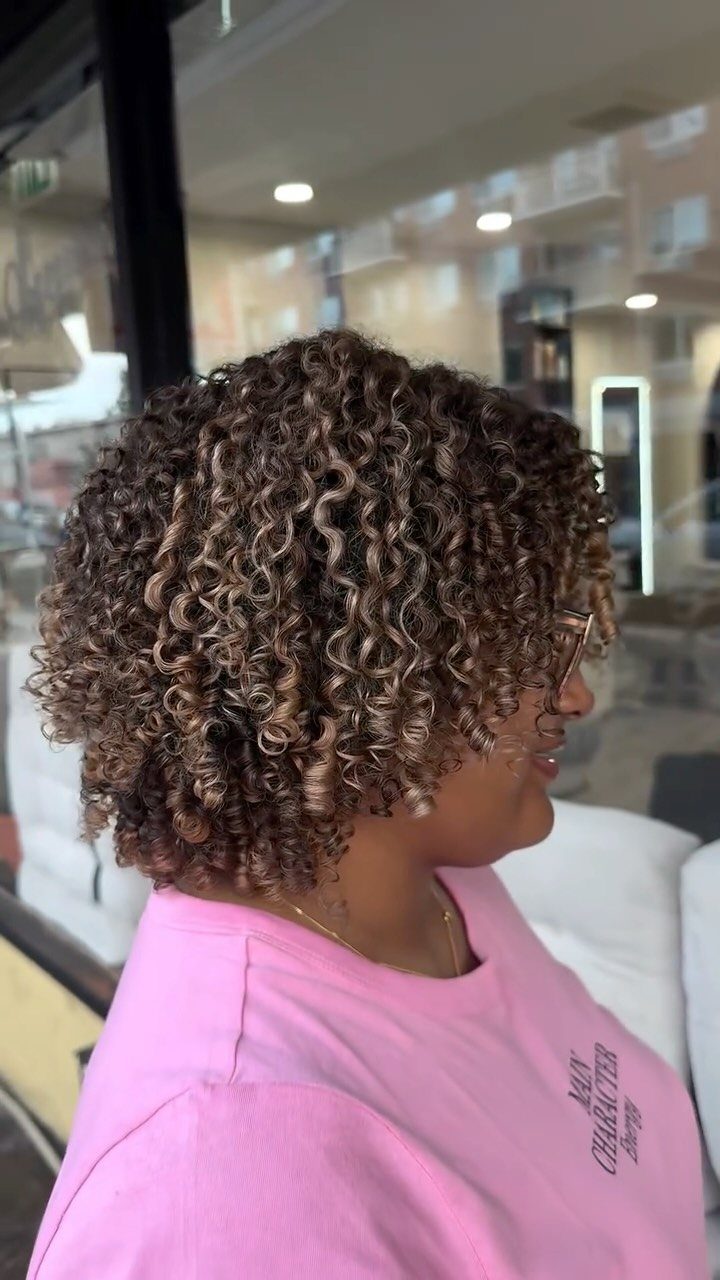
Ash brown adds cool-toned dimension to short loose curls without the maintenance blonde requires.
The highlights stay close to the base color, so regrowth blends instead of announcing itself. Ash tones can pull flat on darker starting points, but on lighter brown they read as soft lift rather than gray.
A gloss every few months keeps the ash from fading warm, which it will. Short cuts grow out fast, so the color gets trimmed off before it fully fades anyway.
10. Milk Chocolate Bangs
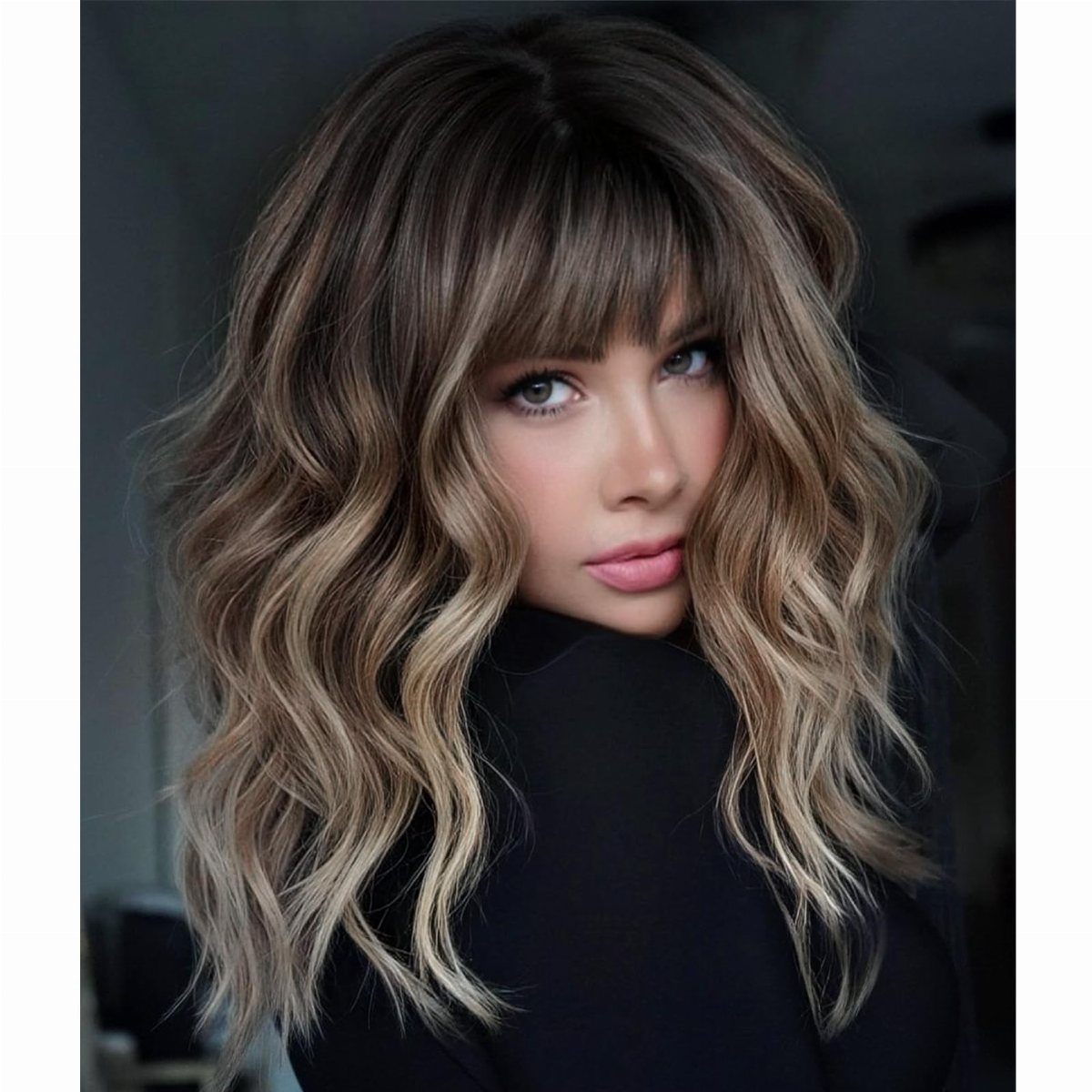
Blonde highlights scatter through wavy layers and bangs, adding dimension without high contrast. The tone sits between caramel and ash, warm enough to lift but neutral enough to stay soft.
Bangs take color the same as the rest of the hair, but because they sit closer to the face they can look heavier if the highlights are too light or too few.
The color fades gently and the layers keep the shape from going flat.
11. Salon Lightened Curls
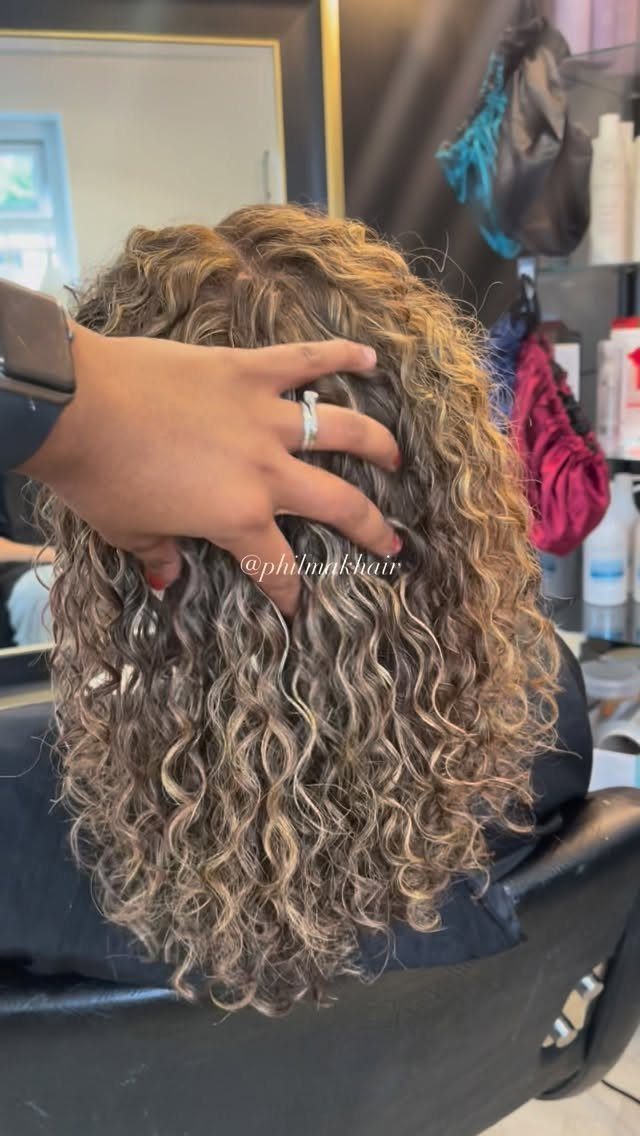
Lightened strands woven through long tight curls add dimension that shows when the hair moves or gets parted. The colorist here sections small pieces so the lift stays scattered instead of chunky, and the natural base stays dominant.
Tighter curls take longer to lighten because the curl slows down how the bleach spreads, so expect a longer appointment. The lightened pieces need a bond treatment during processing or they’ll feel dry and lose their coil.
12. Subtle Red Curls
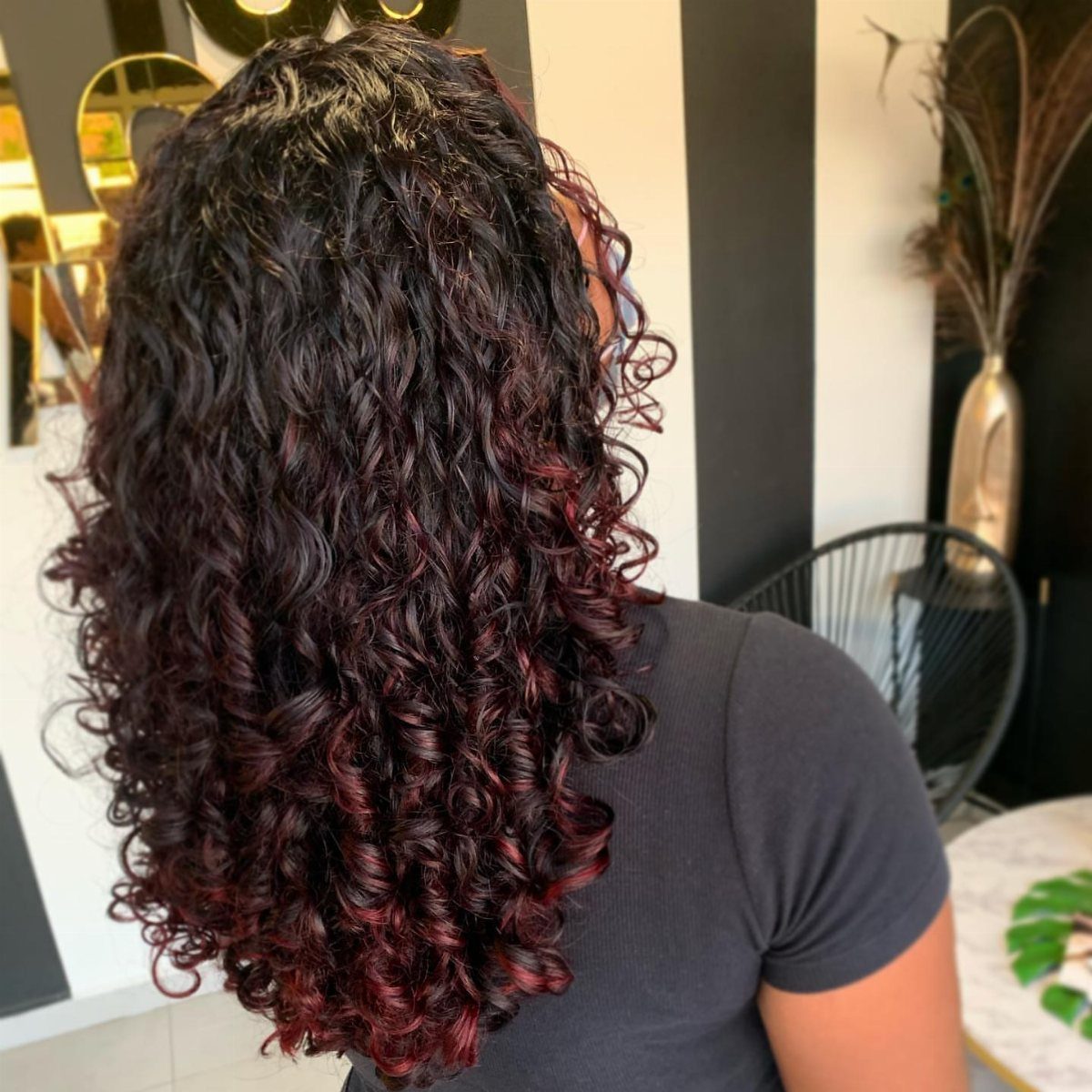
Red strands mixed through dark curly hair give warmth without going bright.
The red here is restrained, close enough to the base that it reads as dimension rather than color. Subtle red fades slower than vivid red because there’s less pigment to wash out, and it drops to auburn instead of orange.
On long curls, the color shows best in natural light or when the hair moves. A red-toned gloss keeps the tone from going muddy.
13. Pink Teal Streaks
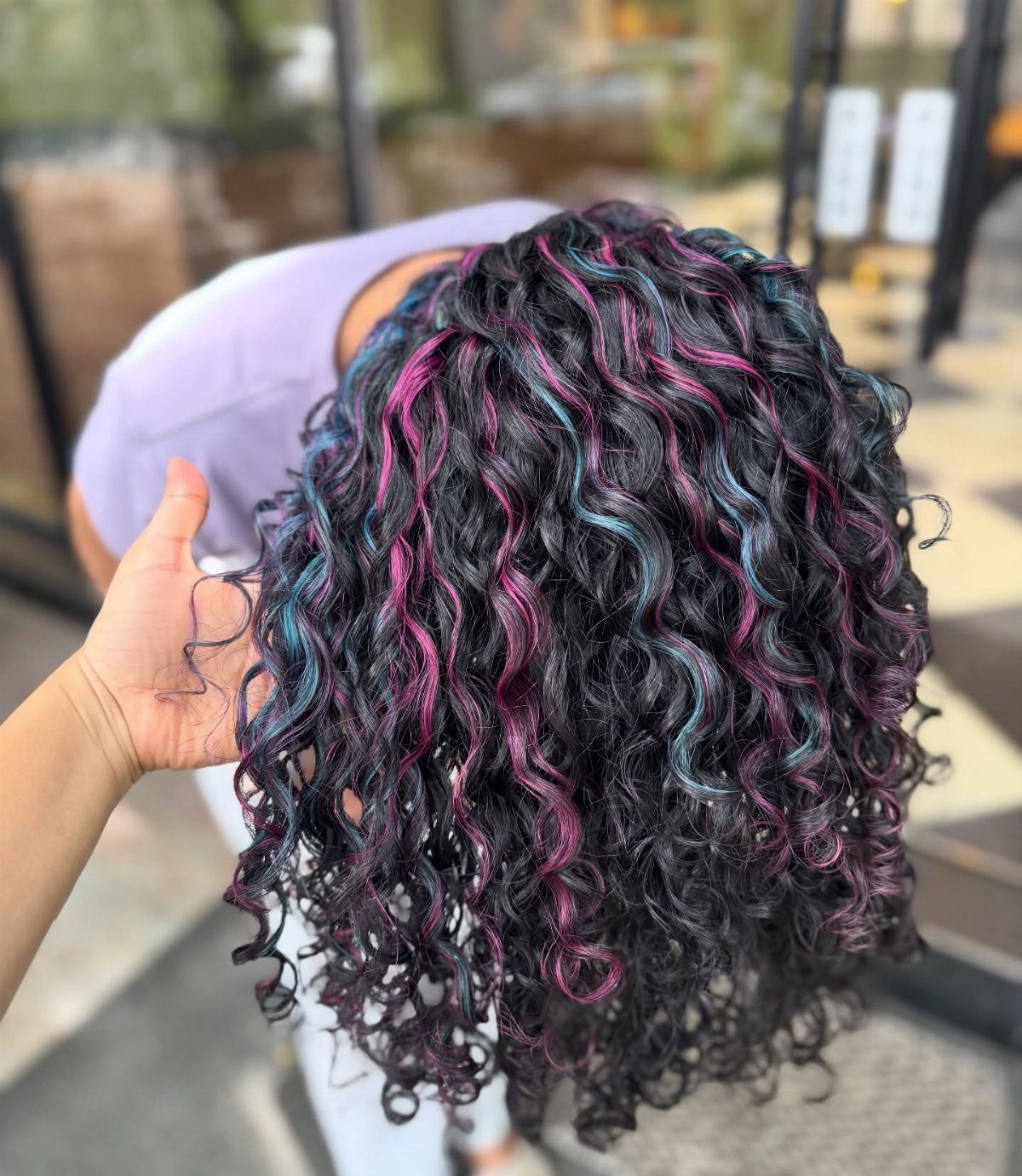
Pink and teal streaks placed through dark tight curls give vivid color without covering the natural base. The two colors sit side by side rather than blending, so each one stays distinct as the curl moves.
Vivid fashion colors like these fade faster than natural tones, and how long they last comes down to how often you shampoo. A sulfate-free wash and cold water slow the fade.
The streaks need pre-lightening if your base is dark, which takes longer on tight curls. Plan for regular color refreshes to keep the pink and teal bright.
14. Pink Curly Streaks
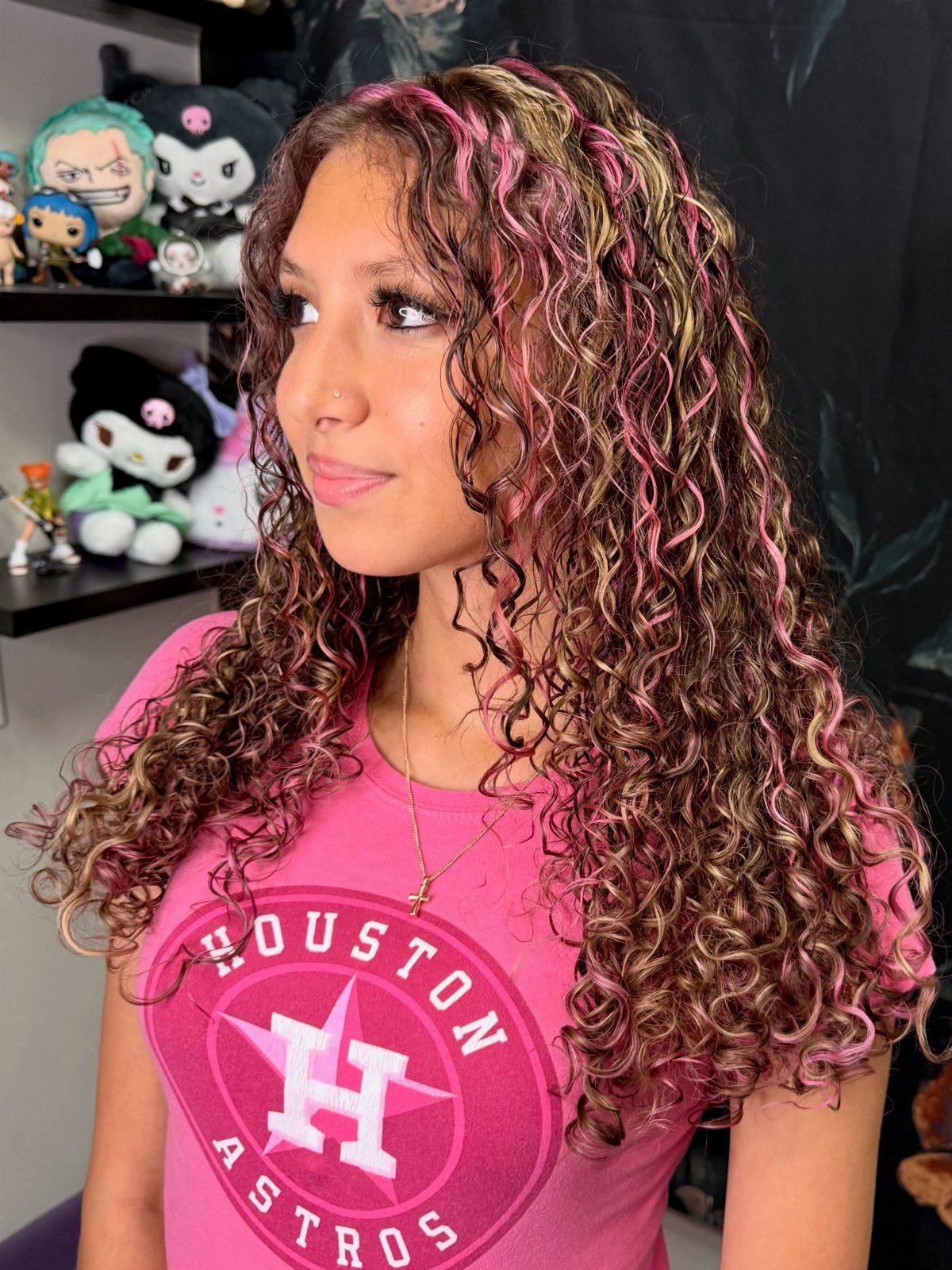
Bright pink mixed with lighter blonde streaks through brown curls gives high contrast and dimension at once.
The pink reads bold, the blonde softens it, and the brown base holds the look together. Pink on curls fades toward peach or pale rose depending on the formula, so a color-depositing mask between salon visits keeps it saturated.
The lighter streaks need less upkeep than the pink but will tone down over time. This level of color works best if you’re ready to refresh the pink every month or so.
Protect Curl Health After Coloring
Chemical processing can loosen curl patterns and leave strands dry or brittle, so the routine after color matters as much as the appointment itself.
The structure of a curl already makes it harder for oil to move from root to tip, so it dries out faster than straight hair, and bleach or color only pushes that risk higher.
Wait a few days before shampooing, then switch to color-safe, sulfate-free cleansers.
Standard sulfates strip natural oils and fade color fast. A weekly deep conditioner keeps moisture in and helps your curl pattern hold its shape after processing.
Products containing bond-repair technology help rebuild disulfide bonds damaged during chemical processing. Before you turn on the diffuser, layer on a heat protectant so you’re not adding more stress to freshly colored strands.
Prepare Curls for Coloring
Arriving with clean, buildup-free, hydrated hair gives the colorist a clear view of your curl pattern and lets the color take evenly.
2 days before, use a clarifying shampoo to strip out gel, butter and silicone that could block color from taking evenly.
Show up with your curls loose and product-free so your colorist can see exactly where they fall and how tight the pattern runs.
Any chemical service changes the structure of the strand itself, and curls react to that shift more visibly than straight hair.
Your curl pattern will probably loosen or tighten a bit after you color. Clean, hydrated hair before the appointment means less breakage during processing and stronger curls after.
Choose Shade and Dimension
Matching highlight tones to your base color and undertone keeps the result from reading harsh or dated.
If your skin leans warm, stick to honey, caramel, copper or gold. Cool undertones work better with ash, champagne, beige, or cool brown.
The 2 things that decide whether a shade works are your skin’s undertone and the natural color you’re starting from. Pick the wrong tone and instead of dimension you get a color that just looks wrong.
If the highlights grow out with too much contrast or the dimension feels too light, lowlights or root smudging can restore balance and soften the line without starting over.
Frequently Asked Questions
What highlights are best for curly hair?
Hand-painted or visually placed highlights that follow your curl clusters work best because they stay dimensional after the curls dry and bounce back.
Balayage gives a softer, more natural look, while foils offer sharper contrast if your colorist sections by curl pattern instead of straight-hair divisions.
The colorist places them based on how each curl falls and catches the light, so the brightness ends up exactly where you want it once the hair dries.
What is balayage for curly hair?
Balayage is hand-painted: the colorist sweeps lightener onto chosen pieces, concentrating brightness at the ends rather than coating each strand root to tip.
On curls, balayage works best when the colorist sections by curl pattern so the lighter pieces show up where the curl moves and catches light. The painted gradient fades gradually and grows out softer than foil highlights.
Does balayage look good on naturally curly hair?
Yes, it brings out the shape and texture of curls, particularly on looser patterns where the color shifts with every bend. The gradient reads as sunlight moving through the hair rather than deliberate sections.
Does balayage look more natural than highlights?
Generally, yes. Balayage feathers the root, so when it grows the line stays soft and looks like you meant it.
Foils give sharper, more uniform lift, which can stripe very tight curls if the colorist sections against the pattern instead of with it. Balayage grows out softer and needs less frequent touch-ups.
How often should you touch up colored curly hair?
Balayage can go 12 to 16 weeks between appointments because the soft root transition and natural regrowth blend well on curls.
Foils typically need a refresh every 8 to 10 weeks because the line of regrowth sits sharp and visible. Curl hides regrowth better than straight hair does, so you can go longer between appointments without looking like you’re overdue.





