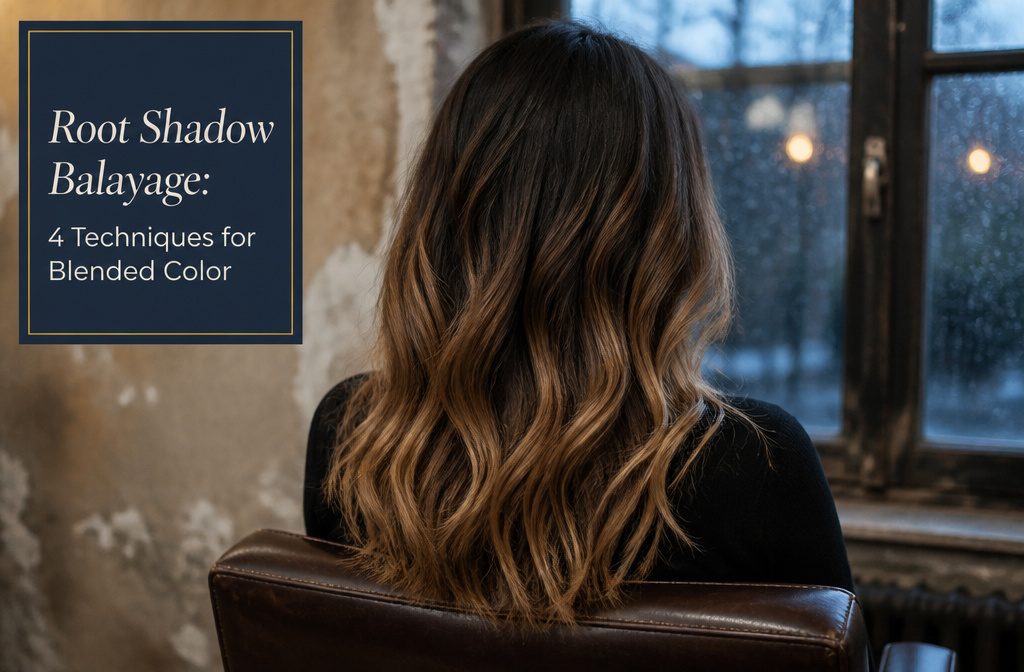
Root shadow balayage is a darker shade painted at the roots and blended down into lighter balayage hair, so the color grades softly instead of stopping at a line.
It reads as intentional grow-out rather than overdue roots, but it won’t cover gray completely. At Alfredo James Hair Design, root shadow is a $50 add-on to balayage, not a standalone service.
What Root Shadow Is
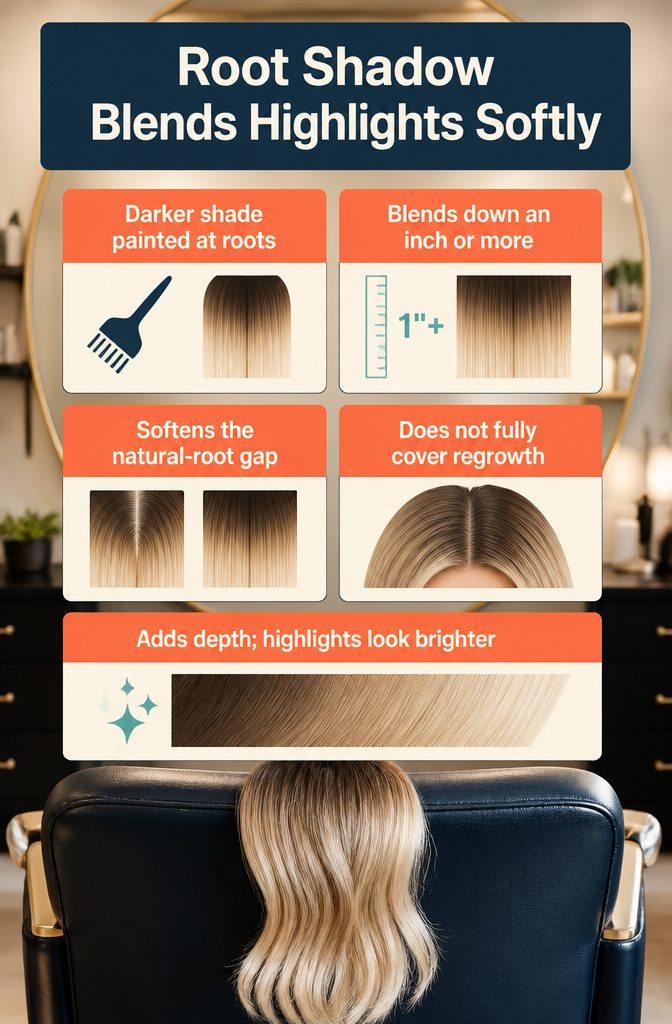
Root shadow is a darker, slightly deeper shade painted at the roots and blended down into lighter hair.
It goes on at the root and down an inch or more, so the color fades into your highlights instead of stopping at a line.
It does not cover regrowth completely, and I wouldn’t sell it that way.
What it does is close the gap between your natural root and the lightened pieces, so grow-out reads as intentional instead of overdue. It also adds depth, which makes highlights look brighter.
Shade sets the mood. A gentle, slightly deeper tone reads soft and lived-in; a much darker one reads higher-contrast and edgier.
Root Shadow With Balayage
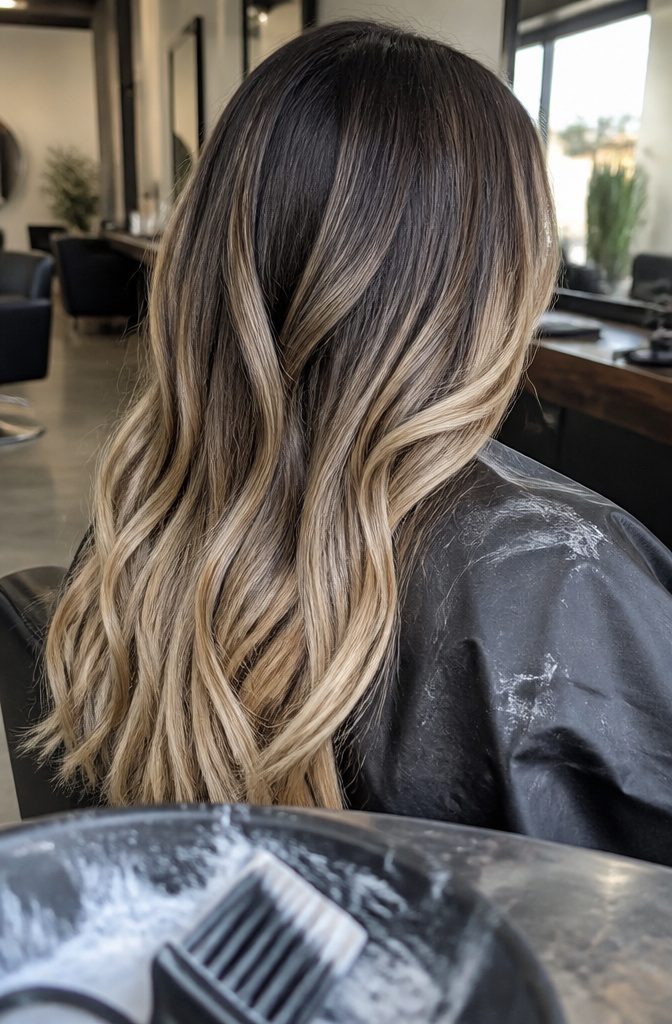
Balayage started in Paris in the 1970s, and the name is French for "to sweep."
The colorist paints lightener on freehand, so the color grades softly toward the ends for a sun-kissed finish. Foil highlighting works the opposite way: aluminum foil isolates each strand, so the color is wrapped and sealed rather than swept on.
A root shadow adds a darker color at the roots, so the shift from dark to light softens and regrowth reads as intentional. I’d pair it with balayage before foils, because both blur the line instead of drawing one.
At Alfredo James Hair Design, a root shadow is a $50 add-on to a highlight or balayage service. It isn’t booked on its own.
Shadow, Smudge, Tap and Melt
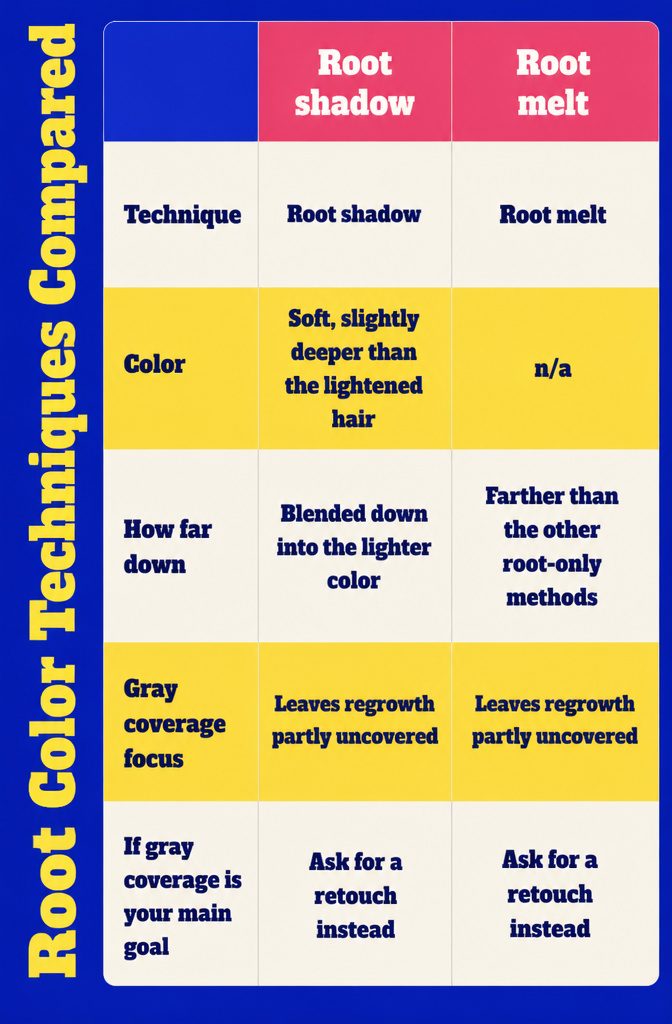
Root shadow has four close relatives, and they separate by color and by how far down the color travels.
| Technique | Color | How far down |
|---|---|---|
| Root tap | Same shade as your natural hair | About ½ inch |
| Root smudge | Lighter or root-matching | About 1 inch of overlap |
| Root shadow | Soft, slightly deeper than the lightened hair | Blended down into the lighter color |
| Root melt | n/a | Farther than the other root-only methods |
| Color melt | Two or more shades | Along the length |
Root retouch is a different job: it colors new growth to match the rest of your hair. A shadow leaves regrowth partly uncovered, so if gray coverage is your main goal, ask for a retouch instead.
Who Root Shadow Suits
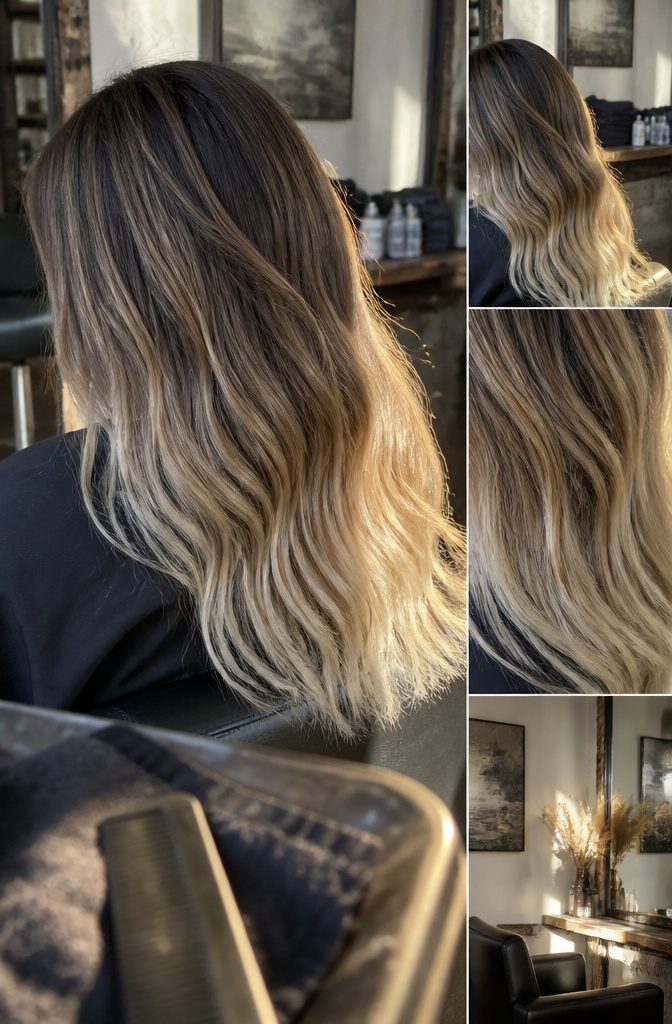
Root shadow suits anyone who wants a softer grow-out, more depth and no stark line at the part.
It also stretches the time between lightening appointments, since the in-between weeks look planned instead of overdue. A deliberately dark root works too, if high contrast and an edgy look is the goal.
Caramel roots flatter platinum blonde, deep cinnamon suits red hair, and brunettes can go to a cool dark brown or black. Blondes who don’t want to go too dark should aim for a subtle bronde.
Stay in the tone family of your natural color, and I’d check with a licensed colorist if you’re unsure.
Root Shadow at Home
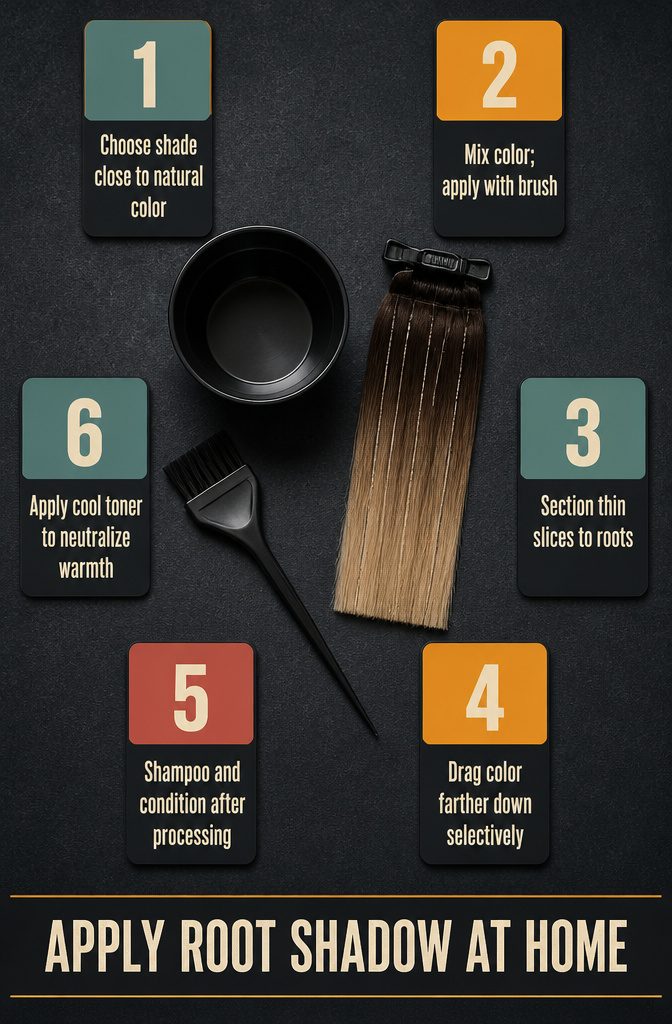
- Choose the shade carefully. Color comes in demi-permanent, semi-permanent and permanent formulas, and the root color should stay as close to your natural color as possible.
- Mix the color in a bowl and apply it with a brush, not the applicator bottle.
- Use the pointed end of the brush to section thin slices of hair so the color reaches the roots.
- Switch to the broad, flat side of the brush and drag the edge further down in some places. Dark roots melt into lighter hair without a hard line.
- After the color processes, shampoo and condition.
- Apply a cool toner to neutralize overly warm tones. Skipping it can leave bright "hot roots" instead of a deep, soft shadow.
Upkeep Between Visits
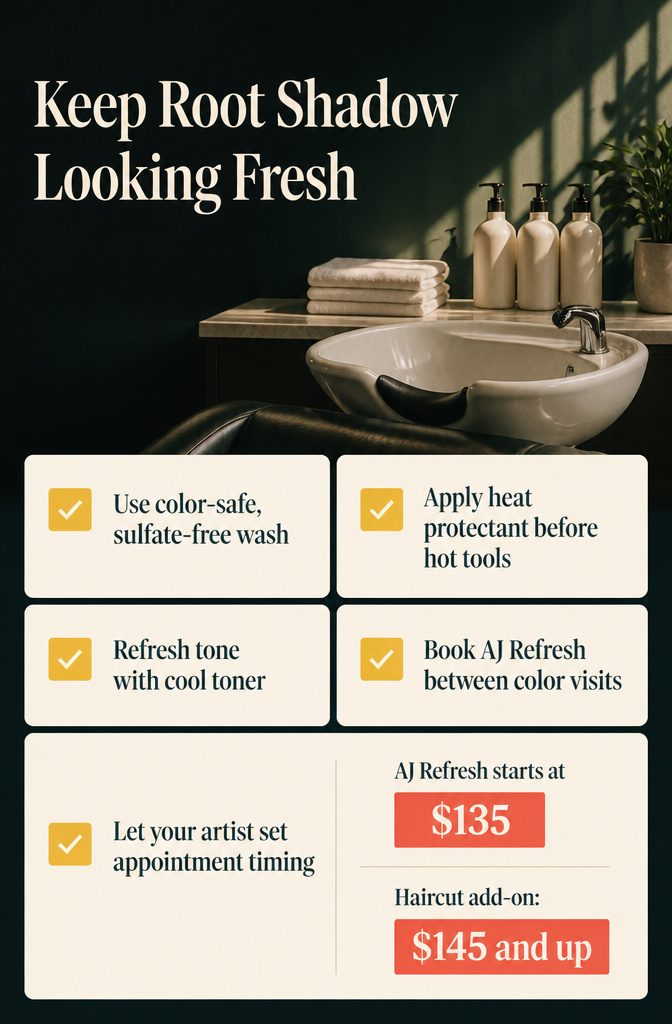
Three habits keep a soft root looking finished, and one booking covers the rest:
- Wash with a color-safe, sulfate-free shampoo and conditioner.
- Apply heat protectant before any hot tool.
- Use a cool toner to refresh the tone as it settles.
- Between highlight or balayage appointments, book an AJ Refresh: a toner application with a shampoo and blowout included, starting at $135. Adding a haircut raises it to $145 and up.
- Appointment timing depends on how fast your hair grows, how much contrast sits at the root and how polished you want the color. I can’t give you a fixed number of weeks, so let your artist set the schedule.
Frequently Asked Questions
What is a root shadow?
A root shadow is a darker shade painted at the roots and blended down an inch or more into lighter hair.
It softens the line between your natural root and highlights so regrowth looks intentional instead of overdue. The deeper tone also adds depth, which makes the lightened pieces look brighter.
Is shadow root the same as balayage?
No. Balayage is a freehand lightening technique that sweeps color toward the ends for a sun-kissed look, while a root shadow adds darker color at the roots to blend into those lighter pieces.
The two work well together because both blur the transition instead of drawing a hard line.
What color is best for a shadow root?
Pick a shade that stays close to your natural color and tone family.
Caramel roots flatter platinum blonde, deep cinnamon suits red hair, and brunettes can go to cool dark brown or black. A licensed colorist can help you choose if you’re unsure.
Should balayage go to the root?
Balayage lightener is swept on freehand and typically grades toward the ends, not the roots.
A root shadow adds darker color at the roots after the balayage is done, so the shift from dark to light reads as soft and intentional.
Can you do a root shadow at home?
Yes, with careful shade selection and application. Mix the color in a bowl, use a brush to section thin slices so the color reaches the roots, then drag the edge further down in some places to blend.
After processing, shampoo and apply a cool toner to avoid hot roots.





