Balayage can stretch 4 months between touch-ups if the placement stays off the root, while chunky ribbons or a money piece at the hairline need retouching every 10 weeks to keep the line clean.
The technique that suits you depends on how much contrast you want and how often you’re willing to go back: fine scattered highlights grow out softly and read natural, thick face-framing streaks give you bold lift right where it brightens your face.
1. Caramel Blonde Balayage
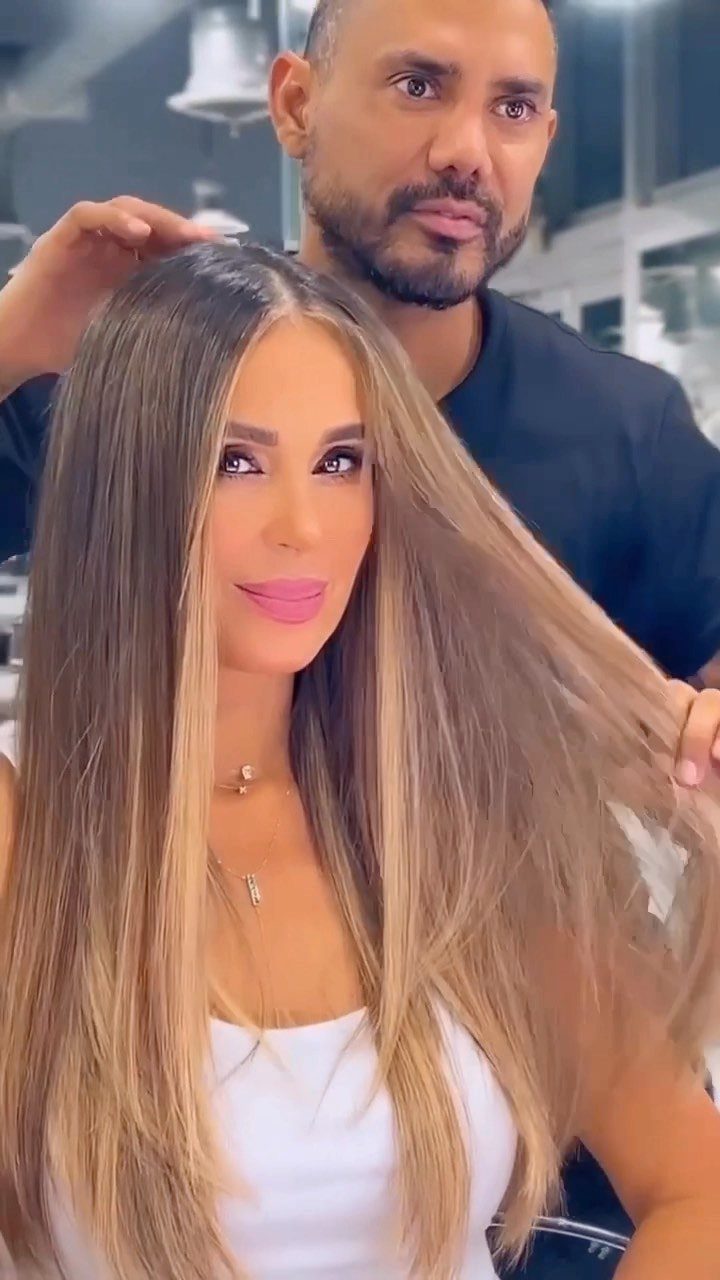
Caramel-blonde highlights hand-painted through brunette lengths give you lift without commitment to all-over color. The warmth reads golden in bright light, richer indoors.
Ask for balayage with a caramel tone a few shades lighter than your base.
The colorist paints it freehand, heaviest through mid-lengths and ends, so it blends without a hard line at the root. The grow-out stays soft, so appointments can stretch much longer.
This works on most brunette starting points. If your base is very dark, expect 2 sessions to reach this level of lift without damage.
2. Beige-blonde Highlights
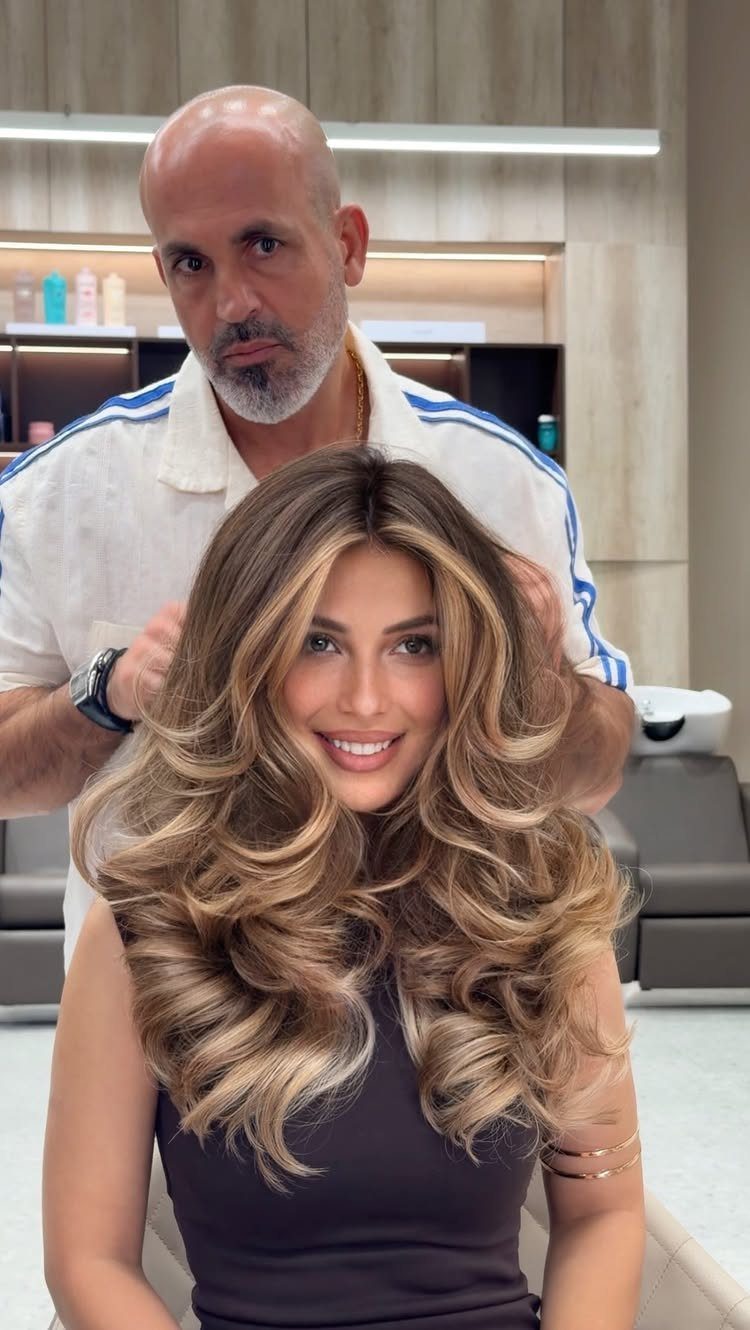
Beige-blonde is cooler than caramel, closer to taupe with just enough warmth to keep it from reading gray. It sits between ash and honey, which makes it flattering on a wide range of skin tones.
The highlights here are fine and scattered, not chunky.
That gives you brightness without obvious ribbons of color. If you have naturally wavy or curly hair, the dimension shows best when the curl pattern is defined.
Beige can fade brassy on very warm brunettes, so a purple-toning shampoo every few washes keeps it neutral. I use it every third wash to hold the tone without overcooling it.
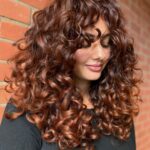
3. Defined Curls with Warm Balayage
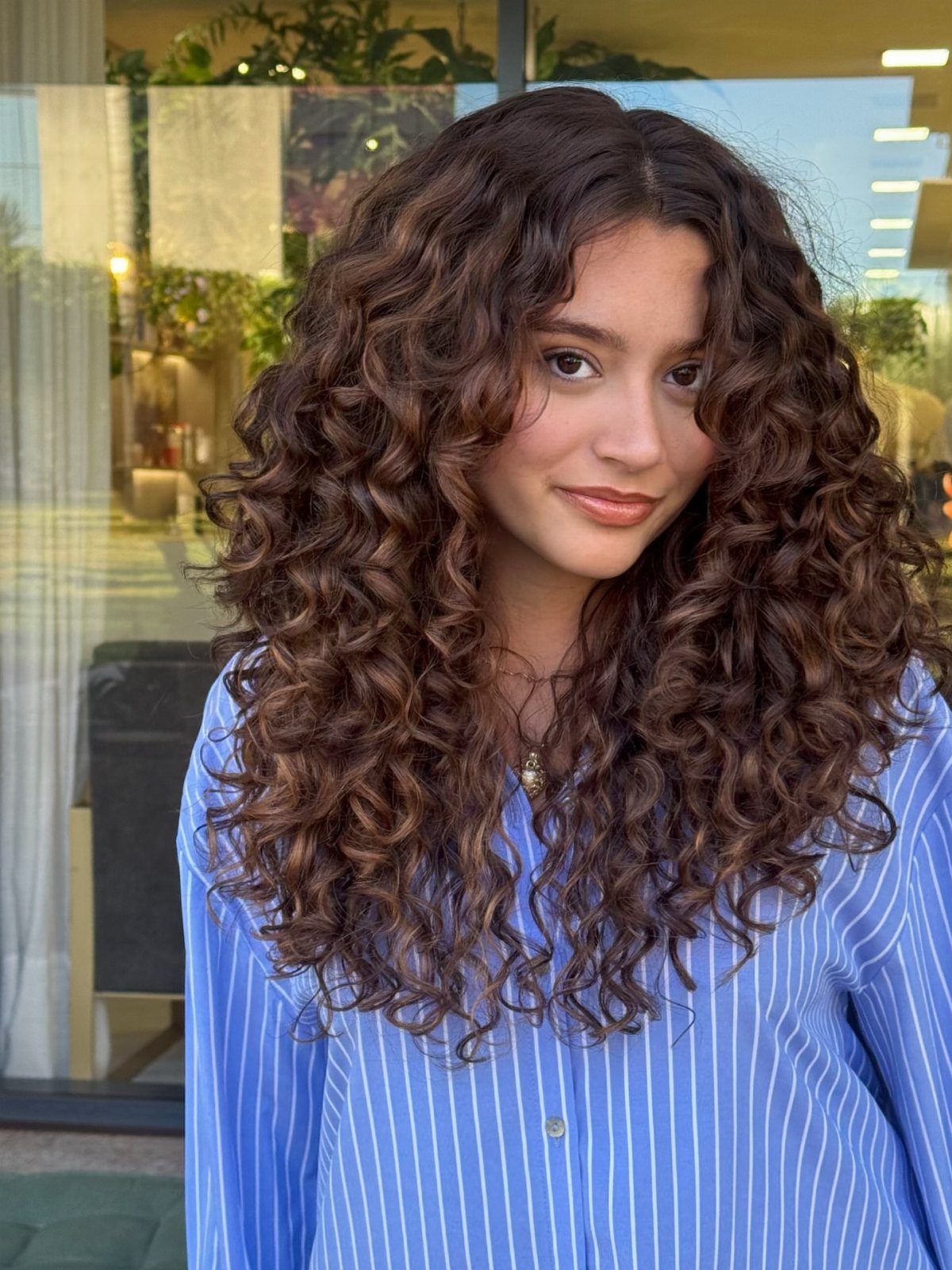
Warm balayage on curls is about placement.
The color sits where light would naturally hit: the top layers, around the face, and through the ends. On defined curls, even subtle highlights multiply because every spiral catches the tone differently.
Keep the application light. Heavy saturation flattens curl definition, so less product goes on and the focus stays on the surface rather than soaking through each section.
For this to read right, the curls need definition. A curl cream or gel after washing brings out the pattern, and the balayage follows the movement instead of getting lost in frizz.
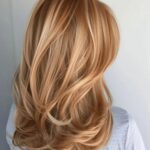
4. Honey Caramel Waves
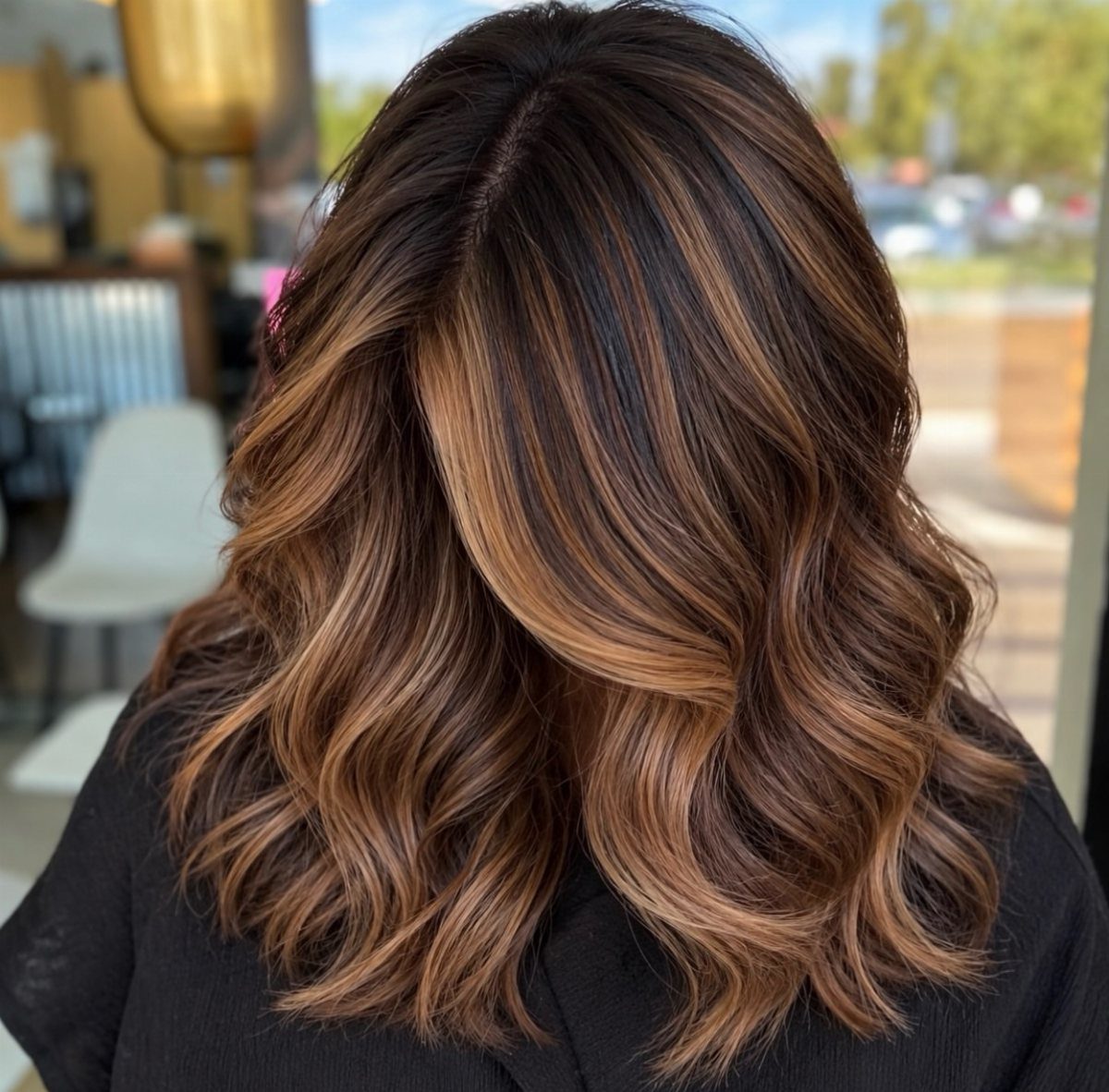
Honey-caramel runs warmer than plain caramel, pulling more gold and amber. The gradient here starts darker at the root and opens into lighter lengths, so it reads like naturally sun-lifted hair rather than deliberate streaks.
The waves matter. On straight hair this would look like ombré; the wave breaks up the color and makes the blend look lived-in.
If your hair is naturally wavy, a styling cream and air-dry will show the dimension. If it’s straight, you’ll need a curling iron or wand to get that movement.
This grows out cleanly because the root stays dark. You can go 4 months between touch-ups without a visible line.
5. Caramel Ash-blonde Curls
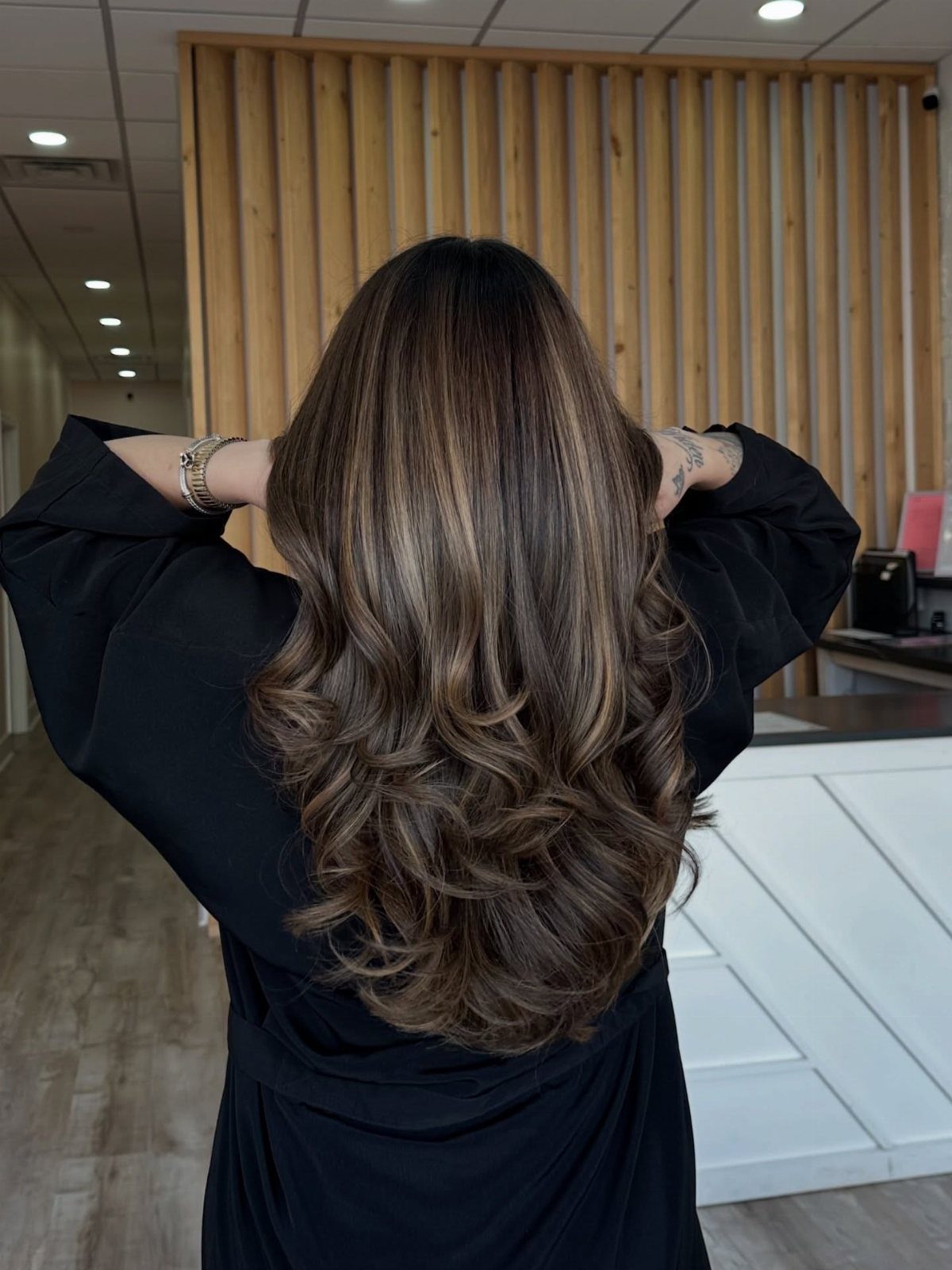
Mixing caramel and ash-blonde in the same head gives you warmth and neutrality at once.
The caramel keeps it from looking too cool, the ash pulls it back from going too golden. It’s a good middle if you’re not sure which tone suits you better.
The blend works because the colors sit in different sections rather than mixed into one shade.
Some ribbons read warmer, some cooler, and the overall effect is balanced. This takes a colorist who can paint both tones and knows where each one goes.
Curls make the mix more obvious because each piece moves independently and shows a different slice of color.
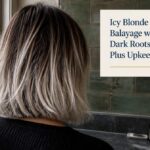
6. Stonewashed Graduated Balayage
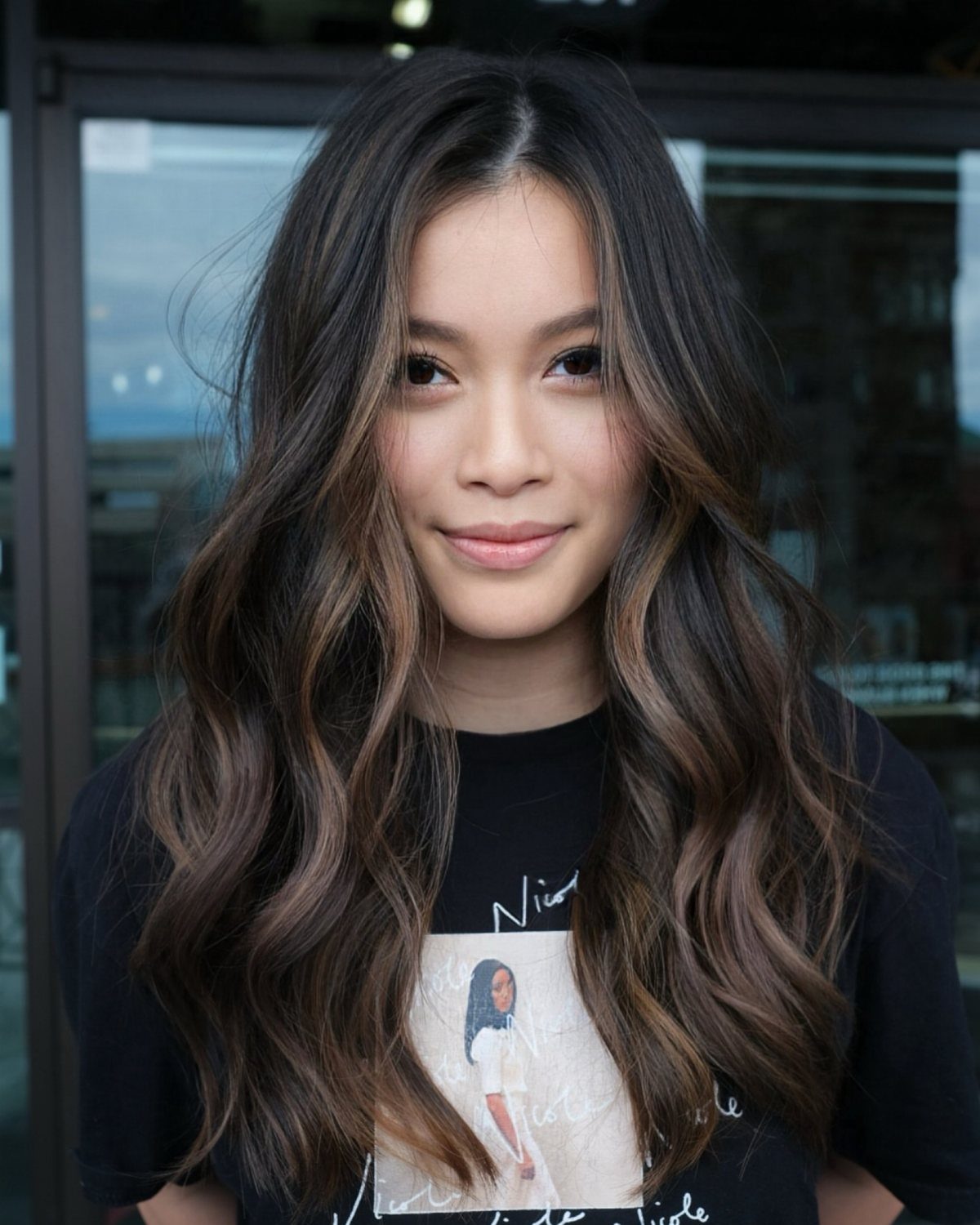
Stonewashed balayage is ash-toned and gradual, almost like the color was sun-faded over months rather than painted in one session. The lift is subtle, a few shades lighter than the root, and the tone leans cool without going silver.
The graduation matters here.
The lightest pieces sit at the ends, the darkest at the root, and the transition between them is so soft you can’t point to where one stops and the next starts. That’s what makes it look natural rather than deliberate.
This is low-maintenance. The grow-out is invisible, and because the tone is muted, it doesn’t need aggressive toning to stay true.
7. Dark Brunette Balayage
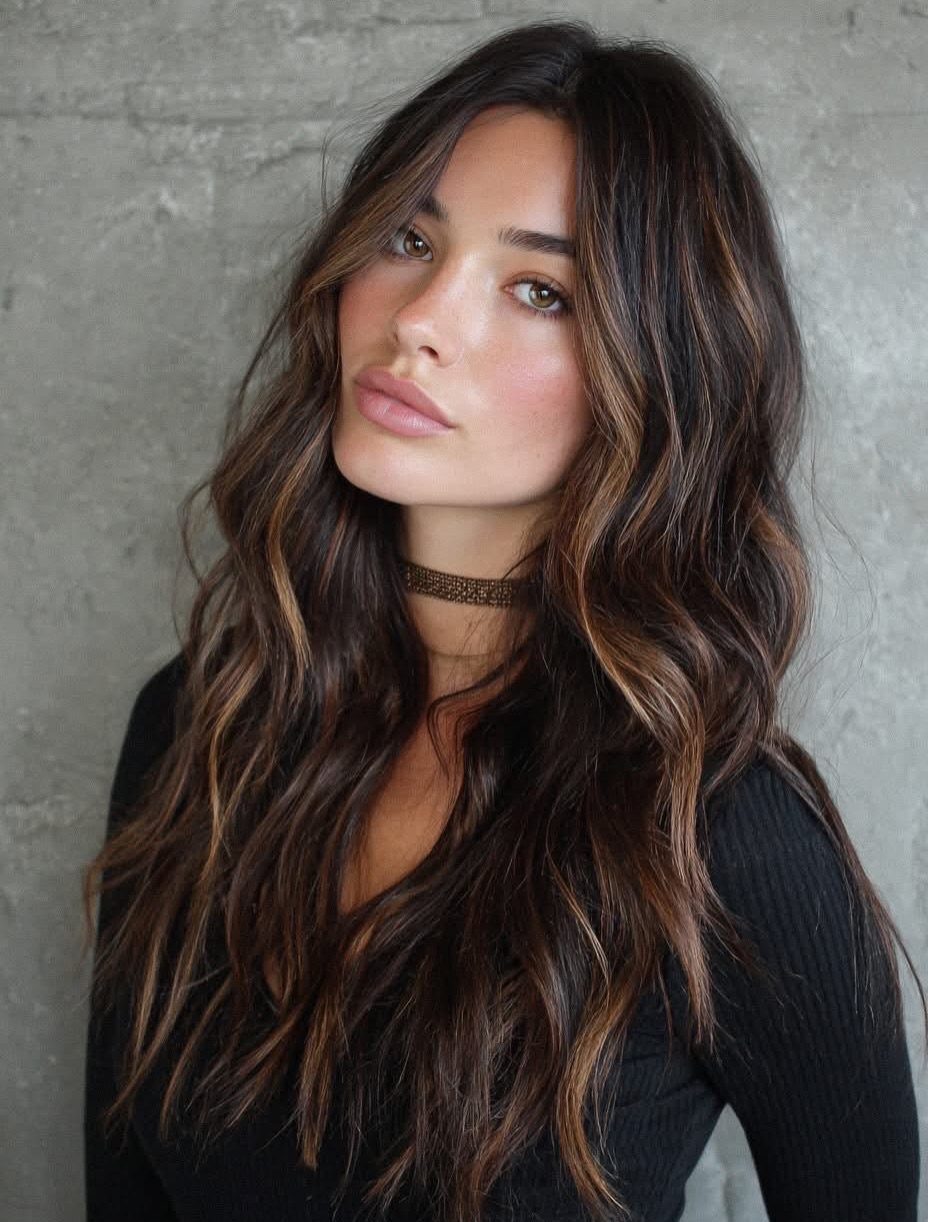
The balayage here stays subtle, just a few shades lighter than a deep brown base, so the contrast is there but quiet. The brightest pieces frame the face and catch light without turning the whole head blonde.
On very dark brunette, getting to this level of blonde usually takes 2 sessions to avoid damage. The colorist lifts gradually, then tones to remove any brass.
Without it, they pull warm and lose the cool edge that makes them stand out.
8. Shoulder-length Balayage
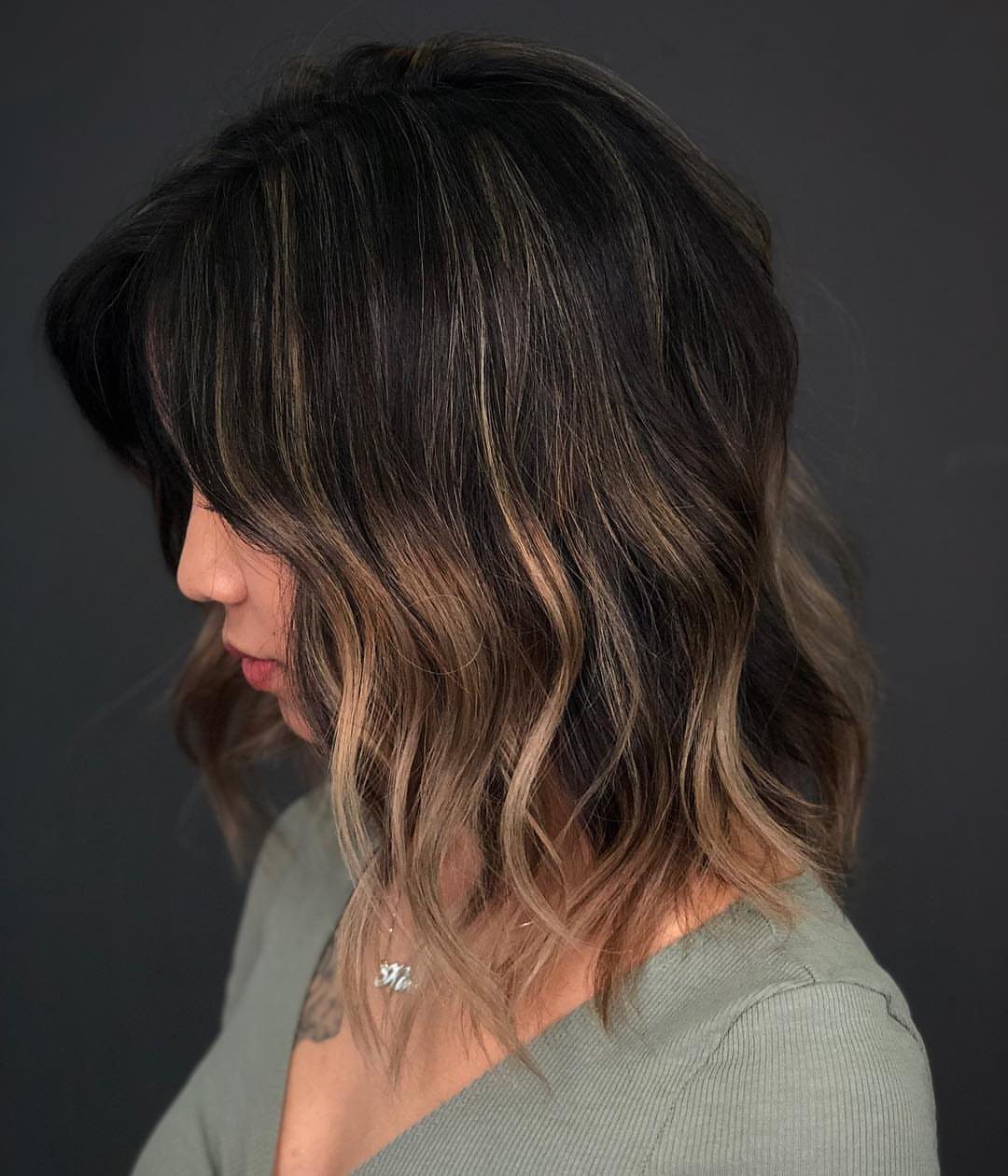
Shoulder length shows balayage cleanly because the color sits where you see it most: through the ends and around the face.
This length needs less color than long hair, which keeps the appointment shorter and the cost lower. A partial balayage, focused on the front and top layers, gives you the same effect without painting the whole head.
The cut matters. Blunt ends can make highlights look blocky; a few layers or textured ends let the color blend and move.
9. Ash Bob Highlights
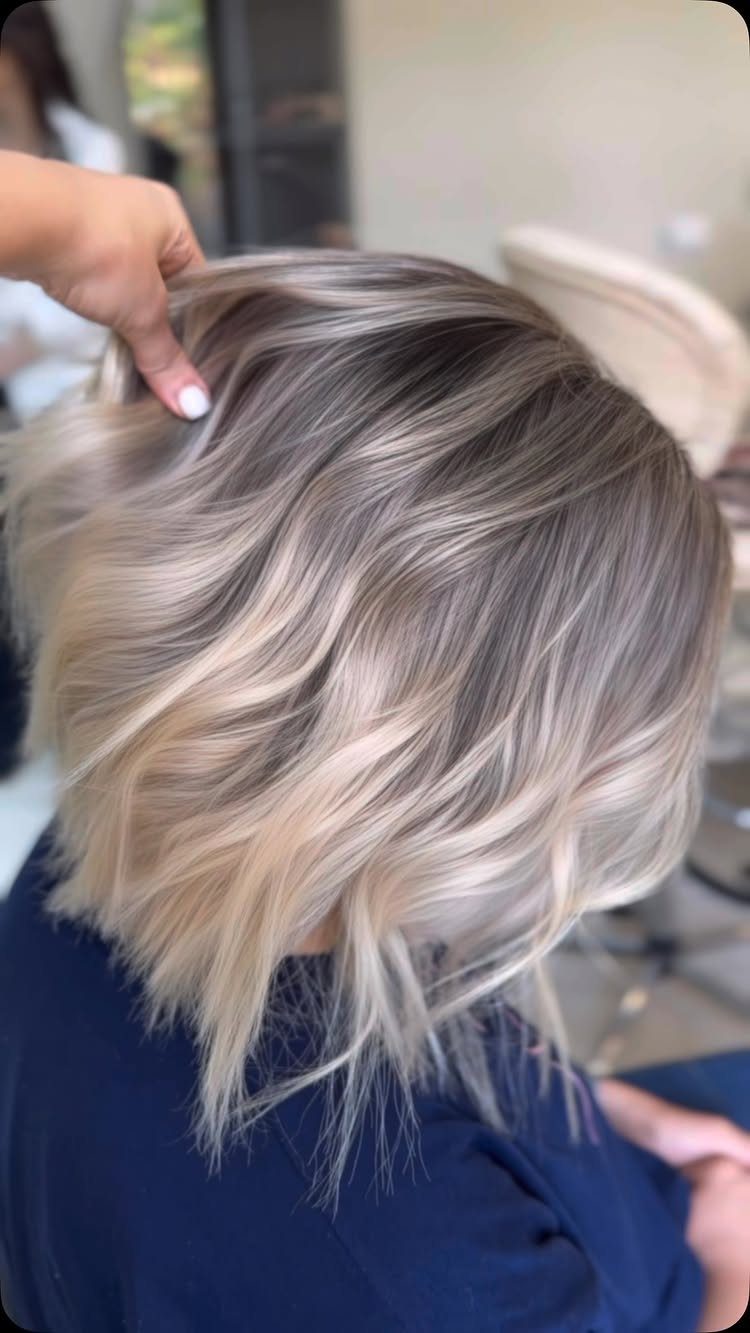
Ash-blonde highlights on a bob lift the color without adding warmth. The tone here is cool, almost silvery, which suits cooler skin tones and keeps the look modern rather than golden.
Fine highlights work better on short hair than thick ribbons because they don’t overwhelm the shape. The colorist places them where the wave naturally lifts, so the dimension follows the movement.
Ash fades faster than warm tones, so a purple shampoo every few washes holds the cool tone. Without it, the highlights can turn brassy within a month.
10. Warm Blonde Bob Balayage
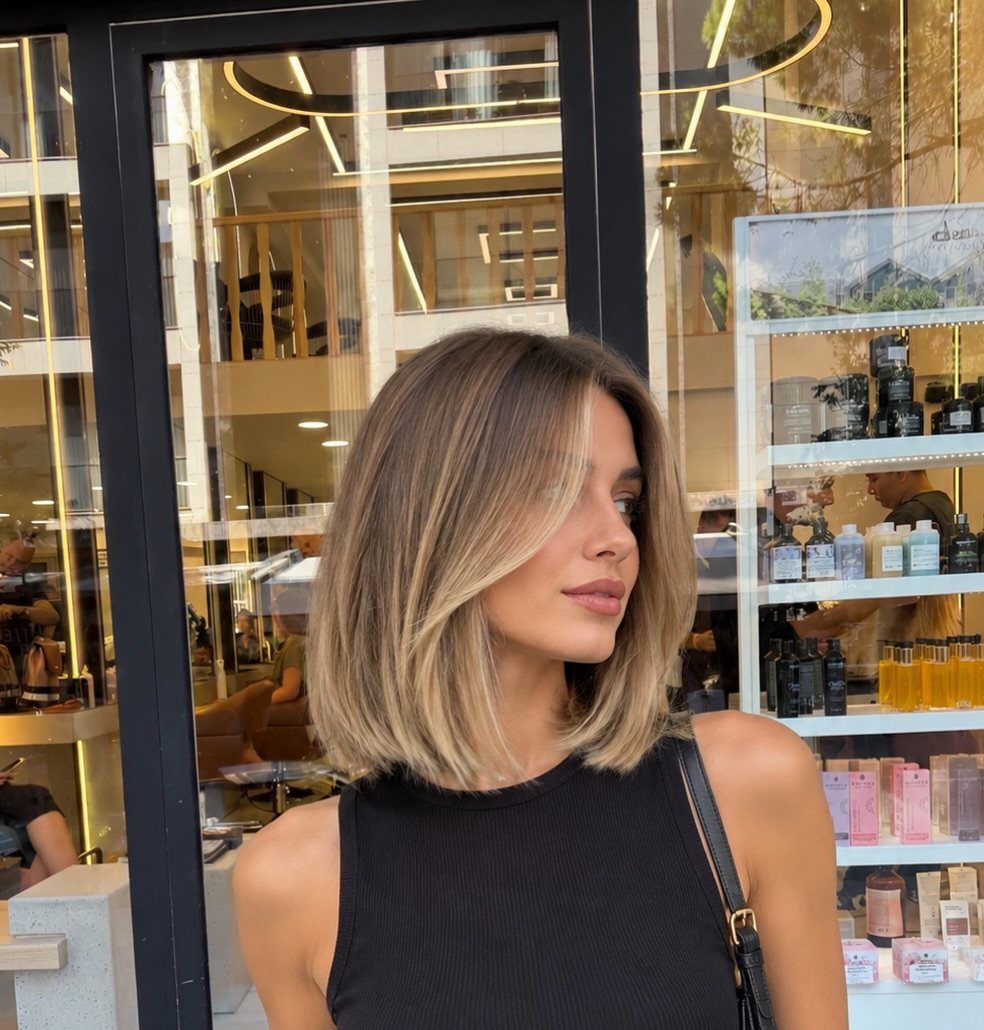
Warm blonde balayage on a bob brings brightness right to the face.
The placement is heavier through the front sections and ends, which frames the face and gives the bob depth. On a shorter cut, even a few well-placed pieces make a difference because they sit closer to the face.
This tone holds better than ash on naturally warm brunettes. It fades gradually without turning brassy.
11. Beige Caramel Textured Bob
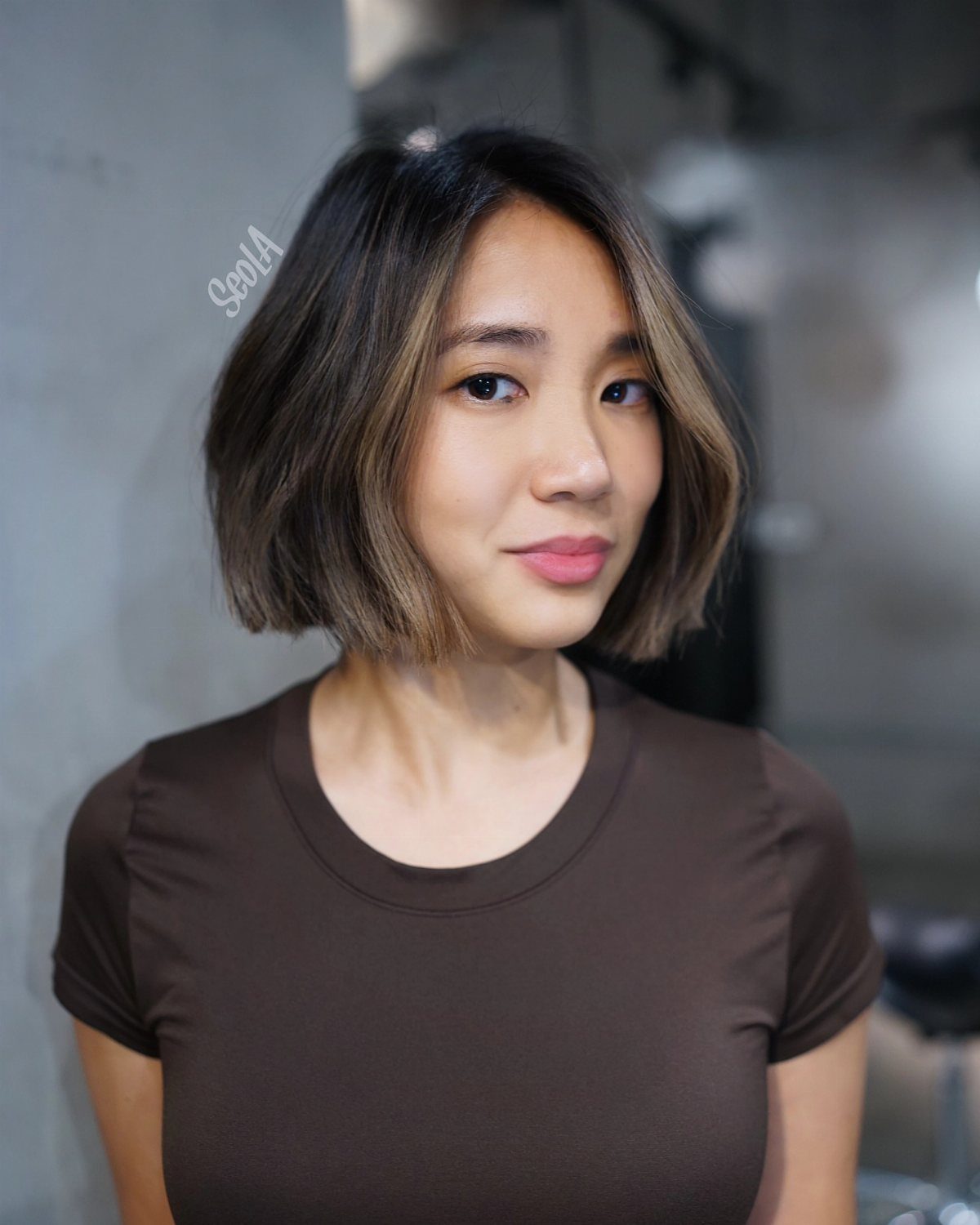
Fine highlights in beige and caramel add dimension to a textured bob without competing with the cut. The color sits close to the base, just a shade or two lighter, so the overall effect is dimensional rather than blonde.
Textured bobs show highlights better than blunt cuts because the layers catch light at different angles. The color shifts as the hair moves, which gives you lift without obvious streaks.
This is low-commitment. The tone is muted enough that grow-out blends, and the short length means less maintenance than the same color on long hair.
12. Ash Grey Face Streaks
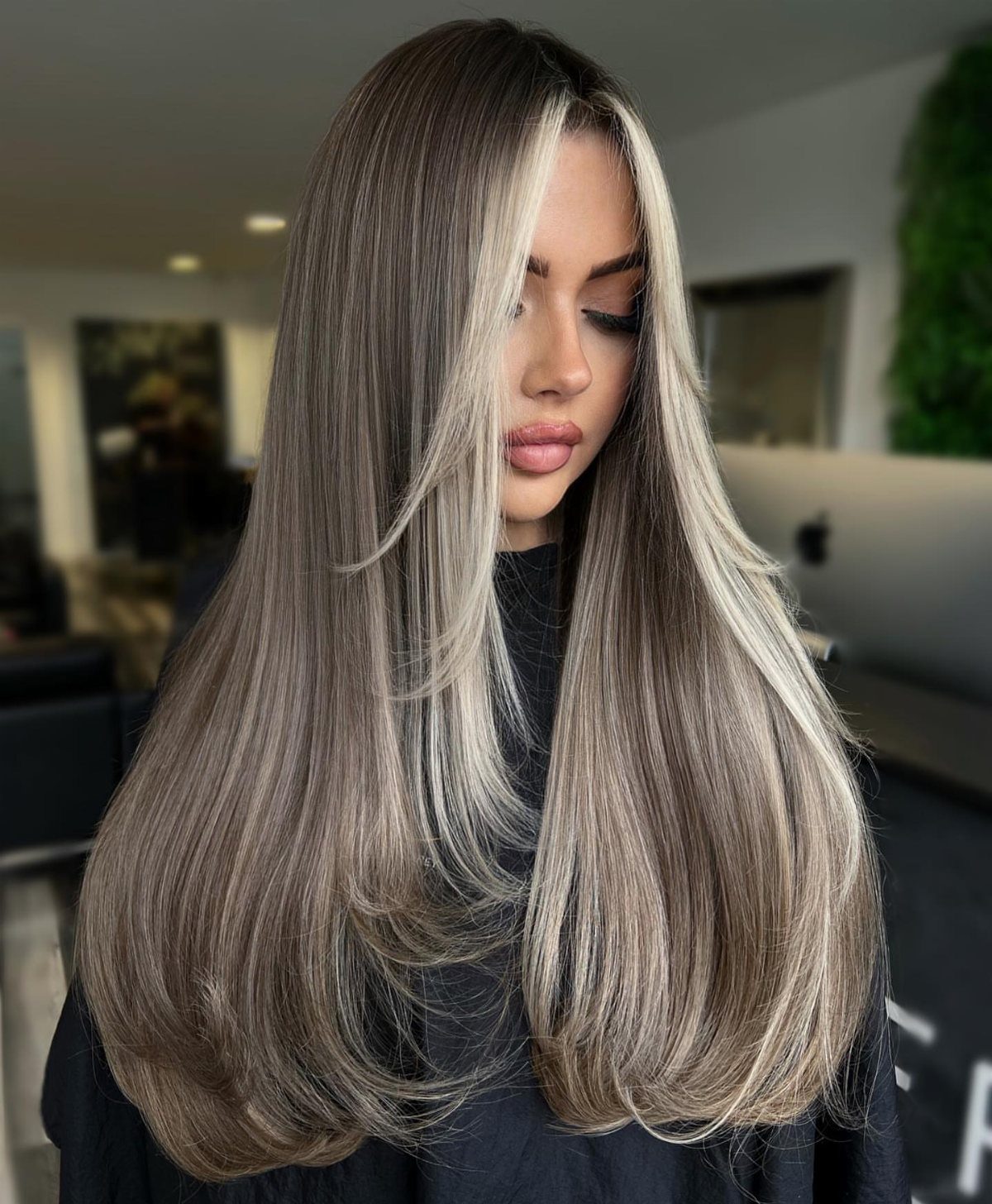
Ash-grey streaks against dark brown give you high contrast without warmth. The placement here is deliberate: thick pieces right at the face, not scattered through the whole head, so the effect is bold rather than blended.
Getting to this level of grey on dark hair takes lifting the sections nearly to pale blonde, then toning with a silver or ash formula. That usually means 2 sessions if your base is very dark.
The streaks need retoning to stay silver.
13. Gray and Blonde Layered Highlights
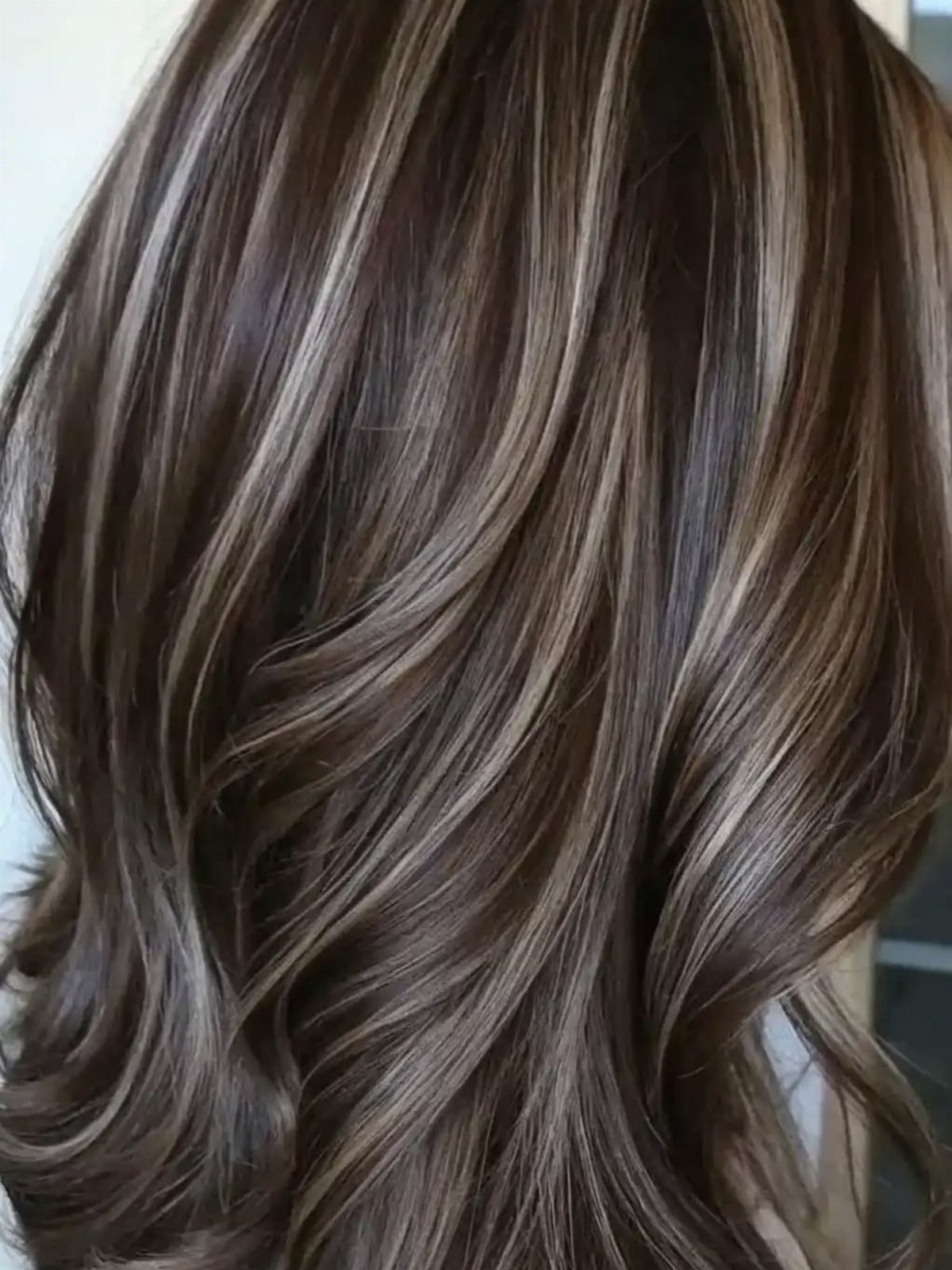
Gray and blonde highlights layered through dark brown give you a cool, high-contrast look without committing to one tone.
The mix keeps it dimensional: some pieces read silver, some buttery, and the overall effect is brighter than pure ash without the warmth of caramel.
The dark lowlights between the lighter sections add depth and keep the base from looking washed out. On long hair, that contrast shows best in loose waves where each layer catches light differently.
Both tones need regular toning to stay true. Purple shampoo handles the blonde, a silver toner keeps the gray from fading warm.
14. Ash Gray Beige Balayage
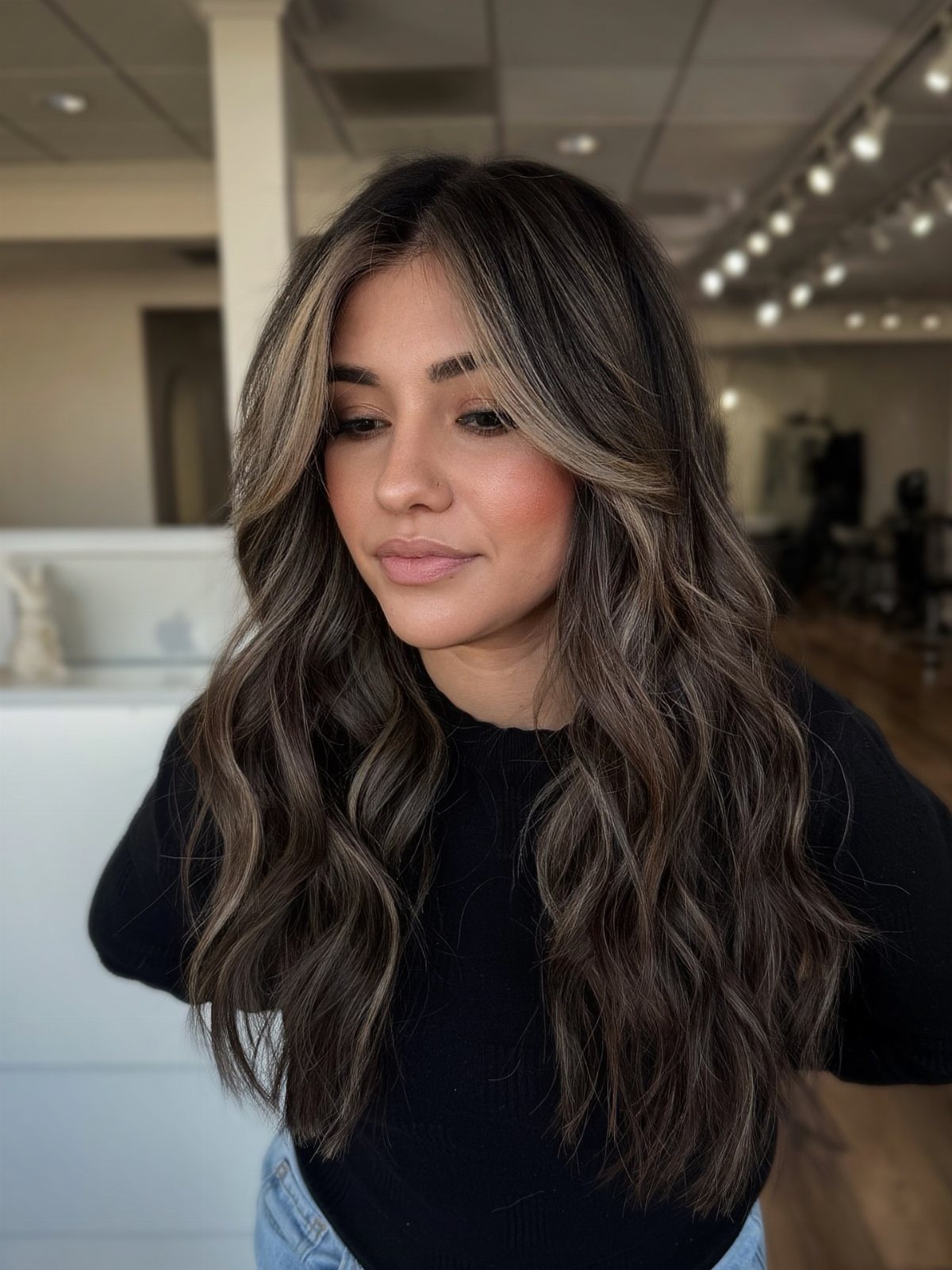
The result looks almost lived-in, not like a single placement.
Ash gray beige balayage flatters most skin tones and grows out cleanly because the transition from root to ends is so gradual.
If your hair pulls warm naturally, expect regular toning to hold the ash. Without it, the beige will shift toward honey.
15. Cool Ash-blonde Highlights
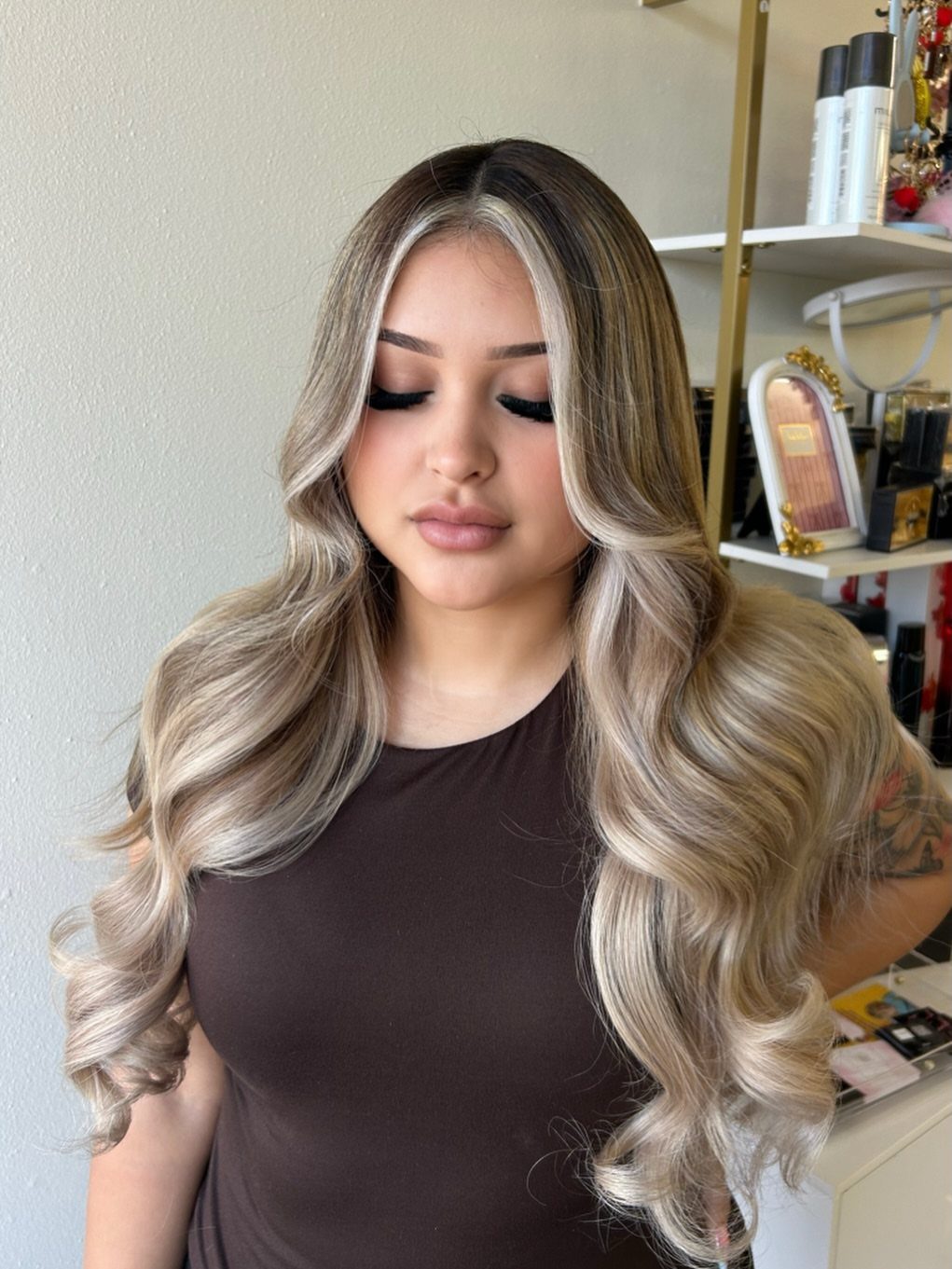
The roots stay dark, so grow-out is invisible. The length of the hair amplifies the effect because the lighter sections sit where they’re most visible, through the ends and around the face.
A purple shampoo every few washes keeps it cool, otherwise it turns brassy within weeks.
16. Brunette Hair with a Blonde Money Piece
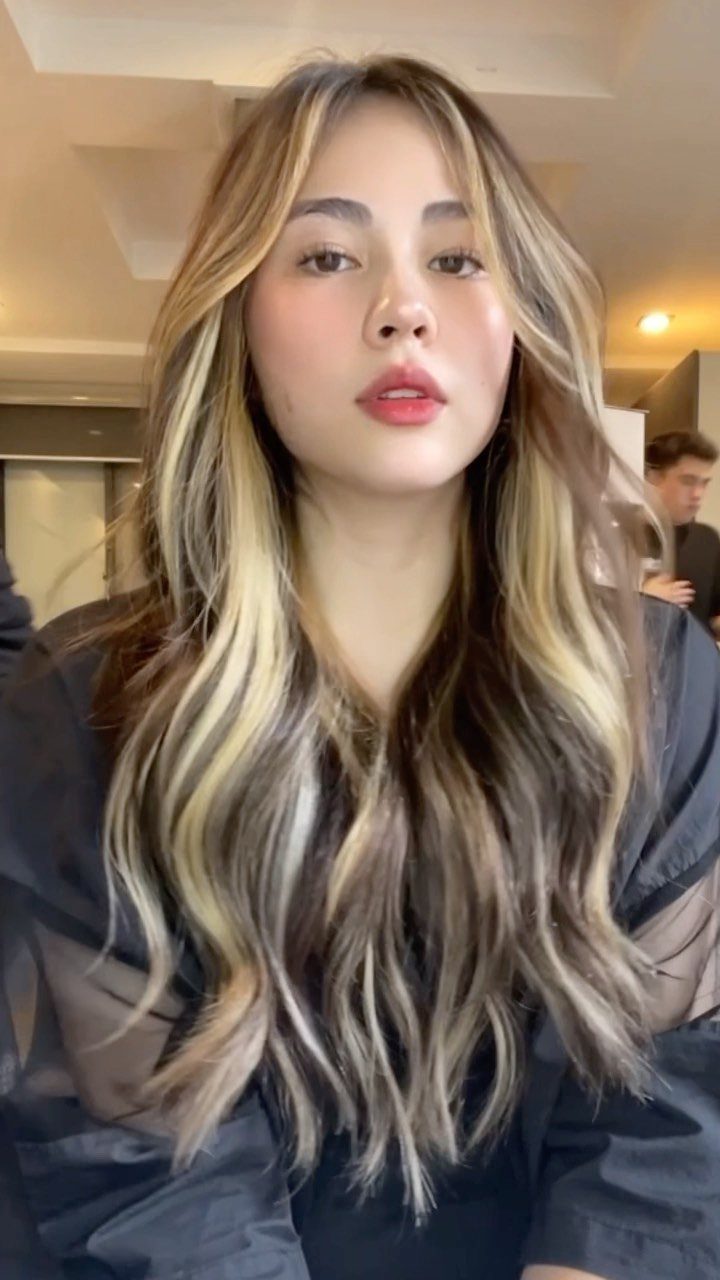
A money piece is thick blonde sections right at the front, framing the face on both sides. The rest of the hair stays brunette, so the contrast is bold and the placement is deliberate.
Getting the blonde bright enough to stand out against dark hair usually takes 2 sessions.
The grow-out is visible because the blonde sits right at the hairline, so expect regular touch-ups to keep it clean.
17. Fine Scattered Highlights
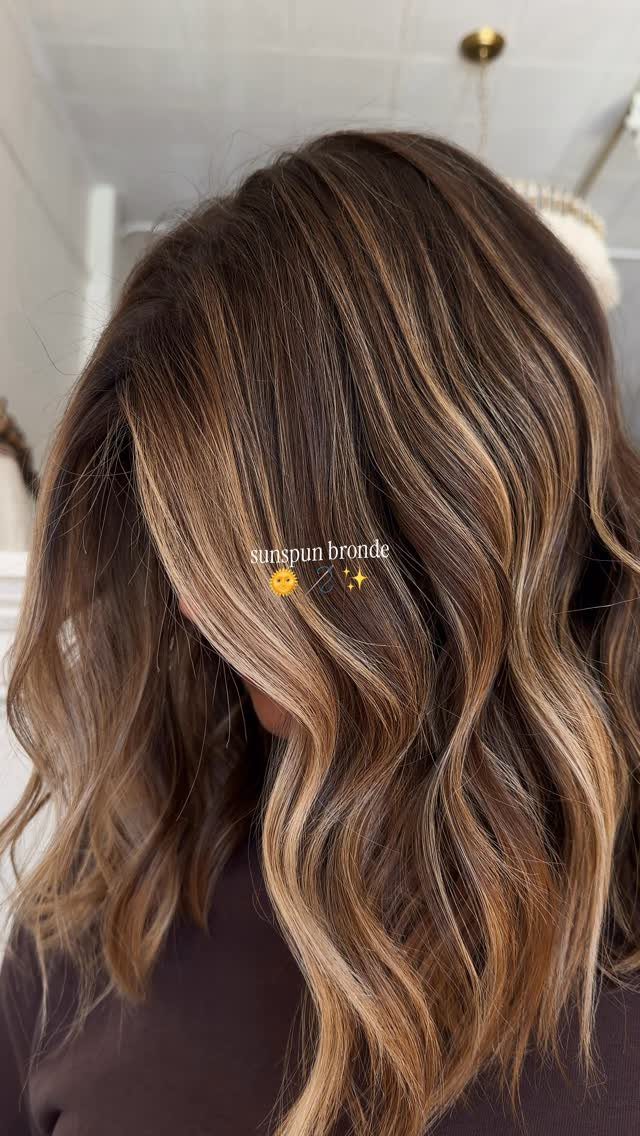
Fine blonde highlights scattered through brunette give you brightness without obvious streaks. The pieces are thin and placed throughout the head, so the color shifts subtly as the hair moves rather than reading as deliberate ribbons.
This technique takes longer than thick highlights because the colorist paints many small sections instead of a few bold ones. The result is a natural look that grows out softly.
Straight hair can look flat if the pieces are too fine, so slightly thicker ribbons work better there.
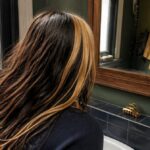
18. Chunky Blonde Ribbons on Brunette Hair
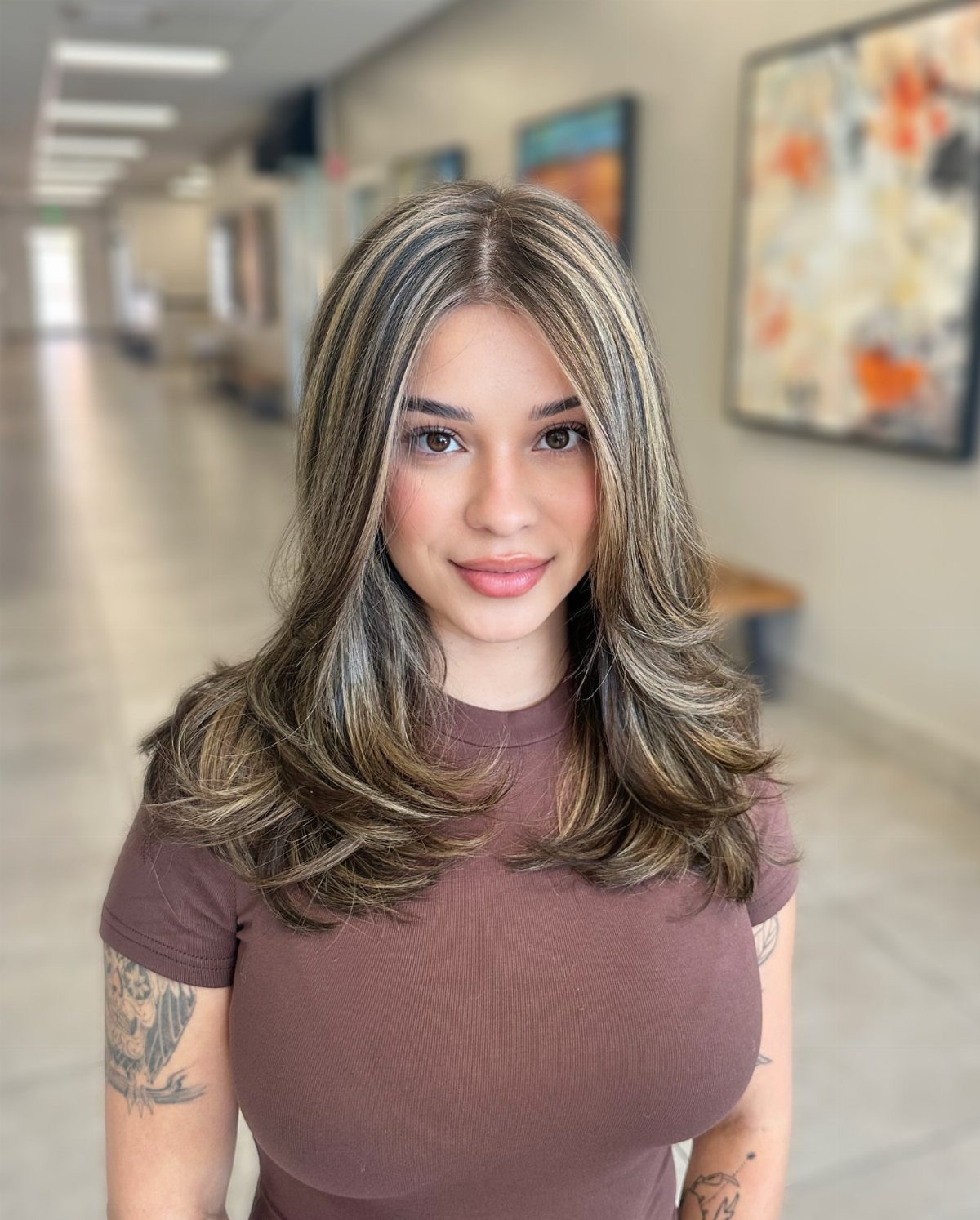
Thick blonde ribbons against brunette give you high contrast and a bold look. The sections here are wider than traditional highlights, almost chunky, which makes the color obvious rather than blended.
This works if you want the highlights to show up clearly, not fade into the base. The placement follows the layers, so the blonde sits where the hair naturally lifts and catches light.
Chunky ribbons grow out faster than fine highlights because the line between blonde and brunette is sharper. Plan for touch-ups every 10 weeks to keep the contrast clean.
19. Brunette Bob with Blonde Highlights
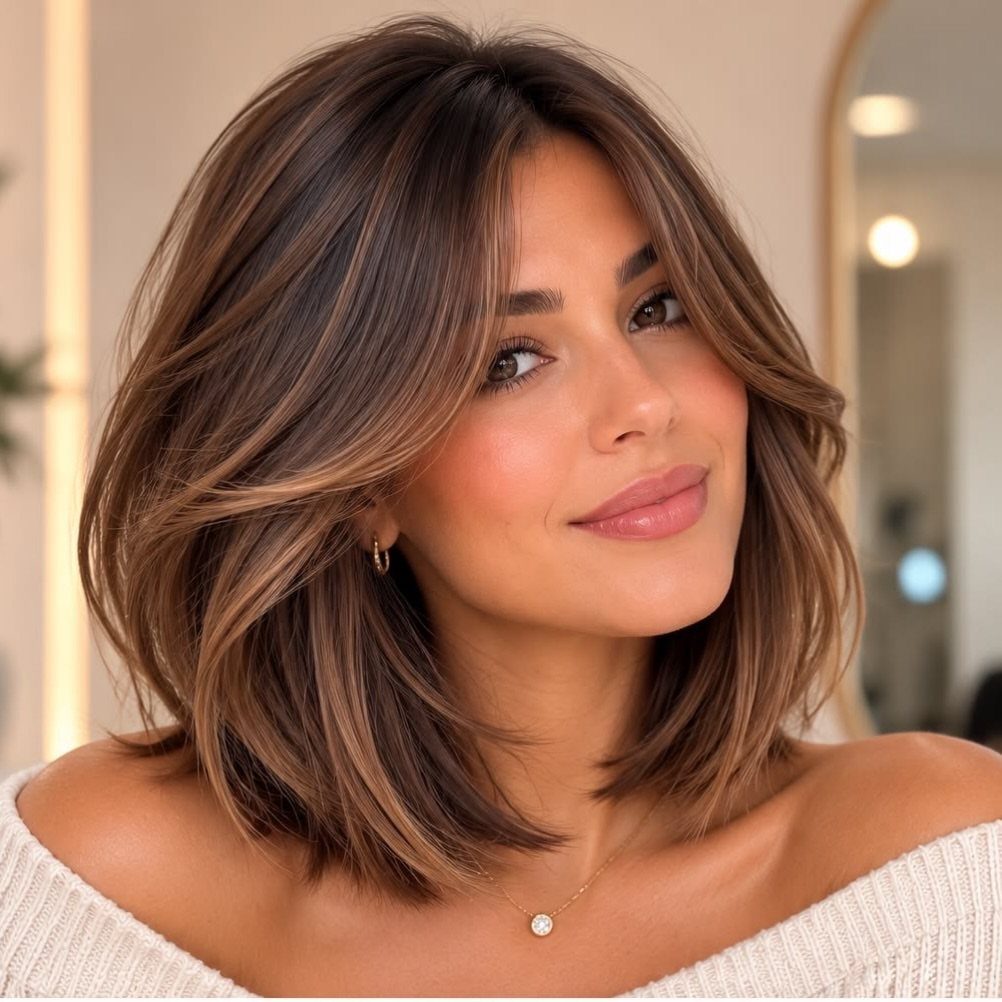
A bob with highlights keeps the shape clean while the color adds movement and dimension. The pieces sit through the top layers and around the face, which keeps the application quick and the grow-out soft.
Short hair shows highlights differently than long hair because the color sits closer to the face.
A bob grows out fast, but because the highlights are subtle and close to the base tone, the line between colored and new growth stays soft.
Touch-ups depend on how much root contrast you can live with and whether the placement sits off your parting.
20. Brunette Hair with Face-framing Highlights
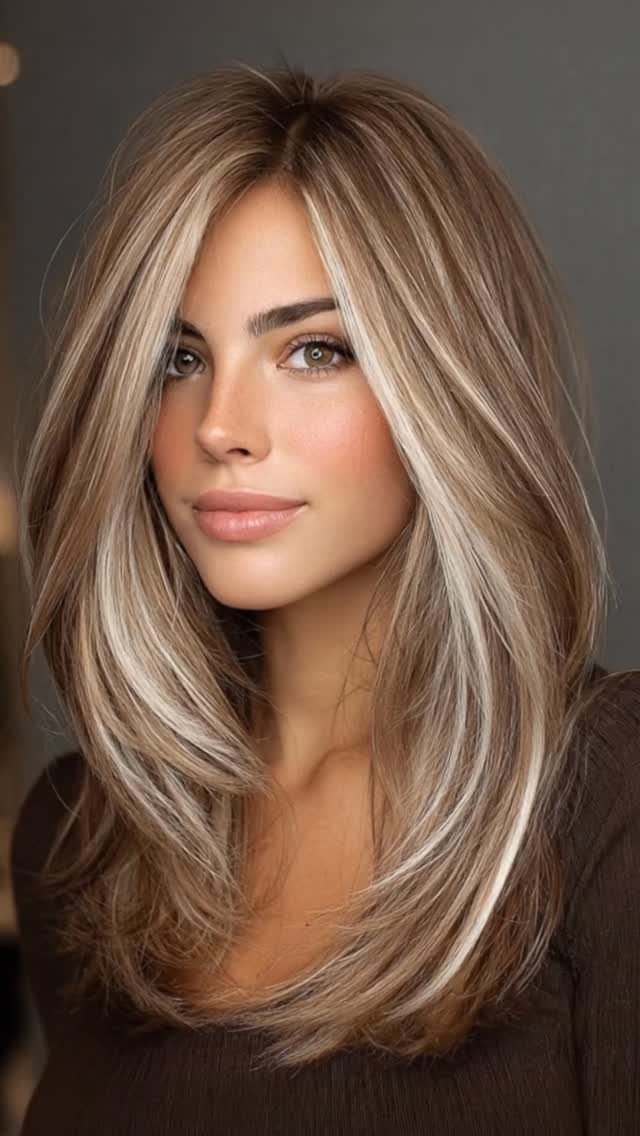
Face-framing highlights concentrate the blonde right where it brightens your face.
The placement follows the front sections and the layers around the face, which means the blonde sits where you see it most. On long hair, that contrast shows clearly without needing heavy saturation through the back.
This is faster and cheaper than full highlights because the colorist paints fewer sections. The back stays brunette, and the dimension comes from the front.
21. Caramel Face-framing Layers
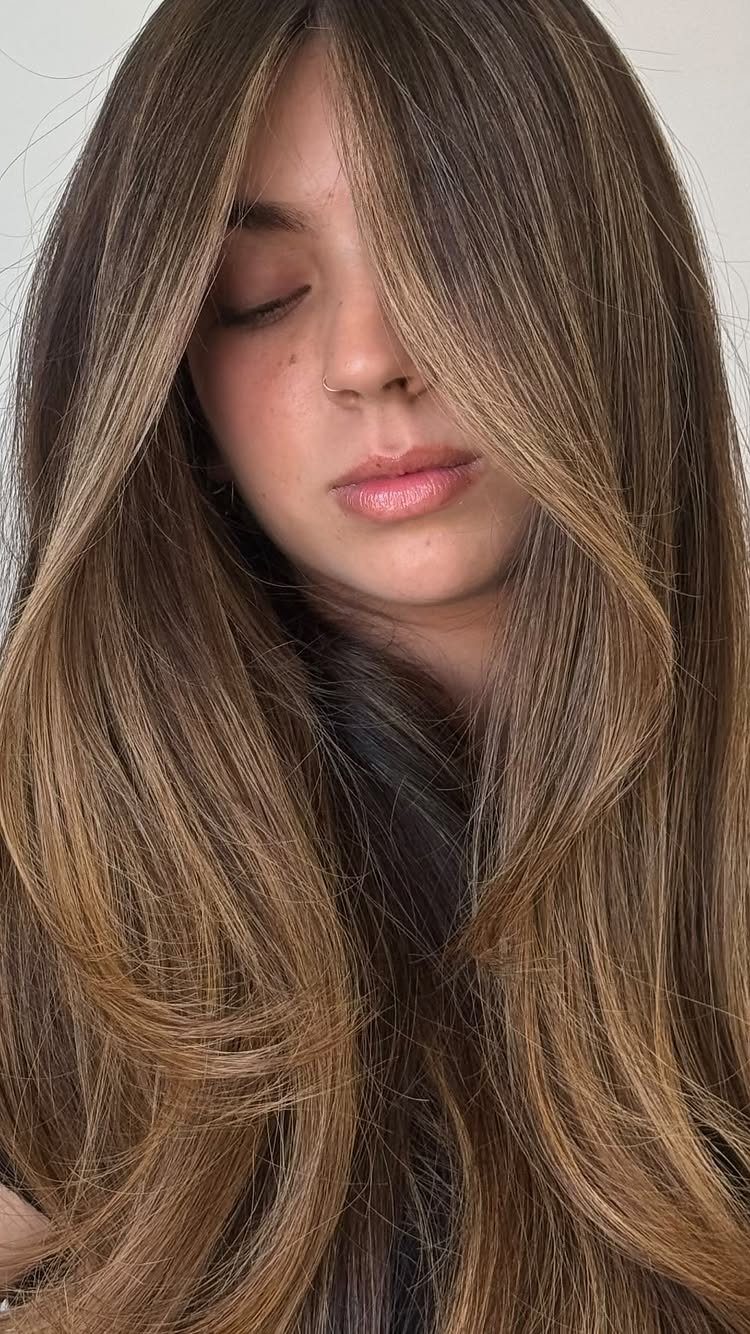
Caramel highlights on face-framing layers give you warmth right where the hair moves.
The tone here is softer than platinum, closer to honey or amber, which keeps the contrast subtle rather than stark. On naturally warm brunettes, caramel holds better than ash and fades without turning brassy.
Layered cuts show this placement best because the color moves with the shape. On blunt ends, the same highlights can look striped.
22. Platinum Ash Melt
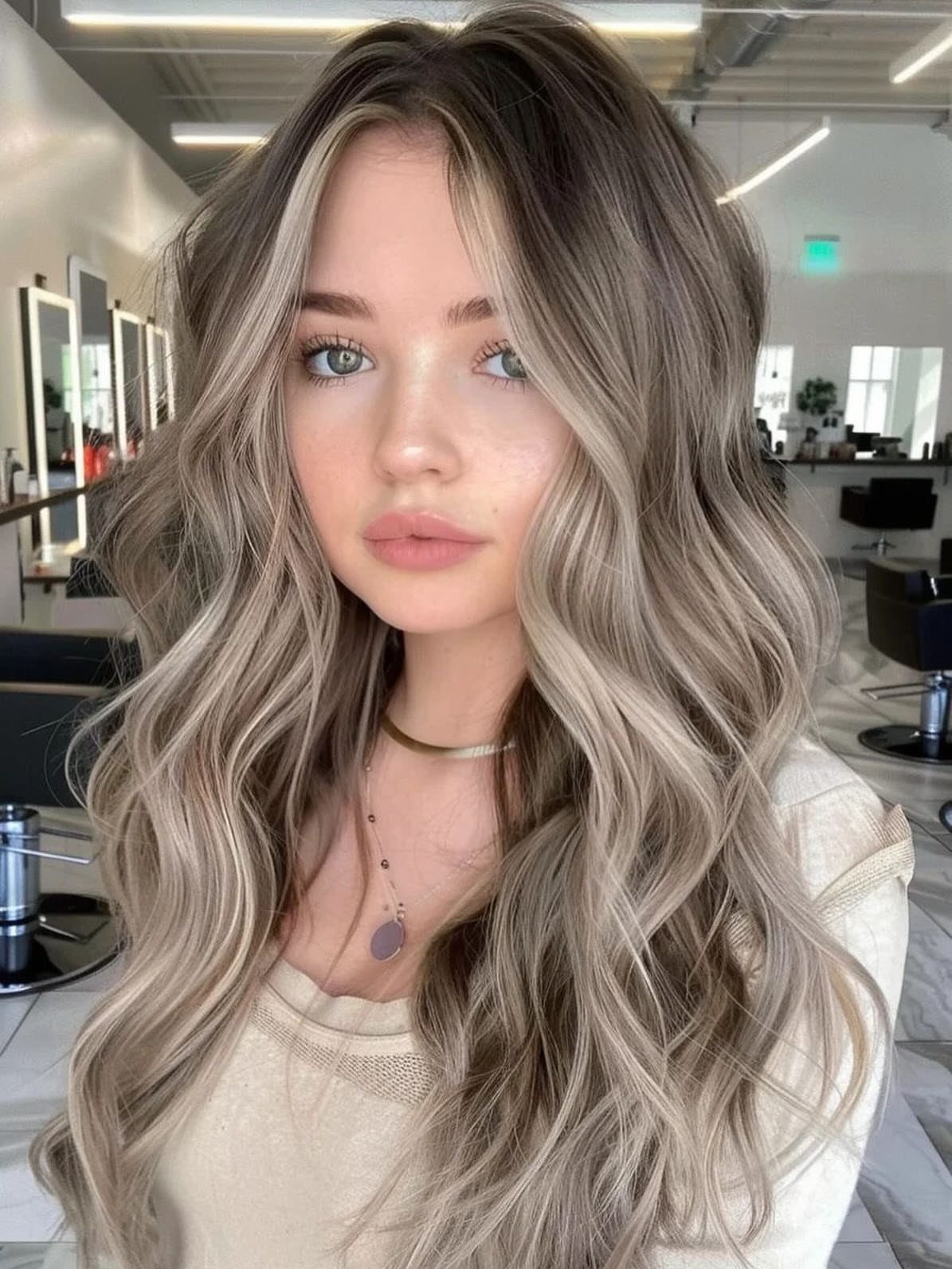
A platinum melt starts with dark roots and lifts into ash-blonde through the lengths. The transition is gradual, almost like a reverse shadow root, so the grow-out is built into the color from the start.
Getting to platinum on brunette hair takes multiple sessions to avoid damage. Platinum ash blonde highlights require regular toning to hold the platinum and keep them from warming up.
Roots fade in naturally, so regrowth becomes part of the look rather than something to fix immediately. The maintenance is in the tone, not the placement.
23. Chunky Ash Caramel Highlights
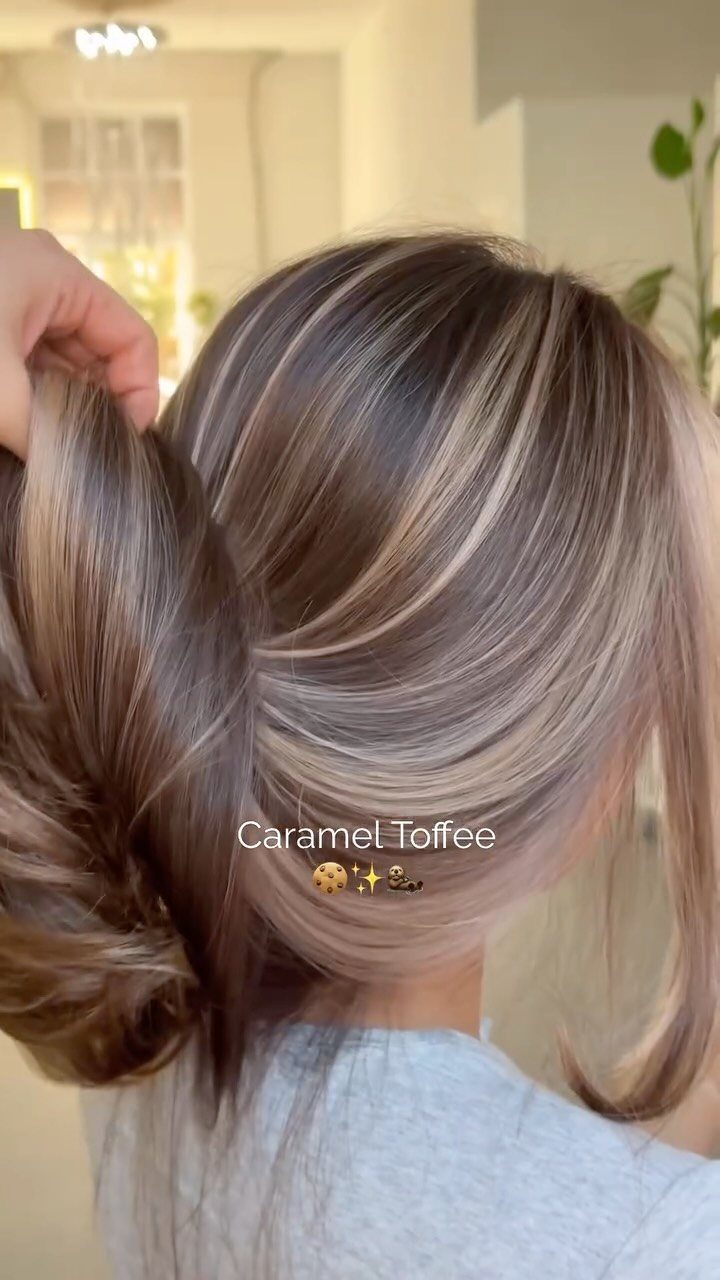
Chunky highlights in both ash-blonde and caramel give you 2 tones at once, some pieces reading cool, some warm.
Mixing tones like this works if the base stays dark. The brunette holds the lighter sections in place and keeps the overall look from washing out.
The sharper line between colors means regrowth shows faster than it does with softer, blended ribbons.
24. Honeysuckle Face Frame
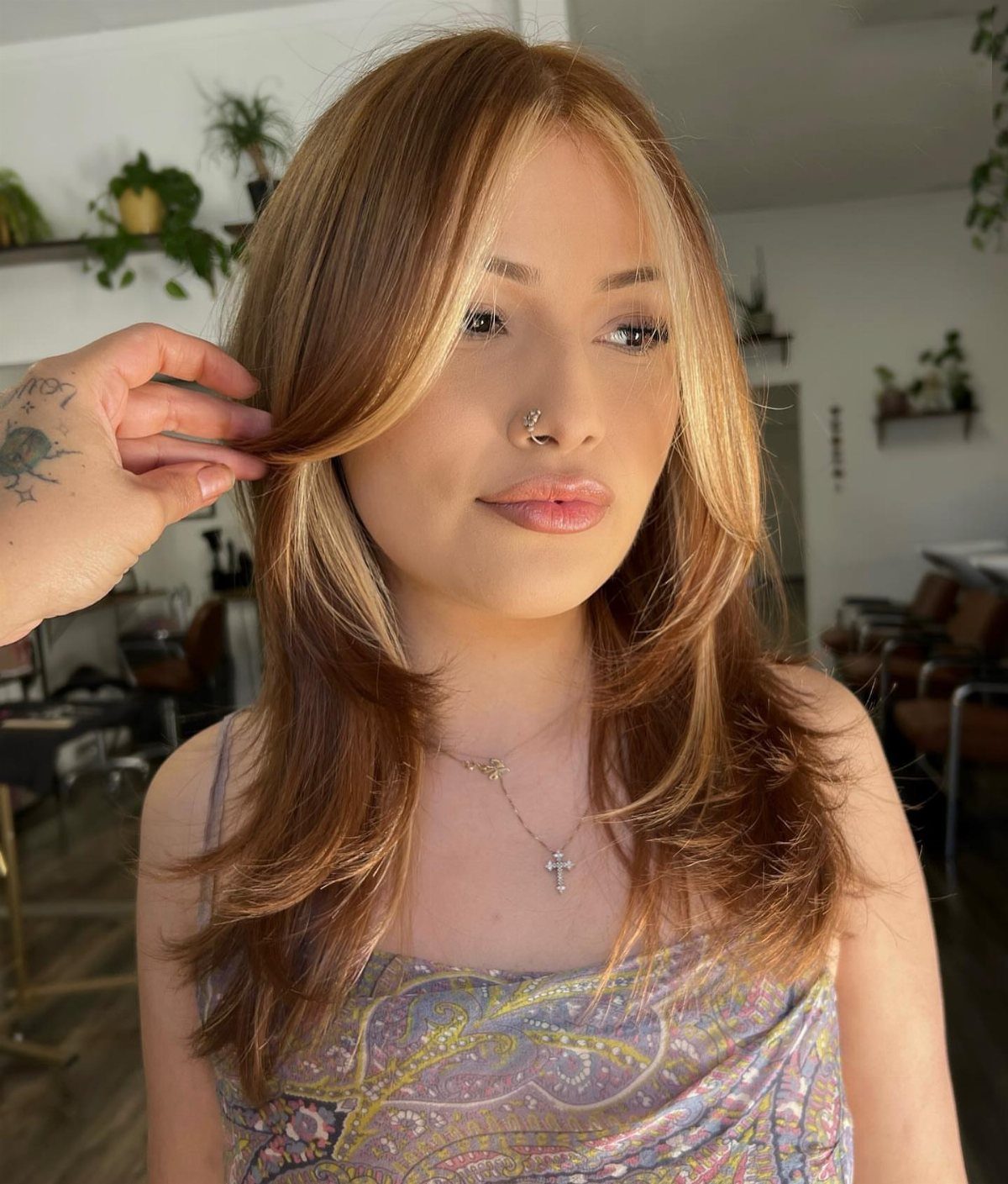
Beige-blonde highlights through the front sections and layered waves brighten the face without full coverage. The placement is concentrated around the face, with the back staying darker, so the dimension shows where it matters most.
Beige-blonde sits between ash and caramel, cool enough to look modern but warm enough to hold on naturally warm brunettes. The tone is softer than platinum, which makes it easier to maintain.
Layered waves amplify the color because the movement shows different sections at different angles. On straight hair, the same highlights can look flat.
25. Bronde Lob
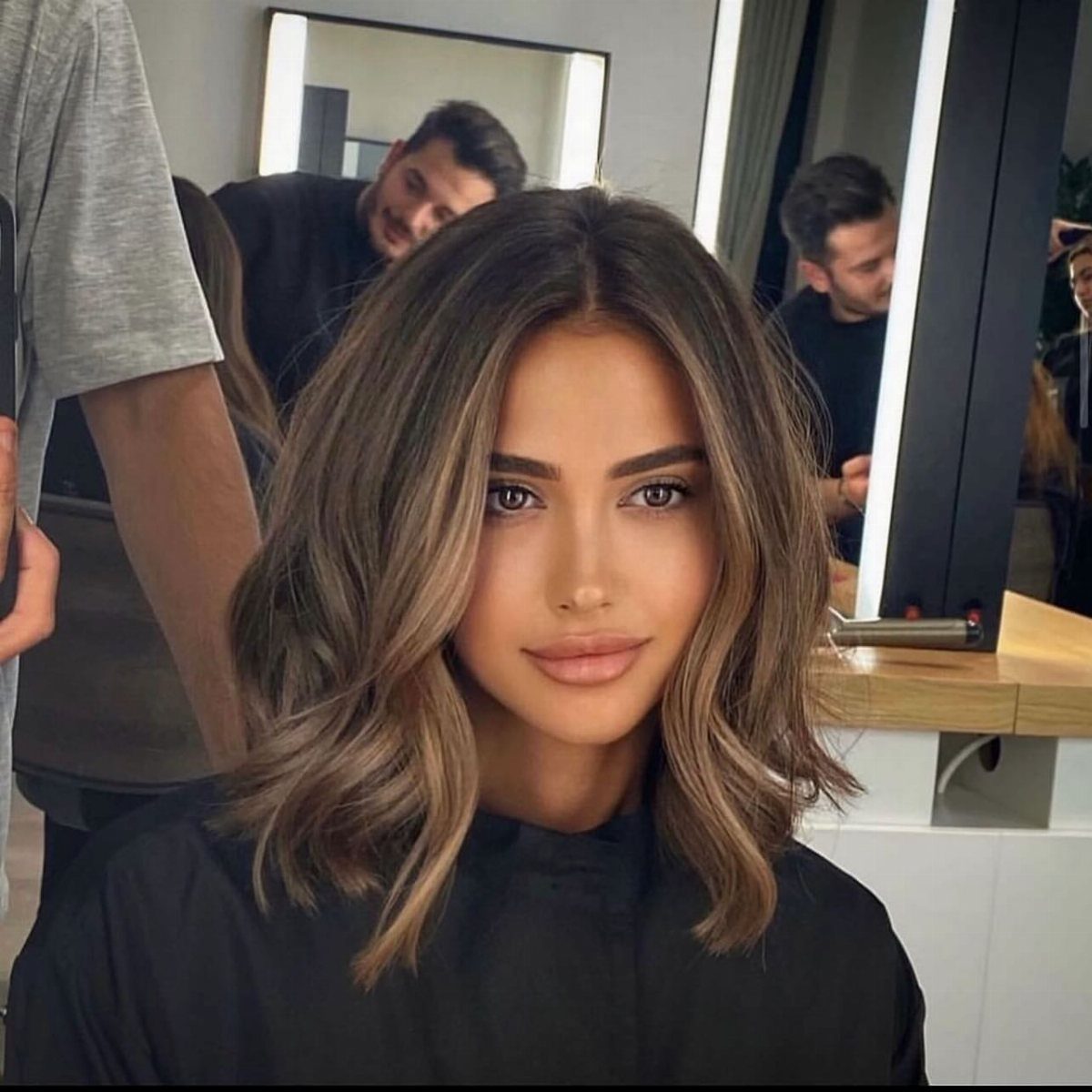
Bronde on a lob sits right at the balance: not quite blonde, not quite brunette, just a soft blend of both. The highlights are fine and scattered, which keeps the color from looking striped on a shorter cut.
The shoulder length makes this faster to maintain than long hair because there’s less canvas to cover. Foiling just the top and front layers delivers that blended finish while leaving the rest of your natural color intact.
The curved ends shift angle as you move, so the color looks different in every light.
26. Cool Blonde Rounded Ends
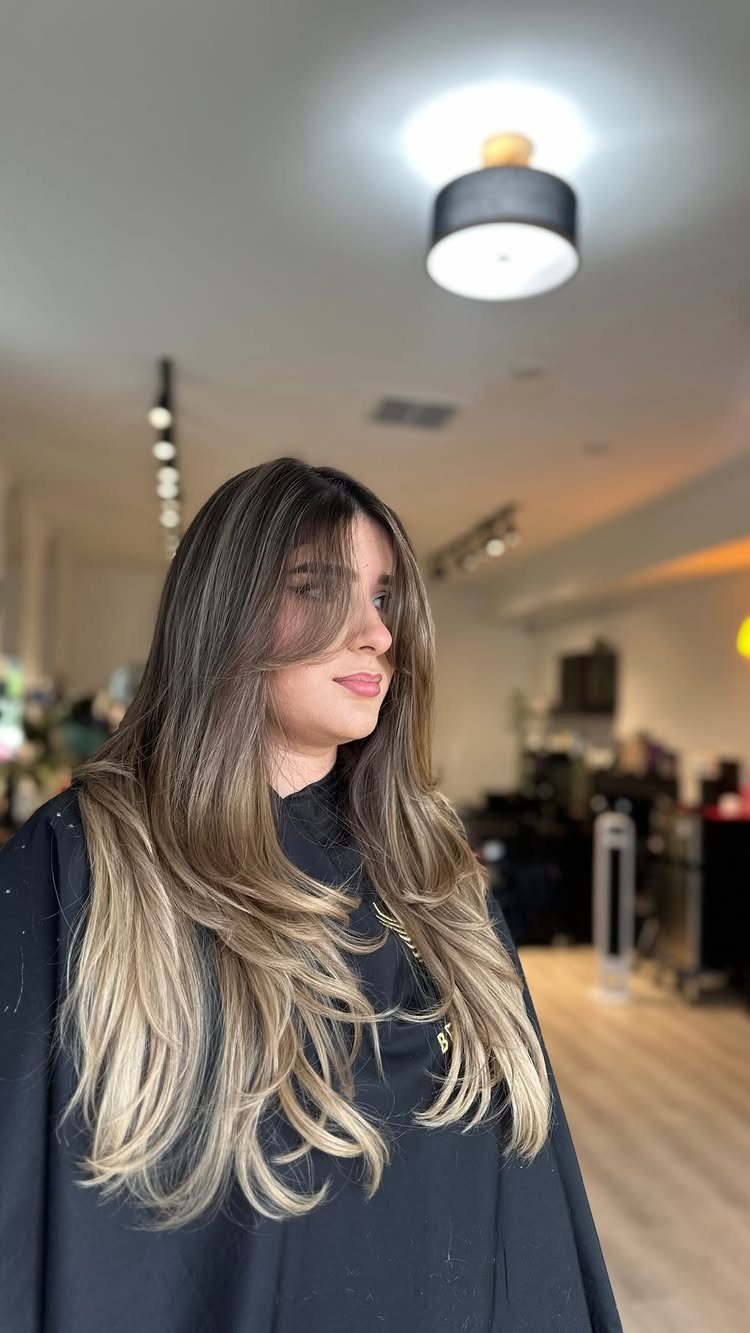
Cool blonde highlights through the lengths soften into rounded, wavy ends that keep the color from looking harsh. The placement is concentrated through the mid-lengths and ends, which gives you brightness without heavy contrast at the roots.
Cooler tones read ashy rather than golden, which flatters cooler skin and resists the orange creep that warmer shades pick up over time. I use purple shampoo once or twice a week to stop any yellow from settling in.
Rounded ends, whether curled under or waved, show off the dimension because the curve shifts how light hits the color. On straight hair, the same highlights read flatter.
27. Brunette Hair with Gray-blending Highlights
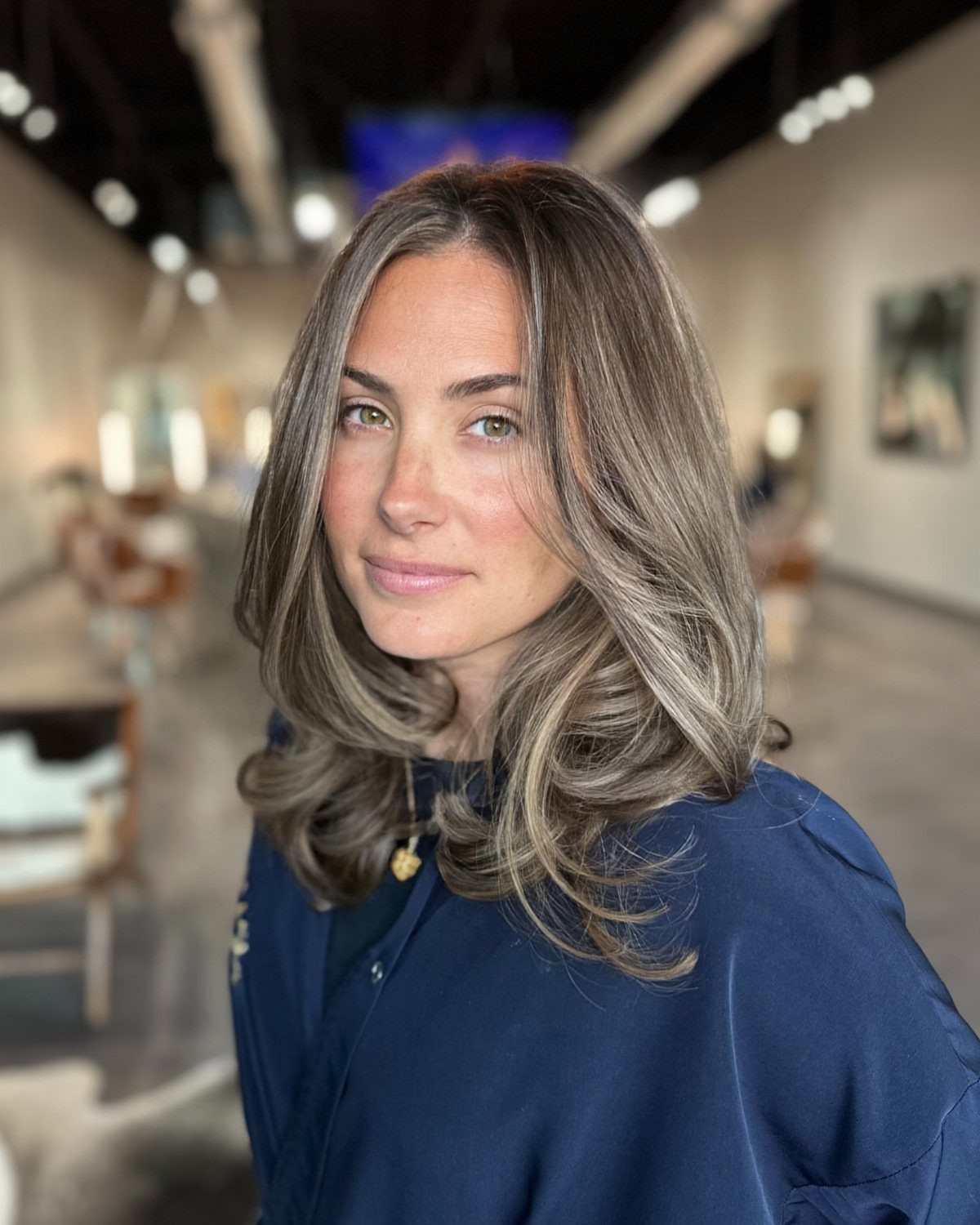
Highlights that blend gray into a brunette base soften the grow-in instead of hiding it. The colorist places blonde and ash tones where natural gray is starting to show, which makes the whole thing look intentional rather than patchy.
The base stays brunette, so you keep most of your natural color. The lighter pieces sit around the face and through the top layers, where gray usually comes in first.
This is lower maintenance than full coverage because the highlights and the gray read as part of the same dimension. Touch-ups stretch longer because new gray blends into the existing color.
28. Short Brunette Bob with Silver Highlights
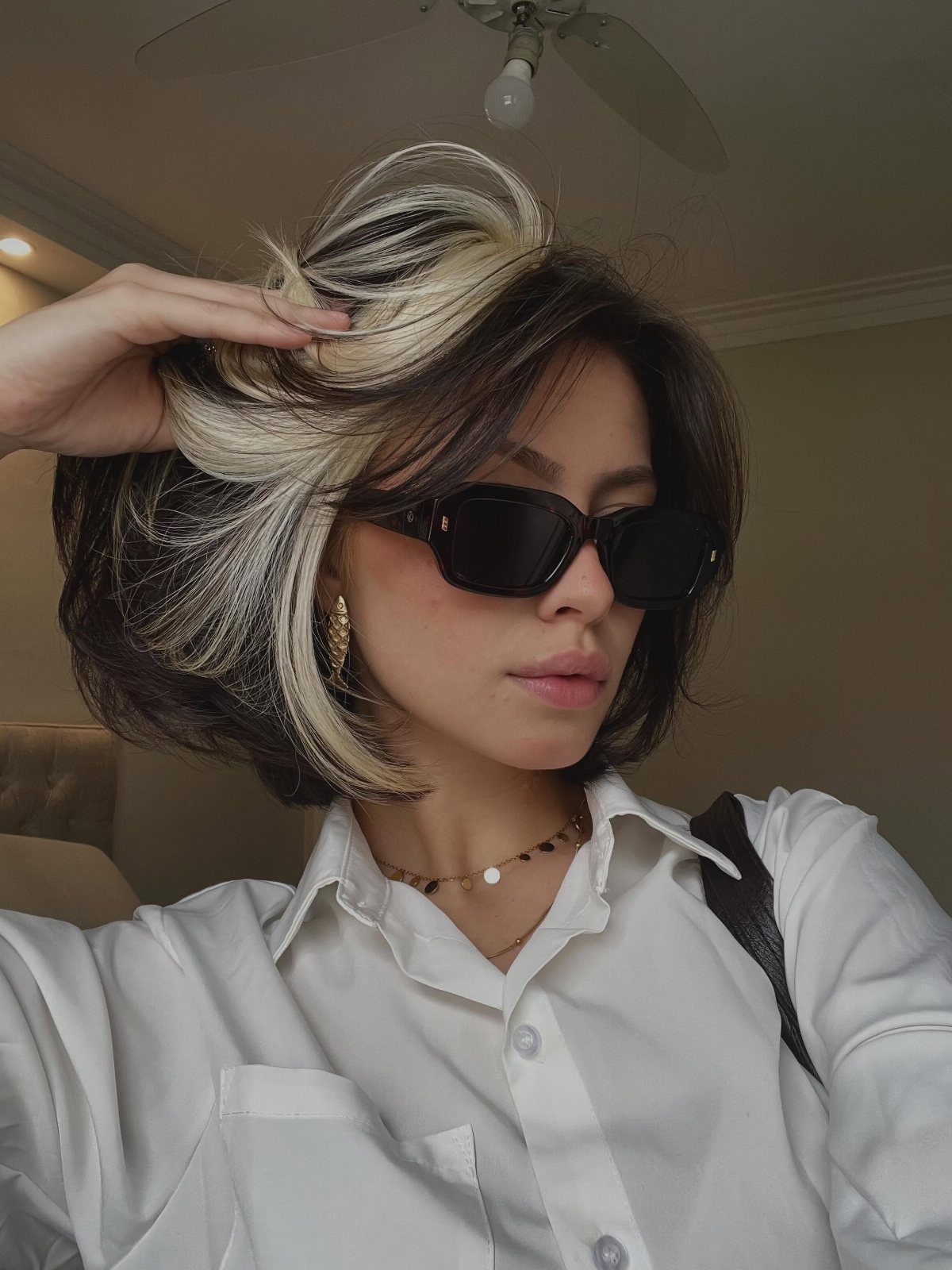
Silver highlights on a short brunette bob give you high contrast without length. The placement is fine and scattered, which keeps the silver from overwhelming the shape of the cut.
Silver starts with lifting those pieces to nearly white, then toning with an icy formula to cancel any remaining warmth.
You’ll need a toner refresh every few weeks to keep the silver from slipping back to beige.
Without it, the cool tone fades toward brassy within a few weeks. A purple shampoo between salon visits helps hold the color.
29. Brunette Hair with Silver Temple Highlights
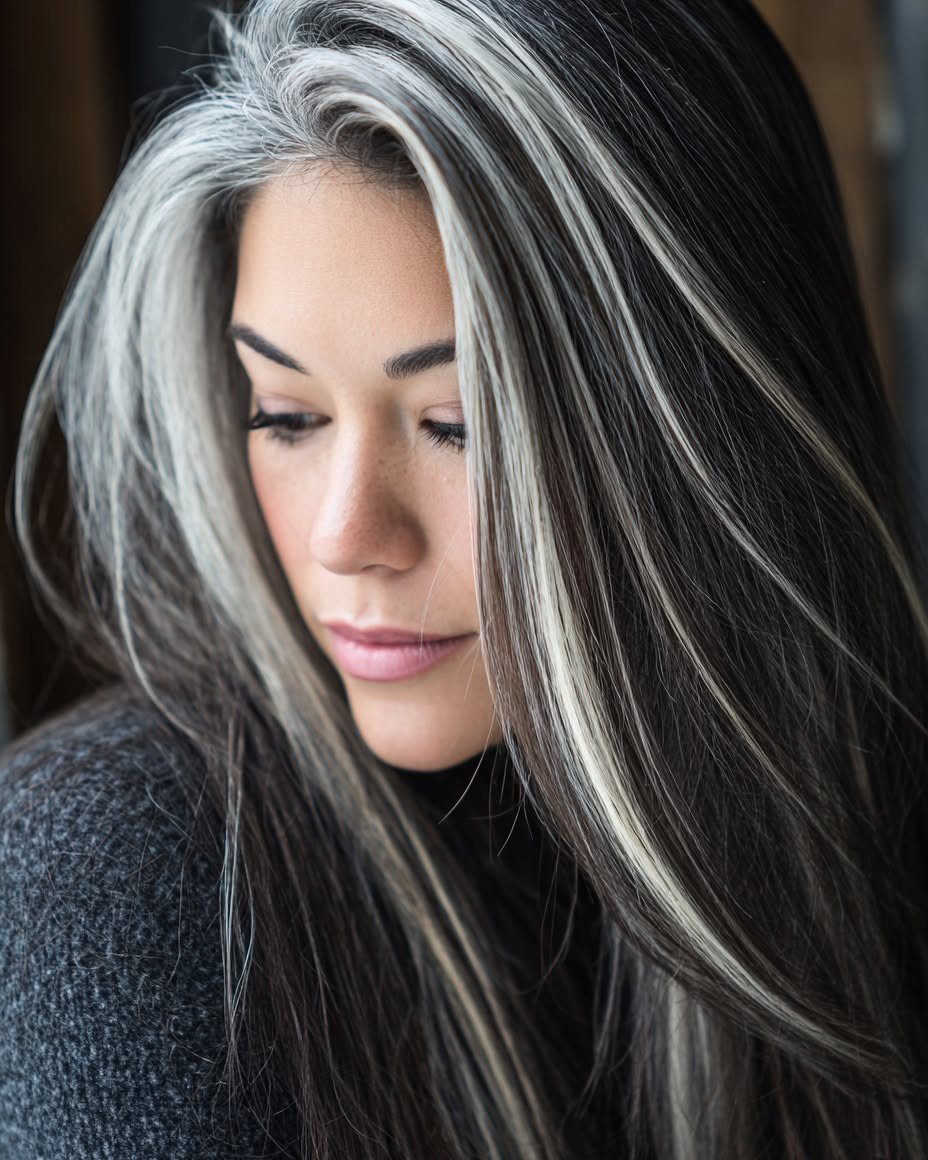
Silver highlights concentrated at the temples and roots lift the face without scattering color through the whole head.
The placement is deliberate: thick pieces right where natural gray tends to show first, so the effect is bold and the rest of the hair stays dark.
This works if you already have some gray coming in at the temples, because the silver highlights blend with it rather than fight it. The result looks almost intentional, like the gray was always meant to be there.
The upkeep is all in the toner. Silver fades faster than warm blonde, so expect regular toning to keep it cool.
30. Chunky Creamy Front Streaks
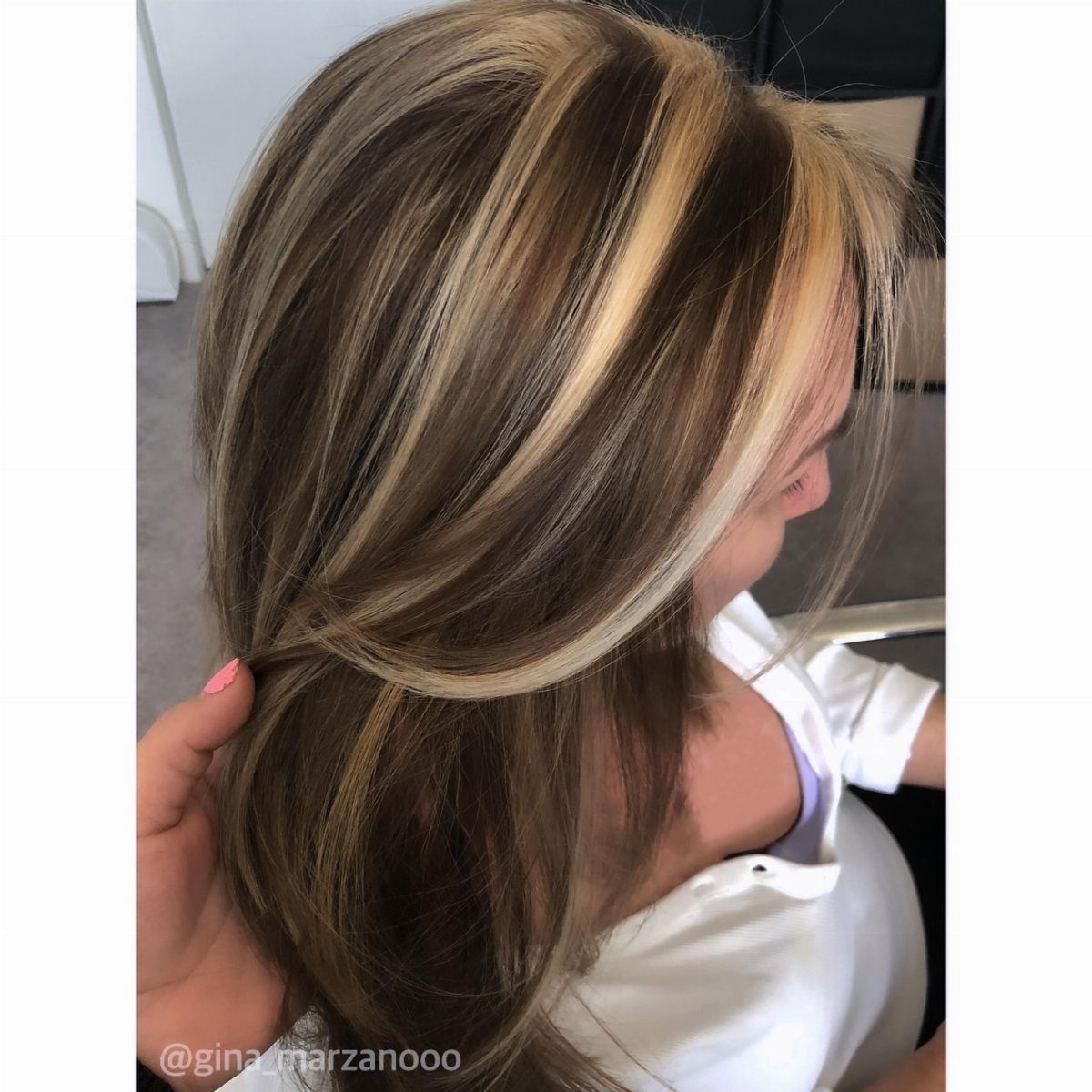
Thick creamy-blonde streaks at the front stand out against a dark brunette base.
The placement is concentrated through the front layers, so the blonde sits where it frames the face. The back stays dark, which keeps the application faster and the grow-out less visible from behind.
Chunky streaks grow out with a sharper line than soft balayage because the color is more saturated and the sections are wider.
31. Golden Caramel Face Frame
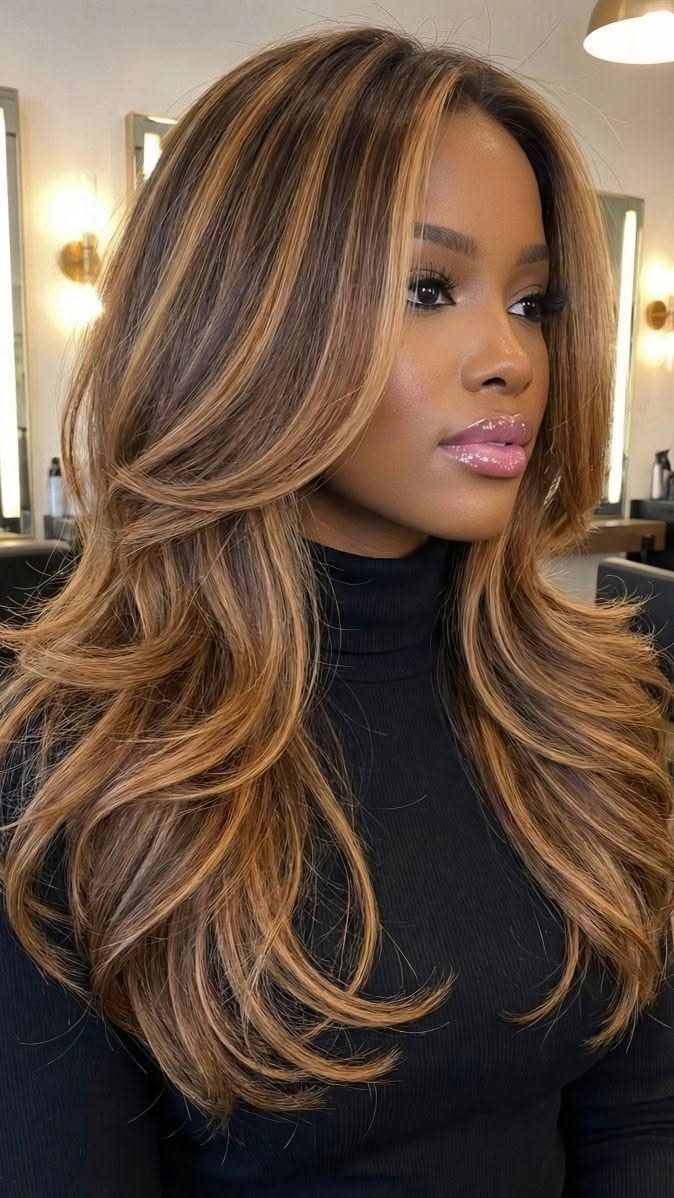
Golden caramel highlights placed through the front layers warm up the face without lifting the whole head. It fades clean because the tone already matches your base, so there’s no cool pigment to drop out and leave orange behind.
Because you’re only painting the front sections, the whole thing takes less time in the chair and costs less than a full head.
The contrast shows where it matters most, around the face and through the top layers where the hair moves.
Frequently Asked Questions
What hair color looks best with blonde highlights?
Brunette bases from medium to dark brown show blonde highlights with the most dimension and contrast.
The darker your starting color, the more the blonde stands out, though very dark brunettes usually need 2 lifting sessions to reach bright blonde without damage.
Warm brunettes suit caramel or honey tones, while cooler bases hold ash or beige blonde better.
What are the blonde highlight trends for 2026?
Face-framing placement and money pieces are leading right now, concentrating blonde right where it brightens your face instead of spreading it through the whole head.
Ash-blonde and beige tones are overtaking golden caramel, and soft balayage with gradual transitions is replacing chunky ribbons. Maintenance gaps lengthen because the color is placed with regrowth in mind.