Balayage, babylights, foils, money pieces and face frames each give you a different kind of contrast and a different maintenance schedule.
If your base is already strawberry or light copper, lifting the blonde sections past orange takes less time than it does starting from deep auburn or chestnut.
1. Blonde Money Piece
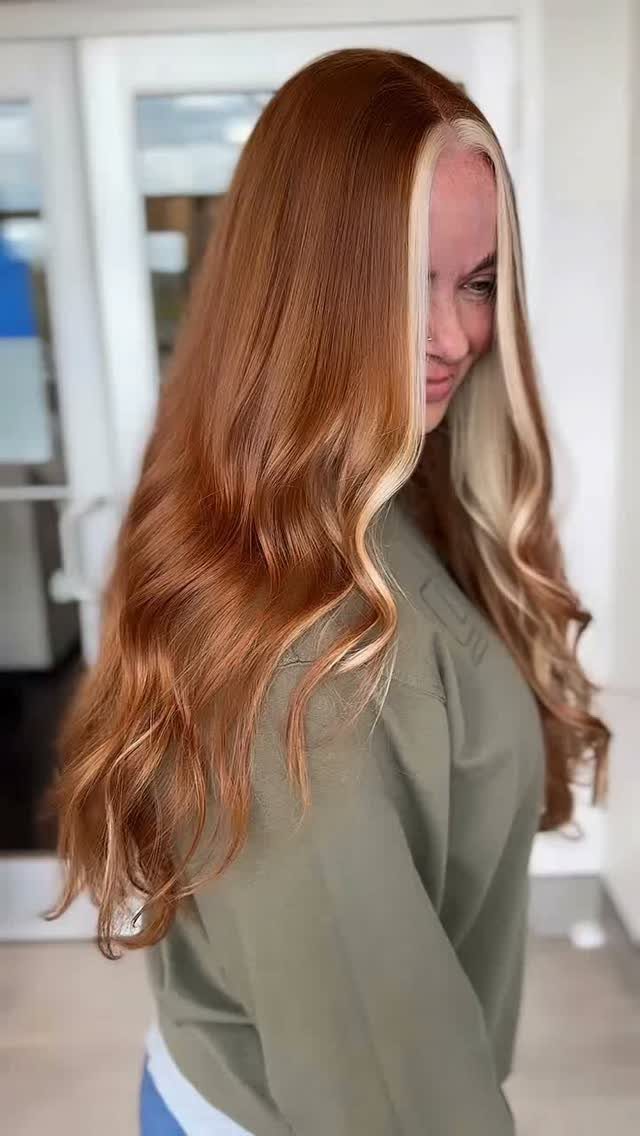
Bright blonde pieces at the front pull all the attention while the rest stays rich and red.
The contrast does a lot of the work: you get dimension without lightening everything, and the grow-out sits mostly in the back where it’s harder to see.
Ask for a money piece two to three shades brighter than what you started with, painted from the hairline back about an inch on each side.
On red hair this needs lifting past orange, so expect foil and at least 30-volume developer. Budget a toner appointment every 6 weeks if you want the blonde to stay cool.
2. Strawberry Blonde Balayage
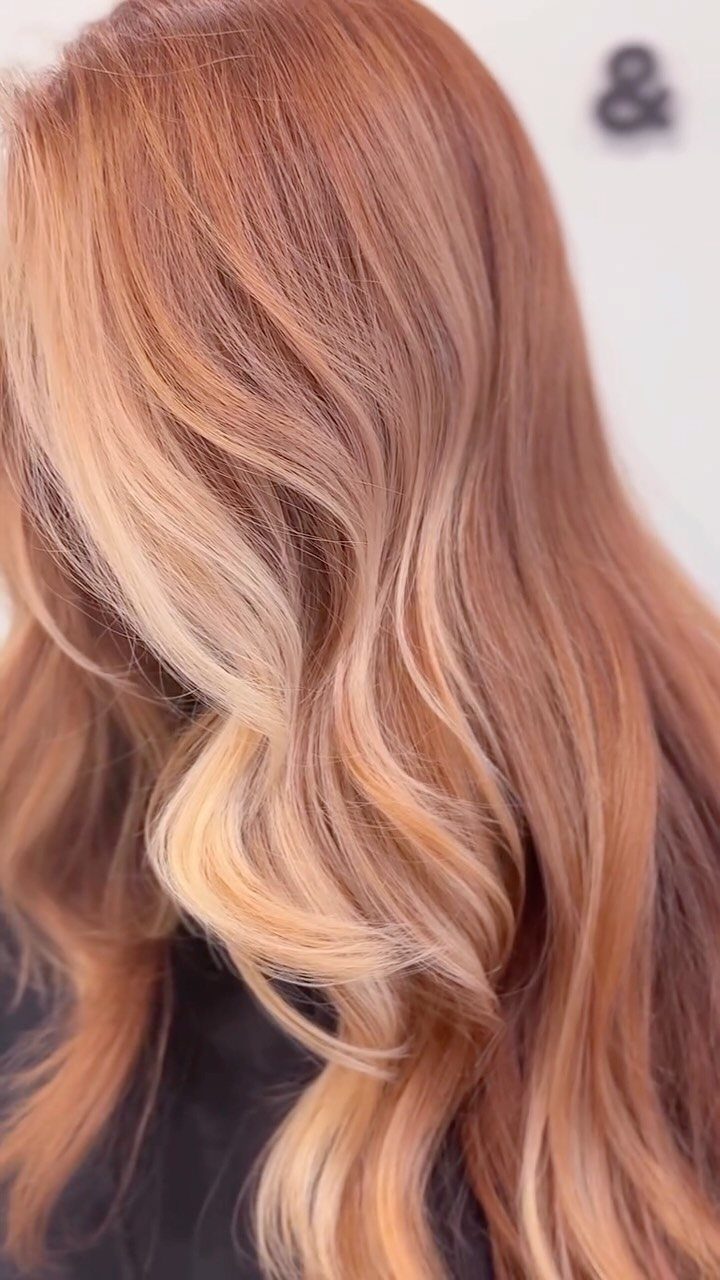
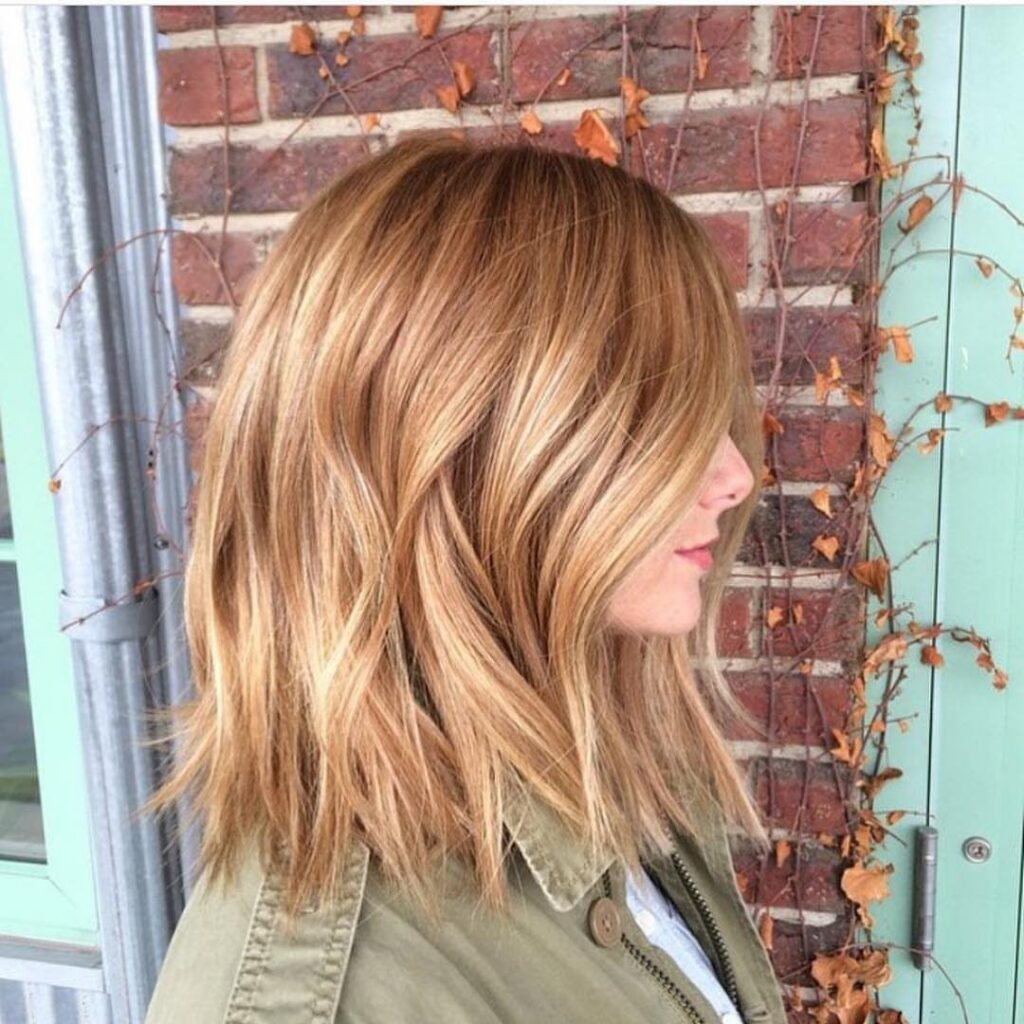
This is a soft, warm balayage that blends strawberry and blonde with no visible break between them.
The lighter pieces start mid-lengths and get brighter as they move down, so the whole thing reads as one color family instead of two separate tones.
It’s easier to pull off when your natural color already leans strawberry or light auburn.
Freehand painting rather than foils gives you that lived-in look. Maintenance is low: you can stretch appointments because there’s no obvious regrowth line.
3. Cherry on Top
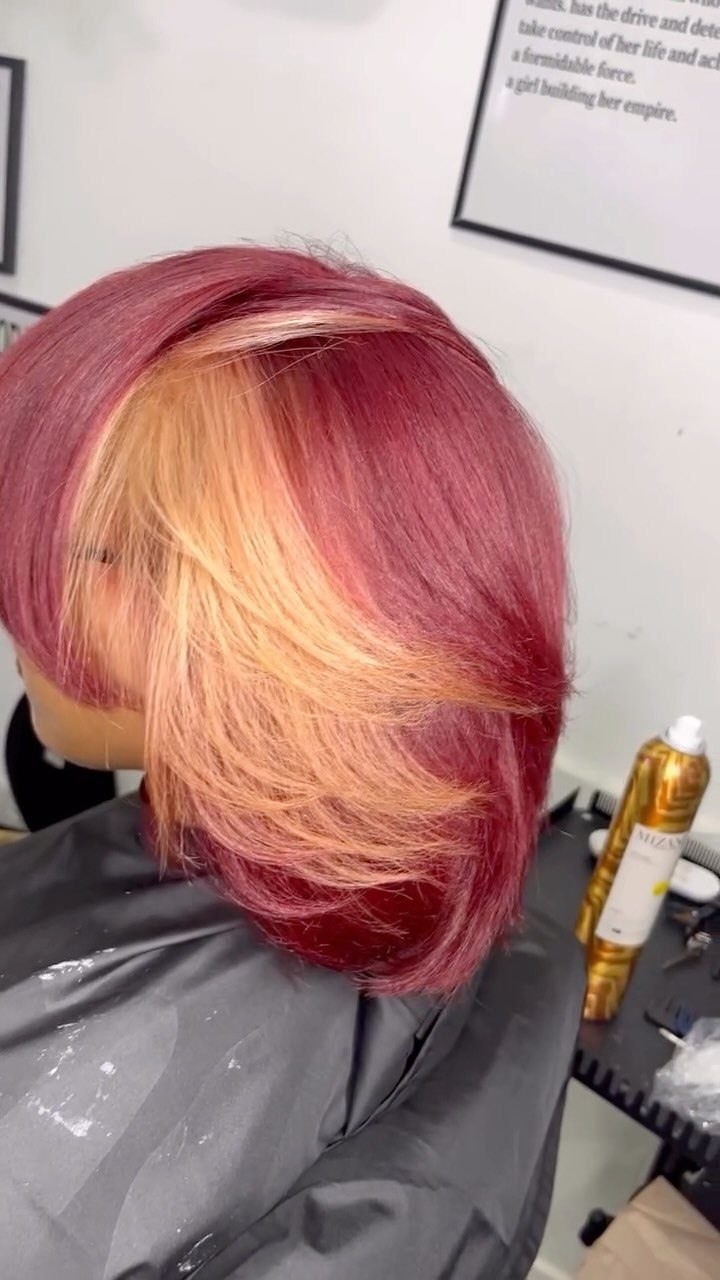
Blonde highlights break up a deep cherry red and stop the color from reading flat or too intense.
The buttery tone warms up the cherry without pulling it orange, and the placement across the fringe gives you movement every time you turn your head.
This works best on a bob or lob where the highlights can sit close to your face. The red will fade faster than the blonde, so plan to refresh the base regularly to keep that cherry richness.
4. Dark Copper with Amber Frame
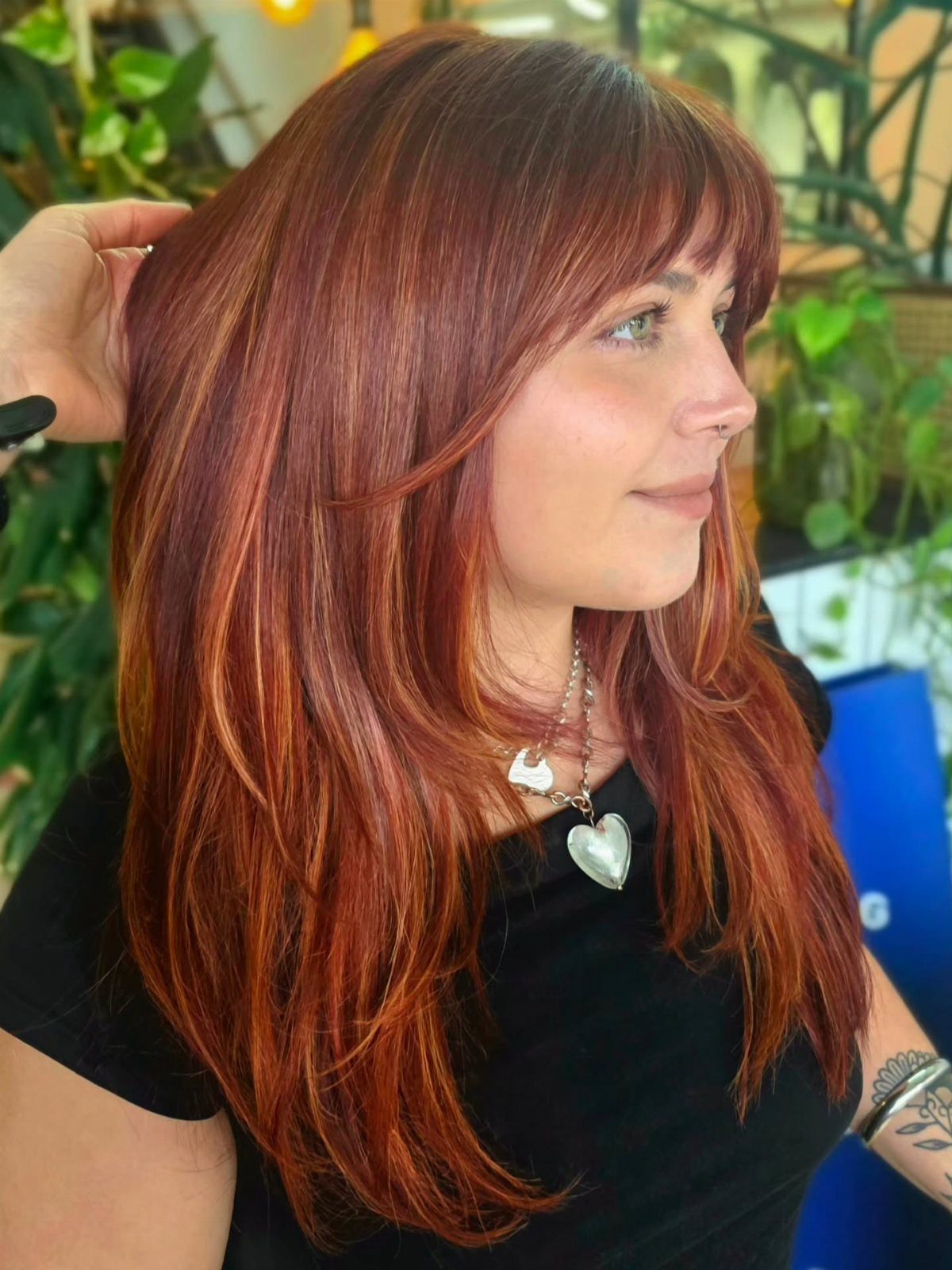
Brighter copper around the face opens up the whole look while the back stays darker and more grounded.
The amber picks up light and draws attention forward, which can balance a longer face or make a round cut feel less heavy.
If your base is already copper, ask for face-framing highlights one or two levels lighter. Processing time is shorter than going blonde, and the grow-out blends naturally because you’re working within the same red-orange family.
5. Strawberry with Champagne Balayage
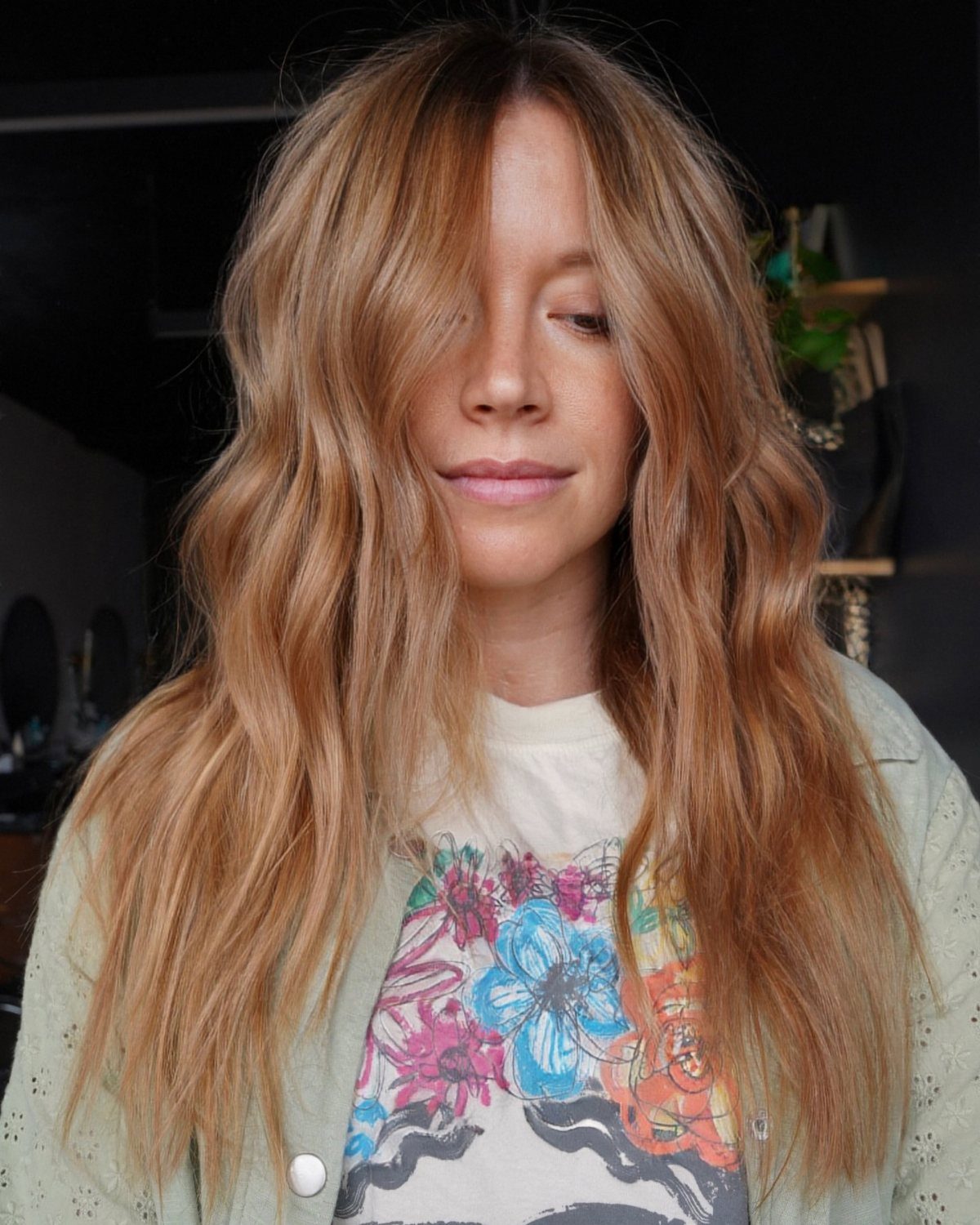
Champagne blonde cools down strawberry hair without stripping the warmth entirely. The balayage starts below the roots and concentrates around the face, so you get lift where it counts and the base color still shows through at the top.
This look needs a toner with a violet or pearl base to keep the blonde from turning brassy against the red.
Plan on toning regularly. It suits cooler skin tones better than warm ones, since the champagne pulls slightly ashy.
6. Golden Highlights on Copper
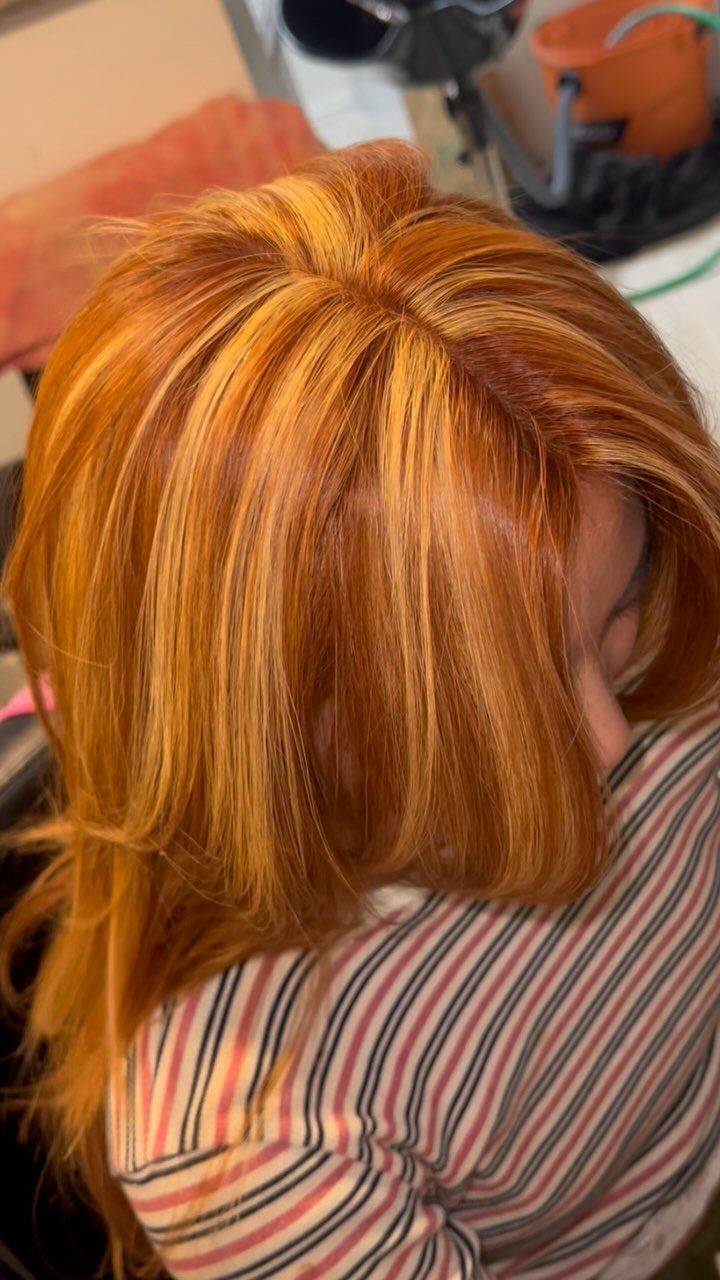
Golden blonde highlights scattered through copper hair catch the light and add depth without covering the red.
The blonde sits just a shade or two brighter than the copper, so the whole thing feels warm and pulled together rather than high-contrast.
Ask for foil highlights if you want precise placement, or balayage if you prefer a softer blend.
This is a good option if you’re nervous about going too light: the copper base does most of the talking, and the blonde just supports it.
7. Ginger Hair
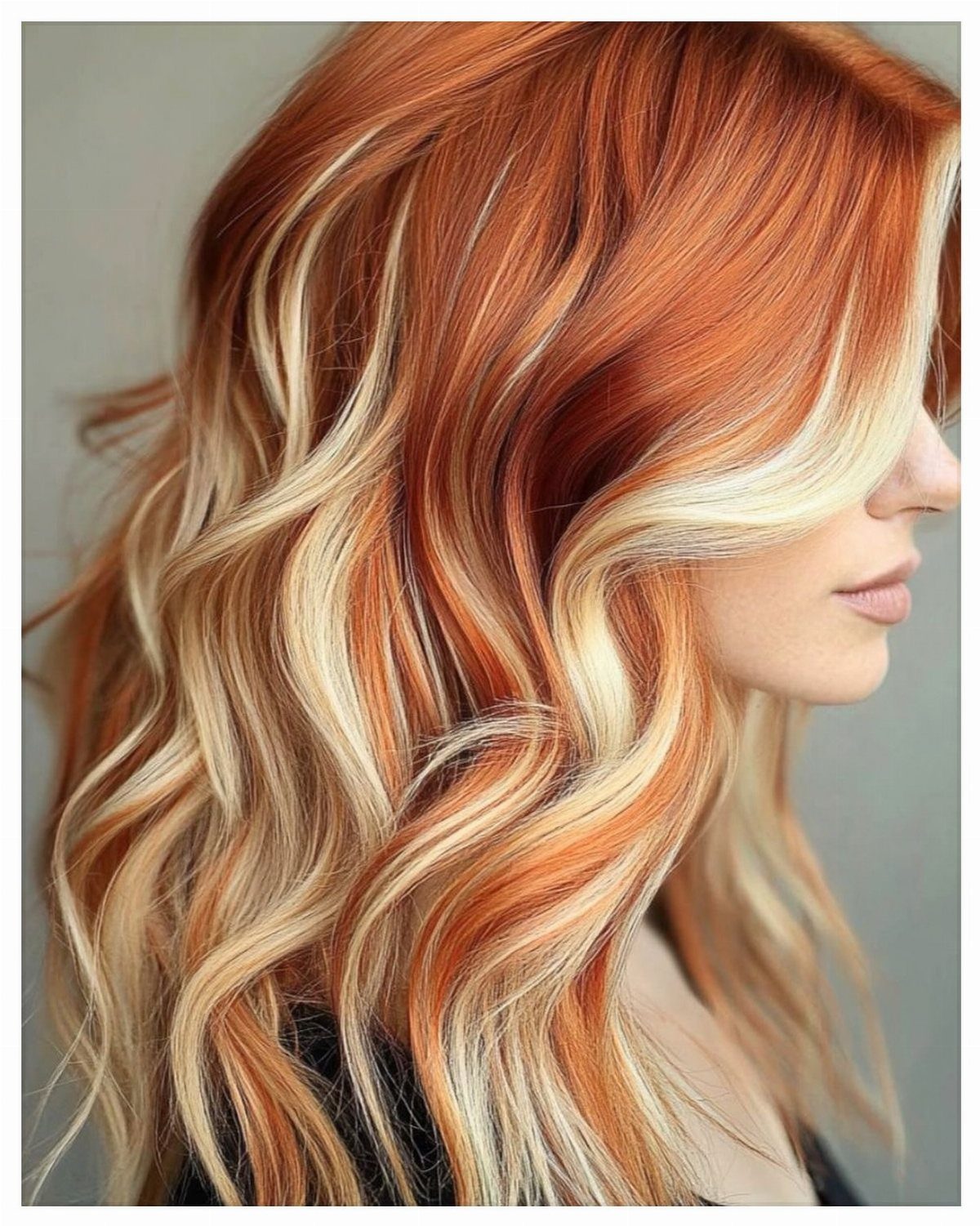
Bright ginger-red works as the main color, with blonde pieces woven through to break it up and add warmth.
The blonde keeps the red from reading too flat while staying soft enough that the 2 tones feel like they belong together.
If your base is already ginger, adding blonde highlights is faster and less damaging than lifting the whole head.
The blonde will need toning to stay from turning brassy, but the red fades quicker, so plan to refresh the ginger between highlight appointments.
8. Caramel Blonde Highlights
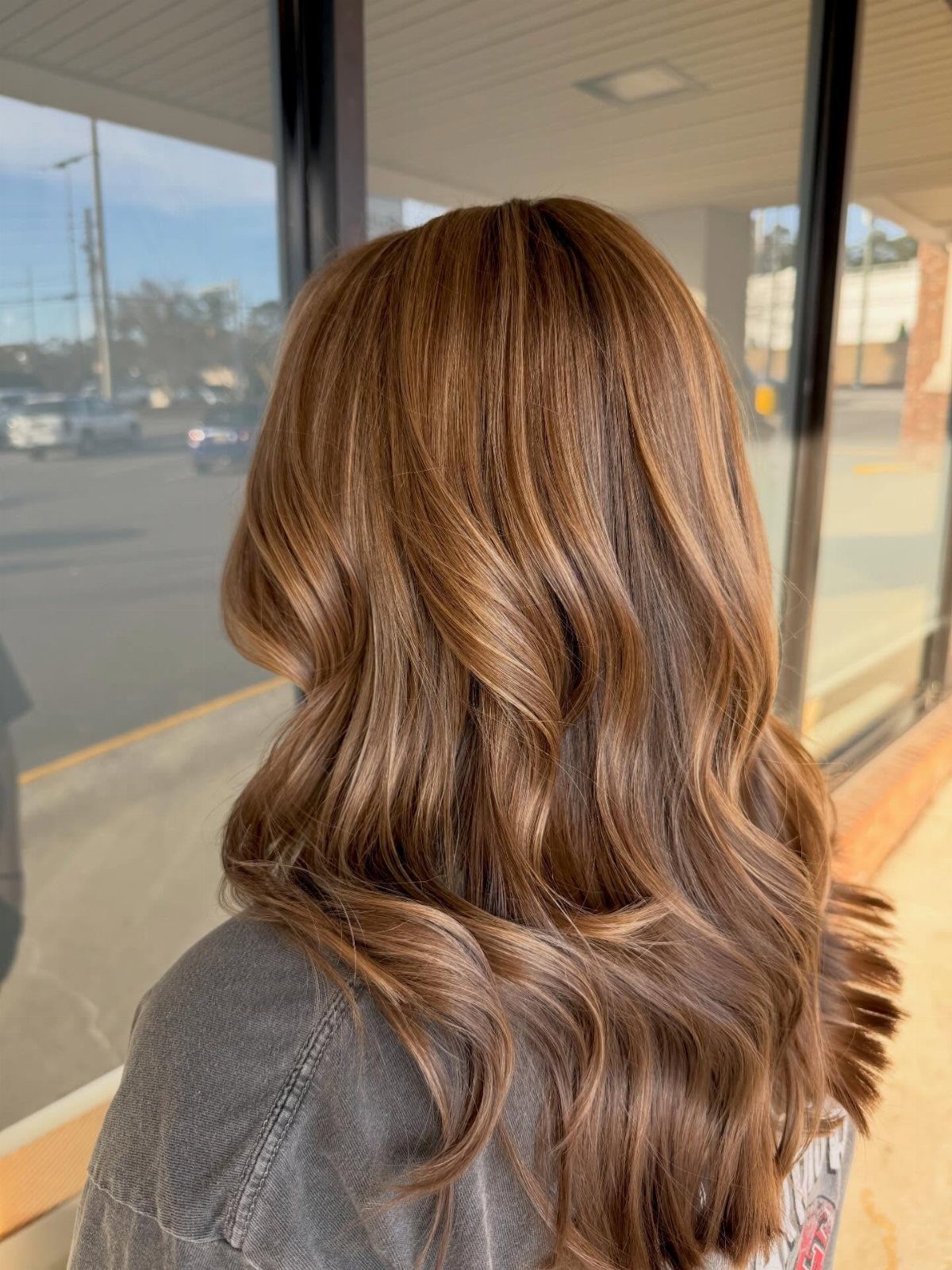
Caramel highlights warm up a red-brown base and give you depth without the high contrast of cooler blonde.
The caramel sits close enough to the auburn that the blend feels natural, and you get movement without a visible line where the highlight starts.
This is a low-maintenance option because the caramel ages well as it fades. Ask for balayage rather than foils if you want the blend to stay soft.
9. Copper with Blonde Highlights
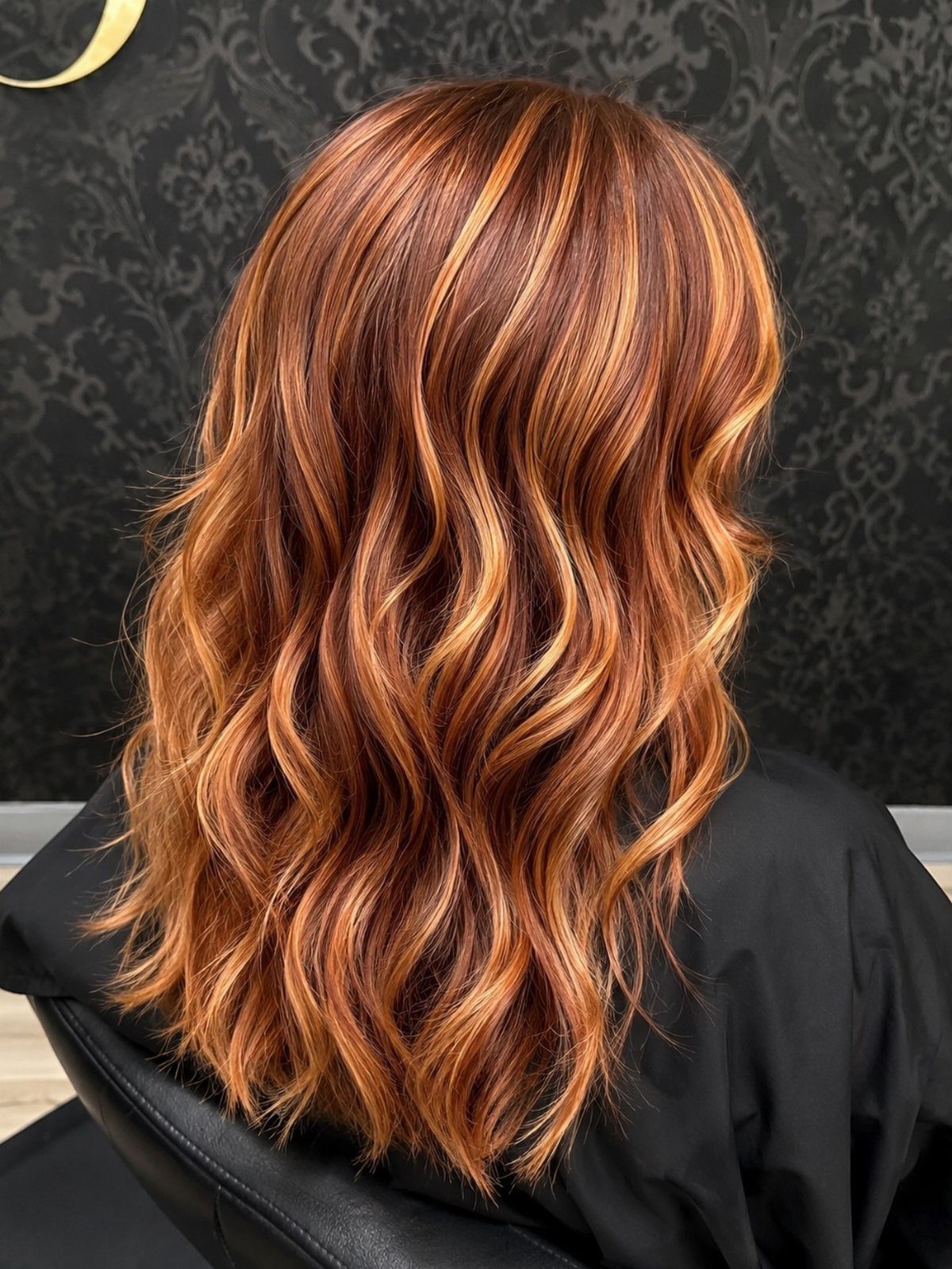
Blonde highlights lift copper hair without covering the red entirely. The blonde sits a few shades brighter, so you get contrast and light reflection while the copper still does most of the talking.
This look needs regular toning to keep the blonde from pulling orange next to the copper. If your copper is vivid, expect the blonde to need lifting past orange before the toner goes on.
10. Chestnut Red with Blonde Money Piece
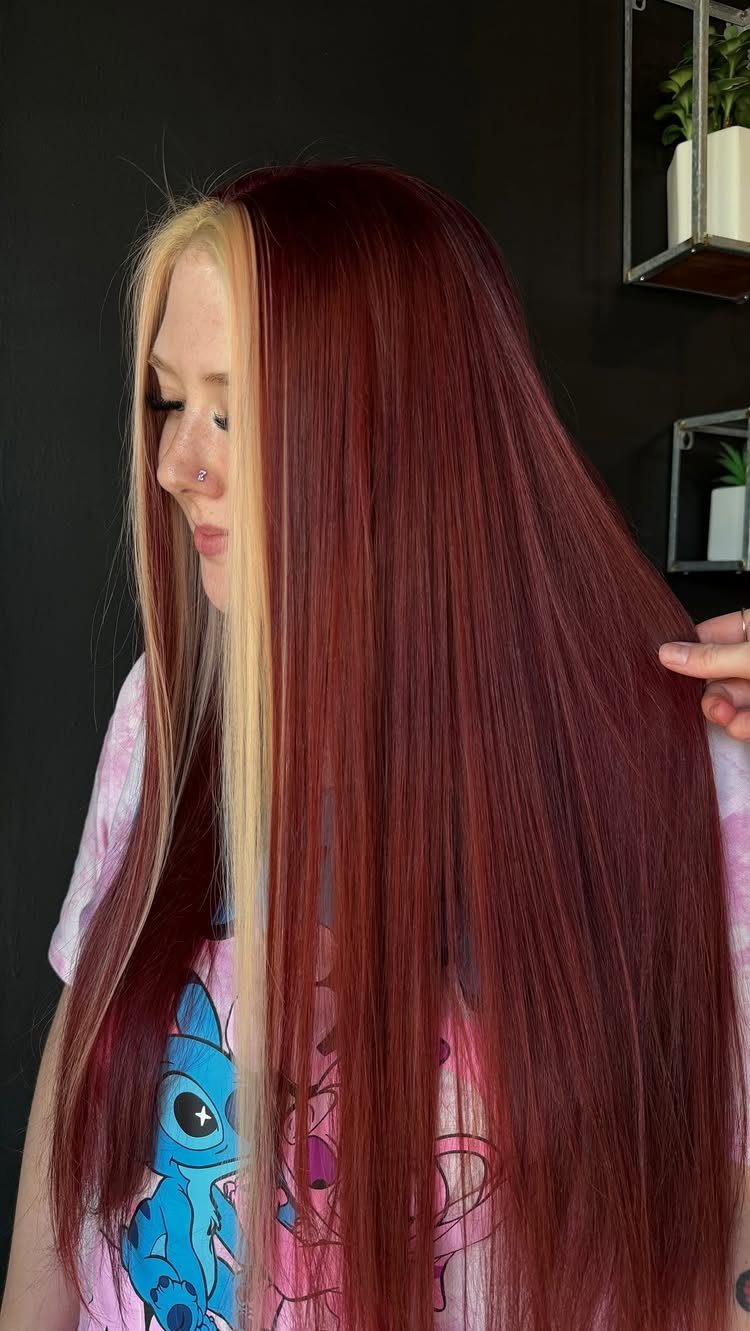
Blonde money pieces brighten a chestnut-red base and pull attention to your face without lightening the back. The warm blonde sits right at the hairline, so you get dimension where it’s most visible and the rest stays rich.
The grow-out shows faster than balayage, so keep that in mind when planning your maintenance schedule.
11. Auburn with Honey Babylights
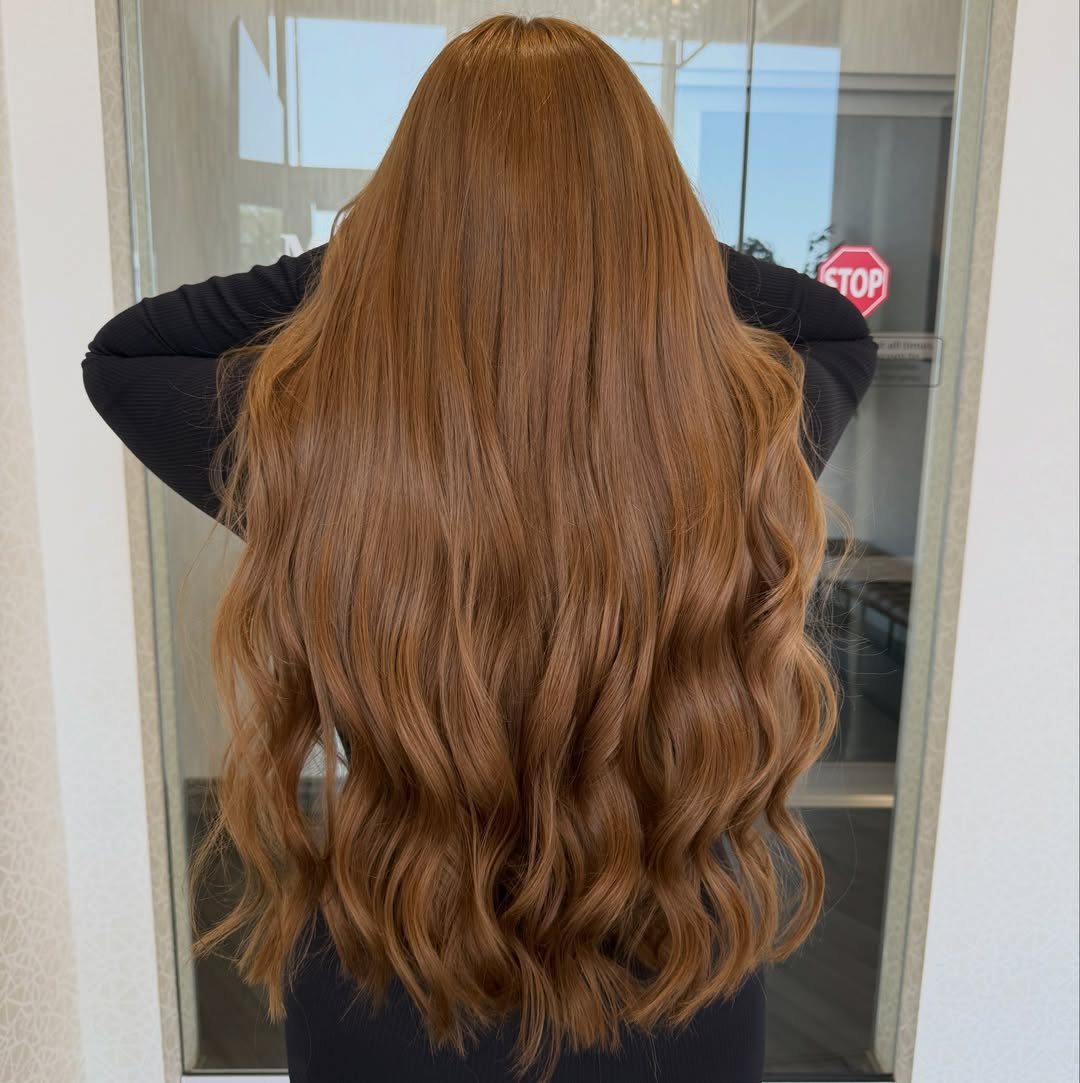
Fine honey babylights add shimmer rather than stripes. The highlights are thin enough that they catch light without covering the auburn, so the base color stays dominant and the blonde just lifts it.
Babylights take longer to apply than standard highlights because the sections are smaller, but the finish looks natural and grows out softly. This works best on wavy or textured hair where the fine pieces can blend as the hair moves.
12. Copper Balayage
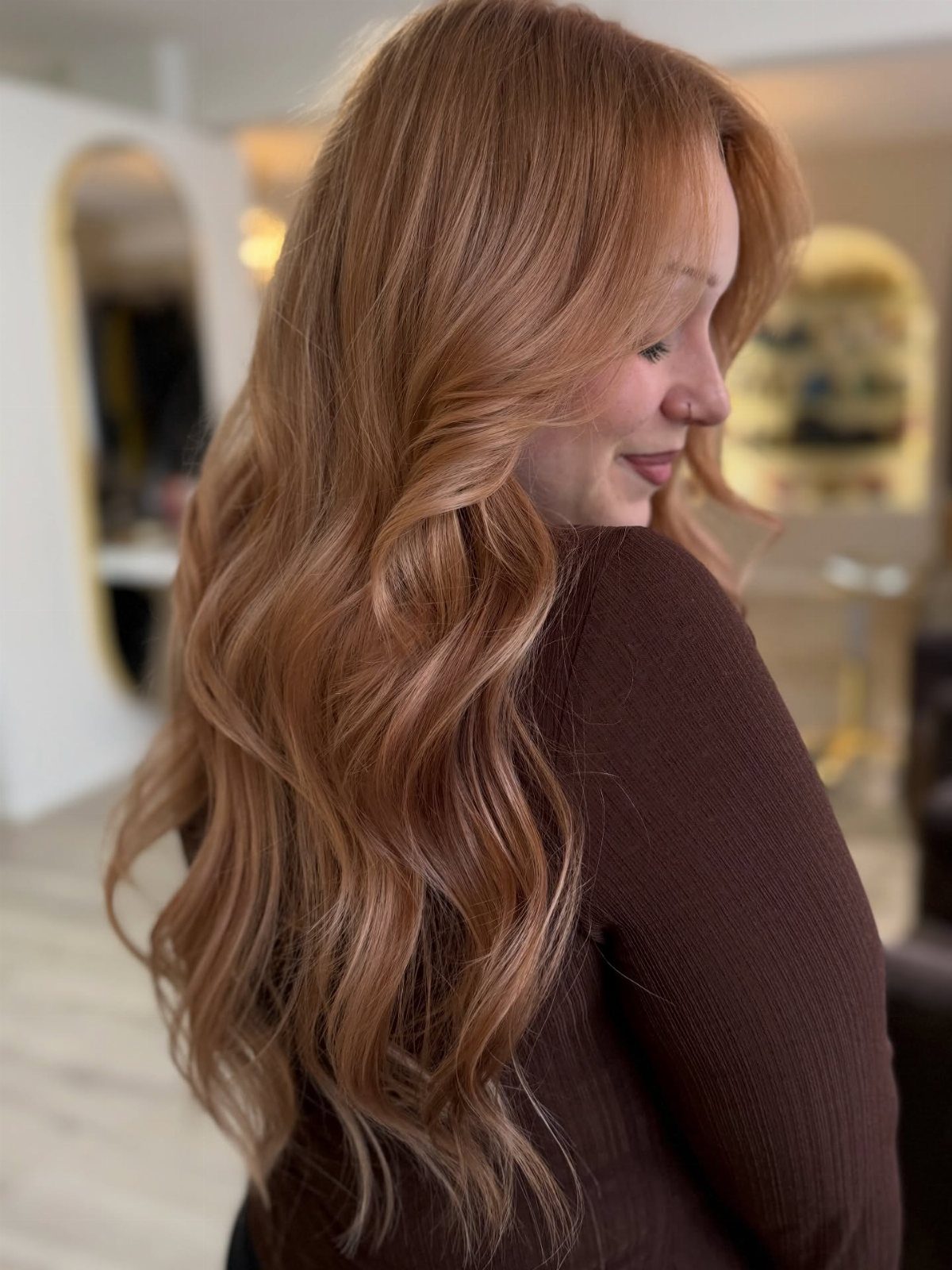
Lighter honey tones painted through deep copper give you brightness without stripes. The balayage starts mid-lengths and gets lighter toward the ends, so the copper at the root stays rich and the dimension builds as the hair moves.
The honey will fade to a softer gold over time, which still reads warm next to copper. Plan to refresh the copper base every 8 weeks to keep the contrast sharp.
13. Natural Strawberry with Pearl
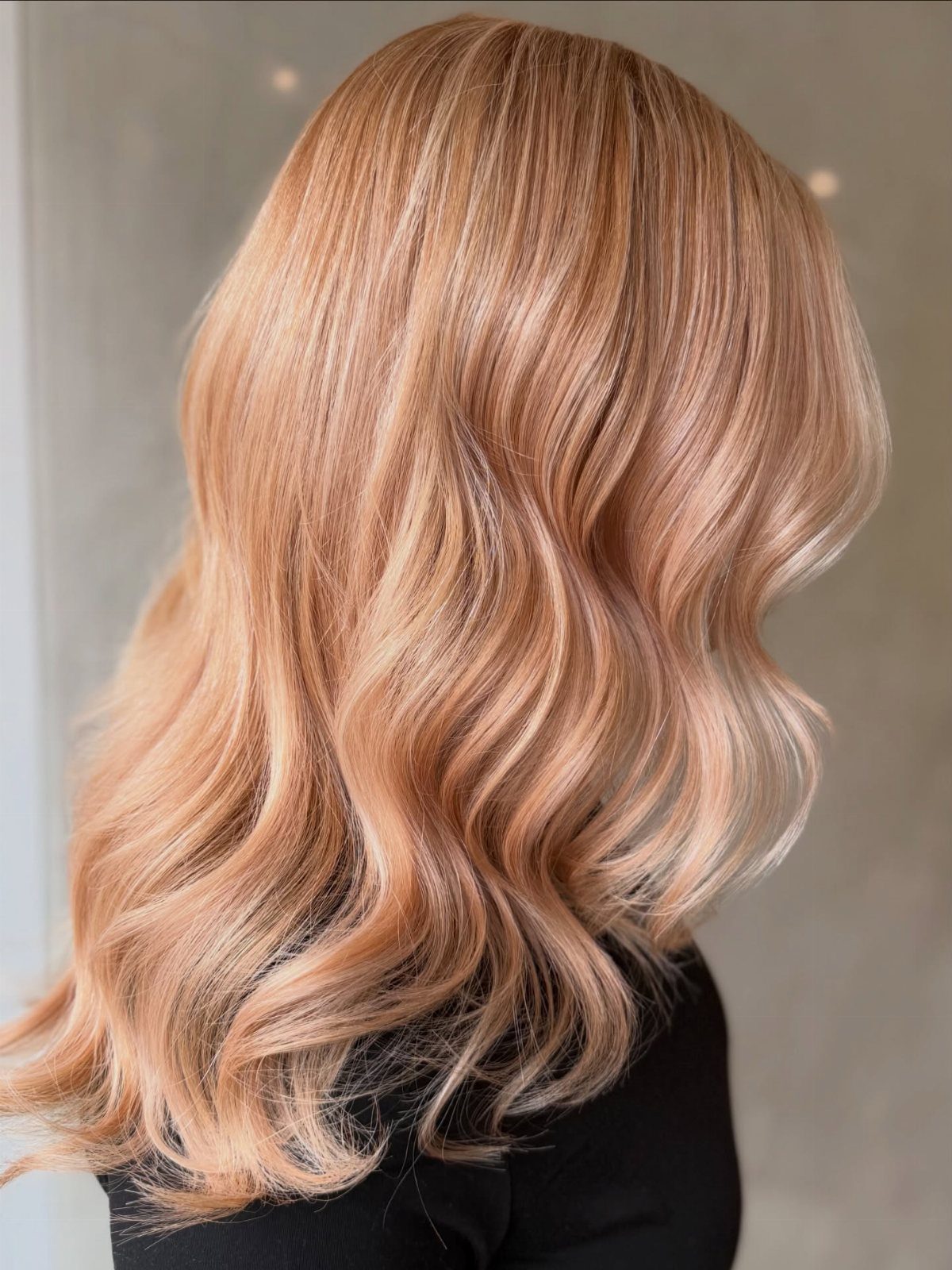
Pearl highlights sit just lighter than the strawberry base, enough to catch light without pulling the color in a different direction. The pale tone stays soft, so the whole thing reads as one warm family rather than a contrast look.
This works when your strawberry already leans light.
If your base is darker auburn, the pearl will need more lifting and regular toning to keep from turning brassy. The blend grows out gently because the tones sit close together.
14. Copper Red to Blonde Ombre
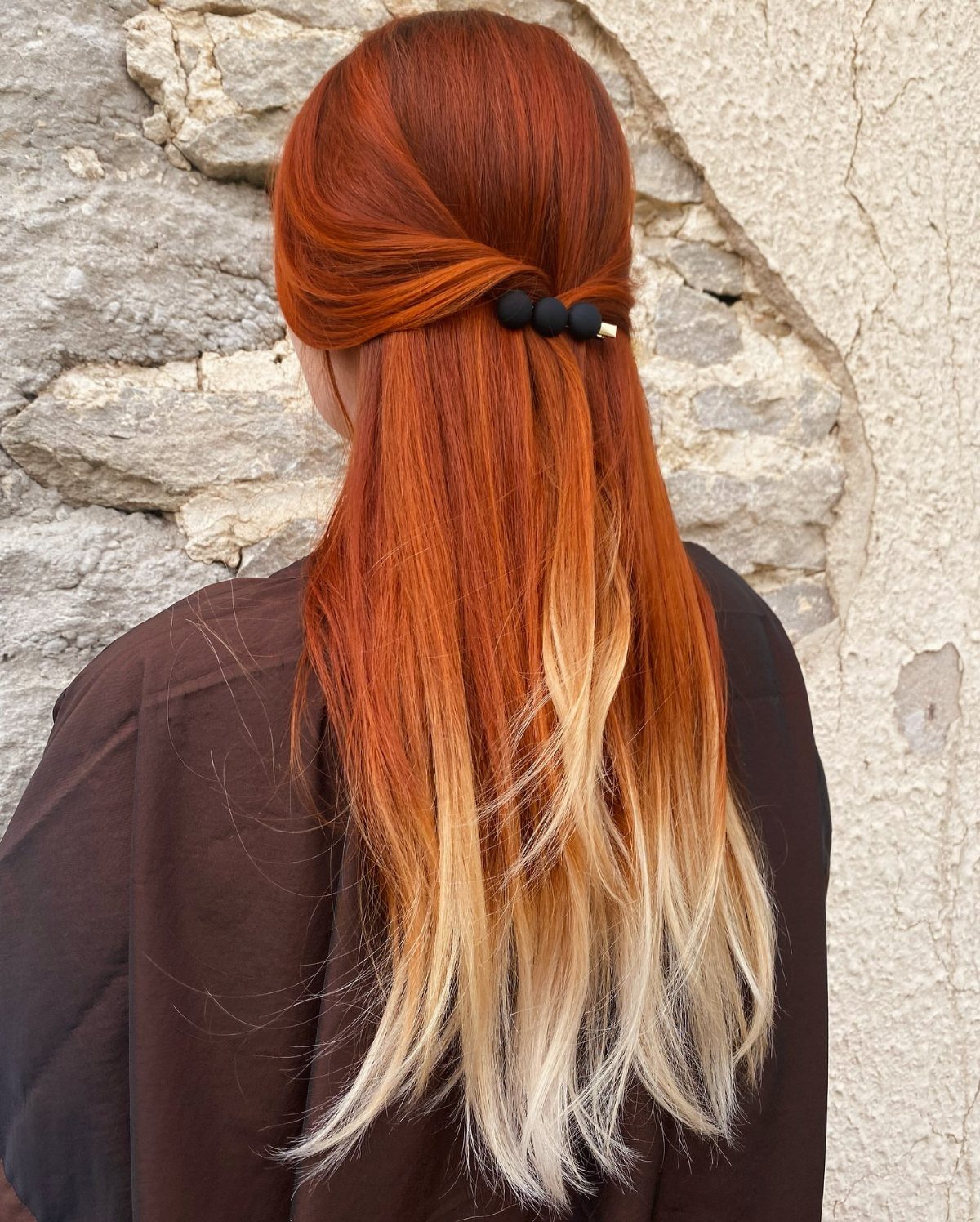
Copper at the root fades gradually into blonde ends, with no hard line where one color stops and the next begins.
The shift happens over several inches, so the grow-out is built into the look and you can stretch appointments longer than you would with highlights.
Getting a smooth transition from copper to blonde takes time: the ends need lifting past orange before the blonde toner goes on, and the middle section is hand-painted to blend the two.
Plan for at least one toning appointment between full color sessions to keep the blonde cool.
15. Bright Red with Blonde Highlights

Blonde highlights lift bright red hair without dulling the intensity. The contrast is sharper than honey or caramel, so the blonde reads as a separate accent rather than blending into the red.
If you want the red to stay the star, budget for regular base color appointments to keep the tone from slipping.
16. Auburn with Gold Panels
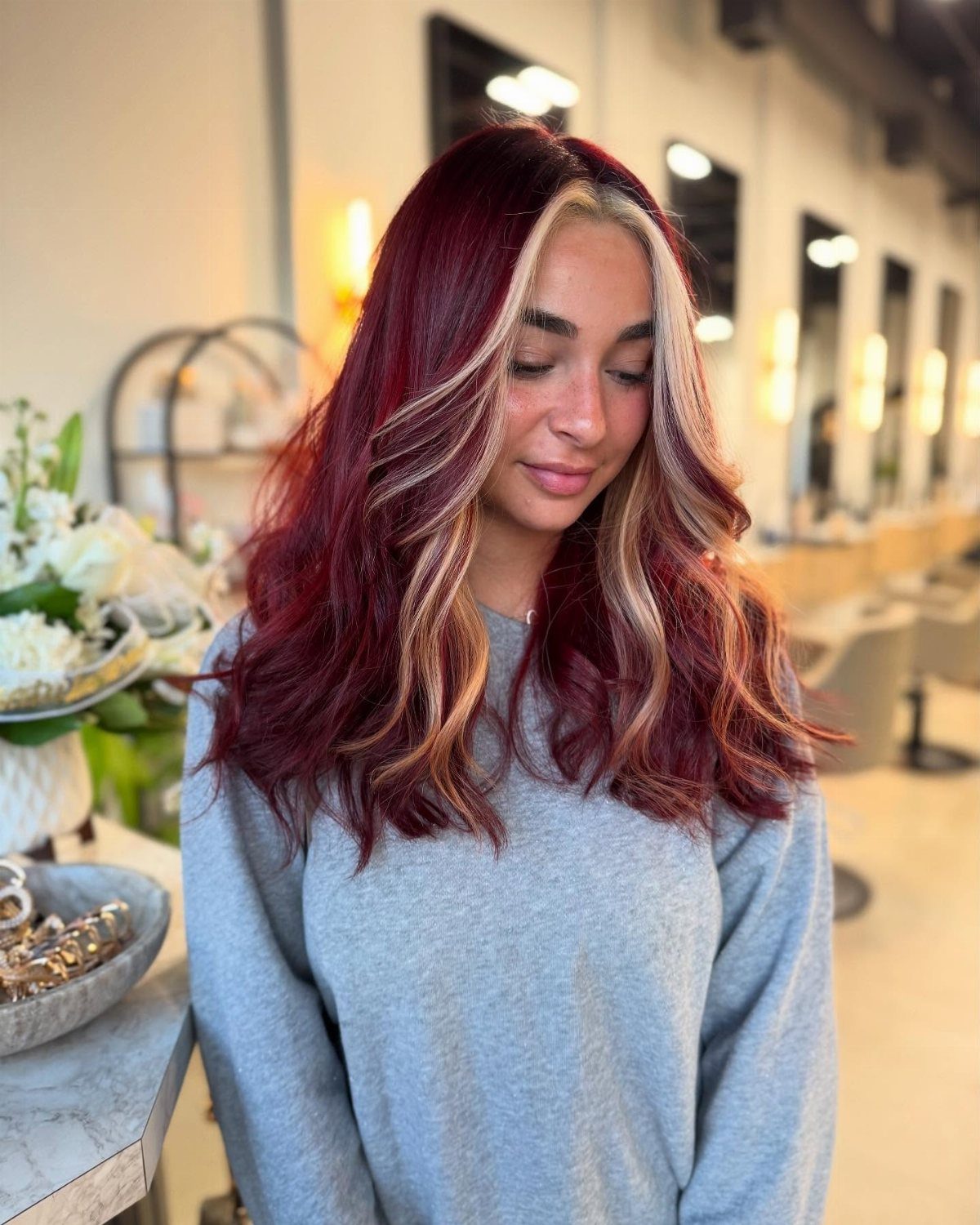
Gold panels are wider than standard highlights and sit close to the face, so they frame rather than scatter.
The warmth pulls the auburn lighter without covering it, and the wider sections give you visible movement every time your hair shifts.
Ask for panel placement if you want the gold to sit on the surface rather than weaving through.
17. Copper with Strawberry Woven Pieces
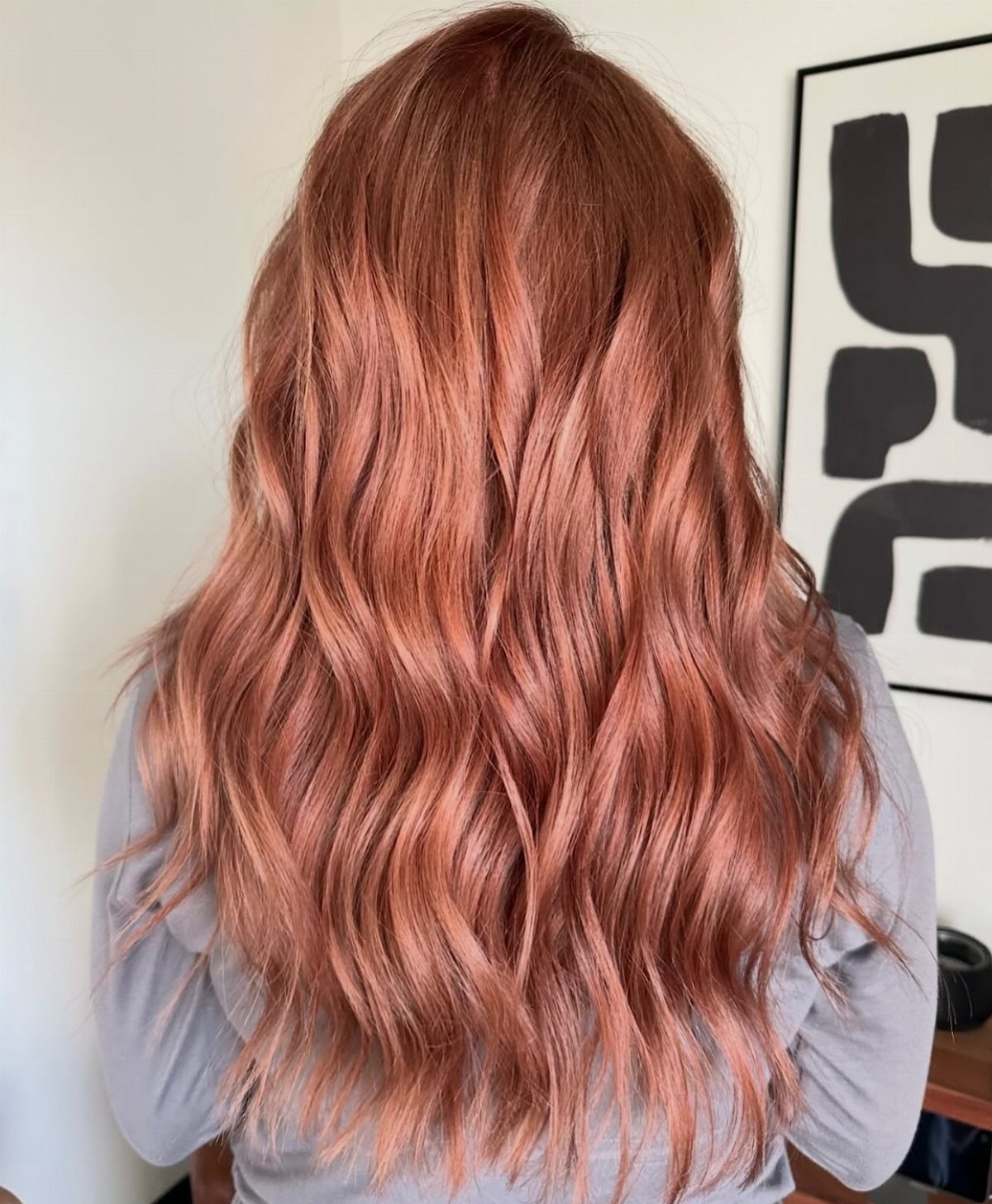
Strawberry pieces woven through copper hair soften the intensity and add warmth without covering the base. The placement is scattered rather than concentrated at the face, so the dimension reads all over instead of just at the front.
Weaving means thin sections on repeat, which takes longer to apply than panel highlights but gives you a more blended finish.
18. Bright Copper with Rose Gold
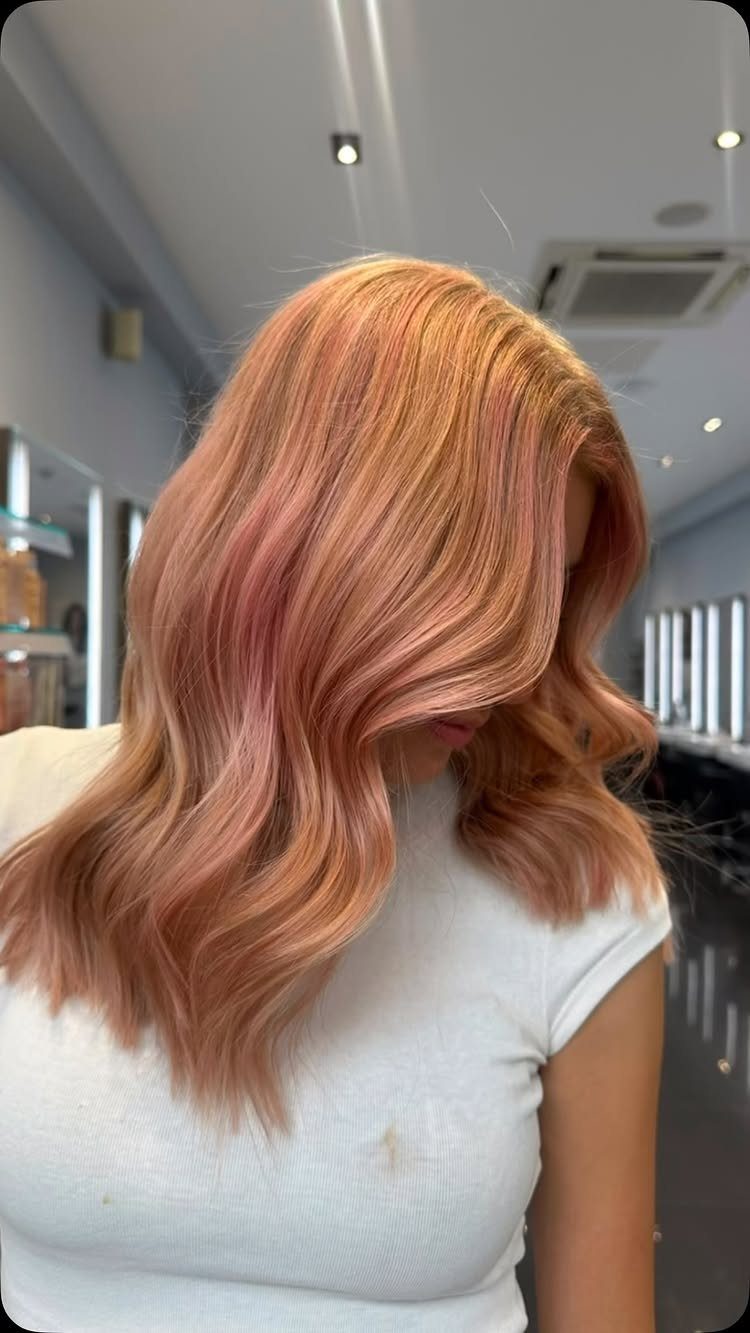
Rose-gold pieces add a softer accent to bright copper without pulling it fully blonde. The pink tone keeps the warmth while cooling the copper slightly, so the whole thing feels less intense but still bright.
Rose-gold fades to a peachy blonde over time, which can look washed out next to vivid copper.
Plan to refresh the rose tone regularly if you want the contrast to stay sharp, or let it fade if you prefer a softer look.
19. Copper Red with Toffee Sections
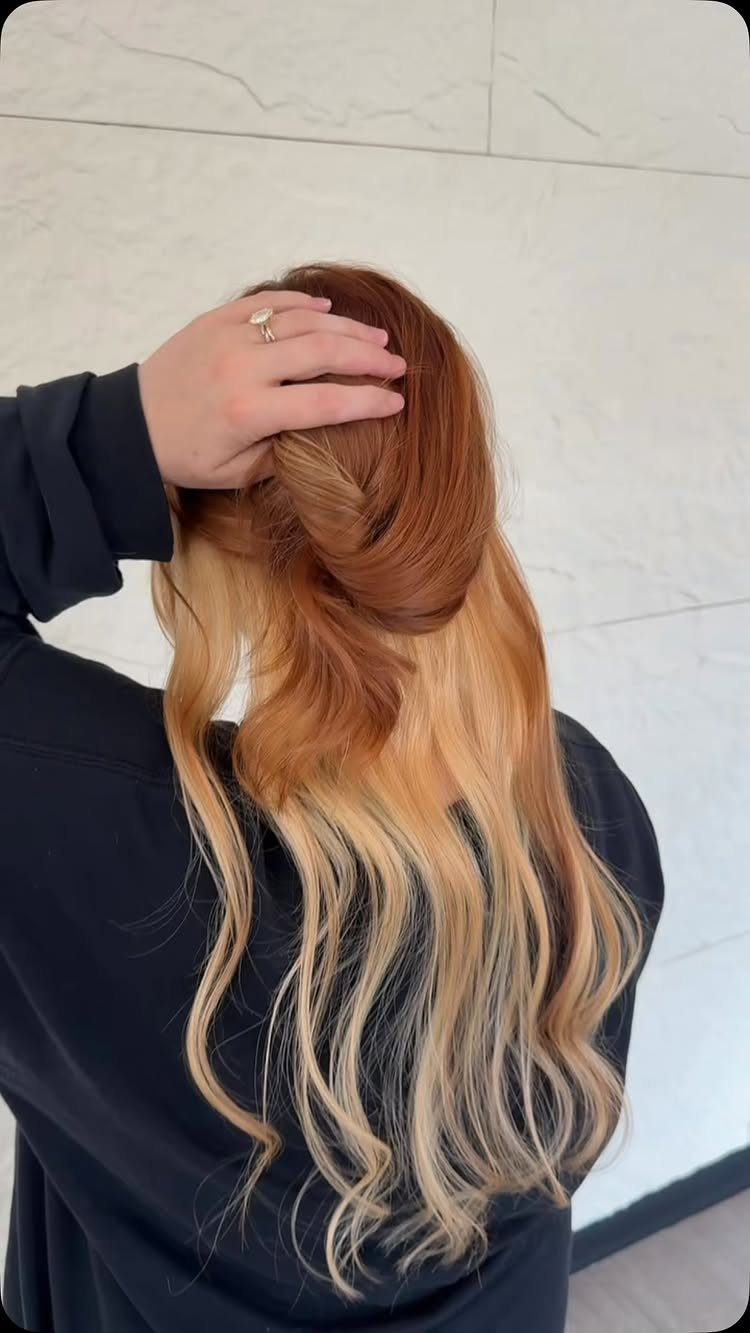
Toffee highlights bring a caramel warmth into copper-red hair without pulling the color fully blonde.
The contrast stays soft because both tones sit on the warm side, so the sections blend as the hair moves rather than reading as separate stripes.
This works well if you want dimension but don’t want the high contrast of bright blonde. As the toffee fades, it shifts toward a softer gold that still sits comfortably next to copper.
20. Strawberry with Lighter Pieces
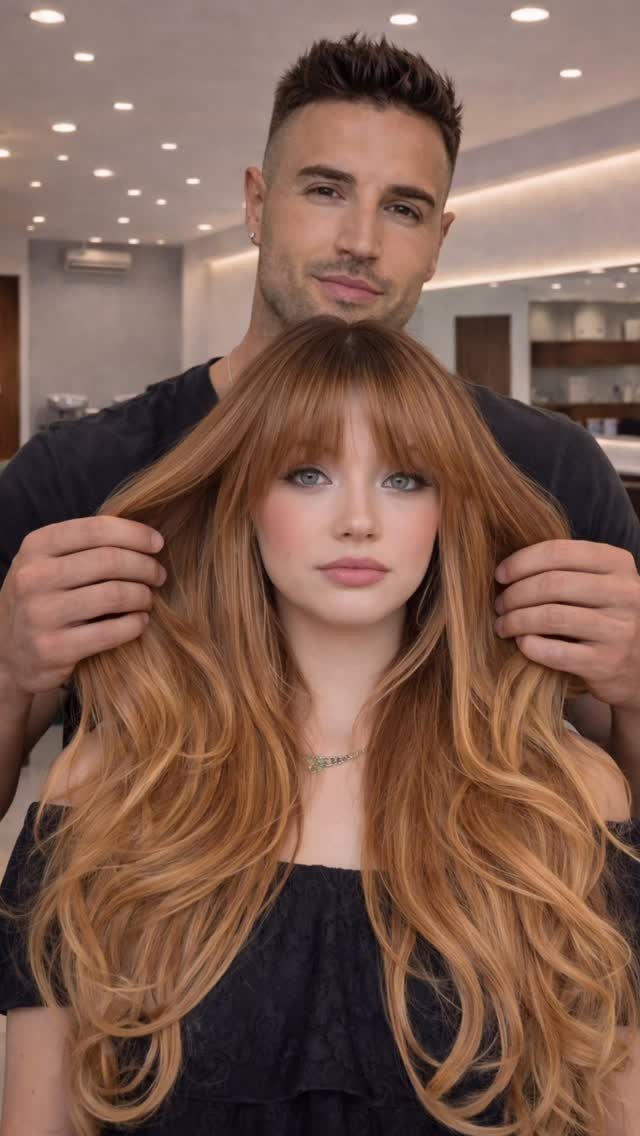
Lighter pieces brighten a medium strawberry base and add movement without covering the warmth.
The highlights sit just one or two levels up from the base, so the whole thing reads as a lifted version of the same color rather than two separate tones.
This is one of the easier red-to-blonde transitions to maintain because the tones are close enough that grow-out stays soft. If your strawberry already leans light, the highlighting process is faster and less damaging than starting from a darker auburn.
21. Strawberry with Gold Face Frame
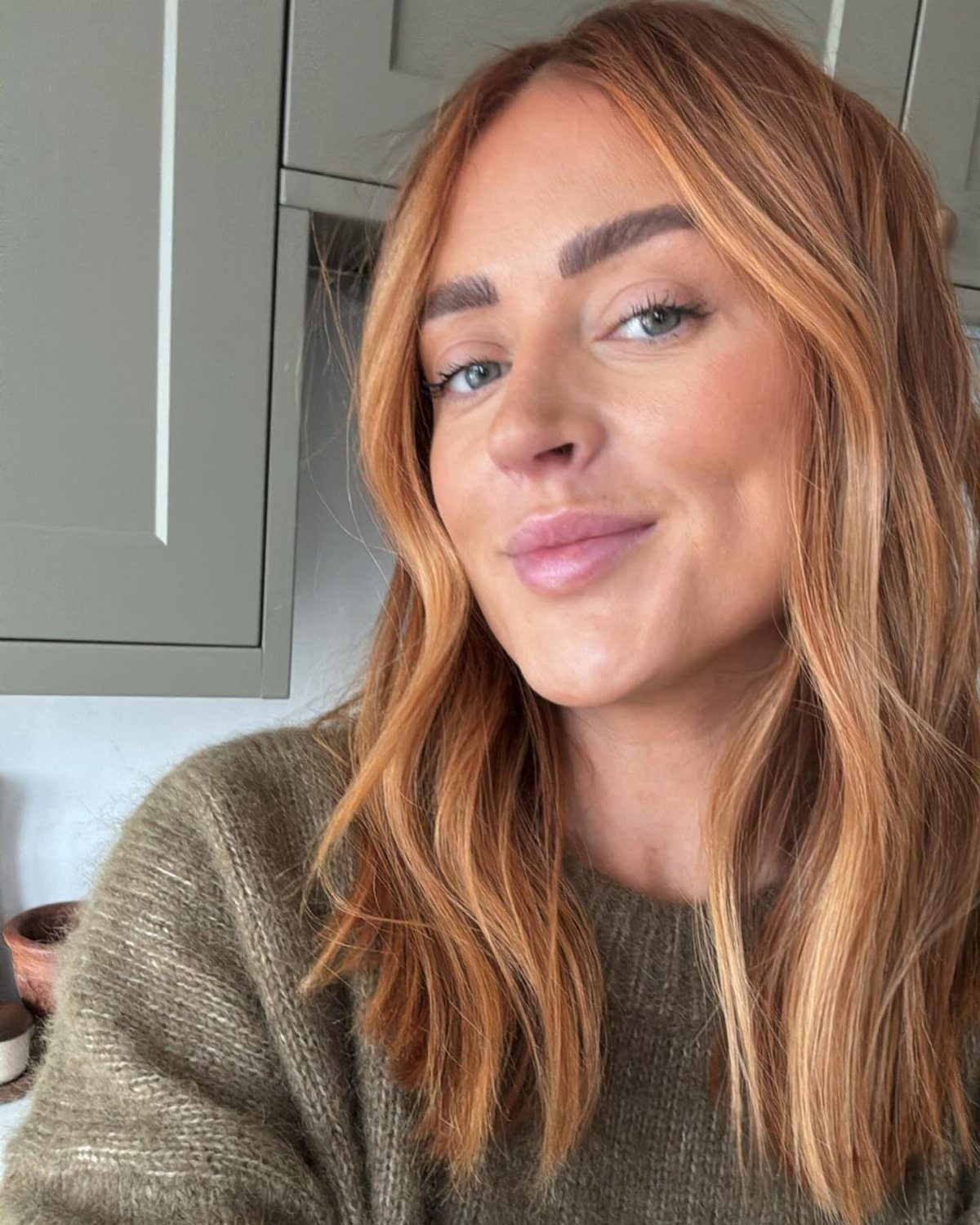
Gold pieces at the front open up a strawberry base and pull warmth toward the face. The placement concentrates the brightness where it draws attention, so you get lift without lightening the whole head.
Face-framing highlights grow out more visibly than scattered balayage, so you’ll see regrowth faster if brightness sits right at the hairline.
22. Red and Blonde Split Dye
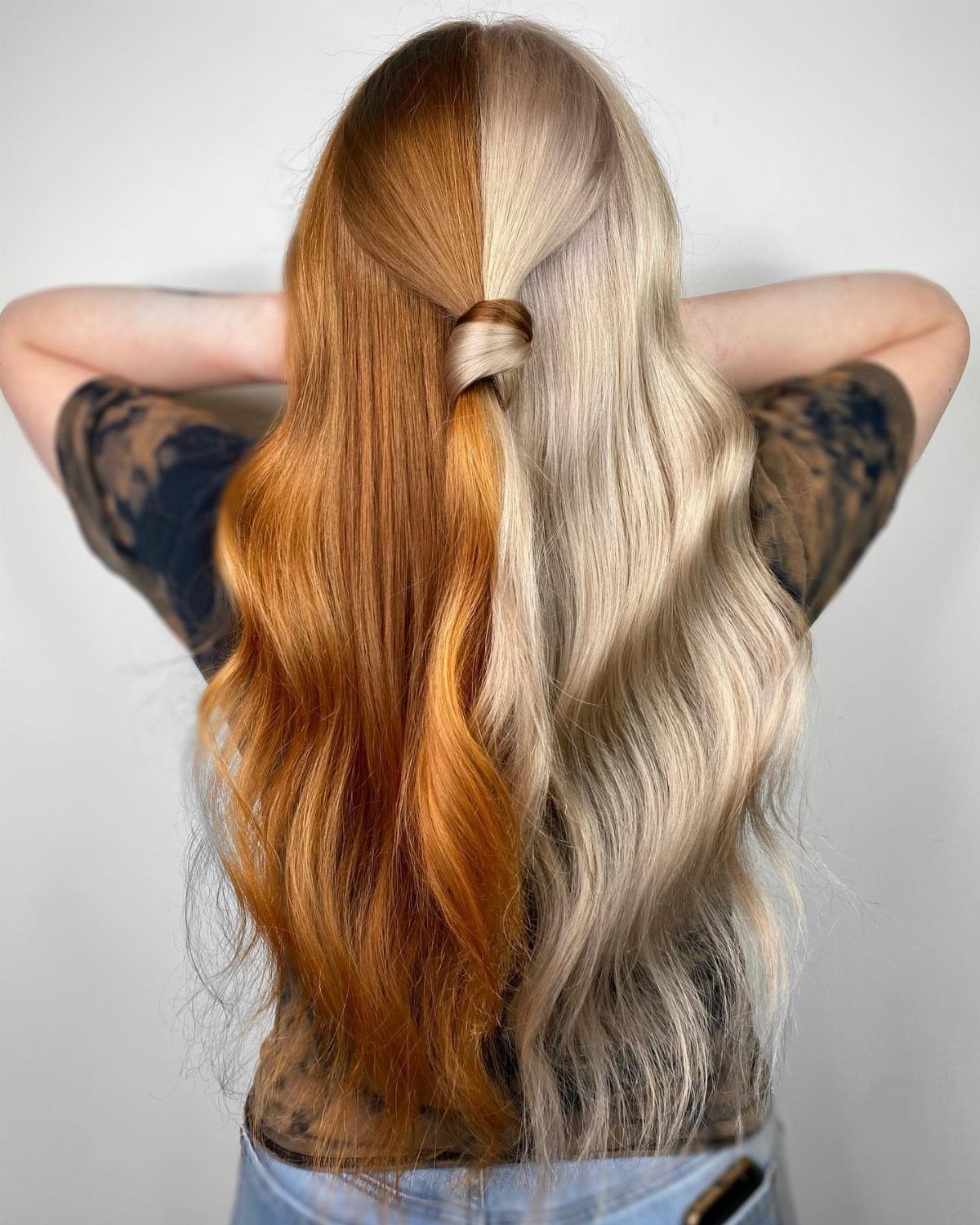
One side stays copper-red, the other goes pale blonde, with a clean vertical divide down the center. The split runs from root to ends, so you get 2 colors with no blending and no middle ground.
This look needs commitment: you’re maintaining 2 separate colors, and the blonde side will need regular toning to stay cool.
The grow-out shows fast because there’s no balayage to soften the root line. If you tie your hair back or part it down the middle, the split stays visible.
23. Auburn with Copper Highlights
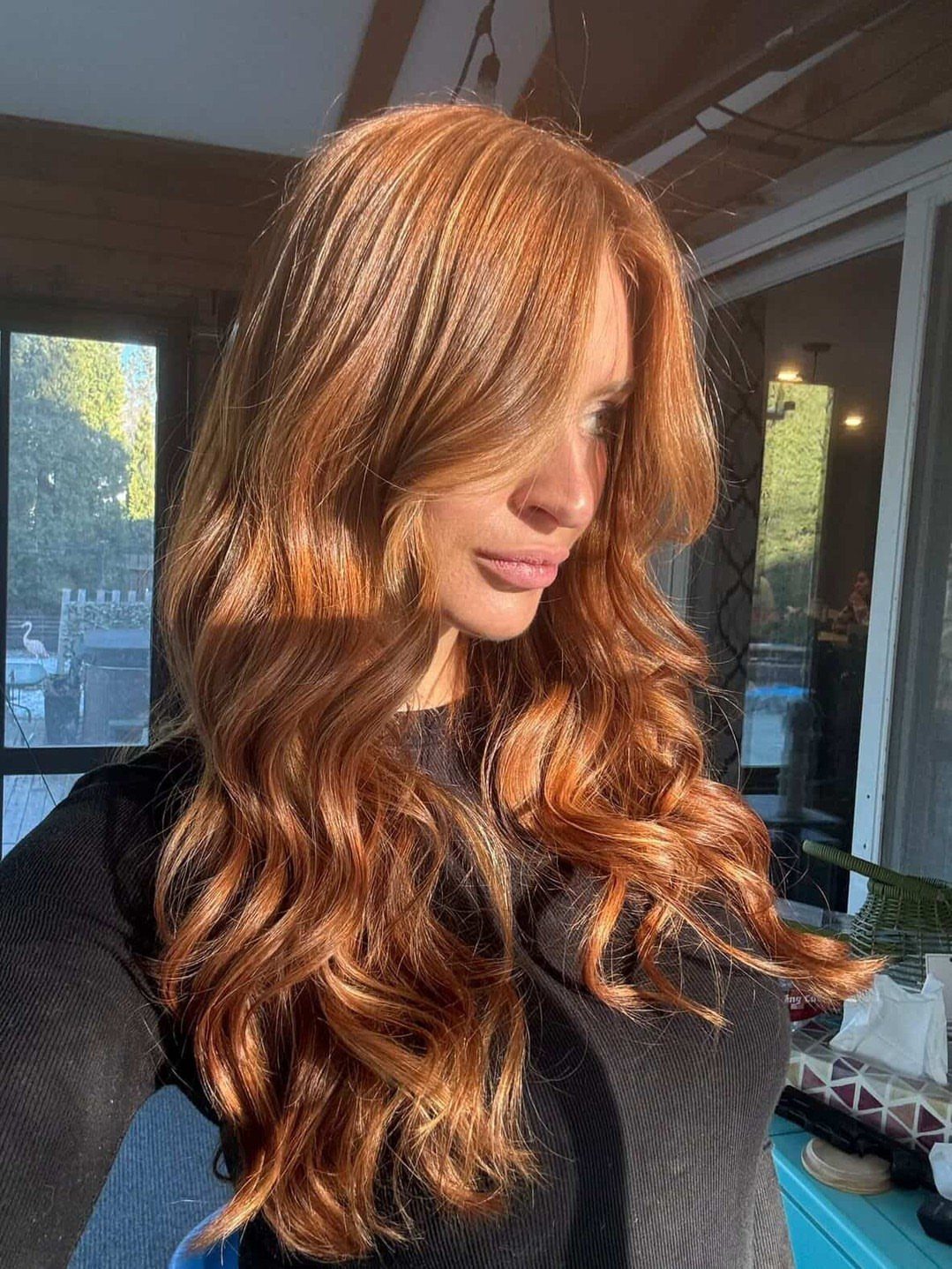
Copper highlights lift auburn hair by one or two shades and keep the warmth intact.
Since both tones are in the red family, the grow-out is softer than it would be with blonde.
The copper will lighten slightly faster than the auburn, so you’ll want to refresh the highlights when the contrast starts to blend out.
24. Strawberry Auburn Highlights
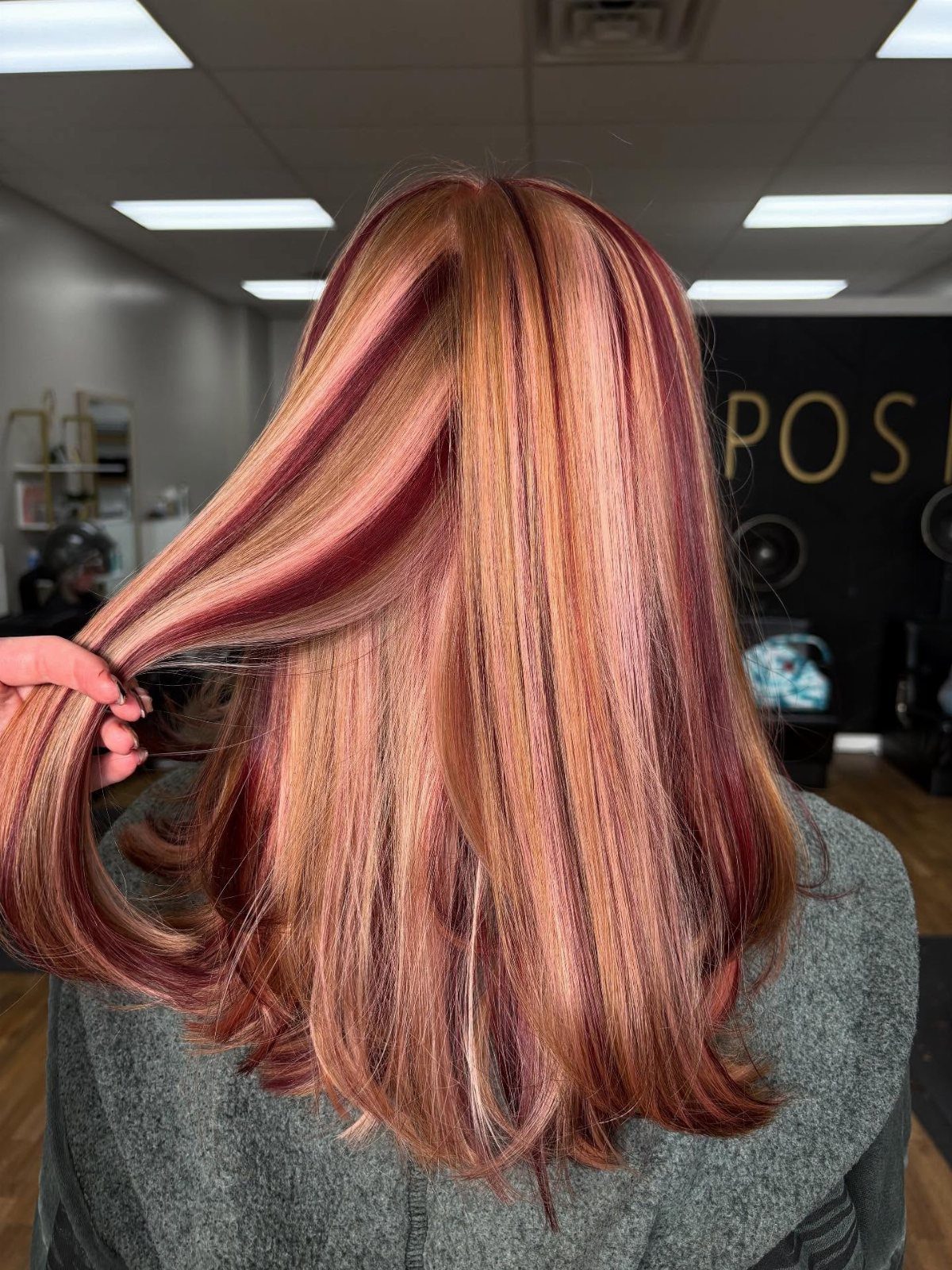
Blonde highlights woven through strawberry-auburn hair break up the red and add brightness without covering the base entirely. The narrow sections scatter light across the length, so the dimension reads all over instead of concentrating at the face.
The blonde needs toning to stay cool next to the strawberry, and the red base will fade faster than the highlights.
Plan to refresh the strawberry regularly if you want the contrast to stay sharp, or let it fade toward a softer peachy tone.
25. Reddish Blonde Highlights
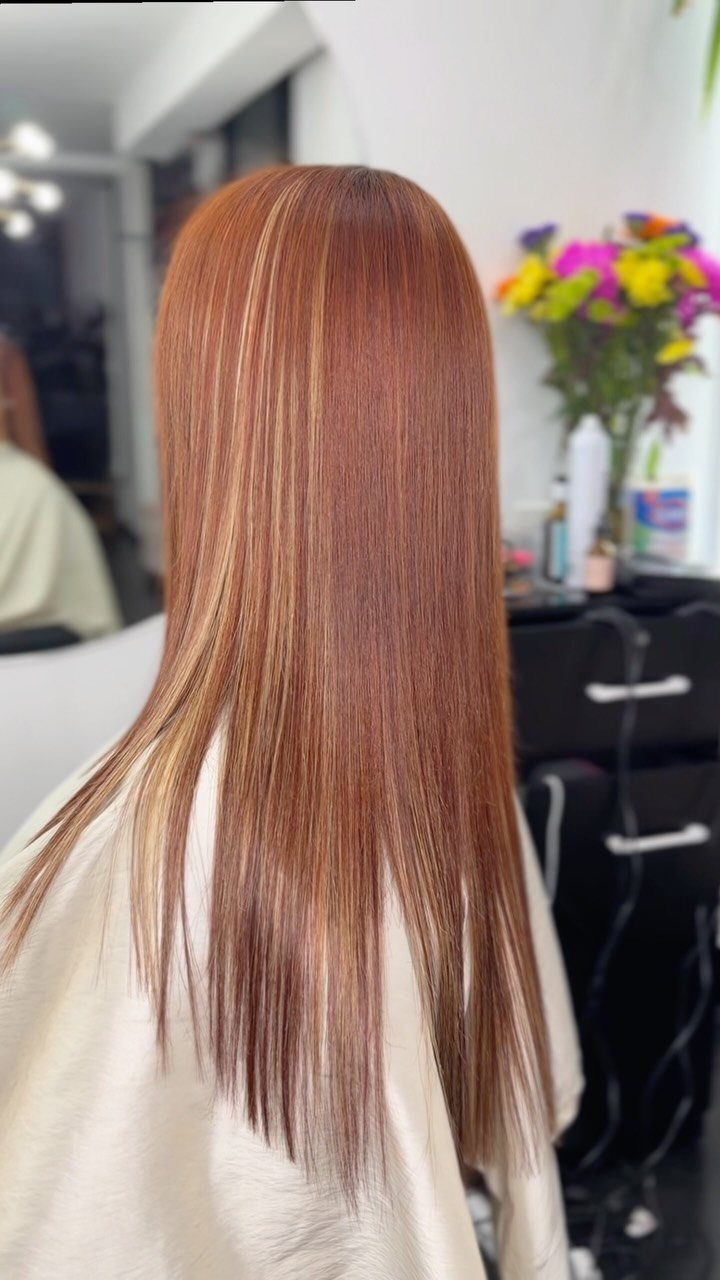
The blonde lifts things up but leaves the red base visible, so you get brightness with the warmth still showing through.
The blonde sits a few shades up from the base, so the hair catches light without losing the red undertone.
Balayage or foil highlights both work here.
Balayage gives you a softer blend, foils give you more control over where the blonde sits. Regular toning keeps the blonde from turning brassy against all that red.
26. Auburn with Rose Streaks
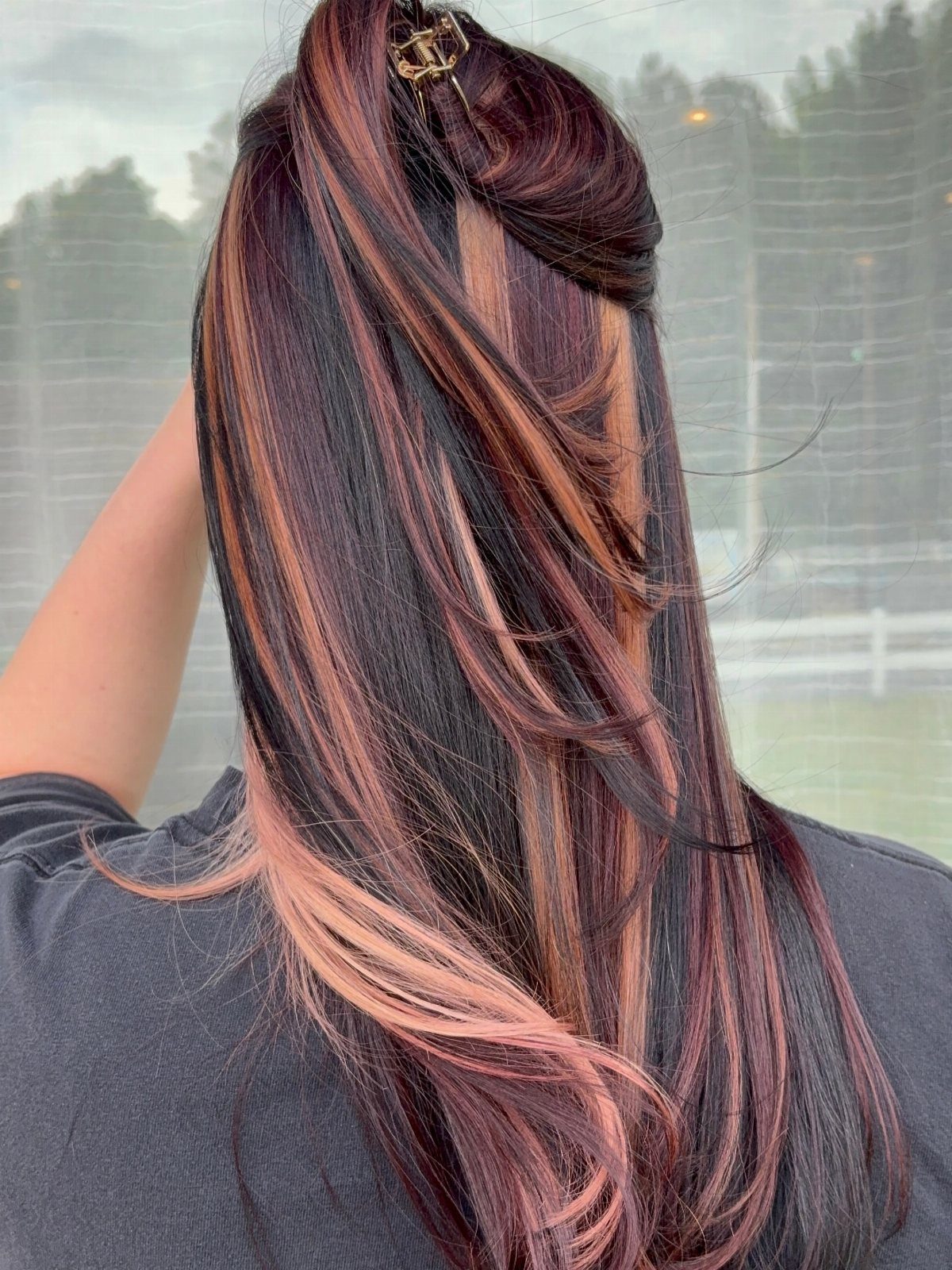
Rose and coppery-blonde streaks scattered through auburn lengths add softness without cooling the red down completely. The rose tone sits between the auburn and the blonde, so the transition feels gradual rather than jumping straight from red to light.
The rose will fade faster than the auburn, shifting toward a peachy blonde over time.
If you want the pink to stay visible, plan to refresh the tone every few washes. Layered hair shows the streaks better because each layer catches light differently as the hair moves.
27. Brown Hair with Blonde Streaks
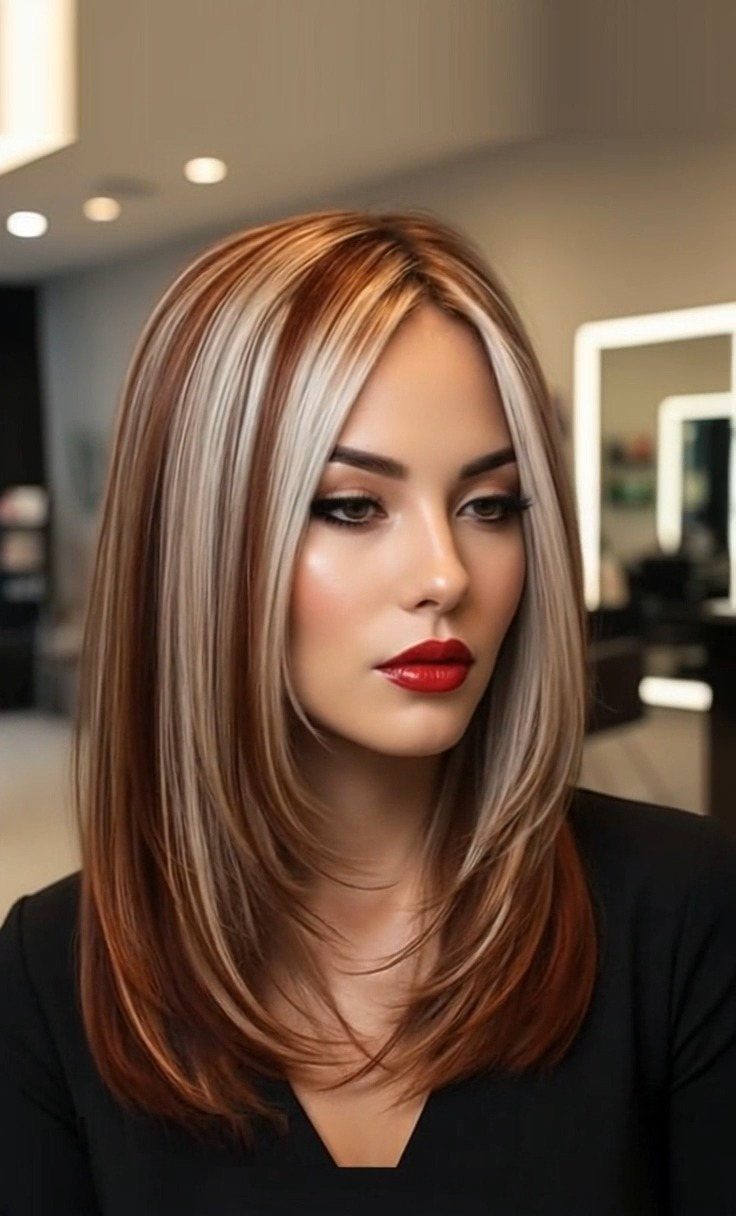
Blonde highlights woven through brown or auburn hair give you a stronger red-to-blonde contrast than softer balayage. The blonde sits several shades lighter than the base, so the 2 tones stay separate rather than blending.
Foil highlights give you the cleanest lift and the sharpest contrast.
28. Blonde Hair with Copper Highlights
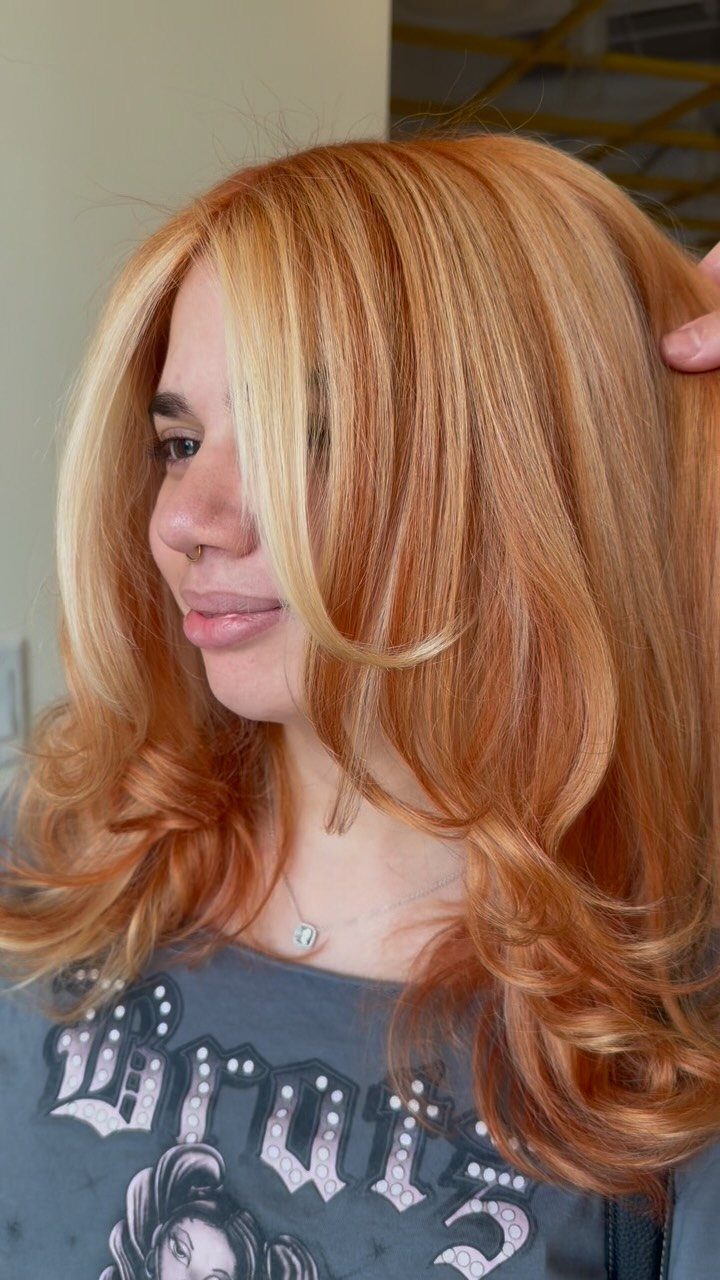
Copper or gold highlights warm up a blonde base and pull the whole thing toward reddish-blonde territory. The copper sits as an accent rather than taking over, so the hair still reads blonde but with warmth woven through.
This is faster to maintain than full copper hair because the blonde base does most of the work. Copper fades faster than most tones, so plan on regular color refreshes if you want it to stay bright.
29. Copper Blonde Lengths
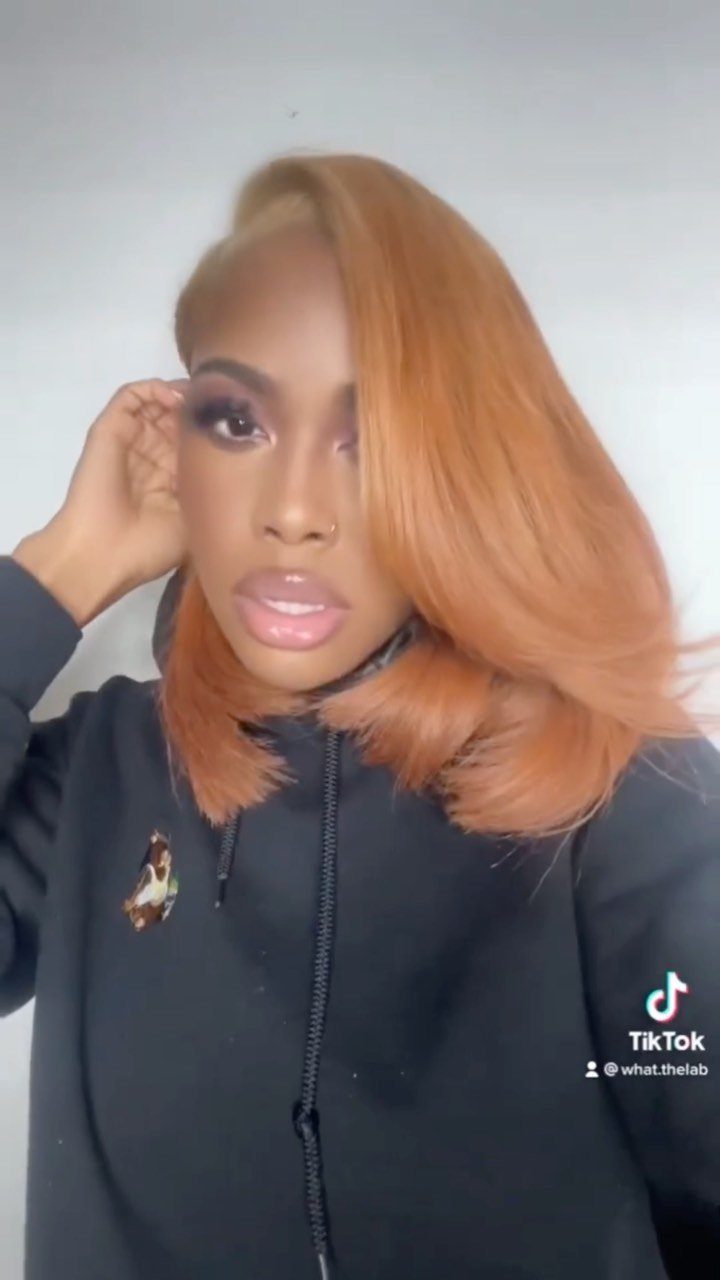
Copper and blonde blend so smoothly that the hair reads as one reddish-blonde color rather than separate highlights. The copper warms the blonde, and the blend happens over the whole length instead of sitting in stripes.
This finish takes longer to achieve because the colorist has to paint the transition gradually, but the grow-out is softer than it would be with foils.
The copper will fade first, leaving you with a lighter, more golden blonde unless you refresh the red tone regularly.
Choosing Shades and Techniques
Both sit on the warm side of the wheel, so the difference shows up in how rich or muted each one looks instead of clash. That’s why they can sit next to each other without looking like a mistake.
Warm and neutral skin tones (golden, peachy, olive) suit most combinations. Cooler skin does better with strawberry tones, ash blonde or a proper jewel red instead.
Balayage gives you soft edges and lower maintenance.
Foils let you place the blonde exactly where you want it and give you stronger contrast. Ombre builds a gradient from dark to light, so the grow-out is already part of the look.
Ask your colorist to match the technique to your budget and how often you’re willing to come back.
A full balayage or foil appointment takes 2.5 to 4 hours. Gloss touch-ups take 45 to 60 minutes.
Color Upkeep and Appointment Timing
Red disappears faster than anything else you can put in hair. Skip the gloss and you’ll see it slip by week 4 or 6.
A gloss every month or so holds the red where you want it. Touch-ups land somewhere between 8 and 12 weeks out, depending on how the color was applied.
Balayage can stretch longer because the grow-out is softer. Foils and money pieces show regrowth faster.
Use color-safe shampoo and wash 2 to 3 times a week to keep the red from fading too fast. Regular shampoo strips red tones out in half the time.
Gloss appointments take 45 to 60 minutes, so you can fit them into a lunch break if your schedule is tight.
Lightening and Hair Condition
Darker reds and brighter blondes take more time and potentially more money, because the lift from deep auburn or copper to blonde means multiple rounds of lightening. The darker the starting point, the longer the blonde sits under foil.
Avoid over-highlighting.
Too much blonde means more processing, which dries the hair out and makes the color fade faster. If your hair is curly, you may need fewer blonde sections because the texture already gives you movement.
During retouches, the colorist should only process the new growth.
Previously lightened ends don’t need more bleach, and reprocessing them will fry the hair. If your stylist goes back over old highlights, speak up.
Frequently Asked Questions
What is reddish blonde hair called?
Reddish blonde goes by strawberry blonde when the red sits soft and peachy, or copper blonde when the warmth leans more orange-gold.
What are the hottest red hair trends for 2026?
Money pieces in bright blonde against deep cherry or chestnut red are everywhere right now, along with strawberry balayage that blends soft and warm from root to ends.
Split dye (one side red, one side blonde) and rose-gold accents through copper are showing up more on shorter cuts.
What are some good blonde highlights for red hair?
Honey babylights add shimmer without covering auburn, caramel highlights warm up red-brown bases with soft contrast, and golden blonde scattered through copper gives you light reflection while the red stays dominant.
Strawberry blonde on a ginger base blends the easiest because both tones sit close together on the warm side.
Have you ever considered trying a front hair highlight, also known as a money piece?
A money piece puts blonde right at the hairline on each side, about an inch back, so all the brightness sits where it pulls attention to your face.
A few pieces at the front can give you more contrast than scattered highlights because the lift concentrates in one place, and the back stays untouched.