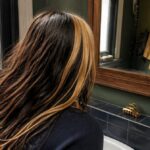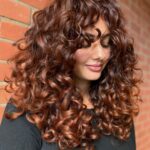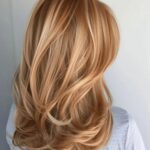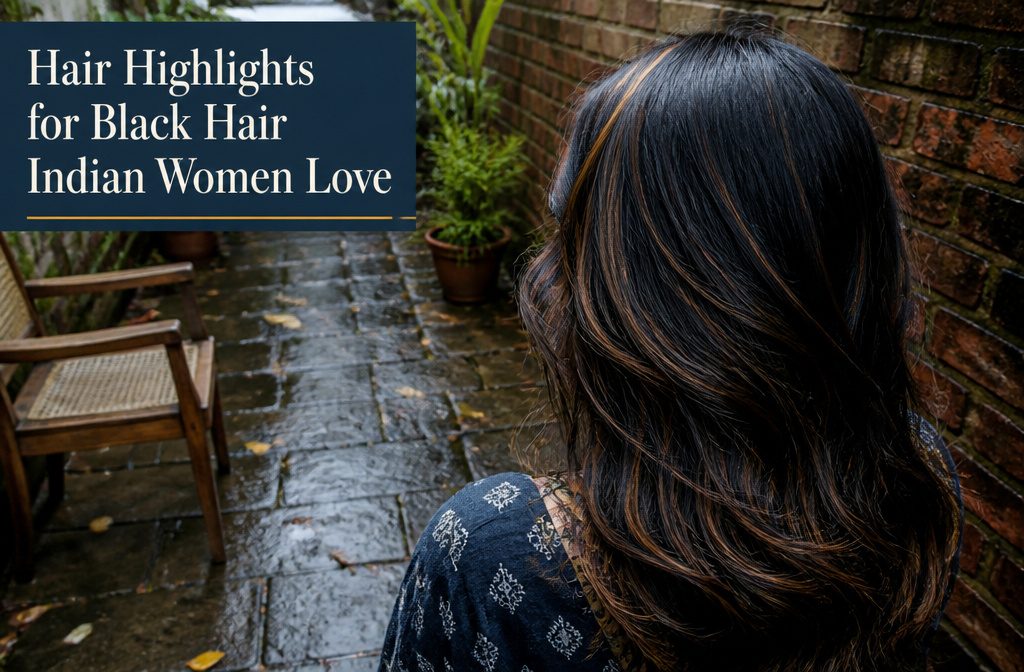
Black hair takes highlight shades from soft honey to electric blue, and what picks the right one is how much contrast you want against the base.
Caramel and honey blend in; burgundy and purple read as depth; blonde, grey and vivid colors make a statement that shows across the room.
The quieter the look, the less lifting black hair needs, which matters because bleach is where damage starts.
Babylights and balayage techniques stay soft and grow out without a hard line, so touch-ups can stretch to 2 or 3 months instead of chasing regrowth every few weeks.
1. Caramel Balayage
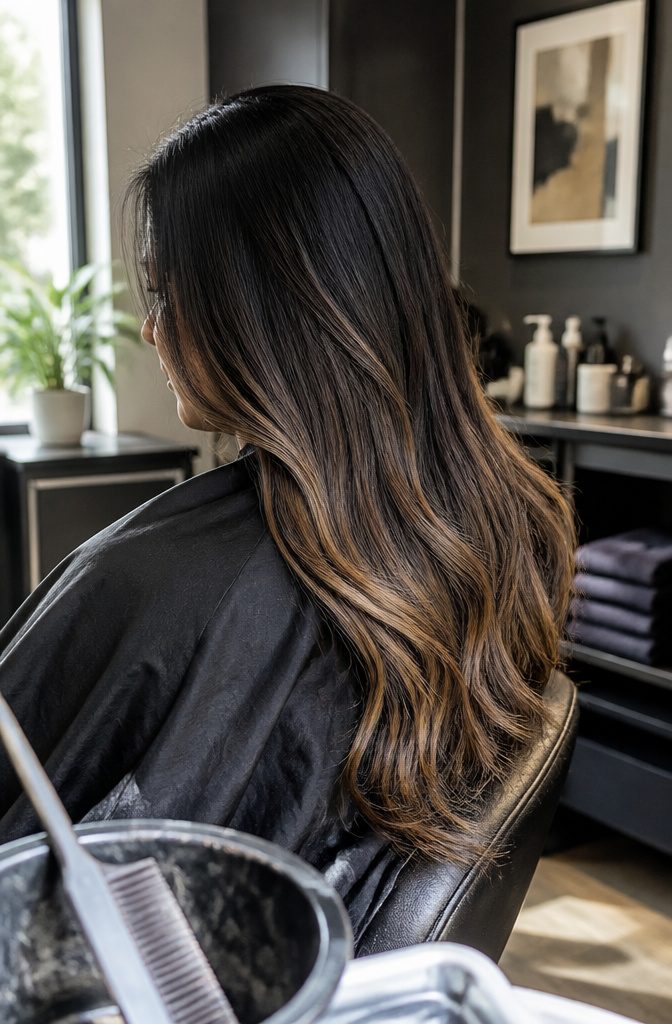
Caramel is the balayage shade I’d pick first for black hair, because it blends into the dark base instead of sitting on top of it.
The colorist paints it by hand in a loose, casual sweep, so there’s no hard line where the color begins.
That’s what separates balayage from streaks, which stand out. Balayage uses three or more hair colors, and on black hair that means several warm tones melting into one another and adding depth to hair that can photograph flat.
Caramel is most flattering on wheatish or olive skin, where the warmth echoes your undertone. Honey and toffee sit in the same family, so bring a photo of each to your appointment and compare.
2. Honey-Toned Highlights
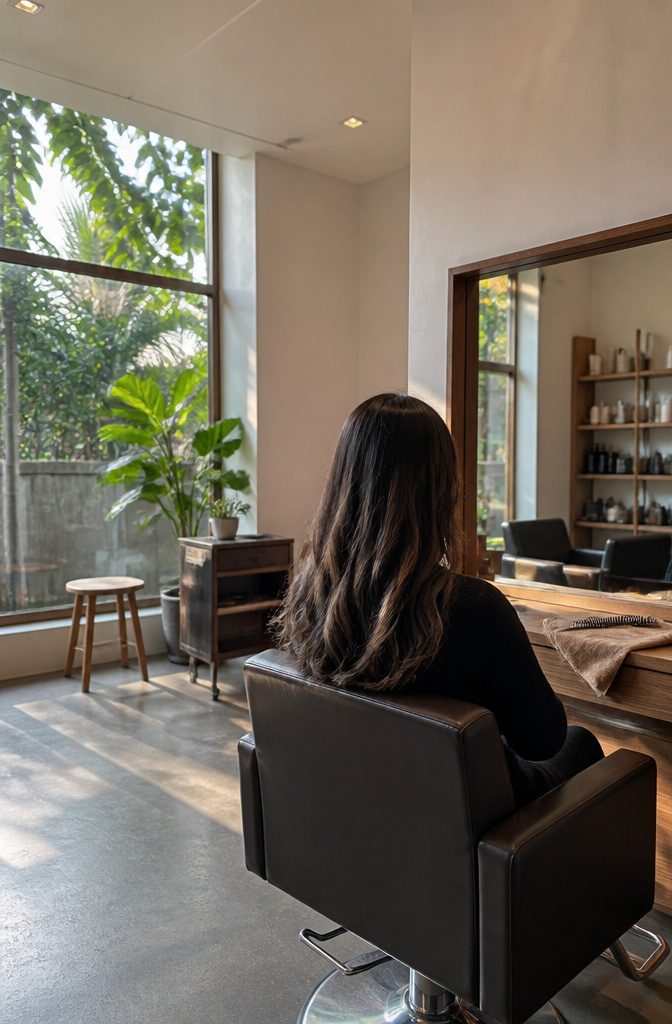
Honey blends with dark hair instead of sitting on top of it, which is why it flatters wheatish or olive skin so well.
It reads as glow rather than contrast. Kareena Kapoor Khan’s honey-toned streaks are a good reference to save, since they add warmth to glossy hair without shouting.
The technique sets how loud the color gets.
Babylights give a sunlit shimmer, the finish Alia Bhatt is known for. Balayage paints softer, sweeping color through the lengths.
Foils produce the most defined streaks. For a first honey look, I’d choose babylights or a light balayage, because both stay close to your natural base and are easy to live with as they grow out.
3. Burgundy Balayage
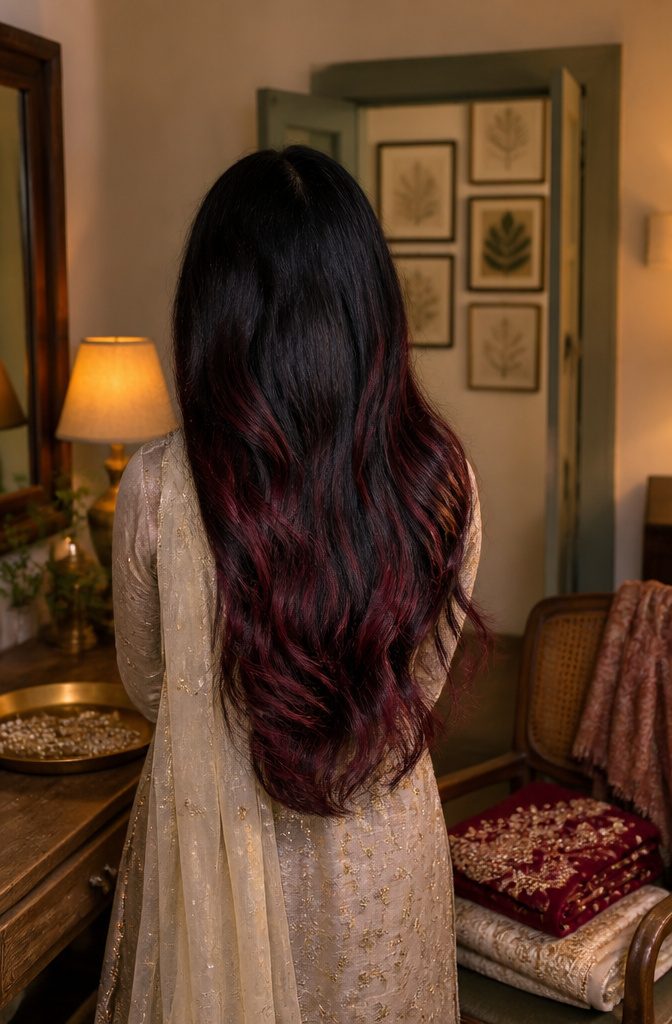
Burgundy against black reads as depth, not contrast, which is why it suits dark Indian hair so well.
Burgundy strands through black give a wine-red glow that shows in the light and settles back into the hair in the shade. It’s a statement color without the shock of blue or pink.
I’d choose it over brighter reds if you want one look for the office and the wedding season. The tone is rich and festive, and it pairs beautifully with Indian outfits and occasions.
Ask your stylist to keep the roots black and let the burgundy gather toward the ends, so grow-out stays soft instead of banded. If that still feels loud, mahogany is the quieter cousin.
4. Burgundy Babylights
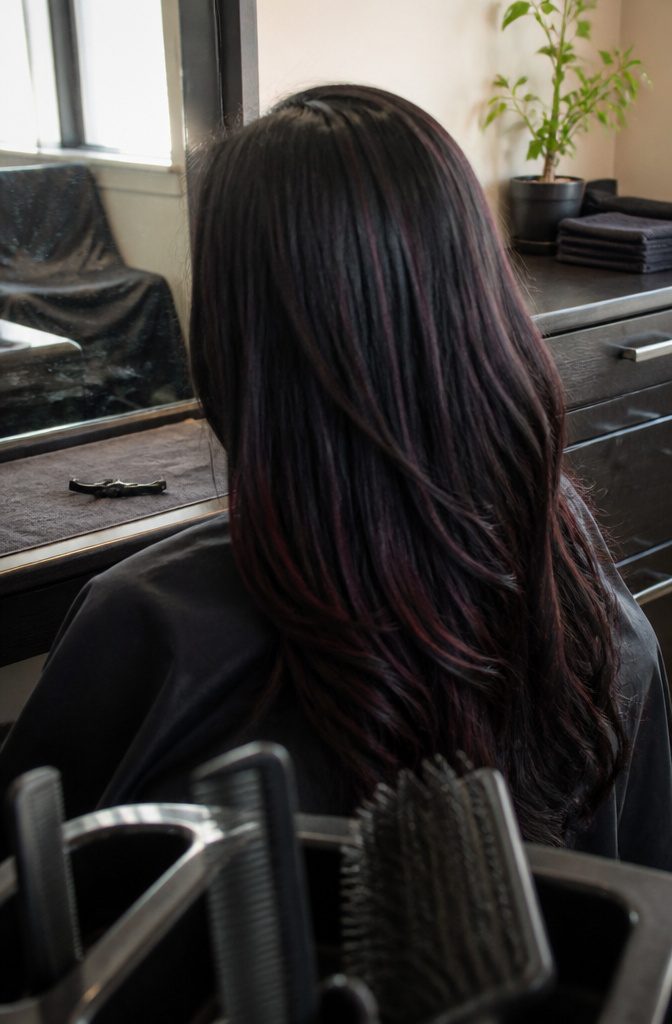
Burgundy babylights are the quietest way to color black hair.
The streaks are ultra-fine, like the natural highlights children often have, so the result is a soft glow rather than a visible stripe. Most people will read it as healthy, slightly warm hair, not as dyed hair.
Burgundy lowlights play a different game. They sit darker than your base shade, which adds depth and dimension, and on very dark hair a mahogany or burgundy lowlight makes a bolder statement than a babylight does.
I’d start with babylights if this is your first red, or if you want the color to stay private. Choose babylights for subtle, lowlights for noticeable, and take both names to your stylist along with a photo.
5. Soft-Red Balayage
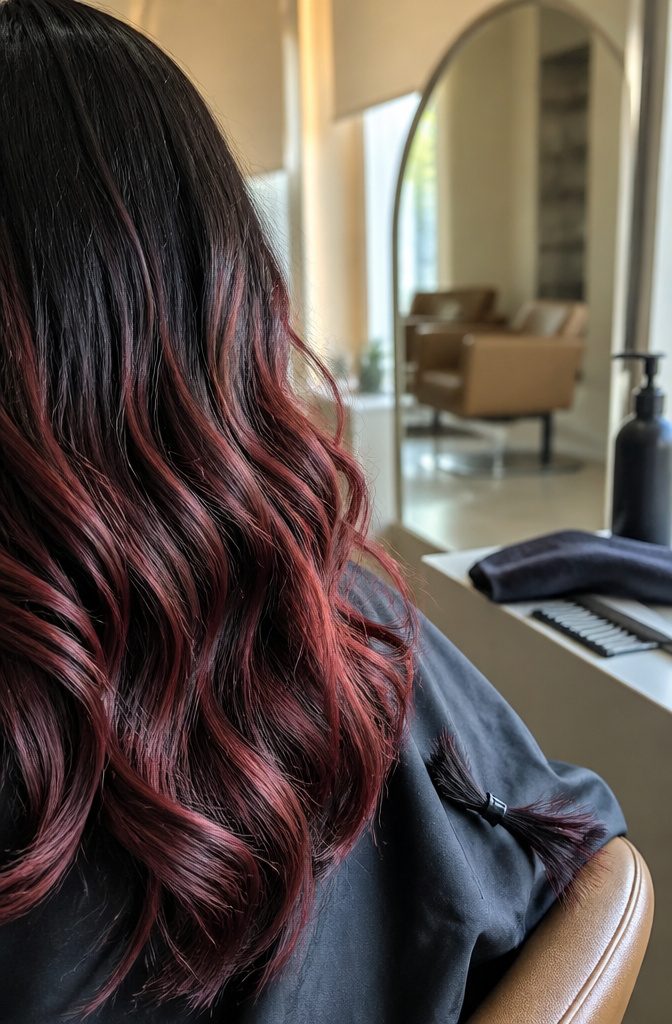
Red with pink running through it is the red I’d point most people toward.
On black hair, a luminescent, rosy red makes a statement without the full intensity of a pure red, so it suits anyone who wants to be noticed but not stared at.
Balayage is the right technique for it. The color is painted on by hand and fades softly toward the roots, so grow-out has no hard line.
The pink tones are what soften the red, so ask your stylist for a pink-leaning red by name instead of just saying "red." Pure red reads louder and looks harsher against dark hair.
Dark hair has to be lightened before red shows up, so ask how your stylist plans to protect it.
6. Brunette-Blonde Balayage
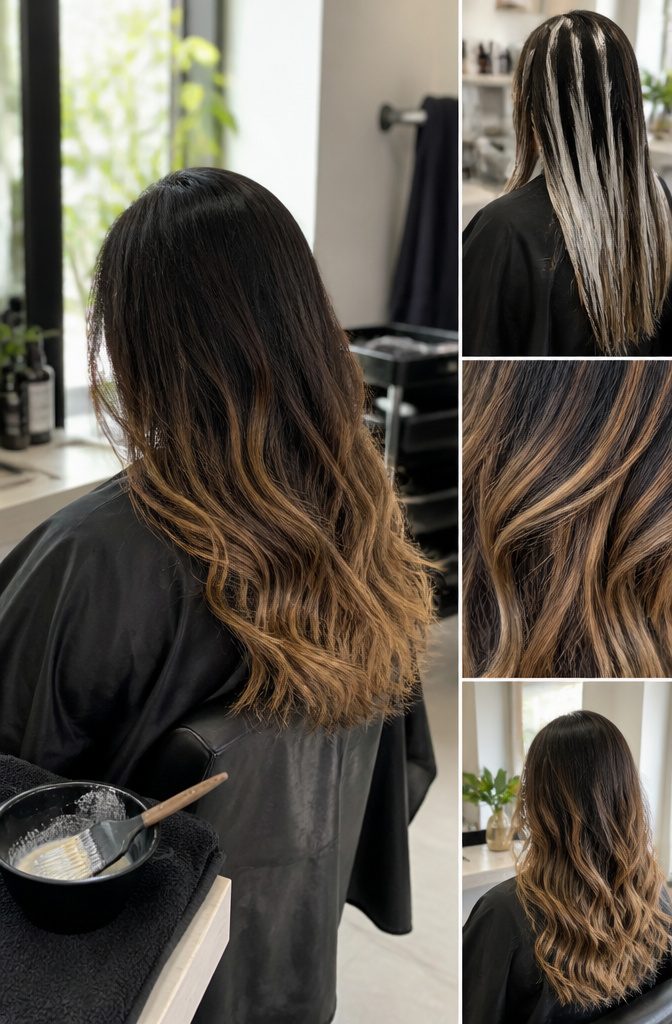
Brunette-blonde balayage mixes brown, blonde and gold, hand-painted so the shades melt into one another instead of stopping at a line.
Because it uses three or more colors, it adds depth and dimension to hair that otherwise looks flat, and it reads as natural variation rather than streaks.
Over a single bright contrast color, I’d pick this one for black hair. The brown and gold steps bridge the gap between your base and the blonde, so the lightest pieces never look stuck on.
Ask your colorist to keep the gold through the mid-lengths and push the blonde toward the ends. Since the painting is casual by design, the pattern is loose, and nothing has to line up perfectly for it to look right.
7. Blonde Ombre
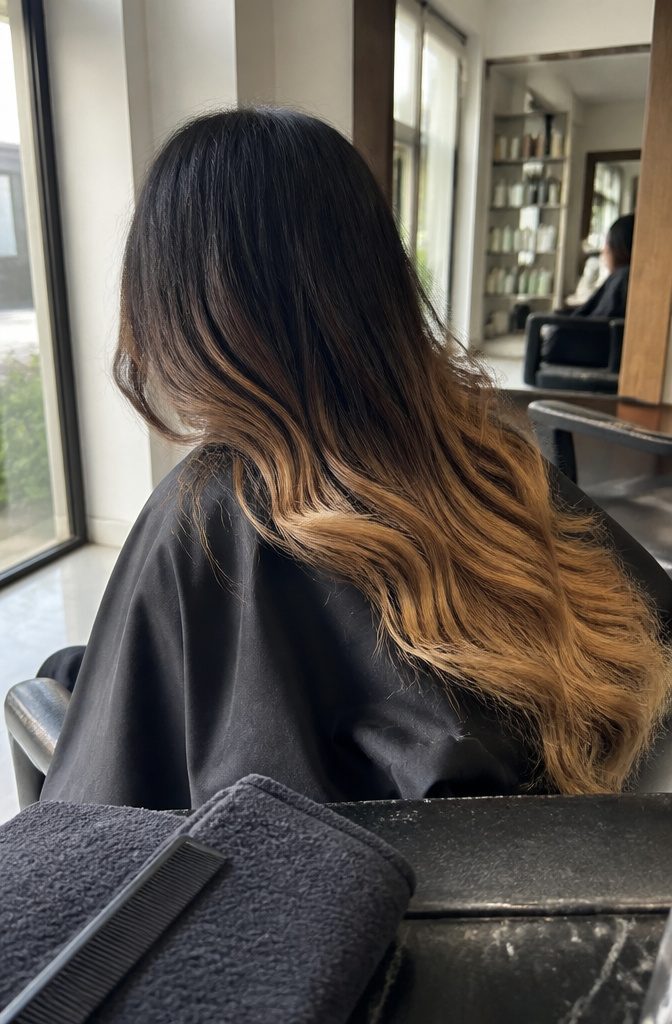
Ombre keeps the roots dark and lets the color climb toward blonde at the tips, with a middle shade at mid-length handling the transition.
That middle shade is what makes a blend instead of a hard line, so it’s the first thing I’d settle with a stylist.
On black hair, blonde ombre is a lighter change without shocking colors: the roots stay your natural shade, so your part and face framing look the way they always have.
Ask for a middle shade between your root color and the blonde, and bring a photo that shows where the lightest section begins. For anyone who wants brightness without going blonde all over, I’d pick this over full highlights.
8. Icy-Grey Ombre
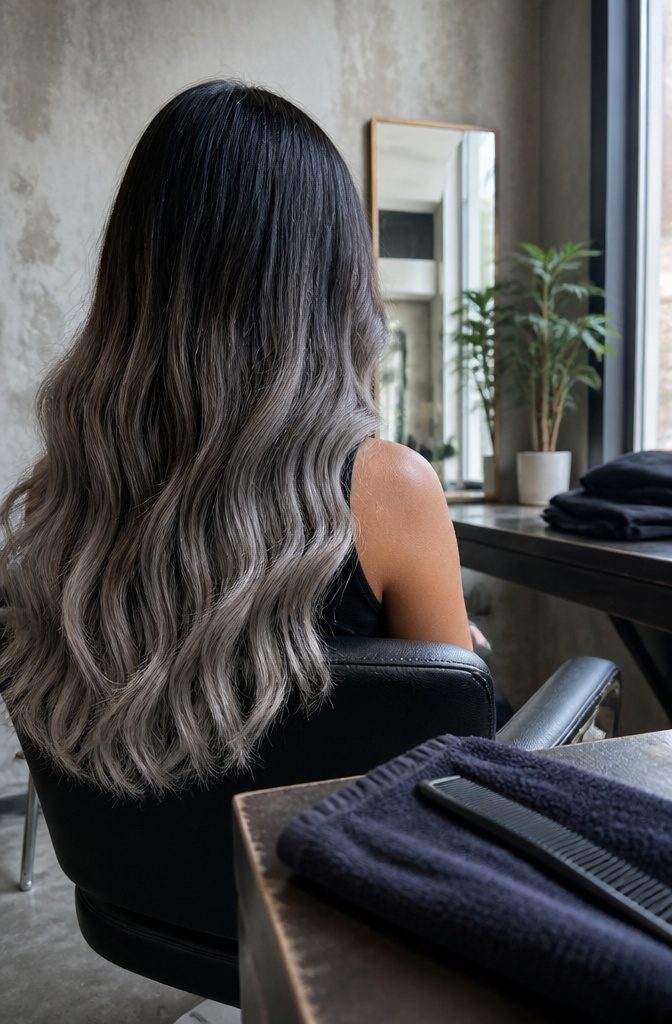
Icy-grey ombre runs from black roots down to pale grey tips, with a middle shade between the two to carry the transition.
That middle transition shade is what makes the gradient look deliberate rather than like a stripe, so ask your stylist how they plan to blend it.
Ash brown and other cool tones suit fair to medium skin, and the grey end is the most fashion-forward version of that palette.
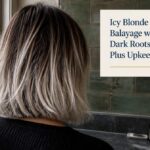
Soft starry babylights on long black hair offer a quieter nod to the same cool look. For a first try I’d pick them over the full gradient, since fine, scattered glints leave no hard line to grow out.
9. Brunette Babylights
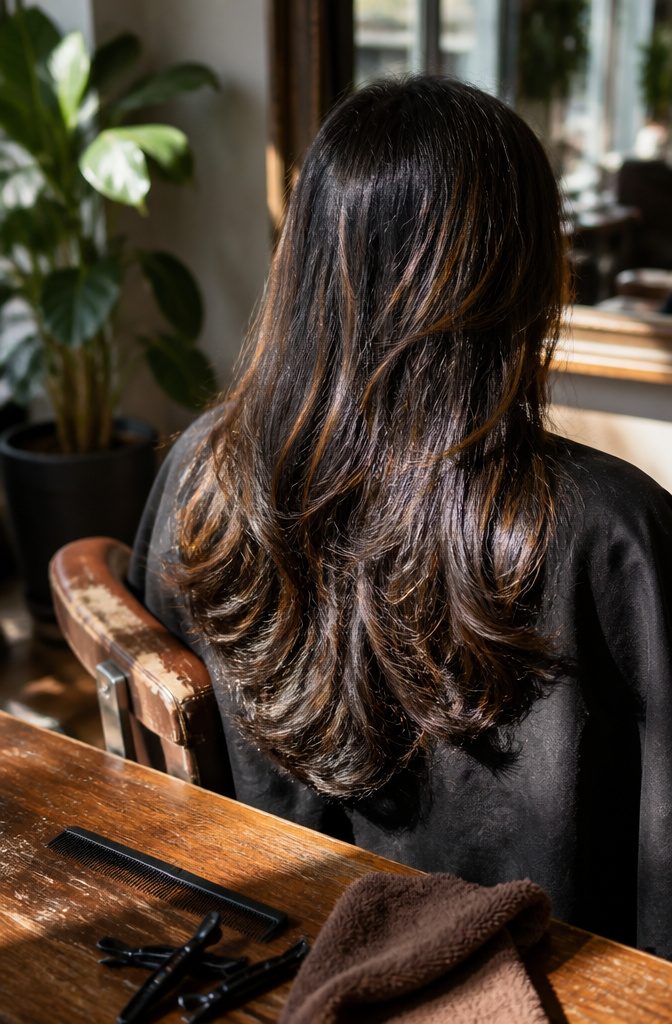
Brunette babylights are the quietest way to lighten black hair. The stylist divides the head into extremely small sections and colors each with the highlight shade, so the strands come out very fine.
The look to ask for is cream and brown with a soft-gold shimmer along the edges. It reads as a glow in sunlight, not as color.
For anyone who wants people to ask "did you get your hair done?" rather than see it from across the room, I’d pick this over any chunkier option.
Ask for the strands kept fine and the gold limited to the edges, because wider pieces start to read as stripes against dark hair.
10. Light-Brown Lowlights
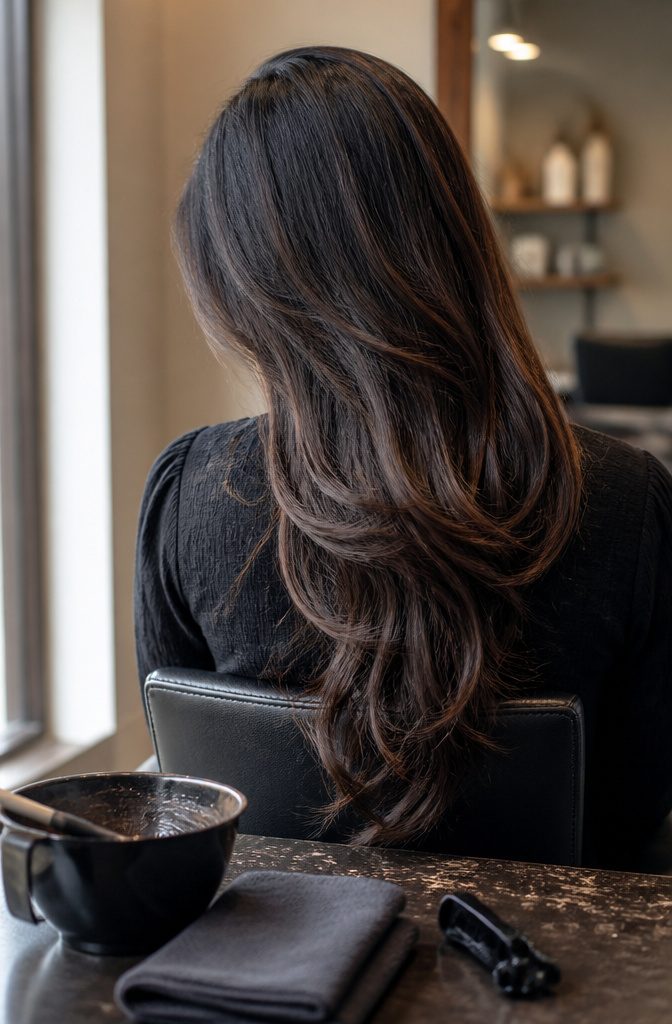
Lowlights work the opposite way from highlights: the strands go darker than your natural color instead of lighter, and what you get is depth, not brightness.
On black to dark brown hair there is little room to go darker, so the shade has to do the work.
Dark hair makes the choice narrow, and the advice is plain:
Since it’s hard to try dark shades on black to dark brown hair, berry red and deep auburn ‘lowlights’ are a popular choice for dark hair.
So ask for berry red or deep auburn, and show mahogany or burgundy if you want something richer. I’d start with auburn: it adds dimension without a dramatic color change.
11. Purple Balayage
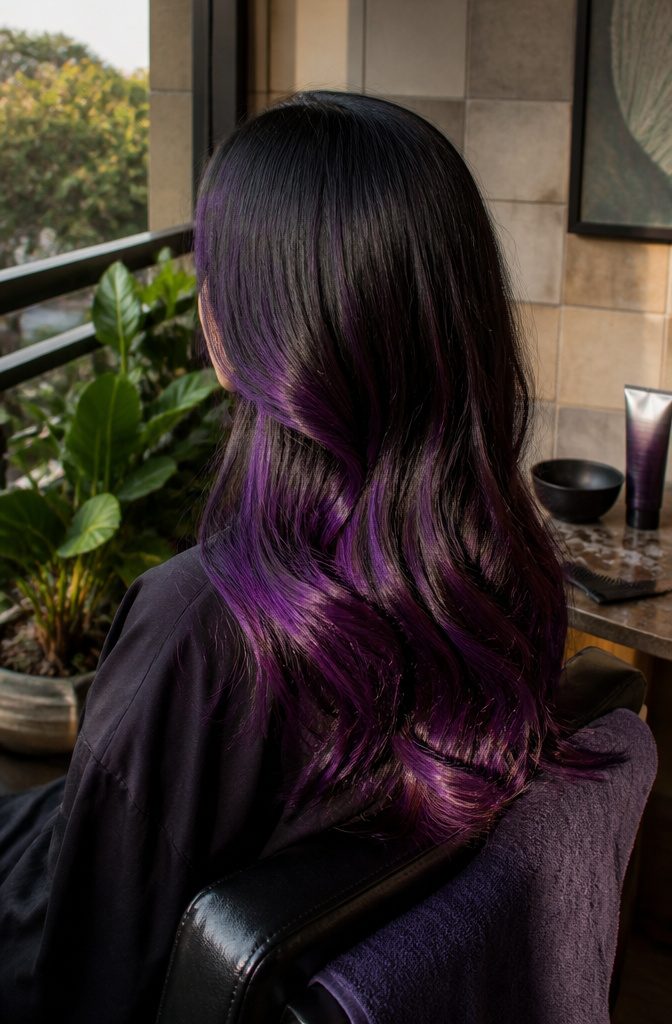
Purple is the boldest color I’d call realistic for black hair. Violet and plum sit close to black, so they read as depth rather than a jarring switch.
Without lightening, a deep violet mostly shows in sunlight as a glint through the lengths, and for a first try I think that low-commitment version wins.
A bright, visible purple means lifting the hair first, and that is where the risk sits. Black hair tends to turn warm and brassy when lightened, which can muddy the violet.
Ask for plum or deep violet if you want to skip heavy bleaching, and keep the brightest tone around the face and ends. Purple also fades fast, so a color-depositing conditioner and cooler wash water protect it.
12. Blue Ombre
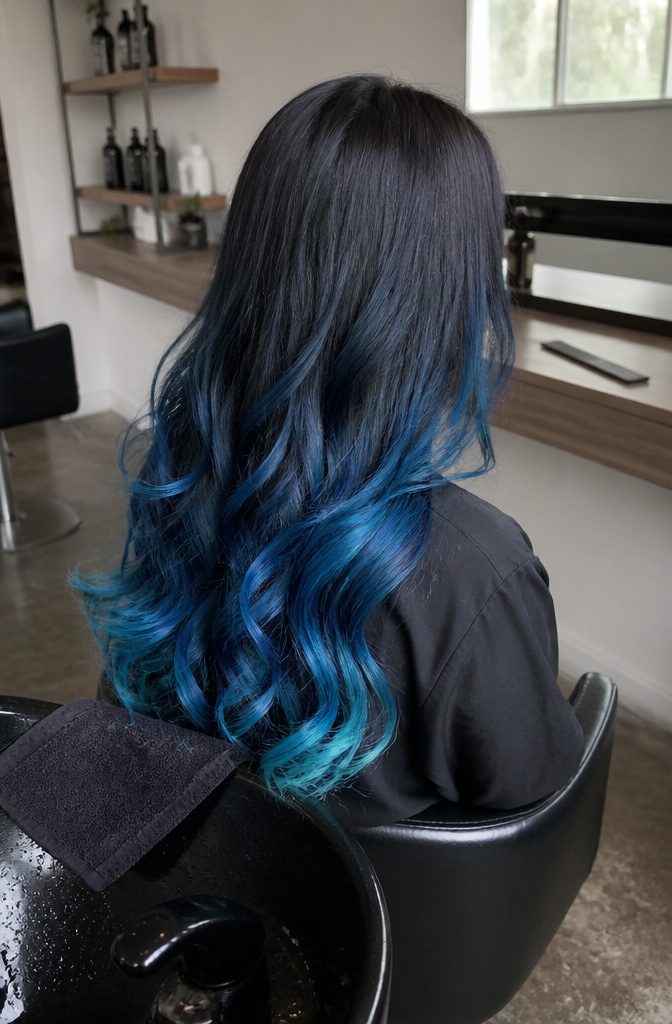
Blue ombre keeps the roots dark and lets the length shift toward a shocking blue, with turquoise worked in as accents.
The middle transition shade is what makes the gradient read as a gradient: black at the crown, a mid-tone through the lengths, then the brightest blue at the tips. Skip it and you get a hard line.
Of the vivid options for black hair, I’d start here, because the roots stay your natural dark, so regrowth never shows a harsh band. Ask for the turquoise by name.
It lifts the blue so the tips don’t sink into the black. Blue on black hair usually needs the ends lightened first, so expect the tips to need more care than the roots.
13. Dark Blue Balayage
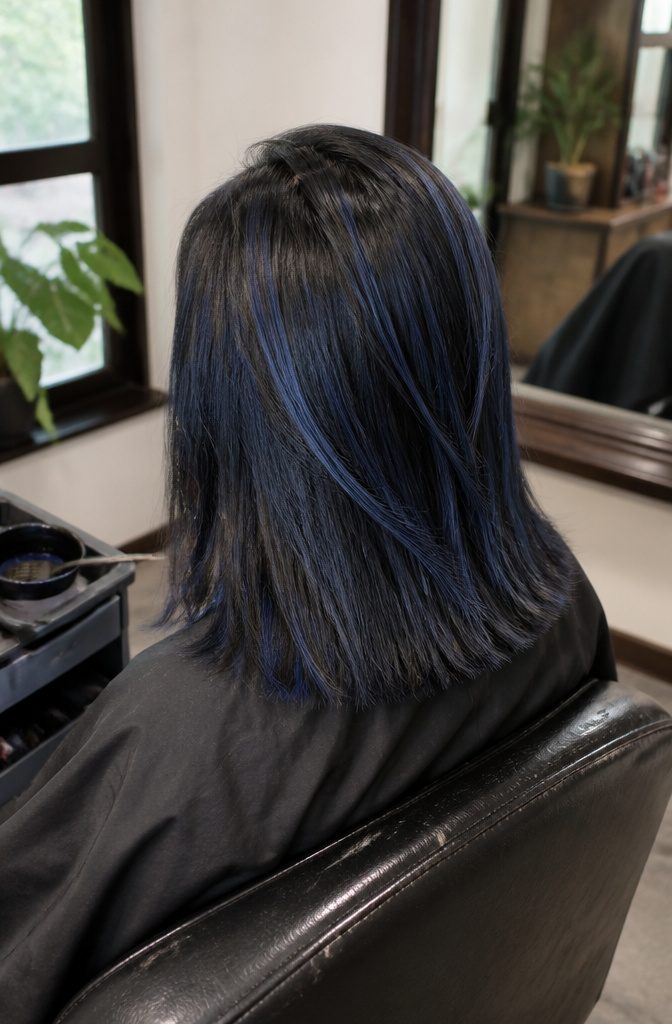
Dark blue balayage suits straight hair best, and it looks stunning cut short. If your hair is straight and sits at chin or shoulder length, this is one of the better ways to try blue without committing the whole head.
The hand-painted application is the reason to choose it.
The colorist brushes the color on in a casual, uneven pattern that adds depth and dimension to flat dark hair, and balayage uses three or more shades, so the blue shifts instead of sitting as one block.
I’d pick it over all-over blue every time: hand-painted blue reads softer, and the dark base keeps it from looking harsh.
14. Peacock Green Dip-Dye
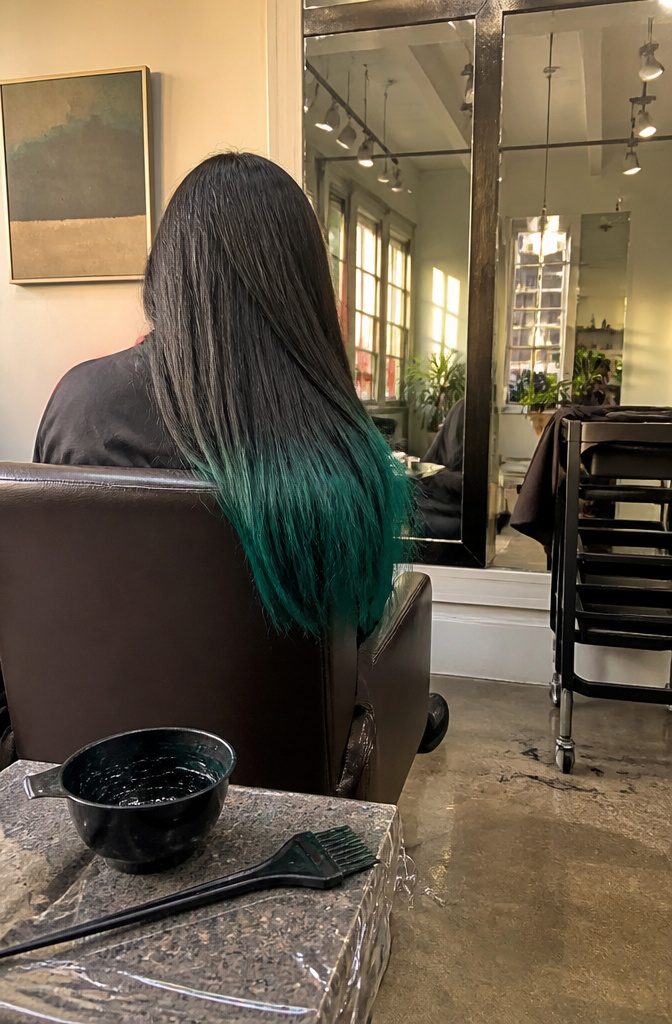
Peacock green dip-dye keeps your natural black from the roots down and then switches straight to vivid green at the ends.
There is no middle shade, which is what separates it from ombre, where one color melts into the next. On dark hair the hard line is the whole look, so I’d keep it crisp rather than feathered.
Green only reads as green on black hair once the ends are lightened. I’d pick this over all-over color: a loud, personal statement with the damage sitting in the part you can trim off later.
Settle where the line falls before you sit in the chair, since it is the only transition the style has.
15. Pastel-Pink Lowlights
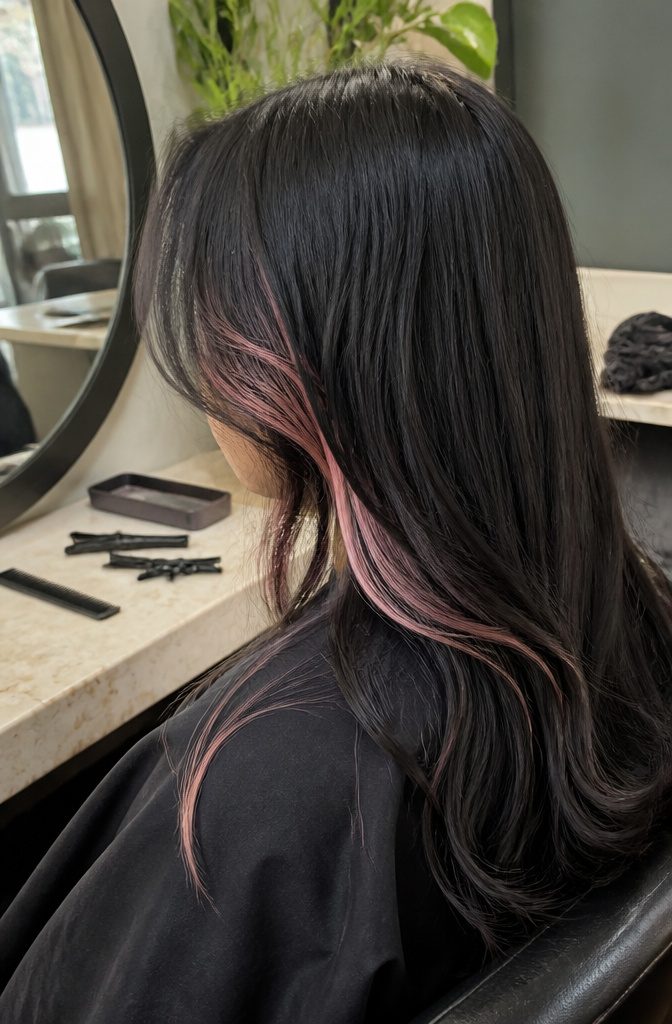
Lowlights normally add depth with darker strands, but pink adds color instead, and on black hair that makes the look louder than the name suggests.
Pastel strands read as candy-bright against a very dark base. Pastel also sits lighter than natural black, so those pieces have to be lightened first, which is where the damage risk lives.
Ask for thin pink pieces underneath or around the face, so you can tuck them away on days you want less attention.
I’d skip this look if you want color that stays put, since pastel pink softens toward dusty rose between visits.
16. Carrot-Orange Dip-Dye
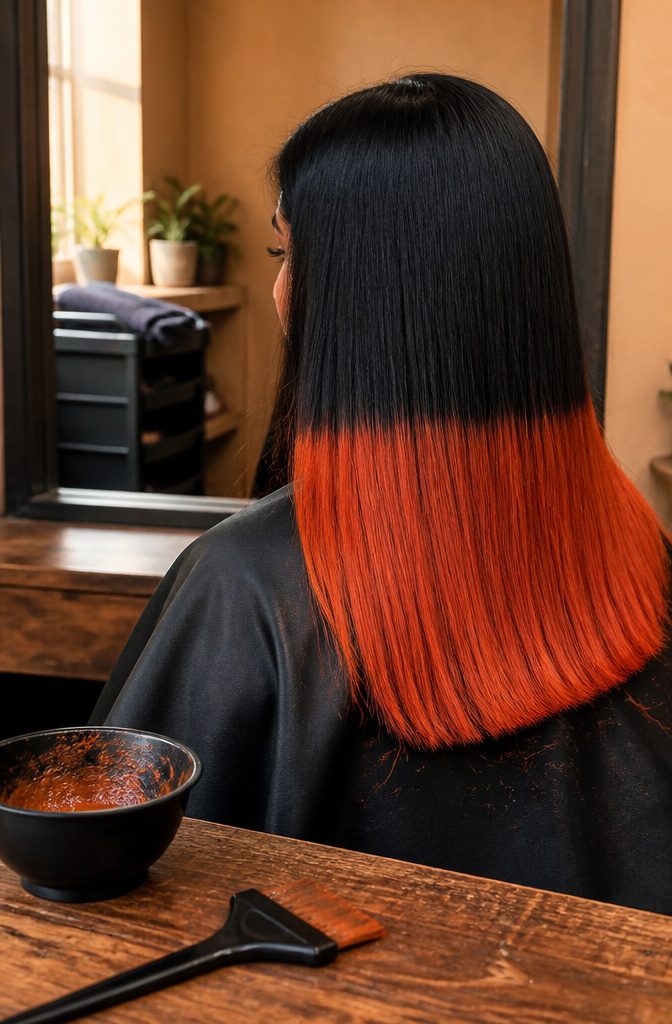
Carrot-orange dip-dye is two colors with a hard line between them and nothing in the middle.
That missing transitional shade is what separates it from ombre, which blends smoothly. Here the orange simply starts where your natural color stops.
It works on both blonde and black hair, which makes it one of the few vivid shades I’d call flexible. On black hair the contrast is loudest, because nothing softens the jump from dark to orange.
A little kohl around the eyes suits it well. Ask for a dip-dye by name, not an ombre, or you may leave with a gradient you never wanted.
17. Yellow Ombre
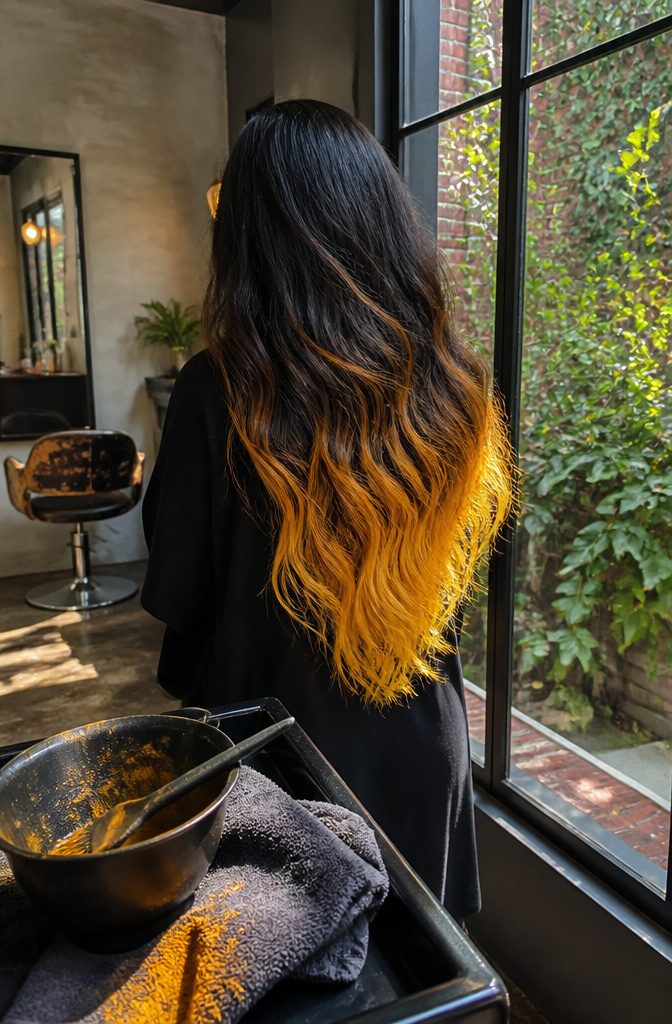
Black roots melting into bright yellow tips is the loudest take on ombre, and the middle blend shade is what makes it work.
Skip that transition color through the mid-lengths and black jumps to yellow in a hard band that reads as a mistake, not a gradient. A warm in-between like amber or golden brown lets the dark fade gradually toward the tips.
I’d choose this only if you want the color to be the main event of the look.
Yellow sits at the far end of lightening for black hair, so I would book a colorist rather than try it at home. Because the roots stay natural, there’s no regrowth line to chase.
How Balayage, Ombre, and Babylights Differ
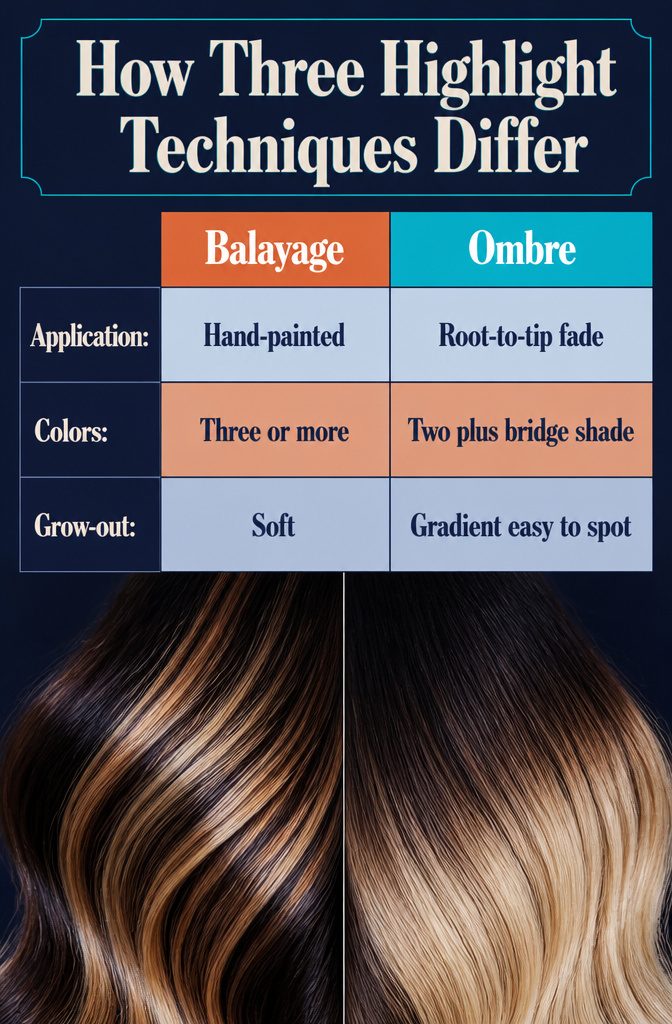
Six techniques cover most of the photos you’ll save, and they differ in how color travels down the strand.
- Balayage: Hand-painted with three or more colors for sun-kissed streaks. It grows out softly, so I’d start here if upkeep matters.
- Ombre: Dark roots fade to lighter tips, with a middle shade bridging the two. The gradient is easy to spot.
- Sombre: A softer ombre. It’s the safer pick if a bold gradient feels like too much.
- Dip-dye: Two colors with no middle shade, so the line is stark and deliberate.
- Babylights: Ultra-fine streaks that add a subtle glow without looking colored.
- Chunky highlights: Thick, statement streaks from the 2000s, now making a comeback. They work best if you want to be noticed.
Picking a Look for Your Face Shape
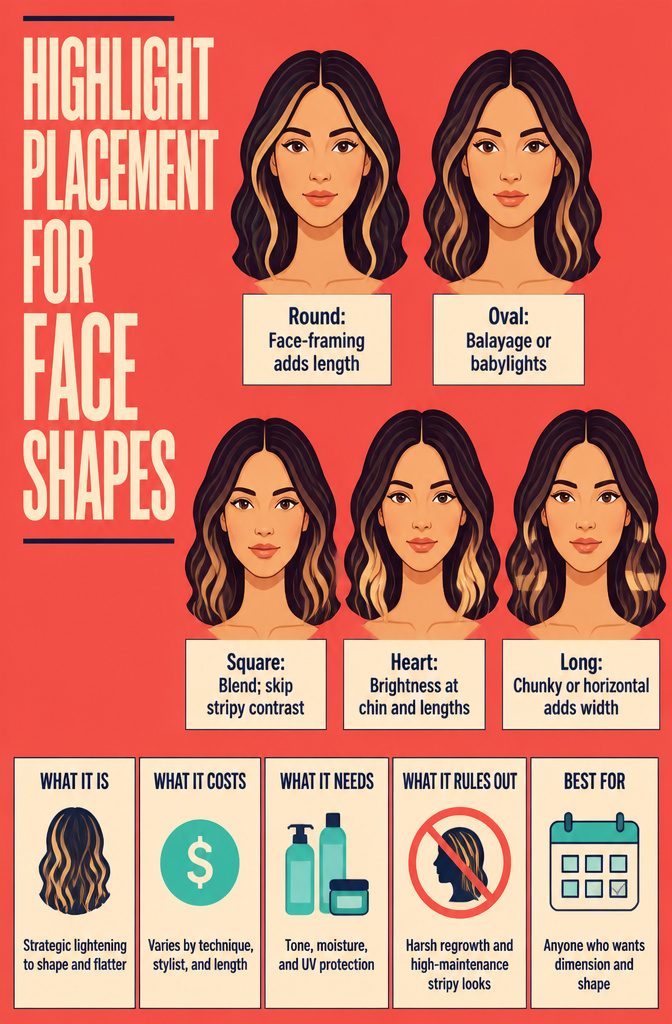
Where the lighter pieces sit changes how your face reads, so match the placement to your shape:
- Round: lighter face-framing highlights make the face look longer and slimmer.
- Oval: almost any style works, but balayage or babylights are the ones I’d ask for.
- Square: blended color like sombré or balayage softens a strong jawline. Skip hard, stripy contrast here.
- Heart-shaped: put brightness around the chin and through the lower lengths to balance a wider forehead.
- Long: chunky streaks or horizontal color placement add width and offset the length.
How Long Highlights Last and When to Touch Up
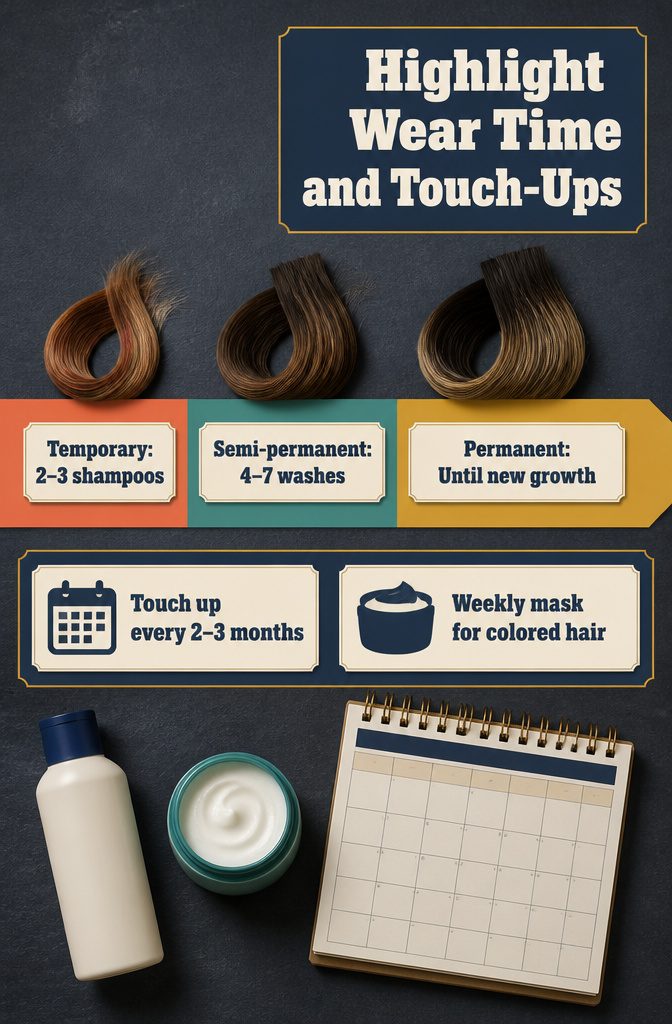
Temporary highlights wash out in 2–3 shampoos, and semi-permanent ones last 4–7 washes. Permanent highlights stay until new growth emerges, because ammonia and an oxidizer in the mix hold the color in.
That staying power is why I’d only go permanent on dark hair when you’re sure of the shade. Reversing it means more chemical damage.
For permanent color, plan a touch-up every 2–3 months to keep it looking fresh.
A weekly mask made for colored hair helps the strands hold up between visits. If you’re undecided, start semi-permanent: 4–7 washes is long enough to learn whether the shade works on your hair.
What Coloring Does to Black Hair and How to Protect It
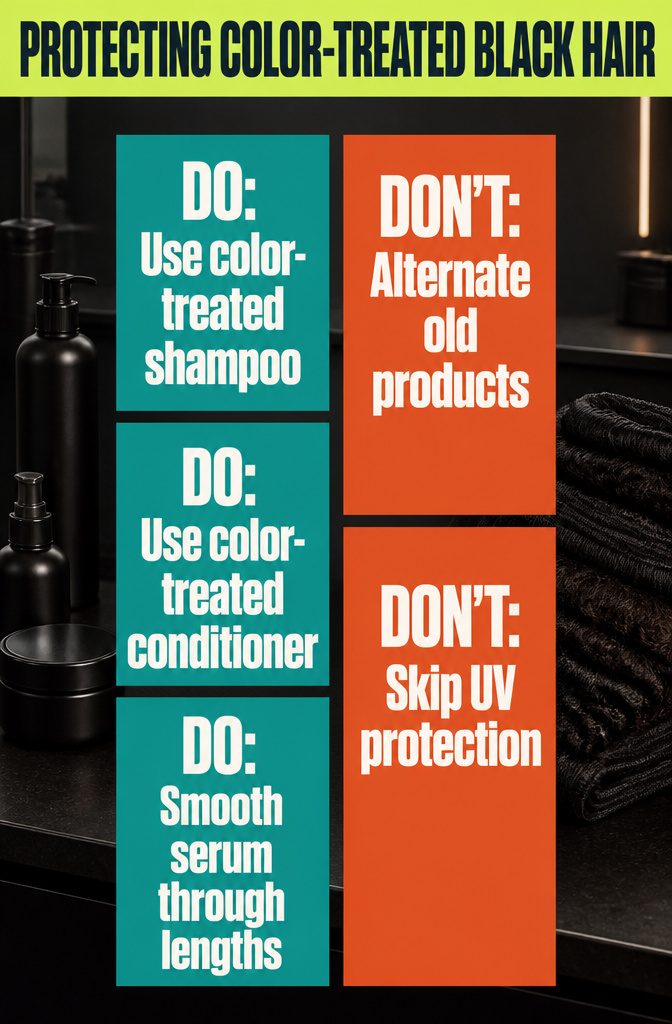
Bleach, plus the ammonia and oxidation agents in highlighting formulas, is what rough-handles dark hair. Dryness, frizz and breakage are the usual price, and they show up fastest when the lightened strands get no special care afterward.
Start by swapping your shampoo and conditioner. Use only products made for color-treated hair, and retire the old bottles rather than alternating.
I’d put a hair serum next on the list. It protects against UV rays and discoloration, so a fresh highlight stays closer to the shade you walked out of the salon with.
Smooth it through the lengths and ends, where the lightened strands are driest. Skipping both steps is the quickest way to turn a good highlight into a frizzy one.
Frequently Asked Questions
What color highlights will suit black hair?
Caramel, honey, and burgundy are the easiest places to start, because they blend into a dark base instead of sitting on top of it.
Caramel and honey are most flattering on wheatish or olive skin. If you want something bolder, plum or deep violet stays close to black and reads as depth rather than a jarring switch.
Do highlights damage your hair?
Yes, they can. Bleach, ammonia, and oxidizing agents in highlighting formulas cause dryness, frizz, and breakage, and the damage shows fastest on lightened strands that get no aftercare.
Shampoo and conditioner made for color-treated hair help, and a hair serum protects against UV rays and discoloration.
What is the difference between highlights and lowlights?
Highlights use a shade lighter than your natural color, while lowlights use a shade darker.
Highlights add brightness, and lowlights add depth and dimension. On black hair, berry red and deep auburn are popular lowlight choices because there is little room to go darker.
How long do highlights last in your hair?
It depends on the type of color.
Temporary highlights wash out in 2–3 shampoos, semi-permanent ones last 4–7 washes, and permanent highlights stay until new growth comes in. For permanent color, plan a touch-up every 2–3 months.
How much does it cost to get highlights in your hair?
In India, highlights cost anywhere from Rs 3,000 to Rs 10,000.
The price moves with the salon (big brand or local), your hair length, the colors used, and the technique. Ask your stylist for a quote after they see your hair, since all four factors apply to you.