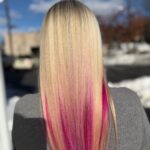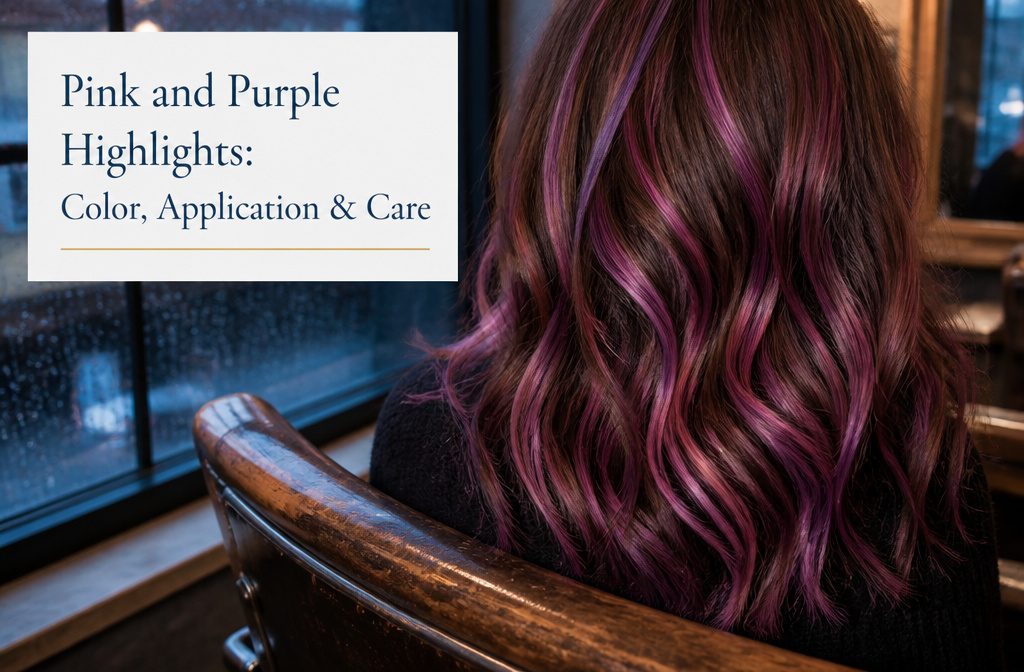
Pink and purple highlights are streaks or sections of hair lightened and toned to shades between lavender and magenta, applied through foiling or balayage.
The colors fade faster than most dyes, which means sulfate-free shampoo and cool water matter from the first wash.
Pastels show up cleanest on blonde or light brown bases; darker hair holds the tones as jewel colors rather than soft washes.
What Pink and Purple Highlights Look Like Together
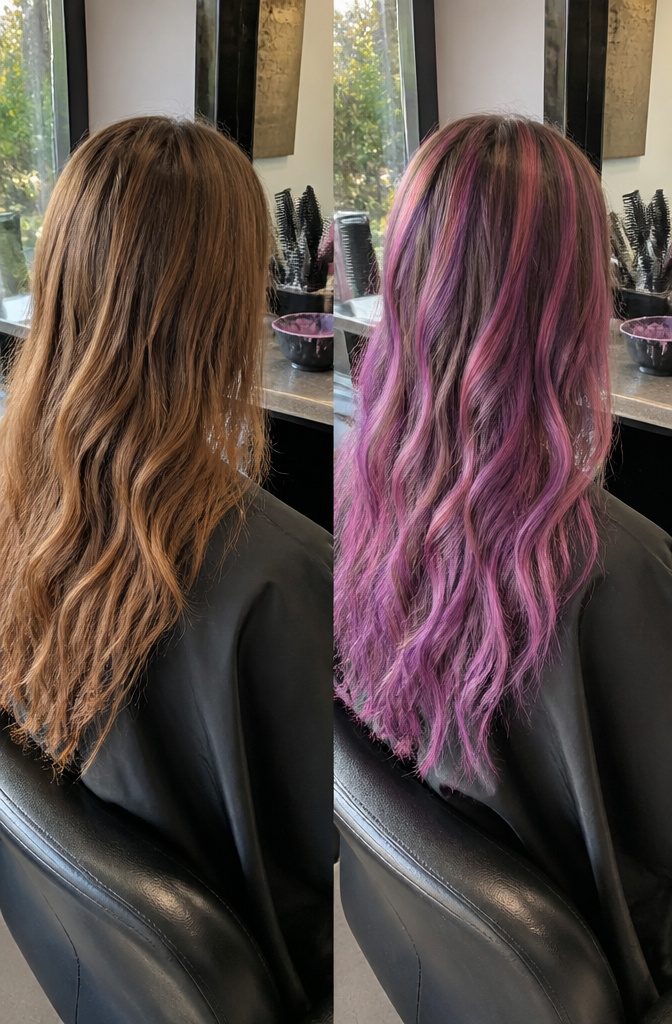
Pink and purple highlights are exactly what they sound like: sections of hair lifted and toned to sit somewhere on the spectrum between soft lavender and hot magenta.
The colors add dimension and flair without requiring a full head of bleach, and the effect changes depending on how saturated you go.
Soft pastel gradients read subtle in most light and catch when the sun hits them. Vivid contrasting hues announce themselves the moment you walk in.
Both work on all hair types and lengths, though the pastel route shows up more clearly on lighter bases and the vivid shades can punch through darker hair with enough lift.
The combination itself tends to photograph well because the cool tones sit close enough to blend but far enough apart to create contrast when the light shifts.
Choosing Shades That Work With Your Base Color
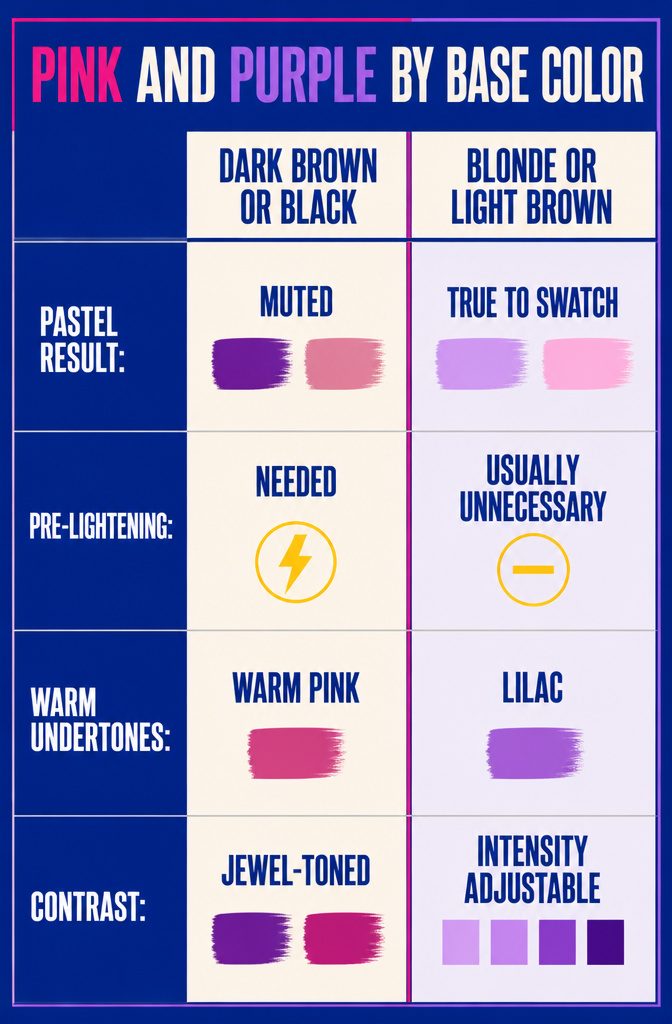
The base color you start with decides how pink and purple will read once they’re in. On dark brown or black hair, the highlights stay jewel-toned and dimensional rather than pastel, because the underlying pigment shows through.
If you want soft lavender or baby pink, you’ll need to lift the strand lighter first, which means pre-lightening before the color goes on.
On blonde or light brown hair, pastels show up true to the swatch, and you have more control over intensity.
Contrast matters as much as the shade itself.
A cool-toned purple on warm caramel hair reads as a deliberate clash, which works if that’s the look you’re after. A warmer magenta or raspberry pink blends more softly with golden or auburn bases.
If your natural color has red or orange undertones, leaning into warm pinks keeps the highlights from looking muddy. Cooler bases take violet and lilac more cleanly.
Boldness versus subtlety comes down to saturation and placement. A few face-framing streaks in bright fuchsia will announce themselves; lowlights in dusty mauve woven through darker hair show up mainly in direct light.
If you’re unsure how much contrast you want, ask your colorist to test a strand where it won’t dominate if it reads louder than expected.
How the Highlights Are Applied
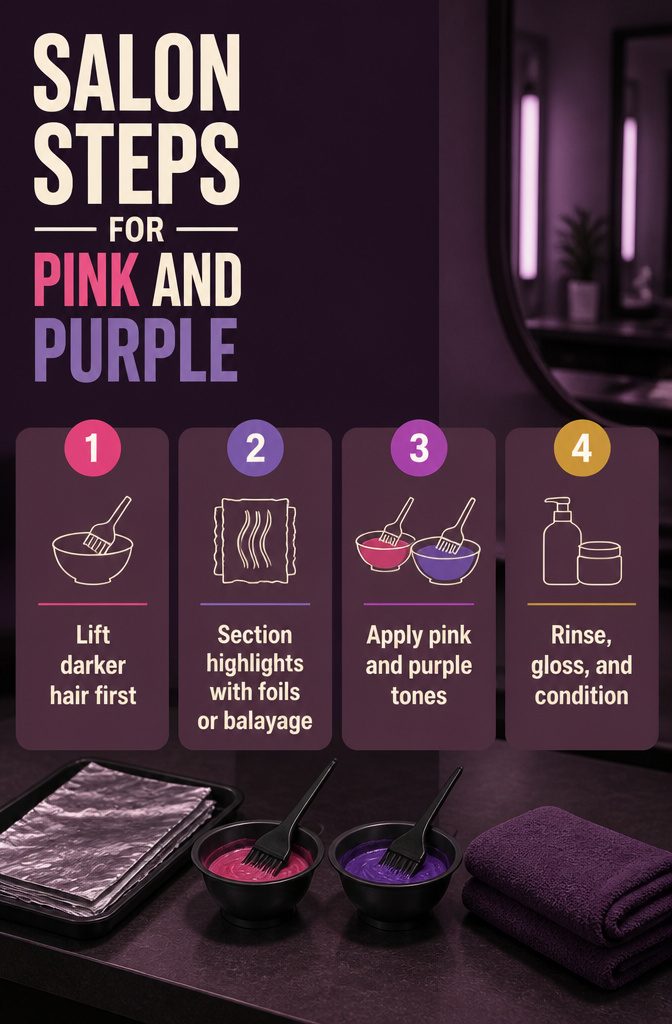
Most salons lift the hair first if you’re starting from a darker base, then apply the pink and purple tones while the hair is still damp.
The colorist sections out pieces for highlights using foils or freehand balayage, depending on the pattern you want. Foils give sharper, more controlled placement and let the stylist apply different shades to different sections without them bleeding together.
Balayage sweeps the color on in a softer pattern and works well if you want the pink and purple to blend at the edges rather than sit in distinct stripes.
Processing time runs anywhere from twenty to forty-five minutes once the color goes on, longer if your hair needs more lift or if the stylist is layering multiple shades.
Some colorists apply the pink first, rinse it, then go back in with purple on different sections.
Others mix custom shades and apply everything in one session. The approach depends on how vivid you want the result and how much your natural pigment will interfere.
After rinsing, most stylists tone or gloss the highlights to even out the color and add shine, then condition heavily since the lifting process opens up the cuticle. The whole appointment typically takes two to four hours.
Aftercare That Keeps the Color Bright
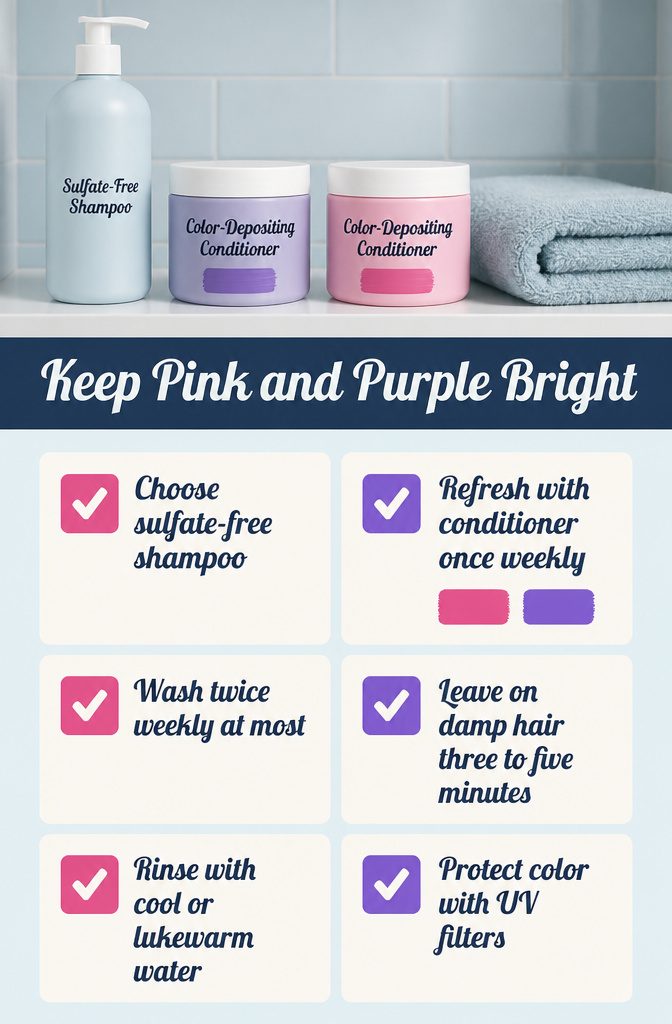
Pink and purple fade faster than most colors, and keeping them bright means working against every habit that strips dye.
Sulfate-free shampoo is the baseline—sulfates strip color in a handful of washes—and washing in cool or lukewarm water slows fading where hot water opens the cuticle and lets pigment slip out.
I wash these colors twice a week at most, and dry shampoo covers the gap.
Color-depositing conditioner adds pigment back between salon visits:
- Use it once a week to refresh tone without a full reapplication
- Purple conditioner keeps purple crisp; pink conditioner holds pink
- Leave it on damp hair for three to five minutes, then rinse cool
- Overtone, Celeb Luxury and Keracolor make versions that actually deposit color rather than tint the water
UV protection matters. Sun fades pink and purple faster than it fades brown or blonde, so a leave-in with UV filters or a hair sunscreen keeps the color from washing out to pale peach or dull lavender by mid-summer.
Frequently Asked Questions
Can purple and pink go together?
Yes, purple and pink work together because the cool tones sit close enough to blend but far enough apart to create contrast when light shifts.
The combination adds dimension without requiring a full head of bleach, and the effect changes based on saturation. Pastel gradients read subtle in most light while vivid hues announce themselves immediately.
What skin tone looks best with pink hair?
Cooler skin tones take violet and lilac more cleanly, while warmer magenta or raspberry pink blends softly with golden or auburn bases.
If your natural color has red or orange undertones, leaning into warm pinks keeps highlights from looking muddy. Contrast matters as much as the shade itself, so test a strand where it won’t dominate if it reads louder than expected.
How to do purple highlights on dark hair?
Most salons lift the hair first using foils or freehand balayage, then apply the purple tone while the hair is still damp.
On dark brown or black hair, highlights stay jewel-toned and dimensional rather than pastel because the underlying pigment shows through. Processing takes 20 to 45 minutes once color goes on, and the whole appointment typically runs 2 to 4 hours.