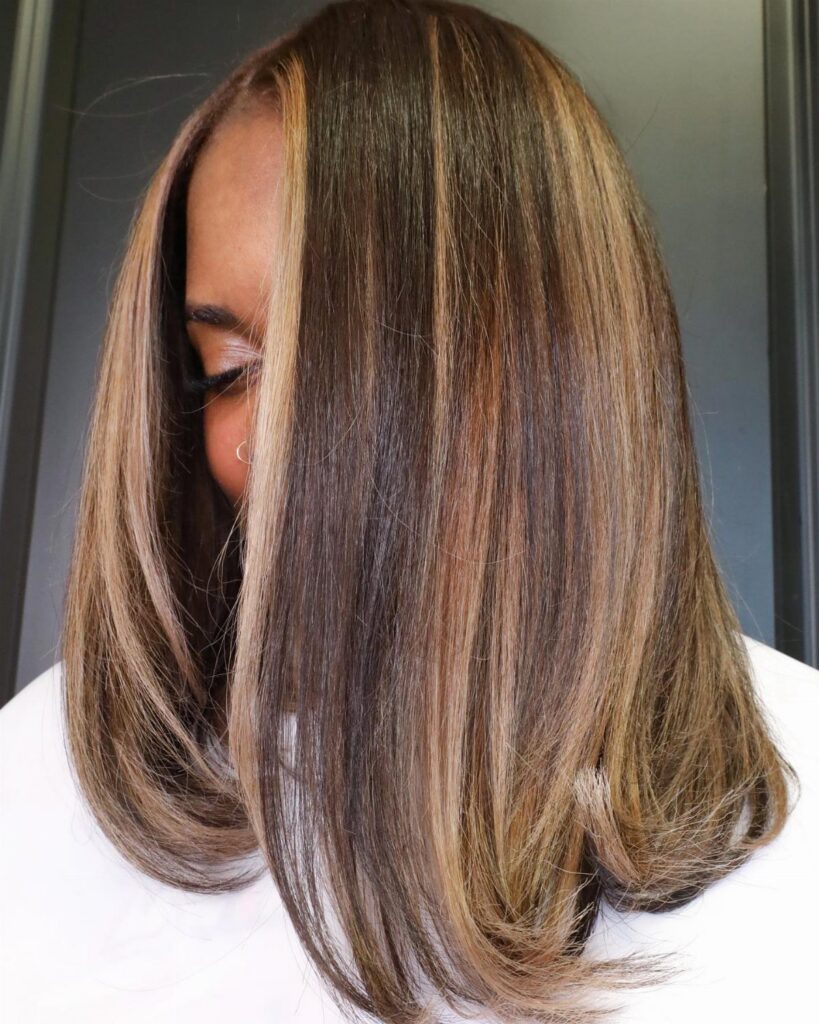
Balayage on dark hair can mean anything from caramel ribbons one shade lighter than your natural brown to ash blonde ends that take 2 sessions to lift without damage.
The choice comes down to how much lighter you’re willing to go and how often you want to book touch-ups: warm tones like honey and toffee need less maintenance than ash or teal, which fade faster and require color-depositing shampoo at home.
If your base is black and you want visible blonde, expect your colorist to space it across 2 appointments so the lift stays clean instead of turning muddy.
1. Dark Blonde Balayage
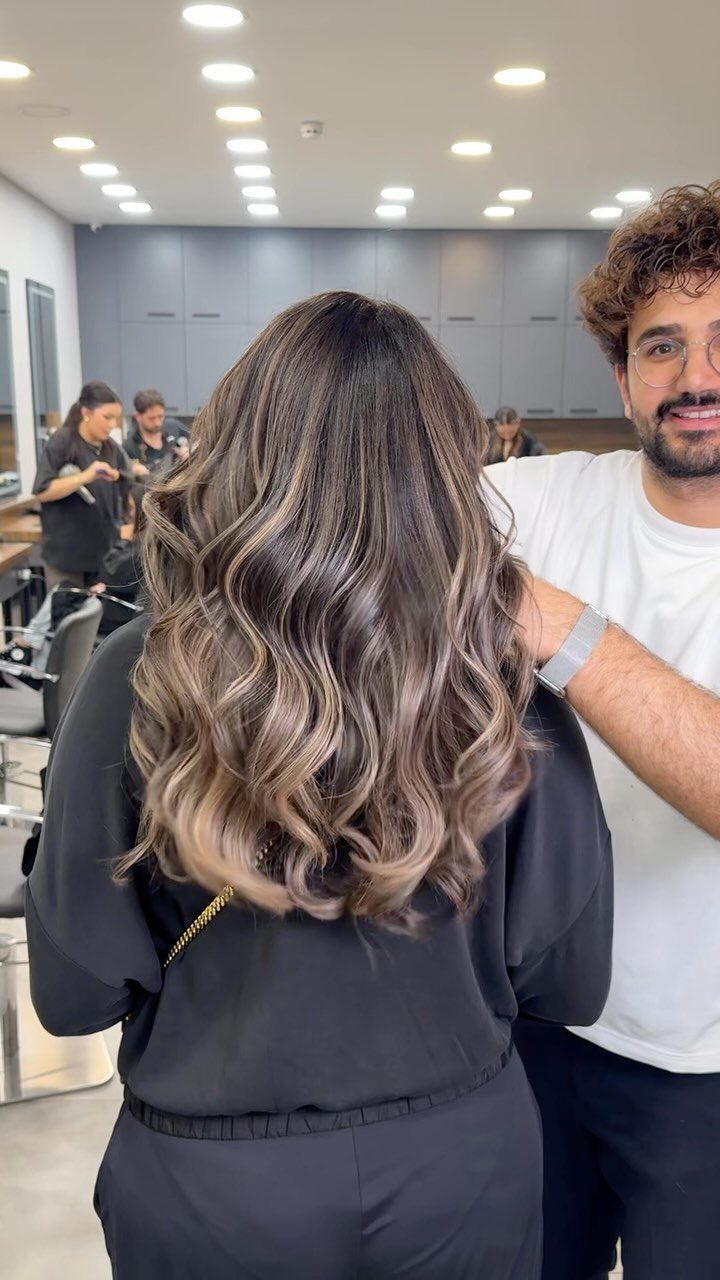
Dark roots fade into blonde lengths, keeping the base natural while the rest lifts several shades lighter. That blend means regrowth is less obvious, so you can stretch appointments to 12 or 16 weeks instead of 6.
Ask for hand-painted highlights concentrated midlengths down, heaviest at the ends.
Starting from medium brown, expect a warm honey blonde; darker roots can pull cooler or ashier depending on what your colorist lifts to. The placement reads softer than foil highlights because there’s no hard line where color starts.
2. Caramel Highlights in Loose Waves
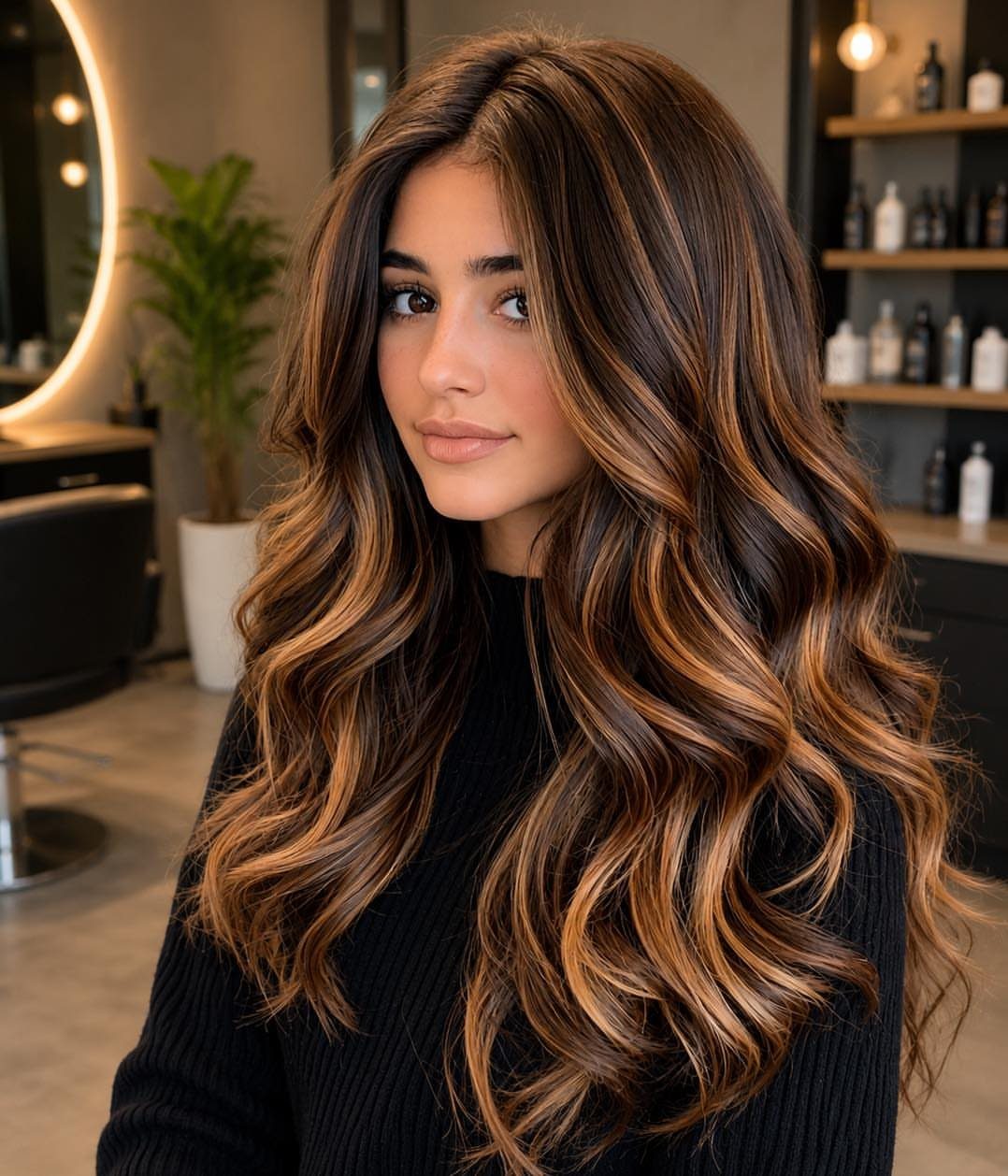
Caramel sits between golden and brown, so it lifts dark hair without reading blonde. The warmth shows most in natural or indoor light, where it reads as depth rather than contrast.
Placement matters here. Ribbons that start a few inches from the root and thicken toward the ends will blend better than pieces painted all the way to the scalp.
If your hair pulls red or orange when it oxidizes, mention that before your colorist mixes, caramel can tip brassy on the wrong base.
Loose waves make the color more visible than flat-ironed hair. A curling iron or wand will give you that shape at home without much time spent.
3. Ash Blonde Highlights
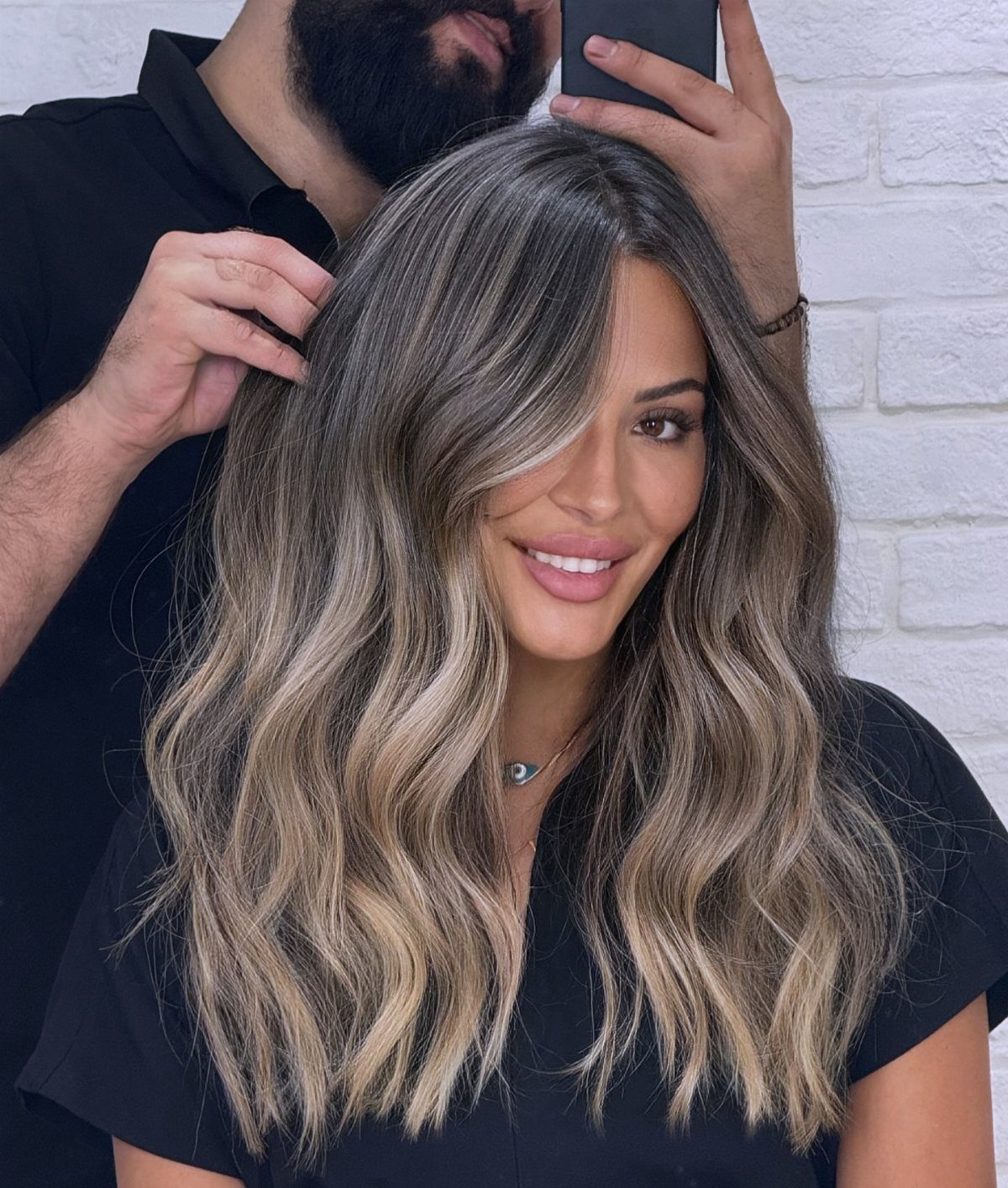
Ash blonde keeps the lift cool, so the highlights read neutral or slightly silver instead of warm or brassy.
That makes it a better fit if your skin tone leans cool or if you don’t want the golden result most dark-to-blonde balayage gives.
Getting there usually takes two sessions when you start from dark brown or black, because lifting that much pigment in one go can turn the blonde muddy or orange.
Your colorist will tone the lifted sections violet or blue to cancel warmth, and you’ll need purple shampoo at home to keep it from shifting yellow between appointments.
4. Blonde Face-Framing Highlights
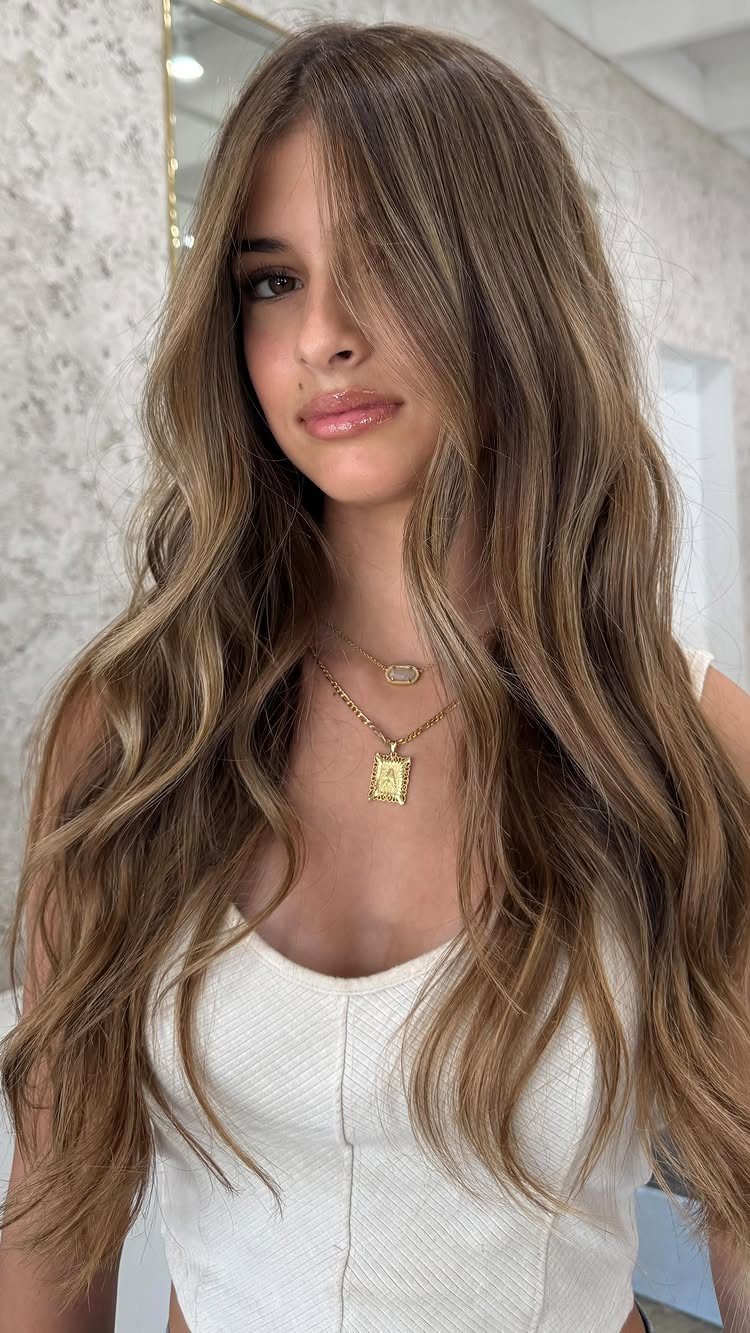
Blonde pieces frame the face while the rest of the hair stays darker and mostly untouched. That gives you brightness where it catches light and draws the eye without the time or upkeep of full balayage.
The technique is similar to a money piece, but the highlights are wider and blend further back from the hairline.
Your colorist paints freehand around the front sections and may feather a few pieces through the top layer so the transition doesn’t look striped.
If your natural base is dark brown, expect 2 or 3 shades of lift; black hair may need a second session to get there without damage.
Touch-ups can wait, and you can let it grow without a harsh line showing.
5. Warm Brown Highlights in Loose Curls
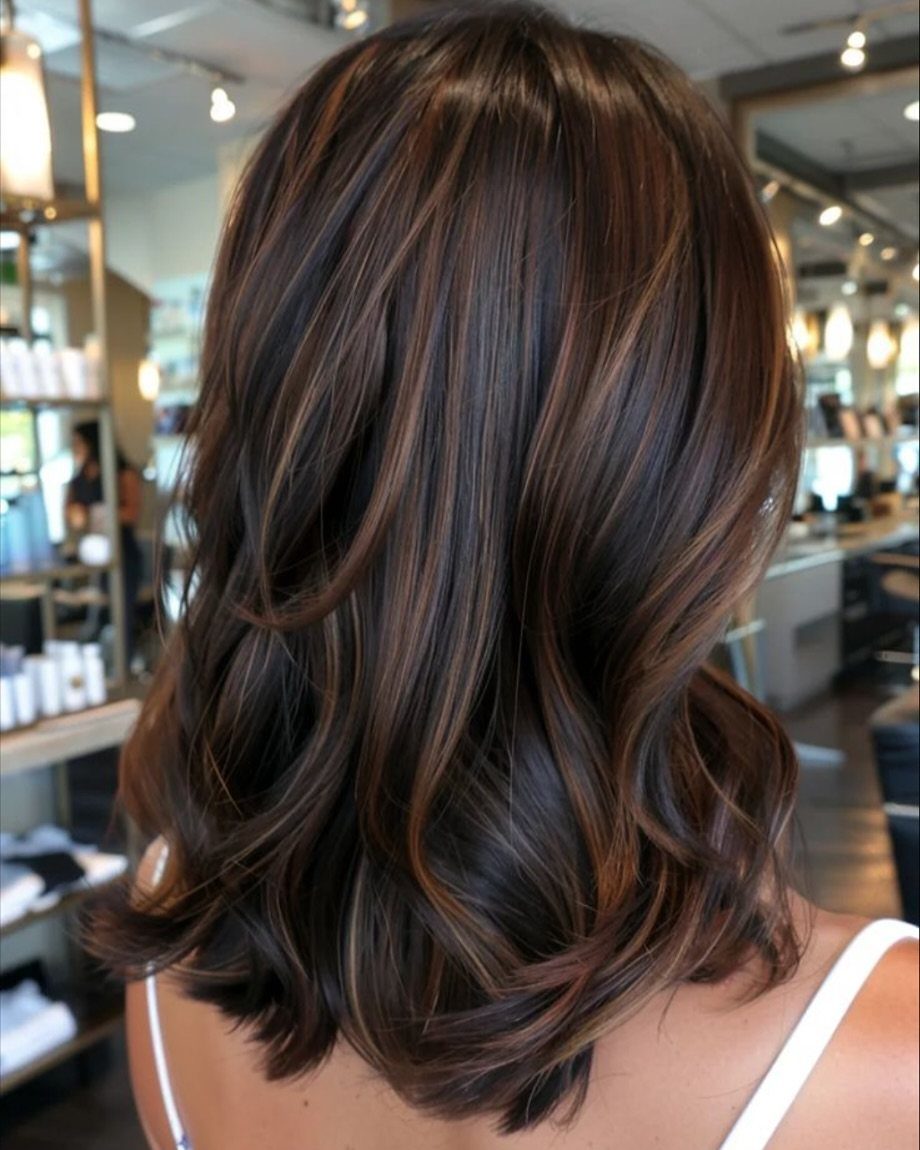
Lighter brown ribbons add movement to a dark brunette base without changing the overall tone. The lift is subtle, usually one or two shades, so the color reads as depth rather than contrast.
This works well if you want dimension but don’t want to commit to blonde or spend the money on heavy lightening.
Your colorist will hand-paint fine sections through the midlengths and ends, leaving the root area untouched so regrowth blends naturally.
Curls or waves make the highlights more visible than straight hair, and the warmth in the brown keeps it from reading flat under indoor light.
6. Chocolate and Toffee Balayage
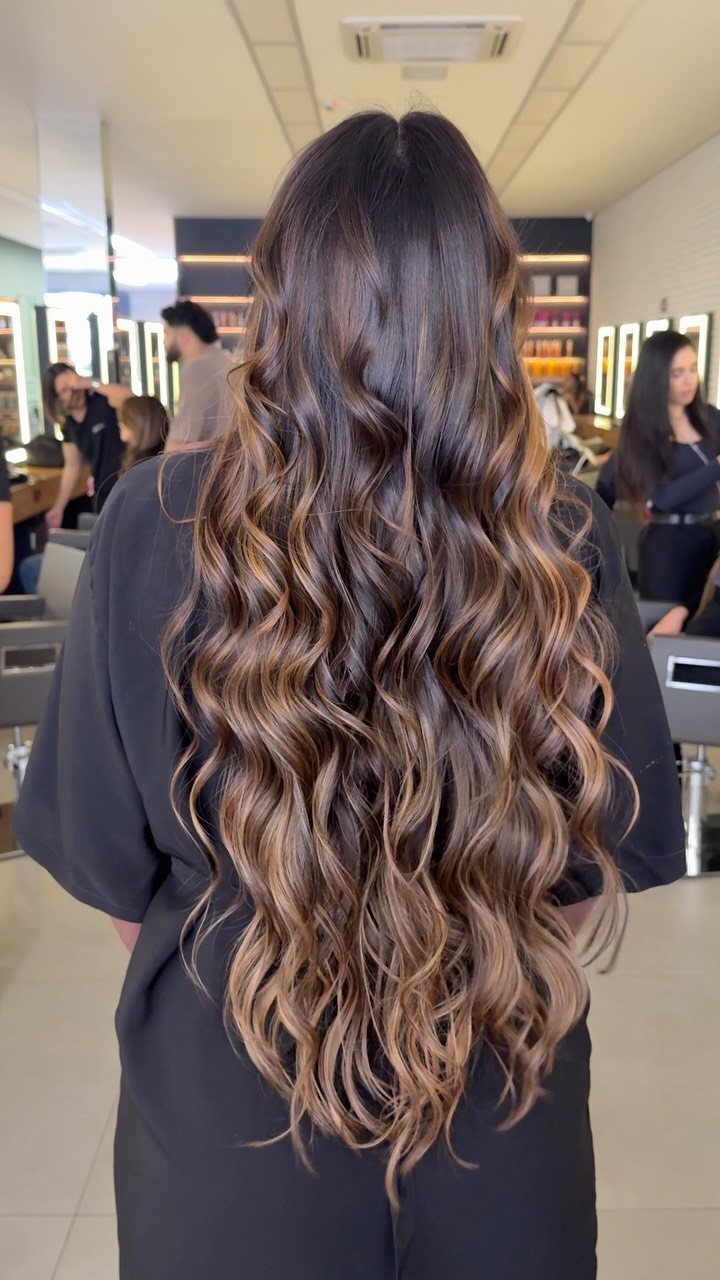
Chocolate base with toffee highlights gives you warmth and dimension without lifting more than 2 or 3 shades. The blend is soft because the tones sit close together, so you get movement without obvious contrast.
The colorist paints the lighter pieces through the midlengths and ends, heaviest at the tips, and leaves the root area darker.
If your hair is naturally dark brown, this is one of the easier balayage techniques to maintain because the base doesn’t need to be lifted first.
7. Bronze Ribbons with Taupe
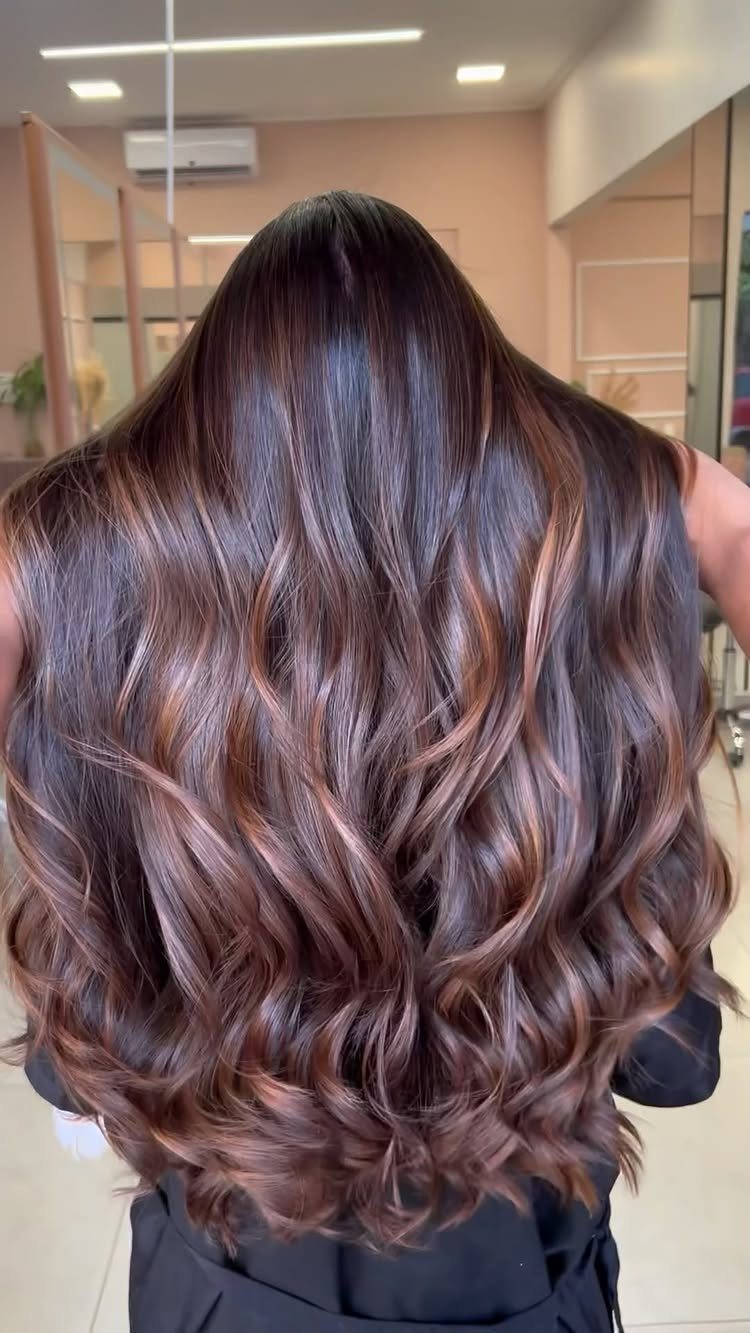
Bronze sits warmer than caramel but cooler than copper, so it lifts a dark base without reading too red or too golden. The taupe tones it down further, keeping the overall result neutral enough to wear year-round.
If your hair oxidizes warm, ask your colorist to add a taupe or mushroom tone to balance it. The color stays visible in curls or waves, less so when hair is straight.
8. Auburn Chocolate Bob
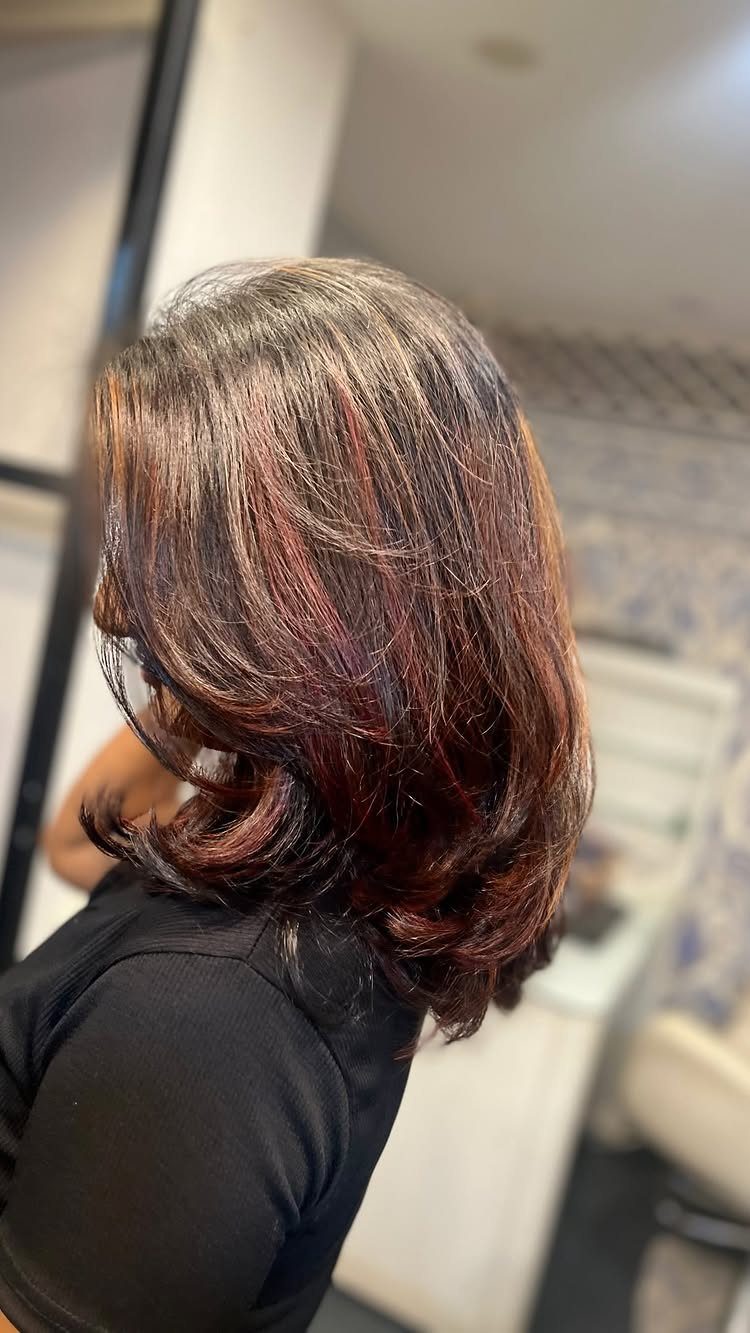
Auburn adds red-brown warmth to a chocolate base without full coverage color.
A layered bob shows the color better than one-length hair because the shorter pieces catch more light.
The choppy angled cut also gives movement, so the auburn ribbons shift as you turn your head. If you’re growing out a shorter cut, this blends well because the darker root area stays untouched.
9. Light Ash Brown Midshaft-to-End Highlights
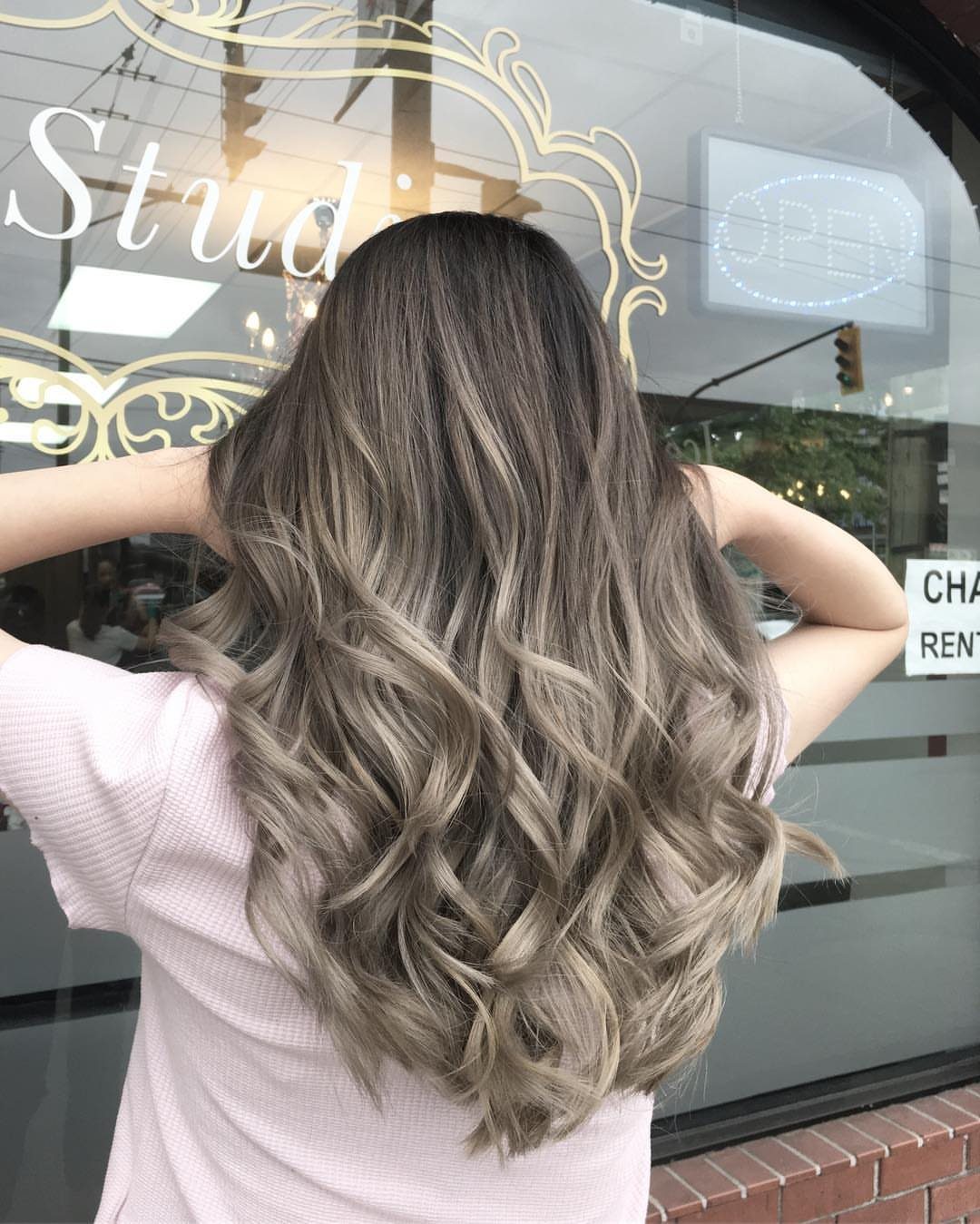
Starting the highlights midshaft instead of at the root keeps the look softer than traditional ombre, which can read blocky when the base is black.
The ash tone lifts cool, so the result stays neutral instead of pulling brassy or orange.
The midshaft start means regrowth blends naturally, so you can go longer between appointments.
10. Caramel Blonde Ends
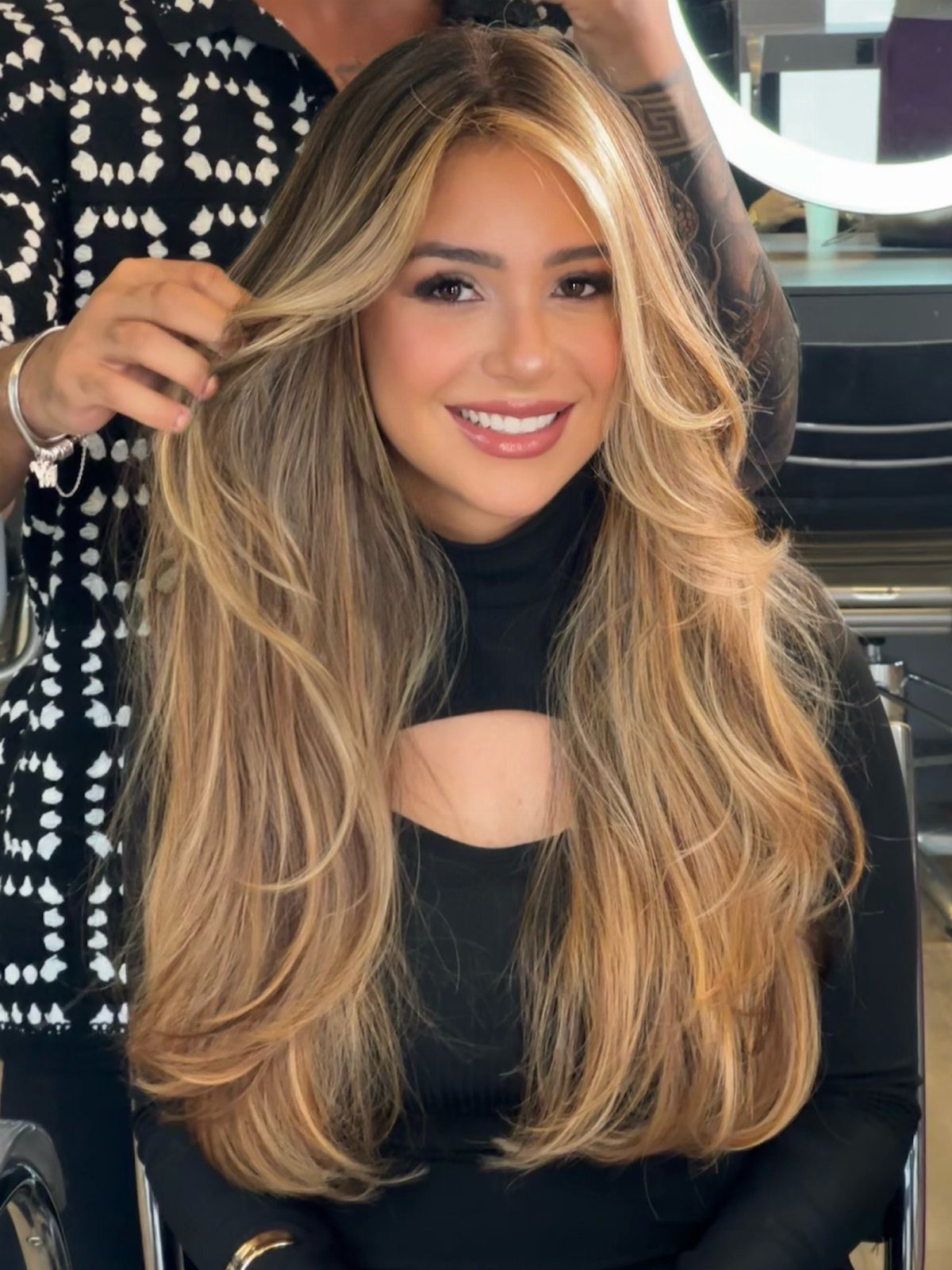
Caramel transitions into lighter blonde at the ends, giving you warmth through the midlengths and brightness at the tips. The blend reads gradual because the caramel sits between the dark base and the blonde, so there’s no abrupt shift.
Starting from dark brown, expect the caramel to land a few shades lighter and the ends to lift close to honey blonde.
The colorist paints heavier at the bottom and feathers the caramel up so the transition stays smooth. If your hair pulls orange, mention that before your appointment so the blonde can be toned cooler to balance it.
11. Burgundy Brown Highlights
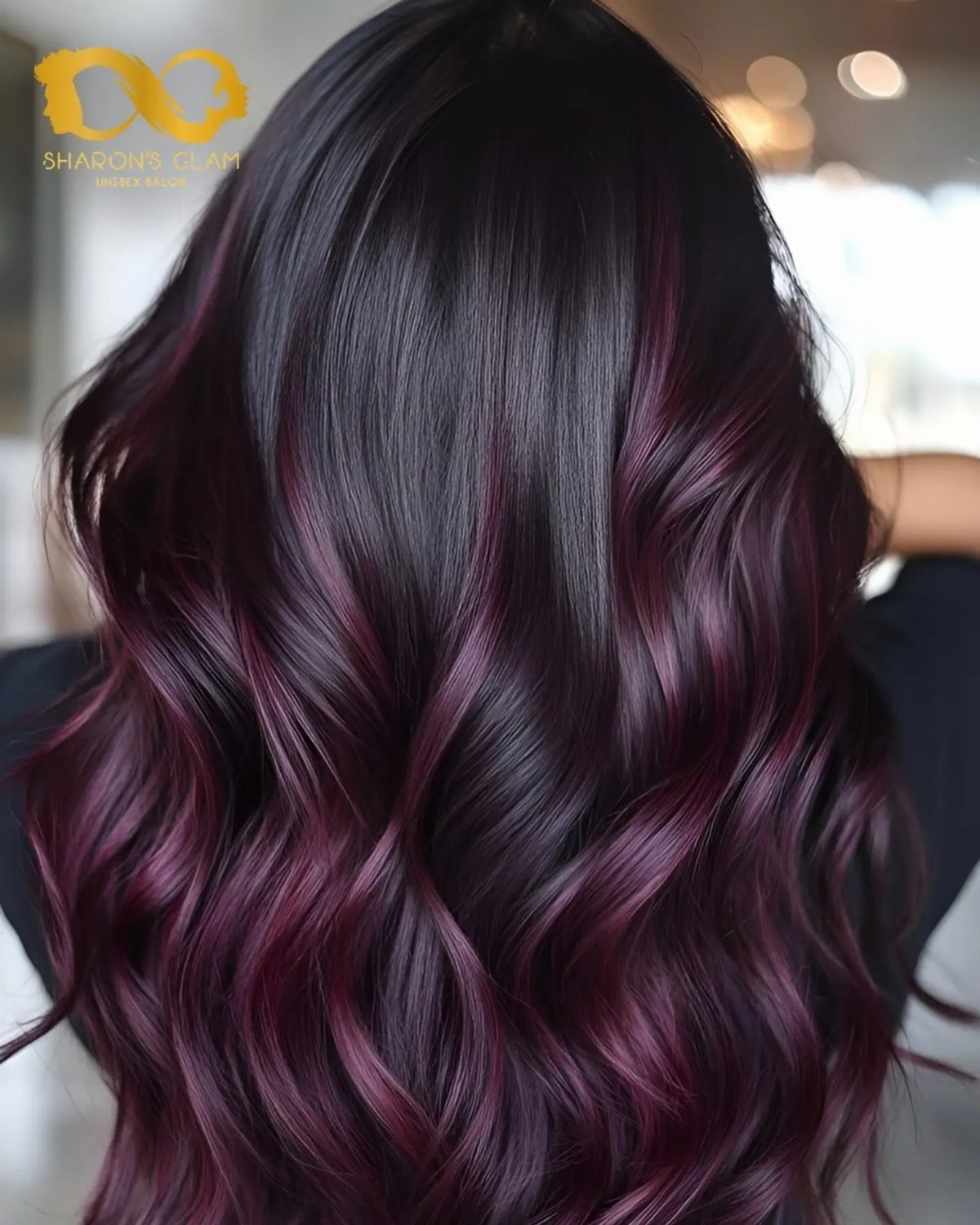
Burgundy-brown adds color without much lift, so it works well on near-black hair that doesn’t need to go lighter.
Because the burgundy is close to your natural base, regrowth blends easily and you can go longer between appointments. If you want the red to stay visible, avoid clarifying shampoos, they’ll strip the tone faster than sulfate-free formulas.
12. Honey Blonde Melt
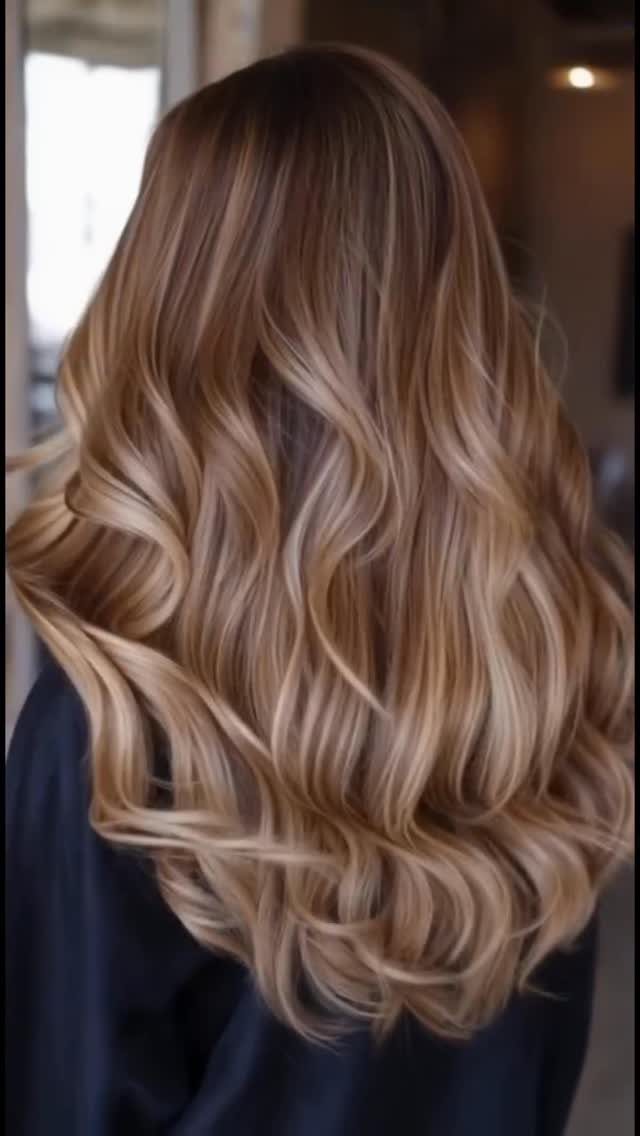
Honey blonde melts from dark roots to warm ends, giving you a gradual lift that reads natural rather than striped. The warmth keeps the blonde from looking too cool or ashy, so it suits most skin tones without extra toning.
13. Honey Blonde Money Piece
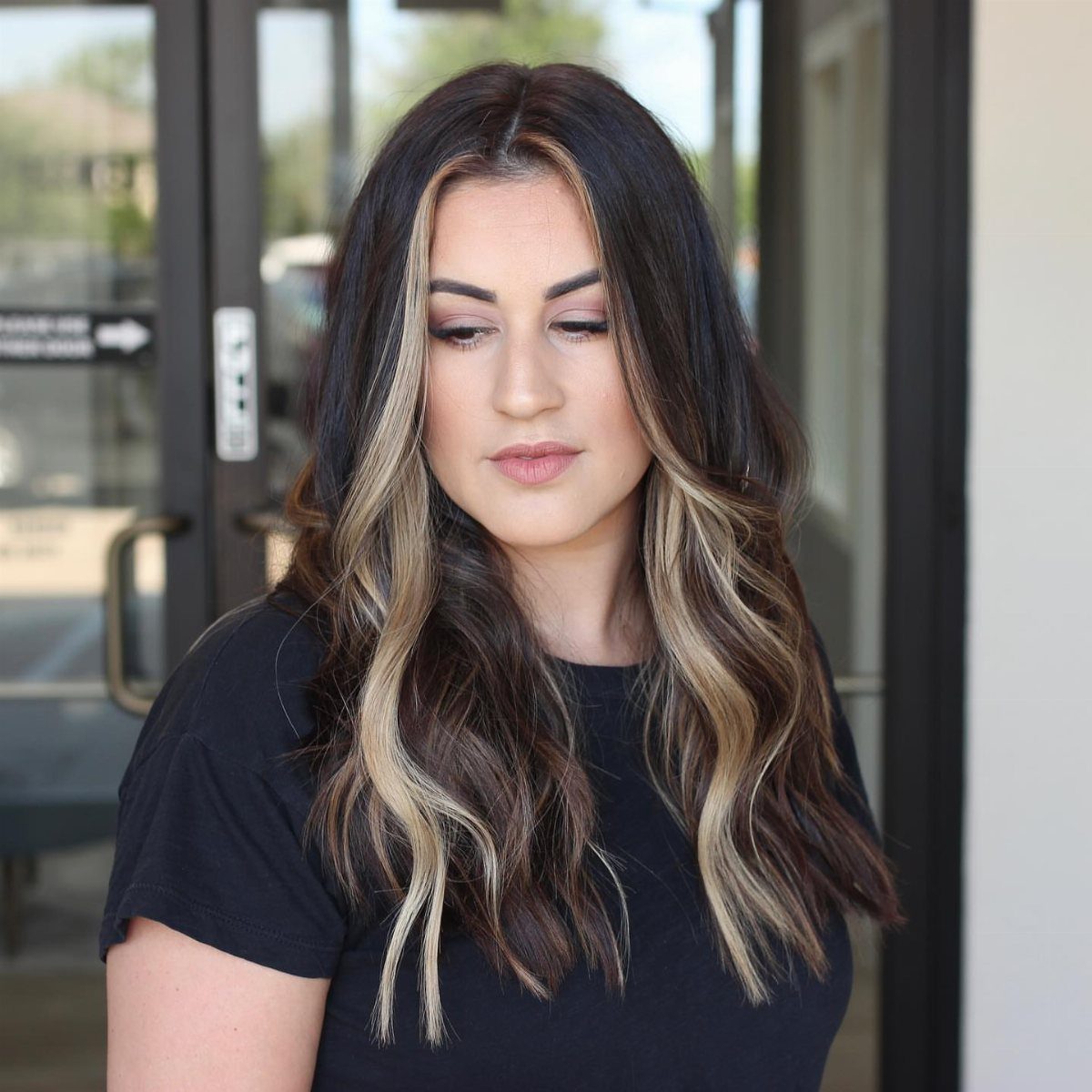
Honey blonde pieces frame the front sections while the rest stays dark, so you get brightness around your face without lifting the whole head.
The placement is narrower than full face-framing highlights, usually just the front two or three sections on each side, which keeps the appointment shorter and the cost lower.
14. Toffee Face Framing
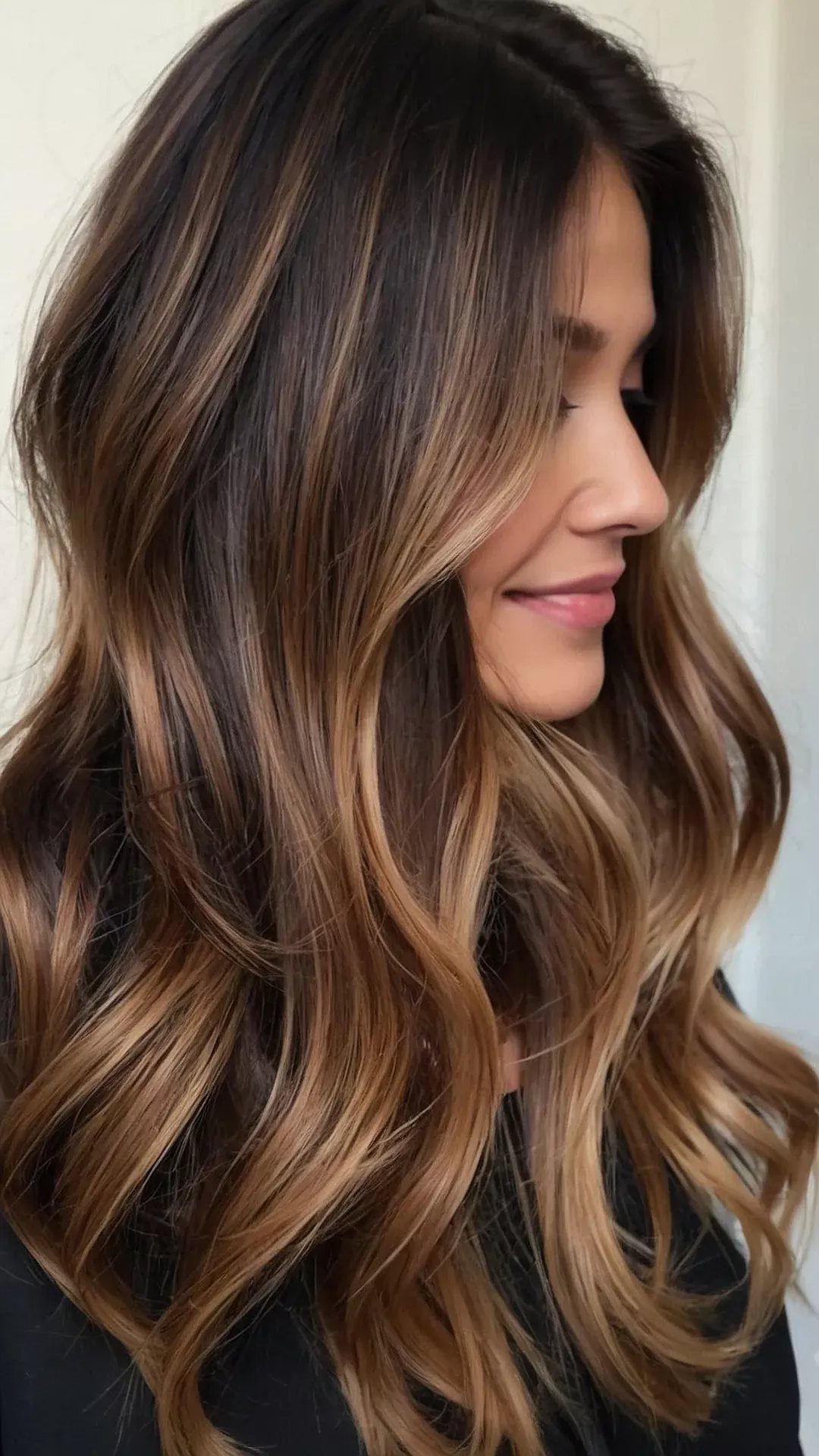
Toffee lifts just enough to add warmth without reading blonde, so the highlights stay subtle and blend easily with a dark brown base.
The pieces are painted around the face and through the top layer, thickest at the ends where they catch the most light.
15. Fiery Red Ribbons
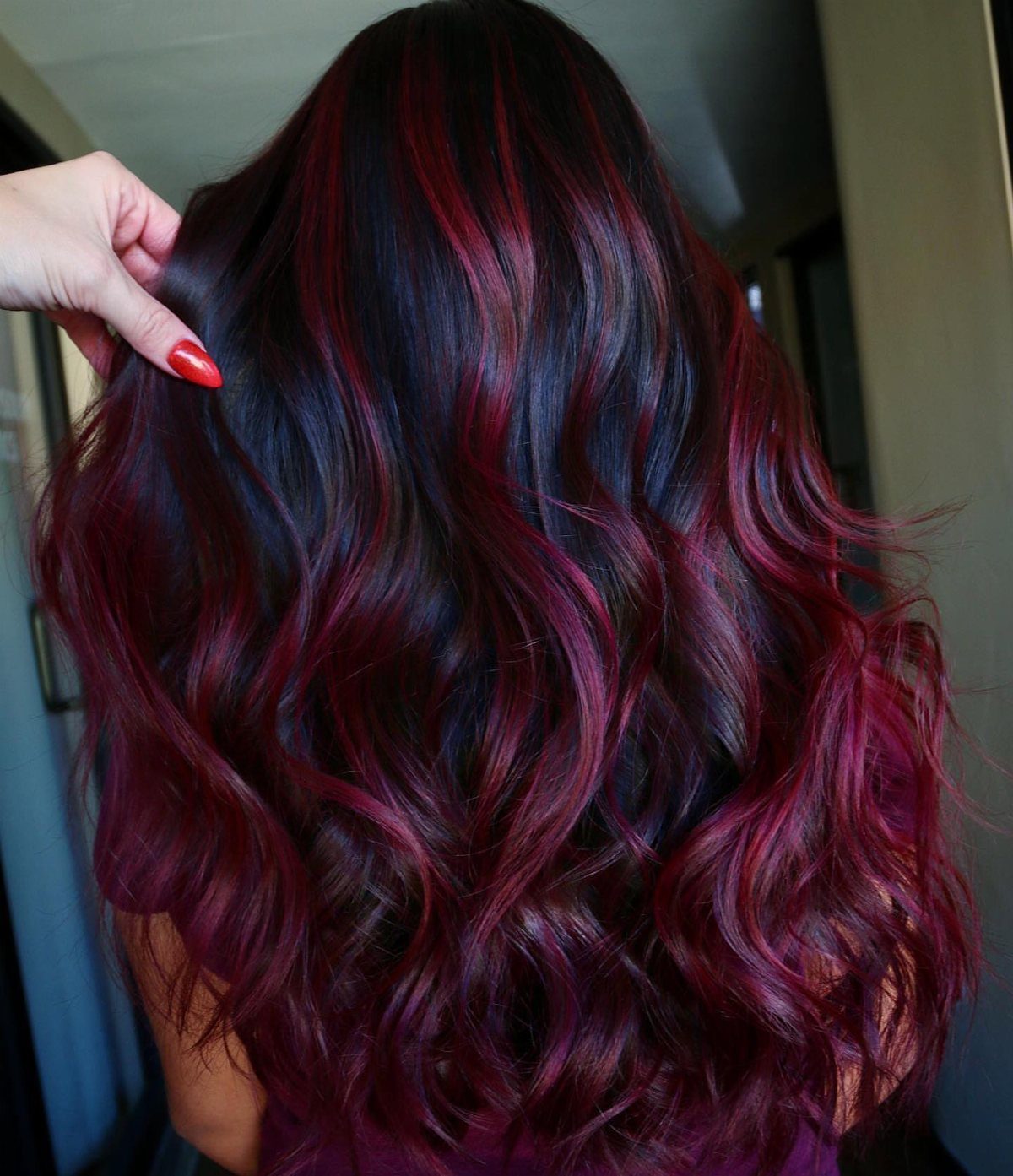
Bright red ribbons stand out against a dark base without needing much lift, so the color can be applied as a gloss or semi-permanent instead of bleach and tone.
The red fades faster than natural balayage, so plan for more frequent touch-ups if you want the brightness to stay.
Wavy hair makes the ribbons more visible than straight hair. If your base is black, the red will read darker and closer to burgundy unless the sections are lifted first.
16. Sandy Blonde Ribbons
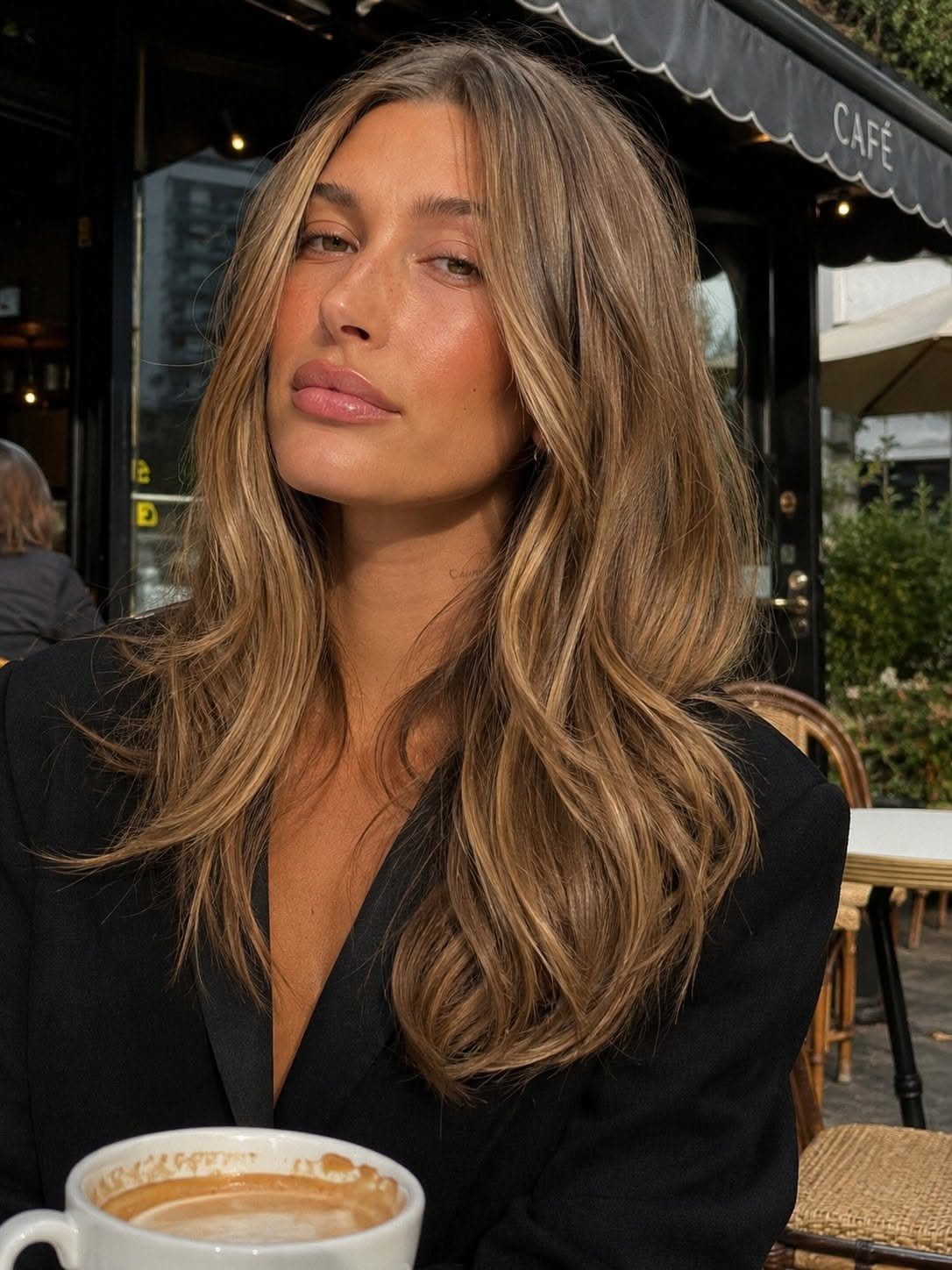
Sandy blonde ribbons lift cool, so the result stays neutral and doesn’t pull brassy or orange. The pieces are painted through the midlengths and ends, leaving the root area untouched so regrowth blends without a hard line.
If your hair oxidizes warm, ask your colorist to tone it ash or beige to keep the sandy result. The blonde shows best in natural light and sits a few shades lighter than the espresso base.
17. Charcoal Lavender
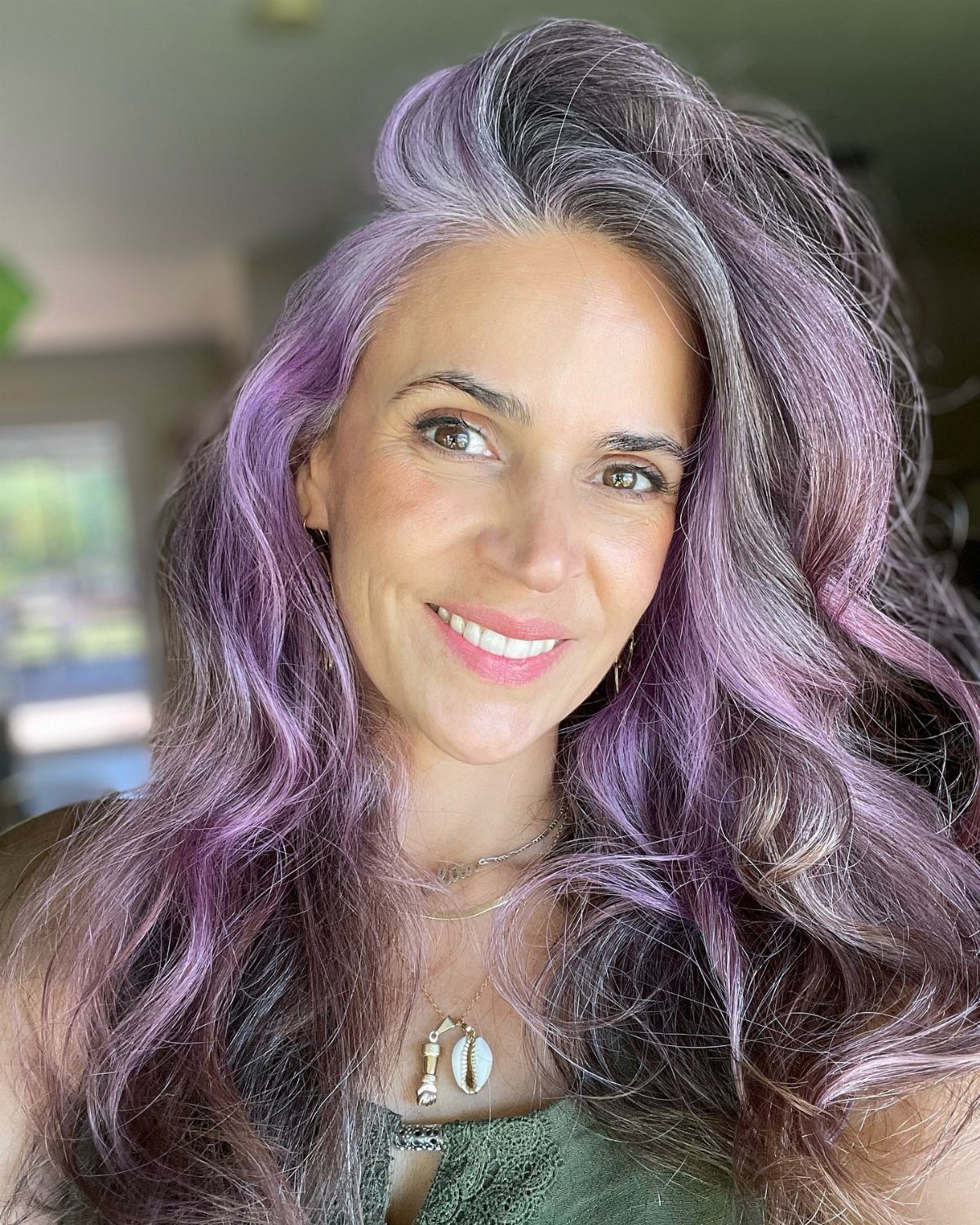
Lavender sits over a charcoal base, giving you visible color without a full bleach. The lavender is applied as a toner or gloss on lifted sections, so the charcoal stays dark and the purple reads soft rather than neon.
The color fades to silver or ice blonde after a few washes, so you’ll need a purple shampoo to keep the tone from going flat.
If you want the lavender to stay visible longer, ask for a semi-permanent color instead of a toner.
18. Blue Balayage
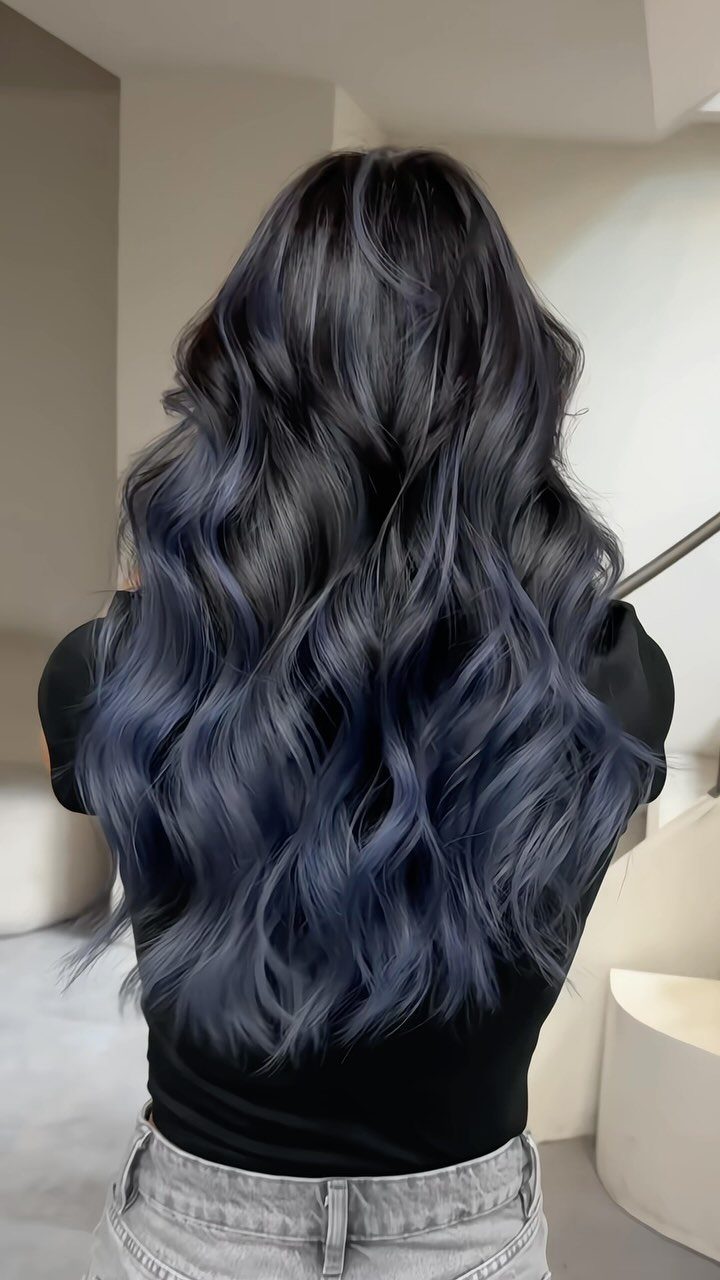
Blue balayage adds color to a black base without lightening the whole head. The sections are lifted first, then toned blue, so the result reads as deep teal or midnight rather than bright aqua.
The color fades to green or silver after a bit, so expect to refresh it more often if you want the blue to stay.
If your hair pulls warm, the blue will cancel that, but it may also look muddy if the lift isn’t clean.
19. Hazelnut Blend
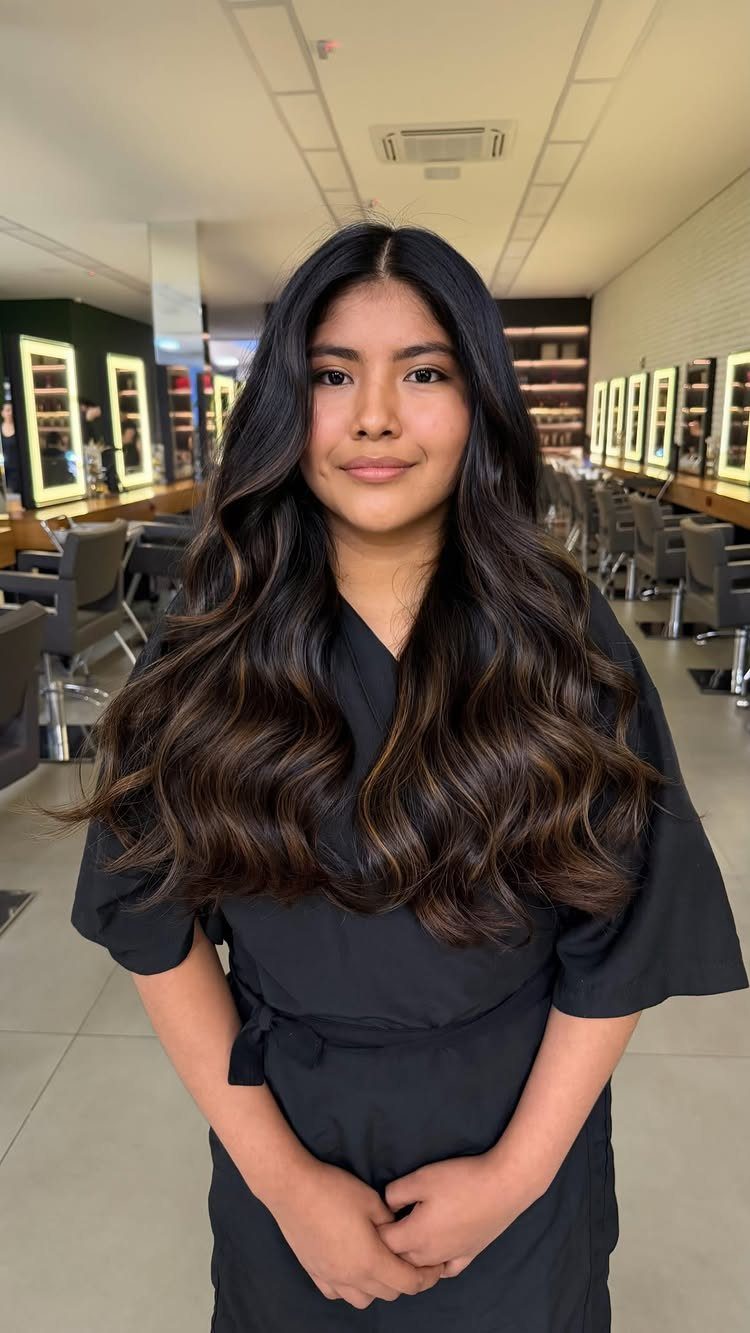
Hazelnut ribbons sit just a shade or two lighter than a dark brown base, so the lift reads as warmth rather than contrast. The tone lands between caramel and toffee, creamy enough to add depth without pulling too golden.
This works well if you want movement but don’t want the upkeep of blonde. Waves make the color more visible than straight hair.
20. Burgundy Rosewood
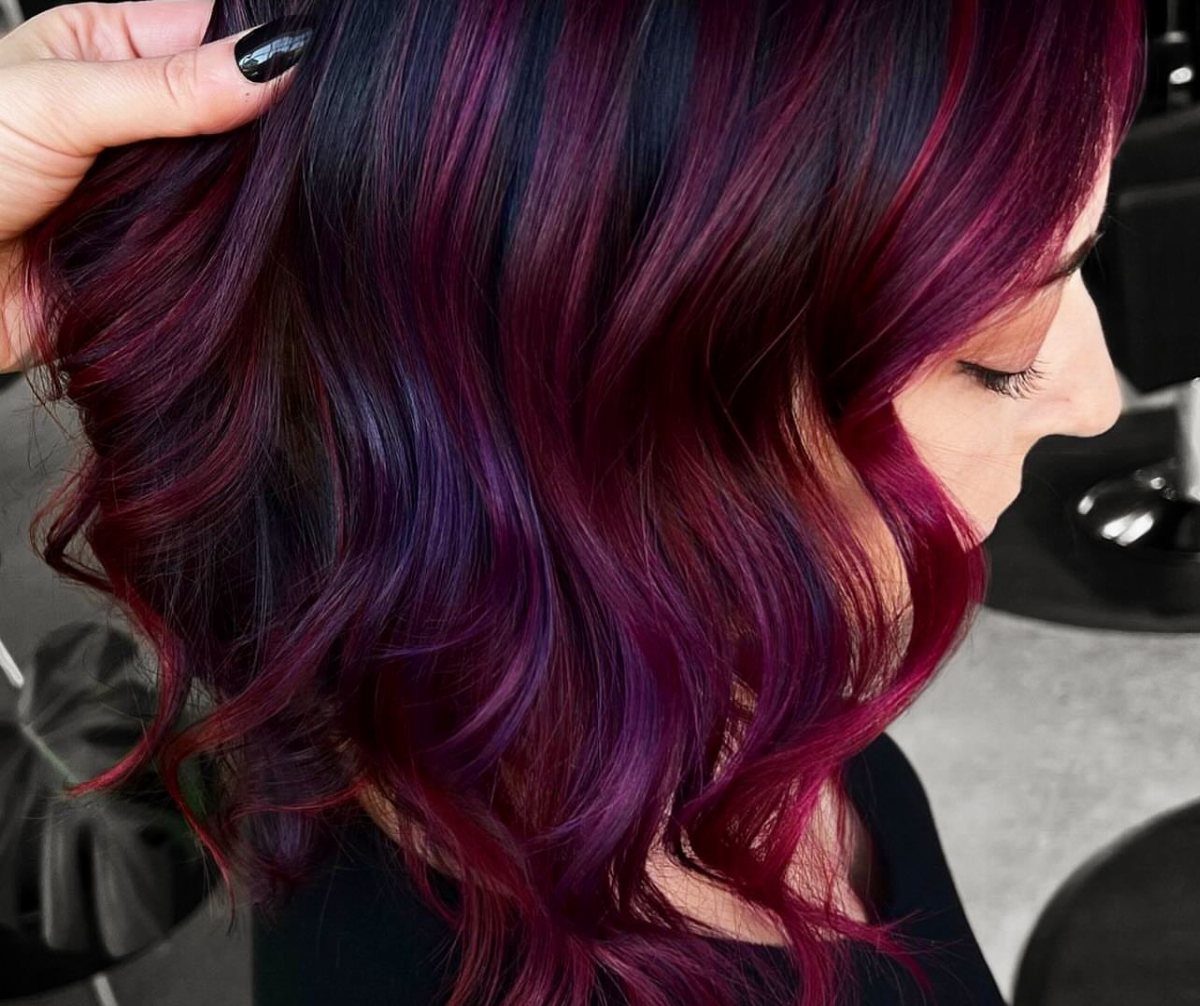
Burgundy and rosewood blend on a dark base to give you visible red without bright copper. The tones stay deep, so the color reads as dimension rather than a full dye job.
Because the lift is minimal, this can be done with a gloss or demi-permanent on near-black hair.
21. Cherry Cola
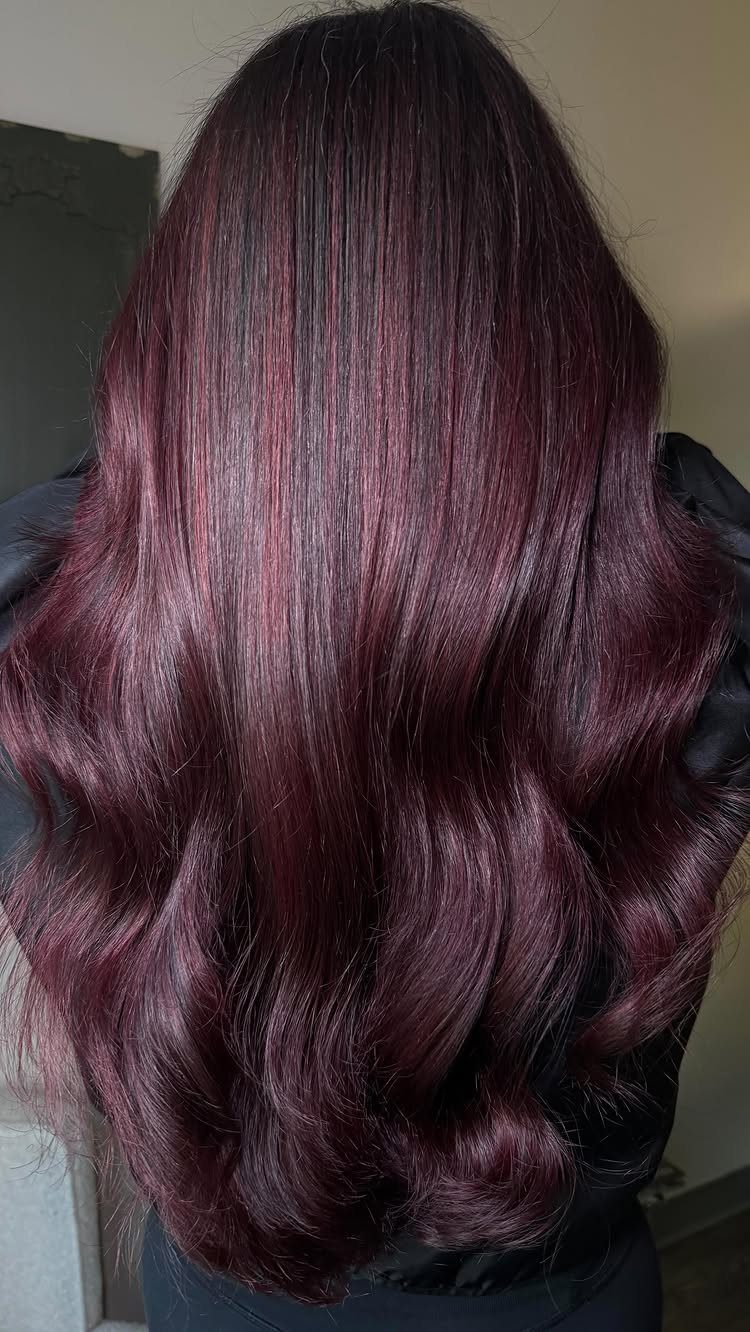
Cherry cola blends dark brown with red tones that shift from burgundy to bright cherry depending on the light. The mix gives you warmth and contrast without lightening the base much.
The color shows best in waves because the movement catches light differently on each section. Expect the cherry to fade faster than the brown base, so touch-ups keep the contrast visible.
22. Rose-Gold Sparkles
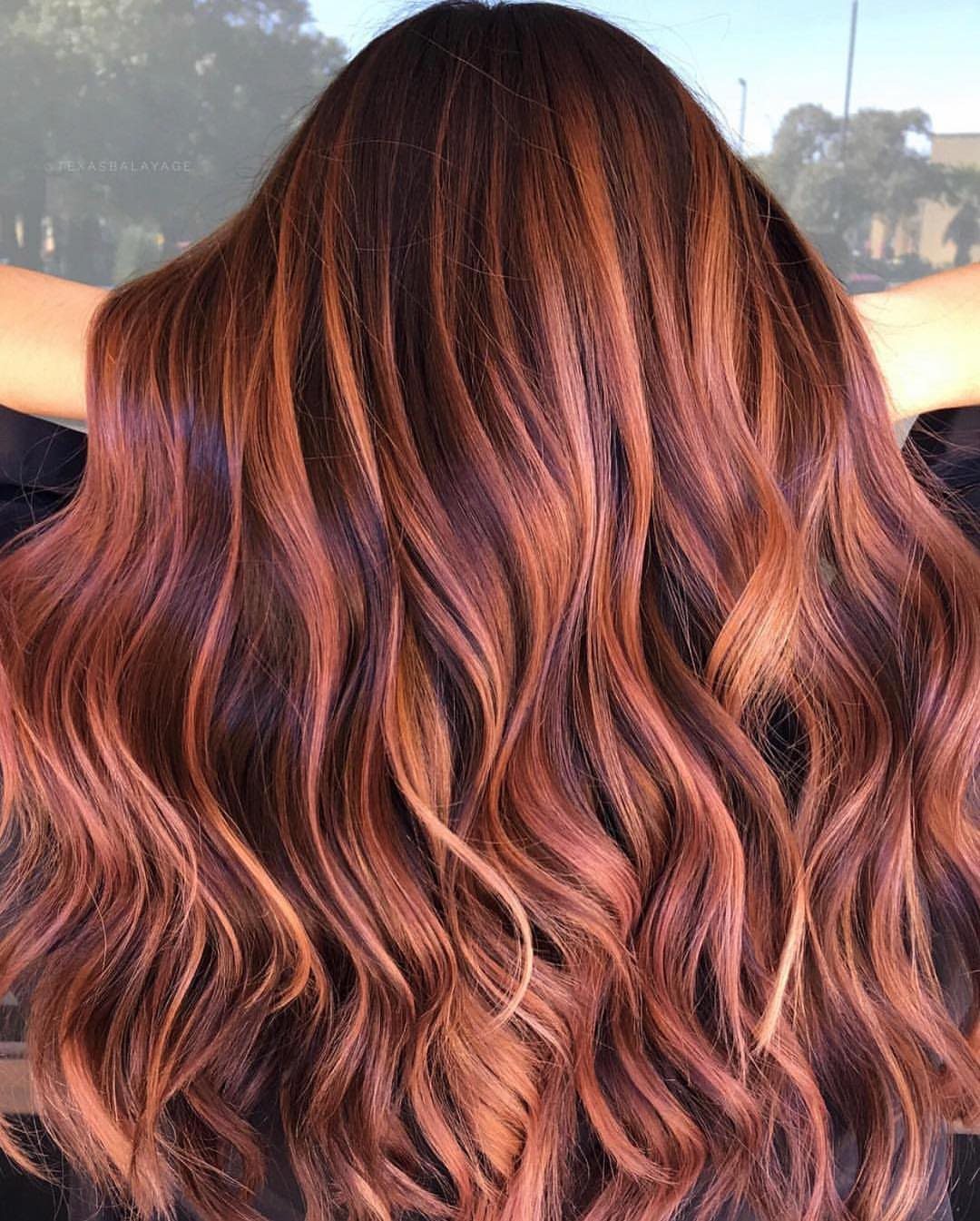
The tone sits between copper and pink, so it lifts warm but stays softer than straight auburn.
The shimmer shows most in natural light and wavy hair.
23. Iced Espresso Highlights and Lowlights
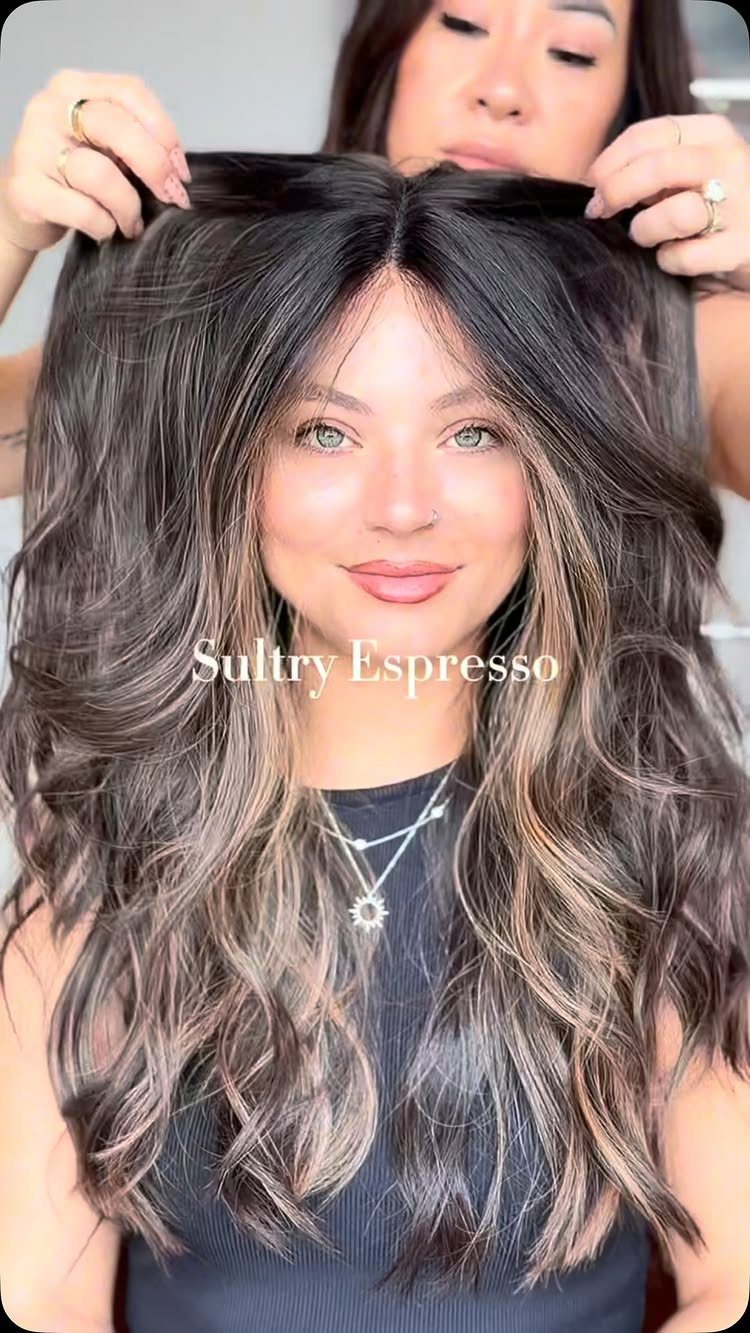
Fine highlights and lowlights frost an espresso base with barely-there contrast, so the result reads as texture rather than obvious color. The iced pieces are painted thin and scattered, giving you dimension without the stripe effect wider ribbons can leave.
Starting from dark brown, the highlights lift just 1 or 2 shades and may be toned ash to keep them cool. The lowlights stay close to your natural base or go slightly darker, which adds depth between the lifted sections.
24. Teal Curls
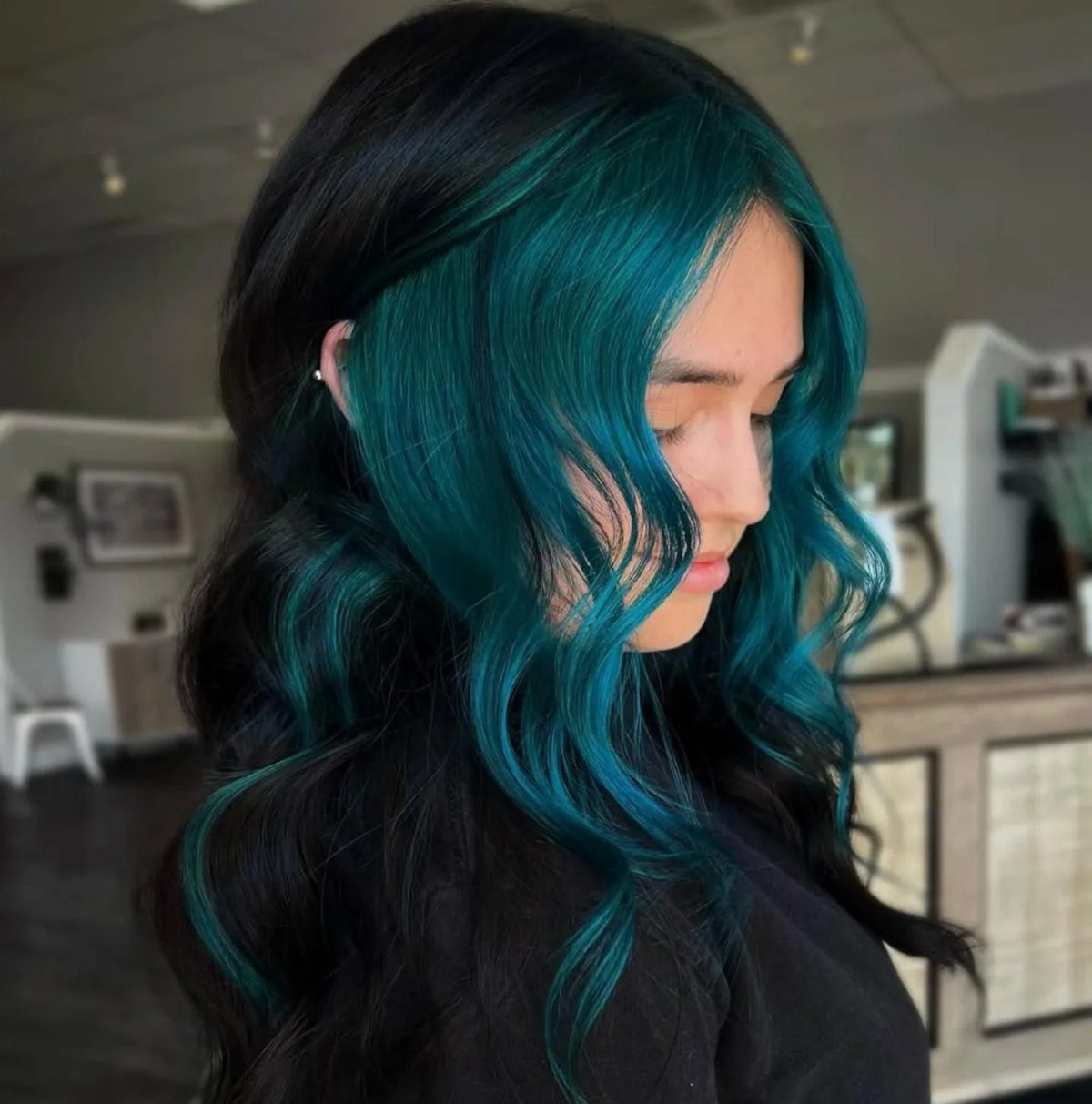
Teal ribbons lift sections of dark hair and tone them blue-green, giving you visible color without going bright turquoise. The teal reads softer than pure blue, so it suits curls or waves where the color shifts as the hair moves.
The sections are lifted first, then toned, so starting from black means the teal will read darker and closer to deep sea foam. Purple shampoo won’t hold it, you’ll need a teal or blue depositing conditioner.
25. Smoky Ash Blonde
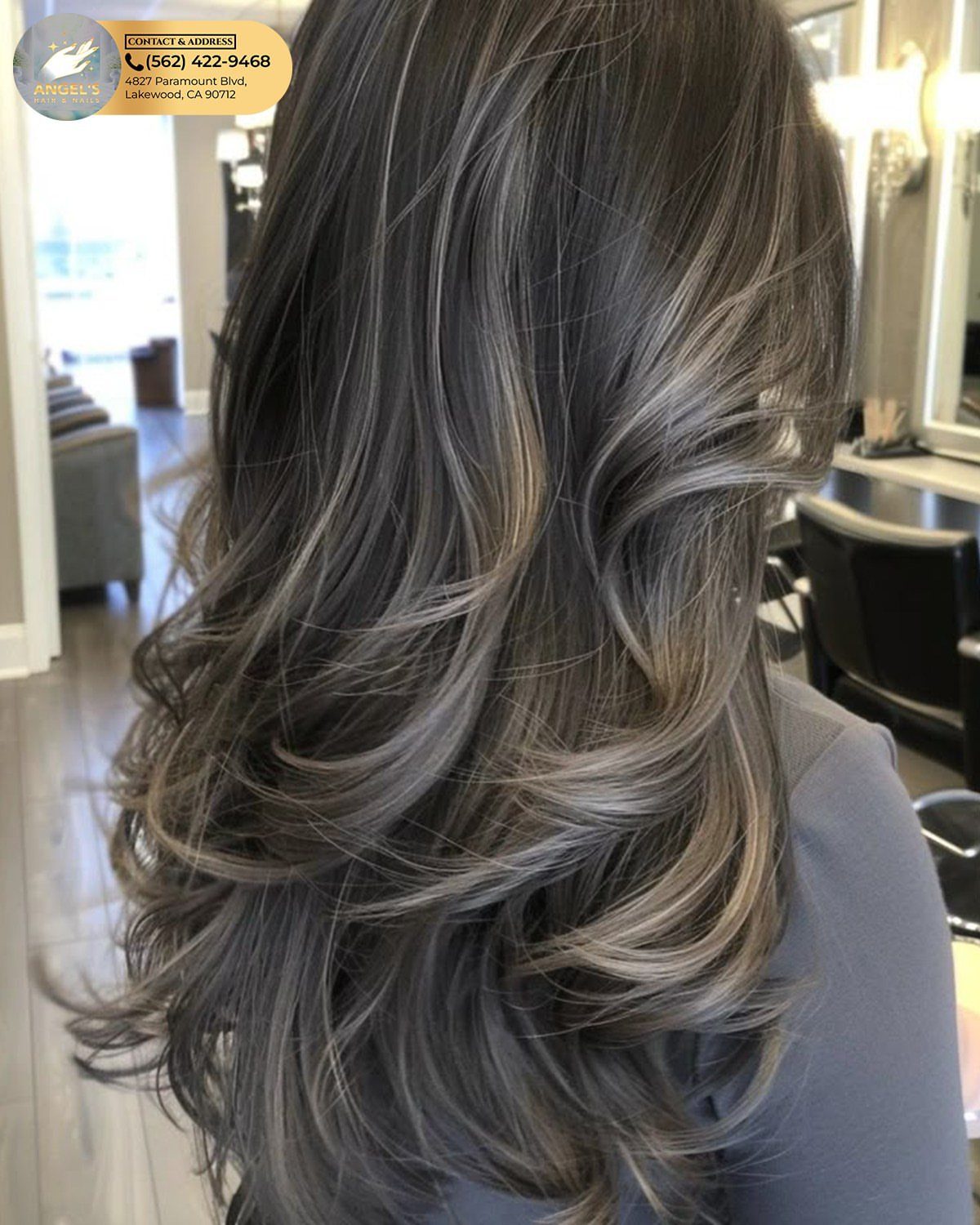
Smoky ash-blonde sits gray-toned rather than warm, so it lifts without going brassy. The roots stay dark, the ends pale, and the smoky gray in between keeps the transition from looking too golden or too stark.
If your hair pulls orange, the ash tone cancels that. The gray reads softer than silver but cooler than beige, so it suits cooler skin tones better than warm.
Waves make the smoky sections more visible than straight hair because the different tones catch light as the hair moves.
Maintenance and Grow-out
Balayage on dark hair grows out more gracefully than foil highlights because the color starts below the root and blends gradually.
That said, toned colors like ash blonde, lavender, and teal need more attention.
The tone fades faster than the lift itself, so expect to use a color-depositing shampoo or conditioner at home. Without it, ash can turn brassy and teal can shift muddy or green.
If you went with warm tones like caramel or honey, sulfate-free shampoo keeps the color from stripping too fast. Clarifying formulas will pull warmth out quicker.
Balayage Versus Ombré
Ombré gives you a clear divide between dark and light, usually starting the color shift around ear level or lower. Balayage paints highlights in varying thicknesses through the midlengths and ends, so the transition reads softer and less geometric.
The ombré line can look dated now, especially when the base is black and the ends are blonde with nothing bridging the two.
Balayage avoids that by blending multiple shades, so you get caramel melting into honey or ash brown fading into beige instead of one abrupt shift.
If you want dimension without a blocky result, balayage gives you more control over where the color sits and how gradually it changes.





