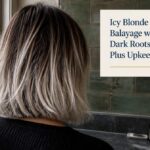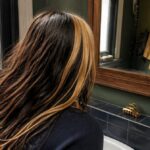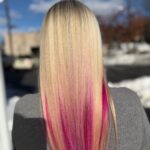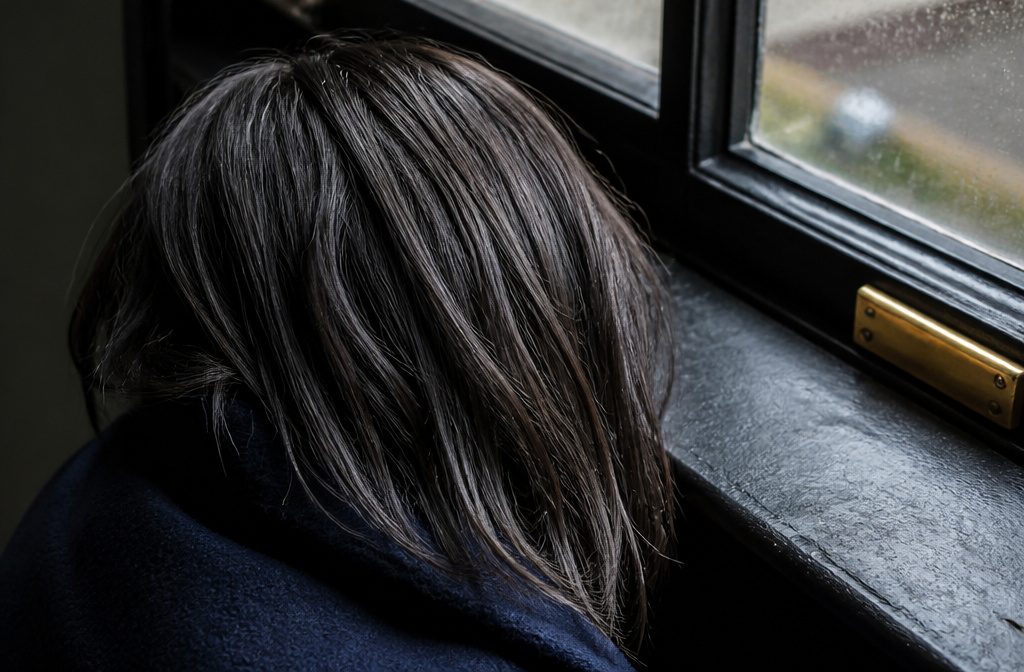
Piecey, smoky gunmetal highlights on dark brunette hair fit into one salon visit, with about 1 hour of it spent lifting to very pale blonde.
Skip the pre-tone and the silver turns swampy. Go for a full head of silver instead, and one writer spent 9 hours in the chair and left with cobalt-navy strands.
1. Decide If Blending Fits
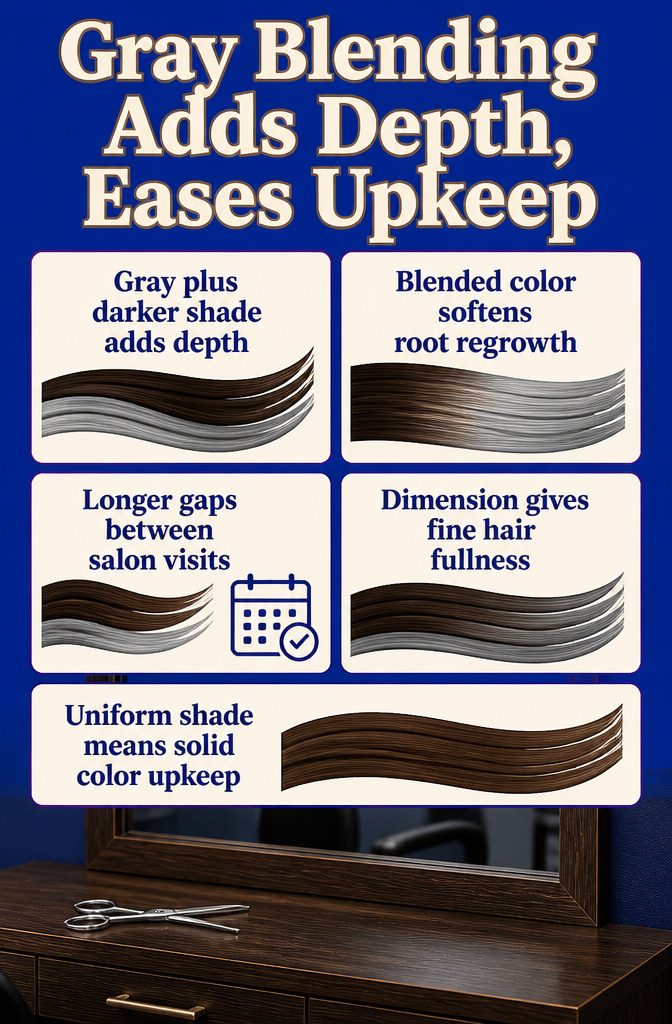
Highlights disguise gray more naturally than all-over color does. Blending uses two colors, your gray plus a darker shade, so the hair reads as movement and depth instead of one flat block.
All-over color on brown or black hair leaves a harsh demarcation line as it grows out, while blended hair has no hard edge, so you can stretch the time between salon visits.
That added dimension also gives fine or thinning hair the illusion of fullness.
Blending suits anyone growing out gray or tired of checking roots. If you want every strand one uniform shade, I’d stay with a solid color and accept the upkeep.
2. Prepare for the Consultation
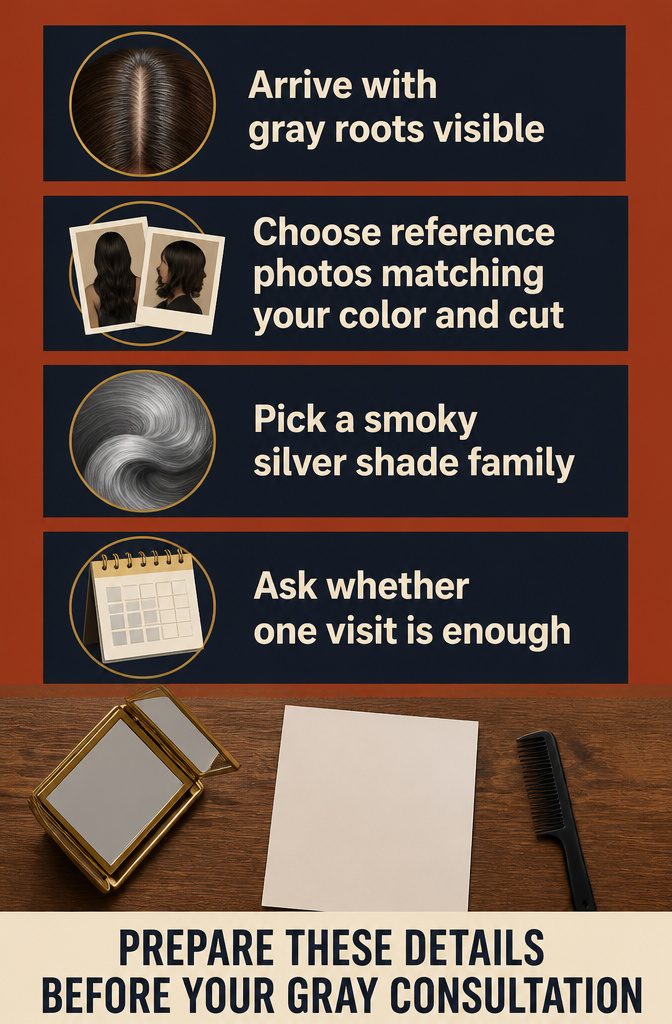
Three things make the appointment go faster:
- Show up with your gray visible. Part your hair so the strands and roots are easy to see, and the stylist can match the tone to what is really growing in.
- Bring reference pictures of models whose natural color and haircut look like yours. I’d skip any photo where the base color or length is far from your own, since it tells a colorist little.
- Pick a shade family before you sit down. One dark brunette with a semi-wavy lob landed on a smoky, darker silver. A gunmetal silver highlight sits in the same tonal family as dark brunette hair, so it reads as a version of natural.
- Ask about timing. That silver can typically be done in one salon visit, and it lasts longer than fantasy colors like pink or purple.
3. Foils, Balayage, or Foilyage
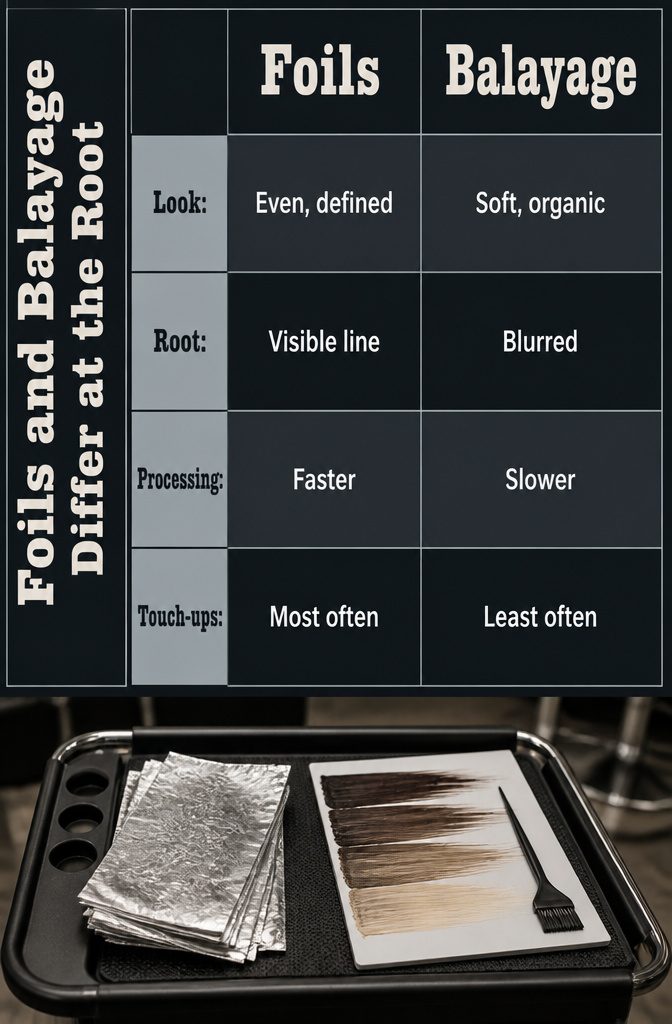
Foils give the most consistent, obvious highlight, and the wrapped foil traps warmth so lightener processes faster. The price is a visible regrowth line, which means more frequent touch-ups.
Balayage is painted by hand right up to the root, so it looks organic and skips the harsh line. Foilyage is balayage with foil used instead of air drying.
| Foils | Balayage | Foilyage | |
|---|---|---|---|
| Look | Even, defined | Soft, organic | Soft, a bit brighter |
| Root | Visible line as it grows | Blurred | Blurred |
| Processing | Faster | Slower | Faster |
| Touch-ups | Most often | Least often | Fewer than foils |
For blending gray into dark hair, I’d choose balayage, because a painted root never draws a line against your natural color. Ask for foilyage if your hair resists lifting.
4. Lighten Selected Sections
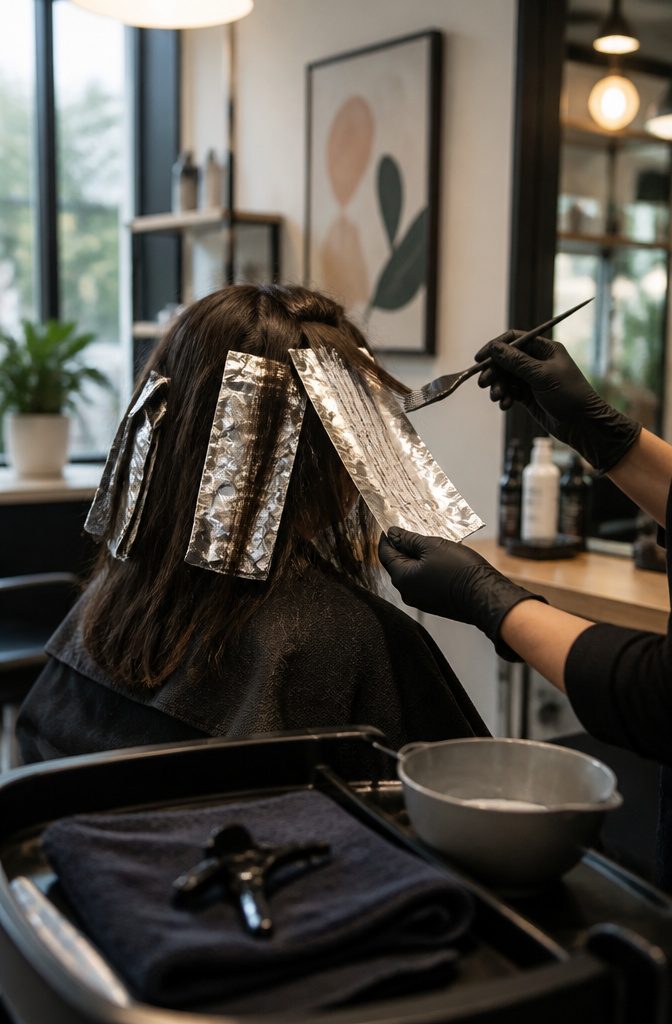
On a dark brunette, painting bleach onto small sections and waiting for it to lift took about an hour, which makes it the slowest step of the appointment.
Foil holds in warmth and speeds up processing, while hand-painting gives a softer, more organic finish.
I’d pick foil for dark hair and precise placement. Either way, the stylist should check the strands periodically for how well the color is lifting and whether the hair still feels intact, rather than set a timer and walk away.
Ask about a bond-protecting additive too: an Olaplex-infused bleach was used to limit damage.
Expect a second lightener application on any sections that dried out while processing, to refresh them. Block out the time before you book anything else that day.
5. Pre-Tone and Tone
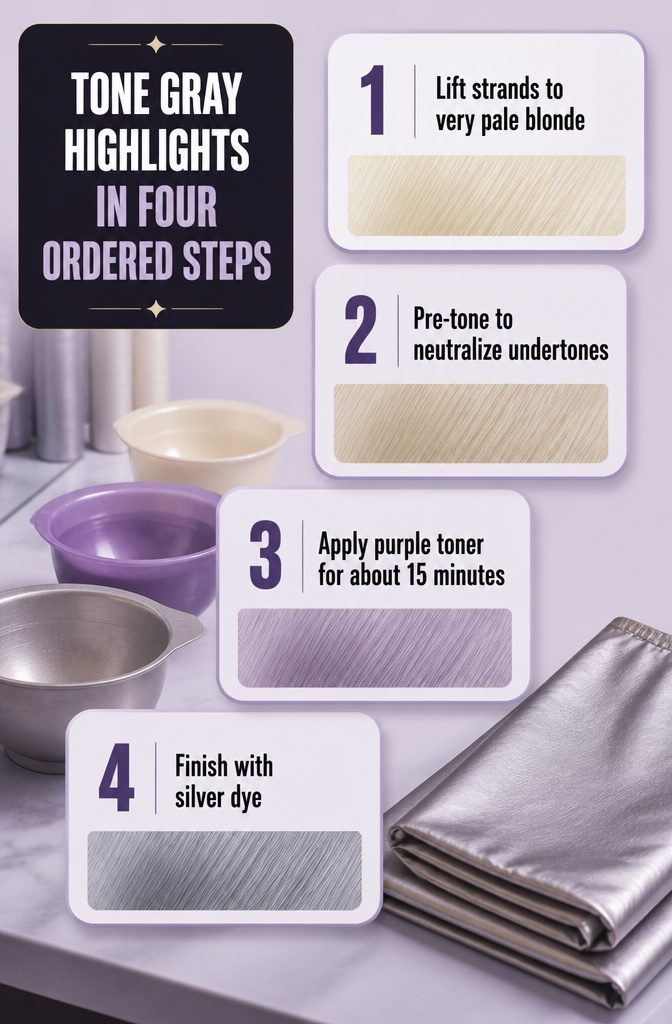
- Lift to very pale blonde. This is half the work. Lightener stays on until the strands reach a near-white base, because anything darker will muddy the silver you’re aiming for.
- Pre-tone to neutralize undertones. Yellow or green will show through the final color if you skip this step. The pre-tone corrects the base before the silver goes on.
Half of that is getting hair to very pale blonde, and the other half is toning, a process that involves adjusting the coolness or warmth of hair prior to applying dye.
— Allure
Without it, you end up with brassy or swampy streaks instead of steel.
- Apply a purple toner. This seals the cool tone and gets the strands closer to gray. It sits for about 15 minutes, long enough to shift the base from flaxen to metallic.
- Finish with silver dye. The color itself goes on last, once the base is prepped. Pravana Chromasilk Vivids in Silver is one option that moves pale blonde to true gray.
6. Apply the Silver Color
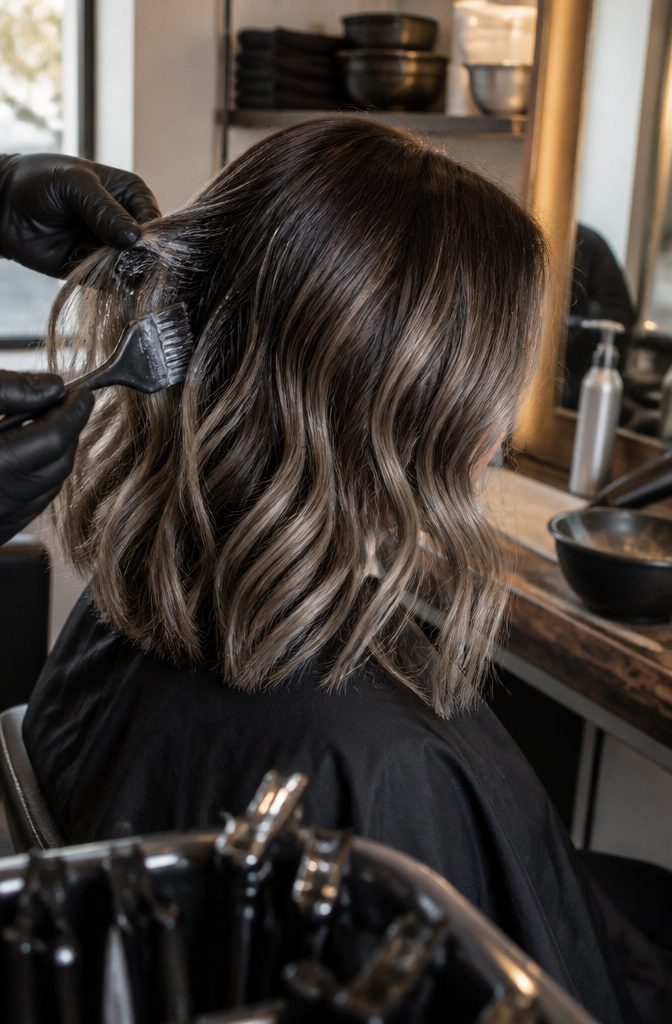
Once the lightened sections cool and you’ve toned down any brassiness, the silver goes on.
Pravana Chromasilk Vivids in Silver sits for about fifteen minutes over the flaxen highlights, and the timing here matters less than it does with permanent color because this formula is a direct dye that deposits rather than lifts.
On dark brunette hair cut to a semi-wavy lob, the result reads as gunmetal silver rather than icy white, which keeps the contrast from looking too stark against the base.
The whole process typically fits into one salon appointment, which makes it faster than most full gray transitions that need multiple rounds of lifting.
The silver will fade over time, especially if you wash often or use hot tools without heat protectant, but that gradual shift is part of the appeal for clients who want something temporary enough to walk back.
7. Maintain Color and Moisture
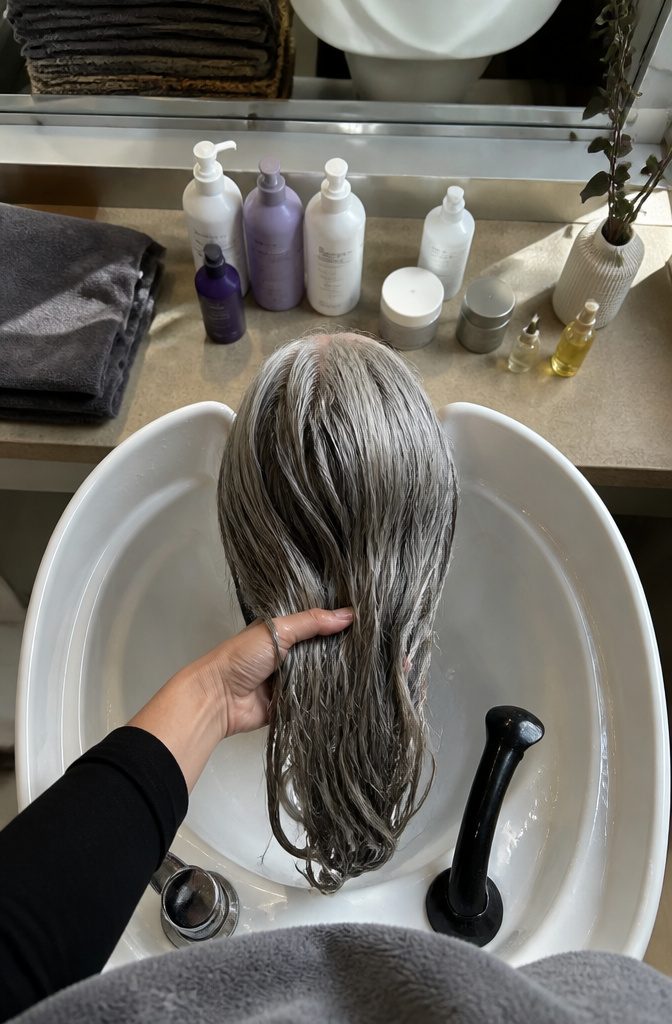
Bleaching strips nutrients from the hair, so add back as much moisture as possible while keeping the silver cool.
- Choose color-safe formulas. Ones that aren’t can strip the color or change how the technique reads.
- Second Chance Repairing Conditioner gives brittle, dry gray hair some strength.
- Silver Lining Purple Brightening Shampoo cuts yellow and brassy tones right away.
- Silver Lining Purple Butter Masque boosts that shampoo and adds moisture. I’d buy the two as a pair.
- Overtone Silver Daily Conditioner can take the place of your regular conditioner.
- Bumble and Bumble Hairdresser’s Invisible Oil goes on after the shower to mend dry ends.
- IGK Mixed Feelings Leave-In Blonde Drops tint any conditioner or styling product, and they travel easily.
8. Choose a Transition Route
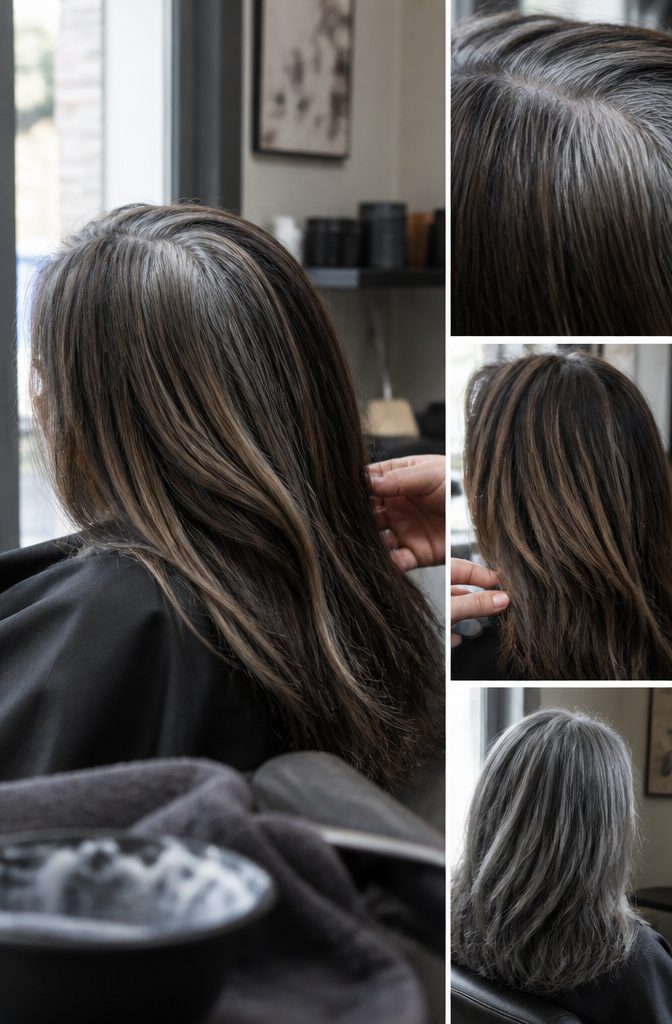
Three routes lead to gray, and each one costs something different:
- Grow it out. Going cold turkey costs patience and nothing else, because no chemicals touch your hair. On dark, dyed hair, you wait through months of new gray sitting against the old color.
- Blend with highlights. Highlights weave gray into your natural brown or dark hair, so the color shifts as it grows. This is the route I favor for dark hair, but you need enough gray to work with first.
- Strip the dye. A stylist removes existing color with a gentle lightener or stripping products, so your natural gray shows. Your hair’s condition pays for it, so I’d save this for dye you truly want gone.
Gray Blending on Dark Hair
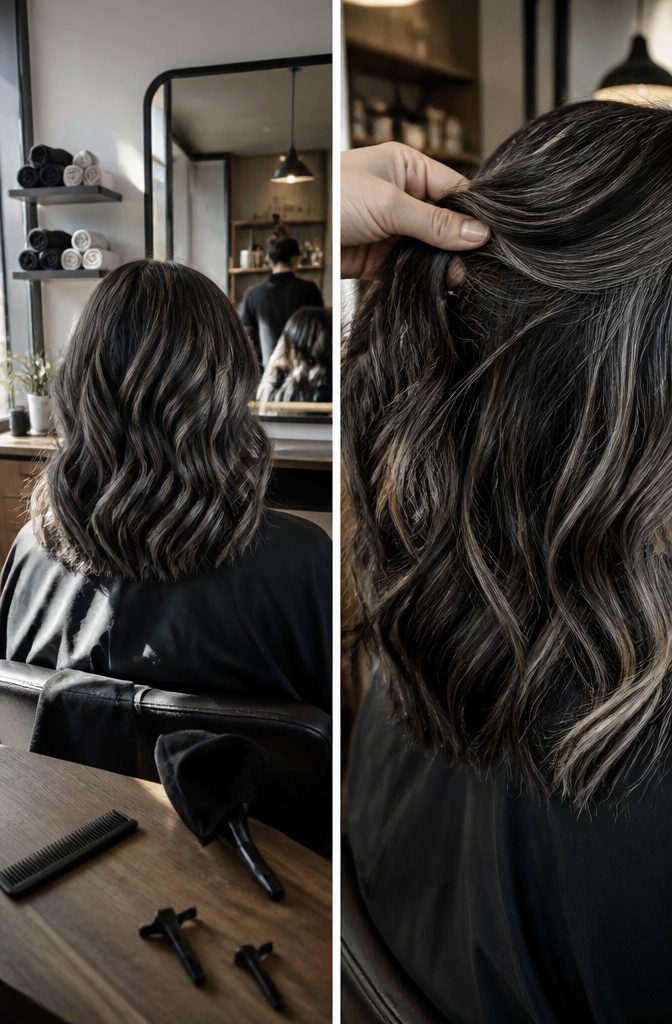
Gray on dark brunette reads as dimension rather than a color change, because the highlights sit in the same tonal family as the base. Blended in, they add movement and depth and melt into the natural shade.
Full-head silver is where it goes wrong.
One writer took virgin dark brunette hair toward silver, spent 9 hours in the chair, and left with cobalt-navy strands. Years later, piecey highlights gave a smoky gunmetal result that was far easier to live with.
I’d choose piecey, smoky highlights over a full head of double process every time: they’re gentler on the hair, and the shade reads as yours.
Why Dark Hair Lifts First
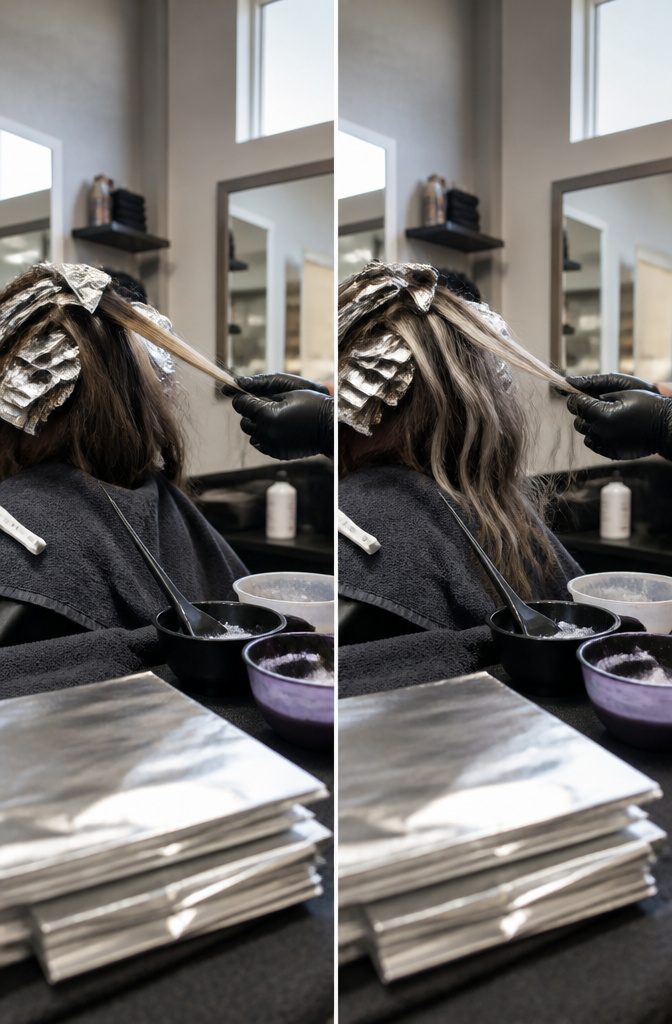
Silver only reads as silver on a pale base, and dark hair starts nowhere near pale.
A dark brunette has to be lightened to very pale blonde before any gray goes on. That lift is the longest step in the whole job: about 1 hour with the lightener on, checked periodically so the hair stays intact.
Dark sections can dry out under the salon heat, so a stylist may reapply lightener partway through to refresh them.
Pale alone isn’t enough. Leftover yellow or green undertones turn silver swampy instead of steely, so a pre-tone comes first and a purple toner seals it afterward.
I’d rather give the lift its full hour than rush it and spend the rest of the appointment fighting the color.
Growing Out Without a Line
Highlights built this way grow out softer than solid color ever could. Where a single-process dye meets virgin hair at a hard line after four weeks, highlights fade into the natural root without announcing the last appointment.
Balayage keeps that advantage longest because the color starts an inch or two down and blends through hand-painting rather than sitting at a uniform height.
The placement mimics what sun would do, so three weeks later it still reads as intentional dimension instead of regrowth that needs fixing.
Foil highlights grow out more obviously because each piece lifts from the same point along the scalp, and that regularity becomes visible as the gap widens.
Gray picks up the lighter tones well enough that the blend holds longer than it would on dark hair alone, which makes the whole approach gentler on both the schedule and the hair itself.
Why Gray Hair Runs Dry
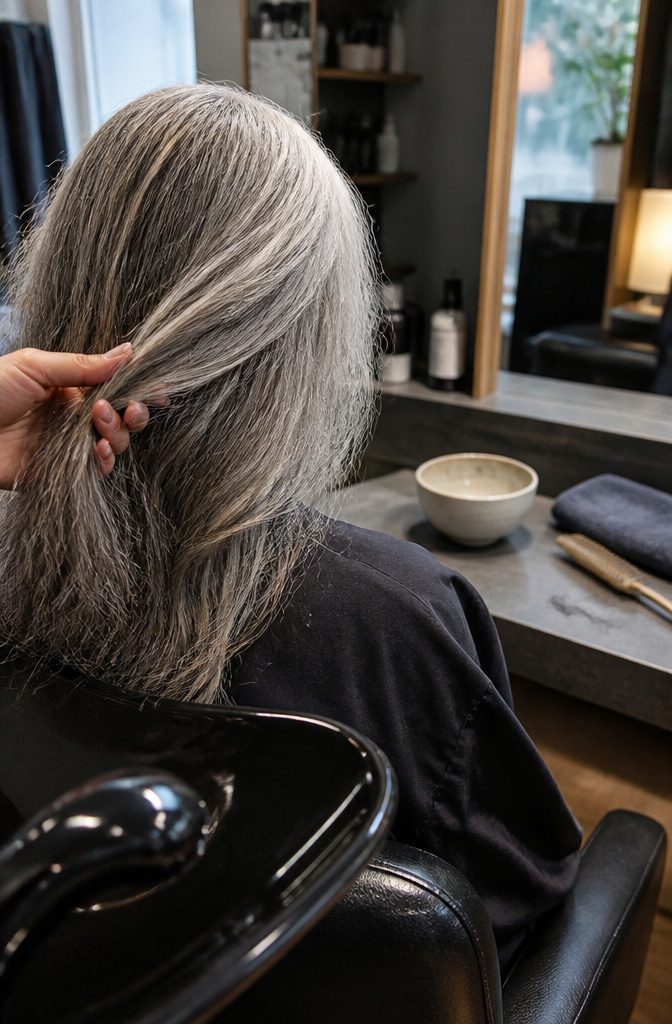
Hair follicles make less pigment as we age.
Genetics sets the timeline, but stress, environment, and nutrition all move it forward. The strand grows back without color, and that gray shaft has a different texture than the pigmented hair around it.
Gray hair runs drier and more prone to frizz and breakage because the follicle itself produces less natural oil. The cuticle often lies rougher, which means the strand catches light differently and feels coarser under your fingers.
If you add bleach to lift sections before toning them silver, you pull nutrients out of the strand at the same time you strip color.
Moisture matters twice over once you lighten: the bleach opens the cuticle, and gray hair was already starting behind on hydration.
Frequently Asked Questions
Can you do grey highlights on dark hair?
Yes, but dark hair has to be lightened to a very pale blonde before any grey goes on. After the lift comes a pre-tone to cancel yellow or green undertones, then a purple toner, then the silver dye.
On a dark brunette, the lightening step alone took about 1 hour, and the whole process typically fits into a single salon visit. A gunmetal silver sits closest to dark brown, so it looks the most natural.
What is the best highlighting technique for blending grey hair?
Balayage is the best choice for blending grey into dark hair, because the color is hand-painted right up to the root and never leaves a hard regrowth line.
Foils give a more even, defined look but need more frequent touch-ups. Foilyage is balayage done with foil, and the added warmth helps when dark hair resists lifting.
How do I transition to grey hair naturally?
You have 3 routes: let the color grow out, blend with highlights, or strip the existing dye. Growing out costs only patience, though on dark dyed hair you wait through months of new grey against the old color.
Highlights weave grey into your natural shade and work well on dark hair, provided you already have enough grey to work with.
Stripping with a gentle lightener shows your natural grey but takes a toll on hair condition, so save it for dye you want gone.