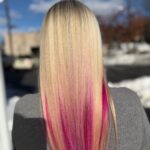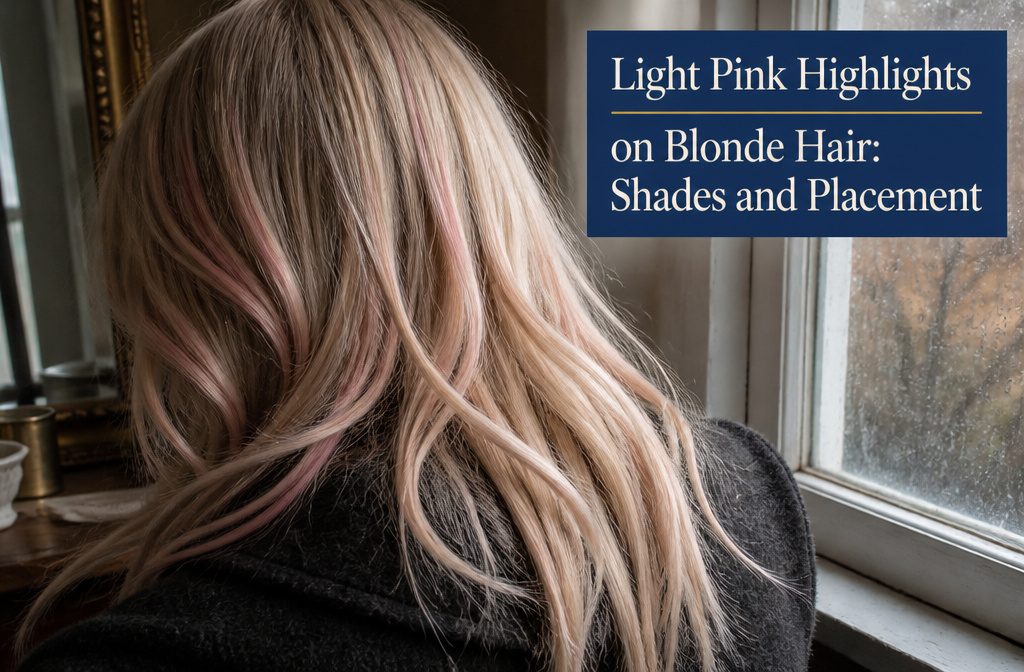
Light pink highlights on blonde hair are soft pink pieces lifted into a pale base, from blush pastels to rose gold.
Pastels only show on hair lifted to level 9 or 10, so darker starts need pre-lightening with BlondorPlex or WellaPlex No1. Rose gold works from a level 7 medium blonde.
Pastel or Blush Pink
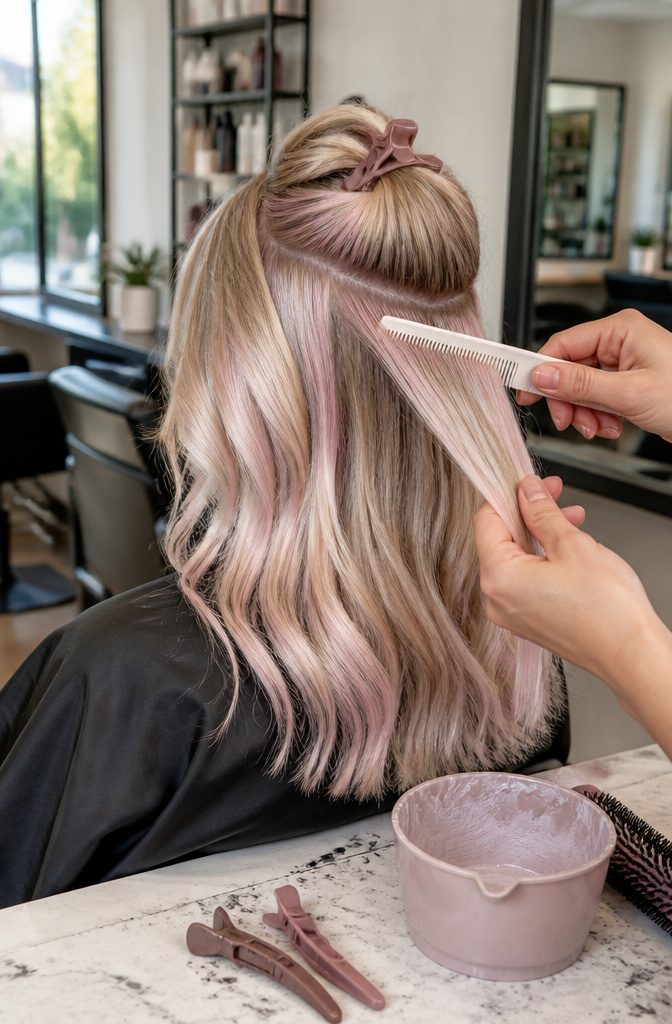
Blush pink looks best as a few pieces rather than an all-over wash, with blonde left around the face. The face-framing section runs from a high diagonal at the hairline to the tops of the ears.
Pastels this light only show on hair lifted to level 9 or 10. For a first try, Wella’s low-commitment pick is hard to beat:
If your client wants a low-commitment shade, suggest they go for 9/75 from the Color Touch palette; a macaron-tinted demi shade that lets them flirt with the trend for up to 24 washes.
Apply it on dry hair in 1-inch sections. Fair skin pairs well with soft, cool pinks.
Rose Gold Blonde
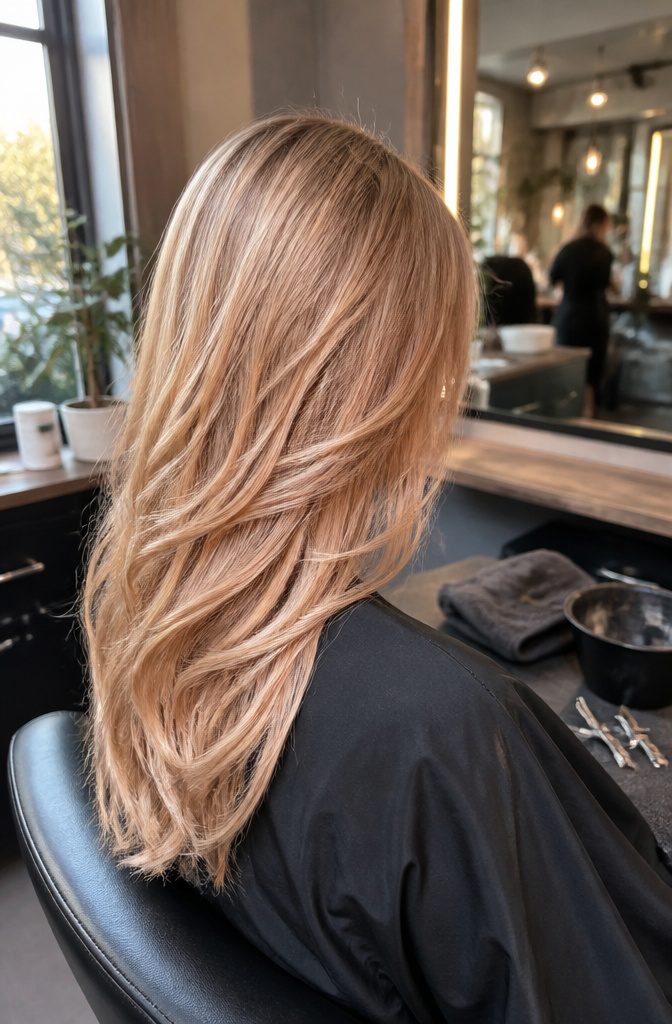
Rose gold blonde runs warmer than pastel pink, pulling in peachy and muted rose tones that read richer on medium blonde hair.
You can start from a level 7 medium blonde base, lower than the platinum required for frosty pinks, and the gold underneath gives the rose tone depth instead of washing it out.
The warmth matters: peachy rose gold shades pair better with medium or olive skin, where cooler pastels can look washed out or too stark.
The color sits somewhere between strawberry blonde and full pink, keeping enough warmth that it doesn’t look like a mistake when it fades.
If you want the rose gold trend without lifting all the way to platinum, this is the version that works from where your hair already is.
Pink Tips and Dip-Dye
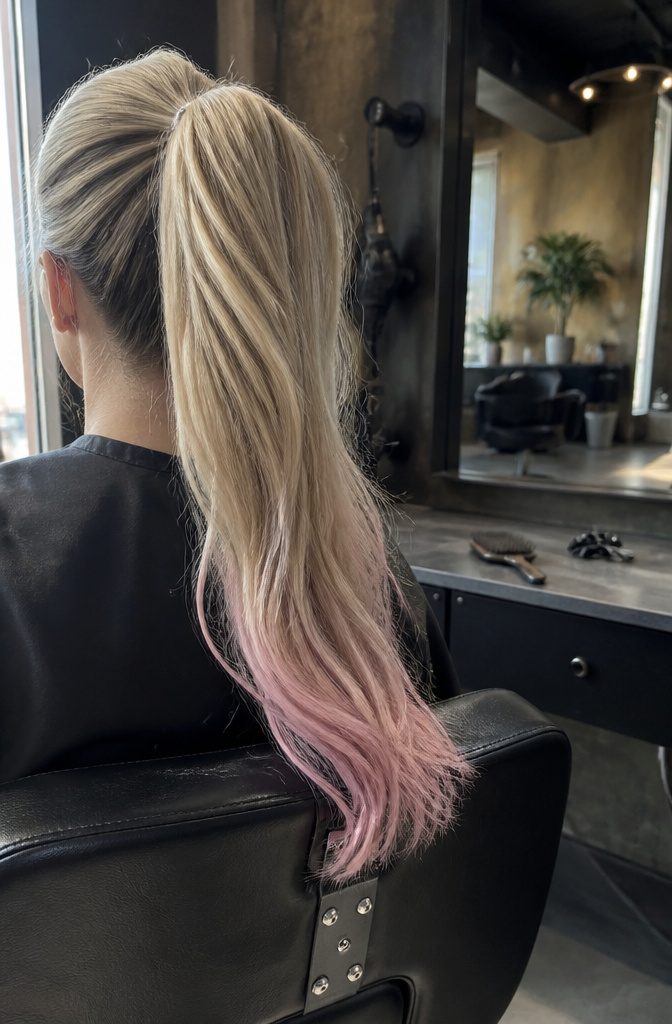
Dip-dye keeps all the pink at the ends, and where you stop the color line decides how loud it gets. Pink through only the very tips is the subtlest version, and raising the line higher gives a bolder finish.
Start with an ashy blonde base, then stroke Opal-Essence by Illumina Color in Titanium Rose through the ends for a frosted pink against cool blonde.
A ponytail puts the ends front and center, so a high pony shows the tips off better than loose hair does.
I’d pick this look for anyone who wants pink but dreads a regrowth line: with the color at the bottom, nothing sits at the roots to grow out.
Pink Ombre
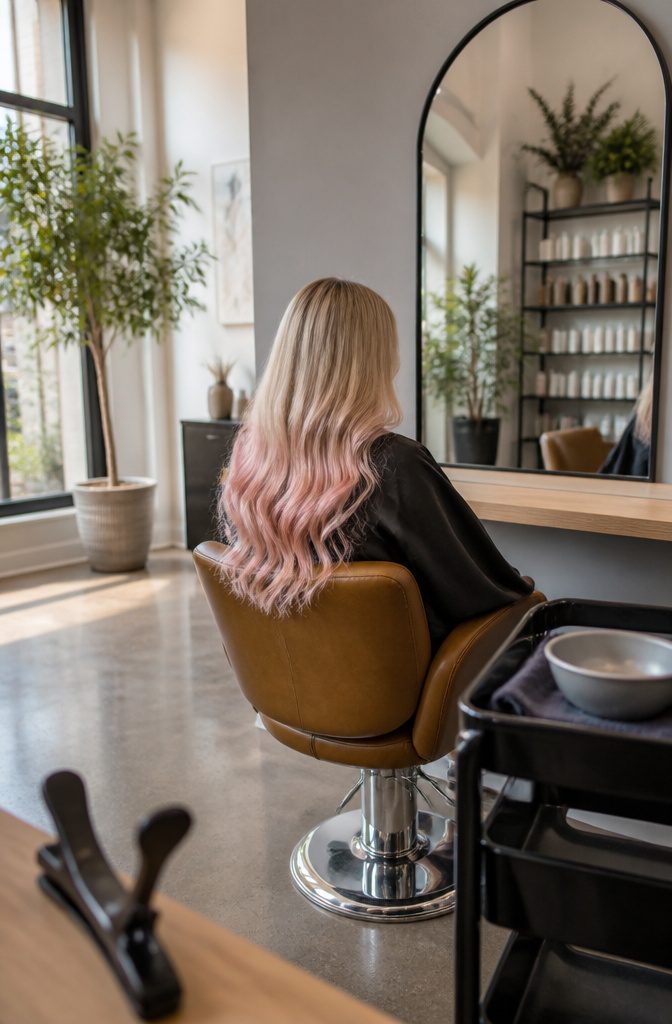
Pink ombre is a two-stage job.
Lighten first with Blondor Freelights + 4%, then shampoo and neutralize before any pink goes on. The pink stage is Color Touch 10/0 + 0/56 + 1.9%, which lands on a light, lived-in pink rather than a candy one.
A dip-dye stops at a line you can point to. An ombre has no such line: blonde slides into pink through the lengths, so the color reads as sun-washed rather than dunked.
I’d choose the blend for a beachy, summer look, since a soft transition has no edge to look uneven as it fades. Save the crisp line for when you want the pink to be the statement.
Pink-Tinted Platinum
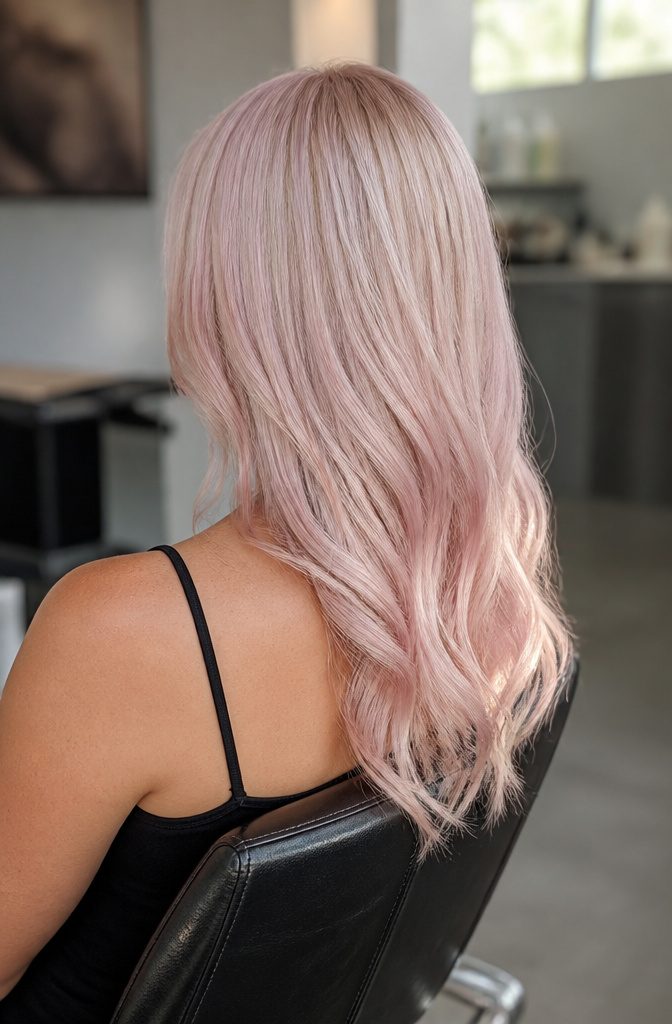
Pink-tinted platinum sits at the level nine or ten blonde base that lets a metallic blush tone catch the light without turning muddy.
The formula I keep coming back to is Illumina Color 9/59 mixed with Titanium Rose and 1.9% developer, a blend that shifts from frosty blonde to pale pink depending on how the hair moves.
The lighter the starting point, the more that blush tone can show through, which is exactly why this look needs serious pre-lightening if you’re not already there.
That means BlondorPlex or WellaPlex No1 in the bowl to keep bonds intact while you lift, because getting to level ten is not gentle work.
You get a pastel that actually reads as pink instead of vanishing into warmth, but the prep takes real work.
If your hair is already fragile or you’re starting from darker than level eight, this is the shade where you sit down with your colorist and talk honestly about condition first.
Strawberry Blonde
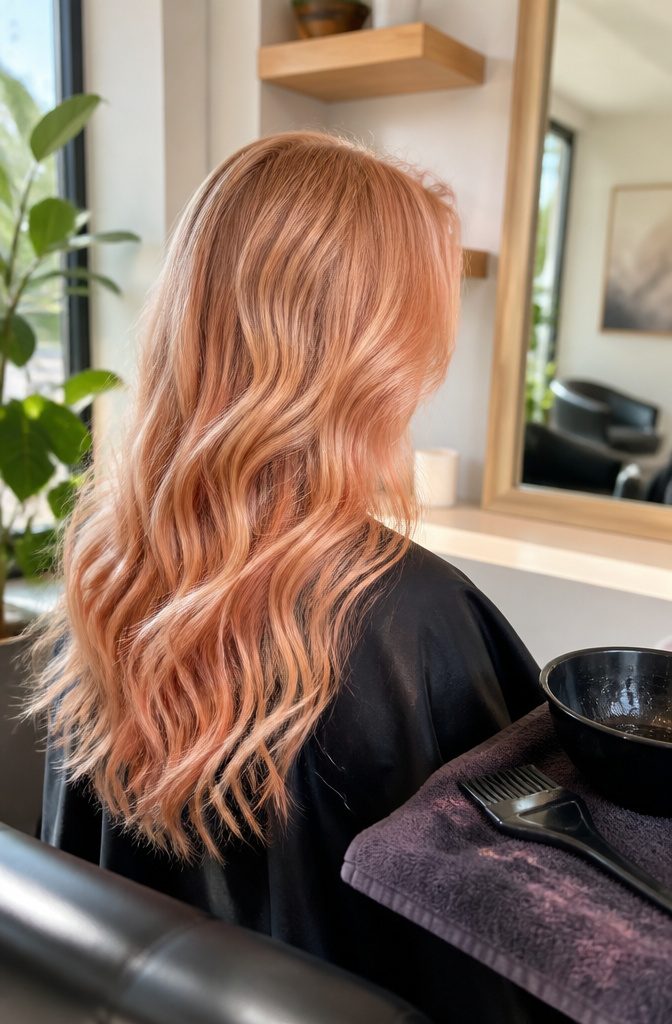
Strawberry blonde pulls warmer than rose gold because it starts from a copper base rather than from pale blonde.
The formula that gets you there blends Koleston Perfect 10/95 + 10/38 + 9/16 + 0/65 with 9% developer, layered over existing copper. The result lands somewhere between light copper and pinky peach with a hint of blonde threaded through.
I like this one for anyone who wants the rose gold softness but finds pure pink too cool on their skin.
The warmth comes through first, the pink reads as an overtone rather than the main event. It grows out more forgivingly than a full rose gold lift because you’re working with the copper underneath instead of fighting it.
Dark Roots With Pink Highlights
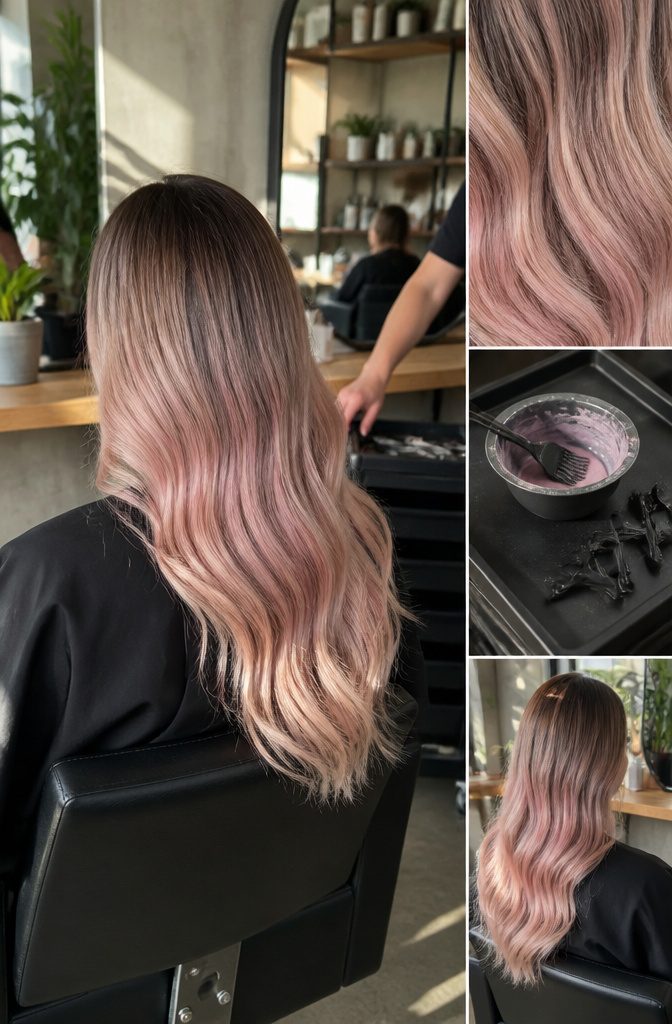
Leaving the roots dark and putting the pink only through the lengths gives blonde a rosy cast without a regrowth line to chase.
As the roots come in, they deepen what is already there, so the grow-out looks soft instead of striped. I’d choose this over root-to-tip pink for anyone who wants fewer salon visits.
The pastel formula to ask for is Color Fresh CREATE in Nudist Pink 40g plus High Magenta 10g.
That is a 4-to-1 ratio, so the magenta is a small push, just enough to keep the Nudist Pink from reading as a washed-out neutral. Screenshot those two shade names and bring them to your appointment.
Hot Pink, Fuchsia and Magenta
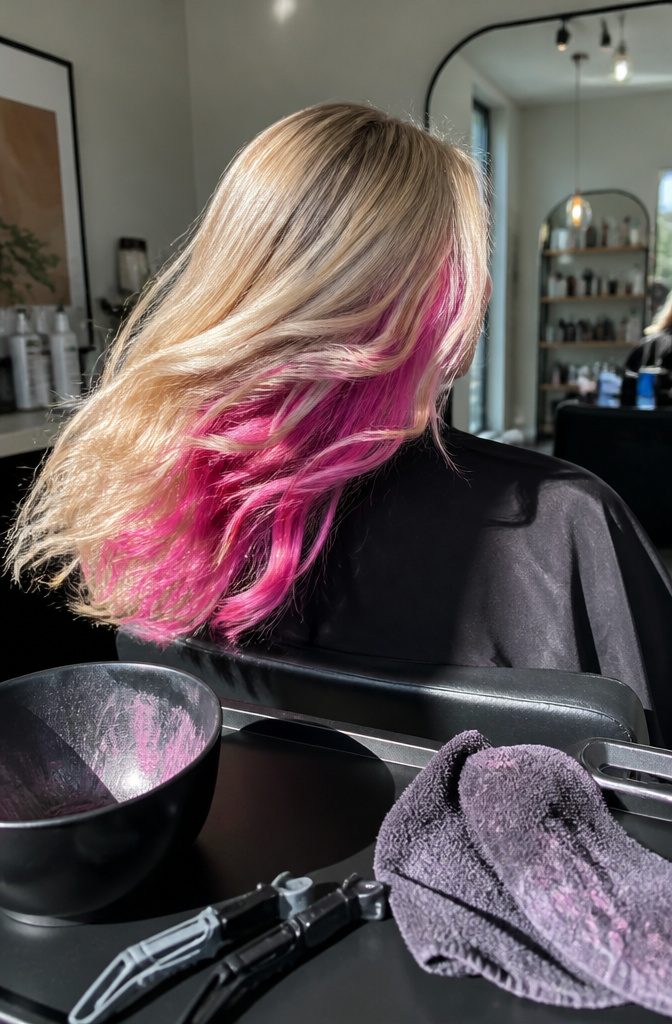
Fuchsia, hot pink and magenta give blonde its strongest contrast, and the pale base is what lets them read so clearly.
I’d keep placement restrained: peekaboo streaks tucked under the top layer show the color when you move without turning the whole head pink.
Deeper and warmer skin tones carry these saturated shades best, while cooler complexions usually look better in softer pinks.
For maximum intensity, leave the color on for 20 minutes. Kenra Color Creatives lasts about 50 washes with proper home care, which means cold water, a color-safe shampoo and conditioner, and heat styling at 350 degrees or below with a protectant.
Dusty Pink Highlights
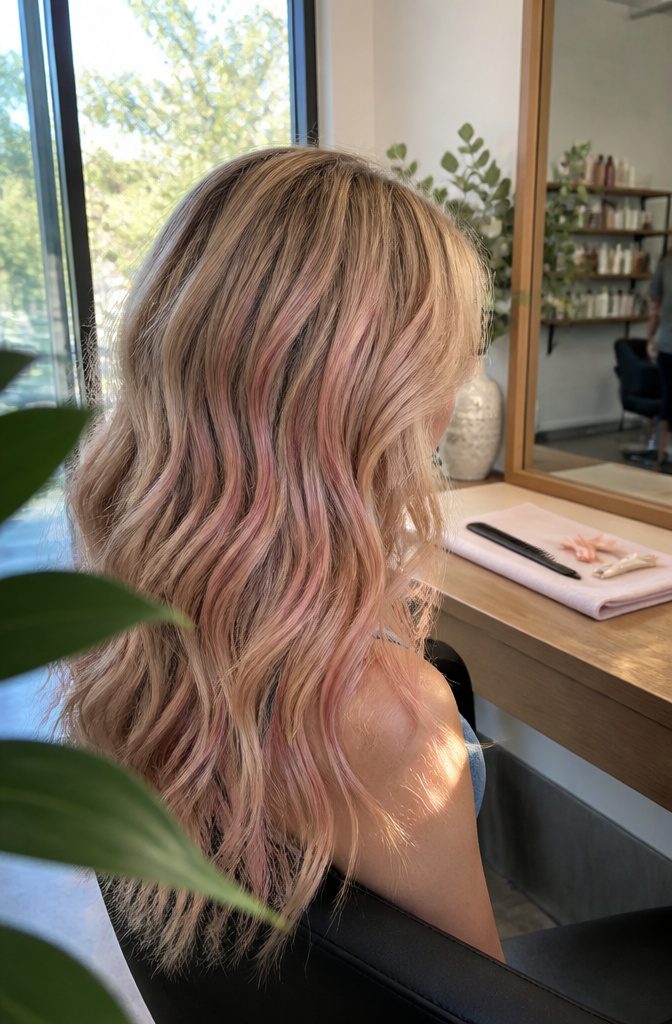
Dusty pink is the quiet one in the pink range.
Pastel pink reads sweet and bright, and hot pink announces itself from across a room, but dusty pink is muted and a little moody, like a rose with the saturation turned down.
On blonde it looks like a soft, smoky wash of pink rather than a bold stripe, so it passes for a neutral in some light and only shows as pink when the sun catches it.
I’d pick it over the brighter shades for anyone who wants pink without a statement. It blends into a blonde base instead of fighting it.
Because it is so subtle, though, it won’t give you a dramatic photo. If drama is the goal, go brighter.
Choosing the Blonde Base
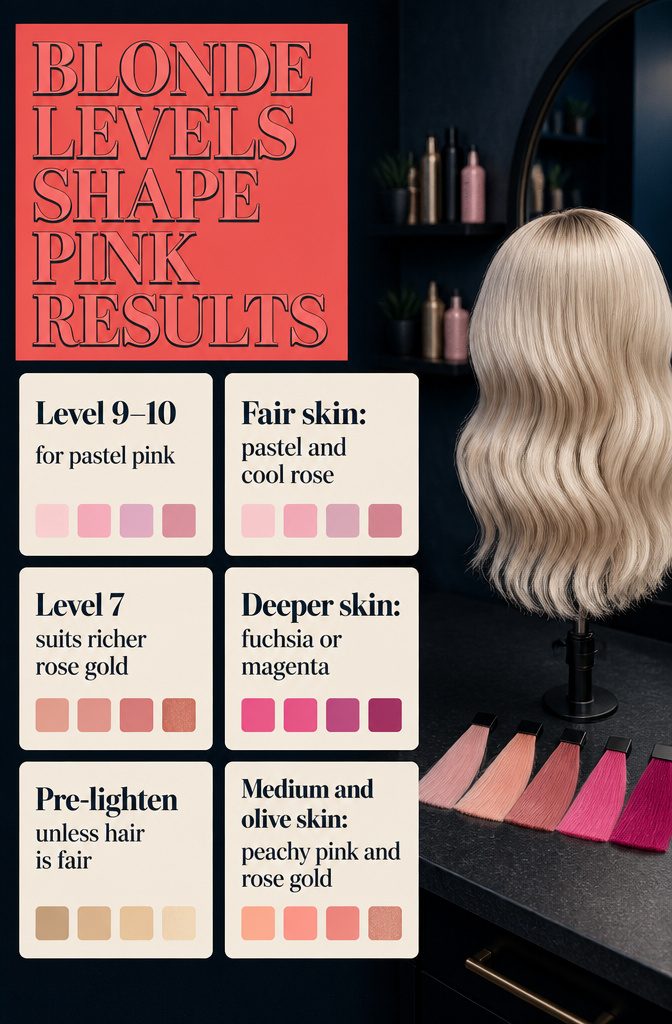
The lighter the blonde, the louder the pink. Lift to level 9 or 10 for pastel and frosty pink, because a darker base shows less of those soft shades.
Level 7, a medium blonde, is the better start for rose gold, since the extra depth gives the pink more richness. Unless your hair is already fair, it needs pre-lightening before any pink goes on.
Skin tone picks the shade from there. Fair skin suits soft pastels, baby pinks and cool rose, which add warmth without overpowering the blonde.
Medium and olive skin look best in peachy pink, rose gold and other warmer pinks. On deeper skin, I’d go straight to saturated fuchsia or magenta, since those bolder shades bring contrast and drama.
Placement and Contrast
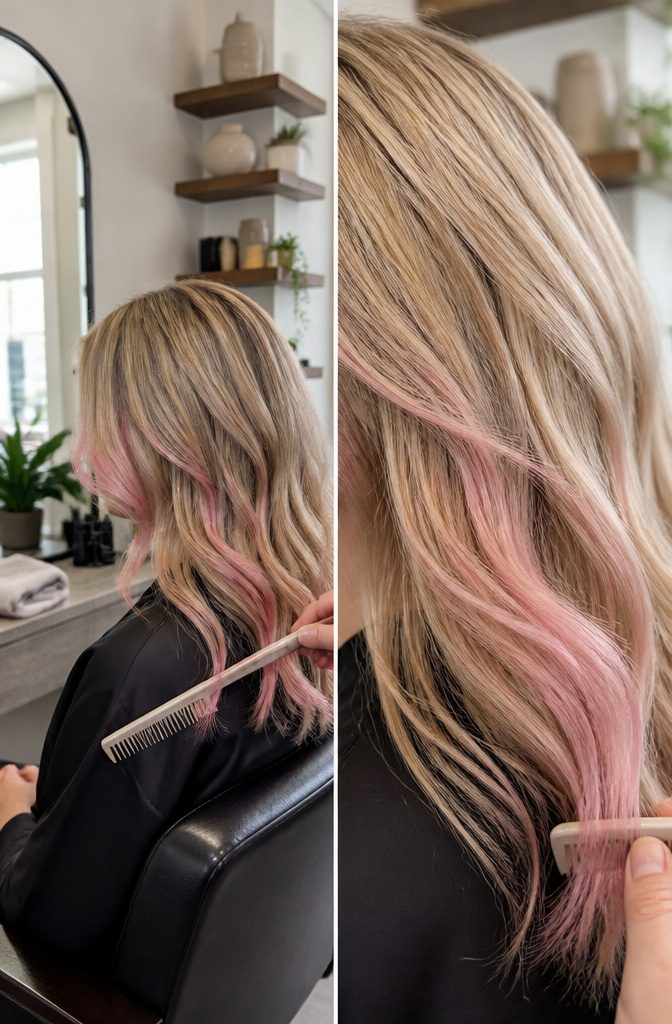
Pink can run root to tip, sit in thin ribbons, or finish as candy-colored ends over light roots. Blending rose into blonde gives a muted blush.
For a round face, I’d put the color at the crown or in longer face-framing layers, which adds vertical movement. Oval faces take almost anything, though balayage or scattered pieces suit them best.
Square faces do well with pink streaks along the jawline or cheekbones to soften angles. Heart shapes want color on the ends and lower sections, and long faces want layered pieces at the sides for width.
Loose waves, braids, sleek bobs and top knots show the contrast best. In a braid, pink weaves through like ribbon.
Keeping Pink From Fading
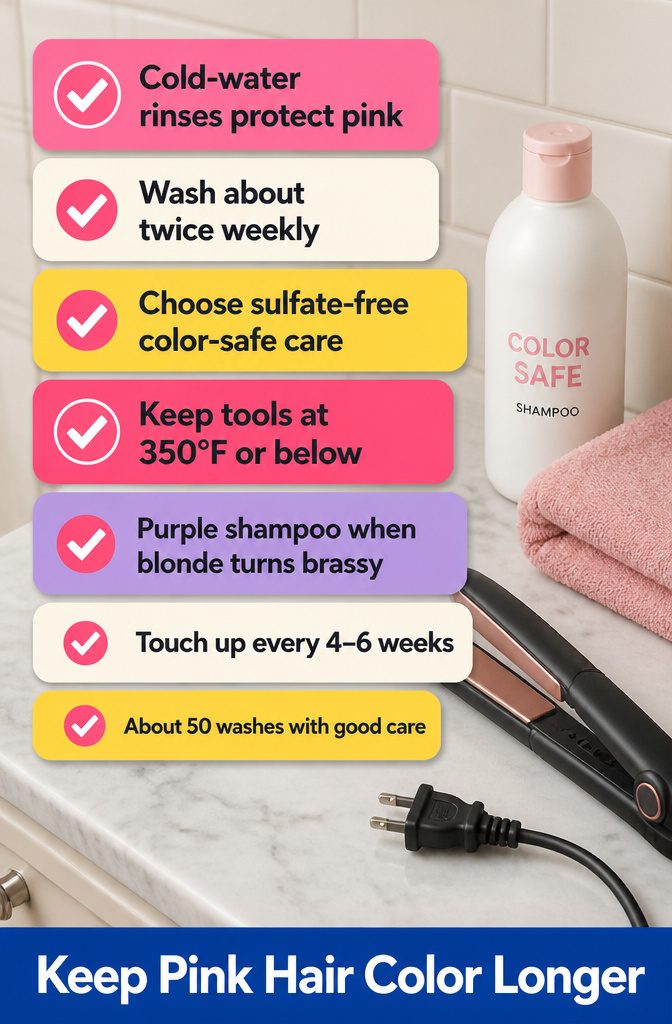
Pink fades with every wash, and semi-permanent color lasts about 50 of them with good care. This is the routine I’d follow:
- Rinse with cold water. Hot water opens the cuticle and lets the color slip out.
- Wash about twice a week, and use dry shampoo in between.
- Use a sulfate-free, color-safe shampoo and conditioner. Sulfates strip color, and I’d skip drugstore formulas for semi-permanent pink.
- Keep styling tools at 350°F or below, and never skip a heat protectant: Moroccanoil Perfect Defense (rated to 450°F), Olaplex No. 7 or EIMI Thermal Image.
- Add a separate purple or cool-blonde shampoo, such as INVIGO, whenever the blonde turns brassy.
- Book a touch-up every 4–6 weeks. It doesn’t have to be a full lightening session.
Frequently Asked Questions
What is super light blonde hair called?
Super light blonde is usually called platinum blonde, and it sits at about level 9 or 10. That is the same base pastel and frosty pink need, because the lighter the hair, the more of the pink tone shows.
If your hair starts darker than level 8, talk with your colorist about pre-lightening and the condition of your hair before booking pink.