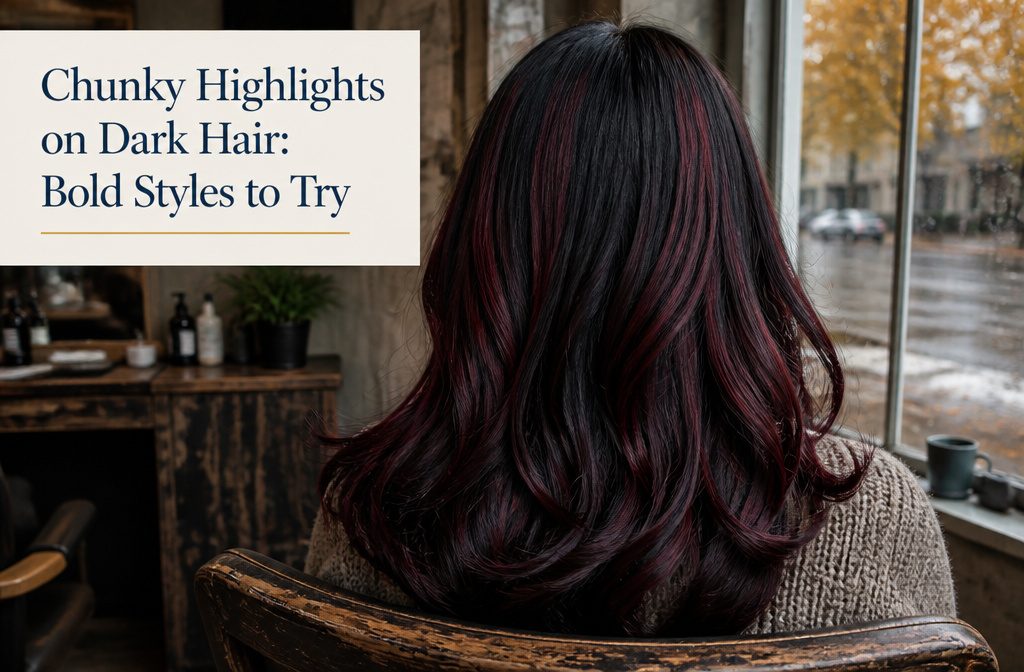
Chunky highlights on dark hair are thick, visible streaks of contrasting color placed intentionally rather than blended.
The darker your base, the harder the color reads: burgundy on near-black hair looks jewel-toned in direct light, while ash blonde on warm brown pulls cooler and almost silvery.
Placement changes the effect, whether you pack the color into face-framing pieces or run it all over.
1. Bold Burgundy, Red, or Ash Blonde on Dark Hair
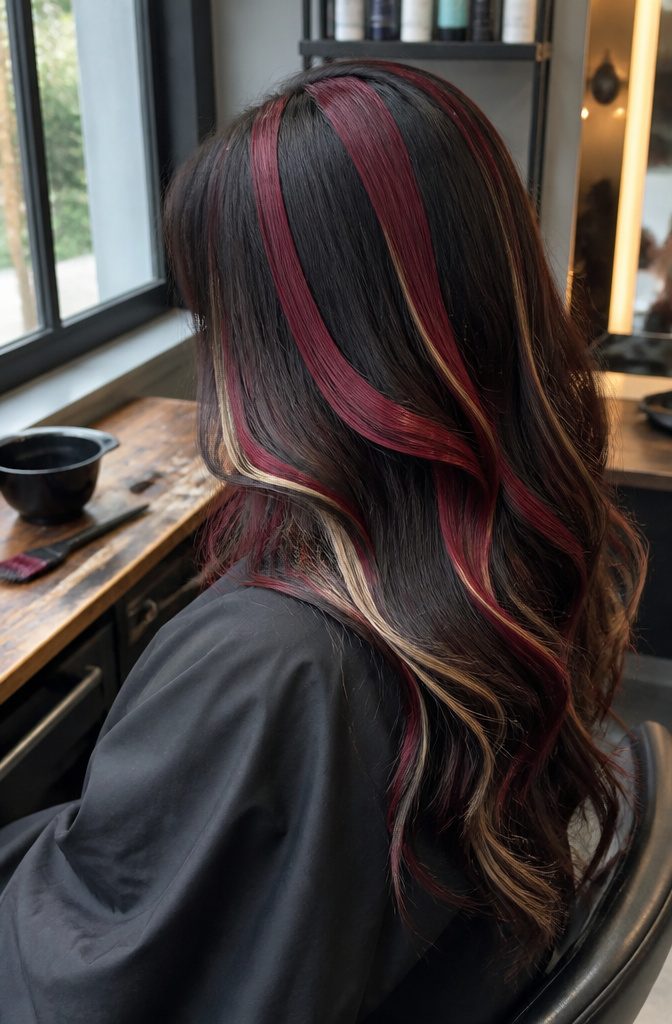
Bold streaks of burgundy, red, or ash blonde against black or brown hair deliver contrast that reads across a room.
The darker your base, the harder the color pops: burgundy on near-black hair looks jewel-toned in direct light, while ash blonde on warm brown pulls cooler and almost silvery. Red sits between the two for warmth without going golden.
The finish depends on how wide you go and where the color lands. Thick ribbons through the crown and sides give you that intentional, blocked look rather than anything blended.
I like burgundy best for this: it holds drama without the upkeep blonde demands, and it fades to a softer wine rather than brass.
Ash blonde needs toning every few weeks to stay cool, so factor that into the calendar if you pick it. Red is the wildcard, vivid at first but notorious for washing out faster than either of the other two.
2. Classic Blonde Highlights for Striking Contrast
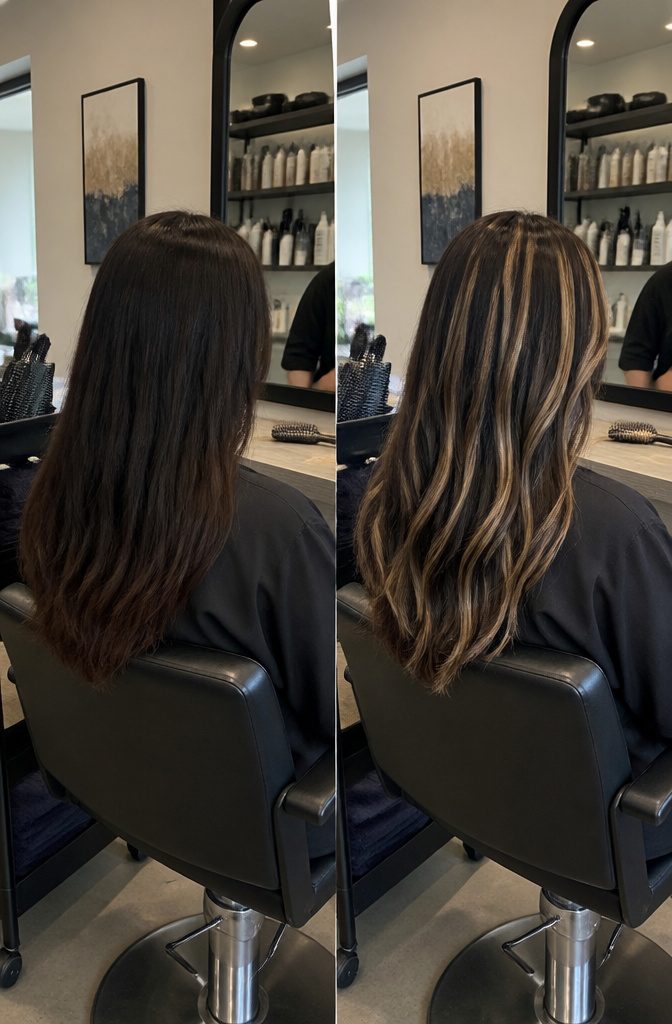
The contrast does the work here.
Caramel or platinum blonde highlights placed against a darker base create the bold, high-impact look that defines chunky highlights on dark hair. The width of each piece matters less than the distance between the tones you’re pairing.
Caramel suits brunettes who want warmth without losing the structure of the base color. Platinum pushes harder and reads as intentional even from across a room.
Both deliver striking contrast, and that contrast is what makes the placement read as chunky rather than blended. The darker your natural color, the more dramatic the result when you go light.
This look works because it refuses to soften the edges. Where balayage melts tones together, chunky blonde highlights sit distinct, and the base stays visible between each piece.
3. Warm Blonde on Brown Hair for a Sunlit Glow
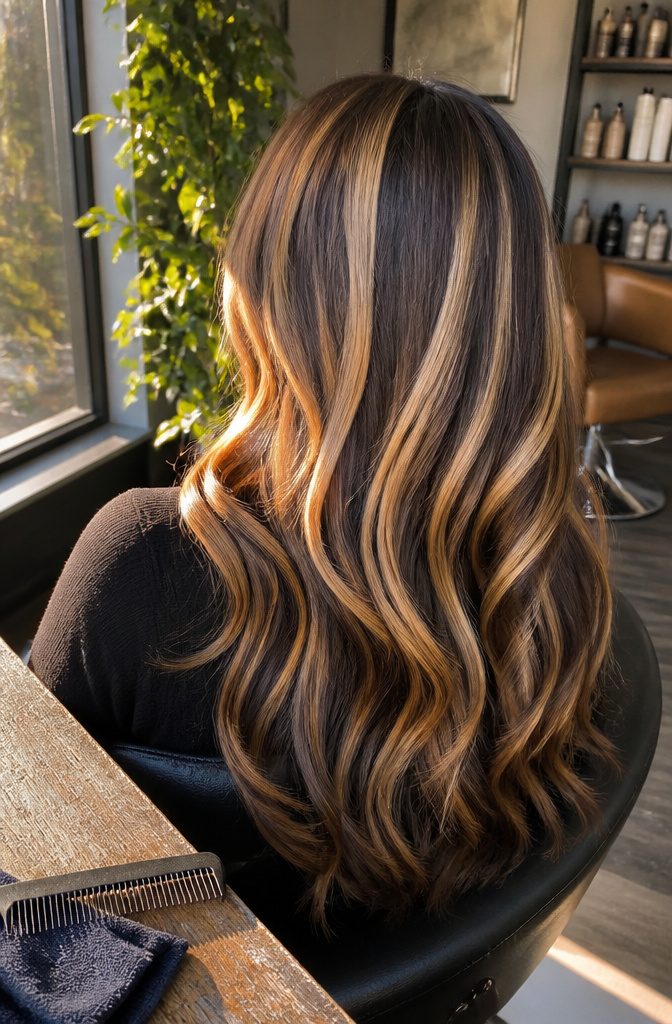
Warm blonde streaks on brown hair deliver contrast without the stark punch of platinum.
The combination balances warmth and brightness, and it reads as natural dimension rather than deliberate color work. I like this look for anyone who wants visible highlights but prefers a softer hand than the caramel-on-brunette or ash-on-black options deliver.
The sunlit glow the name suggests comes from the temperature match. Blonde tones that lean golden or honey sit next to brown without fighting it, so the result feels cohesive even when the chunks are thick.
You get movement and brightness, but the palette stays in one family. That restraint is what makes the look wearable day to day, and it grows out more gracefully than cooler tones that sit further from your base.
Placement matters here just as much as color.
Thick, visible sections catch light and create the contrast, but spacing them out keeps the effect from reading as blocky. Ask your stylist to keep the blonde pieces varied in width if you want the brightness without hard stripes.
4. Pastel Pink, Electric Blue, or Neon Green
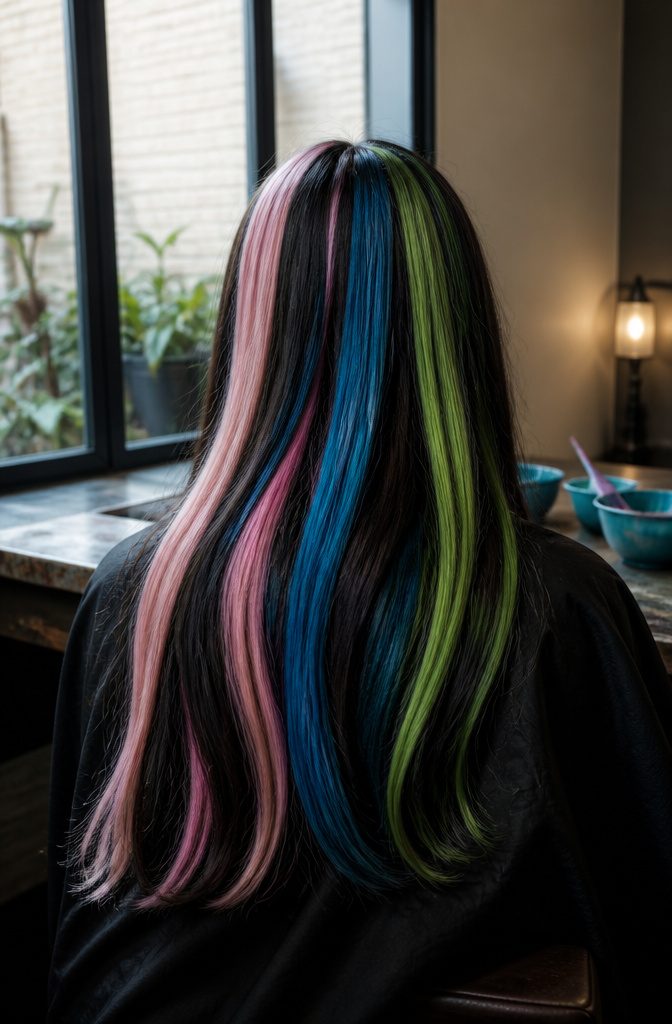
Pastel pink sits in two-inch stripes from root to tip and looks nothing like the foiled highlights you grew up with.
Electric blue run through dark brown in thick sections gives you something closer to anime than salon, and neon green chunked through black hair reads punk even when the rest of the look is polished.
These colors need dark hair to punch through.
On blonde they wash out to Easter pastels, but against deep brown or black the contrast is high enough that each stripe holds its own shape and the color stays visible from across a room.
You’ll need to keep up with maintenance. Vivid fashion colors fade fast, and pastel pink especially will shift toward peach or even salmon after a handful of washes.
You’ll need a refresh every four to six weeks if you want the color to stay true, and that means either a standing appointment or a willingness to mix your own top-up at home.
The look is bold enough that most people treat it as temporary by design, swapping out shades seasonally rather than committing to one for the long haul.
5. Two-Tone Highlights for an Edgy Statement
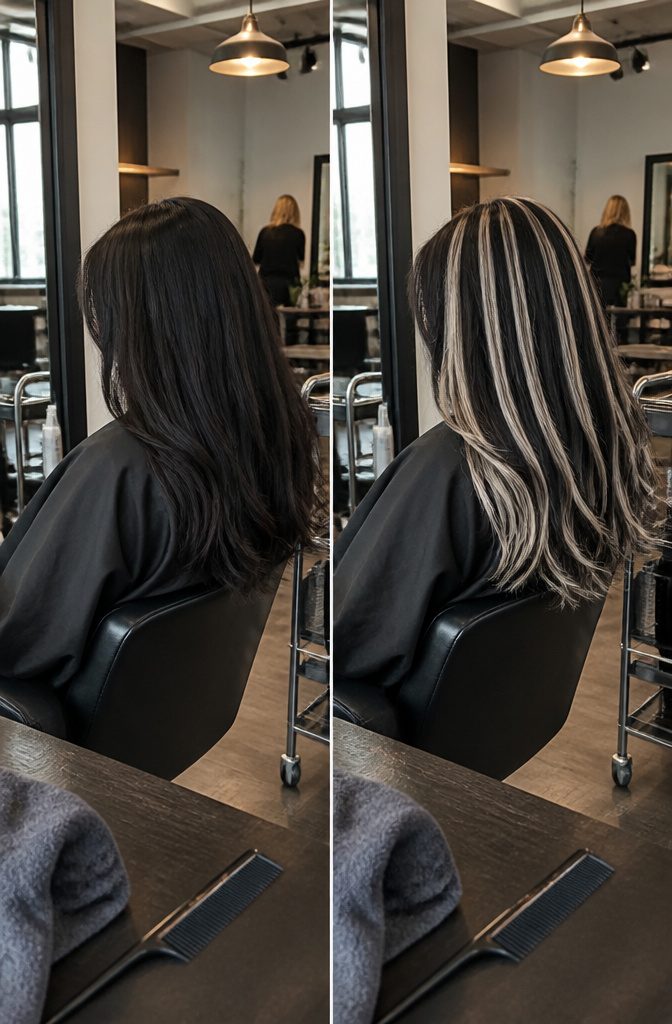
Pair blonde and black or red and brown for a look that divides the hair into opposing camps rather than blending them.
The contrast is the design: chunky platinum blonde streaks against a jet-black base or deep burgundy chunks through rich brown create a sharper edge than graduated balayage ever could. Each color holds its territory.
Two-tone chunky highlights work because the eye reads them as intentional geometry, not a natural fade. The colors stay separate, so the placement matters more than usual.
A stylist can alternate the tones in fat vertical slices for a striped effect or concentrate one shade at the crown and the other at the ends for a blocked look that changes as you move.
The combination itself signals the statement.
Blonde and black reads high-contrast and graphic, red and brown skews warmer but still distinct. Either way, you’re committing to visible roots and a look that announces itself before you walk in the room.
Face-Framing Placement and What It Does
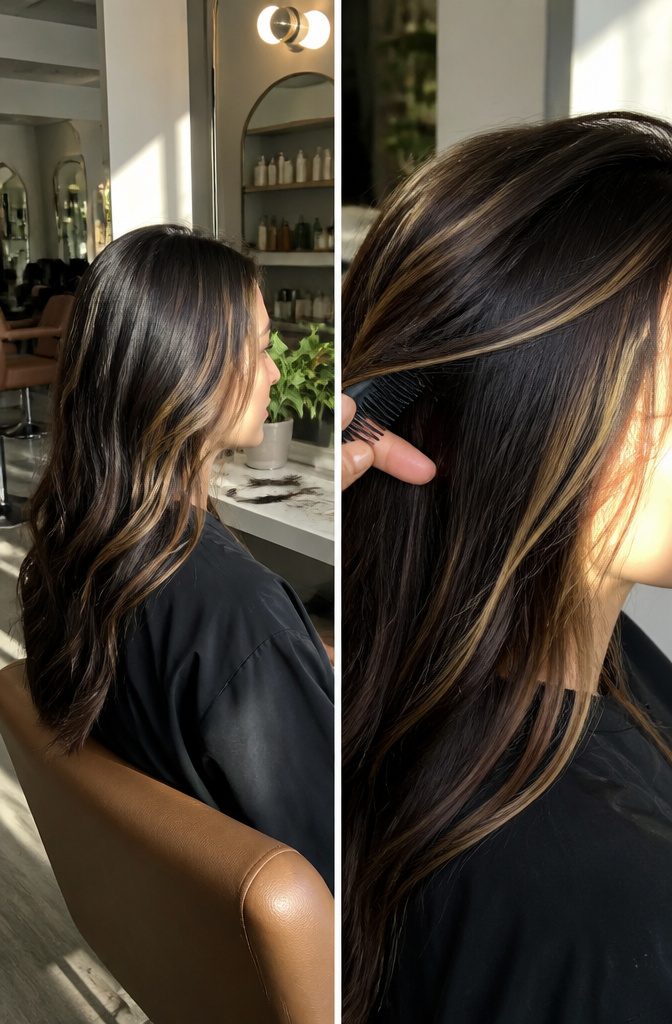
Face-framing chunks sit close to your hairline, temple to jaw, and catch light in a way that all-over color does not.
They brighten the area around your face and pull the eye to cheekbones, eyes, whatever feature you want to emphasize.
I like them for doing real optical work: a few well-placed streaks can elongate a round face or add dimension to an angular jawline, depending on where your stylist puts them.
Face-framing highlights are strategically placed to brighten the area around your face, giving you a youthful glow and emphasising your best features.
The contrast matters more on dark hair. Blonde or caramel streaks against deep brown or black read immediately, so the placement does not need to be heavy to register.
If you want more depth without flattening the effect, pairing highlights with lowlights keeps the color from looking too stark or one-note.
What to Bring and Ask Your Stylist
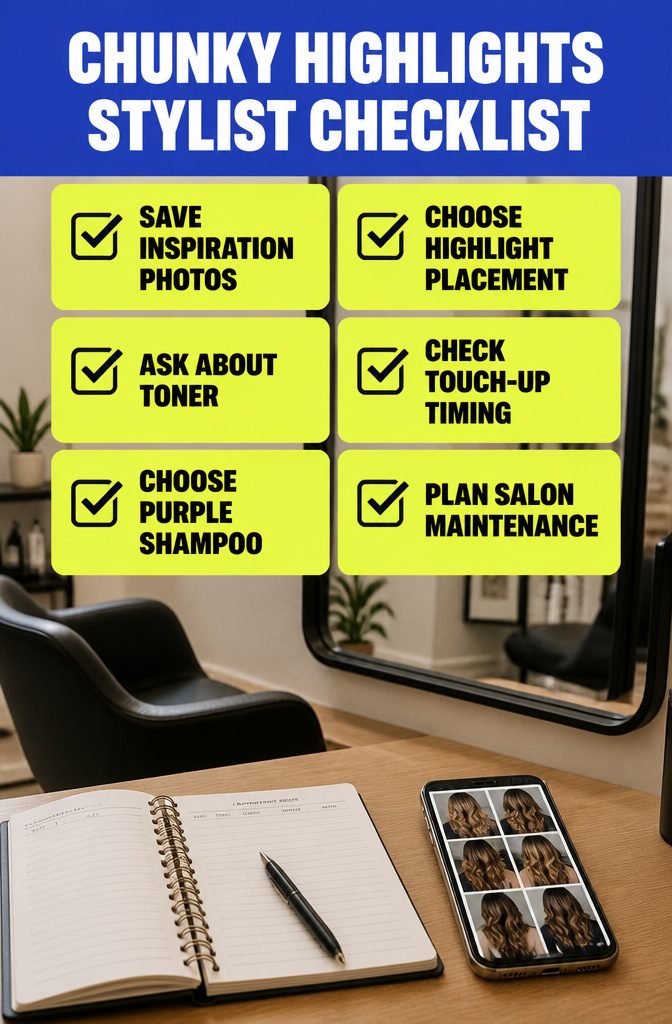
Bring inspiration photos when you book your appointment. A handful of saved images does more than any description, and it bridges the gap when you are not sure what name to call a look.
Once you are in the chair, talk through placement. All-over highlights give the most contrast, face-framing keeps the impact near your eyes and cheekbones, and concentrated placement lets you pack color into the crown or ends without touching roots.
The choice changes both the look and how often you come back.
Ask about:
- Toners and whether your stylist plans to use one to adjust tone after lifting
- Touch-up timing, since chunky highlights grow out more visibly than subtle balayage
- Home care products, particularly purple shampoo if you are going blonde on dark hair
- Maintenance schedule, because this style can need more frequent salon visits than blended techniques
Chunky highlights are lower-maintenance than full color but higher than soft, lived-in styles. Plan for that before you commit.
Frequently Asked Questions
Why are chunky highlights back in trend?
Chunky highlights deliver bold contrast and intentional placement that revives the Y2K aesthetic, pushed back into popularity by celebrities and social media.
The look refuses to blend, which is exactly what makes it read as current rather than blended balayage. Thick, visible sections catch light and create impact that softer techniques can’t match.
Who suits chunky highlights best?
Chunky highlights work for most people when placement and color match your face shape, hair type, and base color.
Face-framing pieces can elongate a round face or add dimension to an angular jaw, while thicker hair shows off the boldness and finer hair gets the illusion of volume.
The contrast is more dramatic on darker bases, softer on lighter ones.
What should you ask your stylist for chunky highlights?
Bring inspiration photos so your stylist can see exactly what you want, then discuss placement: all-over, face-framing, or concentrated at the crown or ends.
Ask about toners, touch-up timing, and home care products like purple shampoo if you’re going blonde. Chunky highlights need more upkeep than blended styles, so nail down the maintenance schedule before you commit.
What are the best highlights for brunettes?
Caramel or platinum blonde creates striking contrast against brunette hair, with caramel adding warmth and platinum delivering high-impact drama.
Burgundy or red also work well for bold color that pops without the upkeep blonde demands. The darker your base, the harder the color reads, so brunettes get the full benefit of chunky placement.
Are chunky highlights in style?
Yes, chunky highlights are in style right now as part of the Y2K trend revival.
The bold, intentional look has been highly requested in salons lately, especially thick horizontal slices placed at the crown and face-framing pieces that create visible contrast.
The style works because it refuses to soften or blend, which is what current trends favor.





