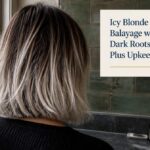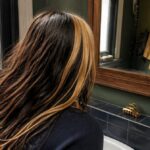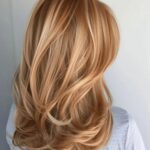
The ideas here start with peekaboo pieces tucked under the top layer and end with medium dark-blonde that reads clearly on brown hair, and nearly every one keeps the roots dark.
Your skin’s undertone decides which tone is yours: warm or golden skin carries caramel, honey and cinnamon, while cool or pink undertones suit ash brown.
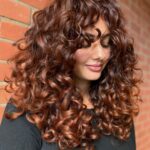
For textured hair, Auburn Highlights on Curls is the idea to study, since a curl pattern breaks lighter pieces up and spreads them through the whole head.
1. Caramel Balayage
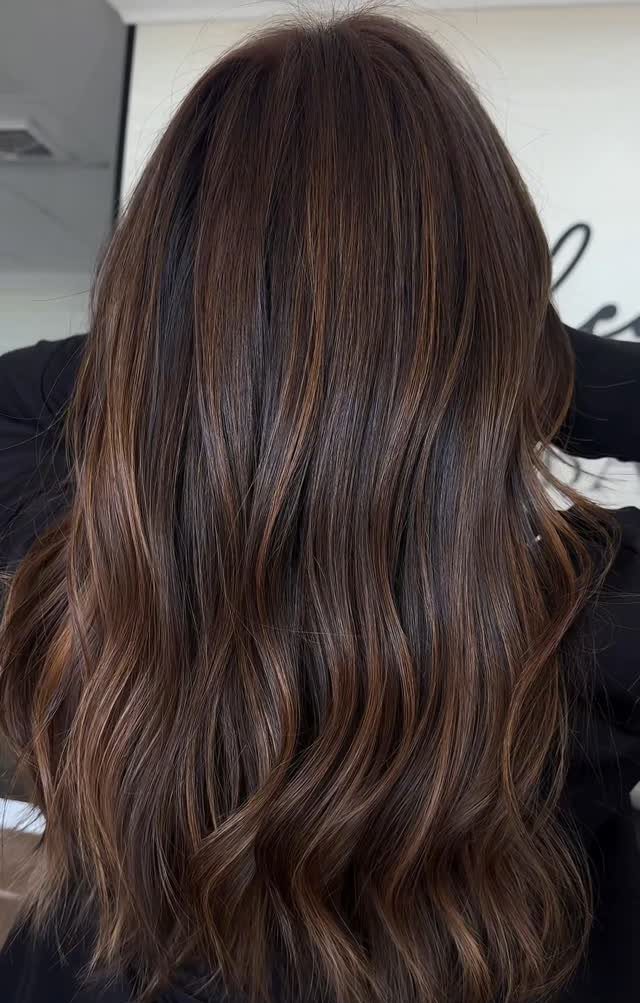
Caramel balayage lifts dark brown hair with hand-painted pieces that catch the light without looking striped or blocky. The color sits where the sun would naturally hit: mid-lengths, ends, and a few face-framing strands.
I like this one for its softness.
The blend is gradual, so regrowth doesn’t show a hard line, and touch-ups can wait. That makes it cheaper to maintain than foil highlights, which need touch-ups more often.
If your base is very dark, ask for caramel rather than honey. Honey can pull brassy on black or deep brown hair.
2. Peekaboo Highlights
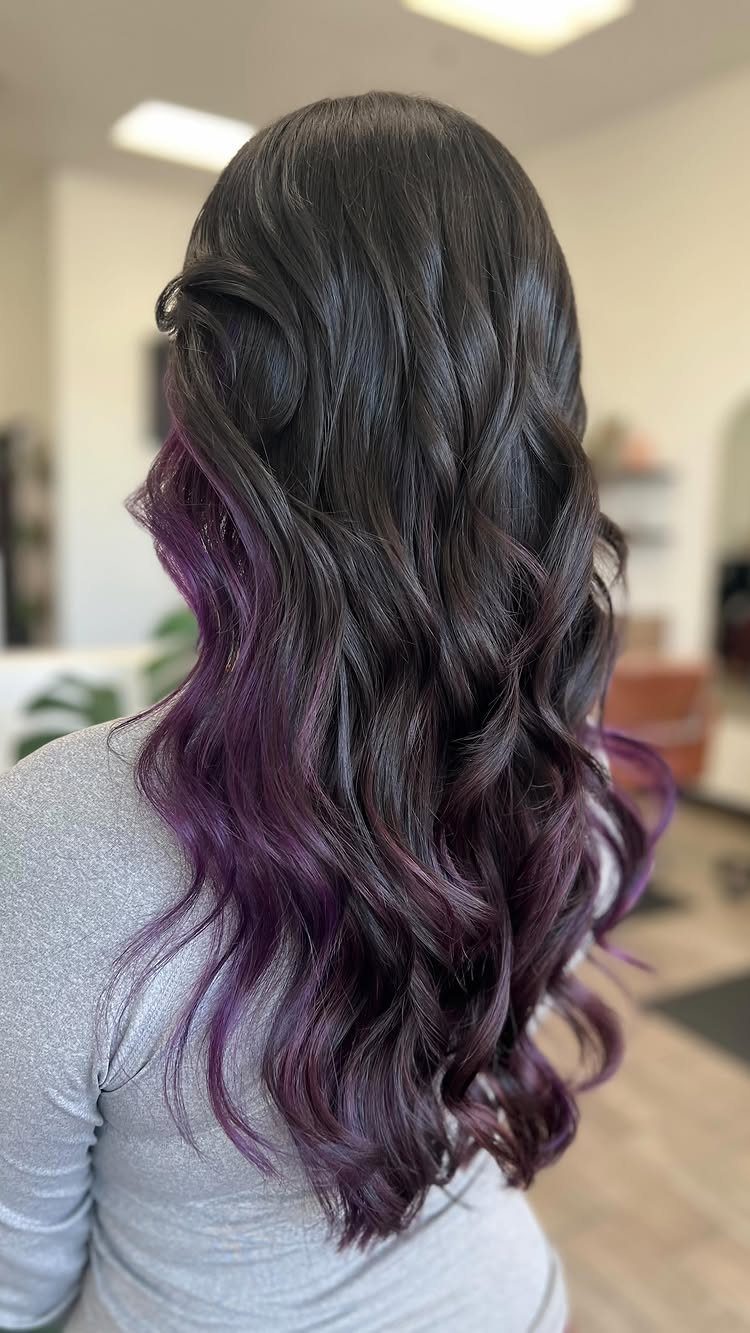
Peekaboo highlights hide underneath the top layer, so they stay mostly invisible until you move, flip your hair, or pull it up.
The color can be anything: purple, teal, blonde, rose gold. Your natural dark hair acts as a cover.
This is the one to choose if you want color but work somewhere that limits visible dye. The lighter pieces sit below the parting line and underneath the bulk of your hair, so they only show with movement or styling.
At home, section the top layer up and clip it away, then paint or foil the underneath sections. Maintenance depends on the color you choose: fashion shades fade faster than natural tones.
3. Mocha Highlight Ribbons
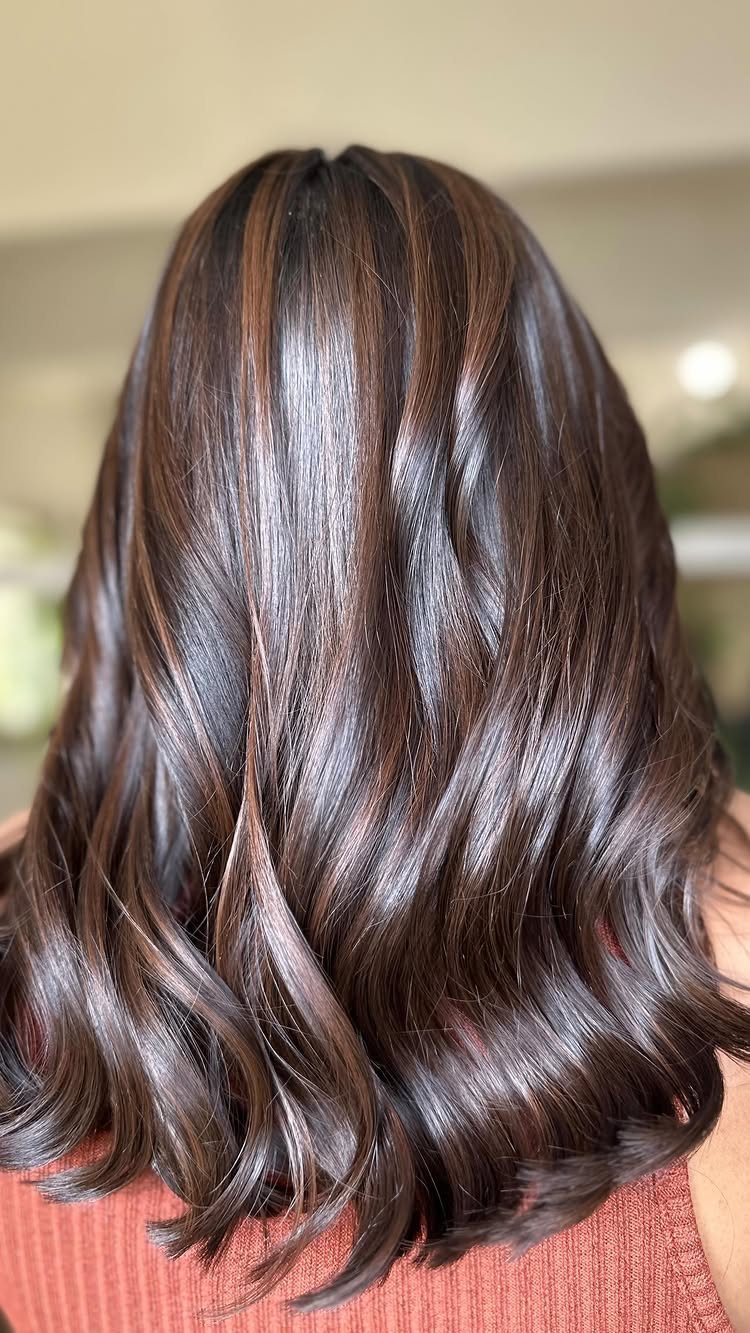
Mocha ribbons are thin, vertical highlight sections that run through dark brown hair like fine stripes. The color is close to the base, just a shade or two lighter, so the effect is subtle and polished rather than bright.
This suits you if you want dimension without a heavily highlighted look. The ribbons catch light without announcing themselves, and because the contrast is low, regrowth blends in easily.
Foils give you the cleanest ribbons. Ask for a cool or neutral mocha tone if your base is ash brown, and a warmer mocha if your base leans chocolate or espresso.
4. Caramel Highlights
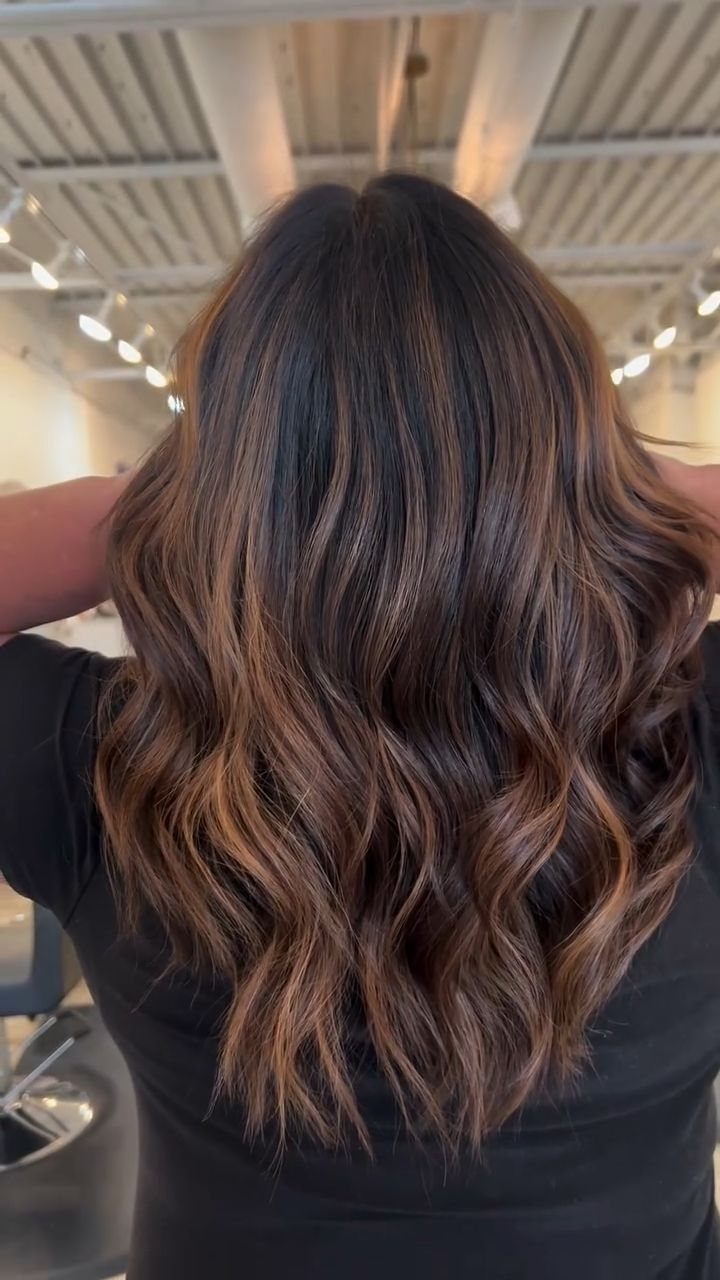
Caramel highlights bring warmth to dark brown hair with pieces that are noticeably lighter but still read as brunette.
The color is golden and rich, a few shades up from the base, and the placement can be all over or concentrated at the front and ends.
If you have a warm skin tone, caramel flatters better than ash or beige. It plays well with brown eyes and olive or golden undertones.
Foils or balayage both work.
Foils give you more even, all-over brightness, while balayage keeps the color softer and more concentrated toward the ends. Plan on a refresh every 8 to 10 weeks if you go full foils, longer if you go balayage.
5. Ash Brown Highlights
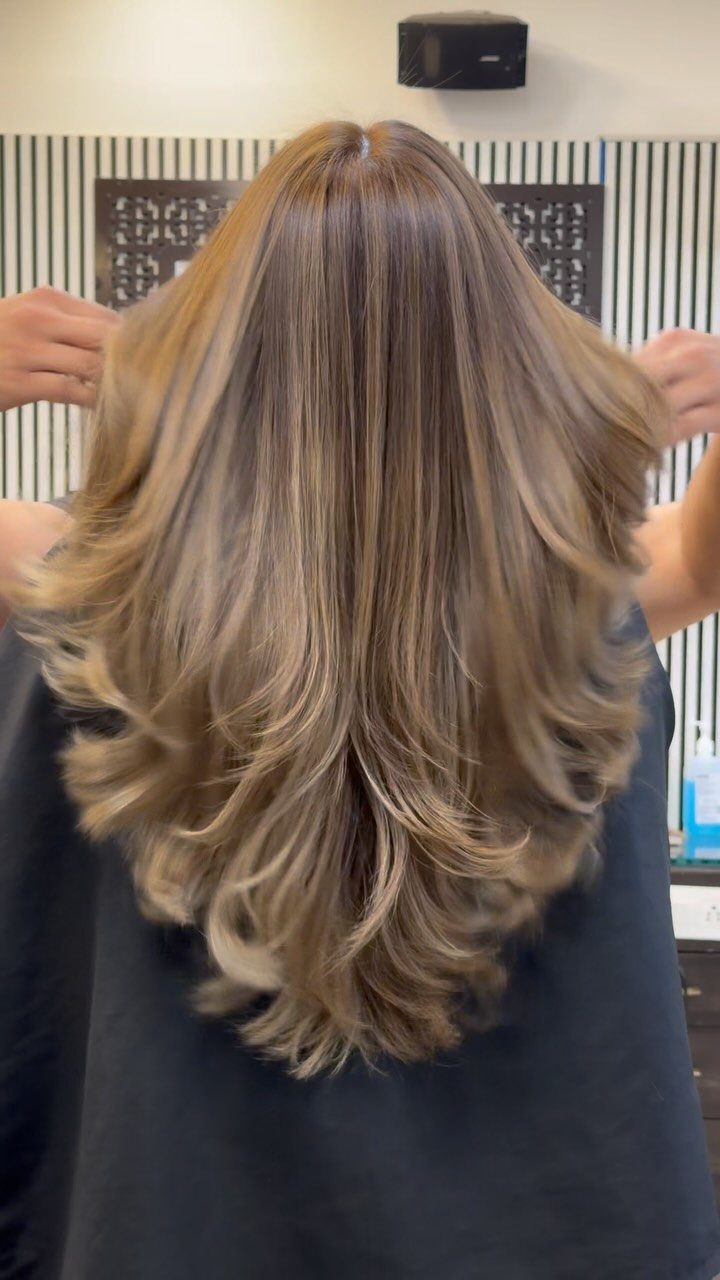
Ash brown highlights cool down a warm dark base with pieces that sit a few shades lighter but stay firmly brown. The tone is muted and silvery, without any gold or red showing through.
This is the one to pick if your skin has cool or pink undertones, or if your natural base already leans ashy and you don’t want to fight it.
It softens a heavy dark brown without going brassy or orange in the sun.
Toner is non-negotiable. Ash highlights can fade warm after a few washes, so ask for a purple or blue toner at the salon, and use a purple shampoo at home once a week to hold the tone.
6. Mocha Brown Face Frame
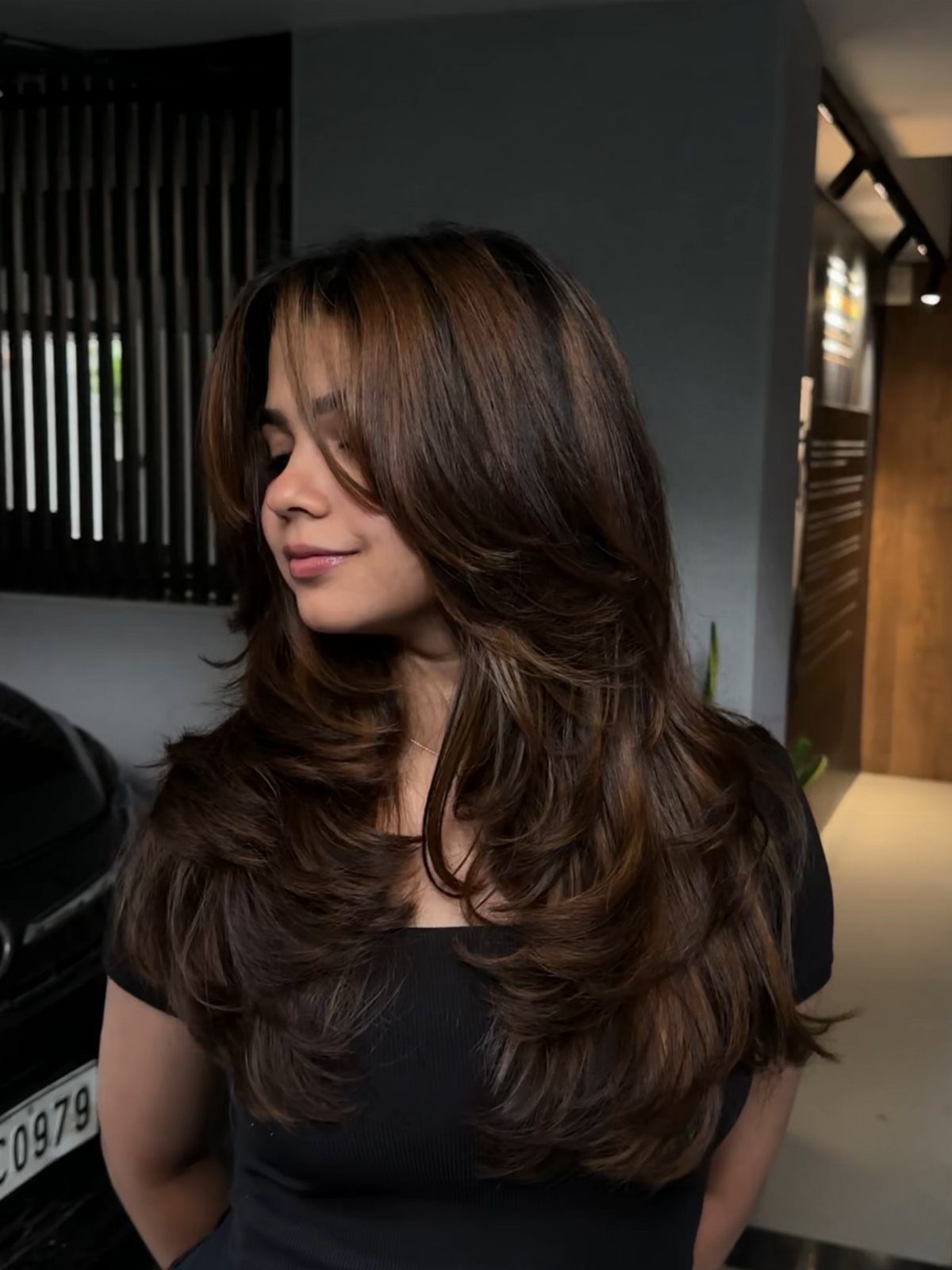
A mocha face frame keeps most of your hair dark and places lighter brown pieces only around your face, from your temples down to your collarbone. The rest stays your natural base.
This gives you the lift of highlights without the time or cost of full color. A partial highlight appointment usually costs less than a full head and spends less time in the chair.
The mocha tone works with most skin tones because it’s neutral enough to flatter both warm and cool undertones. Regrowth is less obvious than with blonde face-framing, which makes it easier to put off the next appointment.
7. Bronze Espresso Melt
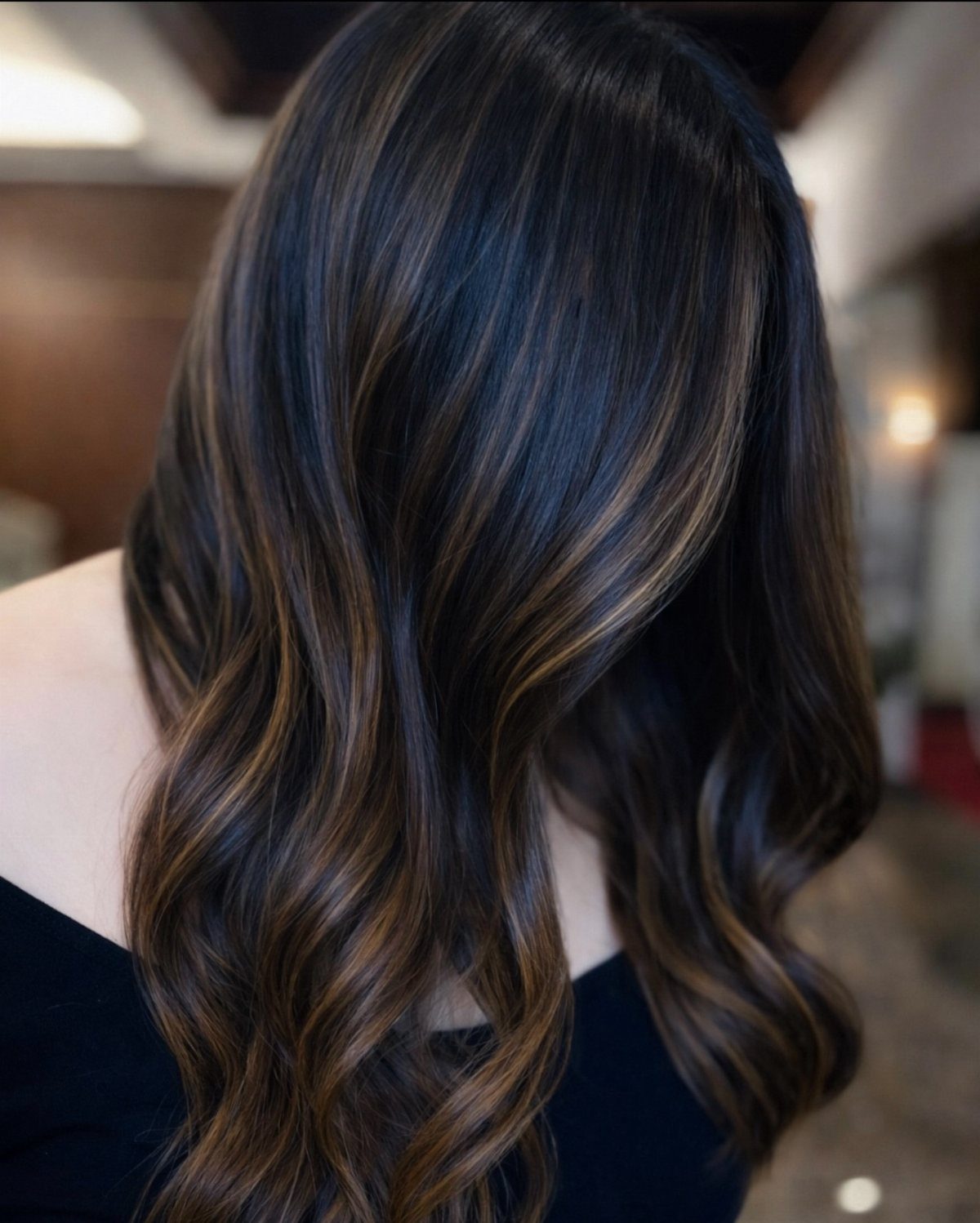
Bronze melted into espresso brown leaves no visible line where one shade stops and the next starts. The color reads as warmth moving through the hair, not as separate highlights.
Waves are the right texture for this. Every bend scatters the bronze a little differently, so the blend looks deeper than it would on straight hair.
Ask your stylist for a "melt" and bring the photo, because bronze can land anywhere from copper to gold. I’d keep it close to the espresso base for the softest result.
8. Caramel Ribbons
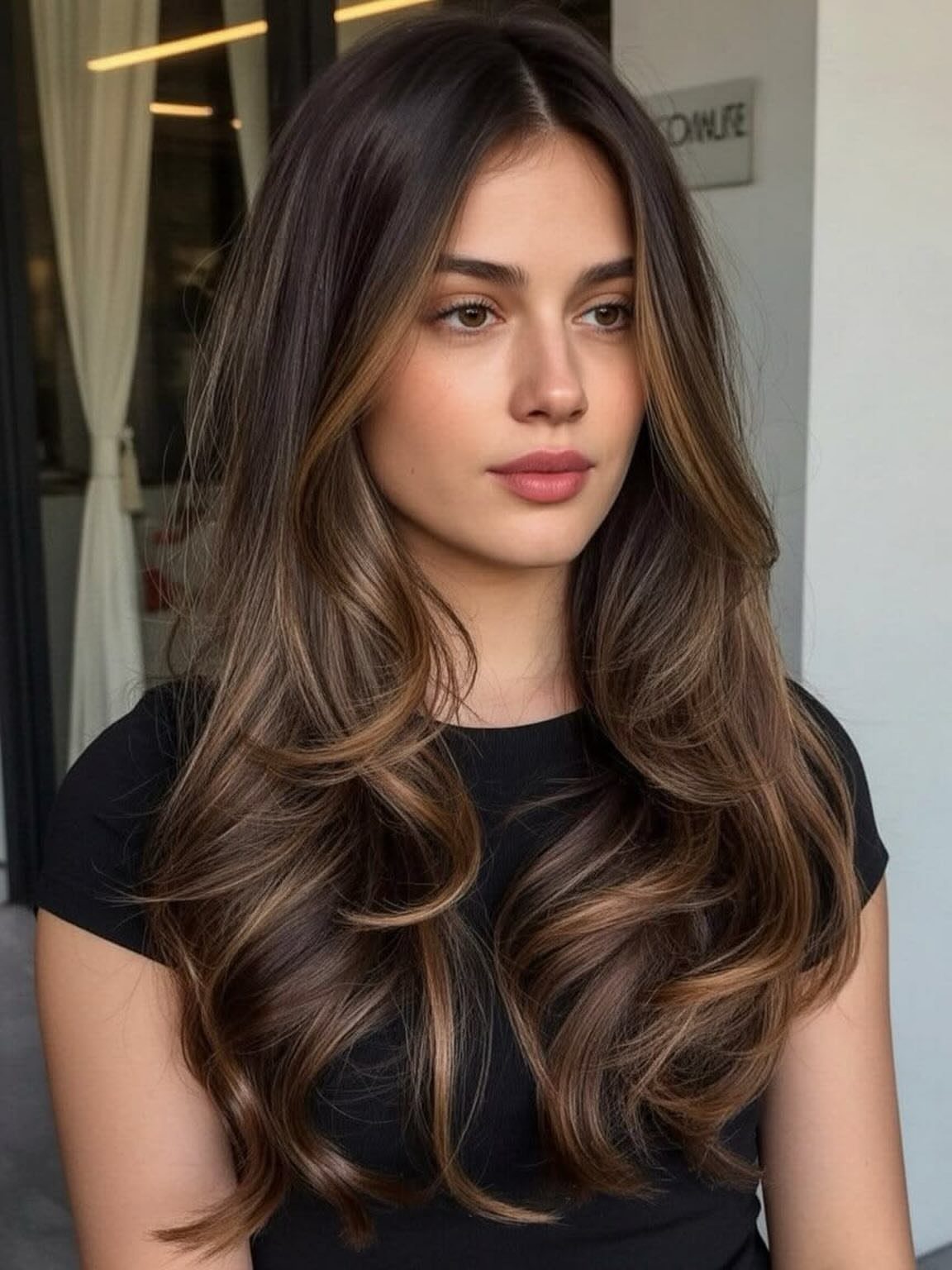
Glossy caramel ribbons work best on hair with some bend in it. Curls and loose waves twist each ribbon in and out of view, which is where the movement comes from.
Pressed flat and straight, the same color looks like plain highlights. The contrast shows best when you add texture or waves.
Ask for thin, defined pieces rather than wide chunks, and finish with a gloss at the salon so the caramel shines instead of looking dry.
9. Cinnamon Highlights
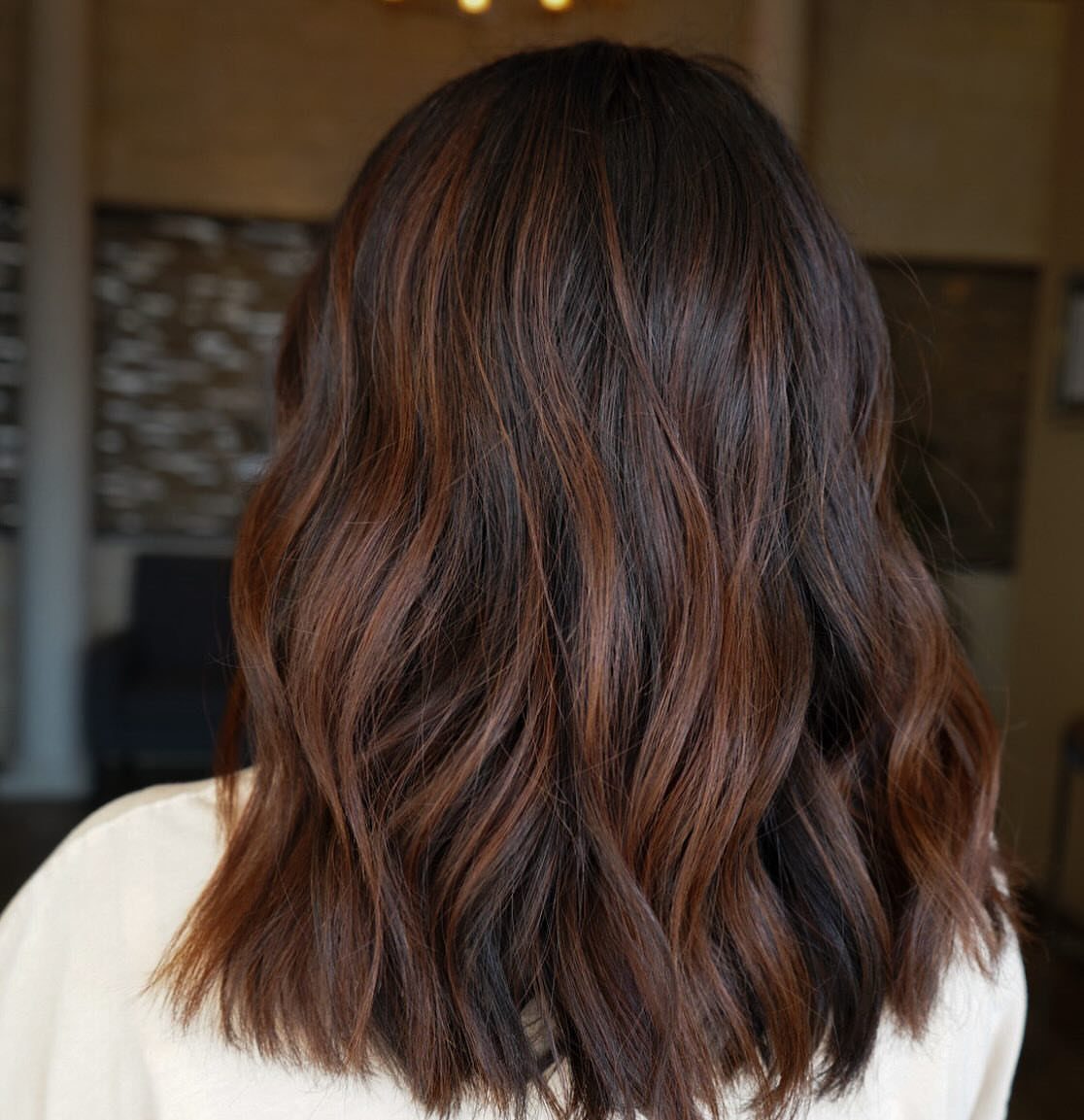
Cinnamon is what I’d reach for when caramel feels too yellow and you still want warmth. It leans toward red-brown, which gives dark hair a spiced glow in daylight.
Golden and warm undertones carry this shade without it looking muddy.
On shoulder-length hair, ask for the cinnamon pieces to start around the mid-lengths so the roots stay deep brown.
10. Traditional Balayage
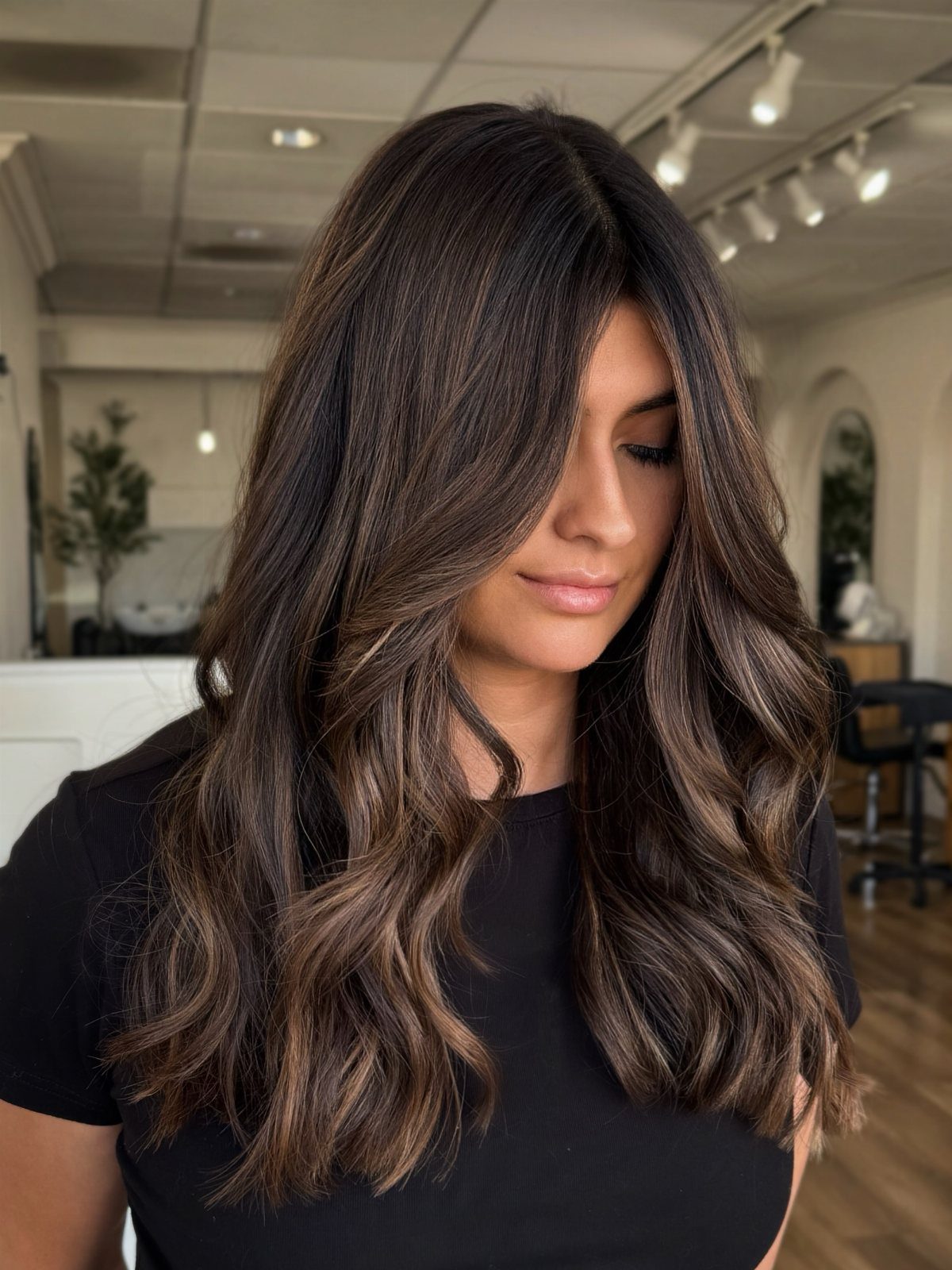
Painting color on by hand, with no foils, lets a stylist place every piece around your cut and your part. That’s why balayage looks lived-in instead of striped.
The grow-out is gentle, since the roots stay dark and the lightest tones sit lower. Long, wavy hair shows the blend best, and I’d call it the most forgiving highlight style if you hate salon visits.
Say "traditional balayage" when you book, and ask for soft, natural placement so the result doesn’t turn into ombré.
11. Hazelnut Balayage
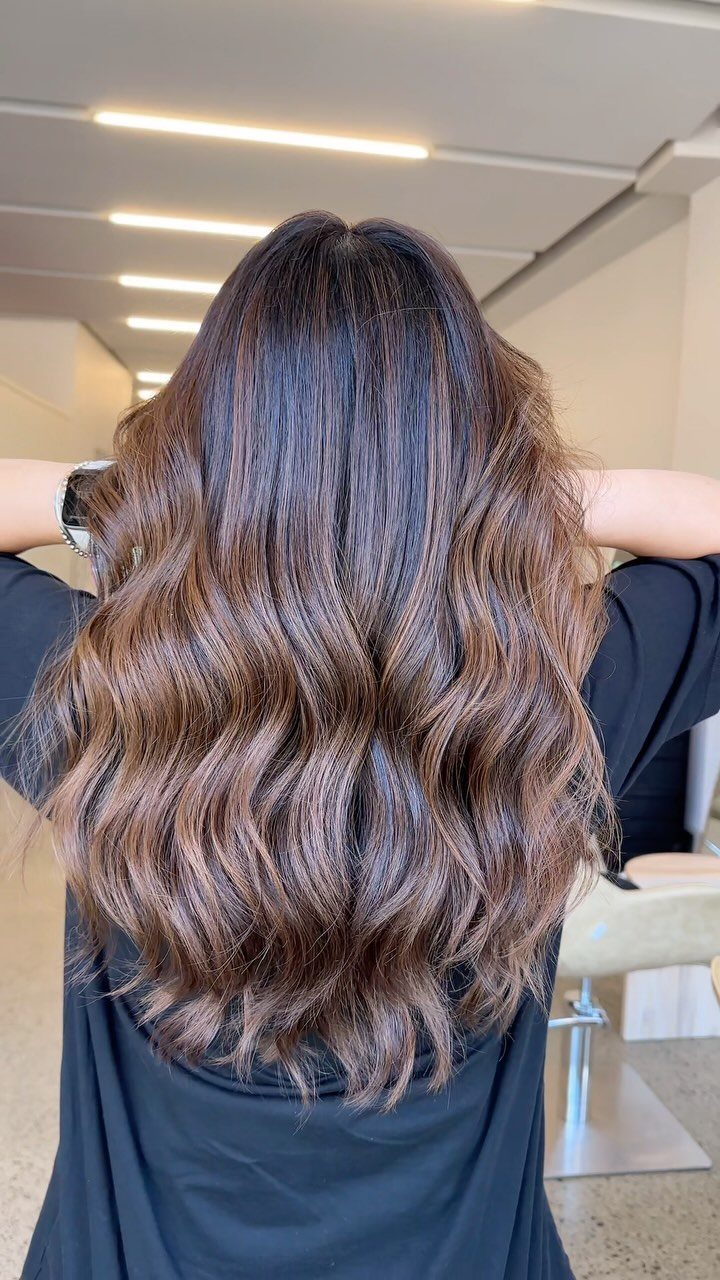
Somewhere between caramel and mocha sits hazelnut: a brown with a golden-green softness that brightens without going blonde. Over a warm, macchiato-toned base, it reads as light and rich at once.
I’d choose it if caramel feels too sweet on you but a plain brown highlight feels flat.
Because hazel tones are subtle, bring a photo and use the word "hazelnut" so your stylist doesn’t default to honey. Keep the painting soft through the mid-lengths and ends.
12. Auburn Caramel Face Frame
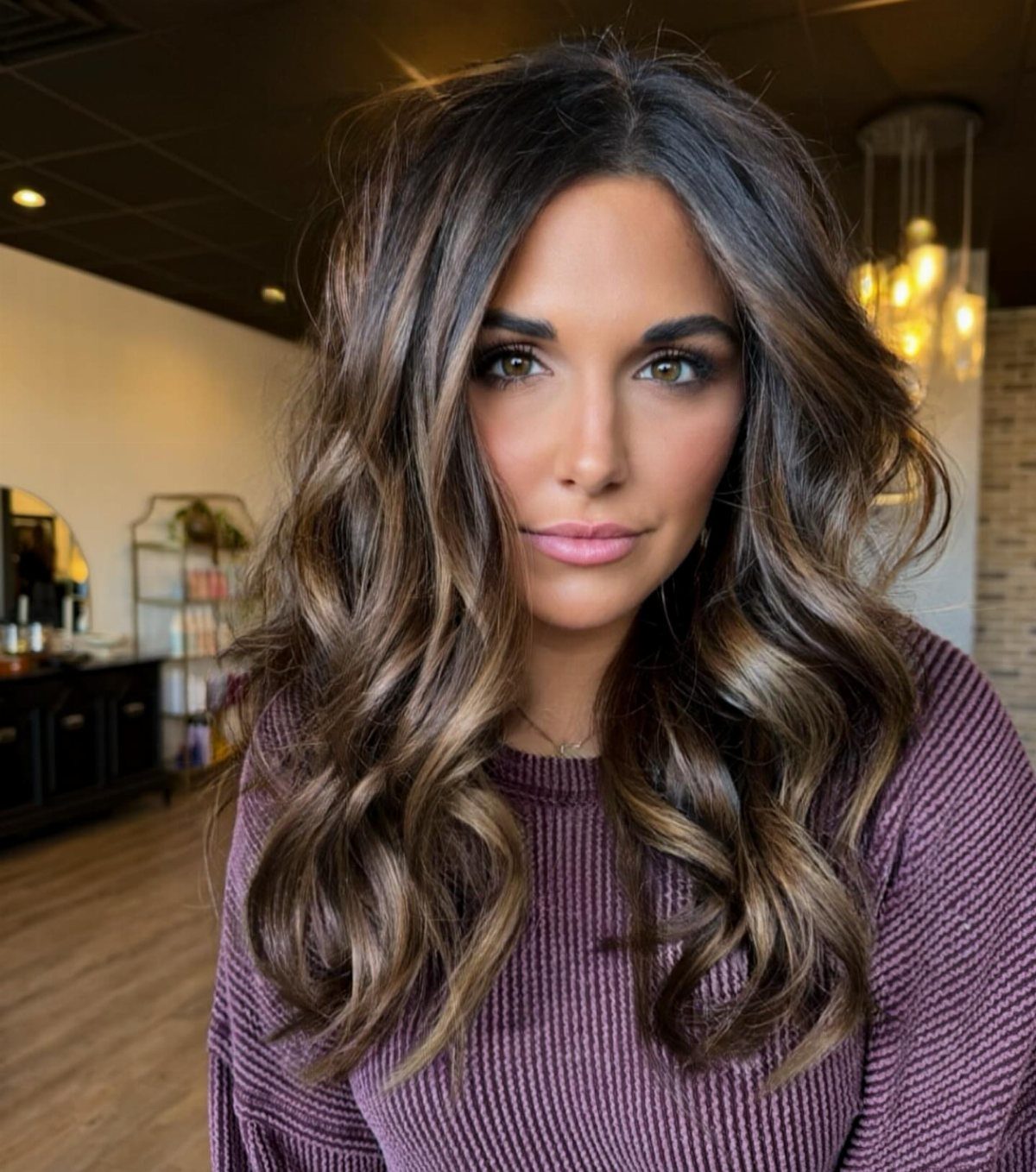
Auburn threaded through caramel puts a small flash of red right beside your face, and that’s the whole appeal. The caramel brightens, the auburn adds depth, and together they frame your cheekbones.
Because these pieces sit next to your skin, the shade matters more than usual.
You can place this at home, since you can see the front sections in the mirror. Keep the pieces thin, and let the caramel be the lighter of the two.
13. Subtle Highlights
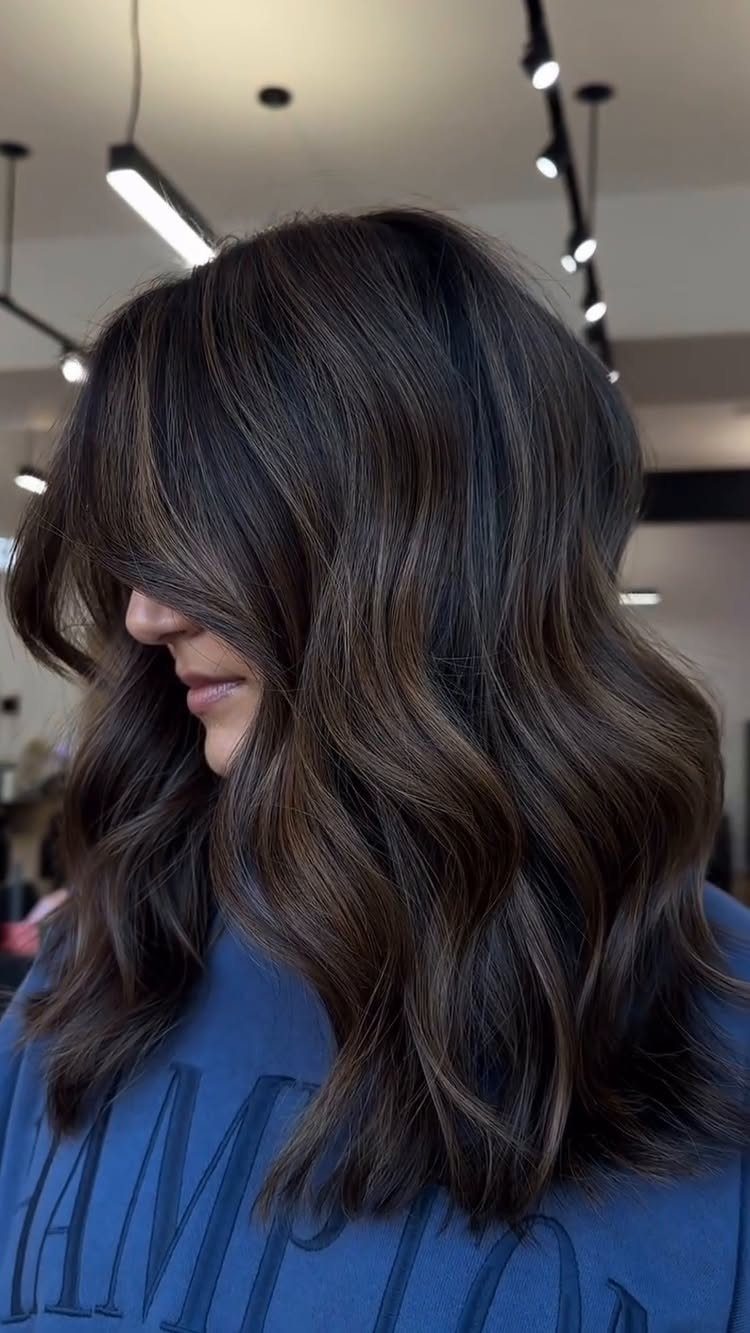
Soft, blended strands a shade or two off the base keep dark brown waves from looking flat. On long hair like this, the lighter pieces melt into the length instead of sitting in clear stripes.
I’d pick this if you want people to say your hair looks healthy rather than colored. Waves help, since each bend shows a little of the lighter tone.
Bring the photo and ask for "subtle" by name, so the stylist keeps the contrast low.
14. Short Hair Beige Balayage
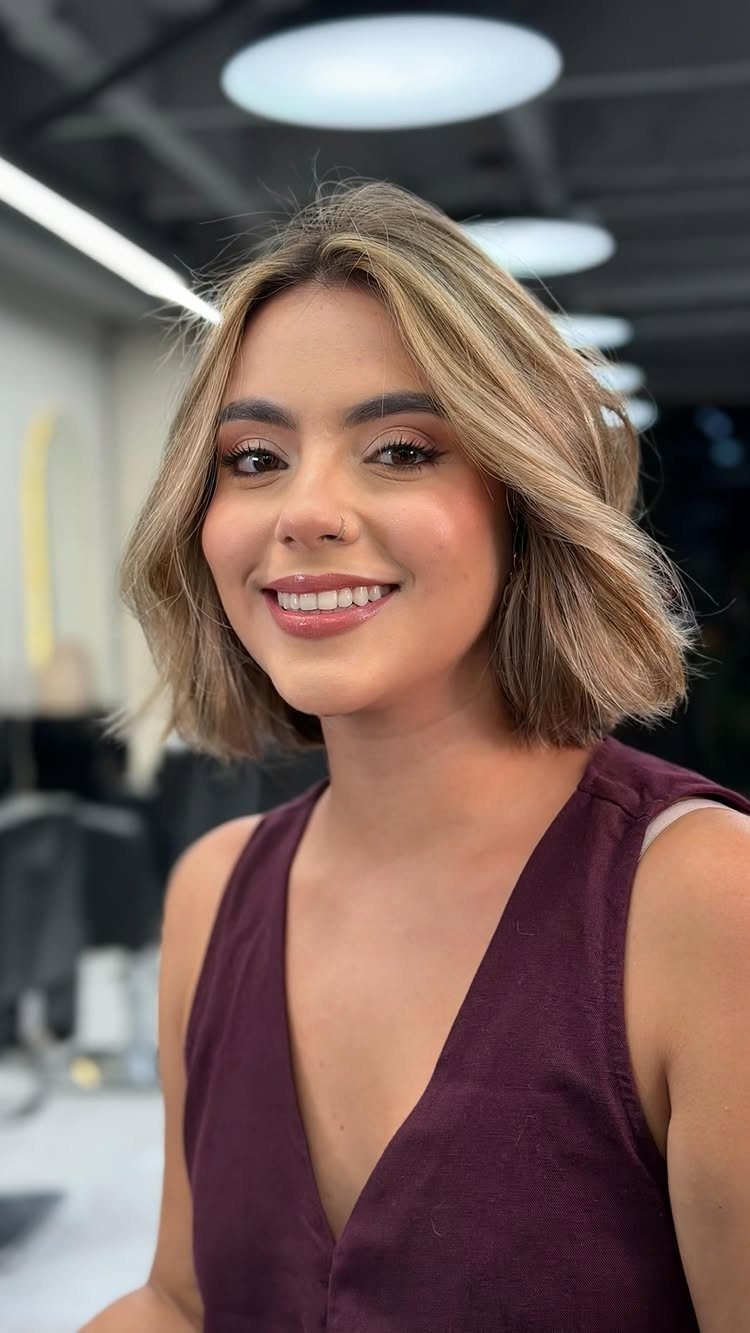
Beige on a short cut gives a bob or crop the same sandy, soft blonde that longer hair gets, just in less space.
With so little length, the lightest tone sits close to the face, which is why I’d keep the placement loose and painted rather than evenly foiled.
Short hair shows every piece, so ask for the beige to be blended through the ends and ask your stylist where the lightest section will land.
A beige-blonde like this brightens a lot, so it suits you if you want a clear change without a full blonde.
15. Toasted Dark Brown
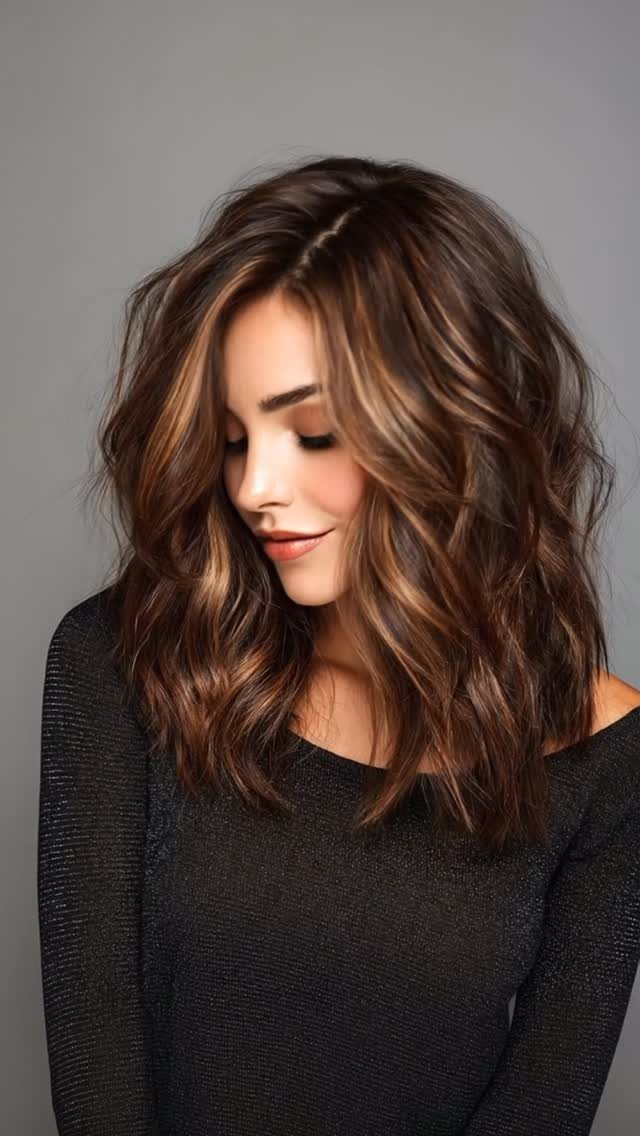
Roasted chestnut lives in the middle of the hair, and driftwood on the tips is what gives it an edge. That pale, greyed-beige end color picks out choppy layers, so each piece of texture reads clearly.
Wavy, shoulder-length hair is a good match: the cut shows off the contrast, and the chestnut keeps the whole look warm.
If you want the driftwood to look deliberate, ask for it on the very tips only. Spreading it higher turns it into a different, much blonder look.
16. Cool Ash Micro-Highlights
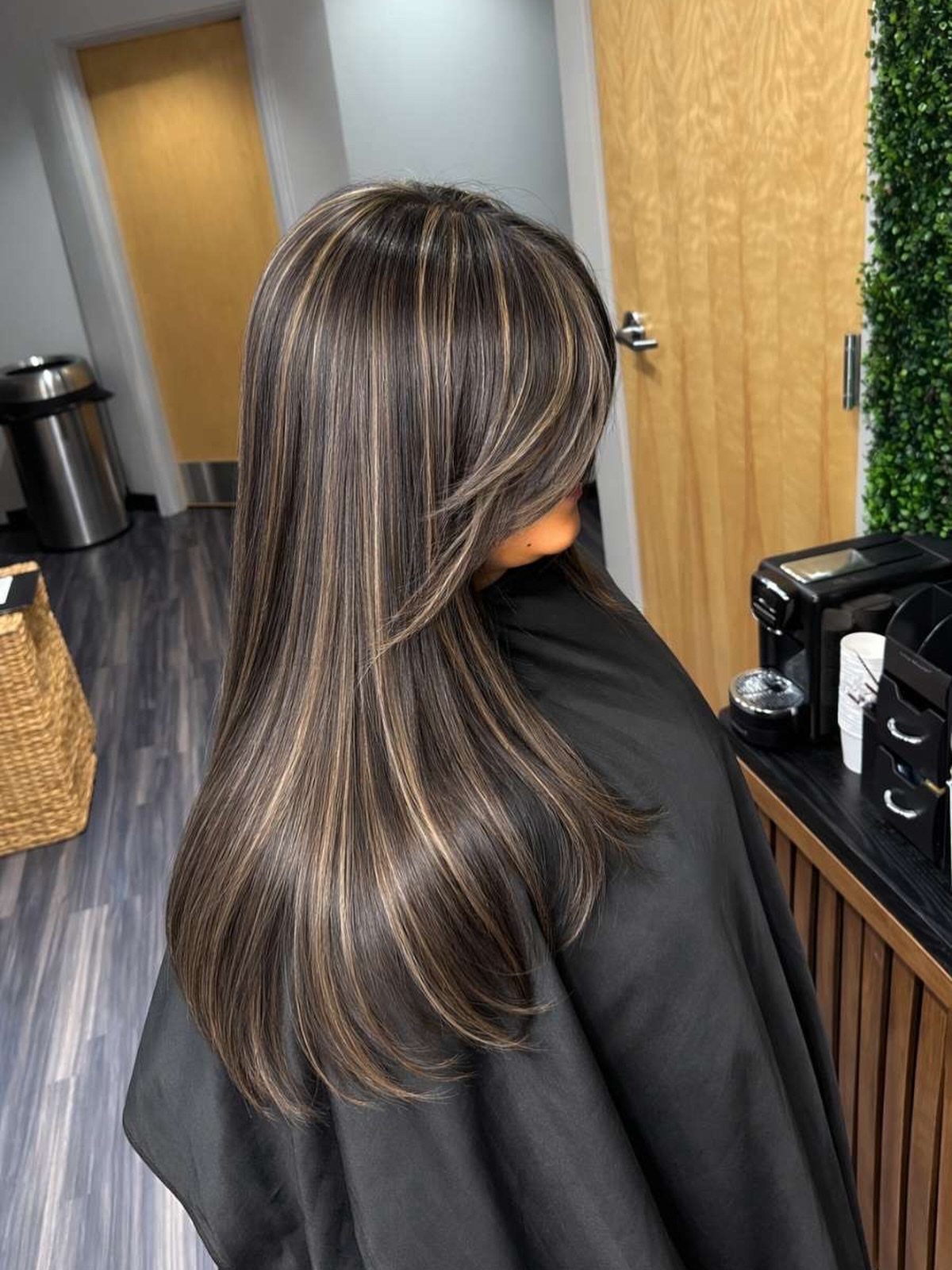
Micro-highlights are hair-thin, so the ash tone shows up as a faint shimmer rather than as visible stripes. On long, layered dark hair the effect looks cool and restrained, more like frost than blonde.
I like it for anyone who wants lighter hair without a big shift in the overall color. It’s a fine-foil job, so expect a long chair time and a cost to match.
Ask for a cool ash tone and keep the pieces fine, because wider sections will read as standard highlights.
17. Honey Highlights
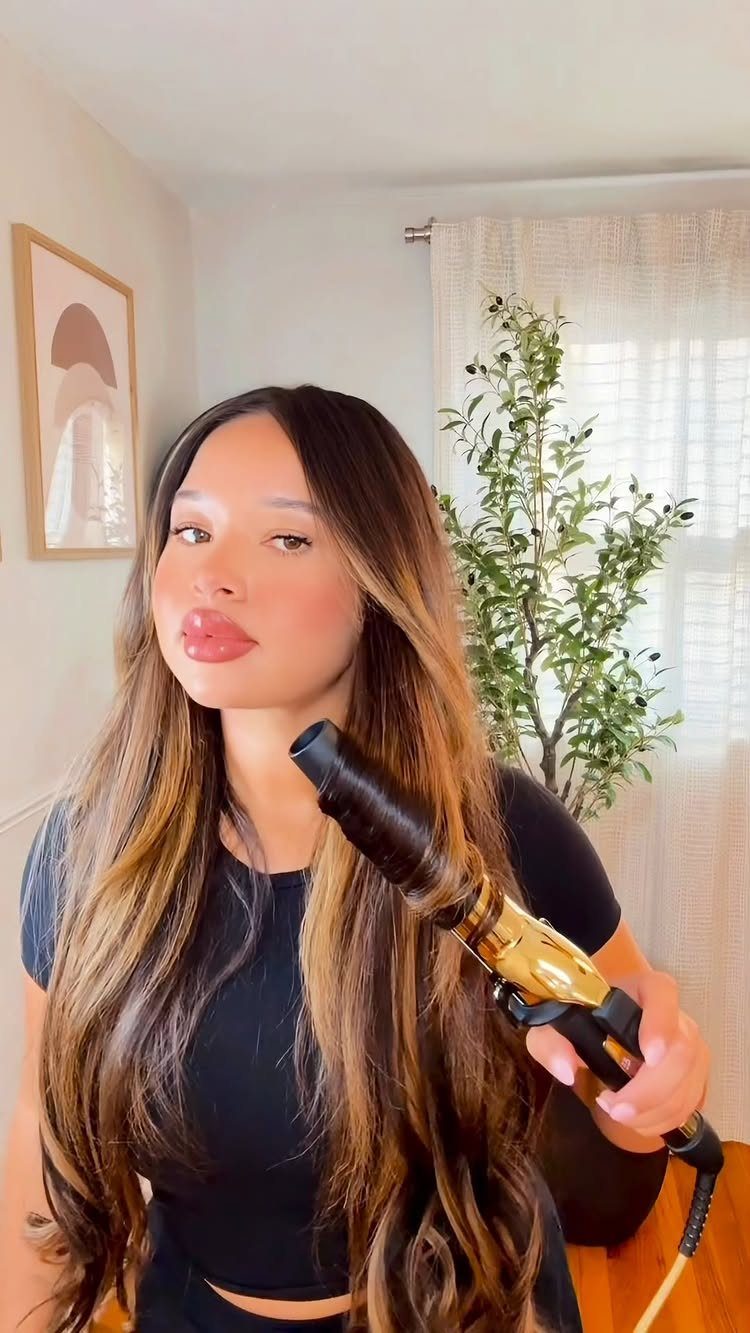
Golden honey pieces catch light in a way brown highlights can’t, so dark hair picks up a brighter glow without turning fully blonde. Curled over a long length, the gold shows in every loop.
I’d choose honey over caramel when you want the glow to read from across a room.
Name the shade as "honey" at the consult and hand over a reference photo, because without one a stylist’s gold can slide into brassy yellow.
Curls or loose waves show the brightness best; pressed flat, the color looks like plain stripes.
18. Bronde Highlights
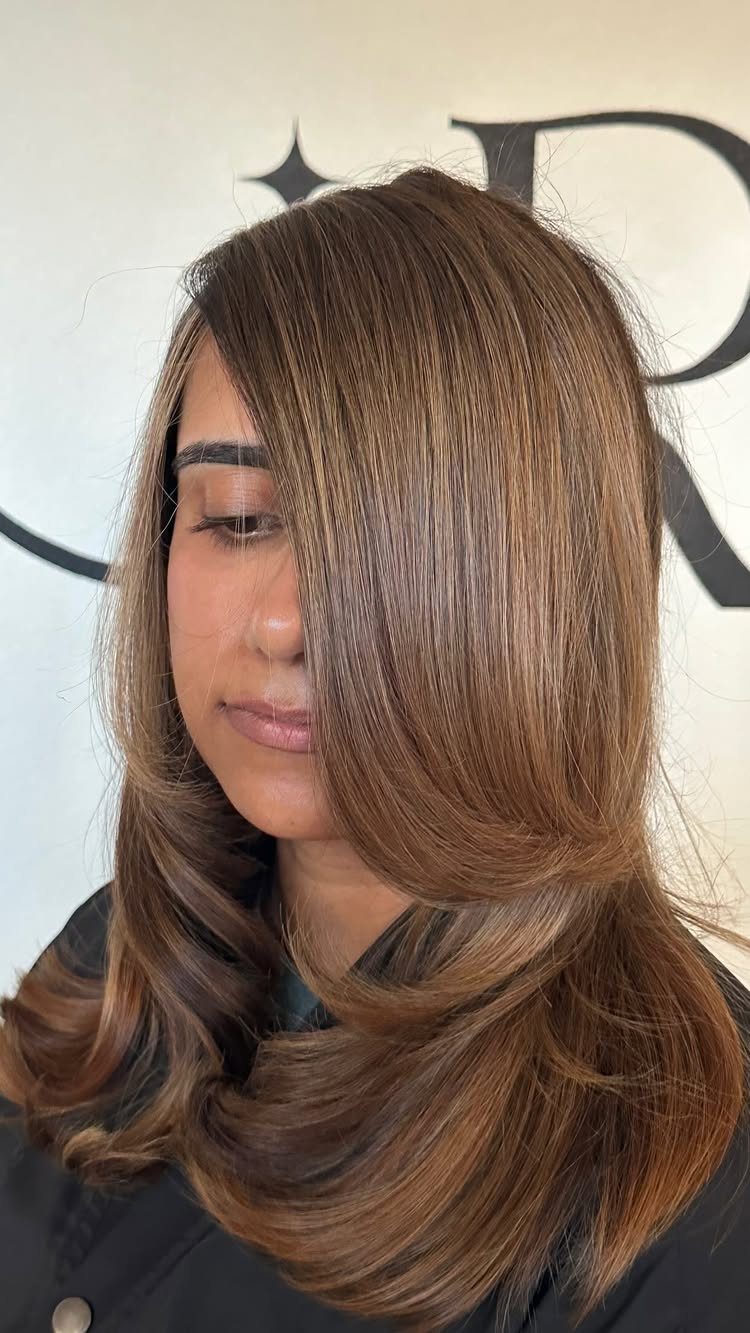
Bronde sits between brunette and blonde, and the blend is what makes it wearable. Dark roots stay in place while the highlights lighten the lengths, so you get a clear lift that still reads as brown.
I’d choose it for curled or wavy hair, where the blonde pieces mix in with the brown instead of lining up.
Because the blend is gradual, regrowth is easy to live with. Bring a photo and say "bronde" so your stylist knows how far into blonde to go.
19. Ash Mushroom Highlights
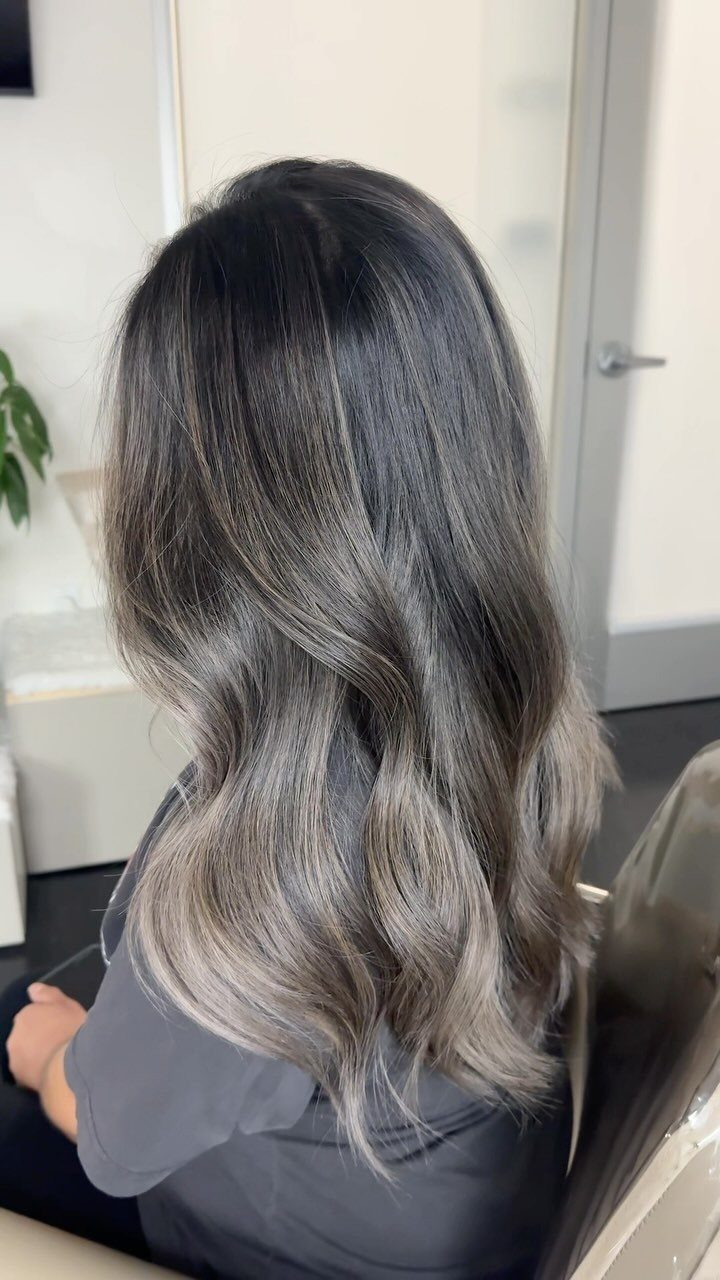
Mushroom is brown with the warmth taken out: a muted gray-brown that reads earthy and cool instead of golden. Against long dark waves, the ash pieces look soft and smoky.
Ash sits between the two: cooler and less sugary than caramel, but with more movement than solid brown. Bring the photo and say "mushroom" by name, since "ash" alone can come out grayer than you want.
Loose waves give the tones room to blend, so I’d ask for the pieces to be spread through the lengths.
20. Auburn Highlights on Curls
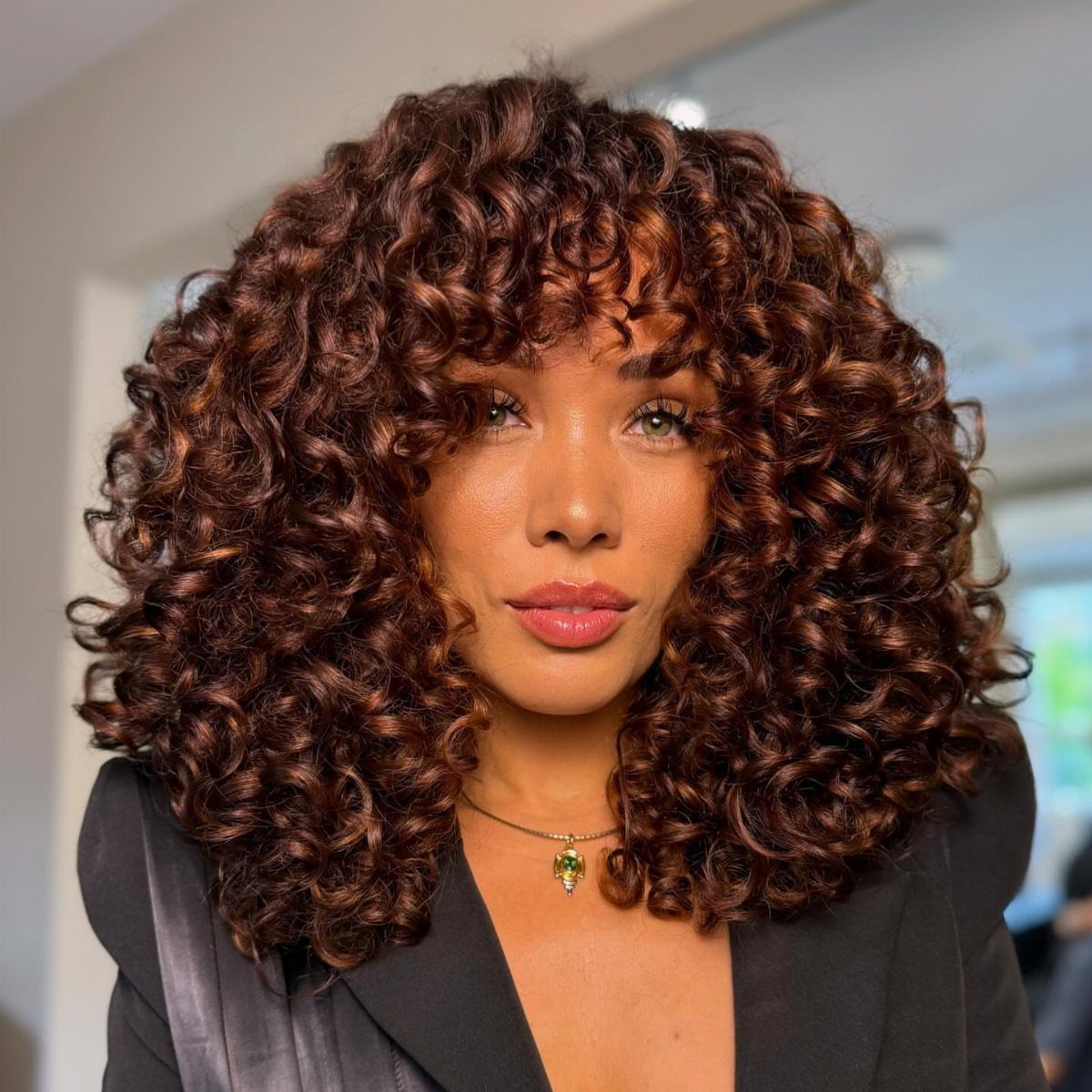
Reddish-brown pieces do something blonde can’t on curls: they make each curl easier to see. The warmth adds definition, and the volume keeps the color from looking flat against the dark base.
Ask for "auburn highlights" and bring the photo, because red-brown can drift toward copper or burgundy without a reference.
I’d keep the auburn only a few shades off the base so it reads as glow, not as stripes.
21. Highlights and Lowlights
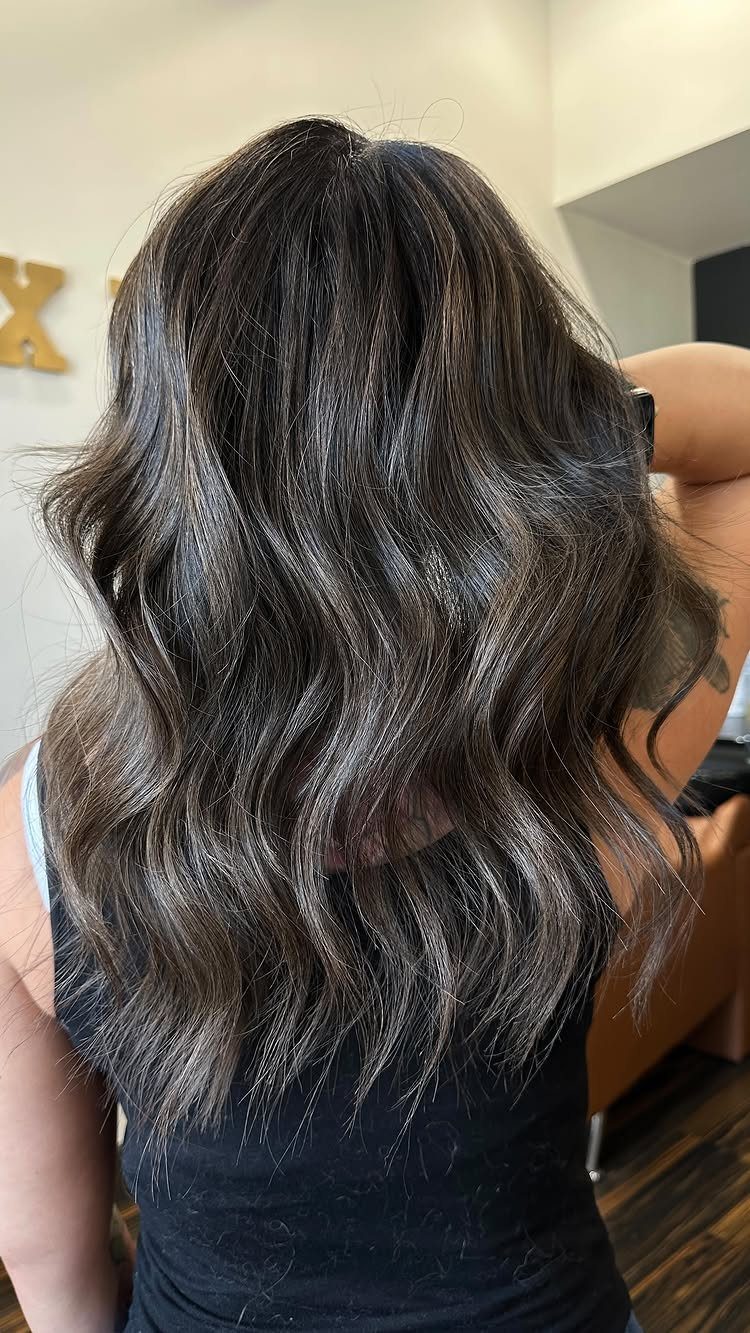
Lighter pieces on top, darker pieces tucked underneath: that pairing is what gives long, wavy brown hair real depth. Highlights alone can look flat, and the lowlights put shadow back in.
Ask for both in the same appointment and say "highlights and lowlights" so your stylist plans them together. I’d keep the lowlights close to your natural base so the light pieces stand out.
Loose waves or beachy bends make the pairing easier to see, since each turn flips from light to dark.
22. Contrasting Highlights
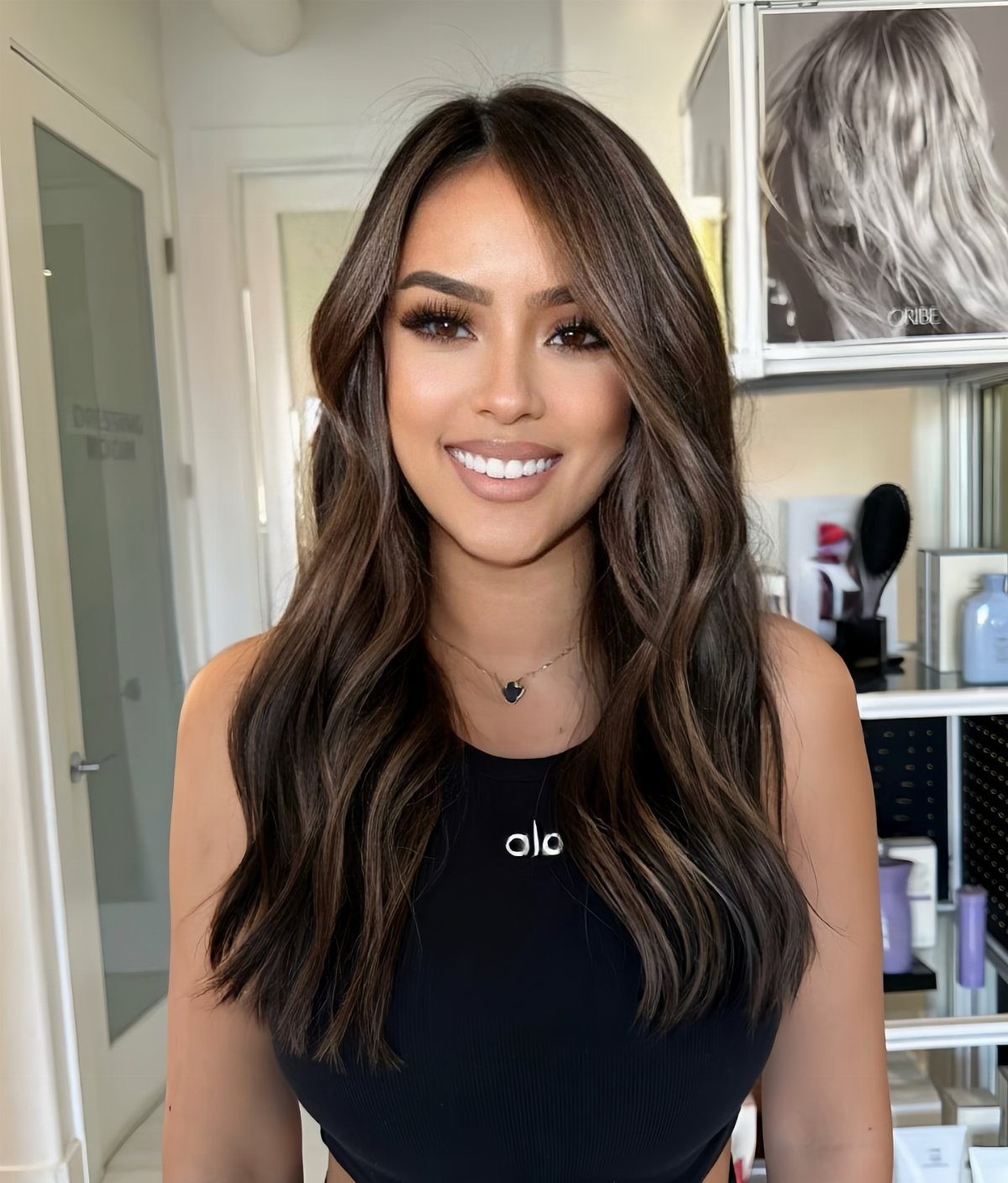
Contrast is the whole idea here. On long dark brown hair, light brown pieces stand well away from the base, so the highlights are the first thing anyone sees.
Choose this if subtle highlights have always looked like nothing on you. Ask for "high contrast" by name and show a photo, so your stylist knows how many levels to lift above your base.
The wider the gap between base and highlight, the bolder the result, so decide how dramatic you want it before you sit down.
Set contrast by depth: Go 1–2 levels lighter than your base for subtle dimension, 3–4 levels for a bolder look on black hair.
23. Medium Dark-blonde Highlights
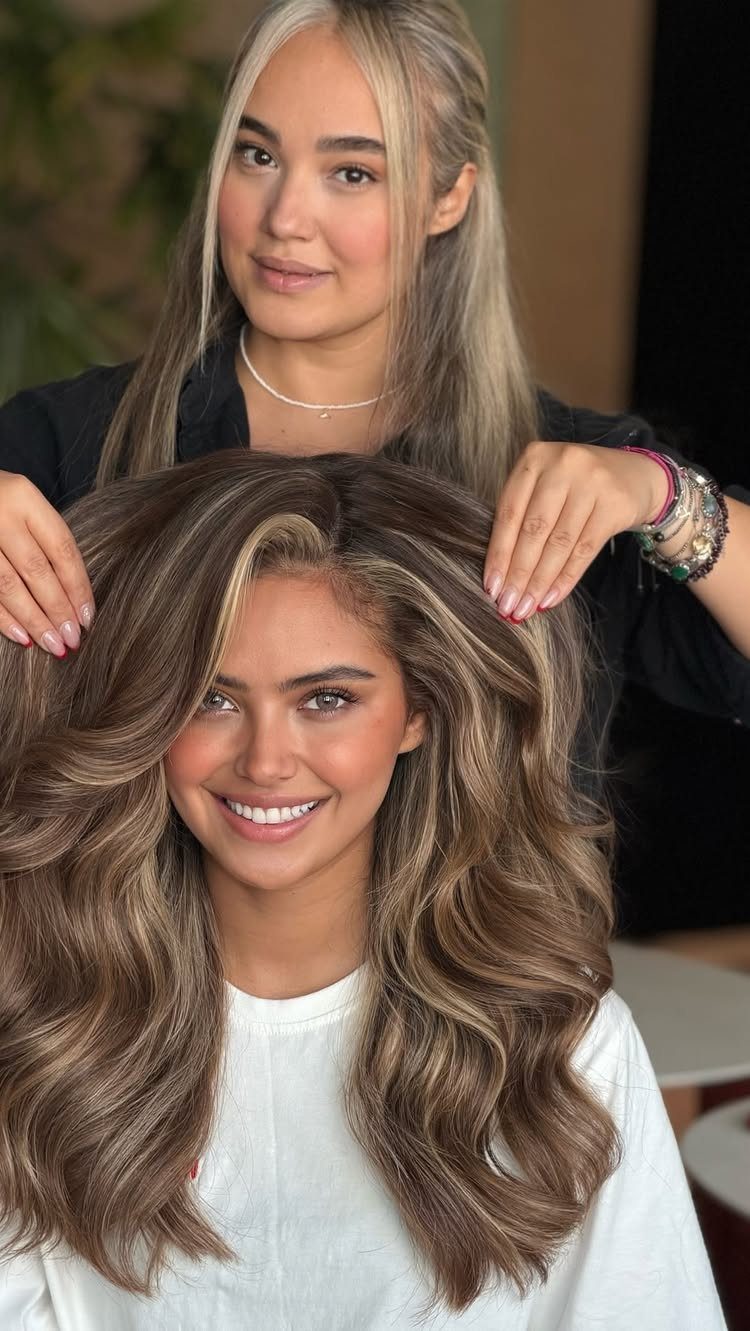
Medium dark blonde lands between very light blonde and very dark brown, which makes it the safer step into blonde for long, wavy brown hair. The highlights show up clearly without taking over.
Use the full name when you ask, because "blonde" on its own can send a stylist toward something much lighter. A photo settles it.
I like it with big, voluminous waves, where the blonde catches in the curve of each wave.
24. Warm Brown Gold Highlights
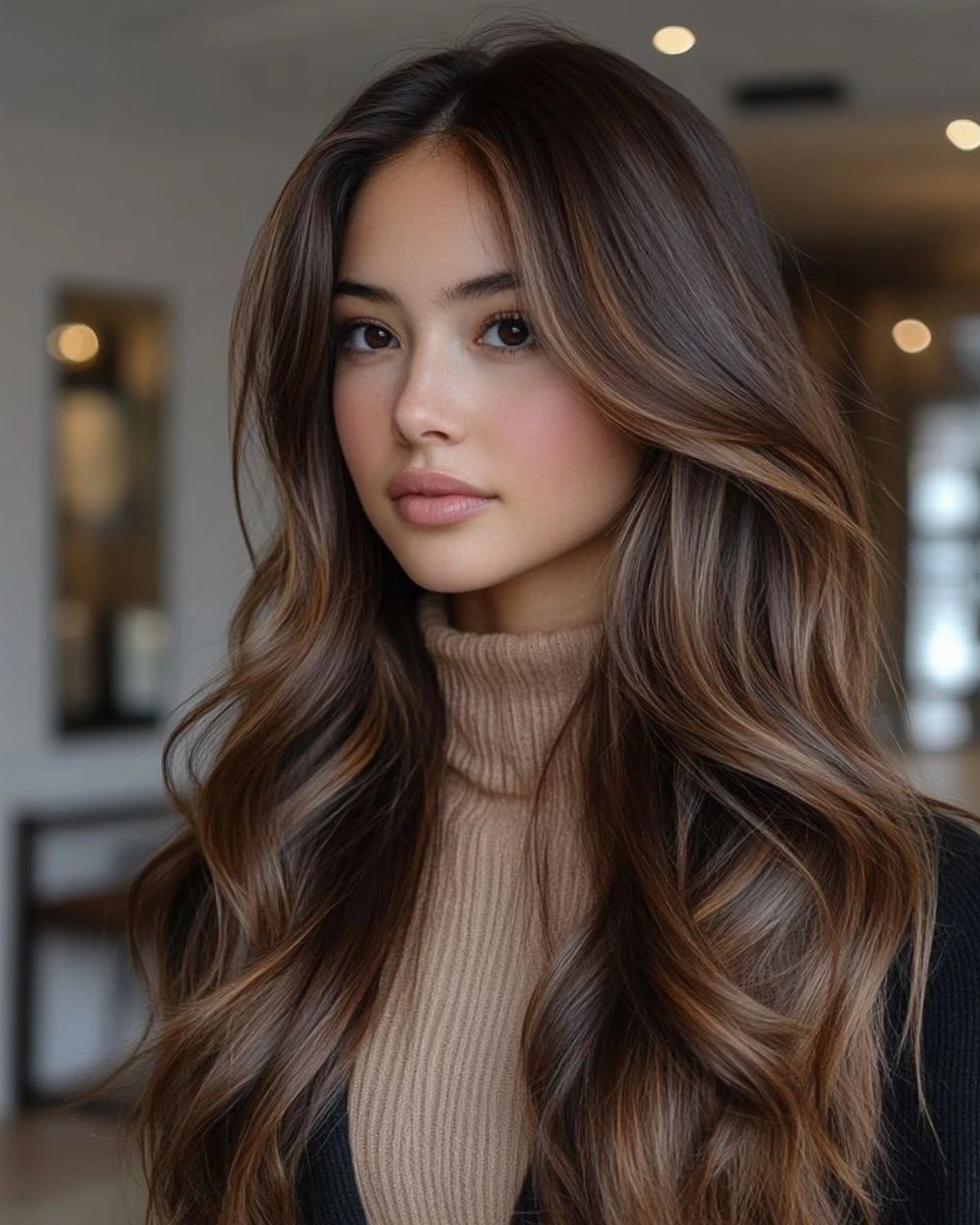
Gold looks best in small doses over warm brown. Iridescent gold pieces add a light, shimmery edge, and warm brown keeps the whole head rich instead of yellow.
On long, wavy hair the shimmer shifts as the waves move. I’d ask for the gold to stay subtle, since heavier gold turns a brown look into a blonde one.
Name both tones, "warm brown" and "gold," and show a photo, or a stylist may slide toward plain honey.
Color Upkeep and Brassiness
Dark hair rarely needs more lightener; it needs a toner or gloss refresh every 6–10 weeks, a partial refresh every 12–16 weeks, and a full refresh every 4–6 months.
Tone shifts faster in places like Denver, where strong sun, dry winter air that dehydrates hair, and mineral buildup that dulls shine all work against you. If your climate is similar, book toward the short end of those ranges.
Sulfate-free shampoo and water that isn’t hot will keep the color from washing out as fast. Use a glossing mask once a week, keep heat low, and apply a heat protectant every time you style.
Lightening and Hair Condition
Going too light too fast is the quickest route to orange tones, harsh contrast, dryness and even breakage. Spacing the sessions out gives you clean lift without damage, and a gloss in between keeps things reflective.
If you’re starting from black, getting to brown usually takes bleach or high-lift color, done in sessions. How many sessions you need comes down to where you’re starting and how much processing your hair can handle.
Ask for a strand test and a consultation before anything goes on your whole head, since both help set realistic timing. Start with healthy hair, and if yours feels dry, condition first and lighten later.
Tell your stylist about any strands that were lightened before, so new product doesn’t overlap them.
Frequently Asked Questions
What highlights go with dark brown hair?
Caramel, honey, and toffee are the most flattering warm options because they brighten without clashing with your natural base.
Mocha ribbons work if you want subtle refinement, and cool ash or mushroom tones can look beautiful when lifted high enough and toned regularly.
Ask for warm bronde if you want dark brown to go softer and lighter without ever tipping into blonde.
What’s the difference between balayage and highlights?
Balayage is hand-painted and placed around your cut and part, so regrowth blends in softly and touch-ups can wait longer.
Foils lift every strand they hold to a brighter, more even level, but the regrowth line shows sooner, so plan on salon visits more often than with balayage.
Both work on dark hair, but balayage is the more forgiving option if you hate frequent salon visits.
How do I keep brunette highlights from turning brassy?
Plan a toner or gloss appointment about every 6–10 weeks, and lean toward the short end if you get strong sun or have hard water.
At home, a sulfate-free shampoo, lukewarm rinses and a weekly glossing mask do most of the tone-keeping. Spray a heat protectant before any hot tool, since heat slowly drags the tone warmer.
How do I lighten black hair to brown?
Black hair rarely reaches brown in one sitting; bleach or high-lift color spread over several visits keeps it from jumping to orange and frying the strands.
Your starting level and how much lightening your strands can take set the session count. Book a consultation with a strand test first, which gives your stylist a real read on timing and how your hair responds.
Can I put highlights in my hair after dying it?
Yes, but mention every earlier dye job or lightened section so the new lightener doesn’t land on top of it.
Leave time between sessions for clean lift without damage, and add a gloss in the gap to keep the shine up. Hair that feels dry should get a round of conditioning treatments first, with the lightening pushed back.
Is it possible to get grey hair highlights with black hair?
Yes: ash mushroom highlights read as a muted, earthy gray-brown that looks cool against a black base. A toner locks the ash in, and a purple shampoo once a week at home stops it from drifting warm.