How far the blonde sits from your natural brown decides most of what follows. Highlights a few shades lighter blend into a soft grow-out, while wide, high-contrast ribbons show roots quickly and need touch-ups more often.
The ideas range from fine, nearly invisible threads and hand-painted balayage to chunky streaks, with ash, beige and caramel tones between. Ash fades faster than warmer shades, so I’d choose it only if your brown has cool or neutral undertones.
1. Caramel Blonde Highlights
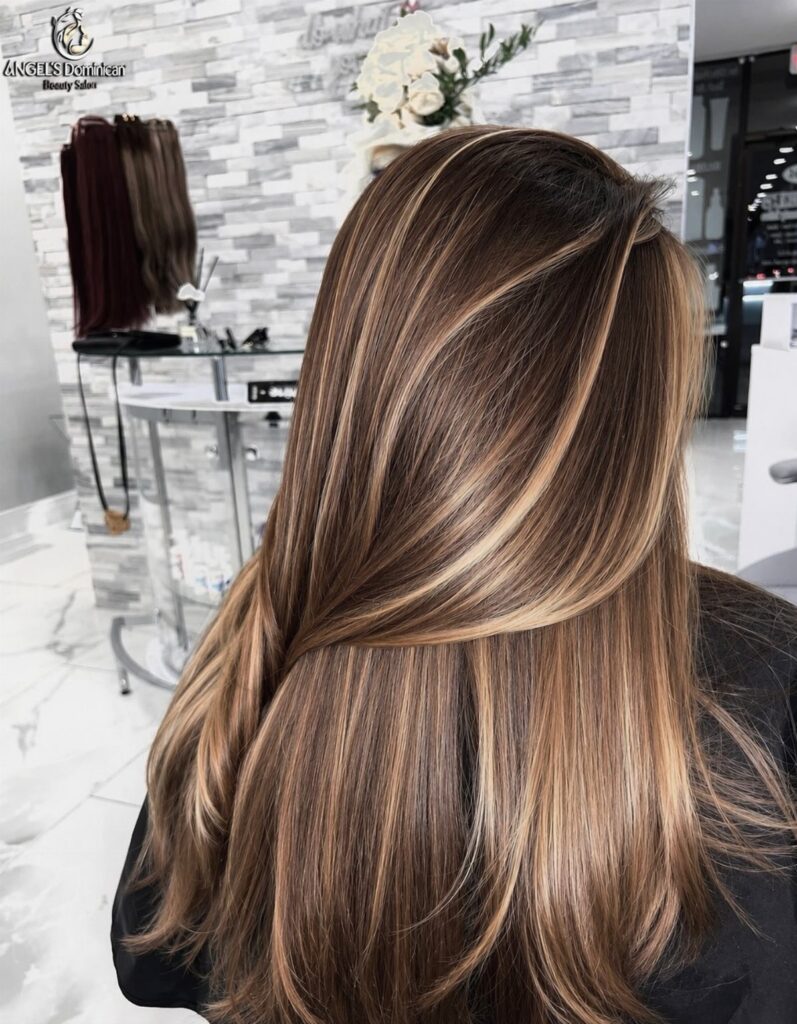
Caramel-blonde ribbons woven through long brown hair catch the light without washing out warmer skin tones. The blonde sits a few shades lighter than the base, enough to add dimension but still soft enough to blend as it grows out.
Ask for foil highlights if you want precise placement, or balayage if you prefer a more graduated, hand-painted finish. Either way, loose waves show off the contrast better than pin-straight hair.
Purple shampoo once a week keeps the blonde from turning brassy between appointments.
2. Fine Blonde Highlights
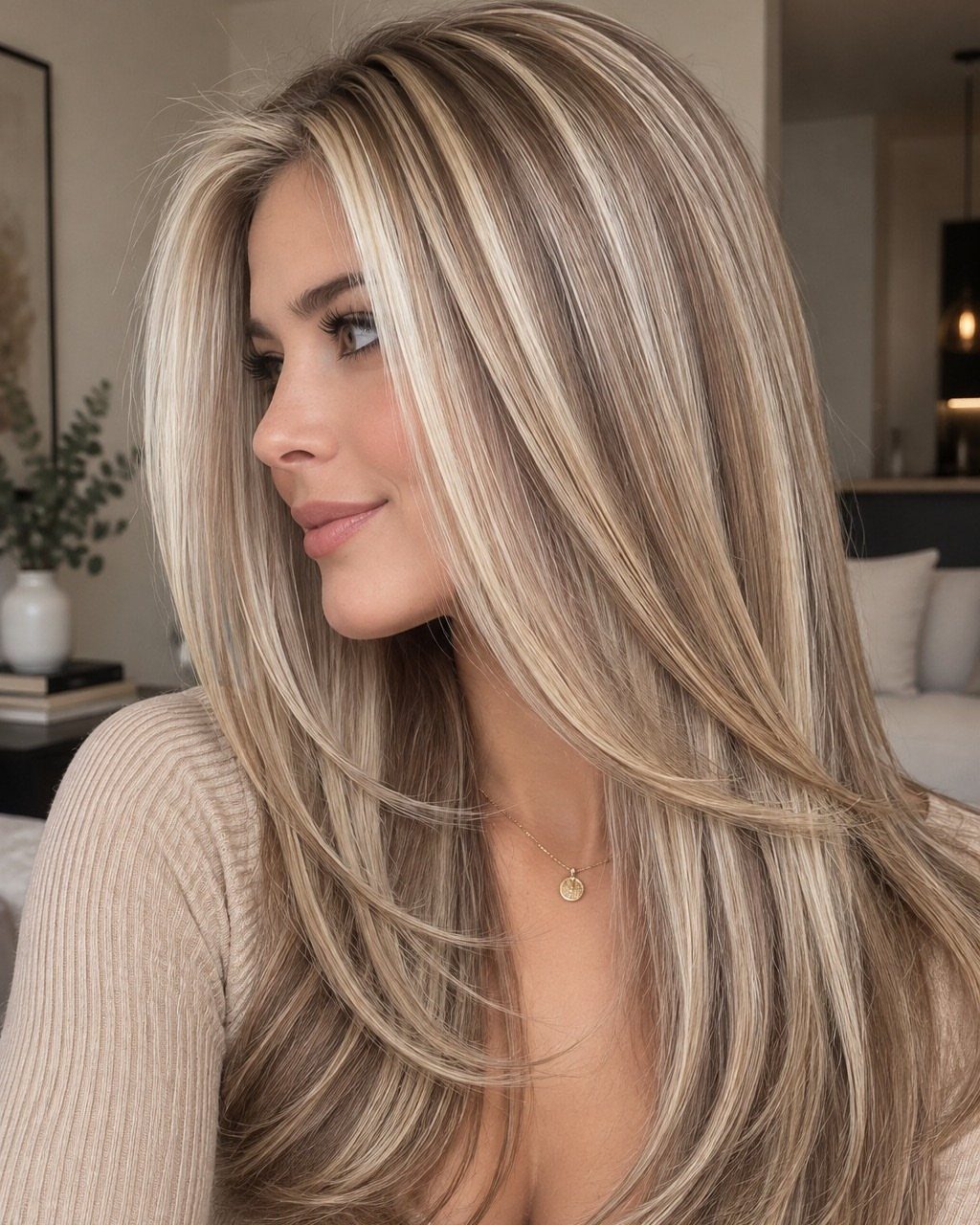
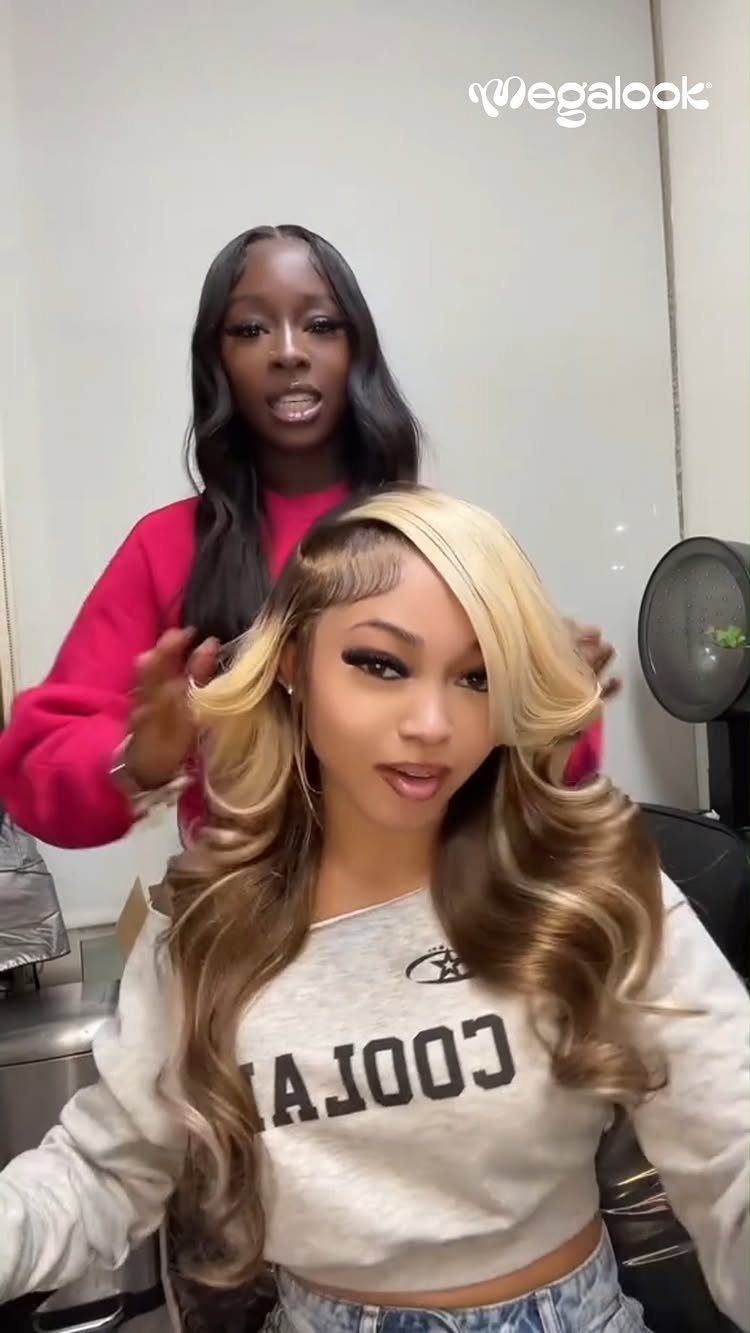
Fine highlights give long brown hair a sun-kissed look without the high-contrast ribbons of a full foil. The blonde threads are thinner, placed closer together, and blend into the base color so the grow-out is nearly invisible.
This suits anyone who wants lift without committing to a bold change. Stylists usually apply these with a fine weaving technique or baby lights, which take longer to place but fade more gracefully than chunkier highlights.
Maintenance is lighter than chunky highlights, and you can stretch appointments if the blonde stays close to your natural level.
3. Ash Blonde Highlights
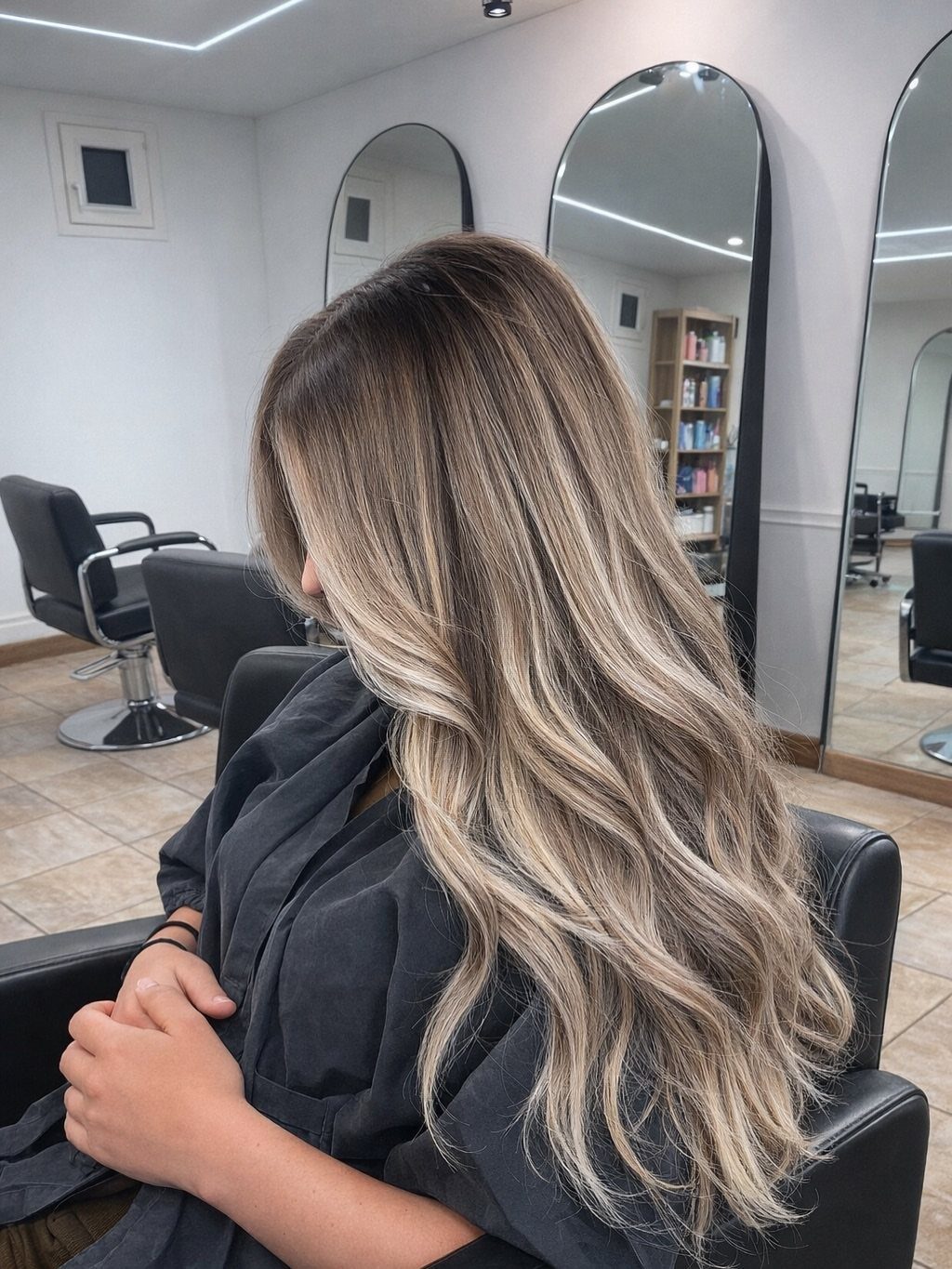
Ash-blonde highlights pull cool instead of warm, which works well if your brown hair has neutral or cool undertones to begin with. The grey-leaning blonde keeps the overall look crisp rather than golden.
Ash tones fade faster than warmer shades, so expect to tone more often to keep the color from turning brassy or yellow. A purple or blue shampoo between salon visits helps, but it won’t replace a proper toner.
If your natural base is warm, ash blonde can look flat or patchy as it fades.
Heat and UV rays are bad news for blonde and brown highlights, as they can turn locks warmer than your client wants their hair to be.
4. Blonde and Brown Lowlights
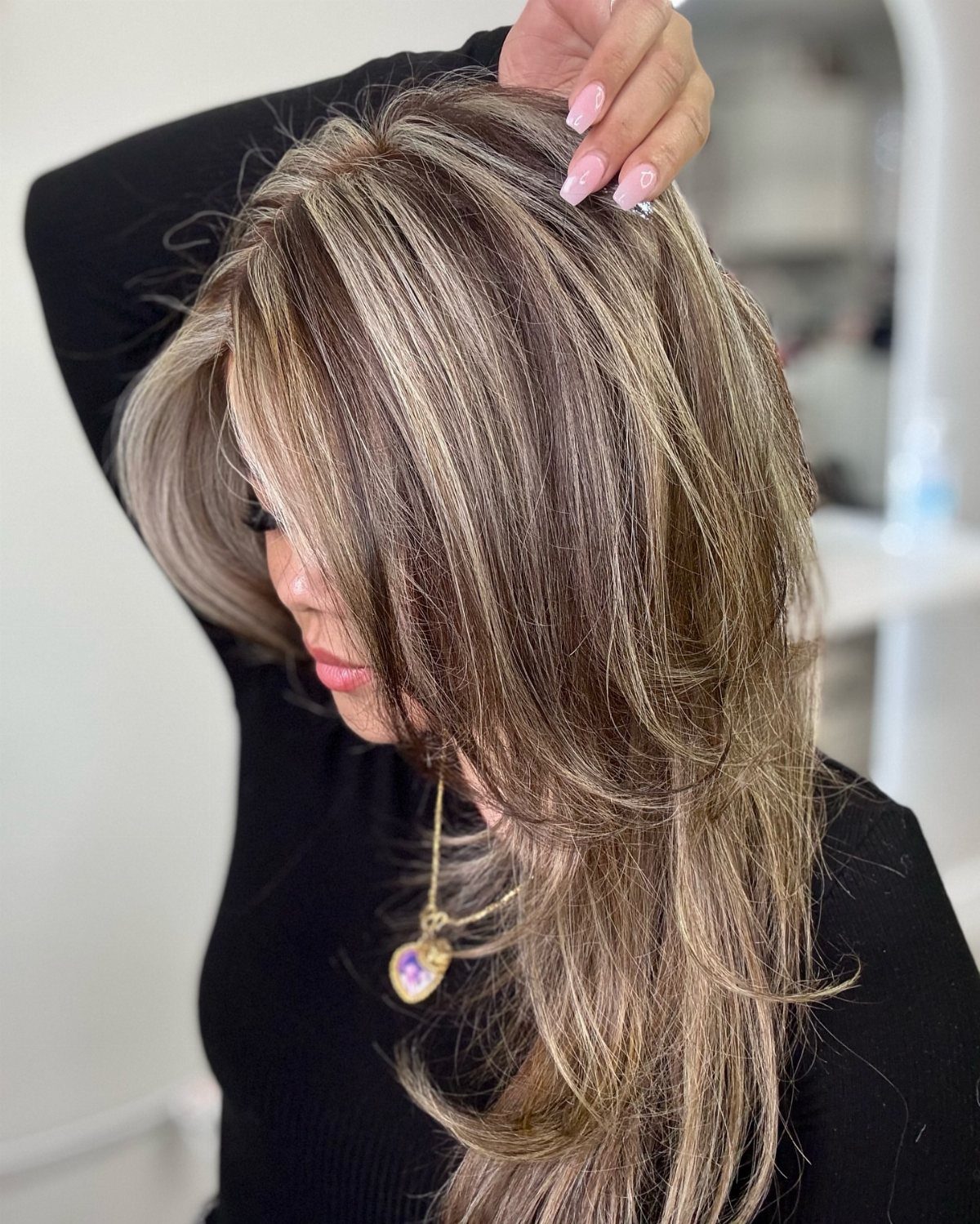
Lowlights add depth by weaving darker pieces through blonde highlights, so the overall color reads richer and more dimensional. Instead of flat brown with blonde on top, you get multiple tones that shift as the hair moves.
This works especially well if your highlights have grown out too light or brassy and you want to bring some brown back without starting over. Lowlights can also soften a heavy highlight if the contrast feels too stark.
The technique uses foils or balayage, same as highlights, just with a darker color.
5. Long Brown Hair Layers
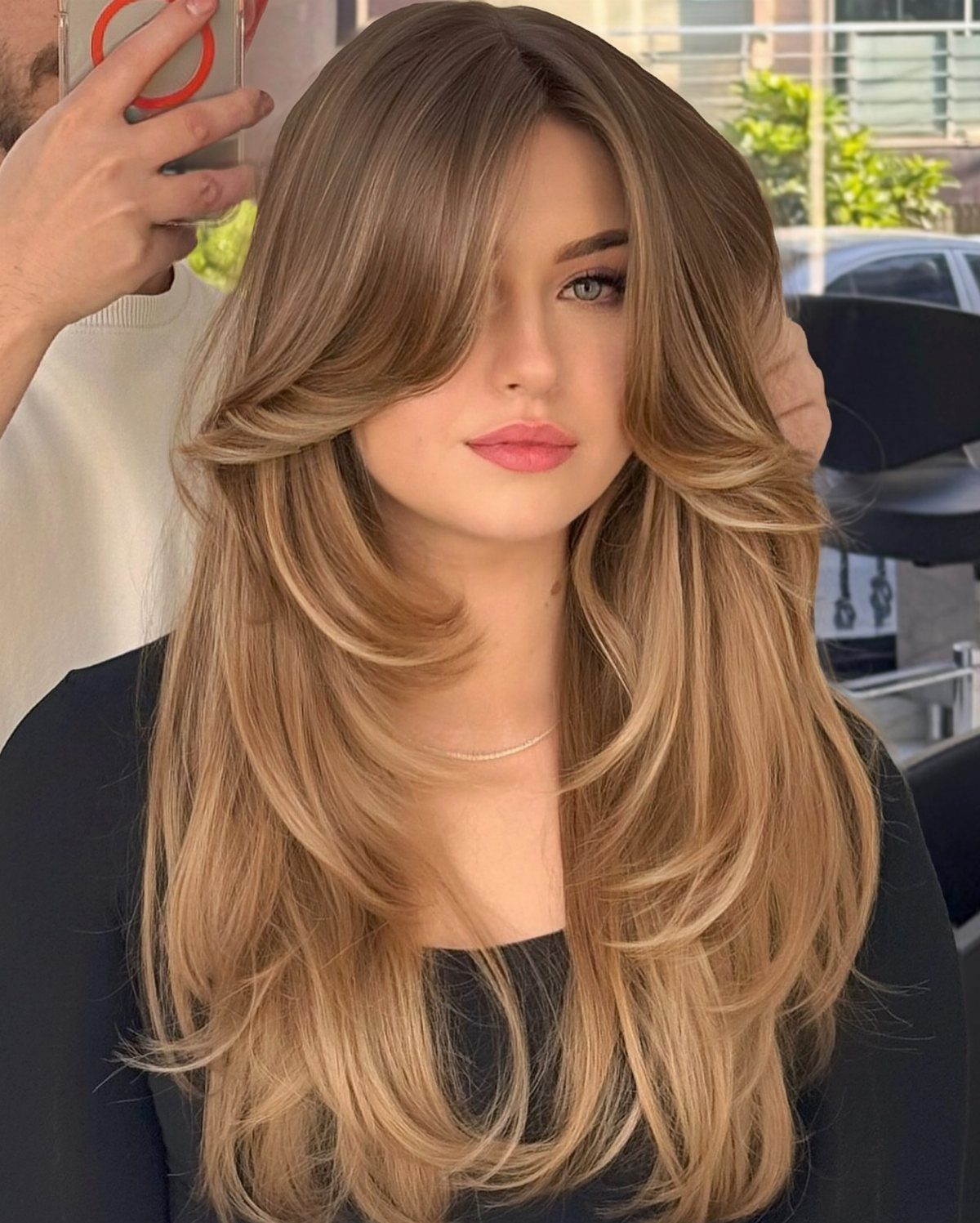
Layers cut around the face or through the ends give long brown hair more movement, and blonde highlights placed along those layers make the shape even more visible.
The color follows the structure, so you see both the cut and the dimension at once.
Long layers that start at the collarbone or below keep the length while removing weight. Shorter face-framing pieces lift the whole look without committing to a full fringe.
Highlights on layers show up best with a bit of wave or curl. If your hair is naturally straight, a loose curl or bend at the ends brings out the color placement.
6. Beige Blonde Highlights
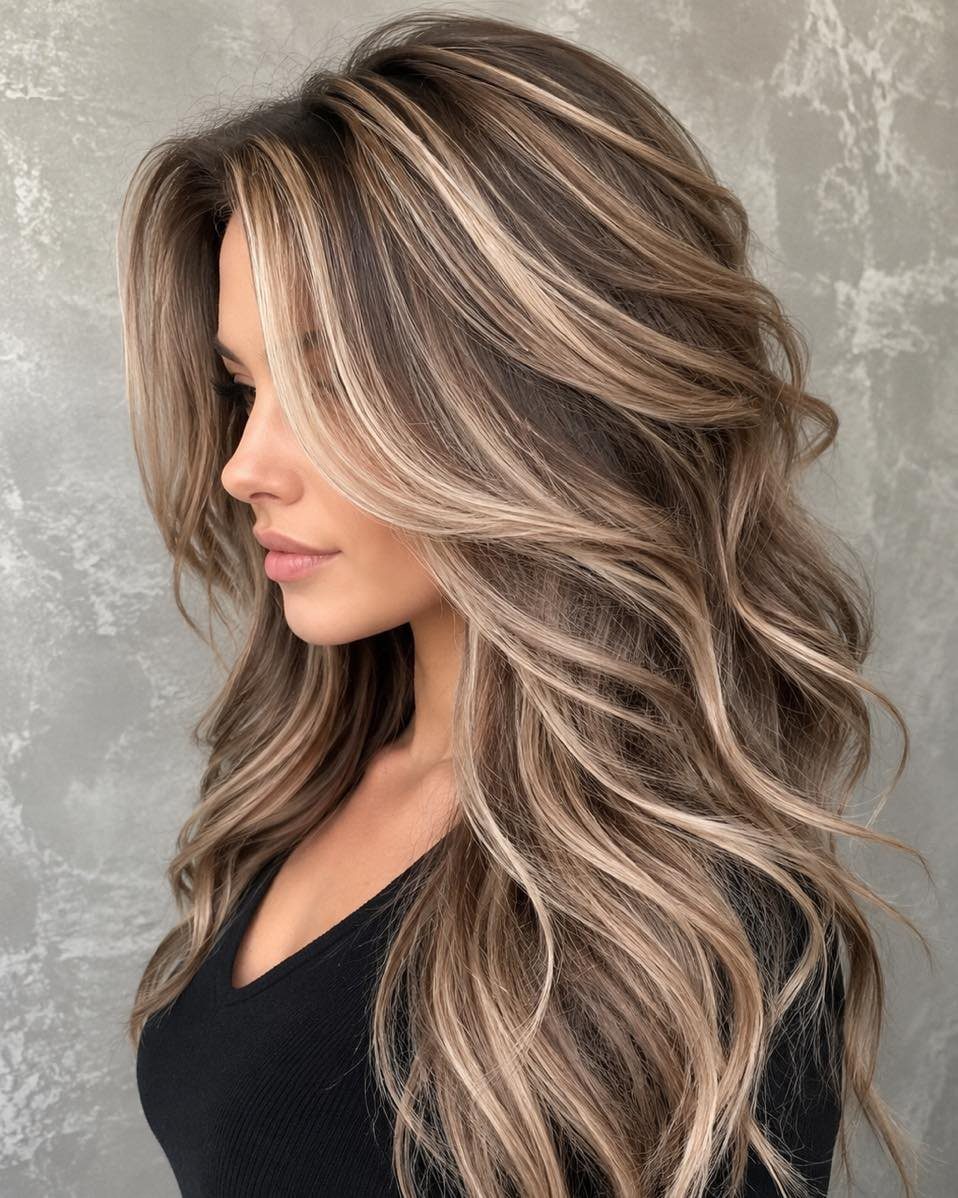
Beige blonde sits between ash and caramel, leaning neutral rather than warm or cool. The result is soft, dimensional brown hair with pale highlights that don’t read as starkly blonde or brassy.
This shade suits most skin tones because it doesn’t pull too yellow or too grey. It also grows out more forgivingly than high-contrast highlights, so you can stretch appointments longer without a visible line.
Ask for a beige or champagne tone when booking, and bring a reference photo. "Blonde" alone can land anywhere from platinum to gold depending on the stylist’s interpretation.
7. Long Brown Waves
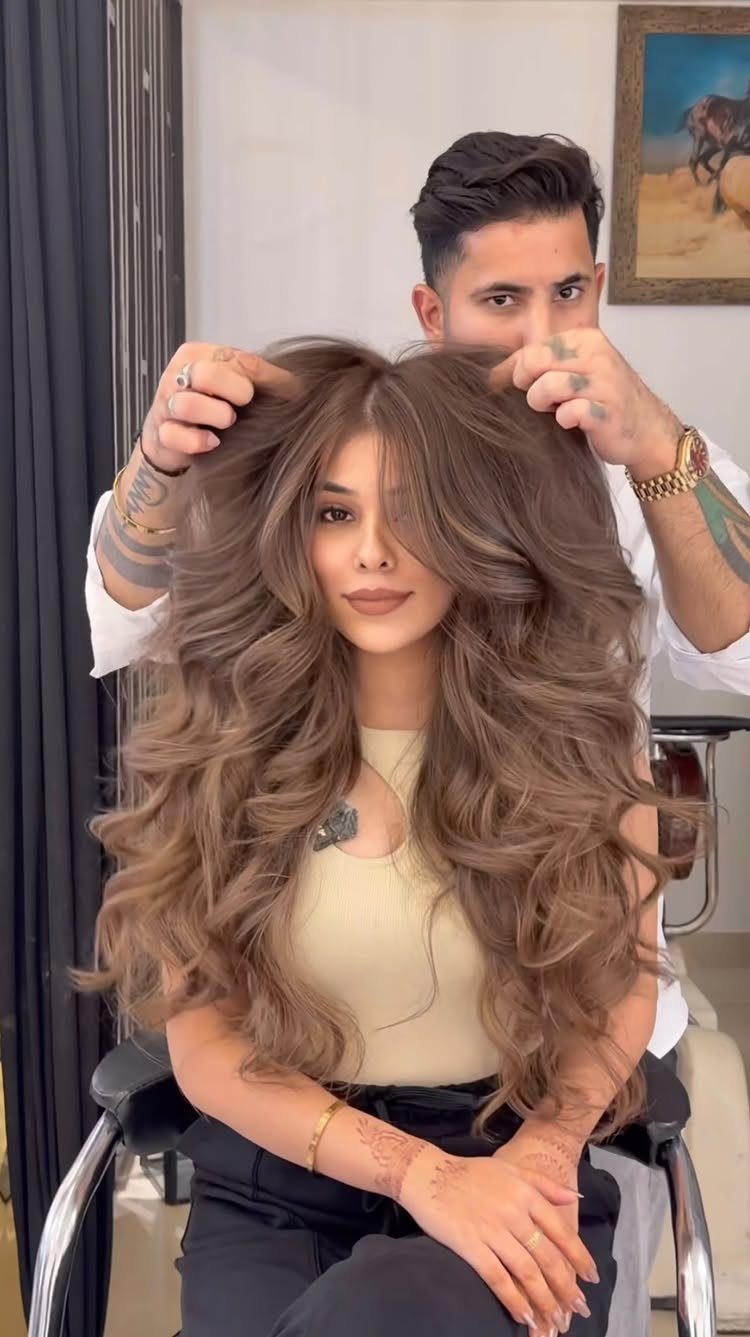
Waves give blonde highlights more surface area to catch the light, so the color looks dimensional instead of flat.
Long brown hair with loose, soft waves shows off the blend between the base and the blonde better than straight hair does.
If your hair is naturally straight, a large-barrel curling iron or a flat iron twisted as you pull it through gives that loose bend without tight spirals.
Set with a light spray and break up the curls with your fingers so they fall into waves rather than ringlets.
8. Long Brown Hair Updos
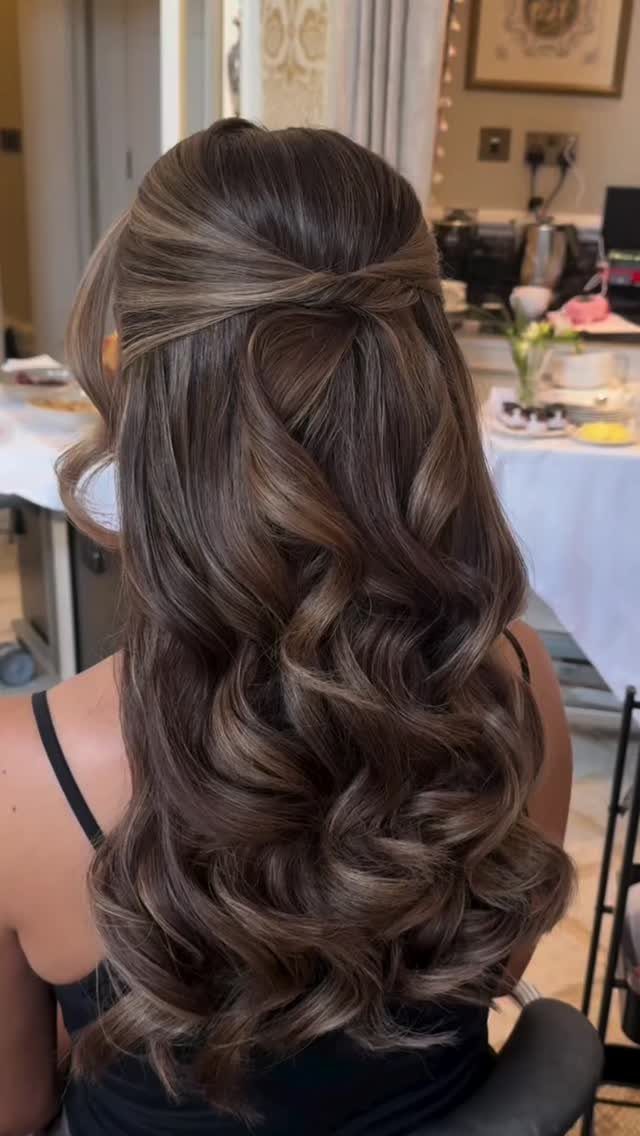
Half-up styles pull the top section back while leaving the rest down, so the blonde highlights stay visible through the loose hair.
The contrast between the brown base and the blonde reads clearly when the hair is gathered and then released into curls or waves.
This works well when you want your hair off your face but still want the color to show. A simple clip or elastic at the crown does the job without needing pins or a full updo.
Curling the loose sections first makes the highlights stand out more than leaving them straight.
9. Blonde Balayage Highlights
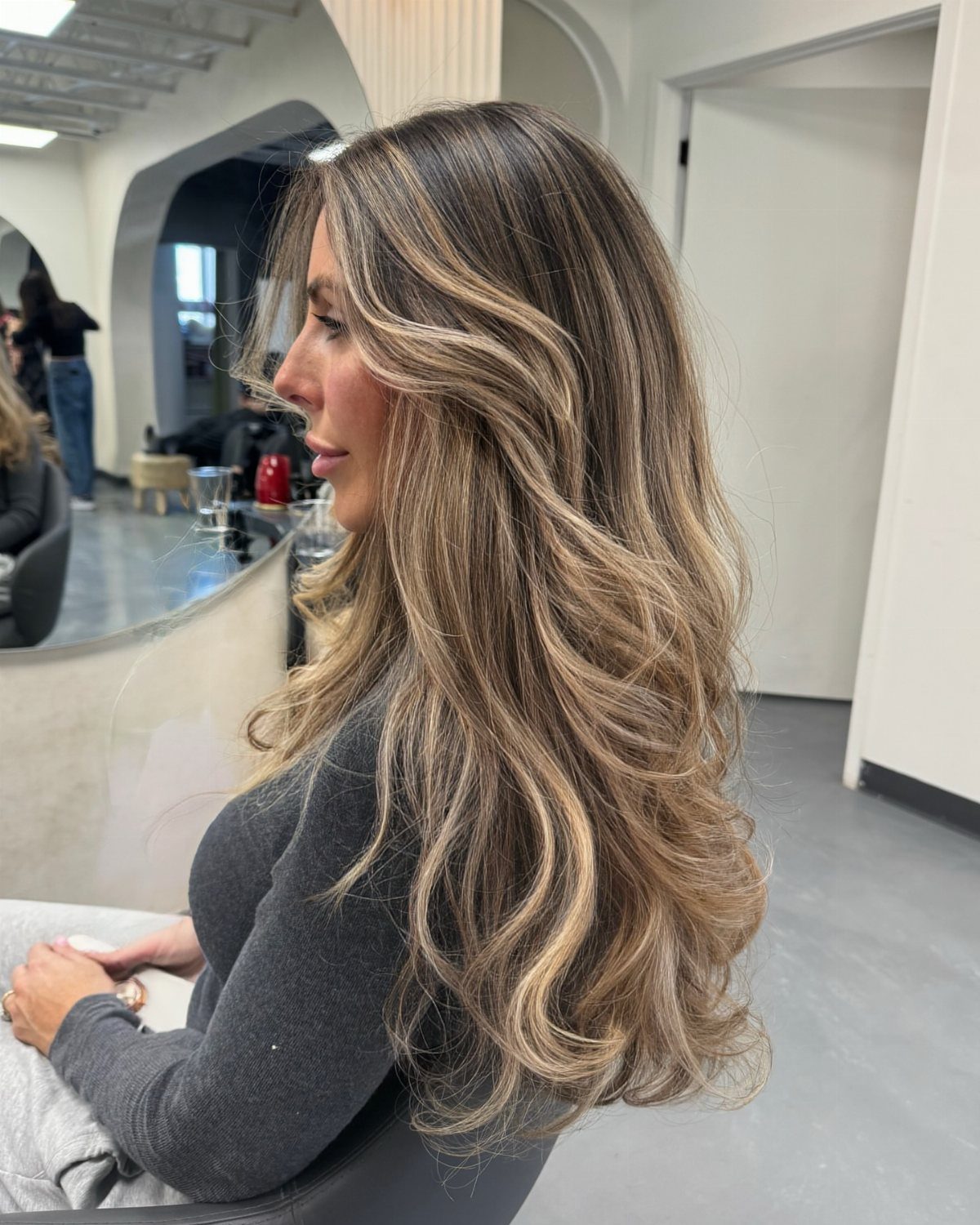
Balayage applies the blonde by hand rather than with foils, so the color graduates from darker roots to lighter ends.
The result looks lived-in from the start, and the grow-out is softer because there’s no clear line where the color begins.
This takes longer to apply than foil highlights because each section is painted individually.
Maintenance is lighter if the blonde is kept a few shades off your natural base, but the more contrast you add, the more often you’ll need to tone or refresh the ends.
10. Face-Framing Highlights
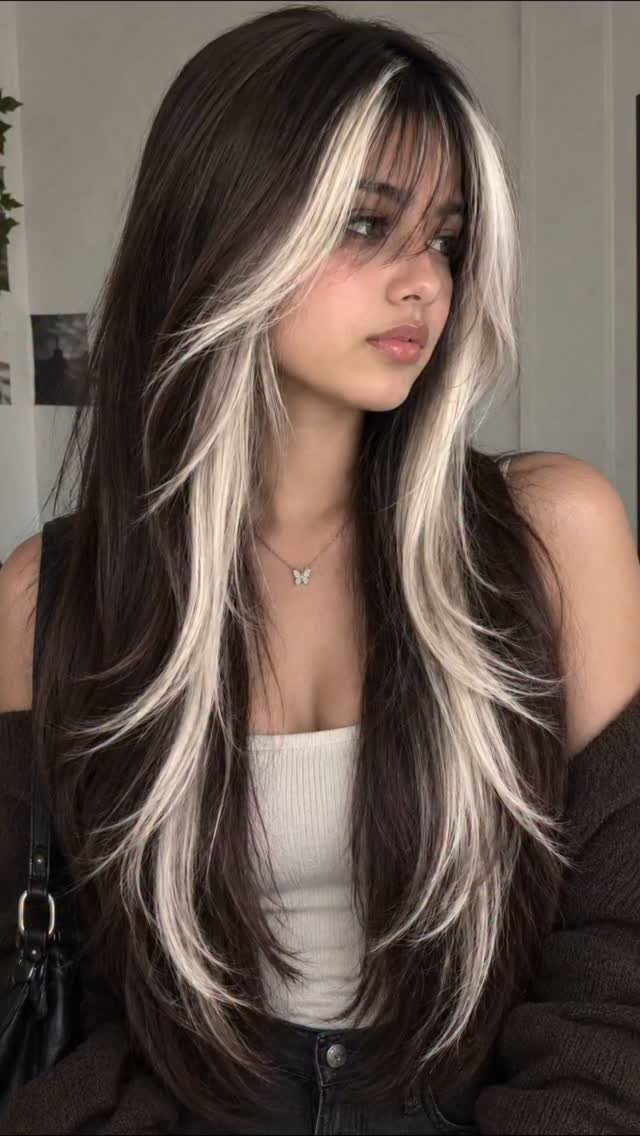
Brighter blonde pieces placed around the face lift the whole look without lightening the entire head. The contrast draws attention forward, and the rest of the hair stays a richer brown.
This option gives you the most visible change for the least amount of lightening work, which also means less damage and faster appointments.
The downside is that the blonde around your face will show root growth sooner than highlights scattered throughout.
If you want to stretch appointments, ask for the face-framing pieces to start an inch or two below the root rather than right at the scalp.
11. Chunky Blonde Highlights
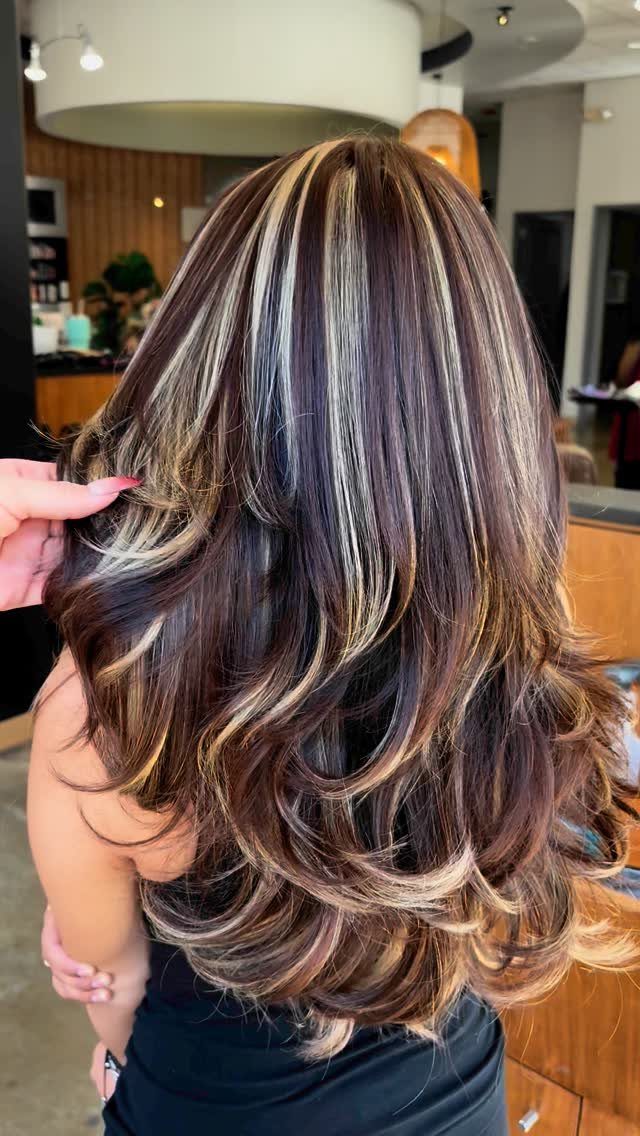
Thick sections of blonde create bold contrast against a brown base rather than a blended, sun-kissed effect. The highlights are wider and spaced farther apart, so each piece reads as its own ribbon of color.
Chunky highlights are the loud, high-contrast streaks that ruled a certain era of hair and have crept back for anyone who wants the lightness to be obvious, not blended.
The grow-out is more visible than finer highlights, so plan for more frequent touch-ups if you want to keep the roots clean.
Chunky highlights work best on hair with some wave or texture, where the sections move independently and show off the color separation.
12. Brown and Blonde Balayage
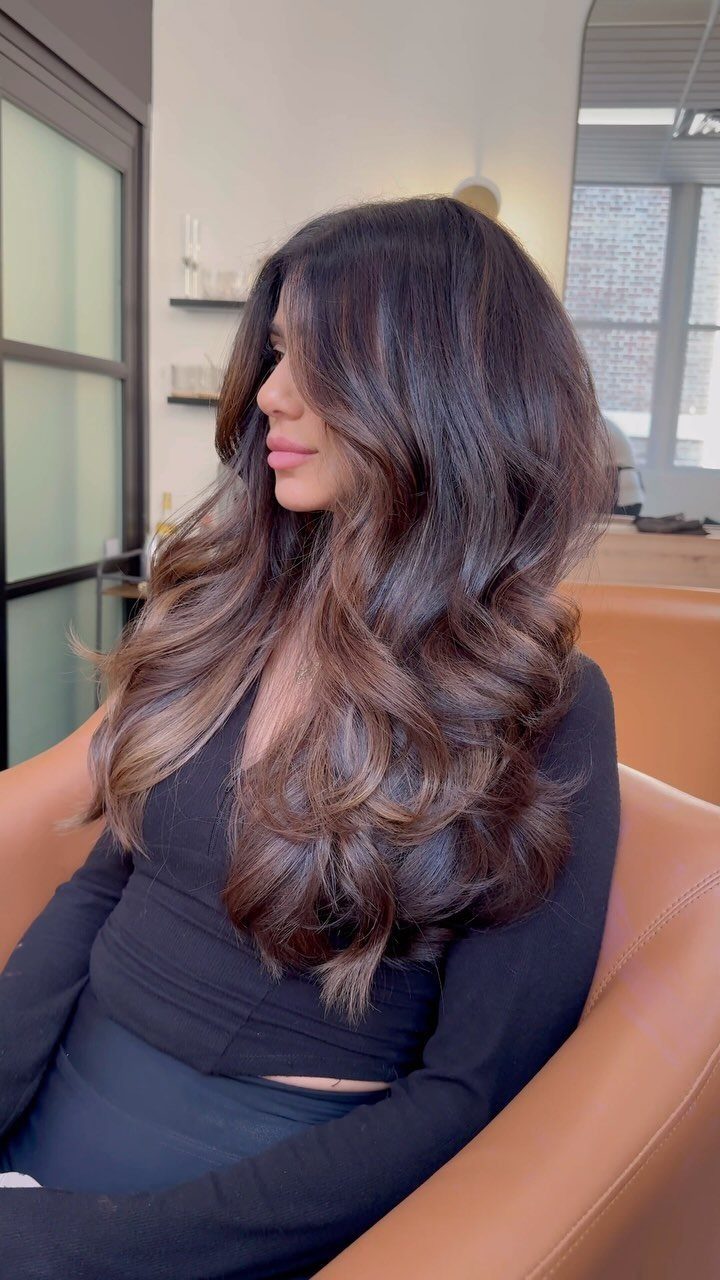
This version layers multiple shades of brown and blonde through the hair instead of placing one blonde tone over a solid brown base. The result is a richer, more varied brunette with depth that shifts as the hair moves.
Your natural brown stays rooted near the scalp, then the blonde builds as it moves down through the mid-lengths and finishes brightest at the ends.
That gradient keeps the color from looking flat while still reading as brown overall rather than blonde.
Balayage placement keeps the grow-out soft, so touch-ups can stretch longer than foil highlights if the tones are kept close to your natural level.
Frequently Asked Questions
What not to do with highlighted hair?
Skipping the toner is the biggest mistake, especially with ash blonde, which fades faster than warmer shades and turns brassy or yellow. Purple or blue shampoo between salon visits helps, but it can’t replace a proper toner.
Also avoid ash highlights over a warm brown base, since they can look flat or patchy as they fade, and avoid asking for plain "blonde," which can land anywhere from platinum to gold.
What hair color looks best with blonde highlights?
Brown is the base that shows blonde highlights off best, and the blonde tone should match your undertone.
Caramel blonde suits warmer skin tones, ash blonde suits brown hair with neutral or cool undertones, and beige blonde works on most skin tones because it doesn’t pull too yellow or too grey.
For the softest grow-out, keep the blonde only a few shades lighter than your natural base.
What are the blonde highlight trends for 2026?
Soft, lived-in balayage leads the saved looks, along with warm honey, caramel and creamy beige blondes.
Face-framing pieces, money pieces and bold blonde ribbons show up too, mostly on long, wavy brown hair. Balayage is the easiest of these to live with, because it grows out without a clear line.





