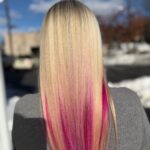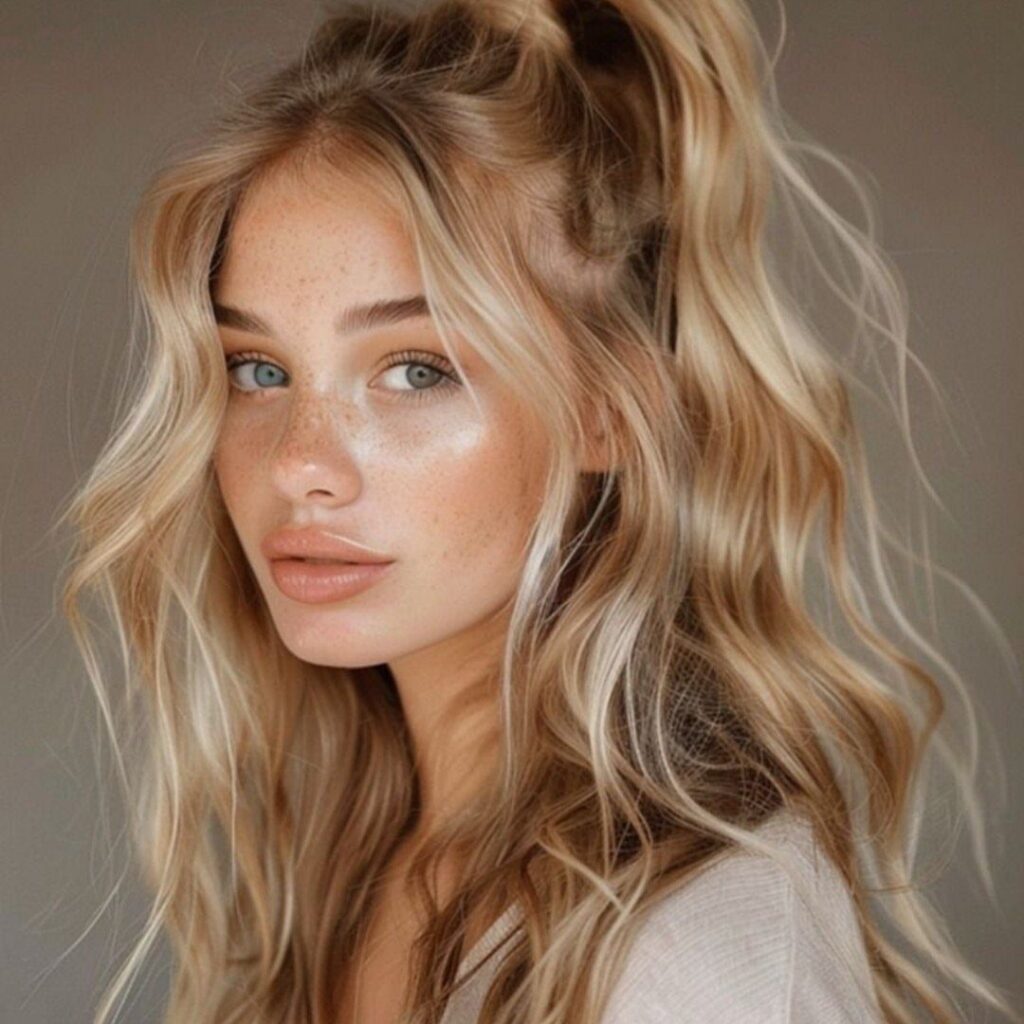
Highlights through light-brown hair can stay close to your base with caramel or honey, or jump several shades lighter with blonde or beige.
Honey and caramel stay close to brown’s warm base and blend softly, blonde jumps further and creates a sharper shift.
Warm brown with cool beige reads ashier and shows more separation, a look that works for some goals but not all.
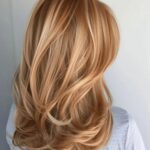
1. Blonde Highlights
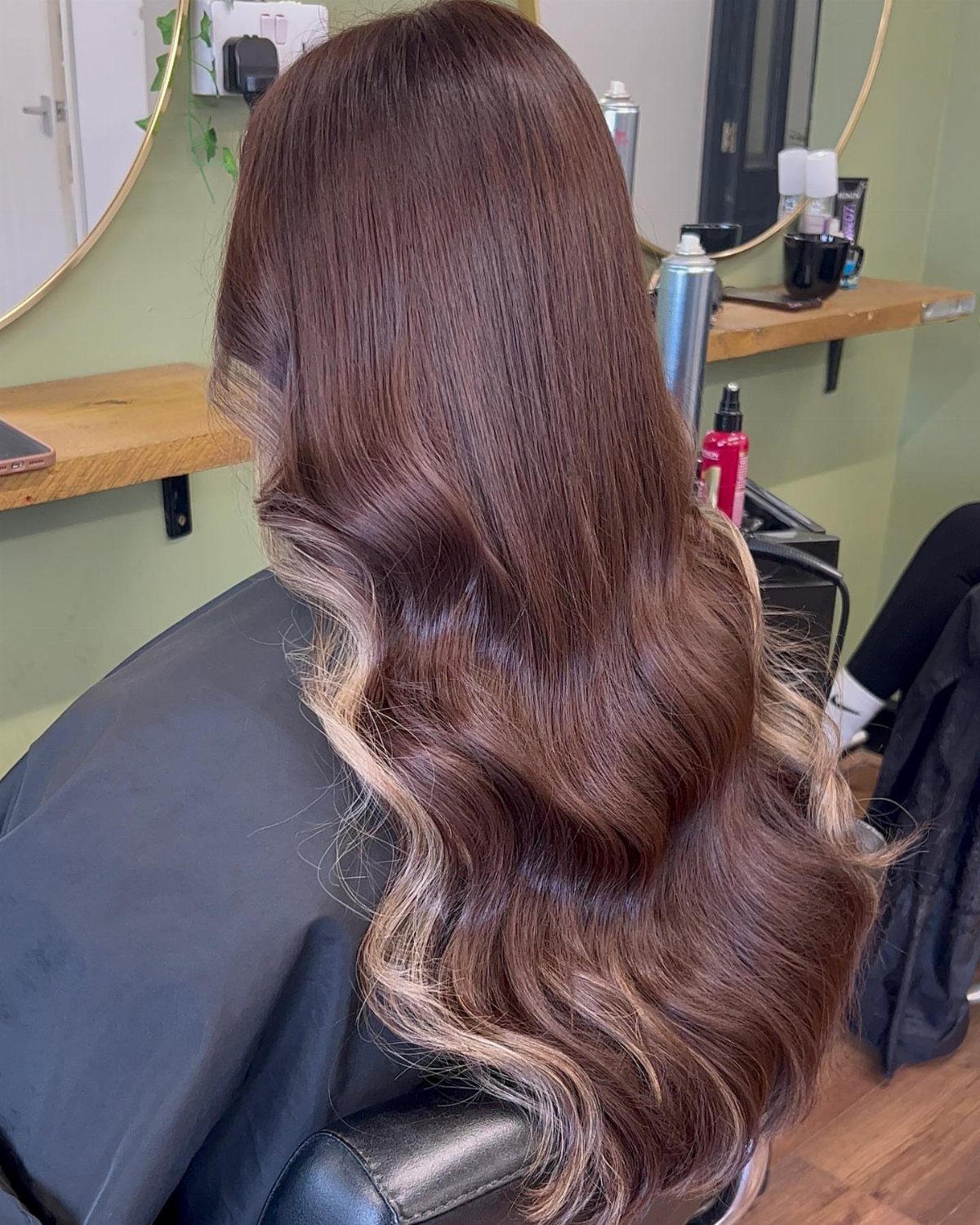
Blonde strands through a light-brown base lift the color without taking it all the way to full blonde. The contrast shows up clearest in natural light, and the cooler the blonde, the sharper the lift.
Most stylists place these with foils or balayage, starting a few inches from the root so regrowth is less obvious. How pale you go decides how often you’re back in the chair.
For subtle lift, ask for a buttery or honey blonde instead of platinum. That keeps the warmth in your base and softens the line between colors.
2. Honey Highlights
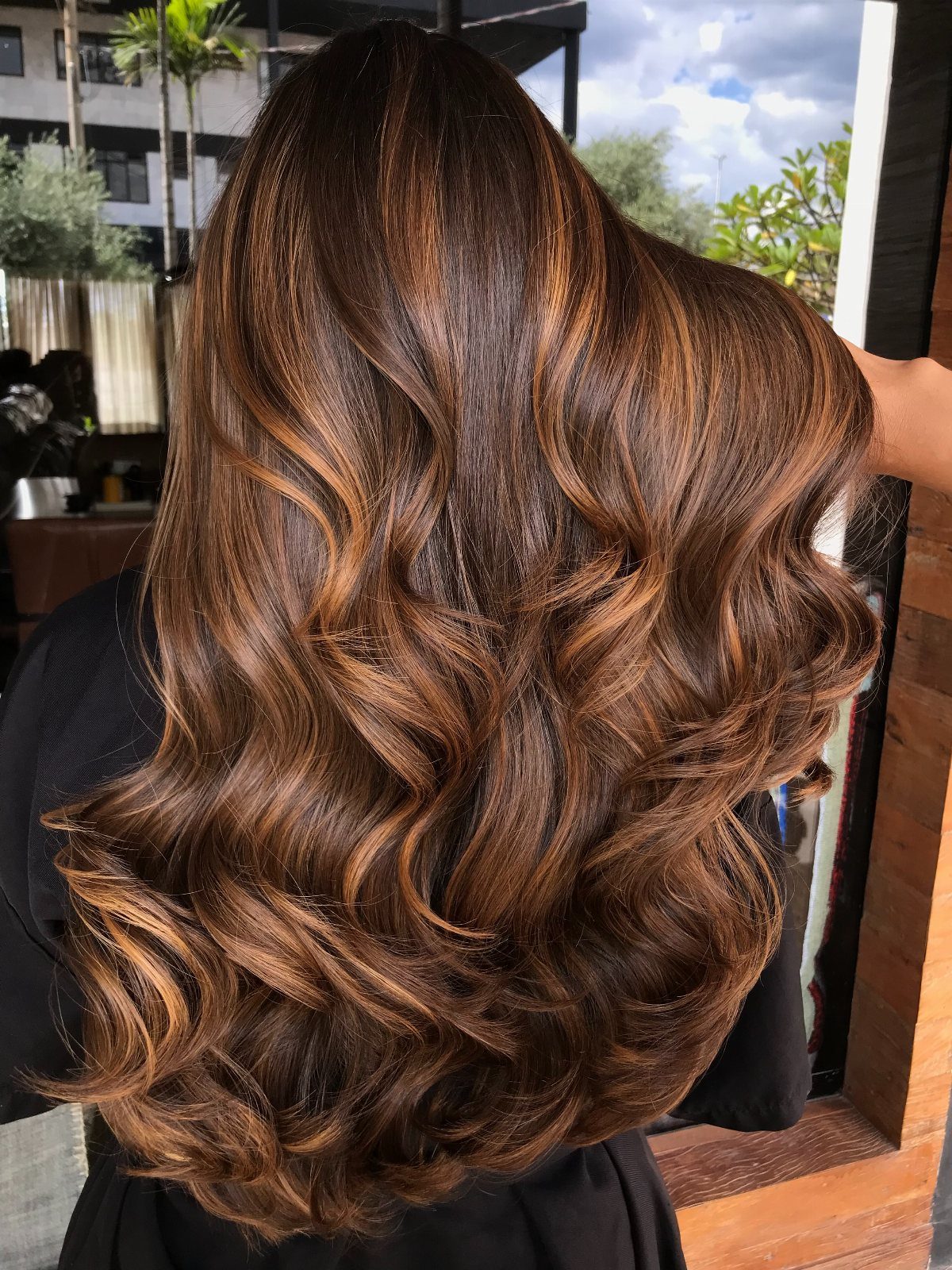
Honey tones sit warmer than straight blonde, pulling gold and amber into brown hair without the high-contrast jump. The result reads dimensional rather than striped, since honey shares the undertone of most brown bases.
This works especially well if your natural color already leans warm. Cooler browns can take honey highlights too, but the difference will be more obvious, which some people want and others don’t.
Honey fades softer than ash or platinum, so the grow-out phase is gentler. The grow-out is gradual enough that you can stretch appointments without roots looking like a project.
3. Caramel Highlights
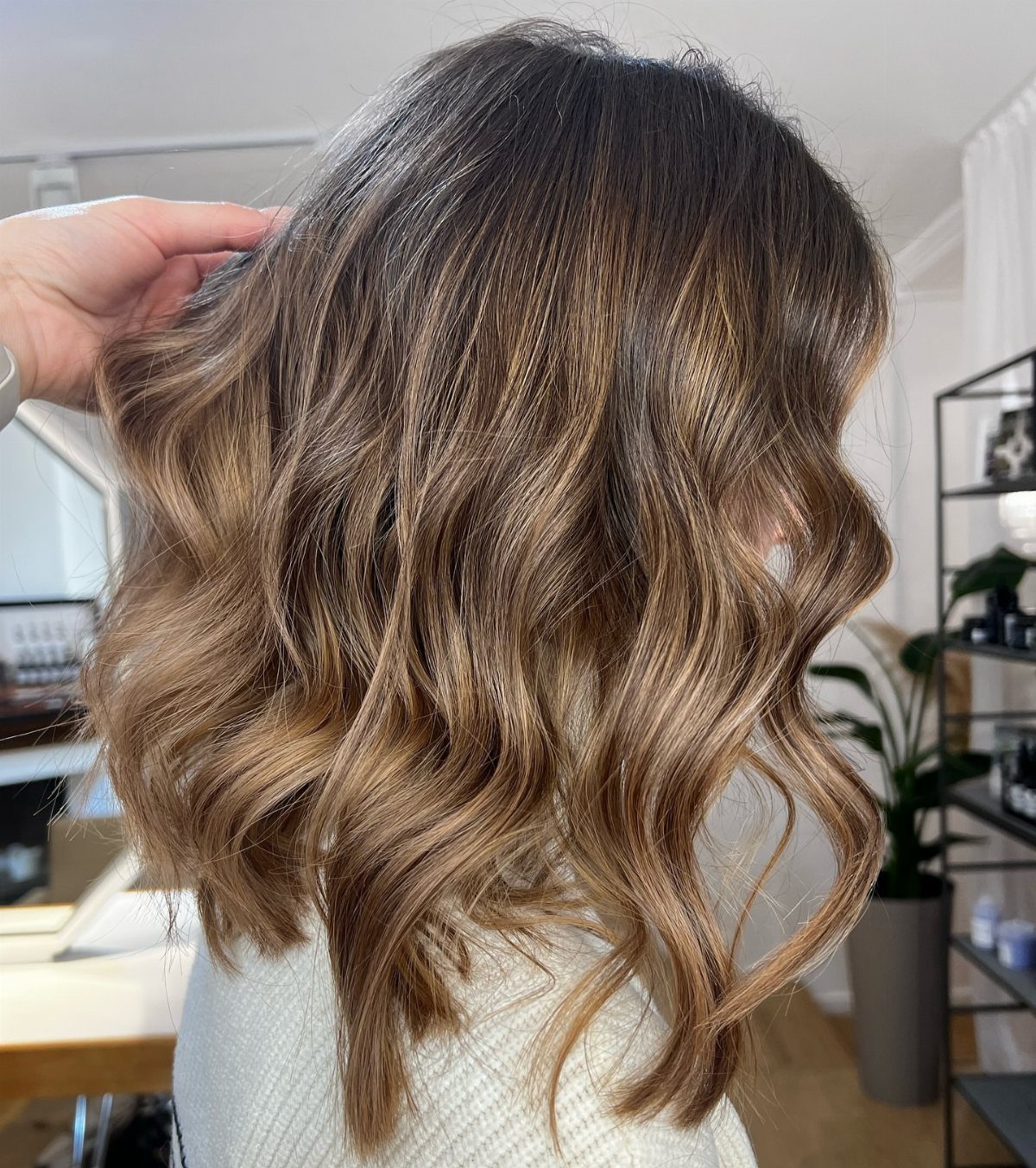
Caramel ribbons bring warmth and depth without the brightness of blonde. The color sits close enough to a brown base that it blends in low light and separates in sun, giving movement without high contrast.
Most colorists paint these on freehand, placing the warmth where it catches light instead of taking each highlight all the way to the root.
Because the color starts an inch or two down, regrowth isn’t the deadline it would be with foils.
If your base is dark brown, caramel will show up more noticeably.
On lighter brown hair, the effect is softer and the blend more natural. Both work; it depends on how much definition you want.
4. Lavender Highlights
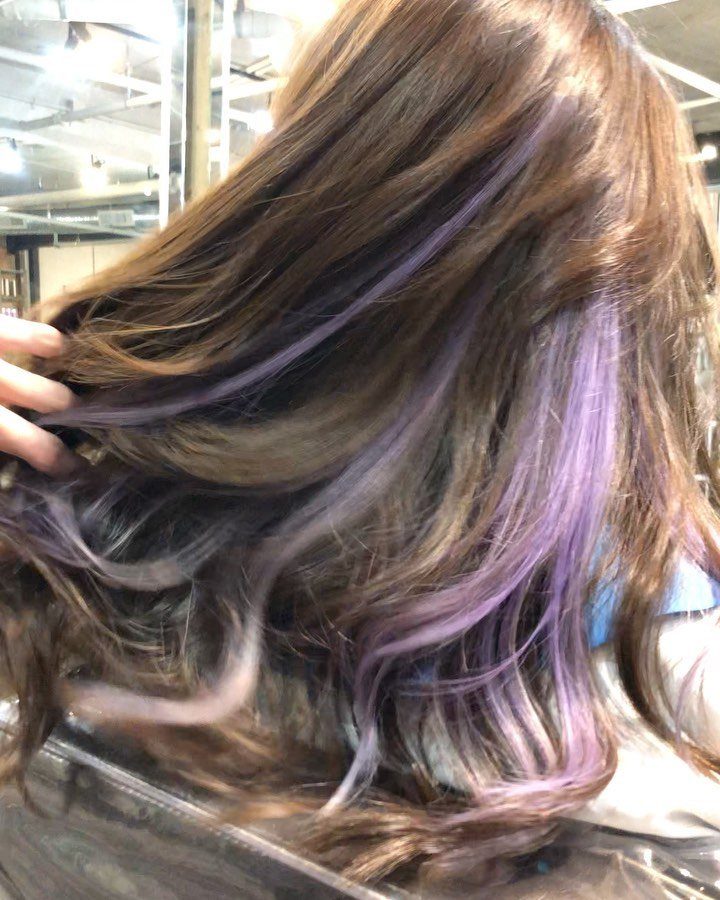
Lavender or violet pieces drop a pastel accent into brown hair, most often placed through the front or scattered lightly through the lengths. The color shows up best on lighter brown bases or pre-lightened strands.
Pastels wash out faster than anything close to your natural color, and you’ll need purple shampoo between appointments to stop the tone turning muddy. If you don’t want to commit to frequent touch-ups, try a semi-permanent version first.
The softer the lavender, the more subtle the look. Deeper violet reads bolder and holds longer before washing out.
5. Pink Highlights
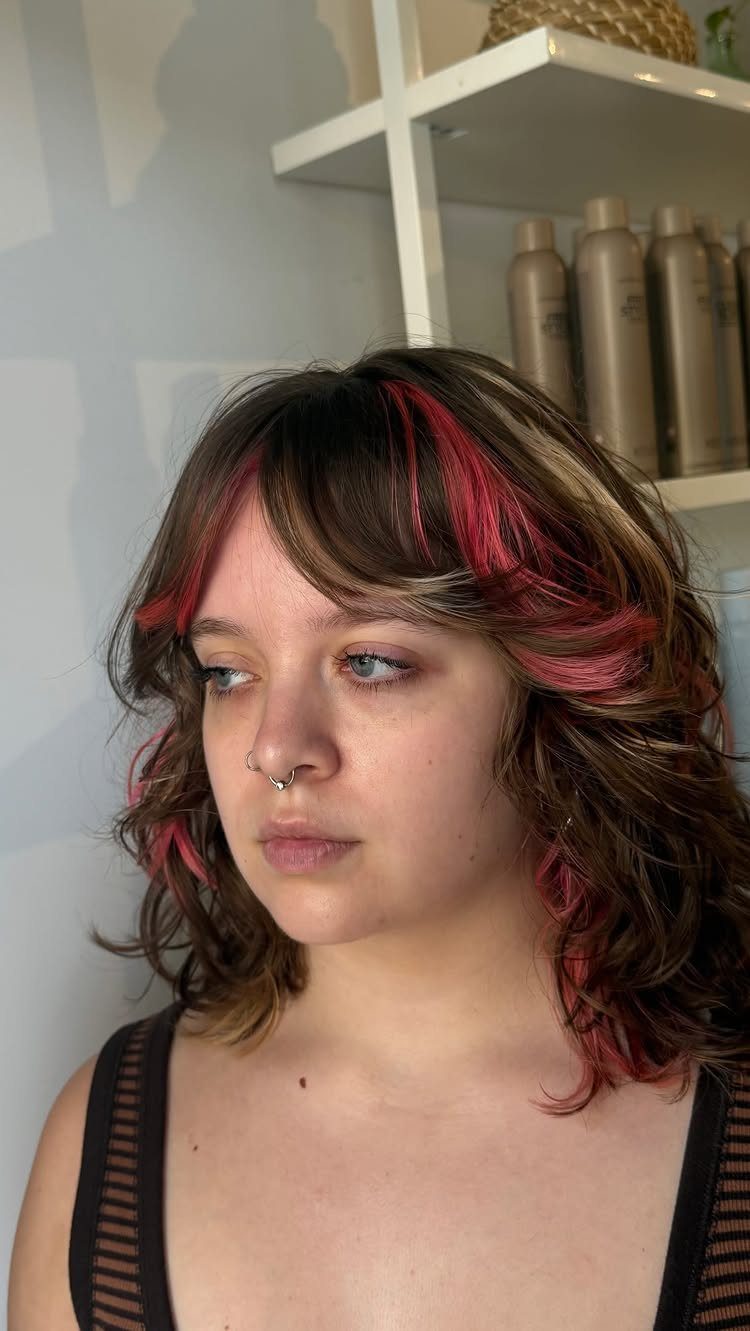
Pink strands bring a vivid or pastel pop, depending on how saturated the color is and where it sits. Face-framing pieces make the boldest statement, while scattered highlights through the lengths read softer.
To get pink to show on brown hair, the strands usually need to be lightened first, which adds time and cost to the service. The brighter the pink, the longer it lasts, but all of them fade with each wash.
If you’re trying this for the first time, start with just a few pieces. You can always add more, and fewer strands mean less upkeep.
6. Face-framing Highlights
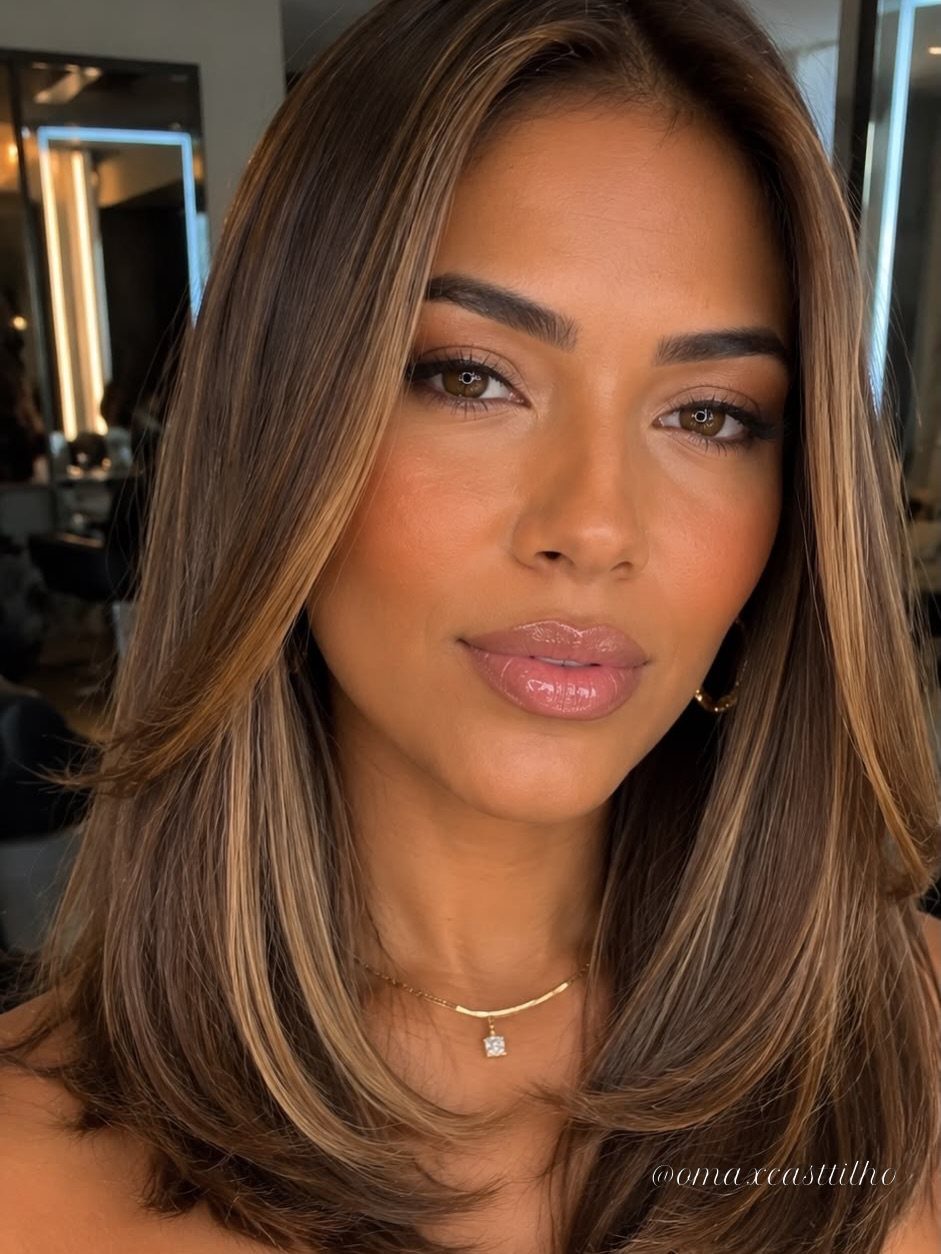
Lighter pieces framing the face brighten your features without coloring the whole head. The placement concentrates around the front sections, from the temples down, leaving the back closer to your natural color.
This cuts down on maintenance since the regrowth at the crown and back blends more easily.
The tone matters: if your base is light brown and you go too pale, the contrast can look striped. Staying within 2 or 3 shades keeps the lift soft and flattering, especially if your skin tone is warm.
7. Beige Highlights
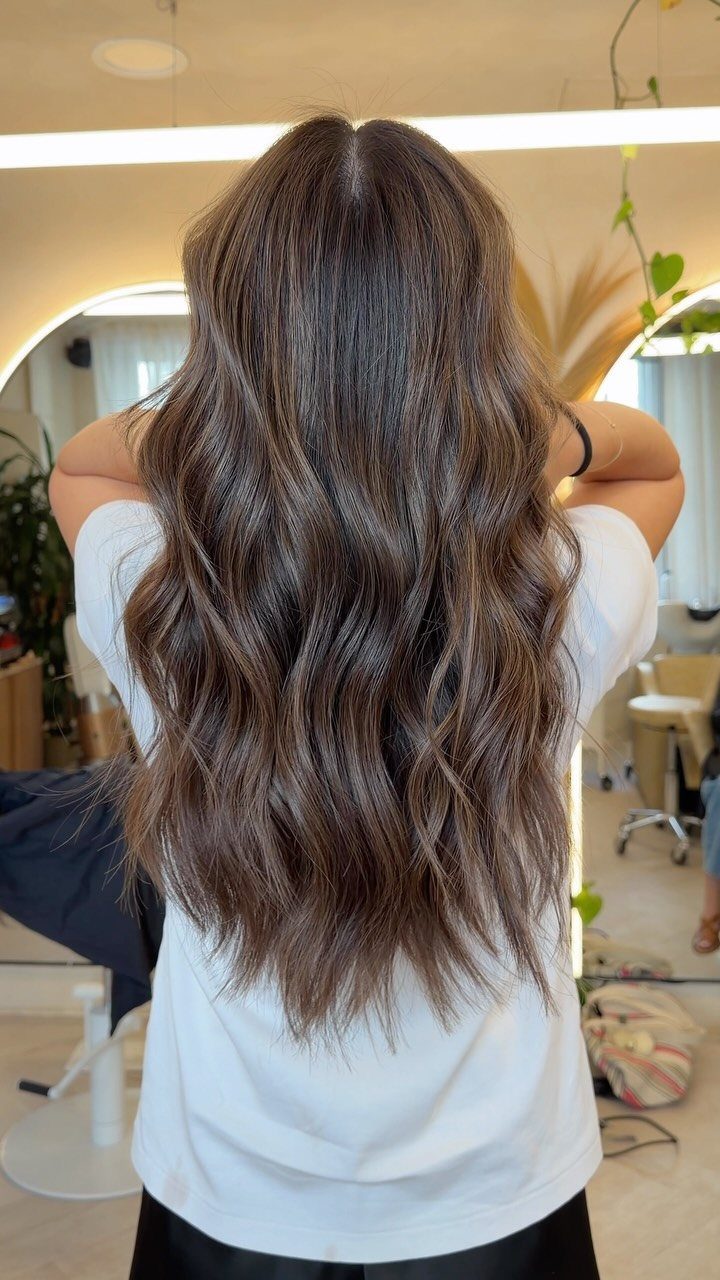
Beige tones pull cool or neutral rather than gold, which gives lift without obvious warmth.
If your natural color leans warm, beige highlights will read cooler and more ashy. That contrast can brighten your face, but if you want something that melts in, stick closer to honey or caramel instead.
Beige fades gently and holds its tone longer than platinum, so maintenance is easier than with brighter blondes.
8. Babylight Highlights
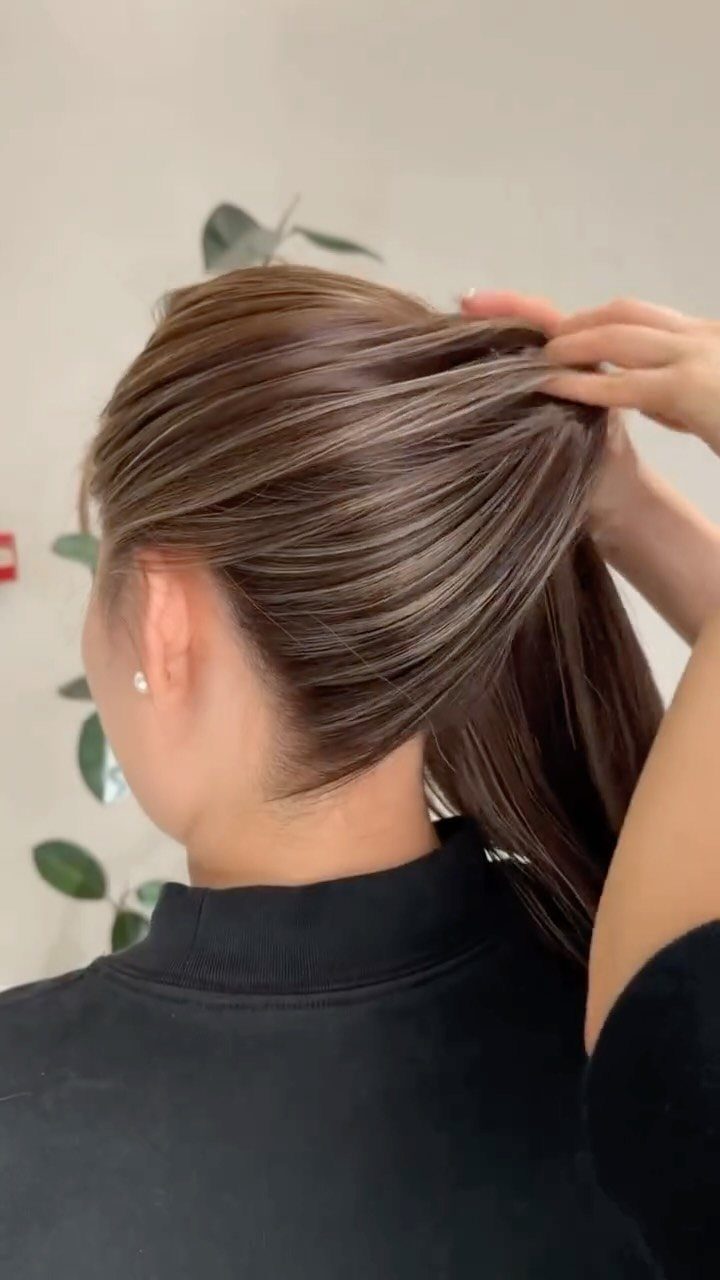
Babylights are painted in fine, closely spaced ribbons that mimic the way hair lightens naturally in the sun. The strands are thin enough that they blur together from a distance, giving an all-over brightened effect instead of distinct streaks.
This technique takes longer than standard highlights because each section is smaller and more precise. You get a softer grow-out and a finish that doesn’t look obviously colored.
On light-brown hair, babylights can stay subtle or add noticeable brightness depending on how pale you go with the tone.
9. Chunky Highlights
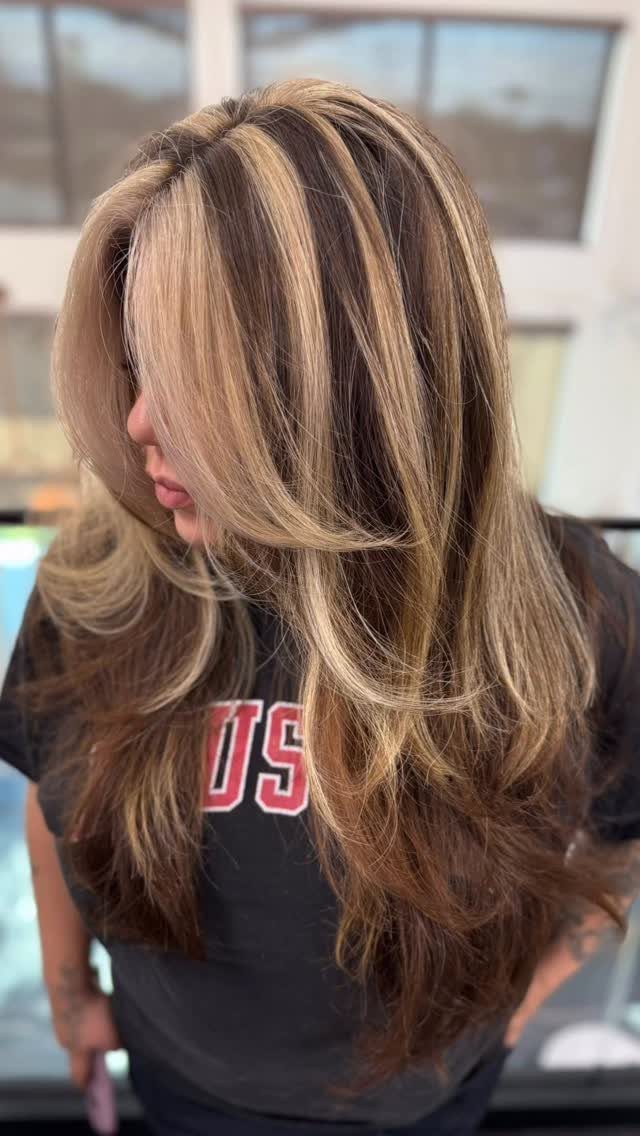
Wider sections of color create bold contrast, especially when the highlight tone is several shades lighter than the base. The look is graphic and deliberate, not blended.
Chunky highlights grow out more visibly than fine ones, since the line between your natural color and the lightened pieces is sharper.
On light-brown hair, blonde chunks read retro and high-impact. The effect softens if you choose a tone closer to your base, like caramel or honey.
10. Blue Highlights
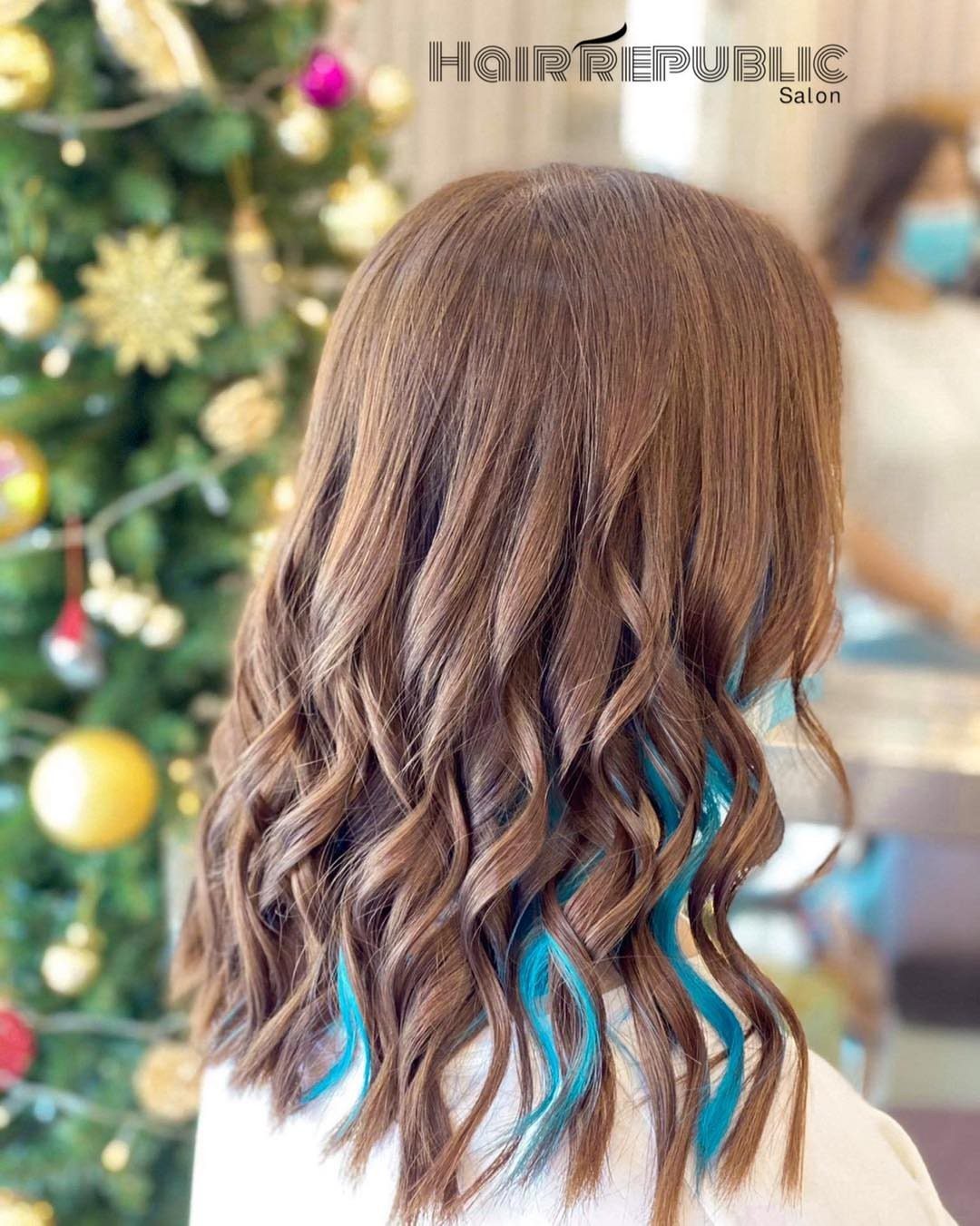
Lighter blues show up more on brown hair, while deeper navy blends closer to the base.
The color washes out gradually, shifting toward green or gray if you don’t refresh it.
Start with a few highlights if you’re testing the idea. A full head of blue is a bigger commitment, and fewer pieces mean less upkeep.
11. Neapolitan Highlights
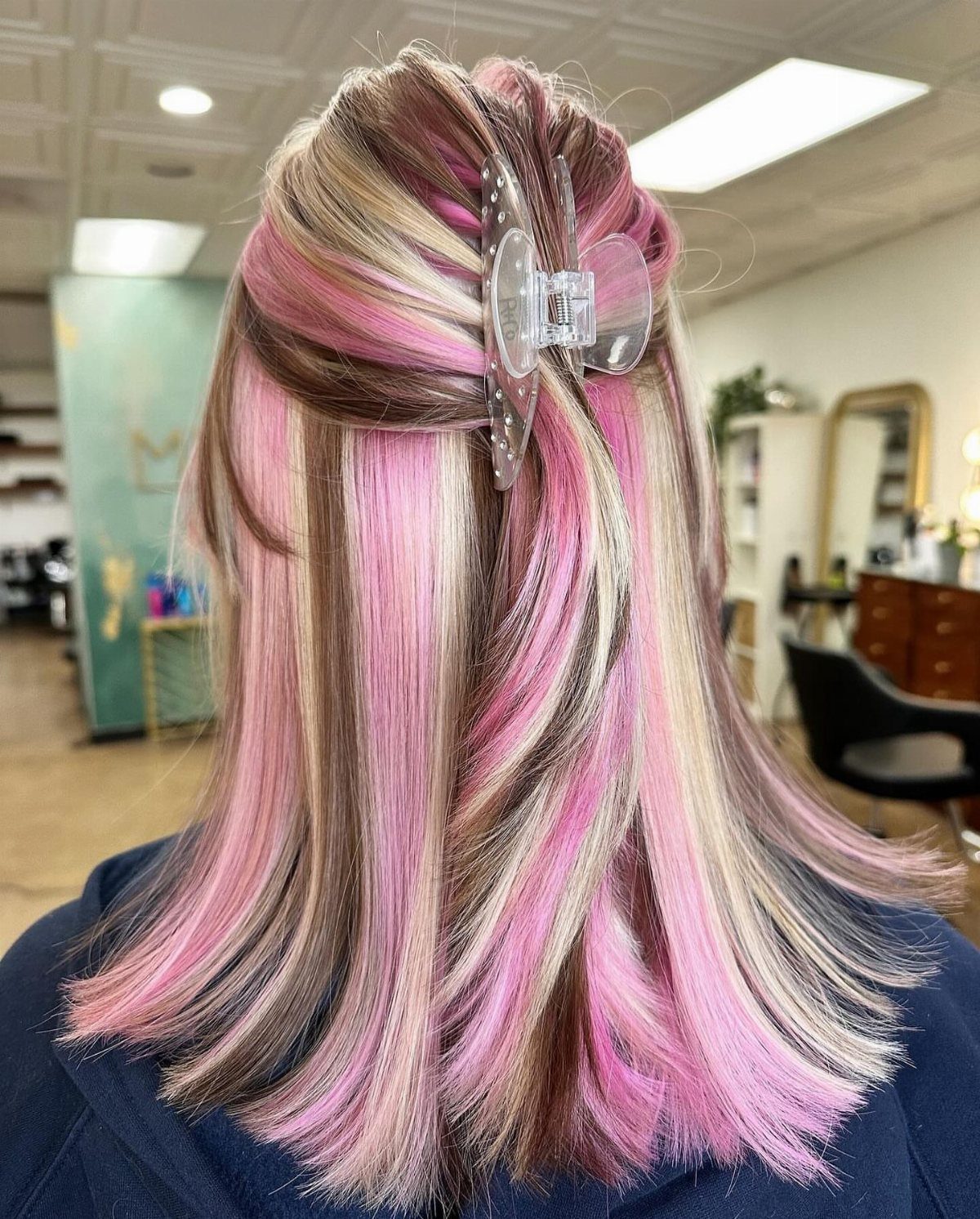
This look mixes 3 tones in alternating ribbons, usually pink, blonde, and taupe or brown. The result is color-blocked rather than blended, with each tone staying distinct.
The lightened sections need to be pale enough for the pink to show, which means pre-lightening and more time in the chair. All 3 colors will fade at different rates, so the look shifts between appointments.
If you want the multi-tonal effect without pastels, swap the pink for caramel or honey. That keeps the variation but cuts down on color maintenance.
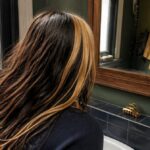
12. Fine Vertical Highlights
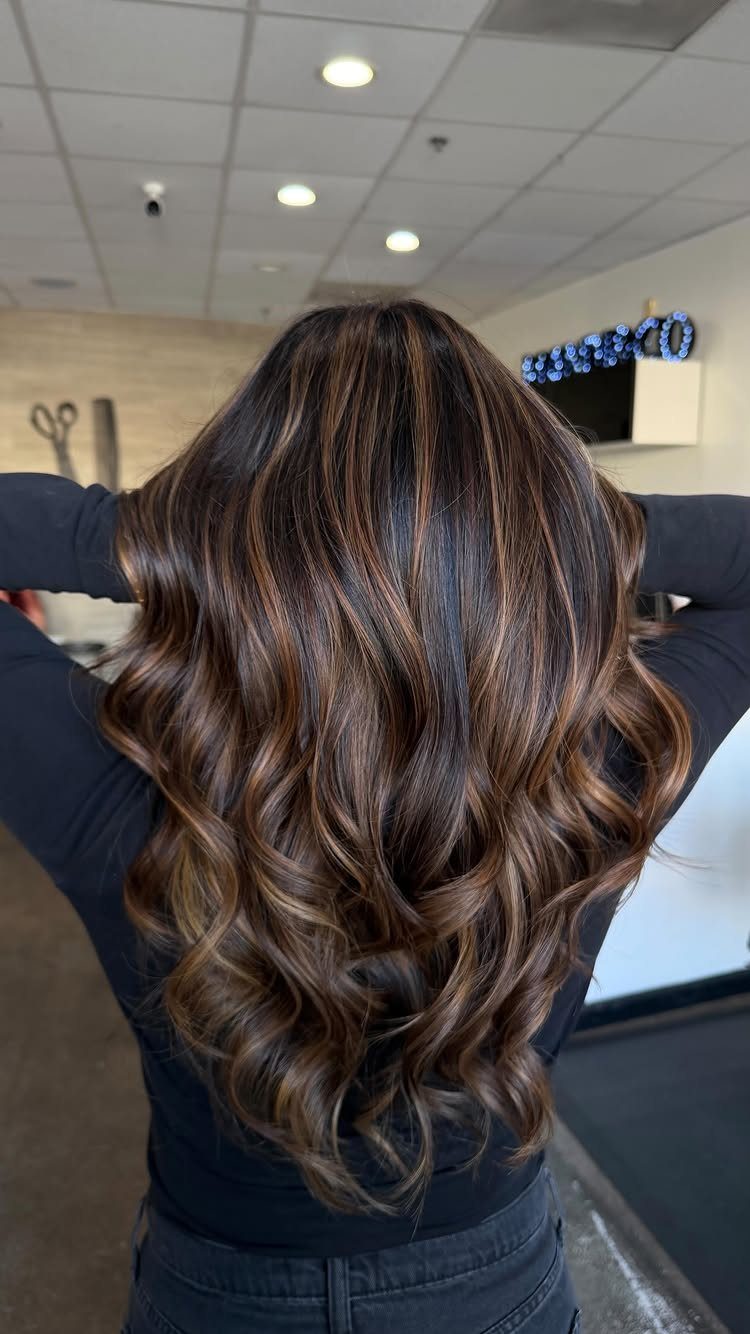
Narrow streaks placed vertically through the hair give definition without broad contrast. The placement follows the natural fall of the hair, so the highlights sit in clean lines rather than scattered.
This works well on straight or loosely waved hair, where the vertical lines stay visible. On tighter curls, the strands twist and the effect softens.
The finer the highlight, the more natural the blend. If you want more noticeable lift, ask for slightly wider sections or go a shade or two lighter with the tone.
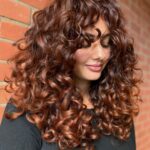
13. Highlights on Curls
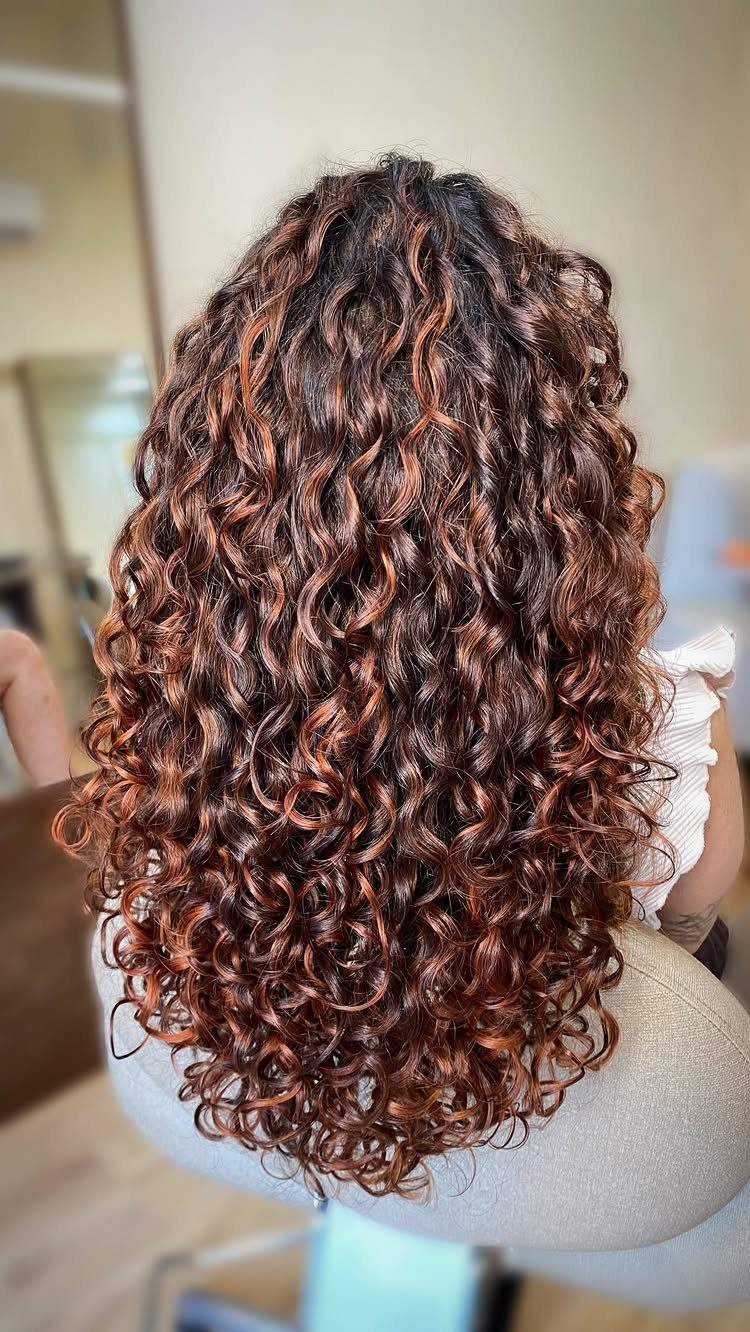
Highlights placed through curls catch light as the hair moves, since each curl twists the color into view from different angles.
Warm tones like copper or honey work especially well because they share the undertone of most brown bases and read dimensional rather than striped.
Light brown highlights on curly hair require less frequent touch-ups, which means longer stretches between appointments.
If your curls are tight, ask for wider sections of color so the highlights stay visible. On loose waves, finer ribbons blend more naturally.
14. Balayage Highlights
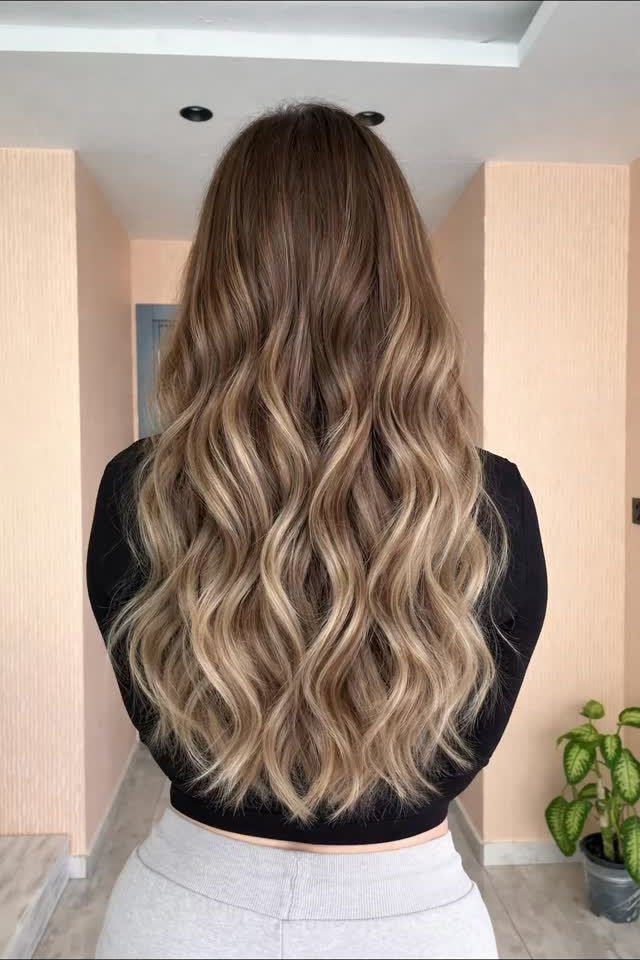
Color is painted on freehand, starting partway down the strand and graduating lighter toward the ends. The result is a blend rather than distinct lines, with the lightest tone concentrated where hair naturally lightens in the sun.
Because the color starts below the root, regrowth is softer and you can go longer between touch-ups. Most people stretch appointments longer without the grow-out looking overdue.
Blonde gives the most lift, while caramel or honey keeps the warmth closer to your base.
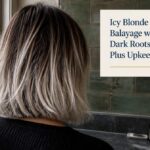
15. Highlights on a Bob
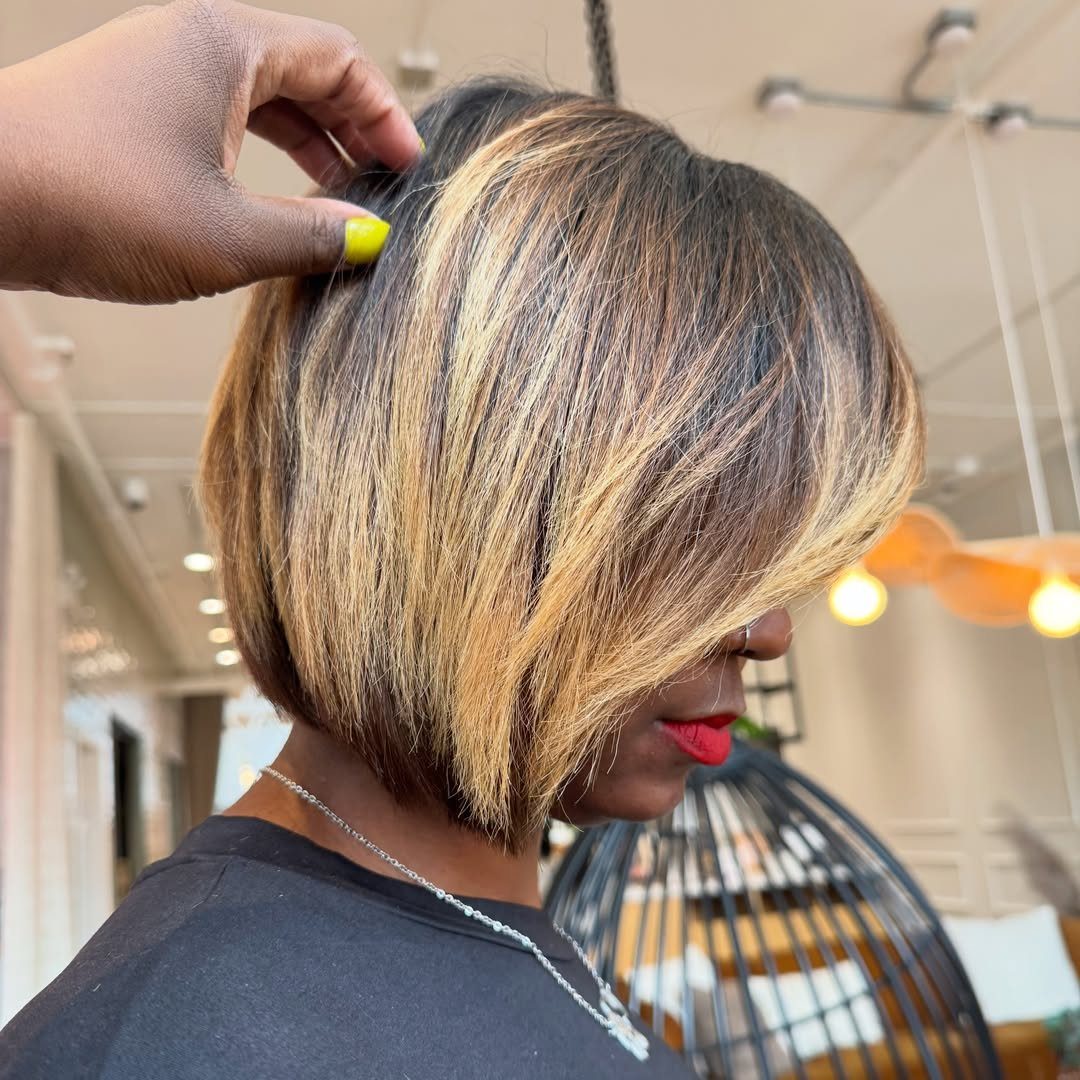
Lighter pieces through a short cut add dimension without the weight of length. The placement shows up clearly on a bob because the hair sits close to one layer, so each highlight is visible rather than buried.
Blonde or caramel tones brighten the face, while beige reads cooler and more neutral. The shorter the cut, the more visible the regrowth becomes, so you’ll need touch-ups more often than you would with longer hair.
If you want to test the idea before committing to frequent appointments, start with just a few face-framing pieces. You can always add more.
Frequently Asked Questions
What colors match with light brown hair?
Blonde, honey, caramel, and beige all lift light brown without taking it to a completely different base. Warmer tones like honey and caramel blend closer to most brown undertones, while beige and platinum read cooler and give sharper contrast.
Pastels like lavender and pink show up best when strands are pre-lightened, and they fade faster than any tone close to your natural color.
Are highlights out of style in 2026?
Highlights are still widely worn, with techniques ranging from fine babylights to bold chunky sections.
The trend leans toward softer placements like balayage and face-framing pieces that grow out gradually, rather than full-head foils that need frequent touch-ups. Pastel accents and multi-tonal looks like neapolitan highlights are also current, though they require more upkeep.