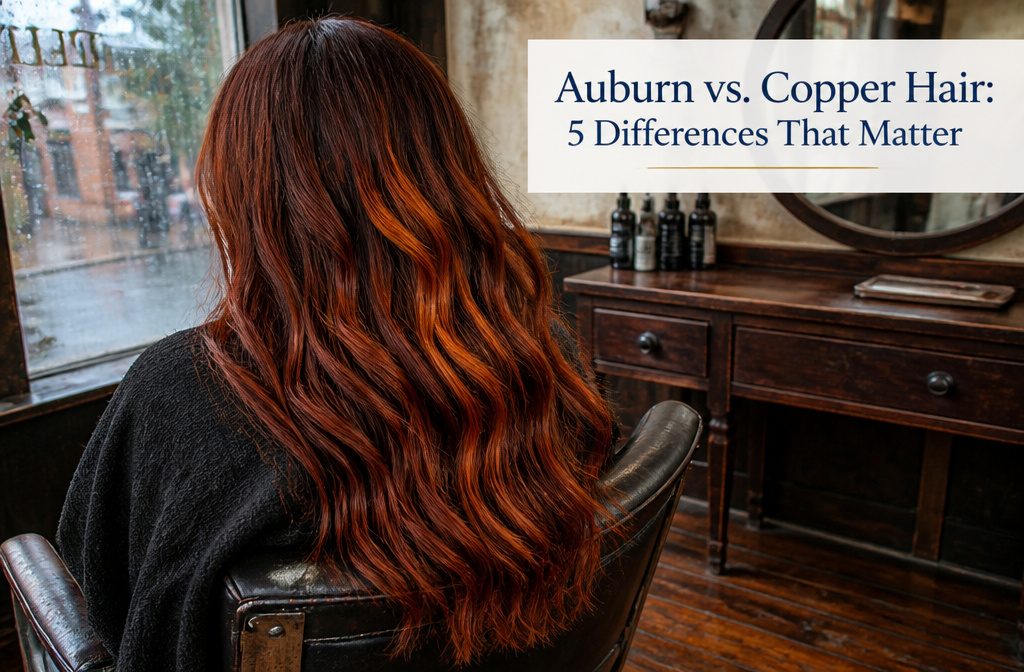
Auburn wins for fair skin because it neutralizes pink tones without overpowering, while copper wins for anyone who wants brightness that gets noticed across a room.
That flips if you’re working from previously colored dark hair, since bright copper usually needs color removal first and auburn asks for less.
Balayage is the subtler route for auburn with copper highlights because the copper sweeps into the red-brown instead of sitting in stripes.
Undertones: Red-Brown Against Orange-Gold
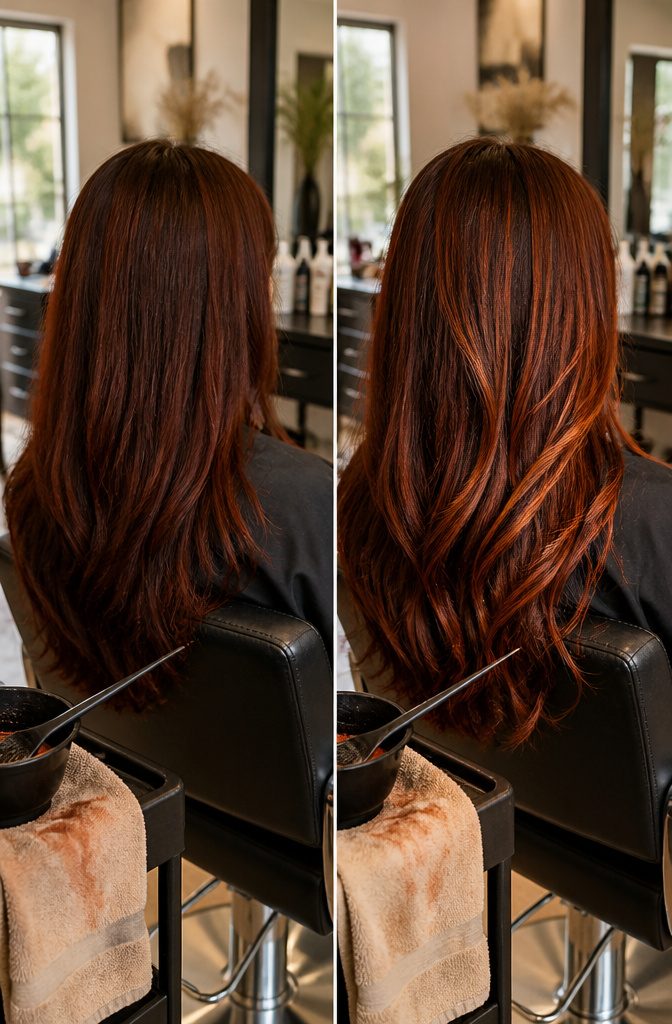
Auburn is red set over a deeper brown base, which is why it lands in the medium-to-dark brunette range.
Copper builds from red, orange, and golden tones, so it runs lighter and brighter. That split, red-brown against orange-gold, is the whole difference.
Copper’s own base is less settled.
Some colorists call it golden or orange, and others call it pinkish, so two "coppers" can look quite different on the same head. Ask which way the formula leans before you book.
For auburn with copper highlights, I’d pick the golden-orange version if you want the highlights to read as a separate color. A pinkish copper will sit closer to the red already in auburn and blend in.
Brightness and Depth
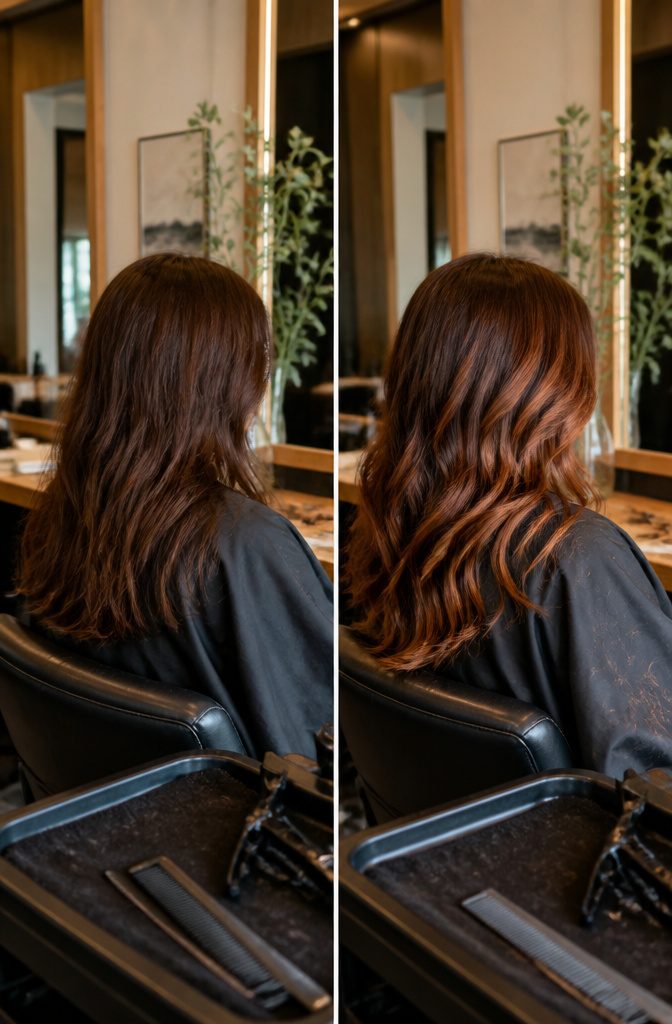
Brightness is the first thing that separates them. Auburn sits in the medium-to-dark brunette range, a mix of deep red and brown that reads subtle and classic, and it gives the color depth and dimension.
Copper is brighter, more saturated and leans orange, so it pops in a way auburn doesn’t.
With auburn and copper highlights, I’d let each shade do one job: the auburn base supplies depth, and the copper pieces supply the glow.
Keep the copper to a few face-framing pieces if you want the base to stay in charge. Go heavier and the whole head tips toward copper, which is a different look.
How They Look in Different Light
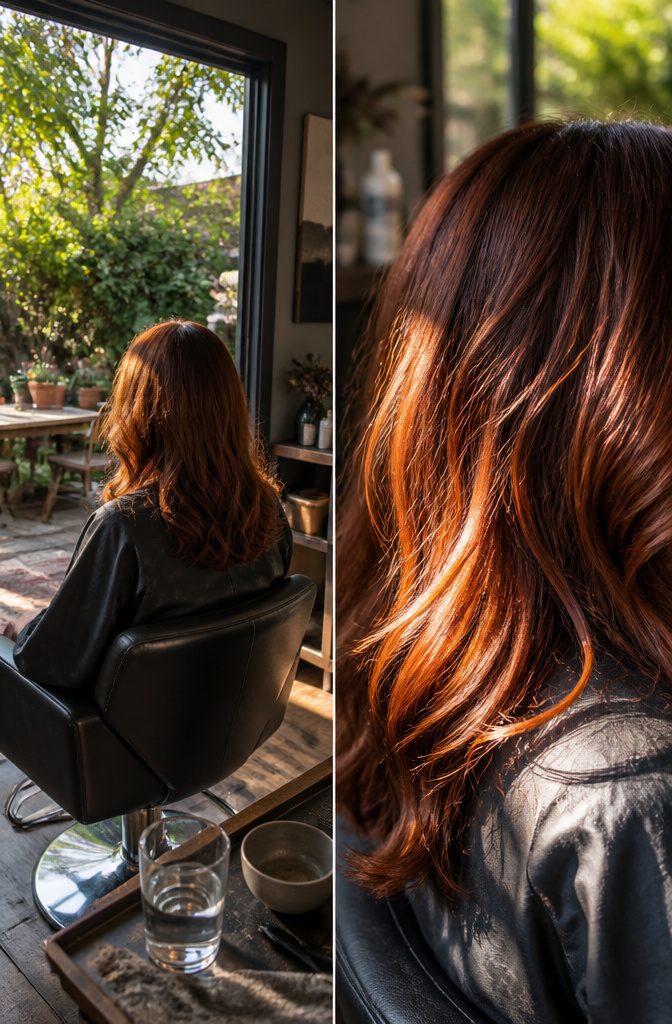
Auburn changes with the light more than copper does.
In a dim room it can look dark and muted, closer to a red-brown. Step outside and the same color can read redder, with golden or honey tones and a sun-kissed warmth.
Copper stays loud.
In bright light or direct sunlight, copper looks its most saturated, and it can swing orange or pinkish. Its mix of red, orange and gold has little brown to soften it.
For hair that gets noticed across a patio, I’d choose copper.
If you’d rather keep the color quiet indoors and let the warmth show up only in daylight, auburn is the better fit. Check any photo you’ve saved against the lighting it was taken in.
Style and Associations
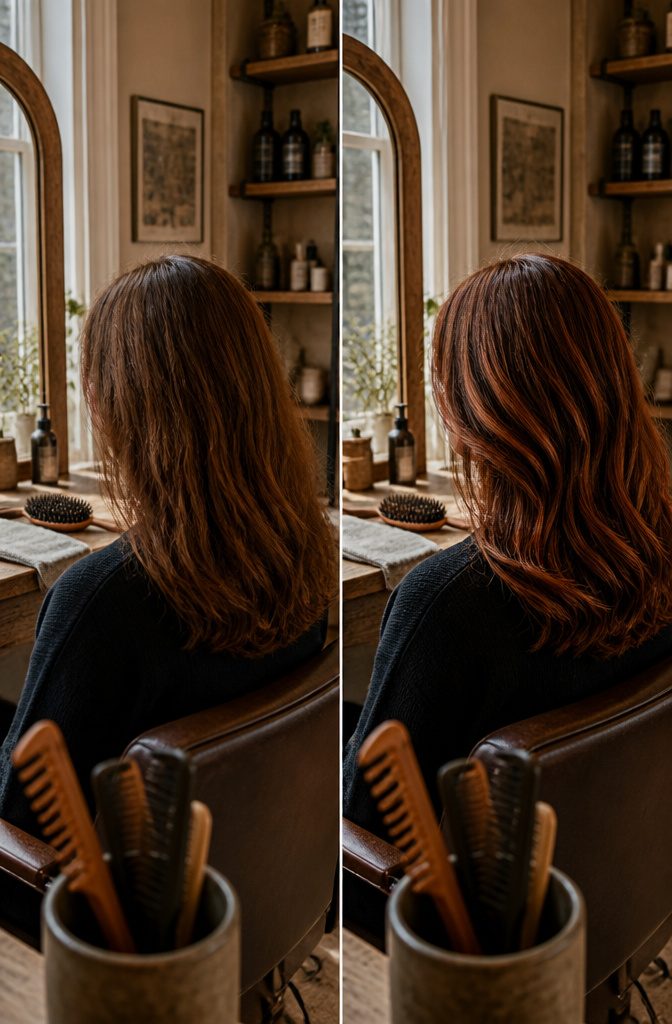
Auburn reads as timeless. It carries a vintage-romance feel and turns up naturally in redheads from Ireland and Scotland, so it looks established rather than trendy.
Copper is a different mood: playful, energizing and tied to the latest trends, with "Cowgirl Copper" the name currently driving requests.
Auburn is subtle and adds depth, while copper is loud and made for a statement. That gap is why auburn with copper highlights works as a compromise.
I’d keep auburn as the base and let copper show up in a few pieces, so the classic color carries the look and the fashion-forward brightness stays an accent you can dial up or down.
Choosing Between Them by Skin Tone
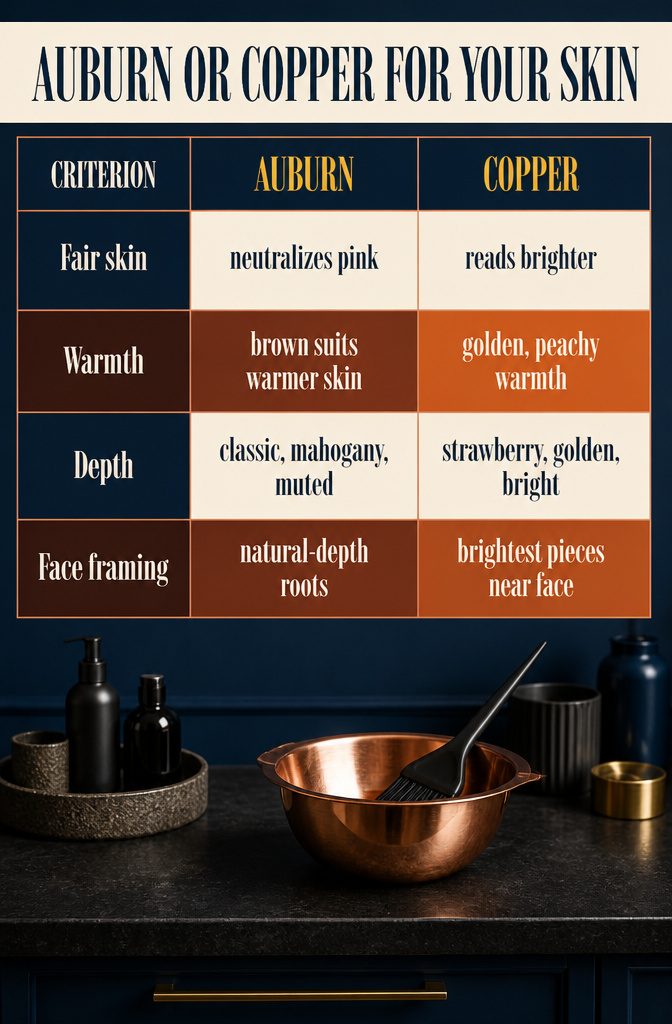
Skin tone is a starting point, not a rule, and I’d ignore any online chart claiming a cool complexion rules out warm red.
Auburn is the easiest call for fair skin because it neutralizes pinkish tones. Auburn and copper are both warm reds, so most people can wear either: the red balances cooler skin, and the brown in the mix suits warmer skin.
Brightness is the better deciding factor. Golden, strawberry or peachy copper reads brighter and warmer, while classic auburn, mahogany auburn and dark copper read deeper and more muted.
A stylist can also keep the root at your natural depth and place the brightest pieces around your face.
Maintenance and Fading
Bright copper shows fading more than auburn does.
It drifts toward soft gold, peach or strawberry, while auburn usually slides into a warm brown that looks more like a natural shift. On auburn with copper highlights, the copper goes first, so the contrast between the two tones flattens.
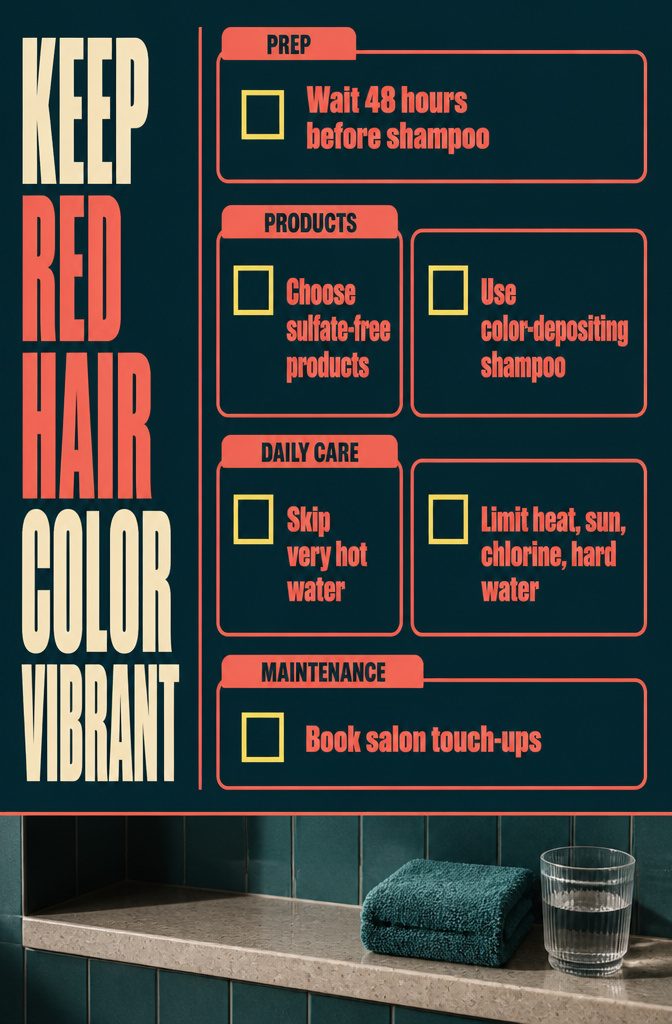
Wait 48 hours before the first shampoo so the pigment can settle. After that, use sulfate-free products and a color-depositing shampoo, and skip very hot water.
Heat styling, sun, chlorine and hard water all strip red, and hair that was lightened earlier is more porous, so it loses color fastest. I’d plan on salon touch-ups rather than trying to fix fading at home.
Auburn Shades: Light to Dark
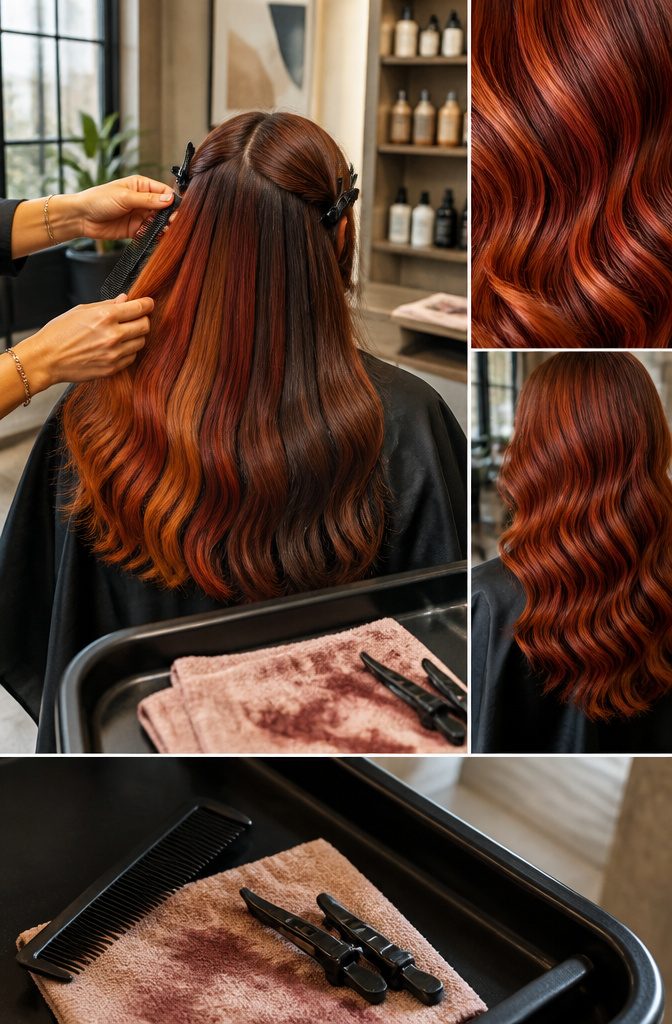
Auburn is red over a deeper brown base, and these are the names worth bringing to the salon:
- Light auburn: the brightest, most openly red end of the range.
- Medium auburn: the middle setting, and the easiest starting point for a brunette who wants warmth that is noticeable but not loud.
- Dark auburn: red tones sitting deep in the brown.
- Red-brown: brown leads and red follows, so it is the quietest option here.
- Copper-auburn: the closest auburn gets to copper, and the name I’d use if you want a hint of that brightness.
- Mahogany auburn: a rich, deep take on the red.
- Chocolate-auburn: more brown than red, with a softer finish.
- Auburn with golden dimension: warm gold worked through the red.
Copper Shades: Strawberry to Deep
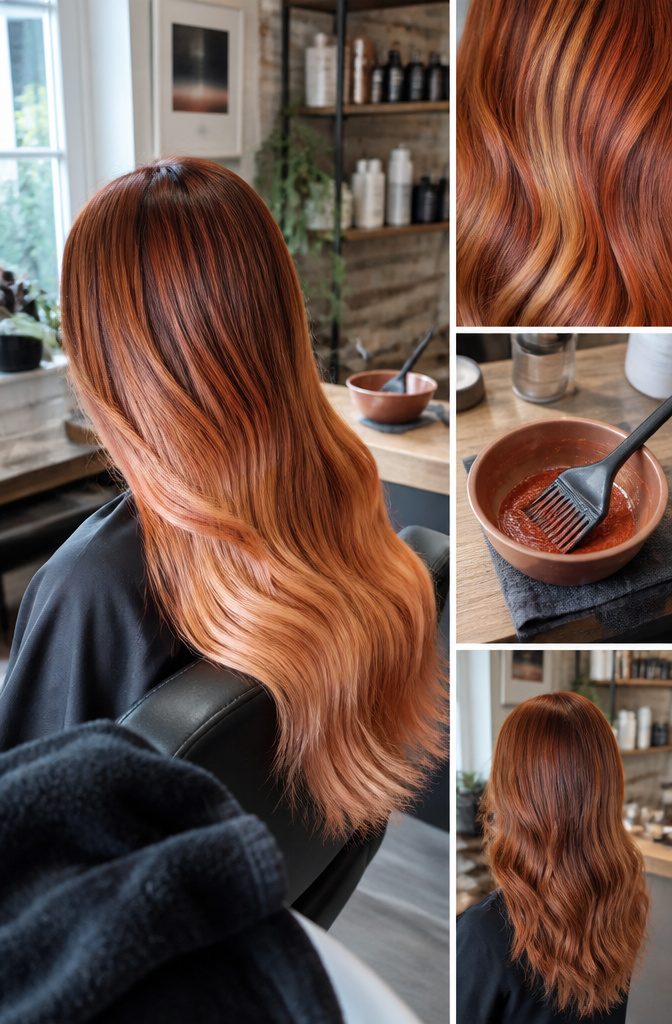
Copper spans soft and natural to bright and dramatic, and these are the names you can ask for:
- Strawberry copper
- Light golden copper: copper pulled toward gold
- Classic penny copper: the middle of the range
- Bright orange-copper: the loudest option
- Ginger
- Copper-blonde: the lightest, closest to blonde
- Copper-brown: copper softened by a brown base
- Deep copper: the darkest, richest end
On an auburn base, I’d start with copper-brown or deep copper, since they sit nearest the red-brown and blend instead of contrasting. Bright orange-copper is the one most likely to read as a separate color.
Your starting level and the formula matter as much as the name. Permanent color, a demi-permanent gloss and a vivid shade will all land differently.
Starting Hair Color and What It Means for the Result
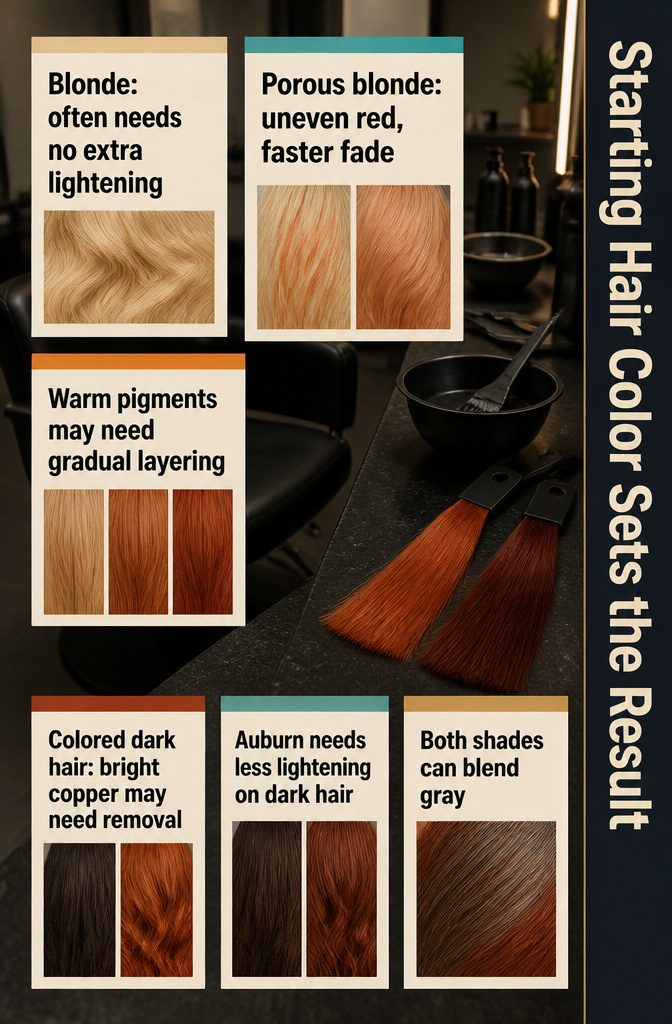
Blonde hair is the easiest place to start. It can often take copper or auburn pigment without extra lightening, but very light or porous blonde absorbs red unevenly and fades faster.
A stylist may need to add the missing warm pigments back gradually, and I’d take that slower route over one heavy coat of red.
Previously colored dark hair is the harder case. Permanent dark color can’t usually be lifted much by applying a lighter color over it, so bright copper on previously colored dark hair often needs color removal or lightening first.
Auburn generally asks for less lightening, which makes it the easier choice from a dark base. Either shade can also cover or blend gray.
Highlights, Balayage, and Ombre for Auburn With Copper
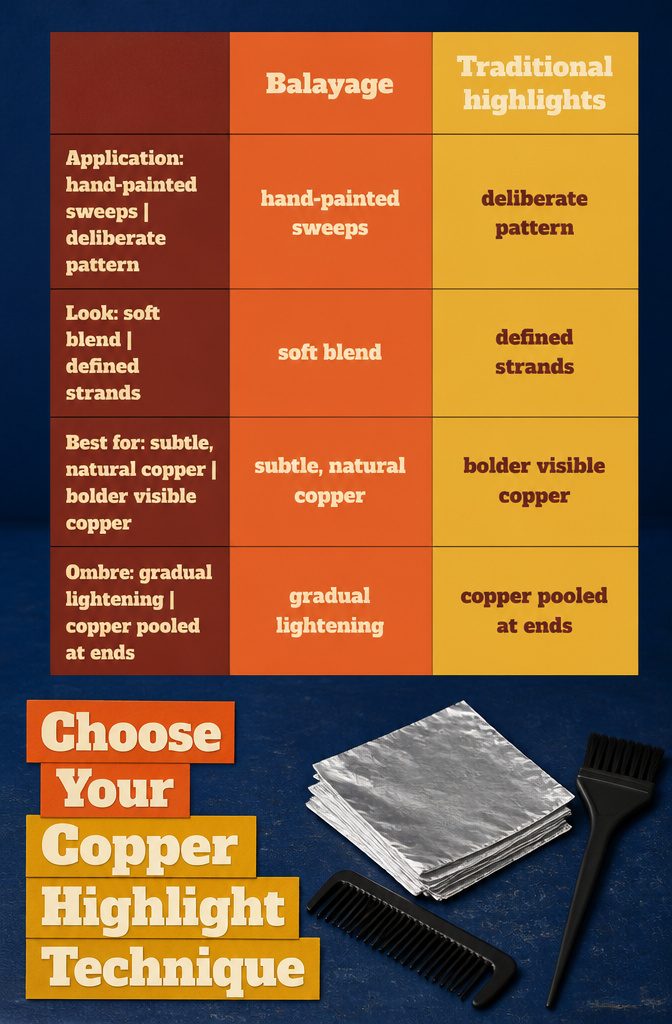
Balayage is French for "to sweep," and that is how the copper goes on: hand-painted in sweeping strokes, less structured and less defined than traditional highlights.
On an auburn base, that softness is why I’d pick it first. The copper blends into the red-brown instead of sitting in stripes.
Traditional highlights place lighter strands in a deliberate pattern (the foil version is sometimes called foilyage).
Choose them when you want the copper seen. Ombre lightens gradually along the length, which suits you only if you want the copper pooled toward the ends.
For auburn with copper highlights, balayage is the subtler, more natural route, and highlights are the bolder one.
Getting the Color Right: Colorist Consultation and Photos
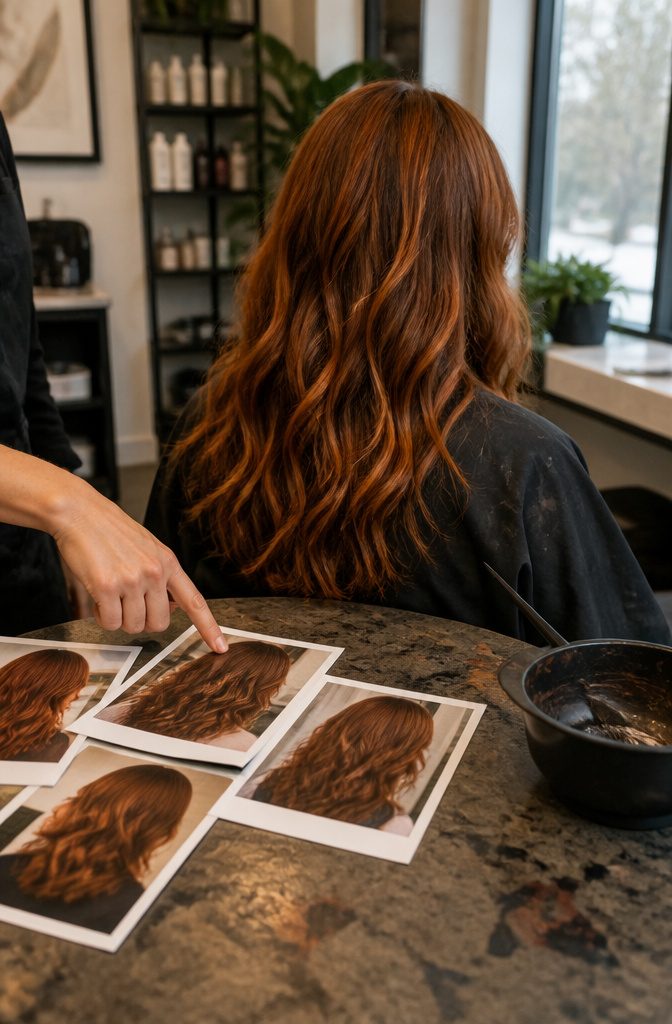
Shade names mean different things in different chairs, so bring photos, not just a shade name.
"Copper" alone can land anywhere from soft and natural to bright and dramatic. I’d save 2–3 images of auburn with copper highlights that show the balance you want, and hand them over before anyone mixes a bowl.
Even a perfect photo won’t come out identically on two heads. Your starting level, the formula and the type of color (permanent, demi-permanent gloss or vivid) all shape the result, so ask which your colorist plans to use.
If the salon carries Neäl & Wølf, ask about GLAZE Demi Toner: 5CB covers auburn and 7CB covers copper, and it corrects color, curbs brassiness and adds shine.
Products That Keep Red Hair From Fading
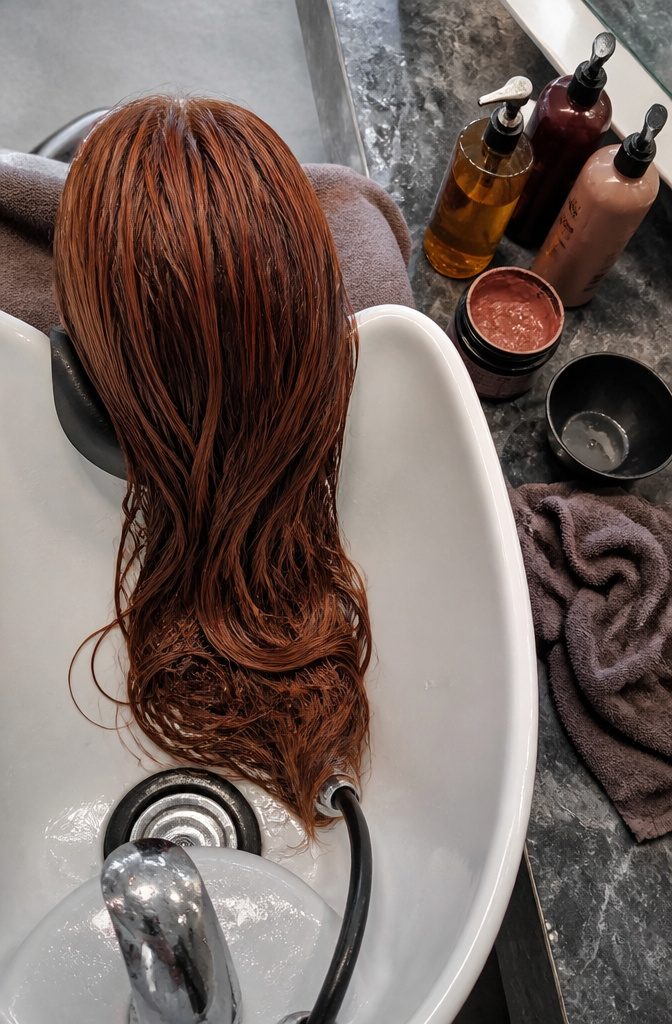
Red pigment is the first to leave, so the shower routine matters as much as the salon visit. I’d build around these:
- A sulfate-free shampoo is the baseline, because harsh cleansers strip color faster.
- A color-depositing shampoo and conditioner puts pigment back between appointments. Choose a copper-leaning formula for the highlights and a cooler red for the auburn base.
- A weekly mask keeps color-treated strands soft and shiny, and glossy red always looks richer.
- A salon gloss revives dull auburn with copper highlights without a full color service.
- Skip any depositing product that doesn’t match your shade, since the wrong tint can push copper toward orange.
Frequently Asked Questions
What is the main difference between auburn and copper hair?
Auburn is red laid over a deeper brown base, so it falls in the medium-to-dark brunette range.
Copper is built from red, orange and gold, which makes it lighter, brighter and more saturated. Auburn reads subtle and classic, while copper reads bold.
Is auburn or copper better for my skin tone?
Both are warm reds, so most people can wear either, and skin tone is a starting point rather than a rule.
Auburn is the easiest choice for fair skin because it neutralizes pinkish tones. Brightness is a better guide: golden or peachy copper looks warmer and brighter, while classic auburn and deep copper look more muted.
How do you get auburn or copper hair?
Book a salon visit and bring 2–3 photos of the exact shade you want, since the same color name can look very different from chair to chair.
Ask your colorist whether they plan to use permanent color, a demi-permanent gloss or a vivid shade, because each lands differently.
If the salon carries Neäl & Wølf, GLAZE Demi Toner comes in 5CB for auburn and 7CB for copper.
Can brunettes go copper without bleach?
It depends on your starting color and how bright you want to go, but bright copper generally needs some lightening.
If your dark hair has been colored before, expect color removal or lightening first. Auburn asks for less lightening, so it is the easier route from a dark base.
Can auburn or copper cover gray hair?
Yes, both shades work for covering or blending gray. Your stylist will build the formula around how much gray you have and how much coverage you want.
How often should you refresh red hair color?
There is no single schedule.
Your stylist can set one based on how well your hair holds red pigment. Hair that was lightened earlier is more porous and loses color fastest, so it will likely need refreshing sooner.
Does copper hair fade faster than auburn?
Bright copper shows fading more than auburn does.
It drifts toward soft gold, peach or strawberry, while auburn usually slides into a warm brown that looks like a natural shift. How long either lasts also depends on the formula, the condition of your hair and your home care.
Is ginger hair the same as copper hair?
The terms are sometimes used interchangeably, but copper is the broader category. Ginger is one of the copper shades you can ask for, alongside strawberry copper and classic penny copper.
Is auburn hair red or brown?
It is both: a brown-based red. Auburn sits in the medium-to-dark brunette range, so it is as deep as a medium to dark brown, with red tones running through it.
What is the best highlight color for auburn hair?
Copper is the natural pick.
Copper-brown or deep copper sits closest to the red-brown base and blends in, while a golden-orange copper reads as a separate color. Hand-painted balayage is the subtler way to place it, and traditional highlights are the bolder one.
Does auburn hair color have copper in it?
Not on its own.
Auburn gets its color from red over brown, while copper adds orange and gold. The two overlap in shades like copper-auburn, the closest auburn gets to copper, and colorists can also blend the two.
Is auburn hair a trend right now?
Auburn is better described as timeless than trendy. It has a vintage-romance feel and shows up naturally in redheads from Ireland and Scotland.
Copper is the shade tied to current trends, with "Cowgirl Copper" driving requests. I can’t say how either ranks in a specific year.





