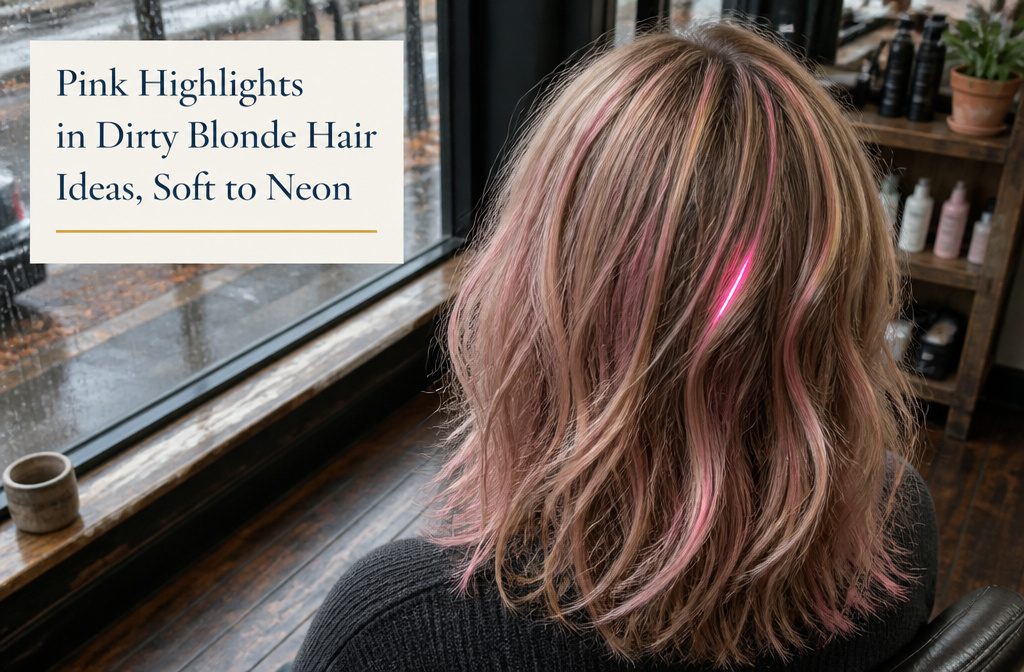
Pink on dirty blonde runs from pastel babylights that read as a soft tint to neon streaks that light up a room, and how much commitment you want picks the entry.
Neon asks the most: it fades faster than pastels and needs a touch-up every 4–6 weeks.
1. Pastel Pink Babylights on Dirty Blonde
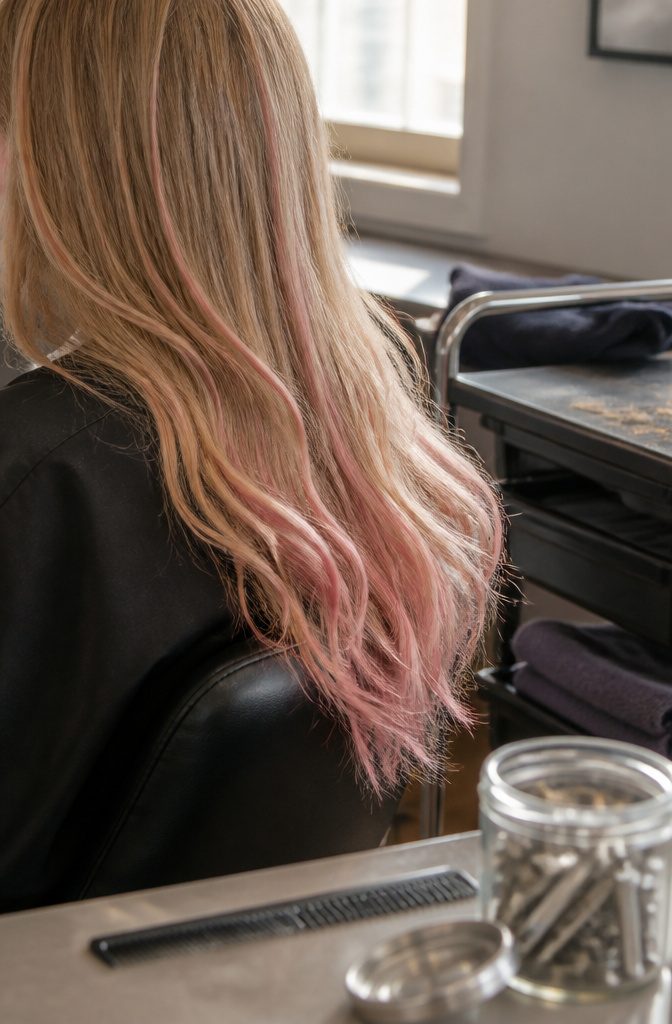
Pastel pink babylights on dirty blonde is a look you can ask for by name, and it’s the gentlest way into pink I know of.
Babylights are fine, delicate strands, so the pink reads as a soft tint through the blonde rather than a stripe. That suits anyone who wants to experiment without anything drastic, and it adds a touch of femininity and romance.
If pink threaded through the whole head still feels like a lot, place the pink only on the ends.
The transition is softer and more gradual, and the roots stay plain dirty blonde. For a first try, I’d start there: it’s easier to live with and easier to walk back.
2. Pink Balayage
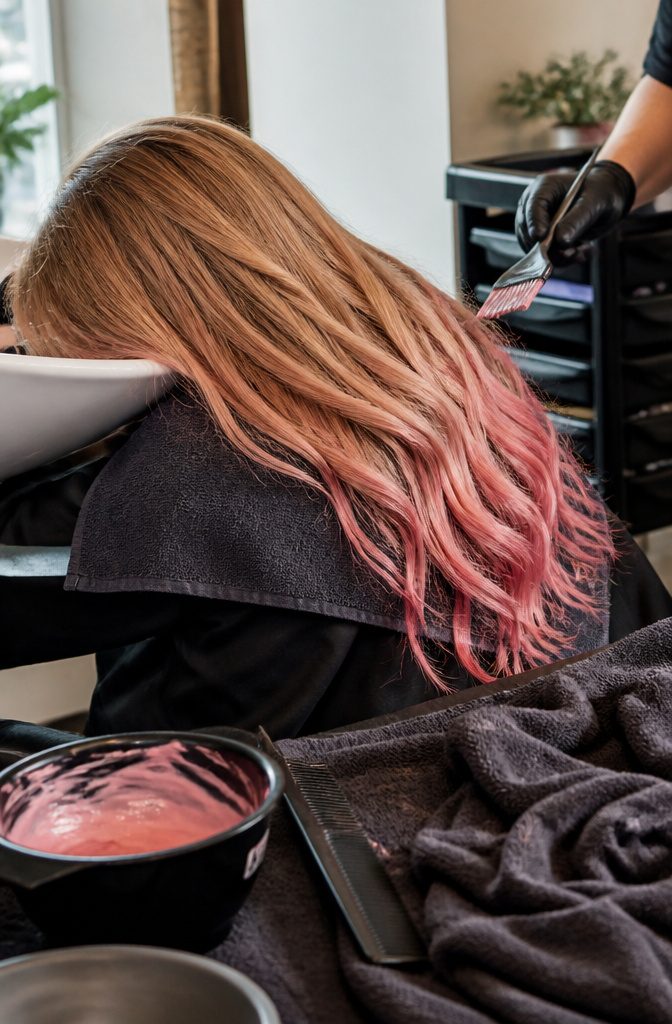
Pink balayage keeps the contrast softer than foil by painting color freehand, which lets blonde and pink melt into each other without a hard line.
The hand-painted technique mimics how the sun would naturally lighten hair, so the pink reads more like dimension than a deliberate streak.
Caramel blonde bases take pink balayage particularly well because the warmth in the underlying color bridges the gap between neutral blonde and the cooler tones in most pink dyes.
I like balayage for pink because the gradual fade looks intentional even six weeks out, where foiled highlights start to show a hard root line. The technique also gives you control over saturation.
You can concentrate pink at the ends for a sun-kissed finish or weave it higher up for more coverage without committing to an all-over color. Either way, the painted placement makes dirty blonde look brighter without losing its base depth.
3. Pink Ombré or Color Melt
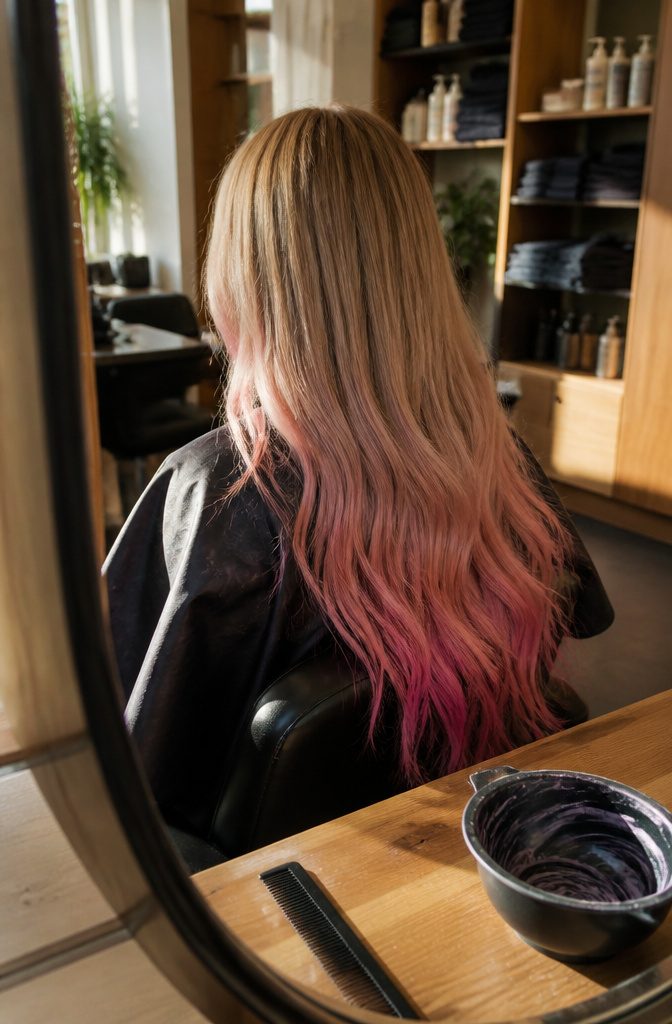
Ombré is French for "to blend in," and on dirty blonde it means your natural color stays at the roots while pink builds toward the ends.
The classic fade runs dark to light, so the deeper blonde up top is the dark side and the pink finishes the length.
Ombré usually leans on bold shades like hot pink rather than pastels, so the ends read as a deliberate color.
A color melt softens that. The pink blends into the base so no hard line shows, and where the two meet you get an in-between shade.
I’d choose the melt if you want pink without a style that screams pink hair, and ombré if the ends are meant to be the statement.
4. Peekaboo Pink
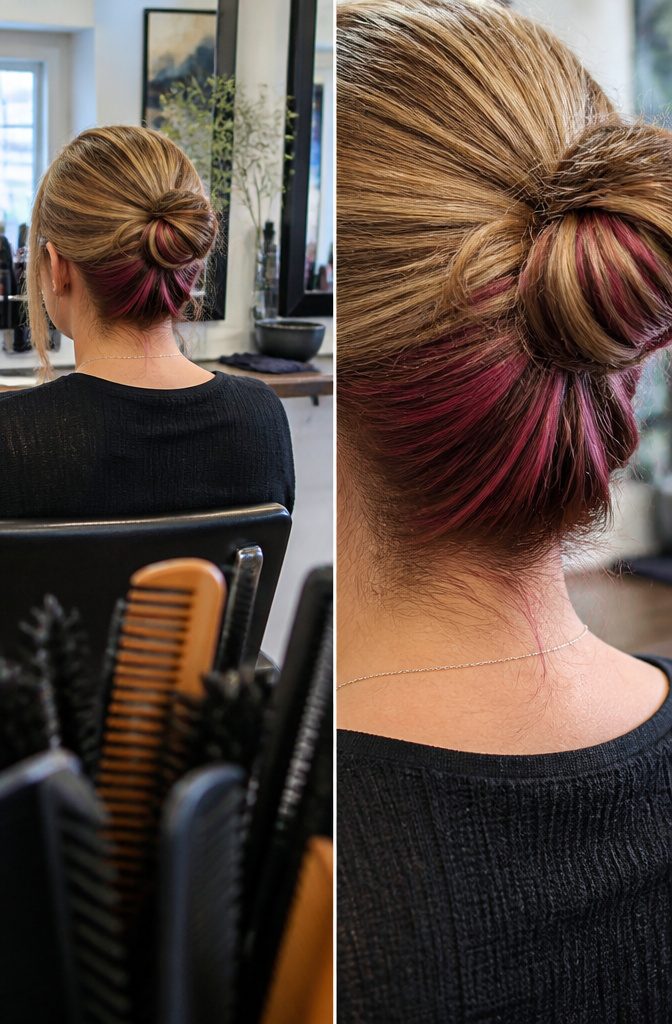
Peekaboo pink sits underneath the top layer, so it stays hidden when your hair is down and flashes through only when you pull it into a ponytail or bun.
The reveal effect gives you two looks in one: office-safe from the front, something sharper when you want it.
The placement keeps commitment low.
If you’re not ready for pink all over, this lets you test the color without changing your whole head. The top blonde layer acts as cover, and you control how much shows by how you wear your hair.
Burgundy versions work especially well on dirty blonde because they pull out any natural red already in your base. The darker pink reads subtle when it does peek through, closer to a dimensional warm tone than a full contrast.
Brighter pinks underneath blonde hair give more pop, but either way the top layer softens the effect compared to surface highlights.
5. Pink Face-Framing Pieces
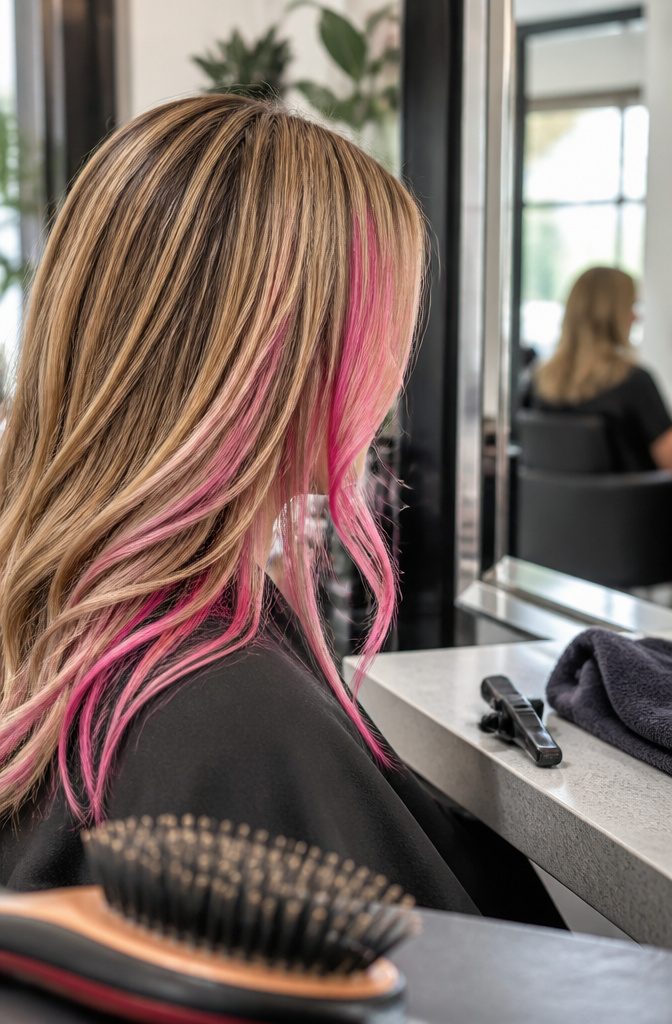
Pink kept to the front sections puts the color where people already look.
Magenta or hot pink pieces around the face act as a frame, and the dirty blonde behind them stays quiet, so the pink reads as chosen rather than loud.
If you’re nervous about going too bright, I’d start here: ask your stylist for pink just around your face and leave the rest of your hair alone.
Placement sets the volume. A few thin pieces on each side read as an accent, while wider sections push the look toward a statement.
The cost is upkeep.
Bright color at the face is the first thing anyone sees, so it shows when it’s overdue. I’d book the refresh before that happens.
6. Pink Streaks or Ribbons
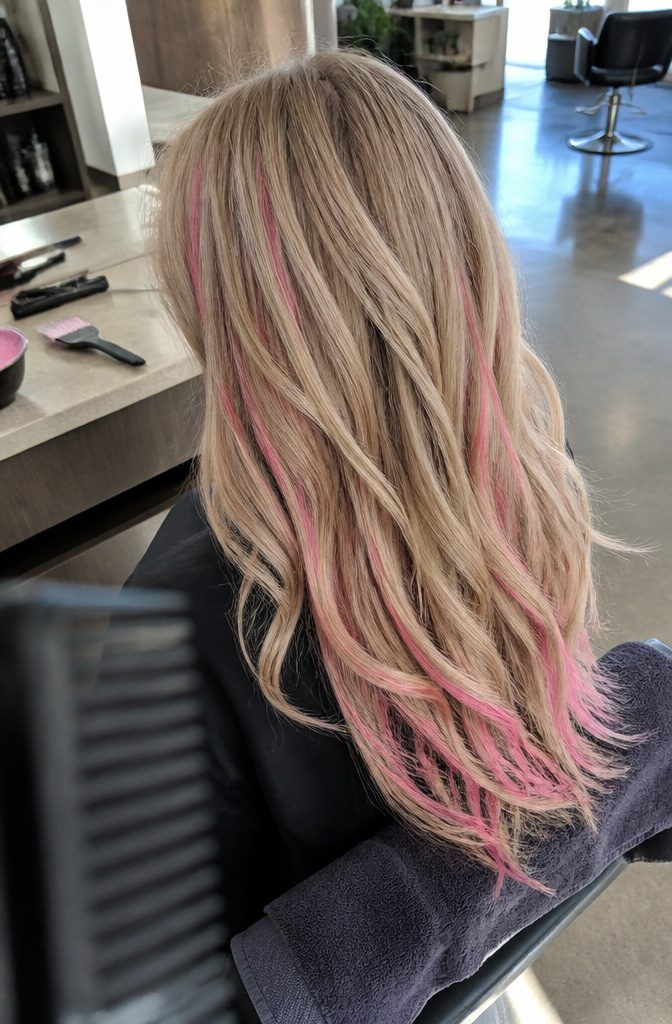
Width does most of the work. Thin, ribbon-like strands scattered through blonde give a gentle touch of pink that reads as understated and a little playful, a whisper rather than a shout.
Widen the strands and the effect flips: bold, chunky streaks pull the eye straight to them and demand attention.
Thin ribbons for soft, wider streaks for bold is the rule I’d work from. Nothing stops you from mixing the two, varying thickness and placement strand by strand until the pattern suits your style.
If you’re unsure, start with ribbons. A fine strand of pink is easier to build on later than a thick one is to live with when it turns out louder than you expected.
7. Chunky or Panel Highlights
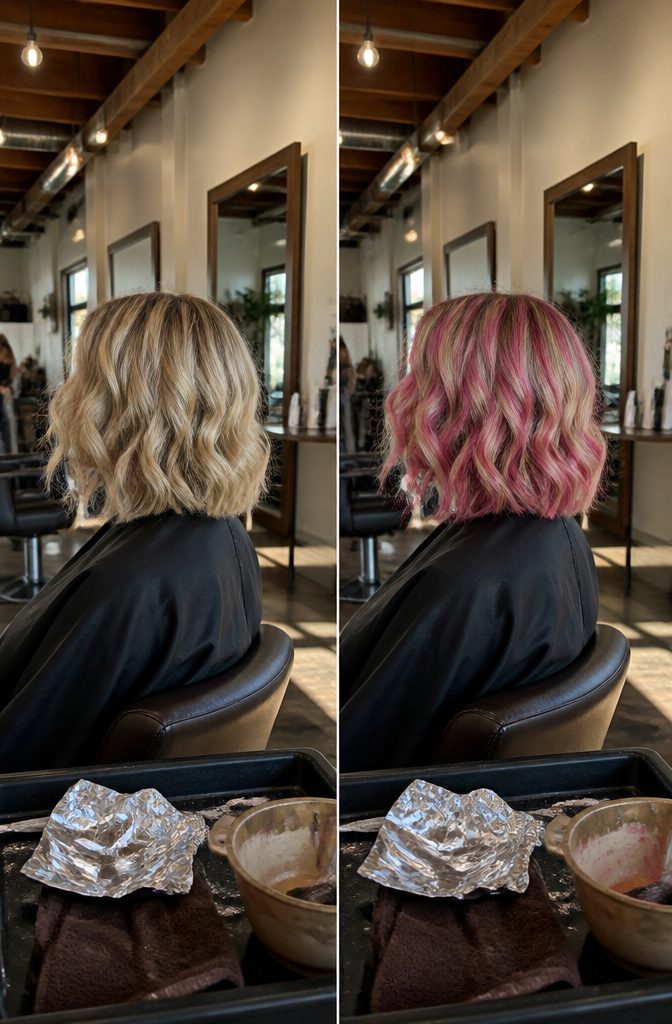
Chunky or panel highlights pull pink into larger, defined sections that read immediately as blocks of color rather than blended strokes.
One YouTube walkthrough demonstrates chunky blonde-and-pink highlights using foil to separate the blonde pieces while painting two different pinks—a lighter shade and a darker one—so the contrast stays visible from across a room.
Another approach layers bold blocks of pink against untouched blonde, creating panels that look more like graphic color placement than soft dimension.
The size of each section controls how loud the result feels. Wider panels mean fewer transitions and more surface area per color, which makes the pink impossible to miss.
A shoulder-length bob with chunky raspberry highlighting keeps the sections thick enough that curls still show distinct ribbons of color instead of blending into one wash.
If subtlety matters, this is not the technique. Chunky placement is built for visibility, and it delivers exactly that.
8. Hot or Neon Pink
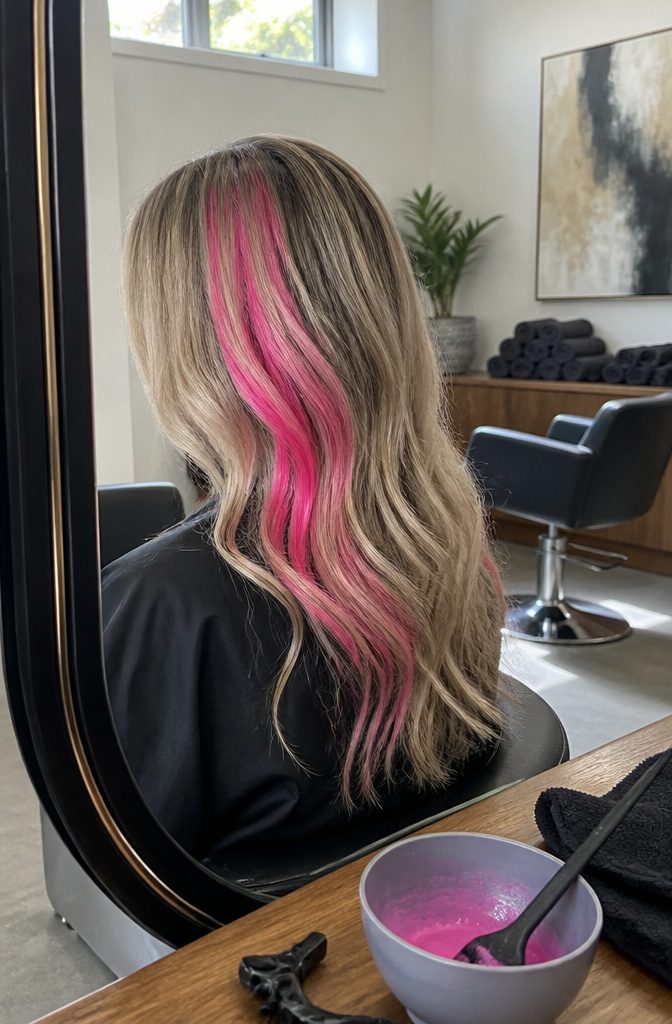
Neon or hot pink lights up a room before you do.
Against the cooler, ashy base of dirty blonde, electric pink reads even brighter—the contrast is what makes it pop. This is the choice for anyone ready to own a bold, attention-getting accent.
Hot pink highlights work best as deliberate streaks or chunky panels rather than scattered all over.
Too many and the look tips chaotic; a few well-placed pieces keep it sharp and intentional. Face-framing ribbons or a single panel near the front give maximum impact without requiring full-head commitment.
The vivid tone fades faster than pastels, so expect touch-ups every four to six weeks if you want to keep the neon charge.
Between salon visits, color-depositing shampoo in magenta or fuchsia helps stretch the brightness. This is not a low-maintenance look, but for trendsetters and adventurers willing to stay on top of it, the result is immediate.
9. Rose Gold Pink
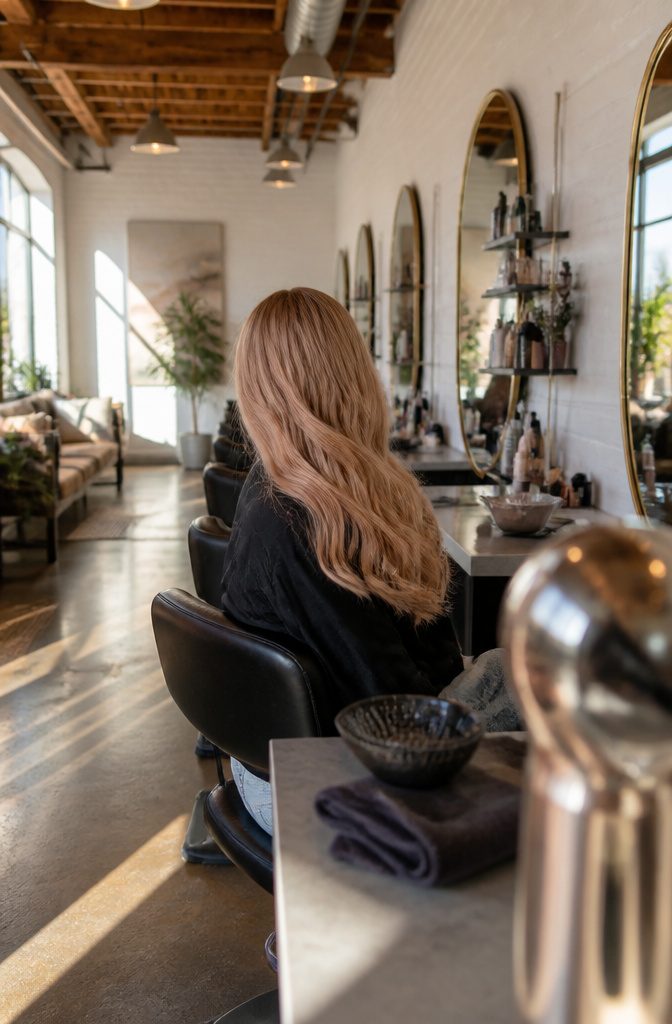
Rose gold pink sits right where warm metallic tones meet soft dusty rose, and that shimmer is what makes it different from flat pastel or bubblegum pink.
The blonde and pink read together as one blended shade rather than a stripe of color laid on top, so the highlight feels integrated instead of sitting on the surface.
On dirty blonde hair the warmth already in your base pulls out the gold undertones in the pink, which means the metallic catch shows up more than it would on cooler ash blonde.
The effect leans subtle in most light and then flashes that rose-copper glint when you move, which I think makes it one of the easier pink options to wear if you work somewhere that side-eyes bright color but still want something clearly not just blonde.
10. Pastel Pink Blend
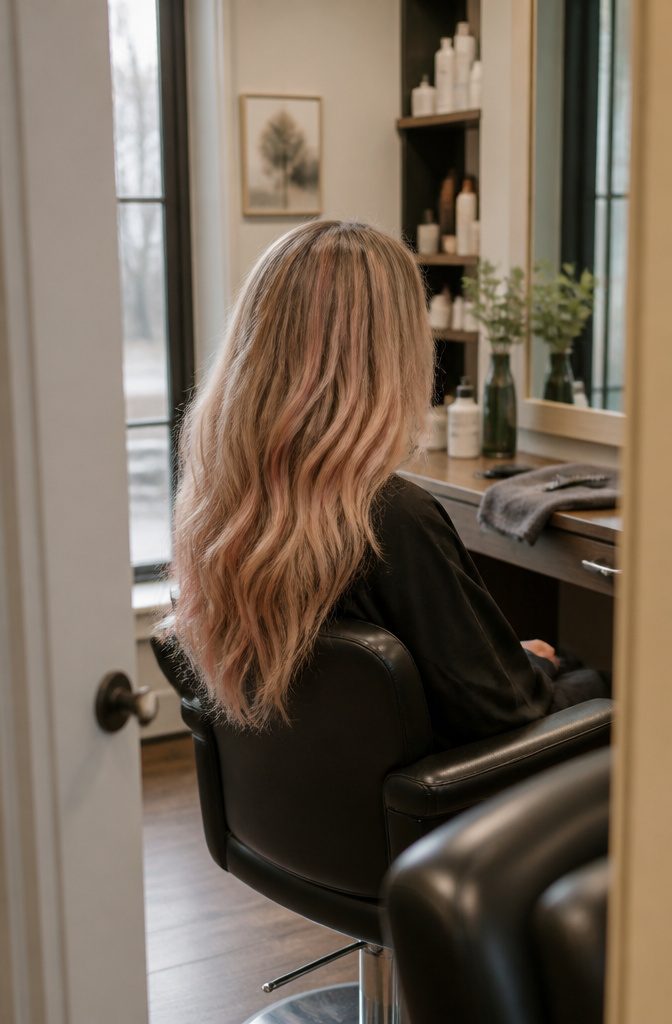
Soft pink worked through dirty blonde reads less like a color and more like a warm flush in the light.
Placed all over in a natural pattern and toned correctly, pink and blonde can look almost indistinguishable. Sectioned highlights do the opposite: a few distinct pink pieces sit apart from the base and get noticed first.
For a first try at colored highlights, I’d pick the blend.
It suits any age and profession, and it reads as a whisper of color, never a statement. The toner decides the result, so settle the exact shade with your stylist before anything goes on.
11. Peach or Coral Pink
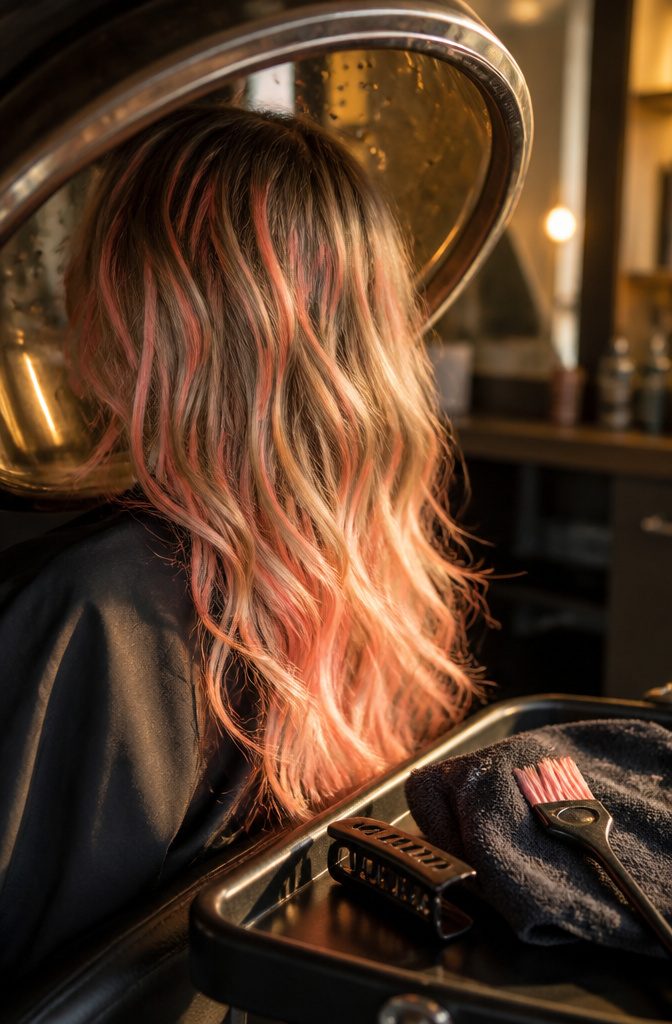
Peach and coral agree with dirty blonde instead of arguing with it. Their orange or red edge sits close to the golden tones already in the hair, so the color reads as a glow rather than a patch.
Stagger the peach and pastel pink strands further from the scalp for a dimensional look and no hard stripe at the root.
A darker shade underneath makes the highlights pop, and dirty blonde’s deeper base supplies that.
For more drama, use a heavier hand toward the ends and keep the top soft. On warm undertones, peachy or sunset pinks also warm up the complexion, which is why I’d pick this family over cooler pastels.
12. Pink with Purple
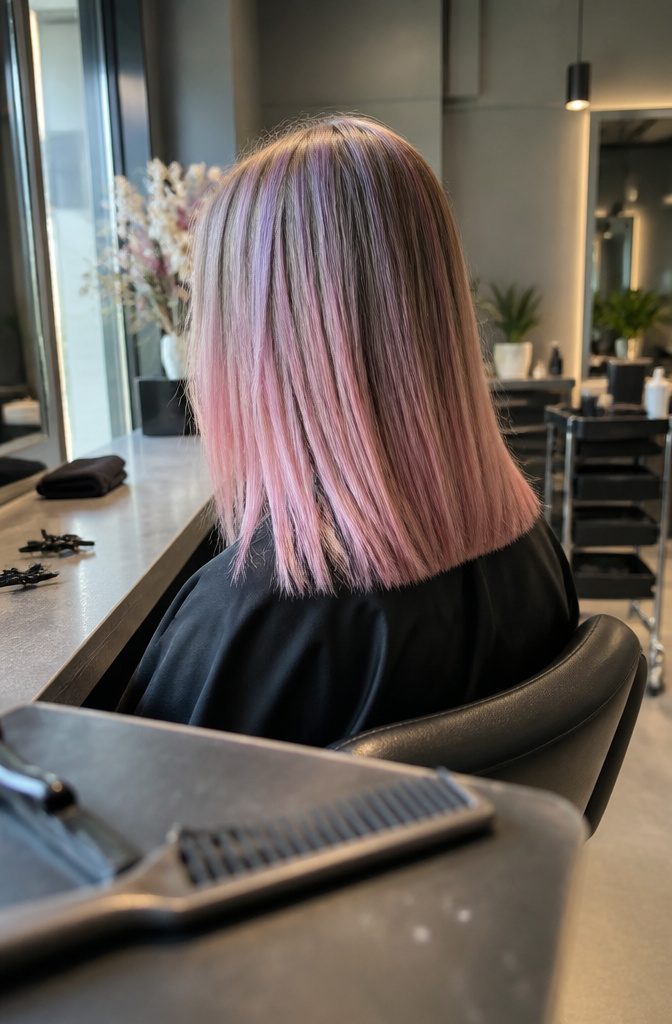
Purple and pink sit close on the color wheel, so they either melt into one shade or read as two, depending on how far apart you place them.
On dirty blonde, I like purple up top near the roots and pink taking over below it. Run that way, the pair keeps people guessing what your natural color is.
Keep both shades pastel. Lighter versions of either work easily into blonde, and a soft lilac next to a soft pink looks like a single blended color from a distance.
Straight, thin hair gets the most out of the pairing, especially with an edgy cut, because the two tones add the interest a plain cut can’t.
Choosing Pink Shade and Placement
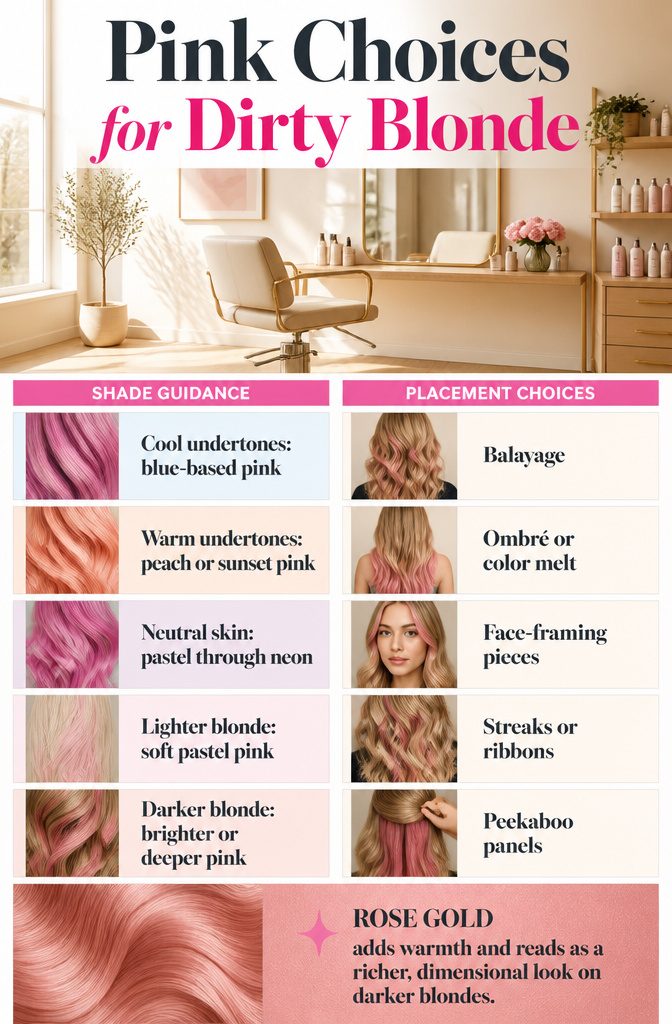
Pink works as subtle or bold as you want, and the choice breaks into two parts: which shade of pink and where it goes.
Shade first. Cooler pinks or magentas with a bluish base suit cool undertones, peachy or sunset pinks with orange or red suit warm undertones, and neutral skin can handle most of the range from pastel to neon.
The depth of your blonde matters too: lighter blondes pair best with soft pastel pink, darker or honey-toned blondes with deeper or brighter pink.
Wella’s research points out that pink tones reflect light differently than other colors, adding dimension and glow that flat blonde misses.
Placement options include:
- Balayage for hand-painted, lived-in color
- Ombré or color melt heavier at the ends
- Face-framing pieces or money pieces at the front
- Streaks or ribbons spaced through for contrast
- Peekaboo panels hidden underneath
Rose gold adds warmth and reads as a richer, dimensional look on darker blondes.
How Long Pink Highlights Last and What Changes the Timeline
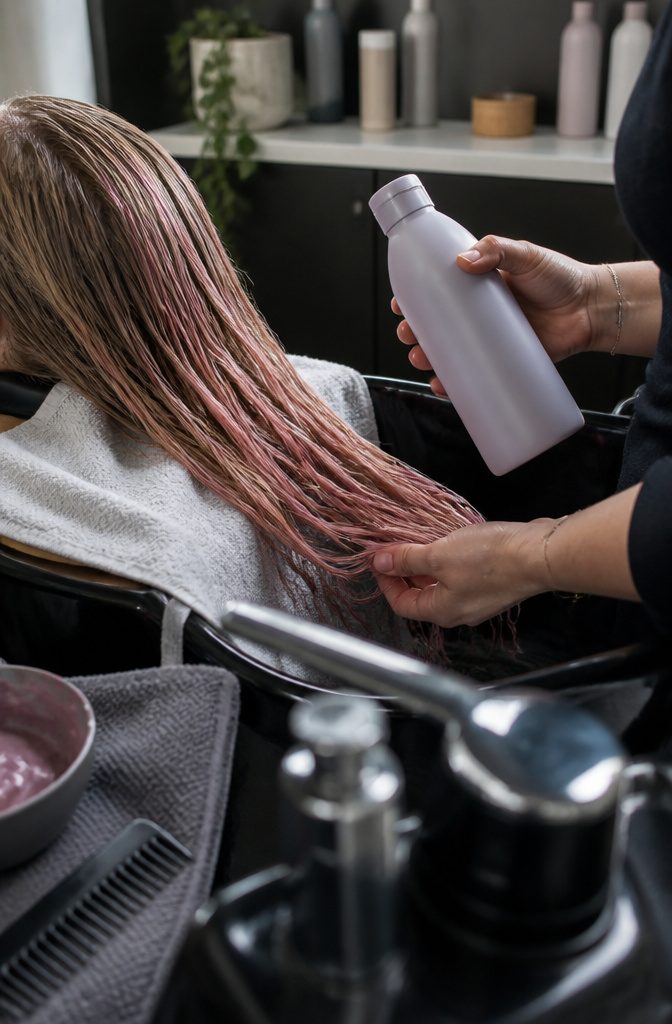
Plan on 4 to 8 weeks from pink highlights on dirty blonde hair.
Where you land in that range depends on the dye type, your care routine and how often you wash. Color-safe products and fewer wash days push toward the 8-week end, while frequent washing pulls toward 4.
Pink fades gracefully, which is why I’d let it go on its own for most people. A toning shampoo softens what’s left without a salon trip.
If you want it gone sooner, or want to land on your base color or a new shade, a professional color correction is the faster route, and I’d book it rather than guess at home.
Keeping Pink Bright Between Salon Visits
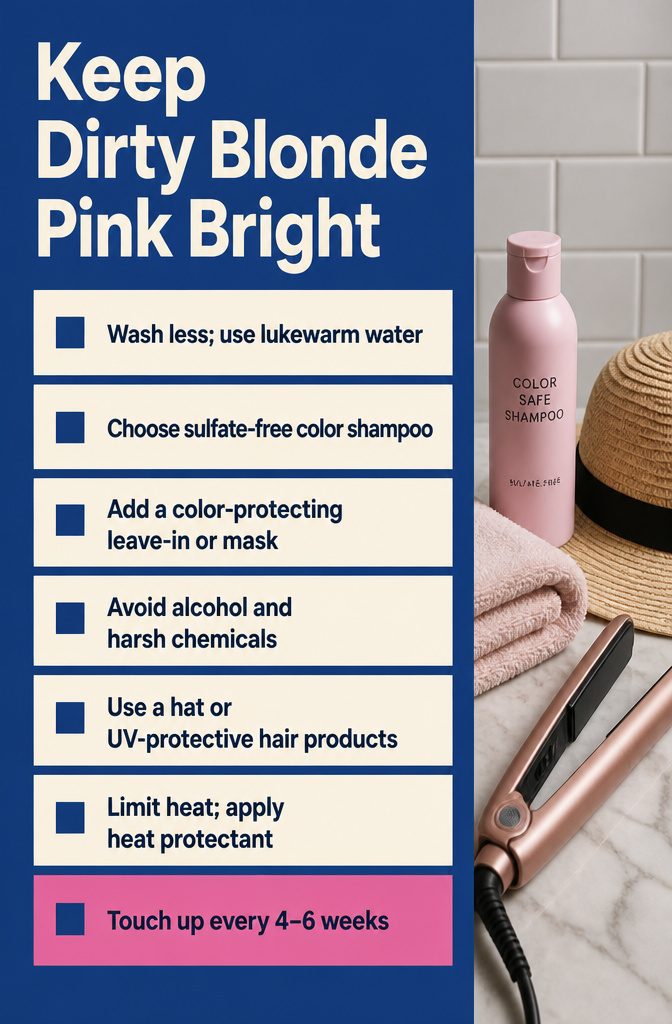
Pink fades a little with every wash and every hour in the sun, so a few habits do most of the work:
- Wash less often, and keep the water lukewarm. Cutting wash days is the cheapest change, and I’d start there.
- Use a sulfate-free shampoo made for color-treated hair.
- Add a color-protecting leave-in conditioner or mask for moisture and extra color protection.
- Skip products with alcohol or harsh chemicals, since they strip color.
- Wear a hat in strong sun, or choose hair products with UV protection.
- Limit heat styling, and use a heat protectant spray every time you do style with heat.
- Plan a touch-up every 4–6 weeks to keep the pink fresh.
Frequently Asked Questions
How long do pink highlights last in blonde hair?
Pink highlights in dirty blonde hair typically last 4 to 8 weeks.
The timeline depends on the dye type you choose, how often you wash, and whether you use color-safe products. Fewer wash days and lukewarm water push the color closer to 8 weeks, while frequent washing shortens it.
Do pink highlights fade fast?
Pink fades a little with every wash and every hour in the sun, but it fades gracefully rather than turning patchy.
Using sulfate-free shampoo, washing less often, and protecting your hair from UV exposure all slow the fade. Most people see 4 to 8 weeks before the color needs a refresh.
Can you dye dirty blonde hair pink?
Yes, dirty blonde hair takes pink highlights well without extra bleaching in most cases, especially for lighter pink shades.
Vibrant or darker pinks may require pre-lightening depending on how deep your blonde base is. The existing blonde provides the light canvas pink needs to show up.
Will pink highlights damage my blonde hair?
Chemical processing does stress hair, but damage stays manageable with a skilled stylist and regular conditioning treatments.
Keeping up with moisture between salon visits and using heat protectant when styling help minimize the toll. The risk is there, but it’s controllable.
Can I achieve pink highlights without bleaching my hair?
If your hair is already blonde, lighter pink shades usually don’t need additional bleaching.
Vibrant or darker pinks may still require pre-lightening to reach the desired intensity, particularly on darker blonde tones. Your starting level determines whether you can skip that step.
How can I temporarily try pink highlights?
Temporary hair chalks, sprays, or semi-permanent dyes let you test pink without committing to permanent color.
These options wash out in a few shampoos to a few weeks, so you can see how the shade suits you before booking a full highlight session.
What’s the best way to transition out of pink highlights if I decide they’re not for me?
Let the color wash out naturally for the gentlest exit, or use a toning shampoo to soften what remains between washes.
If you want to return to your base color faster or switch to a new shade, professional color correction is the quicker route. Pink fades on its own without turning brassy, so time works in your favor.