The range runs from barely-there chocolate and warm caramel all the way to electric blue, neon green and crimson, so the call is really whether you want subtle dimension or high-contrast color you’ll spot across a room.
Red and vivid shades fade fastest because the larger molecules sit closer to the hair’s surface and wash out with each shampoo, which means weekly color-depositing conditioner if you want the brightness to last.
Peekaboo and underlayer placements keep the color hidden until you lift your hair, which cuts commitment without losing drama.
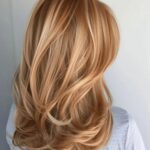
1. Golden Brown Highlights
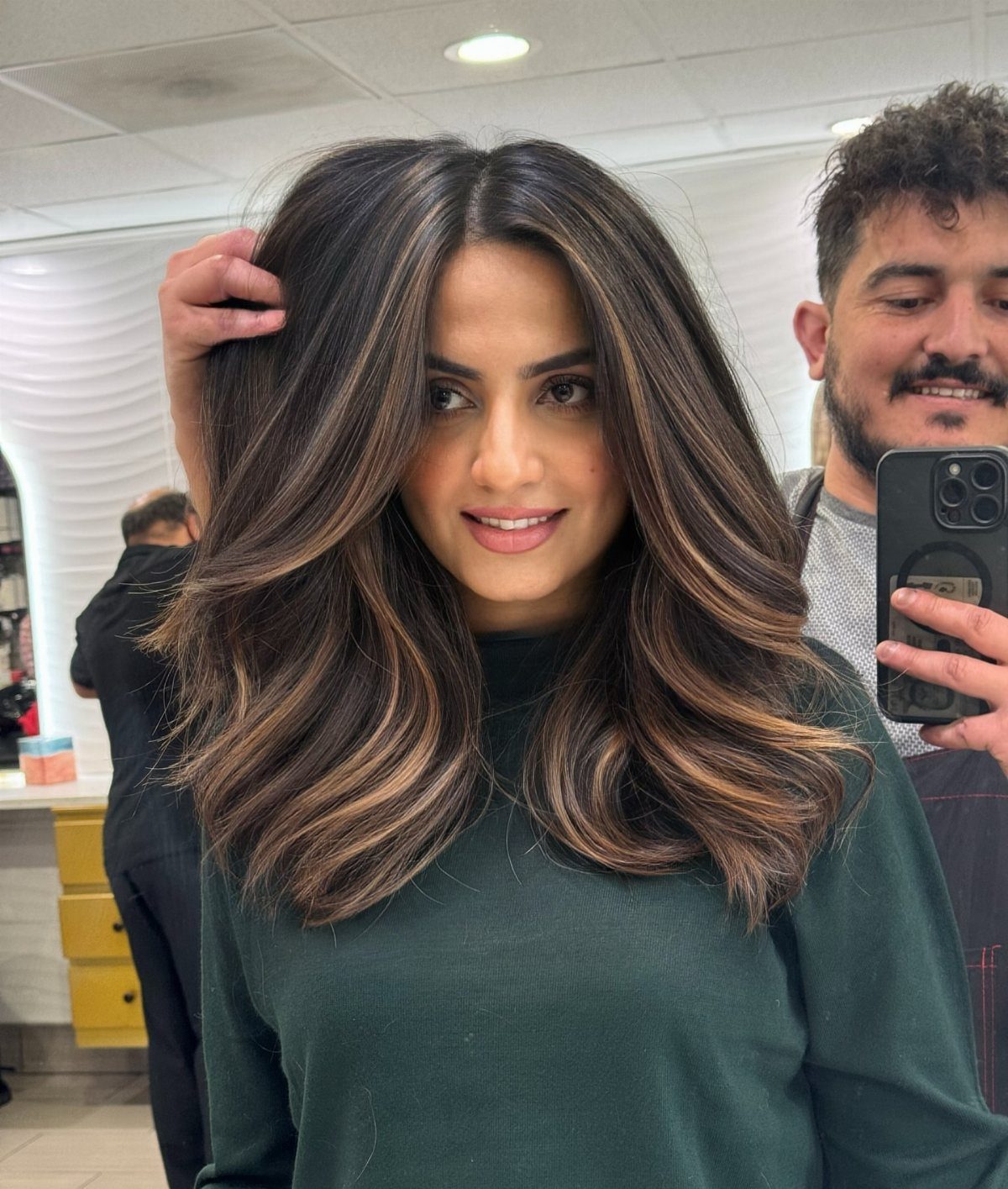
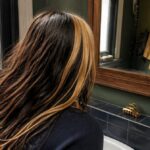
Golden-brown highlights catch the light and add warmth without pulling you too far from a natural base. The color sits a few shades lighter than the root, so it reads as soft dimension rather than a full departure.
If you want something low-commitment, ask for a balayage placement.
The color stays concentrated around the mid-lengths and ends, which means regrowth blends in as it grows and you can stretch appointments longer than you’d expect. A gloss keeps the tone from skewing brassy.
2. Dark Chocolate Balayage Over Ebony
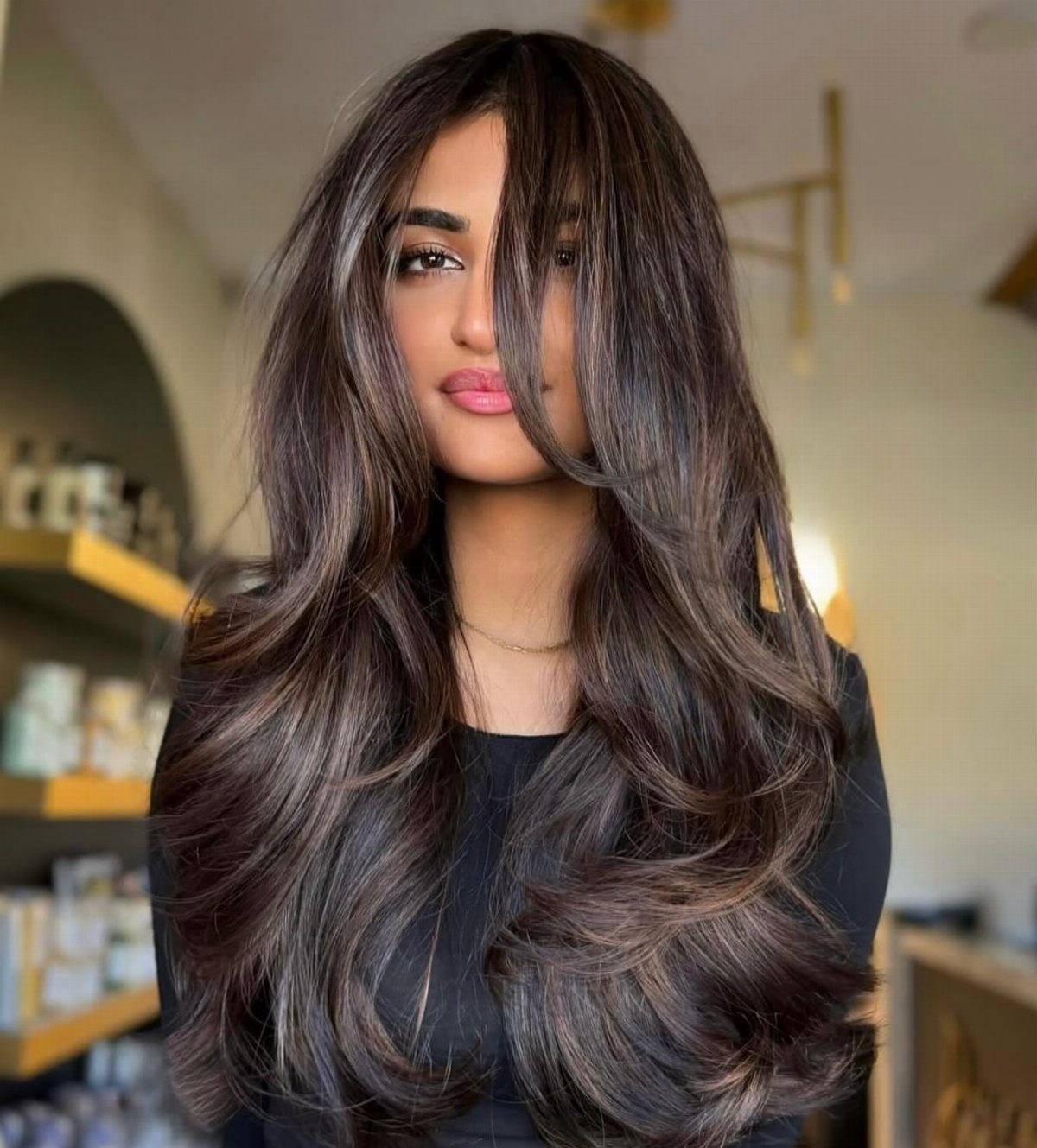
Chocolate balayage works when you want lift without leaving the brown family. The highlights are painted a shade or two lighter than the base, so the contrast stays soft and the line between tones disappears into the wave pattern.
The technique keeps most of your natural root intact, which cuts down on upkeep.
You can stretch touch-ups if the placement was done with enough of a blend at the top. A purple-toning shampoo once a week keeps any warmth from creeping in if your base leans cool.
3. Dark-Rooted Dirty Blonde Bob
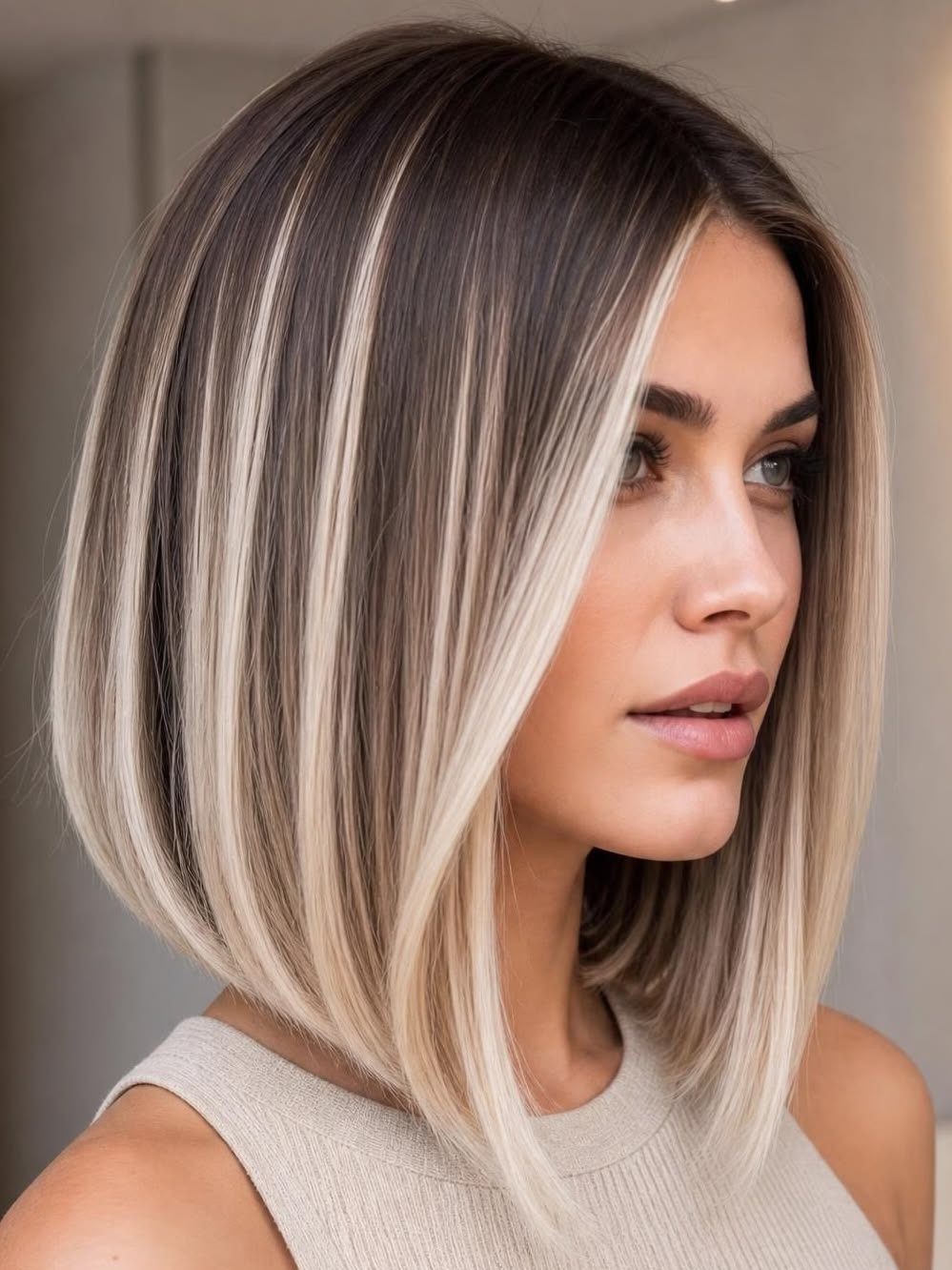
A dark-rooted bob with dirty-blonde ends concentrates the lightest pieces around your face and jawline, which makes the whole cut feel more defined.
The root is left natural or toned close to it, so you skip the constant refresh cycle that comes with all-over blonde.
The color works best if your natural base is a level 4 or darker.
Anything lighter and the root shadow reads less like intention and more like neglect. Maintenance is a toner to keep the blonde from pulling yellow.
4. Espresso Balayage with Caramel Touches
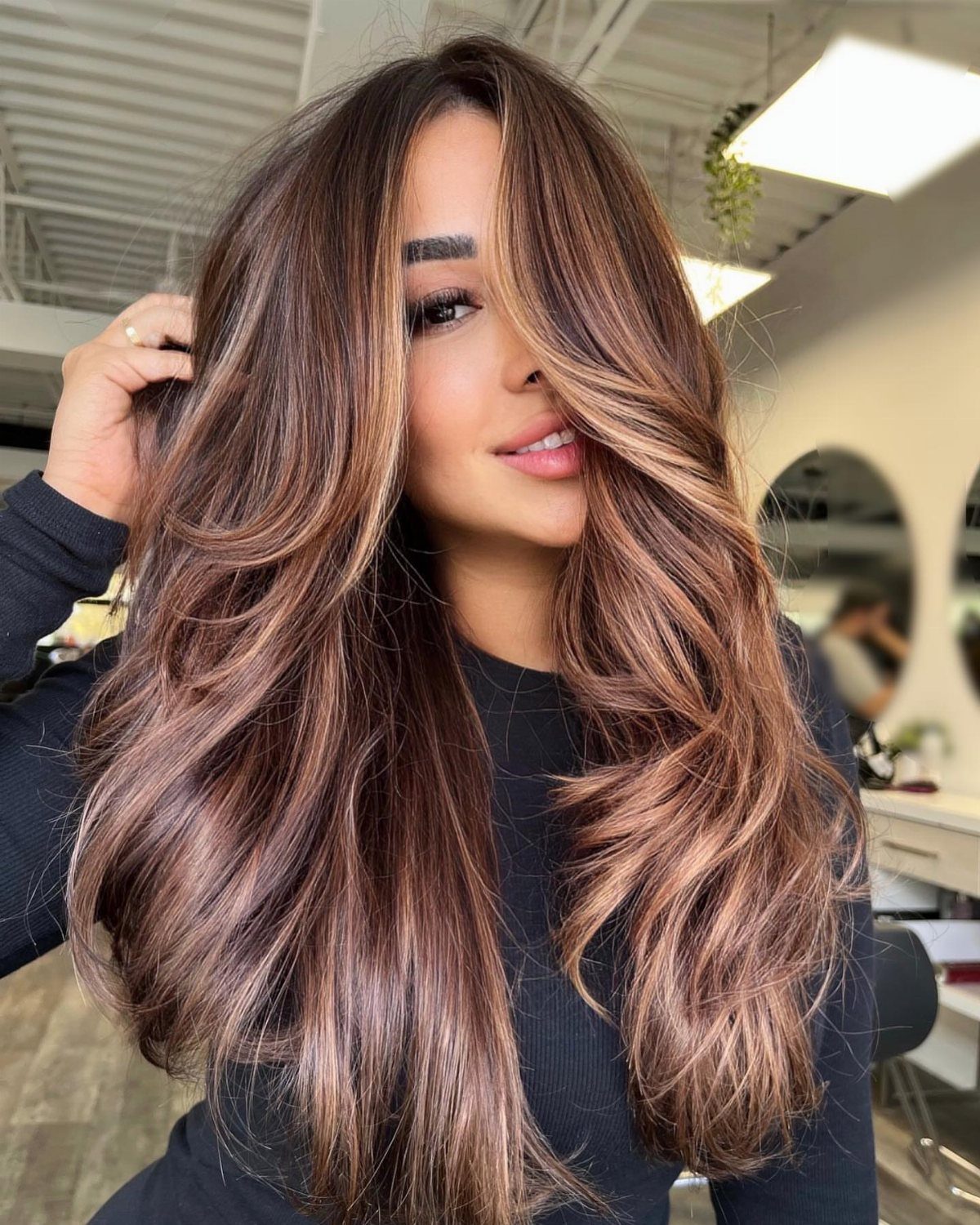
Espresso balayage with caramel pieces gives you a warm, subtle shift that stays in the brown range but picks up more light. The caramel is painted through the mid-lengths and ends, leaving the root dark and untouched.
This version suits you if your base is a level 3 or 4 and you want something that grows out gracefully.
The warmth can pull orange if your hair lifts brassy, so a cool-toned gloss keeps it clean. If you’re starting from virgin dark hair, expect 2 sessions to get enough lift without damage.
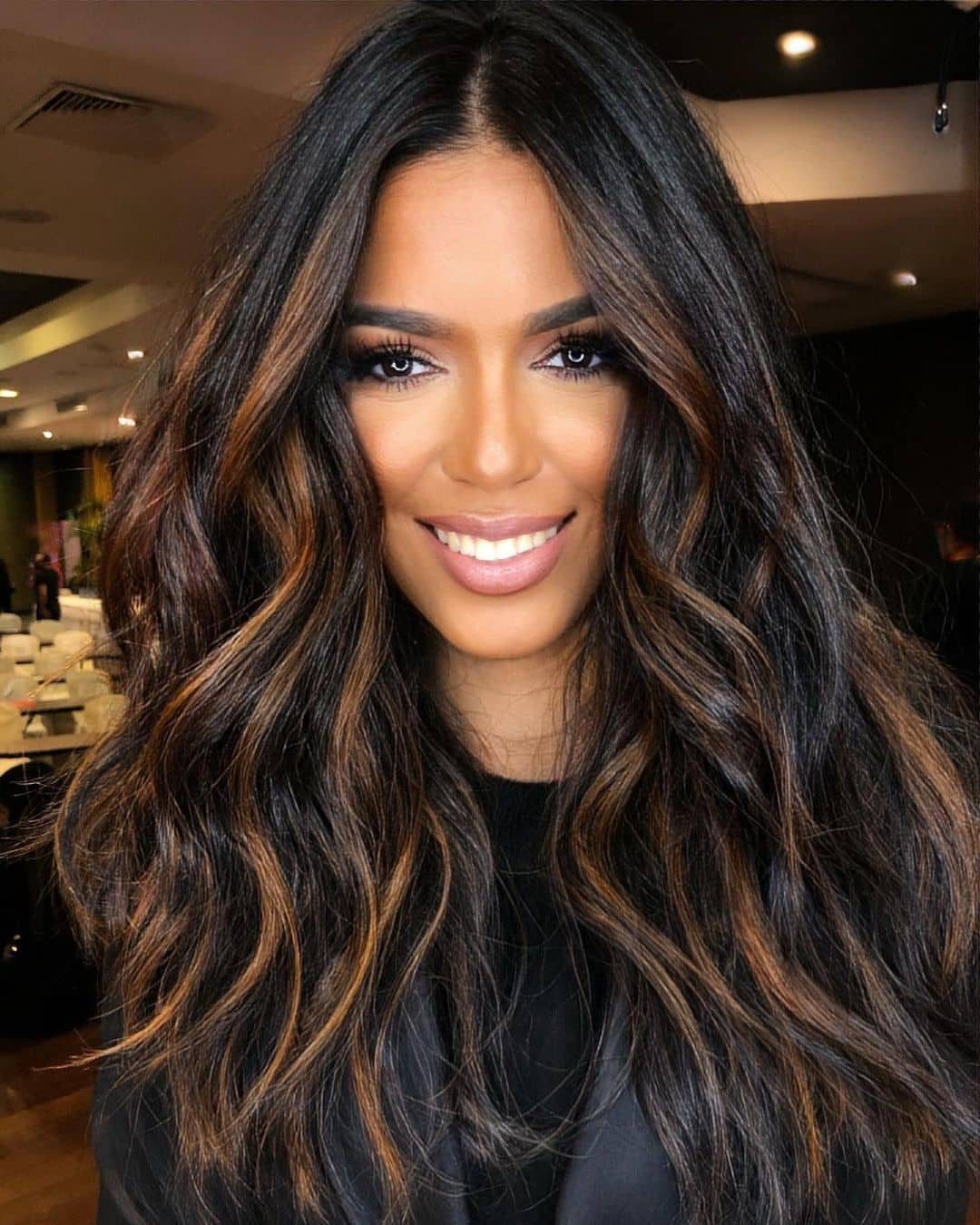
5. Deep Reddish-Brown Ribbons
Reddish-brown ribbons add warmth and a soft auburn glow without committing to full red. The color is woven through in wider sections rather than fine foils, so it reads as intentional streaks instead of all-over dimension.
The ribbons fade faster than cooler tones because red molecules sit closer to the surface and wash out more easily.
Plan on regular glosses if you want to keep the vibrancy, or let it fade into a softer copper if you prefer lower upkeep. A color-depositing conditioner in copper or auburn stretches the salon visits.
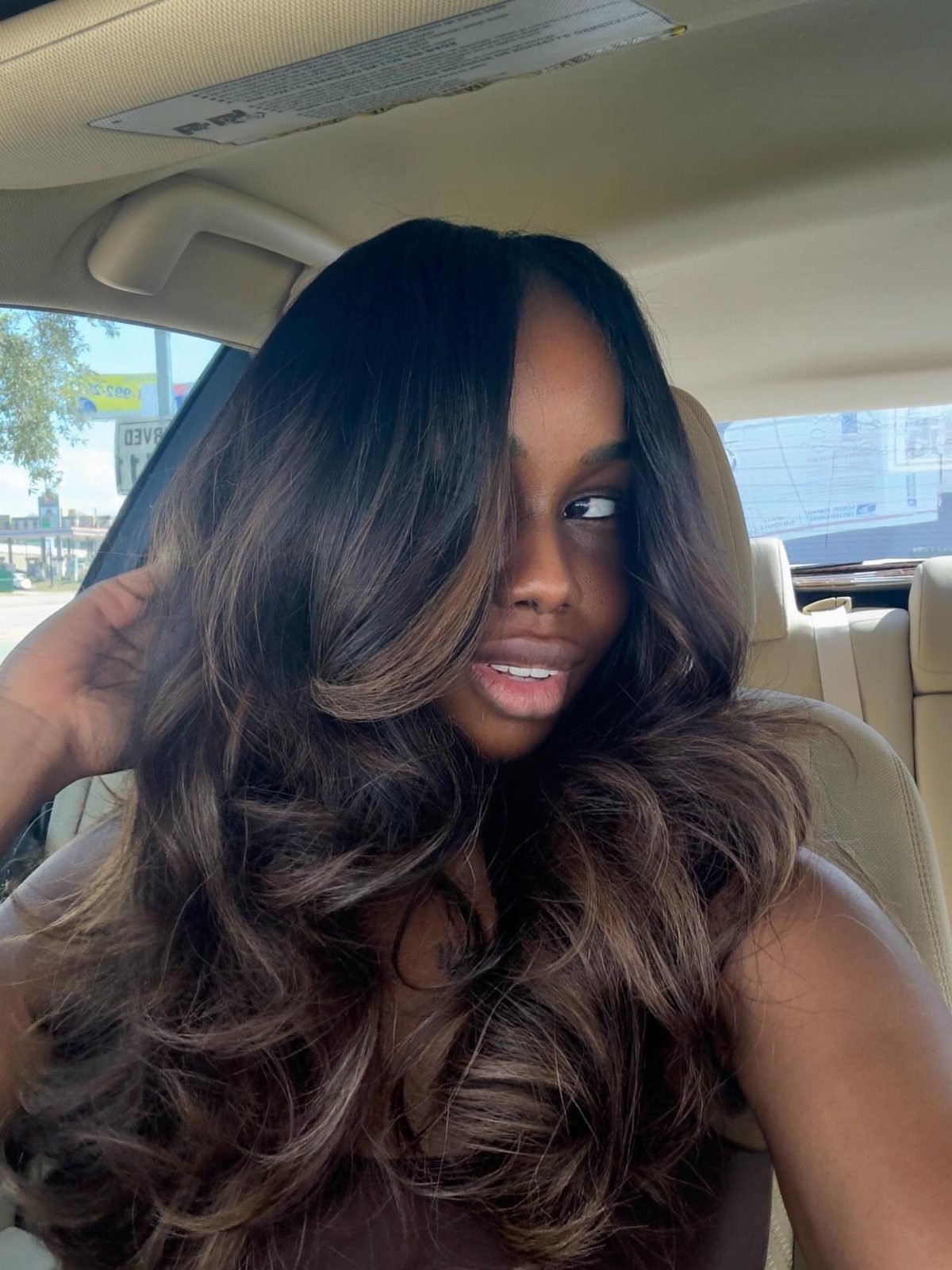
6. Tousled Ebony Waves with Warm Highlights
Warm highlights in ebony waves brighten your face and add movement without a hard contrast. The color is usually a mid-range brown, which is enough lift to catch light but still reads as natural rather than bold.
If your hair is coarse or resistant, the warm tones can pull orange during the lift process, so a gloss at the end neutralizes any brass.
The highlights grow out softly because they’re painted rather than foiled, which means you can stretch appointments if the placement was done with a gradual fade at the root.
7. Sandy-Brown Pieces in Glossy Dark Hair
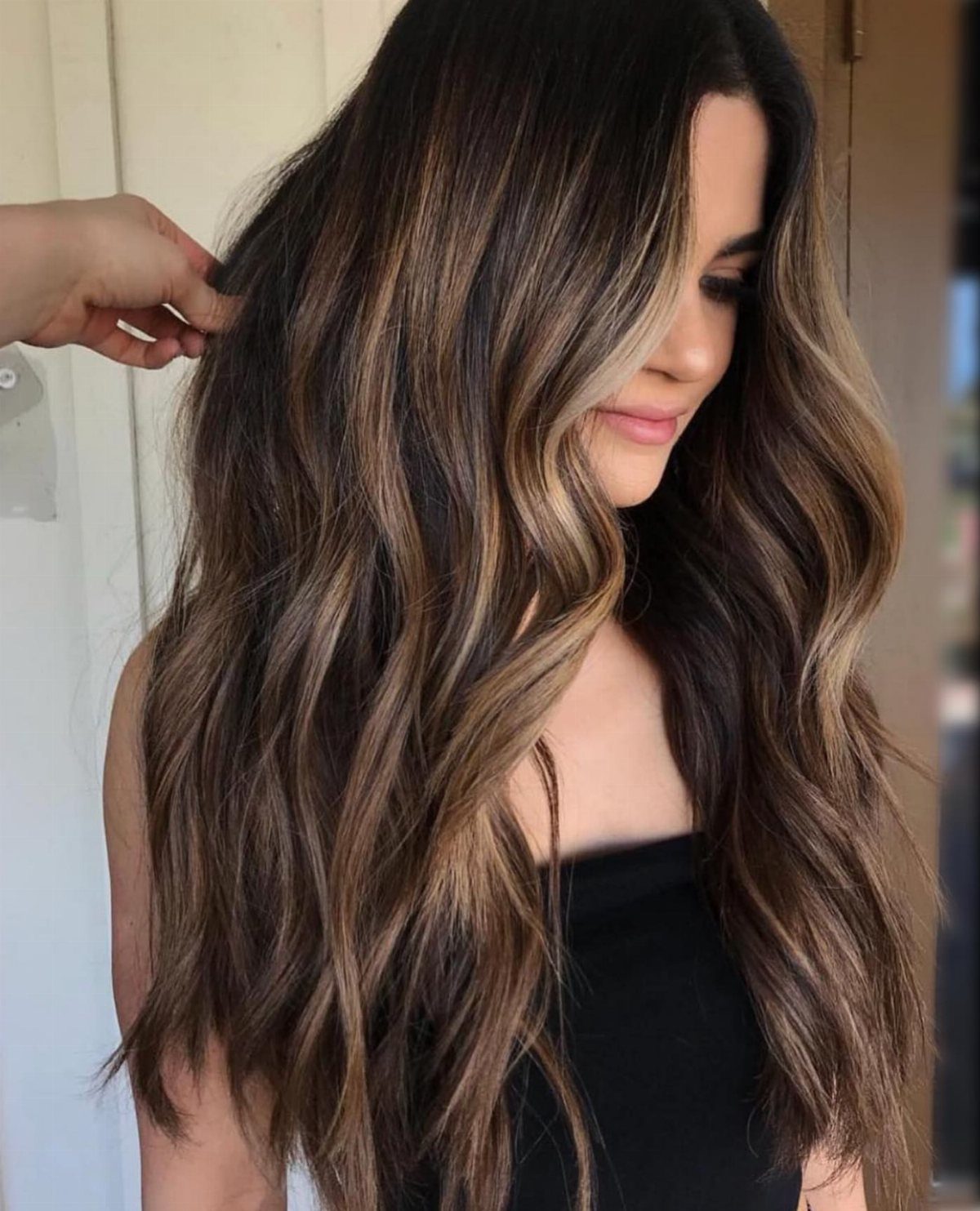
Sandy-brown highlights bring subtle warmth to a dark base without heavy contrast. The pieces are fine and scattered, so the effect reads as natural dimension rather than a deliberate color shift.
If you want something that grows out invisibly, this works.
The highlights blend into the root so gradually that regrowth doesn’t create a hard line. Gloss keeps it from looking washed out.
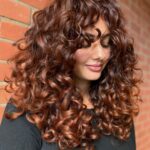
8. Copper Balayage on a Long Mane
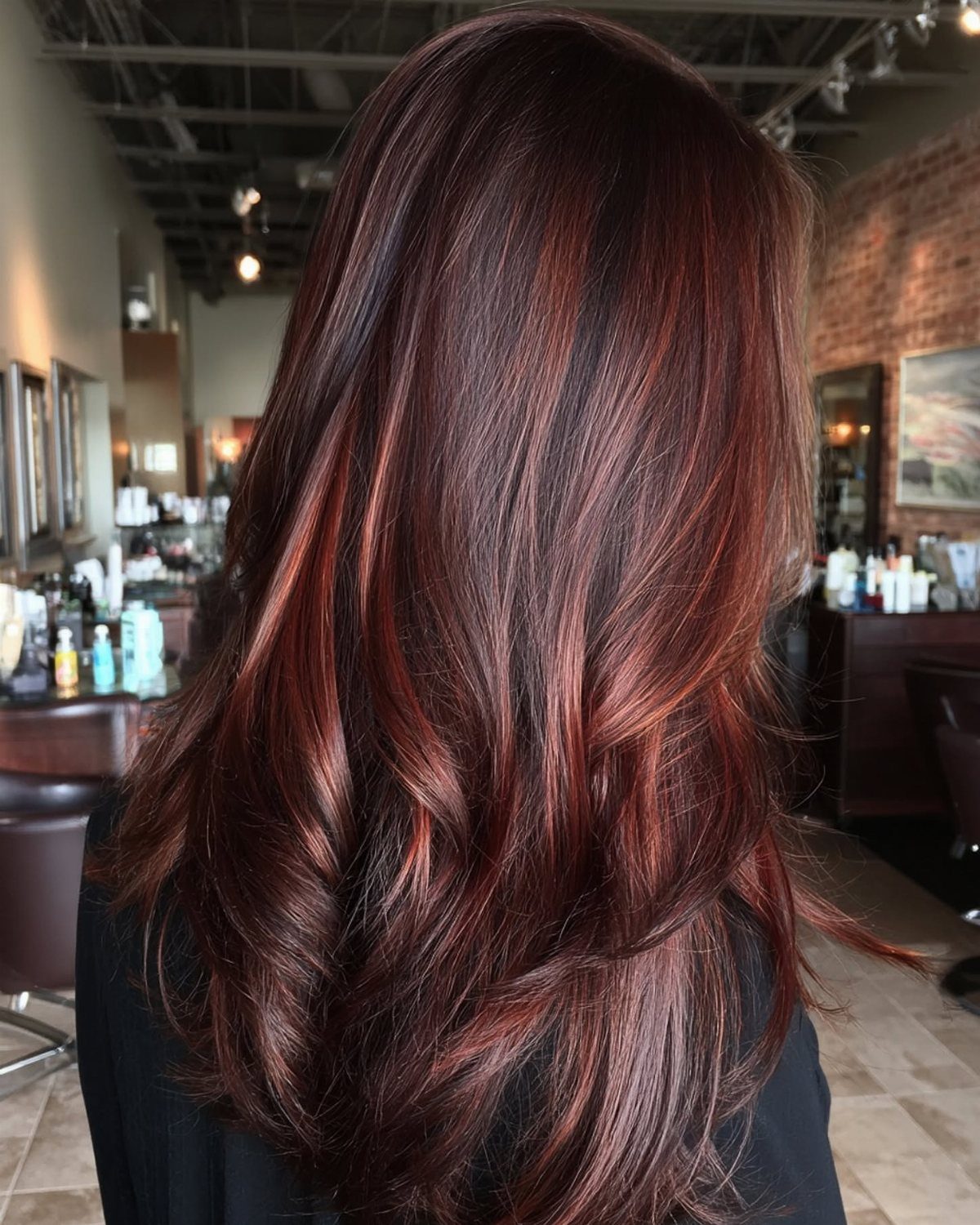
Copper balayage adds rich, warm dimension to long dark hair.
Copper drops its brightness quickly, so you’ll see the tone soften between glosses. If you let it fade, it softens into a muted auburn that still reads warm but needs less upkeep.
9. Dusky Gray Ombré
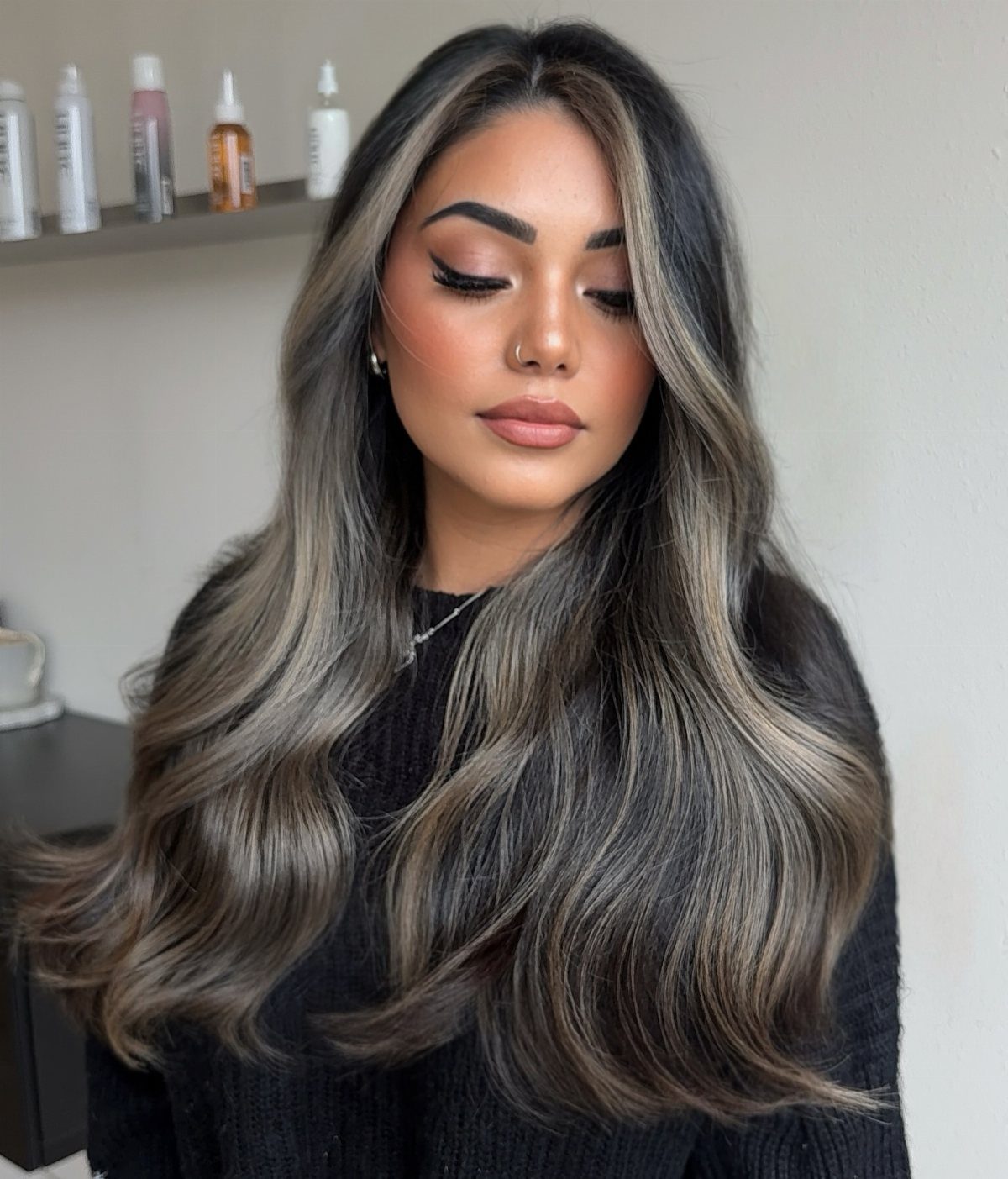
Gray ombré gives you high contrast without committing to platinum. The color transitions from dark roots to smoky gray ends, which keeps the drama concentrated at the bottom and leaves your natural base intact.
The gray needs regular toning to stay cool and not pull yellow.
If your hair is naturally warm, expect a purple shampoo in your rotation. Maintenance is mostly at the ends, so you can stretch root appointments longer than all-over color.
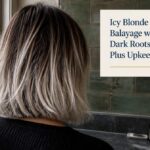
10. Creamy Blonde Balayage with Root Smudge
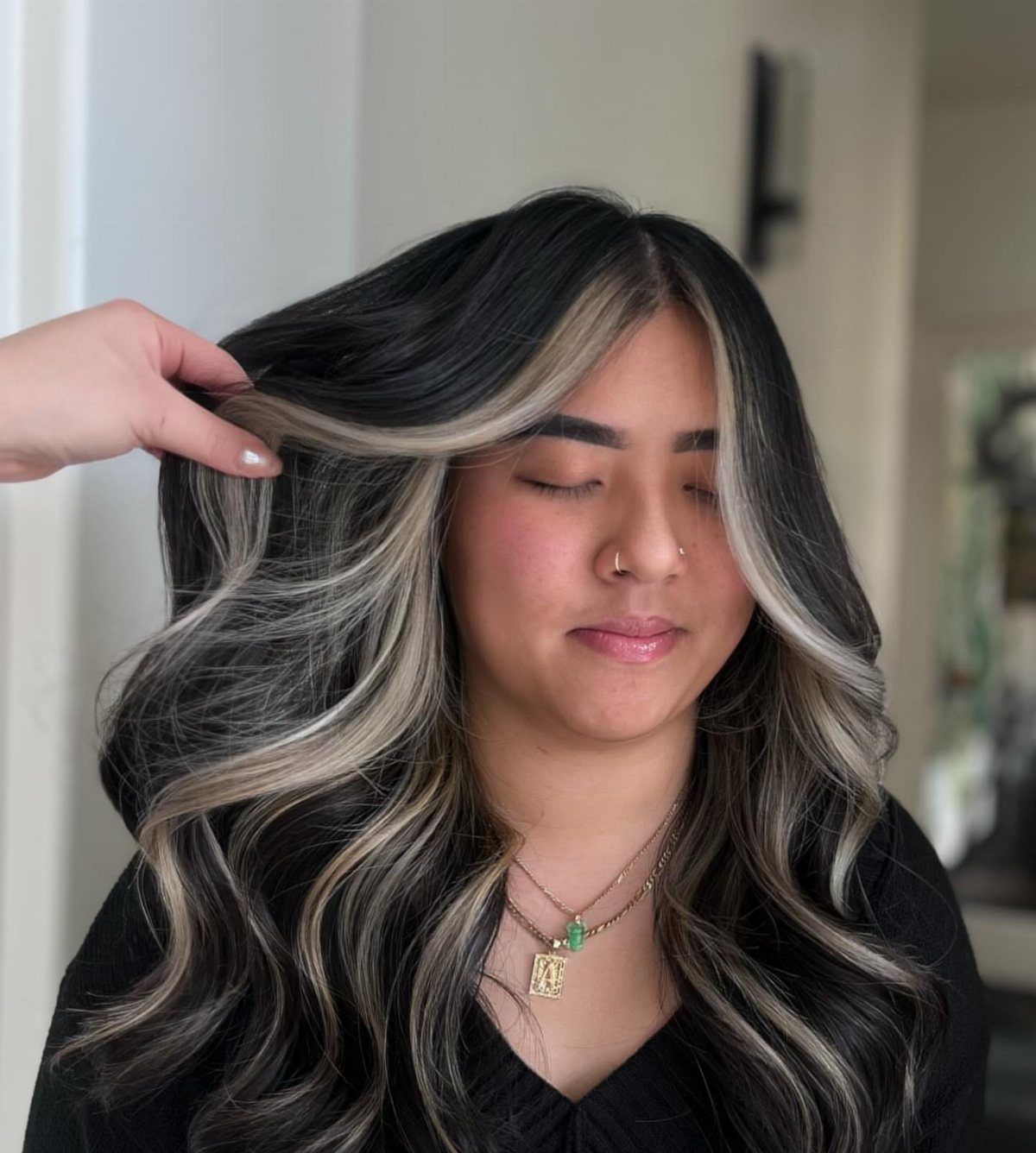
Creamy blonde balayage with a root smudge keeps the lightest pieces away from your scalp, which cuts down on frequent touch-ups.
If your base is a level 2 or 3, expect 2 or 3 sessions to lift the blonde without damage. Purple toner cancels out any brass that tries to creep in.
11. Sun-Kissed Lob with Brown Babylights
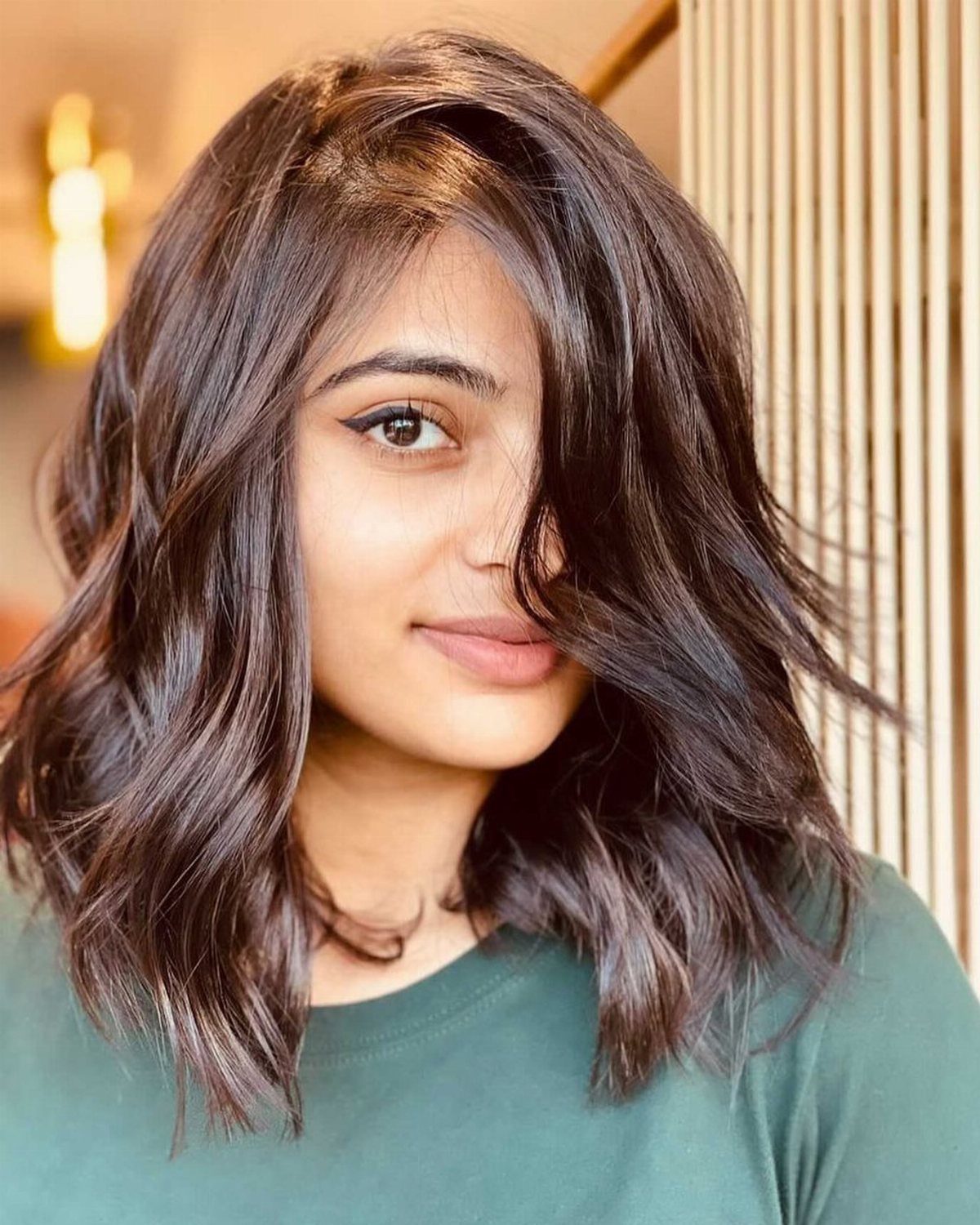
Brown babylights add soft, barely-there dimension to a dark lob. The highlights are woven in fine sections, so the effect stays subtle and grows out without a visible line.
If you don’t want upkeep, this is one of the lowest-commitment options. The color is close enough to your base that you can stretch appointments for months.
12. Neon Green Highlights
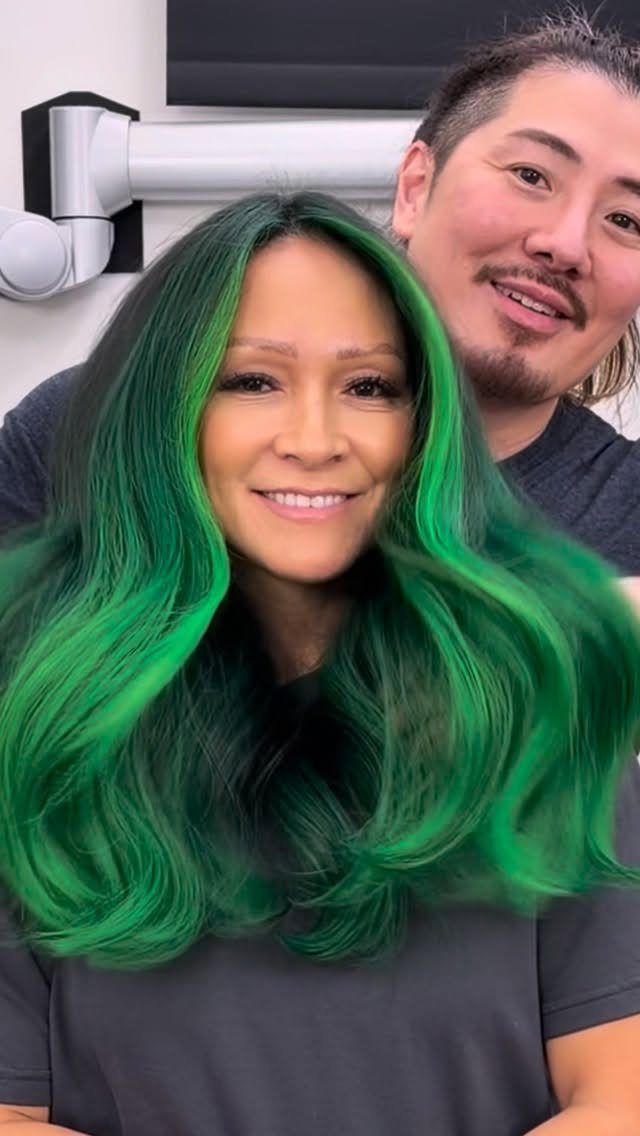
Neon-green face-framing highlights give you bold contrast with minimal commitment. The color is concentrated at the front, so the rest of your hair stays natural and you can pull it back when you want a quieter look.
Neon shades fade fast, so plan on weekly color-depositing conditioner if you want to keep the brightness. The maker here used a lower-volume developer to avoid damage at the previously highlighted sections, which keeps the hair stronger through repeated touch-ups.
13. Fiery-Red Highlights in Sleek Black Hair
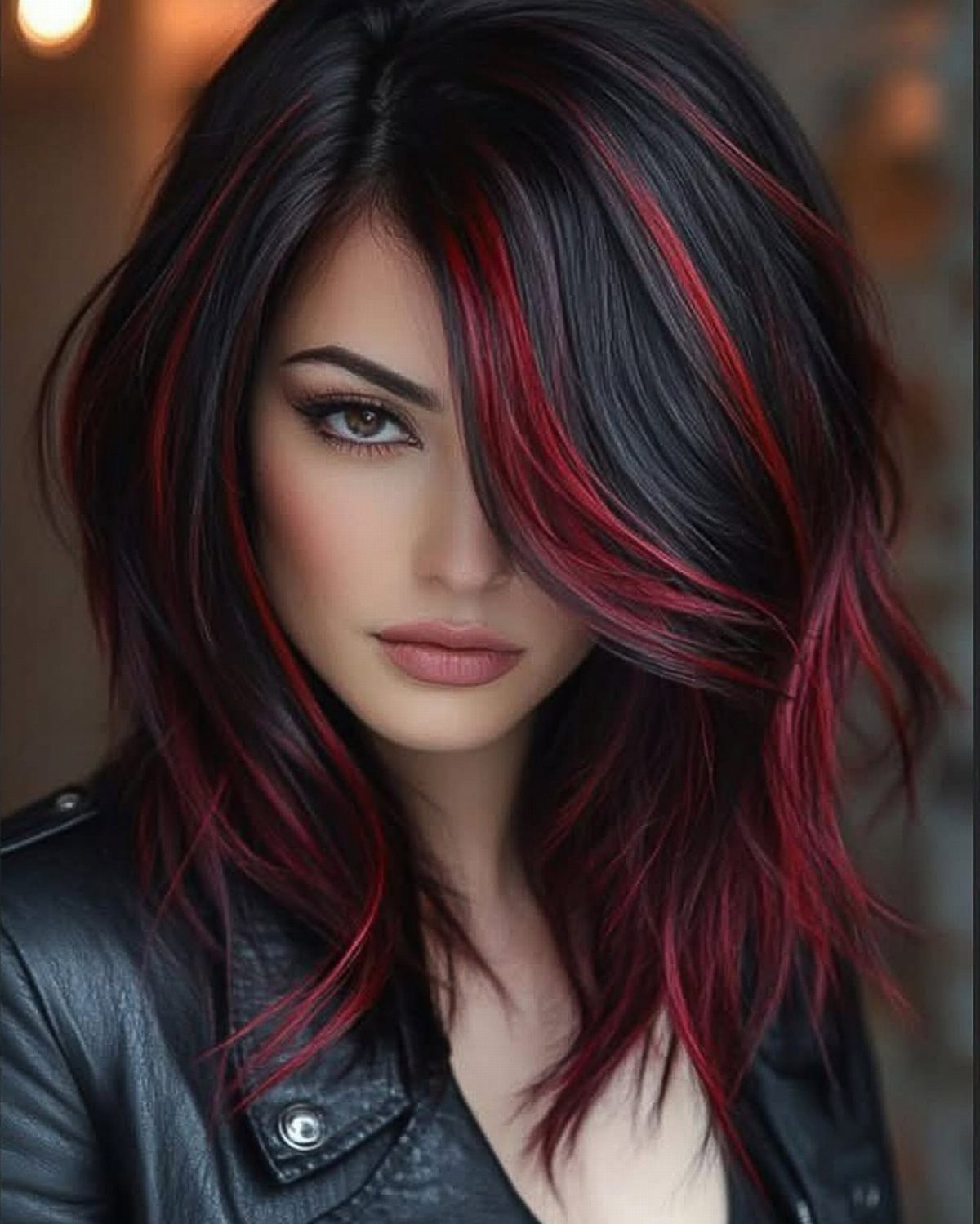
Fiery-red highlights read as bold, graphic streaks when the base is glossy black. The contrast is high, so the effect is dramatic even if you keep the placement minimal.
Red fades faster than most colors, so the brightness softens between appointments. A red-depositing conditioner once a week keeps the tone from washing out to orange.
If you want something you can hide when needed, ask for the color to stay concentrated underneath or at the front.
14. Golden Copper Streaks in Straight Black Hair
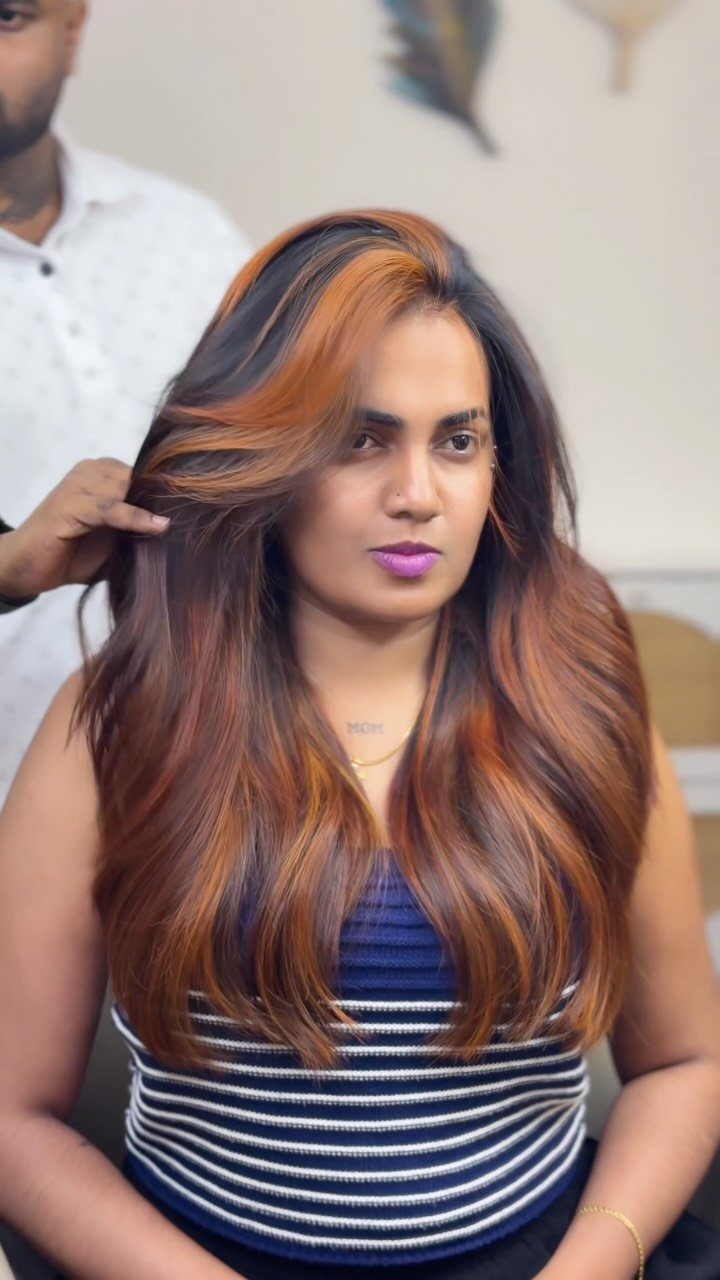
Golden copper streaks bring warmth to straight black hair without looking like natural sun damage. The streaks are painted in wider sections than traditional highlights, so the effect reads as intentional rather than subtle dimension.
Copper tones fade quickly because the molecules sit closer to the surface and wash out with each shampoo. If you want the brightness to last, a gloss or a copper-depositing conditioner between salon visits keeps it from going muddy.
The placement works best when the streaks frame your face. That concentrates the color where it catches the most light and keeps the rest of your hair low-maintenance.
15. Electric-Blue Peekaboo Highlights
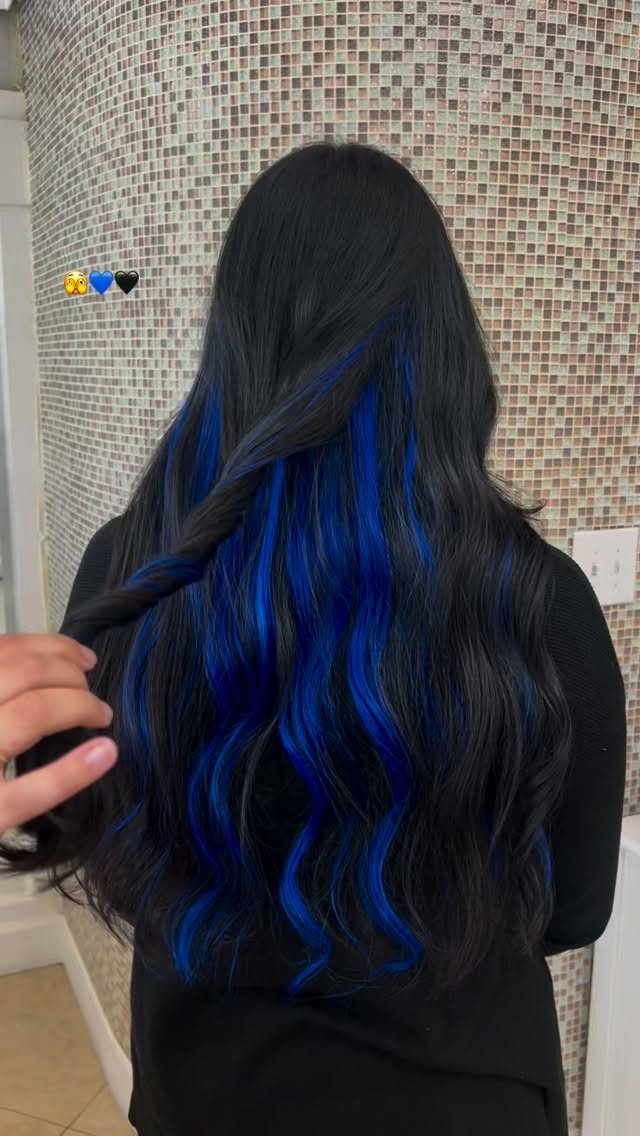
Electric-blue peekaboo highlights sit hidden under the top layer, so you can flip your hair or pull it up to show the color and leave it down when you want it concealed.
Faith used custom colored electric blue tape-in extensions for a hidden pop of color.
Vivid blues fade to teal or aqua, so the color shifts as it wears.
The peekaboo placement means your natural hair stays intact, which cuts down on damage and makes the color easier to grow out or remove.
16. Midnight-Blue Ribbons in a Textured Black Lob
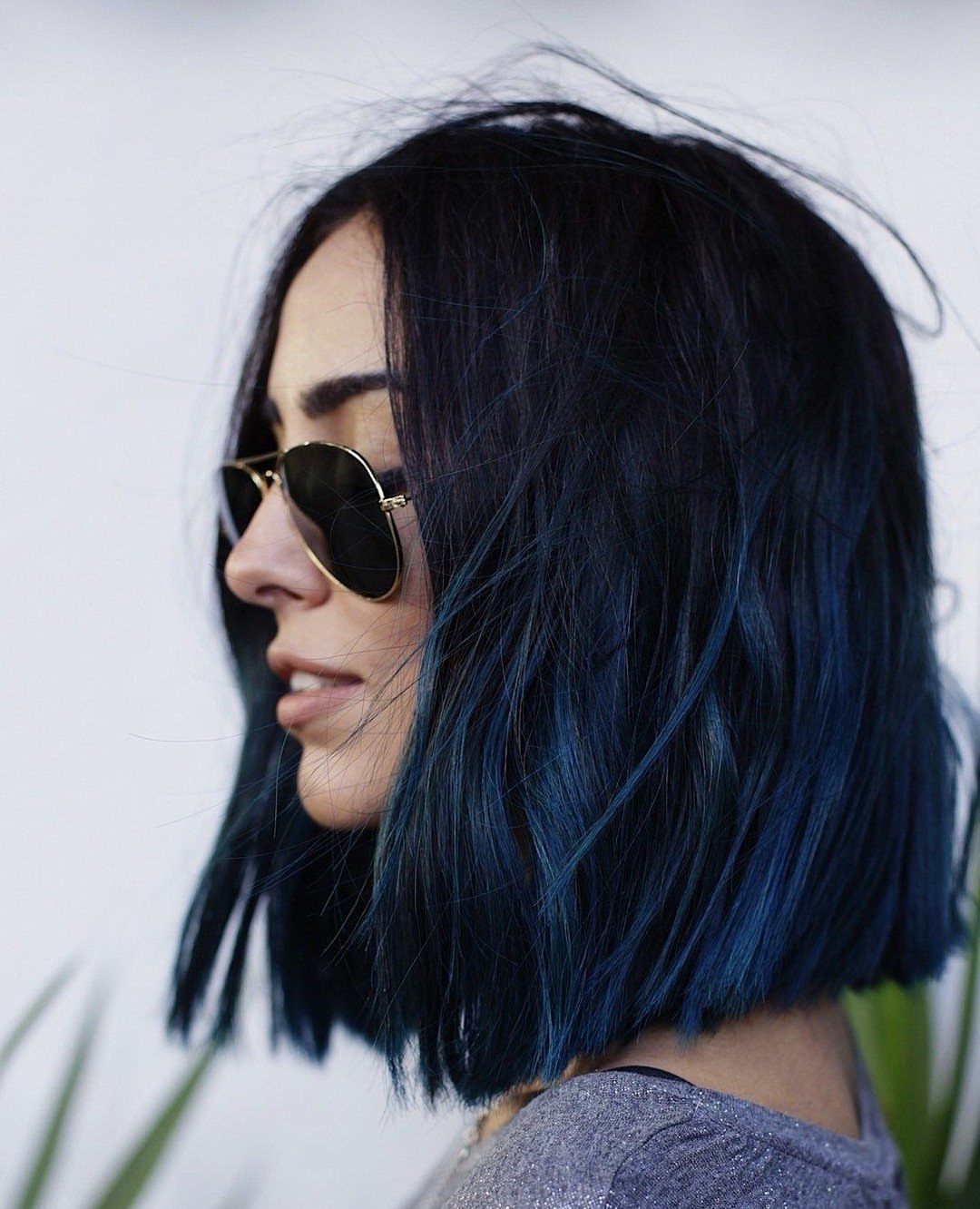
Midnight-blue ribbons add depth to a textured lob without reading as bright or playful. The color is darker than electric blue, so the contrast stays moody rather than bold.
Blue tones fade cooler than warm colors, usually shifting to a soft steel or gray before they wash out completely. A blue or purple shampoo keeps the tone from pulling green as it fades.
The ribbons work best when the base is jet black.
17. Crimson Underlights in Sleek Jet-Black Hair
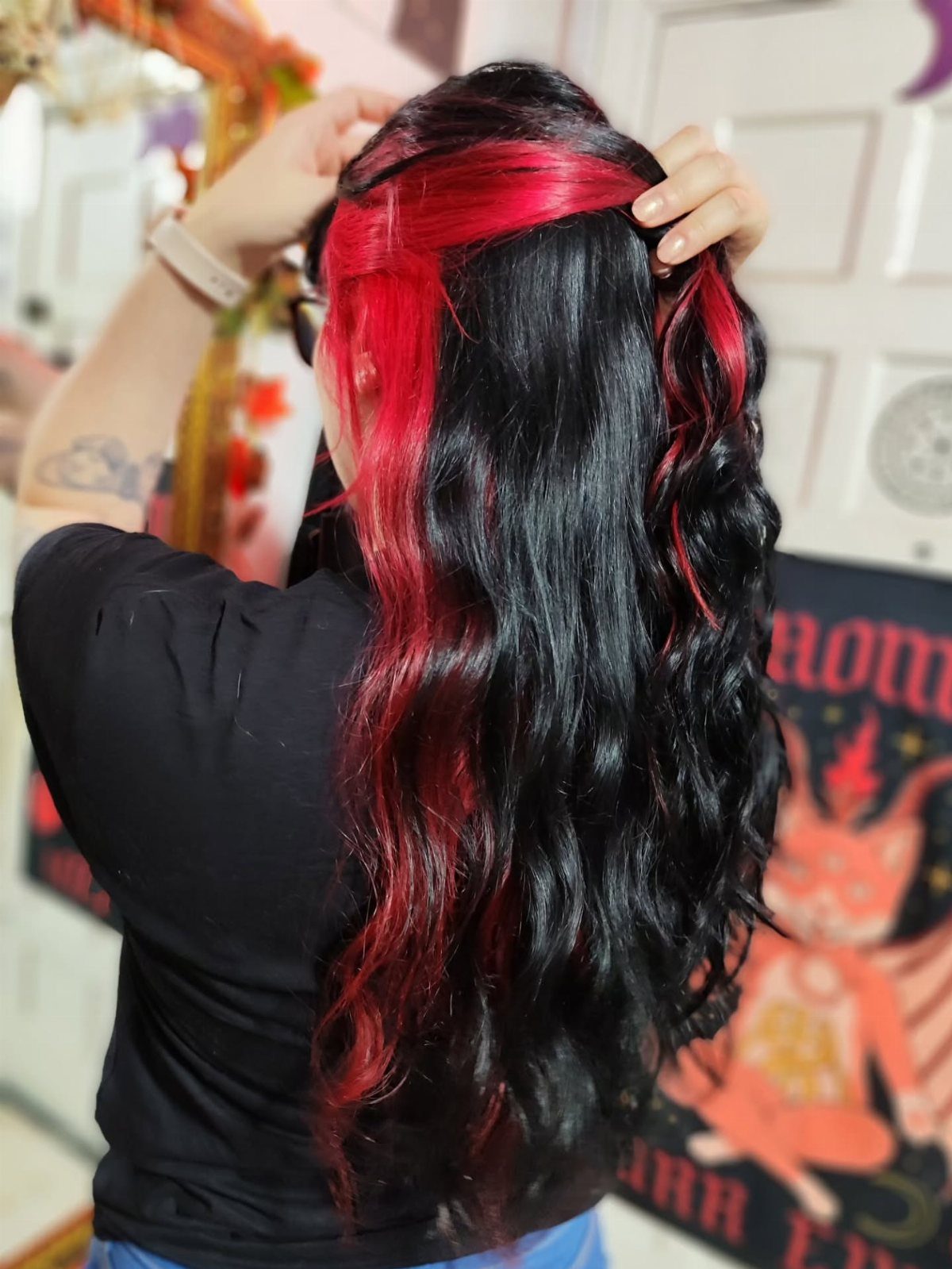
Crimson underlights stay hidden until you lift your hair or tie it up, which makes them a lower-commitment version of all-over red. The color is concentrated underneath, so your natural black stays on top and visible most of the time.
Red fades quickly, so the crimson softens to a muted copper between glosses.
If your hair is coarse or resistant, the red may need a higher-volume developer to lift enough for the color to show. That adds damage, so condition the ends regularly.
18. Honey-Blonde Foil Highlights in Glossy Black Hair
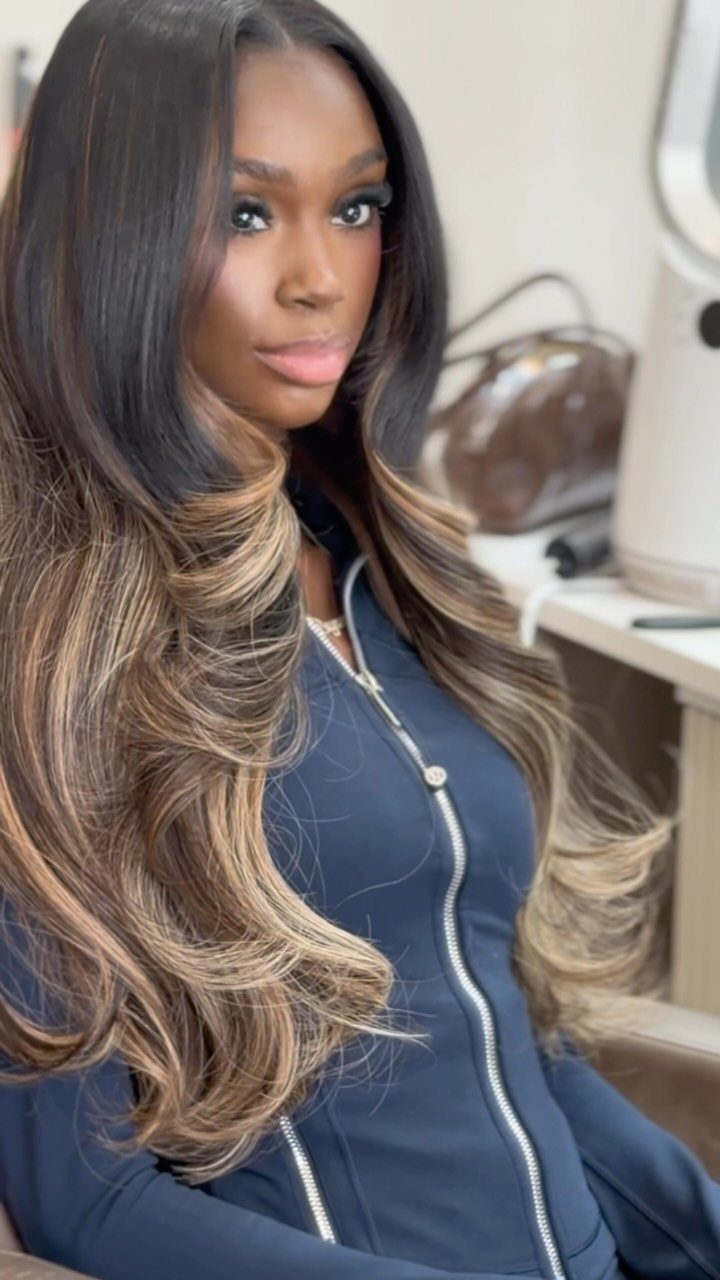
Honey-blonde foil highlights create sharp, defined streaks in glossy black hair. The foils isolate each section, so the color lifts more evenly than balayage and the contrast stays crisp.
The foils grow out with a harder line than painted highlights, so touch-ups keep the contrast clean. If you want lower upkeep, ask for a root smudge to soften the regrowth.
19. Blue-Purple Highlights
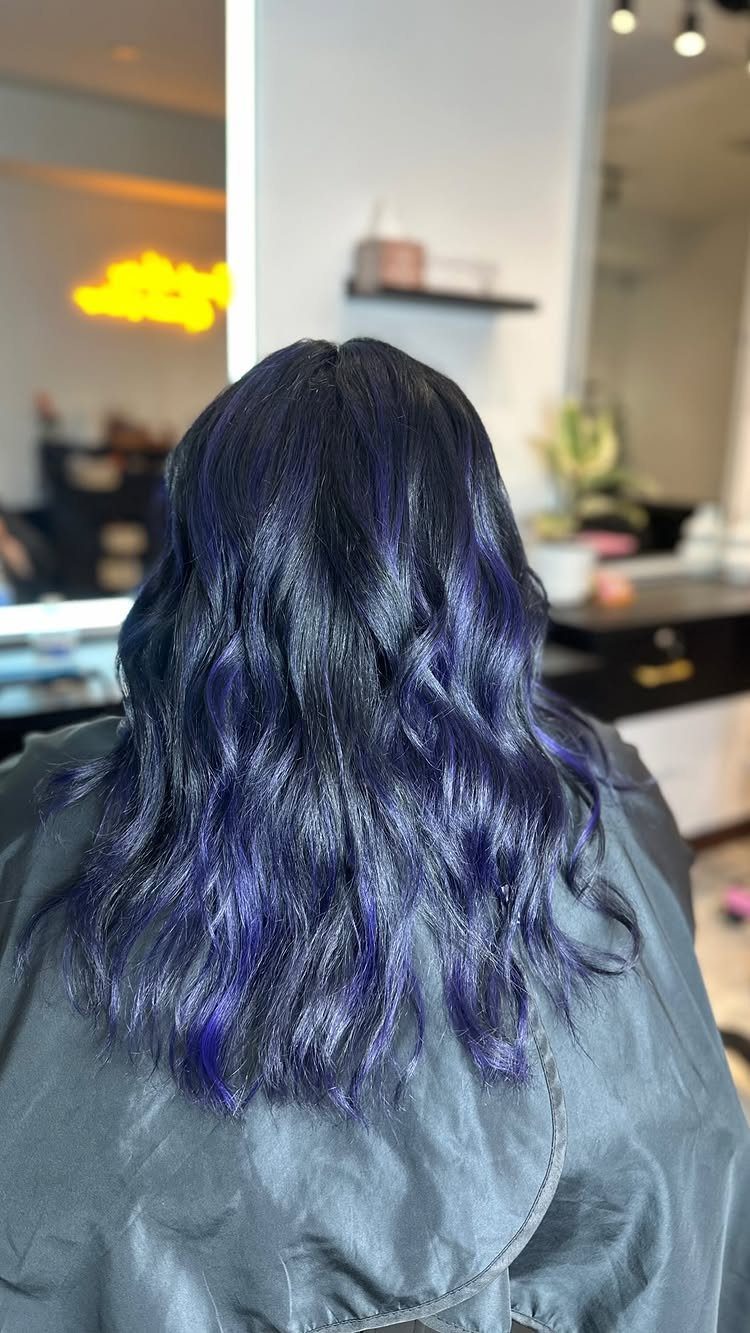
Blue-purple highlights shift between cool tones depending on the light, which gives you more dimension than a single vivid shade.
Vivid blues and purples fade quickly, usually dropping a level of brightness every few weeks.
A blue or violet depositing conditioner once or twice a week stops it fading to washed-out lavender. If you want the color to last, cold water rinses slow the fade.
20. Black Hair with Blue Streaks
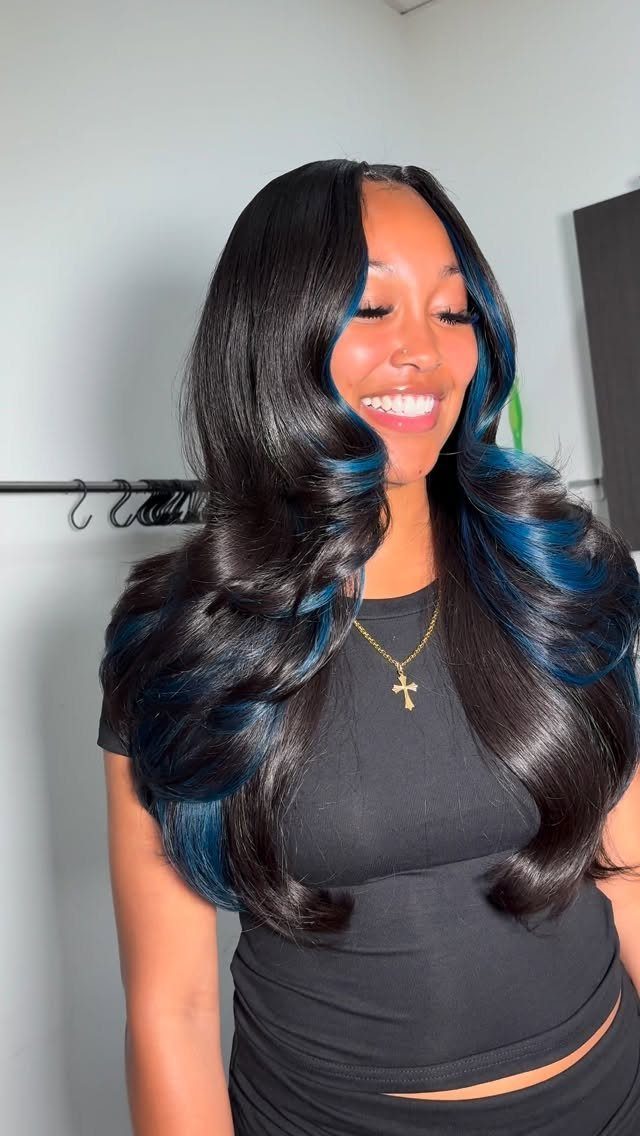
Blue streaks frame the face and run through the lengths, so the color stays visible whether your hair is down or pulled back.
The placement concentrates the blue where it catches the most light, which makes the contrast feel bold without requiring color all over.
Blue loses its punch over time and shifts toward teal or aqua on the way out. Coarse hair usually needs a stronger developer to get the blue vivid enough to show up against black.
21. Purple Peekaboo Ends
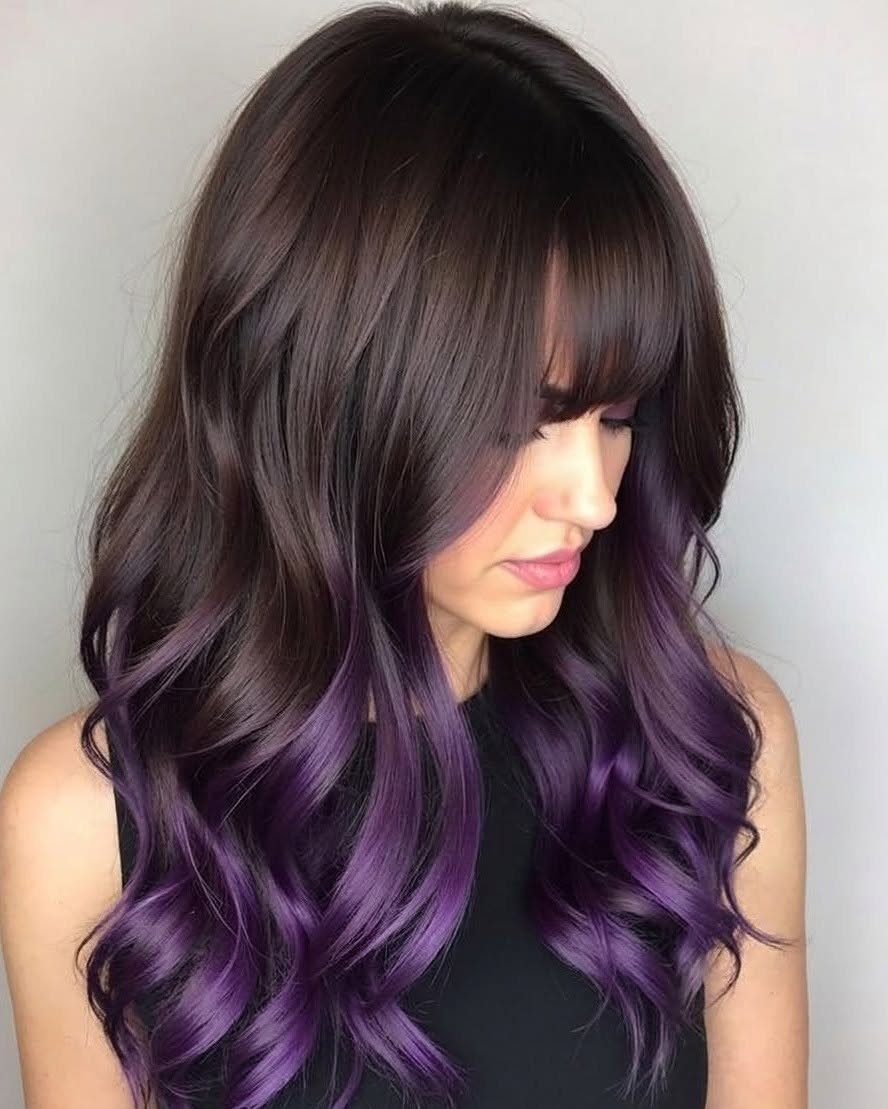
Purple through the ends keeps the color away from your roots, so you skip frequent touch-ups and the drama stays concentrated at the bottom.
The bangs frame your face while staying natural, which balances the vivid ends without feeling too busy.
Purple doesn’t stay purple; it fades to mauve or soft pink after a few washes.
A purple depositing conditioner once a week stops it warming up too much before your next gloss. If you curl the ends, the purple catches more light and the color reads brighter than it would on straight hair.
Frequently Asked Questions
What color highlights will suit black hair?
Warm tones like golden brown, caramel, copper, or honey blonde bring out dimension and catch light without pulling too far from your base.
Cool tones like midnight blue, gray, or purple add drama and read as intentional contrast. If your skin tone leans warm, stick with golden or auburn shades; cooler skin suits ashy or jewel tones better.
What’s the difference between hair color and highlights?
Hair color changes your whole base, while highlights add lighter or brighter pieces through specific sections.
All-over color requires regular root touch-ups as it grows, but highlights, especially balayage or peekaboo placements, grow out more softly and let you stretch appointments longer.