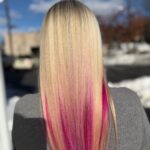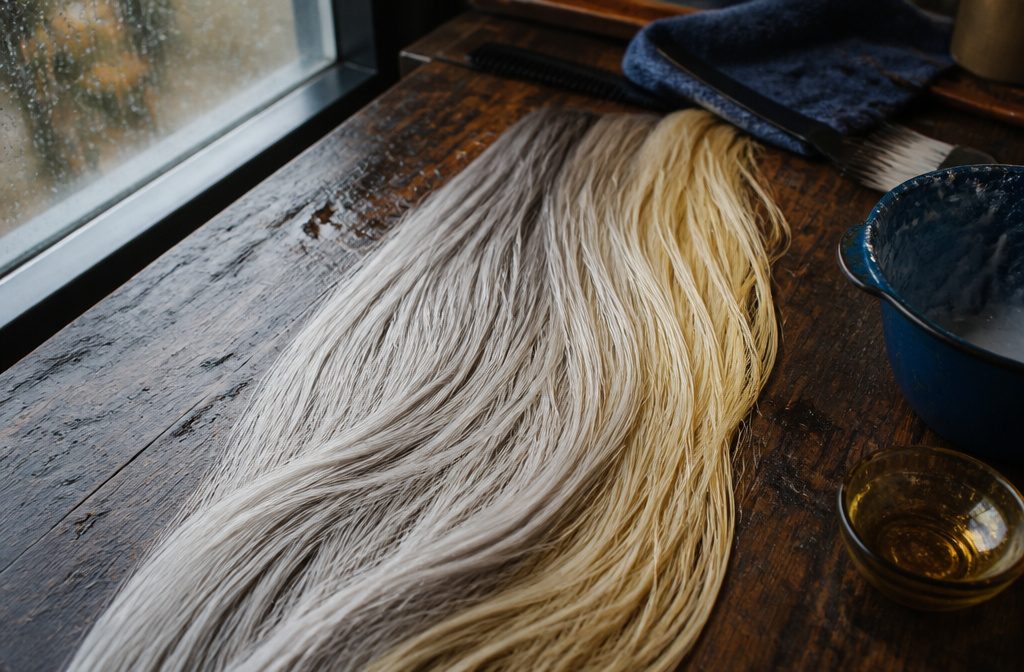
Hair has to be lifted to level 10 before any ash blonde toner will read cool; at level 9 or lower it comes out deeper, and a pale yellow base is the most it can correct.
For the coldest result, 10.2 is the permanent pick, and its violet pigment cancels the yellow left after bleaching. Process it with 20 Vol developer for about 20 minutes.
1. White Platinum With 10.2
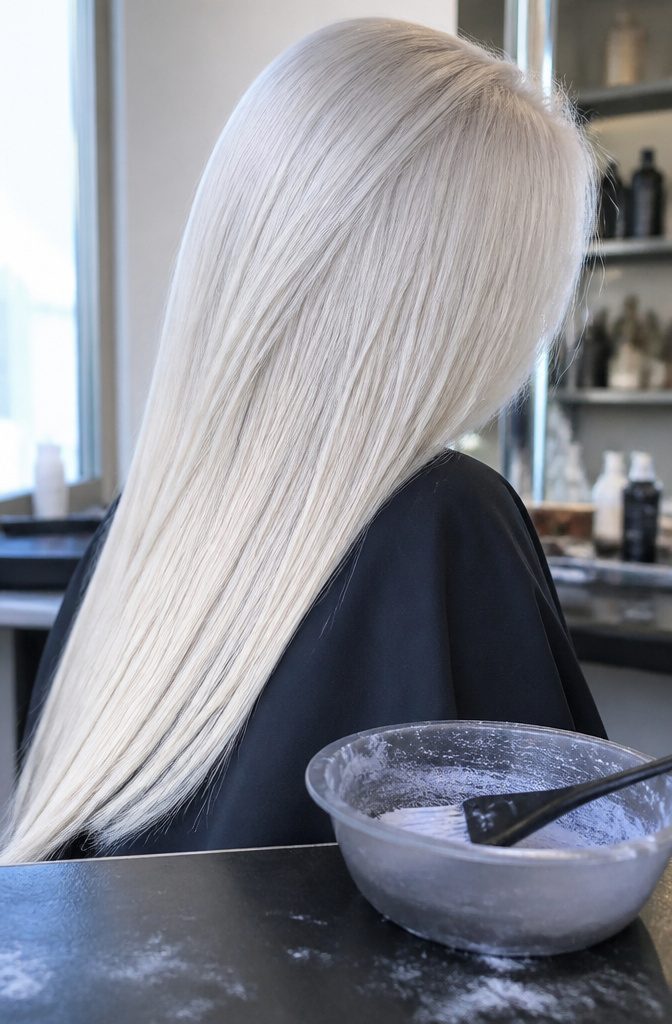
For ultra-cool white platinum blonde, 10.2 Extra Light Cool Blonde is the coldest permanent toner you can reach for.
It sits at level 10 and leans blue-based, with violet pigments doing the work to knock out any remaining yellow. The result is stark, almost icy.
This only works on hair already lifted to level 10. If you’re still sitting at a nine or lower, the toner won’t have enough of a blank canvas to deliver that white-platinum finish.
Once the hair is pre-lightened enough, saturate it well with your mix using 20 Vol developer and let it process for around 20 minutes.
The blue undertone in the formula is what pushes the blonde all the way to that cold, silvery-white edge rather than leaving any warmth behind.
2. Intense Pearl Blonde 100V
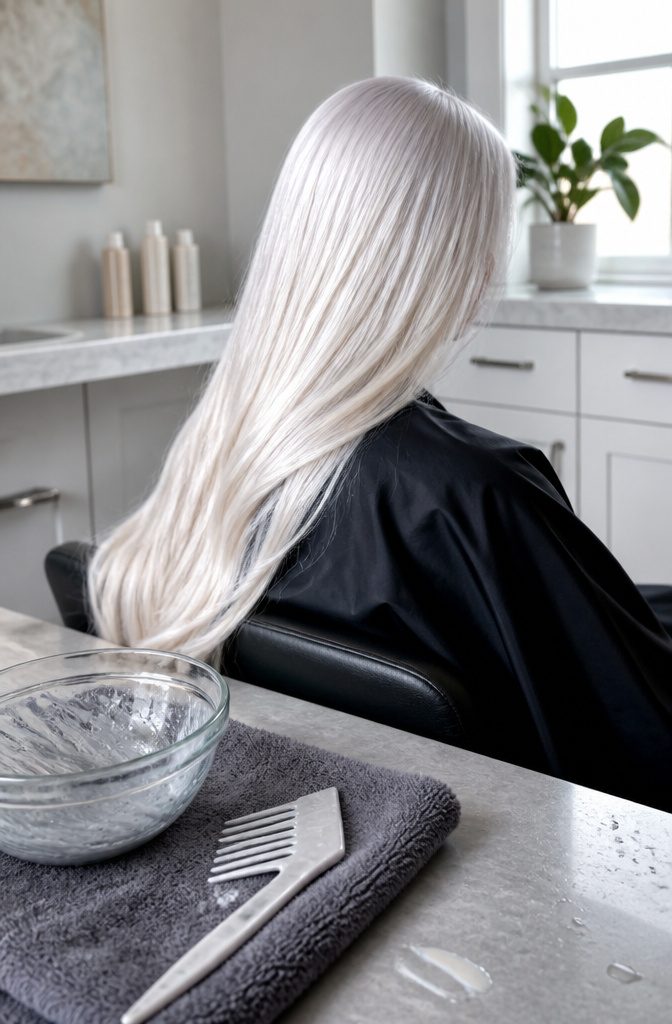
Intense Pearl Blonde 100V sits apart from most toners because it contains Boost, which delivers extra lift while it neutralises.
That lift kicks out any remaining yellow that survived bleaching, taking hair to an ultra-white pearl finish rather than stopping at cream or beige.
Most toners deposit colour without shifting the level you started with, so if you bleached to a pale yellow nine and a half, you stay there.
This one pushes you closer to ten as it tones, which matters when you’re almost at level ten but not quite light enough for a true pearl blonde.
The result leans cooler and cleaner than standard violet toners, though the difference shows most clearly on hair that arrives with stubborn warmth still present after lifting.
3. Pearl-Grey Blonde With 10V
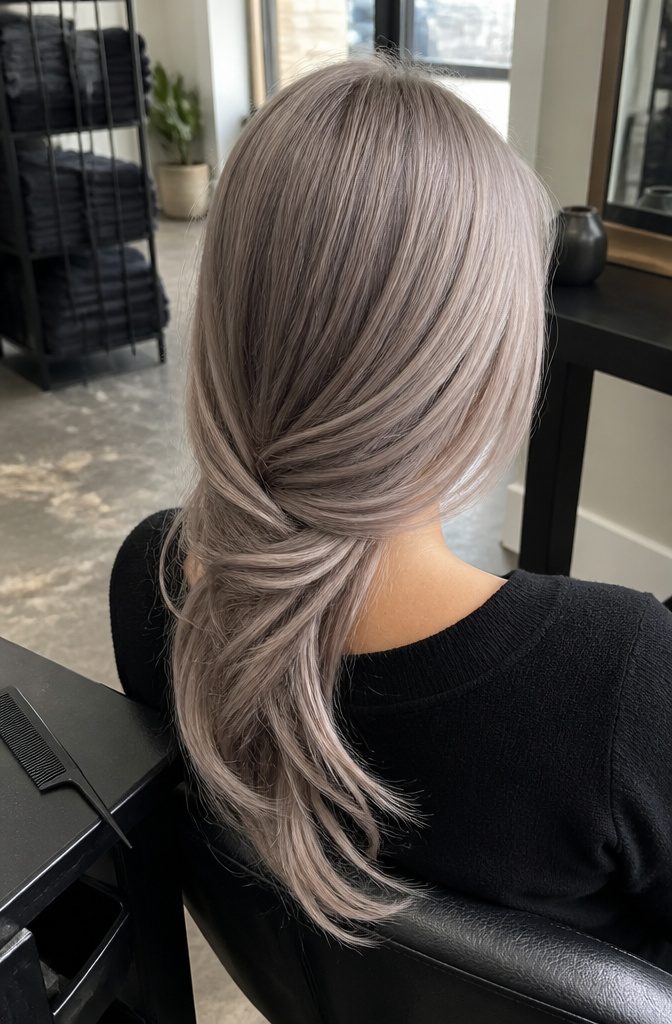
Pearl Blonde 10V loads violet and purple pigments into a formula with regular lift, making it the straightforward pick when you want pearl-grey blonde without the aggression of an intense toner.
I like it when the base is already lifted to level 10 and you need controlled deposit rather than more power.
The pigment concentration sits between a sheer wash and the heavier 100V formula, which gives you room to gauge how much grey you’re laying down without overshooting into lavender.
It tones clean and stays in the pearl family rather than pulling silver or platinum.
Pearl Blonde 10V also serves as the starting point for two of the blended formulas covered later in this article, so if you’re planning to mix silver-grey into the formula or split-tone different sections, this is the base you’ll reach for first.
4. Natural Cold Ash With 010V
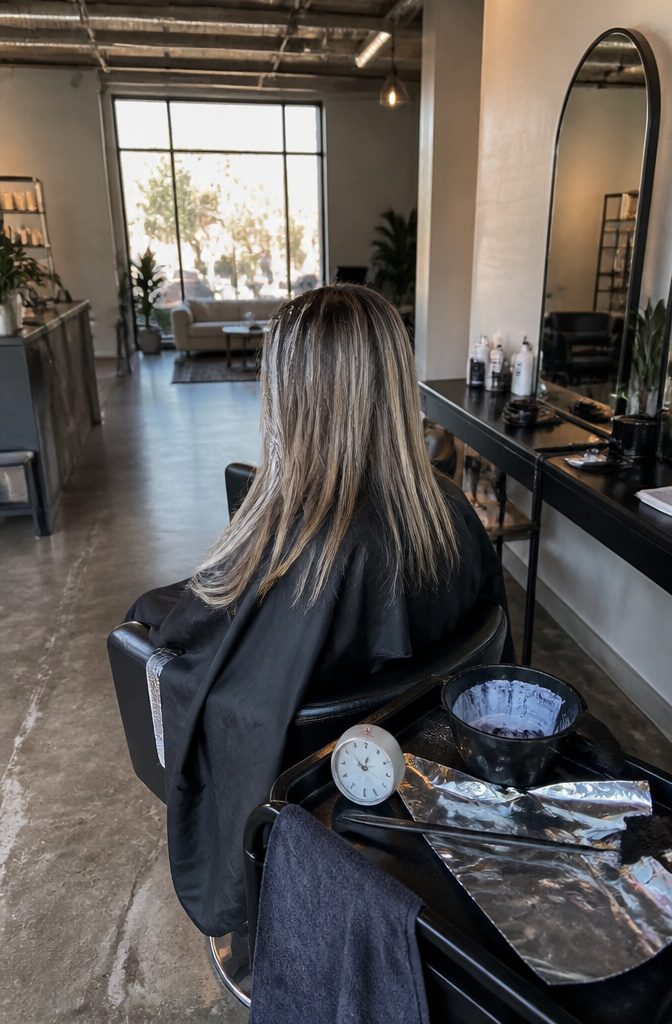
Blondify 010V produces a natural cold ash blonde result without the ammonia or PPD found in many toners, and it processes in just 10 minutes.
The purple pigments neutralize yellow, which makes it reliable for taking highlighted hair to a genuinely cool finish rather than leaving warmth behind.
What sets it apart is how it activates. Because it is non-lifting, it only works on the lightened portions of the hair and leaves darker strands untouched.
That behavior suits balayage and foil work particularly well, where you want the dimension to stay intact rather than everything flattening to one tone. The darker base holds, the highlights cool down, and the result looks intentional rather than processed.
I prefer this one when the hair has enough lift already and the only job left is neutralizing. It delivers a soft, believable ash without pushing into silver or grey territory.
5. Silver-Grey and Pearl
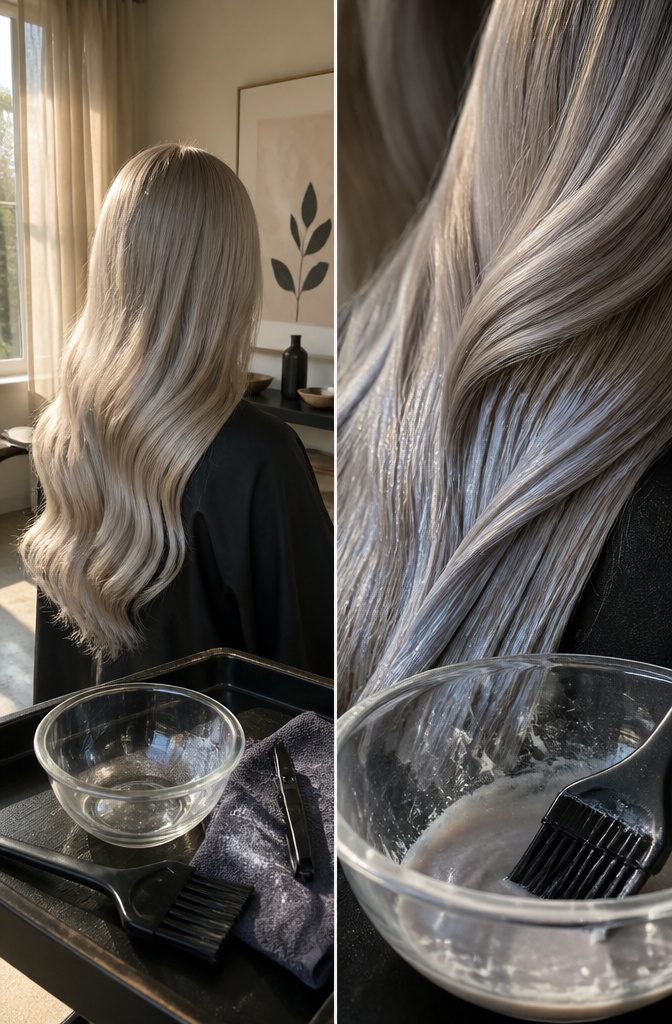
Mixing Silver Grey with Pearl Blonde gives you a cool silver base softened by pearl shimmer, which reads less stark than straight silver on its own.
The pearl brings warmth without pushing the blend into beige territory, so you get dimension instead of a flat metallic finish.
The look sits between full grey and iced platinum, landing somewhere that photographs as silvery in natural light and pearl under indoor bulbs. No published ratio exists for this pairing, which means trial matters more than formula here.
I’d start by weighting the silver heavier if your base is already pale and cool, then add pearl in small increments until the grey feels less industrial.
You’re aiming for a tone that shifts with the light rather than one that announces itself the same way in every room.
6. Purple Blonde at 50:50
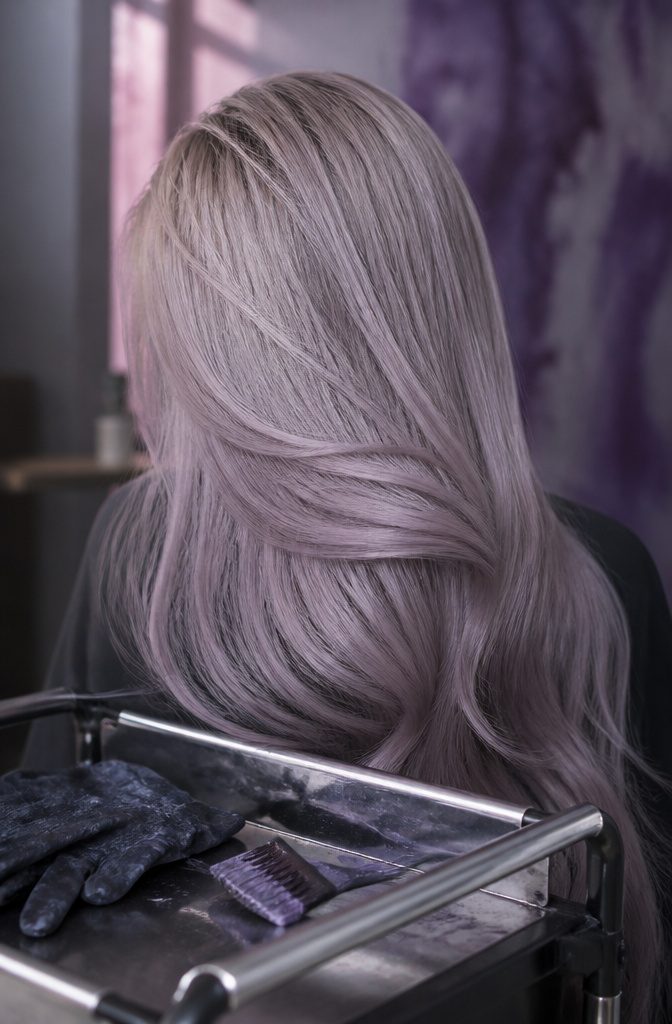
This is the one custom blend with a stated ratio, and it shows how far you can push violet when the base is light enough to hold it.
Mix Pearl Blonde 10V and 7.22 Intense Violet Blonde at 50:50 for a purple blonde that reads more fashion than natural.
The result sits somewhere between silver and lilac, cool enough to kill any remaining warmth but with enough pigment that it announces itself under most lighting.
This much violet works when you want the tone to be the point of the color, not just a correction. It will not read as a typical ash blonde.
For neutrality or something you can wear to a corporate job without comment, pull back the 7.22 and lean harder on the Pearl Blonde. But if you are chasing something that looks intentional and a little editorial, the 50:50 split delivers.
7. Pearl and Purple-Grey
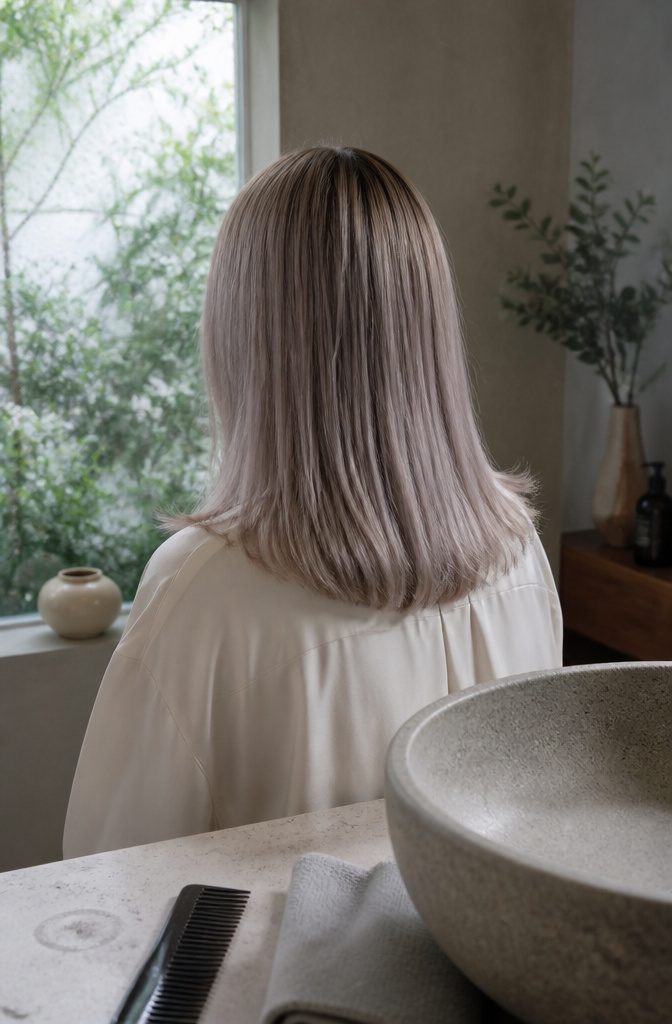
Pearl Blonde 10V mixed with Purple Grey gives you a softer take on ash—less true silver, more opalescent with a purple-grey haze.
Where the 50:50 purple blonde leans overtly lilac, this one reads cooler and quieter, closer to a moonstone or weathered pewter. It works particularly well on yellow-toned blonde hair because the violet base neutralizes warmth without tipping into full lavender territory.
The result feels more wearable for everyday than a straight purple tone but still delivers that interesting, dimensional cast that keeps clients coming back. I like it when someone wants cool without committing to full silver.
8. Straight Silver-Grey
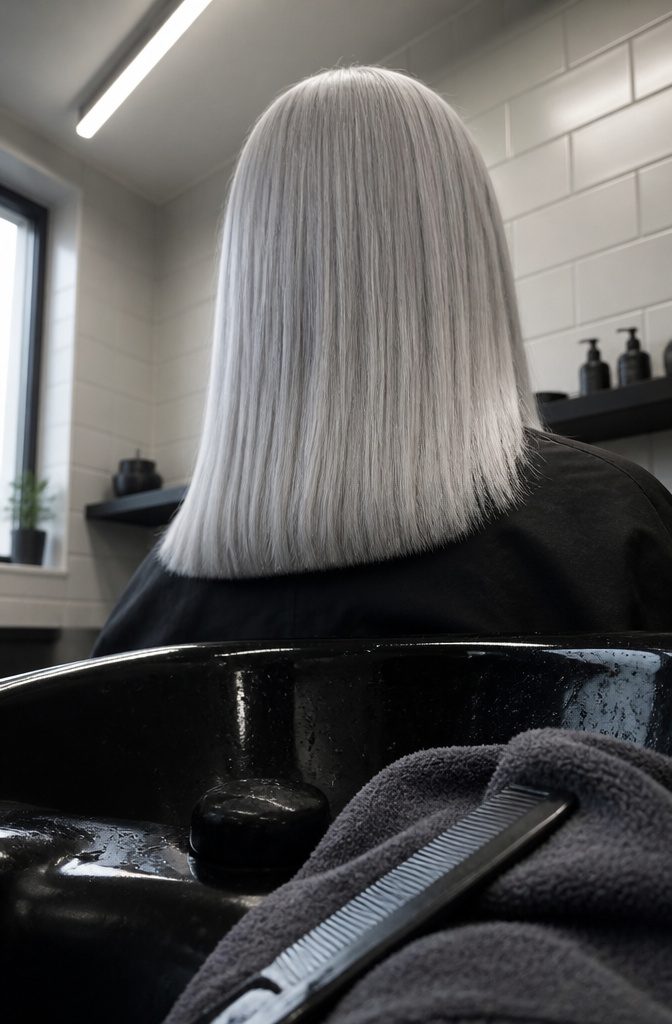
Silver Grey on its own delivers a clean silver-grey result without the softer, warmer edge that comes from blending it with Pearl.
Ugly Duckling’s Silver Grey toner, mixed with 20 Vol developer, pulls hair straight toward cool metallic tones rather than the milky finish you get when Pearl enters the formula.
The difference matters if you want grey that reads as grey under most light.
Pearl adds a hint of warmth that some people love for everyday wearability, but it also means the result shifts depending on whether you’re indoors or outside.
Silver Grey alone holds its line: you lift to level 10, apply the toner, and the grey you see wet is close to what you rinse out with.
I’d use this formula for a true grey rather than a soft platinum.
It works best on hair that lifted evenly and has no patchy yellow left behind, because any remaining warmth will show through more noticeably than it would in a Pearl-softened blend.
9. Intense Silver Blonde 100B
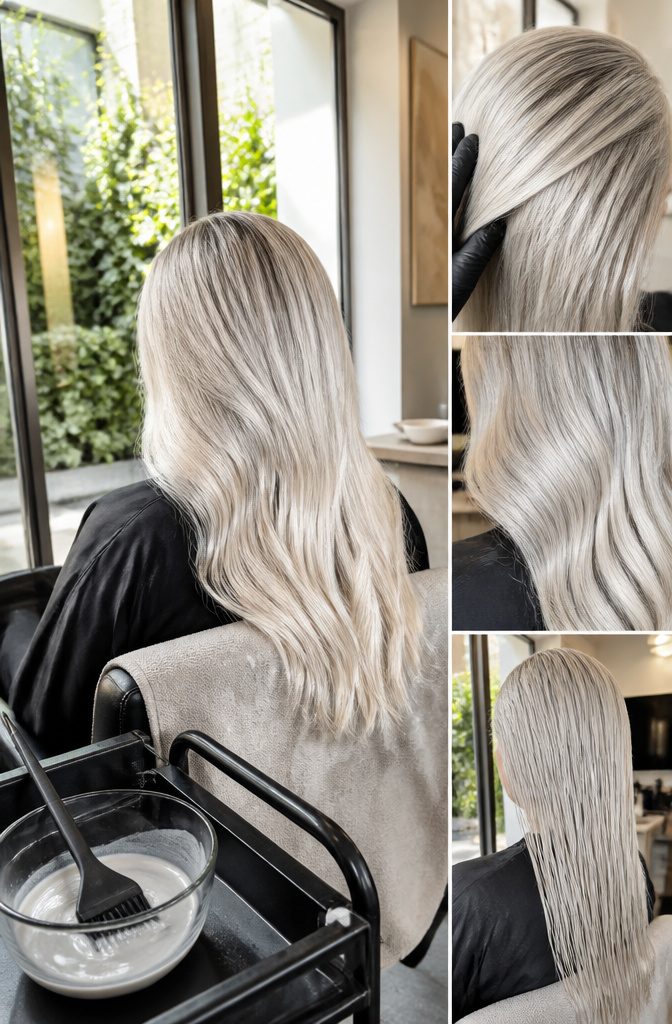
100B Intense Silver Blonde is Ugly Duckling’s second toner with Boost, meaning it delivers extra lift during the toning process.
The shown result pairs it with 10.2, and that combination handles silver in a specific way: 10.2 lightens and cools the base, while 100B deposits the silver tone without going grey or overtly ashy.
The finish reads as natural silver-white blonde rather than the steel or pearl cast you get from other violet-based formulas.
Boost toners work differently than deposit-only versions.
They continue lifting slightly as they tone, which matters if your base sits at a pale yellow level nine and you need to push into level ten territory while neutralizing warmth at the same time.
Pairing 100B with 10.2 splits the job: one lifts and chills the undertone, the other locks in the silver without tipping into lavender or grey.
The result is clean, bright and reads as white blonde with a silver edge rather than an obvious toner sitting on top.
10. Level 10 Cool Ash 10.1b
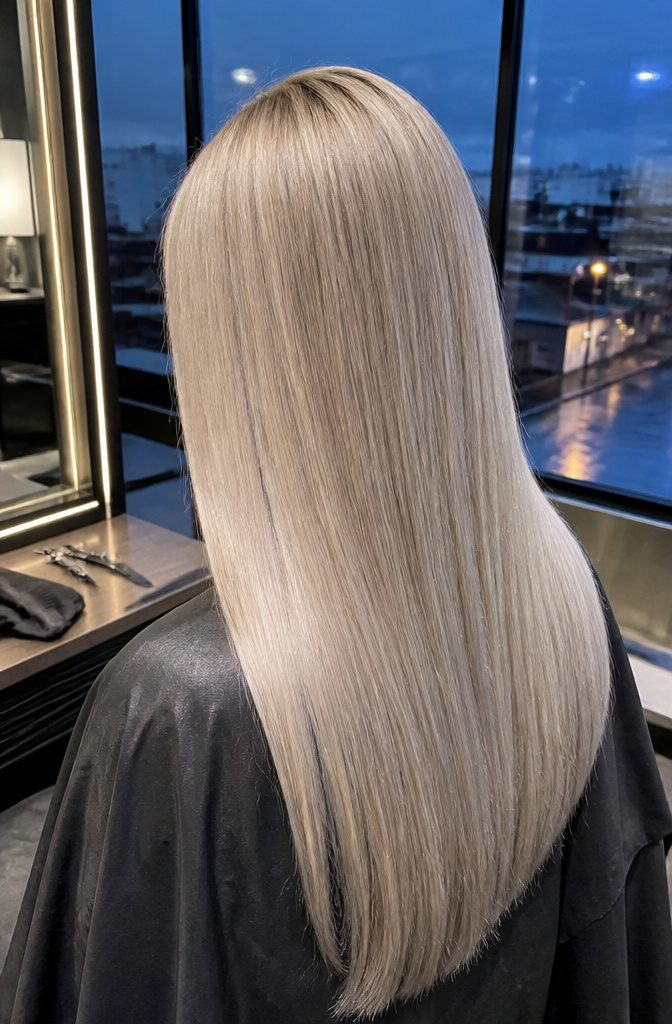
10.1b Extra Light Cool Blonde sits at level 10 and relies on blue pigment rather than violet. That blue base is what gives it a sharper, colder finish compared to 10.2 platinum, which leans on violet to cancel brassiness.
The difference shows up most clearly when you’re working against yellow undertones: blue neutralizes yellow more directly, so 10.1b pulls whiter and more silver than the softer, slightly warmer platinum you’d get from violet.
If you want a genuinely icy ash blonde without any warmth creeping in, the blue in 10.1b is the one that delivers that clean, cold result. It’s the toner I’d pick for white ash over everything else.
11. Level 9 Cool Blonde 9.1b
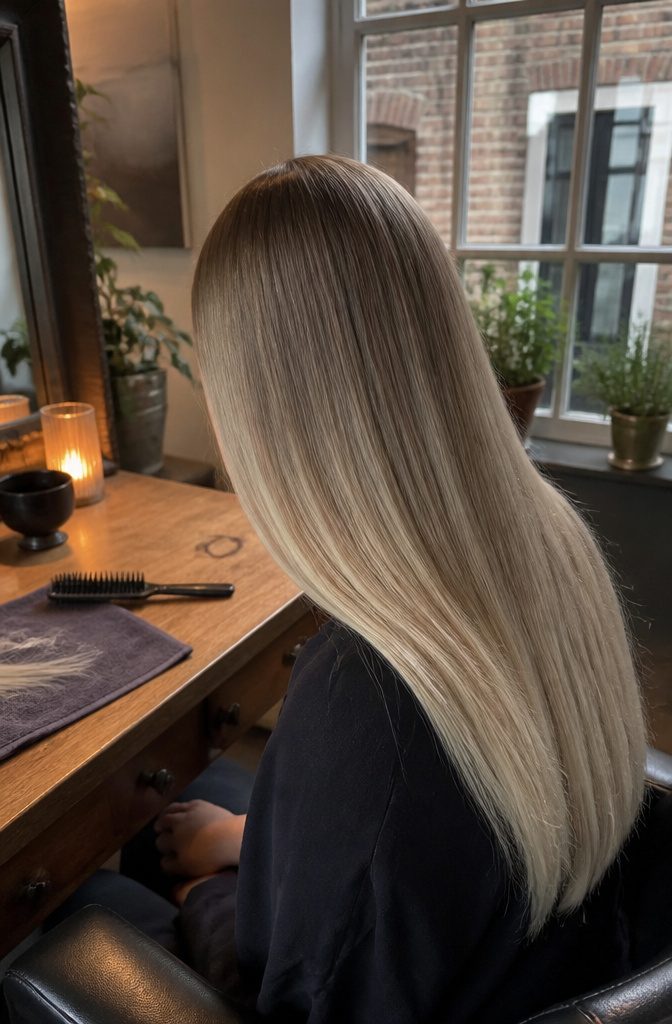
Blue-based 9.1b is the toner for hair that lifts to level 9 and stops one level short of 10. Pre-lighten as you normally would, then tone for a very natural-looking cold ash blonde.
It will read slightly deeper than the level-10 looks, a cool blonde with a little more body rather than a stark, near-white one.
I count that as a plus for anyone who finds the palest shades too severe. If your hair stalls at 9, I’d tone it with 9.1b instead of chasing 10 with more lightener.
You can apply it as a full-head color. Leaving a shadow root is the other option, and I prefer it: the darker root blends into the length, so the grow-out looks planned.
What Toner Does
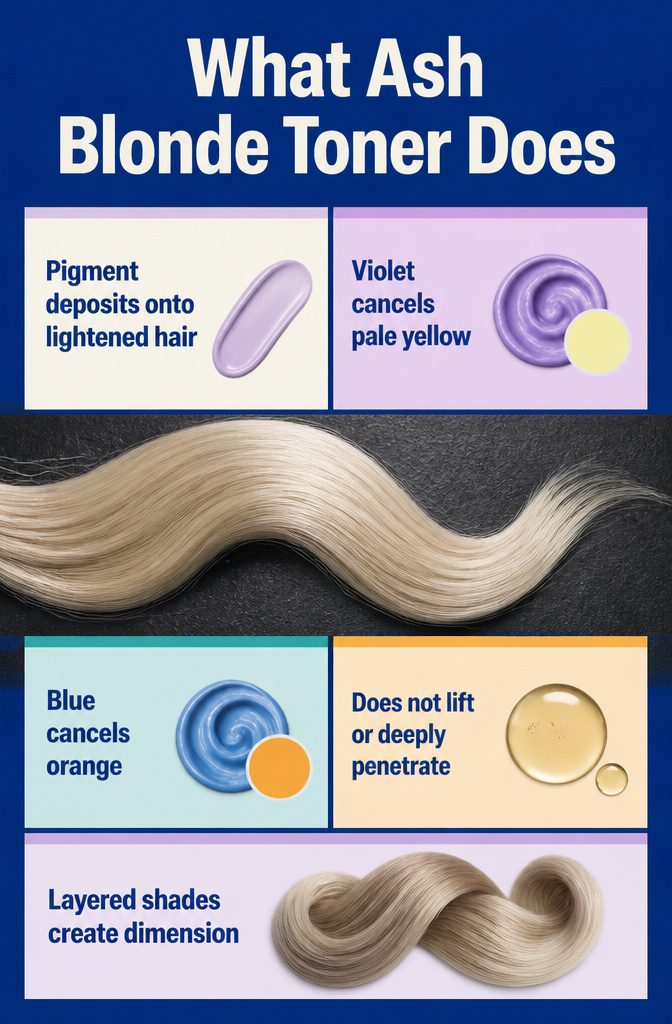
Toner is pigment, not bleach.
It deposits color onto hair that has already been lightened and cancels what you don’t want showing: violet against pale yellow, blue or blue-green against orange. What’s left is cooler, glossier and more even.
It’s also gentler than dye.
Toner doesn’t deeply penetrate the hair shaft or lift color, so it refines tone and adds shine without lightening further. I like it most for refreshing color between appointments.
Toner also builds dimension. A violet through the mid-lengths and a pearl on the ends will read as depth, where a single shade tends to look like one flat sheet of silver.
Match Pigment to Undertone
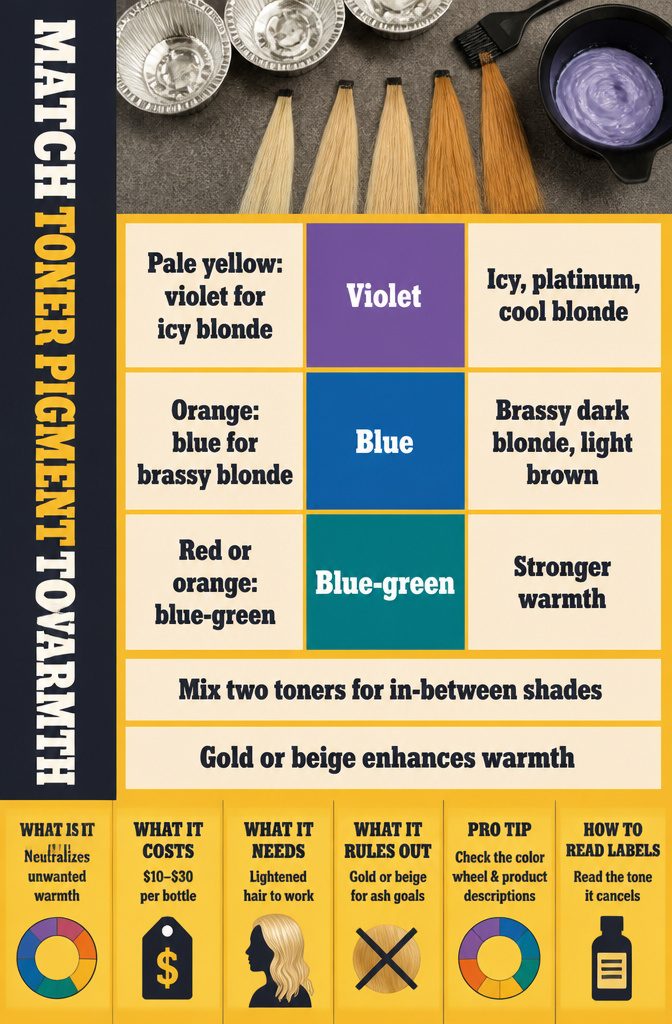
Name what is left in the lightened hair. Pale yellow or yellow takes violet, orange takes blue, and red or orange takes blue-green.
| Remaining tone | Pigment | Best for |
|---|---|---|
| Pale yellow, yellow | Violet | Icy, platinum, cool blonde |
| Orange | Blue | Brassy dark blonde, light brown |
| Red, orange | Blue-green | Stronger warmth |
For in-between shades, mix two toners. Gold or beige bases enhance warmth, so they are wrong for an ash goal.
Ulta Beauty puts the last check plainly:
Always check the color wheel and product descriptions to select the toner that counteracts the unwanted hue in your hair.
Read the label for the tone it cancels, not the shade name.
Lighten to Level 10 First
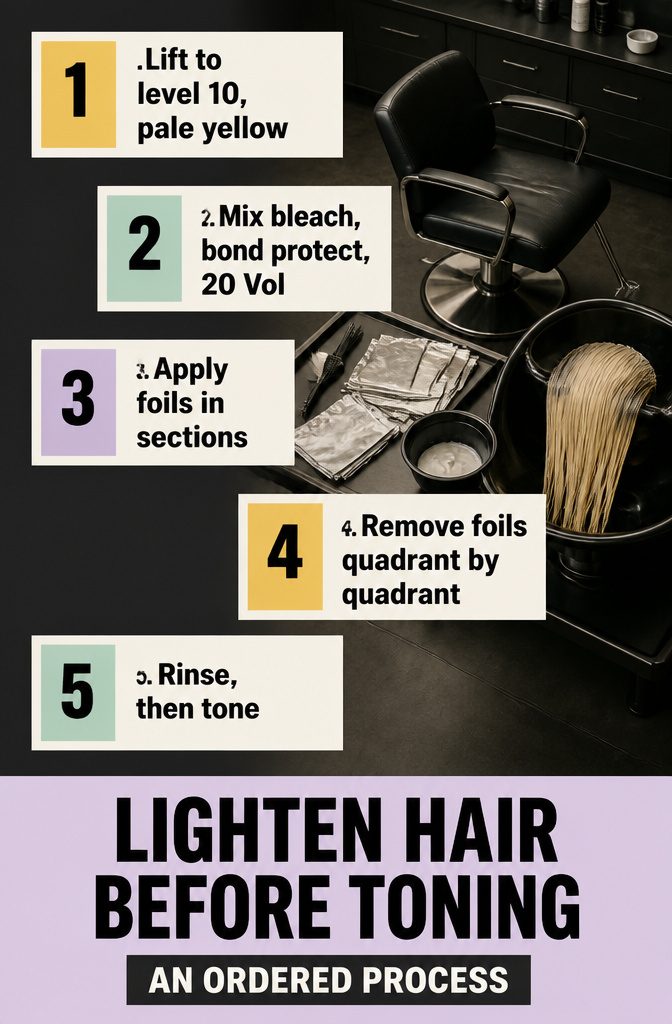
- Lift the hair to level 10, with no orange-yellow or orange left. Toner won’t cover a darker, brassy base, so don’t move on until the hair is pale yellow at most.
- Mix Brilliant Blondexx Bleach with Bond Protect and 20 Vol developer. I like this pairing because it lifts yellow hair fast, and the maleic acid in Bond Protect strengthens the hair while it lifts.
- Foil the head in sections. In the salon example, sectioning and applying the foils took about 2 hours.
- Pull the foils from the first quadrant while you’re still foiling the front. Once removed, the lightener oxidizes and stops processing, which prevents brittle, damaged hair.
- Remove the rest of the foils as you reach the last quadrant.
- Rinse once everything has processed, then tone.
Tone Mid-Shafts and Ends Separately
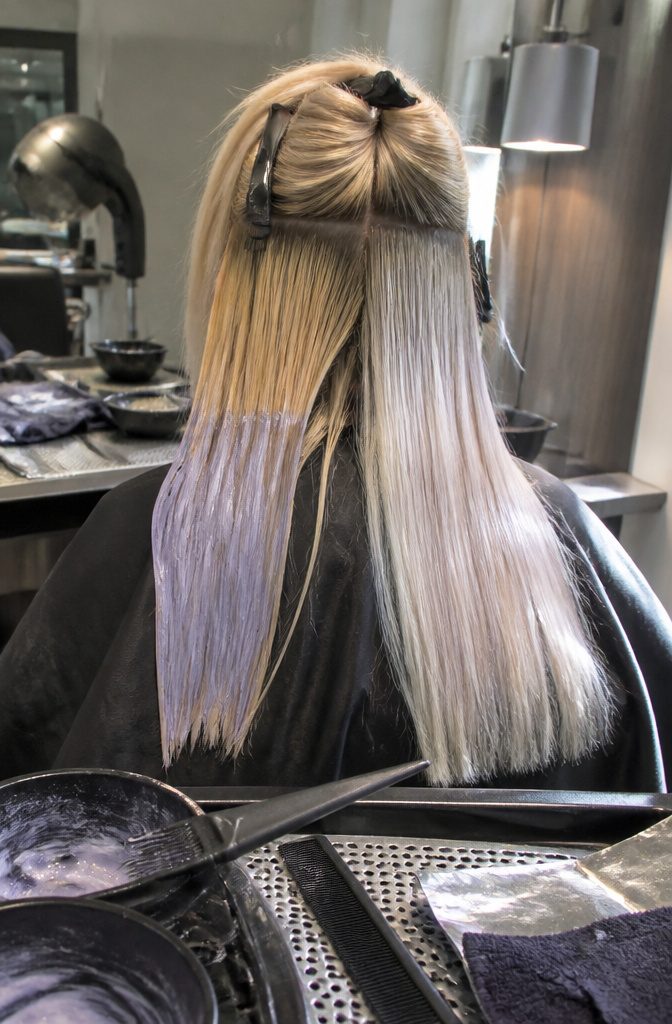
Brassy mid-shafts and very light ends need different toners.
Pravana Chromasilk violet goes on the yellow mid-lengths first, and those sections get to process a little longer than the rest. An iridescent pearl toner goes on the ends, which are already pale and need less.
These toners work very fast, so apply them quickly to keep the result even. I’d section the hair before opening a bottle.
After the rinse, nvenn Replenish oil, made with kelp extract and avocado oil, fills the gaps along the strand. Next comes an even layer of Protect heat shield, then Volume, a heat-activated weightless volumizer, at the roots.
Blow-dry on high heat. The result is platinum with ashy-violet undertones, and the full transformation took 7 hours.
Toning at Home or in the Salon
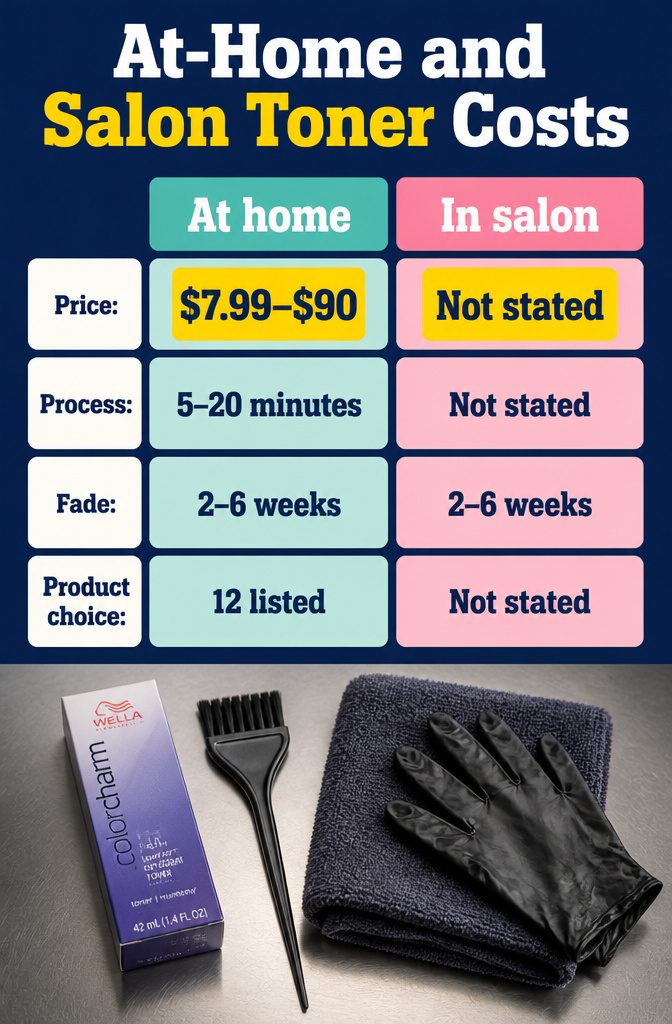
Start with freshly washed, towel-dried hair, put on gloves, and work the toner from roots to ends, using a tint brush if you want tighter control.
Processing takes 5–20 minutes depending on the formula, then rinse and condition. Ulta lists 12 blonde toner products, and prices run wide: Wella Colorcharm is $7.99, Eva NYC Tone It Down is $14, Ugly Duckling toners are $19, and the Purple Duo Large is $90.
A toner fades in 2–6 weeks.
Sulfate-free shampoo, less heat styling and a purple or blue toning product all stretch that. I wouldn’t count on a quick fix if a shade lands wrong, so pick carefully.
Frequently Asked Questions
What does ash blonde toner do?
An ash blonde toner is a pigment product, not a lightener.
It sits on hair that has already been lifted and cancels leftover yellow or orange, leaving a cooler, glossier, more even shade. Layering two toners can also add dimension, and a fresh coat extends your color between salon visits.
Can you tone your own hair at home?
Yes. Start with freshly washed, towel-dried hair, put on gloves, and work the toner from roots to ends, using a tint brush for tighter control.
Let it process for 5–20 minutes depending on the formula, then rinse and condition. The hair must already be lightened, ideally to level 10.
How long does toner last in your hair?
Toner fades in 2–6 weeks, depending on your hair type, how often you wash it and which products you use. Sulfate-free shampoo, less heat styling and a purple or blue toning product all help it last longer.
Is toner better for your hair than dye?
Toner is generally gentler.
It doesn’t deeply penetrate the hair shaft or lift color, so it refines tone and adds shine without lightening further. That also means it can’t replace bleach or dye when you need a lighter base.
What toner changes yellow blonde to ash blonde?
A violet-based toner, since violet cancels yellow and gives the icy, cool blonde result.
Blue-based toners handle orange, and blue-green handles red. Avoid gold or beige bases, which add warmth, and mix two toners if your hair sits between shades.
Can I put toner on already bleached hair?
Yes, bleached hair is what toner is made for.
Lift it to level 10 first, with no orange-yellow or orange left and pale yellow at most. Toner won’t cover a darker, brassy base.
Will the lightest ash blonde remove orange?
Not on its own.
Orange needs a blue-based toner, and toner won’t cover a darker, brassy base, so lighten the hair until it is pale yellow at most. After that, an ash blonde toner can handle the leftover yellow.