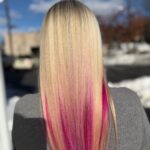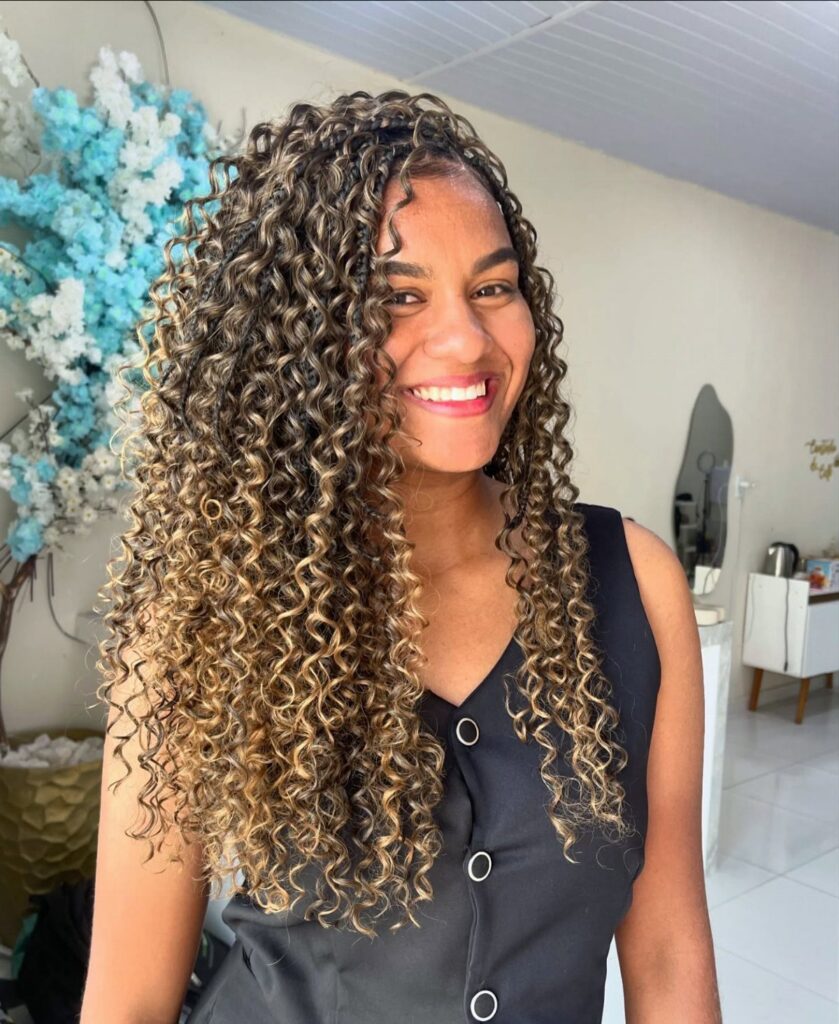
The difference between honey blonde woven through and a money piece concentrated at the front is where the color sits, and that decides whether you see it all the time or only when the hair falls forward.
If your curl pattern shrinks up, placement matters more than the shade itself: babylights throughout can disappear into volume, while face-framing pieces and money piece sections stay visible at the crown and temples.
1. Honey Blonde
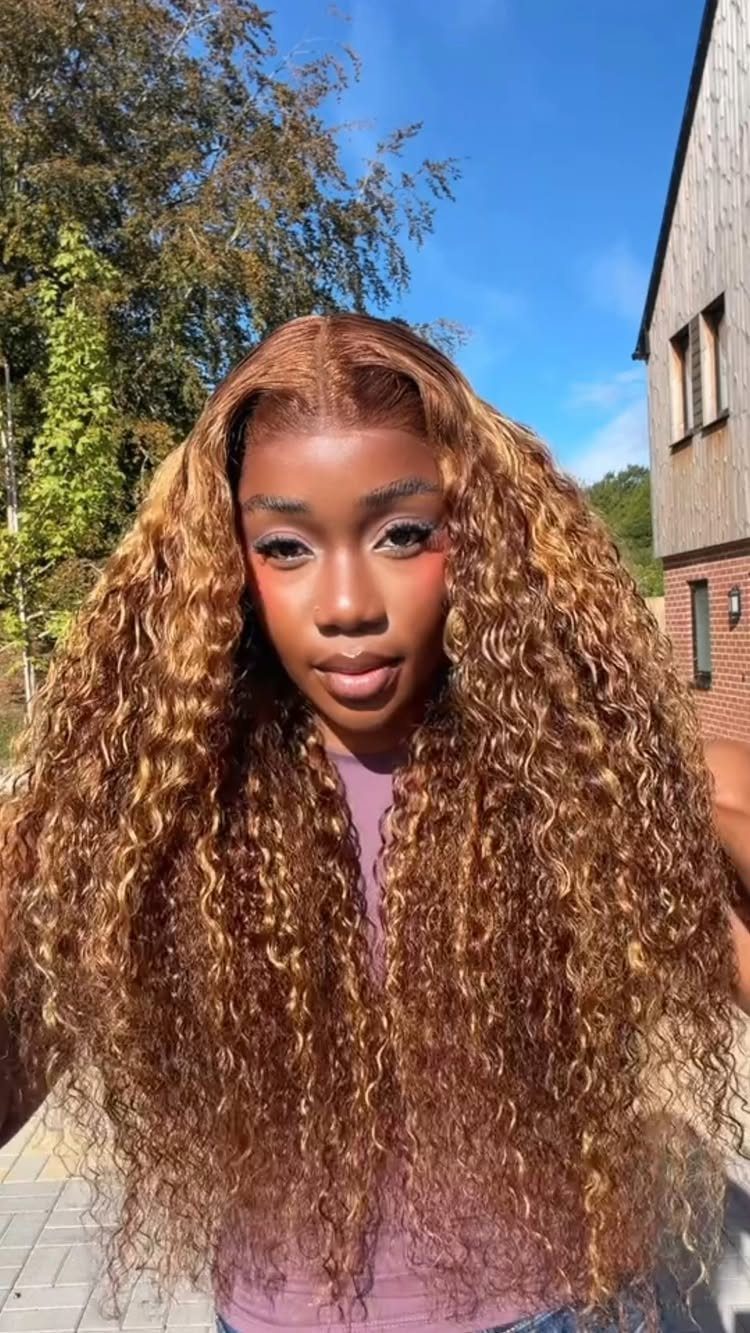
Honey blonde highlights pull warm golden tones through a brunette curl base, brightening the overall look without bleaching every strand. The warmth reads as sun-touched rather than cool or ashy, which flatters warm and neutral skin tones especially well.
This works beautifully on curly hair because the dimension shows between curls, catching light as they move. A colorist will typically paint or weave the honey shade through mid-lengths and ends, leaving roots darker for a softer grow-out.
If you’re considering this at home, look for a honey or golden blonde shade one to two levels lighter than your base.
2. Ash Blonde Highlights
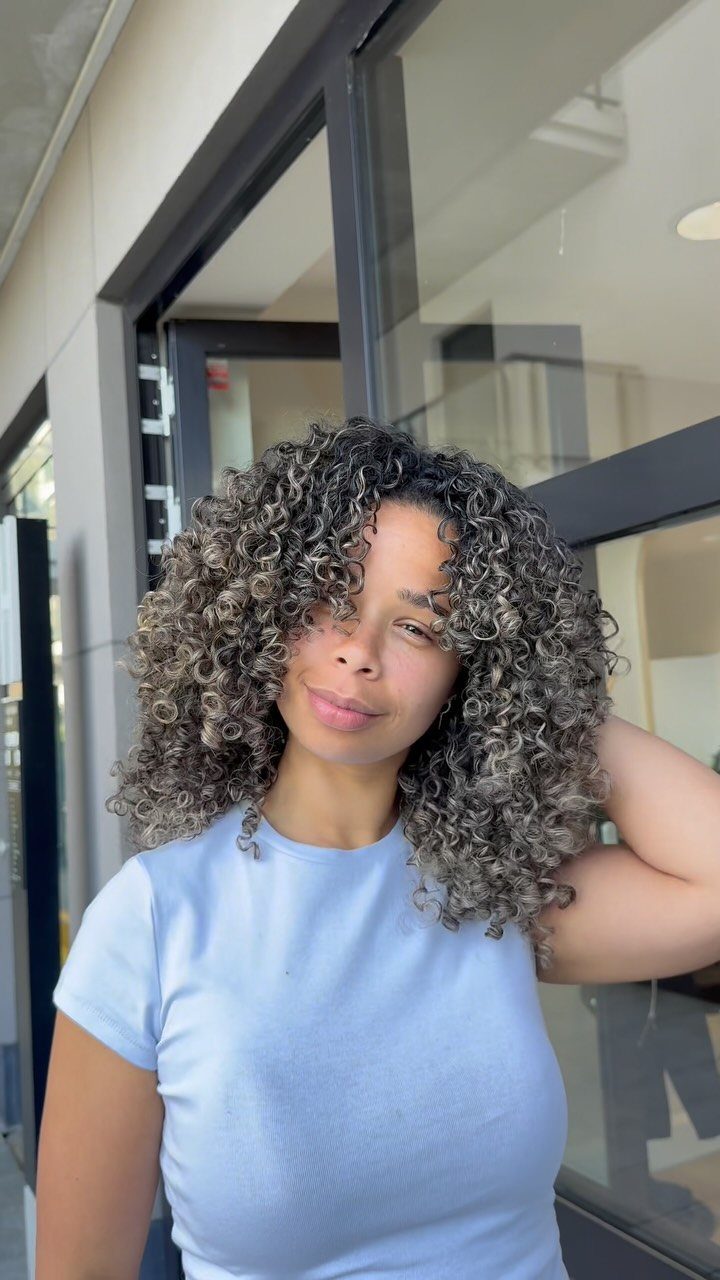
Ash blonde highlights bring a cool, silvery blonde into dark curls, creating high contrast without yellow or brassy warmth. The cooler tone suits people with cool or neutral undertones, and it keeps the look modern rather than sun-kissed.
Because ash shades can pull gray or icy, the placement matters: scattered highlights let the dark base balance the cool tones.
Too much ash on warm skin can wash you out, so keep it to partial coverage unless you know your skin tone can carry it.
Maintaining ash at home means a purple or blue toning shampoo every few washes to keep brassiness from creeping in.
3. Curly Balayage
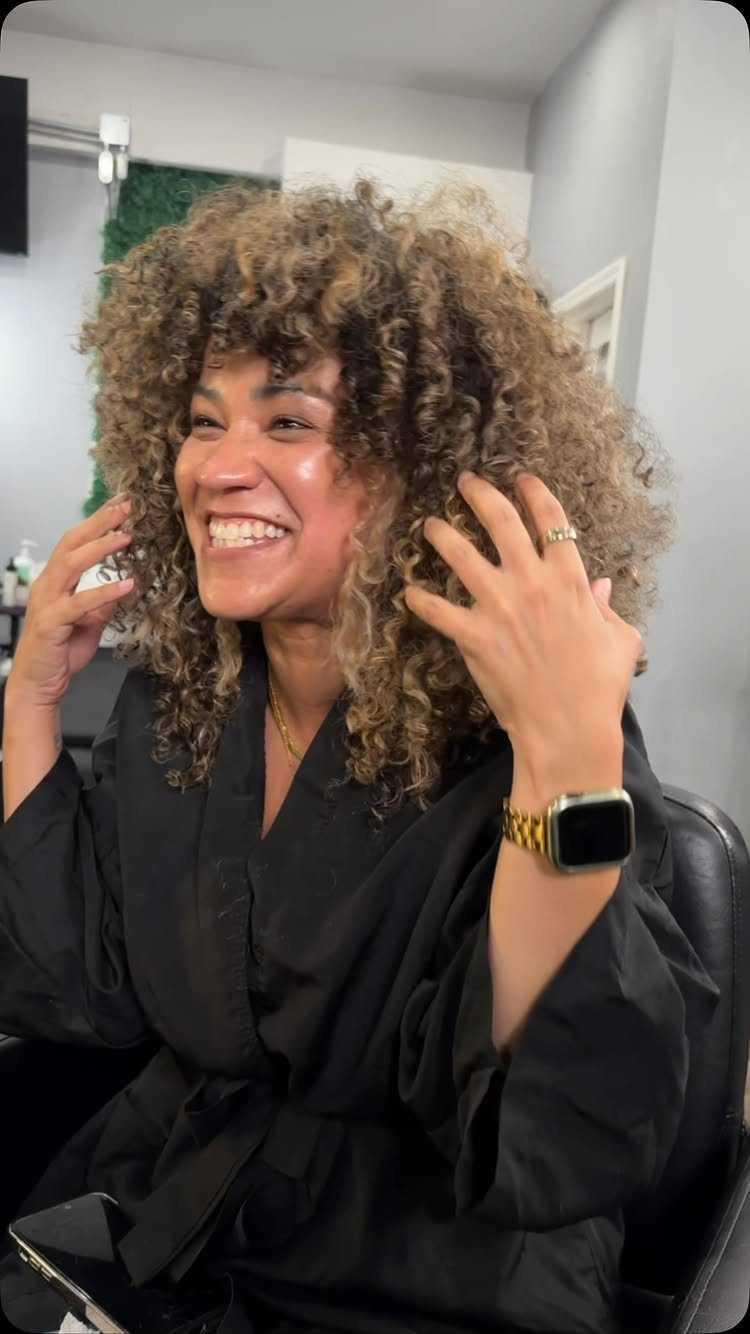
Balayage on curls means the colorist hand-paints lighter tones through the mid-lengths and ends, blending gradually up from the roots. The result is softer than foiled highlights, with no harsh lines as it grows out.
Curls actually show balayage better than straight hair does.
The dimension wraps around each curl, so you get depth and brightness without every strand needing color. Caramel, honey, or lighter brown tones are common choices on a darker base.
The grow-out is forgiving because the roots stay close to your natural color from the start.
4. Face-Framing Highlights
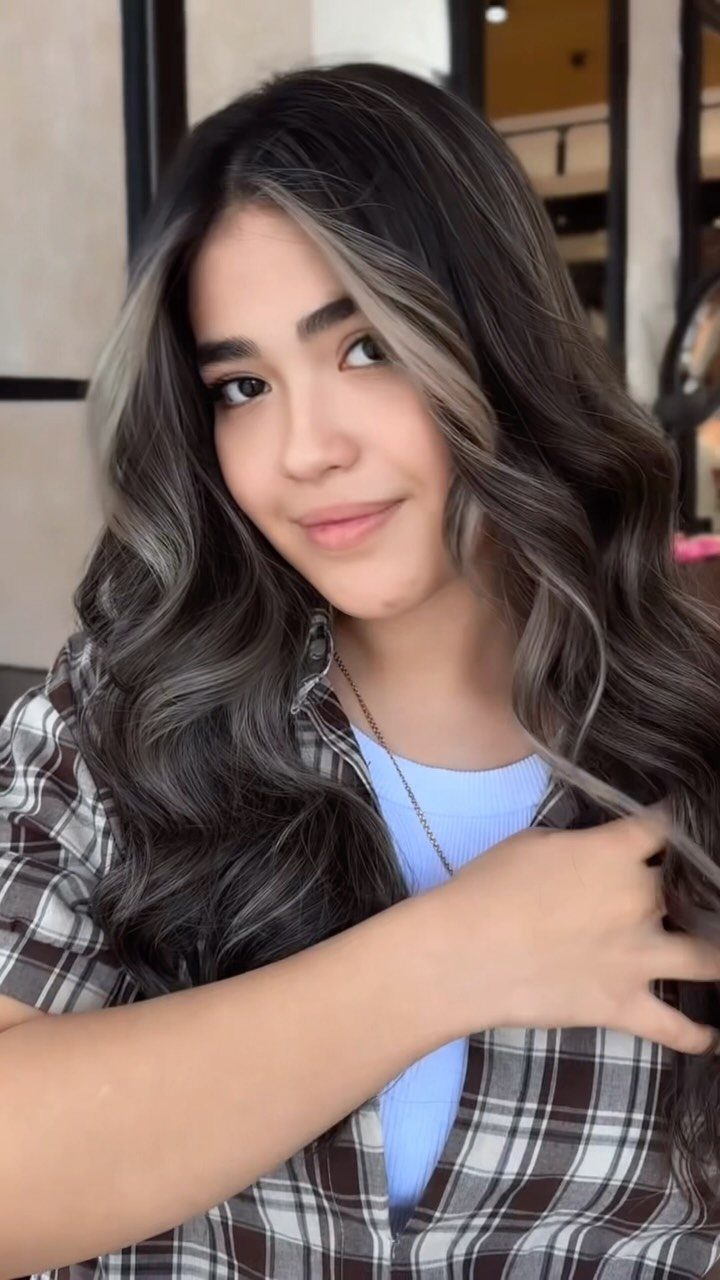
Face-framing highlights place lighter color only around the hairline, leaving the rest of the head closer to the natural shade.
The placement draws attention to your features and brightens your face without the time or upkeep of a full head of highlights.
On curly hair, this means the colorist will focus on the curls that fall near your cheeks, temples, and jawline.
The contrast between the lighter front and darker back gives dimension when hair is worn down, and it still reads when you pull curls back.
This is a good entry point if you’re new to color or want something lower-commitment.
5. Vibrant Red
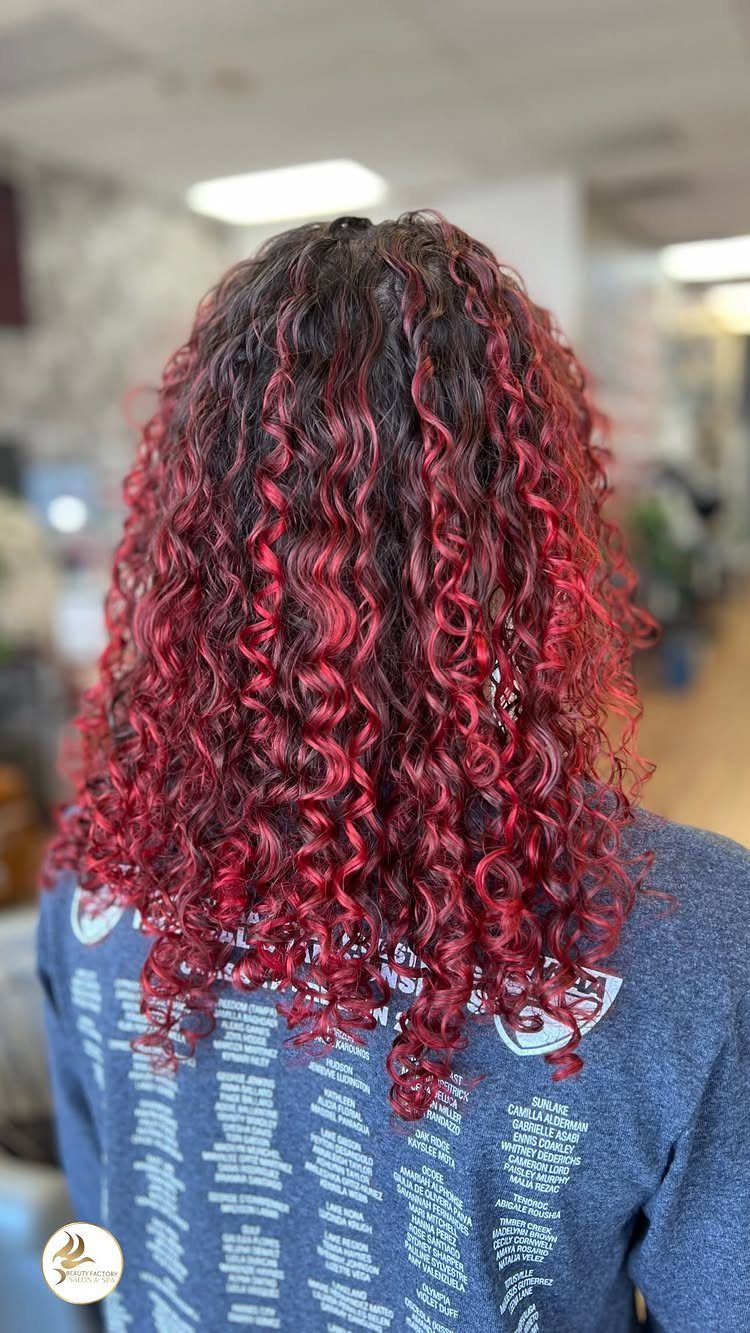
Vivid red highlights bring bold, saturated color into dark curls, creating contrast that reads clearly against a black or deep brown base.
The red can be a true fire-engine shade or lean more toward cherry, depending on the tone you choose.
Reds fade faster than other colors because the pigment molecules wash out more easily. Red fades faster than most colors, so a color-safe shampoo helps slow it down between salon appointments.
On curly hair, the red catches light as the curls move, so even a few strategically placed highlights make a strong statement without needing full coverage.
6. Reddish-Brown Highlights
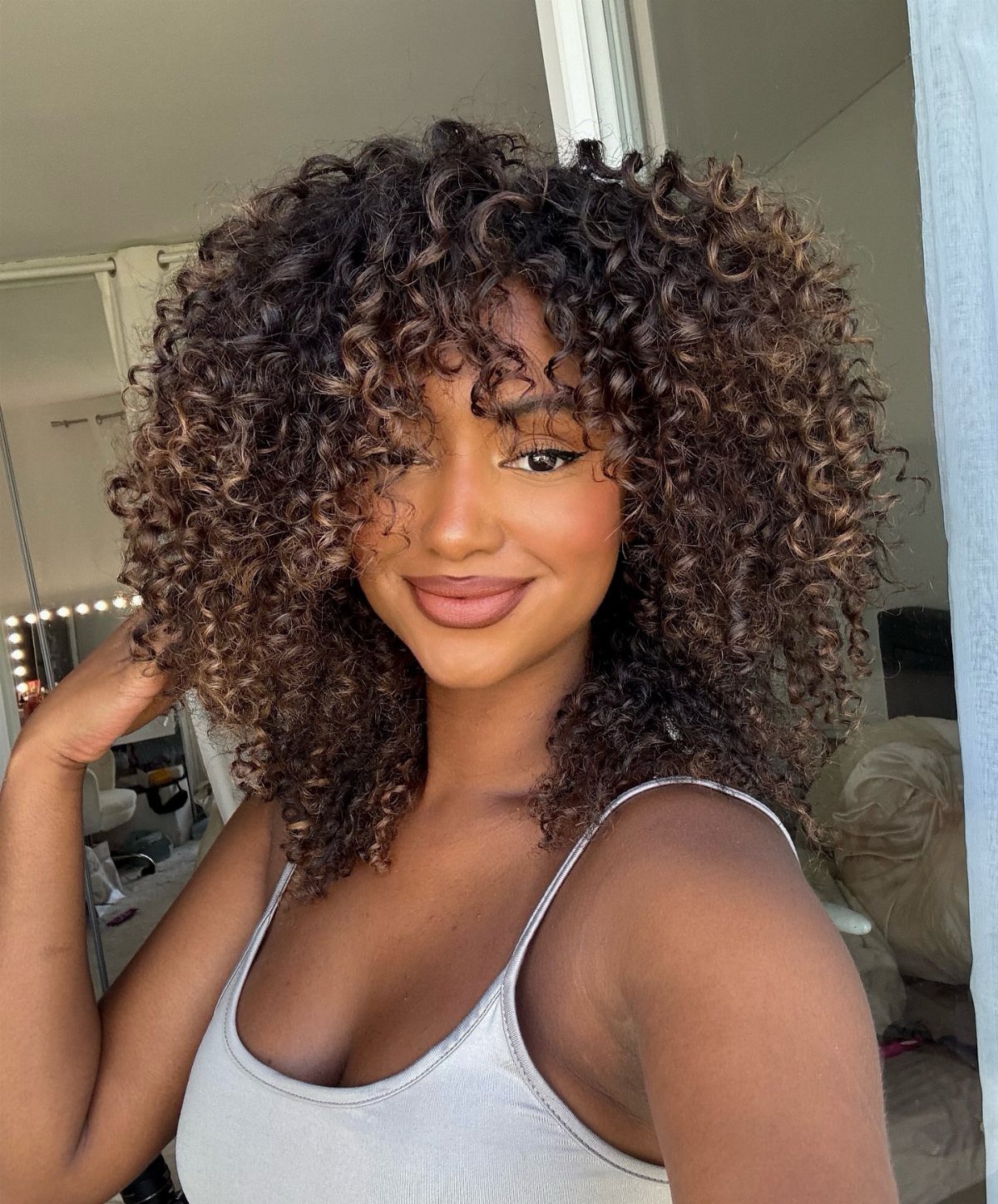
Reddish-brown highlights add warmth and subtle definition to brown curls without a dramatic color shift. The red undertones stay close to the natural base, so the overall look is cohesive rather than high-contrast.
This works well if you want dimension but aren’t ready for blonde or a vivid color. The red reads as a warm glow rather than an obvious highlight, and it blends easily as it grows out.
Because the color is already close to your base, upkeep is low.
A gloss every few months keeps the red from fading to orange, but the grow-out is soft enough that you can stretch appointments longer than you would with ash or blonde highlights.
7. Milk Chocolate Brown
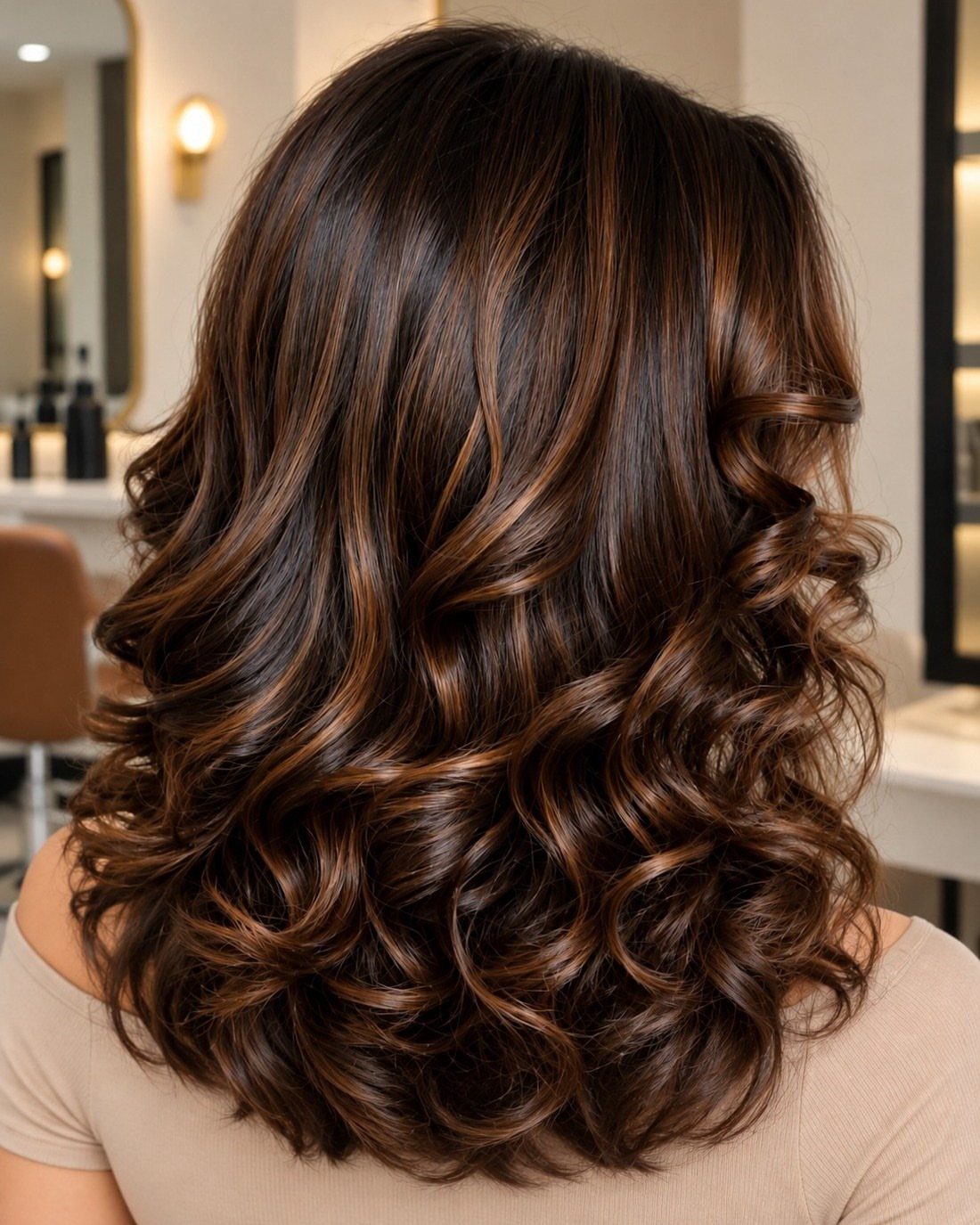
Milk chocolate highlights lift dark curls with a soft brown tone that stays close to the base. The contrast is subtle enough that the overall look reads as dimensional rather than obviously colored.
This suits people who want depth and movement without committing to blonde or red. The lighter brown catches light between curls, brightening the whole head without a sharp shift in tone.
8. Silver Highlights
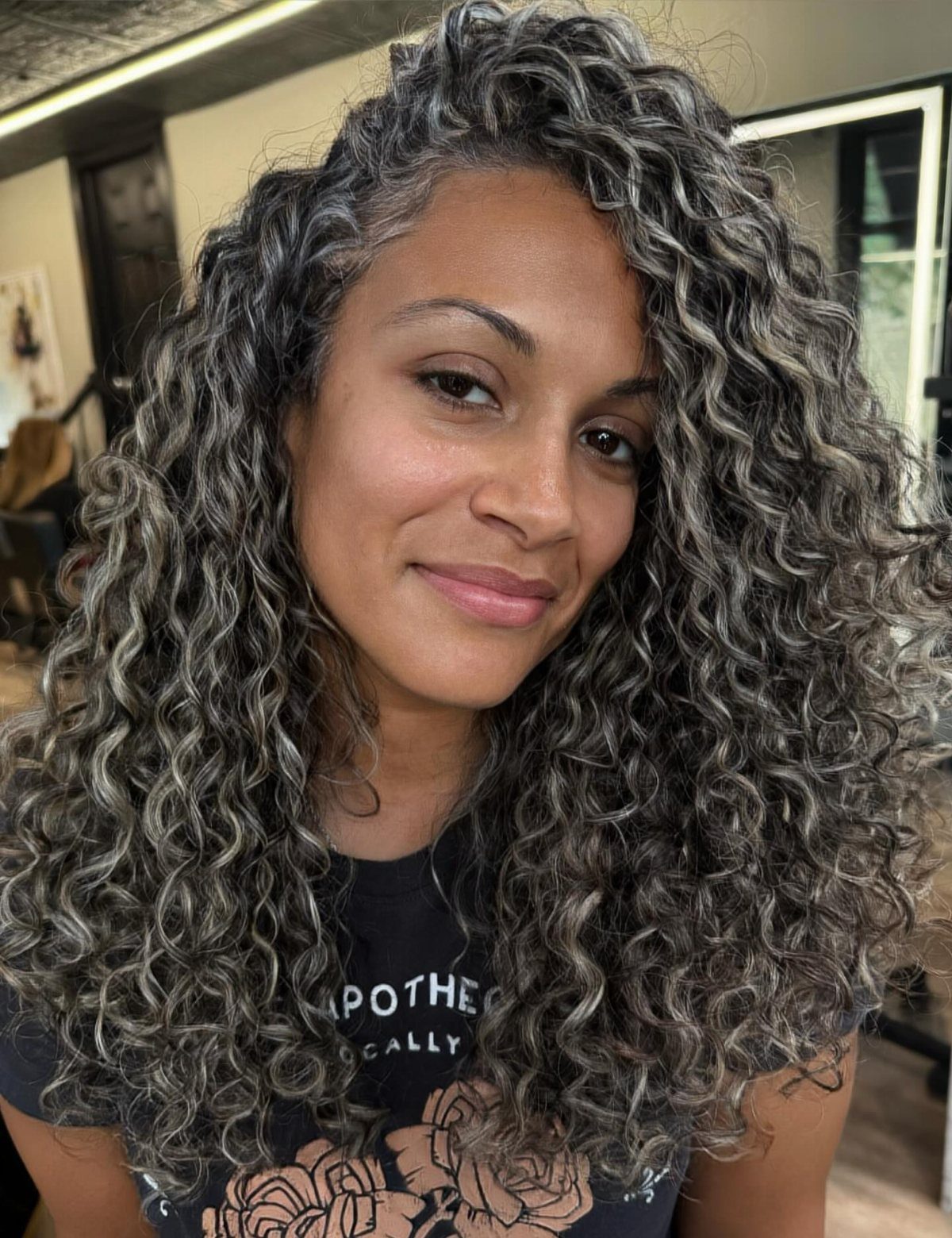
Silver highlights bring a gray-toned color into dark curls, creating a cool, editorial contrast that reads modern rather than natural.
The silver works best on a black or very dark brown base where the contrast is sharp enough to show clearly.
The look is high-maintenance. Silver fades to brassy yellow without regular toning, so plan for a purple shampoo between salon visits and a gloss when the warmth starts creeping back.
If you have warm undertones, the cool gray can look harsh. Test it with a few face-framing pieces before committing to full coverage.
9. Babylights Throughout
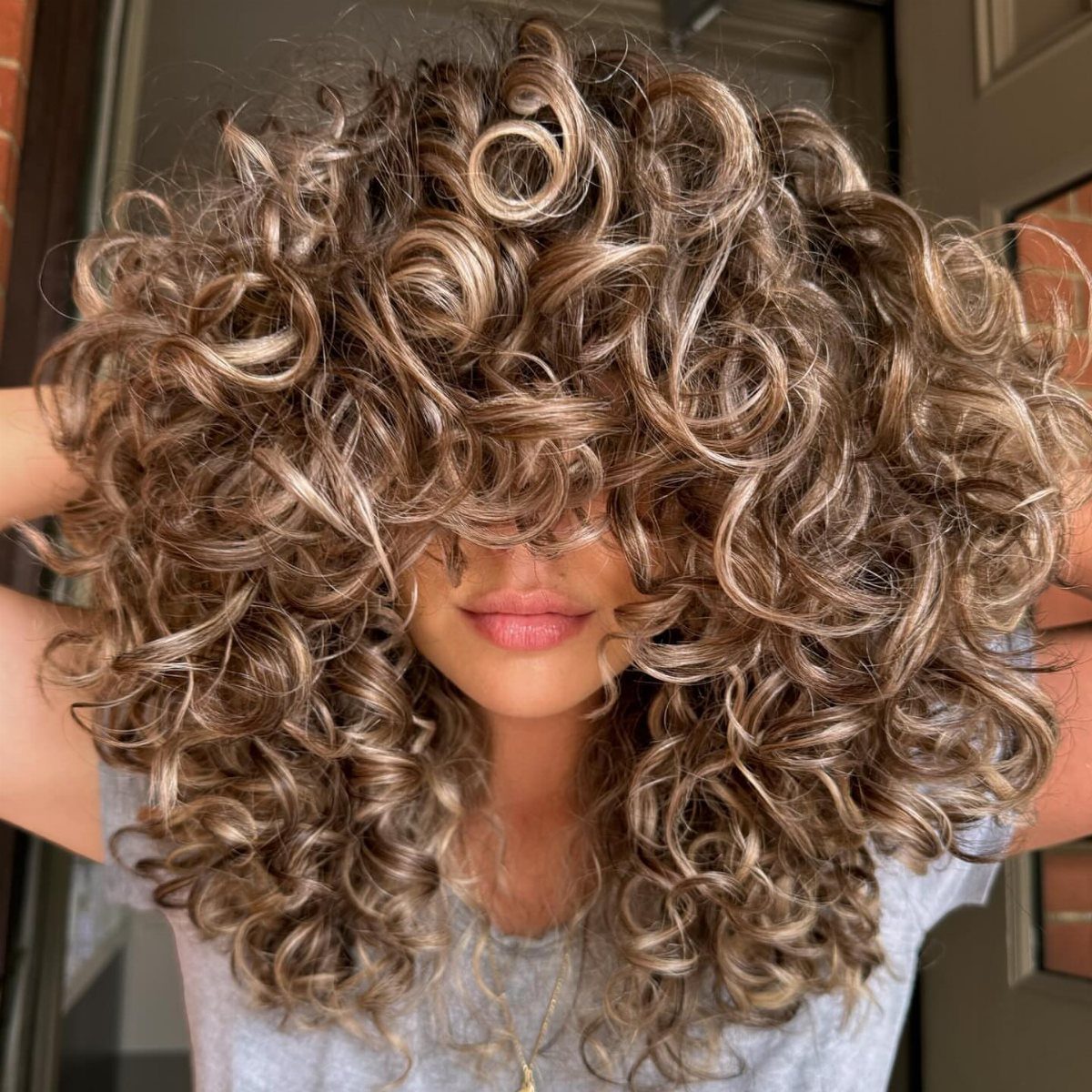
Babylights are extremely fine highlights woven close together across the head, creating soft all-over brightness without obvious streaks. The individual pieces are thin enough that they blend into the base color rather than standing out as separate ribbons.
On curly hair, babylights add dimension that shows as the curls catch light, but the effect is gentle. The grow-out is almost imperceptible because the highlights are so fine and scattered.
This takes longer at the salon than standard highlights because the sections are smaller and placed more closely. Expect to sit for 2 to 3 hours.
10. Peekaboo Copper Highlights
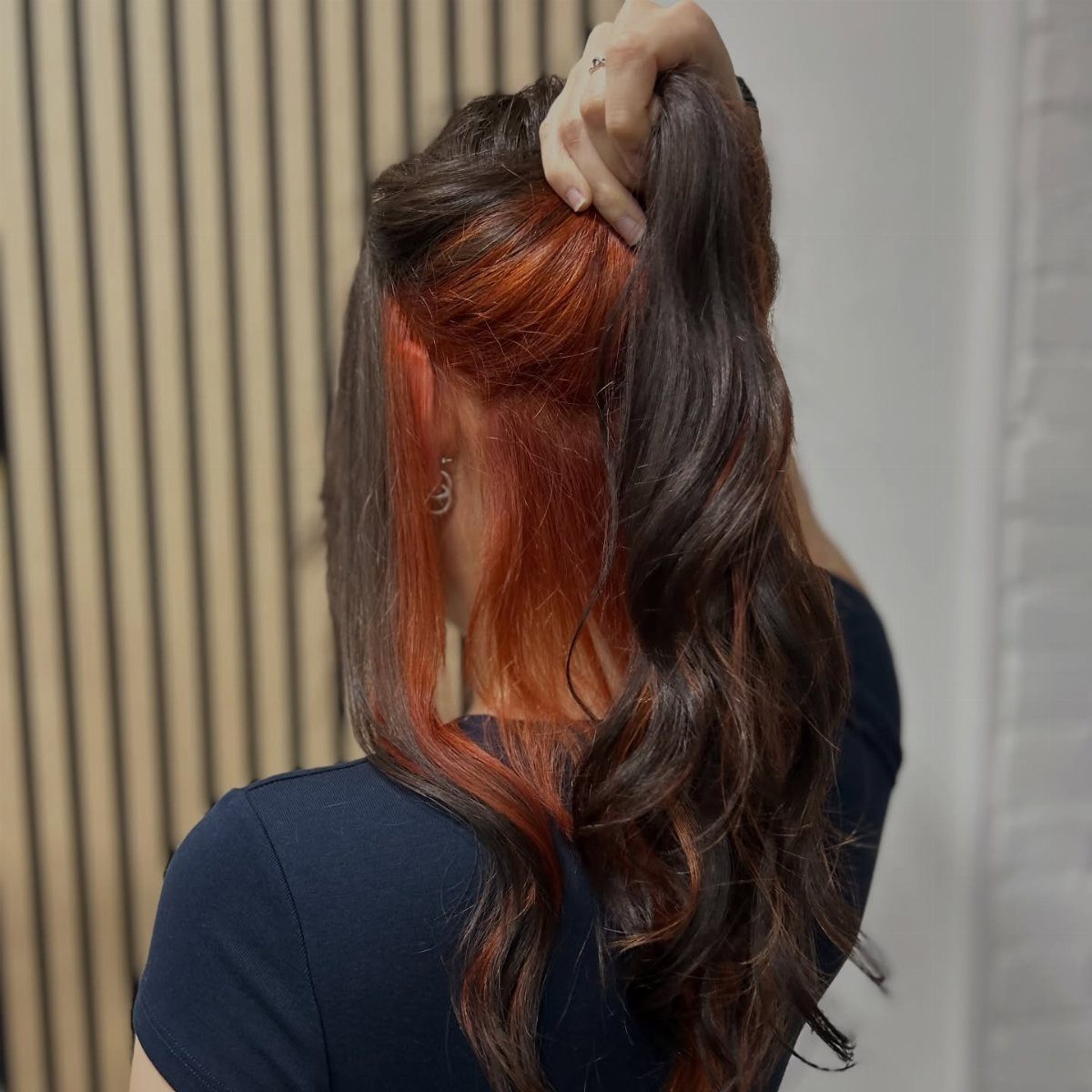
Peekaboo highlights sit underneath the top layer of curls, hidden until you move your hair or lift it back. The copper shade stays bold because it is only visible in flashes, so you get color impact without full commitment.
This is a good option if your workplace or routine limits visible color. The copper is there when you want it and disappears when you wear your hair down.
Copper fades to orange faster than other tones, so a color-depositing conditioner between appointments keeps the vibrancy from slipping. The hidden placement means you can let it fade longer without it looking grown out.
11. Sunkissed Ribbon Highlights
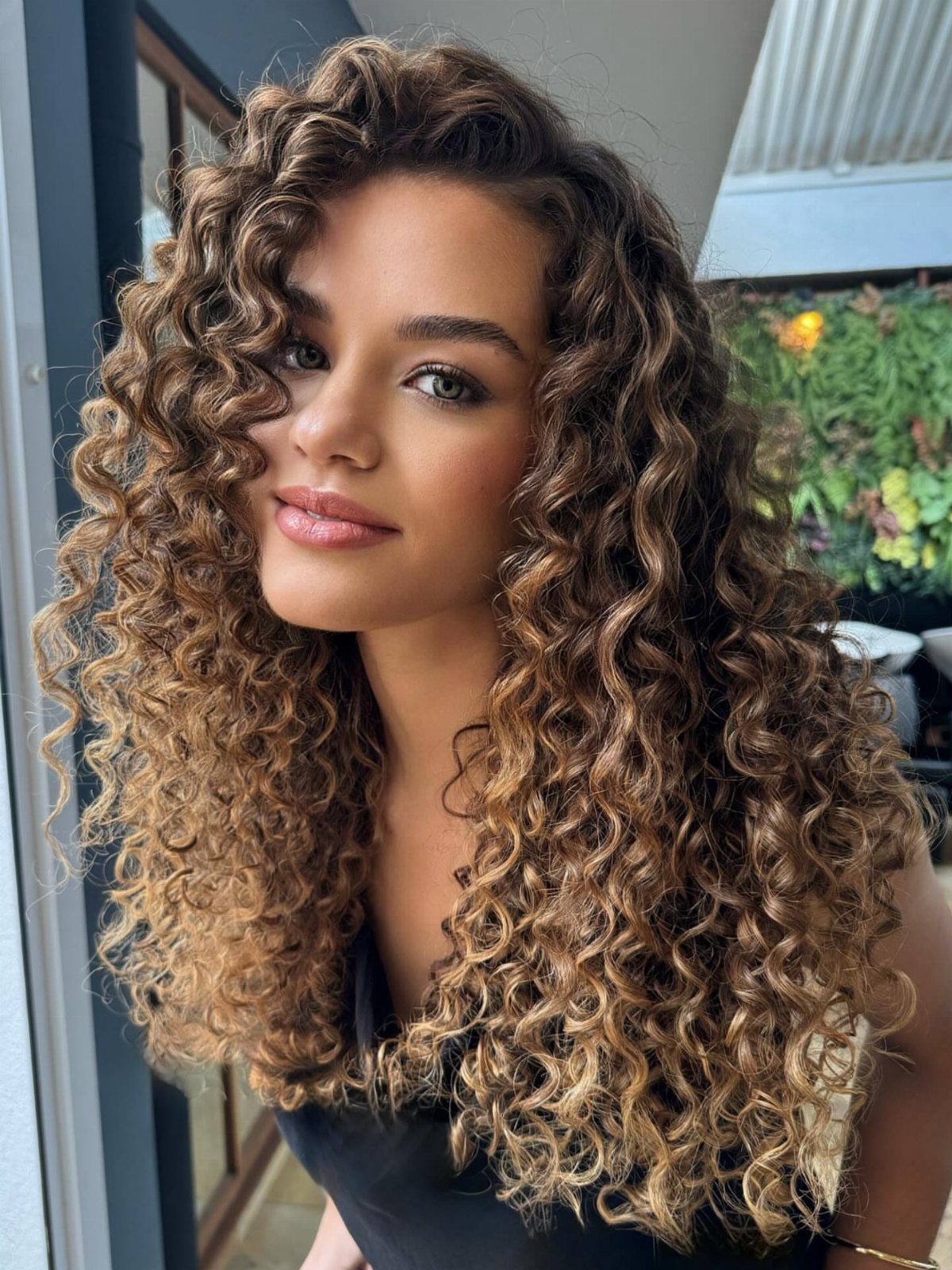
Ribbon highlights are soft, wide pieces of blonde painted through the curls in a way that mimics natural sun exposure. The ribbons are broader than babylights but still blended, so the result reads as dimensional rather than striped.
The blonde is kept warm and golden to avoid a stark contrast with the brown base. On curly hair, the ribbons wrap around the curl pattern, giving brightness that shows from every angle.
If you want a sunkissed look without bleaching your whole head, this is a lower-maintenance option.
12. Caramel Woven Highlights
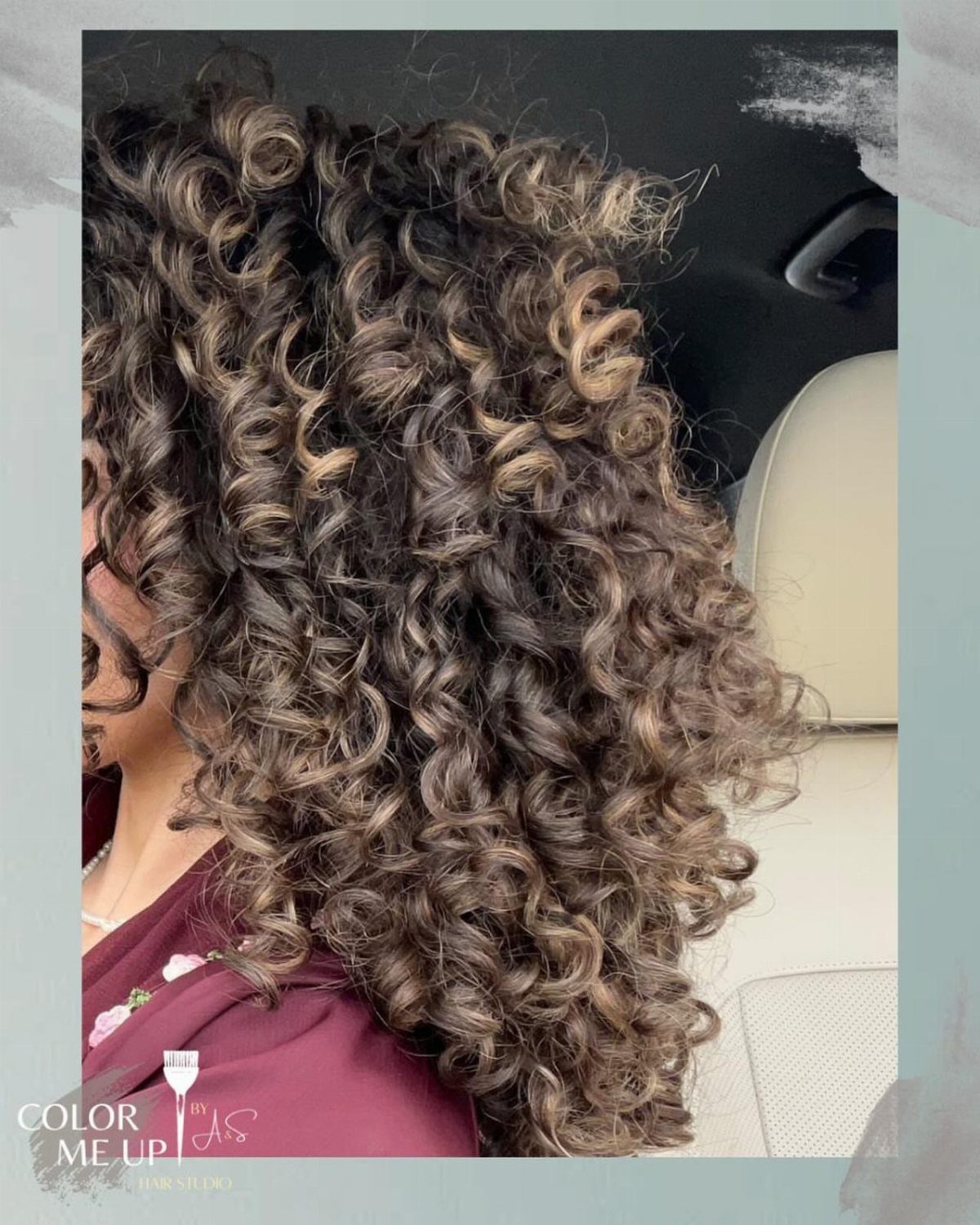
Caramel highlights bring a warm, toffee-toned blonde into brown curls, adding richness without going fully blonde. The color is woven through in fine pieces, so the warmth blends with the natural base rather than sitting on top of it.
This works especially well on warm and neutral skin tones, where the golden undertones complement rather than clash. The caramel stays close enough to the base that the grow-out is gradual and forgiving.
13. Money Piece on Coily Hair
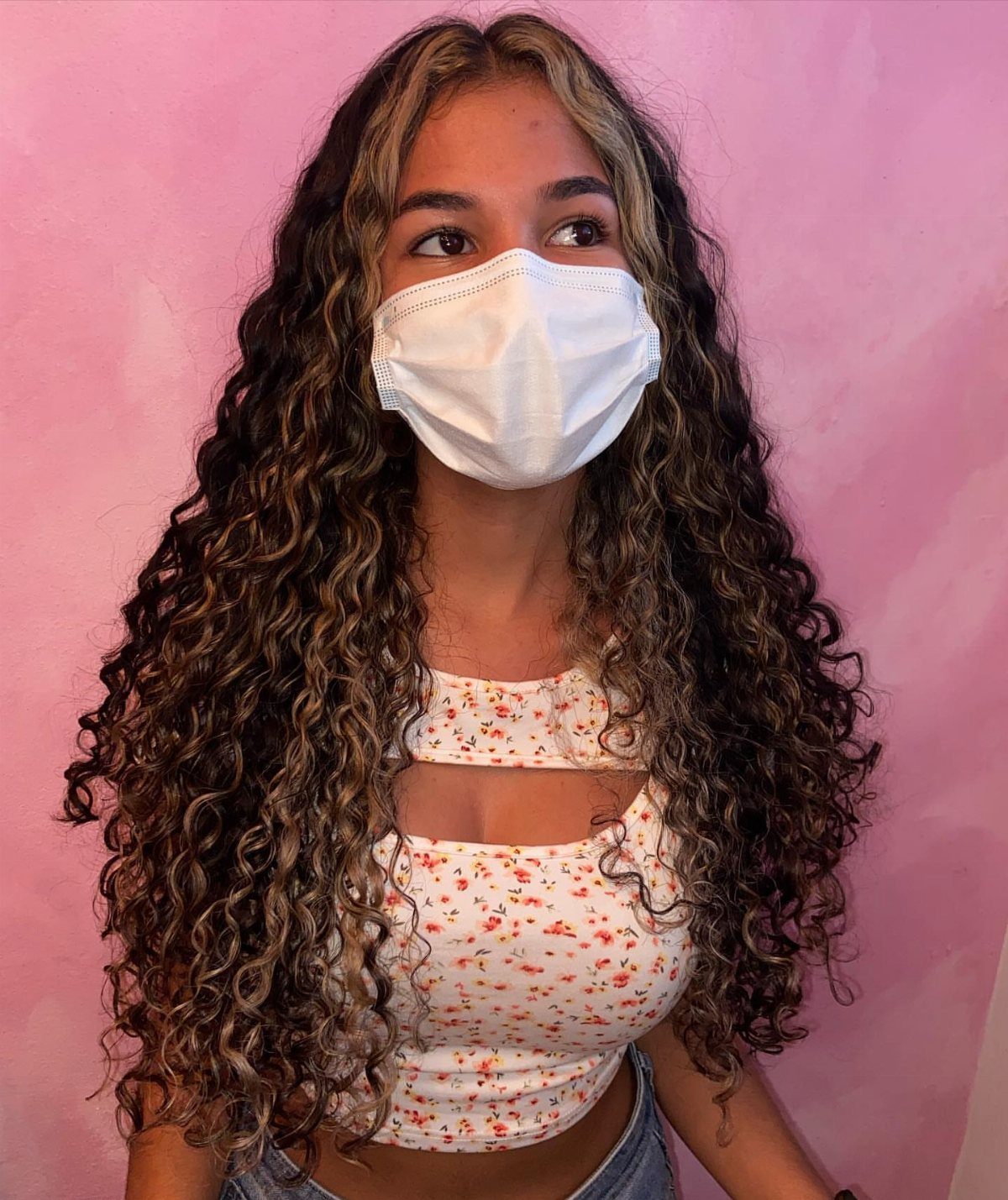
Money piece highlights place bright blonde around the front hairline and down toward the face, creating a frame that stays visible even when coily hair shrinks up.
The concentrated placement near the crown and temples means the color shows when hair is worn natural, pulled back, or in an updo.
On tighter coil patterns, scattered highlights can disappear into the volume. The money piece solves this by keeping the color where it is always seen.
The upkeep is easier than full highlights because you are only retouching the front sections, but blonde on dark coily hair still needs regular toning to prevent brassiness.
14. Bronde Dimensional Highlights
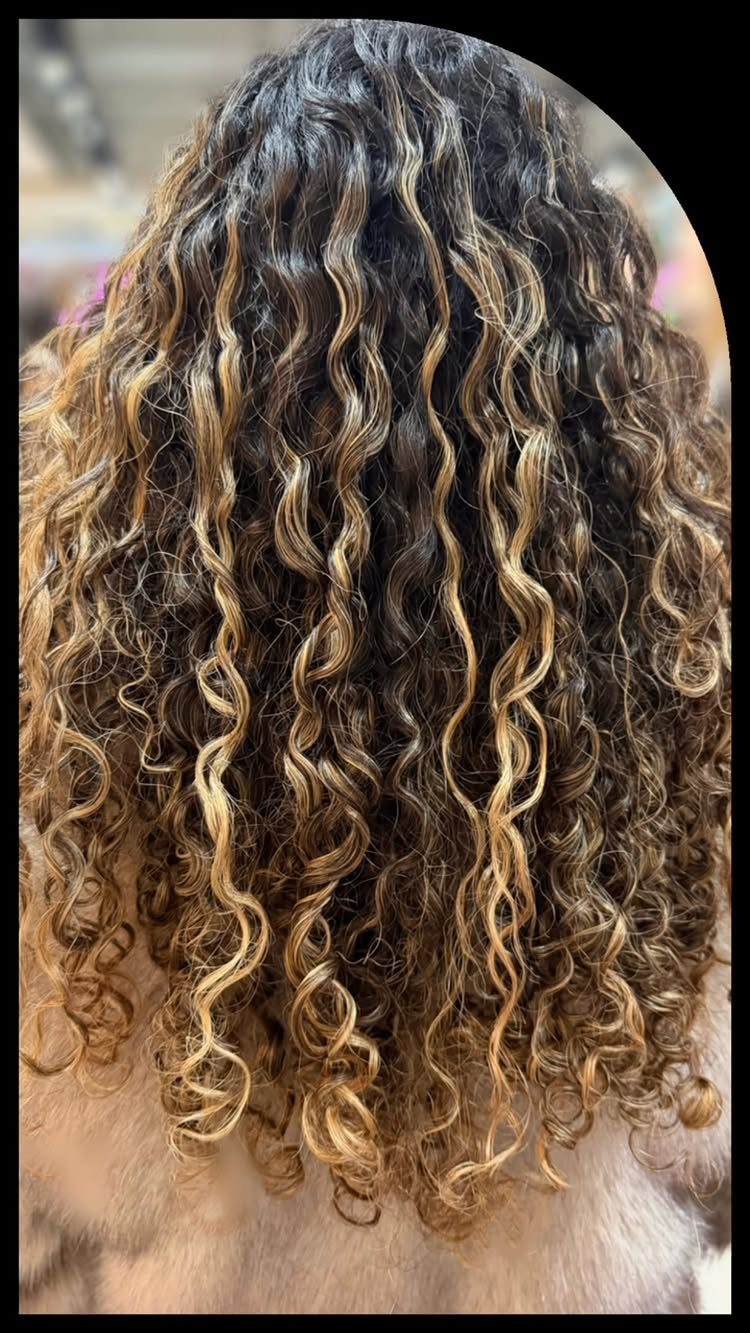
Bronde highlights blend brown and blonde tones together, so the color reads as one soft, multidimensional shade rather than distinct streaks.
The brown keeps depth while the blonde adds brightness, and the two blend so gradually that there is no obvious line between them.
The strands catch light differently as the curl turns, so you see depth no matter which way you move. The grow-out is gentle because the color is already blended rather than sharply contrasted.
If you are not ready to pick a side, this sits right in the middle and lets you have both.
15. Blonde Highlights on Curls
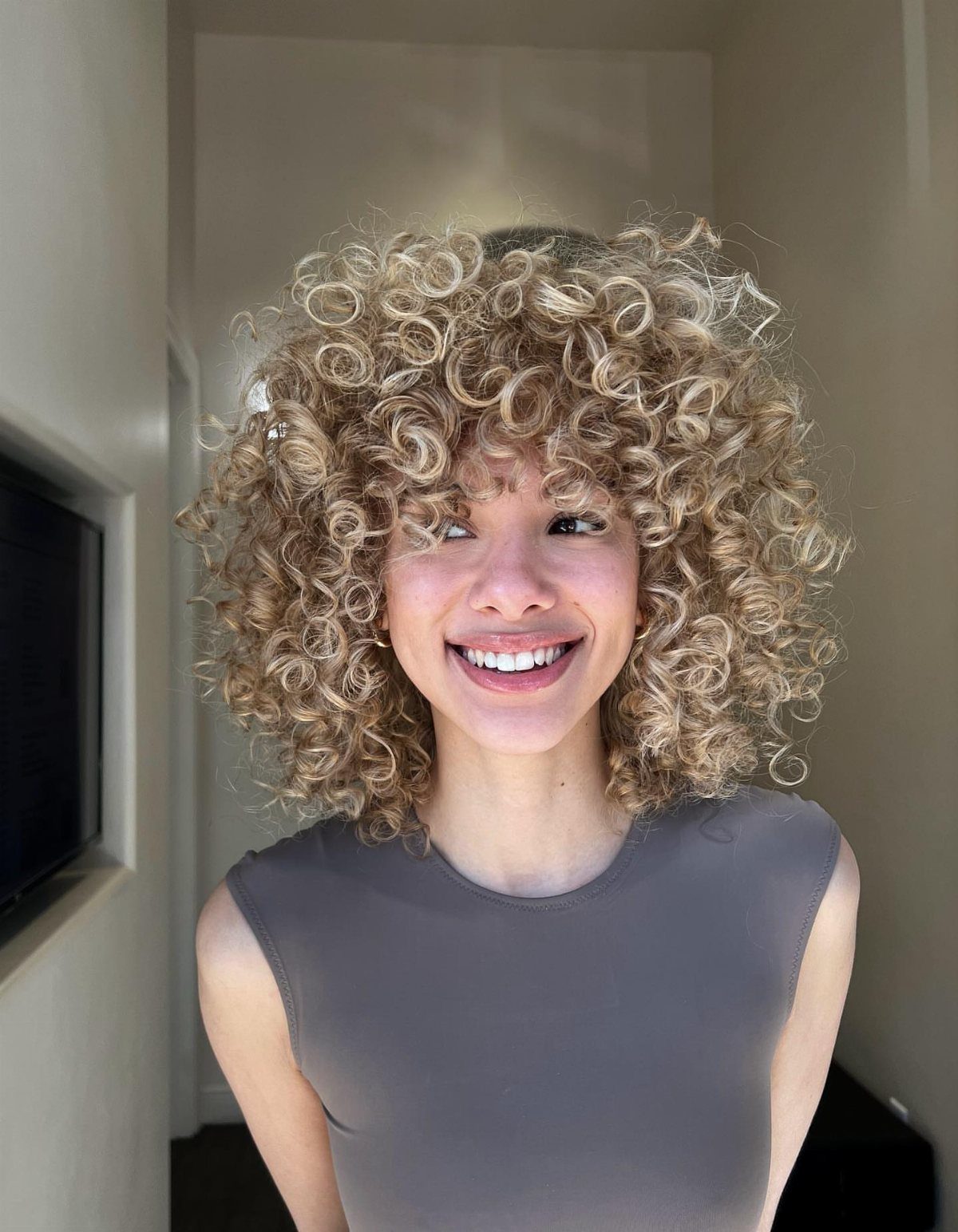
Blonde highlights covering most of the curl length create a bold, voluminous look, especially when the roots stay dark.
The contrast between the darker base and the light blonde gives definition at the scalp, so the curls read as full and lifted rather than flat.
Tight curls take well to this because the volume shows the dimension clearly. The blonde brightens the overall look without needing to bleach the roots, which keeps the scalp healthier and the upkeep more manageable.
Plan for regular toning to keep the blonde from turning yellow, and a deep conditioner after every wash.
16. Blonde and White Highlights
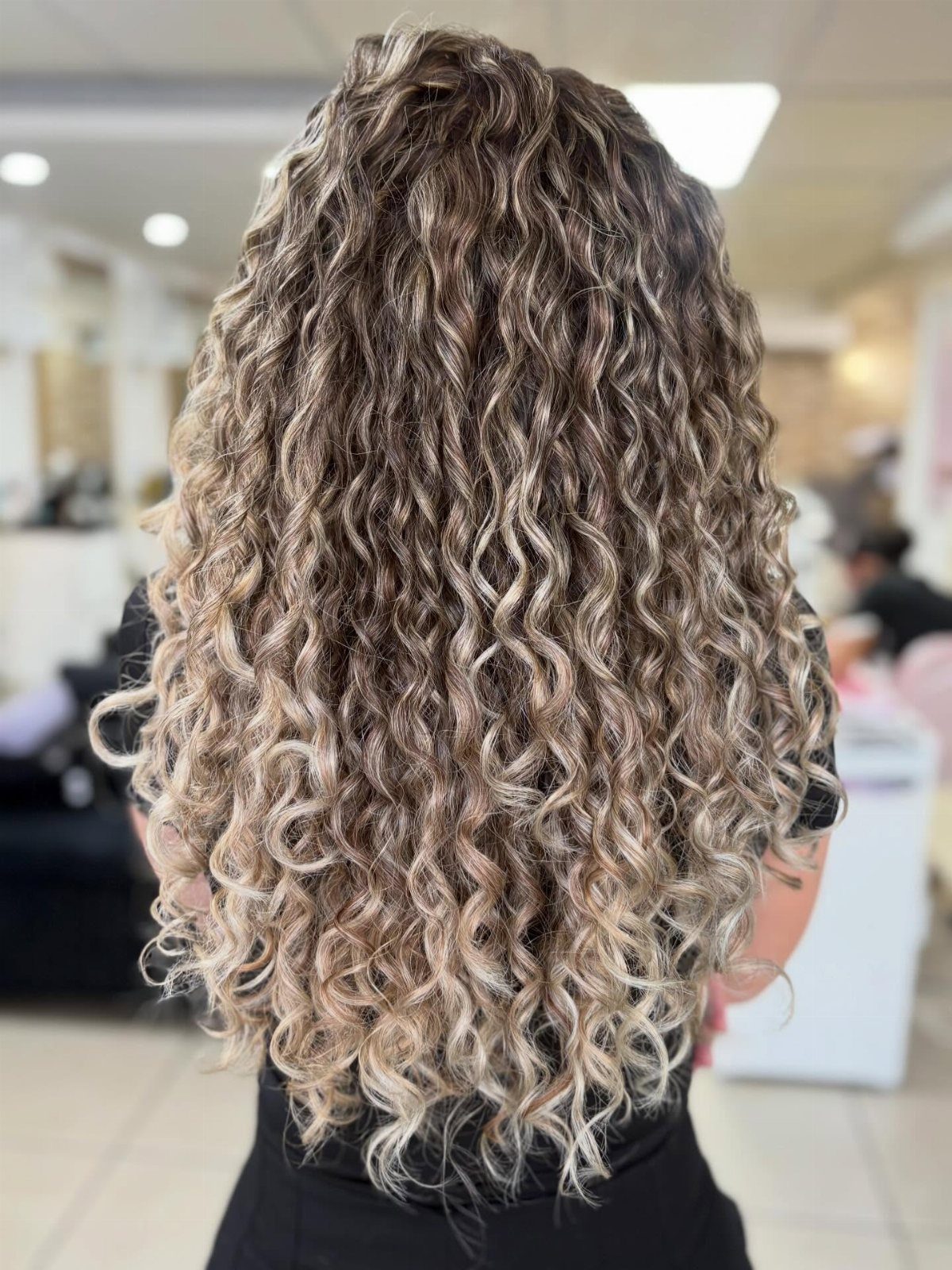
Combining light blonde and near-white highlights with a dark brown base creates high contrast that reads clearly on long, tight curls. The placement is scattered throughout rather than concentrated in one area, so the brightness shows from every angle.
This is a higher-maintenance option because the lightest pieces need frequent toning to stay cool and bright. Bleaching curly hair to this level also requires careful conditioning to keep the curl pattern intact.
If you want maximum contrast and are prepared for the upkeep, this delivers impact that lasts through shrinkage and movement.
Choosing a Curly-hair Colorist
Ask whether the colorist works with curly hair regularly and how they place color around the curl pattern.
Once the hair curls up, light hits from every direction and the coils stack on themselves, so placement that works on straight hair often needs rethinking.
If you air-dry, diffuse, or blow out regularly, that affects where the colorist should put the highlights so the color shows in the style you actually wear.
A freehand approach gives the colorist room to tailor placement to your pattern rather than following a fixed grid.
Look for someone who can explain how they adapt the technique to curls, not just someone who says they have done it before.
“Unlike straight hair, where you can get lots of shine, the way that the coils bend means they cannot reflect light, so you need to add this into the hair when colouring.”
Color Damage and Hair Health
Any lightening process puts curl spring at risk, especially if you’re going several shades lighter or the formula leans heavily on bleach.
The farther you go from your natural color, the more potential for the curl pattern to loosen or lose definition.
Techniques that lift less of the hair, or lift it more gently, tend to protect the curl better.
If your colorist lightens in sessions rather than all at once, that spreads the chemical load and gives your hair time to recover between visits.
Start with healthy hair.
If your curls are already dry or damaged, address that first. After color, consistent moisture and protein care helps maintain curl definition and keeps the hair from turning brittle.
Preparing for an Appointment
Wash it the night before and let it dry naturally so your stylist sees what your curls actually do. Skip styling products that day because heavy products can block the color from penetrating the hair properly.
Some colorists prefer you to arrive with cleansed, conditioned curls a couple of days after washing, especially for techniques that involve painting color onto dry hair.
Ask when you book whether they want you to come in with freshly washed hair or a day or two past your last wash.
If you usually twist or braid your hair, ask whether the colorist wants you to arrive with it loose or in your usual style so they can see how the curls fall naturally.
Frequently Asked Questions
Do highlights look good on curly hair?
Yes.
Curls coil and catch light from multiple angles, so highlights create depth and dimension that show as the hair moves. The curl pattern wraps around each lightened piece, giving brightness that reads clearly from every direction.
Can highlights damage my curl pattern?
Any chemical lightener can alter how your curls behave. Lower-lift methods like balayage or foiling a few pieces usually leave the coil intact better than heavy bleach work.
How do you care for highlighted curly hair?
Go sulfate-free and add a rich conditioner, lightened hair opens up and dries out faster.
A weekly deep conditioner or mask keeps the curl definition intact, and toning every few weeks prevents warm tones from creeping in on ash or silver shades.
Which highlight technique requires the least maintenance?
Techniques that leave roots darker and place color through mid-lengths and ends need the fewest touch-ups. Balayage, face-framing highlights, and babylights grow out softly because the color blends gradually rather than creating a harsh line at the scalp.
How often do I need to refresh my highlights?
Face-framing pieces and balayage can stretch several months between visits because the grow-out is soft. Bright or cool tones like platinum or ash need a toner every 6 to 10 weeks or they shift yellow.
What is clouding?
Clouding is a technique where the colorist scrunches dye onto curls by hand rather than using foils or a brush.
Who is clouding best for?
Clouding suits people who wear their hair curly all the time, particularly those with thick, dense curls. Scrunching the color in means it lands where the curl naturally lifts and folds, so placement follows the texture instead of fighting it.