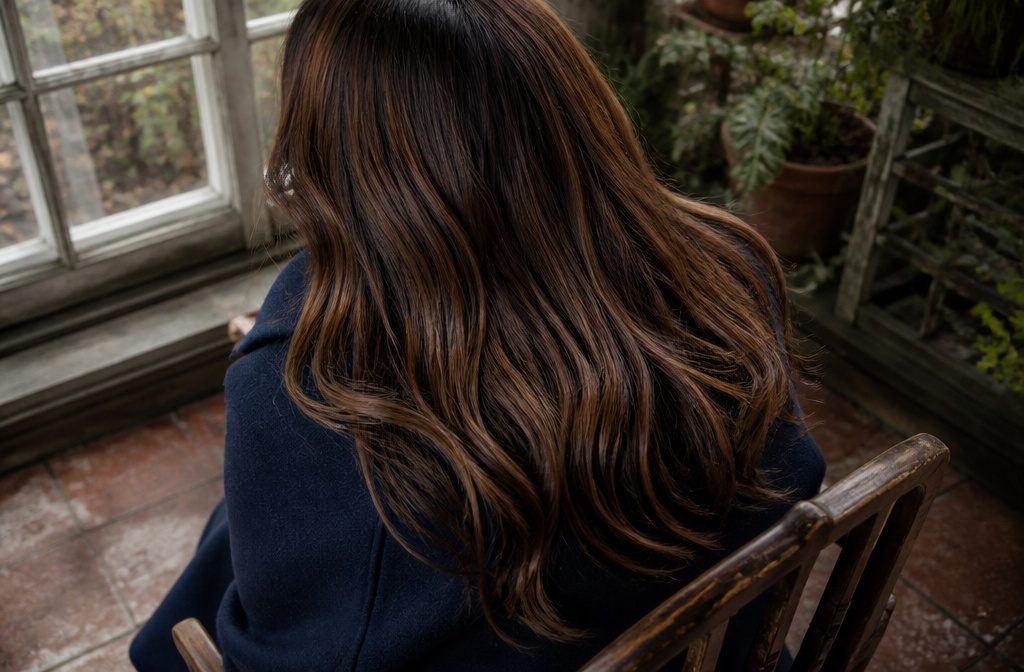
Lowlights and highlights together build dimension brown hair can’t get from one color alone, but the gap between your base and the accent tones decides whether the result reads subtle or bold.
Babylights mimic natural sun lift with fine strands just two shades lighter, while chunky platinum ribbons against deep brown create contrast people notice first. Shadow roots let you stretch salon visits four to six months without looking overdue.
1. Ash or Cool Blonde with Brown
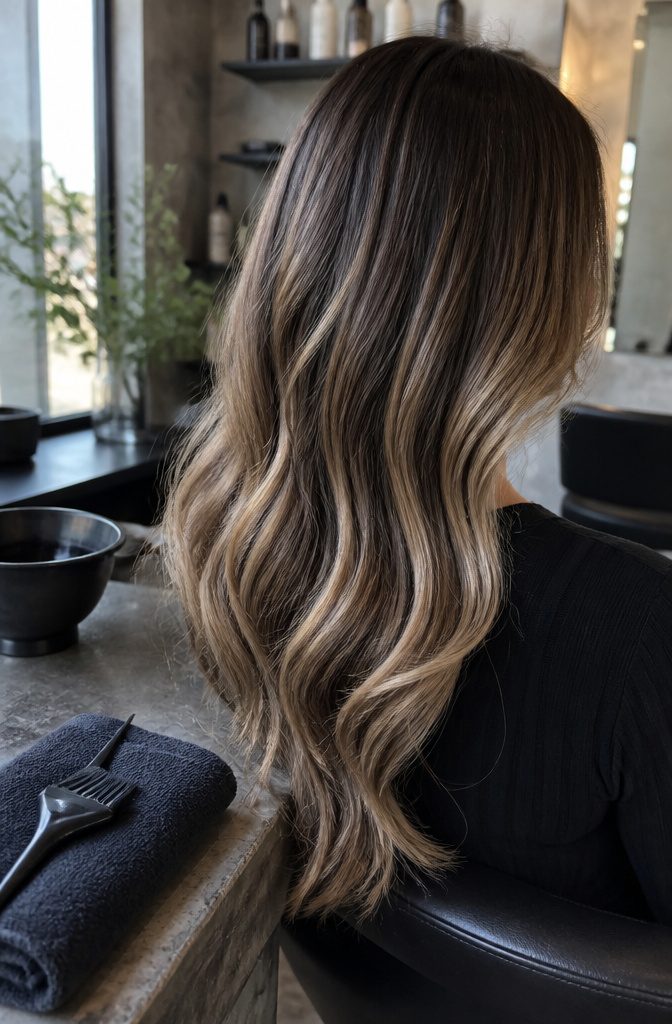
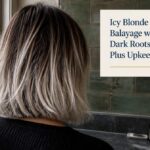
Ash blonde highlights sit somewhere between full blonde and your natural brown, giving you lift without the commitment or the maintenance load of bleach. The color reads as muted and cooler, which keeps the contrast soft rather than brassy.
Ashen tones work especially well if your base is already on the cooler side or if your skin has pink or neutral undertones rather than warm golden ones.
The balayage version stays subtle.
You get dimension without obvious streaks, and the color feels like it belongs rather than announcing itself. If you want more presence, ask for creamy ash blonde highlights painted through the mid-lengths and ends.
That gives you a step up in brightness while the cooler tone keeps the overall effect natural. Sandy ash blends are another route if you want even softer contrast.
One advantage here is that ash fades more gracefully than warm gold. You skip the orange phase that warmer highlights can hit as they lighten over time.
2. Honey, Golden, or Beige Tones
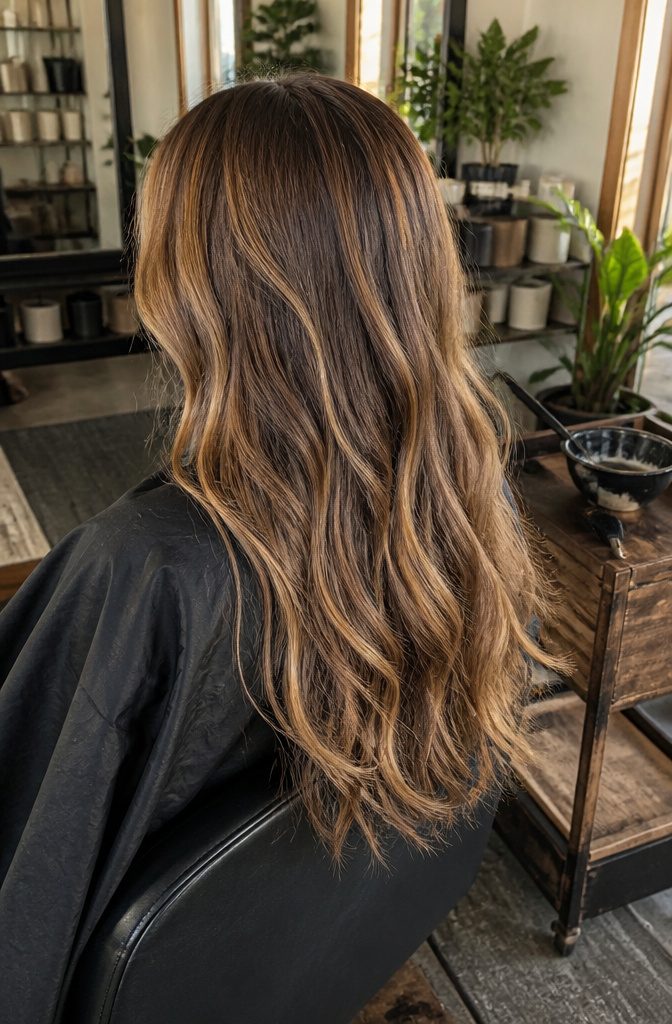
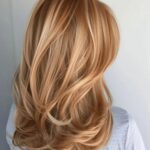
Honey, golden and beige highlights warm up brown hair without the commitment of going fully blonde. The golden side reads more yellow-toned, honey lands somewhere between gold and amber, and beige brings in a softer, almost sandy quality.
All three create that sun-kissed effect people ask for by name, but they behave differently depending on your starting brown.
Warmer skin tones handle golden and honey shades best, since the yellow base complements rather than fights what’s already there. If you tend toward gold jewelry and earth-toned makeup looks flattering, those tones will sit naturally in your hair.
Beige skews slightly cooler and works when your brown already has mild red undertones, balancing the warmth without tipping into brassy territory.
The technique matters. Balayage painted through the mid-lengths and ends gives the most natural lift, while stand-out streaks closer to the part add contrast if you want something bolder.
A center part shows off the lighter tones around your face, which is where they do the most brightening work.
3. Caramel or Toffee Tones
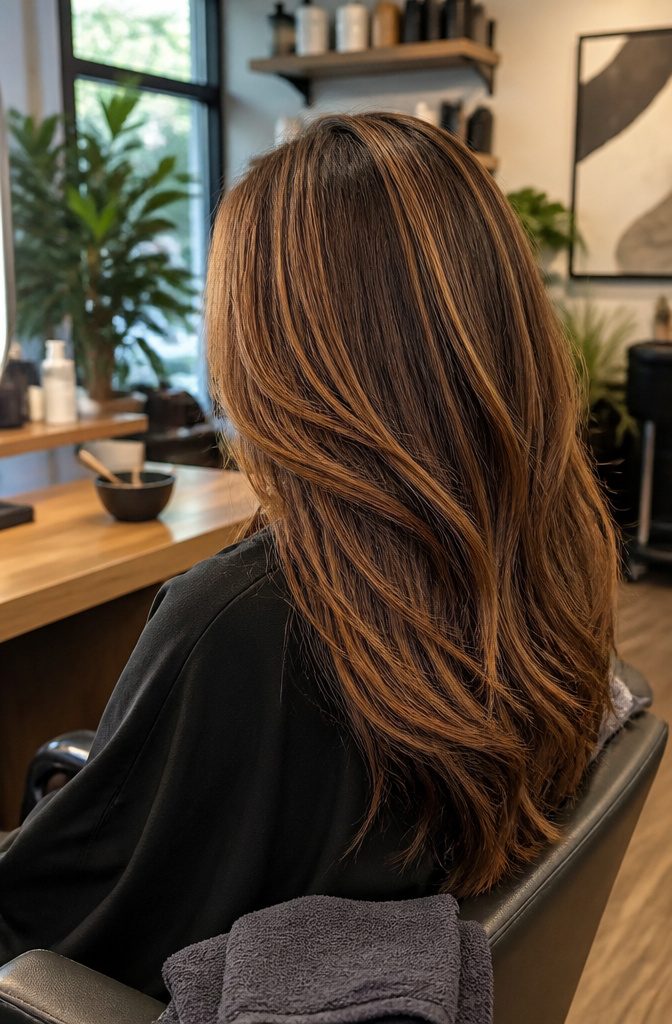
Caramel or toffee tones sit deeper than honey, which reads bright and sunlit.
These shades pull more brown into the mix, so the warmth feels grounded rather than shiny. Caramel leans slightly cooler with a hint of amber, while toffee brings more red and copper through.
Both add dimension without pushing far from your base, which keeps the overall look subtle enough that regrowth blends softly as it comes in.
I find toffee especially good on deeper brown bases where honey would jump out too much, and caramel works beautifully when you want warmth that still feels polished under office lighting.
Either one lifts the hair without making it look like you went for blonde and stopped halfway.
4. Bronde Blends and Color Melts
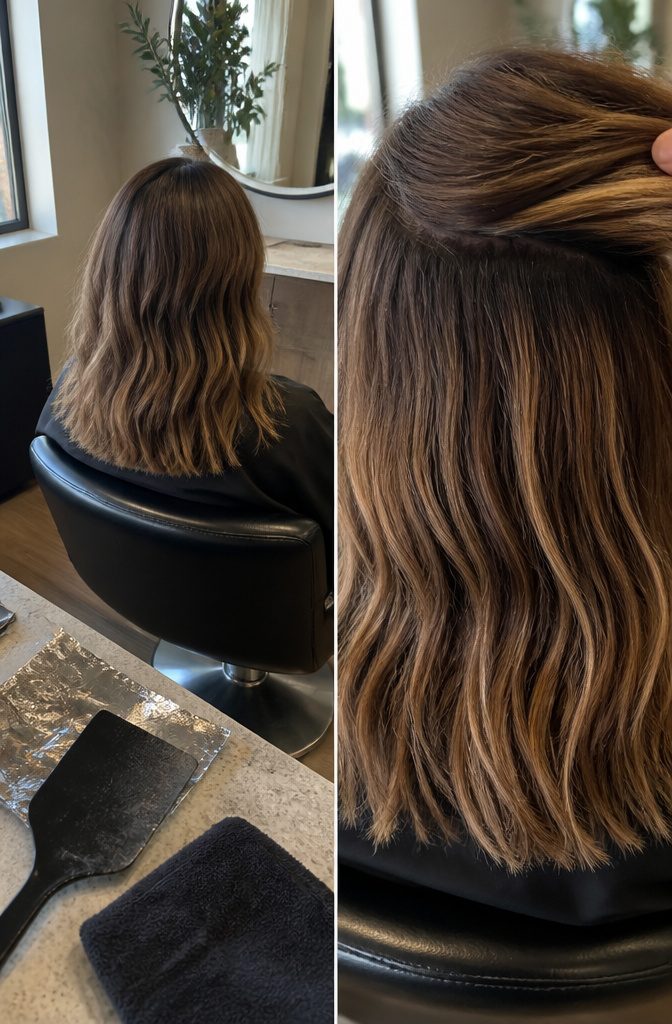
Bronde sits somewhere between brown and blonde, and the way to get there is by weaving highlights and lowlights together rather than picking one or the other.
A colorist will place lighter pieces through the mid-lengths and ends while threading deeper tones closer to the root or underneath.
The two colors blur into each other instead of sitting in separate bands, so you end up with dimension that shifts depending on how the light hits it or how you part your hair.
Color melts take that blending further. The stylist feathers the tones so there’s no hard line where one stops and the next begins.
It reads as one cohesive shade from a distance, but up close you can see the range. The result feels richer than flat color and softer than stark contrast, and it grows out without an obvious demarcation line.
5. Balayage
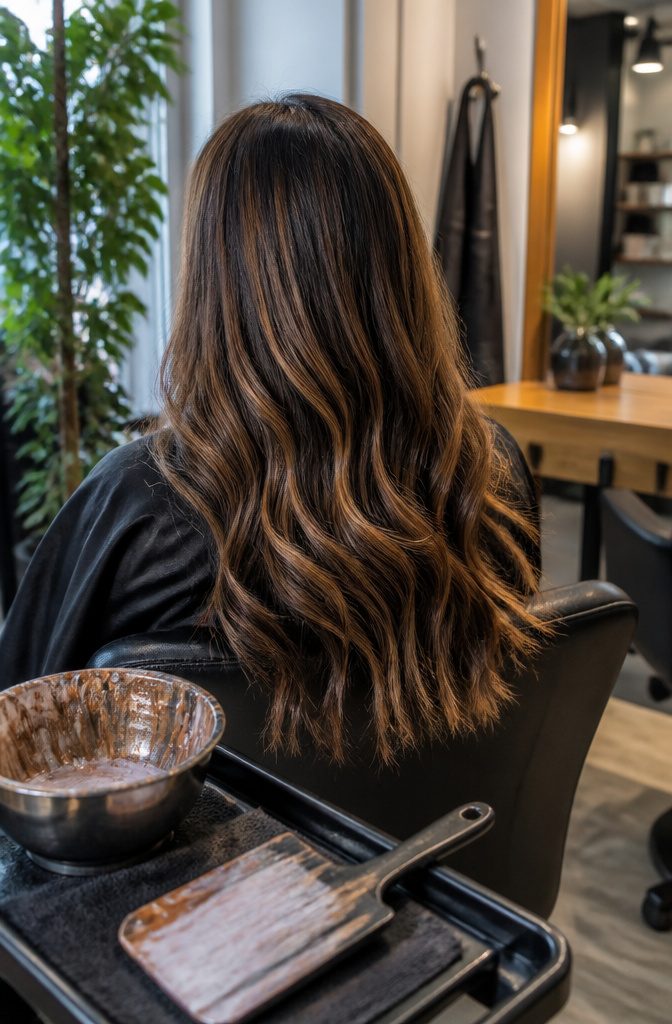
Balayage paddles let a colorist paint highlights and lowlights by hand rather than folding hair into foil, and the result grows out softer than traditional highlights because there’s no obvious line where color starts.
You can go subtle with a few caramel ribbons through chocolate brown or push contrast with ash blonde swept from mid-shaft to the ends.
Either way, the dark roots gain depth as the hair grows, which means you can stretch appointments past the usual six-week mark without looking overdue.
I’ve seen people go three or four months between sessions and still look intentional, not neglected.
For lowlights specifically, balayage works well when you want dimension without harsh bands—ask for painted-on tones a shade or two darker than your base, concentrated underneath or at the roots, then have your stylist blend with face-framing highlights for balance.
6. Babylights or Thin Highlights
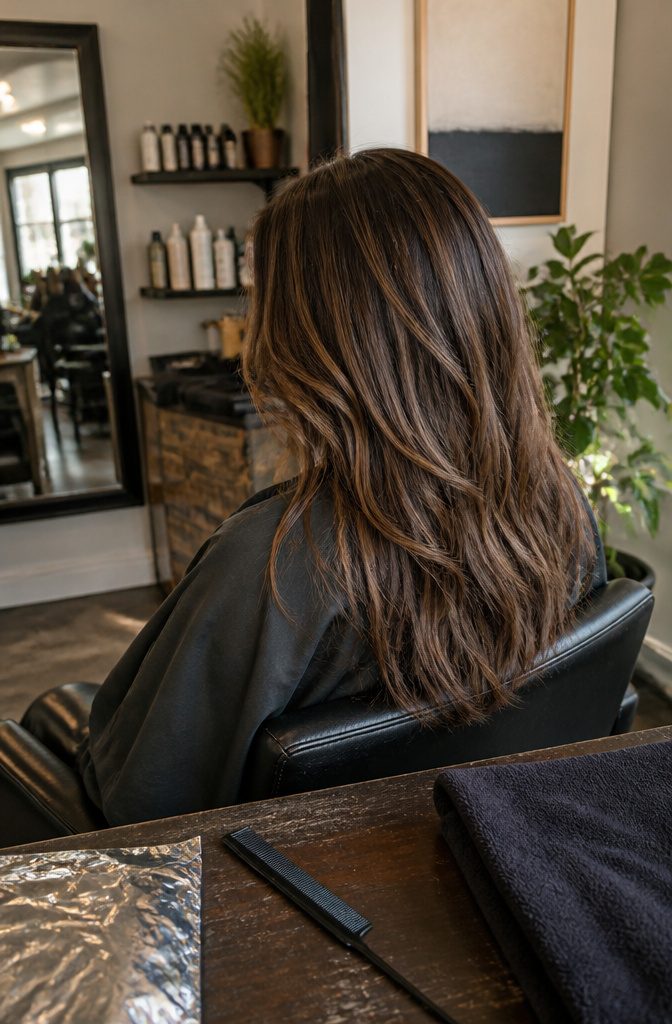
Babylights are highlights fine enough to mimic the strands the sun would naturally lift around the hairline and crown.
A colorist places them where light would hit first: through the front sections, along the part, and scattered through the top layers rather than packed in evenly.
The placement matters more than the count. When the pieces follow where your hair would lighten on its own, the grow-out is subtle and you can stretch appointments further than with traditional foils.
The color lift is usually just two shades lighter than the base, which keeps the effect soft.
Going further risks the contrast reading as intentional highlights rather than dimension you were born with. Babylights work particularly well on brown hair that already has some natural variation, because the new pieces settle into what is already there.
The technique takes longer to apply than standard highlights since each section is finer, but the result is a look that does not announce itself as salon work.
7. Chunky or Bright Blonde Highlights
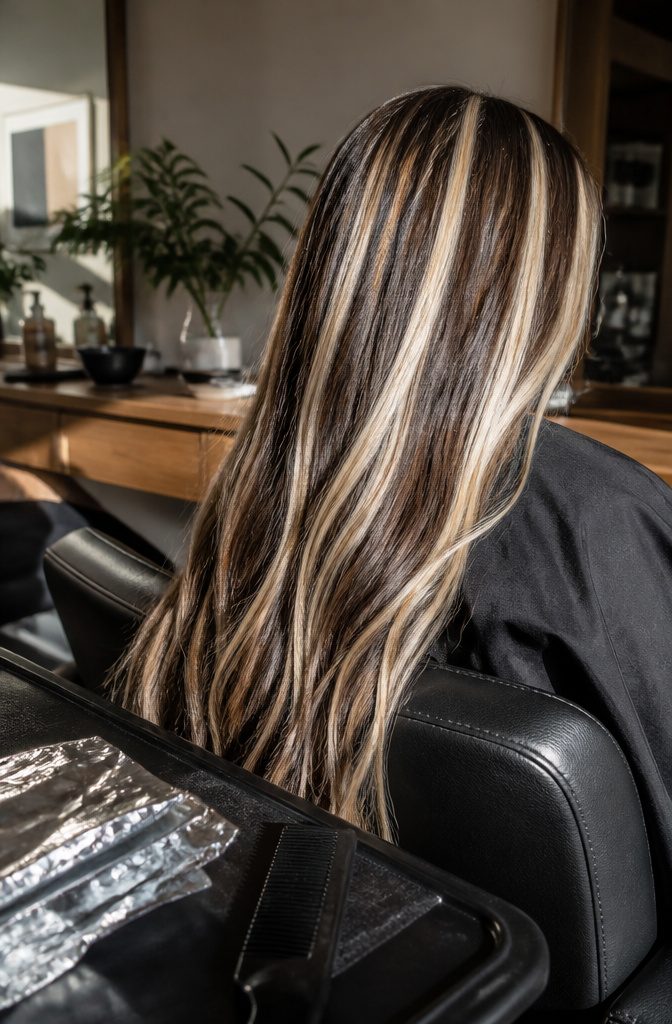
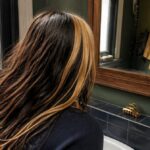
Wider, bolder ribbons of very bright blonde against deep brown make a statement most fine highlights can’t.
The contrast is what you’re here for: big sections of light meeting dark, especially visible on longer hair where there’s more length to show the difference.
This is the look if you want people to notice the color before they notice anything else.
The spacing matters as much as the brightness. Chunky highlights sit apart from each other rather than blending into a soft wash, so each stripe reads on its own.
That separation is what makes the style feel deliberate instead of sun-kissed, and it works best when the blonde is cool or platinum rather than warm gold. The cooler the blonde, the sharper the line between light and dark.
Face-framing placement keeps the drama but directs it.
Placing the lightest pieces around your face pulls attention forward and brightens your complexion without committing to full-head coverage. High contrast grows out visibly, and root touch-ups show faster than they would with softer, closer tones.
8. Face-Framing or Contour Highlights
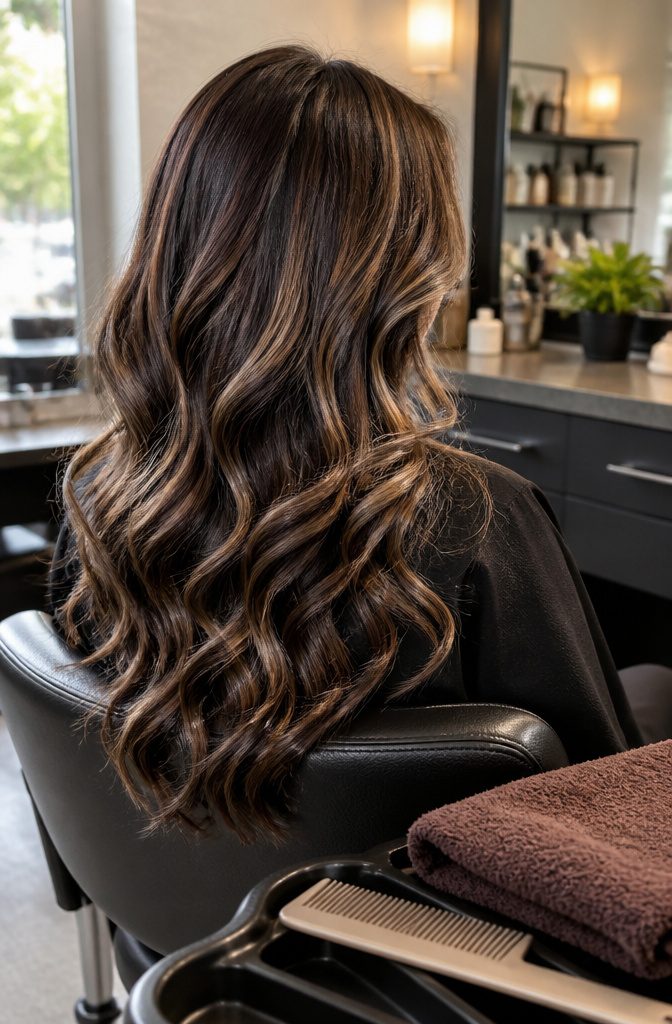
Lighter pieces placed strategically around your face pull the eye forward and add dimension where it counts most.
Face-framing highlights start at the crown and sweep down toward the bangs and temples, or concentrate mainly along the side sections that bracket your features.
The effect is immediate: your face reads brighter, and the contrast between the highlighted front pieces and the rest of your hair creates a natural contour.
The higher the contrast between those front highlights and your base color, the bolder the result.
If you have deep brown hair and go for bright blonde around the face, the look is graphic and attention-getting. A softer lift of two or three shades keeps it subtle but still opens up your face.
Layered cuts work especially well with this placement because the feathered ends catch light differently as they move. Loose curls make the face-framing pieces stand out even more, since the lighter color wraps around the curve of each wave.
9. Auburn or Cinnamon Lowlights and Highlights
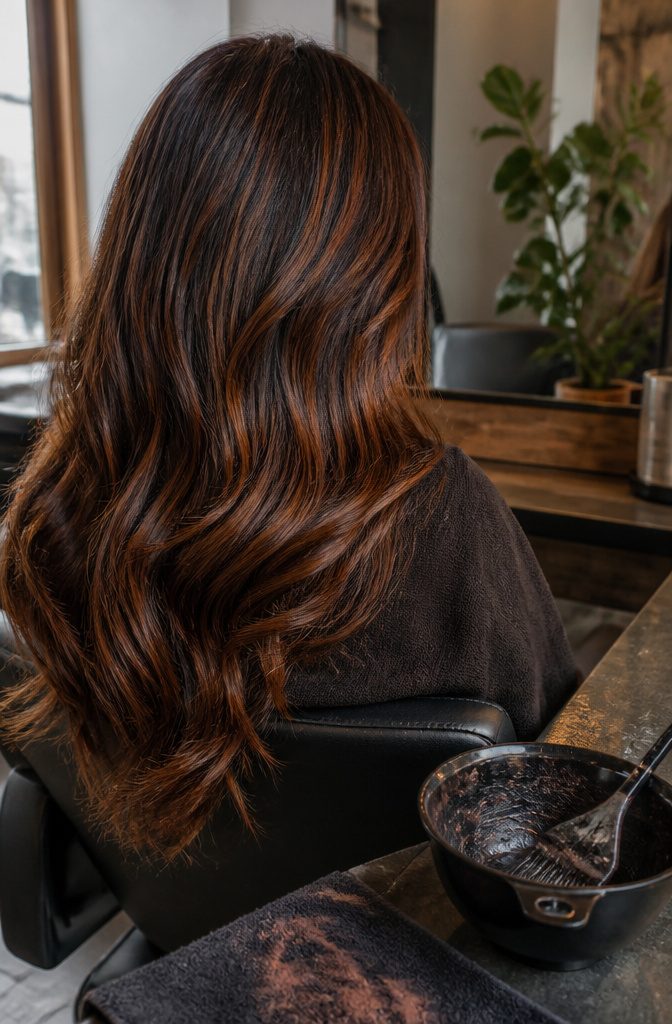
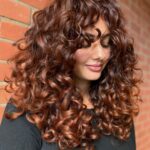
Auburn and cinnamon lowlights bring warmth without tipping into the cooler ash territory or committing to blonde. The rusty, reddish-brown family works particularly well if you want depth that still reads as brown rather than a contrast color.
Cinnamon highlights layered over espresso brown deliver warmth that feels muted and lived-in, especially on longer hair where the color has room to move through the lengths without hard lines.
The finish matters as much as the tone. Glossy, soft-edged color keeps the effect from looking flat or dull, which can happen when red-leaning shades fade or catch harsh light.
I find this route wins for anyone who wants dimension but prefers a conservative look—the kind of change that registers as healthier hair before it registers as dye.
The rust family also grows out more gracefully than high-contrast blonde, since the lowlights already sit close to most natural brown bases.
10. Shadow Roots or Dark Roots with Lighter Lengths
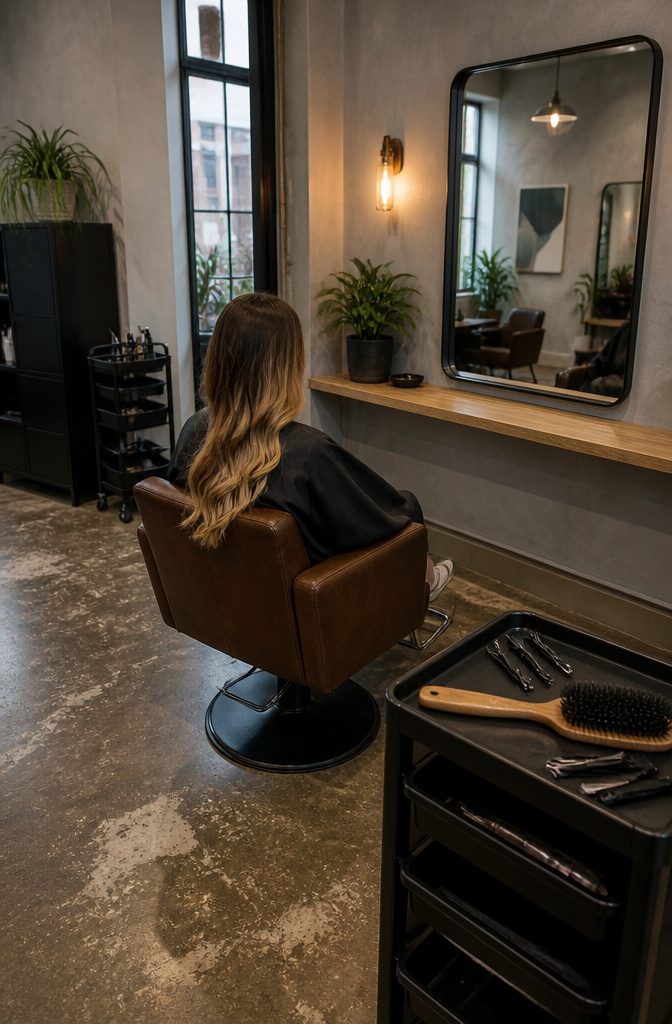
Shadow roots are what let you stretch appointments and still look deliberate. The stylist keeps your natural root color for an inch or two, then blends lighter tones through the mid-lengths and ends.
That darker base anchors the whole look, so when regrowth comes in it reads as part of the color rather than overdue maintenance.
The technique works especially well if your base is already a medium to dark brown.
Highlights or balayage lift the rest without fighting the root, and the contrast between dark and light creates dimension you would lose with an all-over color.
I find it makes hair look thicker, because the eye picks up on the shift in tone rather than reading it flat.
You can go four to six months between sessions if the blend is done right. The darker root also protects your scalp from repeated bleach applications, which matters if you are keeping up with this long term.
11. Ombre-Style Brown-to-Blonde Transitions
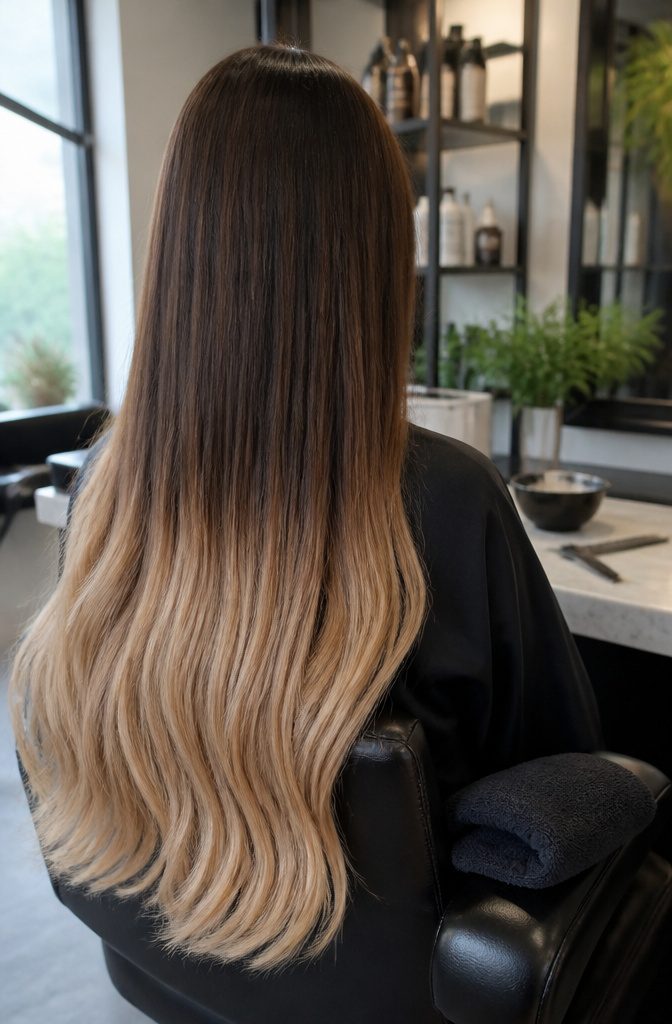
Ombre creates a more defined horizontal band where the darker base meets lighter ends, rather than the blended, painted strokes of balayage.
The transition sits visually lower on the hair, usually starting several inches below the roots, which makes long hair look longer still.
Shadow roots are a different technique entirely; they soften regrowth by blending dark color into the first couple of inches, then handing off to whatever highlight you already have.
Ombre doesn’t work with those roots because it needs the contrast all the way from scalp to ends.
The look holds up best on hair that falls past the shoulders, where there’s enough canvas for the gradient to register as deliberate.
On a chin-length bob the line reads abrupt rather than gradual, and the effect compresses into something closer to dip-dye.
I’d choose balayage or face-framing highlights for shorter cuts instead, where the color moves through the shape rather than relying on vertical length to carry the fade.
12. Highlight and Lowlight Combinations
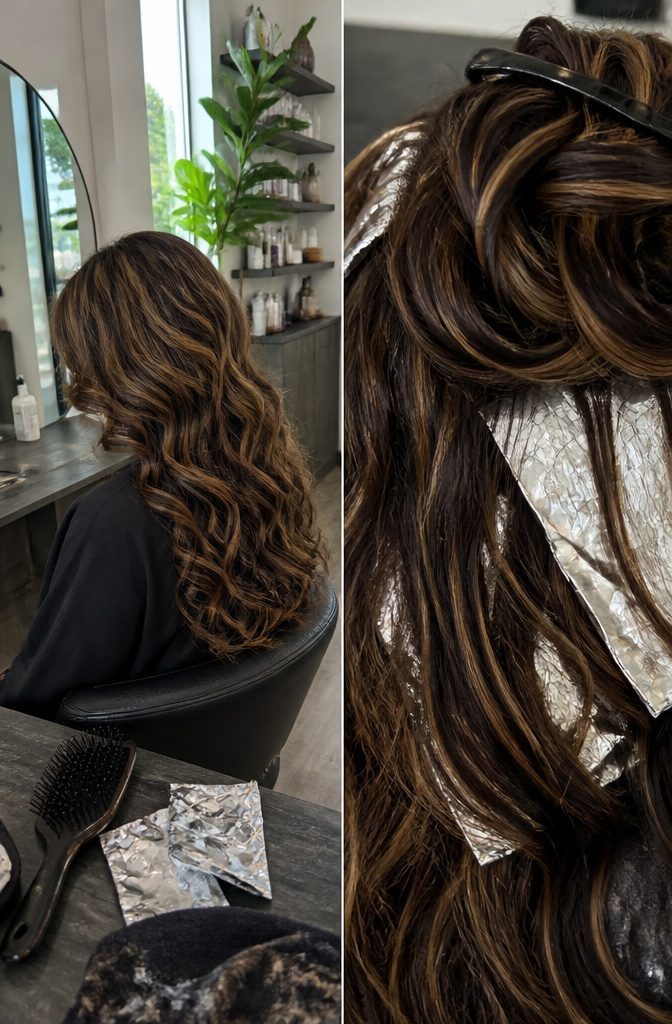
Lighter and darker tones woven together add depth and definition to curls, waves, or layers. Colorists use lowlights at least two tones darker than your natural color and highlights at least two tones lighter to build dimension.
The contrast makes texture more pronounced, so loose waves and layered cuts gain definition without needing product or styling.
When highlights and lowlights are done together, you get a three-tone effect that looks more natural than single-process color. The darker pieces add shadow and weight, the lighter strands catch light, and your base color ties them together.
Full highlights cover the whole head, while partial placement focuses on the crown, sides, or face-framing sections. Colorists apply the tones with foil for precise streaking or balayage paddles for softer transitions.
Full Highlights Throughout the Head or Partial Placement
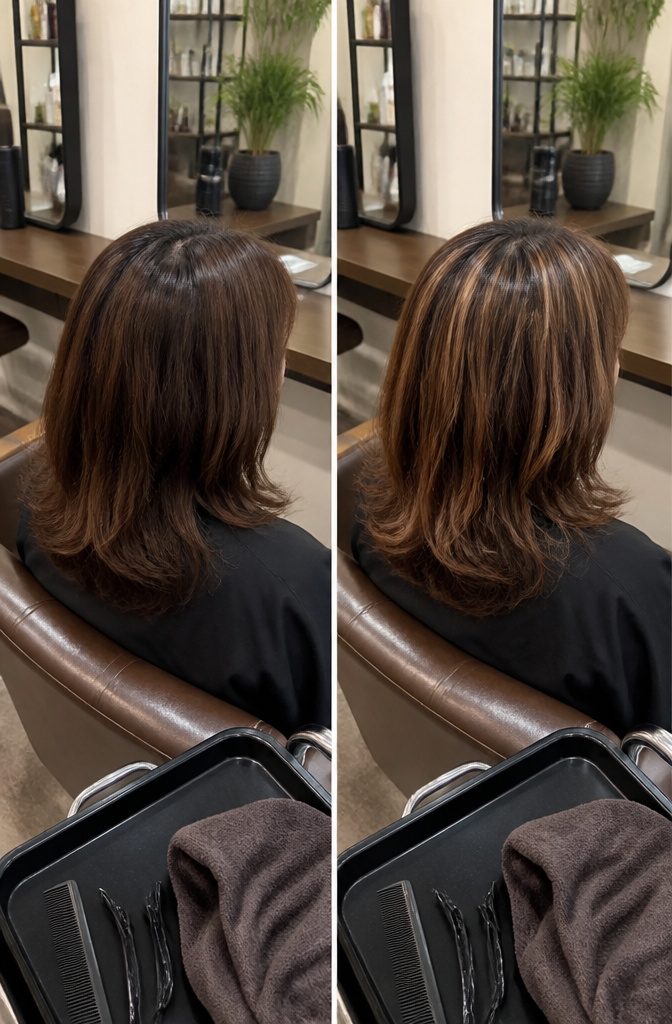
Full highlights cover the entire head, while partial highlights stay closer to where you see them most: from the crown forward toward the bangs or mainly along the sides.
The difference changes how much dimension you walk away with and how quickly you need to come back.
Full placement makes sense when you want color that shows from every angle, whether your hair is down or pulled back.
The lift runs all the way around, so roots grow out more evenly and the whole head reads lighter. Partial highlights give you the frame without the hours in the chair or the ticket that comes with processing everything.
Most of the lift sits where it catches light when you face someone, and the back stays closer to your base.
Partial wins if you mostly wear your hair forward or want something you can stretch six months between appointments. Full wins if you tie your hair up often or want a noticeably lighter overall result.
Choosing Tones Based on Your Base and Skin
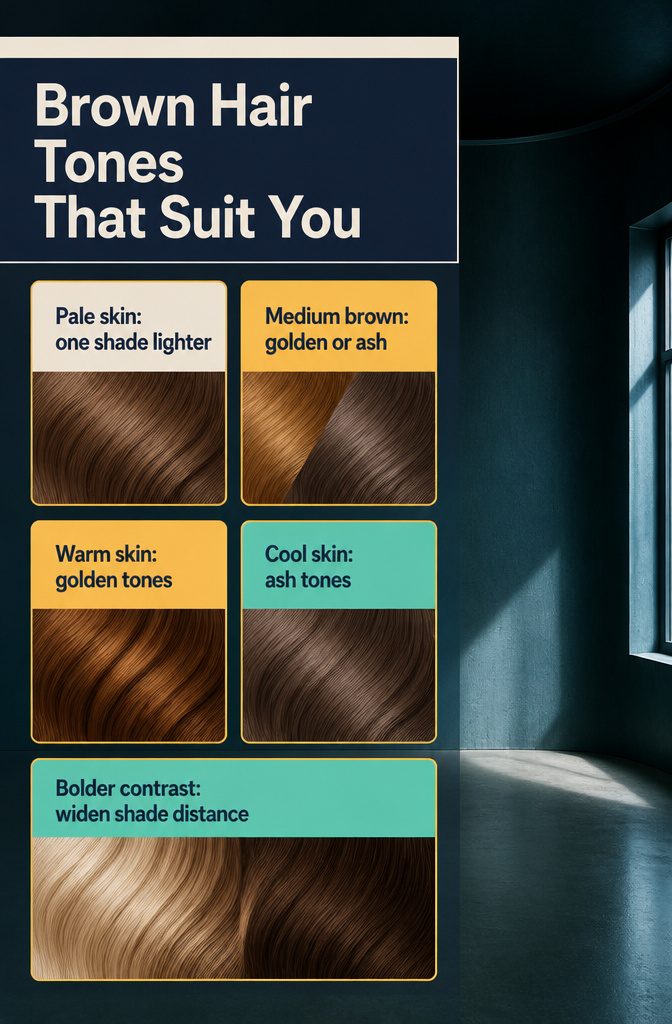
Your natural base, skin tone and the contrast you’re after steer which tones work.
Pale skin paired with soft brown hair sits comfortably with highlights just one shade lighter, a subtle lift that keeps everything refined. Other combinations allow more room to push contrast without looking jarring.
I find that knowing where you sit on the contrast spectrum matters more than chasing a single formula; a medium brown base can take golden warmth or cooler ash depending on whether your skin reads warm or cool.
The trend right now leans toward subtle transitions, natural-looking dimension that catches light without announcing itself.
That said, bolder contrast still has its place. If you want face-framing brightness or a stronger blonde-to-brown split, the same skin-tone logic applies but the distance between shades opens up.
The chosen tones should either harmonize with your skin or deliberately offset it, not land somewhere in between where nothing quite clicks.
Frequently Asked Questions
What color lowlights look good in brown hair?
Auburn, cinnamon, toffee and caramel tones work particularly well as lowlights in brown hair.
These shades sit close enough to most natural brown bases that they add depth and dimension without creating harsh contrast, and they grow out more gracefully than cooler or lighter tones.
Choose lowlights at least two shades darker than your base for visible definition.
Are lowlights or highlights better for brown hair?
Using both together gives you the most dimension, since lowlights add shadow and weight while highlights catch light, and your base color ties them together.
If you only want one, highlights brighten and lift brown hair more noticeably, while lowlights add subtle depth without changing the overall tone. Most colorists recommend combining them for a three-tone effect that looks richer than single-process color.