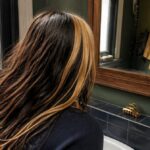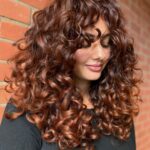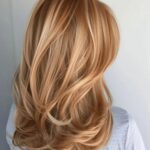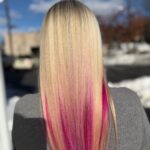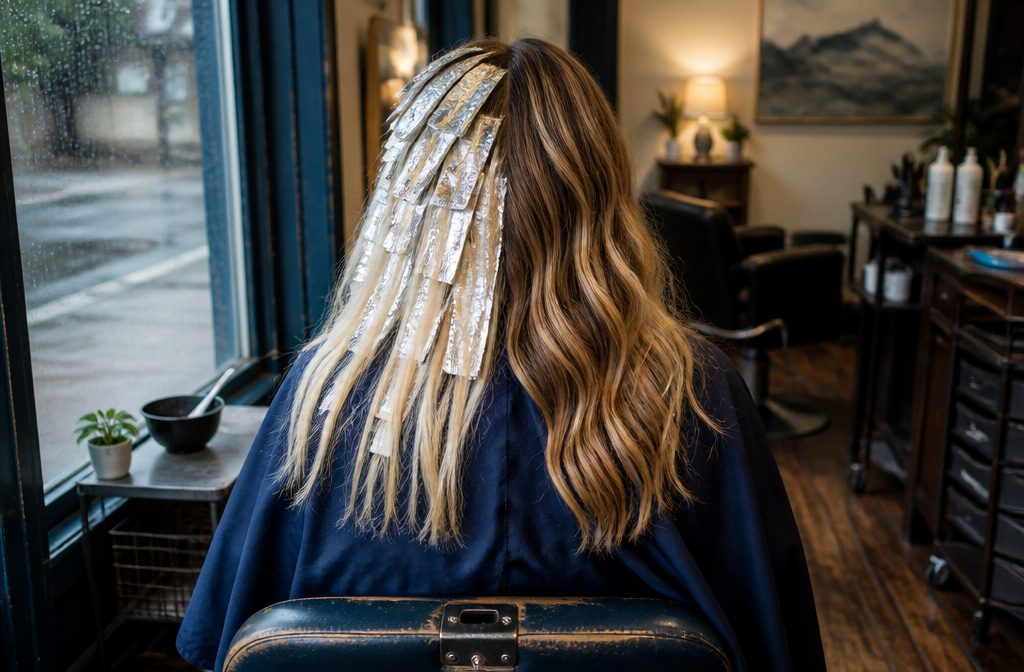
Balayage wins for most people because it grows out softer and buys you 12 to 16 weeks between appointments instead of six to eight.
Highlights take the lead when you want bright, root-to-tip blonde or need to blend gray, since balayage only diffuses it.
A full balayage can run $350 and take up to three hours at top salons, so the lower maintenance comes with a higher entry cost.
Application Technique
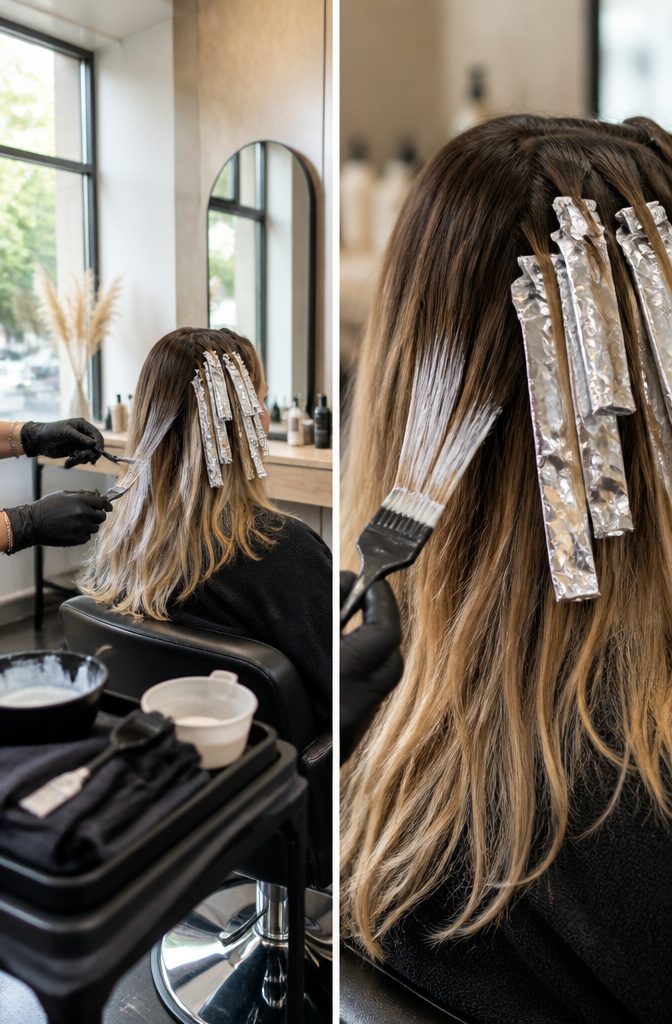
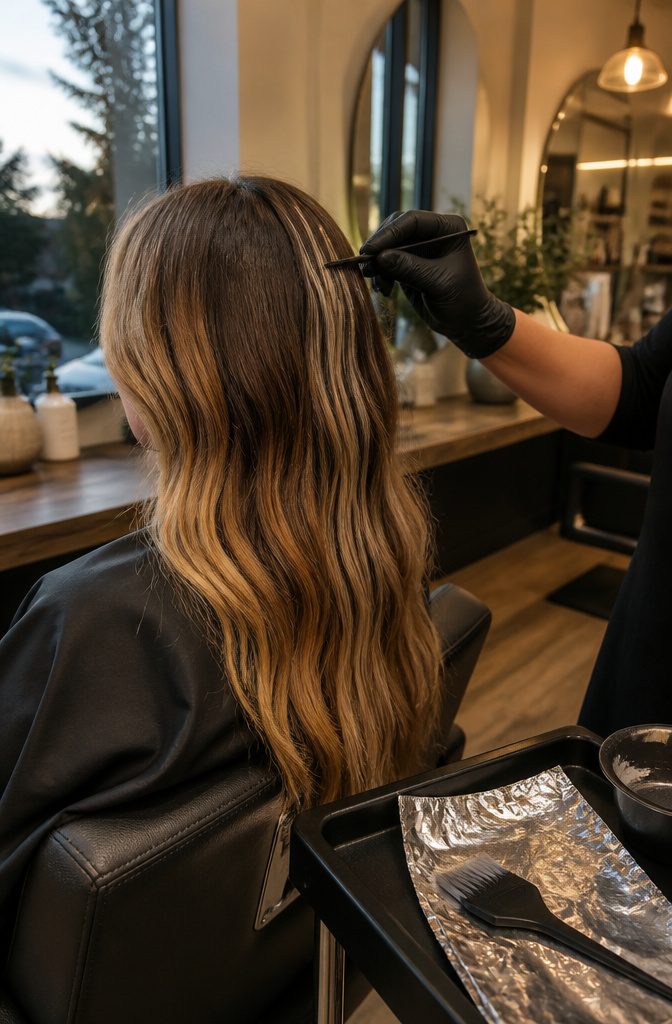
Balayage is hand-painted onto the hair, usually without foils, and the lightener gets heavier as it moves toward the ends.
The stylist paints color onto sections freehand, starting away from the roots and building up brightness through the mid-lengths. A full balayage painting session runs 30 to 60 minutes.
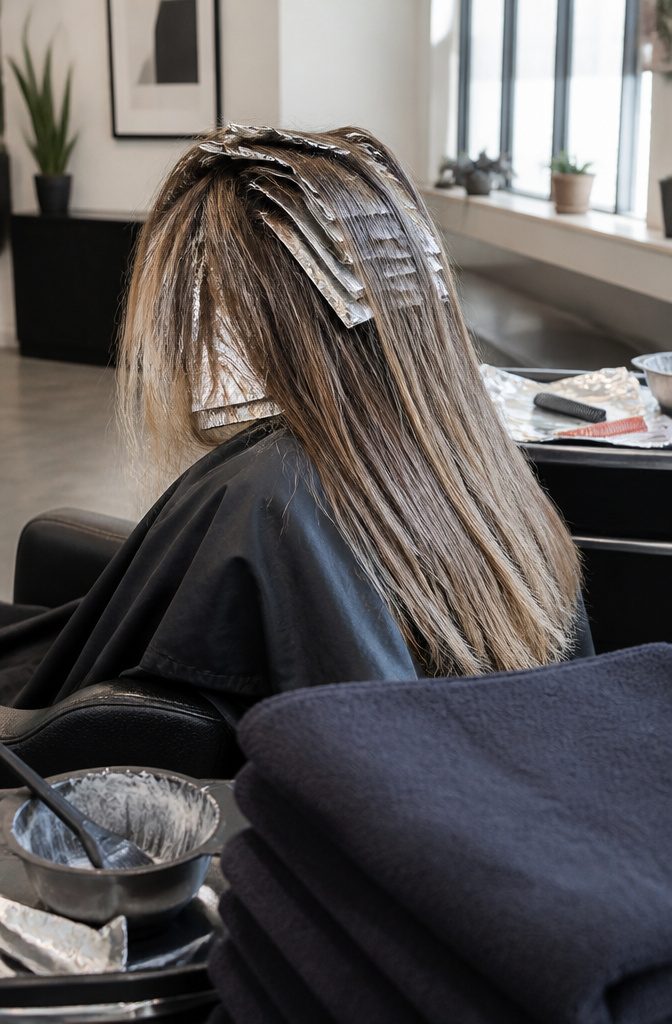
Highlights use foils or caps. The stylist sections off strands, isolates them, wraps them in foil, and applies color from root to tip.
That gives you uniform, defined streaks with even brightness all the way down. The sectioning and wrapping take longer and feel more structured.
The application method is what drives every other difference in this article.
Because balayage skips foils and leaves the roots darker, you get softer grow-out and longer time between touch-ups. Because highlights lift closer to the scalp with foils, you get more dramatic brightness but more visible regrowth.
Final Look and Contrast
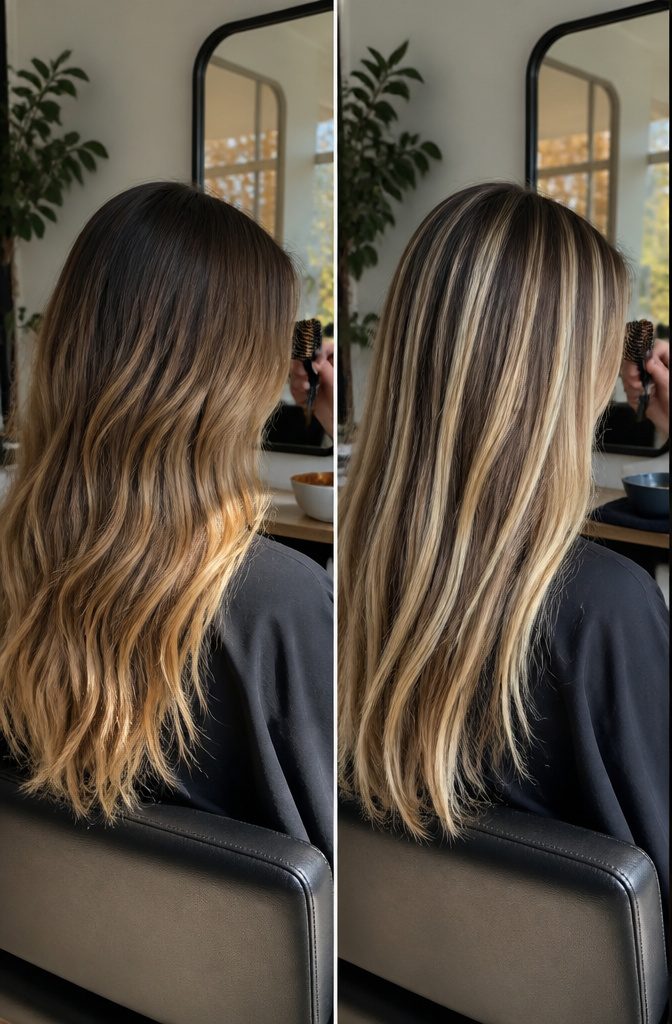
Balayage gives you a soft, blended, sun-kissed effect that mimics the way the sun would naturally lighten your hair over time.
The color gradually transitions from darker roots to lighter ends, and because the stylist hand-paints it without foils, the result reads as lived-in rather than freshly colored.
I find it suits anyone who wants dimension without announcing that they just left the salon.
Highlights, by contrast, deliver brighter, more defined streaks with stronger contrast against your natural shade. The foil method creates uniform lightness from root to end, and the overall effect is bolder and more noticeable.
If you want a dramatic change or well-defined color throughout, highlights win. If you want something that blends seamlessly and looks like you spent the summer outside, balayage is the better call.
Grow-Out and Maintenance
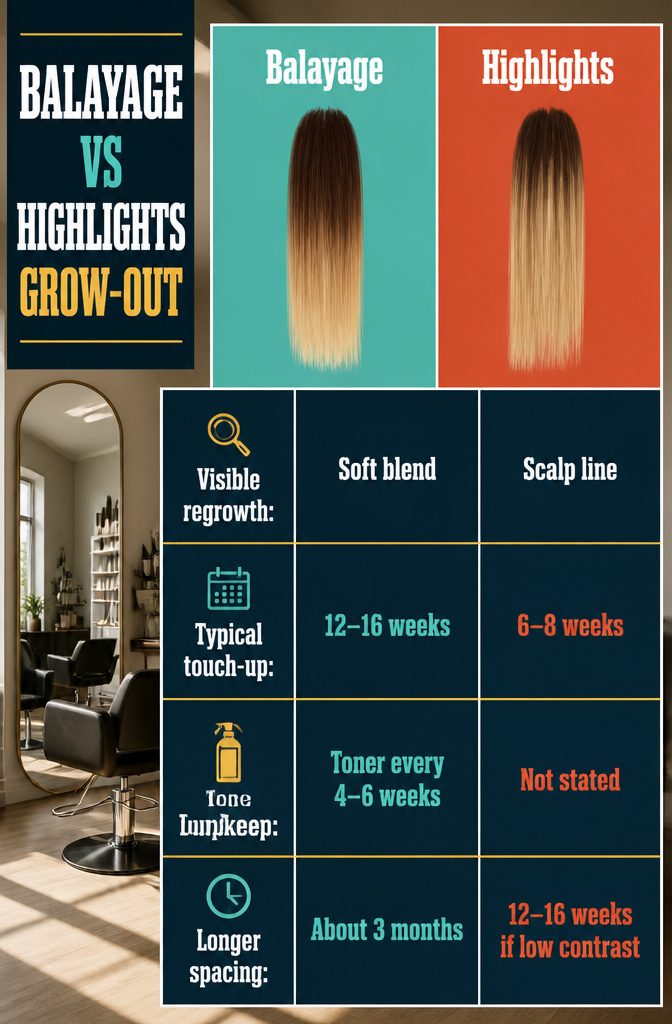
Balayage grows out with almost no visible line, because the color is painted starting a few inches from the root rather than placed right at the scalp. That soft blending is the reason clients stretch appointments longer.
I recommend a toner refresh every four to six weeks to keep the tone clean, and a full color refresh every 12 to 16 weeks. Some people come about every three months and look fine the whole stretch.
Highlights show regrowth sooner. Because foils are commonly placed root to end, the lightened sections meet the scalp and any natural hair coming in reads as a line.
Touch-ups land every six to eight weeks for most people, though more natural placements can stretch to 12 to 16 weeks if the contrast is low.
Timing still depends on how fast your hair grows and how bright you went, but the demarcation with foils is harder to ignore.
Hair Type and Color
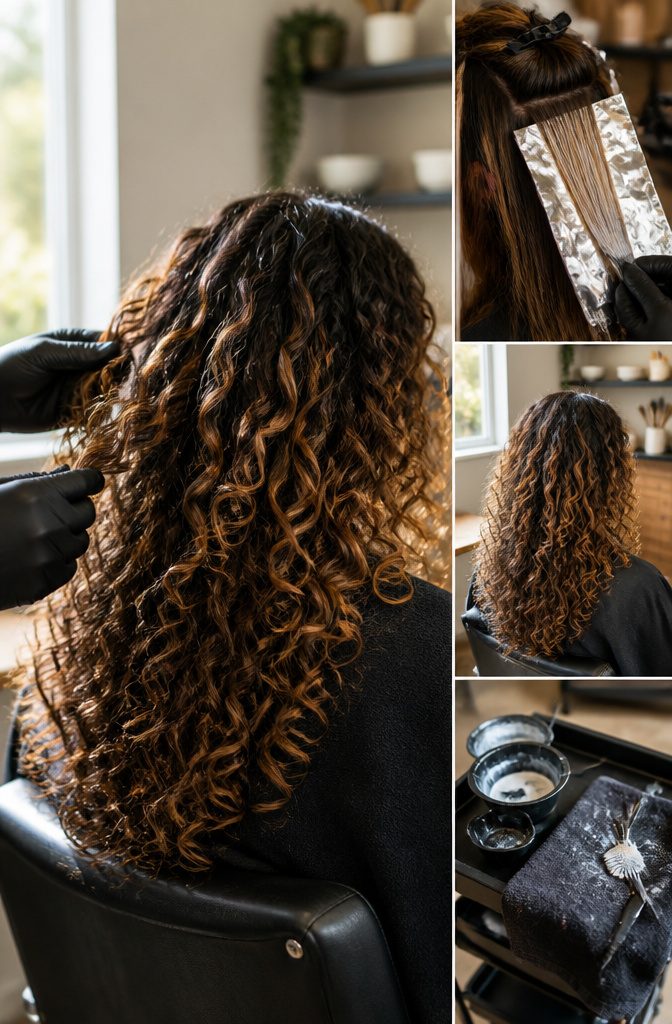
Balayage suits darker starting colors and works beautifully when you want caramel or honey dimension without the maintenance blonde demands. The freehand painting blends into your base, so grow-out is softer and the contrast stays subtle.
If your hair is dark and you want noticeable brightness, foils give more lift and get you there faster, though dramatic changes may take more than one visit.
Highlights are the move for achieving a bright blonde, especially on straight or slightly wavy hair where the structured pattern reads clearly.
They also blend gray nicely, though none of these techniques fully cover it. Full coverage still takes single-process color.
Texture matters. Balayage flatters curly and textured hair because the painterly application follows the natural movement.
Closely packed foils on very thick or curly hair mean hours in the chair, and balayage on fine, straight hair can make ends look thinner. Both are adaptable, but the starting point decides which one wins.
Customization and Combinations
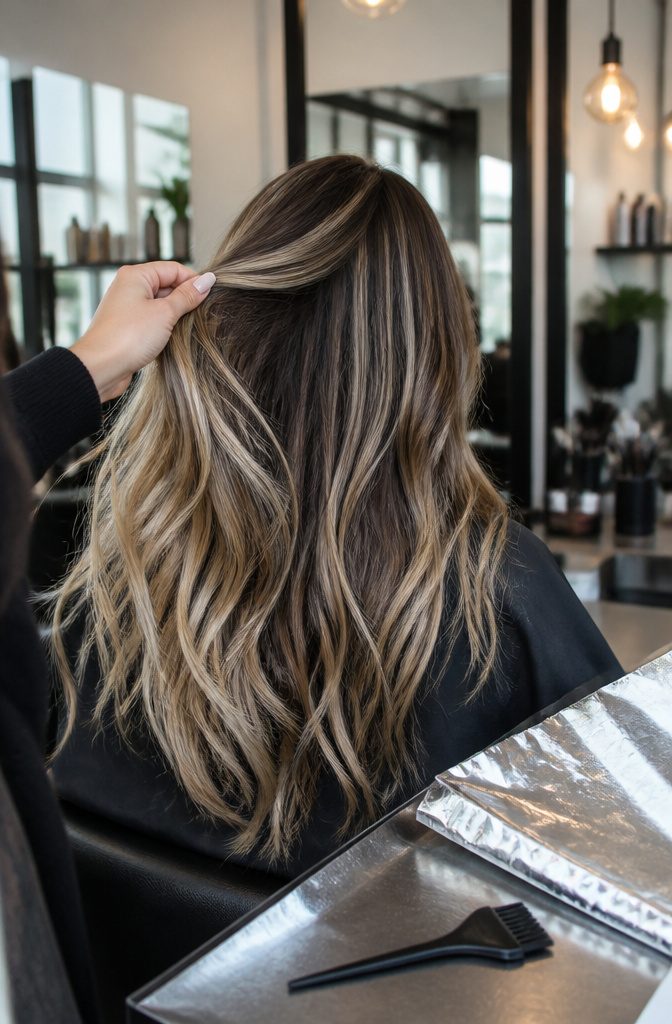
Both services adapt past the textbook version. Balayage works as a freehand technique, which means the stylist can adjust placement based on your haircut, face shape, and how much lift you want.
Partial balayage keeps color through the mid-lengths and ends while leaving the crown darker; full balayage brings lighter pieces higher. Flamboyage uses adhesive strips instead of foils for a softer blend, and reverse balayage adds depth back into over-lightened hair.
Highlights offer their own control. The stylist decides how thick each section is, how many foils go in, and where they sit.
Thinner sections give finer contrast, thicker ones read bolder. You can ask for face-framing pieces only or weave highlights through the whole head.
The two methods layer well. Foilayage wraps balayage strokes in foil to push the lift higher on dark hair.
Stylists often balayage the body of the hair and add fine highlights or money pieces around the face for brightness. Blonde tipping is another hybrid: balayage between highlight foils to lift the ends even further.
I’ve seen clients ask for one service and leave with a combination because the colorist knew it would get them closer to the reference photo they brought in.
Time, Cost, and Hair Health
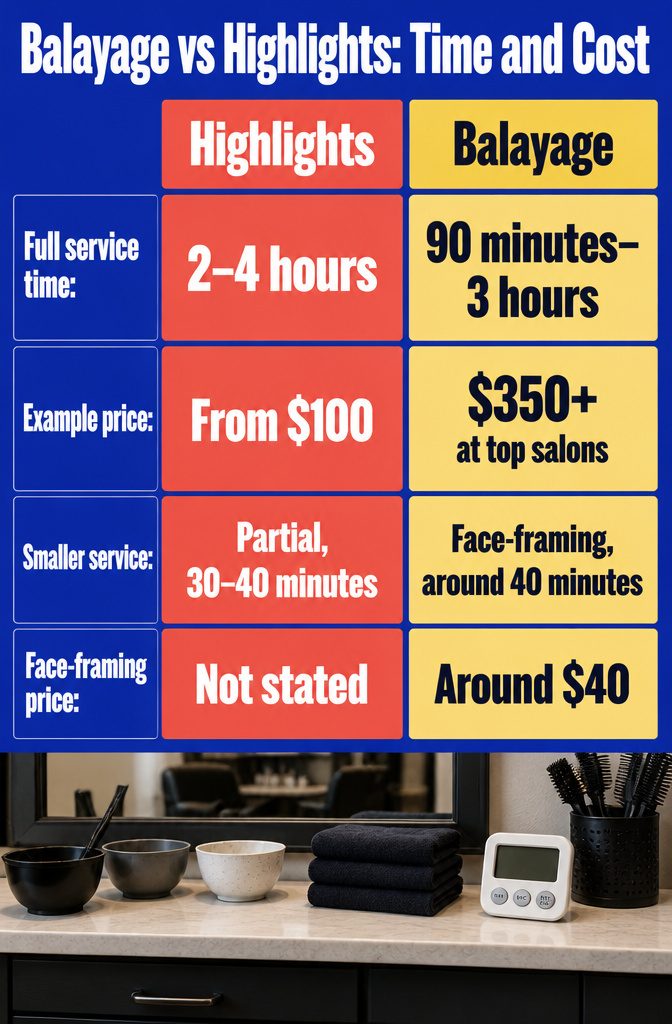
There is no single way to compare price and time because both depend on how much hair you are lightening, where you start, and which service you actually book.
A full head of highlights can take 2 to 4 hours and run upwards of $100, while partial highlights sit around 30 to 40 minutes.
Balayage ranges even more: face-framing pieces might be $40 and 40 minutes, but a full balayage at a top salon can run $350 or more and take 90 minutes to 3 hours.
One salon schedules 180 minutes for a full balayage, with an extra hour before the toner goes on.
Different salons can charge wildly different prices and the cost of your appointment will also depend on what highlights or balayage service you have and how long it takes.
That variability makes it hard to say one technique costs less across the board, though balayage appointments tend to be spaced further apart.
| Service | Time | Example cost |
|---|---|---|
| Full highlights | 2–4 hours | From $100 |
| Half-head highlights | Up to 1.5 hours | n/a |
| Partial highlights | 30–40 minutes | n/a |
| Face-framing balayage | Around 40 minutes | Around $40 |
| Full balayage | 90 minutes–3 hours | $350+ at top salons |
Hair condition matters, particularly if you have years of dark box color. Going lighter after that may mean more than one visit, and highlights can require repeated lightening that wears on the hair over time.
What Each Term Means
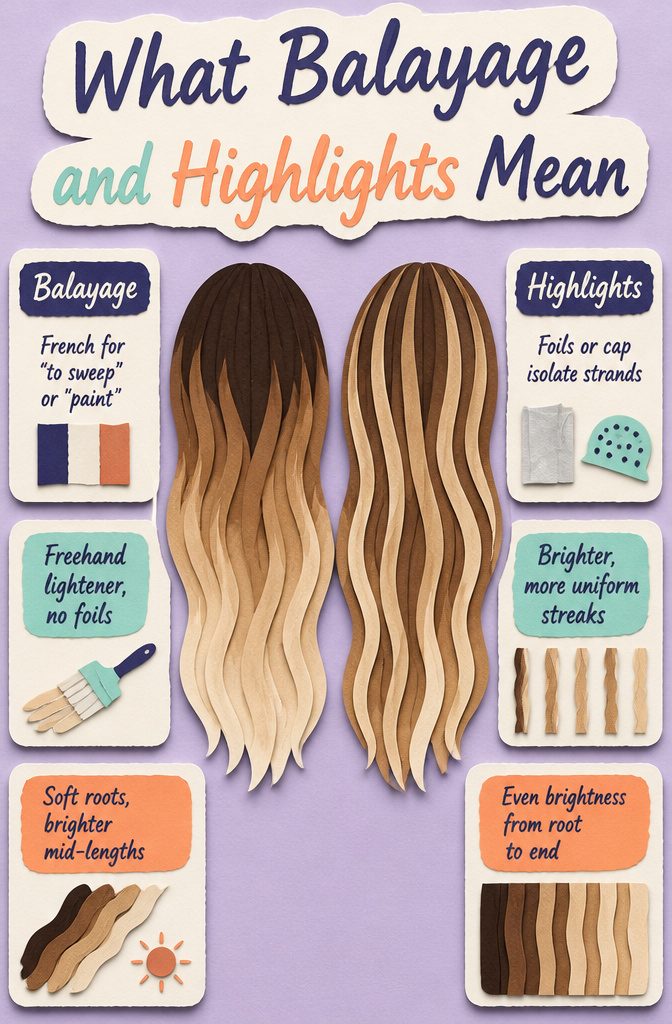
Balayage comes from the French word meaning "to sweep" or "to paint."
It’s a freehand technique where a stylist paints lightener onto your hair without using foils, placing color selectively to create soft, sun-kissed dimension with gradual transitions from dark to light.
The result reads as natural, lived-in color rather than structured stripes.
Highlights are typically applied using foils or a cap. The stylist isolates strands and colors them from root to tip, giving you brighter, more uniform streaks throughout the hair.
Foils allow for more lift and saturation, and if you’ve loved that classic highlighted blonde look, that’s usually foils doing their job.
Where balayage is softest at the root and brightest through the mid-lengths and ends, highlights give more even brightness from root to end.
Babylights as a Third Option
Babylights sit between the other two: very fine highlights, woven close together, that diffuse brightness across the whole head rather than placing it in deliberate pieces.
The sections are so narrow that the result looks softer and less striped than traditional foils, which makes them a good fit for natural blondes and light brunettes who want to lift a shade without anyone spotting the change.
They work well on fine hair because the dimension shows without heavy chunks.
If you are growing out darker color or want to blend gray without full coverage, babylights smooth the transition. They will not cover gray completely, but they do blend it nicely.
Some colorists combine babylights around the hairline and face with balayage through the rest, which adds brightness where it matters and keeps the appointment slightly shorter than an all-over babylights session.
Even so, because each section is so fine, count on a relaxed afternoon in the chair.
Choosing by Look and Schedule
Balayage wins if you want lived-in color and a calendar that stays open. It starts further down the shaft, so regrowth softens instead of announcing itself, and most people book every three months rather than every six to eight weeks.
If you lean toward subtle, sun-kissed dimension and you’d rather not block out an evening every other month, balayage makes sense.
Highlights win when you want brightness, contrast, and defined placement, especially near the root. They lift more consistently and cover gray better than balayage does, which only blends it.
The trade is frequency: you’ll be back in the chair more often to keep the root line looking intentional. If high contrast matters more than a forgiving grow-out, highlights are the call.
The decision comes down to two things: how dramatic the change should be and how much of your schedule you’ll give to upkeep.
Balayage keeps dimension without the maintenance load. Highlights give you the pop and precision, at the cost of more regular salon time.
Preparing for Your Consultation
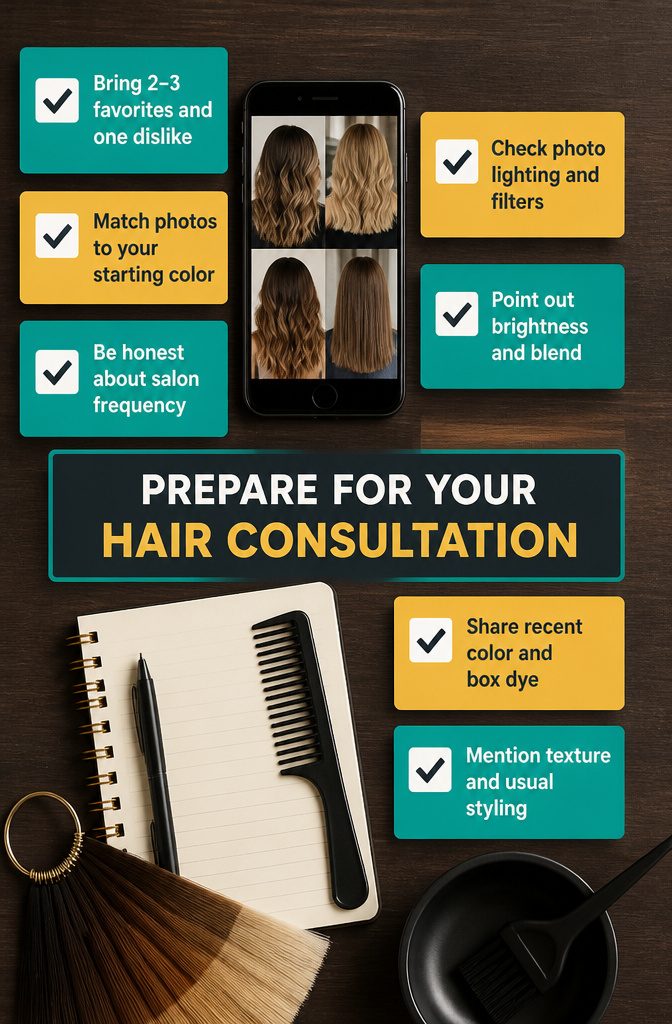
Photos solve what words cannot.
Bring two or three you like and one you dislike—what you want to avoid tells a colorist as much as what you’re after—and choose images where the starting color matches yours, since platinum on naturally light hair looks nothing like the same technique on dark.
A few things to point out and disclose:
- Tell your schedule honestly. If you realistically come in twice a year, that changes the design. A colorist who knows that will build for softer regrowth or place brightness where it matters most.
- Notice the lighting and filters in your photos. Ring lights make color look brighter and cooler than it reads in real life.
- Point to specifics: the brightness around the face, the way the color blends, whether you can see a clear line where it starts.
- Share your hair history. Box dye, old color work, anything done in the past few years all affect what the hair will lift to.
- Mention your texture and how you wear it. Fine straight hair can look thinner at the ends with balayage; very thick or curly hair may not suit a tightly packed highlight.
A same-day cut is fine when needed. Color goes first, then the cut.
Frequently Asked Questions
What’s the difference between balayage and highlights?
Balayage is hand-painted onto the hair without foils, creating a soft, sun-kissed blend that starts away from the roots and builds brightness toward the ends.
Highlights use foils or caps to isolate strands and apply color from root to tip, giving you brighter, more defined streaks with uniform lightness throughout.
Are highlights cheaper than balayage?
Not necessarily. A full head of highlights can run upwards of $100, while face-framing balayage might cost around $40, but a full balayage at a top salon can run $350 or more.
Both vary widely depending on how much hair you’re lightening, where you start, and which salon you visit.
How long does balayage hair last?
Most people book a toner refresh every 4 to 6 weeks and a full color refresh every 12 to 16 weeks. Because balayage starts away from the roots, regrowth stays soft and many clients stretch appointments to about 3 months without a visible line.
Does balayage have to be blonde?
No.
Balayage works beautifully on darker starting colors for caramel or honey dimension, and the freehand painting technique adapts to any base shade. The method describes how the color is applied, not the final shade.
What are the benefits of highlights?
Highlights give you brighter, more defined streaks with stronger contrast and more uniform lightness from root to end.
They lift more consistently than balayage, which makes them better for achieving a bright blonde, and they blend gray more effectively, though they don’t fully cover it.
Is balayage right for all hair types?
Balayage suits many hair colors, textures, and lengths, but the freehand application works especially well on curly and textured hair where it follows natural movement.
Fine, straight hair can look thinner at the ends with balayage, and very thick or curly hair may take hours with closely packed foils, so the starting point decides which technique wins.
Is balayage or highlight better for greying hair?
Highlights blend gray better because foils allow for more lift and more even placement.
Balayage and babylights also blend it nicely, but none of these techniques fully cover gray. Full coverage still requires single-process color.
How long does a full balayage appointment usually take?
Plan for 90 minutes to 3 hours.
One salon schedules 180 minutes for a full balayage, with an extra hour before the toner goes on. The time depends on how much hair you’re lightening and how much brightness you want.
Should I get a cut the same day?
Yes, when needed. Color goes first, then the cut.