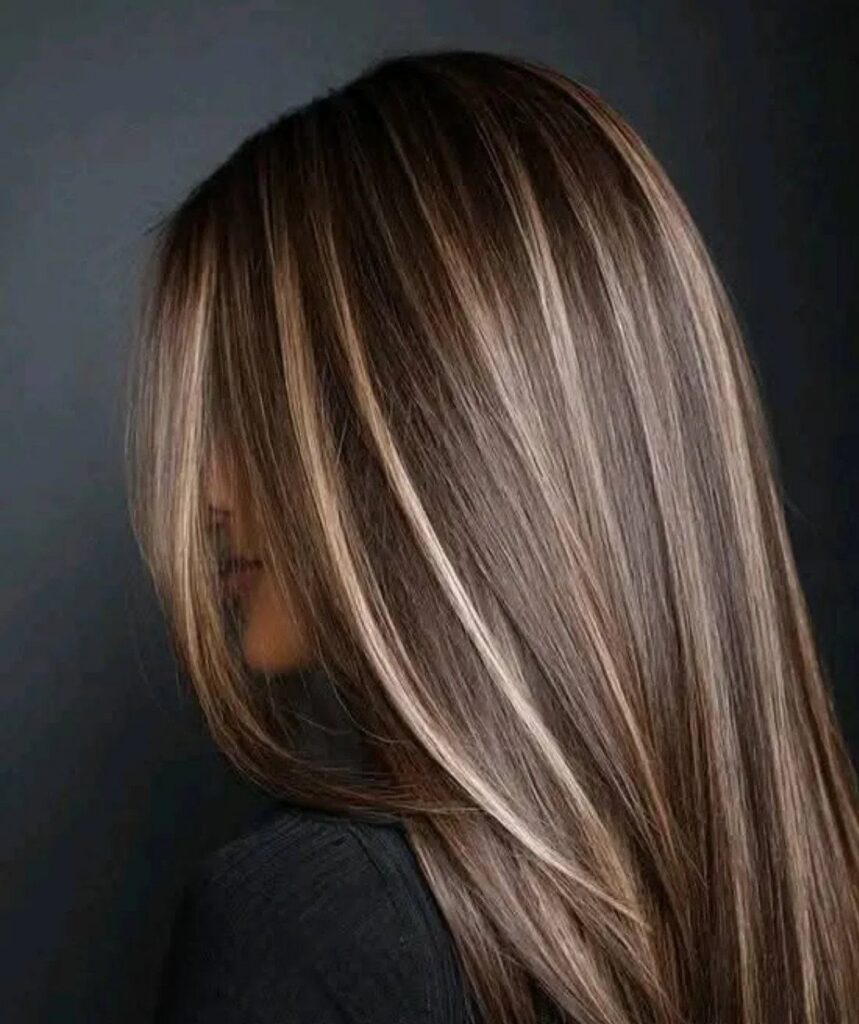
Caramel highlights work on bases from near-black to medium brown, and the lift takes anywhere from one session on lighter hair to two or more if you’re starting dark.
The placement decides maintenance: highlights that start at the root grow out faster and need more frequent touch-ups, while mid-length balayage or lower-half color stretches appointments much longer since roots stay untouched.
1. Caramel Balayage
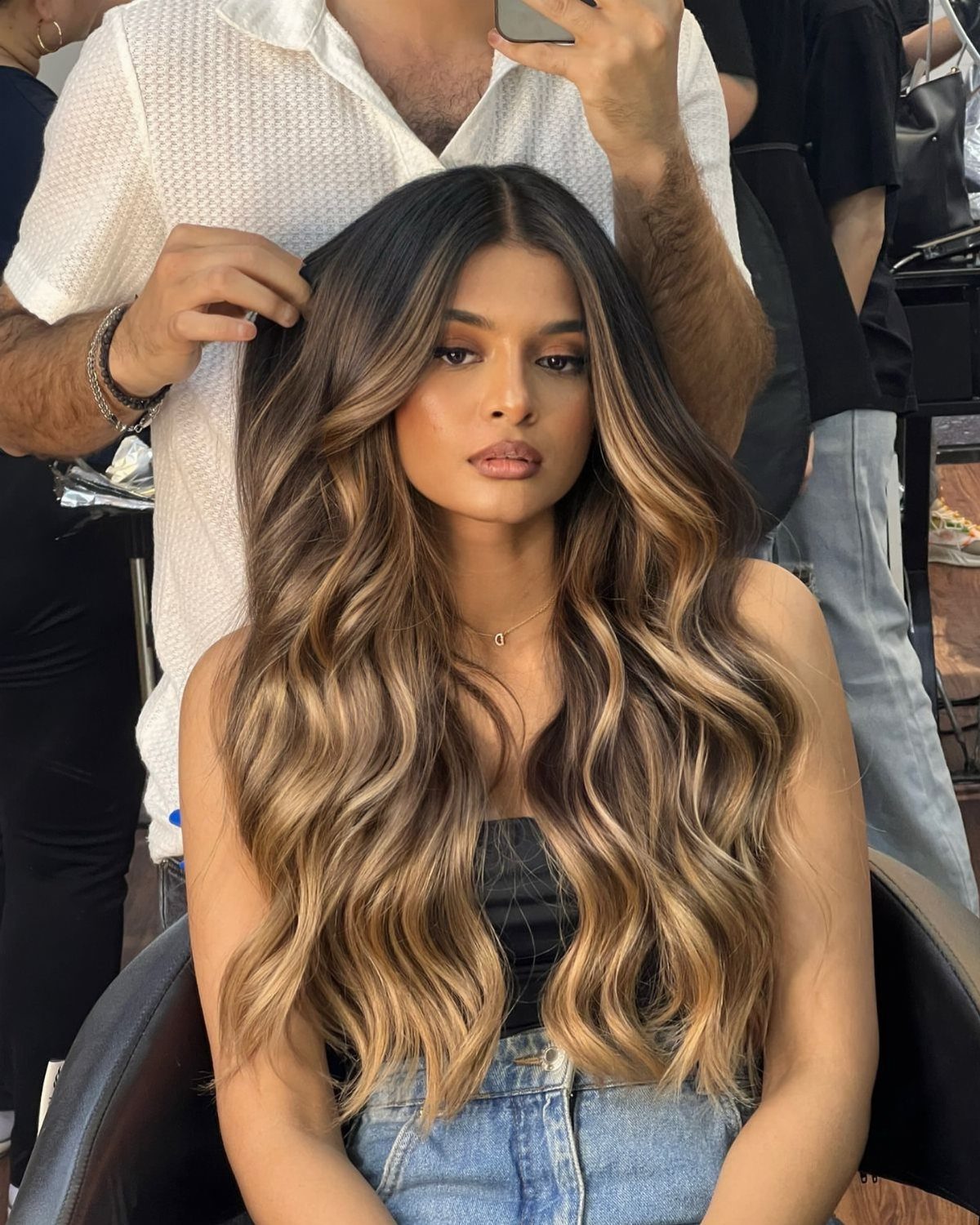
Caramel balayage is hand-painted, which means the colorist sweeps warmer tones where they fall naturally when hair lightens in the sun: more through the face-framing pieces and mid-lengths, less at the roots. The blend looks lived-in from the start.
For brunettes who want lighter pieces without committing to full highlights, this technique keeps most of your base intact. Roots stay darker, so you can stretch appointments much longer than with traditional highlights.
Ask for a mix of gold, honey and light brown tones if your base is medium to dark brown. The ribbons should be wider than babylights but softer than traditional foil highlights.
One of the biggest advantages of caramel balayage hair is that you may be able to wait longer between visits to the salon than you would with traditional highlights.
2. Highlighted Soft Waves
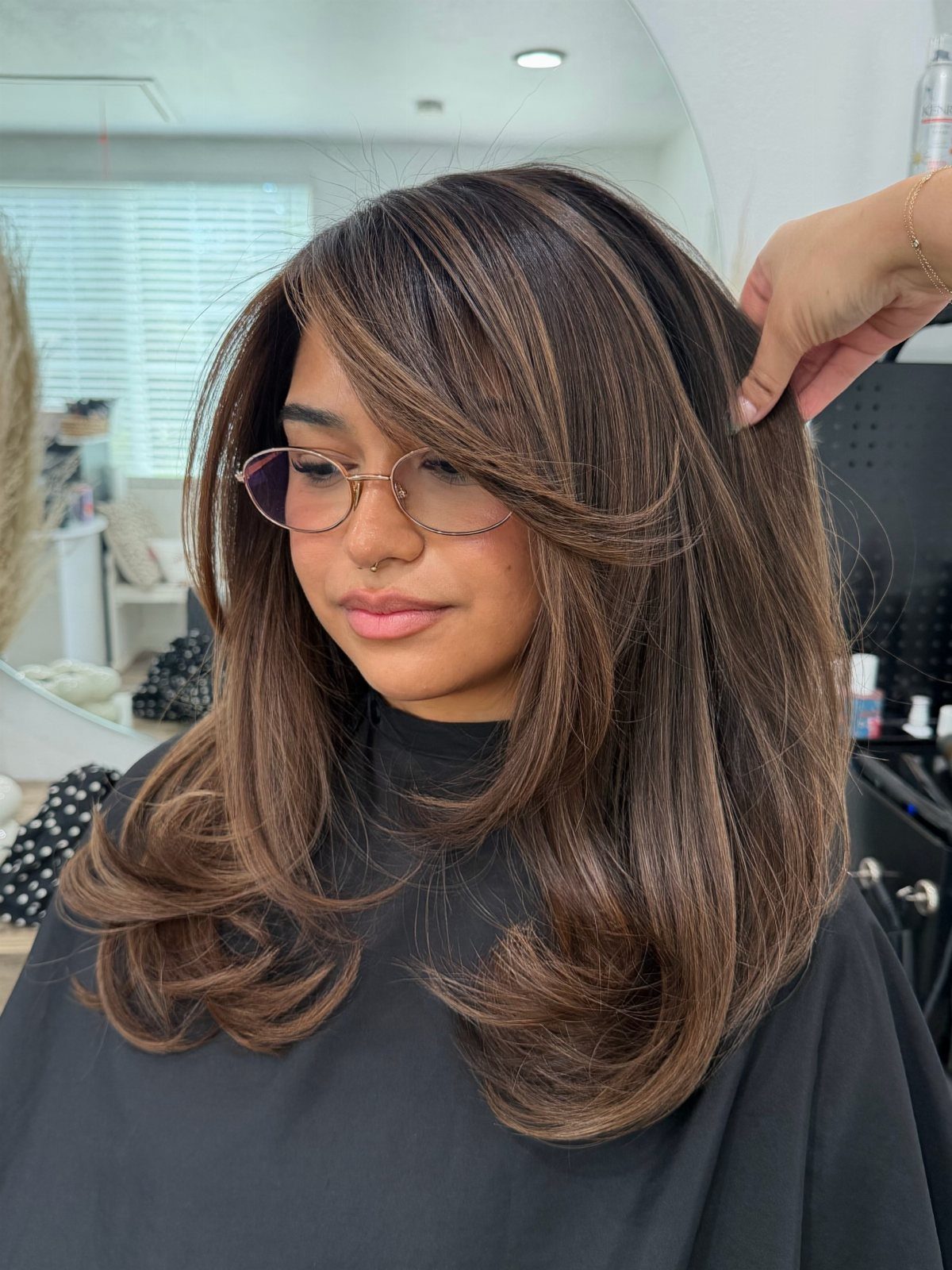
Soft waves let caramel highlights catch light at every angle, which matters when the placement is subtle. The red tinge in the base keeps the overall tone warm without reading orange.
Highlights here sit mostly through the mid-lengths and ends rather than starting high at the crown. That makes regrowth less obvious and gives you flexibility on timing if you need to push your next appointment.
For styling, a curling iron or wand with a barrel around an inch and a quarter gives waves loose enough to show dimension. Finish with a light oil through the lengths so the color stays glossy instead of matte.
3. Burgundy Strawberry-Blonde Waves
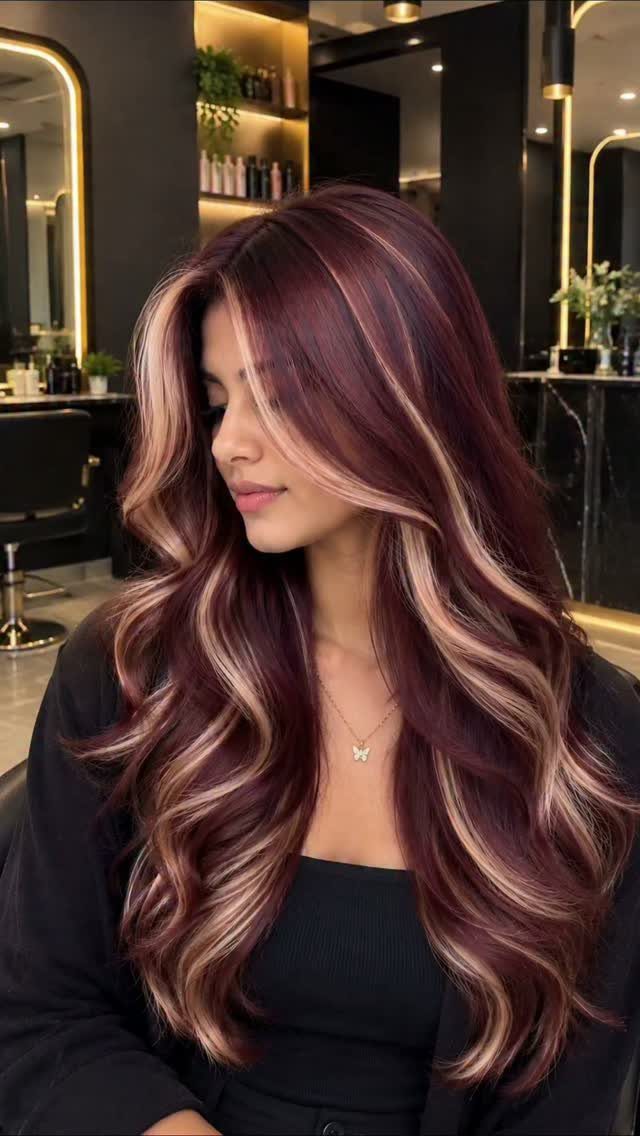
Burgundy as the base with strawberry-blonde and caramel woven through creates contrast that still reads warm. The waves amplify it: straight hair would flatten the tones into one block, but texture separates each ribbon.
This combination suits medium to dark skin tones especially well. The red keeps it from looking washed out, and the blonde pieces brighten without going full highlight.
If you’re starting with dark brown or black hair, expect at least 2 sessions to lift the burgundy and blonde without brassiness.
Red tones fade faster than most colors, so plan on regular touch-ups to keep the burgundy from going dull.
4. Brown-Blonde Bob
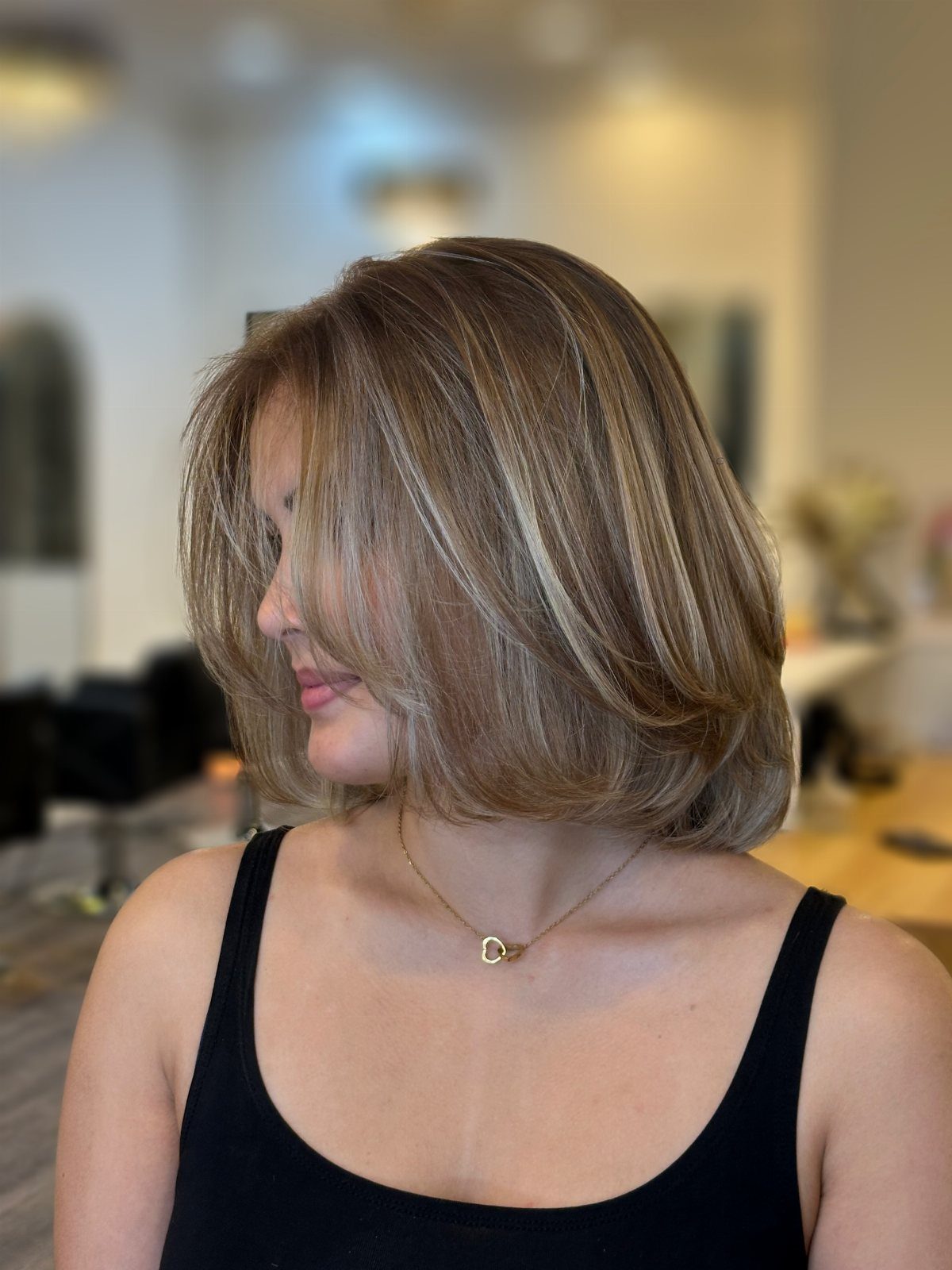
A bob shows off dimensional color better than most longer cuts because every piece is visible at once. Brown-blonde highlights here are blended close to the root, so the grow-out stays soft.
Shorter hair also means faster color appointments. A partial highlight on a bob takes less time than on long hair, and you use less product too.
Layers styled with a round brush add lift at the crown, which keeps the color from sitting flat. If your hair is fine, this combination gives the illusion of more density because the lighter pieces create depth.
5. Dark Hair with Lower-Half Highlights
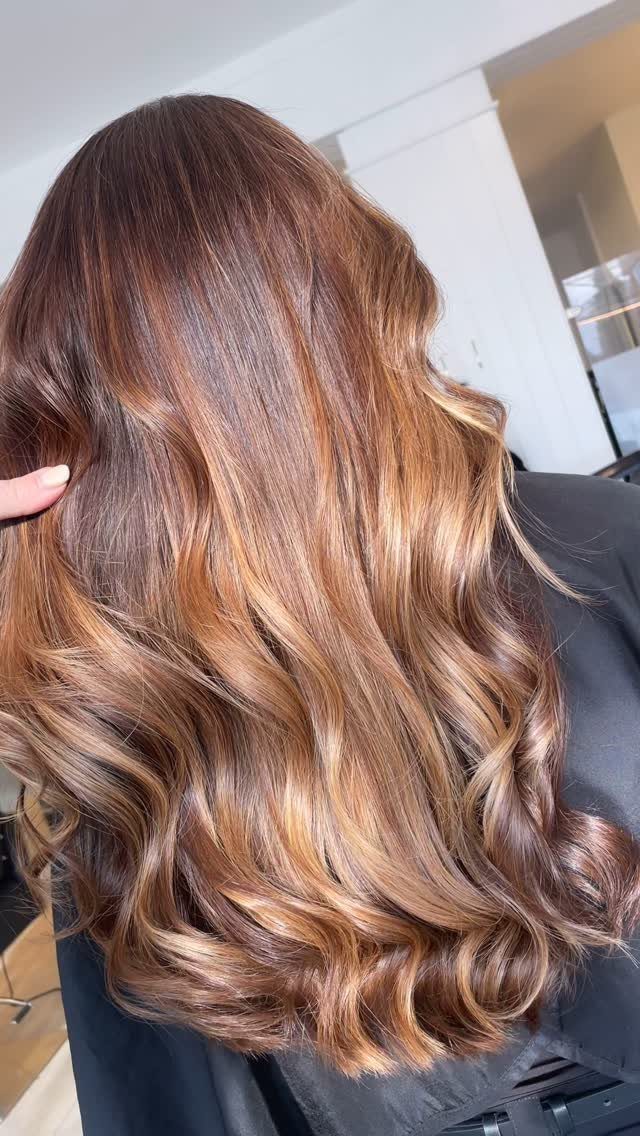
Keeping highlights through the lower half only means your roots stay untouched, which cuts both time and cost. The transition starts around mid-length, so there’s no harsh line as it grows.
This placement works especially well on dark brown or black hair when you want warmth without changing your base color. The caramel sits where hair moves most, through the ends and around the face when you turn your head.
Maintenance is minimal.
You can go much longer between touch-ups, and when you do go back, the colorist only lifts and tones the lower section. For styling, loose waves or curls show the dimension better than straight hair.
6. Curly Highlights
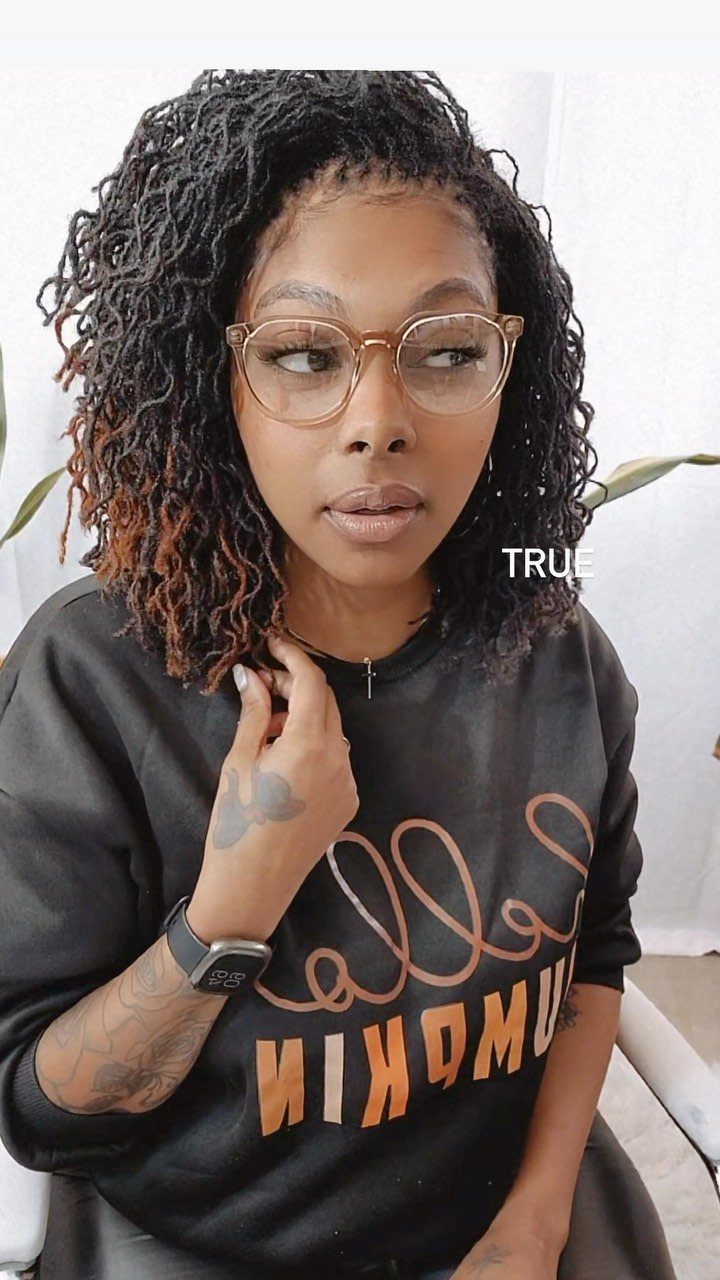
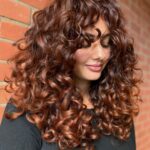
Curly hair holds highlights differently because each curl reflects light from multiple angles. Caramel tones here add warmth without requiring heavy lightening, which matters since curls are more prone to dryness after color.
The reddish-brown ribbons visible through the curls keep the base rich while adding subtle dimension. For tighter curl patterns, foil highlights or pintura (painting color onto individual curls) give more control than balayage.
Curly hair also shrinks when dry, so what looks like mid-length highlights wet will sit higher once styled.
Ask your colorist to paint lower than they would on straight hair. Plan on regular touch-ups, and a deep conditioner after every wash keeps the color from looking dull.
7. Dark Brown Highlights
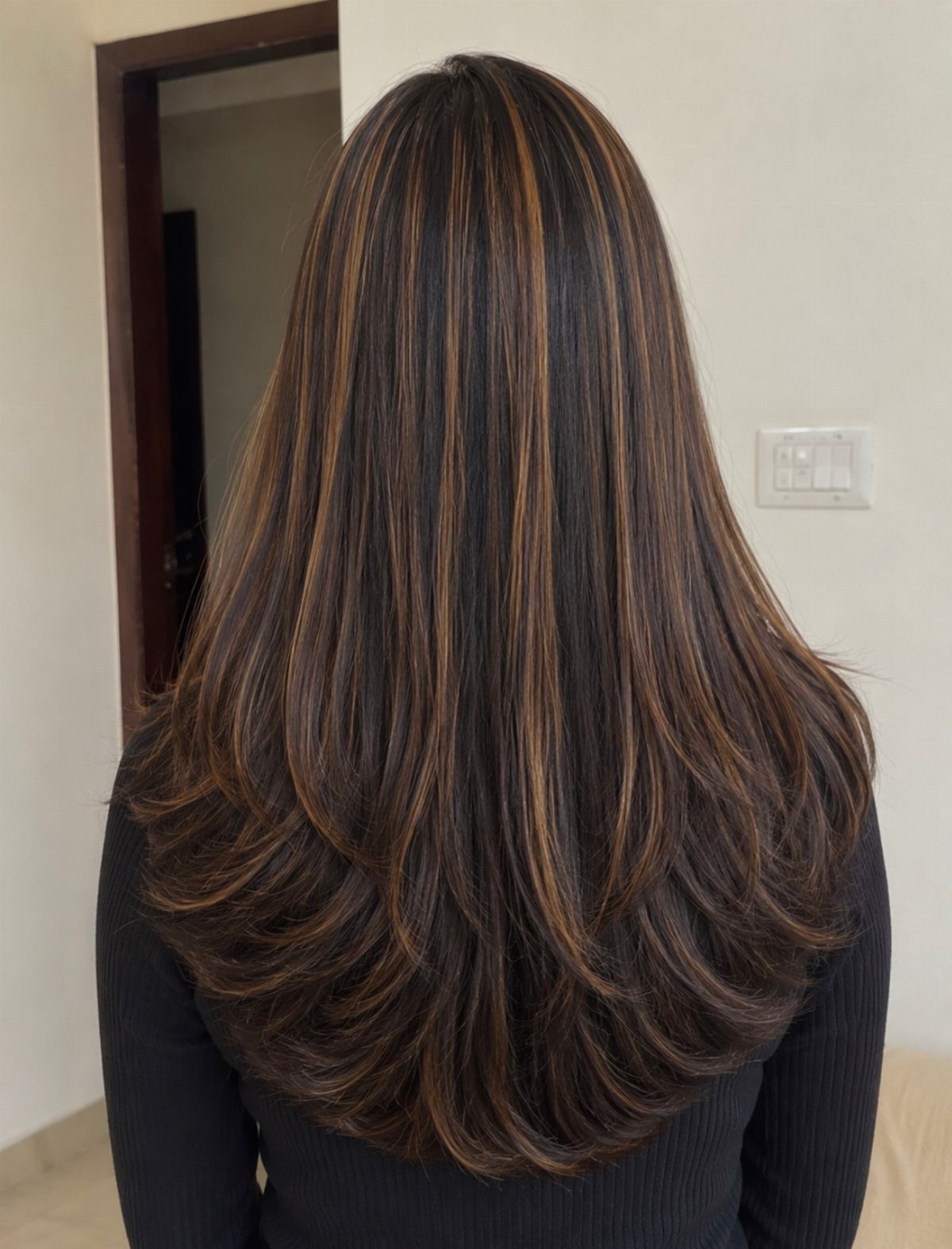
Dark brown hair with caramel highlights this close in tone creates dimension without obvious contrast. The lighter ribbons sit just a few shades up from the base, so the effect reads subtle even in direct light.
This approach suits anyone who wants warmth without a drastic change. Since the lift is minimal, the process is gentler on hair and typically faster than going several shades lighter.
Layers help separate the tones. On one-length hair, the colors can blend together and lose definition, but movement lets each piece catch light on its own.
8. Mid-Length Golden Waves
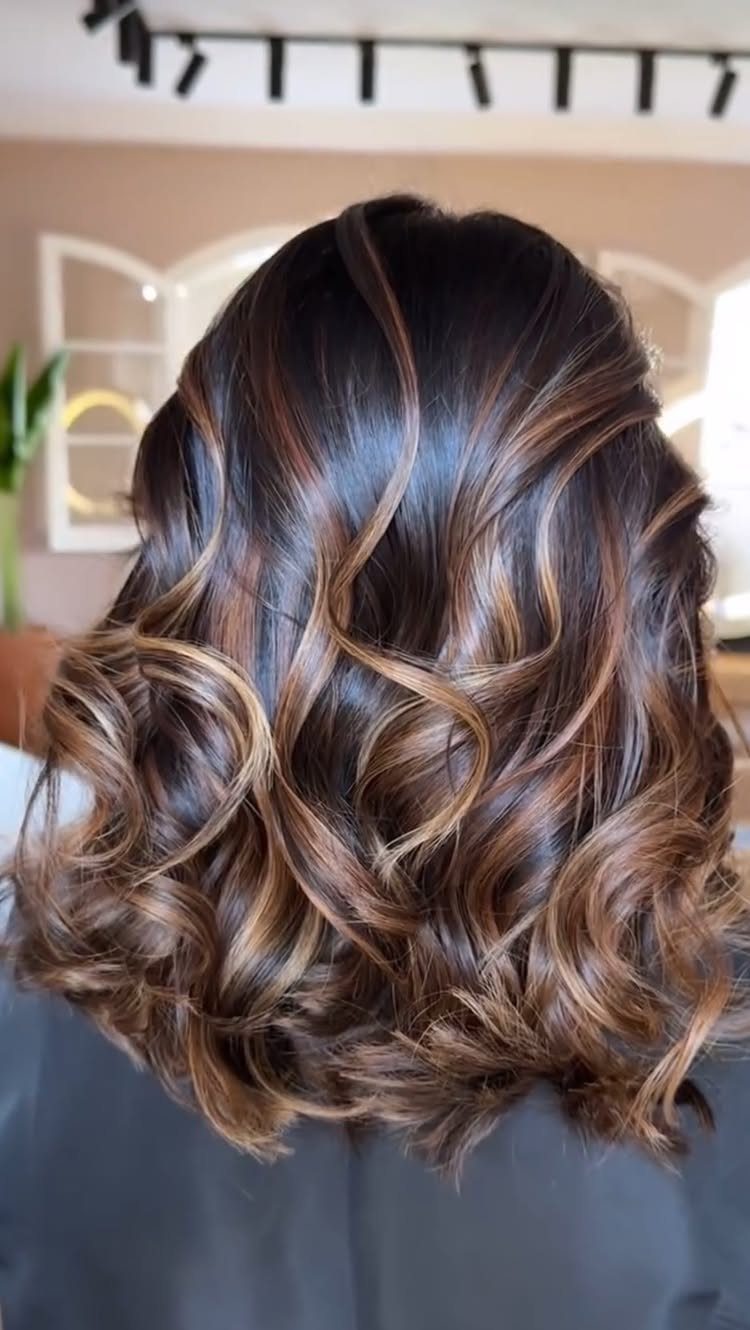
Golden highlights on mid-length hair give you dimension that stops before it overwhelms. The color sits mostly through the ends and face-framing pieces, which keeps maintenance manageable since roots stay darker.
The curves catch light differently at each angle, so the gold reads warmer in some spots and cooler in others depending on how you move.
Mid-length hair also holds a curl longer than very long hair because there’s less weight pulling it down. A light texturizing spray after styling helps the waves stay loose without going stiff.
9. Golden Ombre Balayage
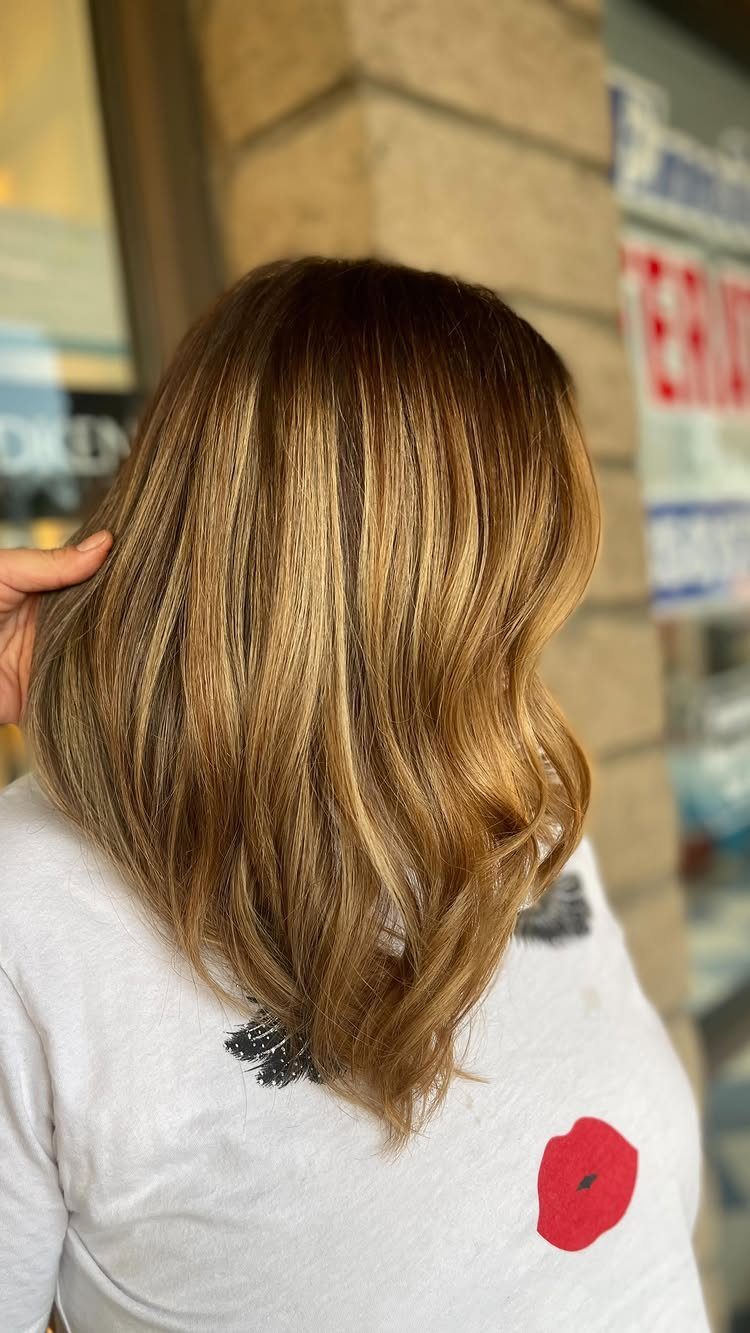
Ombre balayage starts darker at the roots and transitions to golden-blonde through the lengths, with the lightest color concentrated at the ends. The hand-painted application keeps the gradient soft rather than striped.
This technique works well if you want low-maintenance color because the darker root area grows out without a harsh line. You can stretch appointments longer depending on how fast your hair grows.
Golden tones lean warmer than ash or platinum, so they suit most skin tones without looking washed out.
10. Long Blended Caramel
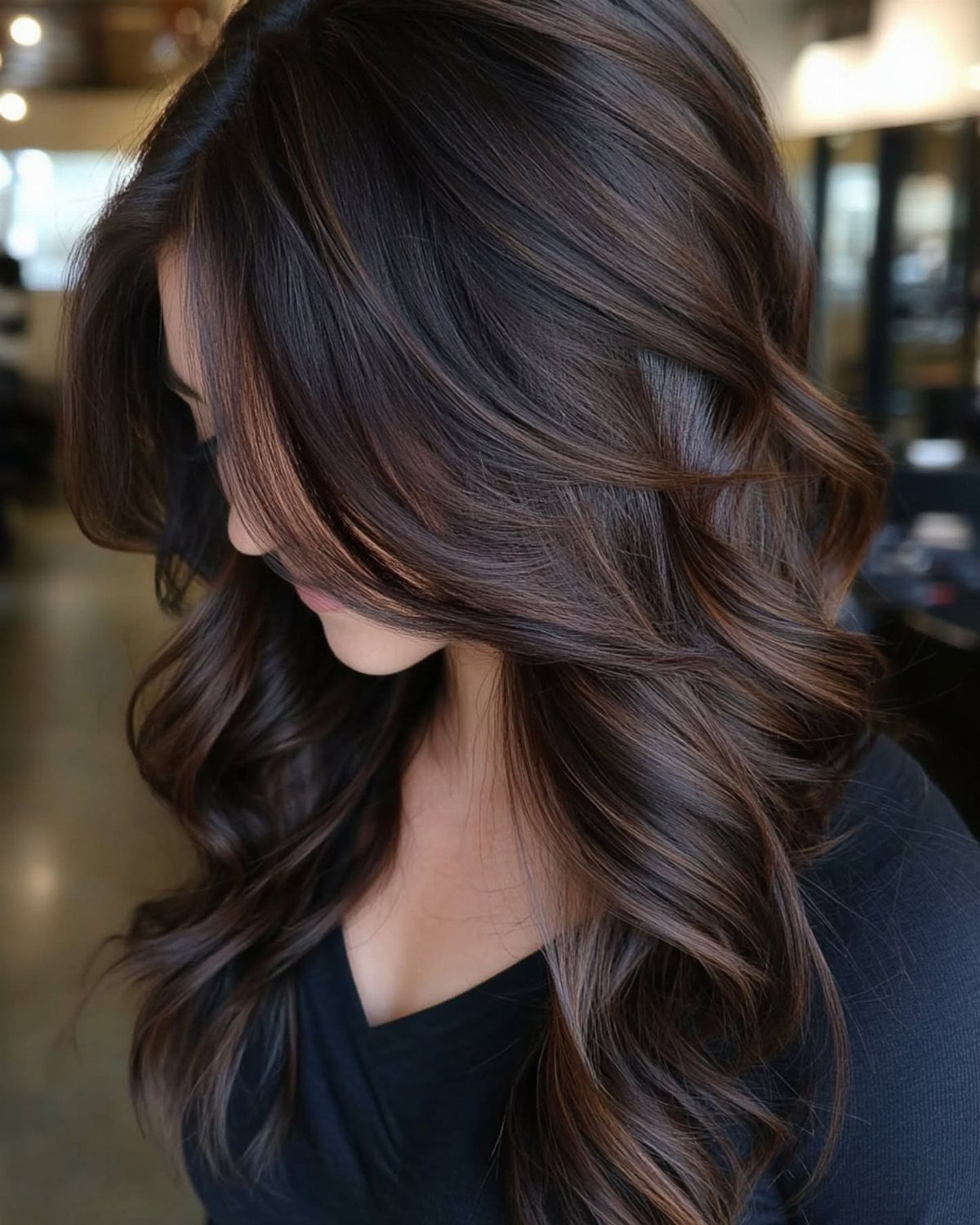
Long hair gives a colorist more canvas to blend caramel through the natural brown, so the transition stays gradual. The ribbons here are woven close together rather than chunky, which keeps the overall look cohesive instead of striped.
Blended highlights like this require less upkeep than heavy contrast because regrowth is less obvious. The darker roots stretch into the lighter pieces without a hard stop, so you can wait longer between touch-ups.
On very long hair, weight matters. A deep conditioner once a week keeps the ends from drying out, and regular trims prevent split ends that make color look dull.
11. Glossy Honey Highlights
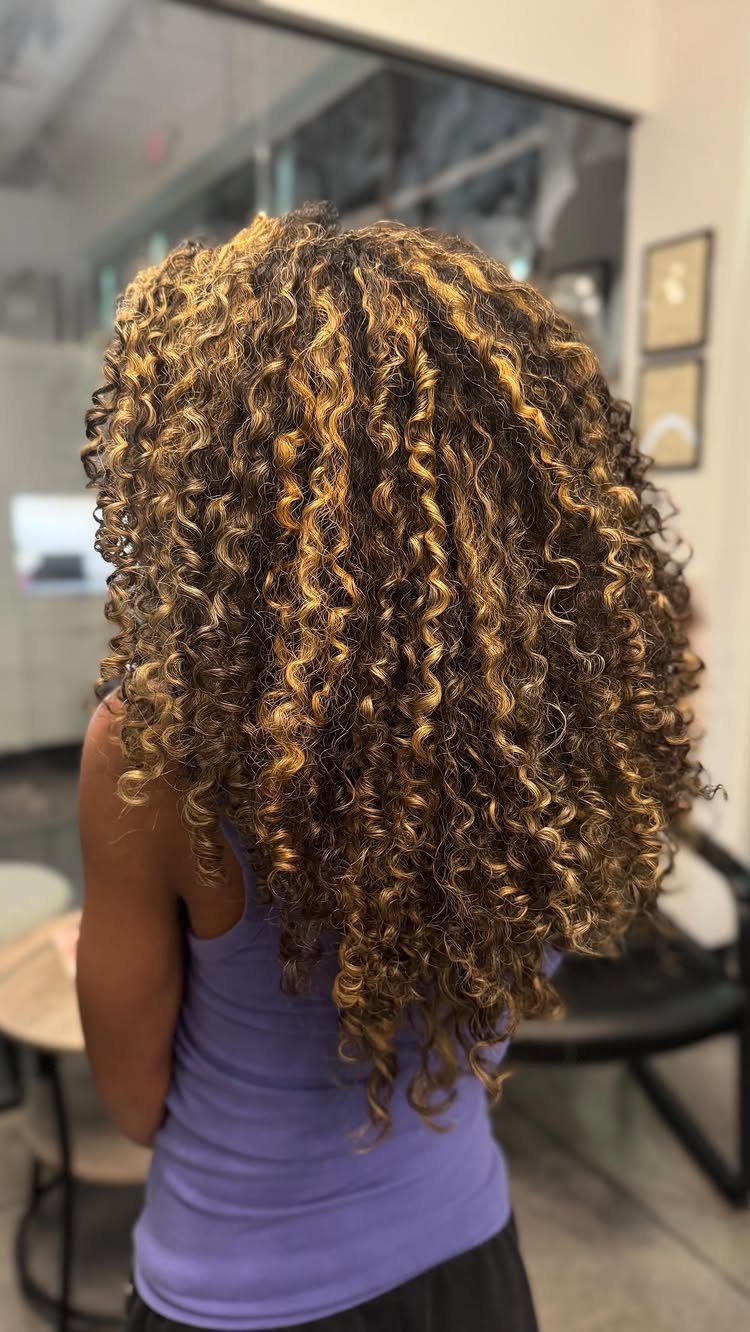
Honey-blonde highlights add warmth to brown curls without requiring heavy bleaching.
Large curls like these show off the ribbons because each curl spiral reflects light differently. On tighter curl patterns, the highlights might blend more, so bigger curls give you more visible dimension.
The colorist here used a deep conditioning treatment focused on curl repair after lifting the color.
Curly hair loses moisture faster after highlights, so plan on a protein treatment or mask at least once a week to keep the texture springy instead of dry.
12. Warm Honey Highlights
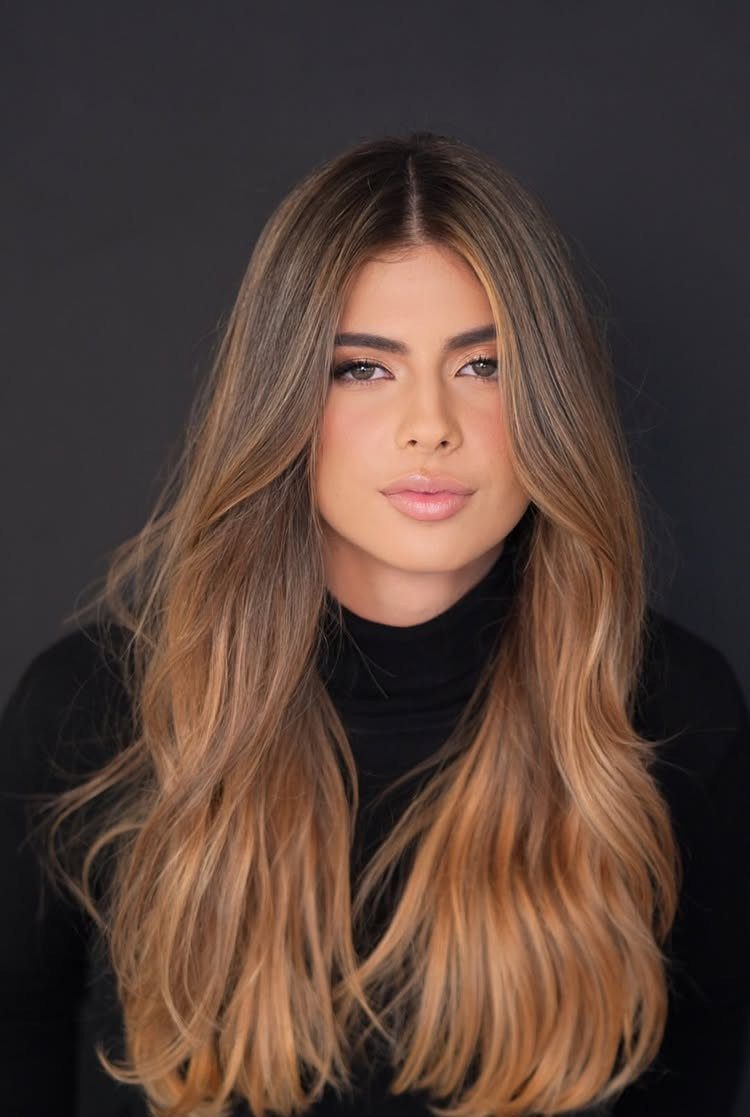
Warm honey highlights lean golden rather than ash, which makes them flattering on skin with yellow, pink, or beige undertones. The ribbons frame the face and concentrate through the front sections, so they brighten without requiring full coverage.
Face-framing pieces grow out more noticeably than highlights through the back, but they also take less time to refresh. A partial highlight focused on the front can be done in under an hour.
Loose waves let the color catch light, but straight hair works too if you want a sleeker finish.
13. Mocha Brown with Caramel Highlights
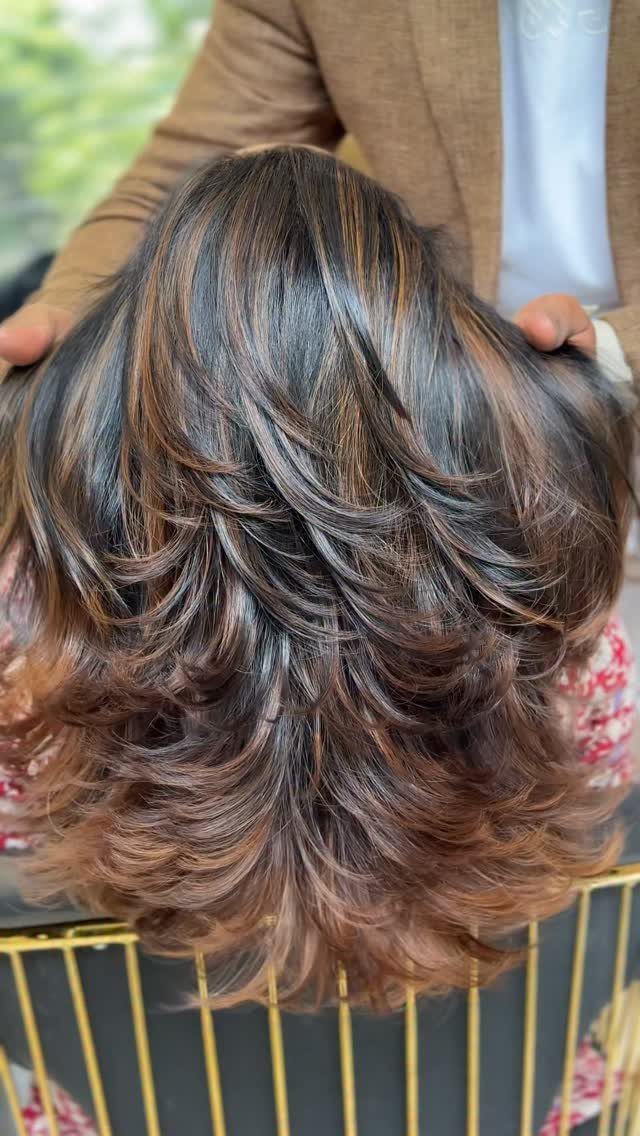
Mocha brown as a base keeps the overall look rich while the caramel ribbons add warmth without pushing into red or orange territory.
The combination flatters most skin tones because the brown anchors it and the caramel brightens without high contrast.
Layers cut into the ends let the two tones sit separately instead of blending into one flat color. If your hair is thick, this technique adds movement that makes the dimension more visible.
Curled ends show off the lighter pieces better than blunt-cut hair because the curve catches light from different angles.
14. Chocolate Brown Highlights
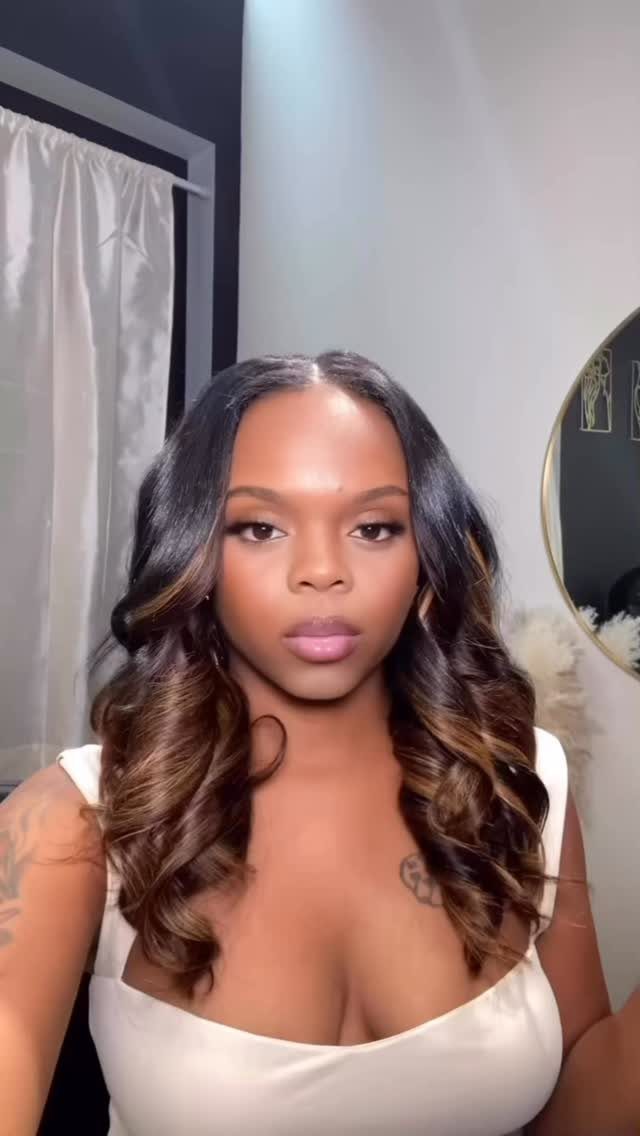
Chocolate brown with balayage highlights stays dimensional without going too light. The lifted pieces here are painted through the mid-lengths and ends, which keeps roots darker and means less frequent touch-ups.
Long layers give the color somewhere to sit. On one-length hair the highlights can disappear into the base, but layers separate the tones so each one shows.
A glossy finish makes the color read richer. After washing, a smoothing serum or light oil through damp hair helps lock in shine before you style.
15. Sleek Shiny Highlights
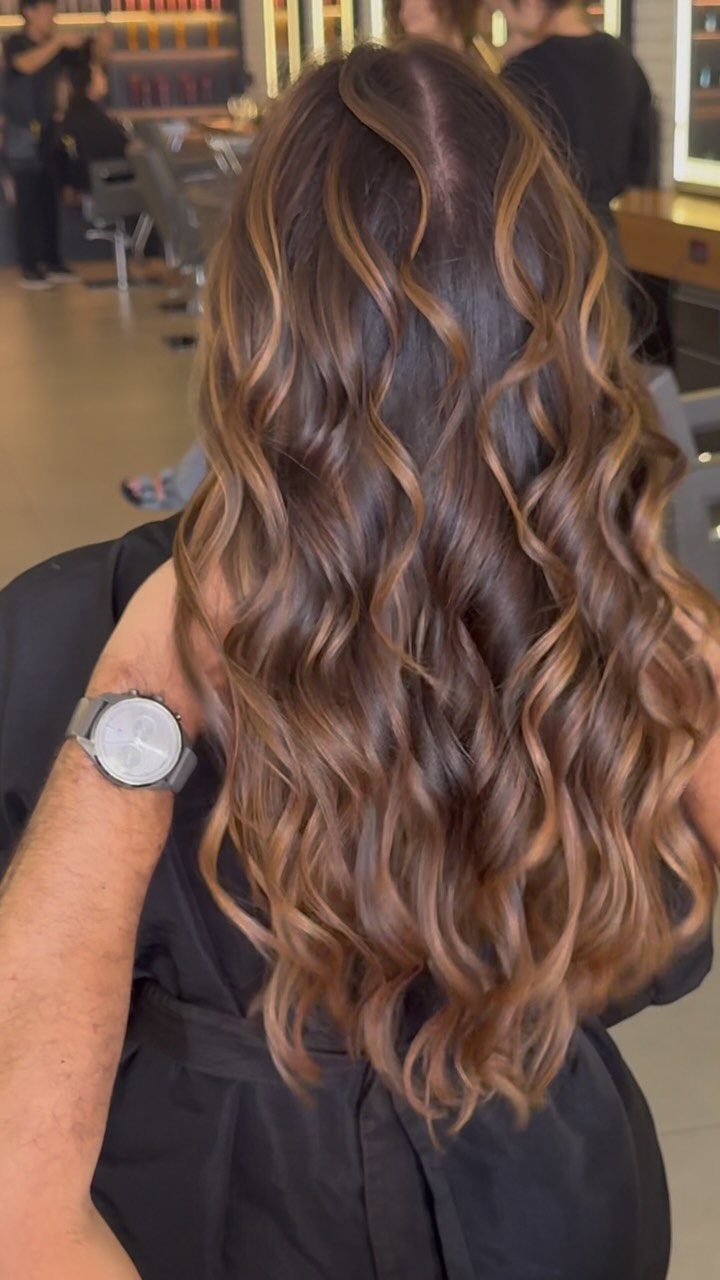
Sleek, shiny hair reflects more light, so caramel highlights look brighter without adding more color. The finish here comes from how the hair is treated and styled, not just the placement of the ribbons.
A gloss treatment after highlighting seals the cuticle and adds depth to both the base and the lifted pieces. Most glosses fade gradually as you wash.
For styling, a flat iron on lower heat with a heat protectant keeps the surface smooth. Matte or textured products will dull the shine, so stick with serums or oils if you want this level of gloss.
16. Chunky Voluminous Layers
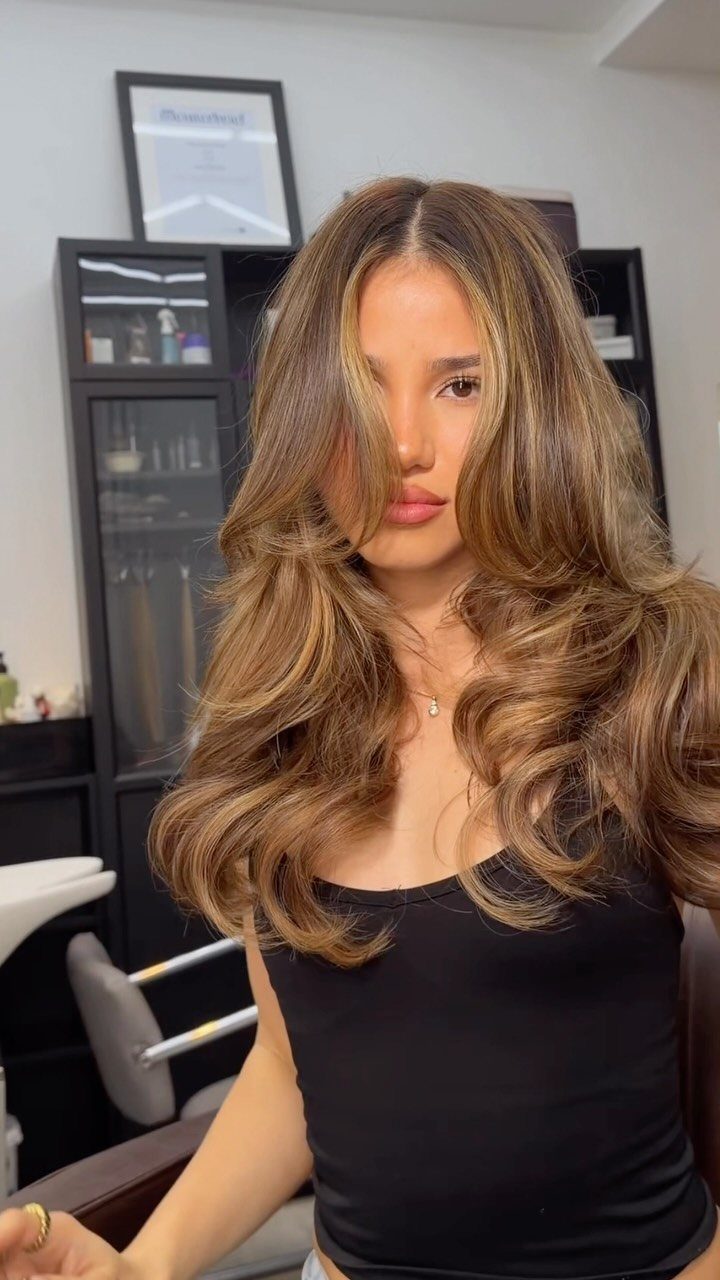
Chunky highlights use wider sections of caramel instead of fine ribbons, which gives you bold contrast rather than a soft blend.
The effect is more visible and grows out with a clearer line, so plan on regular touch-ups if you want to keep it looking fresh.
Voluminous layers add body, especially if your hair is fine or flat.
Loose curls amplify the dimension because each curl shows a different tone depending on how it falls.
17. Brown Hair with Sun-Kissed Babylights
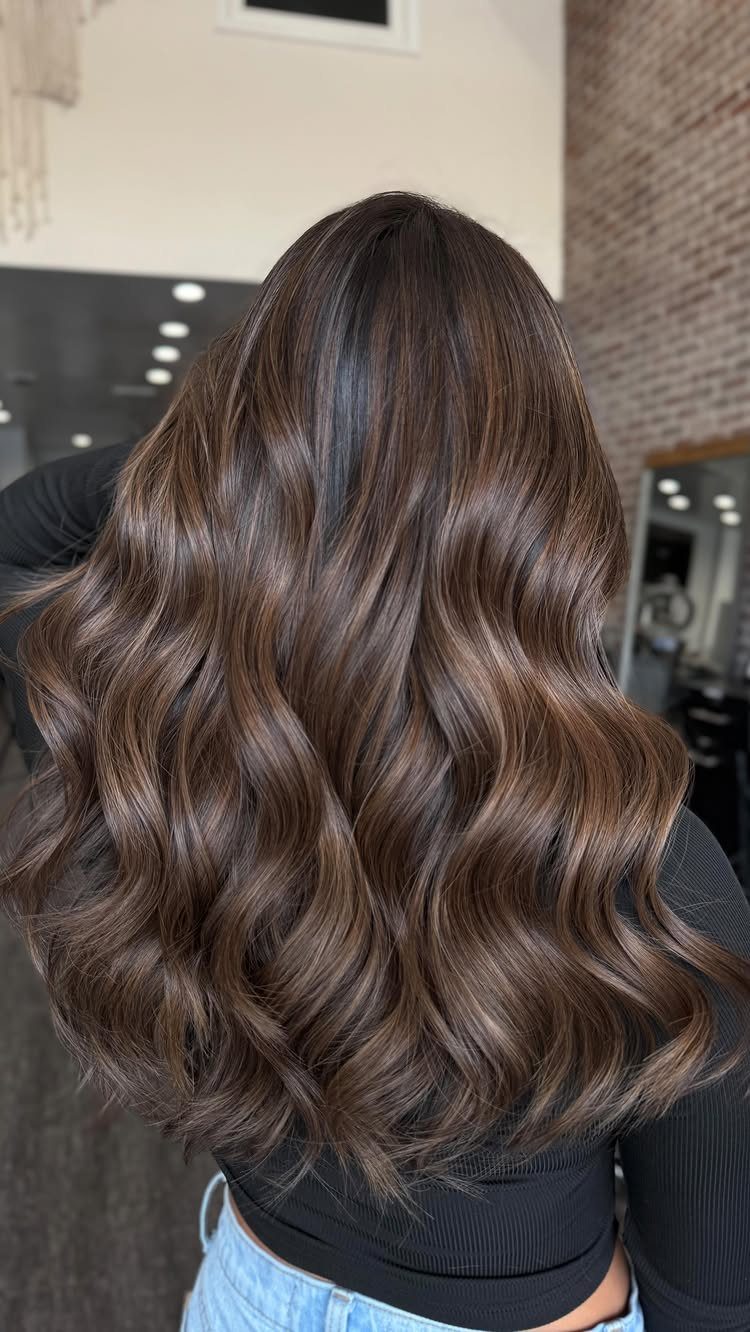
Babylights are finer than traditional highlights, so the effect looks like natural sun lightening rather than intentional color. The ribbons here are painted close together and kept subtle, which makes regrowth less obvious.
The technique takes longer than standard highlights because the colorist works with smaller sections, but the blend lasts longer too.
Texture brings out the dimension better than a straight finish. For styling, a curling wand with a tapered barrel gives you varied curl sizes that look more natural.
18. Balayage Money Pieces
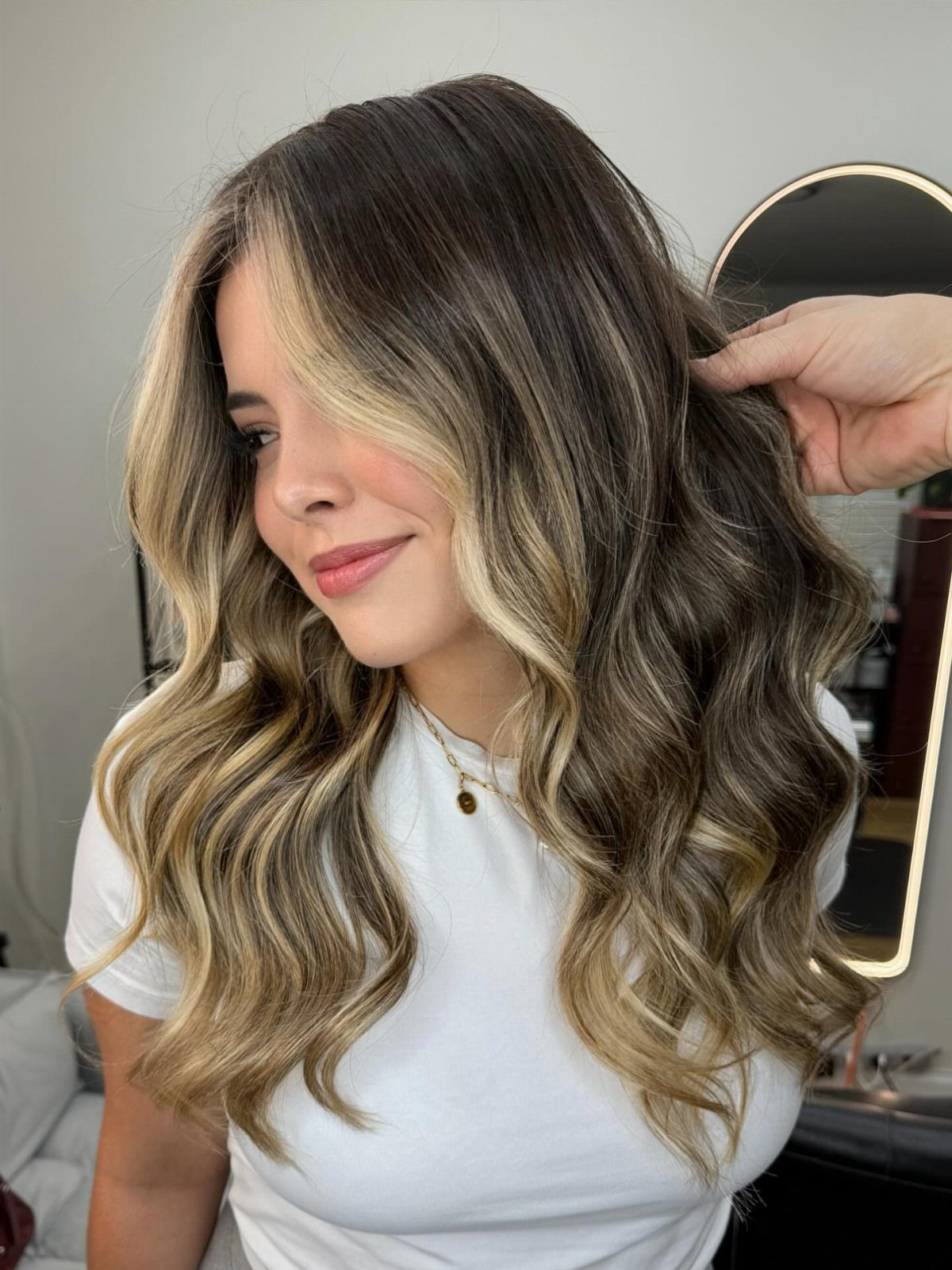
Money pieces are face-framing highlights that sit right around the hairline and temples, lighter than the rest of your color.
Soft caramel tones here blend into the brunette balayage instead of creating harsh contrast. The transition stays gradual, so regrowth is less noticeable than with higher-contrast money pieces.
These pieces grow out faster than highlights further back because they’re right at the hairline. Plan on refreshing them every six to eight weeks if you want to keep the brightness.
19. Highlighted Black-Brown Hair
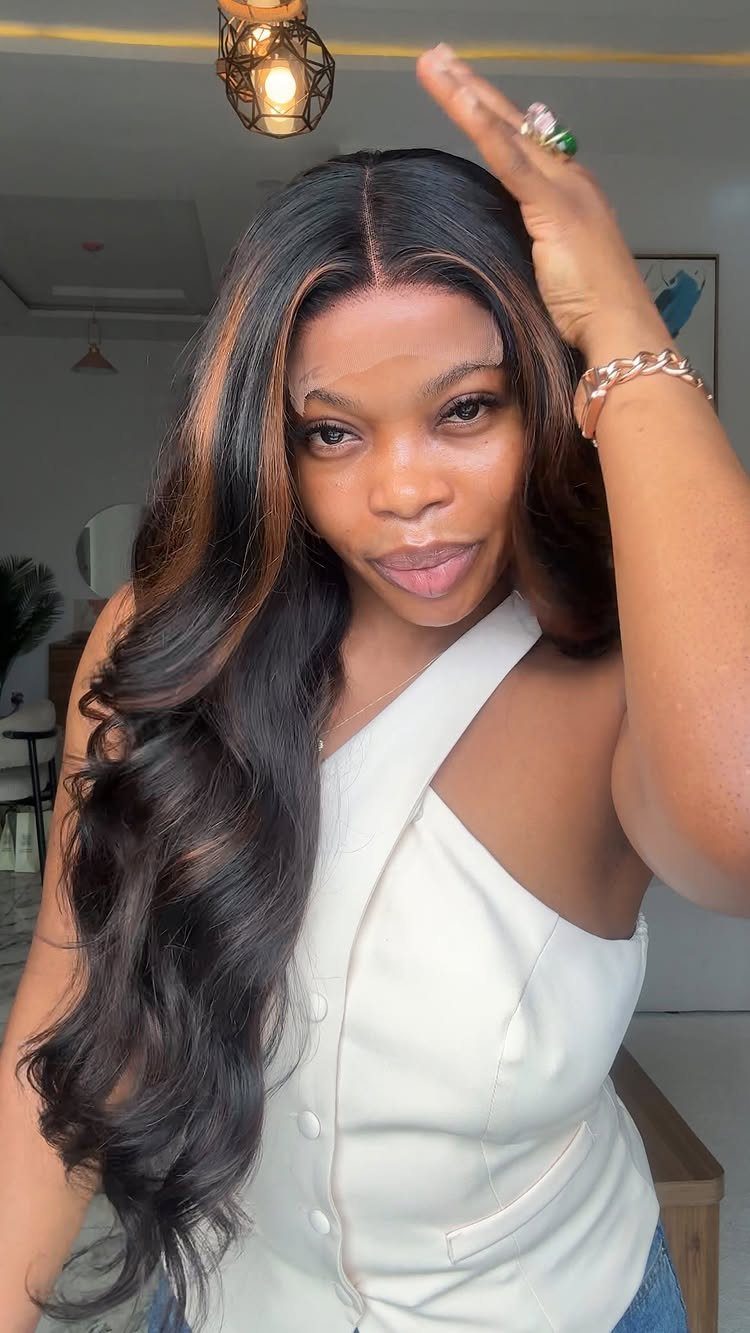
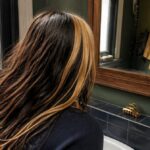
Black-brown hair lifted to caramel requires more processing than lighter bases, so the highlights here sit subtly through the lengths rather than clustered at the roots. The result reads as dimension instead of obvious streaks.
Keeping the contrast low means regrowth blends as it grows, which buys you time between appointments. Black hair can turn brassy if lifted too quickly, so most colorists work in stages or use a lower volume developer.
Loose waves separate the tones better than straight hair does, and a blue-toning shampoo once a week keeps the caramel from pulling orange.
20. Blonde Caramel Highlights
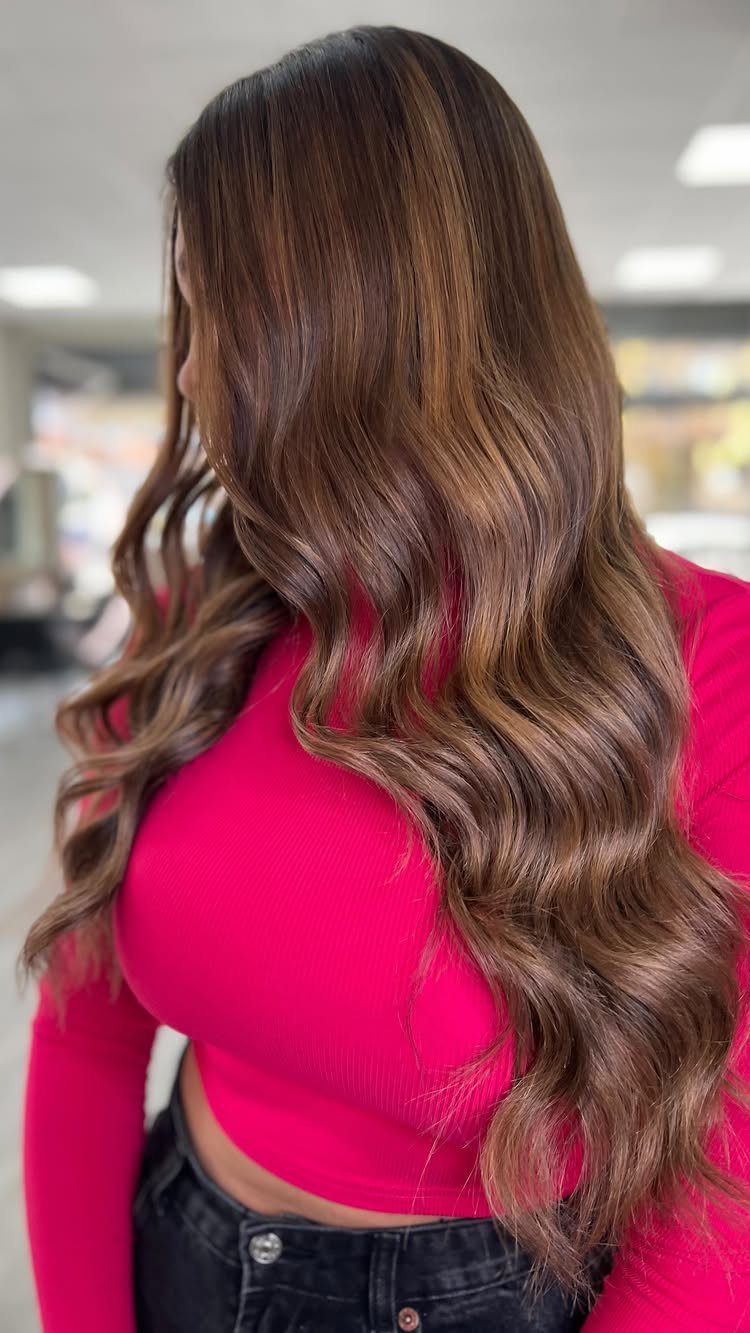
Layering several shades of blonde and caramel into a brown base gives you dimension that reads three-dimensional rather than flat.
Each ribbon sits at a slightly different level of lift, so the overall effect changes depending on how light hits it.
The blend works because no single piece stands out.
Waves pull the ribbons apart so you see caramel, then base, then caramel again. Straight hair will still catch the variation, but the dimension reads softer.
21. Golden Highlights on Curly Hair
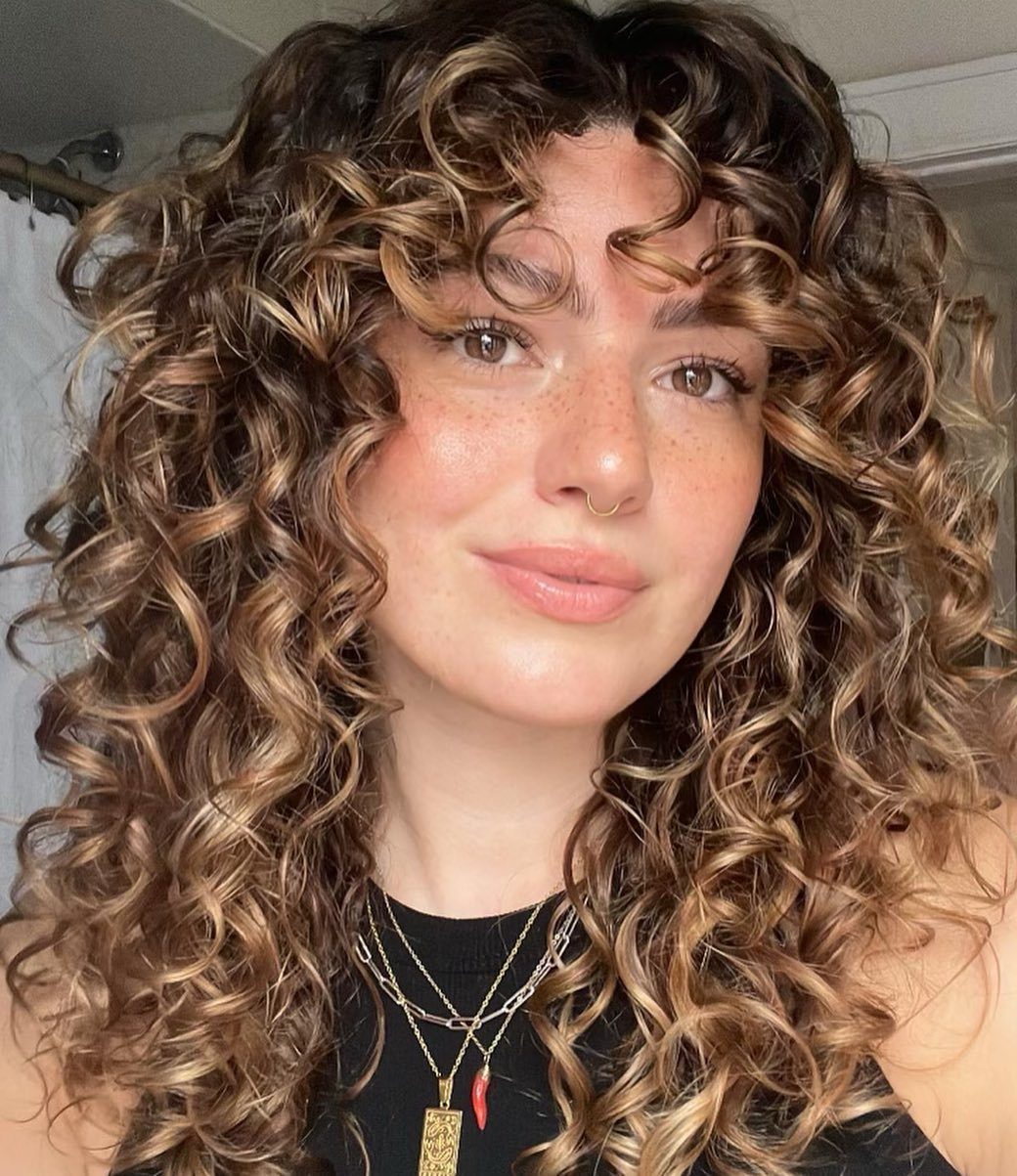
Golden highlights on curly hair require less upkeep than lighter shades because the base stays closer to the natural color. The ribbons add warmth without heavy contrast, and curls hold onto moisture better when the lift is minimal.
Curls also hide regrowth longer than straight hair because the texture scatters the line. If you stretch appointments, this combination lets you go longer without the roots looking grown out.
22. Caramel Black Hair
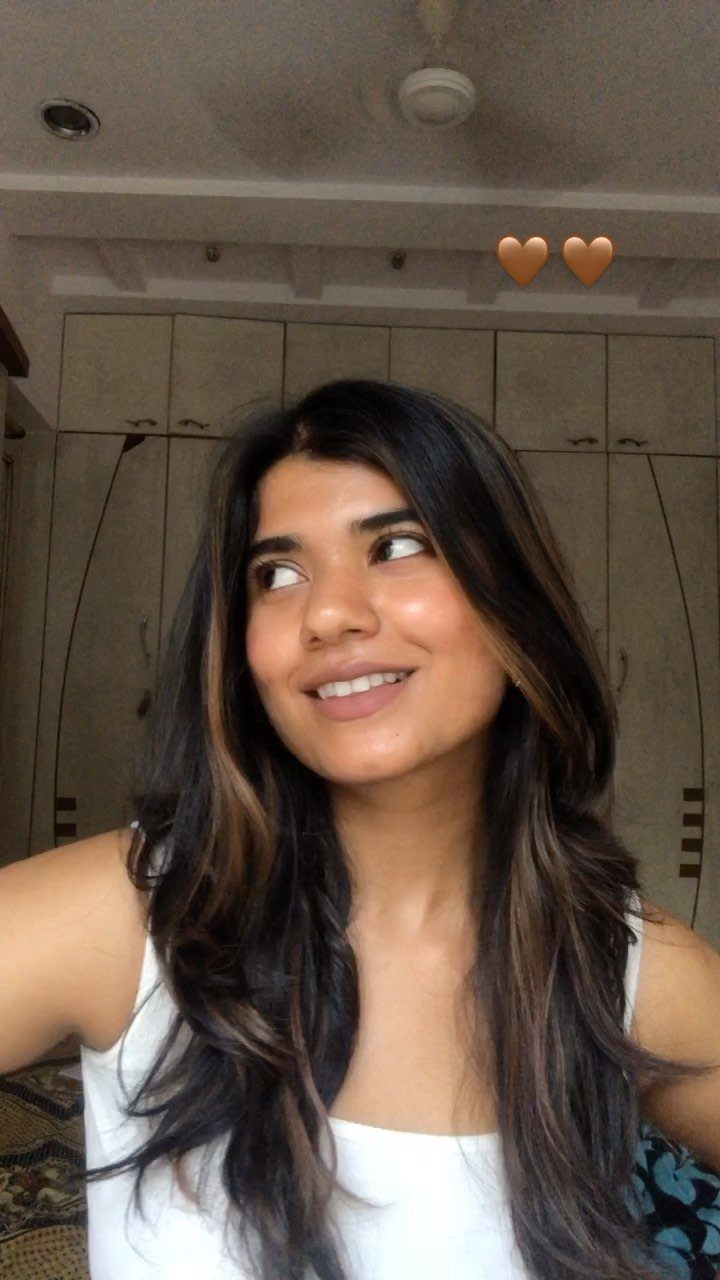
Money pieces around the face lighten black hair without touching the rest of your head, which cuts both time and damage.
Black hair holds onto its natural pigment more stubbornly than brown, so lifting it to caramel usually takes longer or requires a stronger developer. Focusing on just the front sections means less processing overall.
The contrast grows out faster at the hairline.
23. Golden Blonde and Caramel Highlights
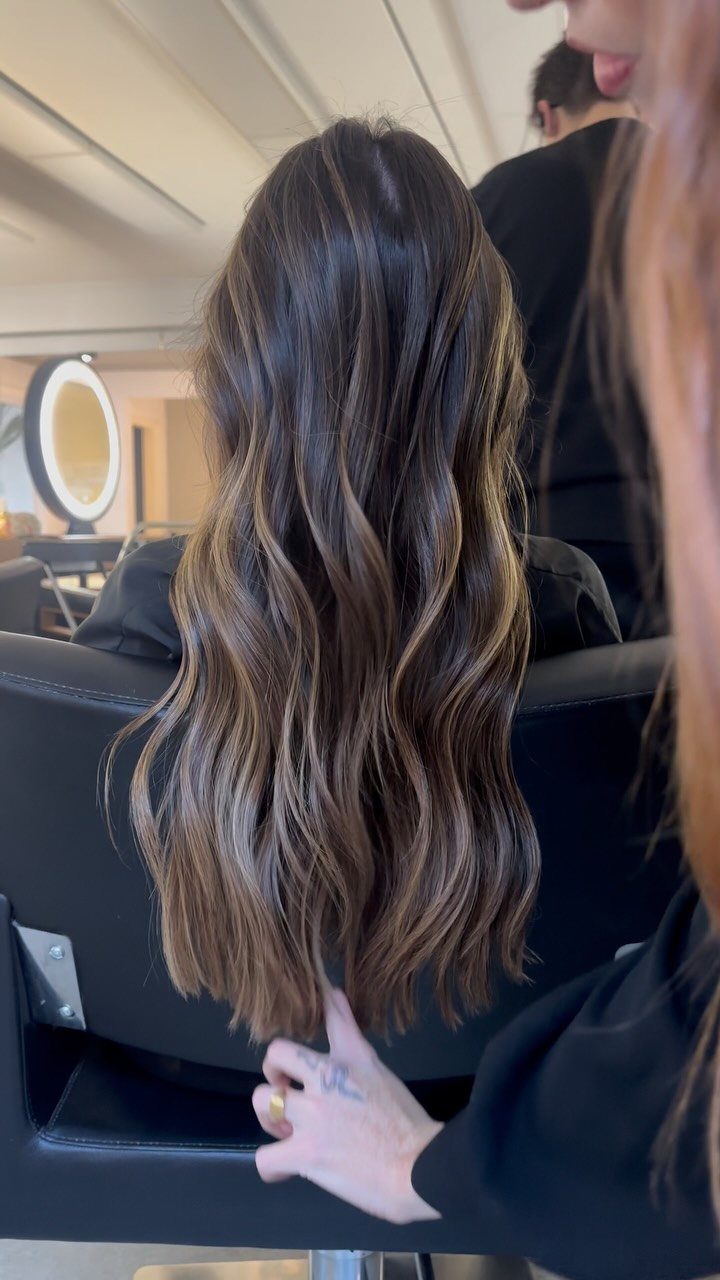
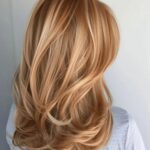
Golden blonde mixed with caramel creates a brighter, warmer finish than caramel alone. The 2 tones sit close together through the lengths, so the overall effect leans gold rather than brown.
This combination catches light more visibly than subtle highlights, which makes it flattering in natural light but also more obvious as it grows. Wavy hair shows off the variation better because each curve reflects a different tone.
24. Muted Chocolate Highlights
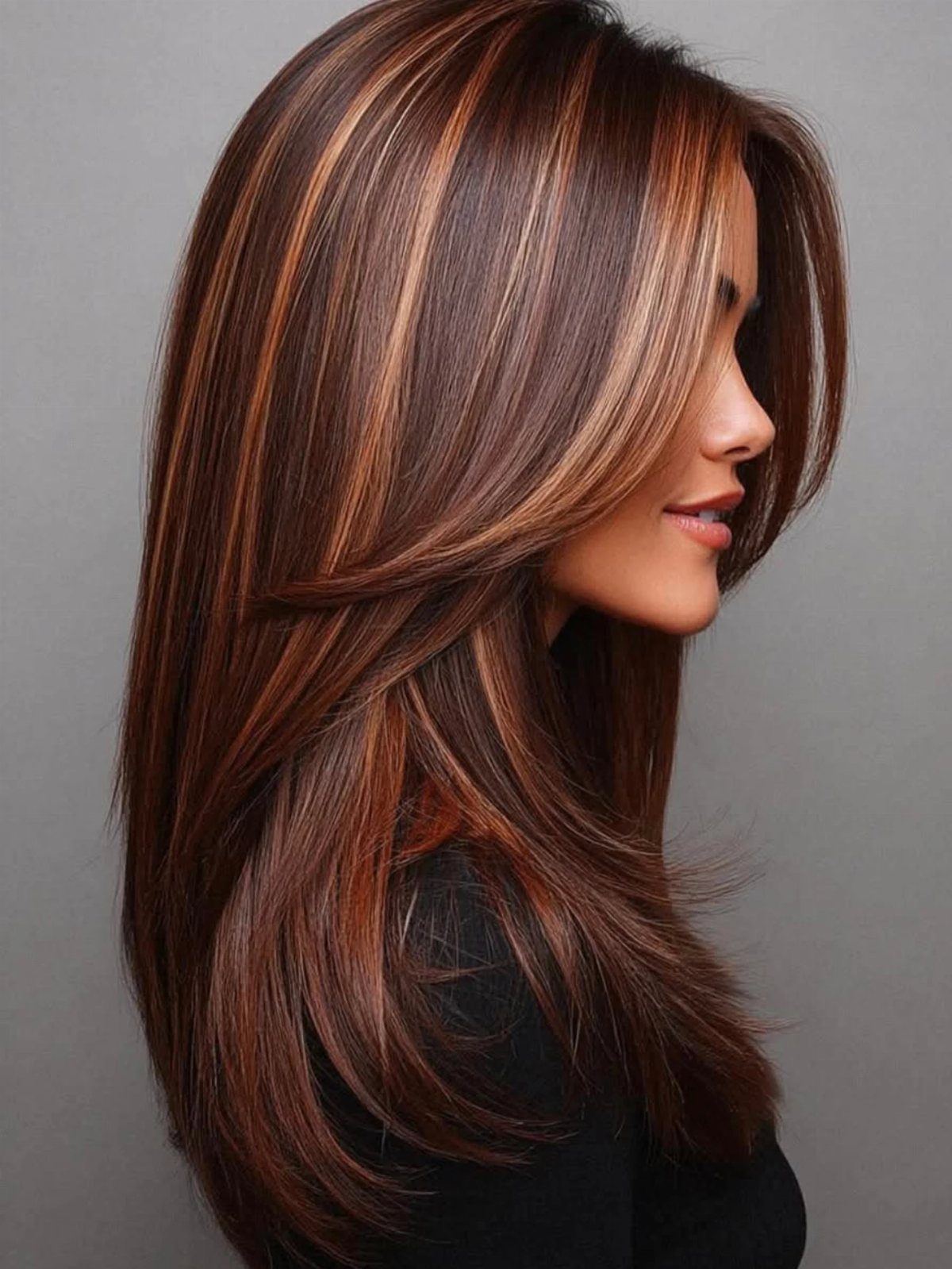
Muted chocolate and caramel keep the contrast low, so the highlights add warmth without standing out sharply. The ribbons here are painted through the mid-lengths rather than starting at the root, which softens the grow-out.
25. Dark Chocolate Balayage
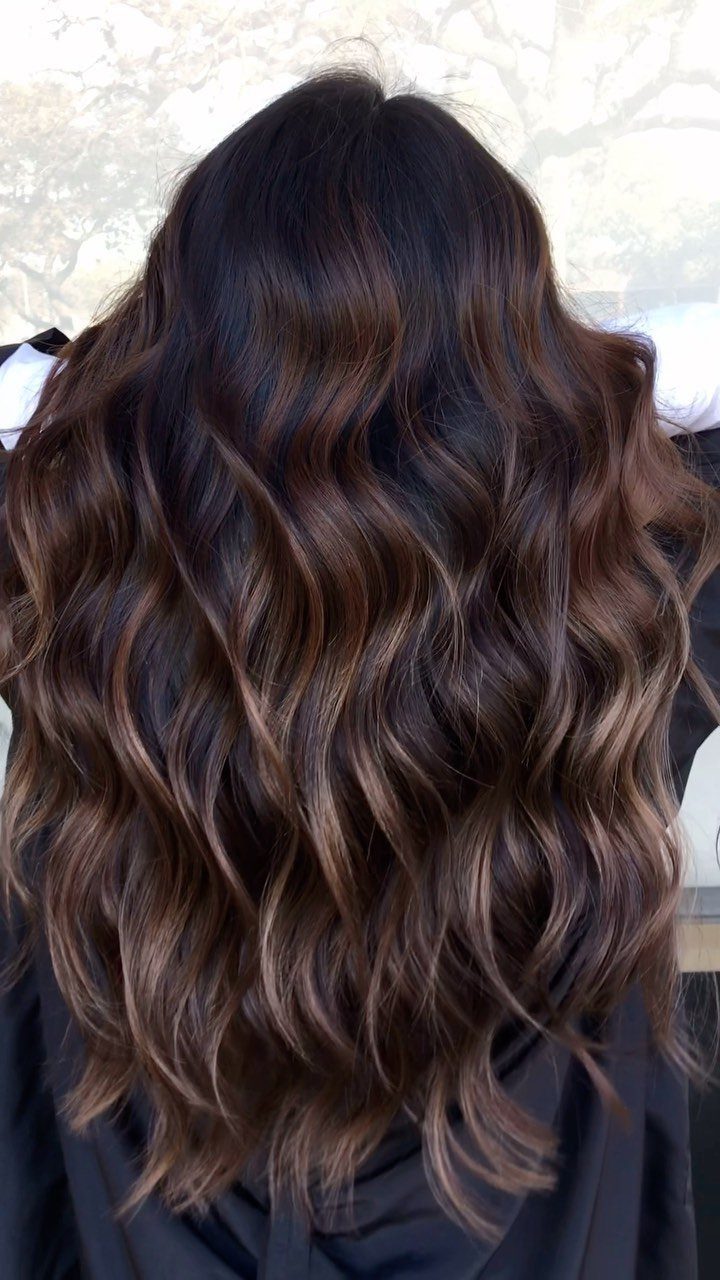
Dark chocolate balayage layers several shades of brown rather than jumping straight to caramel, so the dimension stays subtle.
The colorist here painted lighter brown through the mid-lengths before lifting to caramel at the ends, which gives you a gradual shift instead of high contrast.
The technique works well if you want dimension without obvious streaks.
26. Dark Auburn Caramel
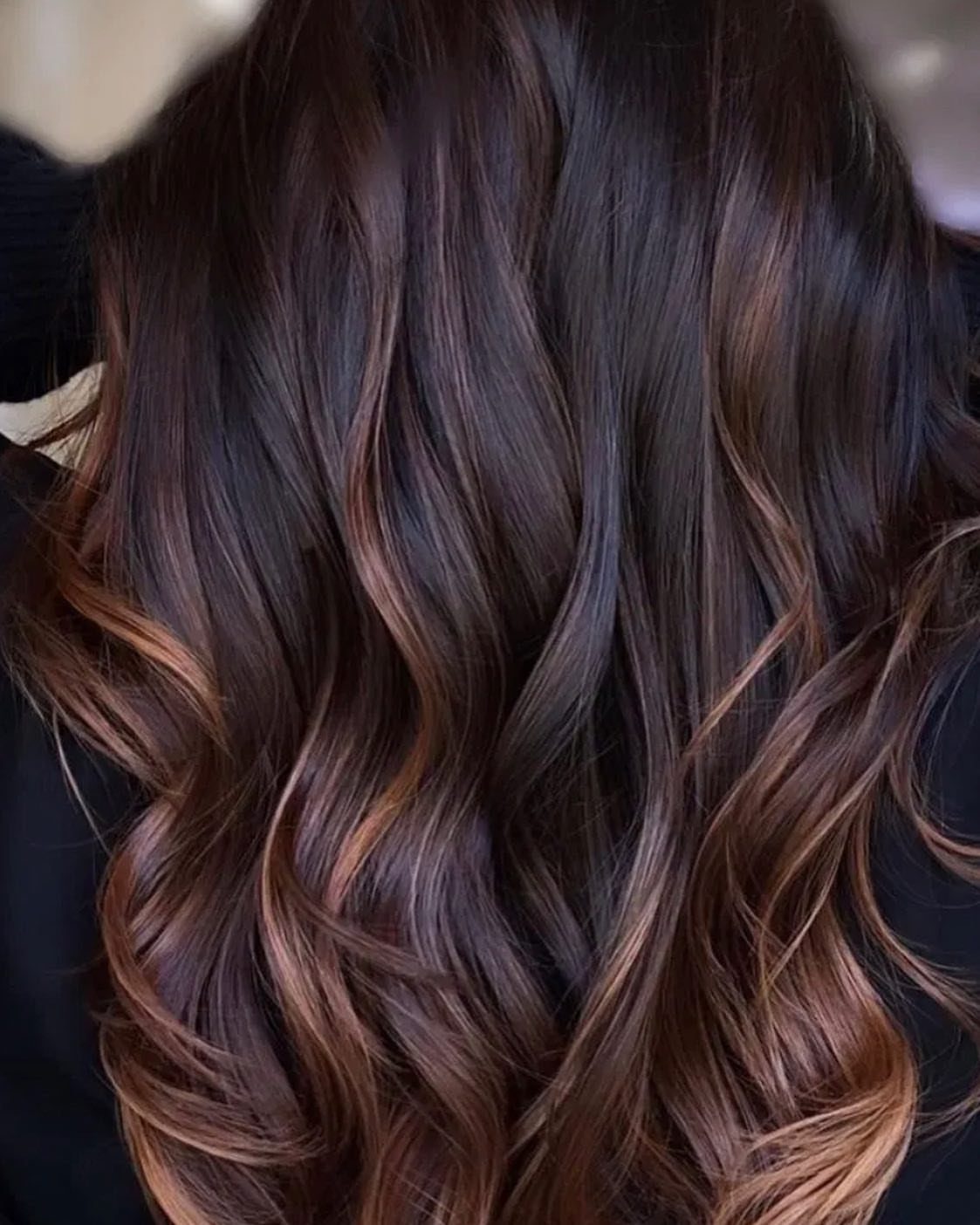
Auburn as a base adds red undertones that make caramel highlights read warmer and richer than they would on neutral brown.
This combination suits medium and deeper skin tones because the warmth complements rather than clashes. If your natural color pulls red already, lifting it to caramel often requires less processing than starting from cool brown.
Loose waves bring out the variation between auburn and caramel. Straight hair will still show dimension, but the movement lets each tone catch light separately.
27. Short Hair Highlights
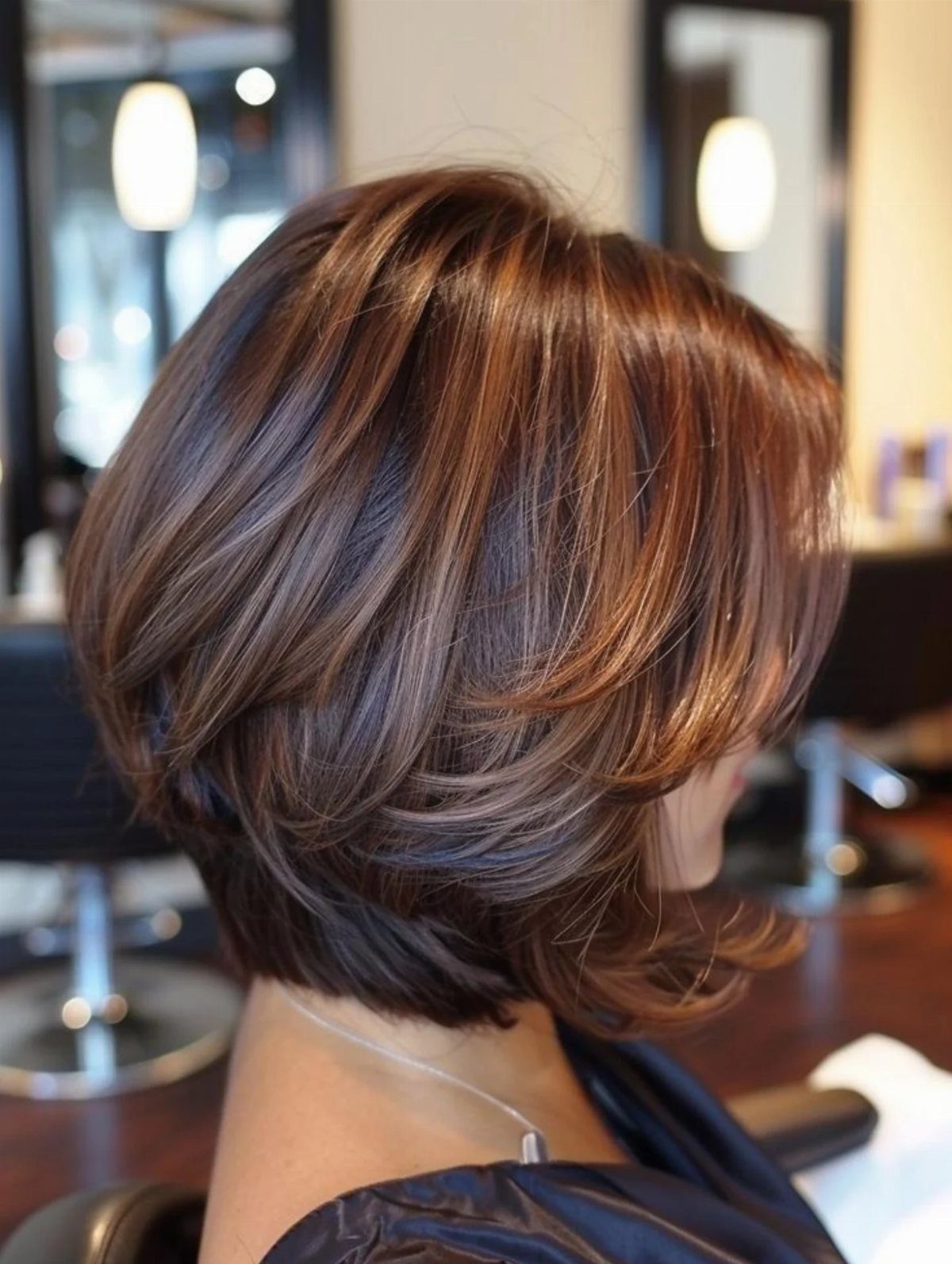
Short hair shows off caramel highlights differently because there’s less length for the color to travel. The ribbons here sit through the top layers and around the face, which adds brightness without requiring full coverage.
Highlights on short hair grow out faster simply because the hair is shorter. Layered cuts give the color more dimension than blunt bobs because each layer reflects light at a different angle.
Styling takes less time, and a small curling iron or flat iron adds movement that separates the tones.
28. Near-Black Hair with Toffee Caramel Balayage
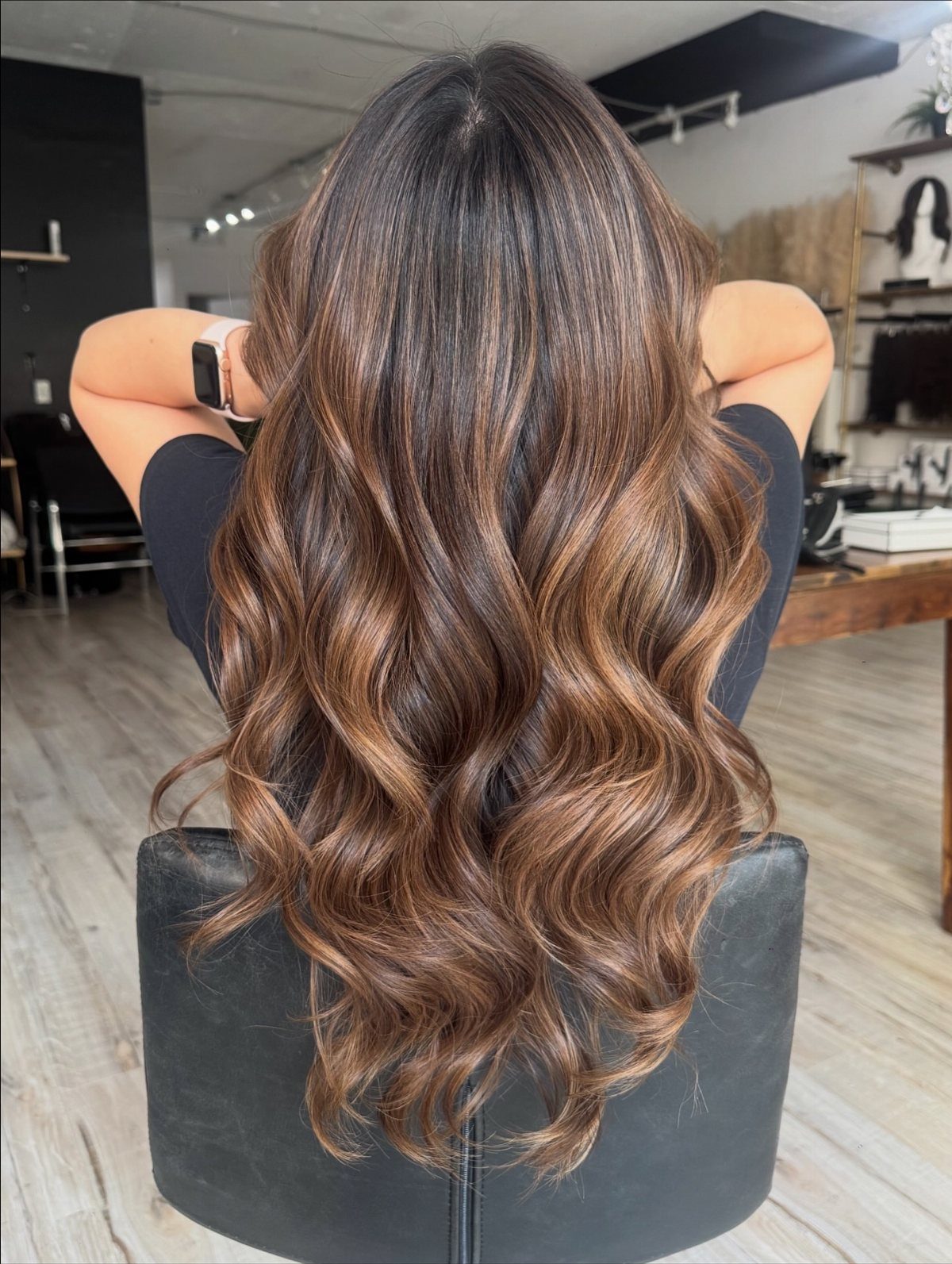
Toffee caramel sits warmer than golden blonde, which makes it flattering on deeper skin tones without looking washed out. The balayage here starts subtle at the roots and builds through the lengths, so the lift stays gradual rather than striped.
Near-black hair takes longer to lift than medium brown, and rushing it can turn the caramel brassy.
Wavy hair shows off the dimension better than straight because the curves separate the darker base from the lighter ends.
29. Fine Caramel Ribbons
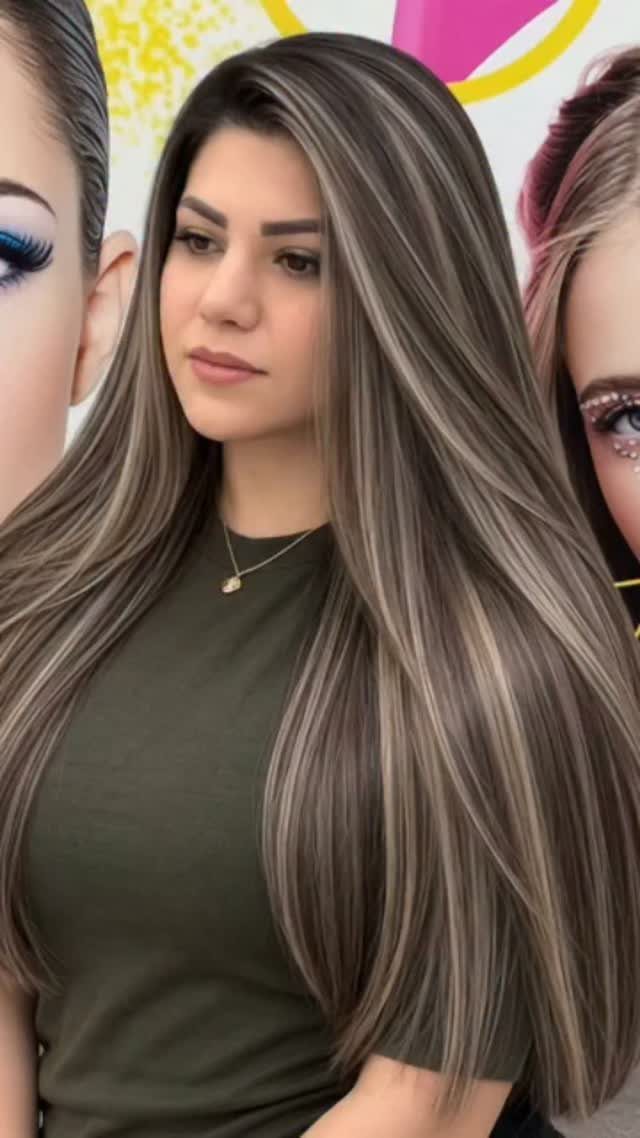
Fine ribbons of caramel thread through the hair in narrow sections instead of chunky pieces, so the effect reads as natural dimension rather than deliberate contrast.
Straight hair shows off this technique better than curls because the ribbons stay visible instead of blending into texture.
The placement here keeps the caramel subtle through the lengths rather than concentrated at the face, which means regrowth is less obvious as it grows.
If you want low-maintenance color that still adds warmth, fine ribbons let you stretch appointments longer than bold highlights.
Frequently Asked Questions
What is balayage?
Balayage means your colorist paints lightener onto sections by hand, no foils or caps involved.
Because it’s painted on rather than sectioned, you get a gradual fade with no obvious line where color stops. It suits most starting shades and usually leans into honey, amber, or copper tones picked to match your skin.
Is it better to get a balayage or highlights?
Balayage grows out softer because the hand-painted placement keeps roots darker and blends gradually, so you can stretch appointments much longer than with traditional foil highlights.
Foil highlights give you more coverage and precision if you want an all-over lighter look, but they show a harder line as they grow.
Balayage suits anyone who wants dimension without frequent touch-ups, while highlights work better if you need consistent lightness from root to end.
What’s the difference between honey and caramel balayage?
Honey balayage leans more yellow, while caramel sits slightly deeper and closer to brownish gold.
Honey recreates the golden tone of natural honey with more yellow undertones, so it reads brighter and warmer. Caramel has a richer, warmer base that stays closer to brown rather than pulling blonde.
How long does caramel balayage last?
Caramel balayage typically lasts around 3 to 4 months before you need a touch-up. Because the application starts mid-shaft and feathers out, regrowth stays soft and dimensional.
What color looks best with caramel?
Caramel highlights look best on medium to dark brown hair where the contrast shows without requiring heavy bleaching.
How do you care for balayage highlights?
Use a color-safe shampoo and conditioner to keep the caramel from fading, and a deep conditioner or mask once a week to prevent dryness through the lightened pieces.
Limit heat styling when possible, and apply a heat protectant before using a flat iron or curling wand. Blue shampoo once a week cancels the orange that creeps into caramel, especially on brunette bases.