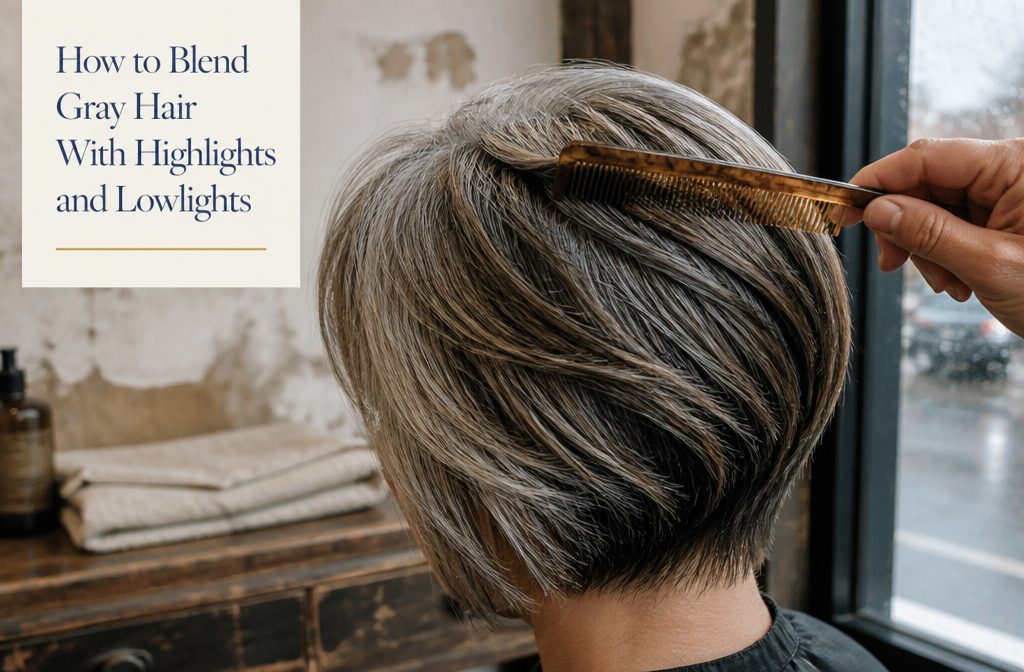
Gray woven in among lighter and darker strands stops showing as a stripe at the part, and lowlights need touch-ups every 6–8 weeks.
Balayage stretches to 12–14 weeks but needs root coverage every 4–8 in between, and highlights can turn gray brassy or yellow. Very dark hair may blend better with single-process color.
1. Highlights and Lowlights Together
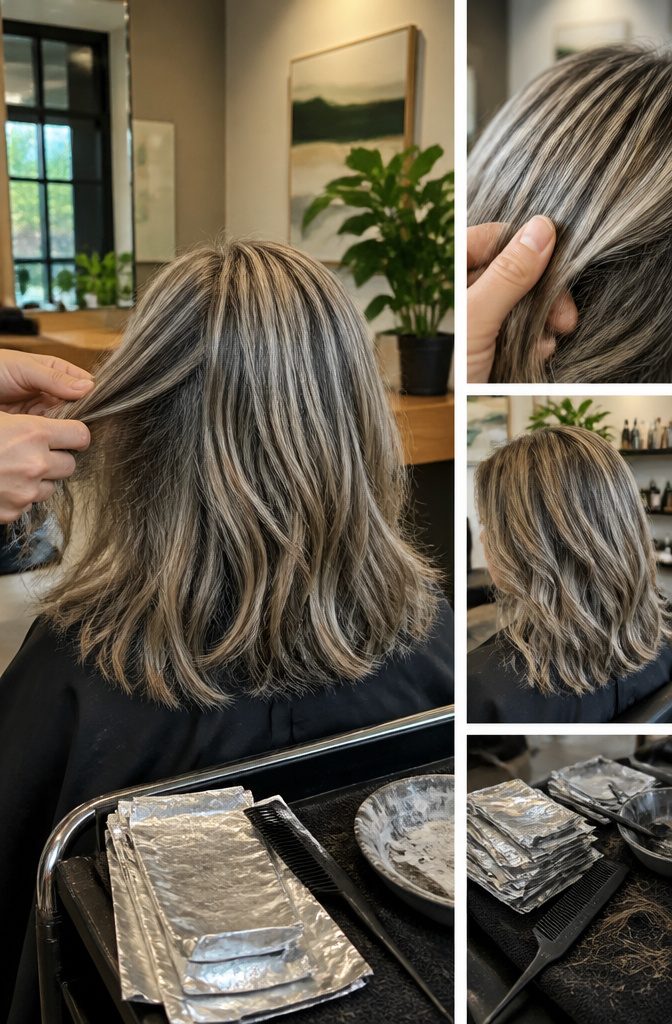
Highlights and lowlights together are where I’d start for blending gray. Highlights are strands lighter than your natural color, and lowlights are strands darker than it.
With both woven in, your hair carries several tones at once, so new gray lands among them and reads as part of the color instead of a hard line at the part.
A single solid shade can’t do that, which is why regrowth on solid color shows up as a stripe along the crown.
This approach is usually lower maintenance than solid color, because regrowth takes longer to become obvious. Exact upkeep depends on the method and how much gray you have, so check the timing table below for figures.
2. Highlights or Babylights
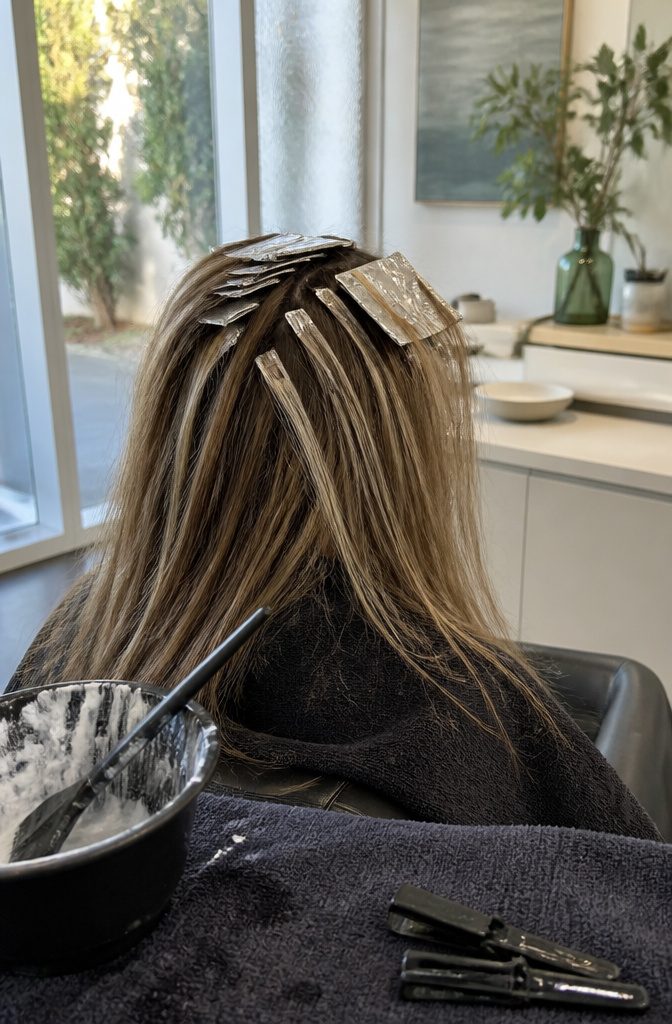
Highlights lighten sections of hair from root to tip, usually in foils, so the gray sits beside pale strands instead of against dark ones.
Less contrast means you never have to find and lighten every single gray. Babylights use finer, smaller pieces, and I’d pick them if you’re only starting to go gray; a few silver hairs vanish into that softer glow.
Adding highlights over a standard root color also blurs the hard line as regrowth comes in.
Plan on touch-ups every 4–6 weeks with either method.
That is more often than lowlights need, and I’d weigh it before booking. Dark hair may need extra sessions to get light enough.
3. Lowlights on Their Own
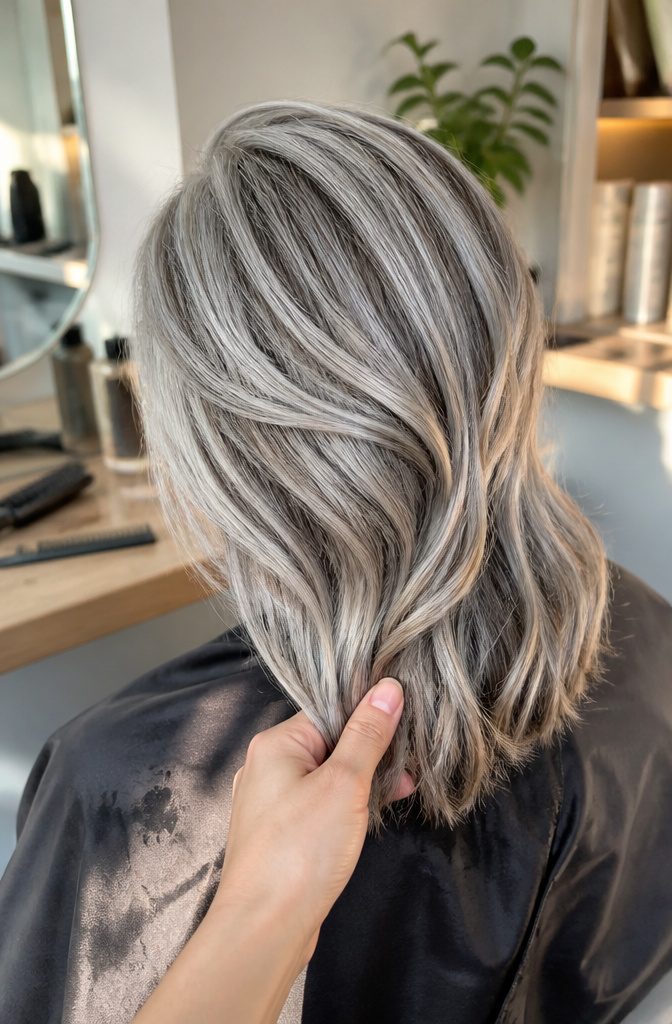
Yes, lowlights can cover gray and look natural.
Strands a shade or two darker than your base give gray something to sit against, so it reads as dimension, not a stripe. Highlights are the riskier choice, since colorist Michael Canalé warns they can turn gray the wrong way:
"Highlights can sometimes turn gray hair brassy or even yellow."
I’d start with lowlights if brass worries you.
Match your natural level, because anything much darker adds contrast you don’t want. Skin tone decides how warm or cool to go.
Blonde to medium brown blends best, while very dark hair may do better with single-process color. Expect touch-ups every 6–8 weeks, which can cut monthly salon visits.
4. Balayage
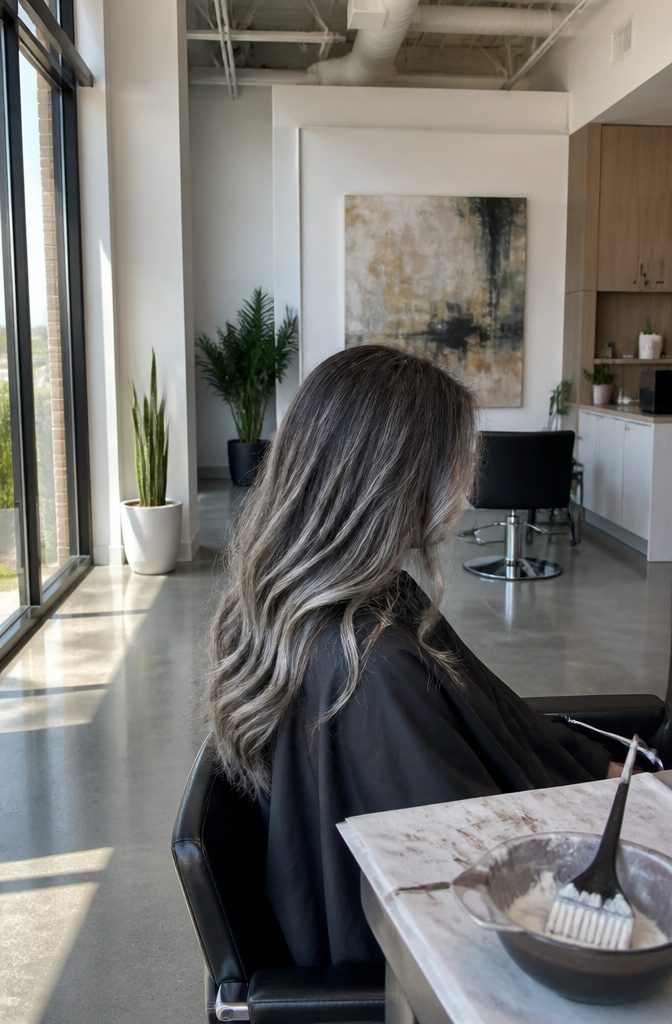
Balayage is painted on freehand, so the colorist decides where and how much to lighten.
That control matters if you have larger areas of gray or dark hair you don’t want to lift drastically. Grays blend into the lightened strands or get toned over, and regrowth leaves no harsh line.
Is it good for covering gray?
It can be, but I’d call it the high-maintenance pick. Balayage doesn’t start at the roots, so they get dyed your natural color separately.
Expect balayage touch-ups every 12–14 weeks, with root coverage every 4–8 weeks in between. That adds up to more salon visits than lowlights, and painted-on color is easy to overdo.
5. Gloss or Glaze
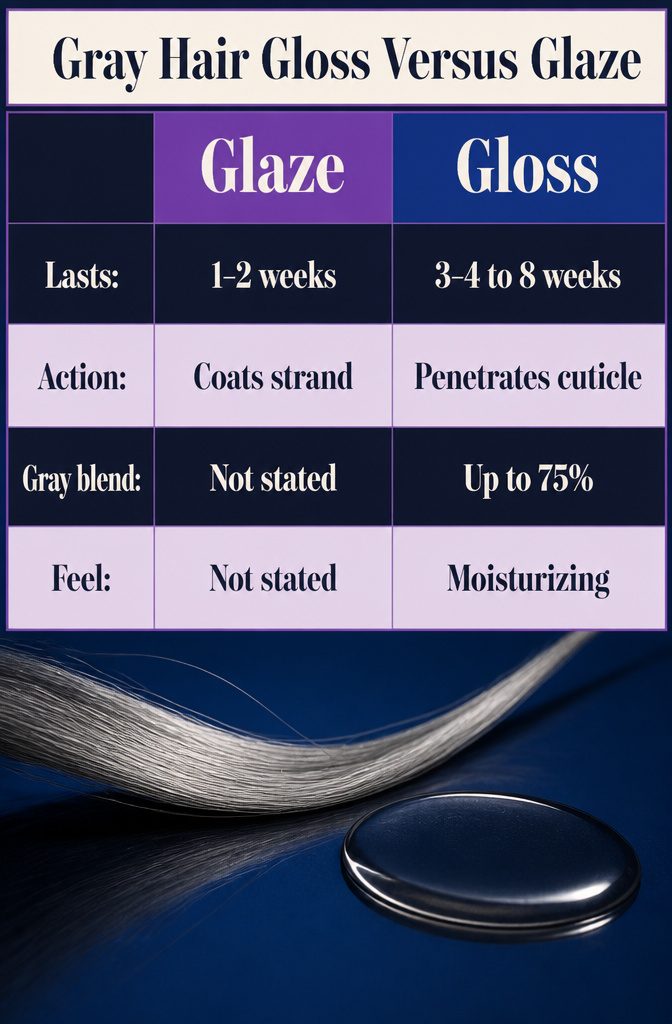
A glaze coats the outside of the strand, adds shine, and knocks back brassy or dull tones, but it lasts only 1–2 weeks. A gloss penetrates the cuticle, so it holds longer: 3–4 weeks by some counts, 4–8 weeks depending on the maker.
It’s semi-permanent and acts more like a stain than a full color, so it adds a little dimension and can blend up to 75% of gray.
For gray, I’d choose gloss over glaze.
Gray strands often feel coarser, and gloss is described as moisturizing, so it softens the hair while it tints. Book one before an event, or every 8 weeks to keep the blend going.
6. Root Touch-Up Color
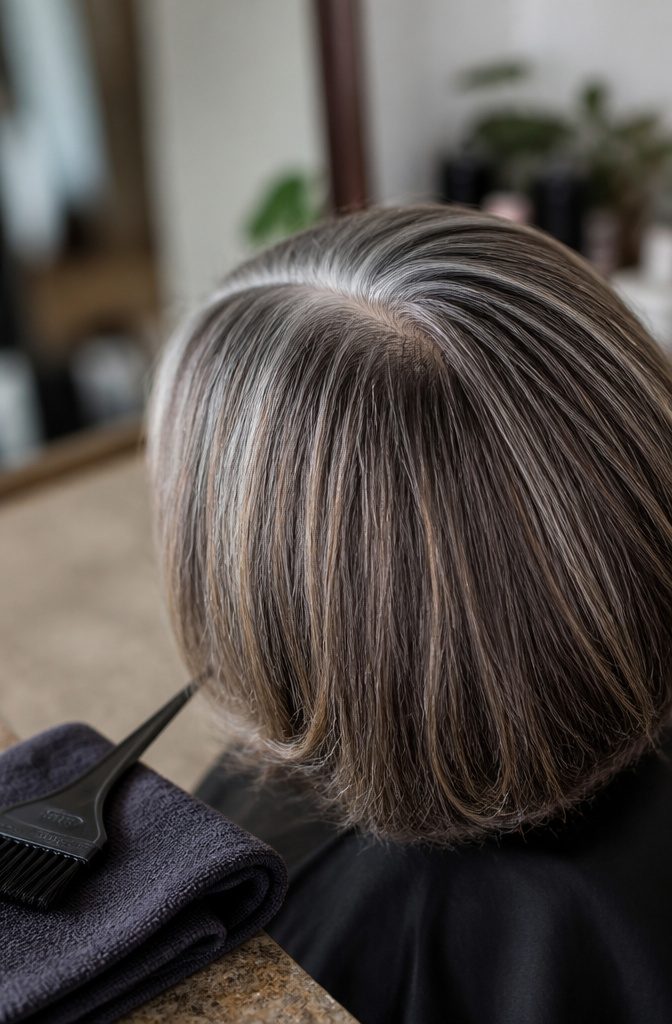
Single-process color is the most direct route to full gray coverage: one formula, applied in one step, matched to the shade you already have.
It works on any natural color, but the regrowth shows, so plan on a touch-up every 4–8 weeks. Permanent dye holds up to 4–6 weeks before roots start to peek through.
Pairing the root color with highlights softens the growth line. A few lighter pieces let new silver blend in instead of standing out as a stripe.
Gray strands are coarse and tend to run dry, so I lean toward semi-permanent, non-ammonia products. They cover without roughing up the hair shaft and keep more of the natural shine and texture.
7. Growing Gray Out
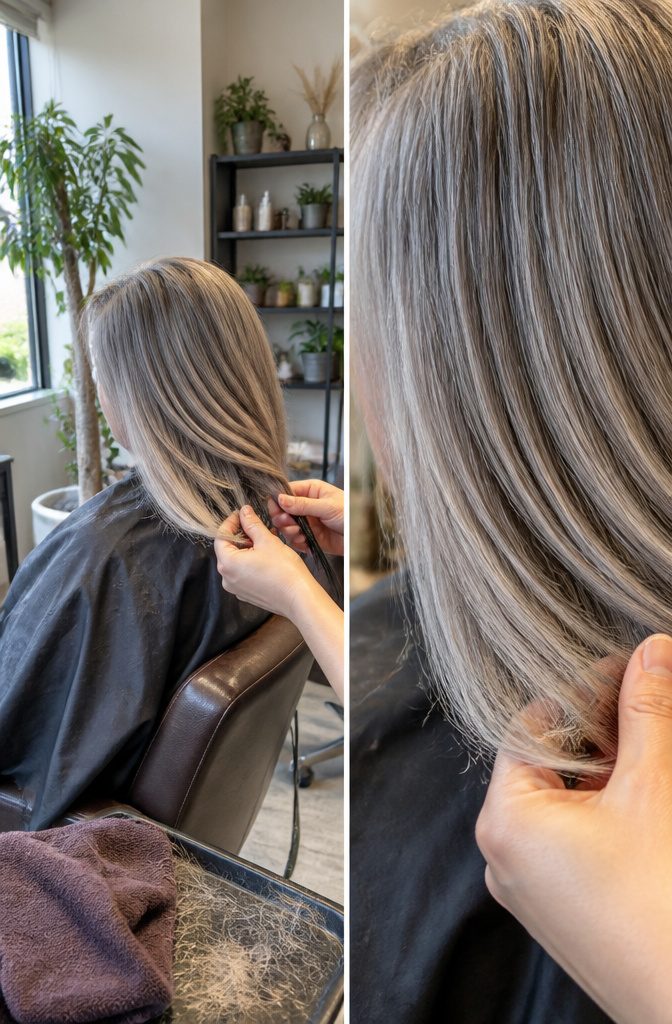
Waiting longer between color appointments leaves more natural growth showing. Moving from permanent to demi-permanent color helps too, since it blends over gray so the strands can look highlighted.
For a full transition, cool-toned or silver highlights through the whole head work best, with regular trims to clear the old ends. Expect more than one session, and talk to your stylist before committing.
Faux gray is the shortcut I’d treat with caution. The hair is lightened to blond, then gray color goes over it, which is hard on strands.
On heavily processed hair it may last only a short time or not hold at all. Bond and protein treatments help it stay.
Coverage or Blending
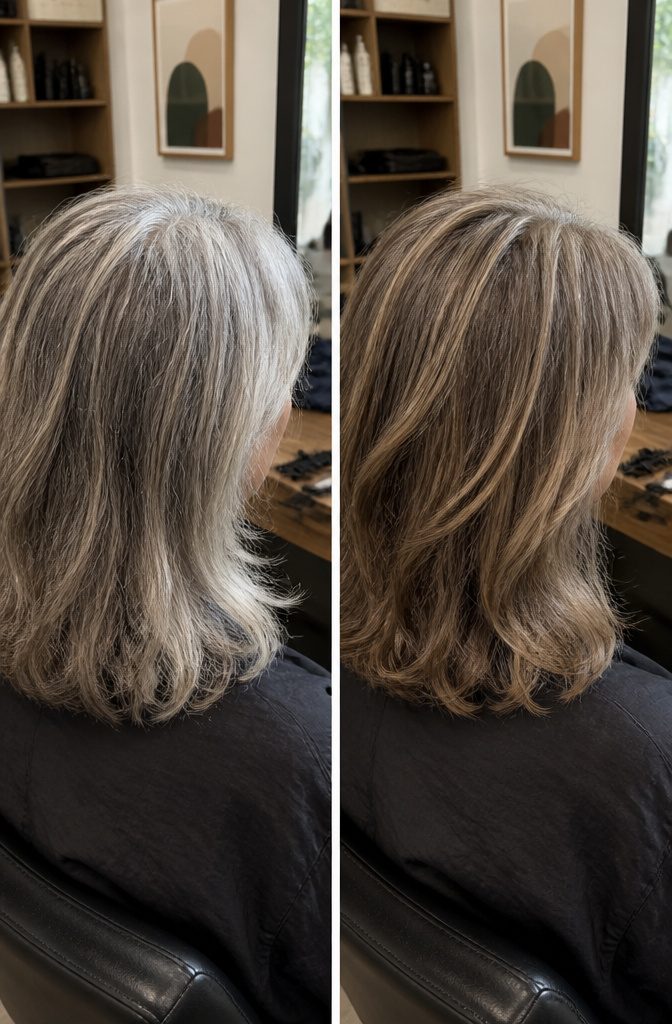
The first question is whether you want to hide gray completely or soften the contrast between your natural color and the gray coming in. All-over color gives full coverage, particularly at the hairline where gray shows first.
Highlights work for smaller patches of gray. Lowlights or a mix of both suit people who want less maintenance and are ready to let some of the gray show through, using color to blur the line rather than erase it.
Your starting color shapes the decision. Blonde hair already sits close to gray, so highlights blend it without much contrast.
Dark brown, red or black hair means a sharper jump between the two, and I’d lean toward lowlights or root-blending techniques if you’re transitioning rather than covering.
How fast your gray is coming in matters too. Sparse gray responds to highlights; widespread gray needs either full coverage or a commitment to letting it grow and blending as it does.
Shade and Placement
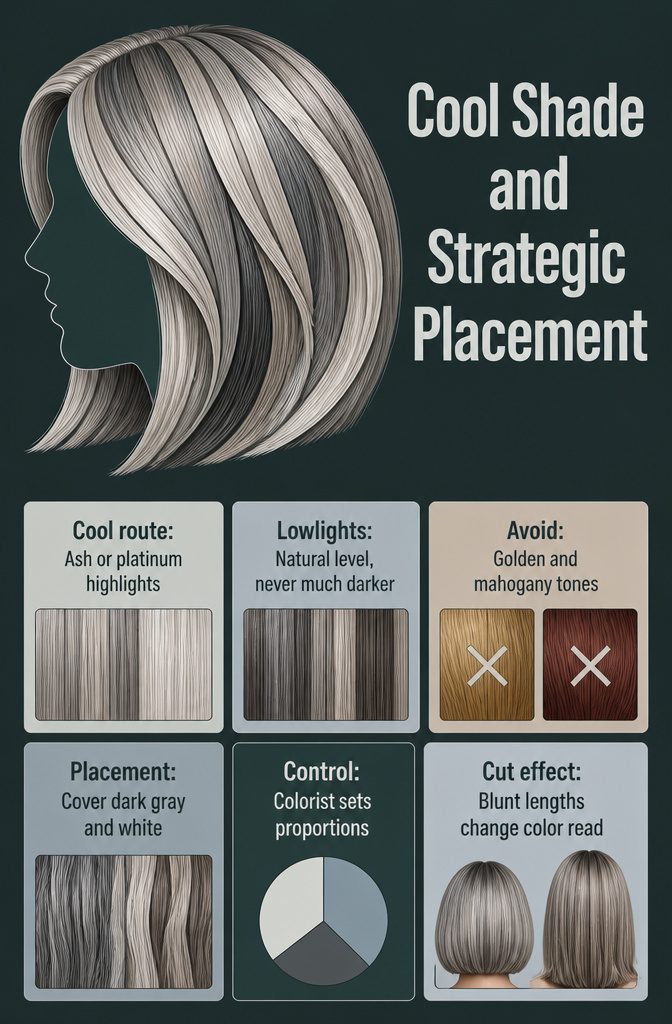
Mixing lighter and darker strands shrinks the contrast between gray and everything around it, so shade does most of the work.
You can set lowlights at your natural level, never much darker, or go cool across the board: ash blonde or platinum highlights with cool, ash or neutral lowlights.
I lean toward the cool route, because golden and mahogany tones fight the silver. Skin tone still decides how warm or cool you can go.
Start with less color, and spread it across both the dark gray and the white hair.
A colorist should set the proportions and placement, since no formula fits every head. The cut matters too: a blunt chin-length or shoulder-length style changes how the color reads.
Touch-Up Timing by Method
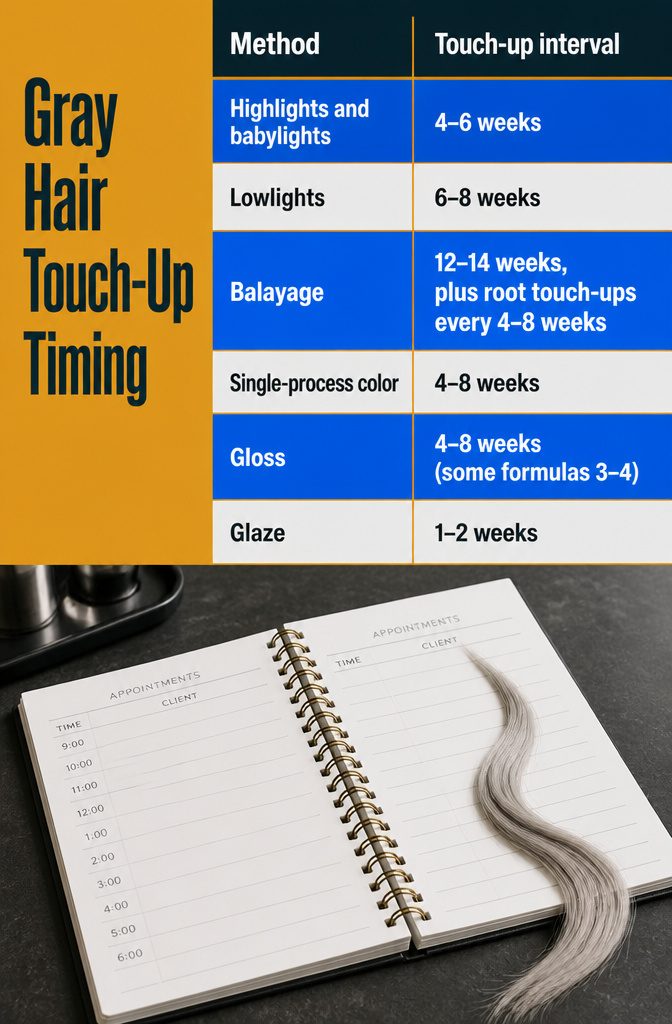
Touch-up timing runs from 1–2 weeks for a glaze to 12–14 weeks for balayage, and the method sets the pace.
| Method | Suggested interval |
|---|---|
| Highlights and babylights | 4–6 weeks |
| Lowlights | 6–8 weeks |
| Balayage | 12–14 weeks, plus root touch-ups every 4–8 weeks |
| Single-process color | 4–8 weeks |
| Gloss | 4–8 weeks (some formulas 3–4) |
| Glaze | 1–2 weeks |
Blending means fewer visits than regular root coverage because gray woven into highlights and lowlights leaves no hard line at the part.
Single-process color has to be redone every 4–8 weeks to hide that line. For the longest stretch between full appointments, I’d pick balayage at 12–14 weeks.
At-Home Color Care
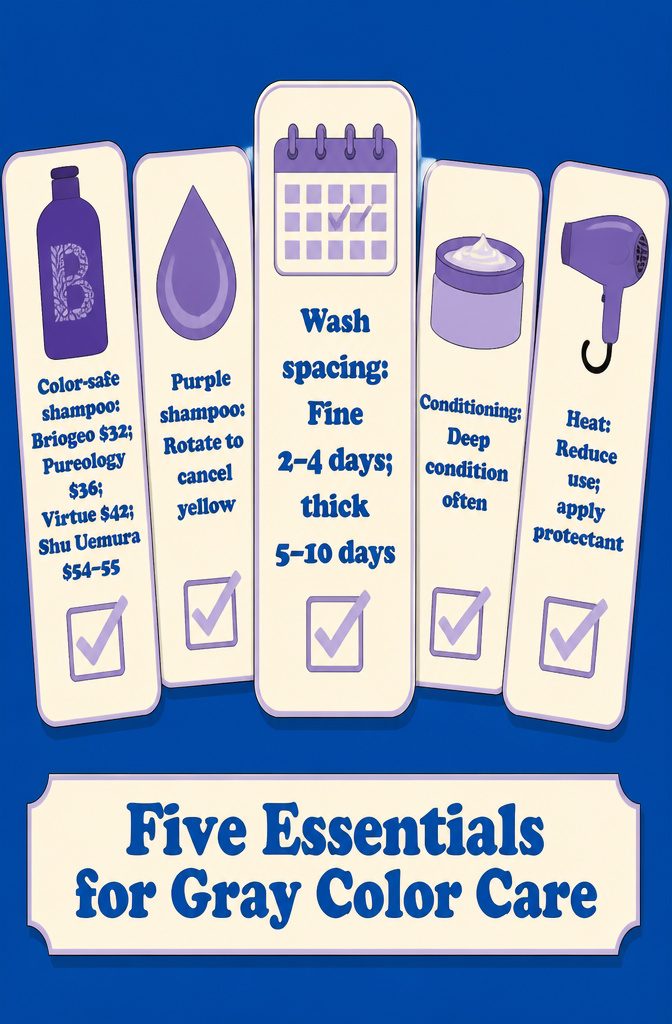
Gray blended with highlights and lowlights turns brassy fast on harsh products, so I’d build the routine around these:
- Color-safe shampoo: Briogeo Color Me Brilliant Mushroom + Bamboo Color Protect ($32) costs least. Pureology Hydrate is $36, Virtue Recovery $42, and Shu Uemura Color Lustre Sulfate-Free $54 at Walmart or $55 at Sephora.
- Purple shampoo: Rotate a gentle one in to cancel yellow and brass, rather than using it every wash.
- Wash spacing: 2–4 days apart for fine hair, 5–10 days for thicker hair, since washing strips color.
- Conditioning: Deep condition often. MyHero Shampoo and Conditioner adds hyaluronic acid and a strengthening formula that reduces breakage.
- Heat: Cut it back, because it dries strands and fades color. If you style, use heat protectant.
Frequently Asked Questions
Can lowlights cover gray hair?
Yes, lowlights can cover gray and look natural. Strands a shade or two darker than your base give the gray something to sit against, so it reads as dimension instead of a stripe.
They work best on blonde to medium brown hair, while very dark hair may do better with single-process color.
How do you blend gray hair with highlights and lowlights?
Weave lighter and darker strands through your hair so new gray lands among several tones instead of forming a hard line at the part.
Use cool shades, keep lowlights near your natural level, and start with less color spread across both the dark gray and the white hair. A colorist should set the proportions and placement.
Should I highlight or lowlight my gray hair?
It depends on your starting color and how much gray you have.
Highlights suit blonde hair and sparse gray, since the contrast is small. Lowlights are the better pick for dark brown, red or black hair, and they carry less risk of brassy tones turning up in the gray.
What color lowlights look best on gray hair?
Match your natural level, and stay within a shade or two of it, because much darker adds contrast you don’t want.
Cool, ash or neutral tones sit best against silver, and warm golden or mahogany shades fight it. Your skin tone decides how warm or cool you can go.
What highlights look best on gray hair?
Cool blonde, ash blonde and platinum match the silver in gray hair best.
Skip warm golden tones, which clash with it. Skin tone still sets how warm or cool you can take the shade.
How often do gray hair highlights and lowlights need touch-ups?
Lowlights need touch-ups every 6–8 weeks, and highlights or babylights every 4–6 weeks.
Balayage stretches to 12–14 weeks, with root coverage every 4–8 weeks in between. A color-safe shampoo and an occasional gentle purple shampoo help hold the tone between visits.
Is balayage good for covering gray hair?
It can be, but it’s the higher-maintenance choice. Balayage doesn’t start at the roots, so they get dyed your natural color separately, which means root coverage every 4–8 weeks on top of balayage touch-ups every 12–14 weeks.
It suits larger areas of gray or dark hair you don’t want to lift much.
Should I see a colorist before blending my gray with highlights and lowlights?
Yes.
The hard part is the plan, not the technique: the balance of highlights to lowlights, where each one goes, and the process used. A colorist can set those proportions for your head, since no single formula fits everyone.