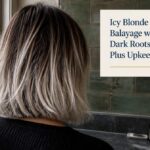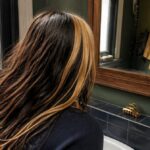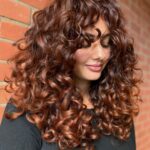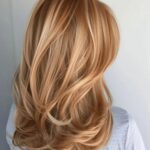
How far you lift from black decides everything else in this list: 1 or 2 shades keeps the brown quiet and the grow-out soft, while 3 or 4 shades gets noticed and shows a root line sooner.
The ideas range from espresso balayage and dark brown babylights that sit a shade or two off black, to copper and chunky stripes you can’t miss, with two-tone box braids as the one option that needs no dye at all.
Your undertone then sorts the shade: warm skin takes caramel and honey, cool skin does better with ash or mocha.
1. Black Hair with Brown Highlights
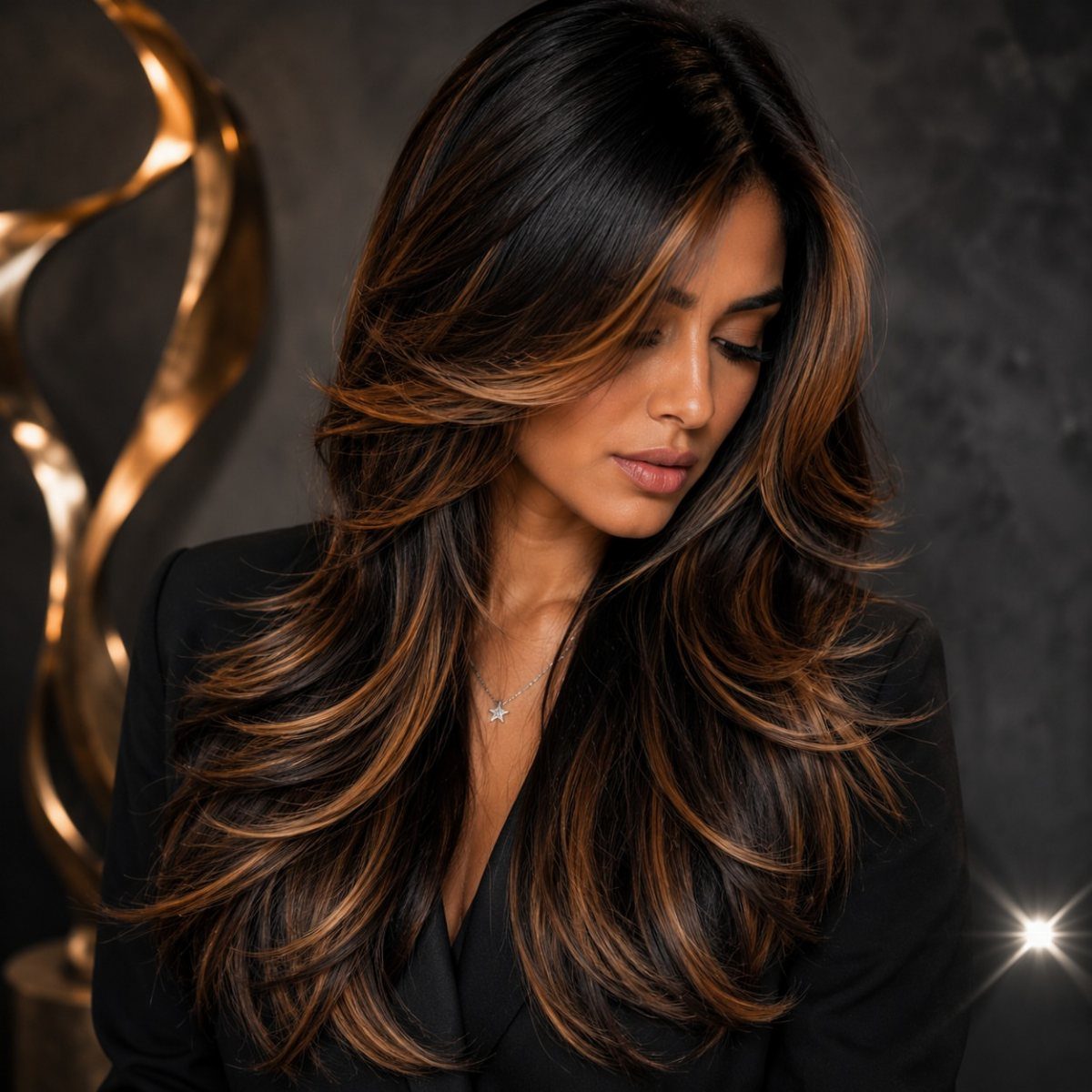
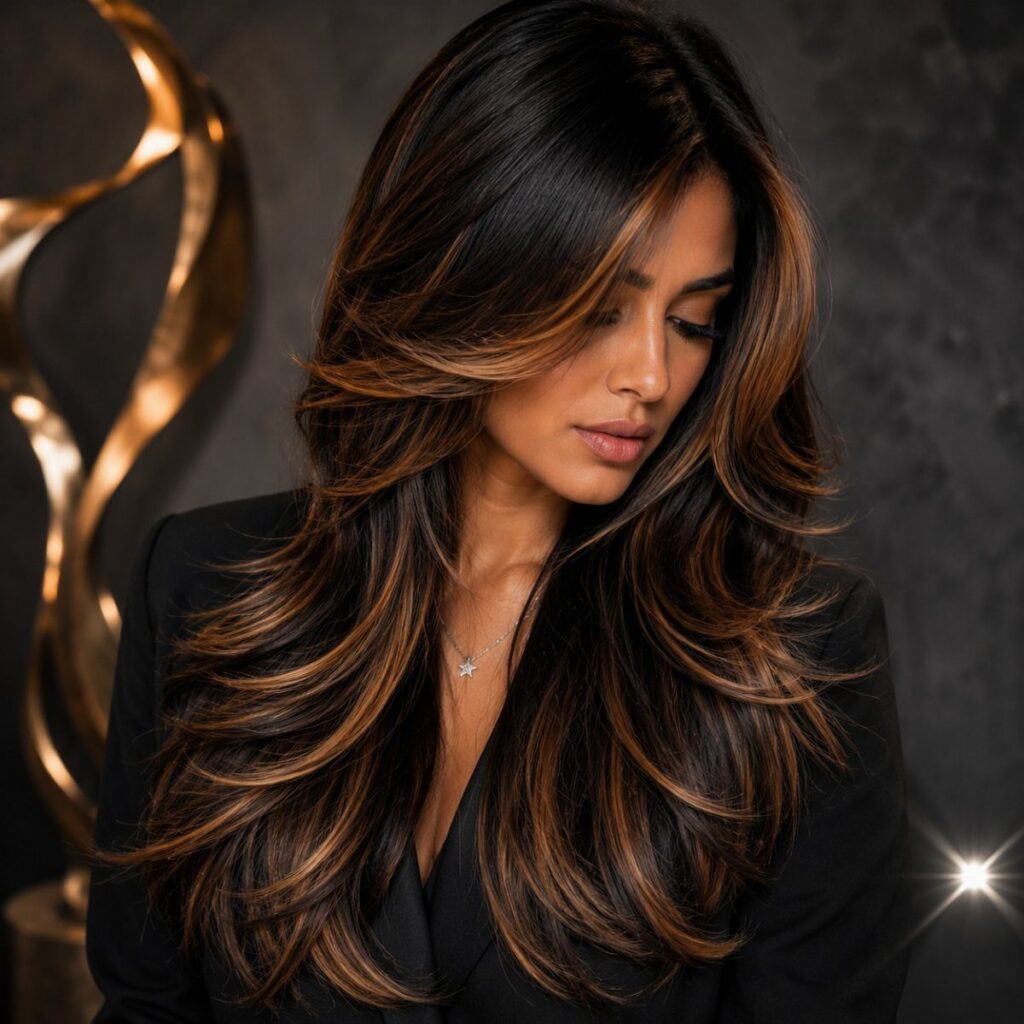
Brown ribbons or panels lift black hair without covering much ground. The contrast adds movement and catches light while keeping most of the base dark.
If you want something quiet, ask for a handful of ribbons through the lengths or a few pieces around the face. For more coverage, request ribbons placed from roots to ends in vertical sections.
The warmer the brown, the softer the contrast.
Cooler ash or mocha tones read sharper against black. Both grow out cleanly since the base stays untouched.
2. Caramel Money Piece
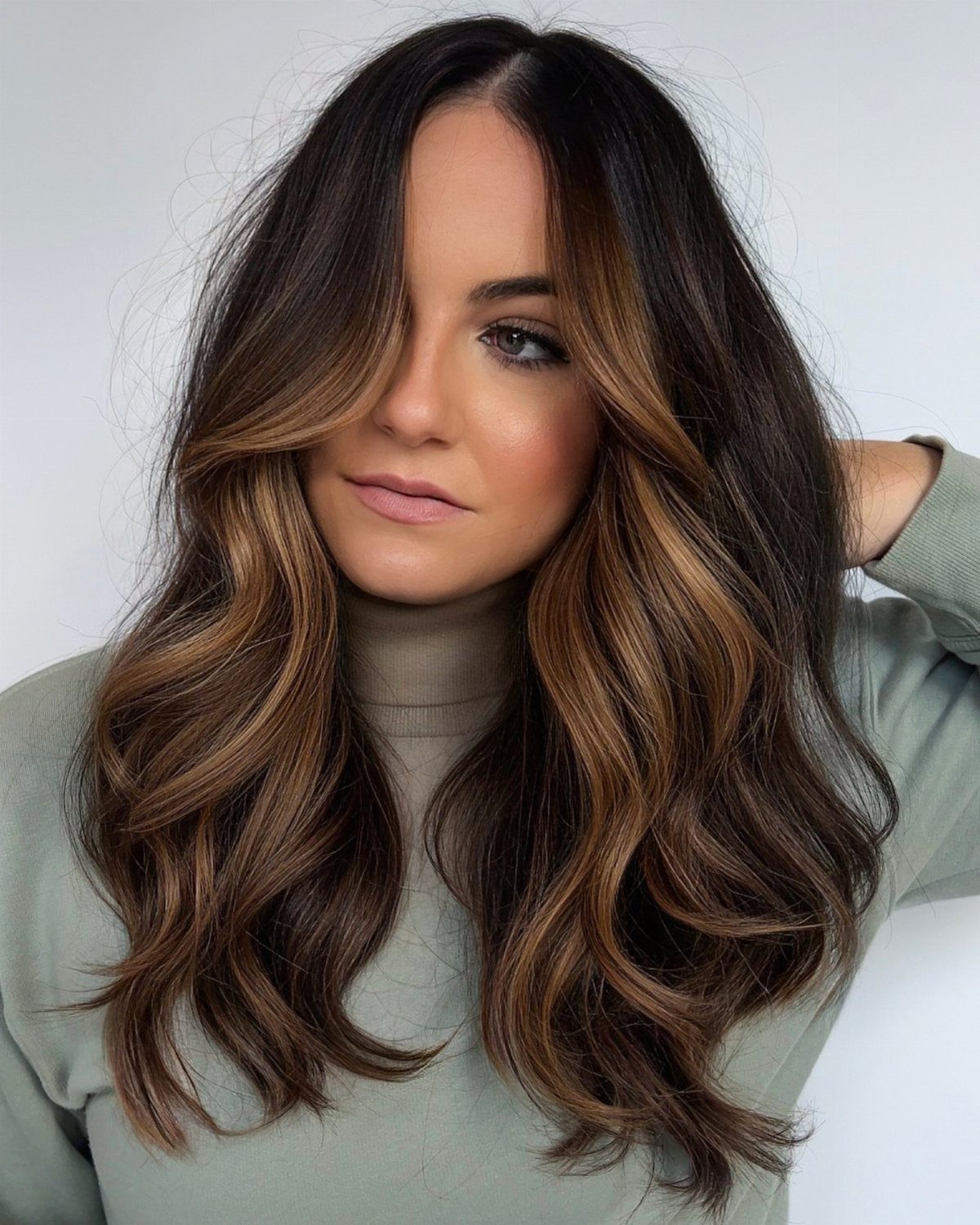
The front sections lift to caramel; everything else stays dark. It’s a restrained change that brightens without a full highlight appointment.
Money pieces hug the hairline, framing each side of your face. They’re faster and cheaper than full highlights since the colorist only works on those front sections.
Warmer skin tones handle caramel well.
If you’re cool-toned, ask for a slightly cooler caramel or test it first with a semi-permanent version. How often you go back depends on how quickly your hair grows and whether you mind a little root.
3. Chestnut Highlights
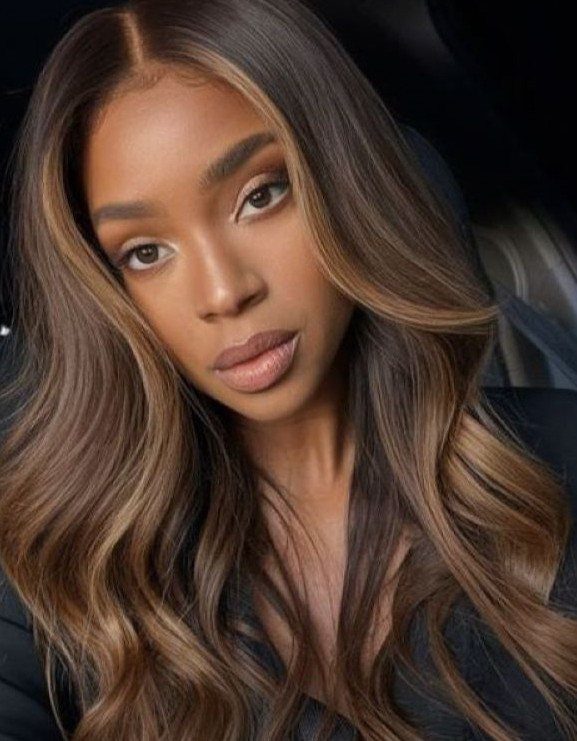
Chestnut ribbons sit between brown and red, adding warmth without turning the whole head copper. They’re a good middle option if honey feels too light and chocolate too flat.
Ribbons or balayage keep the lift through the ends and away from the root if that’s what you’re after. That placement keeps the roots darker and stretches time between appointments.
Chestnut reads warm, so it flatters yellow or golden undertones. On cooler skin, it can look orange; if that’s you, try ash brown or mocha instead.
4. Honey Brown Highlights
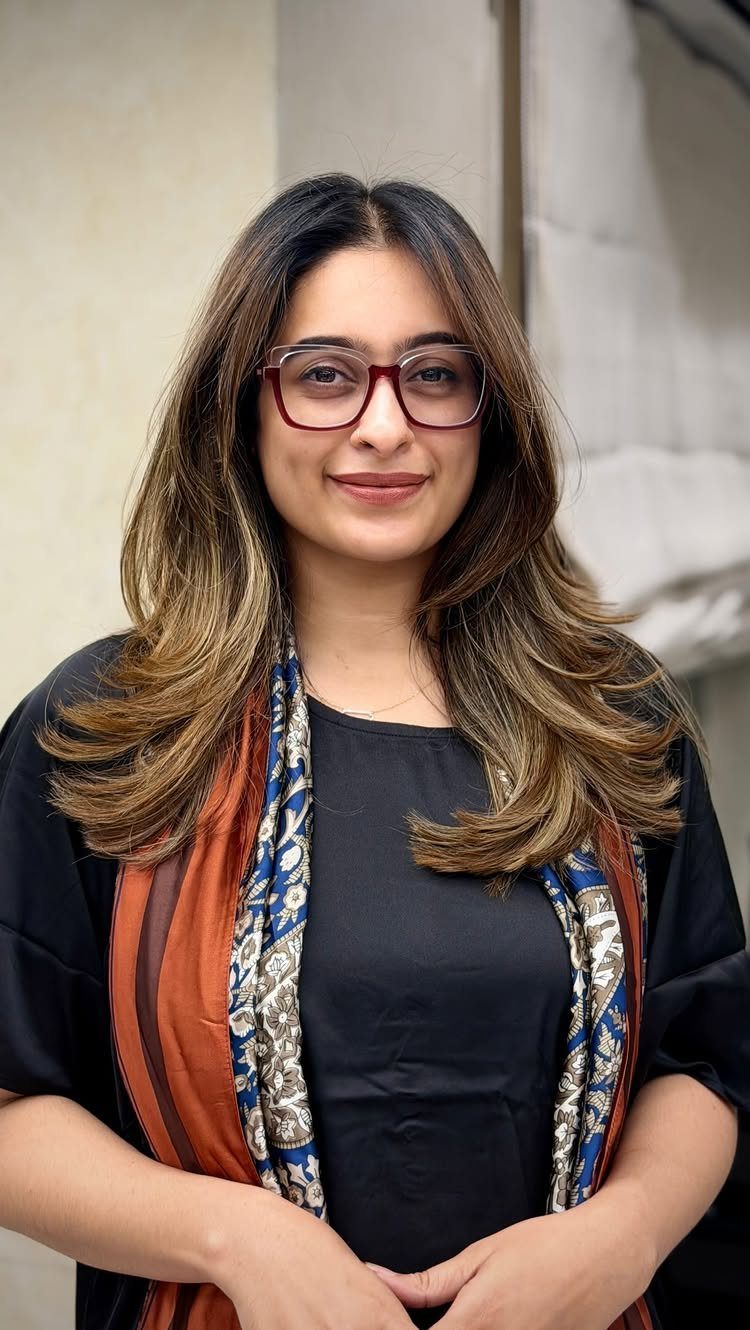
Honey brown brings golden warmth to black hair without bleaching it fully blonde. It reads lighter than chocolate brown without crossing into blonde territory.
It works best on warm or neutral skin tones.
Honey pulls gold, and gold can turn brassy once it starts to fade; a gloss between appointments keeps it where you want it.
5. Cinnamon Highlights
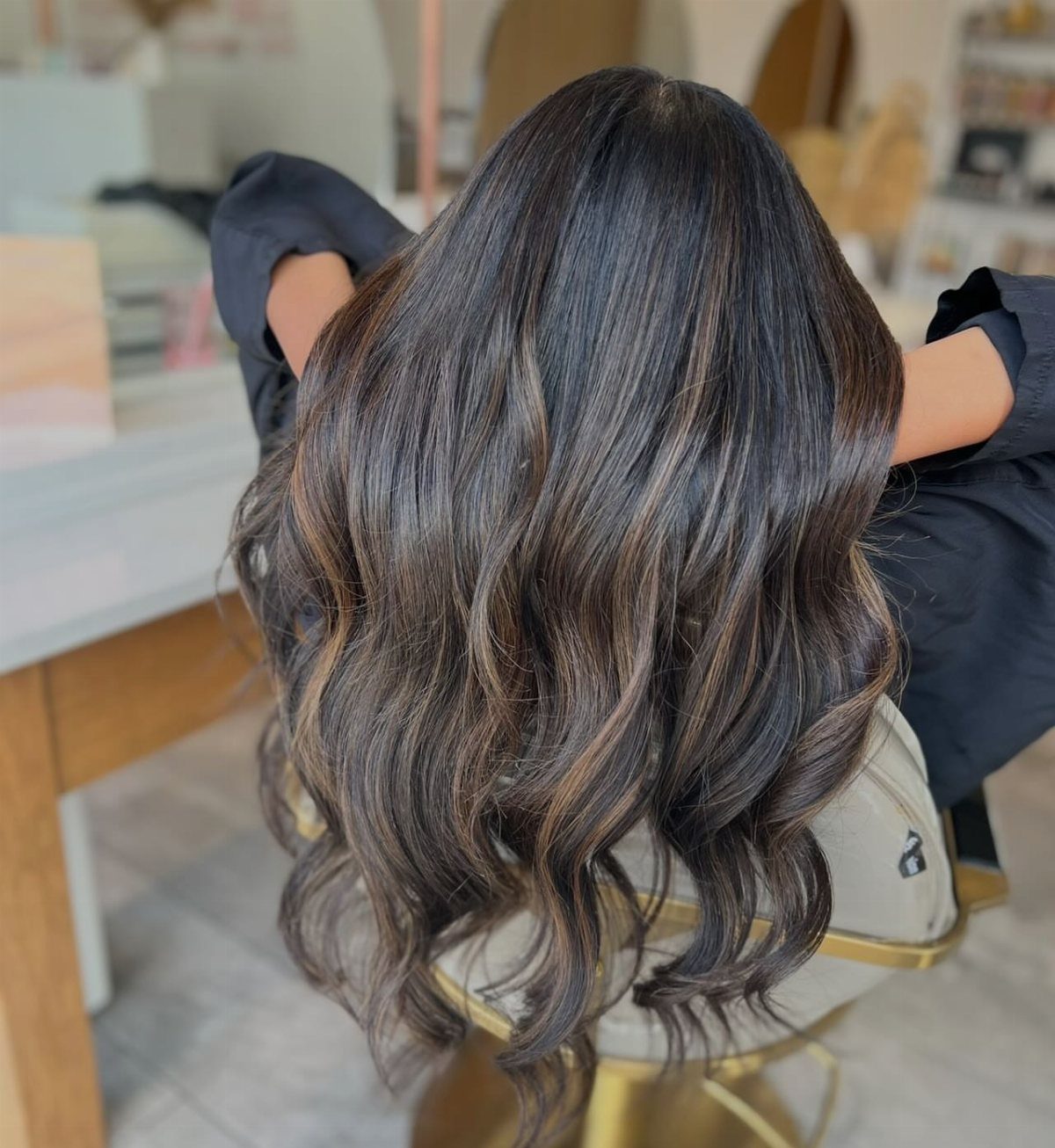
Cinnamon sits between brown and copper, adding warmth and a slight reddish cast without going full auburn. It’s spicier than chocolate but softer than red.
If you want warmth that stops short of orange, this is the shade. Ask for it as balayage or ribbons so the color blends gradually rather than sitting in hard lines.
Cinnamon highlights drift toward copper as they fade, so keep a color-safe shampoo in rotation.
6. Golden Brown Face-Framing Highlights
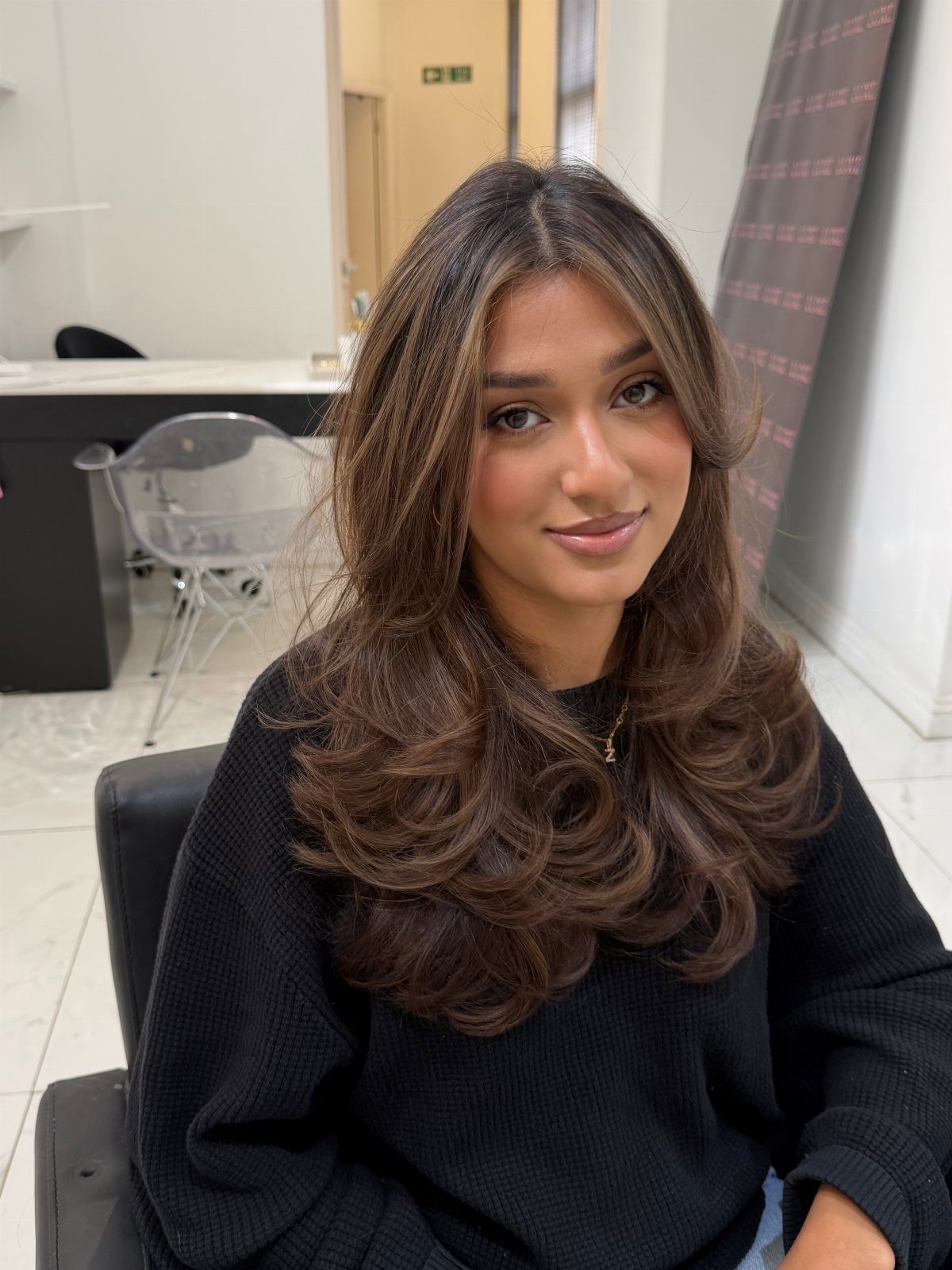
A few golden brown pieces near the face brighten without covering much hair. It’s a low-commitment option that leaves most of the black base alone.
Face-framing highlights usually start at the temples and run down along the front sections. The colorist can stop them at chin length or carry them all the way to the ends, depending on how much contrast you want.
This placement grows out cleanly since the color isn’t near the roots. How often you touch up depends on how much root you’re comfortable with; you can push it longer if soft grow-out suits you.
7. Chocolate Brown Balayage
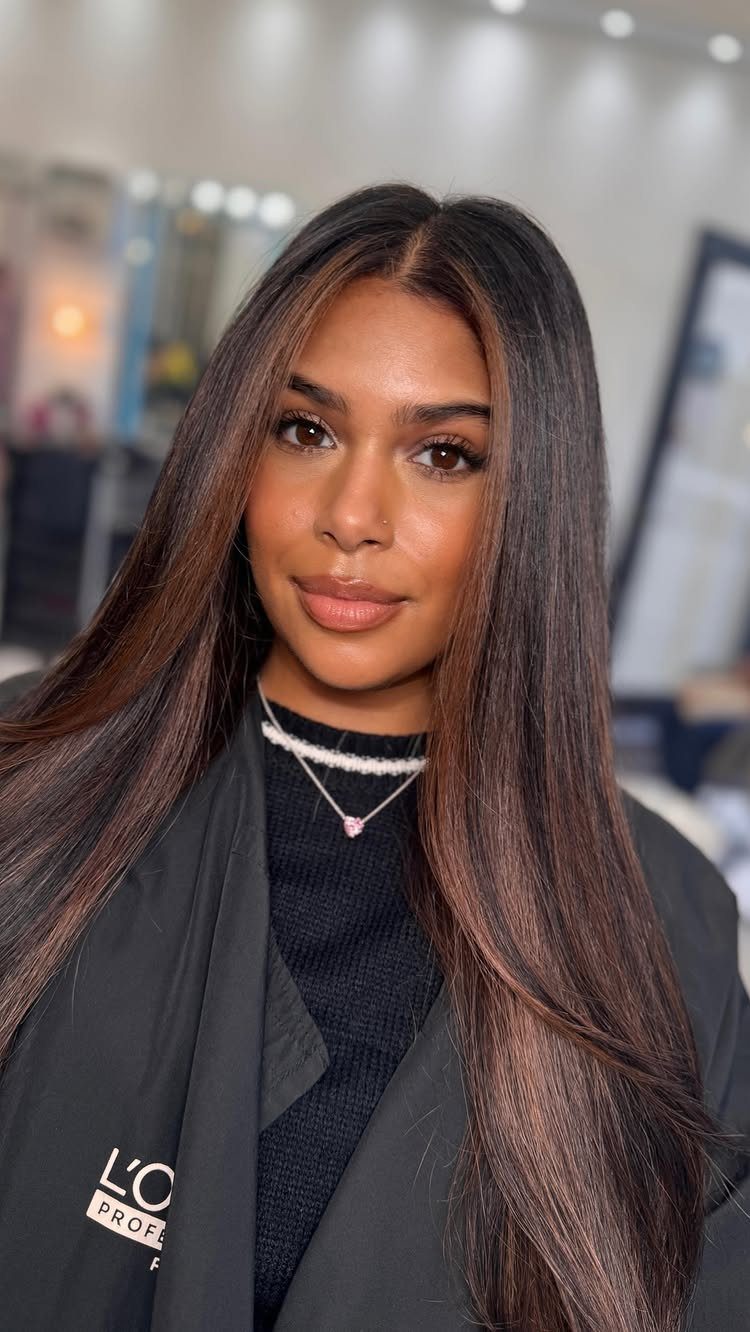
Chocolate brown is painted through the mid-lengths and ends while the roots stay untouched. Because the stylist paints it on freehand, the shift from black to brown feels soft rather than striped.
Balayage concentrates color where you want it and skips the root, which means you can go longer between appointments. You skip the two-tone grow-out since the color starts a few inches down.
Chocolate brown stays neutral enough to flatter most skin tones without pulling too warm or too cool.
8. Ash Brown Babylights
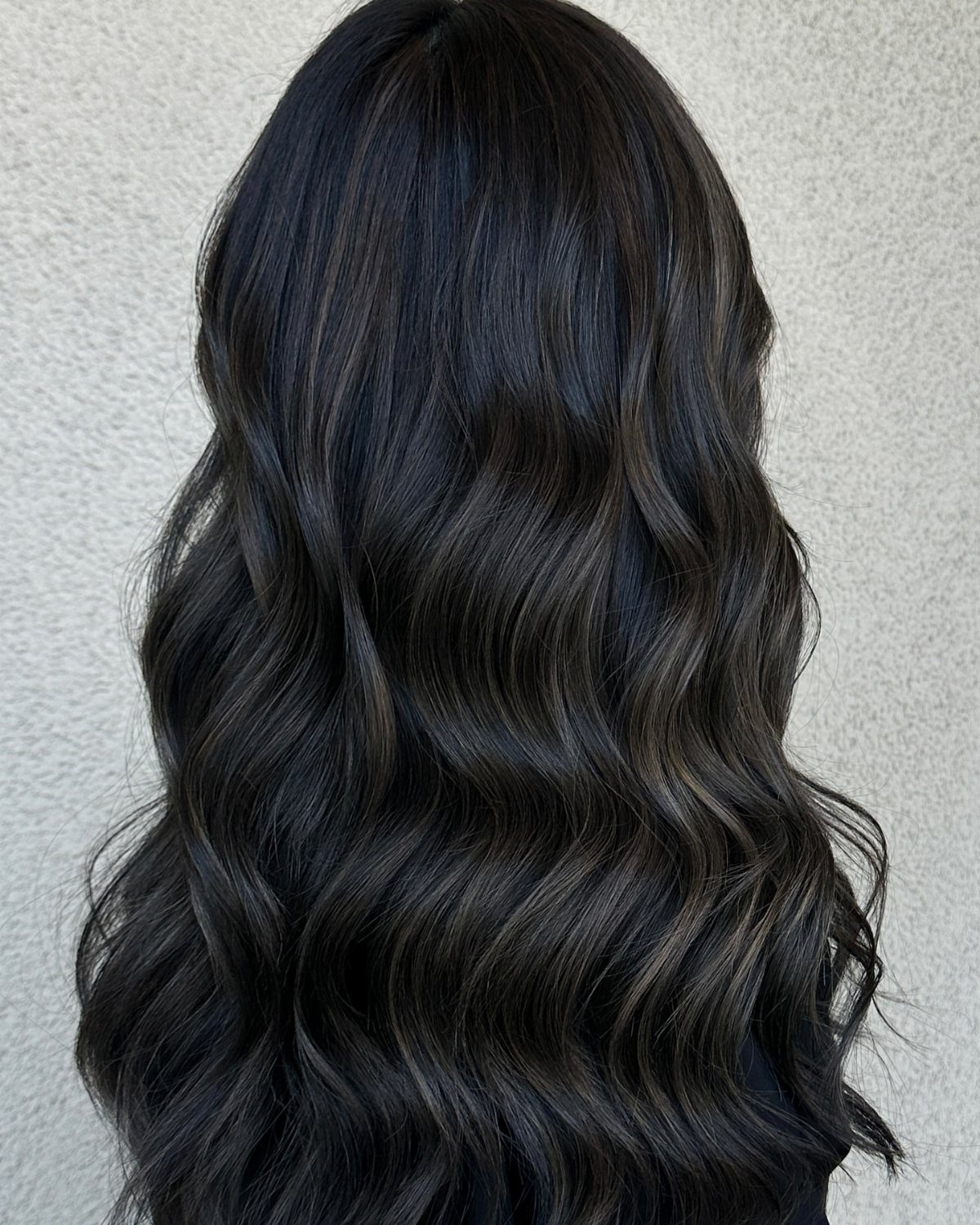
Fine, cool-toned highlights are woven through in very thin sections. Babylights are smaller than traditional highlights, so the effect is soft and the color sits close to the base.
Ash brown counters any warmth in the black, keeping the overall look cool. If your black hair tends to fade brassy or pick up red tones, ash brown keeps it in check.
The placement is delicate, so it reads more like shimmer than stripes.
9. Dark Brown Babylights
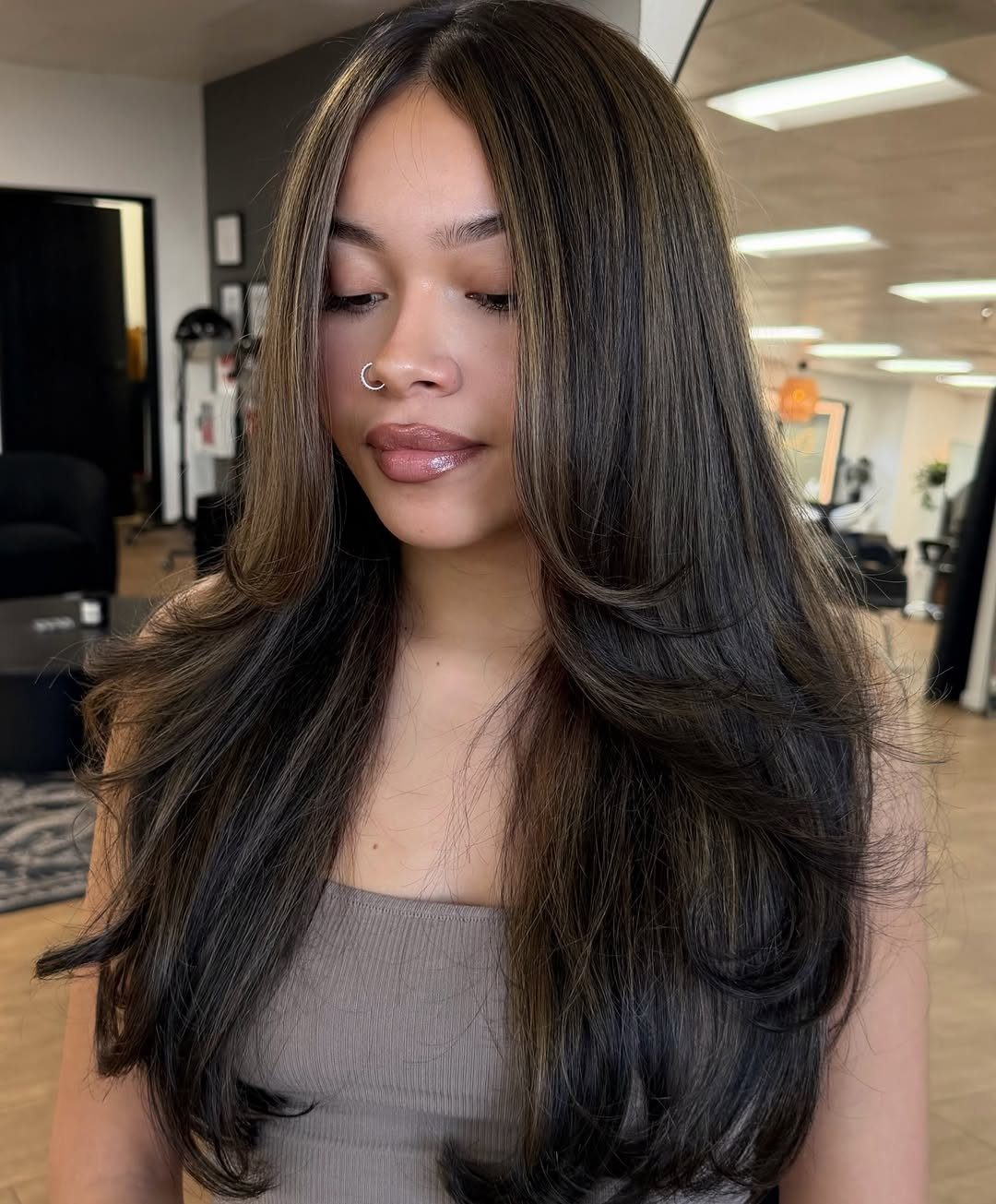
Babylights in dark brown stay close to the base color, making them a low-contrast first step if you’re unsure about going lighter. The sections are fine, so the color blends in rather than standing out.
This is a safe option if you want to try highlights without committing to a big change. The color is only a shade or two off black, so if you don’t like it, it’s easy to blend back.
Dark brown babylights work on any skin tone since the contrast is minimal.
10. Chocolate Highlights
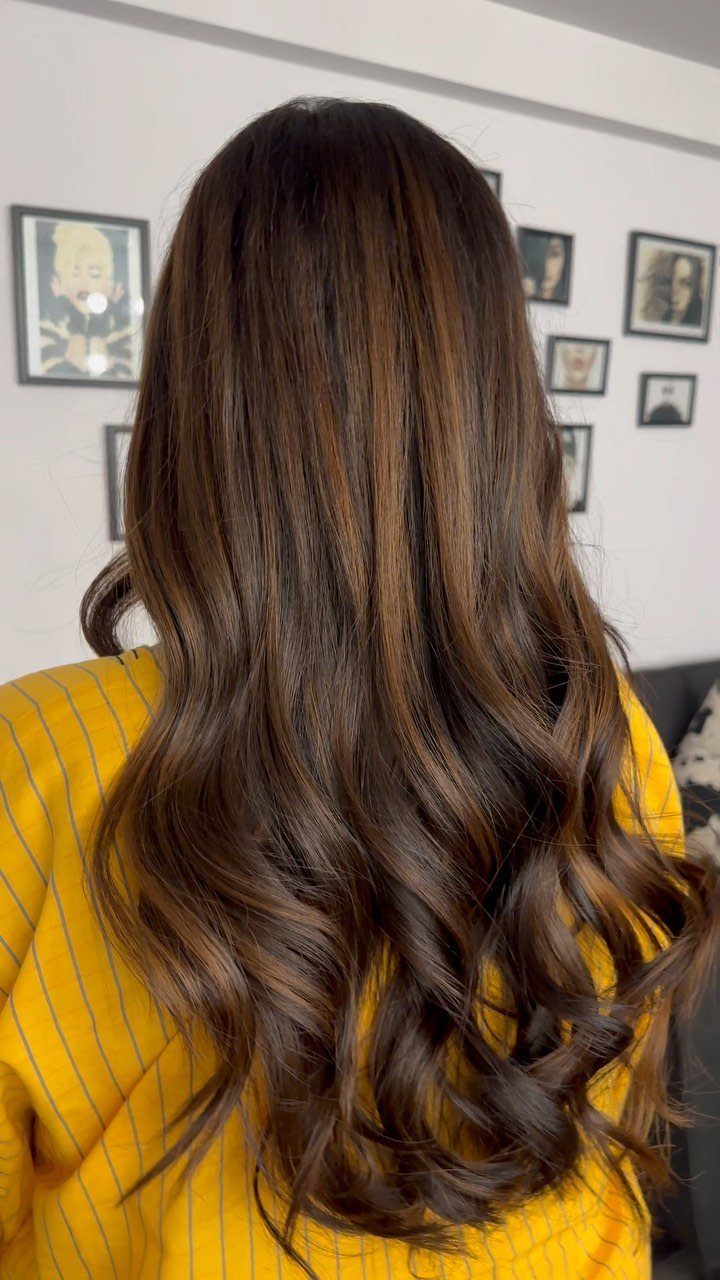
Soft chocolate ribbons run through the lengths without sharp contrast. The brown is close enough to black that the highlights add dimension rather than obvious streaks.
If you want movement without announcing it, chocolate highlights do that. They catch light without drawing attention the way lighter shades would.
This shade grows out cleanly since the base and the highlight are only a few shades apart. You can stretch touch-ups longer if the root line doesn’t bother you.
11. Caramel Balayage
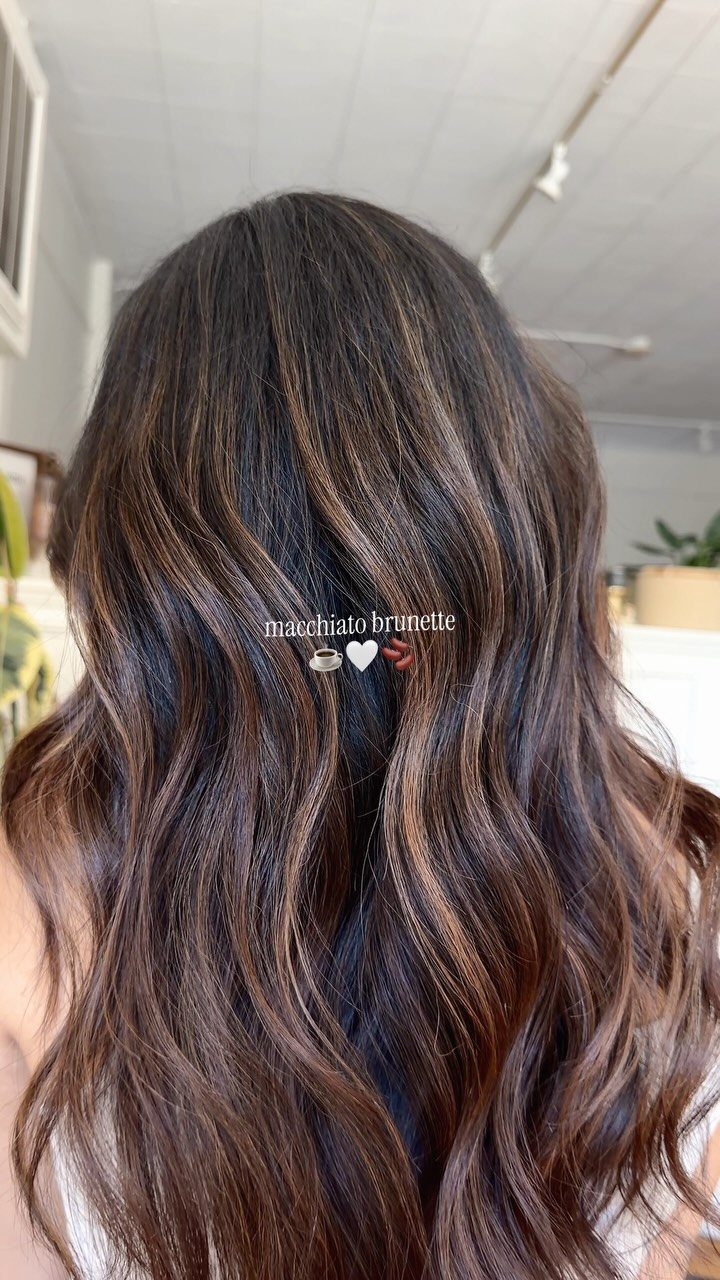
The warm gold-brown gets swept onto the lengths by hand, and your natural black does the rest at the root. The color is concentrated lower, so the effect is brighter at the bottom than at the top.
Balayage gives you control over where the color sits. If you only want brightness through the ends, the colorist keeps it there.
Caramel is warm, so it flatters golden or warm skin tones.
12. Ash Brown Highlights
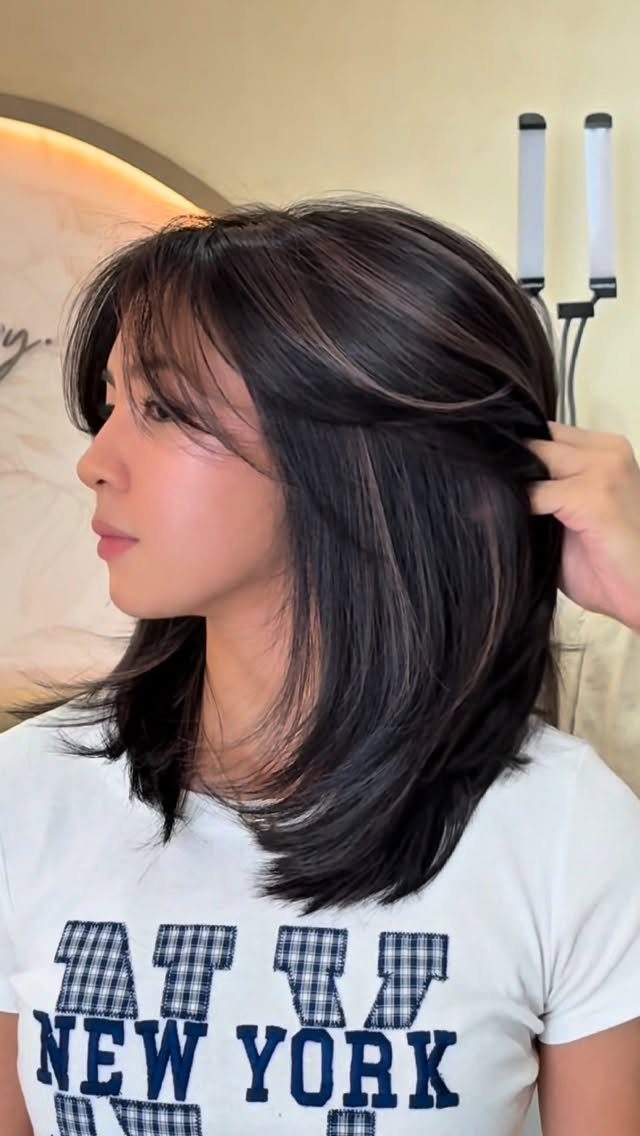
Cool, muted brown tones cut warmth and keep the look sleek. Ash brown has a gray or green base that neutralizes red or brassy tones, so it stays clean as it fades.
If your black hair pulls warm or you don’t want golden highlights, ash brown is the fix. It reads cooler and sharper than chocolate or caramel.
Ash brown suits cool or neutral skin tones. On very warm skin, it can look flat; warmer browns give you more contrast in that case.
13. Mocha Highlights
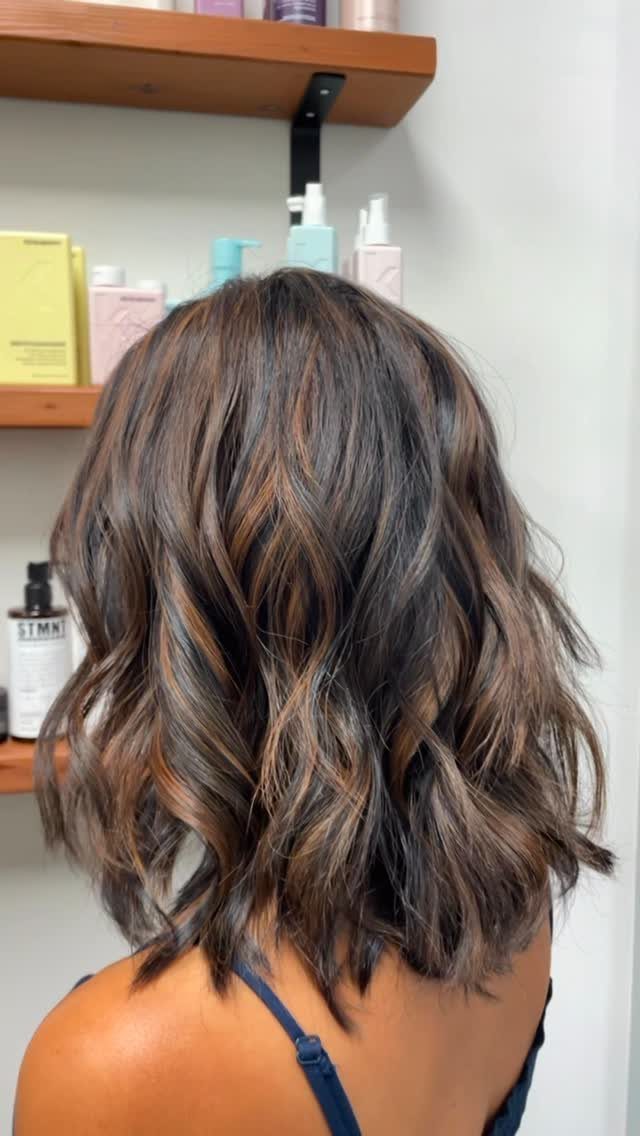
Mocha adds dimension without warmth. The shade stays in the cool brown family, so it doesn’t shift orange or brassy as it fades.
It’s a good pick if you want contrast that feels polished rather than high-energy. The highlights catch light but stay muted, which keeps the overall look restrained.
14. Caramel Highlights
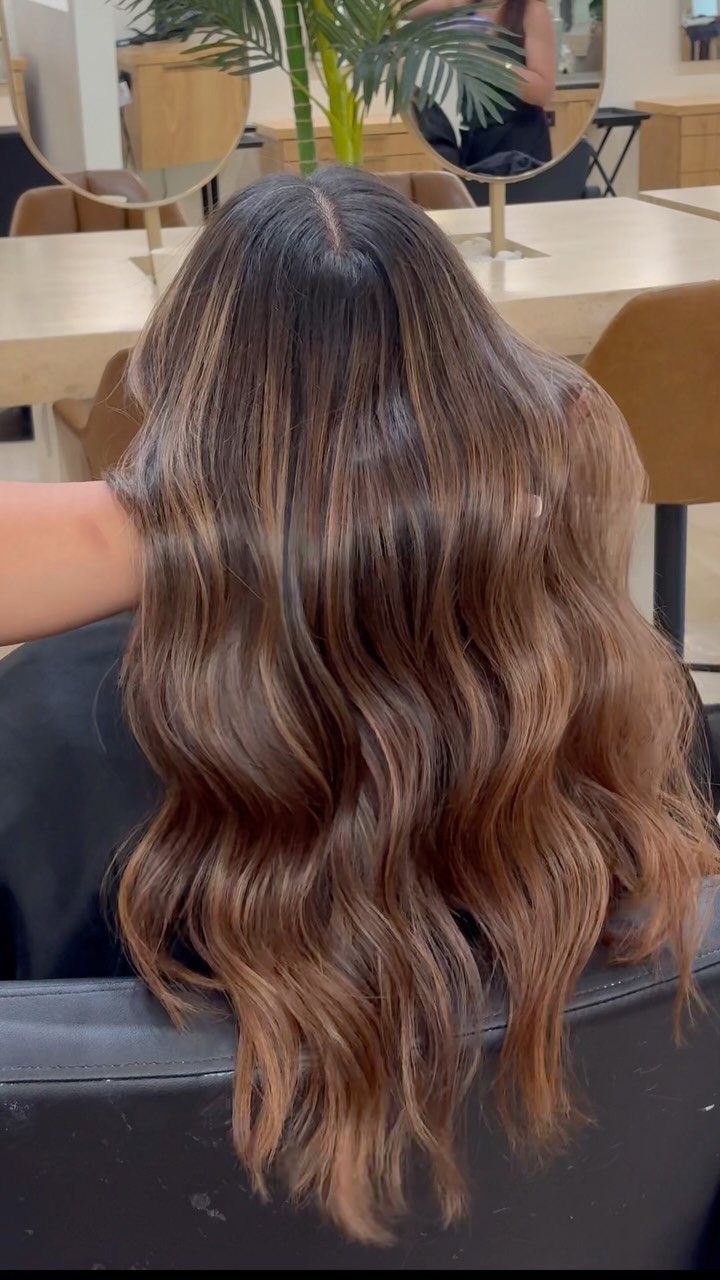
Caramel ribbons run through the lengths, bringing warmth and noticeable lift. The color sits closer to honey than to chocolate, so the contrast is clear.
If you want the highlights to show, this is the shade. It reads warmer and brighter than most browns, so it flatters golden or warm undertones.
Caramel can fade brassy over time, so a blue shampoo or gloss helps keep it from drifting orange. Touch-ups depend on how much root you’re fine with; the color is light enough that grow-out is visible.
15. Golden Brown Highlights
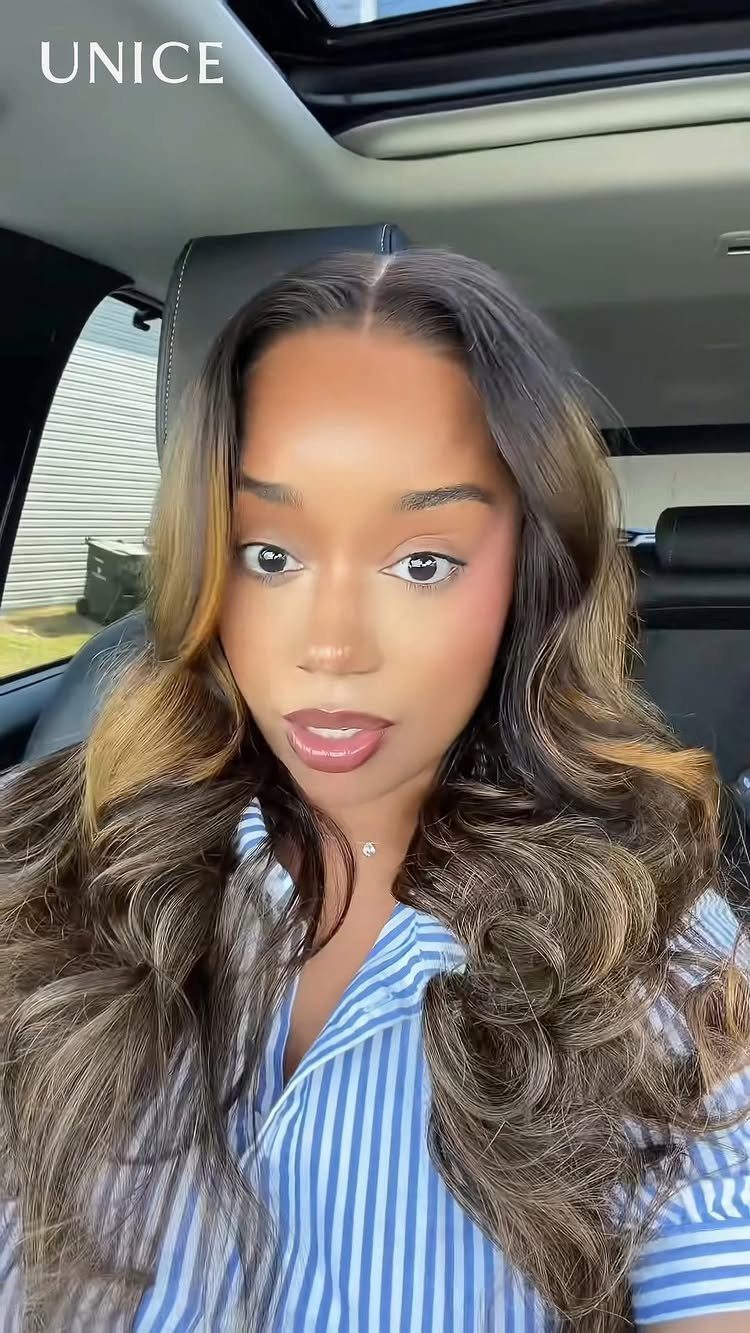
The shade sits between honey and chocolate, keeping warmth without crossing into orange.
If your black hair fades reddish, golden brown balances it without adding more red.
The highlights are lighter than the base, so root grow-out shows. How long you can stretch it depends on whether a visible line bothers you.
16. Subtle Brown Ribbons
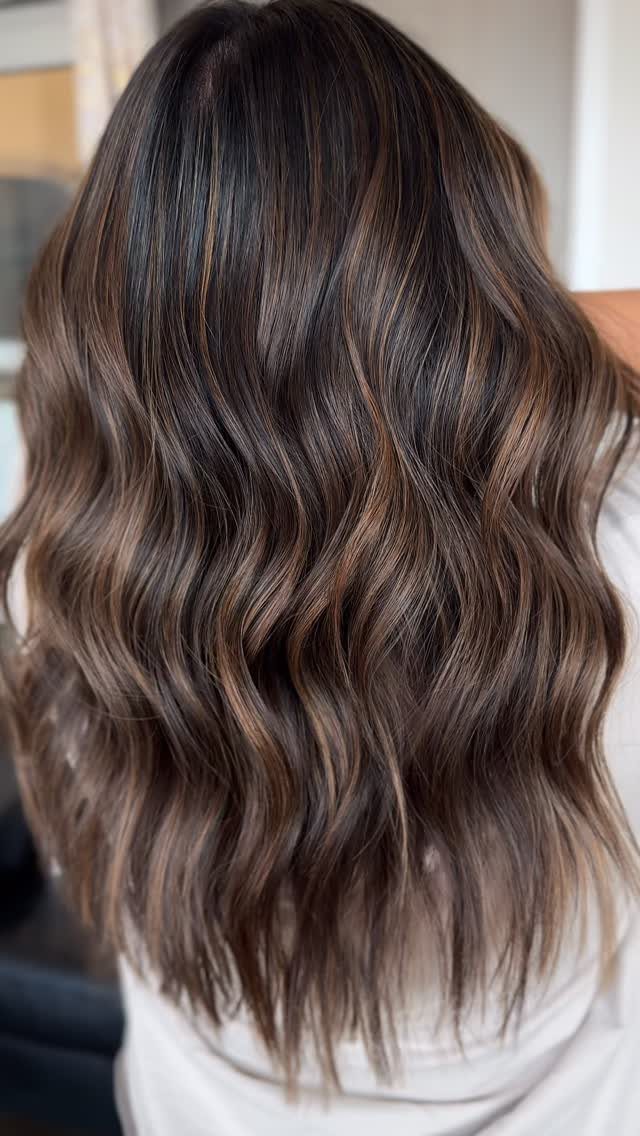
Fine strands of brown are scattered through the lengths, adding shine without bold streaks.
This is a quiet option if you want movement but no drama. The brown is close enough to the base that it reads as dimension rather than highlights.
Because the contrast is soft, the ribbons grow out cleanly. You can go longer between appointments without a hard line showing up.
17. Auburn Brown Highlights
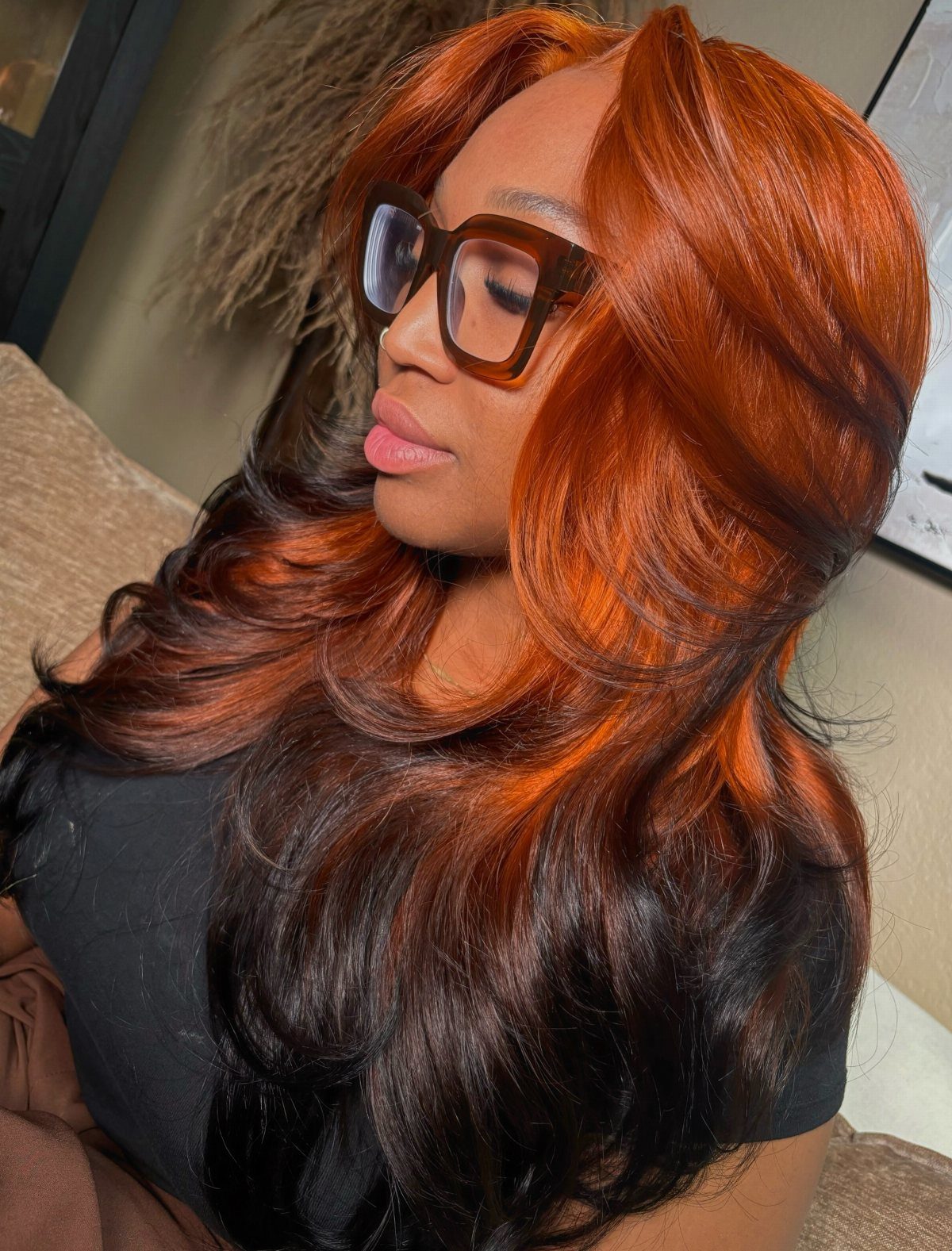
Red-brown pieces warm up black hair with a copper cast. Auburn sits between brown and red, so it reads spicy rather than neutral.
The color catches light and pulls brighter in natural sun, which makes it feel more vivid than flat brown. If you want warmth with a red tint, this is it.
The red tones drop out fast, so you’ll want sulfate-free shampoo if you’re keeping this past 4 weeks.
18. Chunky Brown Highlights
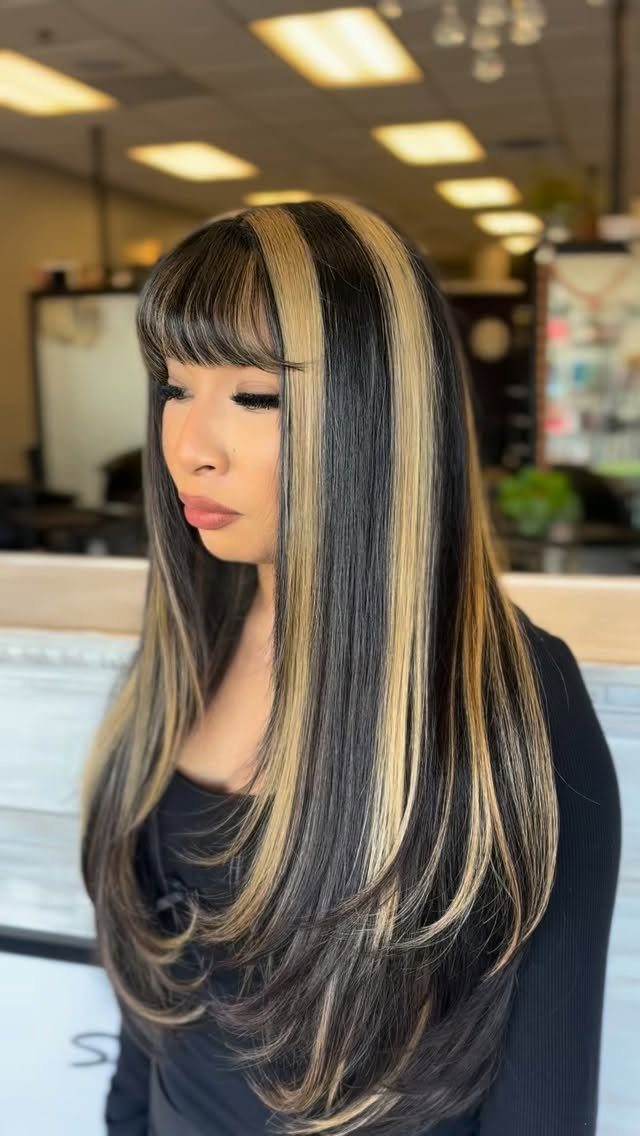
Wide sections of brown create bold contrast and a 90s-inspired stripe. The highlights are thicker than traditional ribbons, so they make a statement rather than blending in.
Chunky highlights show up clearly and give the color real presence. If you want something noticeable without bleaching it blonde, this is the way.
The width means the color is faster to apply than fine babylights, but the contrast also means grow-out is obvious. Plan for regular touch-ups or let the root come in as part of the look.
19. Espresso Brown Balayage
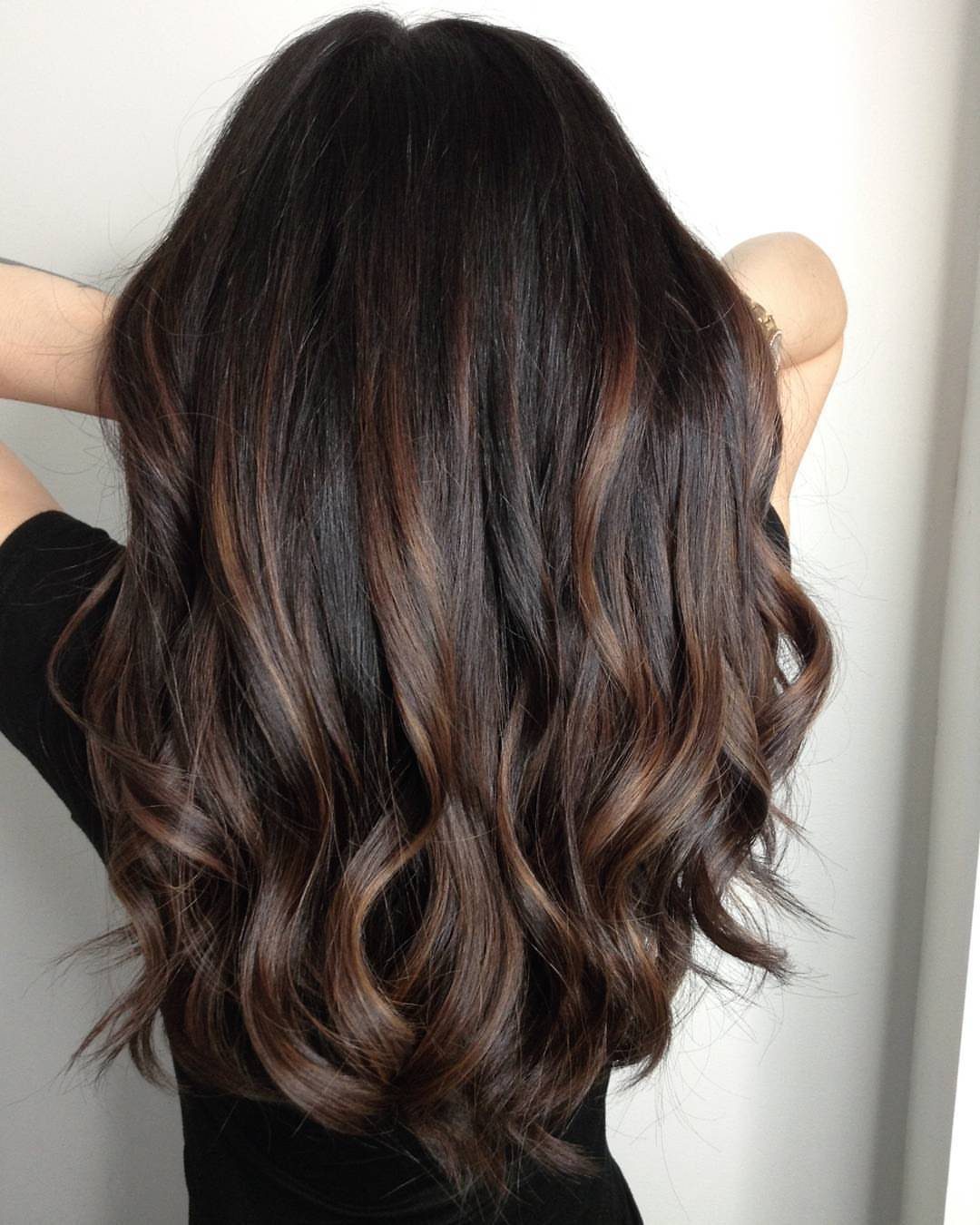
Deep espresso brown sits close to black, so the shift stays soft even where the balayage starts. The color is painted through the lower half, leaving the roots untouched and the overall effect understated.
Espresso works on any skin tone since it’s only a shade or two lighter than the base. If you want dimension without obvious highlights, this is the route.
20. Subtle Chocolate Highlights
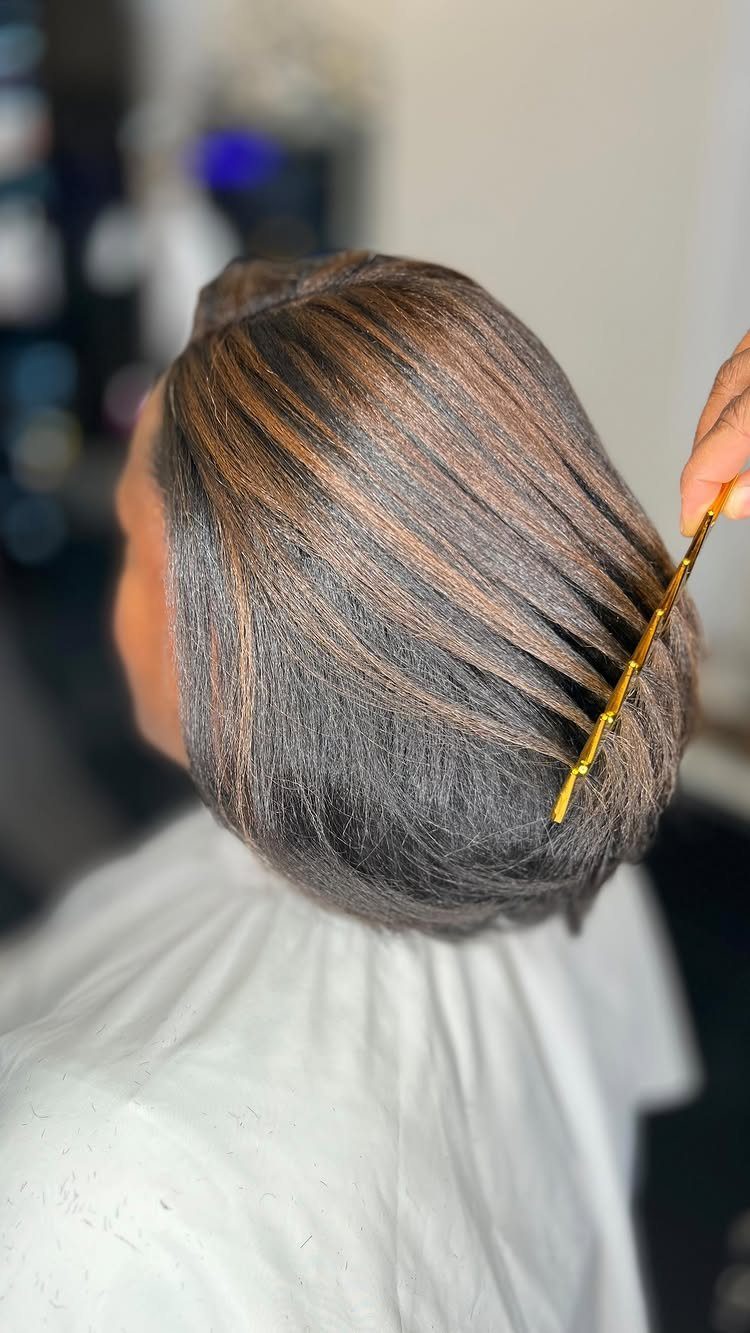
Chocolate brown placed a level or 2 lighter adds movement without anyone noticing you colored it.
Fine sections keep the effect soft and blended. The colorist weaves them through rather than placing them in thick ribbons, so the result looks lived-in.
Touch-ups can stretch longer since the contrast is low. If you’re testing highlights for the first time, this is a low-risk starting point.
21. Roasted Almond Highlights
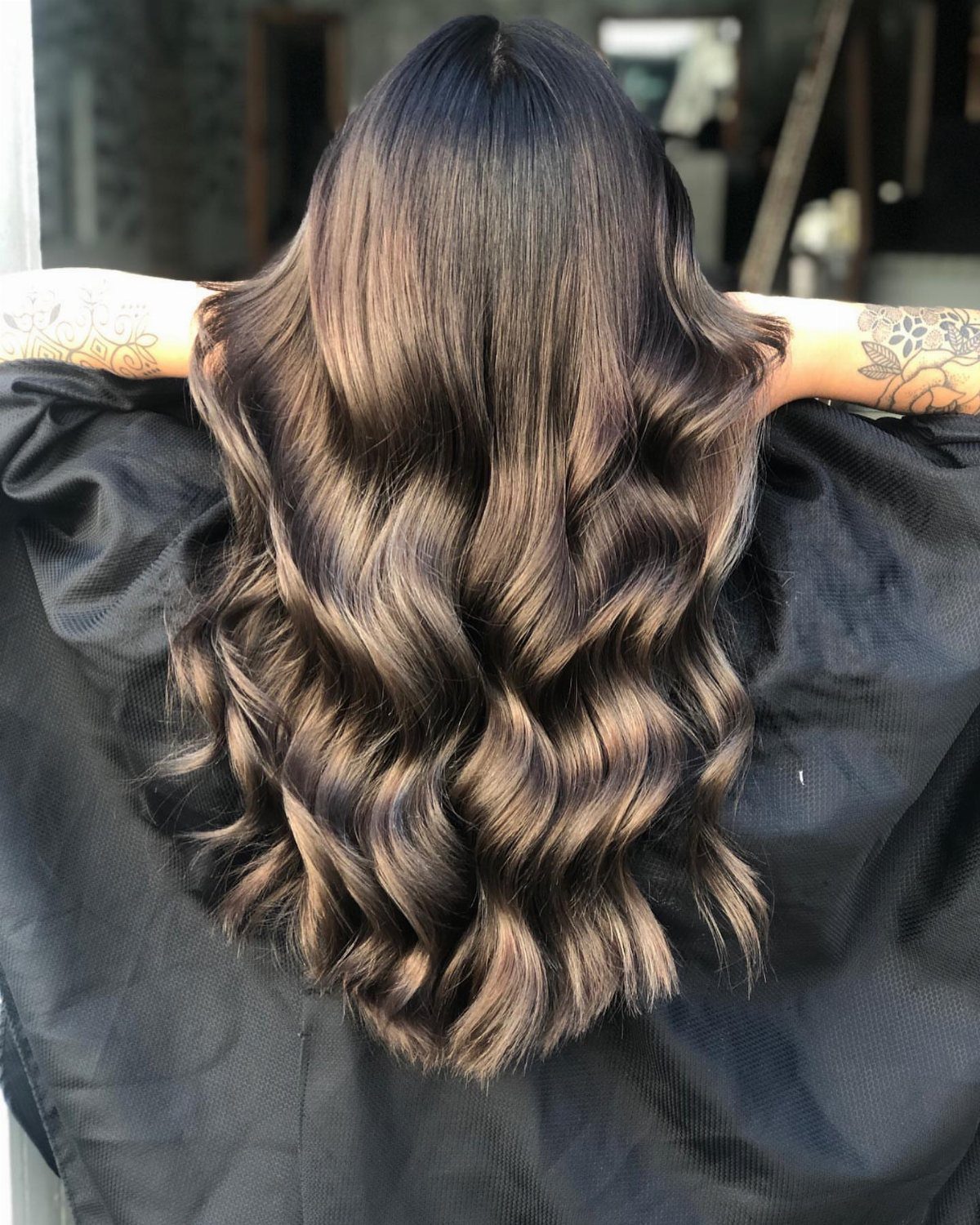
Almond-toned highlights bring warm beige-brown to dark hair without turning gold. The color sits between caramel and chocolate, reading neutral-warm rather than brassy.
If caramel feels too bright or chocolate too flat, almond splits the difference.
The contrast is visible but not harsh, so it grows out smoothly. How often you touch up depends on your tolerance for root, but the shift is soft enough to stretch it if needed.
22. Caramel Brown Streaks
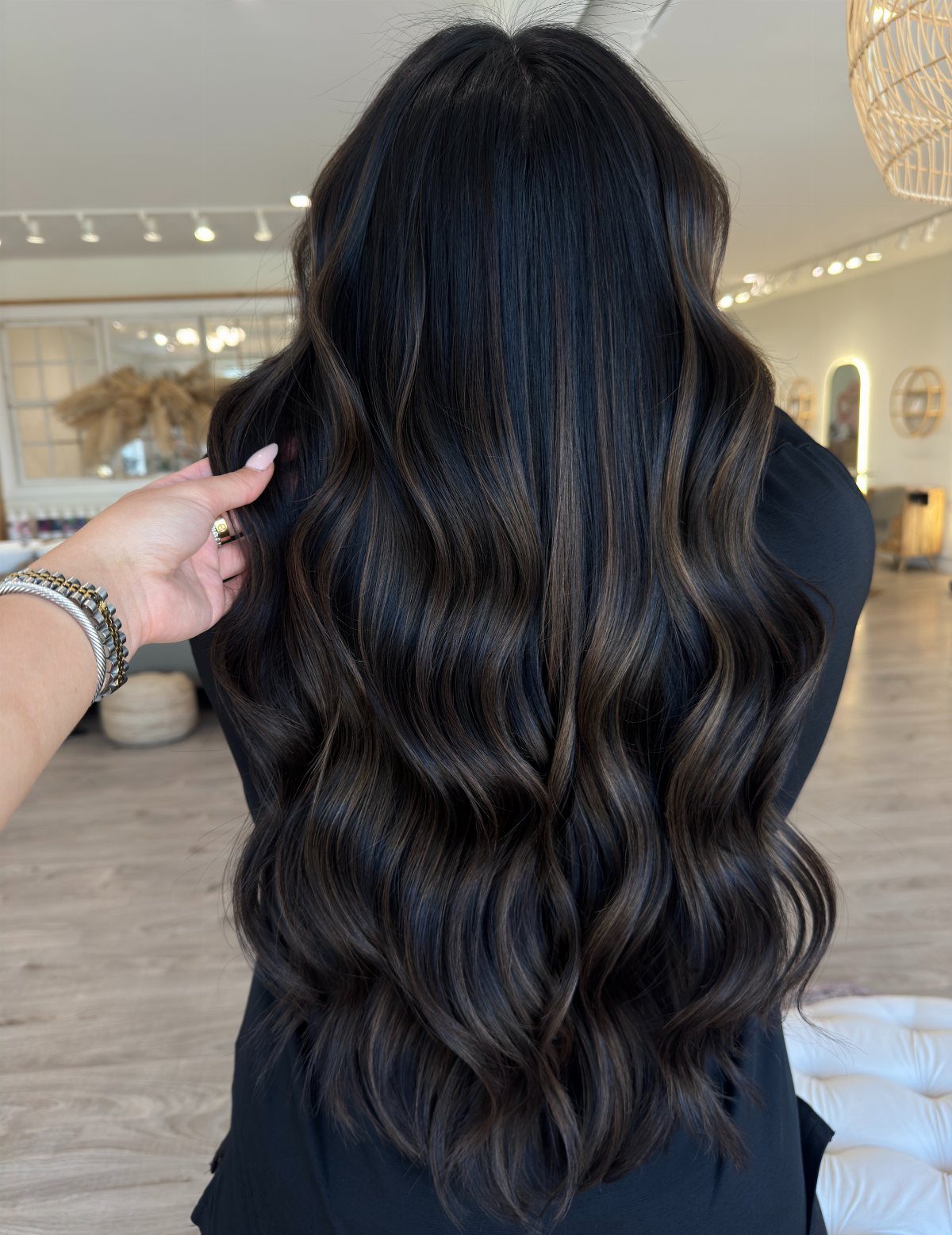
Streaks are wider than traditional highlights, so the caramel brown shows up as bold ribbons rather than blended dimension. The sections are thick enough to make a statement.
If you want noticeable color without going blonde, streaks give you that.
23. Brown Ombre
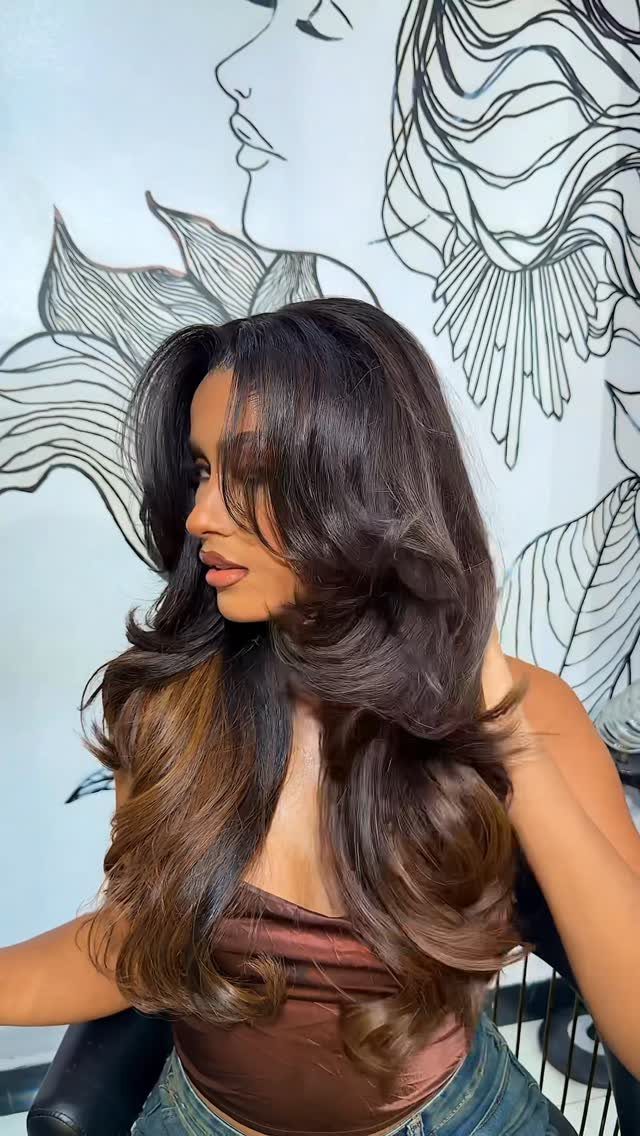
Black roots fade into brown starting at the mid-lengths, and the ends go lighter still. Ombre skips the root entirely, so there’s no touch-up unless you want to refresh the brown.
This is low-maintenance color since grow-out is built into the look. The transition can be soft or abrupt depending on how the colorist blends it.
If you want lighter ends without committing to highlights, ombre does that. The color sits where you can cut it off if you change your mind.
24. Warm Brown Highlights
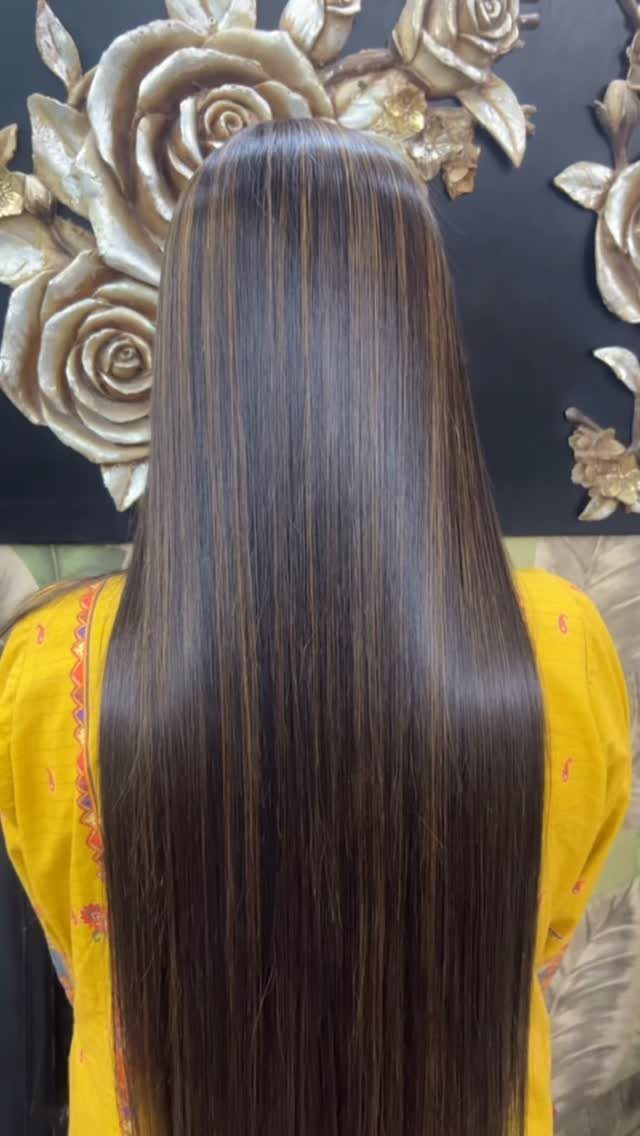
Thin ribbons of warm brown add quiet lift without changing the overall color. The highlights are only a shade or two lighter, so the effect is soft and the contrast minimal.
25. Brown Highlights on Curls
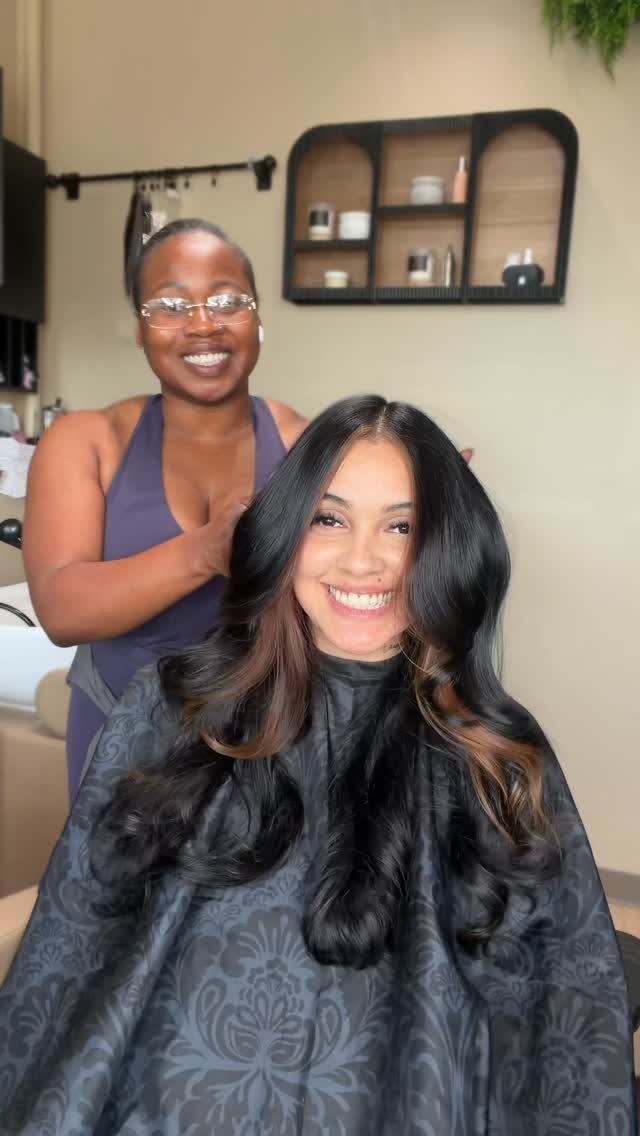
Brown highlights sit between the curl clumps, making each spiral look more defined without flattening the texture. The color catches light as the curls move, adding dimension that straight hair gets from shine alone.
Curly hair takes color differently than straight hair because the cuticle is more open, so the brown can pull lighter or fade faster. A colorist familiar with curls will adjust the formula to account for that.
If you’ve been coloring your hair black for years, lifting it to brown takes time. Going slowly keeps the curl pattern intact and the hair strong.
26. Copper Highlights
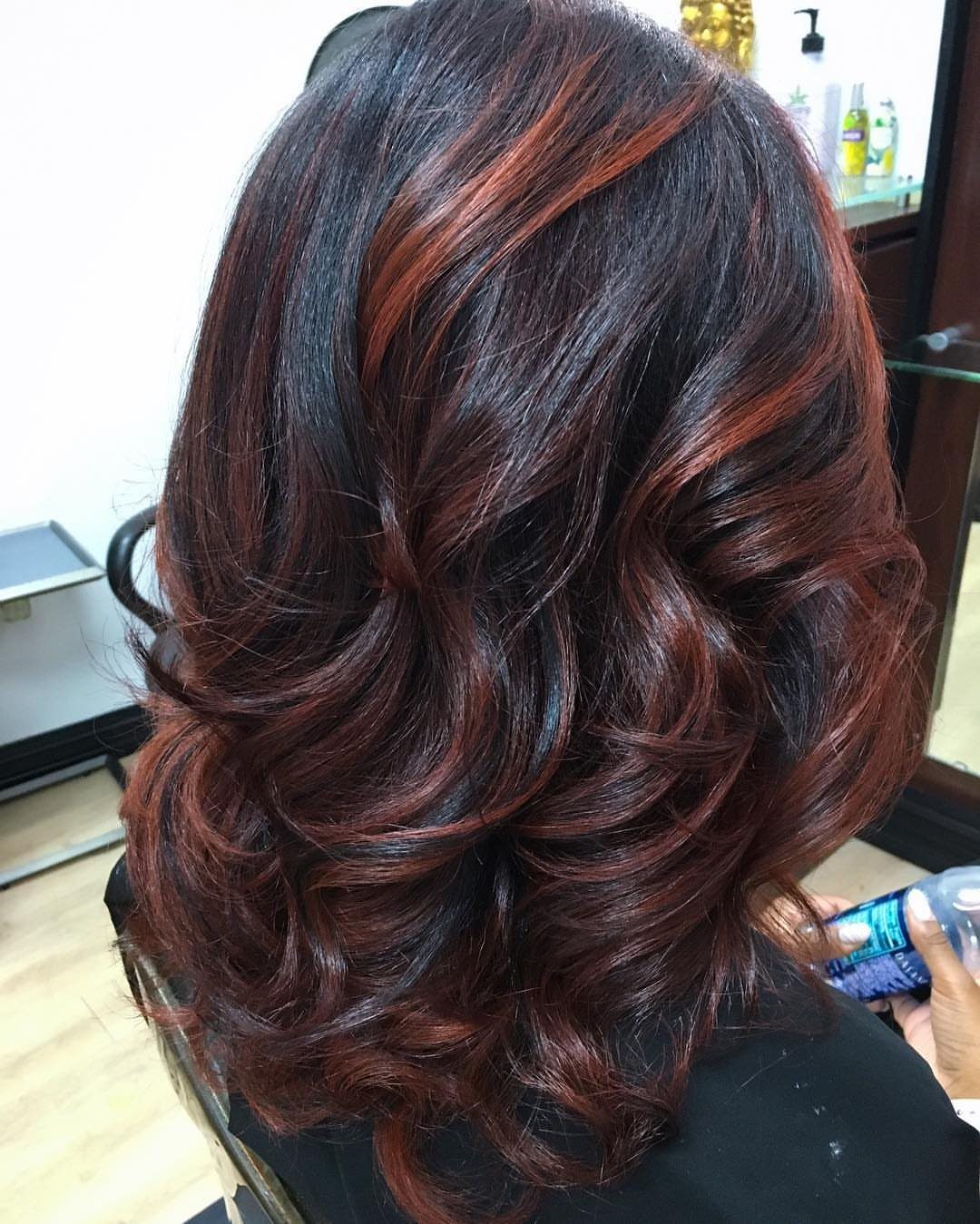
Copper brings red-orange warmth that’s brighter and bolder than auburn or cinnamon. The contrast is vivid, so the highlights stand out clearly against black.
If you want color that’s impossible to miss, copper does that. It pulls brighter in sunlight and fades toward orange, so a color-depositing conditioner keeps it from washing out too fast.
Copper suits warm skin tones. On cool undertones, it can look jarring.
27. Golden Brown Money Piece
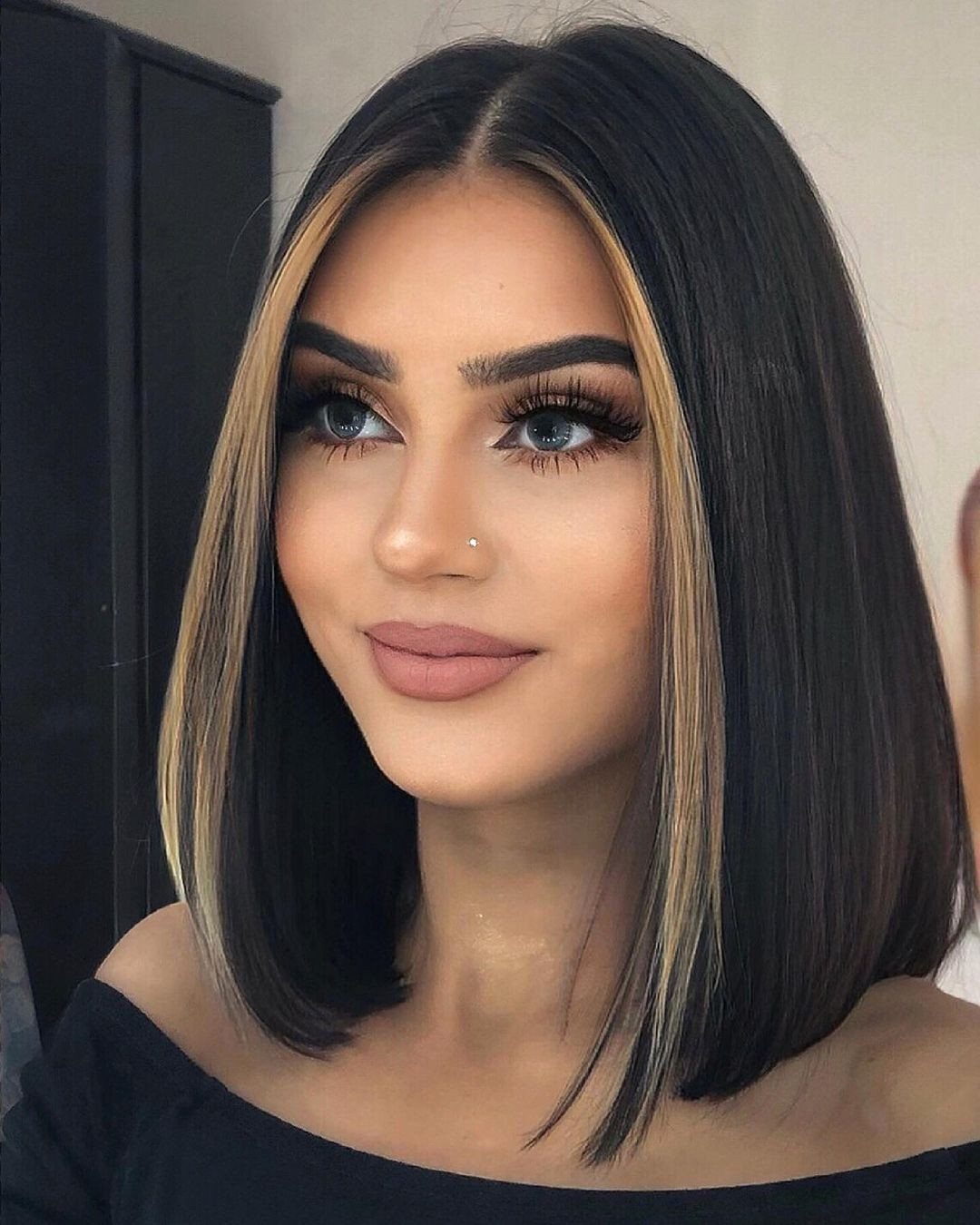
2 thick sections of golden brown at the front brighten the face while the rest stays black. The money piece is wider than face-framing highlights, so the contrast is obvious.
On a bob, the color sits close to the face and ends at the same length as the rest of the cut, which keeps the shape clean.
Golden brown sits between honey and chocolate, warm without tipping into orange. The placement right at the hairline means you’ll see regrowth sooner than you would with swept-back balayage.
28. Two-Tone Box Braids
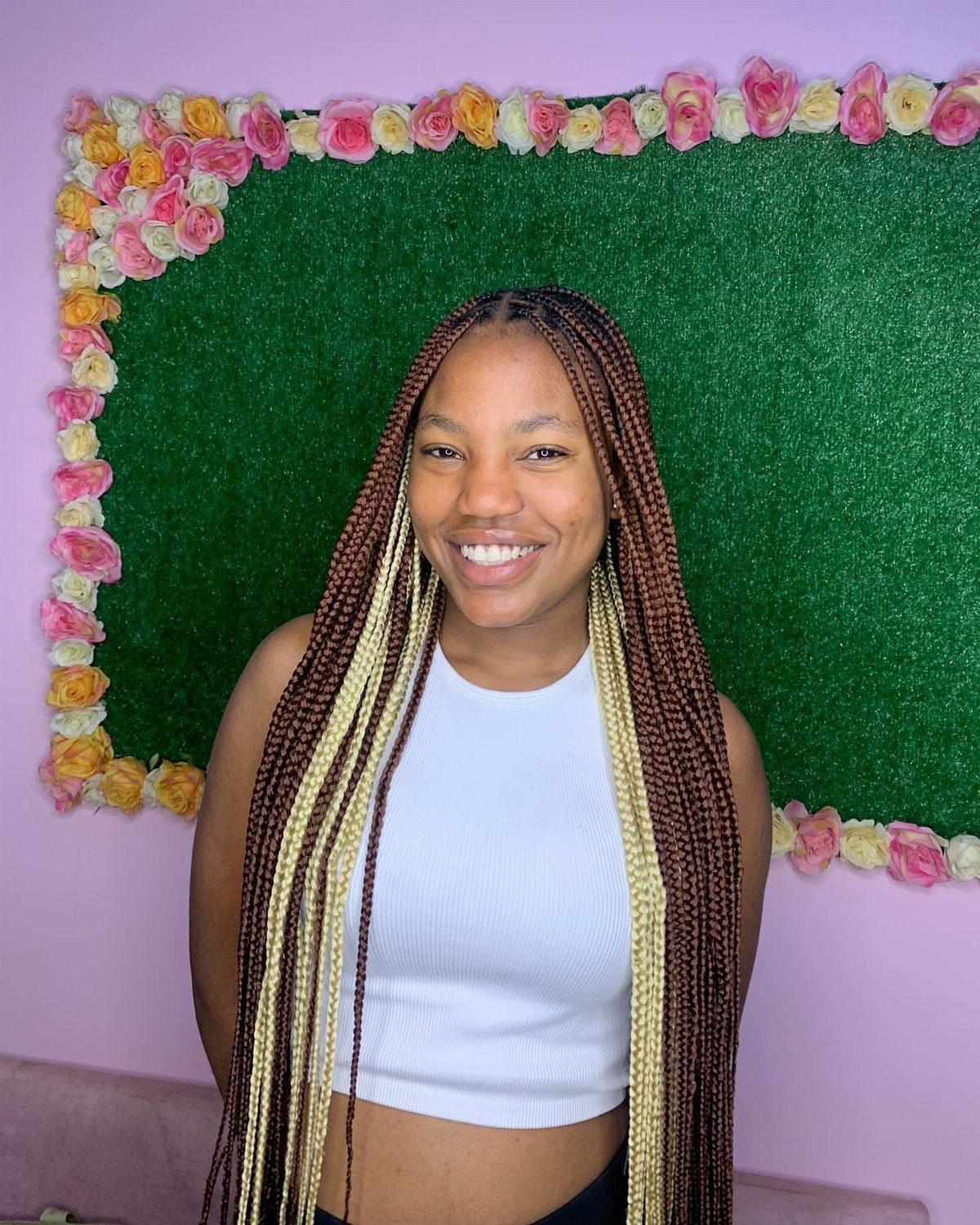
Braiding hair in chestnut or #30 brown gets mixed in with black extensions, giving you brown accents without bleach or dye. The two-tone effect is built into the install rather than applied after.
This is the no-damage route if you want brown and black together. The color lasts as long as the braids do, and when you take them out, your natural hair is untouched.
Box braids let you control exactly how much brown you want by choosing how many brown packs to add.
Choosing Shade and Contrast
Pick a brown that fits your undertone. If you’re neutral, chocolate or bronze work either way.
Go 1 or 2 shades lighter than black for soft lift, 3 or 4 if you want people to notice. The farther you lift, the more contrast you get.
Eye color can point you in a direction.
Hazel and green read warm next to caramel and copper. Cool black with blue or gray in it pairs better with ash or mushroom.
Check the shade in daylight before you settle on it. Indoor light skews warm, and what looks fine in the salon can surprise you outside.
Ask your colorist to adjust the tone with a toner if the brown reads too brassy or too cool once you see it in natural light.
Color Upkeep and Hair Health
Brown fades if the hair gets dry or you wash it too often.
Use a sulfate-free shampoo and wash 3–4 times a week, not daily. Cool or lukewarm water keeps the cuticle closed and the color in longer.
Condition every wash. Highlighted hair tends toward dryness since lifting opens the cuticle.
Heat styling dulls color, so use a protectant before you blow-dry or flat-iron and keep the temperature as low as you can.
Sun pulls the color out fast, so a hat or something with UV in it matters if you’re out all day.
If the brown starts looking orange or brassy, book a gloss.
It refreshes the tone without redoing the highlights. If you relax your hair, space that appointment at least 2 weeks away from color to avoid overlap damage.
Frequently Asked Questions
Does black hair look good with brown highlights?
Yes, and it’s one of the easier lifts to wear.
Brown sits close enough to black that it adds movement and light without a harsh stripe. You can also tune it warmer or cooler to suit your undertone, and the base stays dark, so grow-out is gentle.
What color highlight is best for black hair?
Pick by undertone and how much upkeep you’ll tolerate.
Caramel, chocolate and mocha give dimension, while ash or mushroom browns cancel warmth if your black pulls brassy or red. Chocolate is the safest if you’re neutral-toned and unsure.
How do you lighten black hair to brown?
Getting from black to brown means bleach or a high-lift formula, and most hair needs 2 or 3 sessions depending on where you start and how much lift your hair can handle.
If you’ve dyed your hair black for years, going slowly protects the strength of the hair and, on curls, the pattern.
A strand test tells you how many rounds you’ll need and whether your hair can take it all in one go.
How do you take care of black hair with brown highlights?
Use sulfate-free shampoo 3–4 times a week in cool or lukewarm water, and condition every wash.
Lifting opens the cuticle and leaves hair dry, so moisture matters. Use heat protectant, keep styling temperatures low, and wear a hat in strong sun.
How do you keep brown highlights shiny and fresh?
Wash less often, condition each time, and shield the hair from heat and sun.
Brown fades fastest when hair is dry. When warmth creeps in and the brown starts looking orange, a toning gloss brings the shine back and cools things down without lifting or depositing more color.