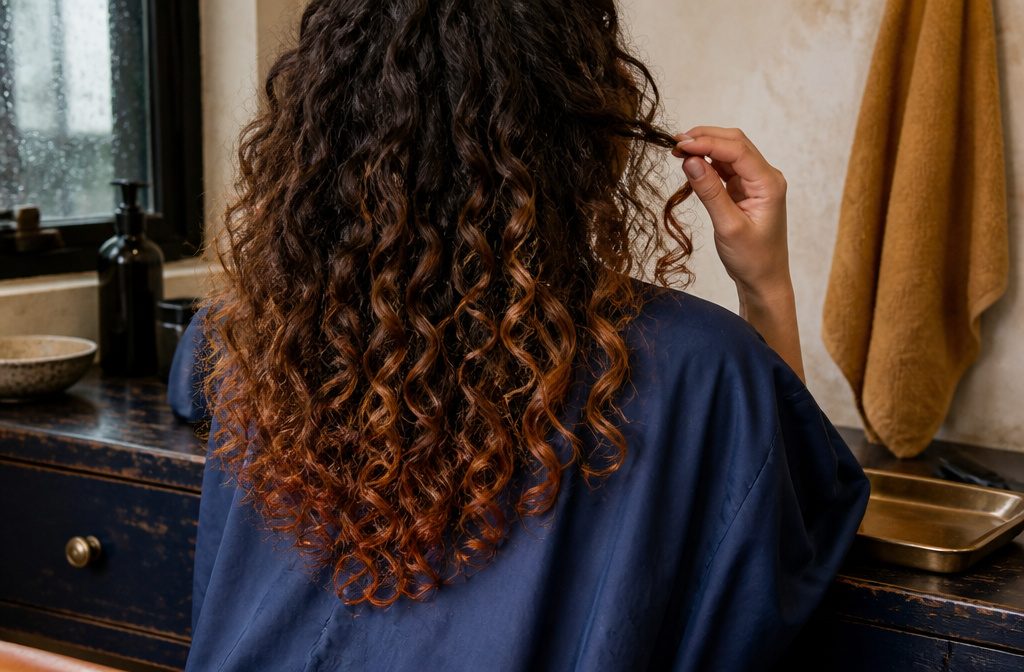
The right curly hair ombré depends on how much lightening your ends can take: honey-to-copper and dark brown to caramel need little or none, while pink, pastel and silver on black require bleach first.
That step dries curls most, and ends are already the driest part. Pastel only shows on pale blonde.
1. Gemini Hair Color
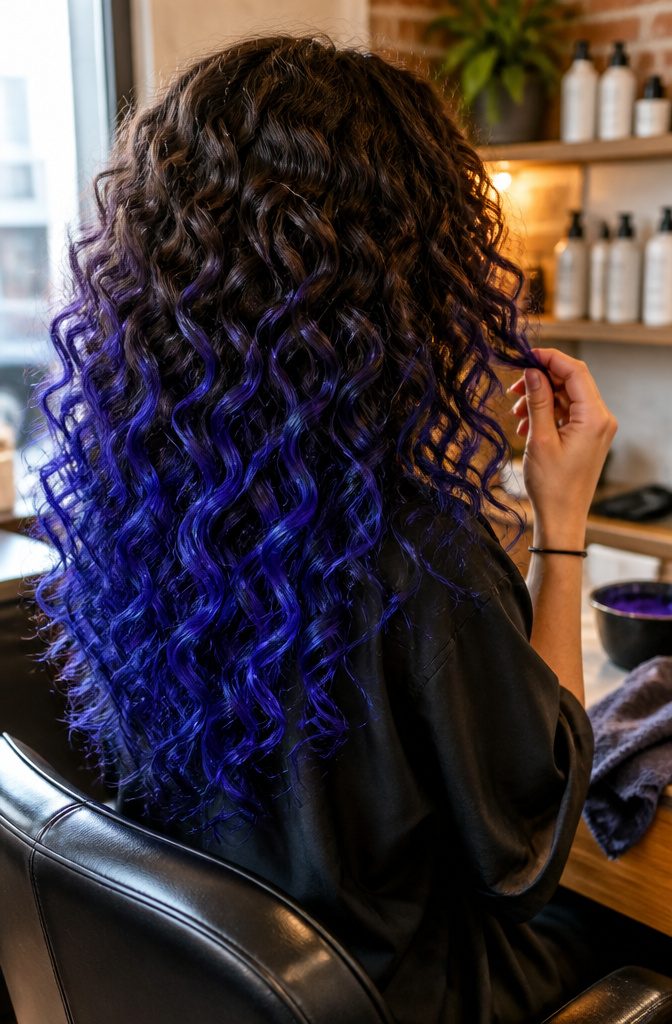
Gemini hair pulls off two contrasting shades in one look, usually dark-brown roots with a bold color blended through the lengths.
The name nods to the twin-personality idea, and on curls the contrast reads even stronger because the texture catches light differently at every angle.
The dark base keeps roots low-maintenance, and the bright ends get all the attention without committing your whole head to it.
If the permanence feels like too much, L’Oréal Paris Colorista Hair Makeup Temporary 1-Day Hair Color Spray gives you the dual-tone effect until your next shampoo.
It dries fast on any texture, so you can test the look before booking a full color appointment or save it for days when you want the drama without the upkeep.
2. Reverse Silver Ombré
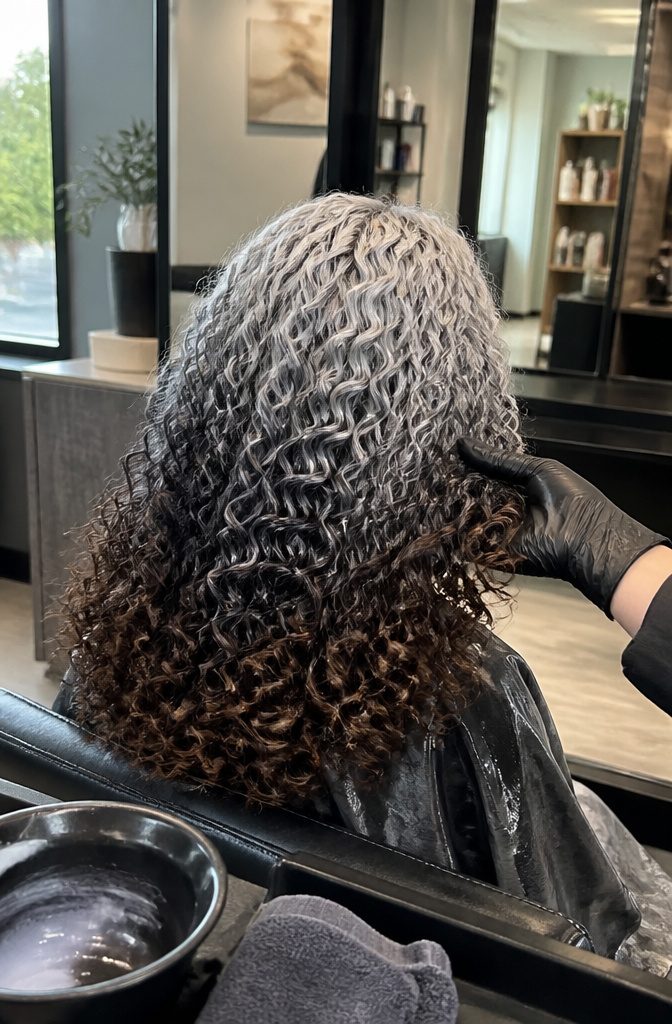
The gradient runs backward here: roots start light and darken toward the ends, which makes it a quiet option if you’re letting natural gray grow in.
The icy metallic silver that makes this look sharp needs a colorist who can match the tone across curls without hotspots, since silver on uneven lift reads patchy fast.
Once the color is placed, a weekly toning gloss keeps the silver cool and stops brass from creeping in. The L’Oréal Paris Le Color Gloss One Step In-Shower Toning Gloss in Silver works as maintenance between salon visits.
You apply it in the shower, leave it on damp hair, and rinse. It deposits enough violet to hold the tone without reprocessing the ends every time they fade warm.
3. Golden-Blonde Ombré
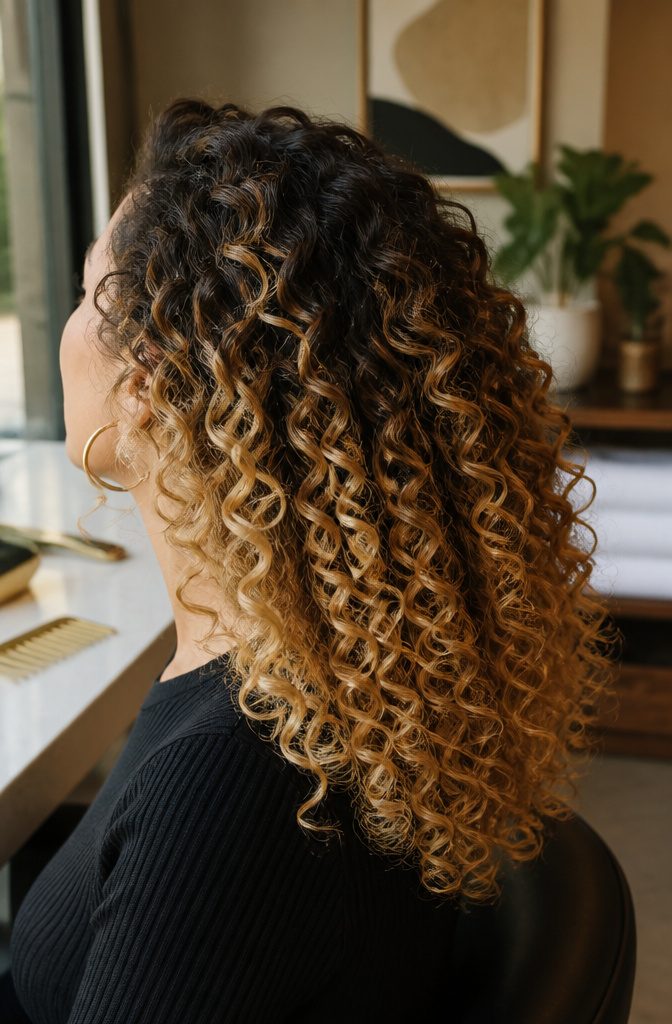
Golden blonde ombré is one of the few looks I’d genuinely consider doing at home, especially if you want something warm and sun-ready for spring or summer.
The gradient reads lighter than a full head of highlights but still brings plenty of dimension to curls.
L’Oréal Paris Frost & Design is built for this, and the pull-through cap gives you control over which sections get the dye.
To keep the ombré gradient intact, apply the color one to two inches down from your roots rather than starting right at the scalp. That buffer zone is what keeps the transition soft instead of striped.
The warmth here leans golden rather than ashy, so it suits warmer skin tones better. If you tend to reach for gold jewelry over silver, this is likely a safer bet than cooler blonde shades.
4. Blue Ombré
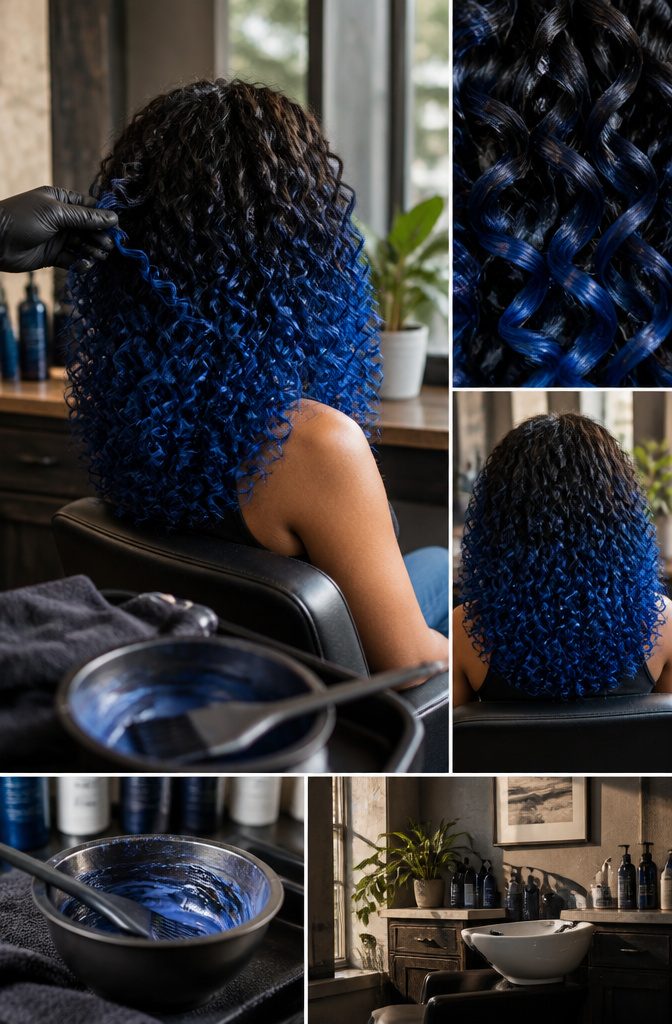
Blue balayage and ombré sit at opposite ends of the bold spectrum, and both work beautifully on curls.
The icy navy version can look nearly black at the root, which makes it surprisingly doable at home if you already have a dark base.
L’Oréal Paris Féria Midnight Bold Multi-Faceted Permanent Hair Color in Cosmic Azure, painted on about an inch below the roots, gives you a fade that requires no bleach.
The bolder dark-blue balayage route needs a salon and benefits from a strengthening treatment beforehand, plus a trim to make sure the color sits on healthy ends.
I’d pick up the blue Viral Shampoo by Celebluxury to keep the vibrancy between visits, and plan on returning every 1–2 months for deep conditioning. For at-home refresh, Olaplex B keeps the blue from slipping toward dull teal.
5. Auburn Ombré
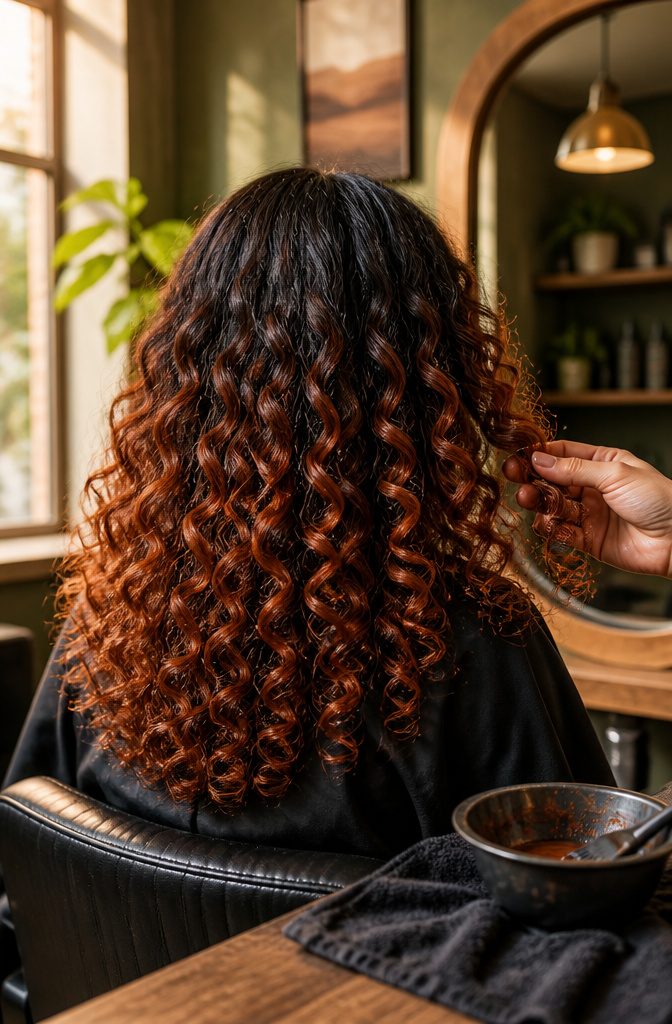
Auburn ombré gives you room to decide how warm you want to go. The shade can lean red-orange or brown, which makes it custom enough to match both your preference and your skin tone.
On curls, the darker roots do real work: they stretch the time between salon appointments or home color sessions, and you skip the commitment of maintaining color from scalp to ends.
Red tones fade faster than most colors, so upkeep matters. Le Color Gloss in Auburn or Copper is a five-minute in-shower toning treatment that revives faded color and adds moisture at the same time.
The gloss brings back vibrancy without a full dye session, and the treatment works in as little as 5 minutes, which keeps maintenance realistic when you’re fitting it around everything else.
6. Reddish-Orange Tips
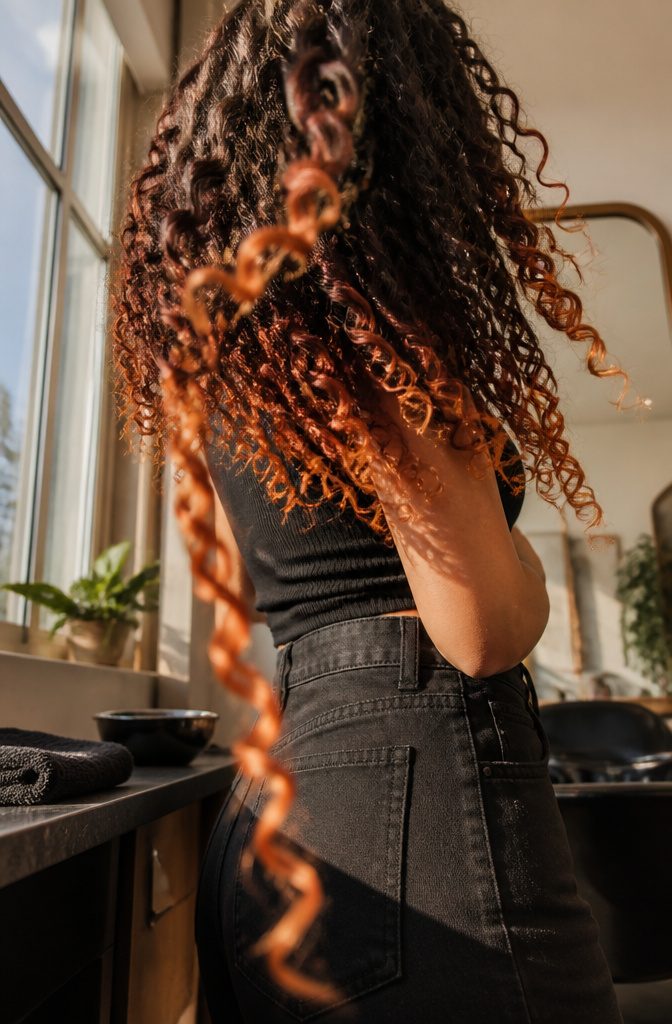
Reddish-orange tips give you the pop without the upkeep drama of all-over color.
The rich dark roots transition into vibrant reddish-orange ends, and on defined curls with plenty of volume, that contrast reads from across the room. Each curl spiral catches light differently, so the color shifts as you move.
Auburn can lean more red-orange or pull brown depending on your skin tone.
Warmer undertones suit the brighter orange side, cooler tones often look better with auburn that tilts toward copper-brown. If you’re not sure which camp you fall into, think about whether gold or silver jewelry looks better on you.
Red and orange fade faster than any other family, so plan for a toning gloss every few weeks.
A five-minute in-shower treatment keeps the ends from going brassy or washed-out, and the formula doubles as a deep conditioner for the curl pattern itself.
7. Blonde Ombré on Long Curls
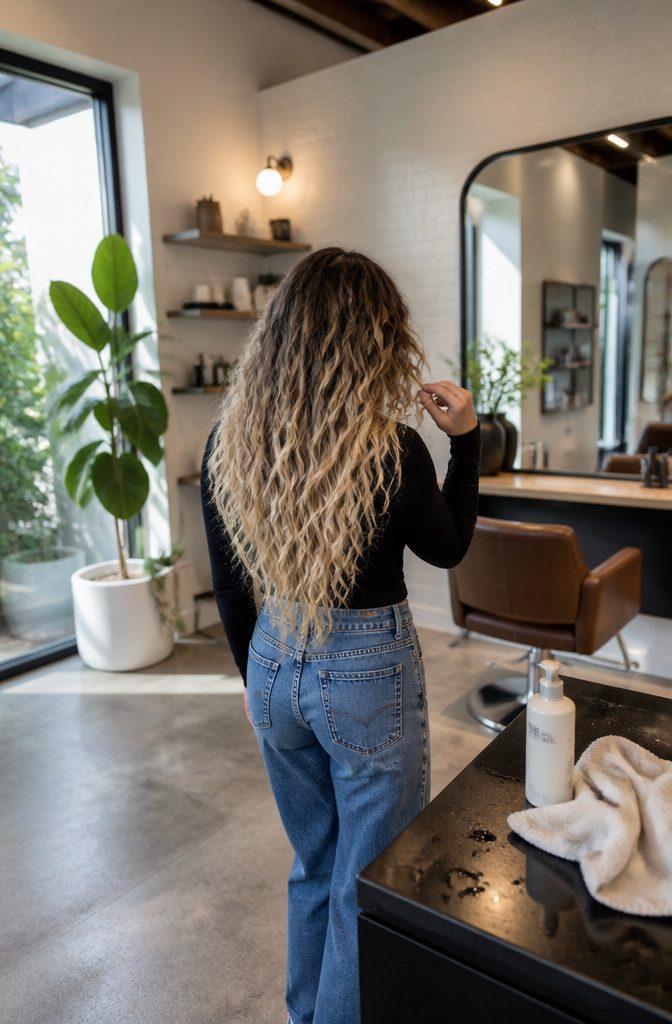
This look starts with balayage placed to fade from dark roots to light blonde ends, which lets the lift sit where curl movement shows it off.
The color follows a long V-shaped cut with a lot of layers, so the blonde catches light through the length rather than ending in a blunt line. Natural curls are required to get the full effect.
Styling this calls for a multi-step approach.
Motion.Lotion goes into wet hair first, then a soft styler. Once the hair dries, Easy.Rider (a soft wax formulated for curls) goes in, and the whole thing finishes with Session.Spray Flex.
The key move is scrunching the curls in with a hug motion rather than combing or separating them, which keeps definition without frizz.
The result reads as a summer look, light enough to feel bold but grounded by the dark root.
8. Rainbow With Black Underneath
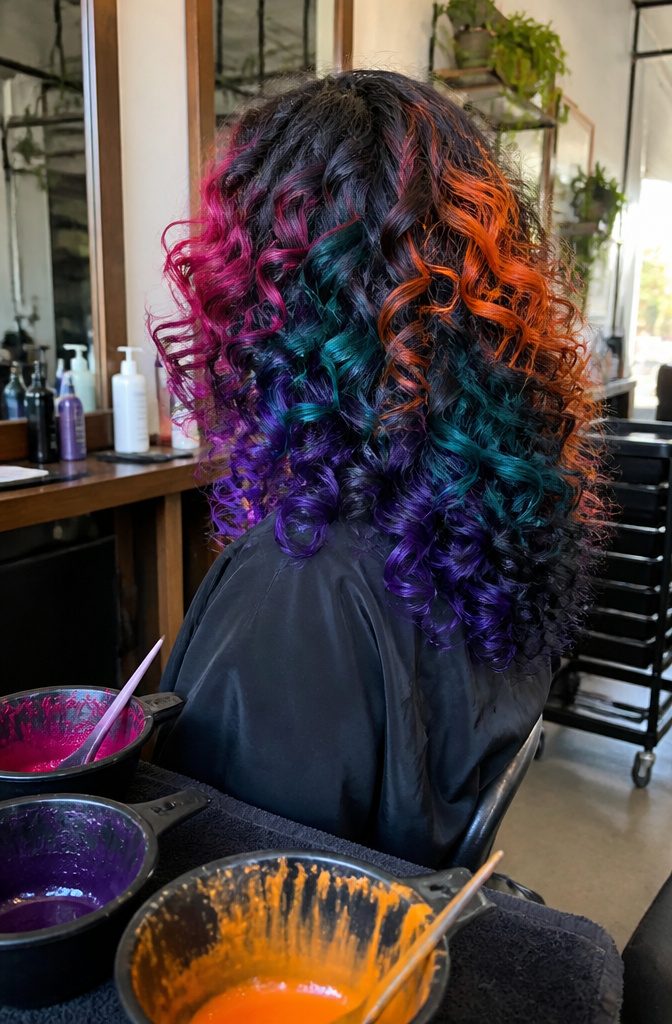
A black base holds the bright shades in place and keeps the whole look from washing out against the curl pattern. The dark underlayer anchors rose, teal, violet and orange so each reads clearly instead of blending into pastel haze.
On curls the rainbow sits at mid-length and tips, which means the black shows through wherever the curl spirals back on itself and gives the color depth it would lose on a blonde canvas.
The contrast also buys you weeks before the fade looks muddy, since the dark underneath does not shift as the brights soften. It is a high-commitment look that grows out visibly, but the color photographs as boldly as it feels.
9. Purple Highlights on Black Curls
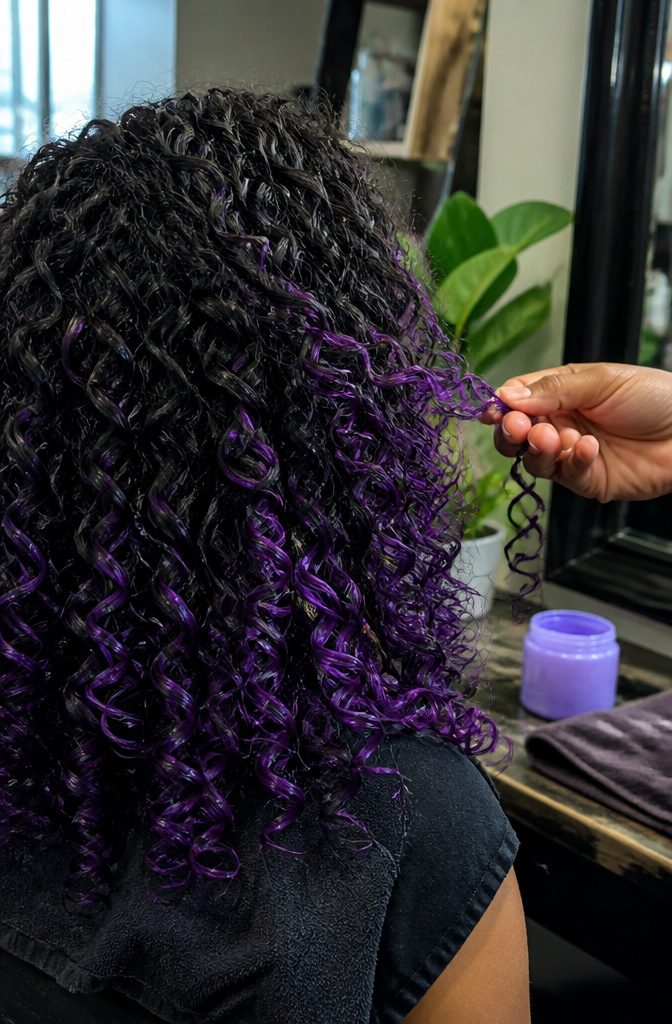
Purple against black curls reads as edgy because the contrast is so sharp, and it only works if the hair underneath survives the lightening.
Curly textures are naturally delicate, so I’d book a stylist who cuts a range of curl patterns and knows how to lighten them. Black hair has to be lifted before the purple will show at all.
Ask about a color-safe mask such as BES N3.
It hydrates the lightened curls and helps hold the color through your wash routine. Each shampoo strips a little more of the vivid purple, so I’d wash less often and plan on regular salon visits to keep it fresh.
10. Honey Weave Fading to Copper
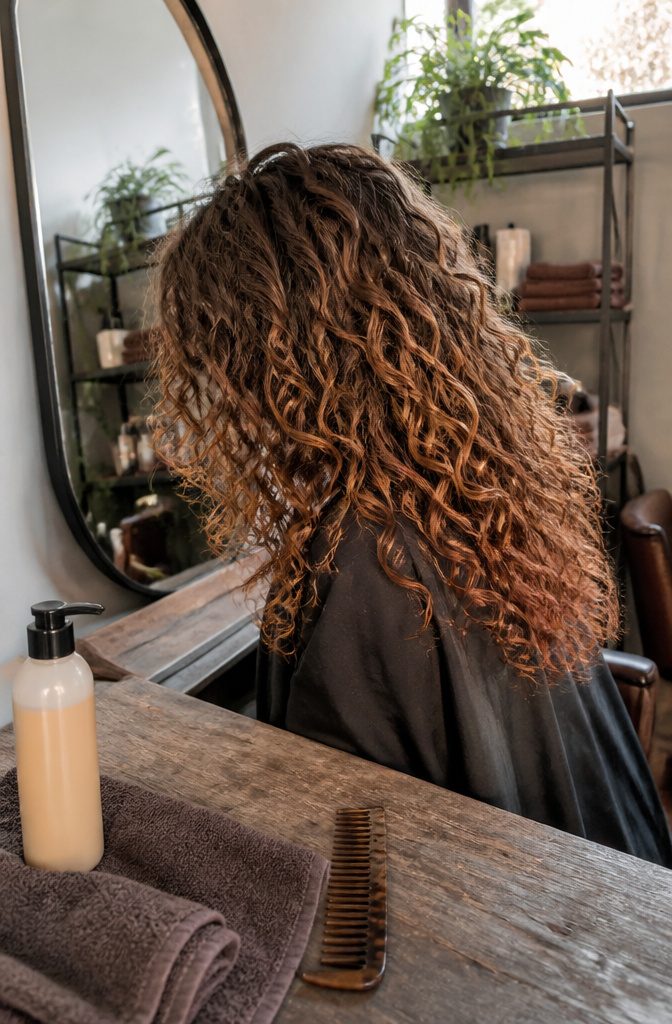
Sun-kissed honey sliding into copper is a gentle curly hair ombré, because the two shades sit close together and the shift reads as sunlight rather than a hard line.
Long layers help: each curl catches the color a little differently, so the fade looks lived-in. I’d choose this over a high-contrast fade if you want low drama and an easy grow-out.
Ask your stylist to cut and color to your exact curl type and length, since that is what keeps the hair’s structure intact.
At home, stick to color-safe shampoo and a moisturizing conditioner. Put the next appointment on the calendar 10 weeks out, for a recolor and a trim in the same visit.
11. Pink Ends on Medium Curls
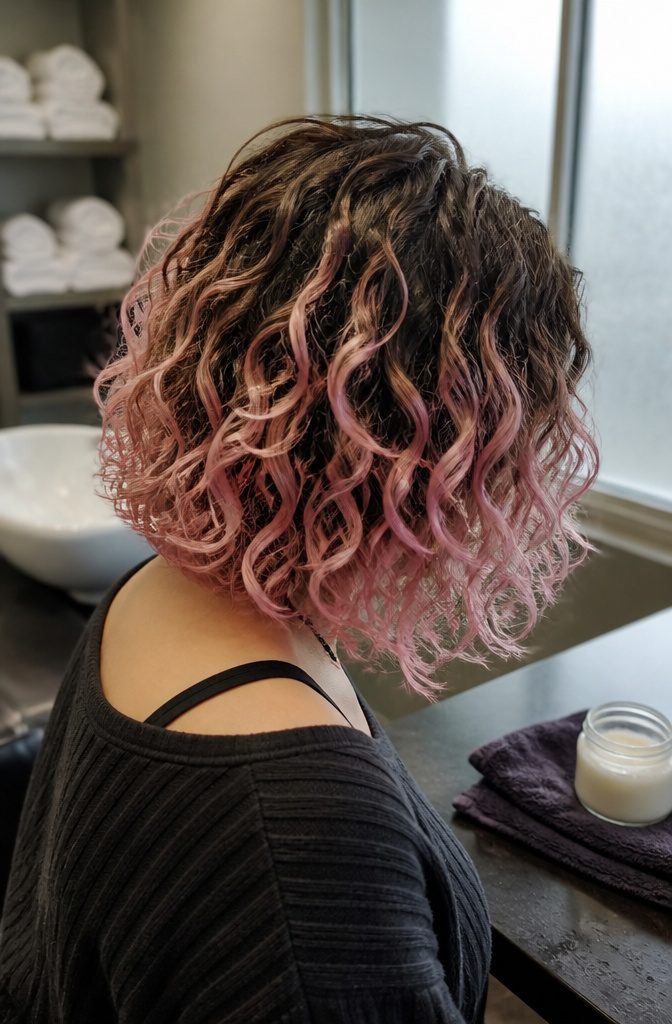
Pink only shows up properly on pale hair, so the ends have to be lightened before any pink goes on. Dye sits on top of the base color: on dark ends it barely registers, and on lifted ends it glows.
That lift costs moisture. Ends are already the driest, oldest part of a curl, and bleaching them can leave the pattern looser and frizzier.
I’d pick this look for a medium-layered bob, where the layers give each curl its own bright tip.
Upkeep is the real price. Every shampoo fades the pink a little, and keeping it fresh means frequent salon visits.
12. Long Coppery Balayage
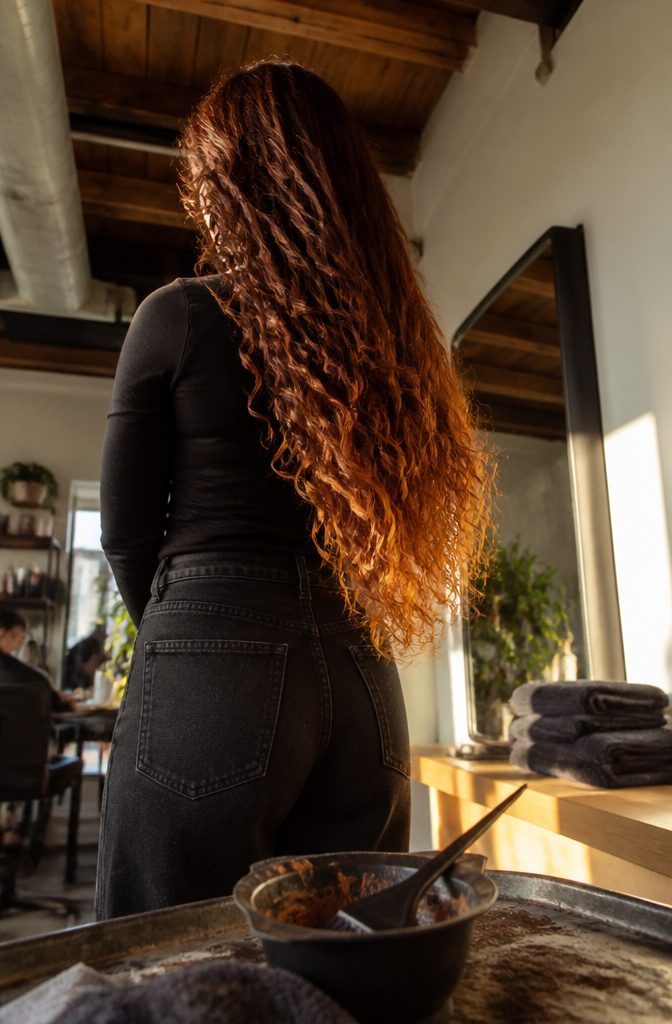
Copper reads as a sunset when the brightness gathers at the bottom and the top stays deep.
If you’re a redhead, ask your stylist for a heavy balayage on the ends and keep it off the top of the head. The color then builds toward the tips instead of starting near the scalp.
That placement suits curls. A hand-painted, ends-only application puts the brightest copper on the outer spirals, where light hits first, while the darker red above gives the length depth.
I’d choose this over a weave that runs through the whole length if you want less maintenance, because the roots stay in their natural red and nothing there shows a line as it grows.
13. Black-to-Silver on Kinky Curls
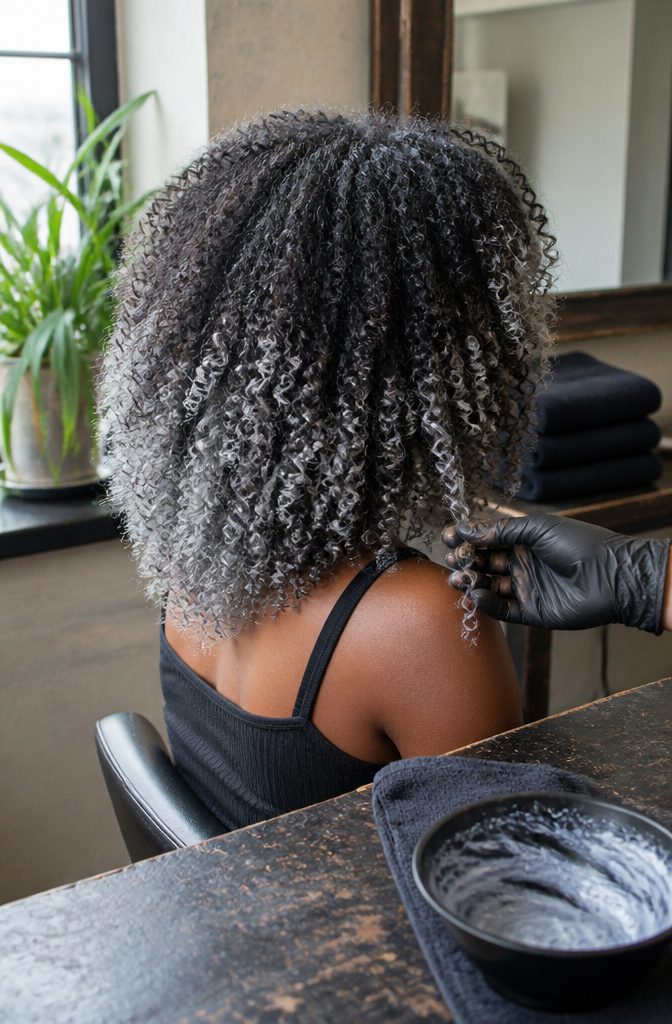
Black to silver is the highest-contrast ombré in this list, and kinky curls and 4B coils give it the most room to work.
Each bend in the pattern pulls the color in and out of view, so the shift from black roots to silver ends reads as texture rather than a stripe.
It’s a combination that turns heads, and the curls make it look like no one else’s.
Silver on black hair means lifting the ends several levels, which is bleach work. I’d leave it to a stylist who handles tight patterns, because the ends are the driest part of kinky hair and bleach hits them hardest.
Bring a photo and ask for a gradual blend instead of a hard line, so the grow-out stays soft at the root.
14. Red Ombré on Short Curls
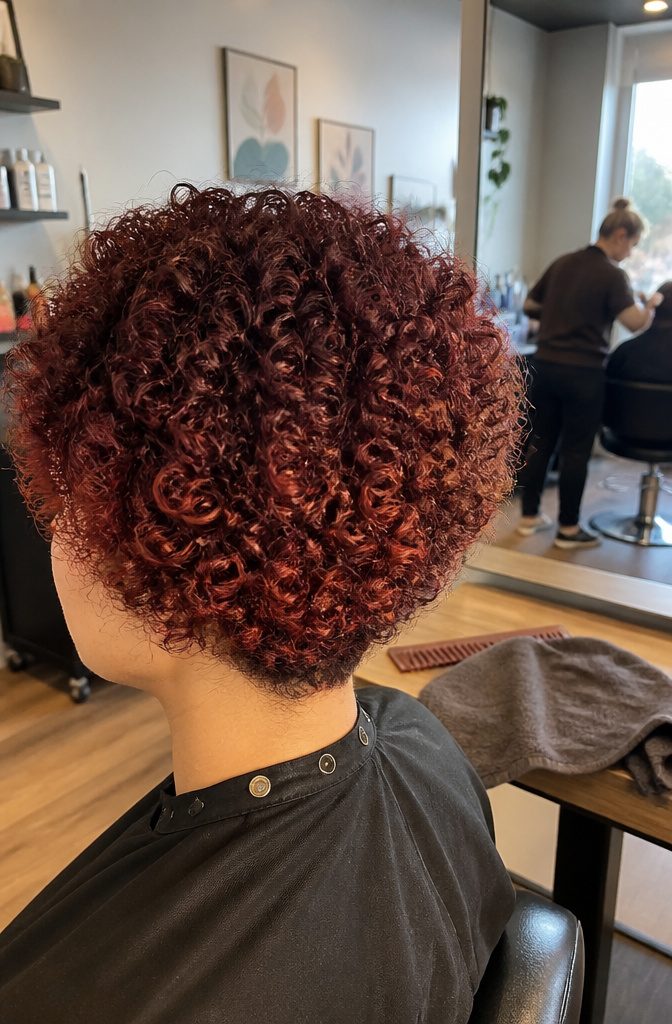
Brick red in two shades suits short curls because the curl pattern does the blending. On a cropped cut, each spiral folds the deeper shade and the lighter shade over each other, so the line between them never sits still.
Straight hair gives a clean band, while curls give a looser, less predictable gradient that changes with every bounce.
I’d pick this over one flat red on short hair.
A darker red at the root fading to a lighter brick red reads as depth instead of a single dye job, and the short length keeps the whole fade in view.
Ask your stylist for brick by name, and expect the placement to shift as the curls fall differently each day.
15. Burgundy Ombré
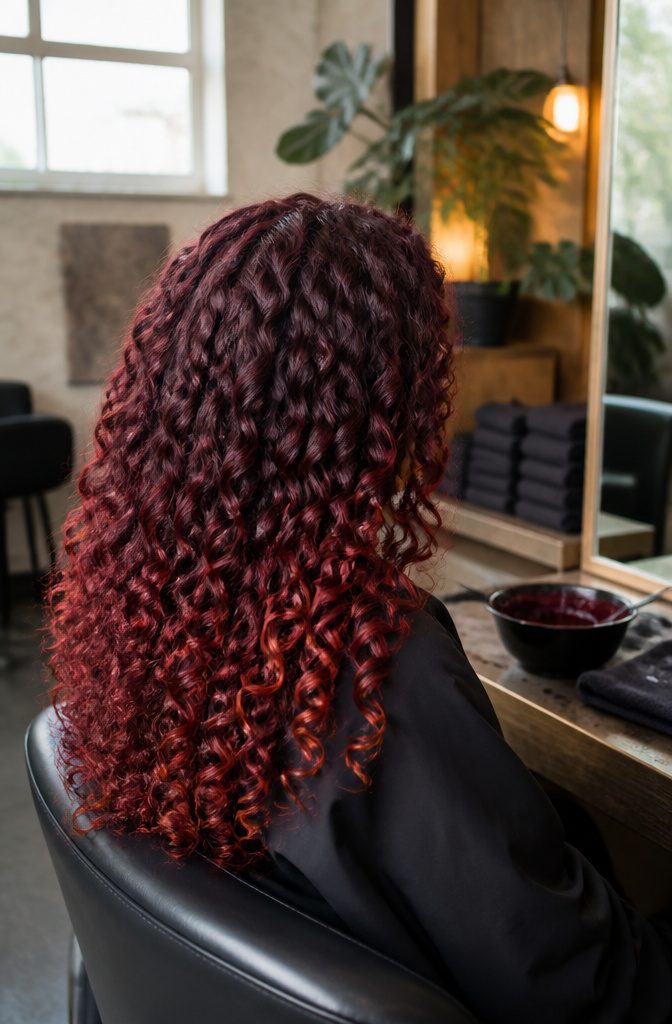
Burgundy on curls gives you a redhead look with more depth, and the copper keeps it from going flat. A wine tone on its own can sit dark and heavy.
Copper tones bring out and brighten the reds, so the color glows where each curl catches light. Stylist Sadie’s curly ombré is the version I’d save to a Pinterest board: it stays clearly red, and the copper does the brightening.
At the salon, ask for burgundy with a copper lift instead of just "red ombré."
That wording tells your stylist you want the deep wine shade with brighter copper running through it. I’d pick this over a straight red if your color tends to look flat in photos.
16. Green Ombré
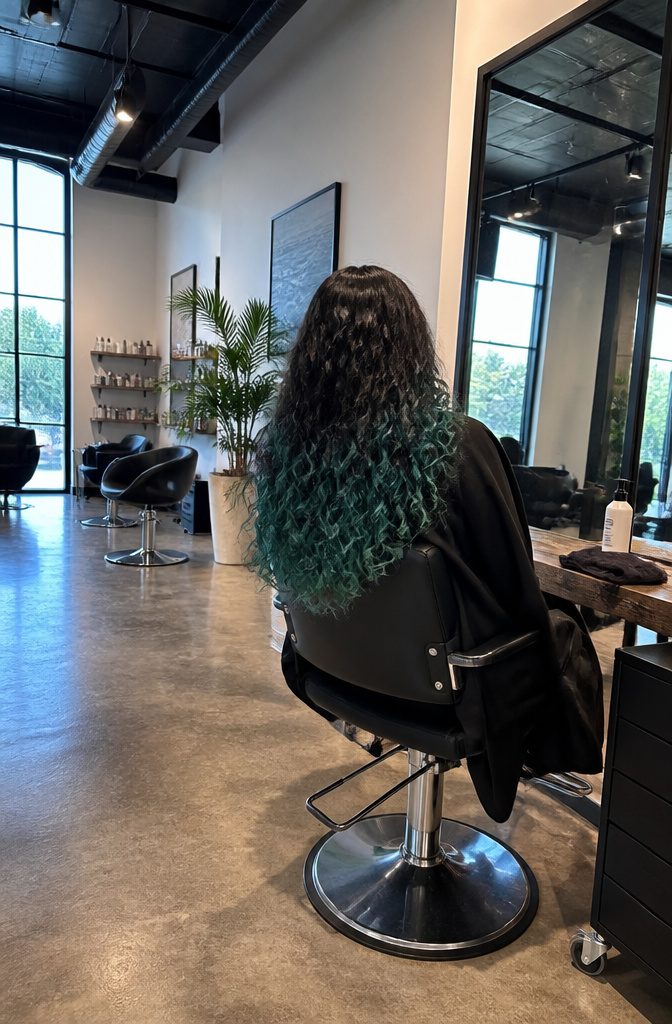
Dark roots set the stage, and ocean-inspired green ends do the talking.
On long curls the contrast is stark: a deep, near-black base that gives way to tips the color of sea water. Curls help the effect, since each spiral rolls the green in and out of view as the hair moves.
This is a risky look, and it reads eclectic rather than subtle.
If you want the ocean feel instead of a lime or forest tone, ask for a green that leans teal or sea-glass, and bring a photo so the stylist sees the exact depth you mean.
Keeping the roots dark also means no bright line at the part as new growth comes in.
17. Turquoise Ombré
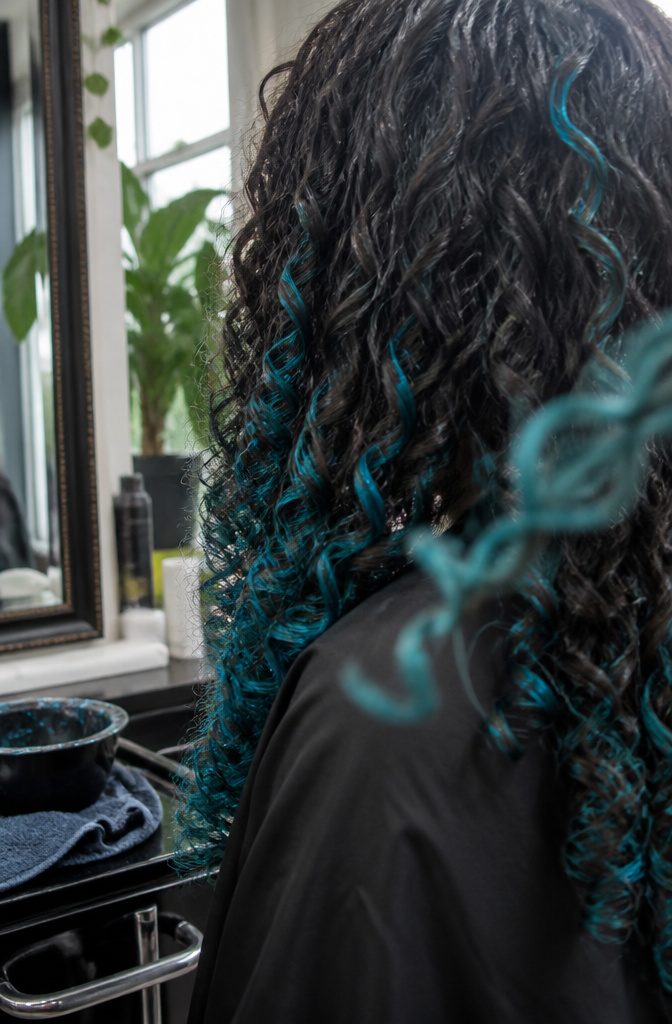
Turquoise on curls looks best when the placement is deliberately off. Skip the clean gradient and let the color land in patches: one curl dipped deep, its neighbor left dark, a third picking up color only at the bend.
Curl pattern does most of the work here.
Every ringlet bends differently, so irregular color reads as movement instead of a mistake. I’d choose this over a smooth fade if you want a look that’s playful and never has to be perfect.
Ask your stylist for curl-by-curl placement instead of a straight line, and bring a photo, because "uneven" means different things to different people. A stylist who colors in a neat band will undo the whole effect.
18. Dark Brown to Caramel
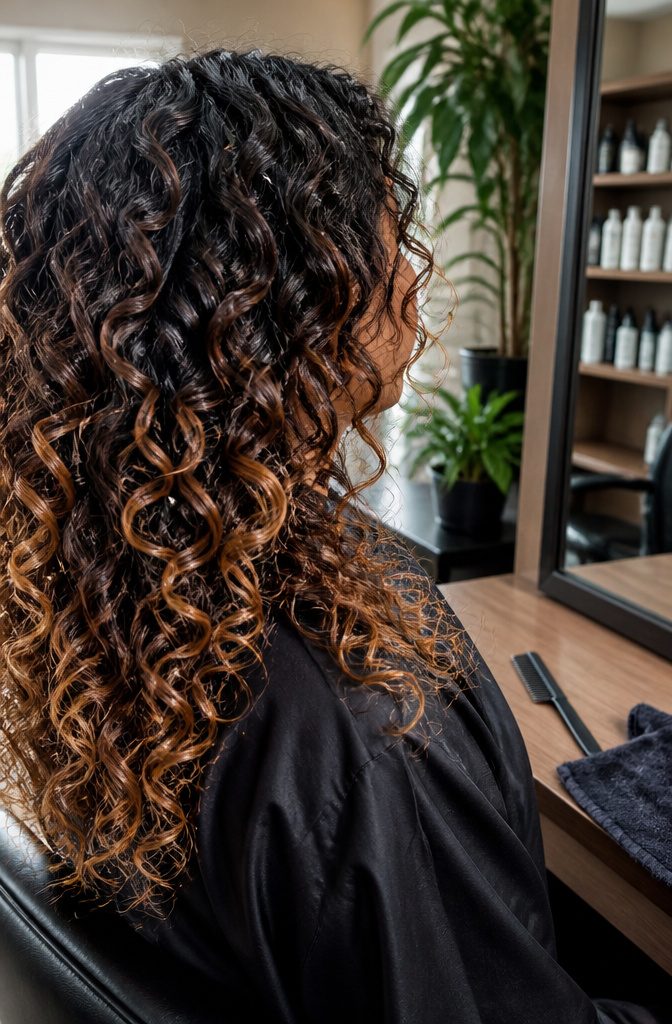
Dark brown melting into caramel is the easiest curly hair ombre to live with, since the two shades sit close enough that regrowth never draws a hard line.
Curls also blur the transition, so the blend looks softer than it would on straight hair. Caramel is a warm shade, which makes it the pairing I’d pick first for warm undertones.
Ask for the roots to stay near your natural base and the caramel to gather on the ends and around the face. Skip a flat, solid band of color; on spirals it reads as a stripe.
19. Ash-Blonde Ombré
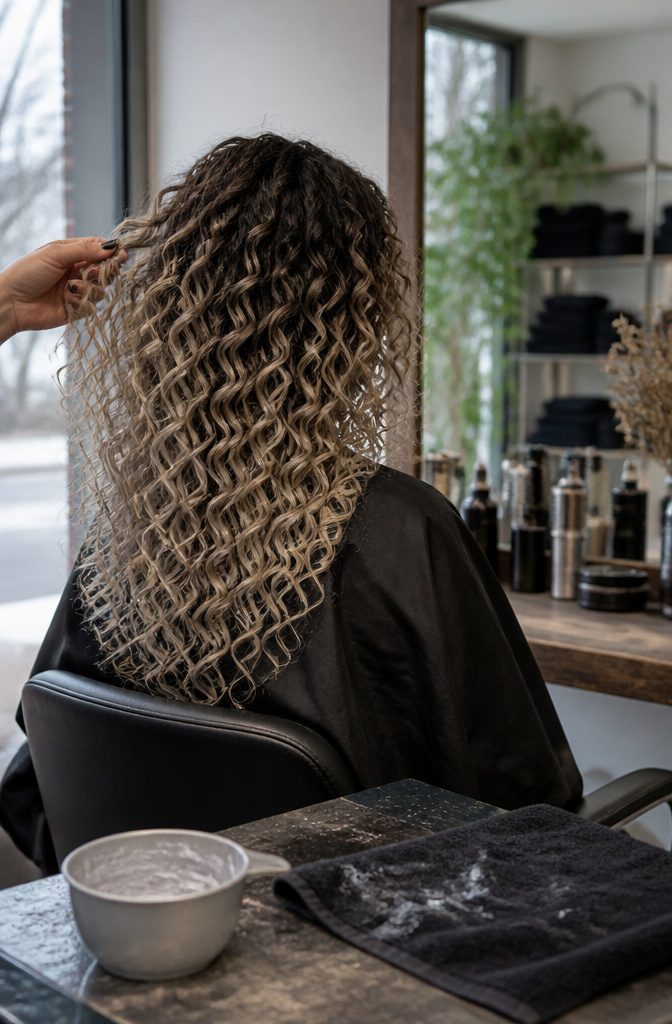
Ash blonde works on curls because the color settles into the curl crests, so each ring catches a slightly different shade.
That dimension is what makes the look, and it’s why clients who wish their curls were straight so often change their minds once they see ombré on a real curl pattern.
Ashy tones pair best with cool undertones. If your skin runs warm, ask before you commit to the photo.
Curly hair isn’t always easy to color, so choose a stylist who works with texture.
Bring photos, explain what you want, and let them tell you what is and isn’t possible for your hair. Ask which technique they’d use, and which products will keep the color and the curls healthy afterward.
20. Rose-Gold Ombré
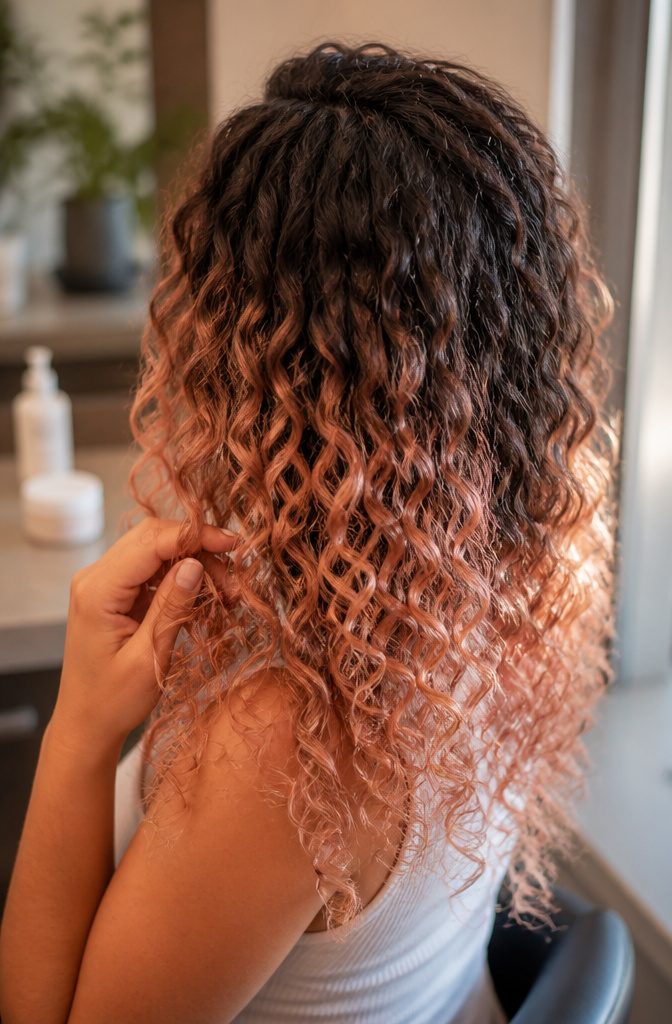
Champagne rose with your natural root left showing is the version that keeps curls intact. The color melts from your own shade into a soft pinkish gold, so the top of the head stays untouched.
Start with healthy hair.
Dry or damaged curls lose definition once they are lightened, and hair that has been straightened before is the hardest to transition. If that is your history, I would pick a different ombré or go very slowly.
For the lightening step, use a good bleach and oxidizer; L’Oréal is a reliable brand for both. Finish with a cream and a light mousse, scrunched in, to pull the curl pattern back together.
21. Pastel Ombré
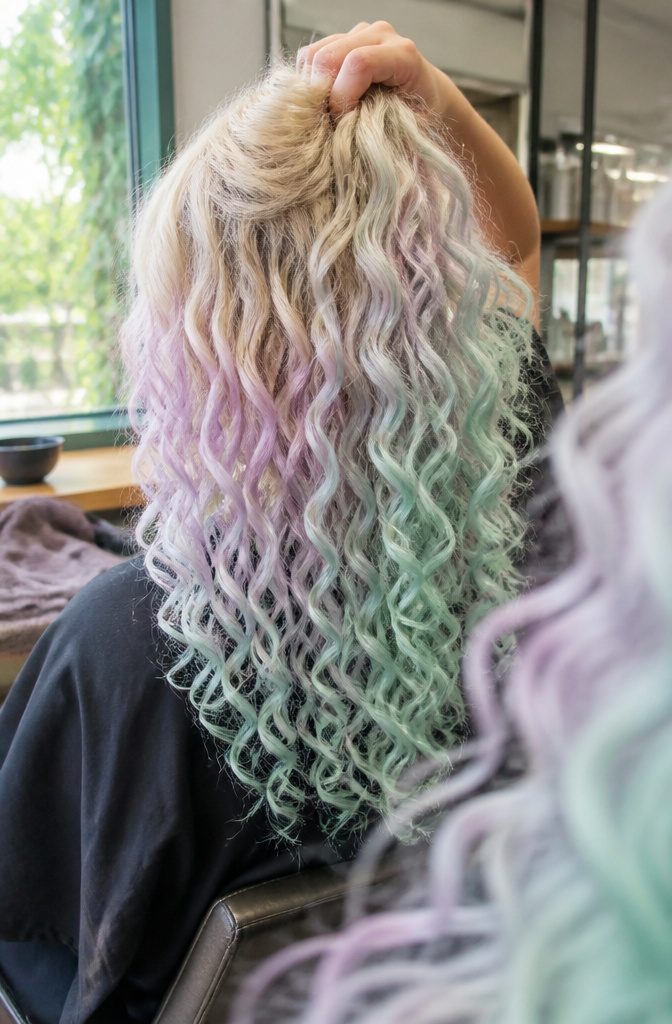
Pastel ombré only works on light blonde hair. Semi-permanent dyes add color without lifting what’s already there, so on brown or black curls the lilac or mint won’t show.
If your ends sit darker than pale blonde, lightening has to come first, and that step is where curls take the most strain.
I’d save this look for a festival or a summer party, where the metallic, mermaid-style finish is exactly what you’re after. Length and face shape don’t limit it.
The result does vary from person to person, though, because your starting blonde and how your hair takes the dye both shift the final tone. Treat any inspiration photo as a direction, not a promise.
22. Brown-to-Blonde on Wavy Hair
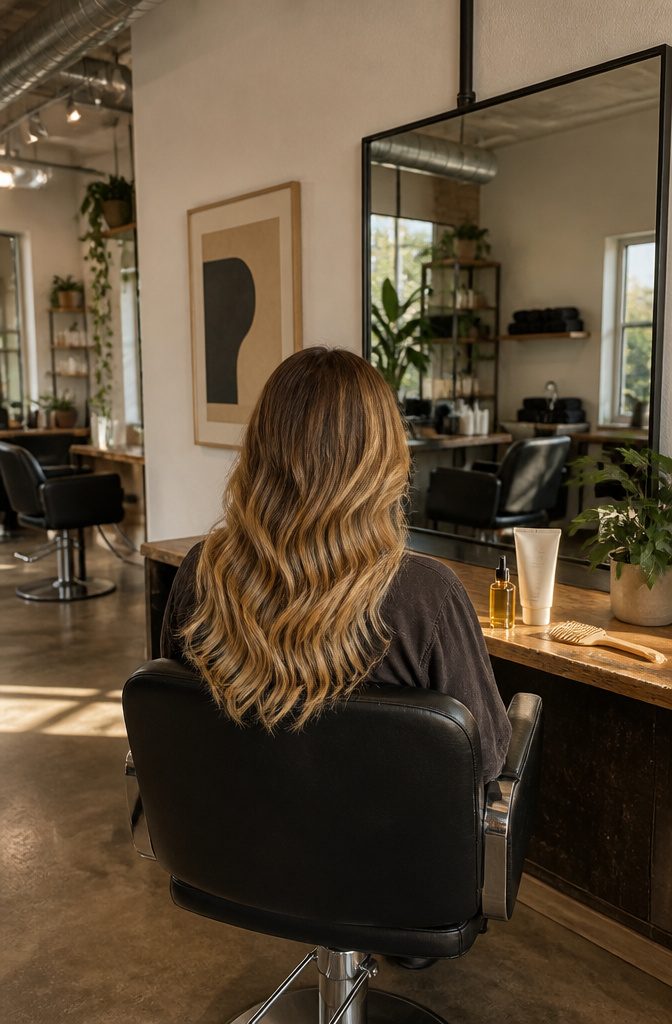
Brown to blonde on wavy hair refreshes your color without pushing you any blonder.
Balayage beats foils on textured hair, and I’d choose it every time: it keeps the hair healthier, adds dimension, and the waves hold their shape through the blend.
Low upkeep is the real draw. Past a gloss every few months, this look asks for very little, so it suits anyone who wants color without a standing salon calendar.
At home, a hydrating oil and a curl cream do the rest, building a stronger curl pattern and keeping frizz down.
23. Honey-Blonde Ombré
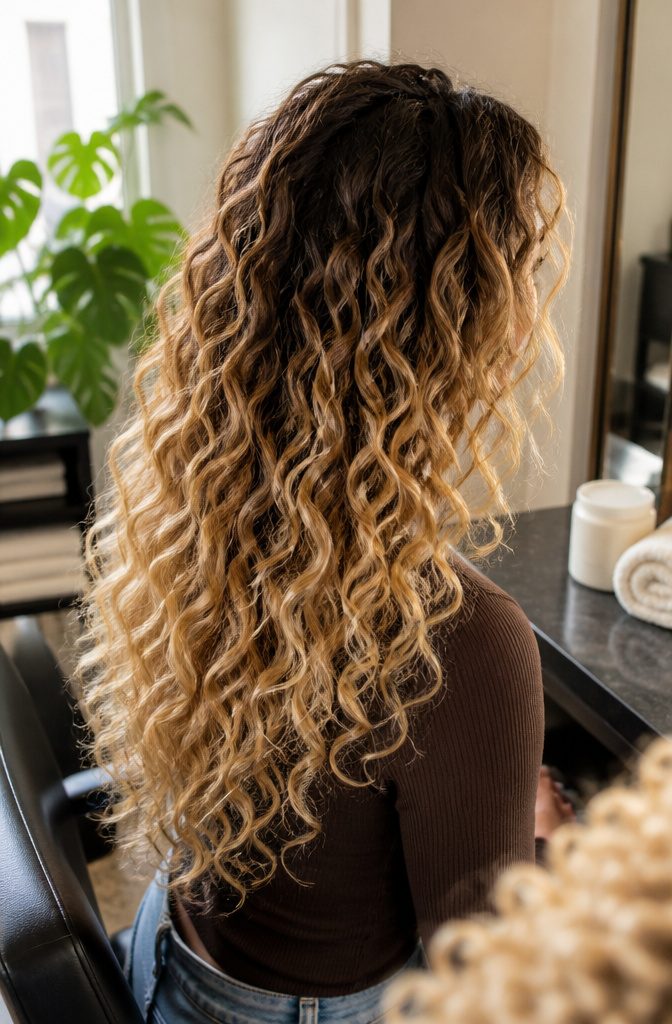
Honey blonde is the ombré I’d pick for anyone who wants sun-kissed, radiant color without a calendar full of salon visits.
The grow-out is soft and natural, so the highlights may only need brightening a few times a year, depending on how fast your hair grows.
Lighter pieces around the face also brighten your complexion, which helps if your skin looks dull.
Curls run drier than straight hair, and lightening dries them further, so a moisturizing shampoo and conditioner plus a mask belong in the routine.
For styling, flip your hair upside down, towel-dry, then work in Oribe Curl Butter and Curl Gellee. The result has dimension and movement with very little daily effort.
Choosing a Shade for Your Skin Tone
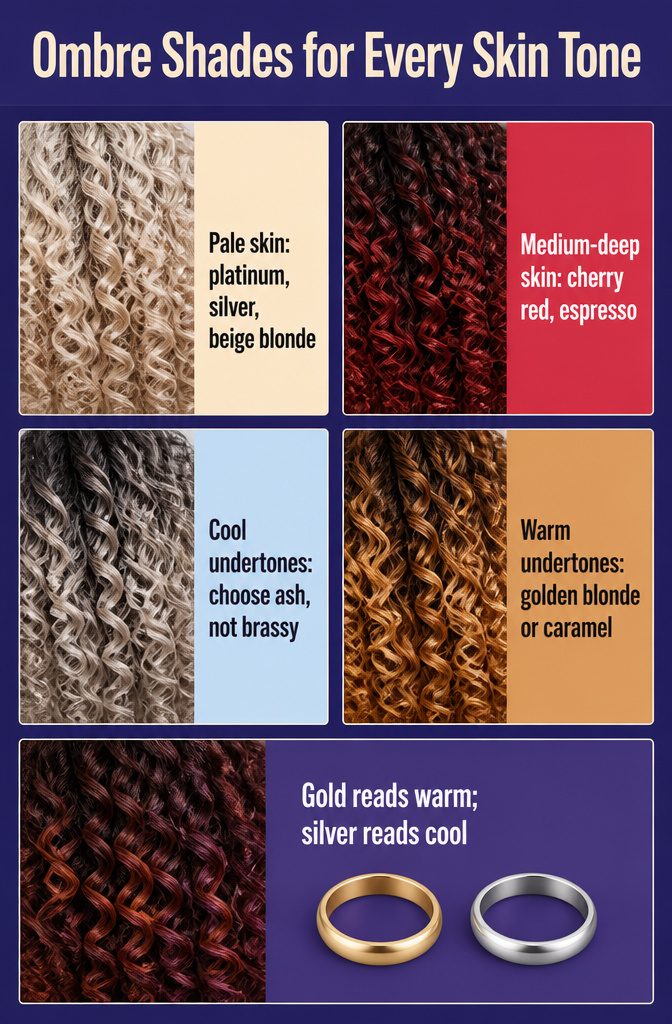
Your skin tone decides which ombre shades will look balanced and which will fight the rest of your palette.
Pale skin carries lighter colors like platinum, silver and beige blonde without washing out, while medium to darker skin tones pull off vibrant, deeper hues such as cherry red and espresso brown.
Undertone matters as much as depth:
- Cool undertones ask for ash-toned colors that lean gray or silver rather than brassy.
- Warm undertones suit golden blonde or caramel ombre, which echo the yellow or peach base in your skin.
- Auburn, icy blonde, and espresso brown all flatter curly texture by adding brightness and dimension without flattening the curl pattern.
- Bold options like cherry red, turquoise, or violet draw attention straight to the ringlets if you want a statement color.
If you are unsure whether you run cool or warm, think about which metal looks better on you: gold reads warm, silver reads cool.
Upkeep and Curl Health
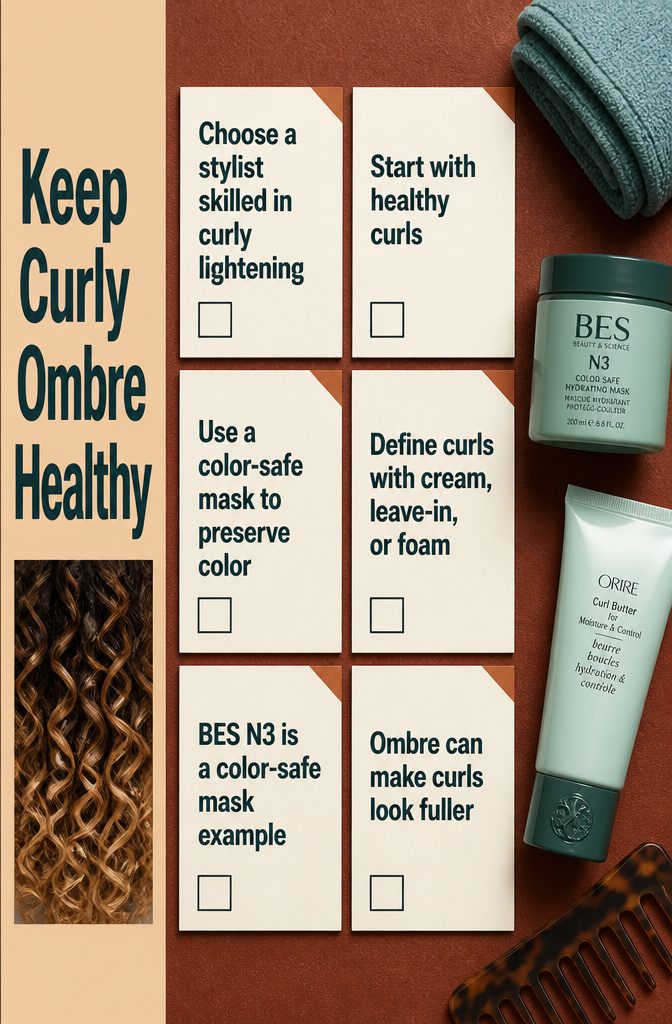
Ombré fits curls in the mirror and on the calendar.
It’s less maintenance than highlights, it works for all hair colors and it helps to enhance your curls.
Upkeep stays light, but lightened curls still need care:
- The dark-to-light gradient works as an optical illusion, so curls look fuller.
- Book a stylist who cuts your curl pattern and knows how to lighten curly textures, which are naturally delicate. Start with healthy curls.
- Hydrate with a color-safe mask like BES N3 to preserve color.
- Curl cream, leave-in conditioner and curl foam handle daily definition. Oribe Curl Butter and Curl Gellee fit one look, not every head.
Frequently Asked Questions
Is ombré good for curly hair?
Yes.
Ombré can show off curl texture and make hair appear fuller and more voluminous. It’s also lower-maintenance than highlights, since the dark-to-light gradient works as an optical illusion and regrowth stays soft at the root.
What colors look best with curly hair?
Auburn, icy blonde, espresso brown, cherry red, turquoise, and violet all add brightness and dimension to curls.
Pale skin tones suit lighter shades like platinum and silver, while medium to darker skin tones carry vibrant, deep hues like cherry red and espresso brown.
Cool undertones pair best with ash-toned colors, and warm undertones suit golden blonde or caramel.
What is better, balayage or ombré?
Balayage is hand-painted and keeps hair healthier on textured hair, adding dimension while the waves hold their shape through the blend.
Ombré gives you a gradient from dark roots to light ends with less upkeep, since the dark roots stretch time between salon appointments and you skip maintaining color from scalp to ends.
Is ombré still in style in 2026?
Yes. Expert colorists continue working with the technique, and curly hair has become a favored canvas because natural volume and movement make the ombré even more defined.
The results read as low-maintenance and lived-in, and the technique fits women with darker hair because of the natural grown-in look.
Is ombré damaging to hair?
Lightening the ends can damage curls, since curly hair is naturally delicate and the ends are already the driest, oldest part of the strand.
Start with healthy hair, book a stylist who knows how to lighten curly textures, and hydrate with a color-safe mask to preserve both the color and the curl pattern.





