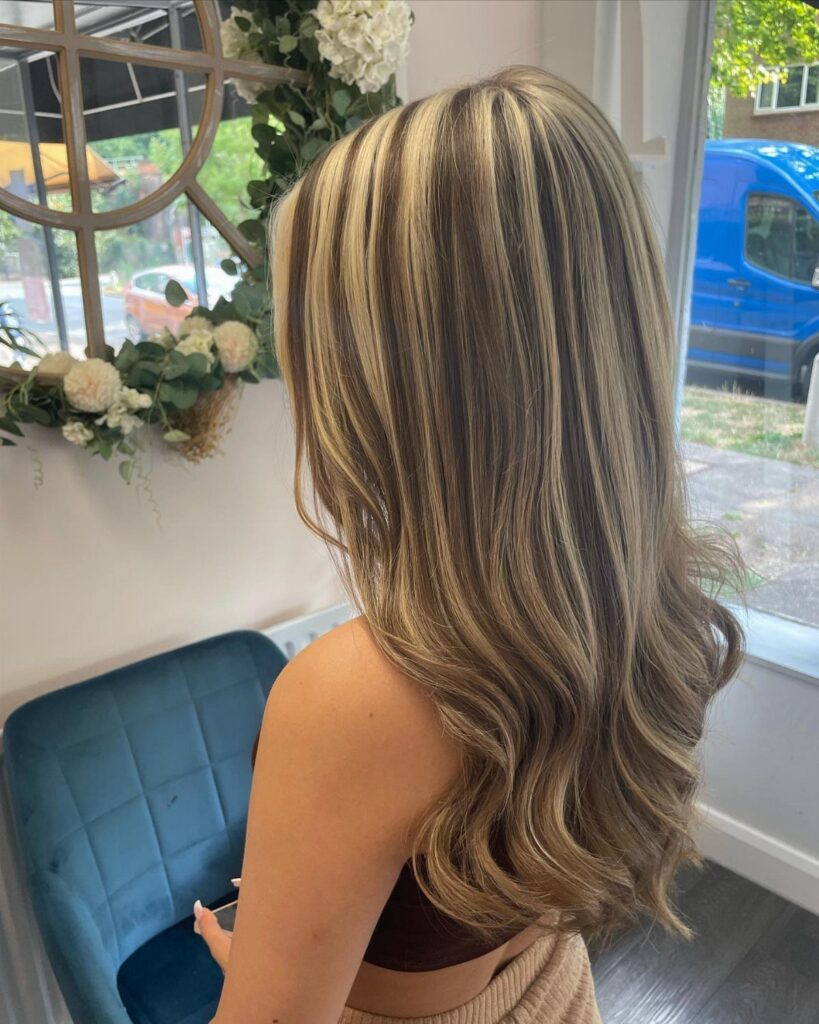
Starting color decides which of these looks is realistic: on brown hair, Brown Hair Blonde Highlights and Soft Blonde Ribbons can be done in a salon chair or at home, while Blue and Black means lightening dark hair first, which makes it a salon job with upkeep to match.
The list runs from Soft Blonde Ribbons that blend into your own color to Two-Tone Highlights with a crisp line between the chunks.
Upkeep follows the contrast: roots that clash with the highlights need a touch-up every 6–10 weeks, and a soft blend stretches to 8–12 weeks.
1. Face-Framing Highlights
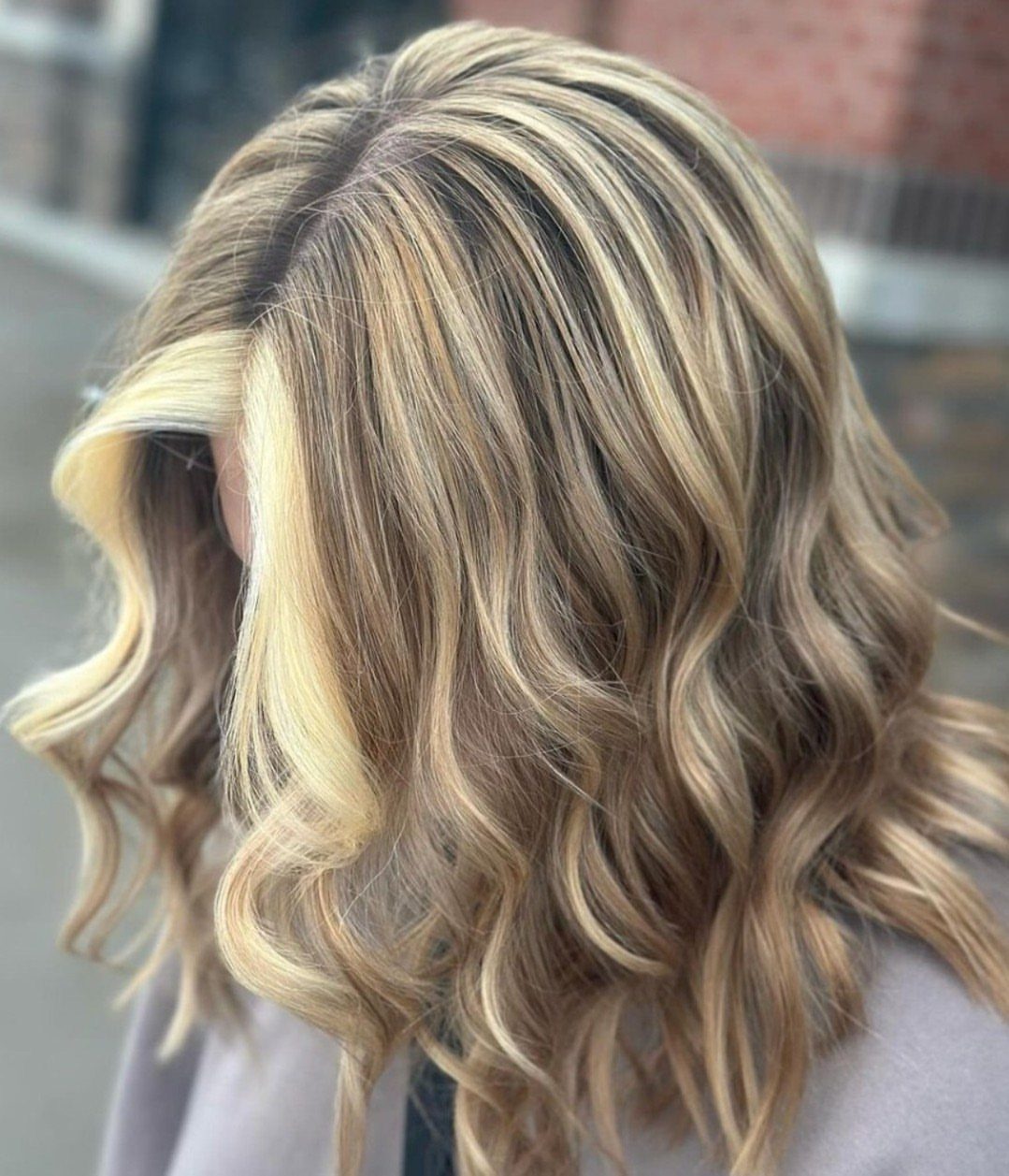
Money pieces are the shortest route to a brighter face without lightening everything. The broad ribbons in front catch light every time you turn your head, and the rest of the hair can stay as it is.
Ask for them by name and tell the stylist how wide you want them.
Wavy texture, like this, helps the chunks read as soft bands instead of stripes. If you style at home, loose waves are enough to show them off.
2. Brown Hair Blonde Highlights
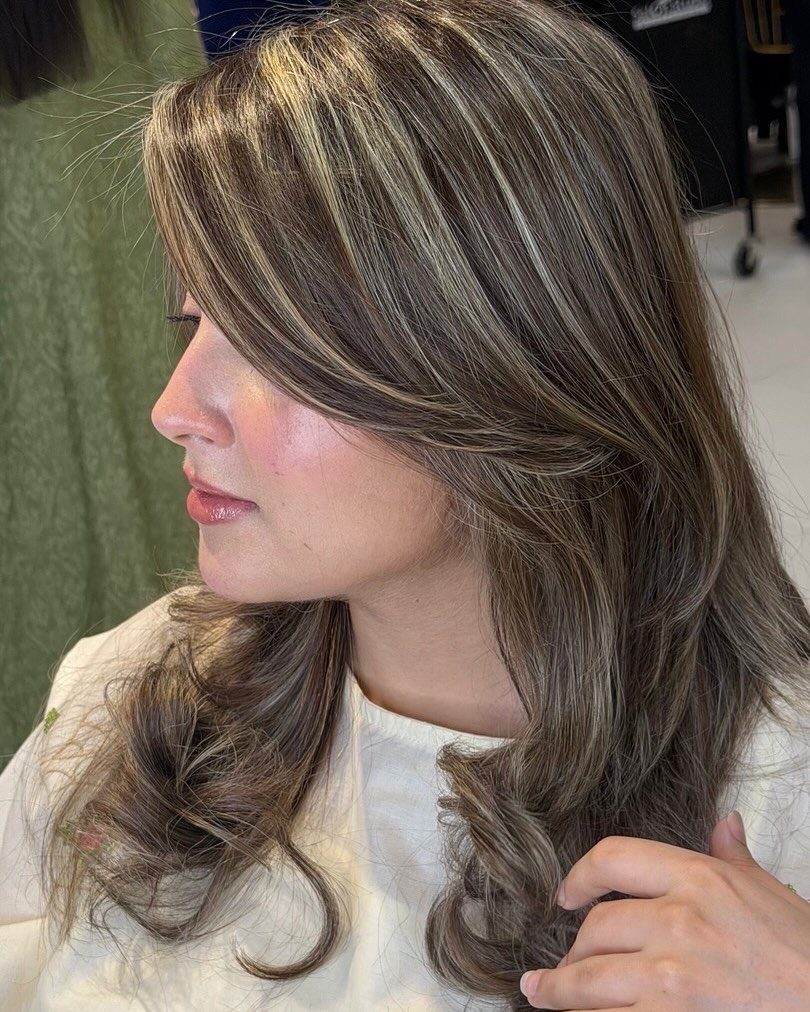
Brown hair gets its best brightness from broad ribbons, and the real decision is the tone of blonde. Warm blonde looks richer against brown; cool blonde looks crisper but shows contrast more.
I like the darker lowlight sections kept between the bright ones, because they stop the color from looking flat.
Bring a photo to the salon and point to the shade you want. Long curls, as here, show off the dimension.
3. Multicolored Highlights
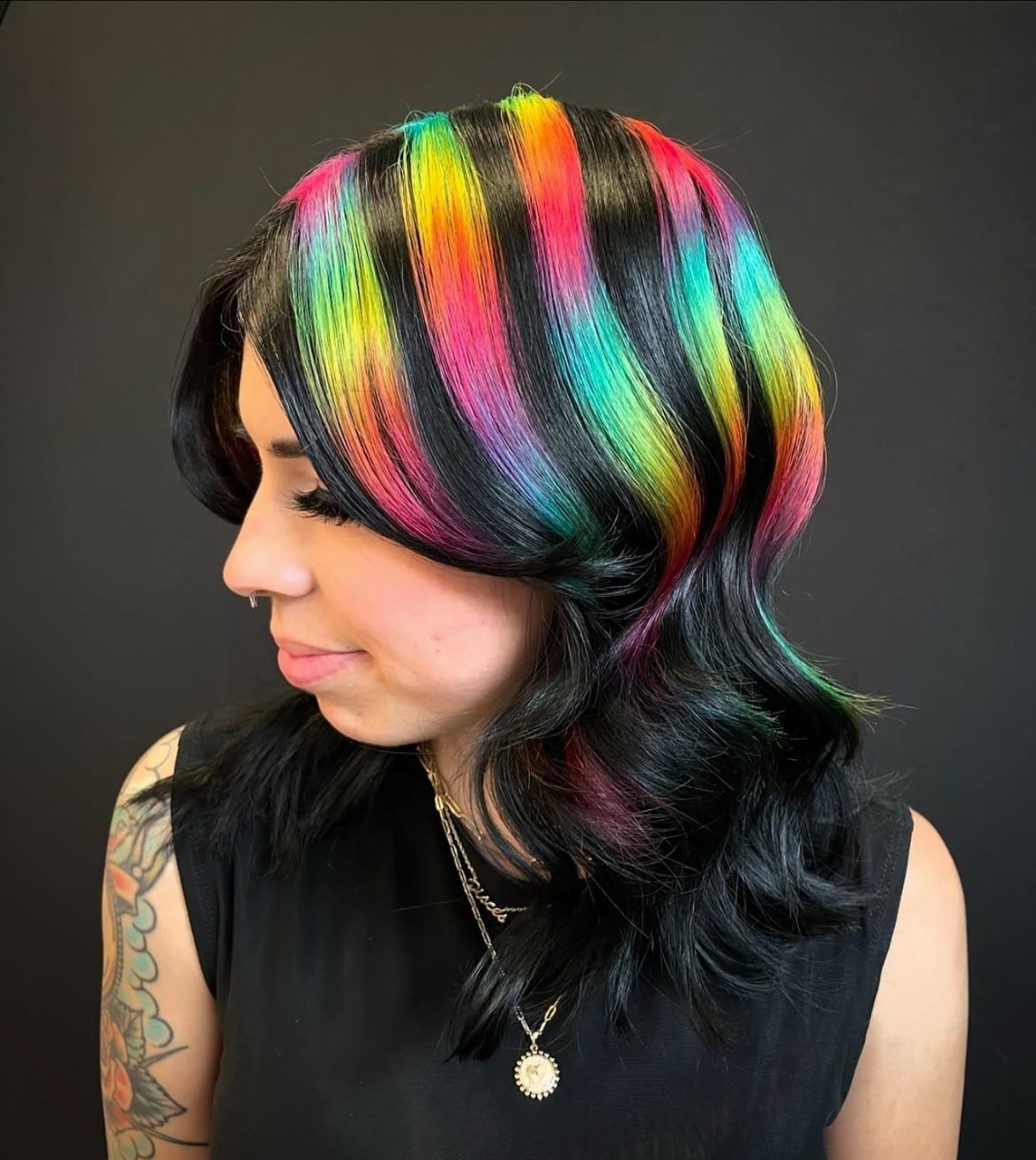
Rainbow color on black hair works because the dark base makes every shade look deeper. Instead of picking one fashion color, several are woven together in thick sections.
Black hair has to be lightened before any of these colors will show, so expect a salon appointment and a real upkeep commitment.
I would keep the sections broad and few, which keeps the look intentional instead of busy. Sleek, straight styling gives the colors room to stand apart.
4. Copper and Blonde
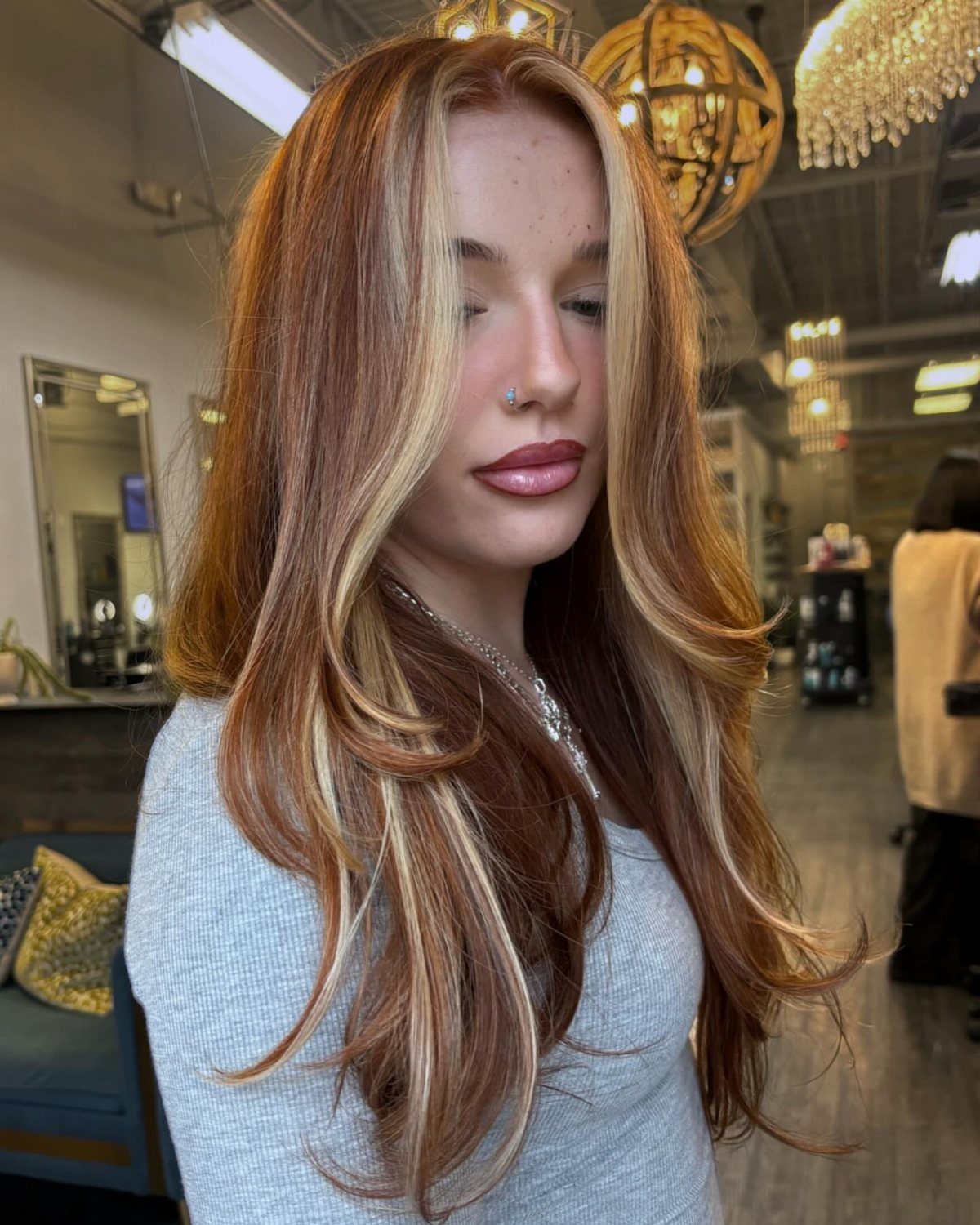
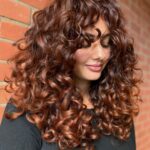
Golden blonde against copper is a warm-on-warm pairing, so the contrast stays gentle even with broad pieces. Nothing clashes, which makes it easier to live with than icy blonde on a red base.
Ask for golden tones, not ash, since ash can look muddy over copper.
Long hair gives the ribbons room to show. I would choose this if you want visible chunks without a harsh line between the 2 colors.
5. Soft Blonde Ribbons
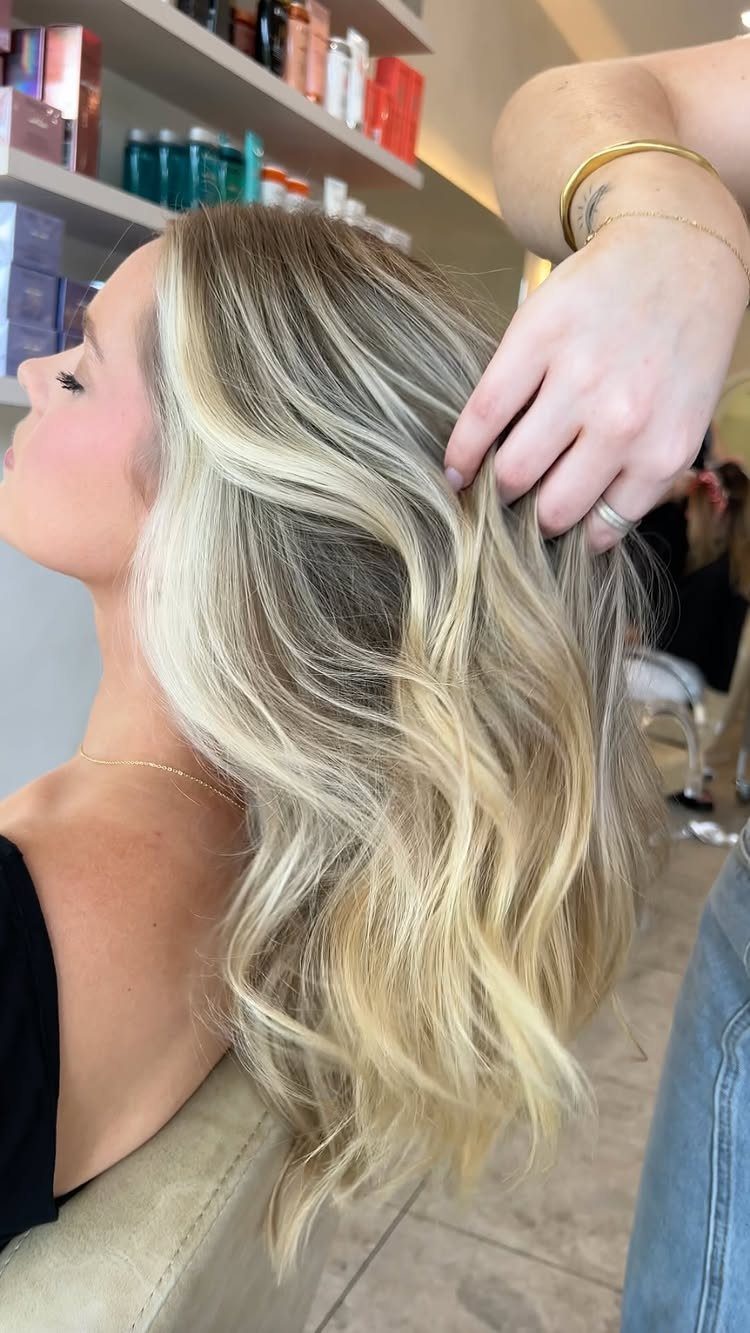
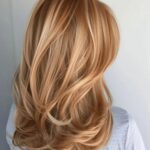
Soft blonde ribbons are the version I would hand to anyone nervous about chunky highlights. Pale, broad sections blend into the hair around them instead of cutting across it.
Ask your stylist for low contrast and a soft blend at the roots.
Wavy styling, like this, blurs the edges even more. The effect is subtler, so if you want stripes that read from across a room, go bolder.
6. Vibrant Fashion Highlights
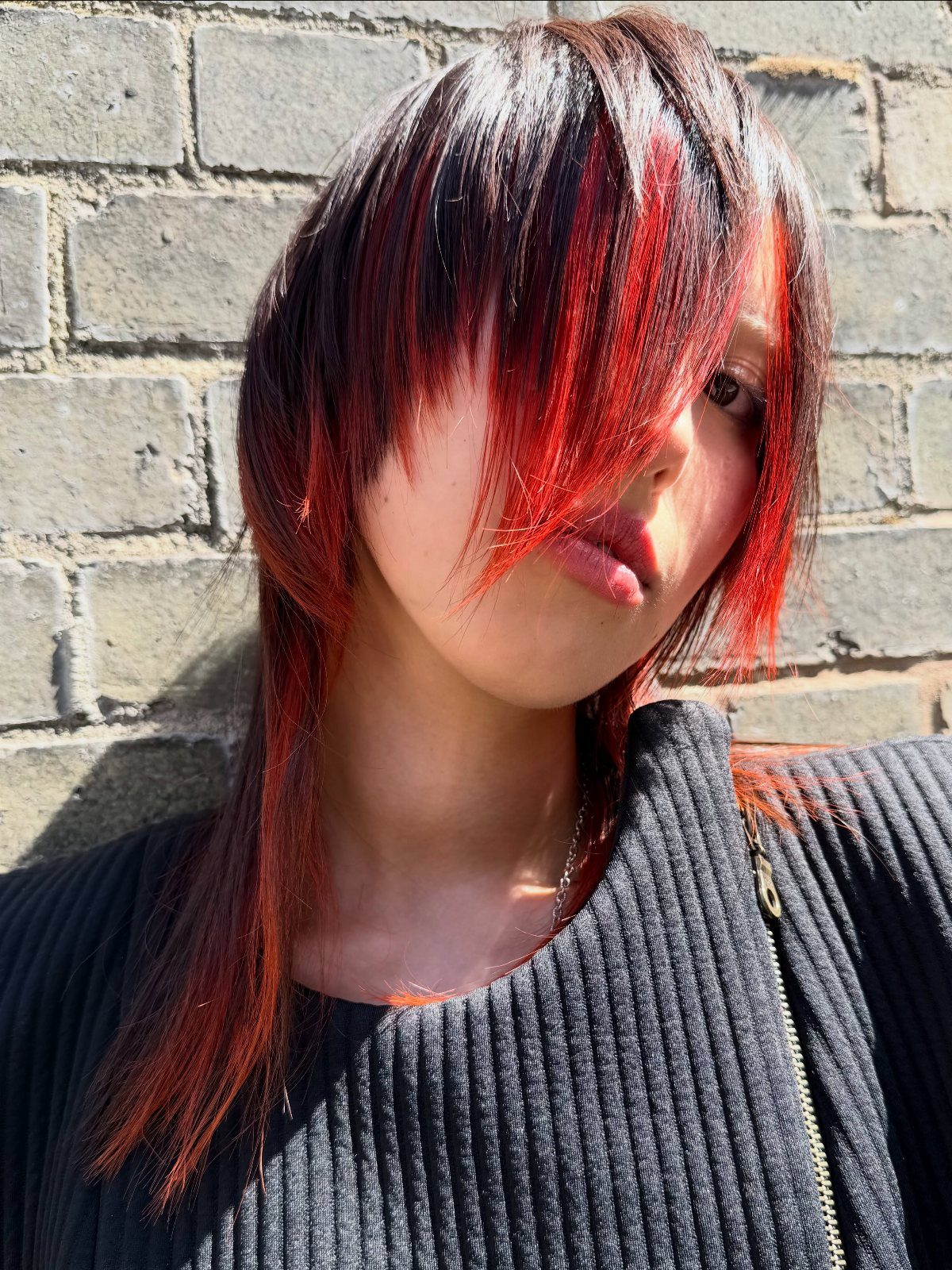
Bold red and white against dark hair is punk by design, and it only works if the contrast stays sharp. Layered cuts help, since each layer shows a different slice of color.
Dark hair must be lightened before these shades appear, so plan on a salon visit rather than a box.
I would keep the sections thick and the placement deliberate. Fashion colors like red fade faster than blonde, so expect to refresh them.
7. Platinum Blonde Highlights
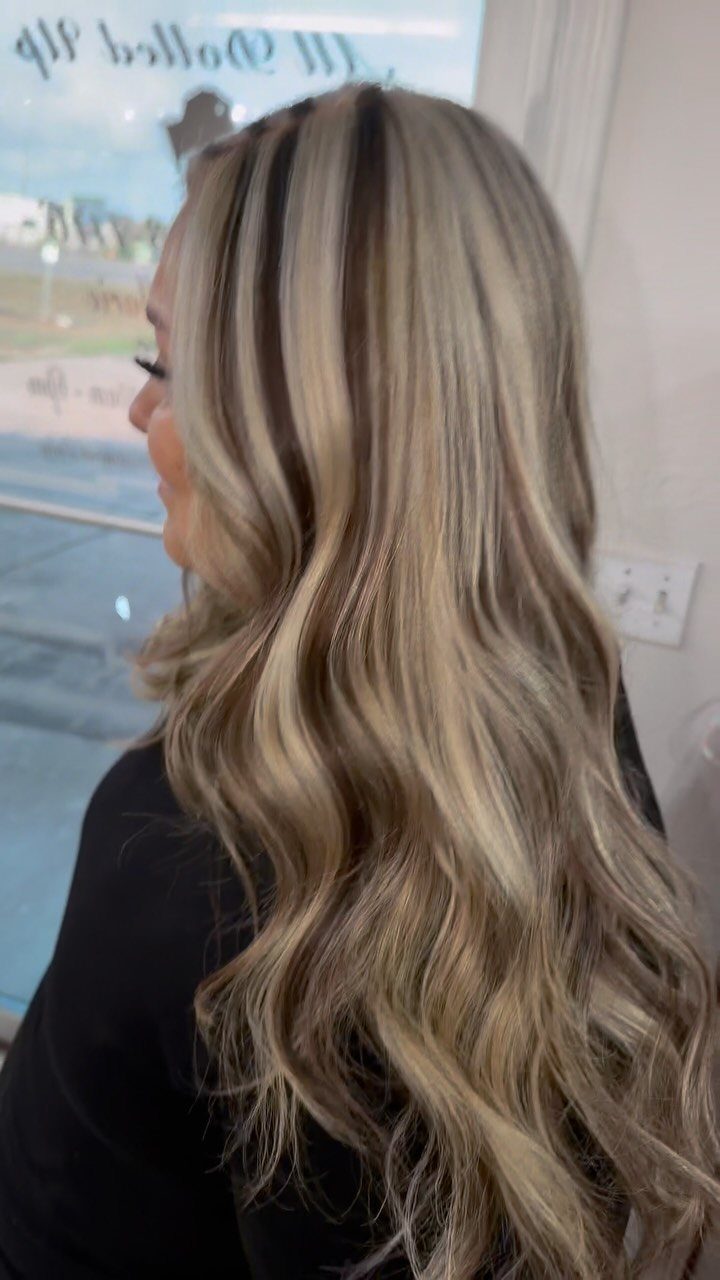
Platinum ribbons give the sharpest contrast of any look here, and the darker sections left between them make the brightness read as intentional. Without that depth, the hair just looks pale all over.
I would ask for broad, evenly spaced pieces and keep the waves loose so the light and dark bands stay visible.
Platinum takes serious lightening, so book a salon visit and plan on regular toning to keep it from drifting yellow.
8. Two-Tone Highlights
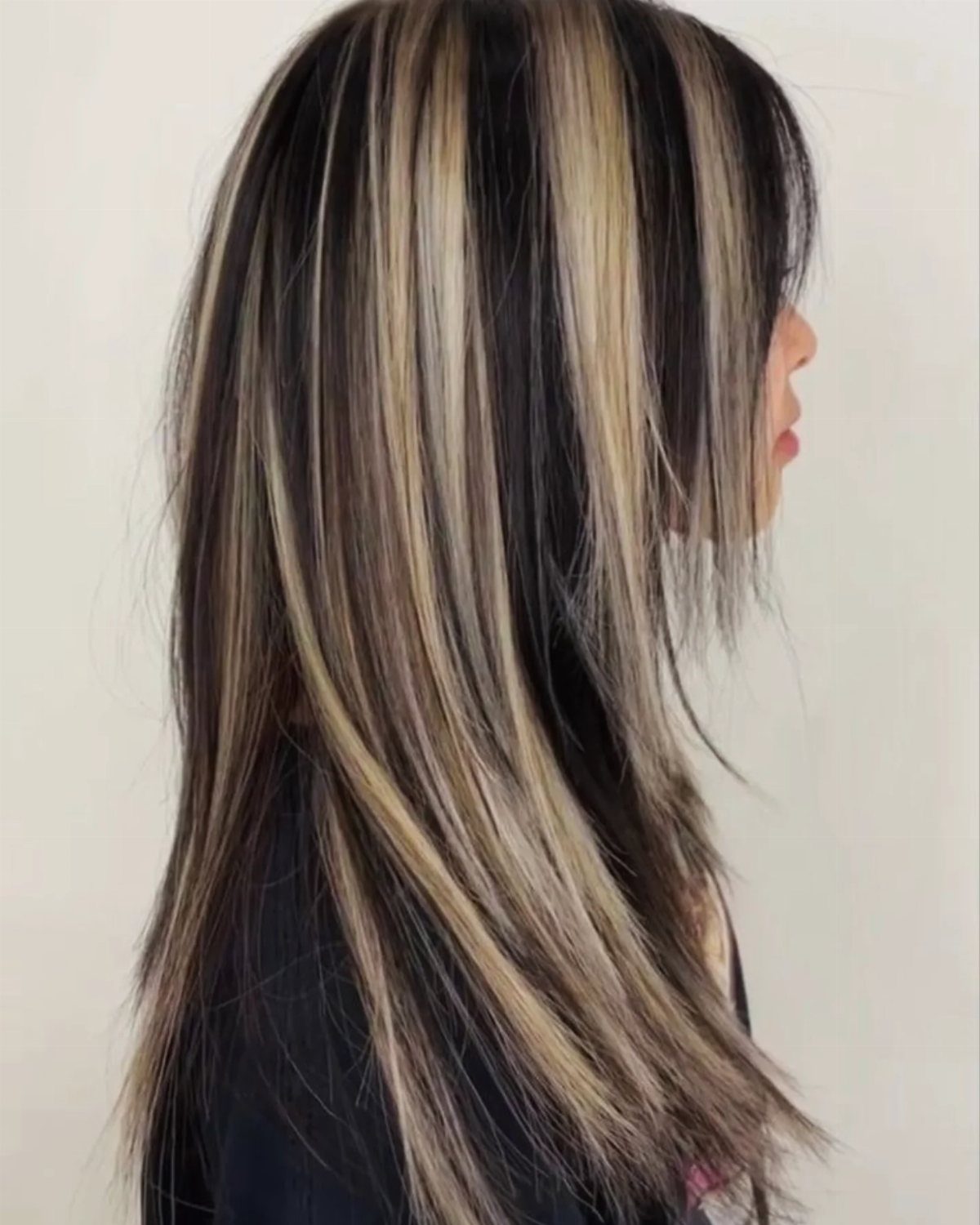
2 colors, no blending: that is the whole idea. Thick blonde chunks against dark hair give a deliberate, split look, and they stand out most on long, straight hair.
Tell the stylist you want the line between the colors crisp, not melted. Blonde won’t show on dark hair until it has been lightened, which makes this one a salon job.
I would keep the chunks wide and few. Too many, and the contrast turns into ordinary stripes.
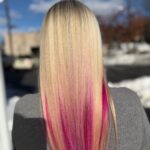
Unlike the chunky highlights of the past, today’s looks don’t have to be stripe-y — in fact, they can be surprisingly subtle, even when they’re painted on in a hot pink hue.
9. Curly Chunky Highlights
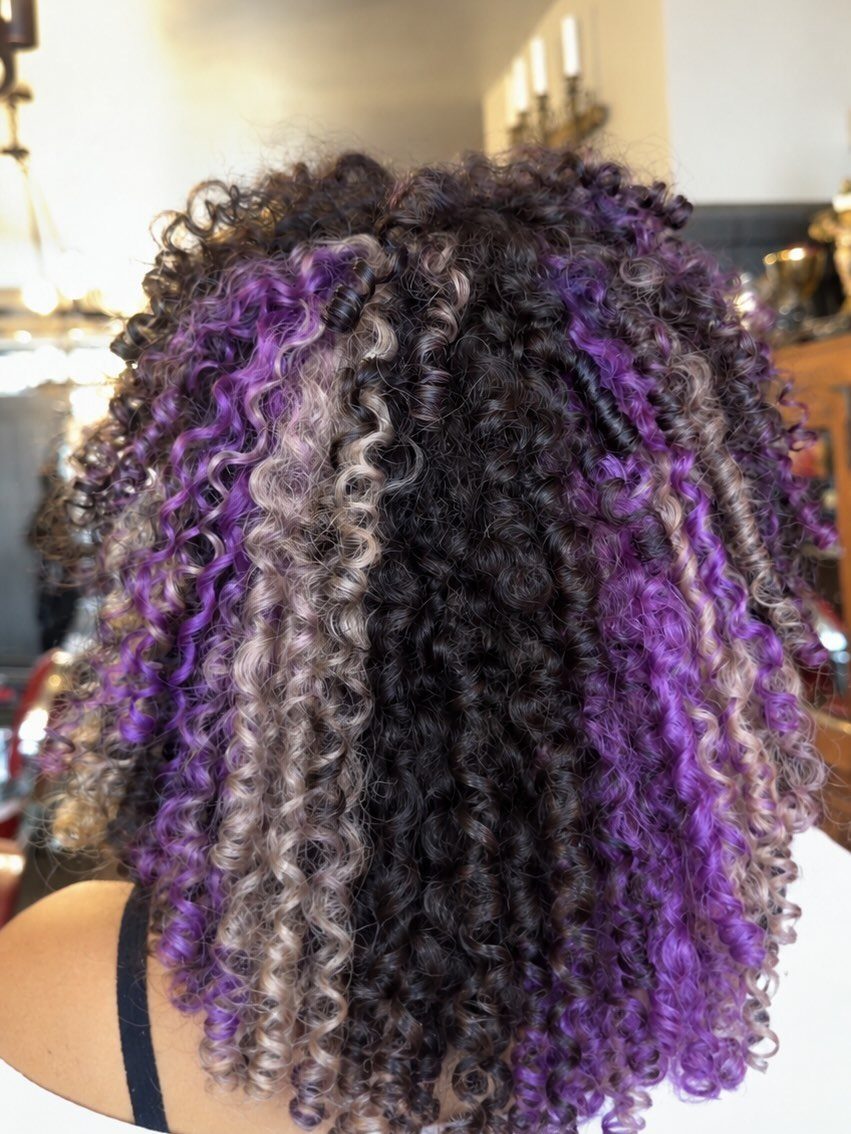
Curls give color places to hide and places to show, so chunky sections on curly hair read as pattern instead of lines.
Purple and silver-gray on a dark base look especially good because each curl group picks up its own shade.
Ask the stylist to place color curl by curl, following how your hair naturally falls. I would keep the curls defined and let the volume carry the color.
10. Pink Chunky Highlights
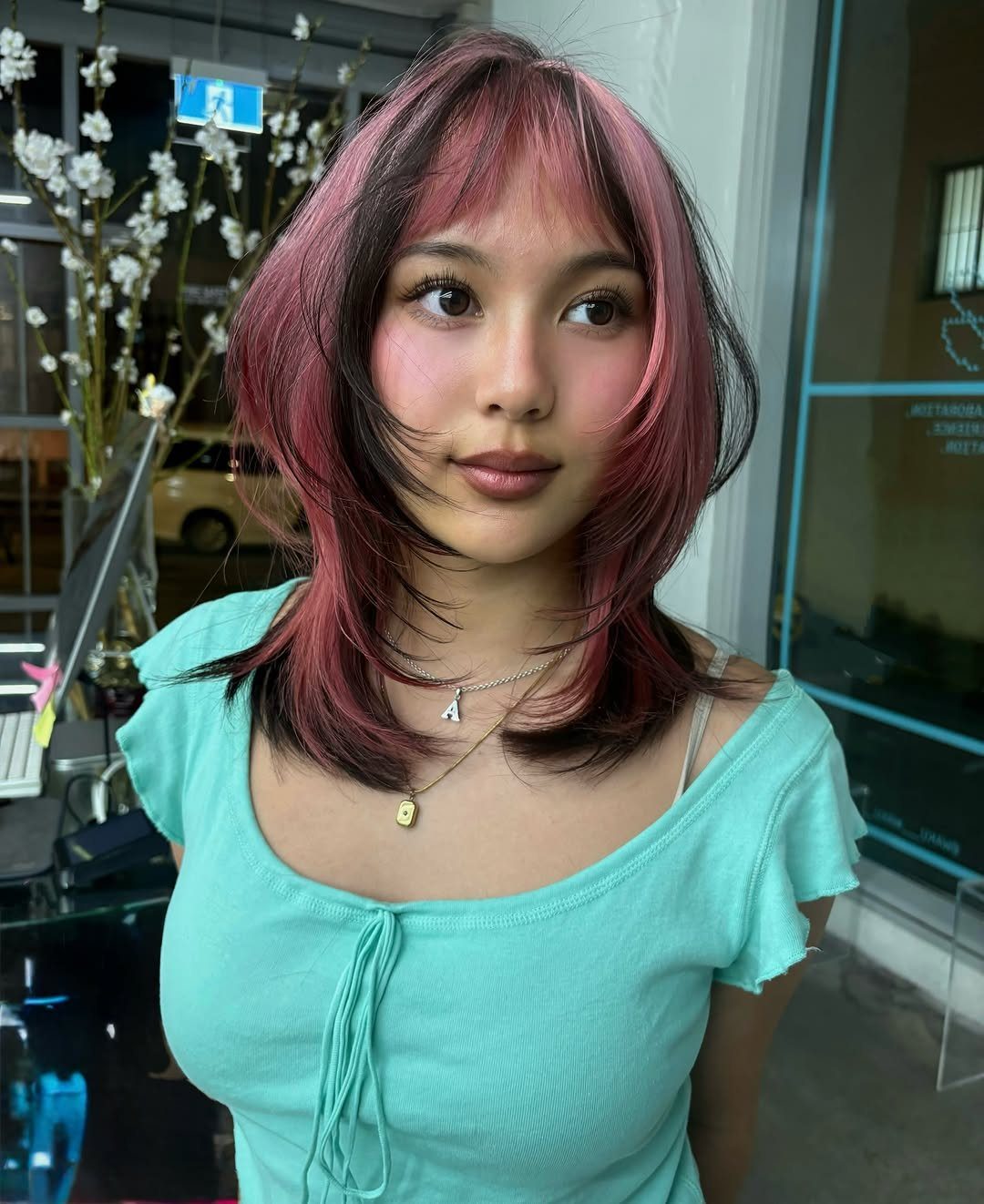
Pink panels on dark hair work in 2 registers: soft and dusty, or vivid like this. Pick the intensity before you book, because it decides how much lightening your hair needs.
Pink needs a pale canvas, so dark strands get lifted first; I’d book a salon visit rather than risk a patchy result at home.
I would go for a few thick panels near the front, where the color frames the face. Pink is a fashion shade, so expect it to fade and need refreshing.
11. Long Bob Highlights
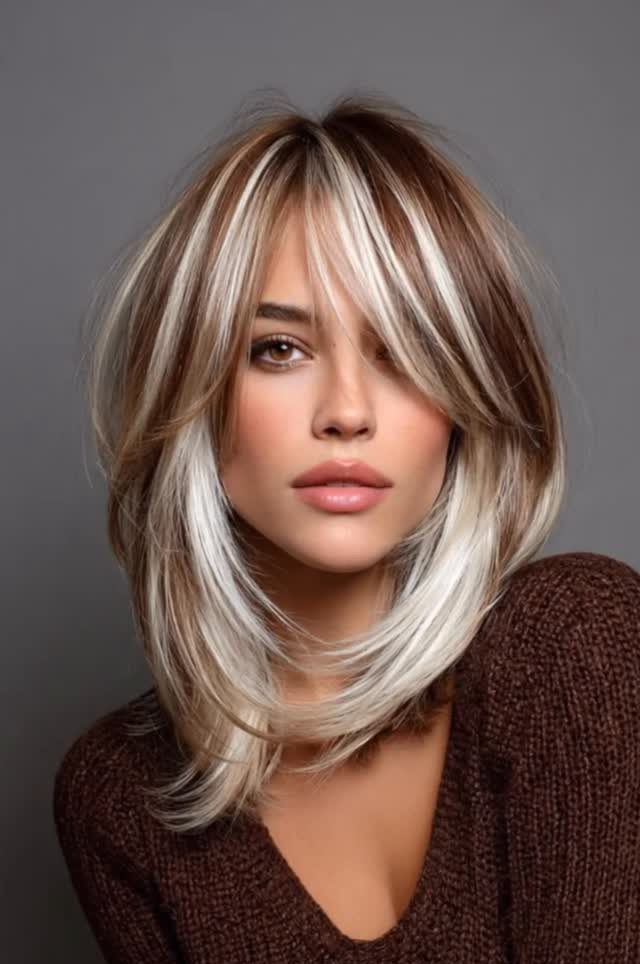
A long bob has less length to spread color across, so the ribbons have to be placed with care. Broad blonde pieces around the face, with brown left through the layers, keep the cut looking shaped instead of striped.
Tell your stylist the hair ends at the shoulders and ask for the highlights to follow the layers.
I like this on a bob because the front pieces do most of the work. Straight or lightly bent styling shows off both colors.
12. Blue and Black
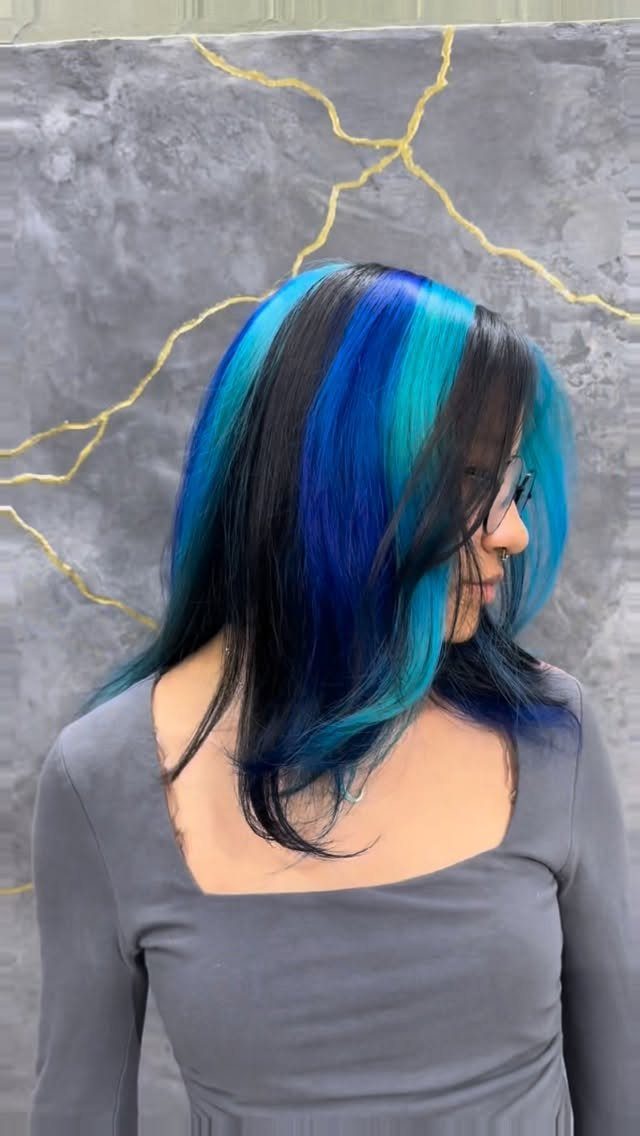
On black hair, turquoise and deeper blues look almost electric, since the dark base makes them read as saturated. Choose thick sections, not thin strands, so the color reads as an accent.
Black hair must be lifted before blue shows at all, so book a salon appointment and budget for regular upkeep.
Blue fades, and I would keep the placement limited to a few chunks you can refresh easily. Straight, long hair gives the color the most room.
Maintenance and Color Care
Plan on 2–4 months of wear, but the timeline depends on how fast your hair grows and how well you protect the color.
Roots start to show around weeks 4–6. Toned shades drift warmer over 6–8 weeks, and that shift is slow, so a slightly brassy week is no emergency.
For root touch-ups, the range runs 6–10 weeks if your roots contrast sharply with the highlights, and 8–12 weeks if the blend is soft. Toners can be refreshed every 3–4 weeks.
Between visits, wash less often, use lukewarm or cool water, and choose color-safe, hydrating shampoo.
Purple products keep blonde from yellowing. A mask or color-depositing conditioner gives faded sections a boost.
Heat wears color down too. Use a heat protectant and turn the tool temperature lower than you think you need.
Salon Consultation Tips
Show up with hair that is freshly washed and air-dried, with no styling product. Your stylist can then see your true tone, cowlicks, density, and natural pattern, which all change where chunks should sit.
Bring reference photos that show both the width of the highlights and the color. One photo of the shade and one of the size is better than a single image that tries to do both.
Then settle placement before any color is mixed: all over, around the face, or concentrated in certain areas.
Ask about toners, how often to come back for touch-ups, and what to use at home.
At-Home Application
Start with a lightening or balayage kit made for home use.
Many include developer, lightening cream, gloves, and a brush, so there is less mixing to get wrong. Add a bowl, sectioning clips, foil, petroleum jelly for your hairline, and bright lighting.
Work in sections between half an inch and 1 inch wide.
Paint the mid-lengths and ends first, then the roots, since roots process faster from scalp heat. Wrap each section in foil and check processing often.
Keep the pieces spaced out, with more near the face or the top layer. Dense, close streaks look dated; well-placed ones look current.
Rinse, tone, and deep-condition when you finish. If you want a fashion shade like pale pink or lavender, the same method applies.
Frequently Asked Questions
Are chunky highlights still in style?
Yes, they are back, but in a softer form than the late ’90s and early 2000s version.
Early chunky highlights were sharp, evenly spaced streaks. Today’s versions use strategic placement, blended roots and gentler transitions, so the color is easier to wear.
What is the difference between chunky and traditional highlights?
Chunky highlights use wider sections, which gives a bolder, higher-contrast finish with clear definition.
Traditional highlights use thinner strands for a softer, blended brightness. I’d pick chunky if you want the color to read from across a room, and thin if you want it low-key.
What hair color is best for chunky highlights?
Your base color and the amount of contrast you want decide this more than any trend does. Copper pairs gently with golden blonde, and black hair suits platinum or fashion colors like blue, pink and red.
Can you get chunky highlights without bleach?
Occasionally, yes, but it hinges on the shade you start with and the shade you’re after. Dark hair has to be lifted before blonde or fashion colors like pink, blue and red will show.
How long do chunky highlights last?
A set of chunky highlights holds up for about 2–4 months. Regrowth shows around weeks 4–6, and a toned blonde slides warmer over 6–8 weeks.