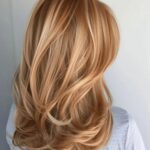
The range runs from chestnut and cinnamon tints that pass as natural brown to all-over vivid copper, and your starting depth decides where you land.
Deep brunettes can get a quiet warm shift from a single-process color or gloss, but penny-bright copper usually needs pre-lightening, and vivid copper starts softening after 4–6 weeks.
1. Chestnut or Cinnamon Copper
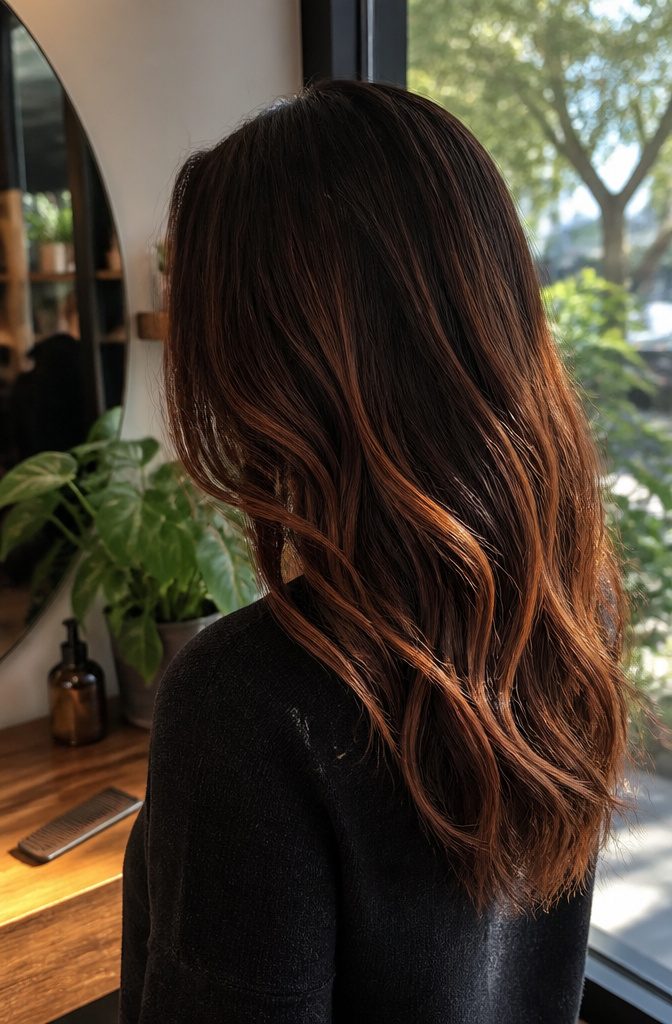
Chestnut and cinnamon copper are the two warmest browns you can place over a dark brunette base without actually leaving brunette territory.
Both layer red-orange into your natural depth rather than lifting it, so the result reads as dimension rather than dye. Chestnut copper skews earthier and more subdued; cinnamon mixes chocolate and copper in roughly equal measure and lands warmer.
Neither announces itself the way full copper does, which is why they work so well as a first step if you’ve never touched warm color before.
The shift shows most clearly in daylight. Outdoors or near a window the copper tones catch and glow; indoors under overhead lighting they sink back into the brown base and look like richer natural hair.
If you’re after warmth you can see but don’t want to answer questions about, this is the range that delivers it.
2. Dark Copper With Espresso Roots
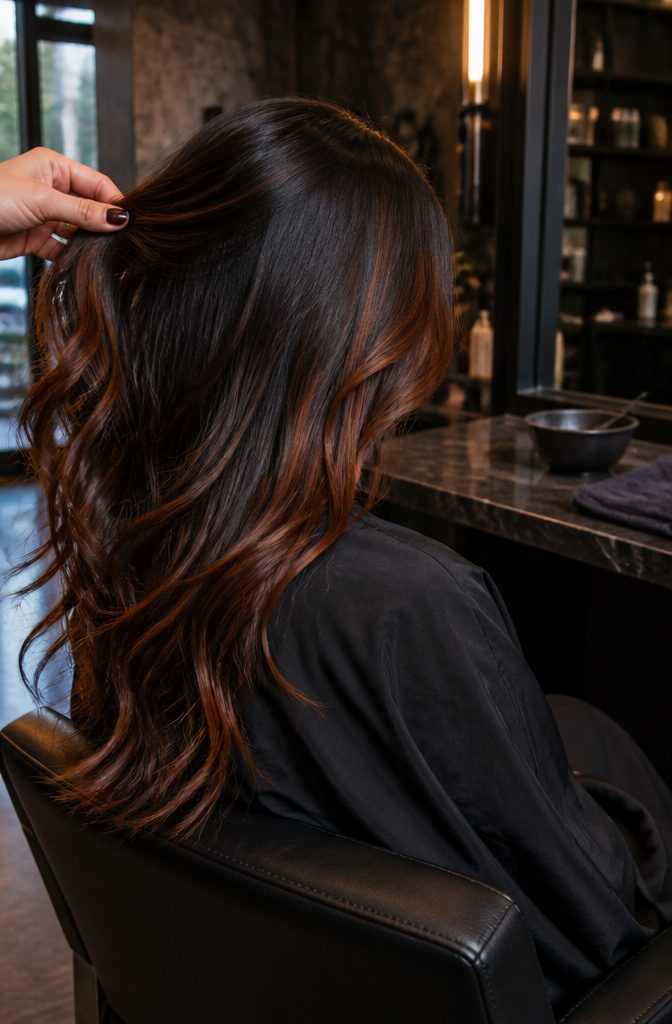
Chocolate or espresso depth at the root keeps the look moody rather than vivid, and the reddish-copper tones blend into the brunette base instead of sitting on top of it.
The roots grow out softly rather than announcing themselves at a hard line, which means you can push appointments further apart without the result looking overdue.
Dark copper reads as dimensional rather than bright, and it flatters deeper skin tones especially well.
The upkeep advantage is real. Where brighter copper might need a gloss every 6 weeks to keep vibrancy from slipping, dark copper holds its richness longer.
Schedule a gloss roughly every 8 weeks instead, and you save both time and processing. The overall effect stays moody and layered without demanding constant maintenance.
3. Copper Balayage
Copper Balayage
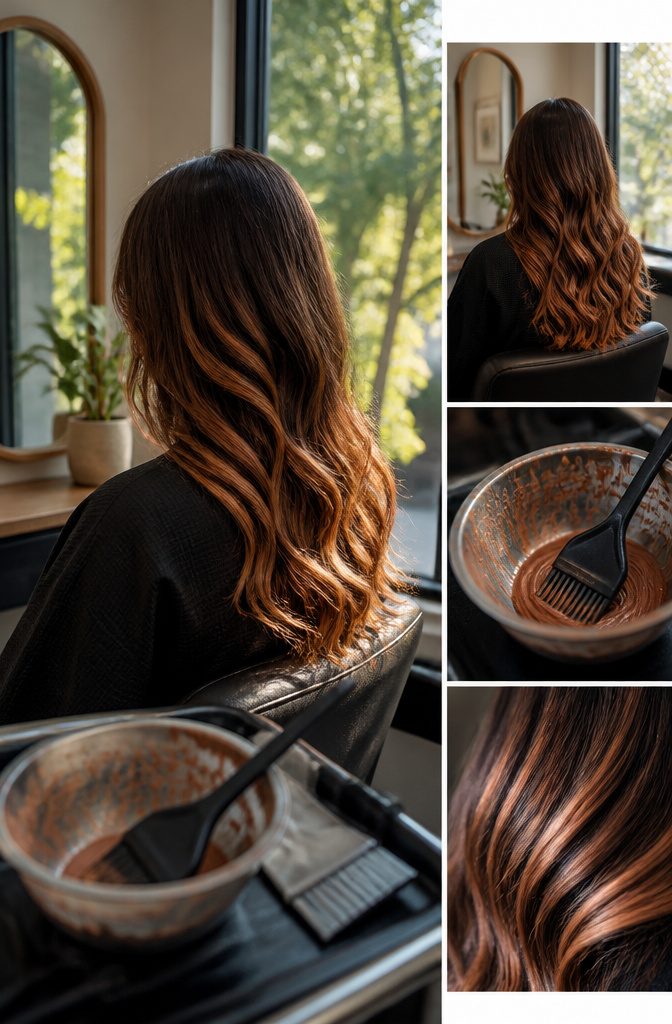
Hand-painted copper through medium brown hair delivers that soft, lived-in warmth without the grow-out line you get from foils.
The color sits where light naturally hits, concentrated around the face and through the ends, so the brunette base stays visible and the whole thing feels organic rather than striped.
A root smudge blends the copper into your natural roots, which means you can stretch appointments longer without looking overdue.
Balayage is the lower-maintenance placement because the transition is gradual from the start.
Ask for freehand balayage specifically if you want that sun-kissed, intentional fade rather than distinct sections of color. The technique works especially well with copper because the warmth reads as dimensional even when it grows out a few inches.
4. Golden Copper Brown
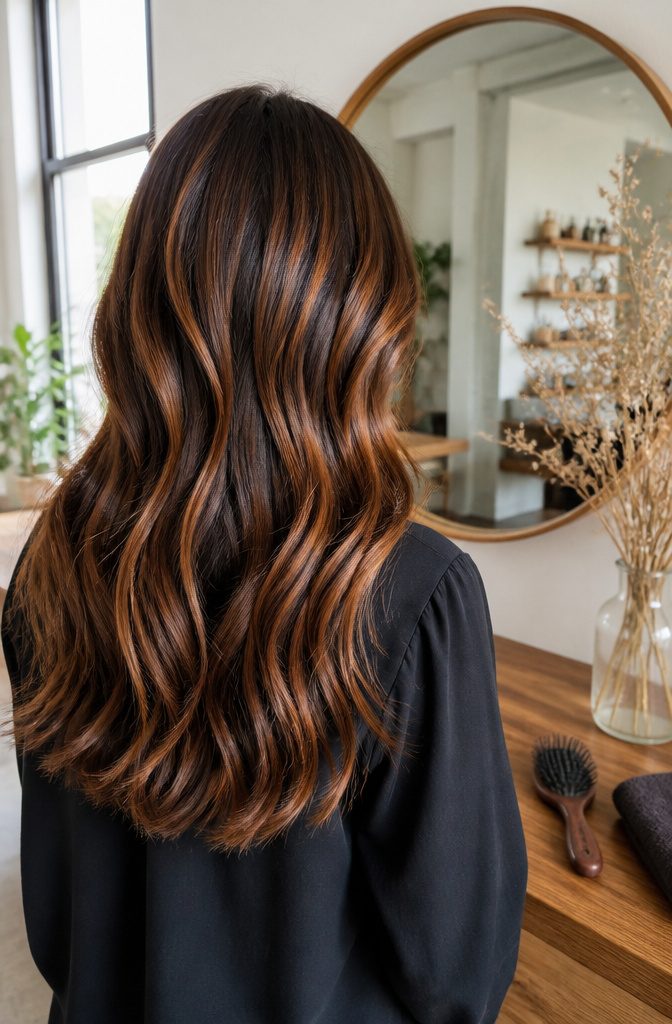
Golden, reflective warmth is what separates this shade from the redder copper browns.
The copper here leans heavily into yellow-gold undertones rather than orange or russet, so you get what stylists are calling a honey-dipped finish. It photographs beautifully and has that high-gloss, expensive-looking warmth even when hair air-dries.
The gold reflects light off individual strands, which is why this shade looks shiny without heat styling.
I’ve seen it called expensive brunette meets copper, and that tracks. It balances warmth with polish, stopping short of anything too intense.
Golden copper brown flatters warm and neutral skin tones best, where it harmonizes with natural gold in the skin.
It works across fair and deep complexions. Ask for golden copper highlights on an espresso or deep brown base, and specify you want the gold-yellow side of copper, not red-orange.
5. Muted Auburn
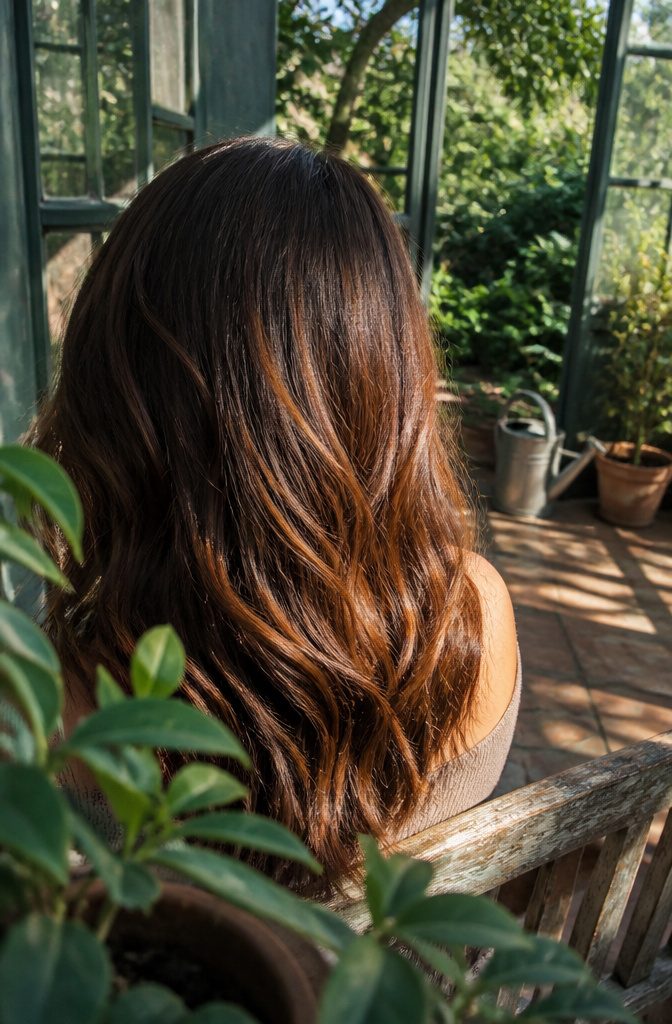
Muted auburn sits in that sweet spot between full commitment and just-dipped-a-toe. The color blends brown and red in a way that reads almost natural, like you could have been born with it if the genetic lottery had landed differently.
Tom Smith predicted that muted auburns and soft coppers would dominate this year, replacing the brighter, bolder reds of 2024, and colorists have moved in exactly that direction.
This cool-toned shade reads brown in low lighting, but displays its dimensional reddish undertones in the sun, making it a great way to ease yourself into a new hair color.
That sunlight reveal is what makes it work for anyone nervous about going red.
The warmth softens gradually as it fades rather than going brassy, so your grow-out looks intentional instead of neglected. One of the most forgiving copper shades if you want longer stretches between appointments.
6. Cherry Cola
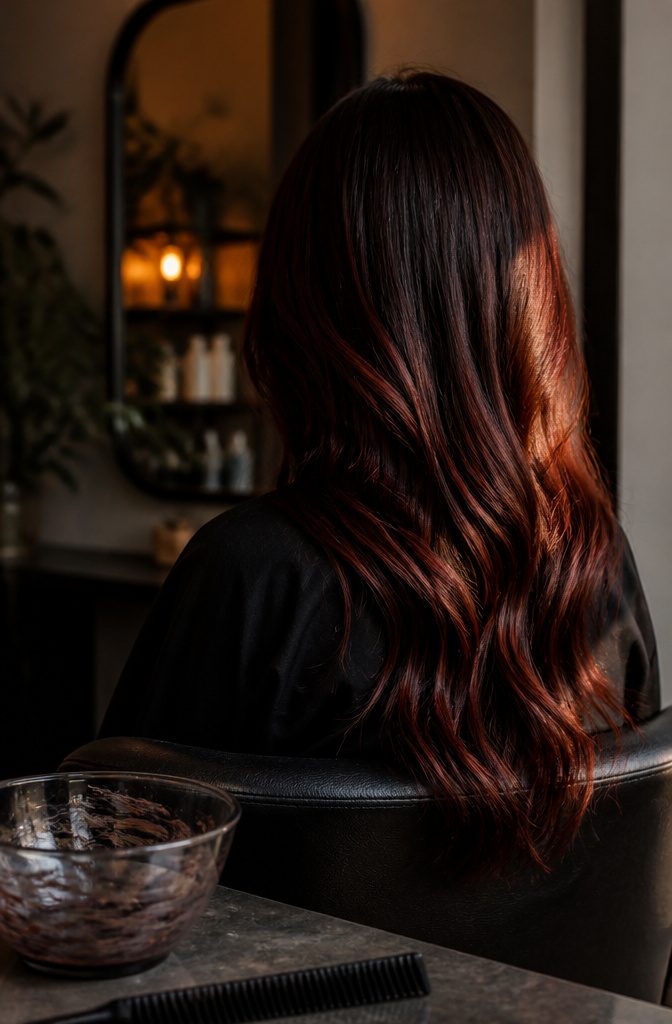
Cherry cola leans red first, copper second — it’s a deep, glossy red-brown that reads as brunette indoors and wakes up when the sun hits it.
The finish is what makes it work now: ask for a high-shine gloss treatment and the color looks almost editorial, nothing like the flat cherry highlights from twenty years ago.
I’d call it the moodiest option here, and probably the easiest to wear in a professional setting because it stays so close to brunette in low light.
The multidimensional red-brown sits right on the edge of the copper family without committing fully to warmth.
If you’re drawn to cherry cola but nervous about red tones going brassy as they fade, ask your colorist for a violet-toned gloss on top.
It deepens the red and keeps any unwanted warmth in check. At home, the L’Oréal Paris Feria Multi-Faceted Shimmering Hair Color in Hot Chili gets you there.
7. Burgundy Copper
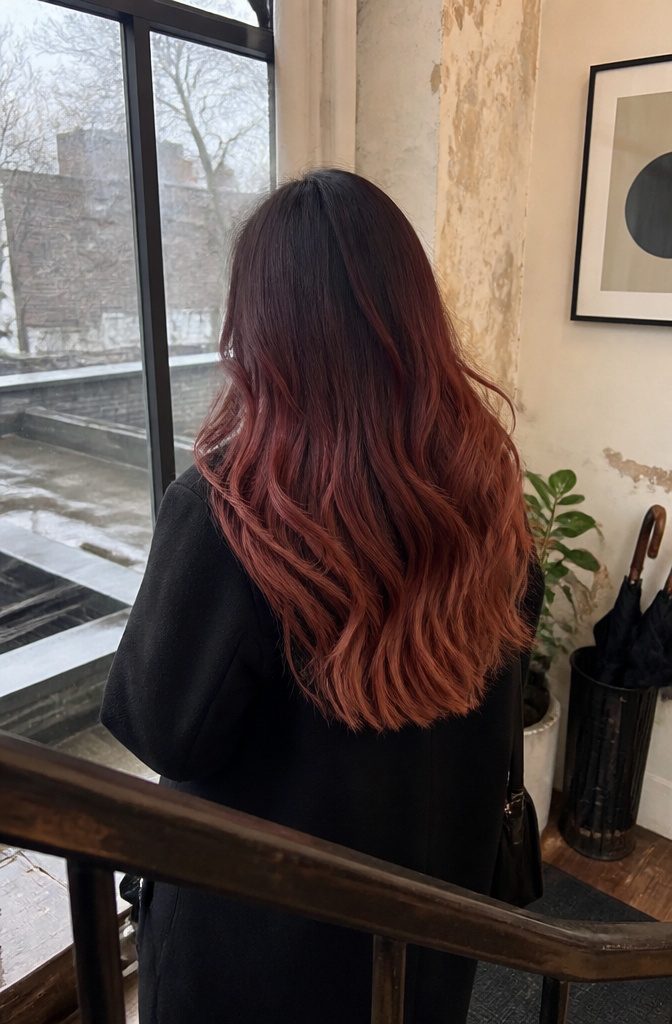
Burgundy copper starts with a deep burgundy base or root that transitions into cooler, more subdued copper rather than the warm golden or peachy versions you see elsewhere.
The difference sits in the tone: cooler copper reads more muted and slightly plum-leaning, while golden copper leans into honey and warmth. Peachy copper brings in coral or apricot.
I like this combination for anyone with cooler skin tones who wants copper but finds the warm versions too brassy. The burgundy root keeps the look grounded and adds richness without pushing the whole thing too warm.
You can take it further with a burgundy copper ombré, which builds the contrast by keeping deep burgundy through the roots and mid-lengths before melting into that muted copper at the ends.
It gives you a clear color journey and a look that holds up as it grows out.
8. Pumpkin Spice Copper

Pumpkin spice copper sits somewhere between bright orange-leaning copper and deeper mahogany brown, and the difference decides whether the color reads cozy or bold.
The mahogany version is a dark copper that leans more brown than orange, grounded enough that it never shouts but still catches light with warm, dimensional copper reflections.
If you want copper without committing to anything bright, this is the shade that delivers warmth and movement while staying closer to your natural brunette base.
The darker mahogany base makes this one of the more forgiving copper shades for brunettes with resistant hair. The depth holds better and the color stays truer longer than lighter, brighter coppers that fade fast.
It works particularly well on deeper skin tones, where the rich base creates contrast without washing you out, and it pairs beautifully with fall and winter wardrobes full of camel, burgundy, and forest green.
9. Cowboy Copper

Cowboy copper sits deeper and earthier than a bright penny shade, and that is what gives it the worn-in look of old leather.
On a brunette base it shows up as scattered warm pieces rather than a clean, glossy sweep, so the hair reads dimensional instead of polished. It suits medium to dark brown best.
For anyone who hates salon visits, I’d pick this over bright copper. Because it starts from a richer, more pigment-dense place, it fades more gracefully, which means more weeks of good color before a refresh.
Slightly uneven pieces also help: nobody can spot a line of regrowth against a look that was never crisp.
10. Copper Ombré or Sombré
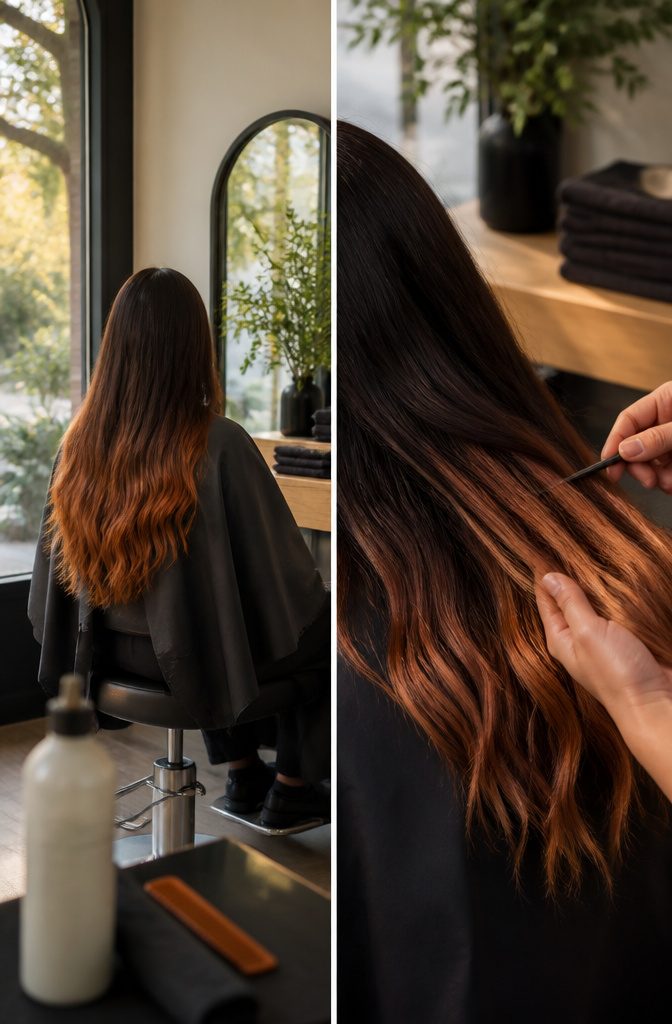
Copper ombré builds from a darker brunette root straight down to lighter, warmer ends, and sombré is the version where the shift is so gradual you barely catch it.
The difference matters if you want something that reads as intentional color rather than something quiet enough to pass as natural variation. Ombré announces itself, sombré whispers.
Hand-painted transitions keep the gradient smooth instead of banded, and that application matters more than the copper shade itself.
A color-depositing conditioner between salon visits stretches the interval past six weeks without the warmth going flat or dull, which makes sombré one of the lower-maintenance copper options if you pick up the conditioner and use it consistently.
The roots stay untouched long enough that regrowth doesn’t turn into a hard line you have to book around.
11. Face-Framing Copper
Face-Framing Copper
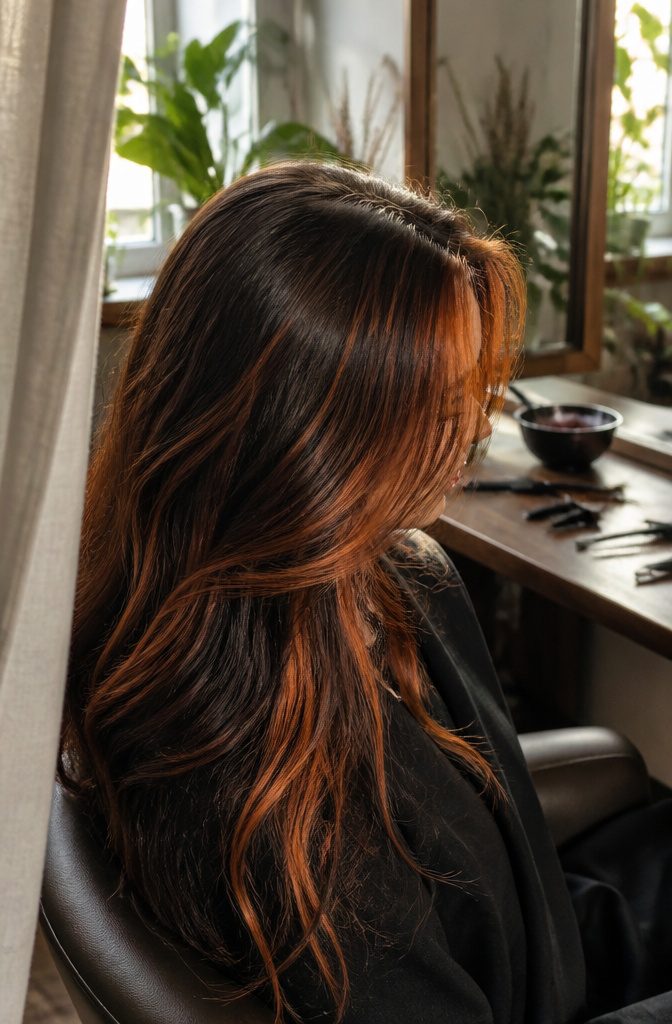
If you want the brightness copper gives without spending an afternoon in the chair, face-framing pieces or a money piece keep the color close to your hairline and leave the rest of your base alone.
The look feels edgy without reading unfinished, and it takes far less time than covering your whole head in foils.
The two-toned version pushes it further: a solid copper base with lighter peach-toned highlights placed just around your face.
That contrast adds dimension where you notice it most, and it gives you a way to test a brighter shade before committing to bleaching everything.
I like that it still reads as intentional even when regrowth starts to show, since the warmth sits where your natural color would frame your face anyway.
12. Peachy or Strawberry Copper
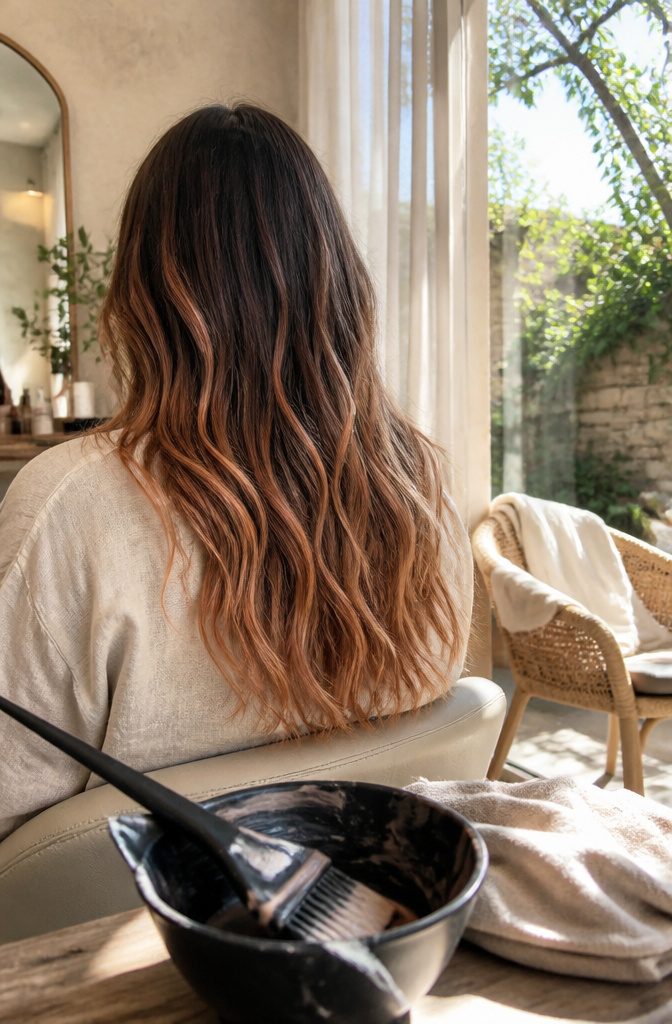
Peach is the softest way I know to wear a brunette with copper highlights.
It gives copper brown hair a beachy, summery twist, and balayage beats traditional highlights here. The hand-painted pieces grow out without a hard line at the root, so the color stays relatively low-maintenance.
Strawberry and sandy copper push lighter.
Sandy copper is a cool, almost metallic cousin of strawberry blonde, and it brightens the whole look. Your starting shade decides how hard it is: on a darker base, reaching that pale a tone may mean bleaching first.
I’d leave the bleaching step to a stylist, because lifting dark hair is the part that’s easy to get wrong at home.
13. Copper on Very Dark Hair
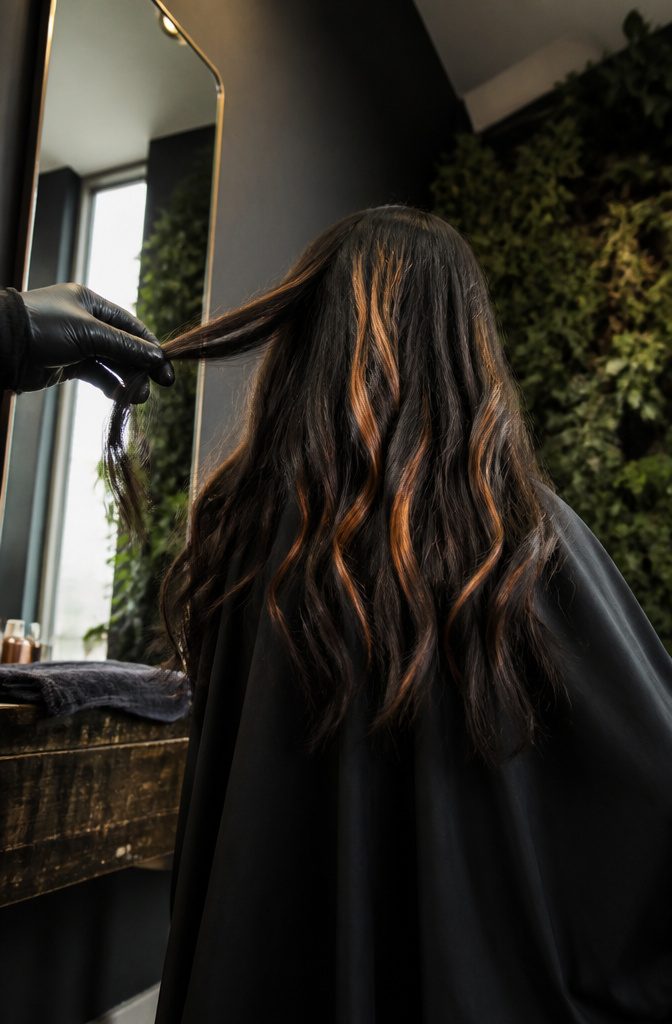
On black or very deep brown hair, a few copper pieces do more than a head full of them.
They catch the light and add movement that solid dark hair can’t. I’d choose fewer, bolder pieces over lots of fine streaks, which tend to look busy; chunkier copper reads as deliberate and almost editorial.
Lightening isn’t always required. Deep brunettes who want a quiet warm shift, like chestnut copper, muted auburn or cinnamon brunette, can often get there with a single-process color or a gloss.
Bright, penny-toned copper on dark hair usually needs pre-lightening to read true, so bring the photo to your colorist before you commit.
14. All-Over Vivid Copper
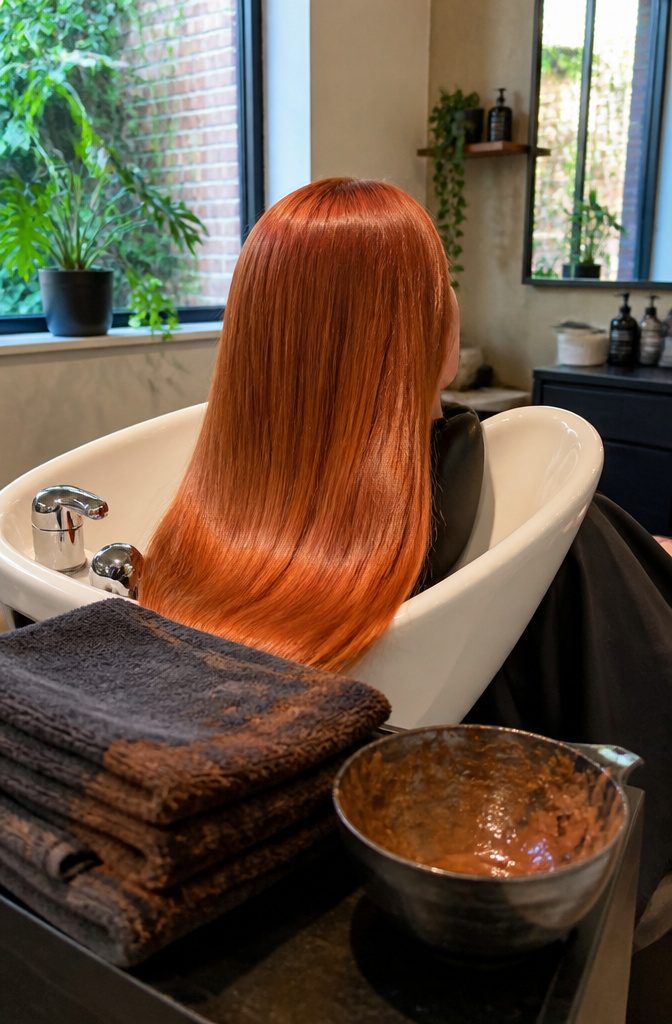
Sometimes subtlety is not the point. All-over vivid copper is a full commitment, not a highlight technique at all, but it delivers one of the most striking color results possible for brunettes who are ready to leap.
The color sits somewhere between red and orange, fully metallic, and reads as pure copper when the base is lifted enough to let it show true. That usually means pre-lightening, which makes this the most involved option on the list.
Expect higher maintenance. Vivid copper starts softening after 4–6 weeks, faster than cooler shades, so plan for a gloss or color refresh at that mark if you want to keep the intensity.
I think the upkeep pays off when you want maximum impact, but you’ll need more frequent appointments than balayage or lowlights require.
Picking a Shade for Your Skin Tone
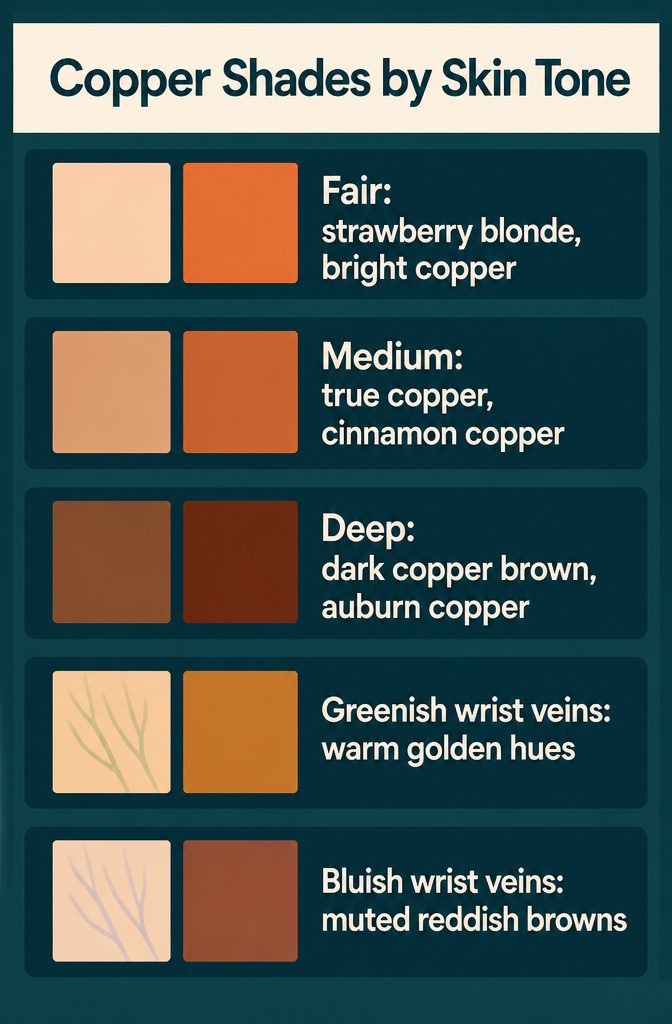
Copper suits a wide range of skin tones if the shade is matched right.
Warm and golden complexions look best with rich, fiery copper and golden copper browns, while fair to medium skin with cool or neutral undertones tends to suit softer variations like copper creamsicle, strawberry copper, or muted auburn.
Deeper skin tones are particularly flattered by dark copper and pumpkin spice shades, where the depth of the base creates a rich contrast.
Natural copper ranges from warm strawberry blonde to deeper auburn depending on the starting base, so there’s real flexibility.
A quick undertone check helps: if the veins on the inside of your wrist look greenish, you likely have warm undertones and can lean into gingery, golden hues; bluish veins suggest cool undertones, which pair better with more muted, reddish-brown tones.
Here’s the quick breakdown by skin tone:
- Fair skin: Warm strawberry blonde, bright copper, ginger, soft copper brown
- Medium skin: True copper, medium copper brown, cinnamon copper
- Deep skin: Cowboy copper, dark copper brown, auburn copper
Highlights Versus Full Color
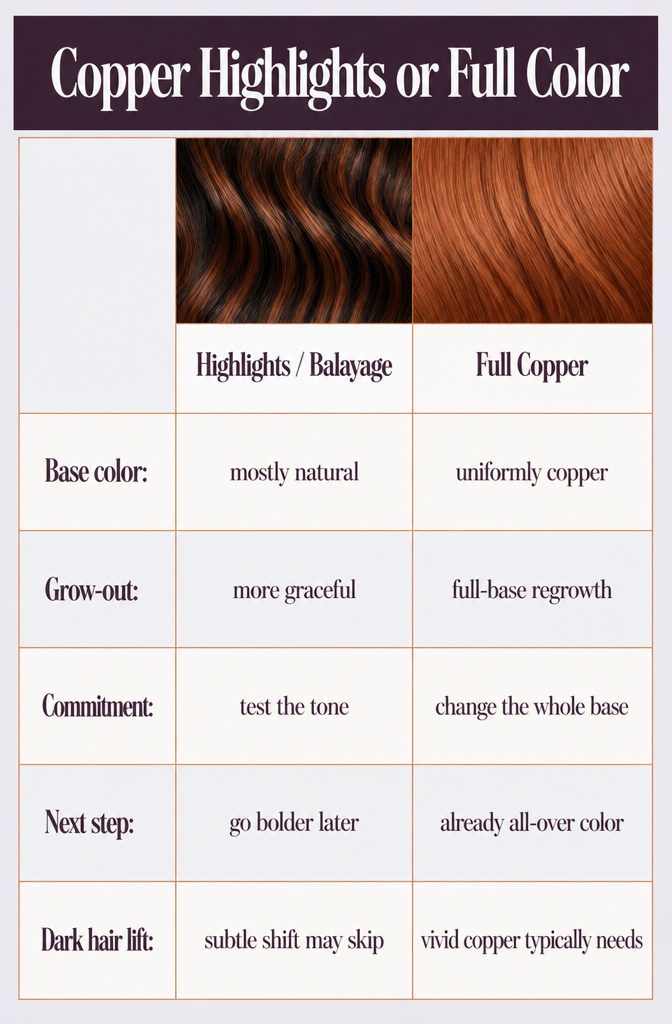
Copper highlights or balayage layer warm pieces through your brunette base, leaving most of your natural color intact for a dimensional, sun-kissed effect. Full copper changes the entire base to a uniform, saturated result.
I see highlights as the smarter entry point: they grow out more gracefully, they let you test whether you love the tone before committing fully, and they leave room to go bolder later if you want to.
Whether you need pre-lightening depends on how deep your starting brunette is and how bright you want the copper to read.
Deep brunettes chasing a subtle warm shift can often get there with a single-process color or gloss, no lightening required.
Bright, vivid, or penny-toned copper on dark hair will typically require some pre-lightening to make the pigment show true. Most brunettes I see start with highlights and only move to full copper once they know the shade is right.
Keeping Copper From Fading
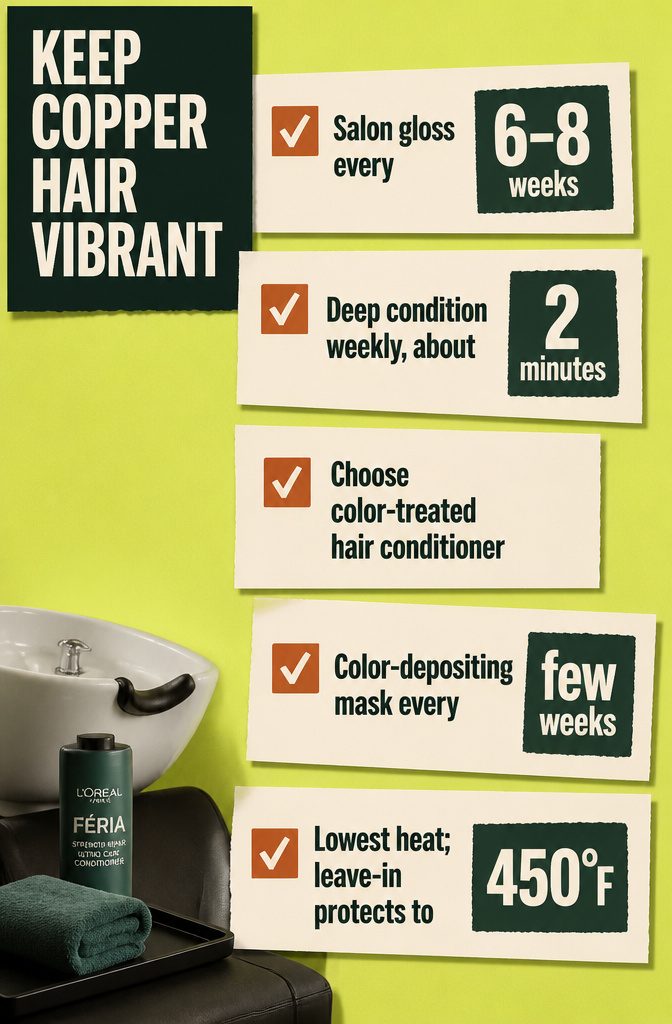
Warm pigments fade faster than cooler shades, so copper needs a bit more attention than ash or cool brown. A few straightforward moves keep the color looking intentional rather than washed out:
- Gloss refresh every 6–8 weeks at the salon is the single most effective step. Darker copper can stretch closer to 8 weeks because the base is deeper.
- Deep condition once per week with a formula made for color-treated hair, like L’Oréal Paris Féria Strength Repair Ultra Care Conditioner. Leave it on about two minutes, focusing on mid-lengths and ends, then rinse with lukewarm water.
- Use a color-depositing mask every couple of weeks to top up vibrancy between salon visits.
- Limit heat styling when possible. If you need the blow dryer, set it to the lowest heat and prep with a leave-in like L’Oréal Paris EverPure Sulfate-Free Moisture 21-in-1, which protects up to 450°F.
Frequently Asked Questions
Can you put copper highlights on brown hair?
Yes, copper highlights work beautifully on brown hair and are one of the most popular ways to add warm dimension without changing your entire base.
Balayage or face-framing pieces give you the brightness where light naturally hits while keeping most of your natural brunette intact. The technique grows out gracefully, which makes it lower maintenance than full color.
Can brunettes go copper without bleaching?
It depends on how deep your starting brunette is and how bright you want the copper to read.
Subtle warm shades like chestnut copper, muted auburn, or cinnamon brunette can often be achieved with a single-process color or gloss, no lightening required.
Bright, vivid, or penny-toned copper on dark hair typically needs pre-lightening to make the pigment show true.
What skin tone does copper hair look best on?
Copper suits a wide range of skin tones when the shade is matched correctly.
Warm and golden complexions look best with rich, fiery copper and golden copper browns, while fair to medium skin with cool or neutral undertones suits softer variations like strawberry copper or muted auburn.
Deeper skin tones are particularly flattered by dark copper and pumpkin spice shades, where the depth of the base creates rich contrast.
How long does copper hair color last on brunettes?
Vivid copper starts softening after 4–6 weeks, faster than cooler shades, so plan for a gloss or color refresh at that mark if you want to keep the intensity.
Darker copper holds its richness longer and can stretch closer to 8 weeks between gloss appointments. A color-depositing conditioner between salon visits helps stretch the interval without the warmth going flat or dull.
What’s the difference between copper highlights and a full copper color on brown hair?
Copper highlights or balayage layer warm pieces through your brunette base, leaving most of your natural color intact for a dimensional, sun-kissed effect, while full copper changes the entire base to a uniform, saturated result.
Highlights grow out more gracefully and let you test whether you love the tone before committing fully. Most brunettes start with highlights and only move to full copper once they know the shade is right.
Is copper hair color hard to maintain?
Copper needs a bit more attention than cooler shades because warm pigments fade faster.
A gloss refresh every 6–8 weeks at the salon is the single most effective step, along with weekly deep conditioning and a color-depositing mask every couple of weeks to top up vibrancy between visits.
Limiting heat styling and using a sulfate-free shampoo also help keep the color looking intentional rather than washed out.
Does copper hair make you look older or younger?
Copper adds warmth and dimension that softens the face and reflects light off individual strands, which tends to create a youthful, sun-kissed glow.
The effect depends on the shade: golden copper browns and peachy tones give a fresh, beachy look, while darker copper with espresso roots keeps things moody and rich without reading flat.
Matching the shade to your skin tone keeps the color flattering rather than aging.