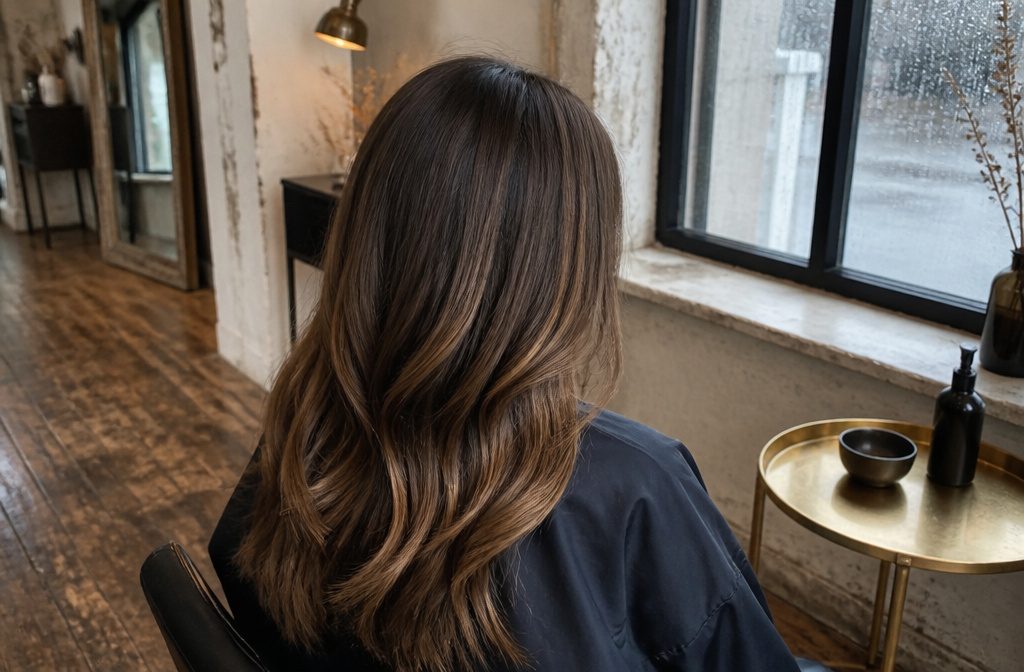
Every look here runs 2–3 shades darker than your base, and what picks yours is undertone: golden caramel and toffee flatter warm skin, while ash stays cleaner on cool skin.
Gold versus silver jewelry is a decent test if you can’t tell. Balayage versions grow out with darker roots, so you may skip the six-week touch-up.
1. Bring a Reference Photo
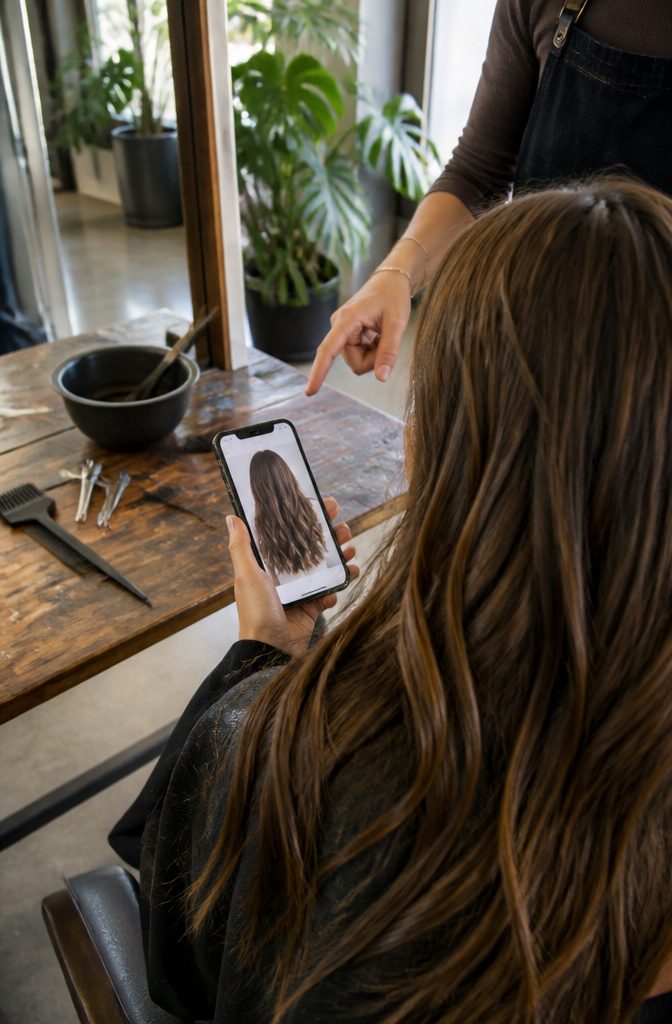
A saved photo says what "a bit darker underneath, but not too dark" never will. Pinterest saves make a good starting point because the colorist can point at the exact result instead of guessing from adjectives.
The photo is a target, not a recipe, and L’Oréal Paris explains why:
A colorist will be able to expertly place lowlights throughout your hair for the most multidimensional look, and they’ll also be able to recommend and tweak which shades of lowlights you end up with.
So show the photo, then let the colorist adjust placement and shade to your hair.
2. Lowlight Depth and Tone
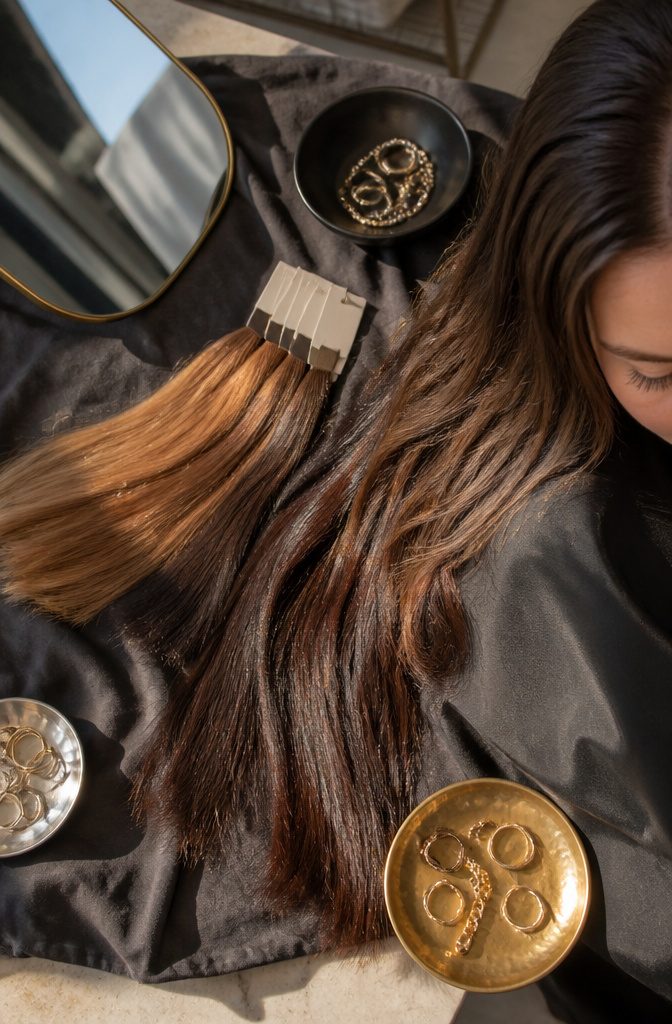
Lowlights sit at least two tones darker than your natural color, and on brown hair that usually means two to three shades below your base. The range runs from lighter chestnut through rich caramel to dark chocolate.
Warm or cool decides how those strands sit against your face.
Golden, caramel-leaning shades tend to flatter warm skin, while cooler, less golden browns suit cool skin. If you can’t tell which you are, gold versus silver jewelry is a decent test.
I’d also choose saved photos carefully: pick a model whose skin tone and eye color are close to yours, because that match predicts your result better than the hair alone.
3. Caramel Lowlights
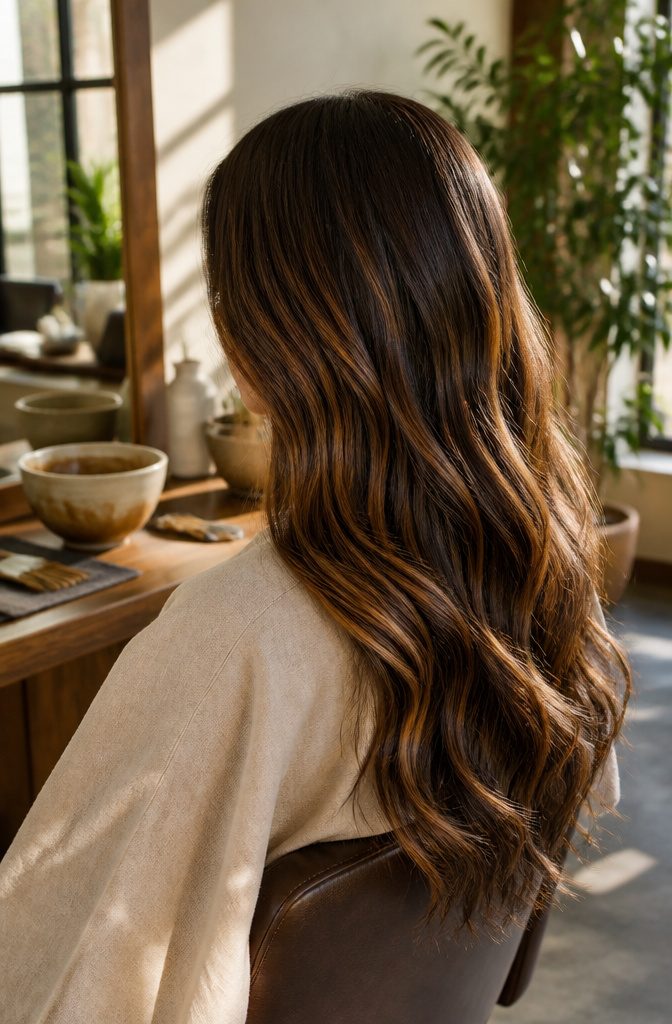
Caramel sits warmer and brighter than your base, which means it catches daylight and adds dimension without looking like you tried to go blonde.
The chocolate-and-caramel balayage pairs a deep brown base with caramel ribbons painted through the mid-lengths and ends, and the contrast makes fine hair read thicker.
Caramel bronde runs lighter overall, closer to a medium brown shot through with blonde-leaning caramel tones, and works when you want the warmth without keeping things too dark.
Add honey to the mix and you get a third shade in the blend, which pushes the brightness up another notch but keeps the whole thing anchored in brown territory.
This works best on warm or neutral skin tones. The golden undertone in caramel can look muddy against cool-toned skin, while ash lowlights stay cleaner there.
4. Dark Chocolate Lowlights
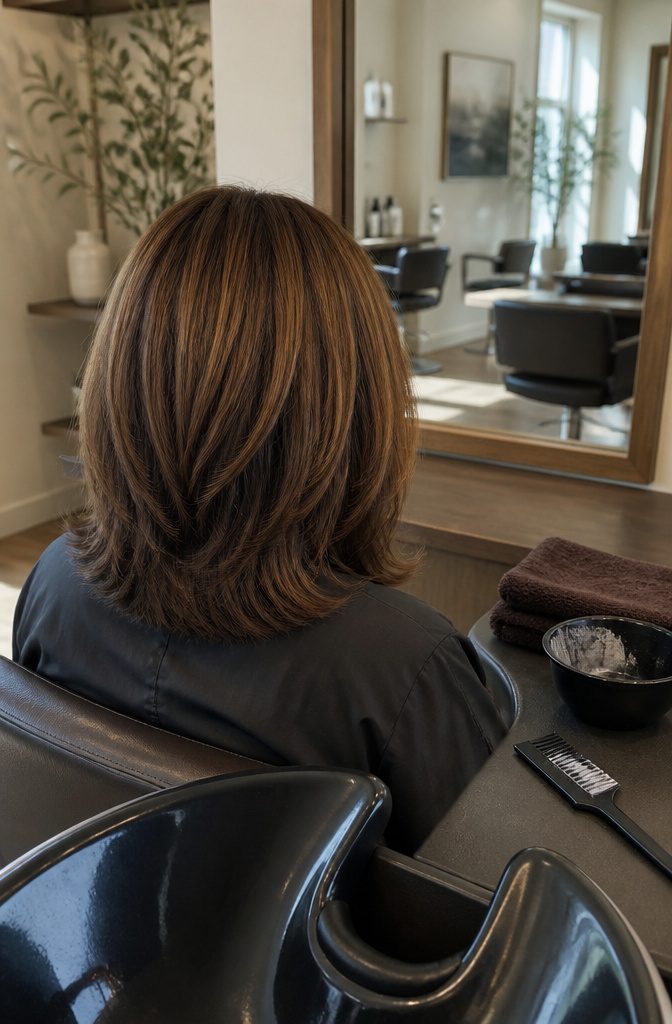
Dark chocolate gives light or medium brown hair the shadow it needs to look dimensional instead of flat.
Against a lighter base, the deeper strands make the surrounding pieces read brighter. The pairing I’d point you to is Toffee Highlights and Chocolate Lowlights: warm toffee on the surface, deep chocolate underneath.
The contrast looks rich when the chocolate pieces are thin and sit beneath the top layer, around the nape and the inner sections, so the lighter strands still show.
It turns heavy when the dark is chunky, placed near the face, or far darker than the base, because the eye reads stripes instead of depth.
Keep the chocolate a few shades deeper than your base and warm enough to match the toffee, and the grow-out stays soft.
5. Toffee Lowlights
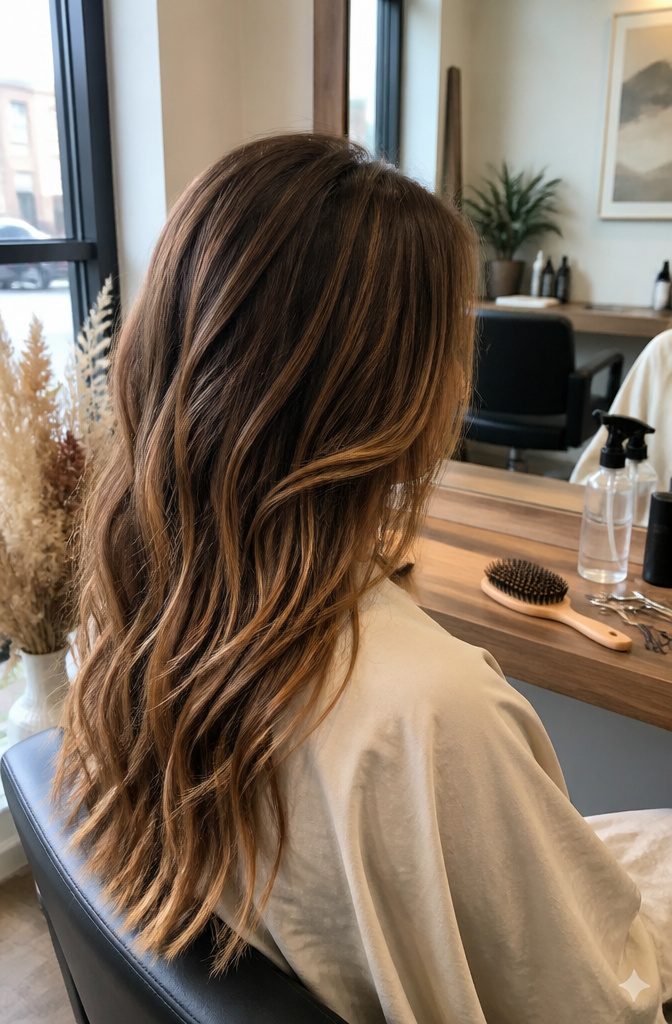
Toffee sits between caramel and chocolate: deeper and more amber than caramel, lighter and warmer than a chocolate lowlight.
The Blonde Ribbons and Toffee Brown Lowlights look is the version I’d pick, with thin blonde strands woven through toffee so the hair reads as dimensional instead of striped.
Toffee also works over a chocolate base for a beachy, sun-warmed result, and it keeps existing blonde highlights from looking flat. Ask for it by name, since "brown lowlights" can land anywhere from copper to espresso.
6. Auburn and Cinnamon Lowlights
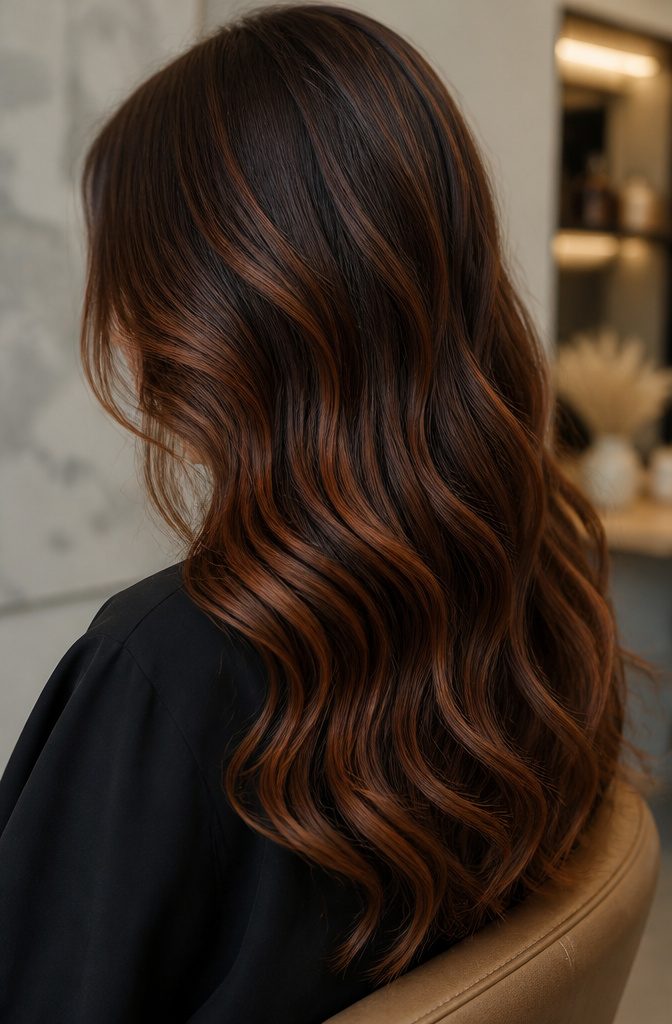
Auburn and cinnamon are the warmest lowlights on this list, because they pull brown hair toward red instead of toward neutral or cool.
The muted, rusty version of cinnamon works best on brown waves. Soft edges and a glossy finish keep the hair looking healthy and thick, and the shade suits anyone who finds blonde highlights too sharp for a conservative style.
The Pearl Highlights and Auburn Lowlights balayage shows the other route.
Even at low contrast, the auburn adds the depth that makes the pearl pieces stand out. I’d book this one only if your skin runs neutral or warm: this look is a go-to for neutral and warm undertones.
7. Ash Lowlights
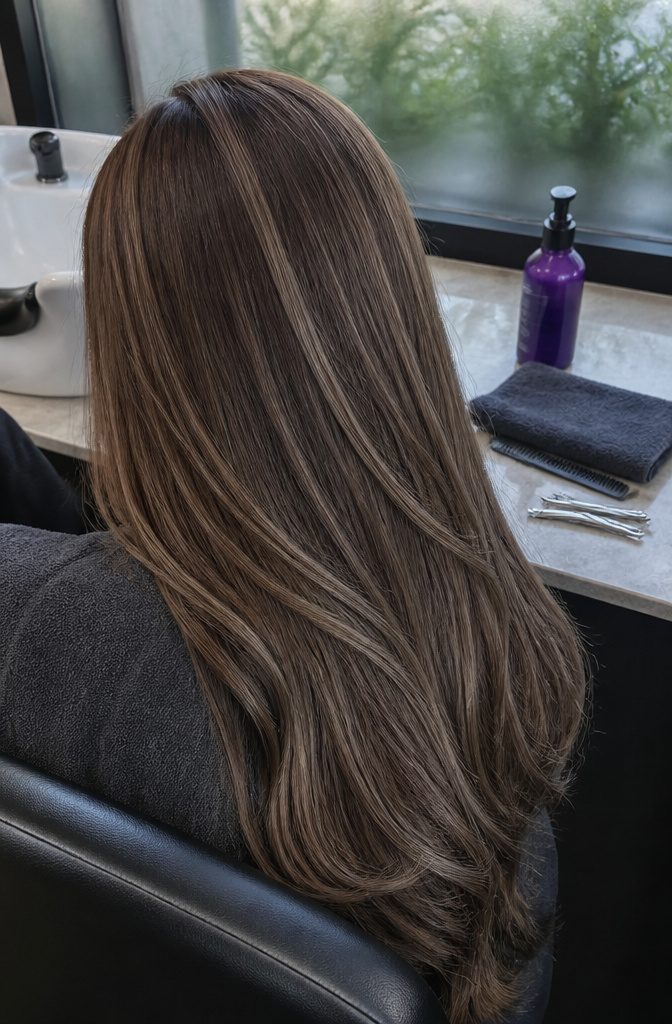
Ash lowlights swap the golden glow of caramel and toffee for a cooler, softer finish. Where those shades add warmth, a cool or neutral ash tone quiets it, so the brown looks smoother and less sunny.
Complexion decides this one. Golden hues are the popular pick, but a neutral shade can flatter your skin more, and I’d go ash over caramel if warm tones seem to fight with your face.
The toning is what makes ash look like ash, and it needs protecting. A deep purple shampoo is the suggested way to keep that toning in place between appointments.
8. Blonde Highlights With Lowlights
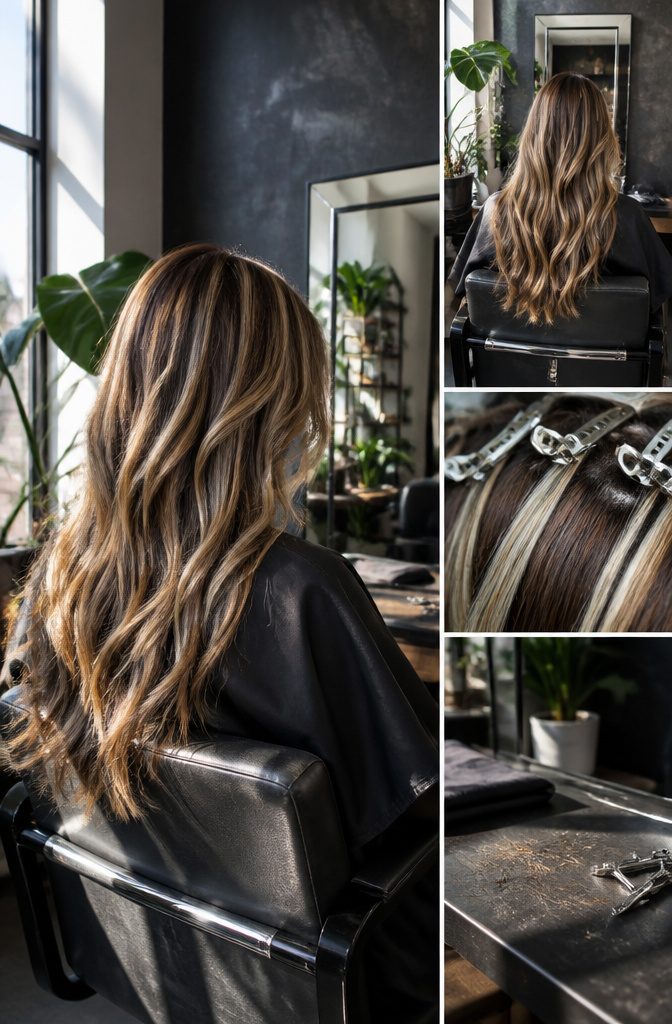
Blonde highlights paired with lowlights give brown hair contrast, depth and a multidimensional look instead of one flat block of color.
Highlights run at least 2 tones lighter than your natural color, and the darker lowlights fill in the shadows between them so the lift doesn’t read as stripes.
Platinum Blonde Highlights and Lowlights is the boldest version. Pale platinum against deeper tones is the loudest contrast on this list, so I’d pick it only if you want that contrast noticed first.
For something quieter, go thin.
Fine highlights need to be only a couple of shades lighter to make an impact, and they blend into the hair. Pale skin with soft brown hair can go as little as 1 shade lighter.
9. Balayage Lowlights
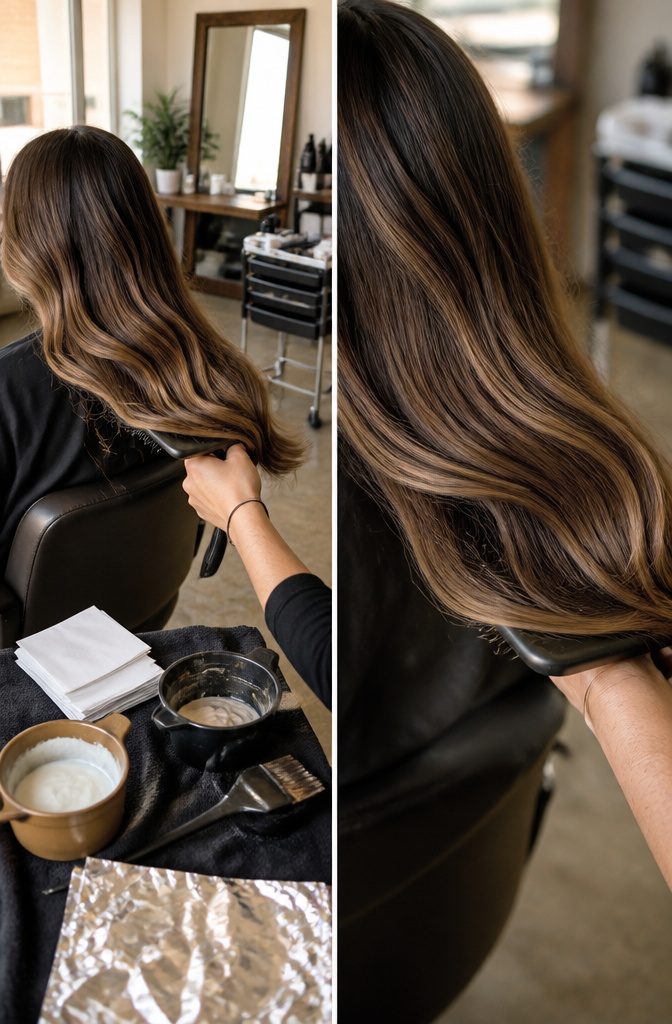
Lowlights don’t need foil. A stylist can paint them freehand with the same sweeping method used for balayage highlights, brushing dye on with a paddle.
In one video walkthrough, the stylist stops color from bleeding onto neighboring strands with foil, paper or a coat of conditioner. She also stops the paint short of the root so the lowlights look grown out from day one.
Balayage can combine both in one appointment, with lighter ribbons next to deeper ones. For brown hair, I find that gives the most dimension.
Some balayage looks grow out with darker roots, so you may be able to skip the routine six-week touch-up. That is a real saving in both time and money.
10. Foil Lowlights
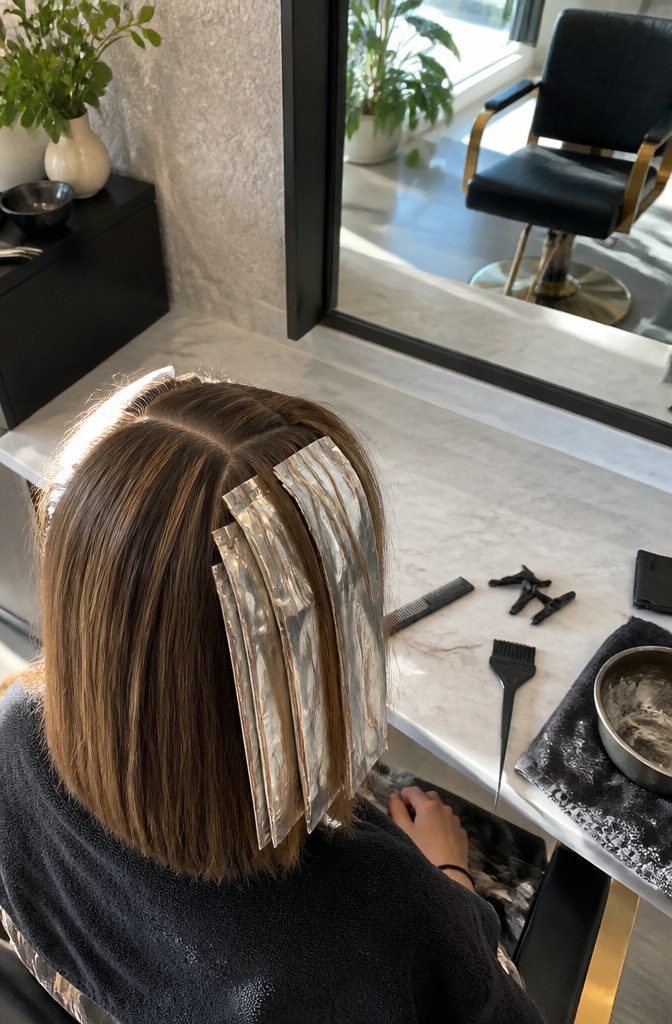
Foils give lowlights a defined, repeatable stripe, and that precision is their edge over balayage.
Each section of hair is wrapped separately, so the darker strands land exactly where the stylist places them and the color stays off the neighboring pieces.
Choose foils when you want the lowlights to read as distinct ribbons of depth rather than a soft, melted gradient. That suits a sleek blowout, a blunt cut, or a photo where you can point to each dark strand.
Balayage is the better pick for a lived-in, blurry finish.
Many stylists switch between the two, foiling the sections that need control and painting the rest freehand, so I’d ask which method they’d use on your cut before settling on one.
11. Face-Framing Pieces
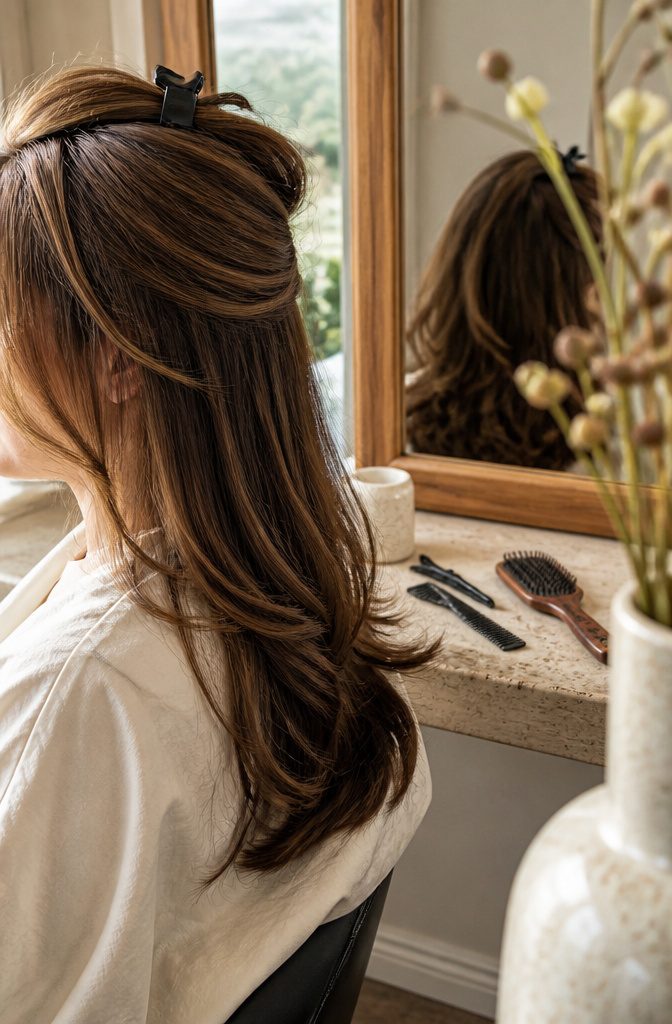
Light strands right at the hairline catch the room’s light and bounce it onto the skin, while darker lowlights through the back and underneath keep the brown from going flat.
A partial placement does this with less commitment: lighter pieces run from the crown toward the bangs, or sit in the side tresses beside the cheeks, and everything else stays deep.
I’d keep the face-framing pieces only slightly lighter than the base instead of jumping to blonde, since the contrast should read as brightness, not as stripes.
Ask your stylist to place them where your hair naturally parts and falls, because that is where they show.
12. Lowlights for Curls and Waves
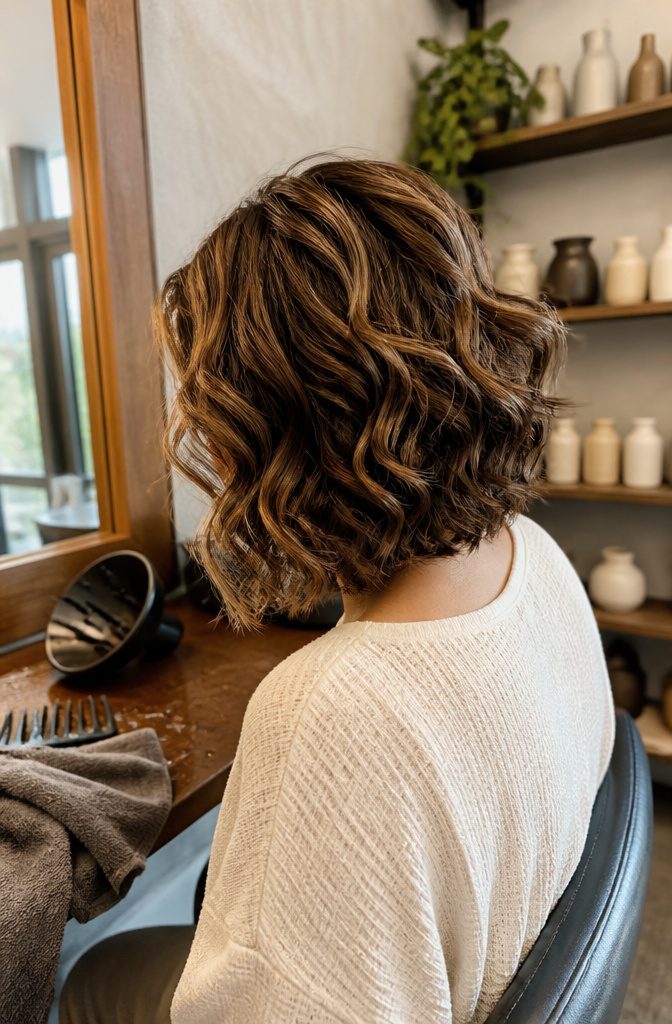
Curls and waves hold shadow in their folds, so darker pieces read as depth in a way a flat, straight strand never quite manages.
Lowlights run generally at least two tones darker than your natural color, which gives each curl a richer core, while lighter pieces on top sharpen the layers.
On a bob or lob, the color has little length to travel, so I’d keep the pattern soft and let the curl do the work. Longer layered cuts stack the dimension, and you see more of it in motion.
For body, tuck lowlights into the underlayers so the top layers look lifted. For contrast, keep them on top and back with lighter pieces in front.
13. Subtle Blended Lowlights
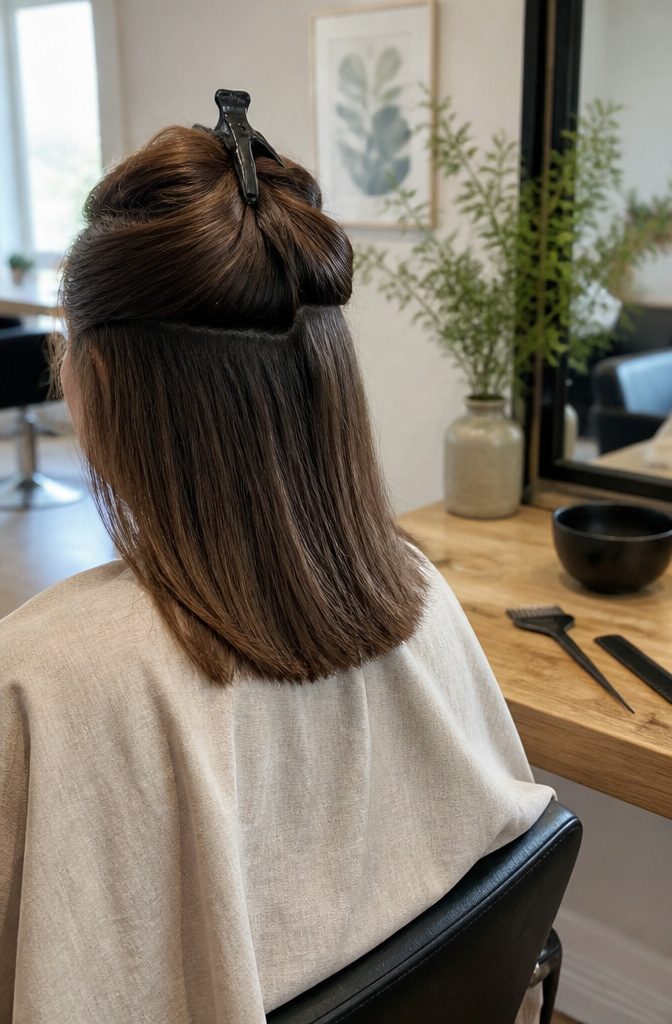
Thin, softly blended lowlights are what I’d point any first-timer toward.
They color only selected strands, not the whole head, so most of your natural brown stays untouched and the added pieces sit just slightly deeper than what you already have.
Low contrast is the safety net. If you want more depth later, a stylist can add it at the next visit, but a heavy first pass is much harder to soften.
Darker roots and gradual transitions are what make it look natural.
A shadowed root with slim pieces melting toward the ends reads as depth, not as stripes, and it grows out without a harsh line. Ask for "fine, blended, low contrast" and you’ll get the idea across.
14. High-Contrast Brown and Blonde
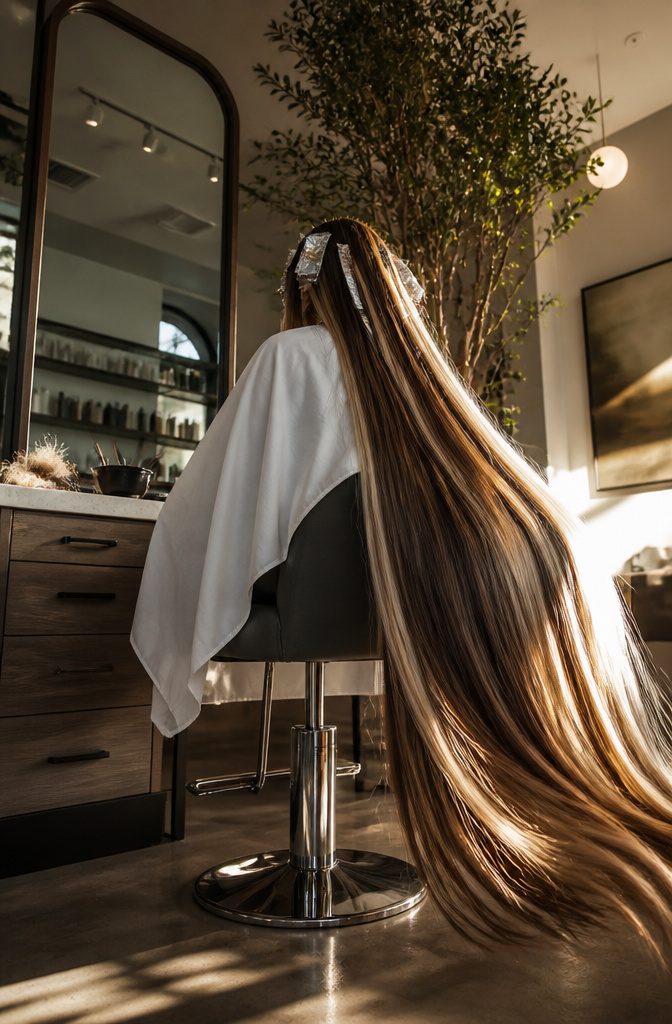
Deep brown against very bright blonde is the most dramatic pairing in this list, and length is what makes it work.
Longer hair gives the light more room to meet the dark, so the blend reads as artistic instead of striped.
I’d book this only with a colorist whose blended work you’ve seen. The stronger the contrast, the less forgiving the placement: heavy blonde looks chunky, and an abrupt line between the two tones shows.
Upkeep follows the same logic. Bright blonde needs toning to stay clean, and regrowth stands out against a deep brown base, so expect more salon visits than you would with a soft blend.
15. Lowlights on Light Brown
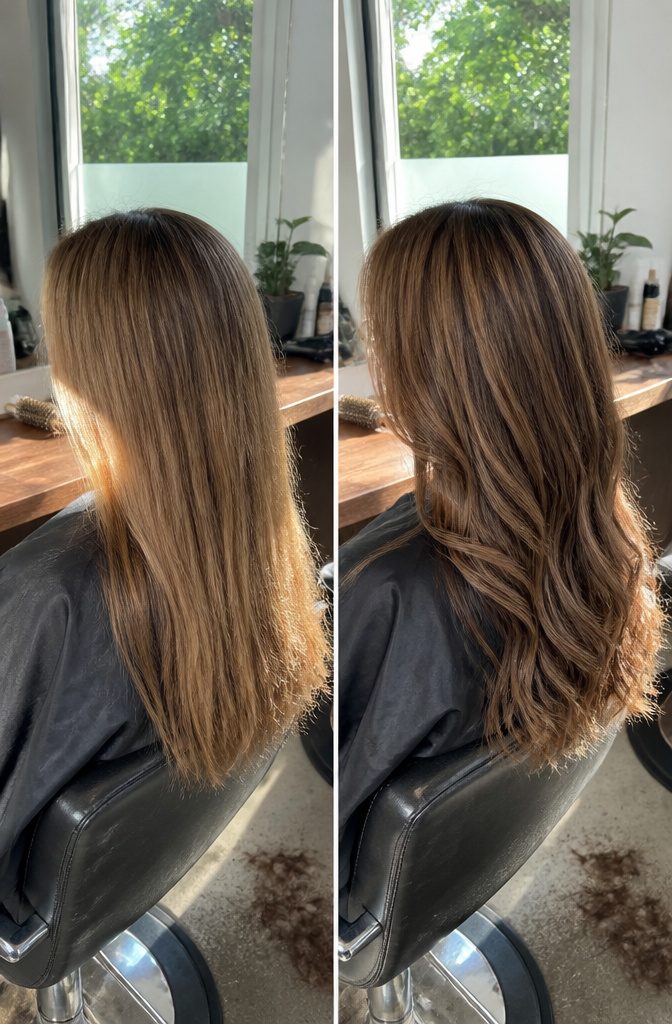
Light brown hair goes flat when every strand is the same tone. Lowlights add depth, and they are generally at least two tones darker than your natural color.
On a light brown base, two to three shades down puts you in chestnut, the safest pick and the one I’d start with. Caramel and toffee bring warmth, and they read as soft shadow rather than stripes.
Stay at two shades darker and the result looks like texture.
Go the full three and the contrast shows in photos and in sunlight. I’d skip anything darker than that on a light base, because the lowlights stop reading as dimension and start reading as stripes.
16. Lowlights on Dark Brown or Black
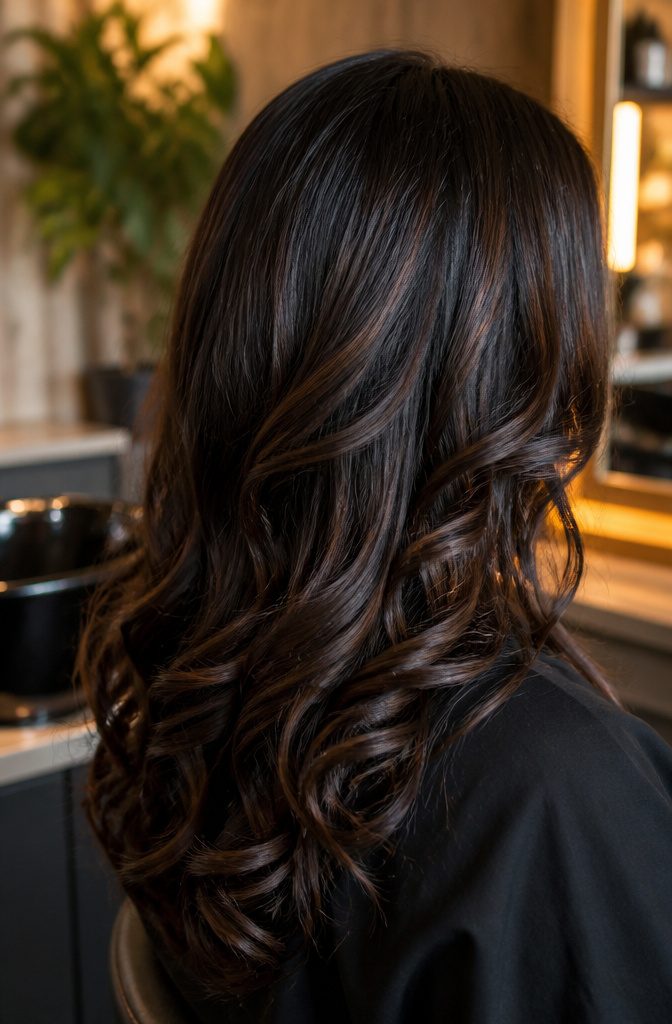
On a dark brown base, a lowlight at least two tones darker lands close to black, so it reads as depth rather than stripes.
It adds richness and texture without hiding your natural shade. The same logic applies to black hair, where the darker pieces show mostly in movement and in light.
If you curl your hair, I’d add a few highlights.
The lowlights give richness, and the highlights pick out curls and layers. Keep the lowlights two tones darker than your base, and keep the highlights modest so the color enhances your shade instead of covering it.
Highlights vs Lowlights
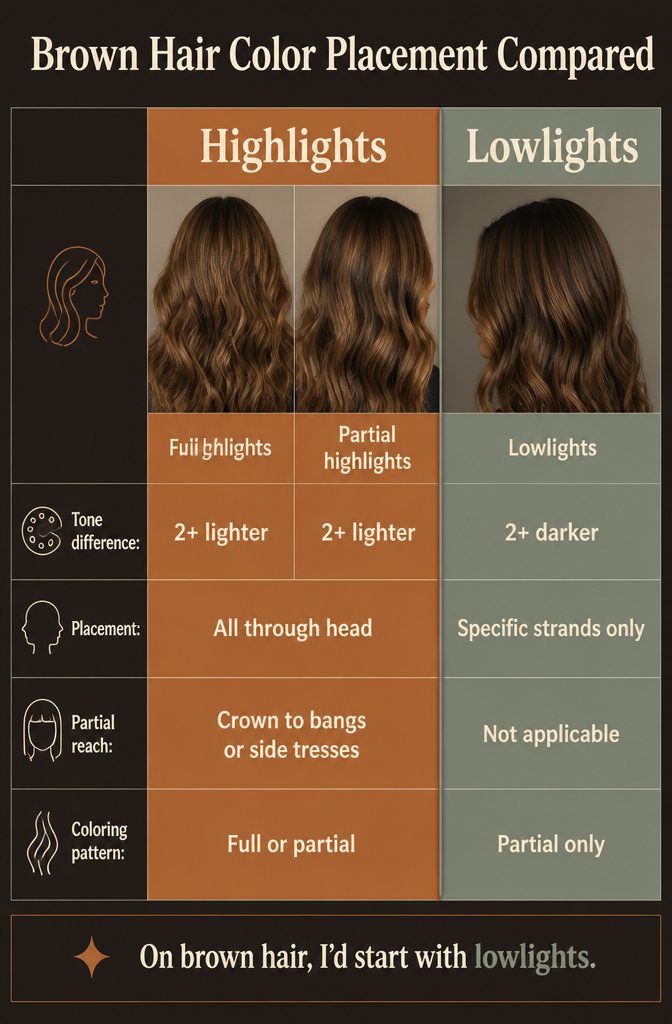
Highlights are at least 2 tones lighter than your natural color; lowlights are at least 2 tones darker.
Full highlights run all through the head, while partial ones stay local, from the crown toward the bangs or around the side tresses. Lowlights are partial coloring, so they add dimension without the damage usually tied to permanent all-over color.
Both tend to cost less than a new solid color. On brown hair, I’d start with lowlights.
Side by side:
| Option | Tones from natural | Placement |
|---|---|---|
| Full highlights | 2+ lighter | All through the head |
| Partial highlights | 2+ lighter | Crown to bangs, or side tresses |
| Lowlights | 2+ darker | Specific strands only |
Color-Safe Care Routine
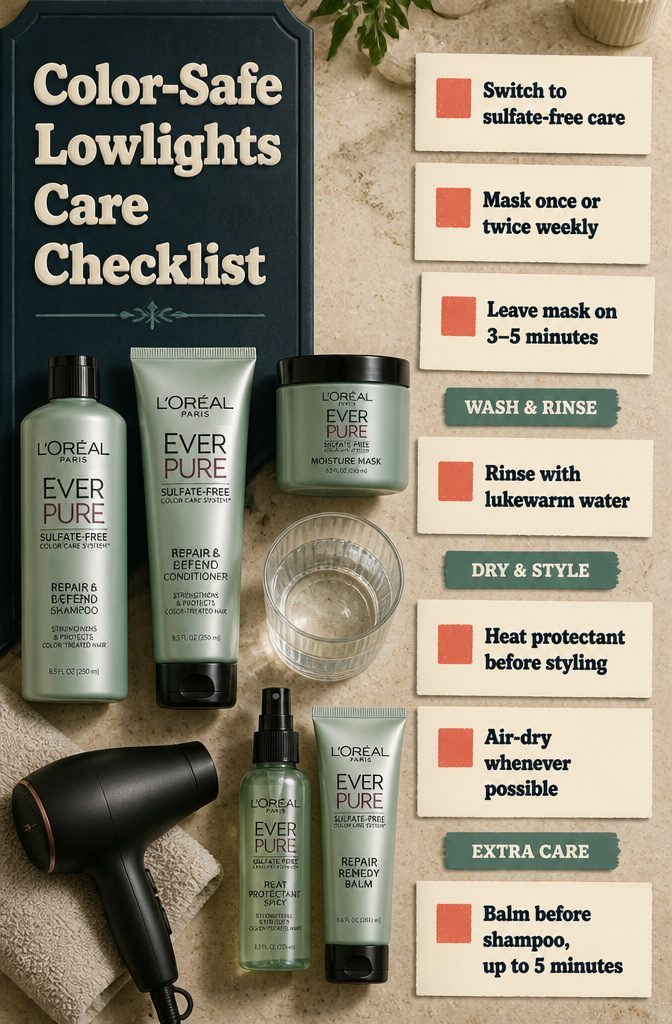
Lowlights count as color-treated hair even though they touch only some strands, so the routine changes. This is the one I’d follow:
- Switch to a sulfate-free, color-safe pair like L’Oréal Paris EverPure Repair and Defend Shampoo and Conditioner.
- Use a color-safe mask once or twice a week, left on 3–5 minutes.
- Wash and rinse with lukewarm water, since hot water dulls color faster.
- Air-dry when you can. When you do use heat, put a heat protectant on first.
- If your ends run dry or the color dulls quickly, add a pre-shampoo step. Work L’Oréal Paris EverPure Repair Remedy Balm through slightly wet lengths and ends, leave it up to 5 minutes, then shampoo as usual.
Touch-Ups and Regrowth
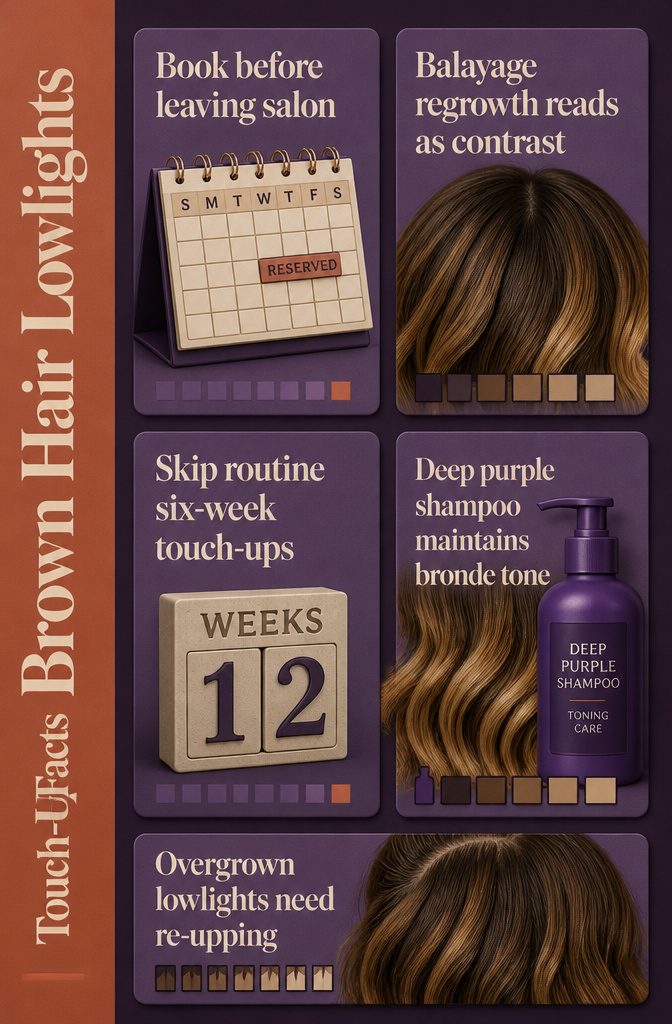
Even well-kept lowlights need re-upping eventually, and a heavily grown-out set hasn’t caught on as a look. Book your next appointment before you leave the salon, while the calendar is open and the color is fresh.
Balayage-style looks follow different rules.
With darker roots built in, regrowth reads as added contrast rather than a harsh line, so I’d skip the routine six-week touch-up. Your hair also gets a break from extra color.
Bronde blends, where so many light pieces mix with the brown that you can’t tell where the base ends, call for a different kind of upkeep. A deep purple shampoo keeps the toning looking right between visits.
Styling Products for Lowlights
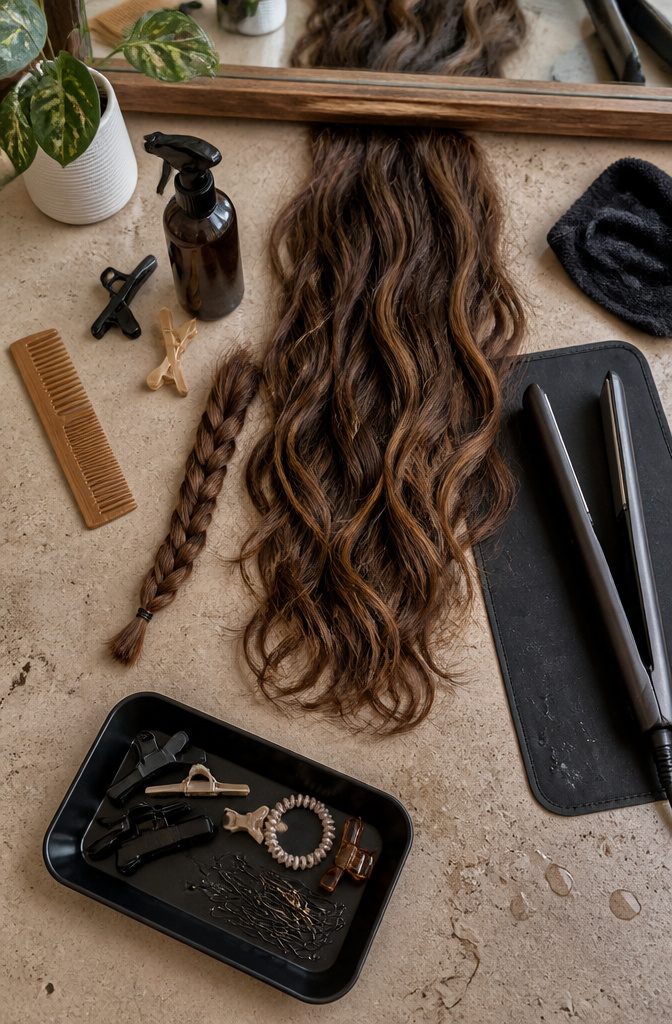
Lowlights show best on hair with shape, and air drying is the gentlest way to get it.
Work L’Oréal Paris AIR DRY IT Wave Swept Spray or Boost It Air-Blown Texture Mist into clean, damp hair, scrunch the ends a few times, and let it dry.
Straight hair needs a braid right after the product goes in; take the braid out once it’s dry and the waves fall soft and beachy, so the darker strands read as depth.
For a sleek ponytail or bun, Elnett Precious Oil Satin Hairspray adds shine, and its strong hold tames flyaways.
On days you want a curling iron or flat iron, I’d spray SLEEK IT Iron Straight Heatspray on damp strands before blow-drying and again before the iron touches them.
Frequently Asked Questions
What is the difference between lowlights and highlights?
Highlights are at least 2 tones lighter than your natural color, while lowlights are at least 2 tones darker.
Both can be applied to specific strands rather than the whole head, and both work with foils or freehand balayage. On brown hair, lowlights add depth and shadow, while highlights bring brightness and lift.
What color lowlights look good in brown hair?
Chestnut, caramel, toffee, dark chocolate, auburn, cinnamon, and ash all work on brown hair, depending on your skin tone and how much contrast you want.
Warm tones like caramel and toffee suit warm or neutral skin, while ash lowlights look cleaner on cool skin. Keep lowlights 2 to 3 shades darker than your base for the most natural dimension.
Are lowlights or highlights better for brown hair?
Lowlights are the safer starting point for brown hair because they add depth without the damage tied to lightening.
Highlights lift and brighten, which works well if you want contrast, but pairing both gives you the most dimension. If your brown already looks flat, start with lowlights.





