Toner can soften yellow cast on grey and blend wiry strands into highlights, but it cannot lift.
On natural hair darker than level 7, or hair with dark dye on it, lightener has to come first. Starting from dyed black, expect 3 to 6 sessions, spaced weeks apart, to reach blonde.
1. What Toner Can and Cannot Do
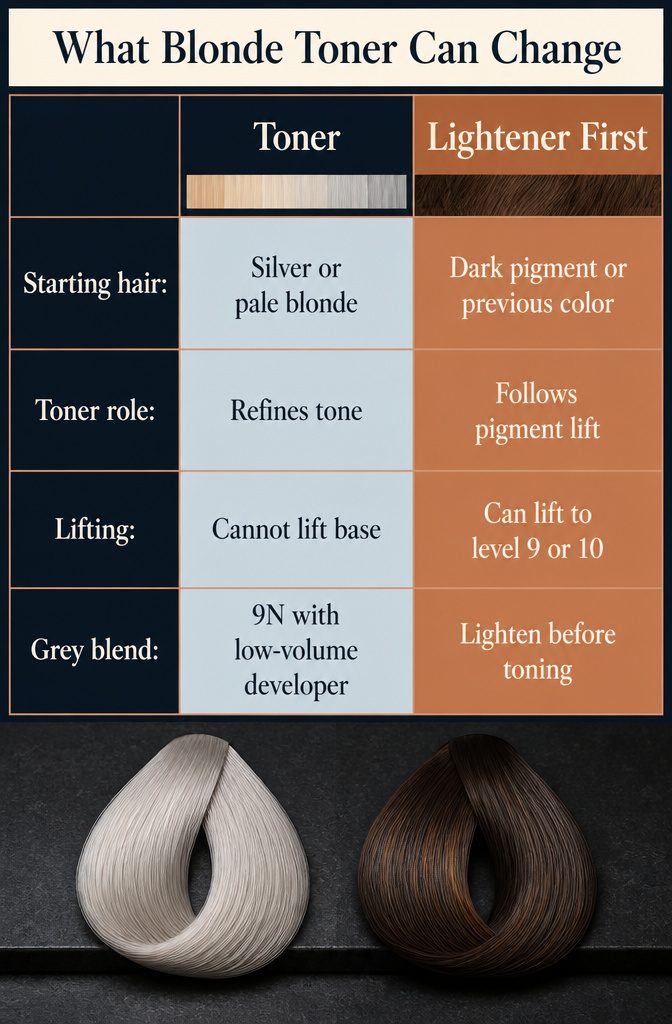
Toner works on hair that already sits at a level where pigment can be shifted, but it cannot lift color the way bleach does.
If your grey is already silver or you have highlights that brought sections up to pale blonde, toner can adjust the tone and soften yellow cast.
Stylists use it between foils to blend wiry grey that stands out, mixing formulas like 9N with low-volume developer to deposit color without lifting the base.
At-home toners don’t alter the color of silver hair with bleach or hair dye; instead, they refine it.
— Vogue
That refinement matters when you want grey to read as intentional rather than dull, but toner alone will not take dark pigmented hair to blonde.
If you have a mix of dark brown and grey, or previous color sitting on the hair, you need lightener first before toner can do anything useful.
Some lines lift grey all the way to level 9 or 10 with bleach, then tone to a grey-blonde or white result.
The formula depends on the color line you are working with and what your hair actually looks like going in, so there is no single toner recipe that works for everyone.
2. Your Starting Hair Decides the Method
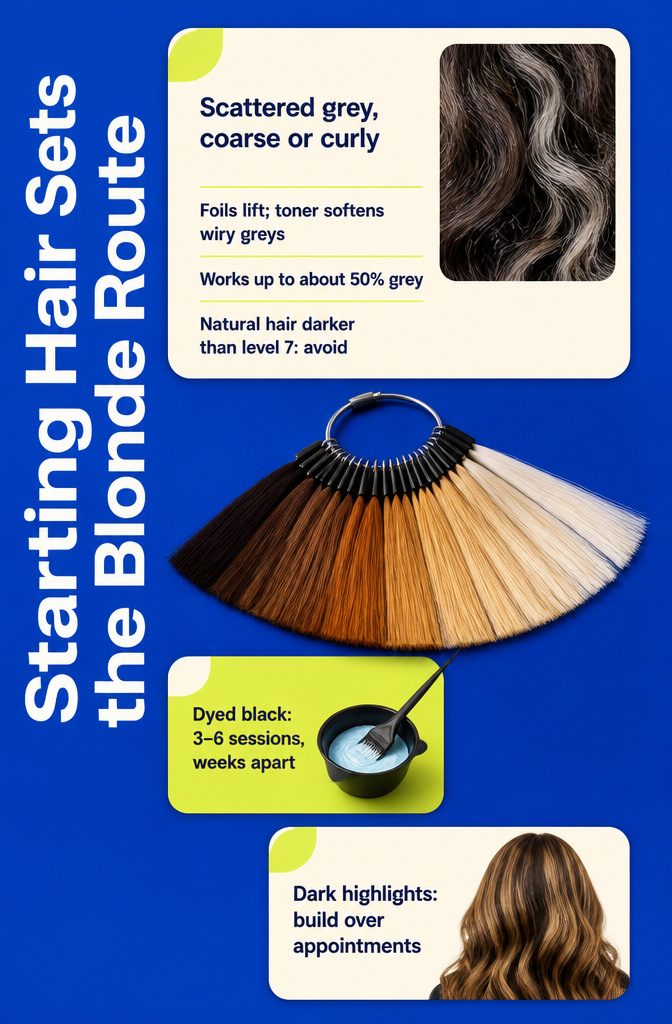
The amount of grey and where it sits change the route in. If you have scattered grey and coarse or curly texture, highlights do the lift but leave untouched grey strands that read wiry against the rest.
A toner after the foils softens those leftover greys so the whole head blends when you style it at home.
That works up to about 50% grey, but I wouldn’t try it on natural hair darker than level 7. Below that depth, the grey won’t lift enough to take the toner the way you want.
Your natural color decides whether you need bleach at all.
Light brown hair can reach blonde with high-lift permanent color. Dark hair mixed with grey, or any previous dark dye, needs lightener to strip the pigment first.
If you’re starting from dyed black hair, expect 3 to 6 sessions spaced weeks apart to move from copper to gold to blonde without breaking the hair.
Dark-haired clients building highlights should plan on several appointments, adding more strokes each time rather than trying to lighten everything at once.
3. 7 Ways to Blend Grey and Blonde
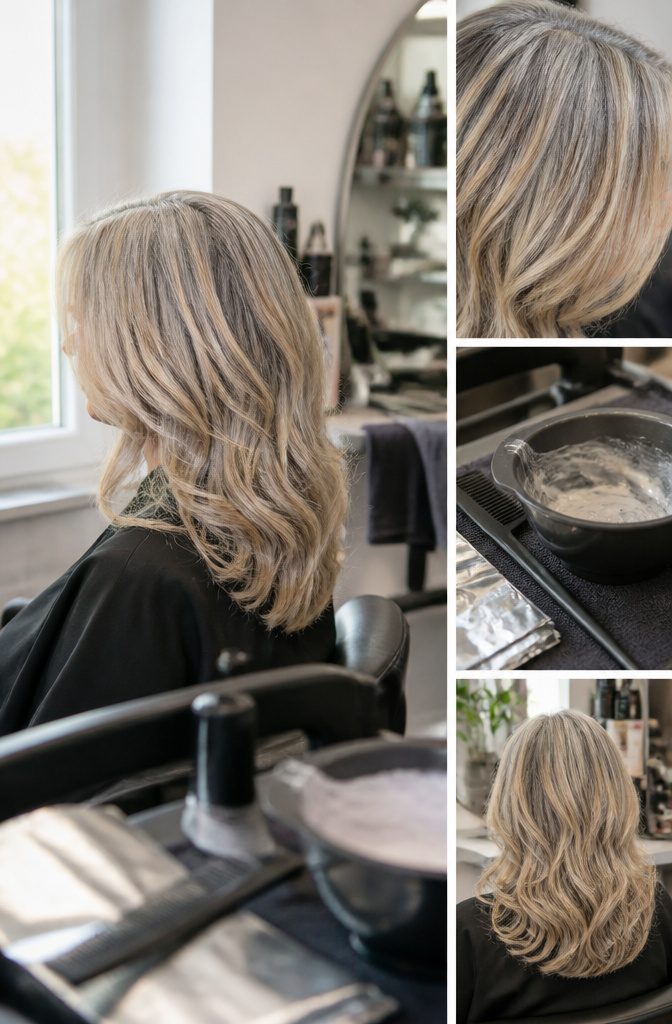
The approach you reach for depends on how much grey you have, how dark your base is, and what you can live with at the root.
Toner on highlighted hair is the softest entry point. You add babylights or fine highlights to scatter lightness through the grey, then use toner to blend the color left behind.
Wella Color Touch 7/89 with 1.9% developer gives you a cool-toned finish that sits alongside silver strands without making them look patchy. This works when grey is random and scattered, not concentrated.
Blonde highlights or babylights alone can do most of the work if you have under thirty percent grey.
The foils lift and lighten some strands, and the grey reads as part of the mix rather than something that needs correcting. No toner required if you like where the lift lands you.
Grey blending with herringbone highlights uses diagonal foil placement to mix cool highlights with natural grey. The pattern mimics salt-and-pepper hair and gives you a deliberate, layered look rather than one that pretends the grey does not exist.
High-lift color skips bleach but still moves you lighter.
Shades like 100.11 with 30 Vol developer lift dark bases while depositing tone. You get grey coverage and lift in one step, though the ceiling is lower than bleach would give you.
Bleach followed by toner gets you the lightest result.
Lift to level 10 with Brilliant Blondexx, then apply a toner like 100V to cancel any remaining warmth. This is the route for anyone going from a natural level 6 or darker who wants a true blonde rather than a soft blend.
Extra-coverage blonde uses double-pigment formulas like 8NN, 6NN or 4NN with 20 Vol developer for resistant grey that will not take color the first time. The NN shades deliver flawless matt coverage without needing a second pass.
Shadow root with lighter lengths keeps the root dark and blends it into toned blonde.
One formula I have seen pairs 5N at the root with 10B and 9.23 on the lengths, toned after lifting with bleach. The contrast adds dimension and stretches time between appointments when you have around twenty percent grey at the scalp.
| Method | Grey coverage | Requires bleach | Developer strength | Processing time |
|---|---|---|---|---|
| Toner on highlights | Partial blend | Sometimes | 1.9% | 20–30 min |
| Babylights alone | Partial blend | Sometimes | 20–30 Vol | Varies |
| Herringbone highlights | Partial blend | Sometimes | 20–30 Vol | Varies |
| High-lift color | Full | No | 30 Vol | n/a |
| Bleach + toner | Full | Yes | 20–30 Vol | Lift then tone |
| Extra-coverage blonde | Full | No | 20 Vol | n/a |
| Shadow root | Root only | Yes (lengths) | 20 Vol root, varies lengths | n/a |
4. Keep the Tone Right
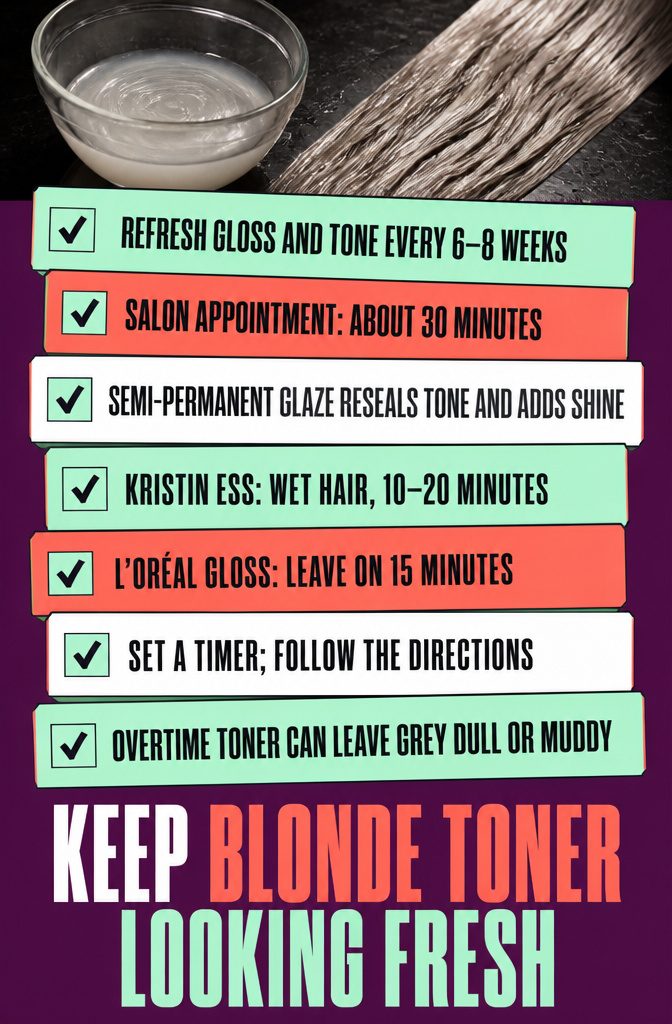
Toner is not one-and-done. The cool ash or champagne finish you start with will warm up as the pigment washes out, and grey regrowth shows faster against a lighter base than it does in darker hair.
I book a gloss-and-tone refresh every six to eight weeks to keep the blend looking intentional.
The appointment takes about thirty minutes. The stylist applies a semi-permanent glaze that reseals the tone, adds shine, and can touch up the roots if they need it.
At home, I use a toning gloss when I am stretching salon visits.
Kristin Ess goes on wet hair for 10–20 minutes before I shampoo and condition, and L’Oréal’s formula sits for 15 minutes. Both knock back warmth without the commitment of permanent color.
The timing matters more than you think. Leaving a toner on longer than the directions say does not make it work better.
It leaves hair dull or muddy, especially on grey, which grabs pigment fast and holds it unevenly. I set a timer and rinse when it goes off, not when I feel like it.
Blend or Cover the Grey
Blend or Cover the Grey
Lighter hair softens the line between natural silver and dyed strands. When the base colour is dark, white roots stand out sharply.
Lift the hair to blonde and grey and blonde merge without a visible demarcation. That is why blending pulls ahead of single-process coverage if you want fewer appointments and a softer grow-out.
The difference shows in maintenance.
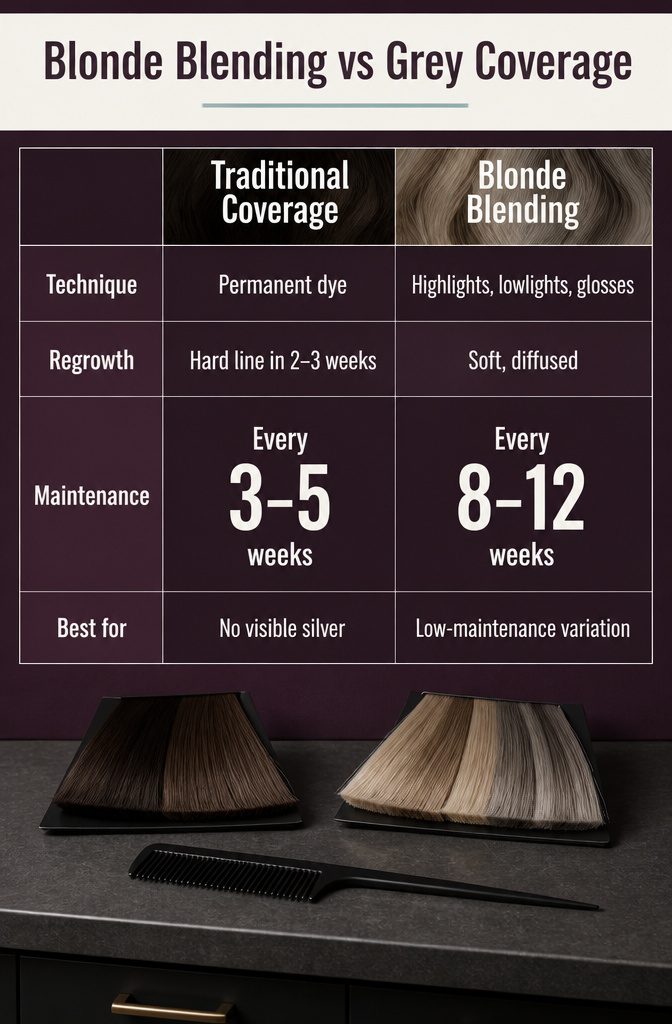
Traditional root coverage needs a touch-up every 3–5 weeks to keep the line from showing. Blending with highlights, lowlights and gloss stretches that window to 8–12 weeks, because regrowth diffuses into the dimension you built rather than announcing itself as a stripe.
| Feature | Traditional Coverage | Blonde Blending |
|---|---|---|
| Technique | Single-process permanent dye | Highlights, lowlights, glosses |
| Regrowth | Hard line visible in 2–3 weeks | Soft, diffused, no harsh line |
| Maintenance | Every 3–5 weeks | Every 8–12 weeks |
| Best for | No visible silver | Low-maintenance, natural variation |
Shade matters. Ash blonde integrates better with silver than honey or platinum, which can make regrowth look starker.
Talk through the tone with your stylist before committing. The transition itself takes time if you are lifting from dark dye; highlights and lowlights phase grey in gradually rather than flipping the whole head at once.
Purple Shampoo and Brassiness
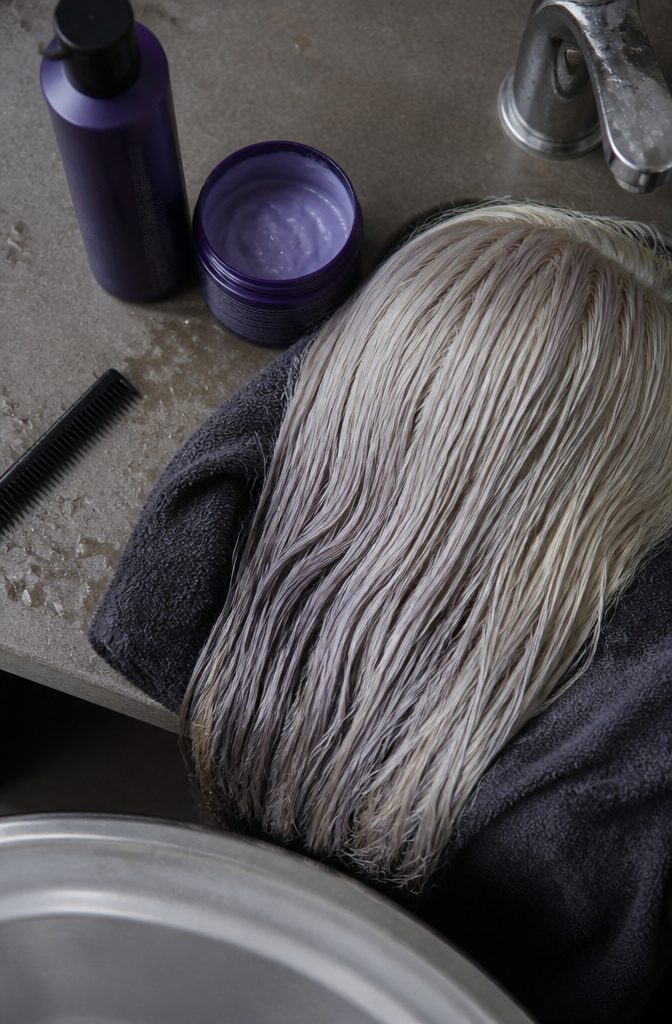
Grey hair yellows from sun exposure, water minerals and environmental pollution, according to Vogue. Purple pigments neutralize that yellow, which is why purple shampoo is a weekly fixture once you’ve toned grey to blonde.
Use it once a week to keep the cool tone; more than that and the hair can look muddy or dull.
Every couple of weeks, follow up with a toning mask left on briefly. I find this adds softness and shine while refining the tone, especially on coarser grey hair that tends to grab warmth faster.
| Product | Type | Price | How Long to Leave |
|---|---|---|---|
| Fanola No Yellow Shampoo | Purple shampoo | $10 | Standard wash time |
| Moroccanoil Blonde Perfecting Purple Conditioner | Conditioner | $30 | 5 minutes |
| Kérastase Blond Absolu Bain Ultra-Violet | Toning shampoo | $48 | Standard wash time |
| Balmain Illuminating Mask White Pearl | Toning mask | $84 | Brief application |
Color-depositing masks can maintain tone on already-lightened hair, but they will not reliably tone partly grey hair that has not been lifted first. The grey needs to be lightened before pigment can shift it to blonde.
Conditioning Dry Grey Hair
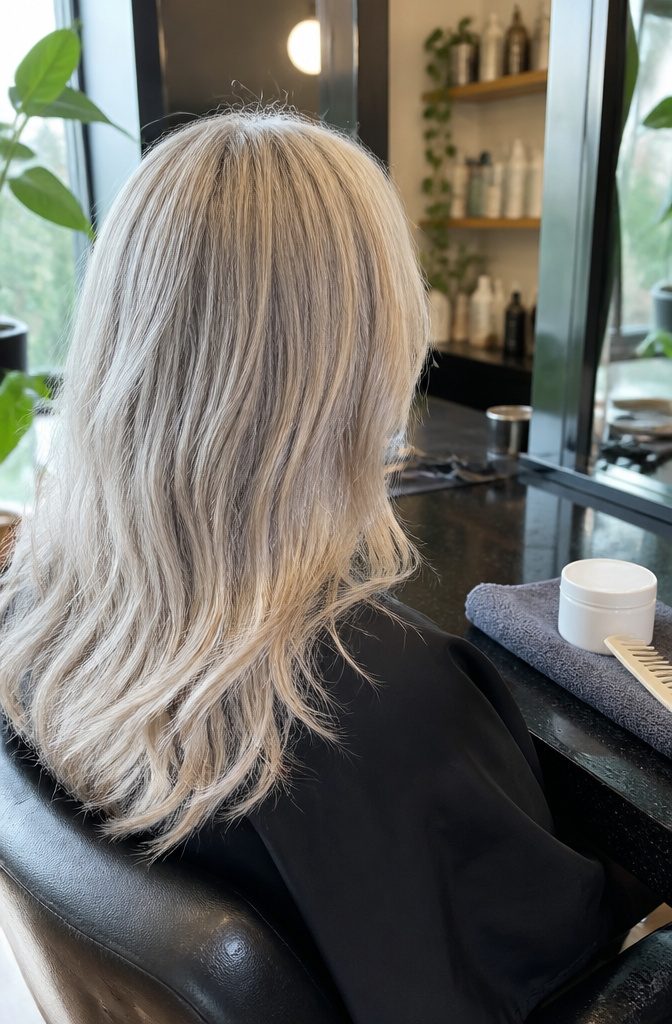
Grey hair runs drier than pigmented hair, and once you lighten it to reach blonde the texture gets even more fragile.
I wash every two to three days to hang onto the toner and keep the hair from drying out further. More frequent washing strips color faster and pulls moisture with it.
The products I reach for after toning use baobab extract instead of silicone, a biacidic bond complex to patch up the hair fiber, and an illuminating amino complex for shine and hydration.
Jagua blue extract holds the tone without synthetic pigments.
Bond support matters during the lightening step too, not just after. Blondorplex combines lightener with the Wellaplex bond system to cut breakage when you’re lifting dark hair to level nine or ten.
Wellaplex on its own works if you’re using a different lightener but still want that bond protection while the cuticle opens.
Frequently Asked Questions
Can grey hair be toned blonde?
Grey hair can be toned blonde if it has already been lightened to a pale level where pigment can shift.
Toner adjusts tone and softens yellow cast on silver hair or pale highlights, but it cannot lift dark pigment the way bleach does.
If your grey sits against dark brown or previous color, you need lightener first before toner will work.
What happens if I put toner on my gray hair?
Toner on grey hair refines the tone rather than changing the underlying color.
It neutralizes yellow cast from sun exposure, water minerals and pollution, making silver look intentional instead of dull. The effect only shows on grey that has already been lightened or sits at a pale enough level to accept the pigment.
What is the best toner to use on grey hair?
Wella Color Touch 7/89 with 1.9% developer gives a cool-toned finish that blends with silver strands after highlights.
For lifted hair at level 10, use an intense pearl blonde toner like 100V to cancel remaining warmth. The best toner depends on your starting level and whether you want ash, champagne or grey-blonde results.
How do I make my grey hair look blonde?
Lift grey to level 9 or 10 with bleach, then apply toner to neutralize warmth and create a blonde finish. If you have under 30% grey, fine highlights alone can scatter lightness so the grey reads as part of a blonde mix.
Dark bases need lightener before toner can shift the color, while naturally light brown hair may reach blonde with high-lift color instead of bleach.
Is it possible to make grey hair blonde without bleach?
High-lift permanent color can make grey hair blonde if your natural base is light brown, but darker hair or previous dark dye requires bleach to remove pigment first.
Shades like 100.11 with 30 Vol developer lift and deposit tone in one step, though the result will not be as light as bleach would give you.
How long does it take to transition from dyed black hair to grey/blonde?
Transitioning from dyed black to blonde or grey takes 3 to 6 sessions spaced weeks apart.
The lift moves through copper to gold before reaching blonde, and rushing the process risks severe breakage. Adding highlights gradually over several appointments protects the hair better than trying to lighten everything at once.
What is herringbone highlighting?
Herringbone highlighting uses diagonal foil placement to mix cool highlights with natural grey. The pattern gives you a deliberate, layered look that mimics salt-and-pepper hair rather than trying to hide the grey.