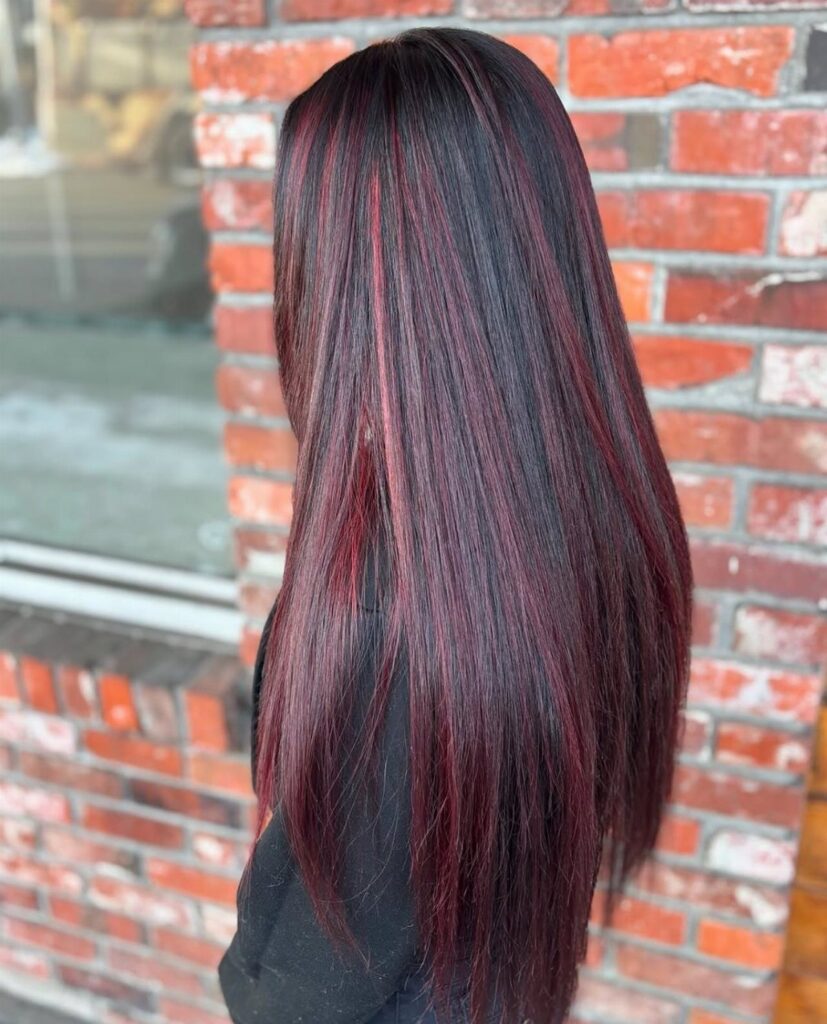
Burgundy holds richness without shouting, cherry adds warmth, and bright red delivers instant definition no matter where you stand.
The placement decides how much control you keep: face-framing pieces stay visible no matter how you style your hair, underlayers hide the red until you move or tie it back, and tips let you trim the color off if it fades badly.
Curtain bangs need regular trims to hold their shape, but they also frame the face in a softer line than blunt streaks do.
1. Burgundy Balayage Waves
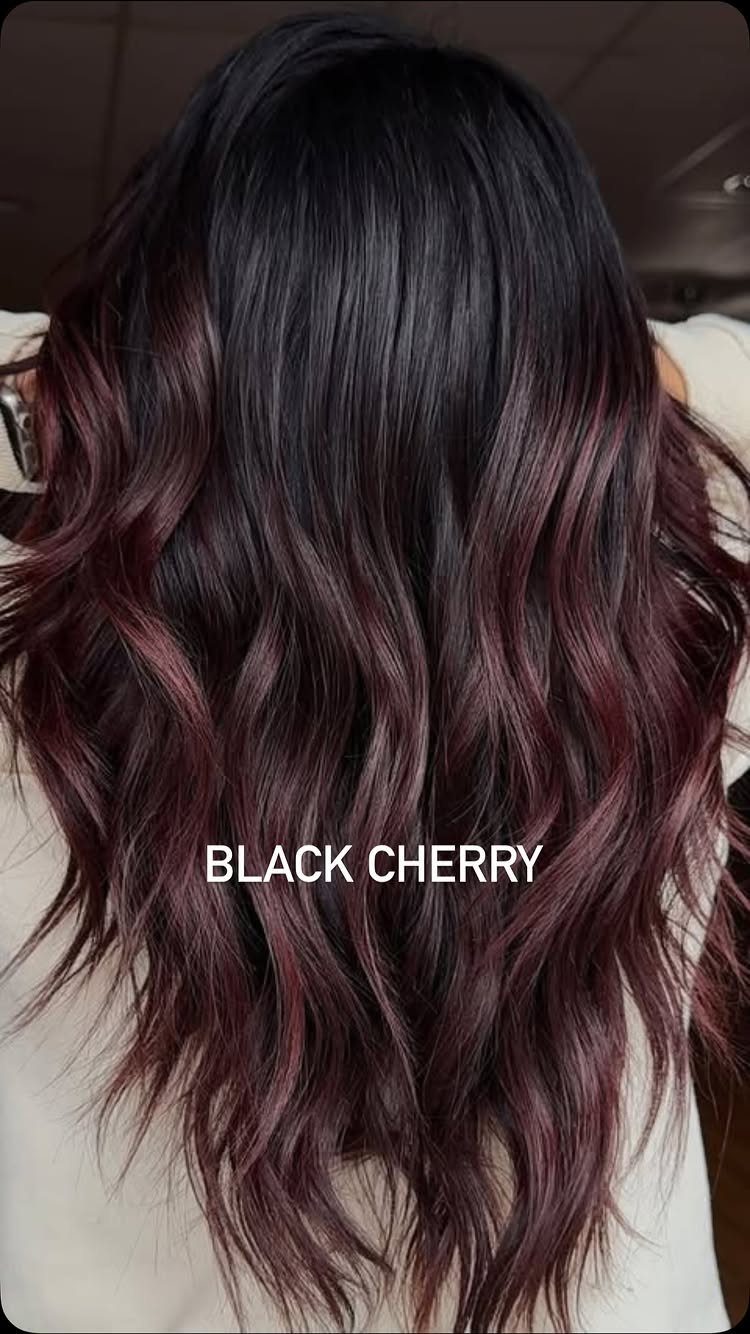
Burgundy balayage lets you add warmth to black hair without a full commitment to red. The color runs through mid-lengths and ends, so it fades gradually and grows out softer than foil highlights.
Ask for burgundy or dark cherry tones if you want the red to read subtle in most light.
Brighter cherry shades will show more contrast. On wavy hair the color catches differently on each curve, so you get more dimension than you would on straight lengths.
2. Burgundy Ribbons
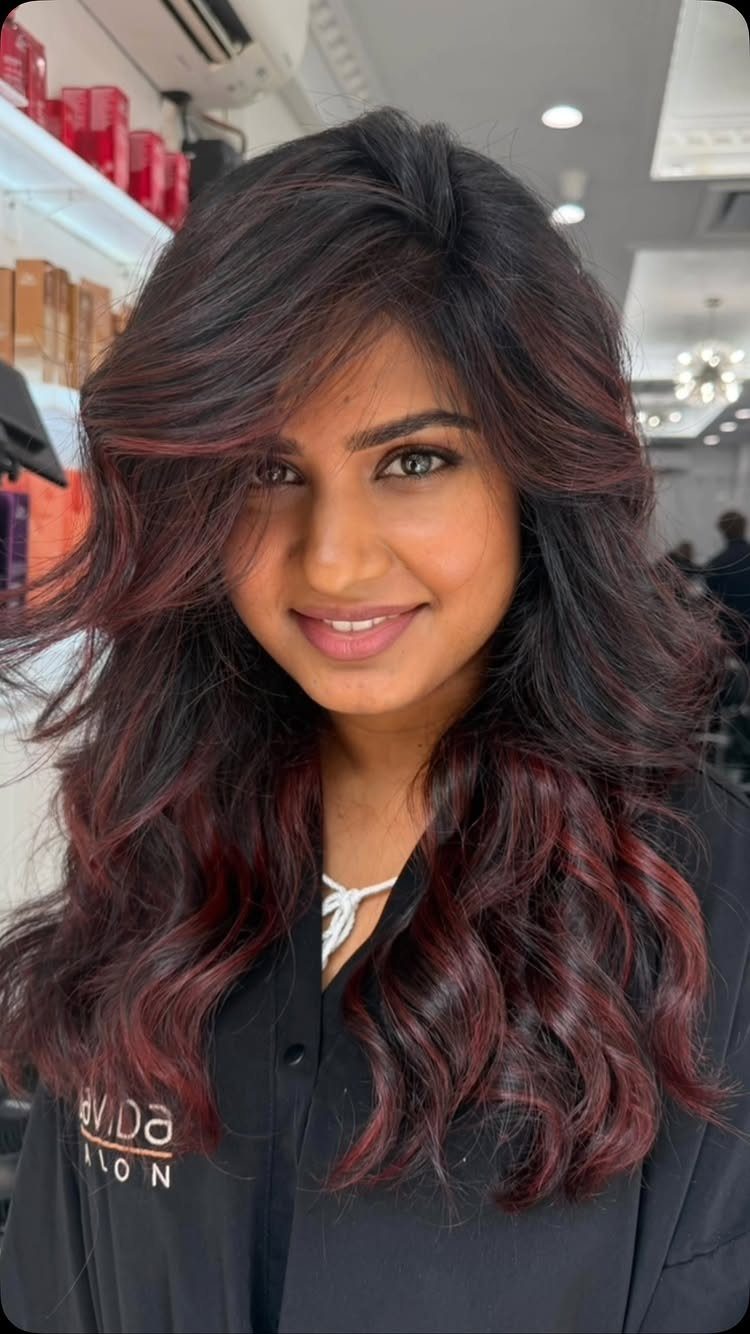
Thin burgundy ribbons are woven through the black base rather than painted in wide sections. The result reads as texture before it reads as color, so red highlights stay quiet.
The ribbons can go anywhere: a few around the face, scattered through one side, or distributed evenly so every section catches a hint of burgundy when the hair moves.
Because the highlighted sections are narrow, this grows out more forgivingly than thicker streaks.
3. Sleek Red-Highlighted Bob
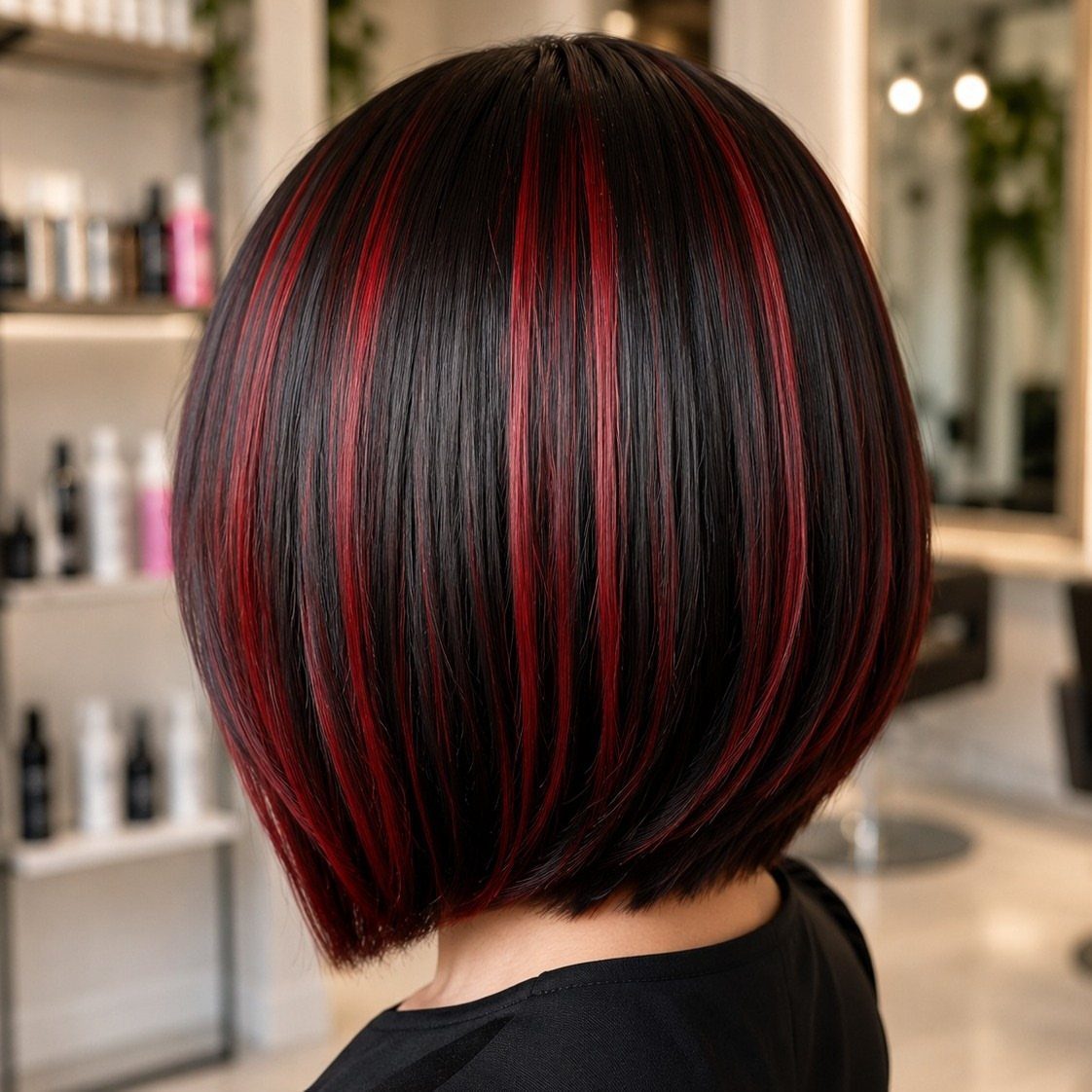
A sleek bob shows off red highlights more than textured styles do, because there is no wave or curl to soften the contrast. The red sits in clean panels through the black, and every line stays visible.
This suits hair that holds a blowout or flat iron well. If your hair tends to frizz, you will spend more time smoothing it each morning so the highlights stay crisp.
4. Red-Highlighted Wavy Bob
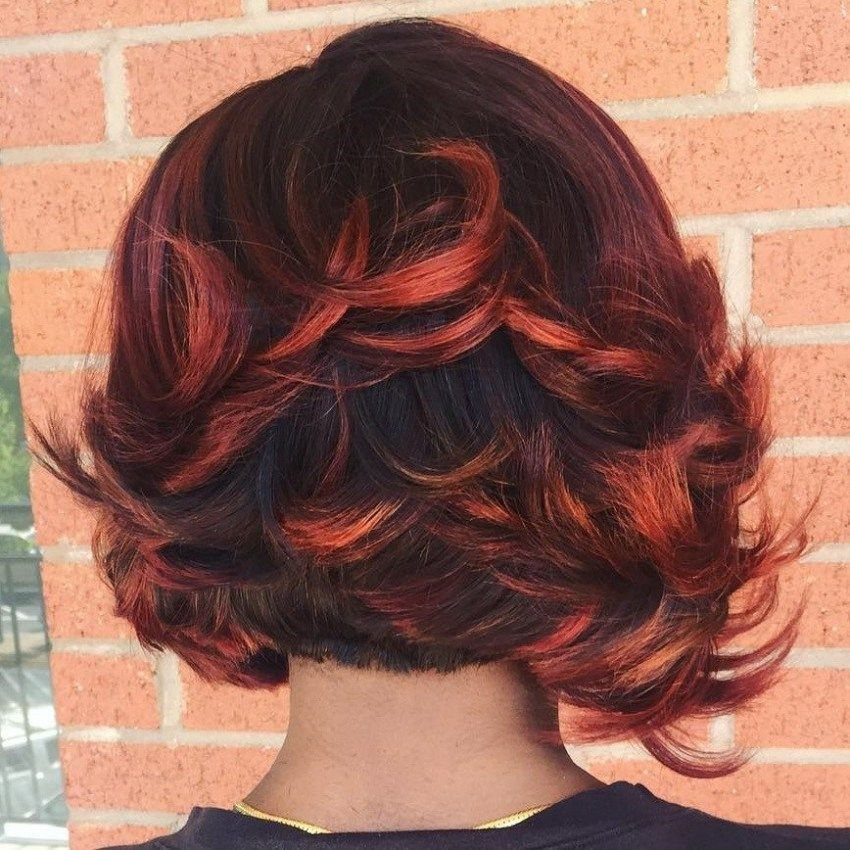
Wavy texture softens vivid red highlights and keeps them from looking too graphic. The curl breaks up the color so it blends into the black base rather than landing in stark stripes.
This is a good middle ground if you want noticeable red but prefer it diffused. The waves also mean you can let the hair air-dry and still get movement, so the morning routine stays short.
Red tones fade faster than most colors, especially if you wash frequently. A color-depositing conditioner once a week helps the red last between salon visits.
5. Burgundy Highlighted Bob
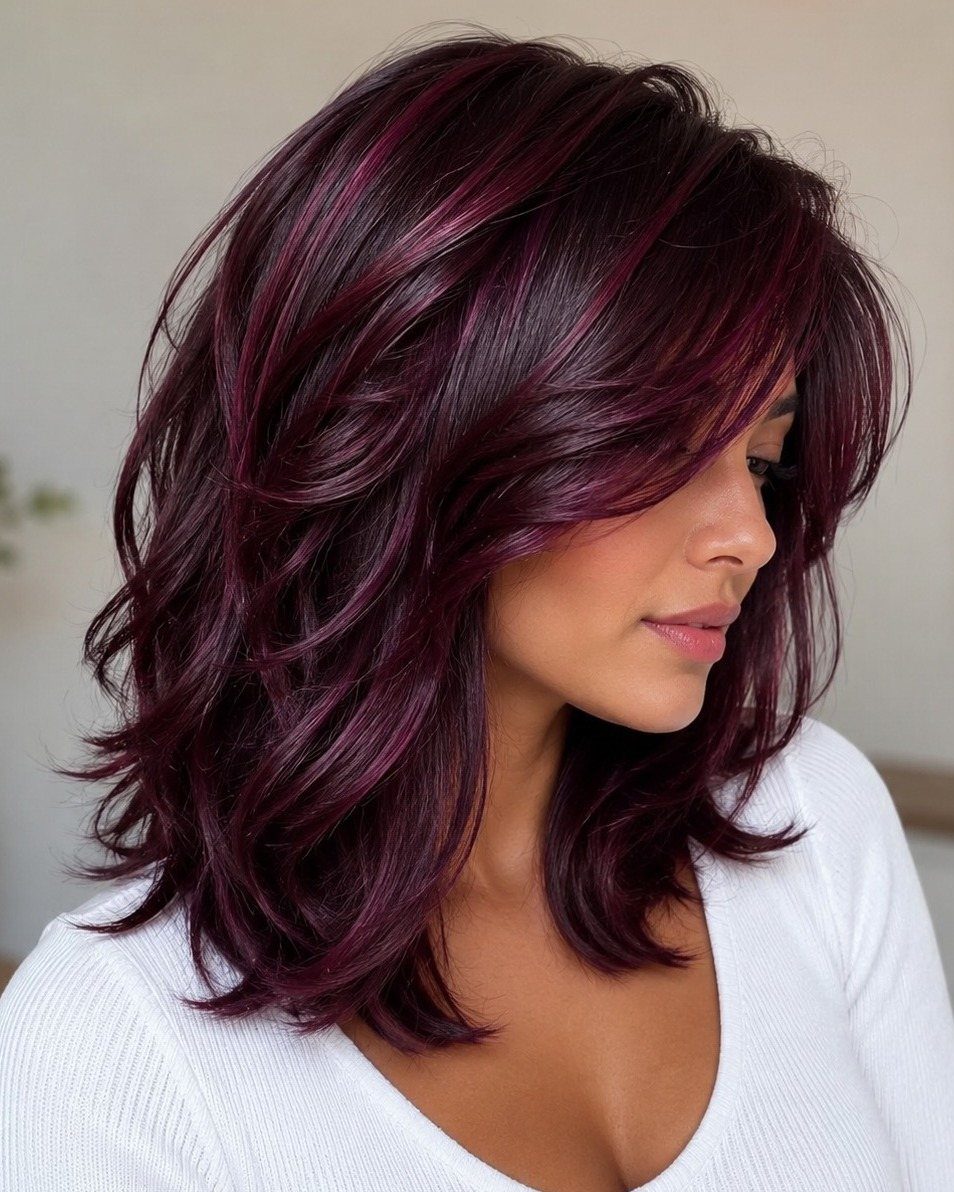
Burgundy highlights in a shoulder-length bob add depth without taking over the whole head. The color is distributed through the layers so it shows when the hair moves but does not sit in obvious streaks.
If you are committed to that schedule, this is a low-drama way to wear red and black together.
Burgundy reads warmer than vivid red, so it suits most skin tones and works in professional settings where bright color might not.
6. Vivid Red Streaks
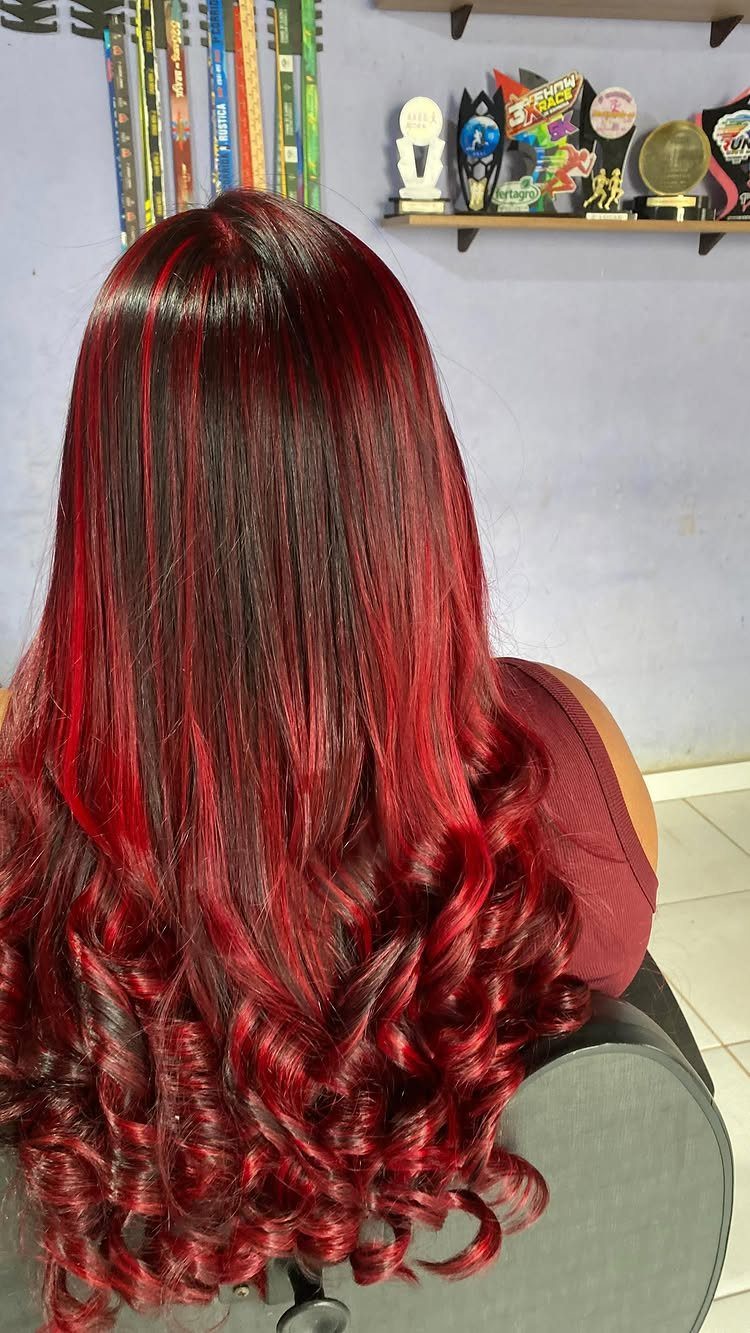
Bright red streaks give you maximum contrast against a black base. The color is bold enough to see in any light, so this is the choice if you want the highlights to be the main event.
Vivid reds fade noticeably, so plan for regular gloss treatments or color-depositing masks to stop the tone from turning brassy.
Curls help the color catch the light, but they also mean more surface area exposed to washing and heat, which speeds fading.
If upkeep feels like too much, ask for a darker red or burgundy instead. You lose some of the punch but gain a few extra weeks between appointments.
7. Face-Framing Red Streaks
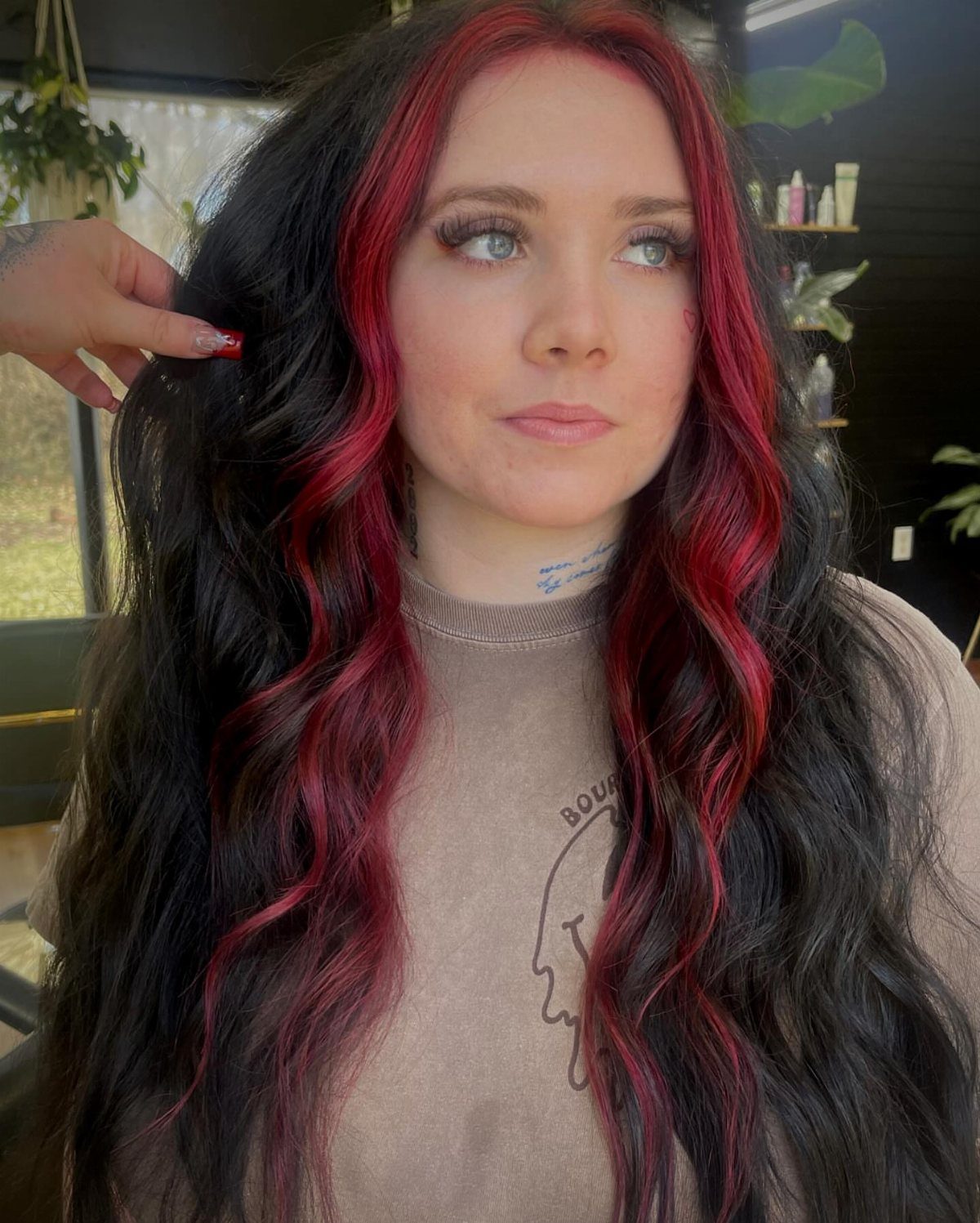
Red streaks framing the face pull attention forward and make the highlights impossible to miss, even when the rest of the hair is worn down.
The color sits where you see it first, so this works if you want red to be the focal point without highlighting the full head.
The placement means you can go vivid without overwhelming the overall look.
If you pull your hair back, the red becomes even more prominent, so this doubles as a way to change how bold the color reads depending on how you style it.
8. Burgundy Crown Streaks
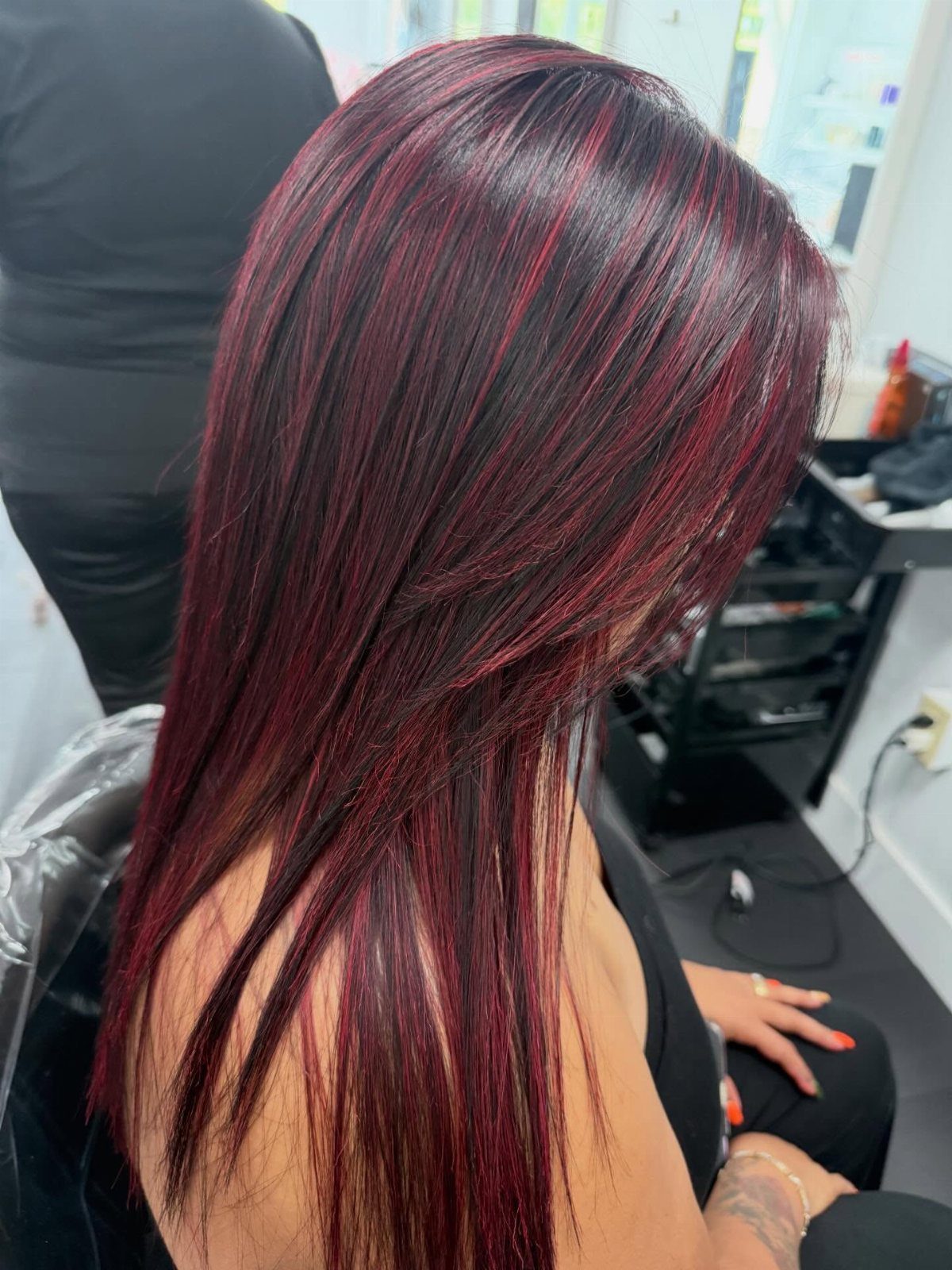
Burgundy streaks across the crown add color where the hair naturally catches light.
This suits anyone who wants the option to show or hide the highlights depending on how they part their hair. The streaks sit high enough that regrowth is less obvious than it would be with face-framing pieces.
9. Burgundy Curtain Bangs
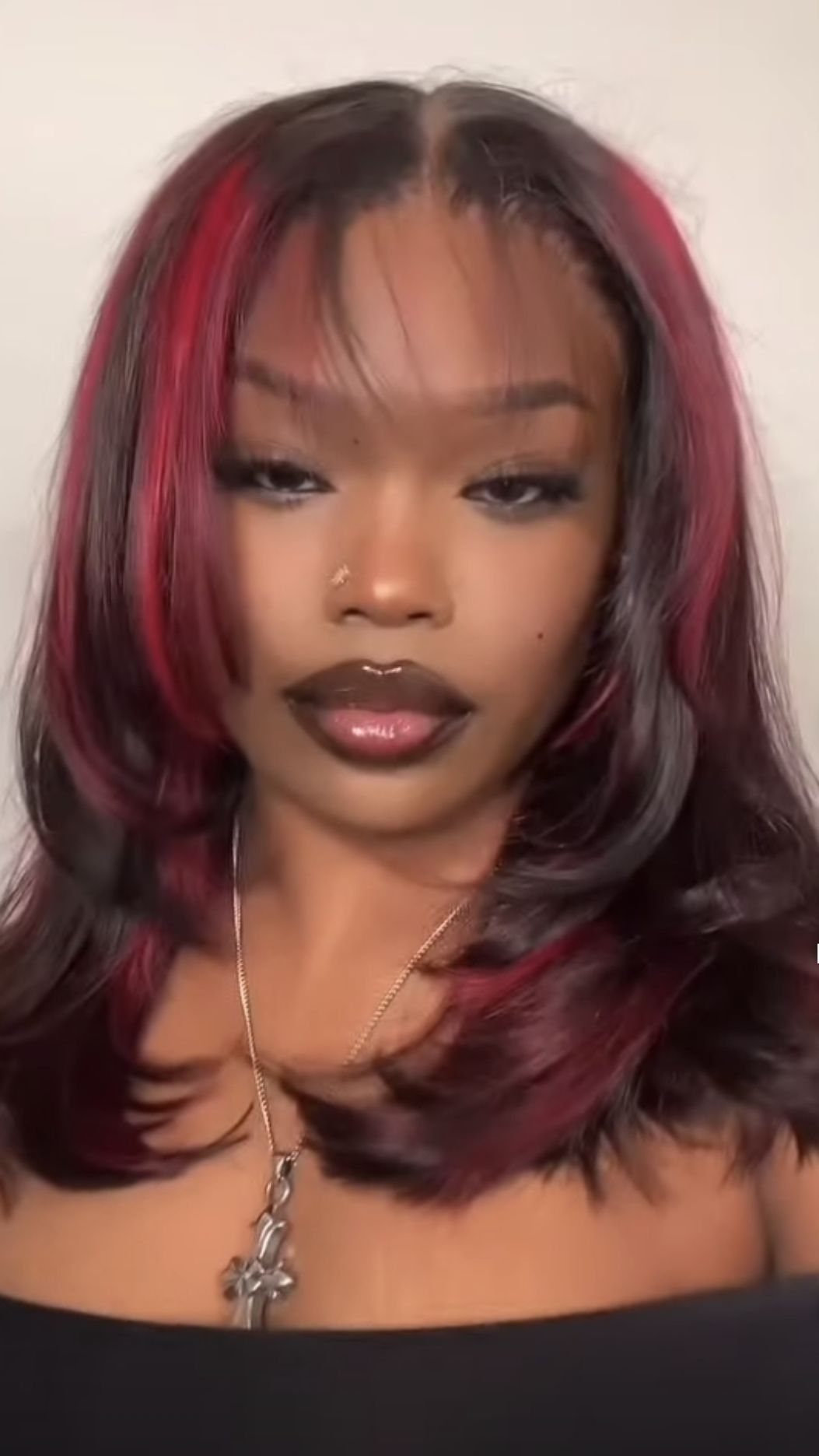
Curtain bangs break up a long silhouette and draw the eye to the center of the face. When paired with burgundy highlights, the color follows the bangs and frames the face in a softer line than blunt-cut streaks would.
Curtain bangs need regular trims to keep the shape. If you skip the trim, they grow into face-framing layers instead, which still works but changes the look.
10. Cherry Red Balayage
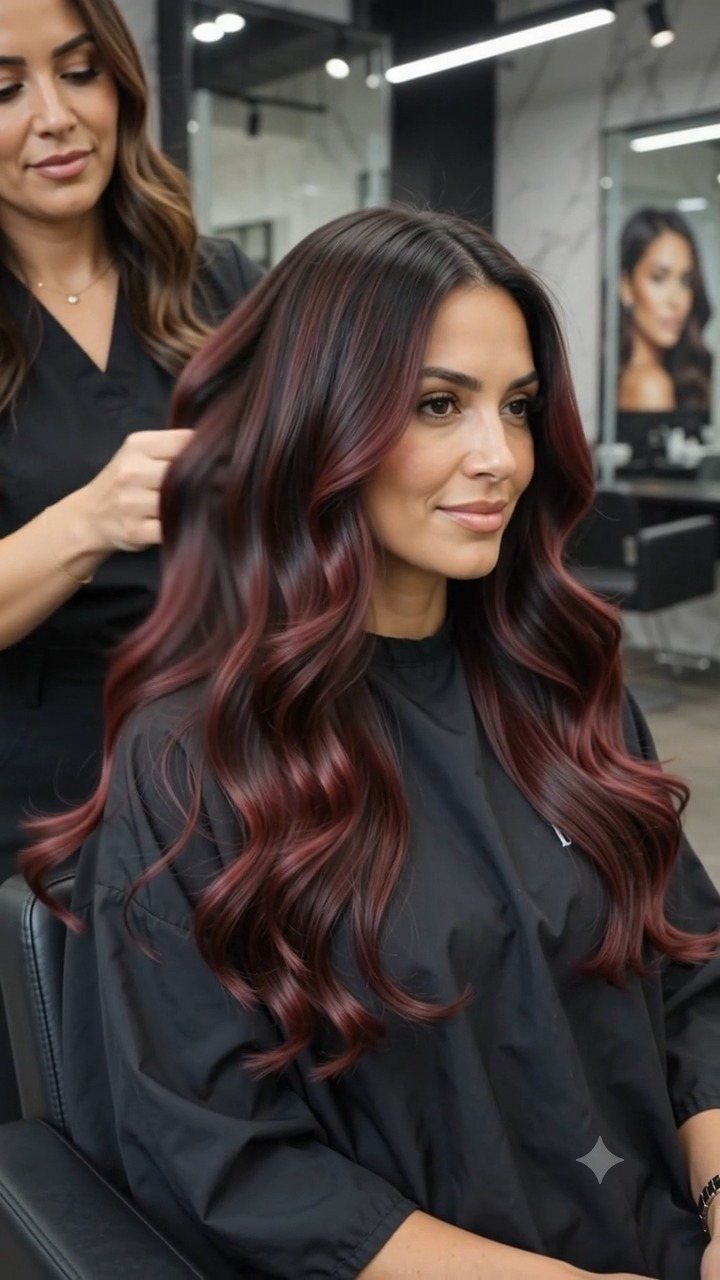
Cherry red at the roots transitions into deeper burgundy through the ends, so the color reads as a gradient rather than separate streaks.
The shift from bright to dark keeps the highlights from looking flat and gives the hair more movement.
This takes more time in the chair than single-color highlights because the colorist blends 2 tones.
Fading will soften the gradient over time, but the ombré effect means you can stretch out touch-ups longer than you would with vivid red applied evenly.
11. Striped Burgundy Highlights
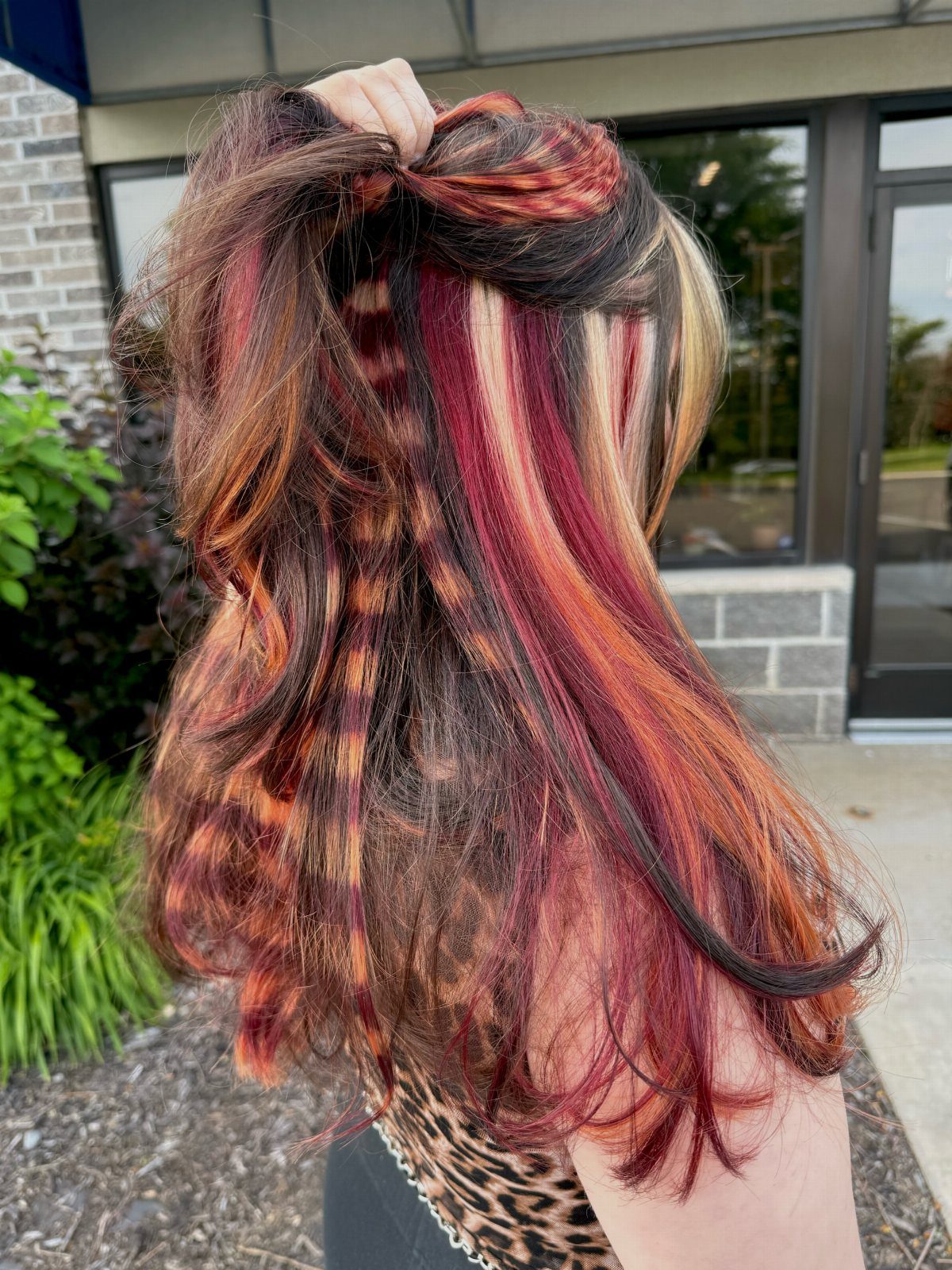
Thick burgundy streaks run through the black base in distinct sections, so the color reads as stripes rather than blended highlights. The contrast is bold, and each stripe stays visible no matter how the hair is styled.
This suits hair that is thick enough to support chunky sections.
On fine hair, wide streaks can overpower the base color and make the whole head look segmented. If you want a similar effect with less contrast, ask for thinner ribbons instead.
12. Burgundy Highlighted Curls
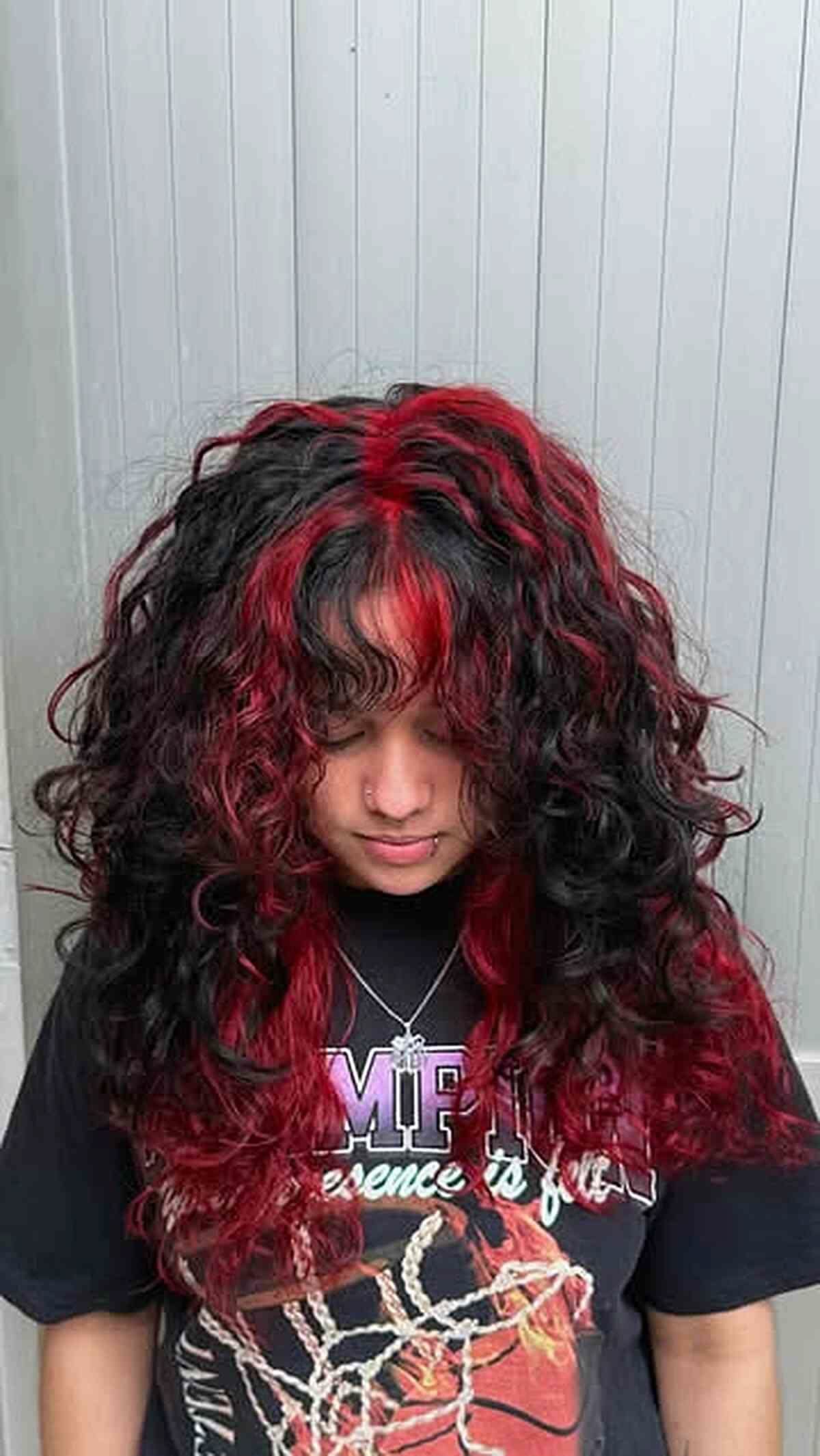
Curls catch light on every surface, so scattered burgundy highlights show up more than they would on straight hair.
The color does not need to sit in thick streaks to be visible; a few ribbons distributed through the curls are enough to add dimension.
Curly hair also hides regrowth better because the texture breaks up the line where the natural color meets the highlight.
You can go longer between touch-ups, but curls tend to be drier, so the color may fade faster if you are not using a sulfate-free shampoo and a weekly mask.
13. Burgundy Underlayers
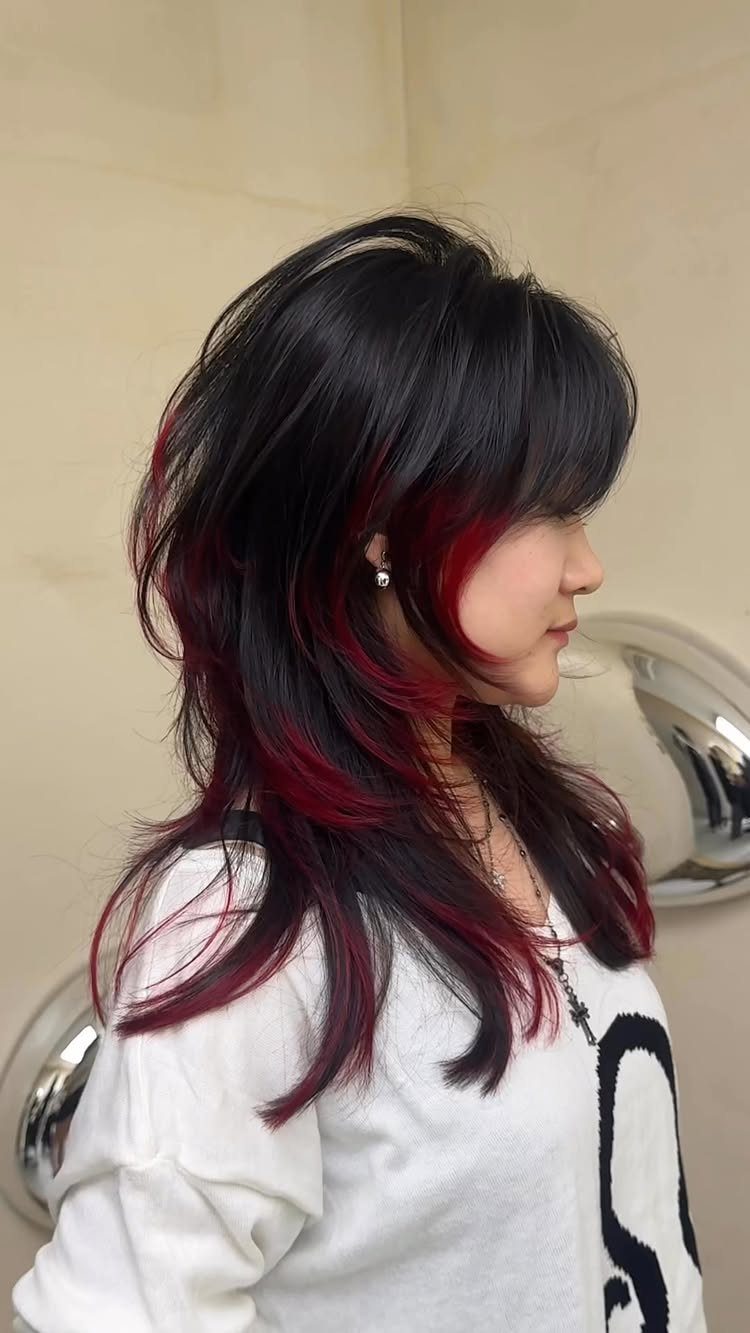
The red sits underneath so it stays hidden when the hair is down and shows only when you move or tie the hair up. This gives you control over how much color is visible at any time.
If you work somewhere that limits bright color, this is the most practical option. The outer black layers act as coverage, and the red becomes a detail you can choose to show.
Regrowth is less of an issue because the highlighted sections are not on the surface. You can stretch appointments longer than you would with face-framing streaks.
14. Red-Tipped Layers
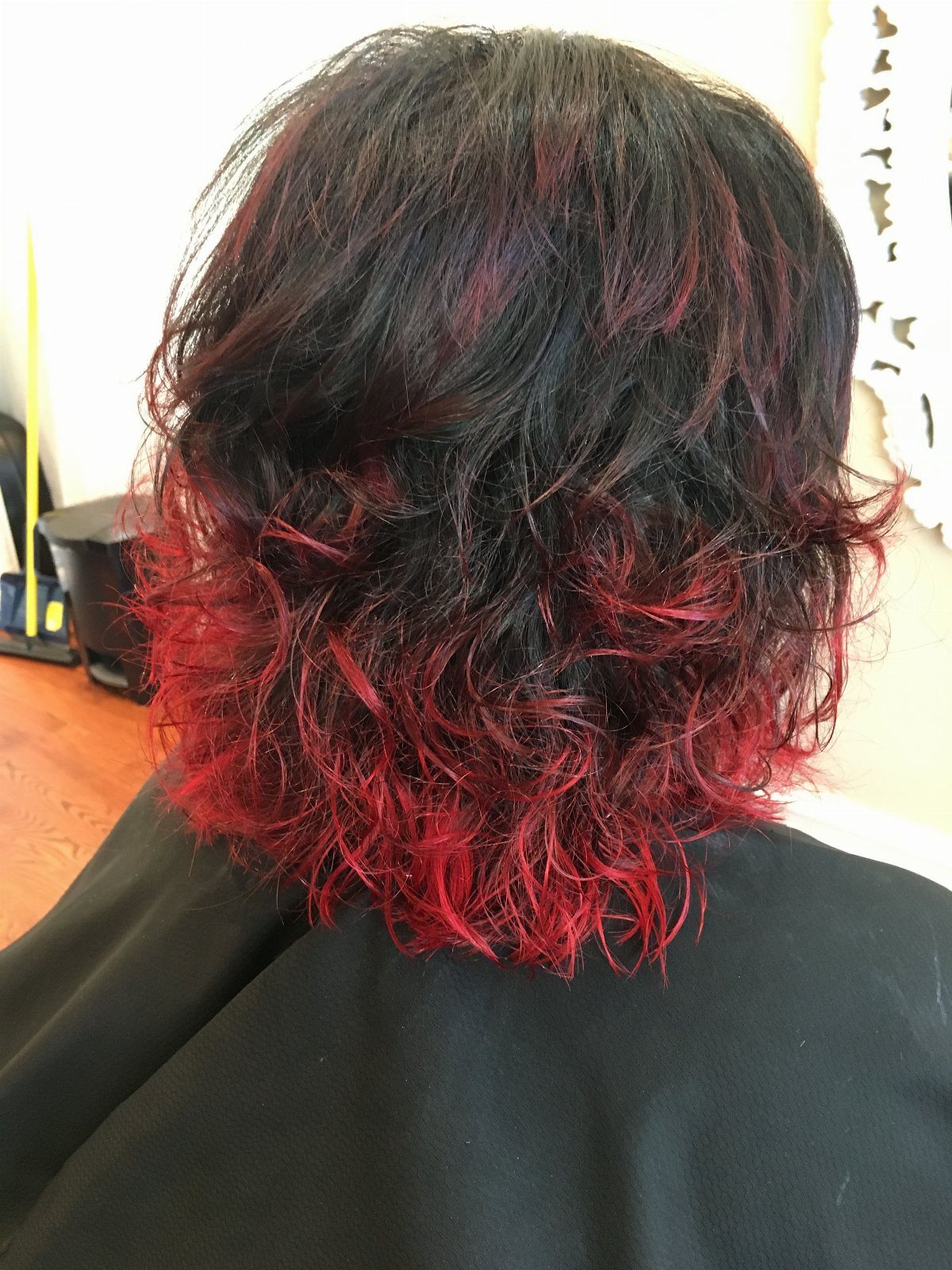
Red at the tips keeps the color concentrated in one area, so the contrast is bold but the placement is simple. The layers mean the red does not sit in a blunt line; it tapers through the ends instead.
Vivid red fades quickly, and because the color is only at the tips, you can trim it off if it turns brassy rather than committing to a full re-color. That makes this lower-risk than applying red through the whole head.
A weekly color-depositing mask keeps the red from fading too quickly.
15. Red Ponytail Streaks
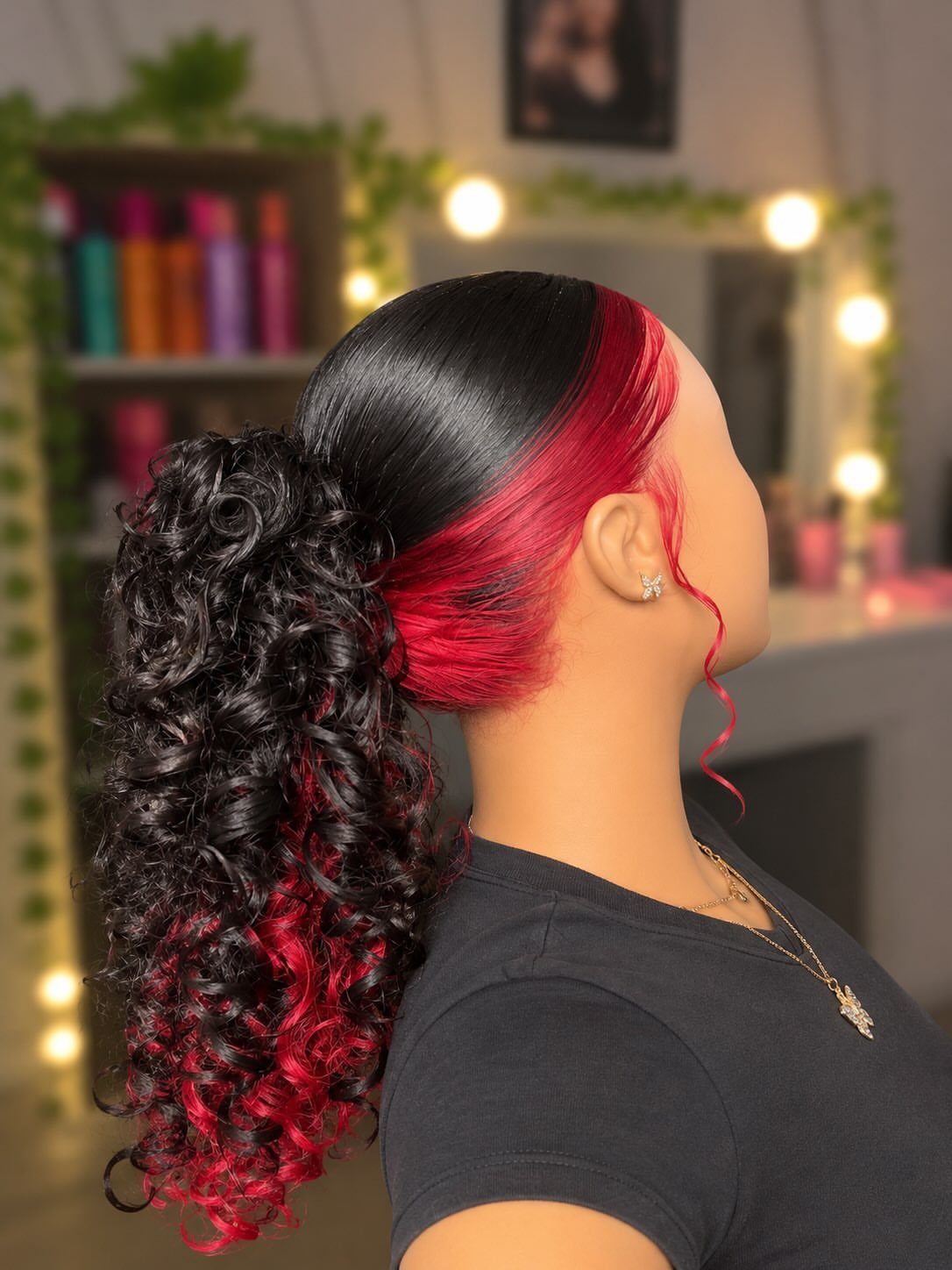
A ponytail pulls the red streaks into one concentrated section, so the color reads as a single bold element rather than scattered highlights. Curly texture amplifies the red because every bend in the curl reflects light differently.
This is one of the few styles where the highlights become more prominent when the hair is pulled back, so it works if you wear ponytails often.
16. Tousled Red Streaks
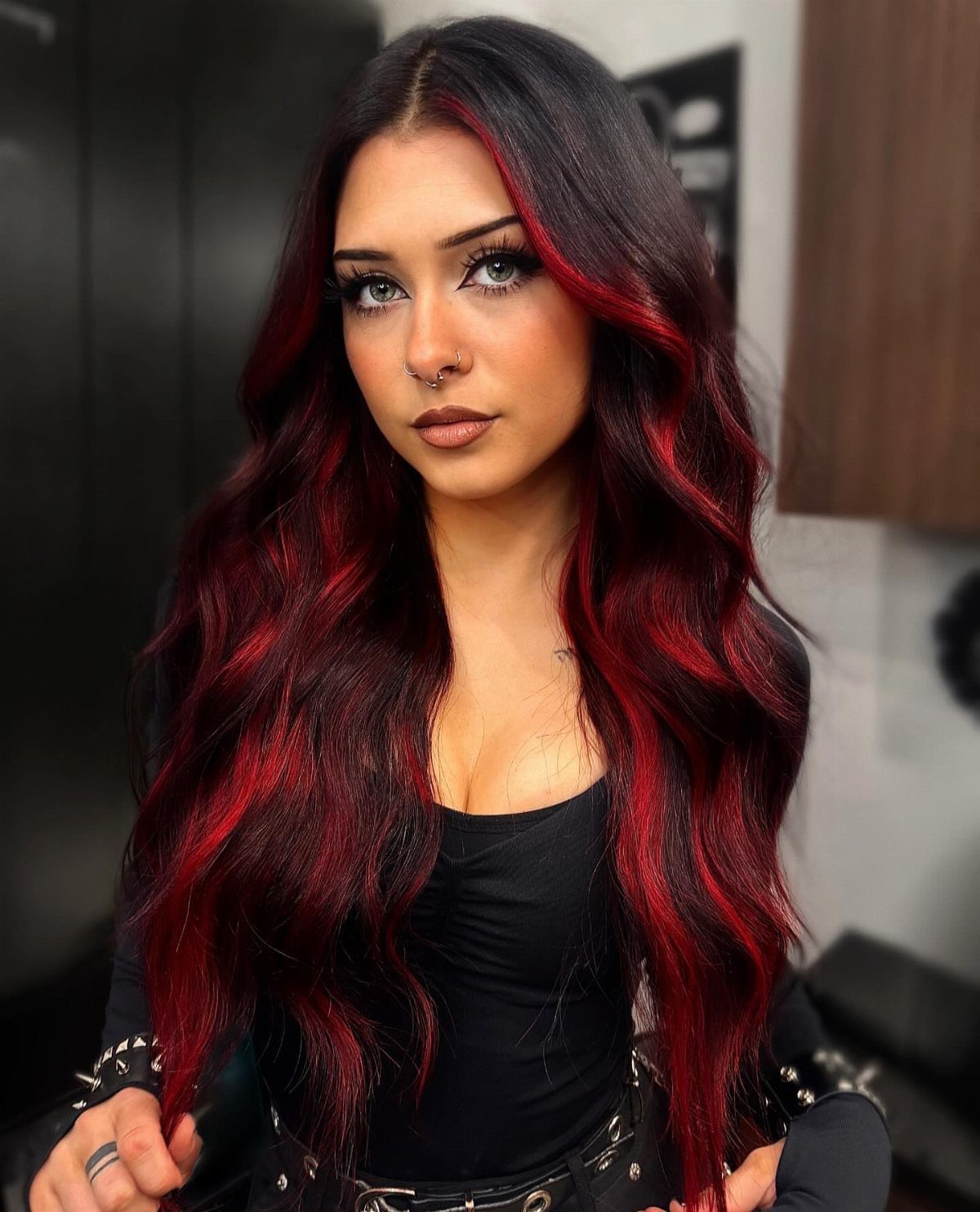
Red streaks scattered through long, tousled waves give you visible color without the precision of a sleek blowout.
The texture breaks up the streaks so they blend into the black base, and the forward-swept styling keeps the highlights near the face where they stand out most.
This suits hair that holds a loose wave naturally. If your hair is straight, you will need a curling iron or texturizing spray to get the same effect, which adds time to the morning routine.





