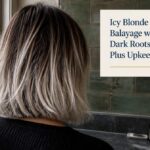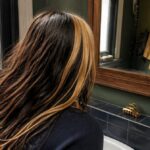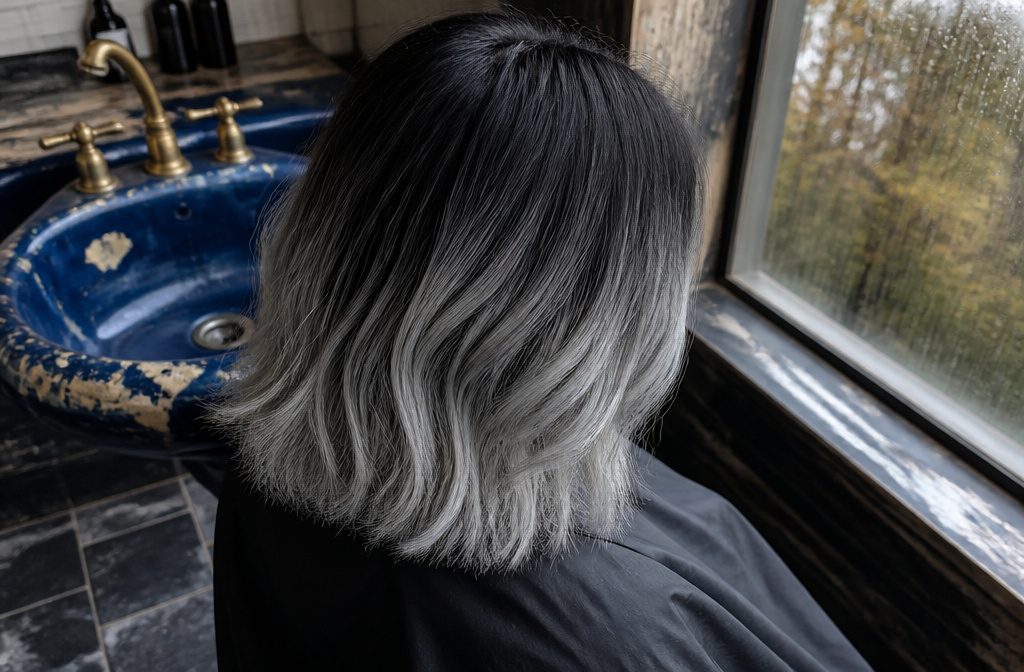
Black roots fading to silver remains the strongest starting point for anyone testing grey ombré on dark hair, since the dark base hides regrowth between salon visits and the gradient reads moody rather than bright.
That changes if your hair already sits shoulder-length or shorter, where a reverse silver-to-black fade puts the brightness around your face instead of buried at the ends.
Bleaching to lift black hair enough for silver to show weakens the strand structure, so bond care becomes part of upkeep rather than optional—Redken Acidic Bonding Concentrate is a three-part system formulated with citric acid to repair and fortify after the lift.
1. Black Roots Fading to Silver
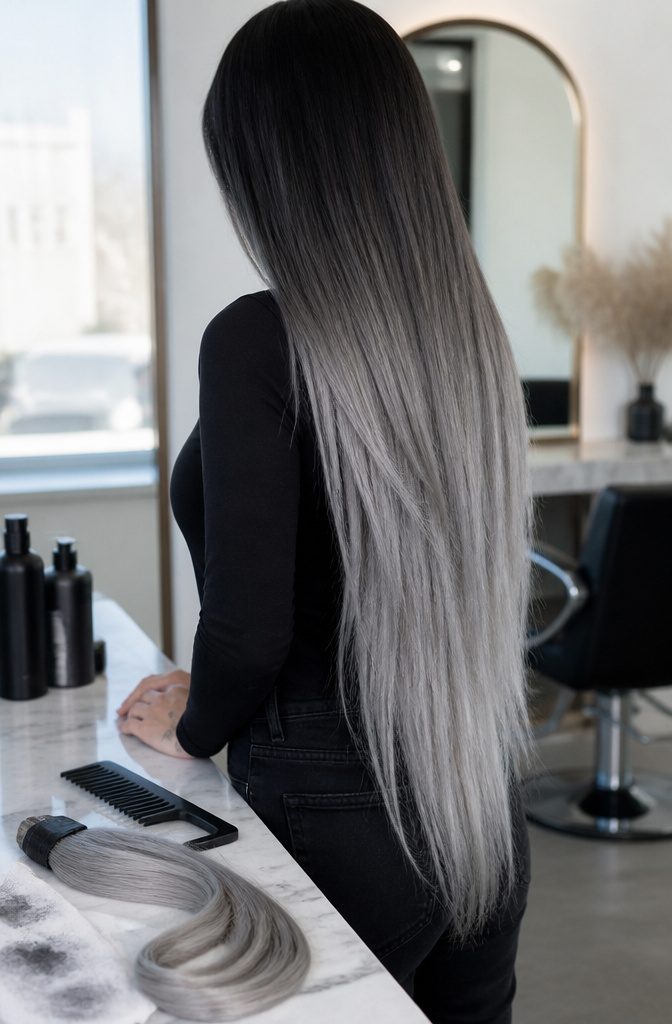
Black at the root blending down to grey or silver ends works across medium, long, extra-long, straight and bob-length hair. The look reads moody rather than bright, and the dark root keeps regrowth less obvious between salon visits.
You can double down on that dark root trick by adding black at the roots and fading into grey. It really makes for a gorgeous, moody ombre.
— Hair.com
Starting from dark hair means bleaching first to lift enough pigment for the silver to show. That can weaken strands, so bond care becomes part of upkeep rather than optional.
Redken Acidic Bonding Concentrate is a three-part system: shampoo, conditioner and leave-in conditioner formulated with citric acid and a bonding care complex to repair and fortify weakened hair.
Extra-long hair turns even more striking with this gradient. If your own hair sits shorter, silver or grey extensions added to black hair get you the length without waiting to grow it out.
2. Reverse Silver-to-Black Ombré
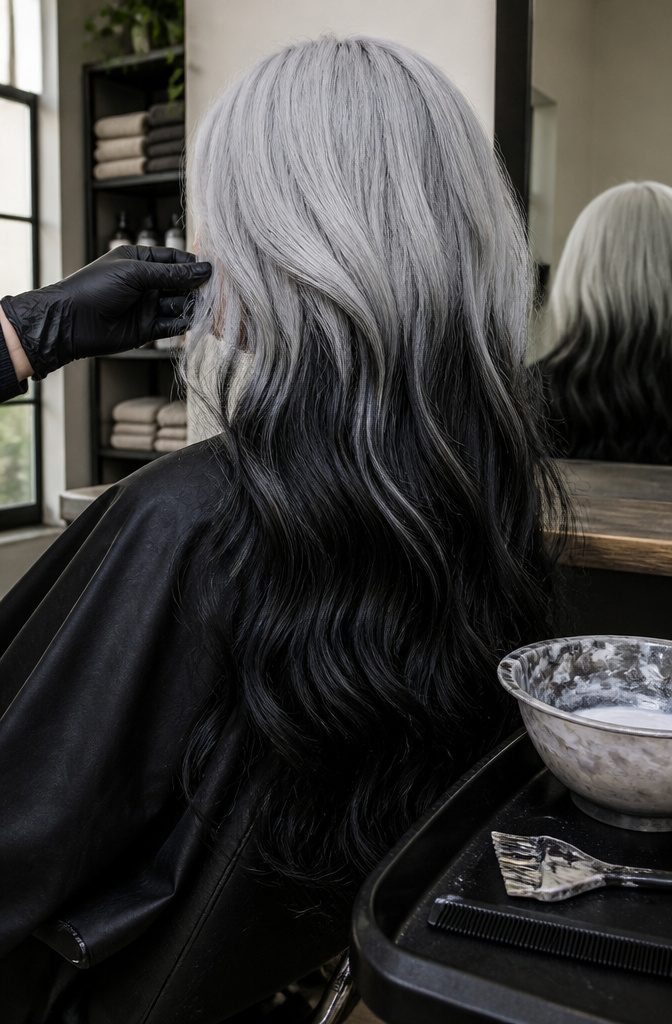
Most ombré runs dark at the root and light at the ends, but flipping silver to the top and fading into black below changes where the brightness lands.
The lighter tone sits around your face instead of at the perimeter, which can read as more deliberate and less like grown-out color.
The black ends anchor the look without the high-contrast punch you get when blonde or silver tips meet a dark root.
The flip does ask something different of your root maintenance. When silver grows out, dark regrowth at the scalp becomes the feature rather than the problem, so you can stretch touch-ups longer if your natural color is close to black.
If your roots are lighter or warmer, the line between new growth and the silver will show faster and need more frequent attention.
3. Dark Roots With a Grey Gradient
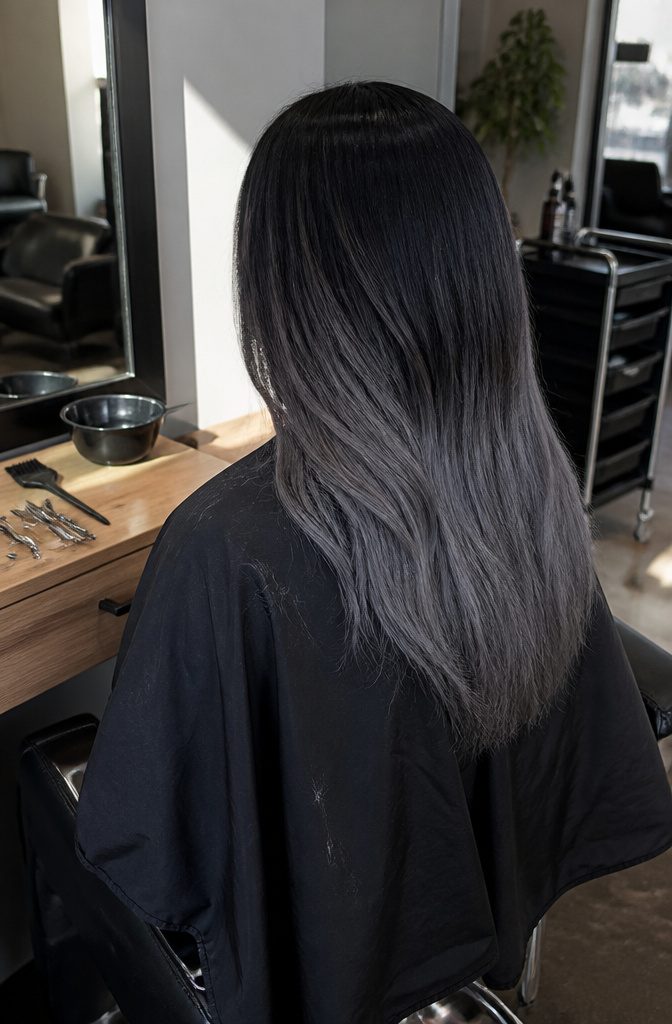
This look holds the dark root intentionally and builds the gradient outward from there, rather than starting black at the scalp and fading immediately.
The root stays darker for roughly half an inch before the grey takes over, and that contrast does the work.
It adds dimension the way shadow does in a painting—the darker base makes the silver read brighter and gives the color actual depth instead of a flat fade.
Colorists call it the three-dimensional effect, and it matters more with lighter ends like silver or icy grey.
The gradient itself moves from that held root through midtone grey and finishes at the ends in a softer, darker grey rather than bright silver.
The variation in tone keeps the look from reading flat as the color settles, and you’ll notice the contrast more as weeks go by.
Leaving the root slightly dark also buys time between touch-ups, since regrowth blends instead of announcing itself.
4. Subtle Blended Grey Ombré
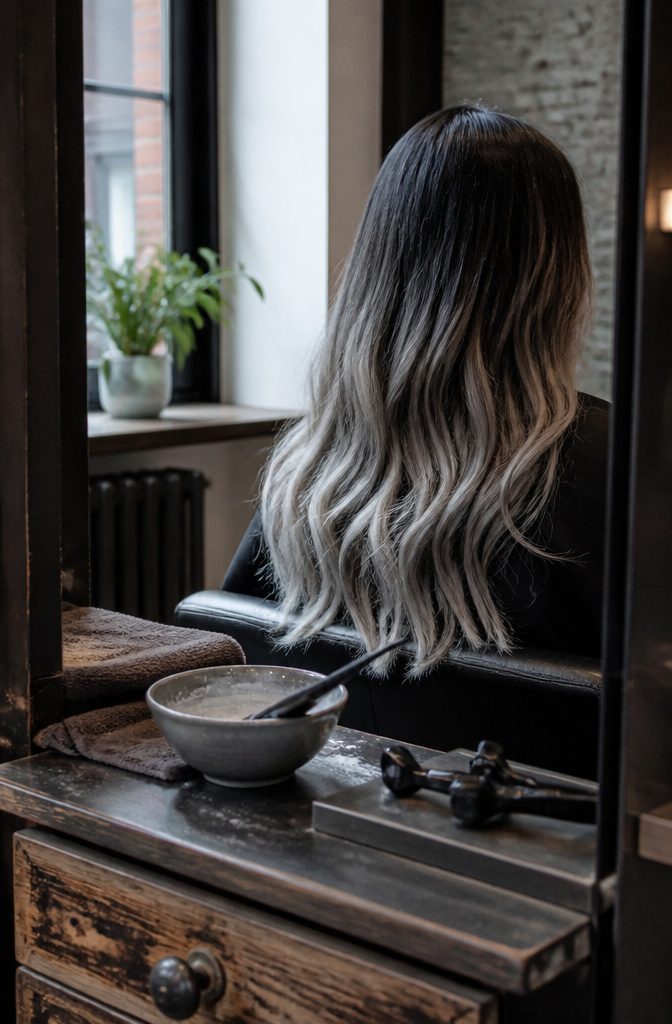
A softer blend puts more grey tones between the black root and the pale ends, so the shift reads gradual instead of striped.
If you already have silver coming in at the crown or temples, a blended ombré can fold them into the color story instead of fighting them.
The trade-off sits in the photos. A soft gradient photographs quieter than a sharp line, so it wins in person but loses some drama on screen.
A blended version reads sophisticated in person even when it photographs flat. It also grows out more forgivingly, since there’s no hard line to maintain.
5. Black-and-White Contrast
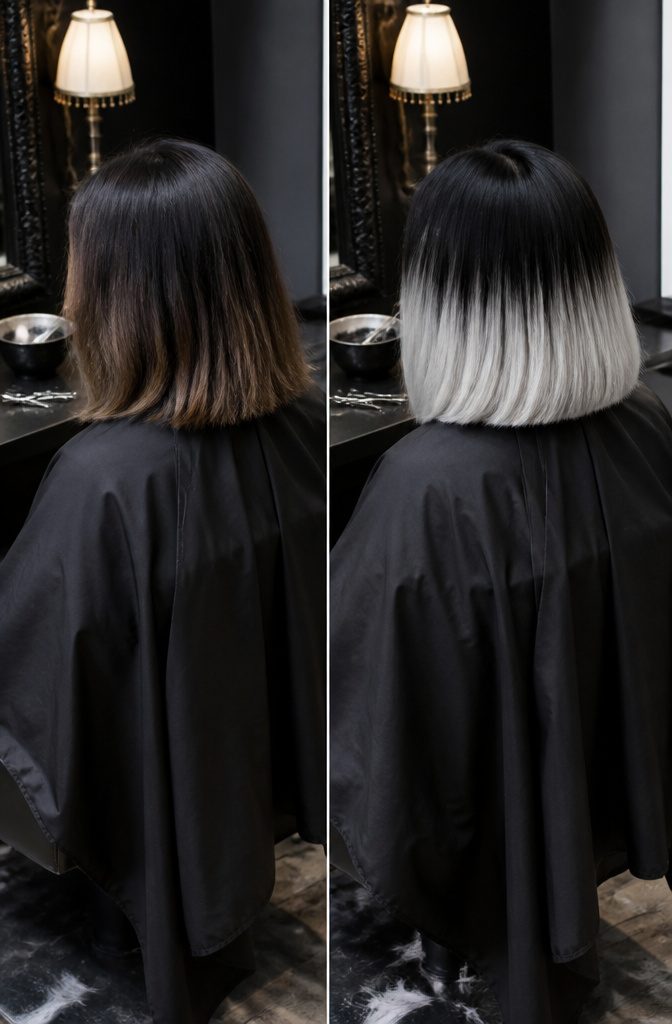
Near-black fading straight to white or very pale grey reads stark rather than soft. The jump is deliberate, sometimes with one mid-tone grey as the only buffer between the two extremes.
I like the effect for something modern or intentionally spooky—one stylist called it moody, another described pigtails in this palette as a Halloween look that shows off a quirky personality.
The contrast photographs well, but that same sharpness makes every mistake in the blend visible. If the colorist rushes the transition or leaves banding, the line between black and white sits there like a ledge.
Fine on a short bob where the gradient moves fast anyway, harder to pull off cleanly on longer hair where the fade has more distance to cover.
6. Black-and-Grey Balayage
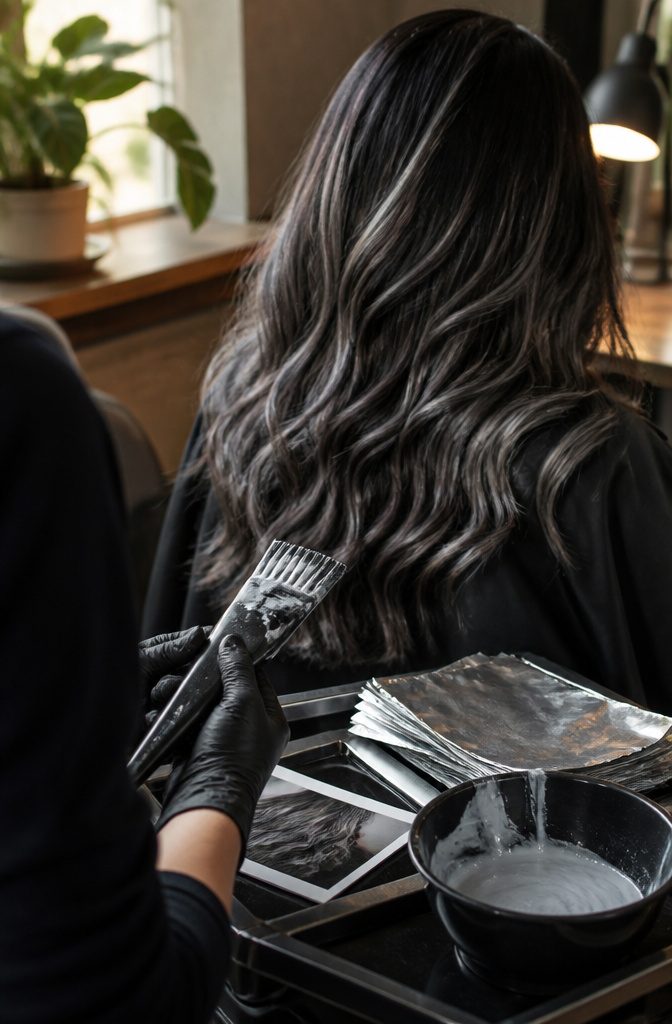
If you want grey woven through black hair instead of a clear line where one shade ends and another begins, balayage is the technique that gets you there.
Grey highlights are hand-painted in varying thicknesses and placements rather than following the uniform gradient of traditional ombré, which gives the color a more natural, lived-in look and avoids the dated stripe effect that comes with older foiling methods.
The difference shows up most when the transition is subtle. Baby fine highlights and routine toning keep silver looking bright without the heavy contrast that can read harsh on darker bases.
I would book a professional colorist to reach this look with less damage, especially if your natural color is deep black and lifting to silver requires multiple sessions.
Bring a reference photo so the stylist can see exactly how much grey you want and where you want it placed.
7. Grey Highlights on Curls
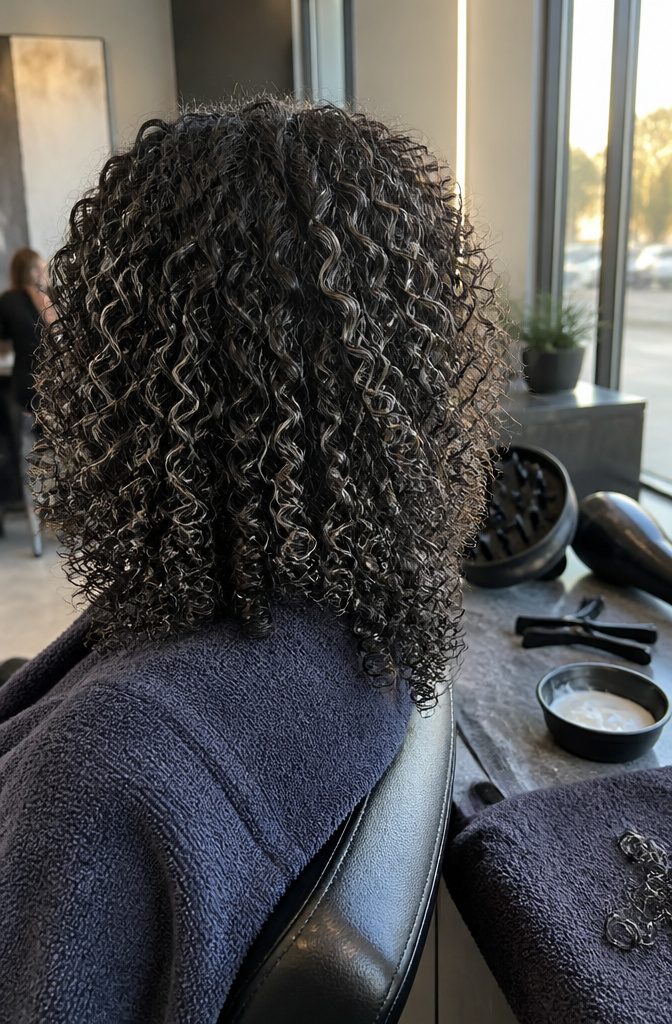
Thin grey highlights work differently than a full ombré when curls are involved. Instead of a dramatic dark-to-light sweep, you’re adding narrow ribbons of grey that catch light as the curl pattern twists and opens.
You want variation, not a gradient, and the narrower the highlight the more visible it stays on black hair without washing out the base.
Curls naturally add volume, so the grey reads more three-dimensional than it would on straight hair. Each curl spiral shows a flash of light where the highlight hits, and that movement keeps the color from looking flat or monochrome.
The placement matters: foil or balayage highlights that follow the curl pattern rather than fighting it will look intentional instead of patchy as it grows.
Keep the grey cool and keep the sections thin.
Too much grey coverage starts to read as ombré, which is covered later; here the dark hair stays dominant and the highlights are just visible enough to add dimension without changing the overall silhouette.
8. Grey Ombré on a Bob or Lob
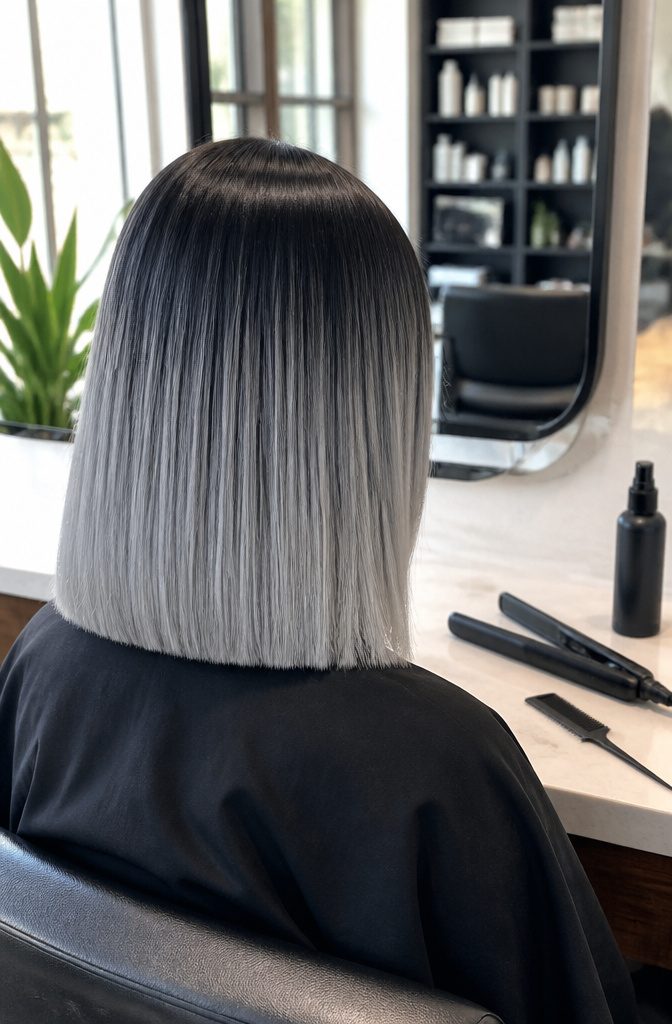
A short cut shows the color transition faster, and the way you style it afterward changes how sharp or blended the ombre reads.
When the hair is straightened, the line between black and grey stays crisp and the two colors sit cleanly separated.
Curl the same bob and the strands mix, softening the transition until it starts to look more like a balayage than an ombre.
The lob remains the easiest cut to pair with a fresh grey-to-black gradient. Once your colorist finishes the ombre, ask for a single-length lob cut to frame the color shift and let the transition fall where it shows best.
You get two finishes from one color job depending on whether you flat-iron or wave it that morning, and both options hold the contrast without one overwhelming the work the colorist put in.
9. Long and Extra-Long Grey Ombré
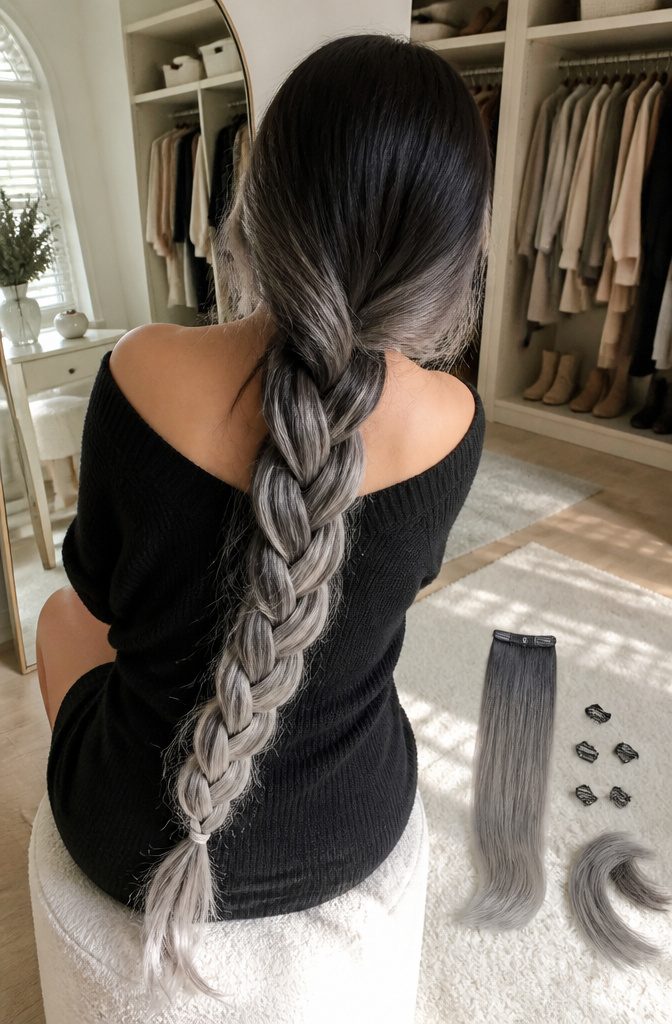
The length of the gradient is what makes this look work, and if your hair falls short of waist or hip length, color-matched extensions close the gap.
Clip-ins let you test the shade and the commitment before you invest in something more permanent.
Tape-in and micro-ring methods sit flatter and last six to eight weeks between moves, while fusion bonds can stay put for three to four months if the aftercare is dialed in.
I prefer clip-ins for anyone still figuring out the placement of the silver, since you can adjust where the fade starts without redoing the whole thing.
If fullness matters as much as length, adding a track or two in the mid-lengths gives the gradient room to breathe and keeps beachy curls or a loose braid from looking thin at the ends.
10. Shoulder-Length Grey Ombré
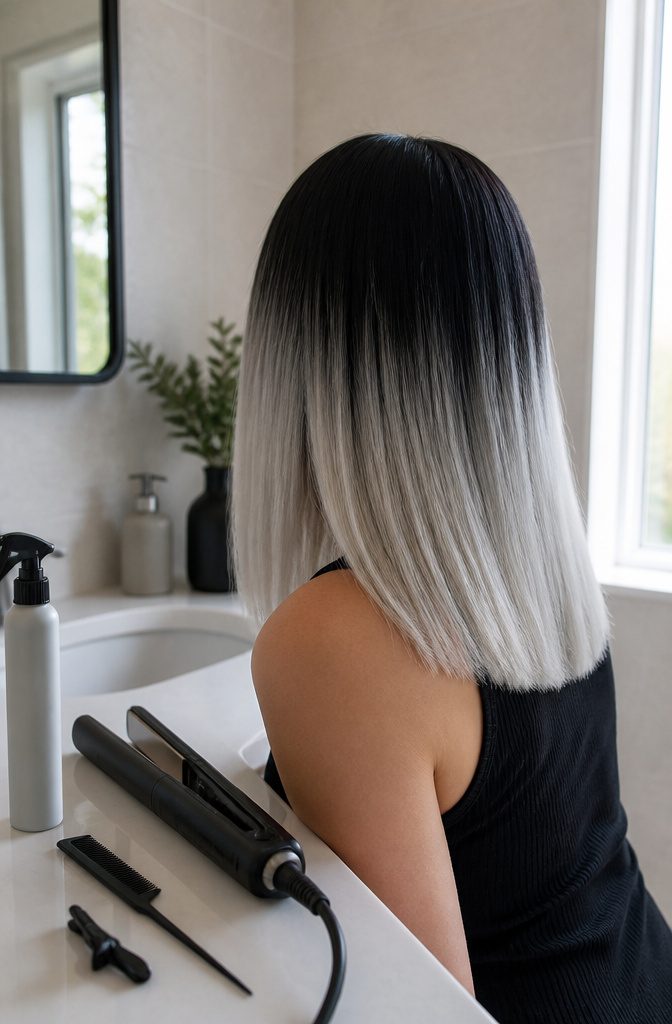
Ombré livens up a shoulder-length straight cut, especially when black and white (or very light grey) are the main two colors and dark grey shows up only as the transition zone between them.
The result reads modern and minimalist without landing too serious.
To get the most from the silvery sections, I reach for a high-quality flat iron such as the L’Oréal Professionnel Steampod and a heat protectant spray before any heat touches the hair.
Biolage Thermal Active Heat Protectant Spray covers the job.
Section the hair and straighten one piece at a time, finishing with a sharp center part. A long-tailed comb gives maximum precision on the line.
The style keeps things youthful without going overly playful, and the straight finish shows off the gradient more cleanly than texture would.
11. Loose Curls and Waves
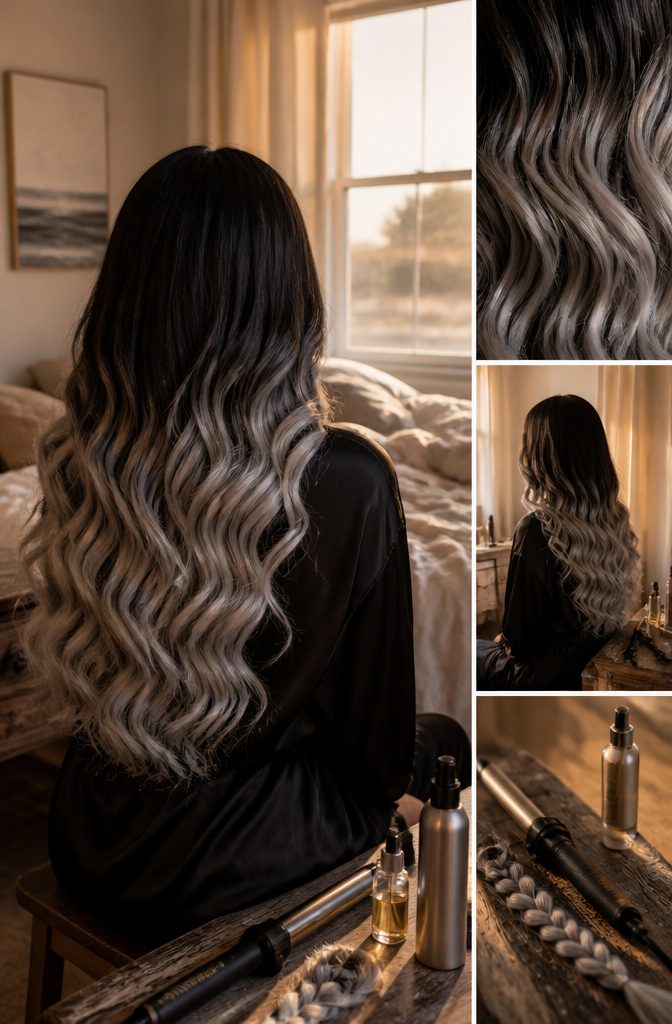
Curls and waves do two things at once: they soften the transition between black and grey, and they add visible fullness wherever the color sits lightest.
A large-barreled curling iron gives light grey lengths a gentle twist without tight ringlets, and the movement catches more light than straight hair does.
Shine serum keeps the surface reflective, and a texturizing spray finishes the look so it reads more lived-in than set. For longer waves, the model-on-vacation effect benefits from clipping in an extra track or two of color-matched extensions.
The added thickness matters whether you wear the hair loose, in beachy curls, or pulled into a braid. Without the extra weight, grey ombré on fine hair can look sparse past shoulder length.
12. Grey Ombré on Tight Curls
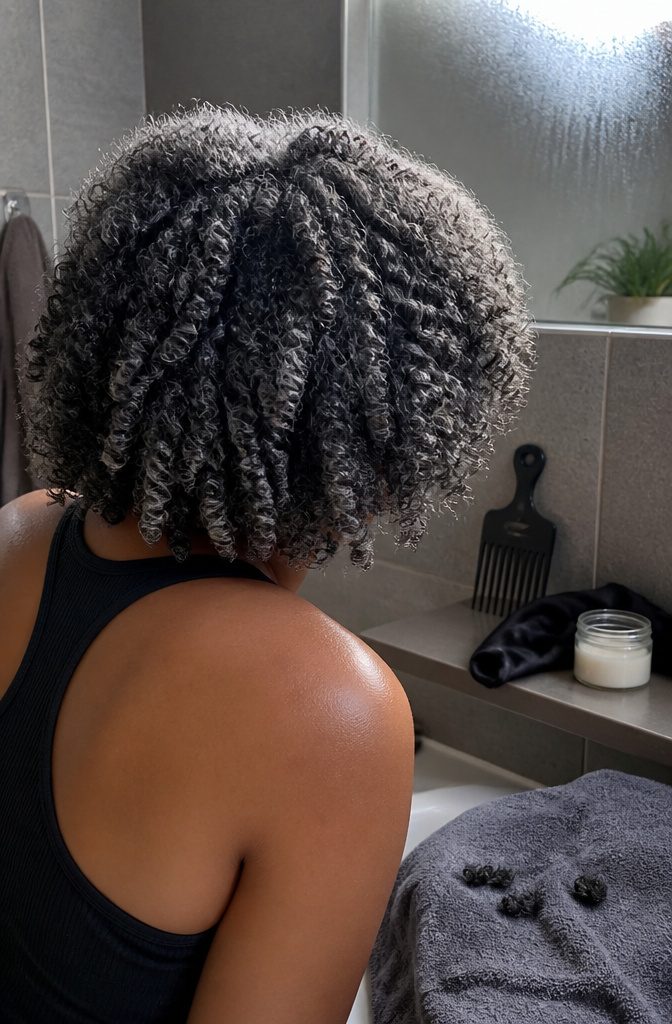
Tight texture changes the way a silver gradient reads.
On spiral or kinky curls, the transition from black roots to grey ends shows up in patches rather than a smooth sweep, because each curl catches light differently and the color wraps around individual coils.
The result looks more dimensional than the same ombre on straight hair, with silver flashing through the crown when the hair moves and black staying visible underneath even at the ends.
The look works whether your curls are loose spirals or tighter kinks.
I think it reads bolder on tighter textures, since the contrast between black and silver sits closer together and the eye picks up both shades at once rather than reading them as separate zones.
If you want something that stands out without adding extra colors or a sharp line of demarcation, this is the version to ask for.
13. Grey Ombré With Braids
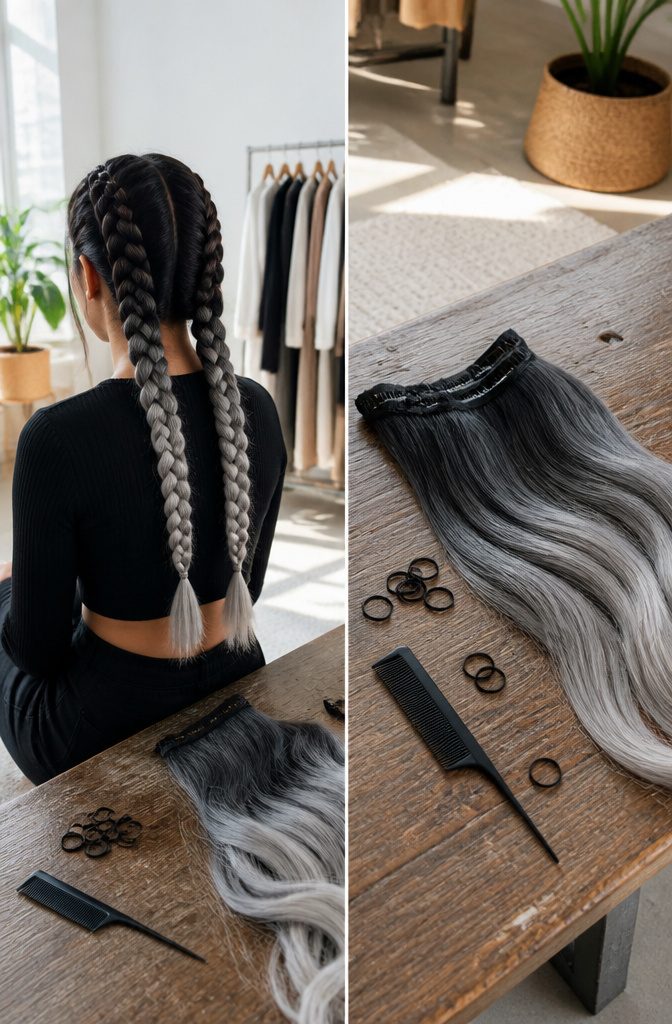
Braids work beautifully with black-to-grey ombré because they let the gradient sit in sections down the length, turning each plait into its own display of the shift.
A French braid or Dutch braid (the same technique, just inside out) is the simplest route if you want the color visible without extra styling. The structure keeps the ombré front and center.
Length and volume make the difference, so extensions are fair game here. You need enough hair to braid cleanly and for the gradient to read across the full length, and adding ombre-matched extensions solves both at once.
Regular long braids hold the same appeal: the black roots anchor at the scalp, and the silver tips collect at the ends, giving you a polished look that works for everyday or something more formal.
14. Grey Ombré With Bangs
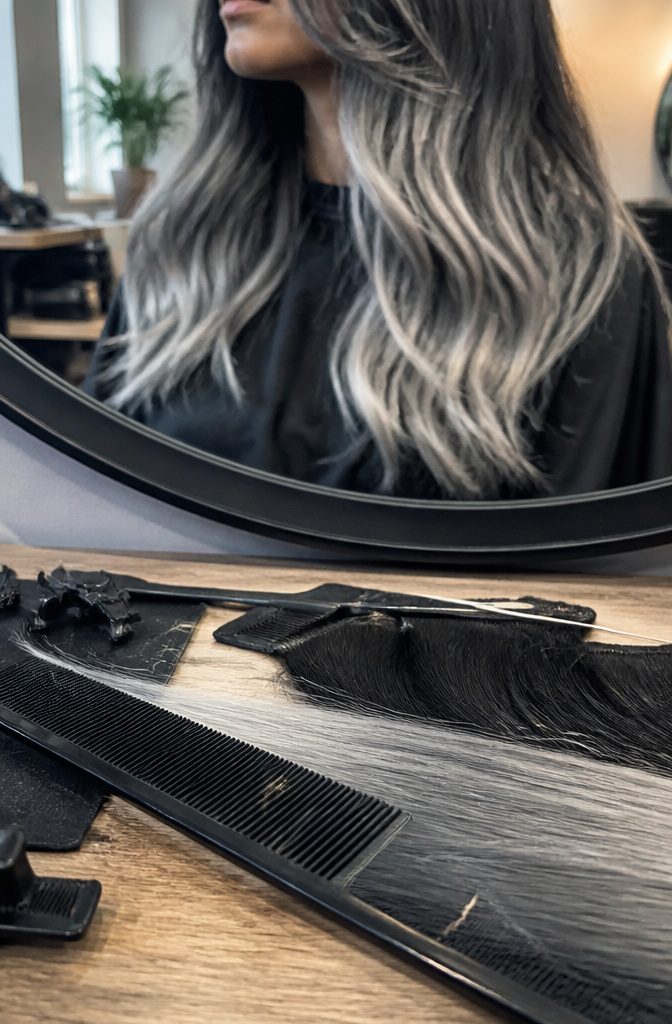
Bangs change the frame, and a grey ombré with bangs keeps the focus where you want it.
The fringe breaks up the transition and gives you a face-framing feature that draws attention forward, especially if the grey sits higher near the front.
Side bangs work the same way, pulling the gradient into the angles around your cheekbones and keeping the whole thing from looking too symmetrical.
If you are sectioning bangs yourself to keep the gradient clean, a long-tailed comb gives you the precision you need.
The metal tip marks the line between where color starts and where it stops, and that matters when you are working close to your hairline.
You can get volume into the look with extensions in both black and grey, layering them in wherever the gradient needs more weight or the bangs need more body.
15. Ponytail, Bun or Pigtails
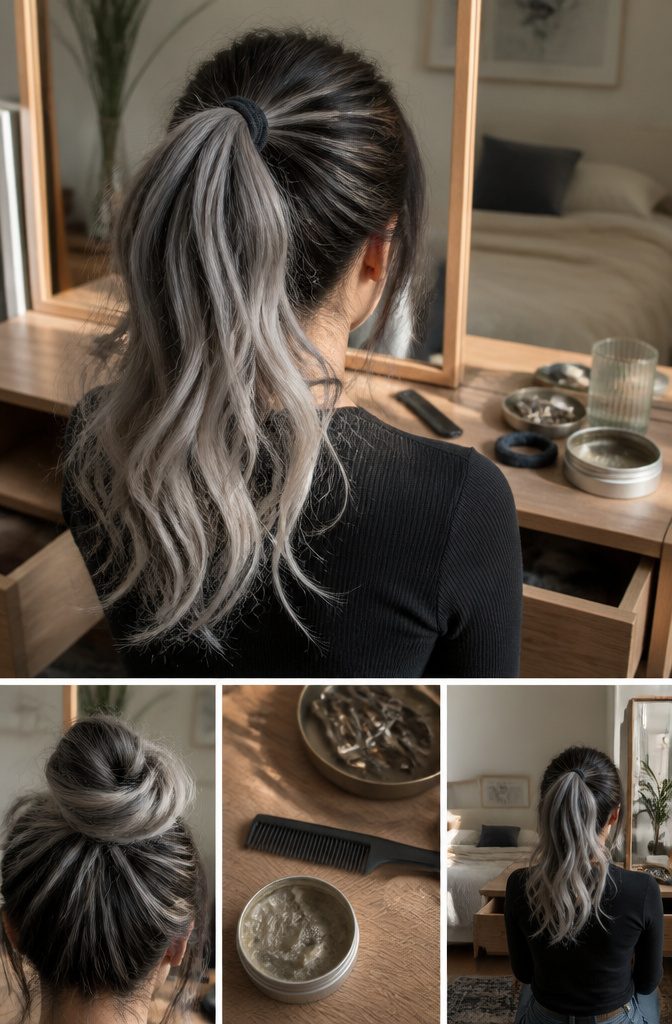
Pull your hair up and the gradient shifts.
A top ponytail or messy bun keeps the lighter ends visible while the darker roots stay gathered at the crown. Pigtails split the color into two contrasted sections, especially striking with a sharp black-to-white transition that reads almost spooky.
What stays visible when hair is up:
- Mid-lengths and ends show in a high ponytail or bun, so gradients that start the transition closer to the roots disappear into the tie
- Low ponytails and buns bury more of the grey, leaving just the tips on display
- Pigtails separate the hair into two vertical sections, turning a single gradient into mirrored contrast panels
- A messy bun pulls out pieces that catch light differently, mixing black and silver strands rather than showing a clean fade
If you wear your hair up most days, place the lightest silver lower than you think you need to.
16. Grey Ombré With Added Colors
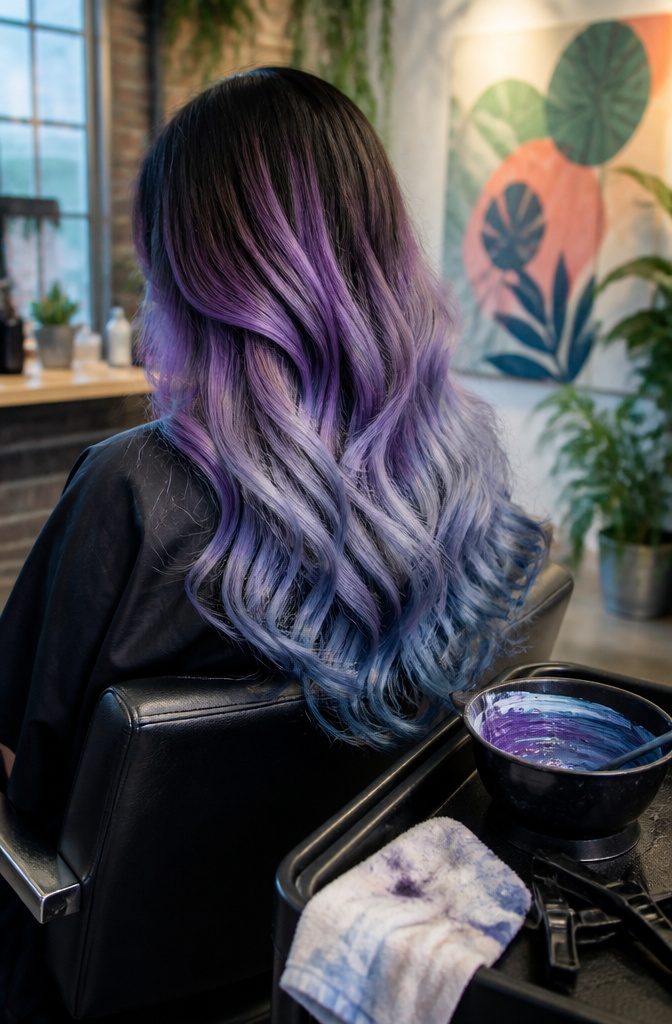
Grey pairs beautifully with fashion colors if you want something softer or more playful than straight silver.
Lilac and purple blend into grey without a hard line, and pink sits next to it with just enough contrast to read as intentional rather than accidental.
Blue works the same way, cool enough to stay in the same temperature family.
You can also run more than one accent through the same ombre: a fade that moves from purple at the top through grey in the middle and into blue at the ends keeps the whole thing cohesive because grey ties it together.
Maintenance is higher. Any fashion color fades faster than grey alone, so expect more frequent toning appointments and possibly a different shampoo rotation to keep each shade where you want it.
17. Icy Blue-Leaning Grey
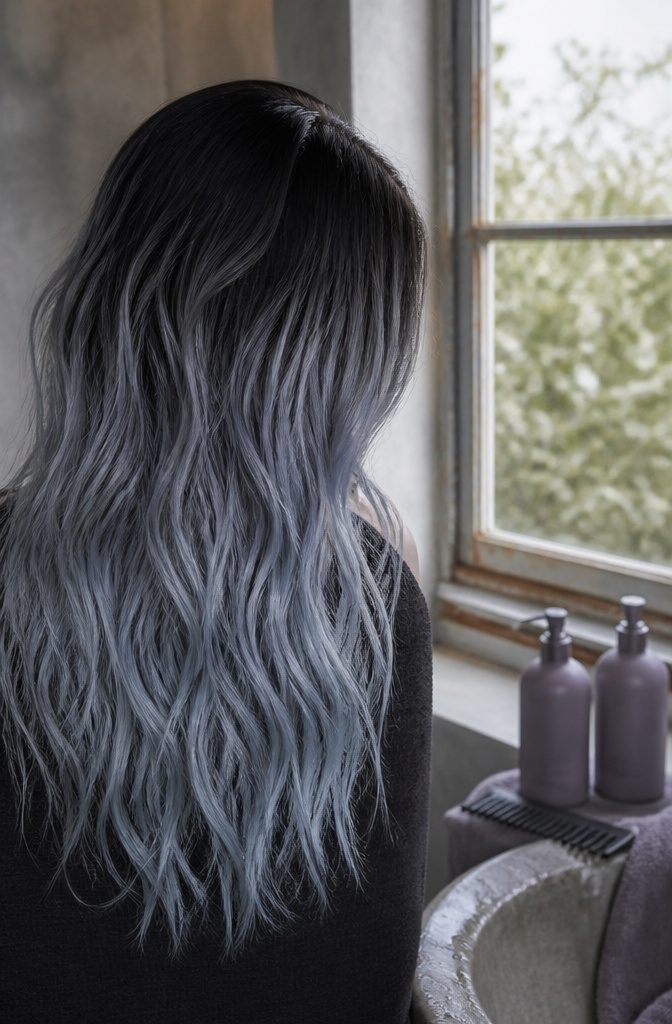
This grey sits cooler than ash, leaning toward icy blue without committing to full fantasy color.
It reads silver in most light but shows a subtle blue cast outdoors or under fluorescents, which makes it particularly flattering on cool-toned blondes looking to transition away from yellow-based highlights.
The dark-root version keeps the transition looking lived-in longer, since roots blend into black or deep charcoal rather than showing a hard line at the scalp.
Toning is non-negotiable. Without it, this shade turns brassy or greenish within two weeks.
I keep Matrix Total Results So Silver Purple Shampoo and the matching conditioner in rotation, using them every second or third wash depending on how quickly warmth creeps back in.
The purple pigment neutralizes yellow and keeps that blue-leaning tone clean. Miss a few washes and the whole thing slides toward murky grey, which is harder to correct than it is to prevent.
18. Ashy Matte Grey
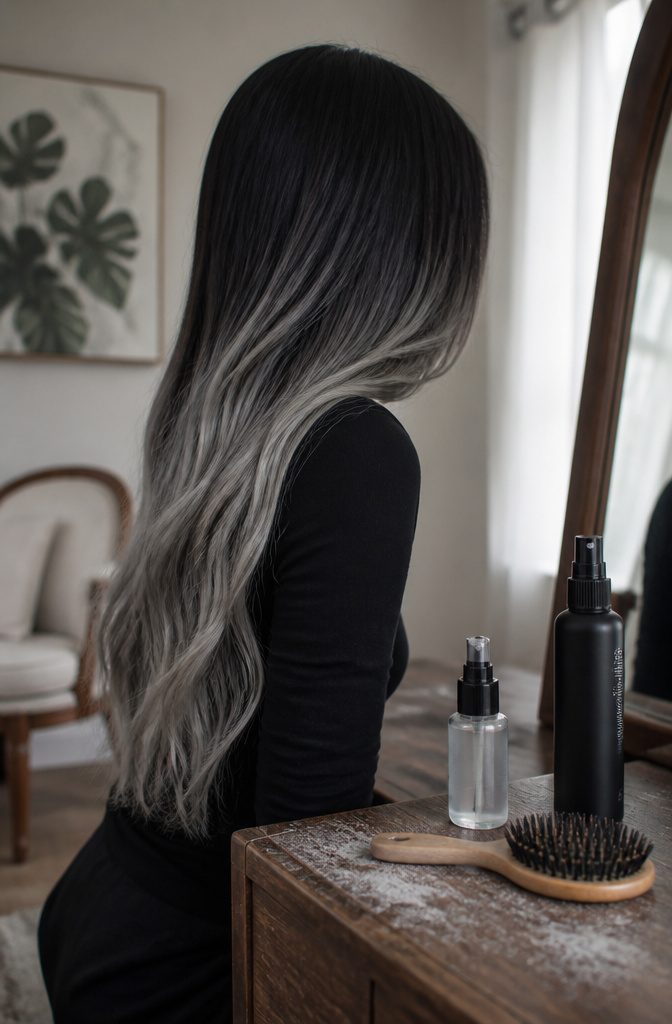
A matte finish strips the grey of its gloss and leaves you with something that looks decidedly cooler and more modern. The color reads flatter, almost powdery, which skews youthful in a way that high-shine grey never quite manages.
If that sounds like the direction you want, tell your colorist you’re after a matte finish rather than the glossy treatment most grey ombré gets by default.
The tension shows up in styling.
Grey color this ashy benefits from a bit of shine to keep it from looking dull, so a light application of shine serum like L’Oréal Professionnel Mythic Oil Huile Originale brings the color back to life without tipping it glossy.
Follow with a texturizing spray to add volume and that lived-in texture that keeps matte grey from reading too flat.
The balance matters: enough shine to show off the color, not so much that you lose the matte effect you paid for.
19. Retro Waved Bob and Accessories
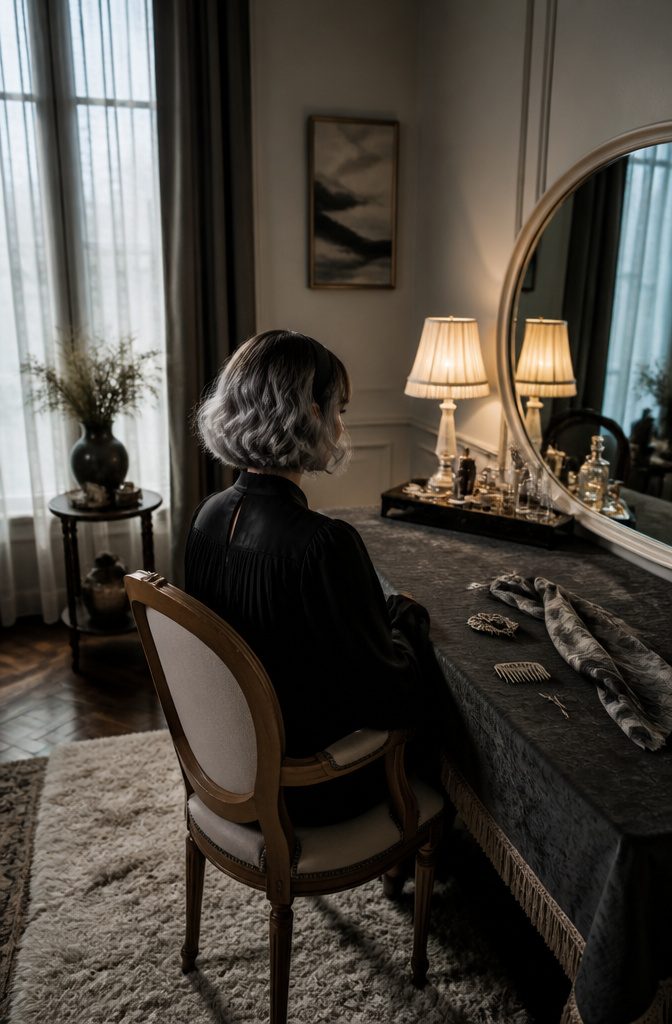
A waved bob gives silver hair a retro, black-and-white-film look that plays up the monochrome palette in a way straight hair never will.
The style nods to old Hollywood, and since silver is already a statement move, leaning into a vintage shape makes the whole thing feel deliberate rather than accidental.
Accessories dress up the color further. A headband, clip or scarf can take grey ombré from everyday to event-ready without adding length or heat, and the simplicity of the palette means almost any accessory reads clearly against it.
If the look feels too flat on its own, one piece changes that.
How the Gradient Works
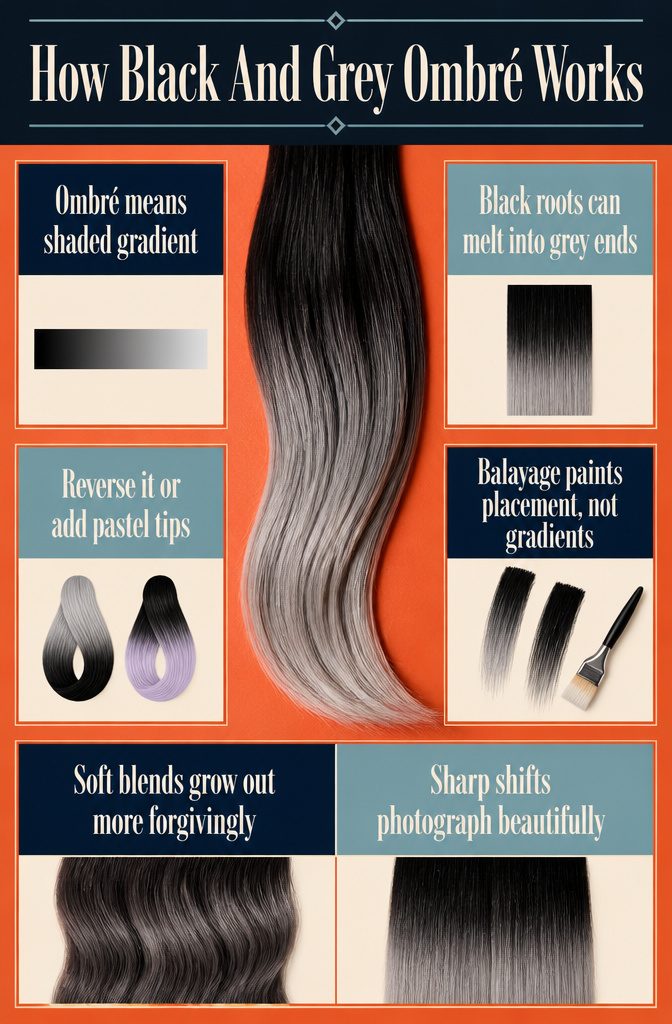
Ombré comes from the French word for "shaded," and that’s exactly what you get: a blended gradient where one color fades smoothly into another.
The classic example is black roots melting into grey ends, though you can reverse it or bring in pastels at the tips. The key difference between ombré and balayage is that ombré is a gradient, while balayage is hand-painted placement.
Hand-painting gives you random highlights that avoid the uniform stripe look, but if you want that gradient effect, ombré is the technique that delivers it.
How gradual the blend is matters. Some ombré looks give you a soft, barely-there transition where it’s hard to say exactly where black stops and grey begins.
Others go for a clear shift between the two colors. Neither one is better; it depends on whether you want the drama of contrast or the subtlety of a slow fade.
I tend to prefer a gradual blend because it grows out more forgivingly, but a sharp transition photographs beautifully if that’s what you’re after.
Lengths and Textures at a Glance
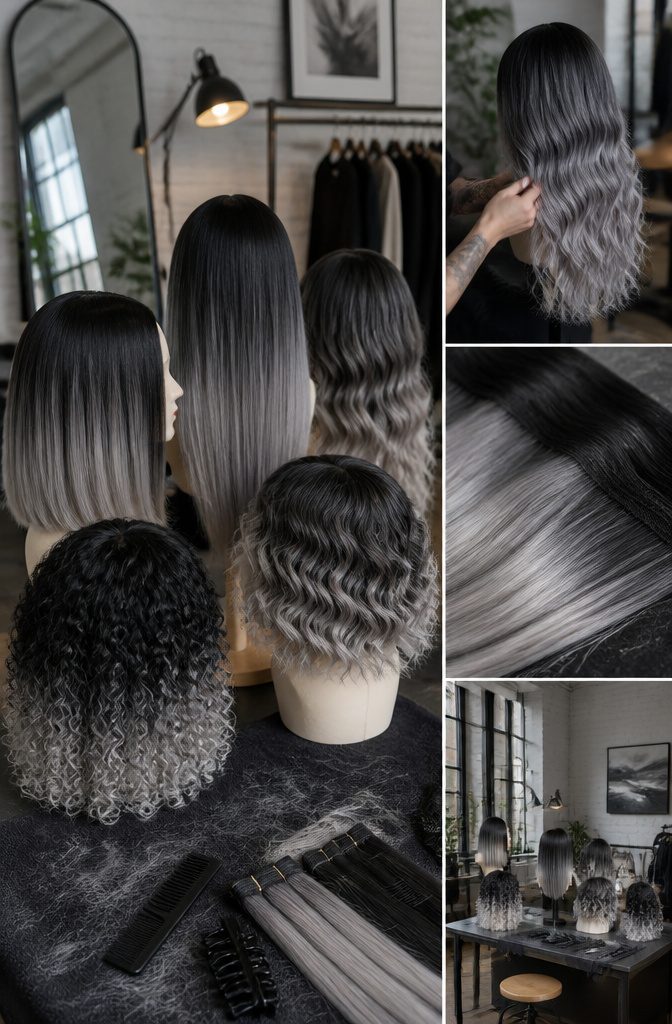
The way a grey gradient lands depends on how much hair it has to travel through, and curls will break the fade into something looser than straight, reflective lengths show.
The table below pairs each length or texture with the look it favors and what shifts when you move between them.
| Length or Texture | Look That Suits It | What Changes |
|---|---|---|
| Bob or lob | Subtle blended gradient, retro waves | Less vertical travel means the fade compresses; grey arrives fast |
| Shoulder-length | Dark roots with a grey gradient, balayage | Middle ground—enough length to stage the blend without needing extensions |
| Long or extra-long | Pin-straight ombre, loose waves, reverse silver-to-black | Gradient stretches; sleek strands read more reflective than textured ones |
| Tight curls (spiral or kinky) | Black-and-silver ombre, grey highlights | Curl pattern breaks up the gradient into something softer, less hard-edged |
| Loose curls and waves | Face-framing pieces, beachy braid | Waves scatter light; the fade reads warmer and less graphic than on straight hair |
Straight hair shows the cleanest divide between black and grey, which is why one stylist flags the pin-straight look right after the salon—you want that reflective quality on display.
Tight curls diffuse the gradient, so black and silver sit side-by-side rather than stacked.
Extensions help on long, wavy styles if you need extra fullness for a braid or loose curl; clipping in a track or two keeps the grey from looking thin at the ends.
Frequently Asked Questions
Is ombre good for grey hair?
Yes, ombre works well on grey hair, especially when you reverse the gradient and start with silver at the roots fading down into black ends.
The lighter tone frames your face instead of sitting at the perimeter, and dark regrowth becomes less noticeable as it grows out.
If you already have natural silver coming in at the crown or temples, a blended ombre can fold those strands into the overall look instead of fighting them.
Is ombre hair still in 2026?
Yes, ombre remains current in 2026, particularly black-to-grey gradients. The lob with grey ombre continues to be a popular pairing, and colorists still frame the technique as a versatile option for any length or texture.
The style has staying power because it grows out more forgivingly than all-over color and adapts to both modern and retro styling.
What is the best ombre color for black hair?
Grey and silver are the most striking ombre choices for black hair, offering high contrast without the warmth of caramel or blonde.
Black roots fading to silver reads moody rather than bright, and the dark root keeps regrowth less obvious between salon visits.
You can also add fashion colors like lilac, purple, pink or blue alongside grey for a softer or more playful finish, though those shades require more frequent toning.
What is better, balayage or ombre?
It depends on whether you want a gradient or highlights. Ombre gives you a blended fade from one color to another, while balayage is hand-painted placement that weaves color through your hair in varying thicknesses.
Ombre is the better choice if you want that clear shift from black to grey; balayage wins if you prefer grey ribbons woven through black hair with no uniform line.