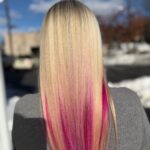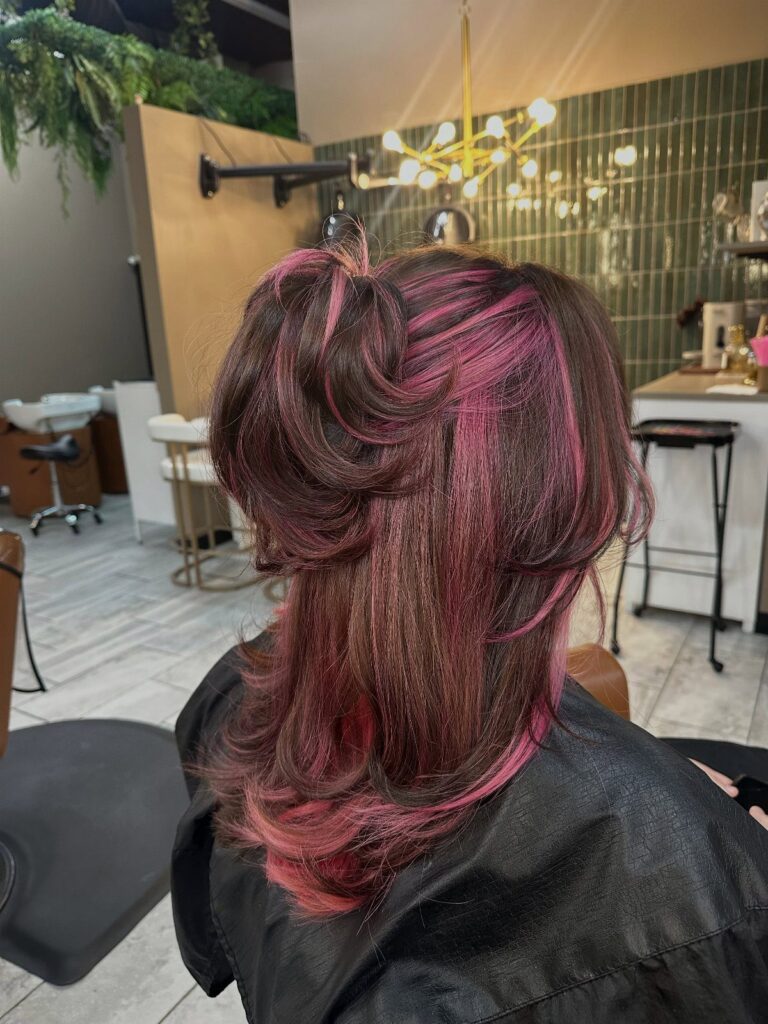
Pink highlights range from barely-there blush tones to neon fuchsia streaks, with dusty rose, coral, magenta and pastel purple sitting somewhere in between.
If your hair is already blonde, a colorist can add most pinks as a gloss or semi-permanent layer.
1. Dusty Rose Blend
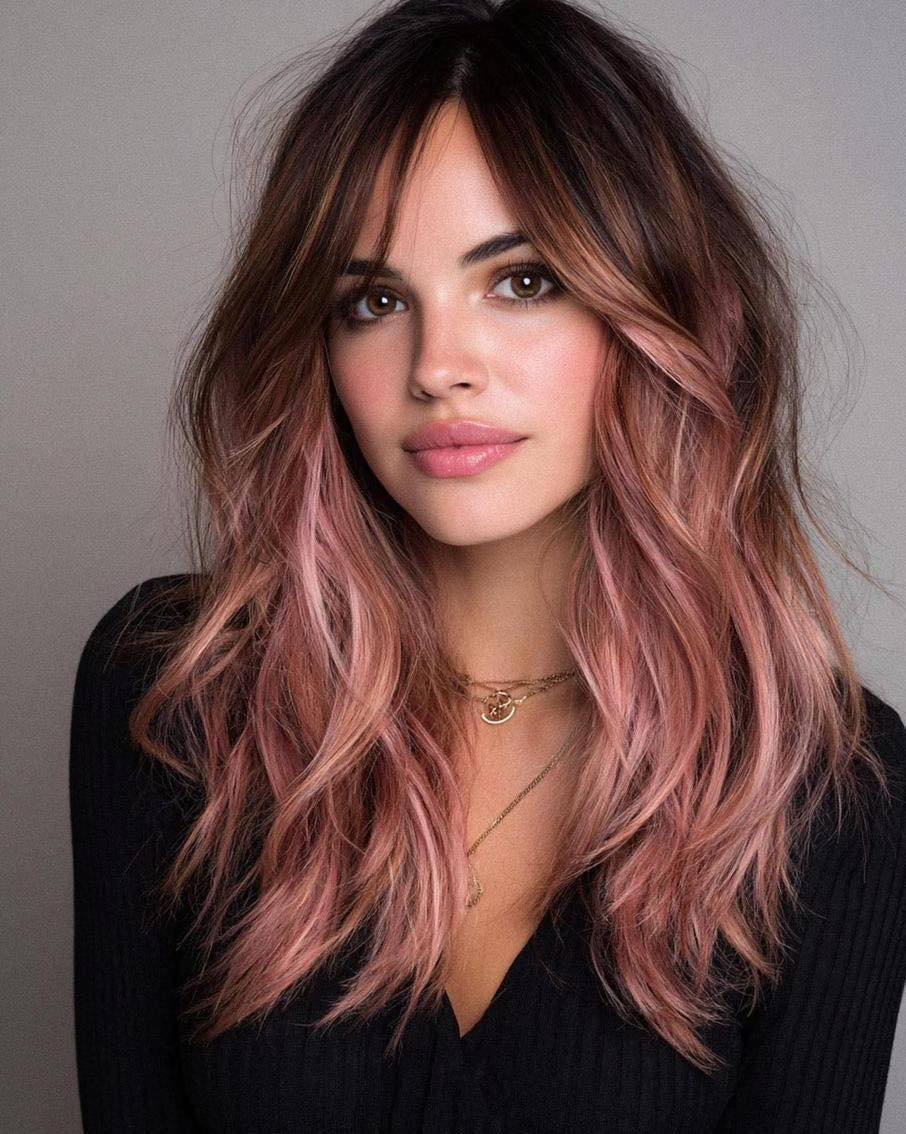
Brown base hair picks up dusty rose and blonde ribbons that catch the light through the mid-lengths and ends. The rose sits muted enough that it reads as a warm neutral from a distance, then surprises close up.
If your natural color is medium to dark brown, this works without bleaching the roots. The stylist will lift select strands to a pale blonde first, then tone them rose.
The rose fades to peachy blonde, which still looks intentional if you like a lived-in finish.
2. Peach Coral Dimensional Style
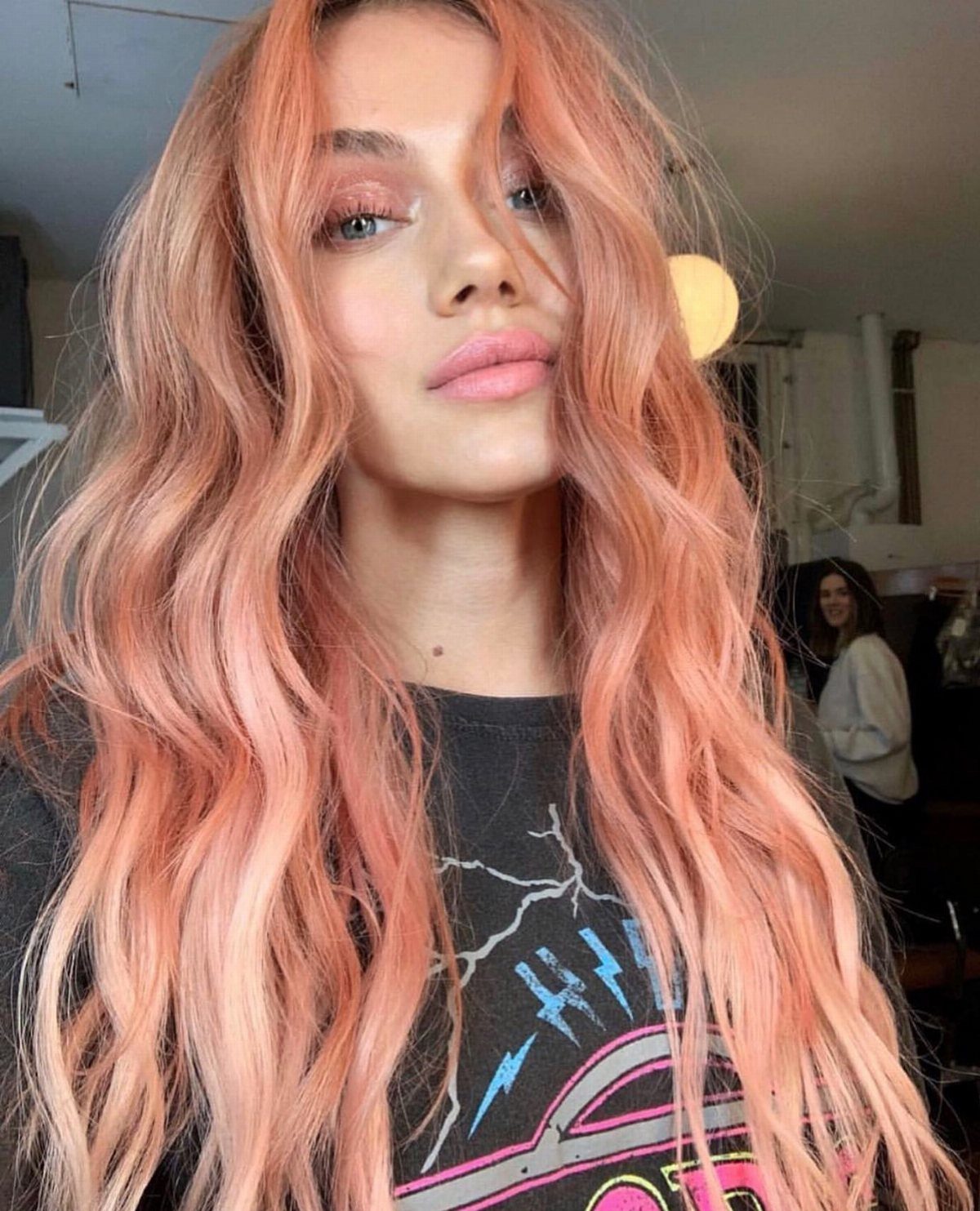
Peach and coral tones layer through blonde, creating a dimensional finish that shifts between golden and pink depending on the light. The overall effect reads warm without landing fully orange or fully pastel.
This approach works best on hair that’s already blonde or light brown, since peach tones need a pale base to show true.
A colorist will typically apply the peach as a gloss over freshly lightened hair, then weave in brighter pink pieces for contrast.
The peach will fade faster than the blonde, so plan for regular toning if you want to keep the warmth.
3. Fuchsia Brown Two-Tone Style
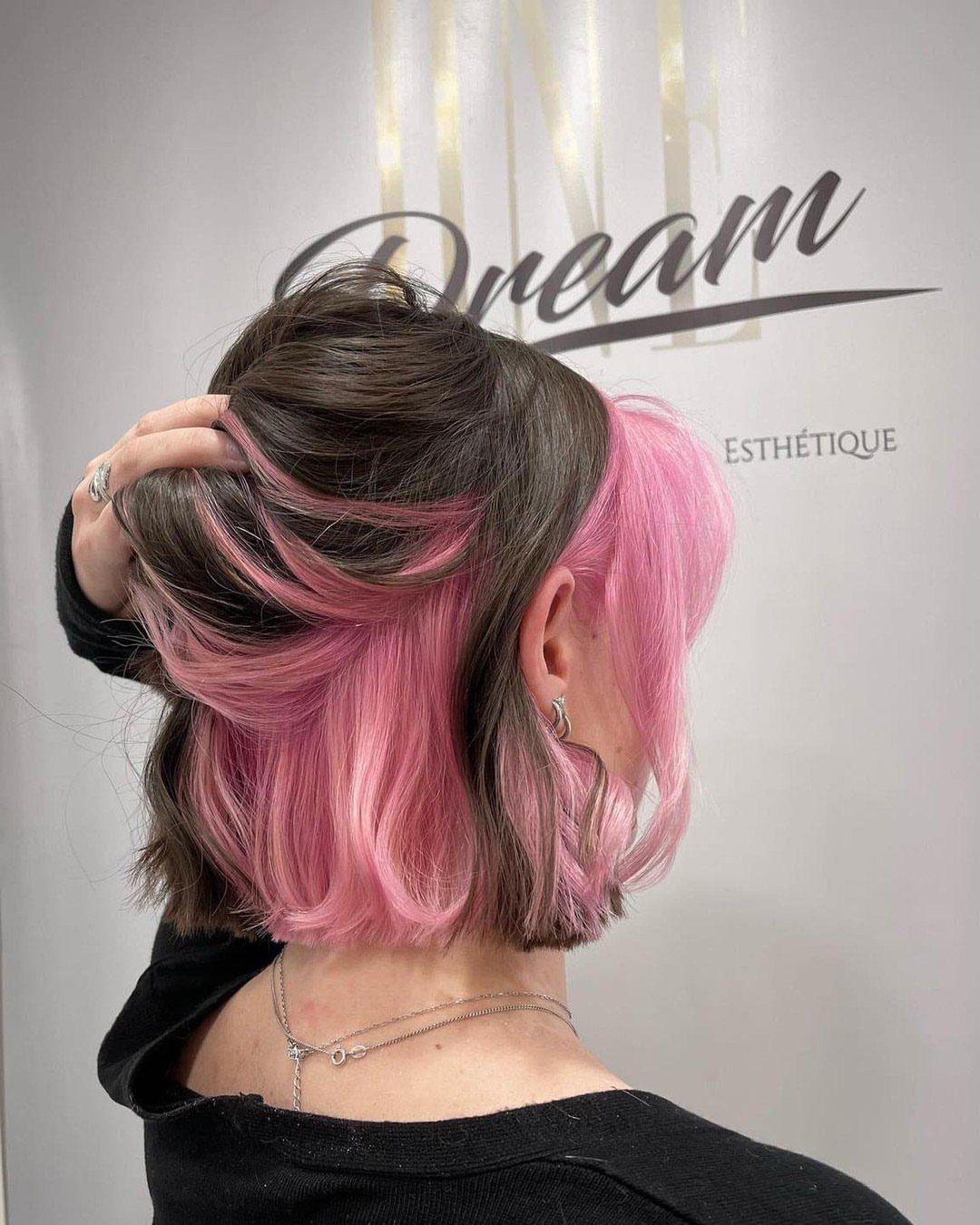
A brown top section conceals vivid fuchsia and bubblegum pink underneath, revealed only when the hair moves or lifts. The split lets you keep a natural appearance at work or pull the color forward when you want it.
The stylist sections off the underlayer and the side pieces, lightens them to pale blonde, then applies the pink.
The gradient from magenta at the roots to lighter bubblegum at the ends gives the color dimension instead of a flat finish.
Touching up the pink keeps it bright; the brown on top needs no extra maintenance.
4. Dusty Rose Waves
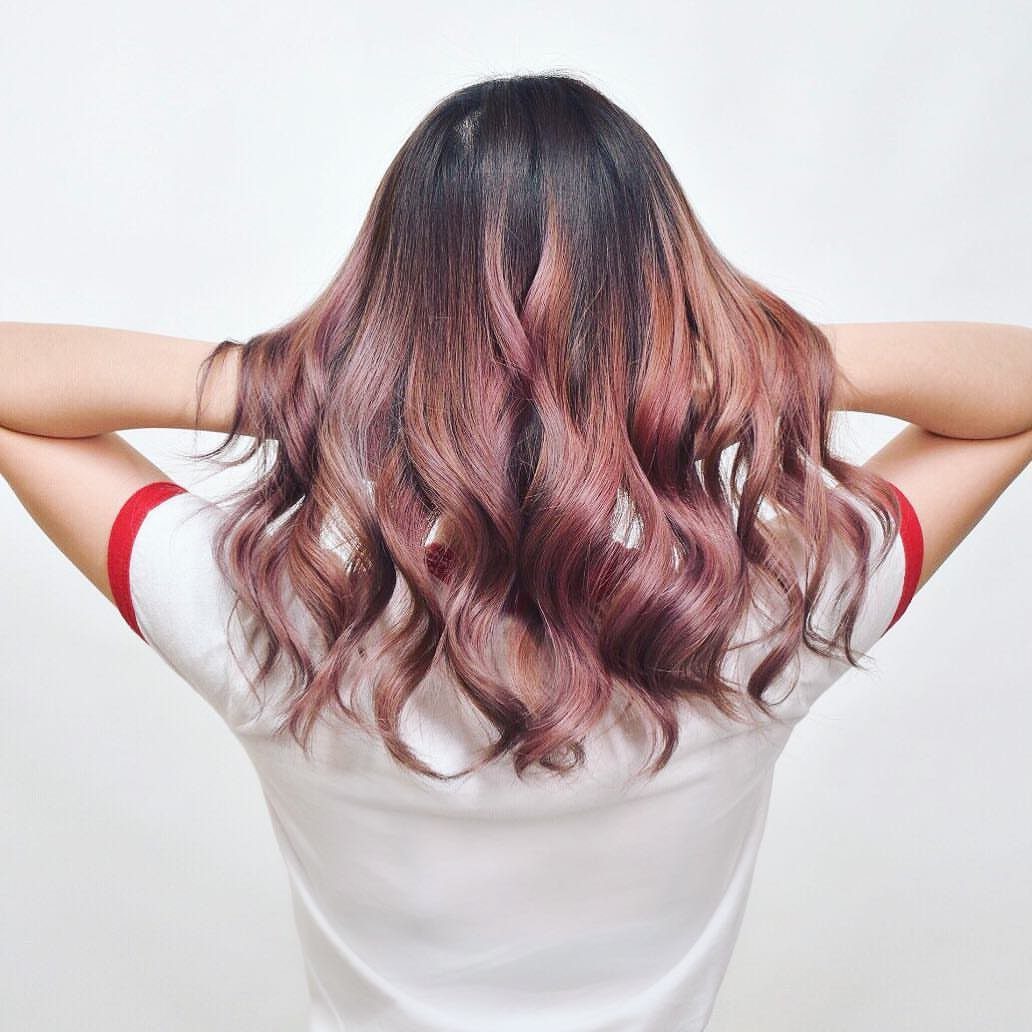
Deep brown or black hair takes on dusty rose highlights that lean slightly violet, especially in natural light. The contrast between the dark base and the muted pink creates a moody, low-key finish instead of a bright pop.
Lifting black hair to blonde takes longer and more care than starting with brown. The colorist will apply the rose tone over the lightened strands to soften the warm undertone that naturally shows up when black hair is bleached.
5. Bubblegum Ombre
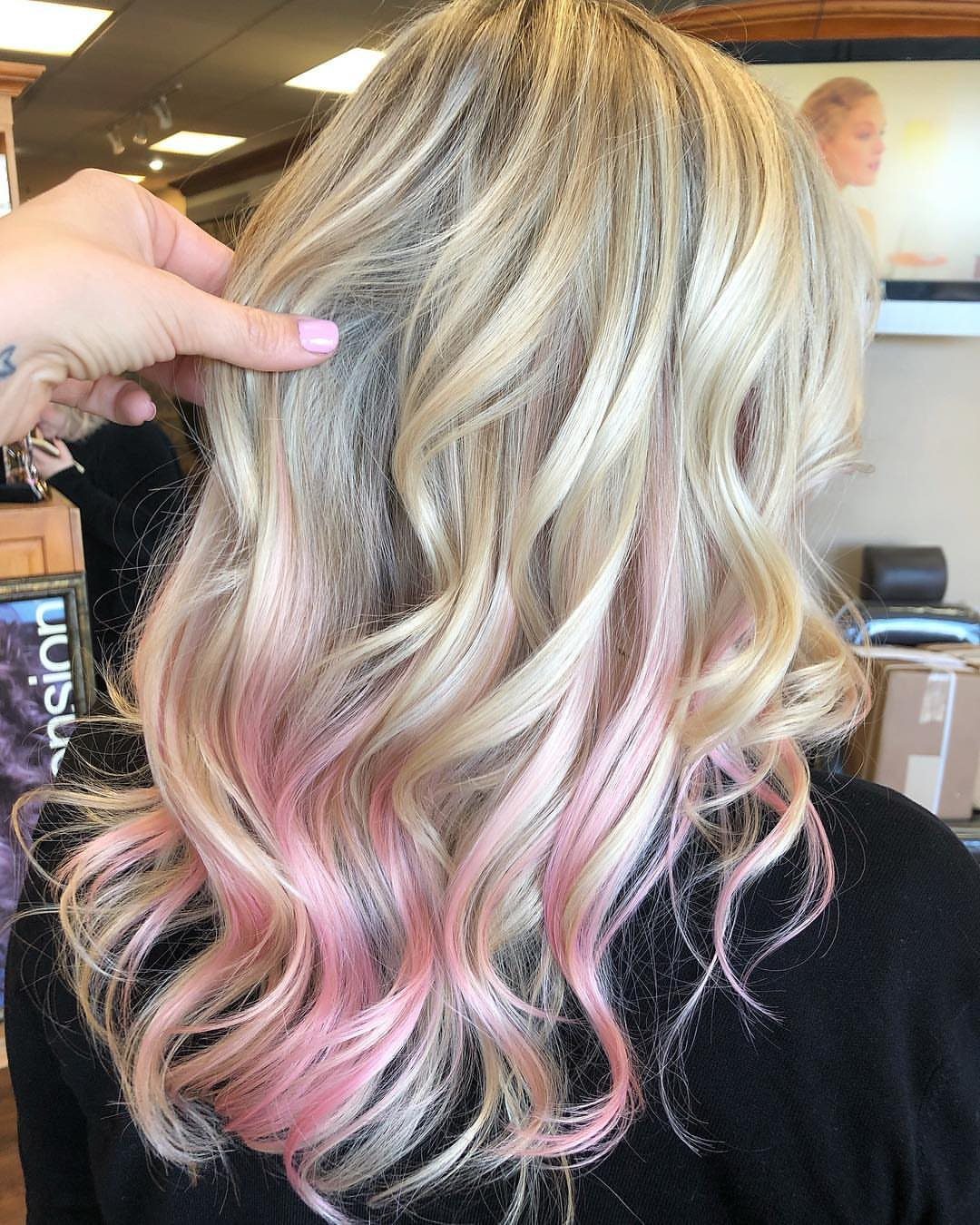
Blonde roots melt into soft bubblegum pink through the mid-lengths and ends, creating a gradient that looks sweetest on long hair where the color has room to transition.
The pink sits pastel rather than neon, so it reads romantic instead of punk.
If your hair is already blonde, the stylist applies the pink as a semi-permanent color that fades gradually. Starting from brown means lightening the lengths first.
Bubblegum fades to pale peachy blonde, and most people like the softer version enough to let it ride.
6. Brown to Rosé Melt
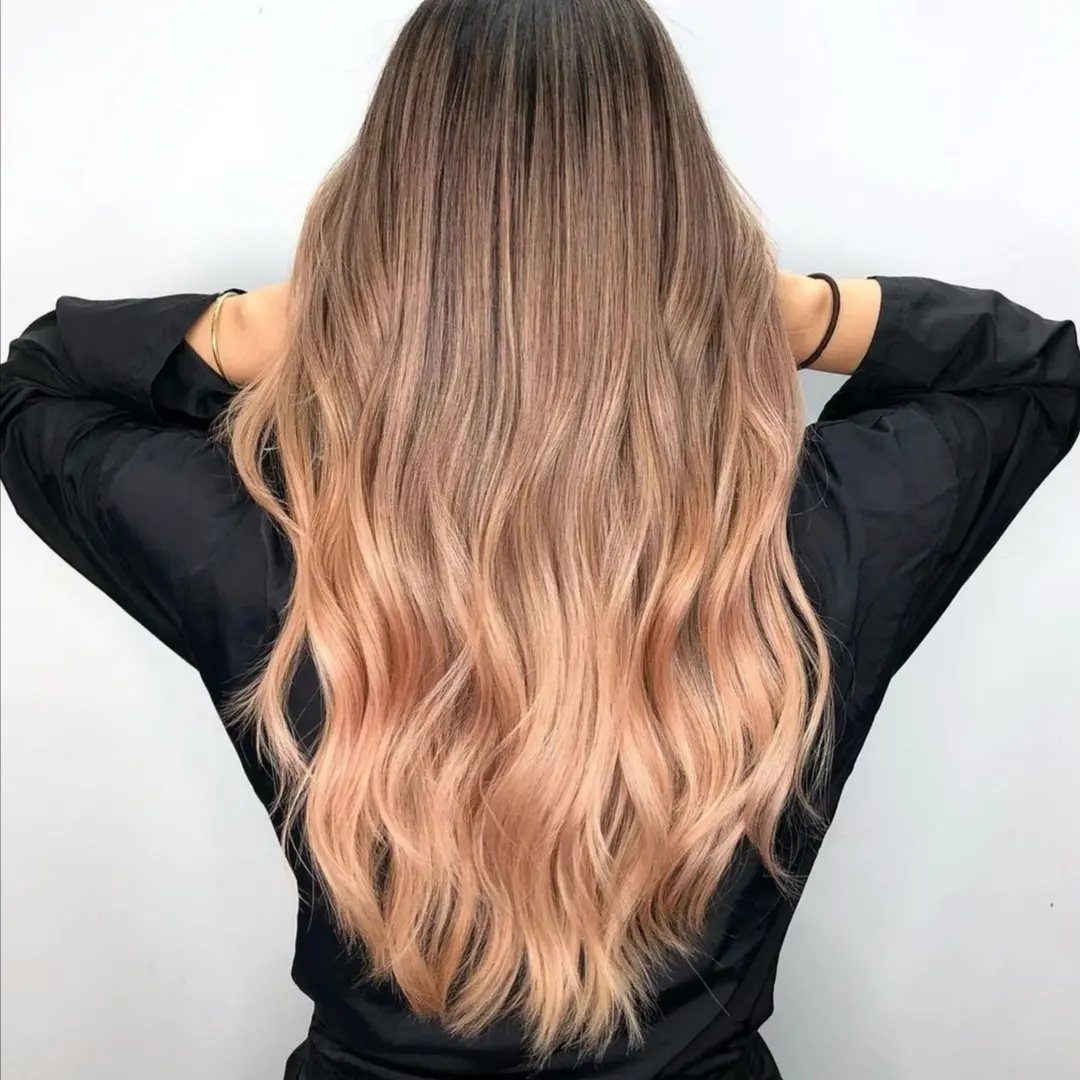
Medium brown roots transition into dusty rose and peachy pink lengths in a smooth gradient that avoids a hard line. The rose sits muted and slightly mauve, so the overall effect feels earthy rather than candy-bright.
A colorist will hand-paint the rose and peach tones through the mid-lengths and ends, blending them back into the natural brown at the top. Hair that’s already highlighted or balayaged takes the color faster, since there’s less lifting to do.
The pink tones fade to a soft peachy blonde, and the grown-out roots blend naturally into the remaining color.
7. Blonde with Strawberry Ribbons
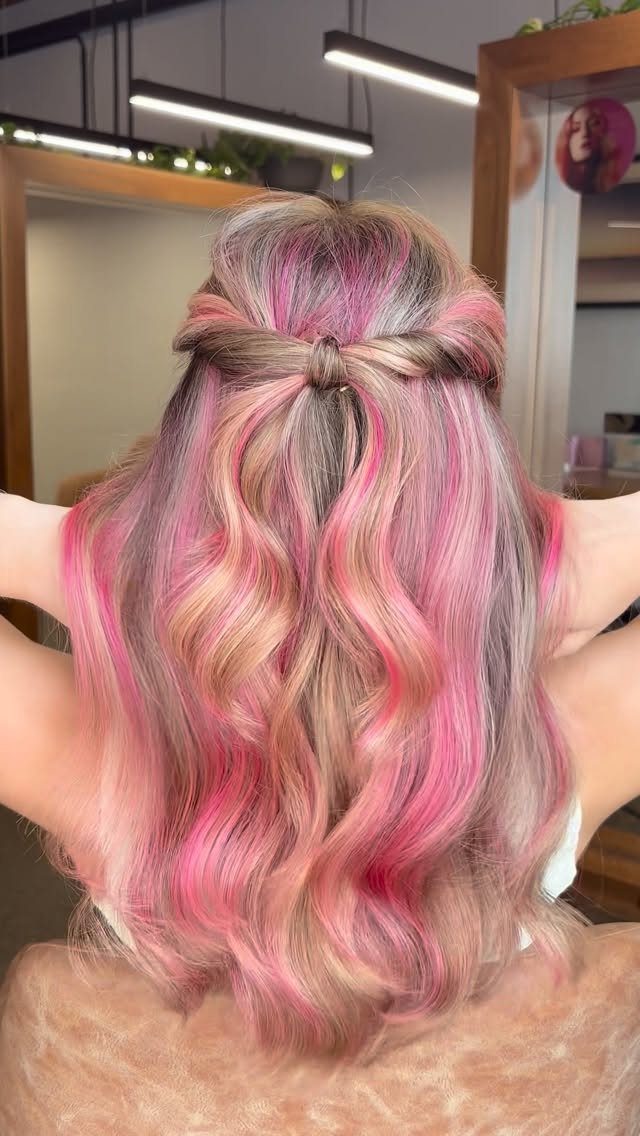
Strawberry-pink highlights sit spaced through blonde hair, adding warmth without covering the whole head. The pink reads as a soft accent rather than a takeover, so the overall color still registers as blonde.
Once it fades, you’re left with a soft peachy tone that sits close enough to blonde that the line between them disappears.
8. Cerise Black Mix
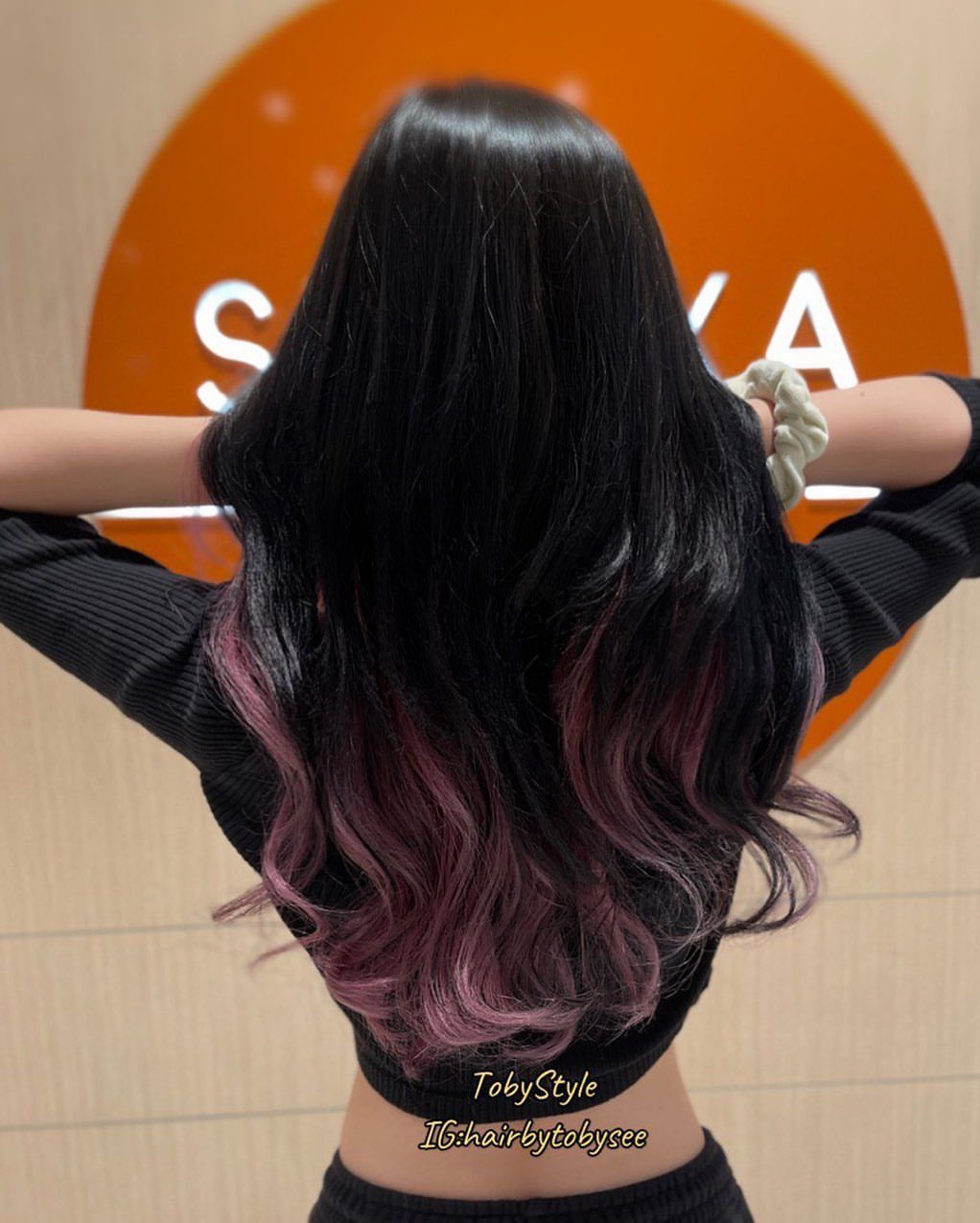
Black hair takes on heavy pink highlights that read almost burgundy in low light, then reveal their true cerise when the light hits. The volume of pink makes this a bold choice, not a subtle accent.
Lifting black hair to the pale blonde needed for bright pink takes multiple sessions. A colorist will space the highlights throughout so the pink shows even when the hair is down.
Touch up the pink every few washes with a depositing conditioner and the black stays put on its own.
Black and pink hair makes quite a bold statement when combined correctly. Light pink highlights will not work well here, so your best bet is to go with a vibrant option to really stand out against the dark base.
9. Rose Gold Metallic Fade
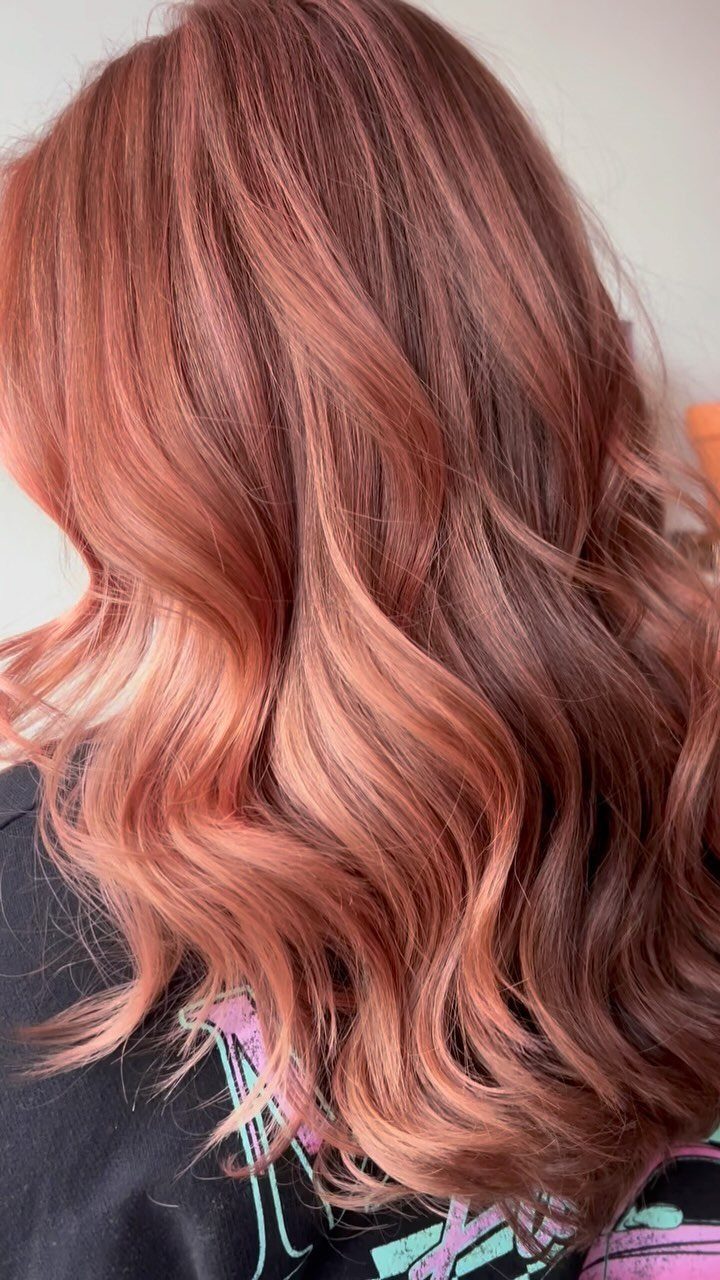
A glossy rose gold color fades from darker roots to lighter ends, with a metallic sheen that catches light like polished metal. The effect sits somewhere between a natural color and a statement.
The metallic finish comes from a gloss applied over lightened hair, formulated to reflect more light than a standard rose gold tone.
The sheen fades before the color does, leaving a soft rose gold once the gloss washes out.
10. Face-Framing Magenta Pieces
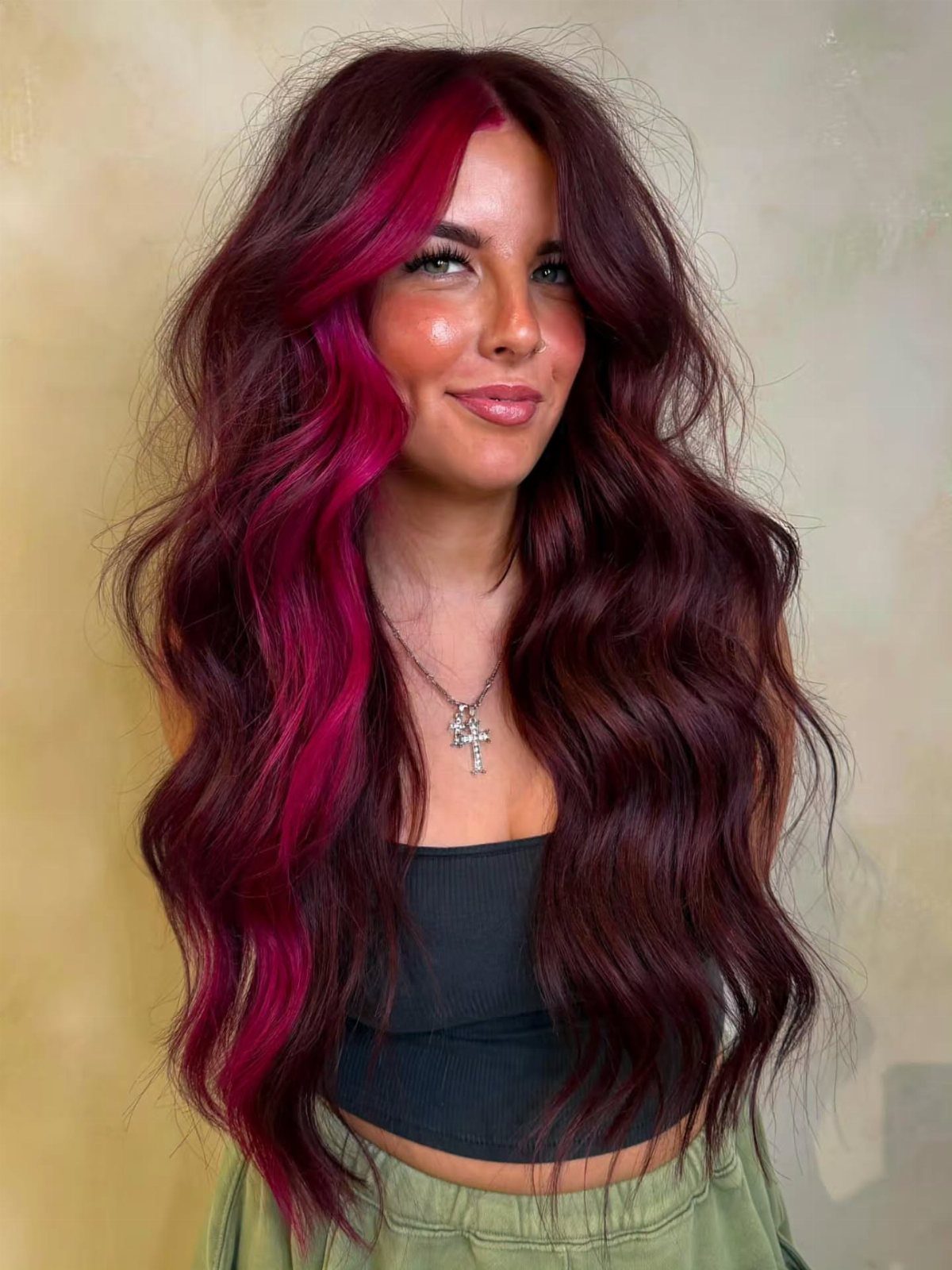
Vivid magenta highlights frame the face, leaving the rest of the hair a natural dark base. The placement draws attention forward without committing to an all-over color.
A stylist will lift the front sections to pale blonde, then apply the magenta. The width of the pieces can go narrow for a streak effect or wider for more coverage.
Magenta fades to a cooler pink, which still contrasts enough with dark hair to stay visible.
11. Subtle Blush Blonde Blend
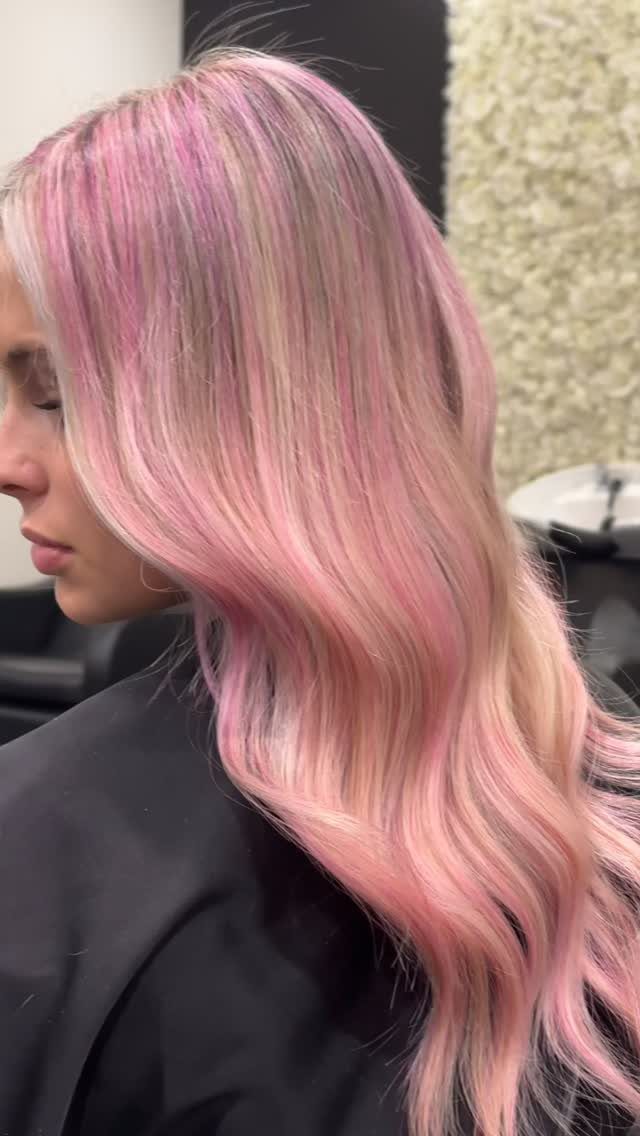
Pale pink and blonde blend so closely that the two colors read as one soft, warm shade. The pink is whisper-light, not pastel-bright, so the finish stays neutral enough for most settings.
If your hair is already blonde, the colorist can add the blush as a gloss.
The blush fades to a pale blonde that looks intentional even when the pink is mostly gone.
12. Black to Fuchsia Balayage
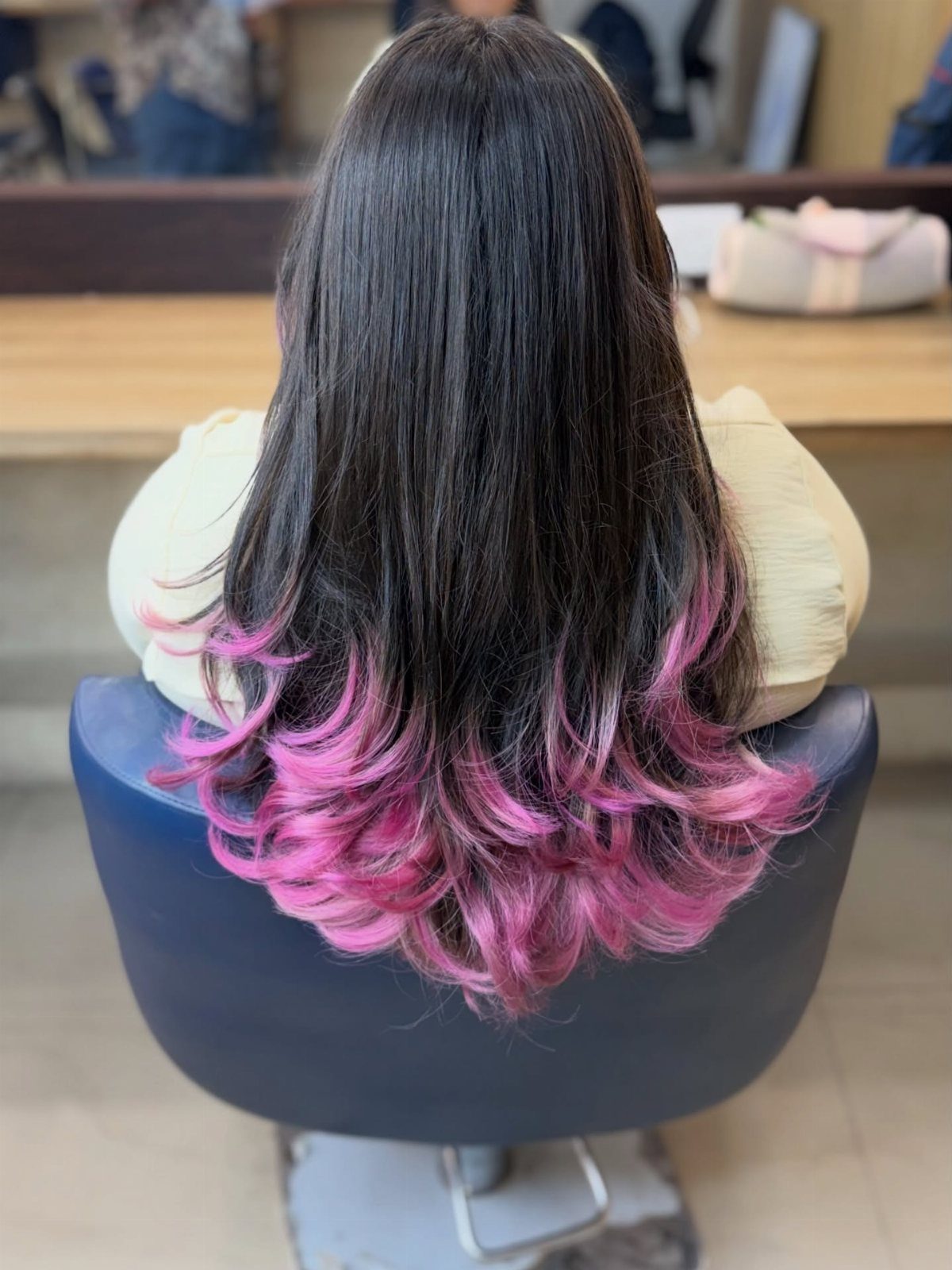
Fuchsia pink balayage sweeps through the ends of black hair, creating a gradient that shifts from deep black at the roots to vivid pink at the tips. The contrast is high, so this reads as a deliberate statement.
The gradient keeps the transition smooth rather than striped.
The color sits far enough from the root that regrowth looks intentional, and as the fuchsia softens to pastel the contrast mellows with it.
13. Subtle Rose Balayage
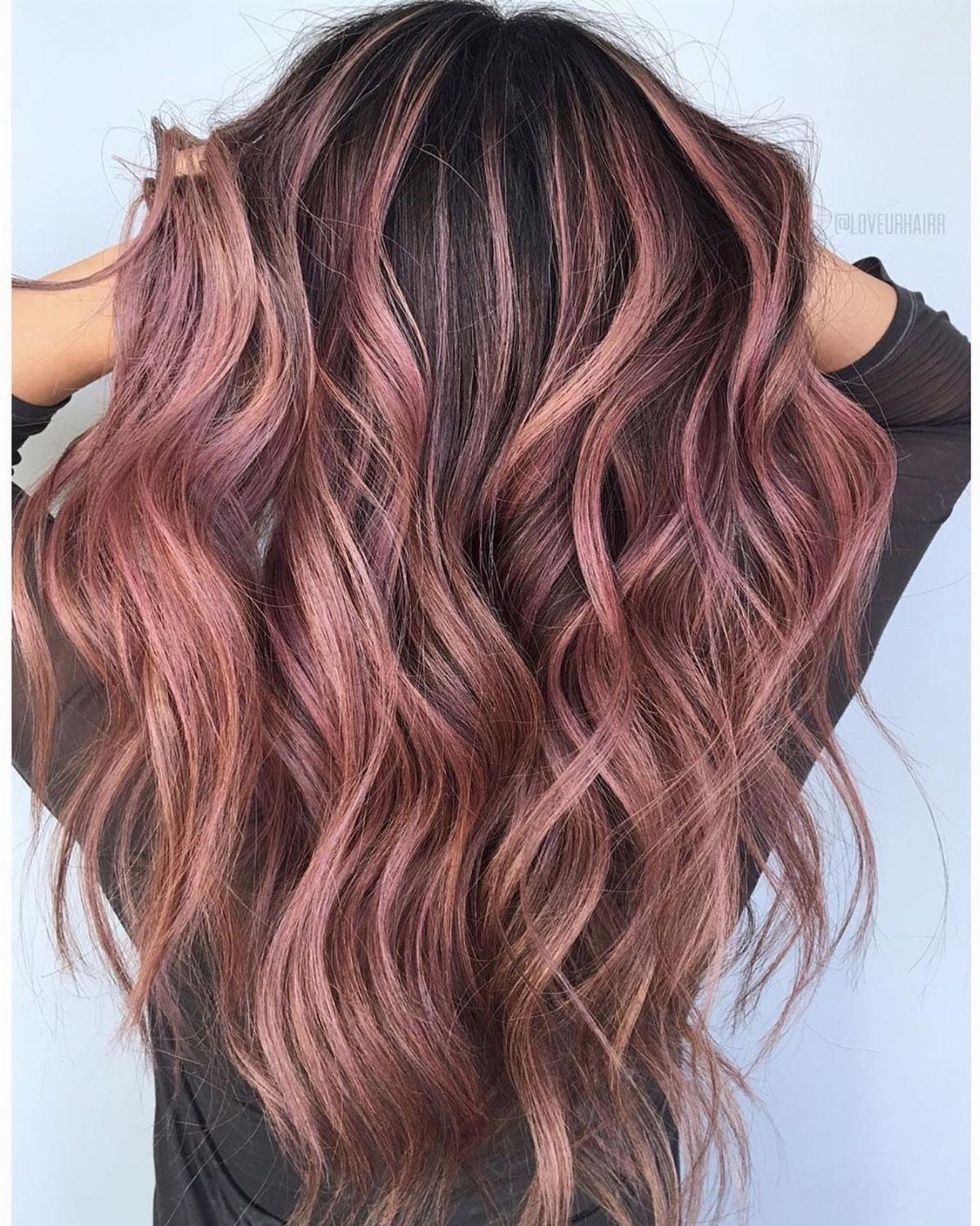
Long dark hair picks up rose through the lengths, painted on softly enough that the pink reads as a warm glow instead of a separate color.
The balayage technique keeps the placement natural, with more color at the ends and less toward the roots.
Blonde hair takes the rose directly as a gloss or semi-permanent layer. Brown hair needs pre-lightening before the rose goes on.
When it fades, you’re left with a peachy blonde that reads warm, not washed-out.
14. Dark to Rouge Ombre
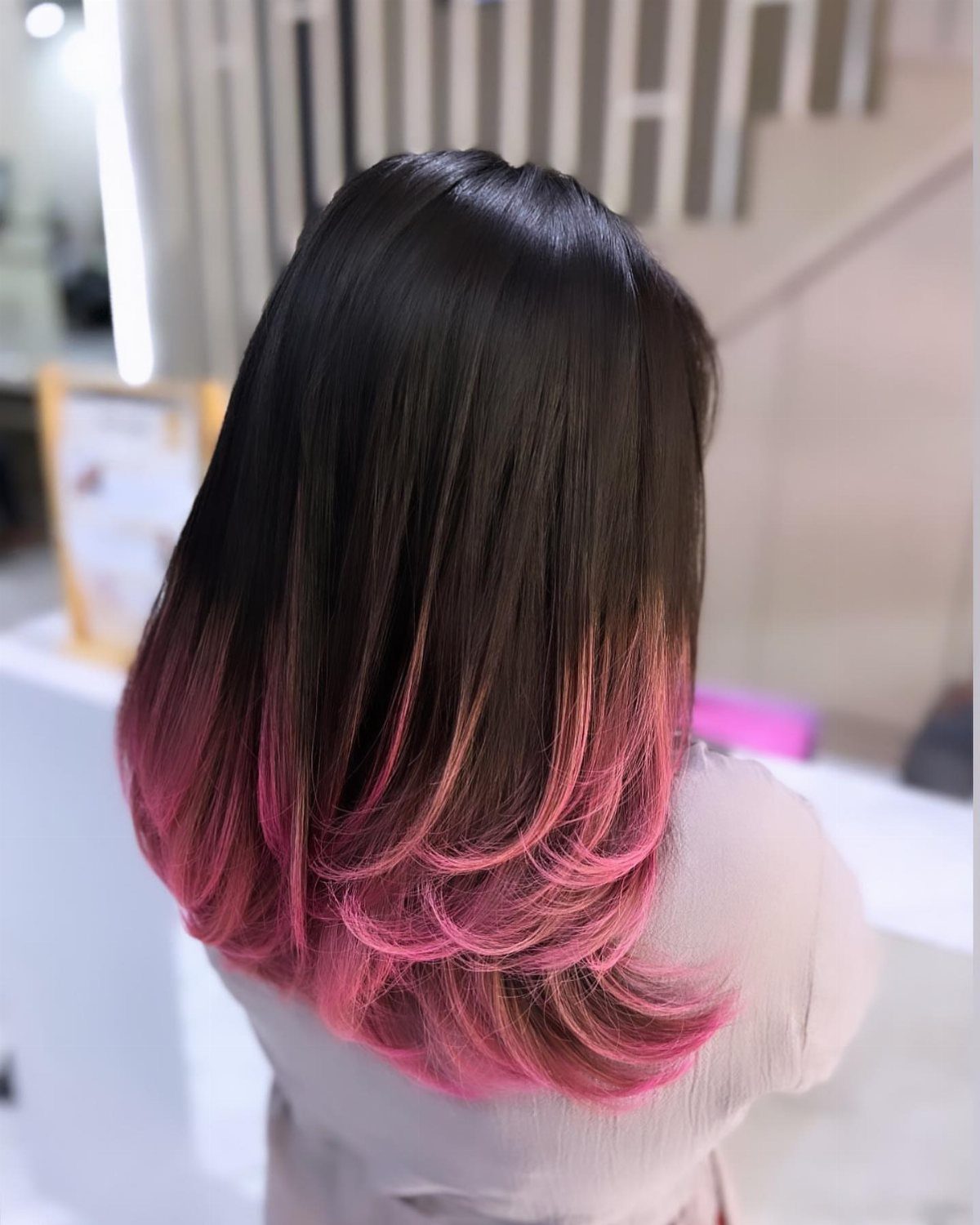
Dark roots fade through auburn and copper into rouge pink at the ends, creating a gradient that moves through warm tones rather than jumping straight from black to pink. The rouge sits brighter than dusty rose but softer than fuchsia.
The colorist will lighten the ends to blonde, then apply the rouge. The warm middle tones either come from controlled lifting or are added afterward to bridge the transition.
Regrowth blends naturally since the top stays dark.
15. Carnation Blonde Style
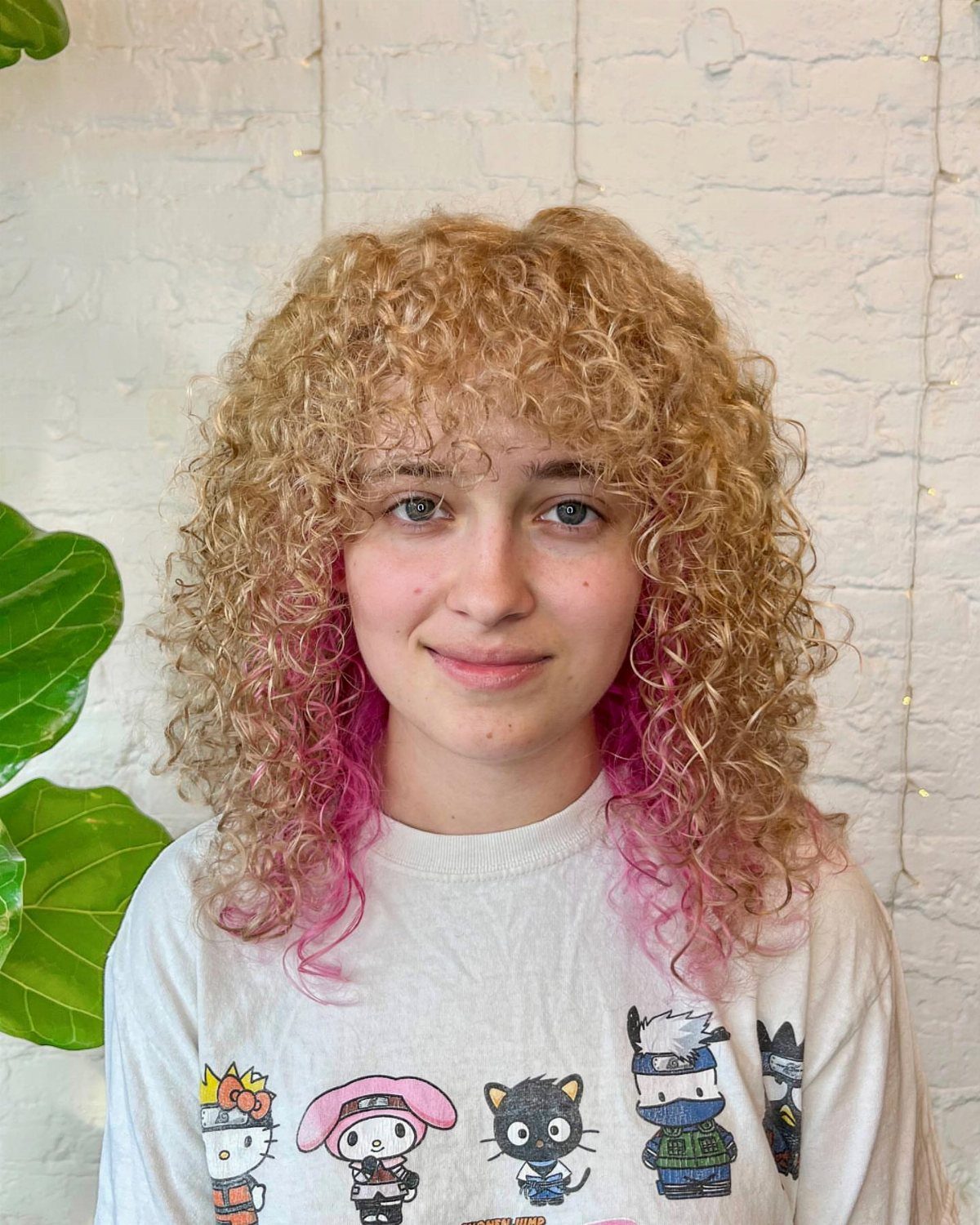
Pale blonde curls take on medium carnation pink through the lower sections, creating a two-tone finish that shows when the hair moves. The pink sits bright enough to read as a deliberate choice, not a subtle tint.
Curly hair holds color differently than straight, so the colorist will adjust the processing time to avoid over-lightening. The pink applies over the lightened sections once they’re lifted to pale blonde.
The color fades to a softer peachy pink that still contrasts with the blonde.
16. Holographic Pastel Style
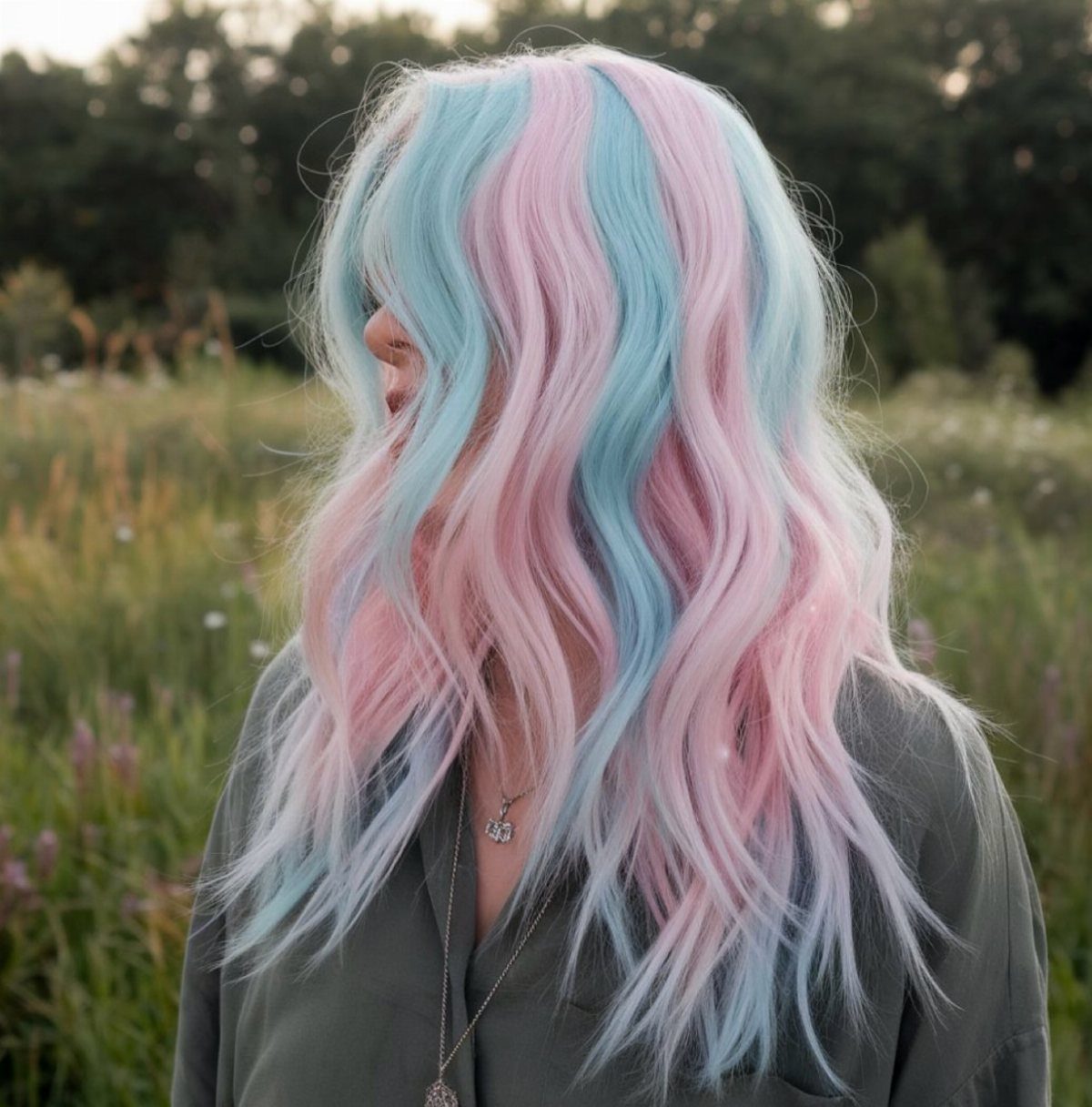
Pastel pink and blue streaks alternate through long hair, creating a finish that shifts between the 2 colors as the hair moves. The pastel tones sit light enough that neither color dominates.
Both colors need a pale blonde base to show true, so the stylist will lighten the hair first, then section off alternating pieces for the pink and blue.
Semi-permanent color works best here since it fades gradually instead of leaving a hard line.
Both colors fade at different rates, with blue typically lasting longer than pink.
17. Neon Hot Pink Style
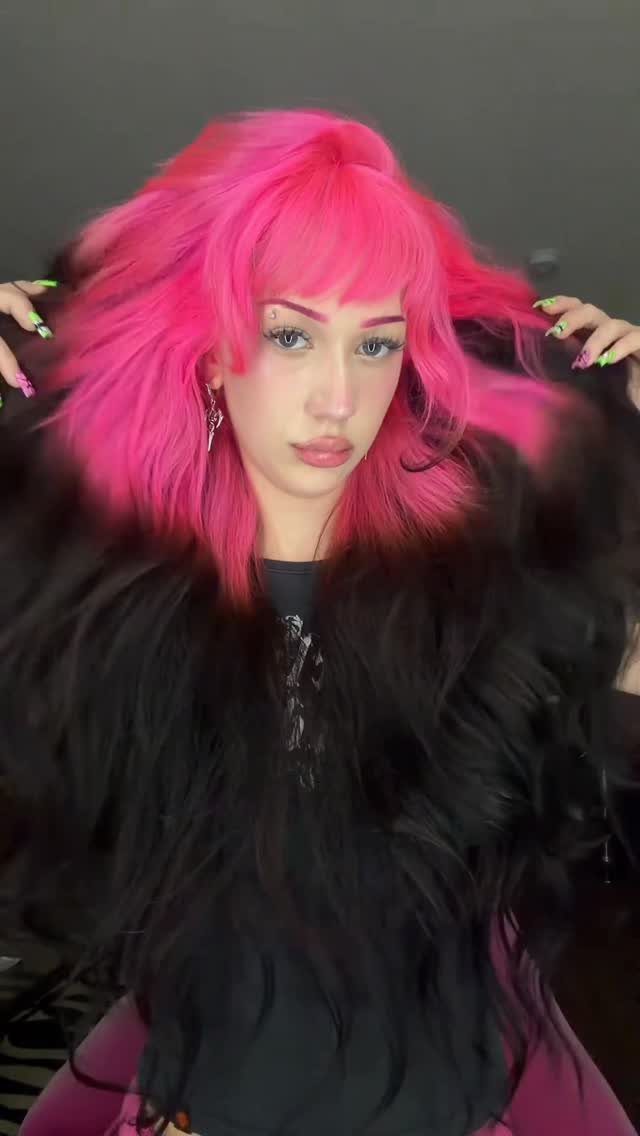
Neon hot pink covers the top section and bangs, with black underneath creating a sharp contrast. The pink sits vivid and bright, not pastel or dusty, so this reads as a bold choice.
Neon pink needs a very pale blonde base to show its full brightness.
The stylist lightens that top section to near-white before laying in the neon. Keeping the neon bright means refreshing it every few weeks, since bright pinks fade faster than darker tones.
The black underneath needs no extra maintenance and keeps the overall look grounded when you pull the pink forward.
18. Lavender Blush Textured Lob
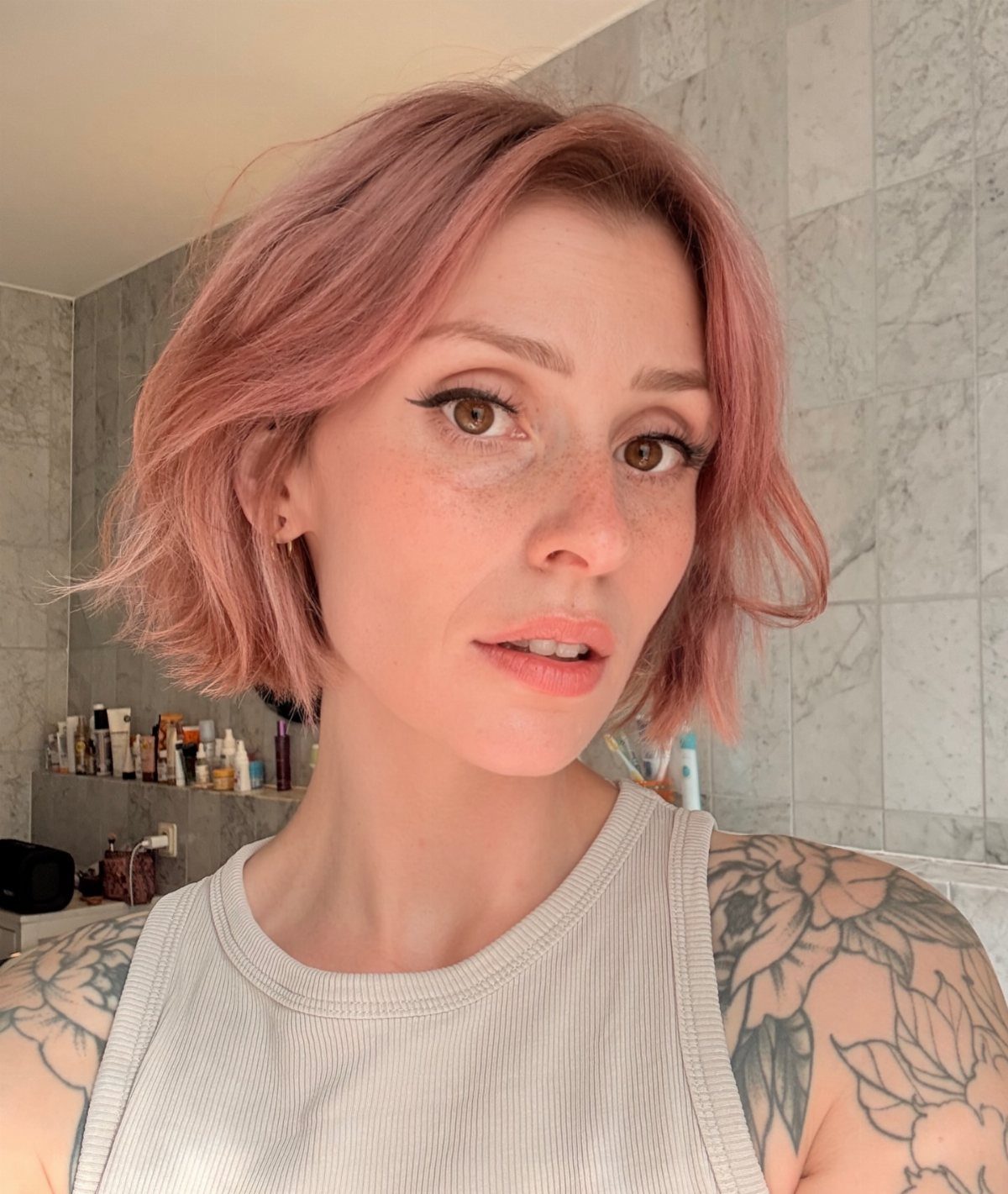
A textured lob in lavender-leaning pink gives the color dimension through the cut rather than through multiple shades. The bob length keeps the color close to the face, and the texture prevents it from looking flat or heavy.
Lavender pink sits cooler than peachy rose, so it suits people with cool or neutral skin tones. The colorist will tone the lightened hair with a mix of pink and violet to land the lavender shade.
The lavender fades to a pale blush pink, which still reads as intentional on the textured cut.
19. Pastel Purple Rose Melt
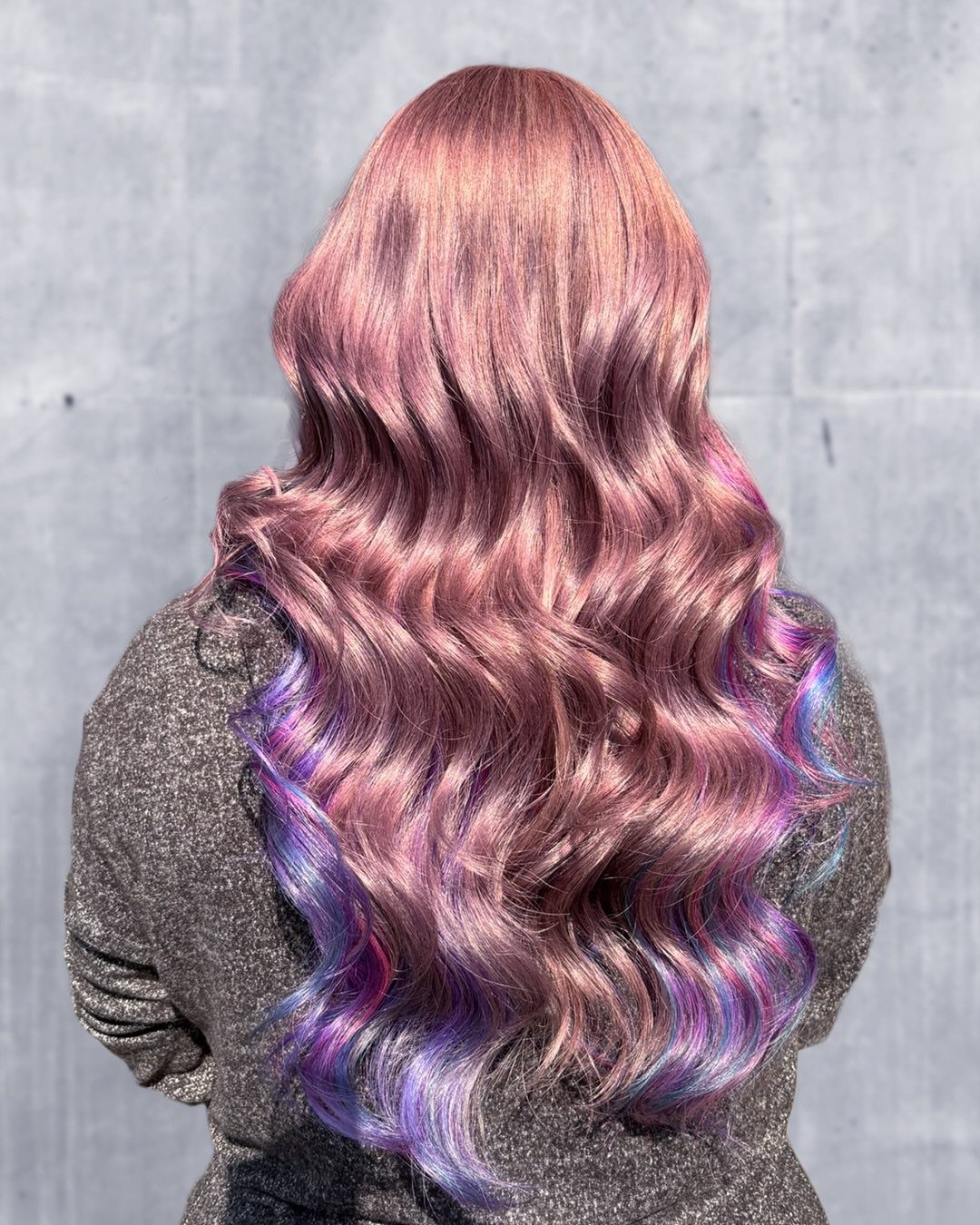
Dusty rose at the roots melts through pastel purple and into soft blue at the ends, giving long hair a gradient that shifts between warm and cool tones.
The pastels sit light enough that all three colors read as one cohesive finish rather than separate blocks.
The stylist applies rose, purple and blue in overlapping sections, blending where they meet.
Blue holds longest, pink drops first.
20. Long Coral Red Layers
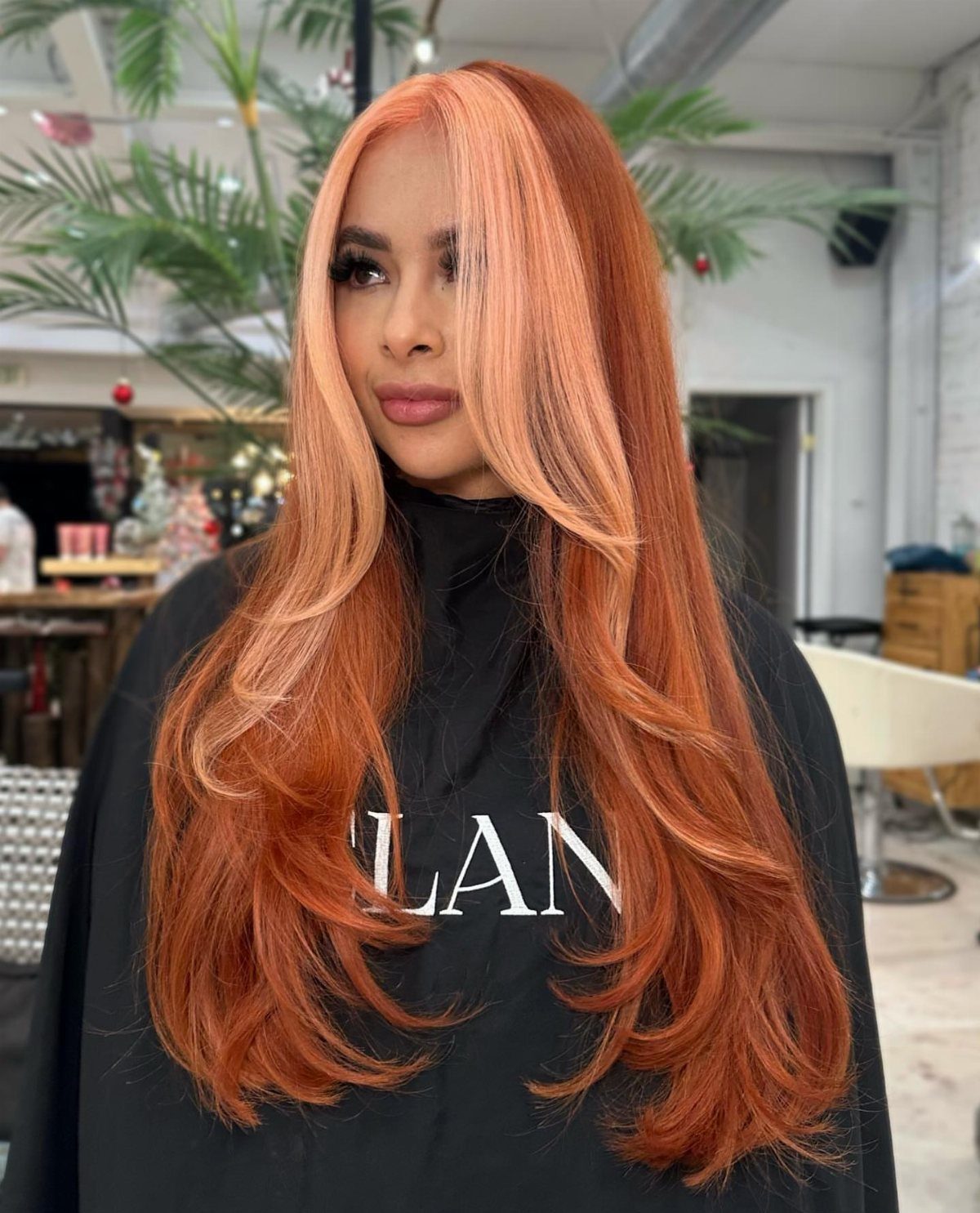
Long layers cut through coral red hair add movement and keep the color from looking flat. Lighter sections frame the face, creating contrast without a second color.
The coral sits bright and warm, closer to orange-red than pink-red, and shows best on hair that’s been lightened to blonde before the color goes on.
The layers work on any length past the shoulders, but longer hair gives the color more room to catch light as it moves.
21. Crimson Black Style
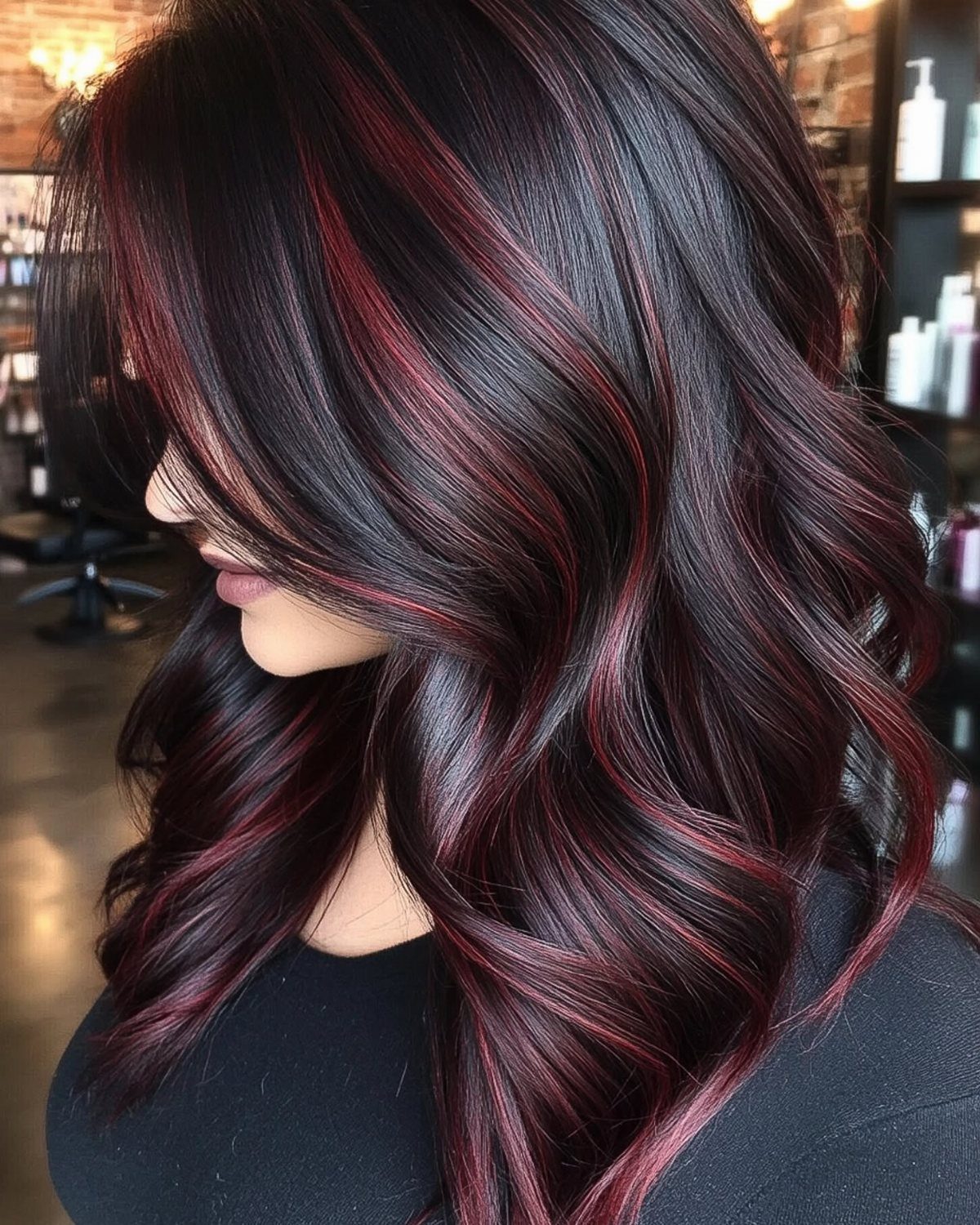
Deep crimson highlights run through black hair, creating a subtle contrast that shows mostly when light hits. The crimson leans red rather than pink, so the effect reads moody instead of bright.
Lifting black hair to the level needed for crimson takes time, and the colorist will space the highlights to show even when the hair is worn down.
22. Cotton Candy Split Dye
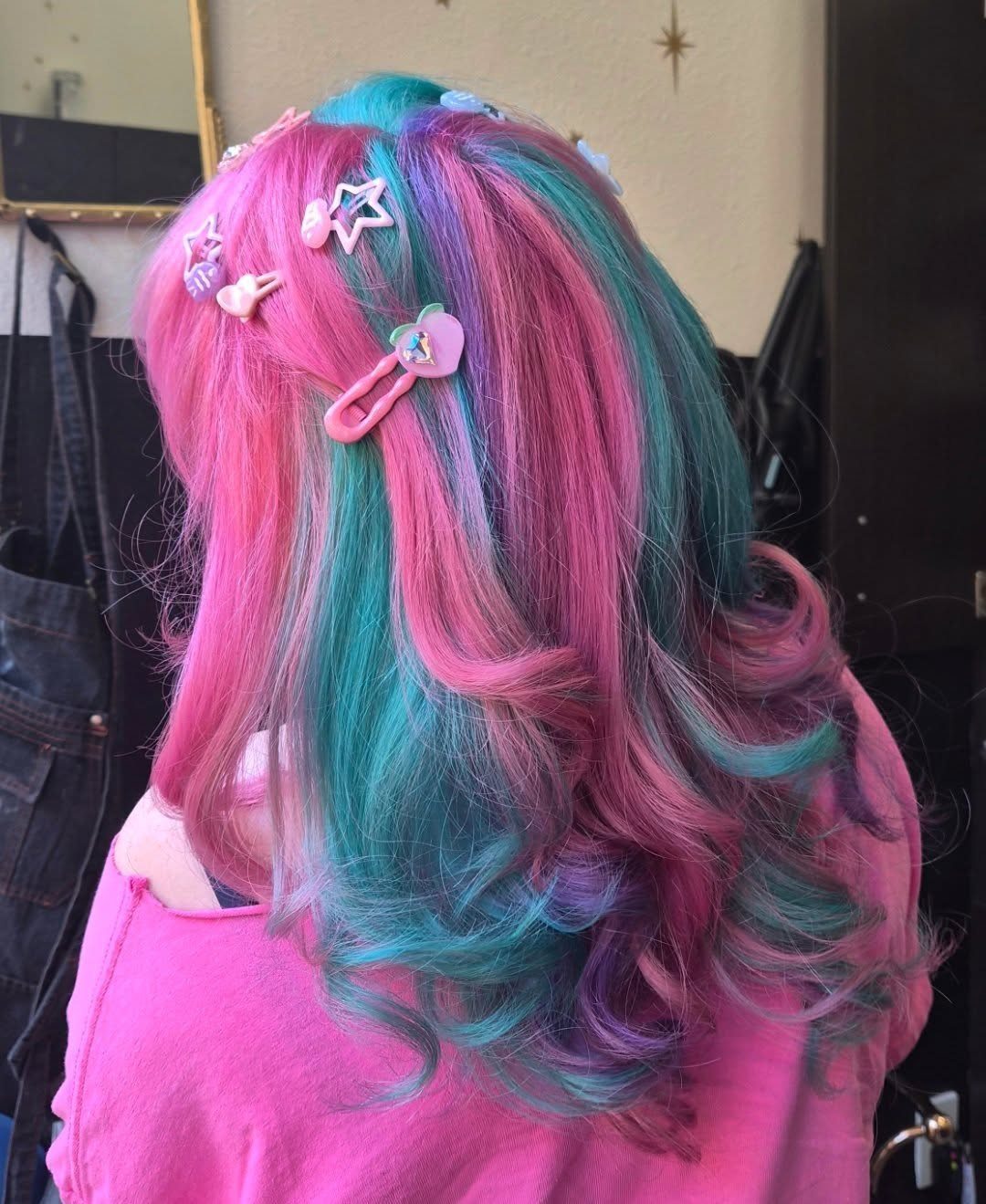
A vertical split divides the hair into pastel pink on one side and turquoise on the other, creating a two-tone finish that shows most clearly when the hair is parted down the middle.
The split can sit anywhere from center to slightly off to one side, depending on how much of each color you want to show.
Both colors need a pale blonde base, and the stylist sections the hair along the chosen line before applying each shade. The pink fades faster than the turquoise, so the balance between the 2 shifts as time goes on.
23. Magenta Bowl Cut
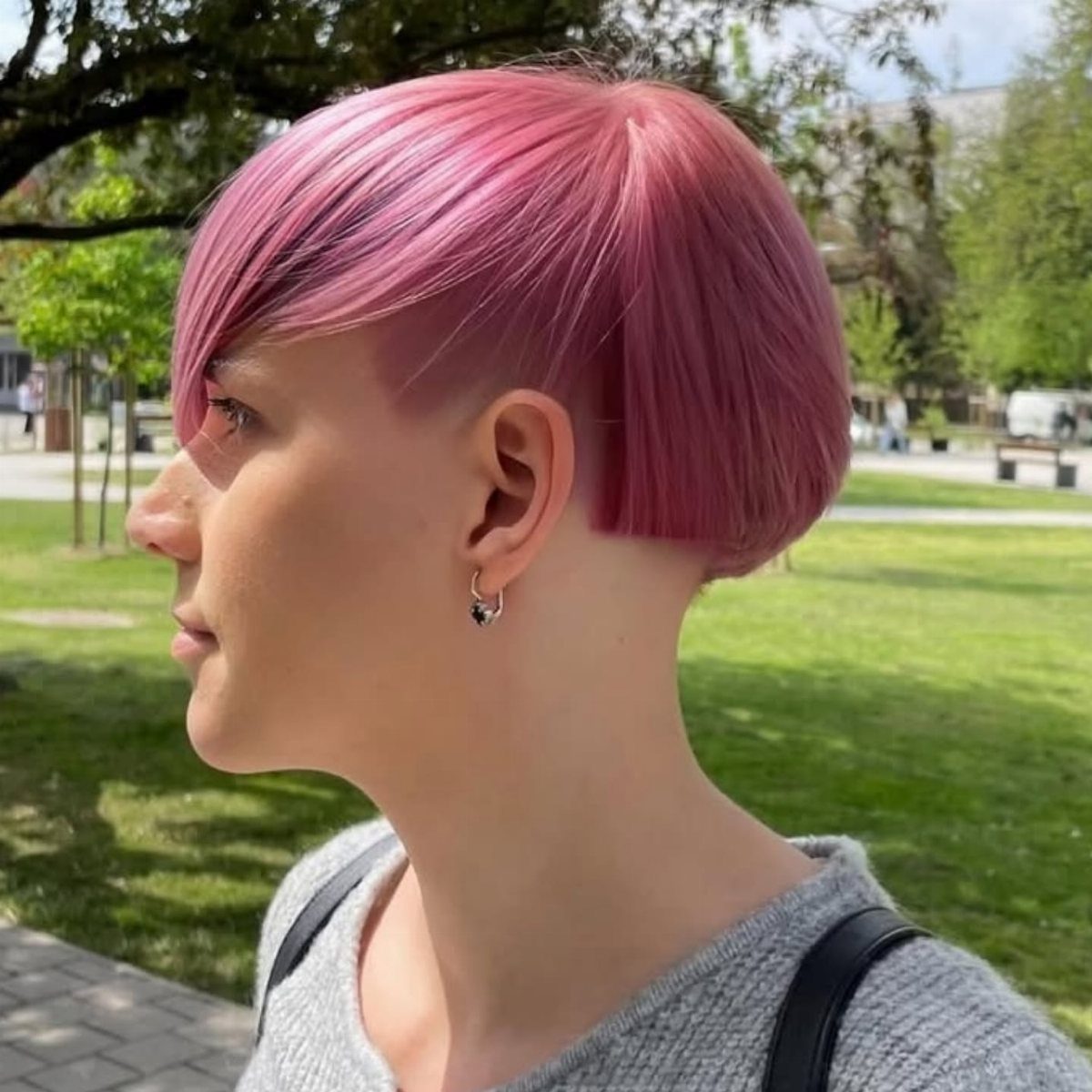
A bowl cut colored solid magenta pairs a structured shape with a bold color. The cut sits blunt and rounded, with a long side fringe that softens the line, and the magenta reads vivid rather than pastel.
Topping up the color every few weeks stops the magenta slipping to pale pink, though plenty of people like the softer look once it fades.
24. Peachy Face Frame Streaks
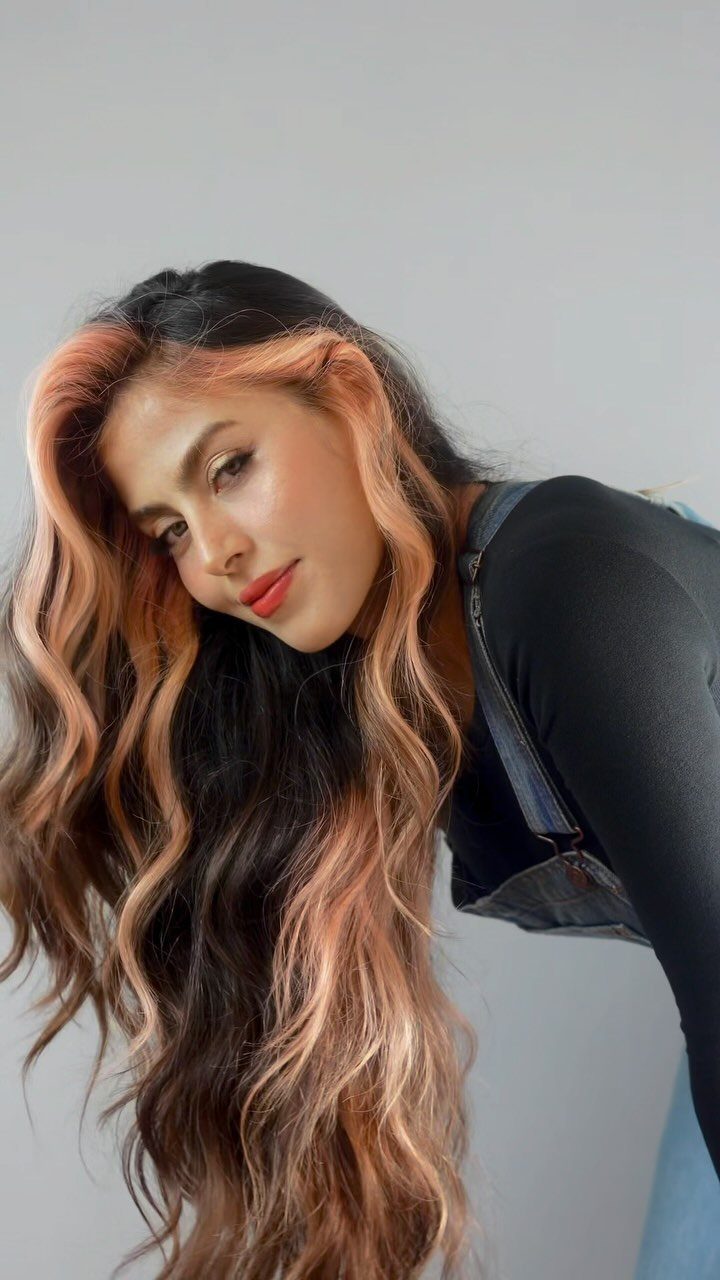
Peach streaks sit along the front sections, warming the face without coloring the rest. The streaks sit wide enough to show when the hair is worn down, and the peach reads soft and warm rather than neon or pastel.
The placement keeps the color close to the face, so it shows even when the rest of the hair stays dark. The peach fades to a soft blonde that still contrasts with the dark base.
25. Coral Pixie Cut
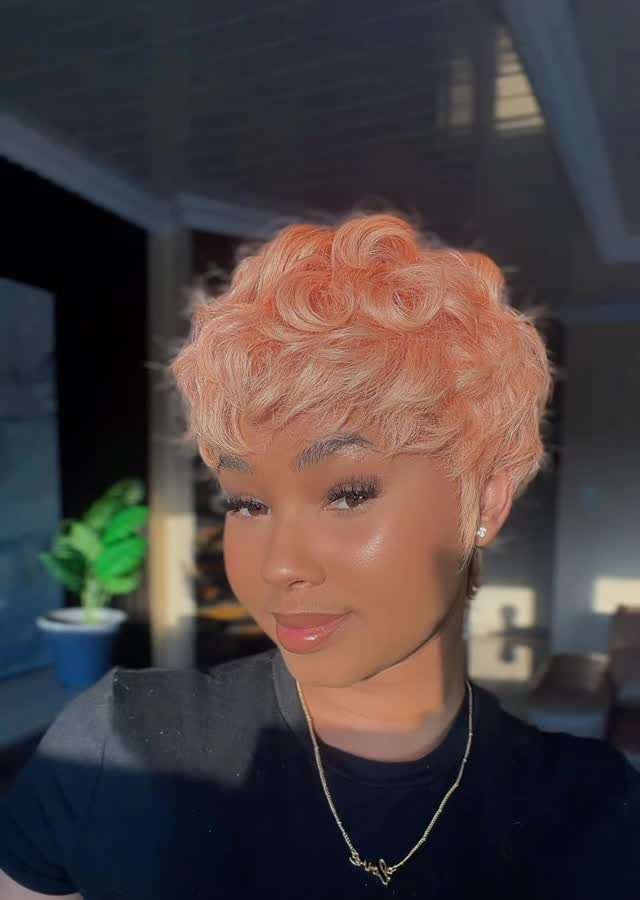
A short pixie cut colored solid coral brings warmth to the face without length. The coral sits bright and peachy, not dusty or pastel, and the curly texture keeps the color from looking flat.
Pixie cuts grow out quickly, which means the shape needs regular trims to keep the line sharp.
Refreshing the coral between cuts keeps it from fading to pale peach, though plenty of people prefer the softer tone once it drops.
26. Pale Peach Rose Blend
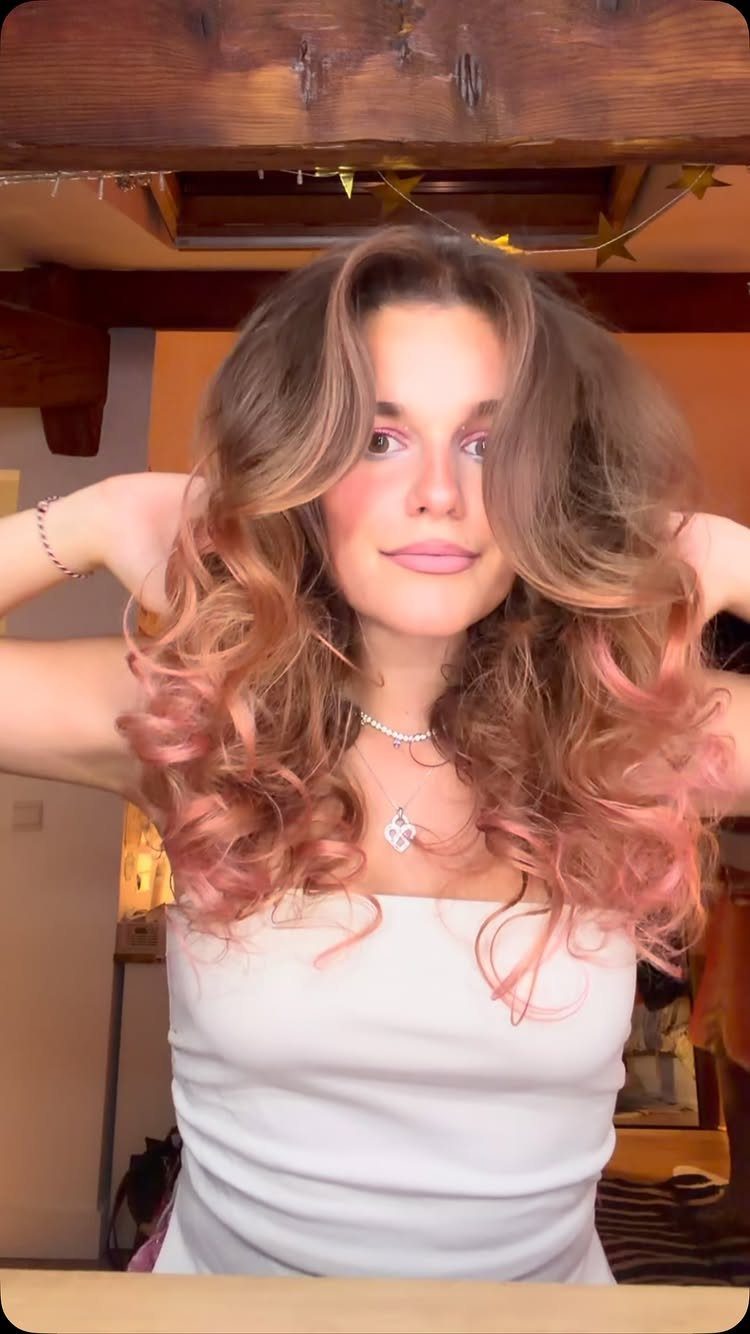
Peach, rose and golden tones blend through brunette hair, creating a soft gradient that reads warm rather than bright. The colors sit close enough in tone that they melt together instead of sitting in separate bands.
Brunette hair needs lightening before the peachy tones go on. The stylist will paint the color through the mid-lengths and ends, leaving the roots dark so regrowth stays subtle.
27. Delicate Rosewood Highlights
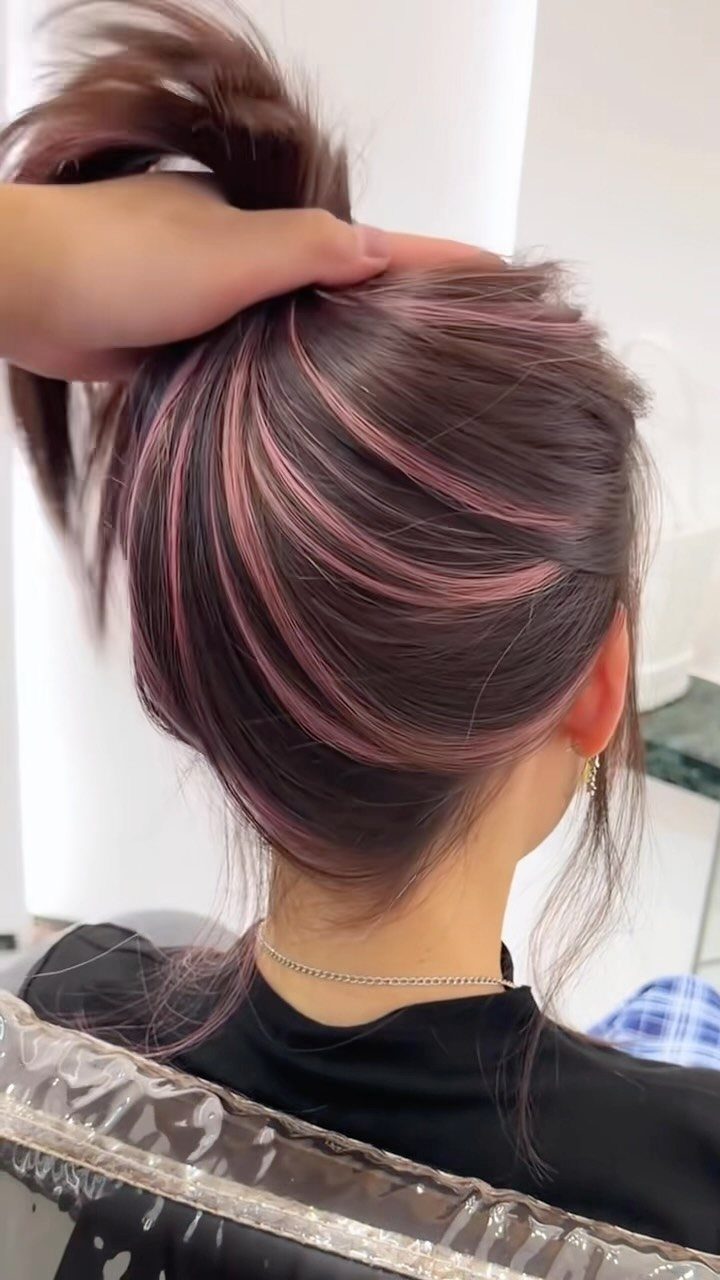
The fine streaks catch the light without shouting, staying visible but controlled. The placement stays light, with more dark hair than pink, so the finish reads as a hint rather than a statement.
Partial foils let the colorist control exactly where the pink goes, placing it through random sections rather than covering the whole head.
The dark base needs no maintenance, and the rosewood can be refreshed with a depositing conditioner between salon visits.
28. Vivid Magenta Streaks
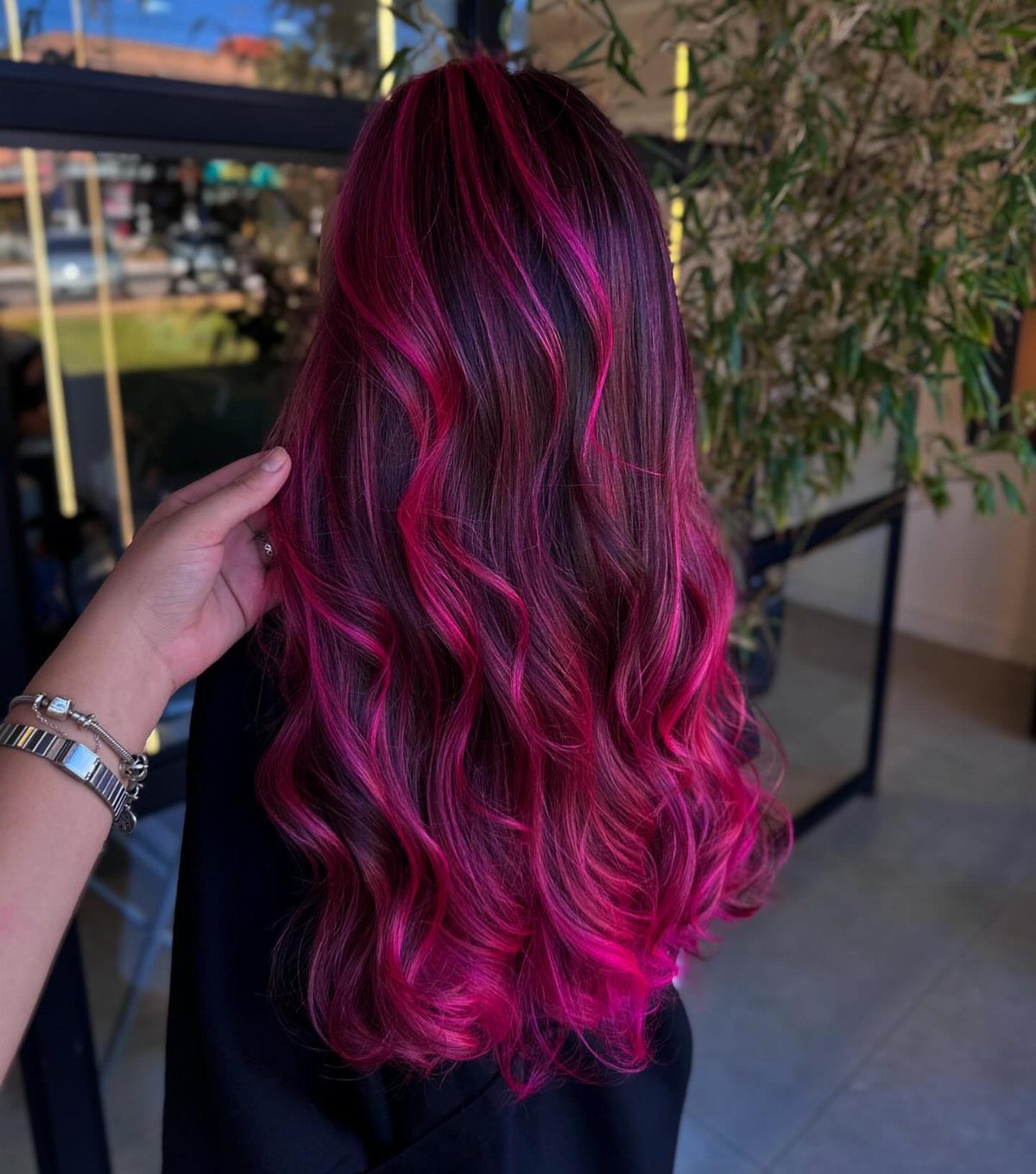
The streaks land throughout the length so color stays visible when the hair moves. Width matters here: too fine and magenta disappears into the base, too thick and it fights the dark.
Dark hair needs lifting to pale blonde before the magenta goes on.
Magenta fades to a cooler pink, which still stands out against the dark base.
29. Pink Underlayer Highlights
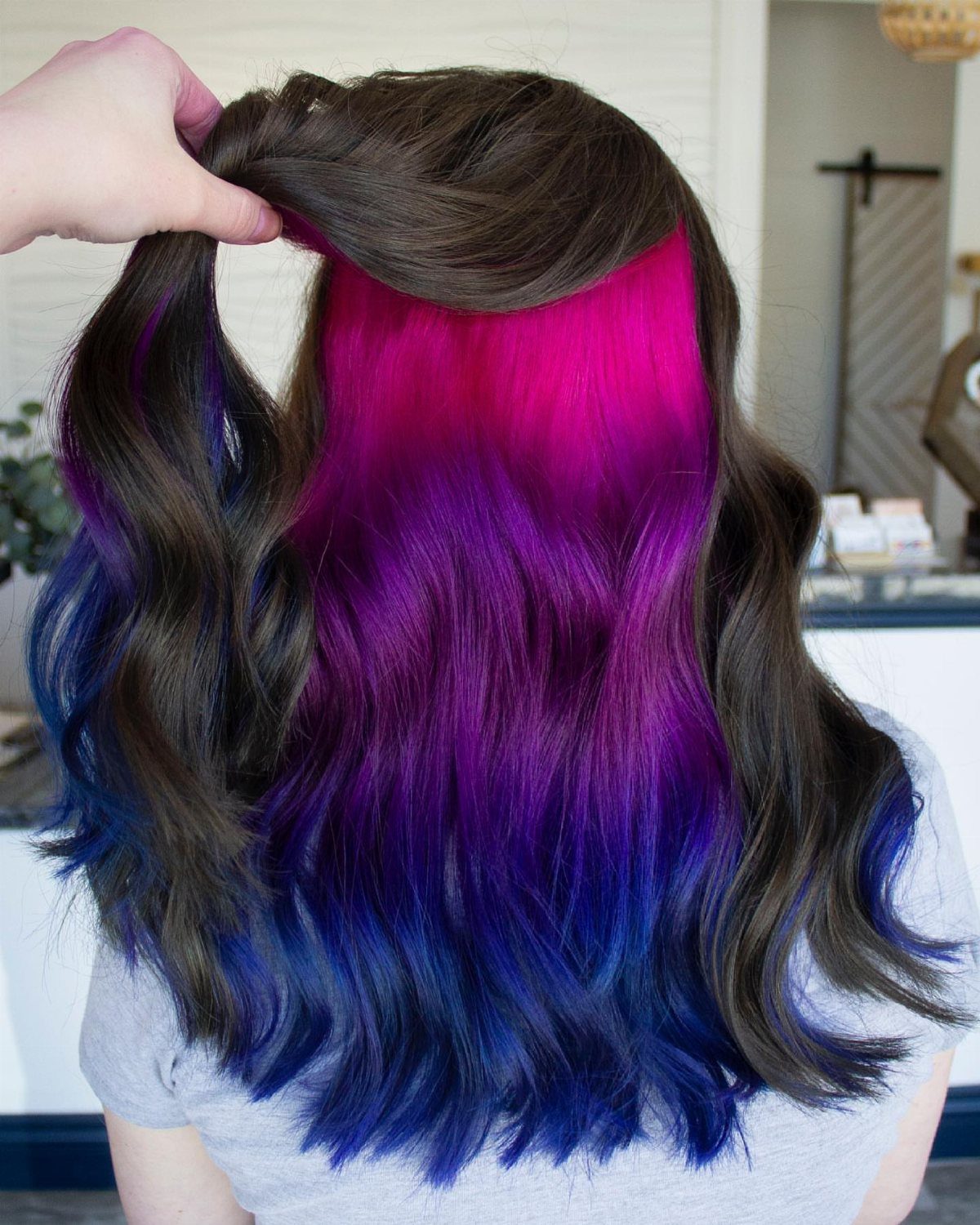
Dark hair on top conceals vivid pink and purple sections underneath, which show when the hair is lifted or clipped up.
The top layer stays natural, so the color can be hidden or revealed depending on how the hair is styled.
The color sits far enough under that regrowth blends naturally with the dark top layer.
30. Pink Highlights on Copper
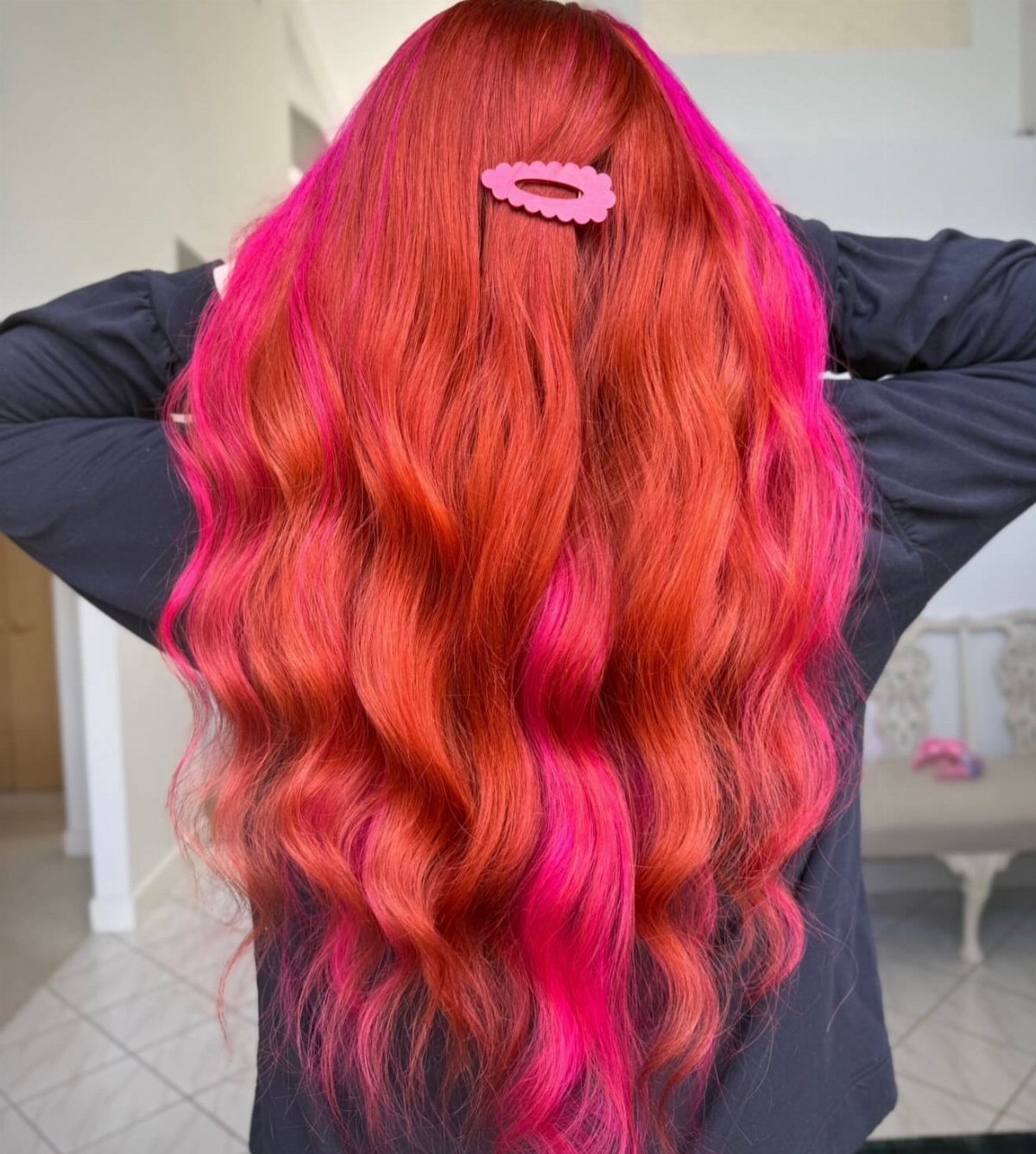
Hot pink streaks run through wavy copper-red hair, creating a contrast that reads bold and warm. The pink sits vivid rather than pastel, so the 2 colors hold their own instead of blending.
Copper hair needs lightening before the pink goes on, and the stylist will space the pink streaks throughout so they show when the hair moves.
The pink fades to a softer peachy tone that sits closer to the copper, mellowing the contrast as it drops.
31. Pale Pink Hair
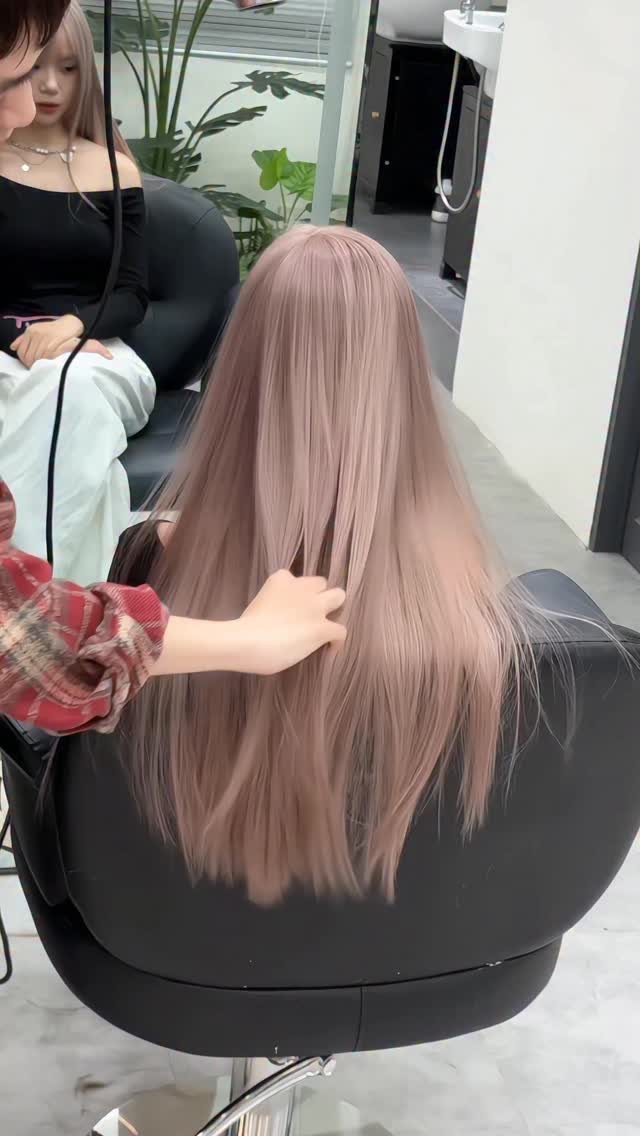
Long hair colored pale pink overall gives a soft, cohesive finish without contrast or dark roots. Subtle variation in tone keeps the color from looking flat, with slightly lighter or darker pink through different sections.
Getting pale pink even requires lifting the hair to very pale blonde first, then toning it with a diluted pink.
Regrowth shows clearly since the whole head is colored, so root touch-ups come with every refresh.
32. Pink-to-Purple Hair
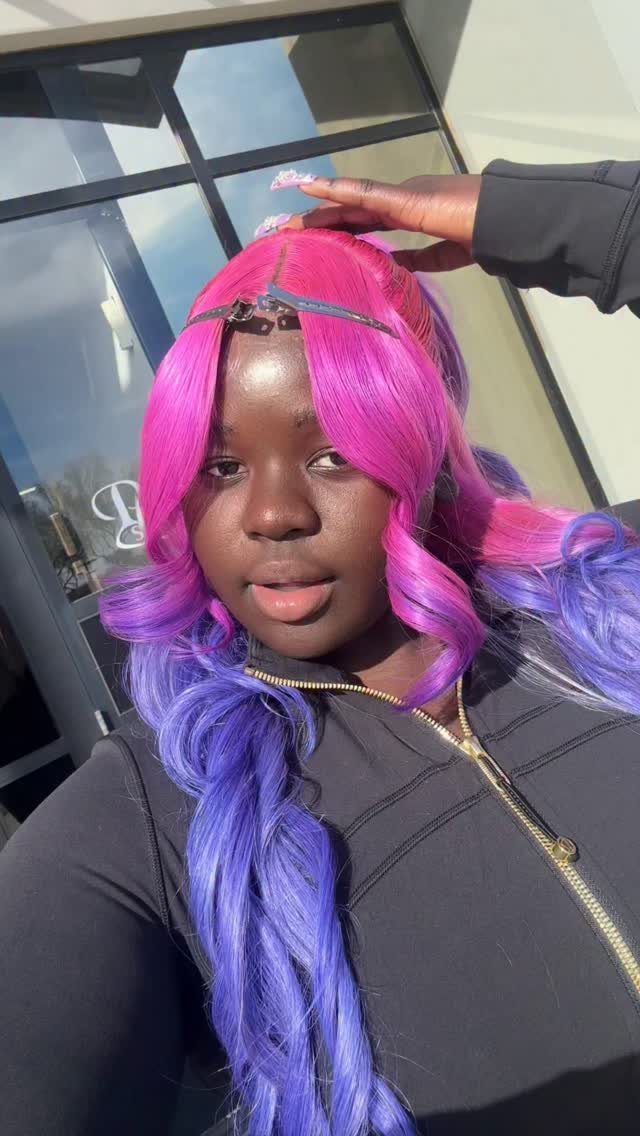
Pink at the crown blends down into purple and blue through the lengths, giving curls a gradient that shifts cool as it moves away from the face.
The pink stays vivid rather than pastel, and the purple and blue deepen the ends without reading dark.
All 3 colors need a pale blonde base. The stylist applies pink at the top, then overlaps it with purple and blue as the color moves down, blending where they meet so the transition stays smooth.
33. Pink Highlights on Brown Hair
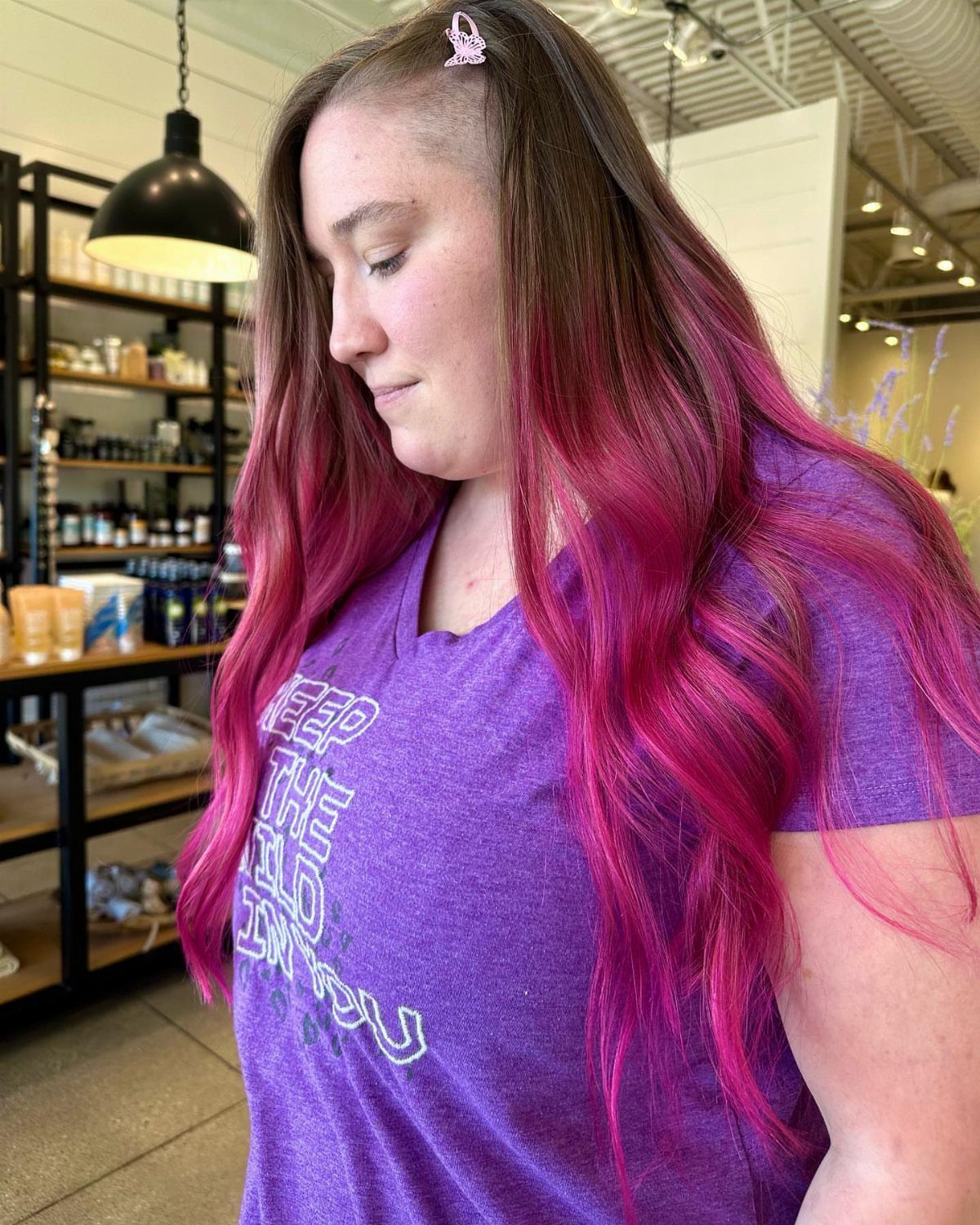
Brown hair picks up vivid pink and purple streaks that sit bold enough to read as separate colors rather than a soft tint.
Brown hair needs lightening before the pink and purple go on. Pink and purple highlights on brown hair fade at different rates, with purple typically outlasting pink, so the balance between the 2 shifts over time.
Choosing Shades for Complexion
Warm undertones suit pink shades with peach, coral or golden leanings. Cool undertones work better with dusty rose, lilac-tinted pinks or shades that lean slightly violet.
If you’re not sure which category you fall into, check which metal looks better on you: gold suggests warm, silver suggests cool.
If you lean warm and your skin is fair, a peachy or coral-toned pastel holds its own instead of disappearing. Pale complexions with cool undertones show lilac-tinged pastels clearly without the color overwhelming the face.
The pink itself matters less than where it sits on the warm-to-cool spectrum. A peach-leaning pink on cool-toned skin can read orange.
If you’re uncertain, ask the colorist to apply a temporary version first. Semi-permanent color washes out in a few weeks, so you can test the tone before committing to a full lightening process.
Frequently Asked Questions
Are pink highlights a thing?
Pink highlights are popular and come in a range of finishes, from vivid neon streaks to soft pastel blends that barely read as color.
The variety means they work year-round rather than as a seasonal trend. You can keep them subtle with face-framing pieces or go bold with heavy placement through the whole head.
What skin tone does pink hair look good on?
Cooler pinks like dusty rose, lavender blush and fuchsia suit cool or neutral skin tones, while peachy coral and strawberry shades lean warm and pair better with golden undertones.
If you’re not sure, try a semi-permanent version first to see how the tone sits against your complexion. Most stylists can adjust the pink formula to pull warmer or cooler depending on what flatters you.