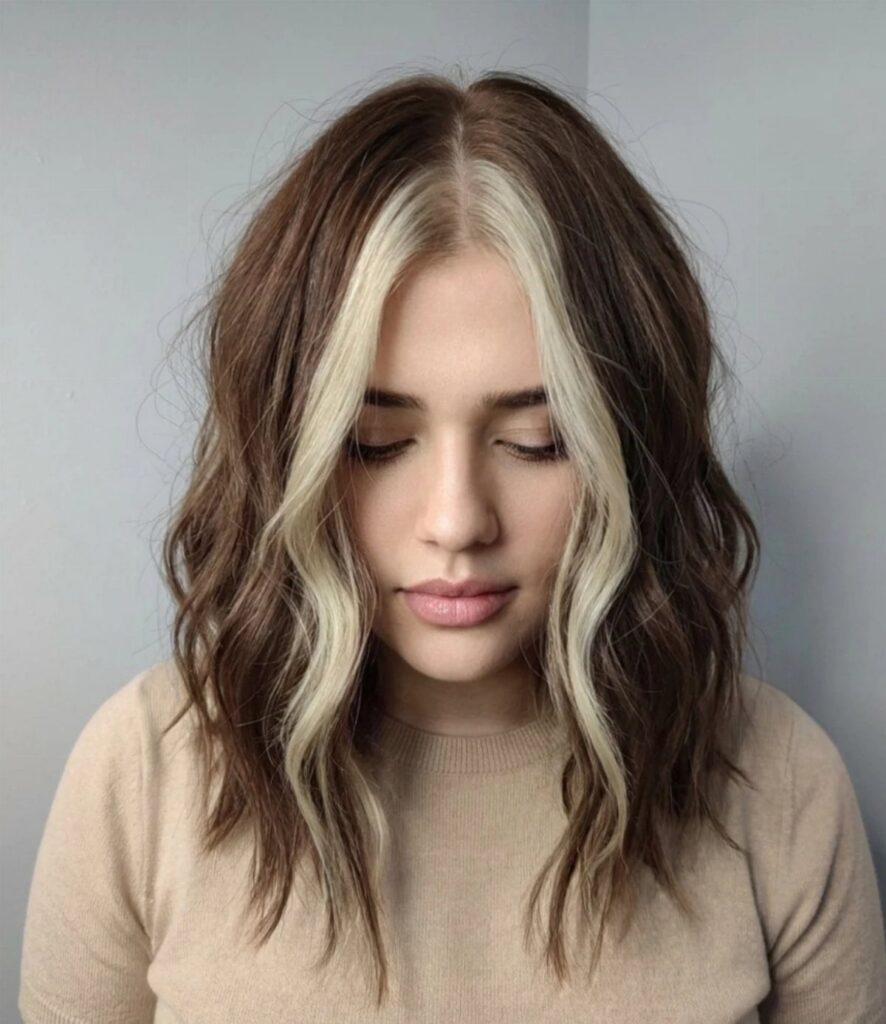
Blonde money pieces frame your face without lightening the rest of your hair, and the grow-out hides at your natural part instead of announcing itself.
How often you’re back in the chair depends entirely on placement: fine scattered pieces grow out invisibly, thick platinum panels on dark hair show a line in 8 to 10 weeks.
On very dark bases, reaching blonde takes 2 sessions 2 weeks apart, and toner does more work here than it will anywhere else.
1. Brunette Hair with Blonde Money Piece
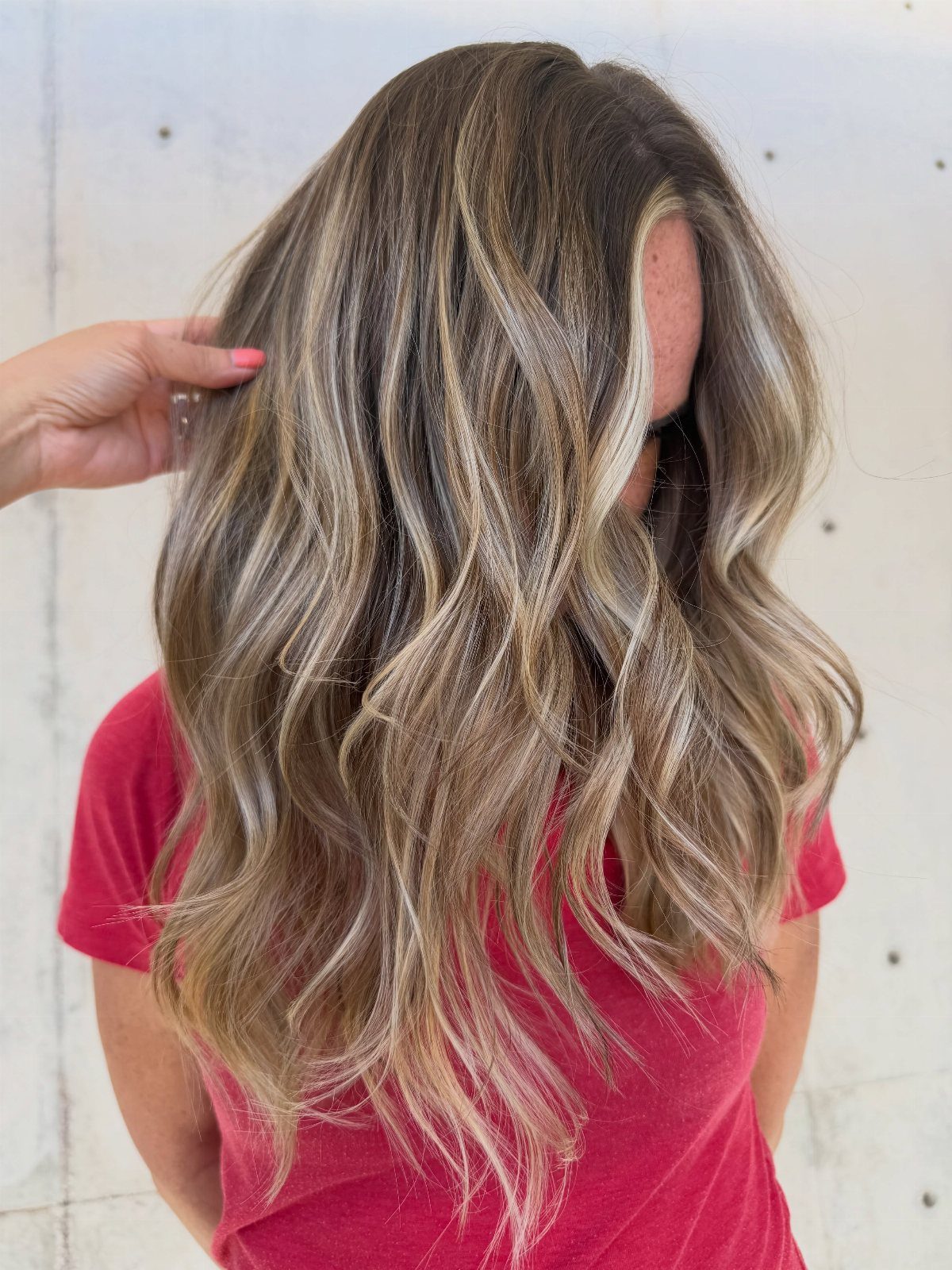
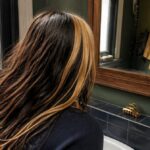
Blonde face-framing pieces lift brunette hair without touching the rest. The contrast pulls attention forward, and on wavy hair the highlights catch differently along each curve.
If your base is naturally brown or dyed to a medium brunette, foils or balayage can bring the front sections up to blonde in one session.
Darker starting points usually need two appointments to avoid damage, with a week or two between lifts.
The grow-out is forgiving. Your natural part hides the root line, and because the blonde stops well back from your hairline, regrowth blends instead of announcing itself.
2. Blonde Money Piece on Dark Hair
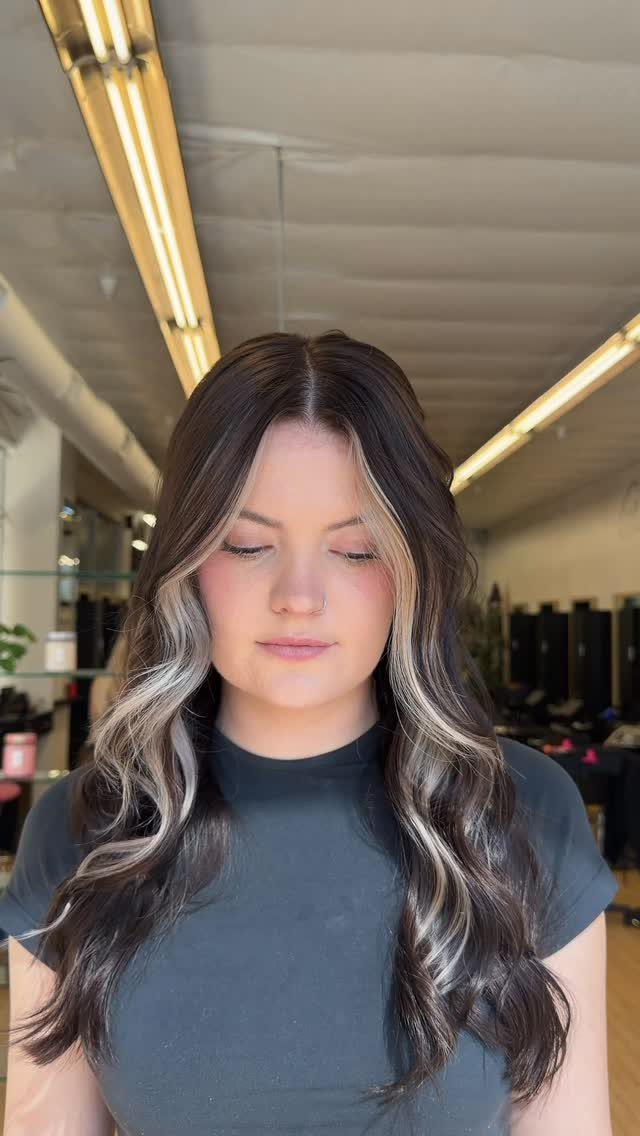
High-contrast blonde sections frame dark hair and hold their shape as the color settles.
On very dark brown or black hair, the lift to blonde takes patience: two sessions spaced 2 weeks apart protect the hair while bringing the front pieces to a clean, bright finish.
Toner matters here more than anywhere else. Without it, lifted dark hair pulls orange or brassy, and that warmth shows fast.
A violet or ash toner at the bowl, then a purple shampoo at home every third wash, keeps the blonde cool and the line between dark and light crisp.
The upkeep is front-loaded. After the initial lift, touch-ups stretch out nicely for slower-growing hair, but the first few months usually need closer attention.
3. Blonde Money Piece with Bangs
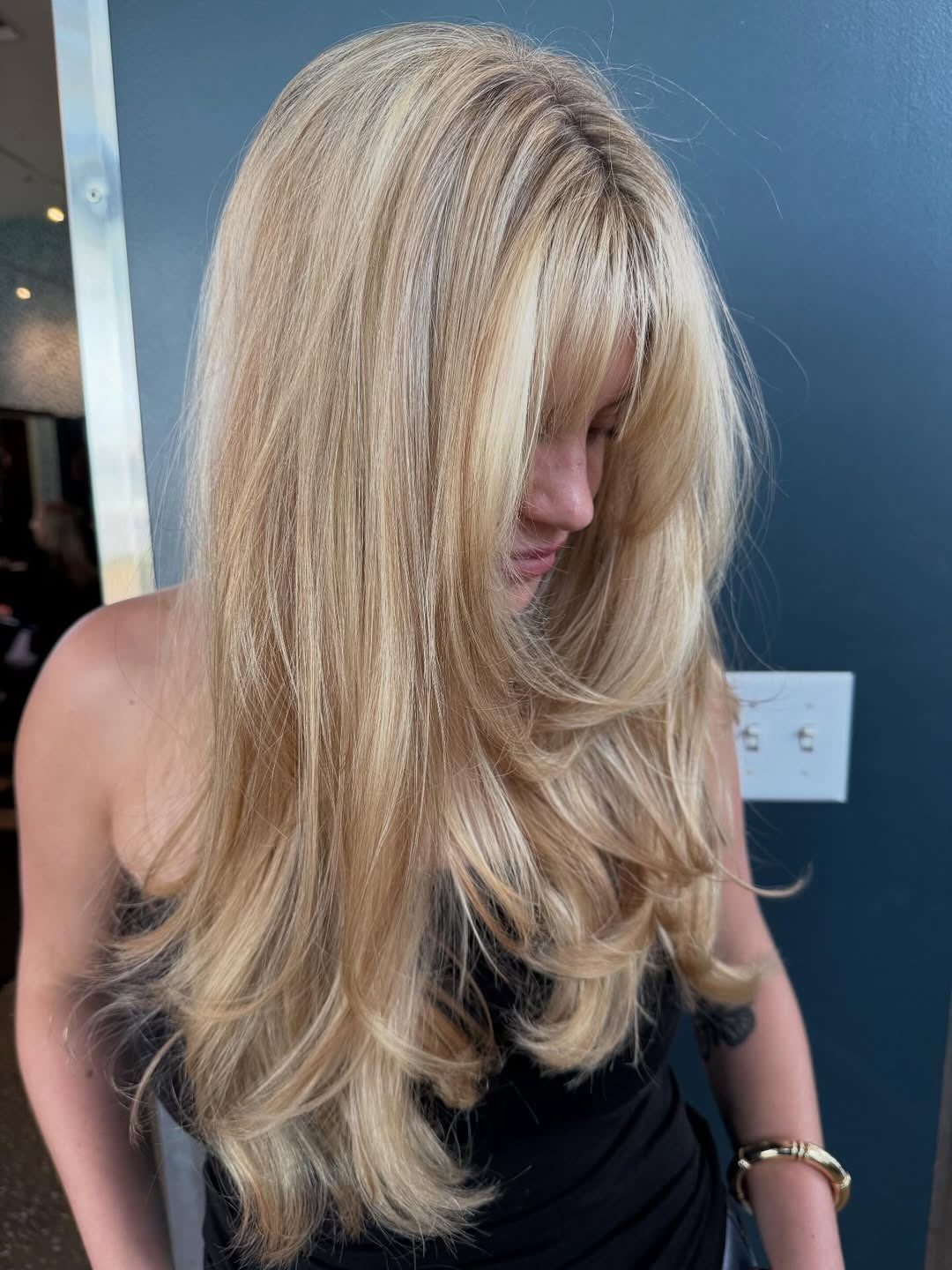
Curtain bangs and blonde money pieces work together because both draw the eye inward. The bangs part at the center and feather out, and the blonde sections frame that same centerline, so the whole front moves as one piece.
If you already have bangs, adding the blonde highlights fits into a single appointment.
If you’re cutting bangs and coloring at the same time, book 2 hours. The stylist will usually trim the bangs first, then place the foils so the color follows the cut shape.
The blonde catches light, so even minimal effort reads as finished.
4. Chunky Blonde Money Pieces
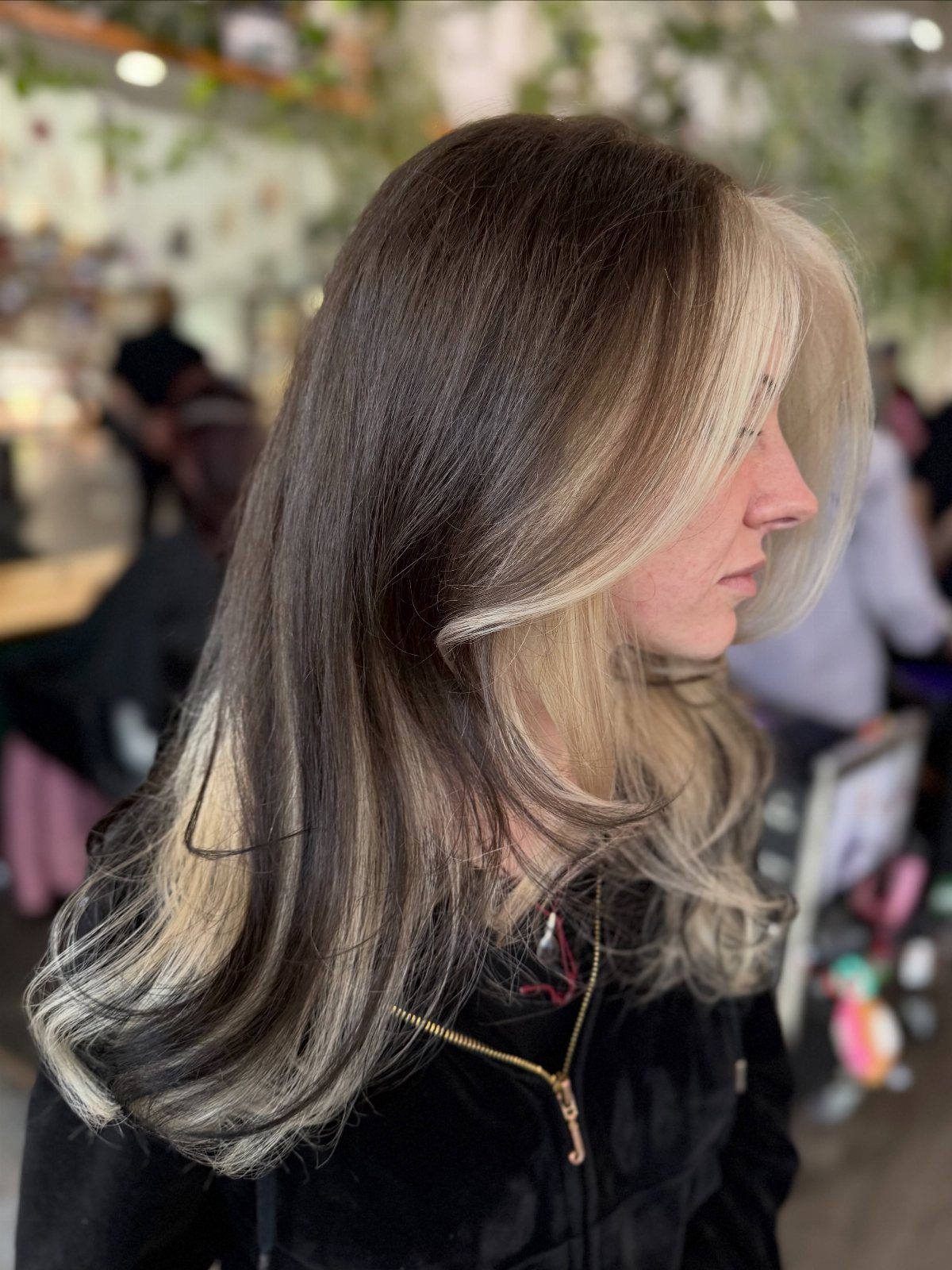
Chunky money pieces are wider than the standard quarter-inch sections, usually closer to an inch or more. The width makes the contrast unmistakable, especially on dark brown hair, and gives the blonde enough surface to catch movement.
Ask for hand-painted balayage when the blonde should start lower and fade into the lengths, or foils for a sharper line closer to the root. Foils give more control, balayage softens faster as it grows.
The boldness cuts both ways.
Chunky sections make a statement, but they also mean more hair to lift and more upkeep if your natural color grows in quickly. Plan for touch-ups every 8 to 10 weeks to keep the contrast clean.
5. Straight Black Hair with Platinum
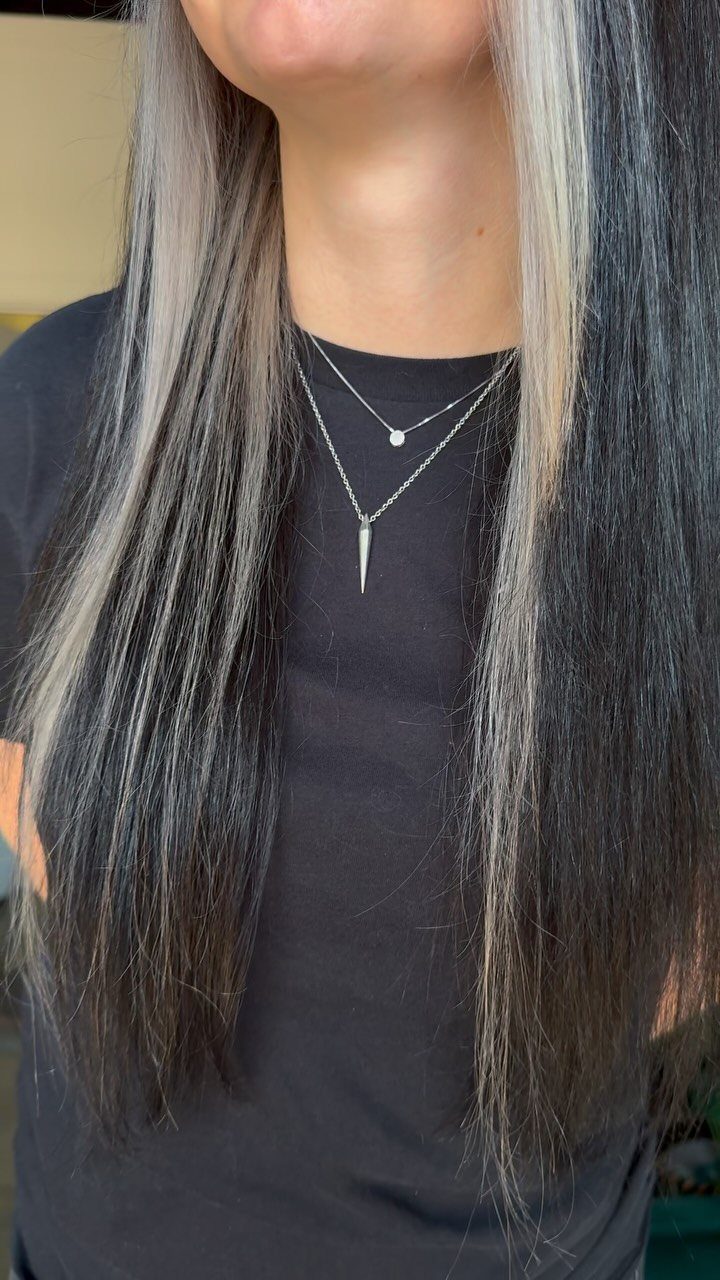
Platinum against black hair is the sharpest version of the money piece, and it only works if the blonde stays truly white. On straight hair every strand sits parallel, so any warmth or uneven tone shows immediately.
Lifting black hair to platinum takes 2 sessions minimum, sometimes 3 if your hair is thick or previously colored.
Toner is applied every time, and between appointments you’ll need purple shampoo that actually deposits pigment, not just the faint tint some bottles offer.
Flat-ironing the front sections after styling makes the line between black and platinum read even cleaner. The sleekness is part of the look, so if your hair holds texture or frizz, this version asks for daily heat.
6. Copper Hair with Blonde Money Piece
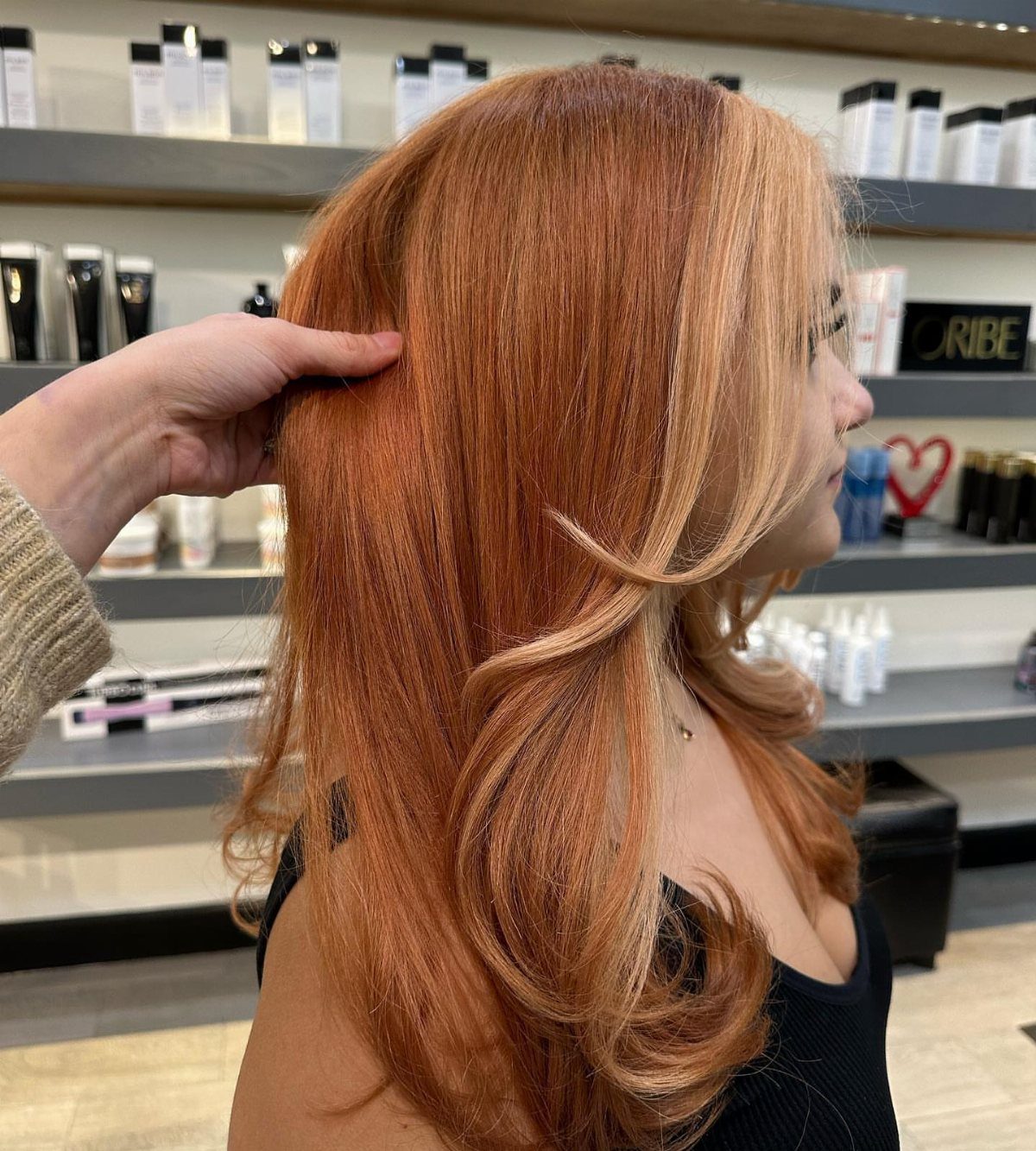
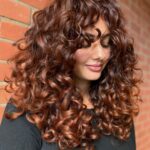
Blonde highlights against copper or auburn create warmth on warmth, but the blonde reads cooler in comparison. The 2 tones sit next to each other without blending, so the face-framing effect stays visible even when the hair moves.
Copper fades faster than most base colors, so when your auburn is dyed, plan to refresh the base more often than the blonde.
If your copper is natural, the blonde will last longer before it needs a toner, because there’s less pigment washing out and shifting the overall tone.
Golden or honey blonde works better here than ash. Ash tones next to copper can look muddy as the color settles, while warmer blondes keep the brightness without fighting the base.
7. Dimensional Blonde Money Piece
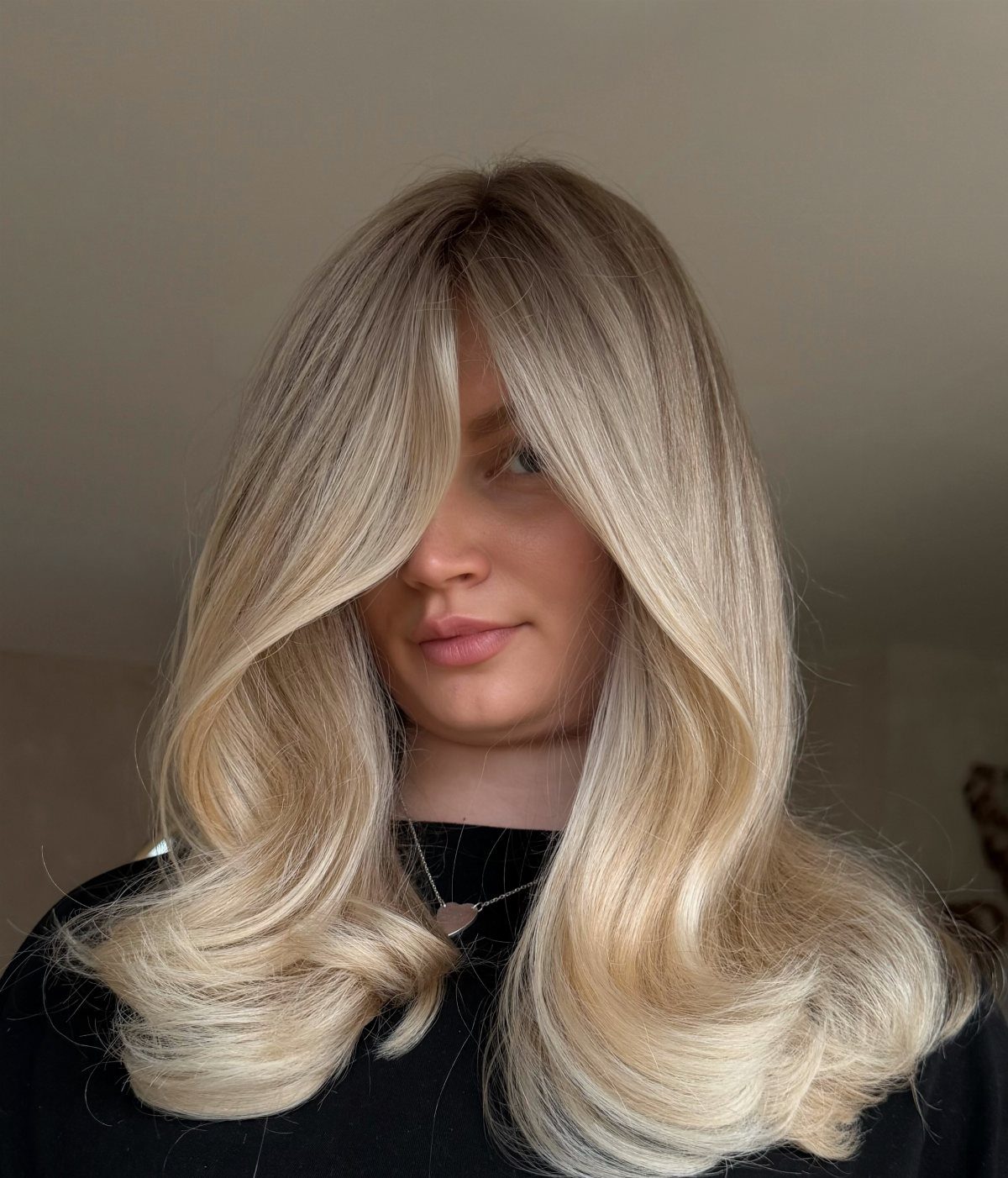
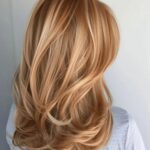
Bright face-framing pieces combined with darker blonde lowlights keep the color from reading flat. The lowlights add depth through the lengths, so the blonde at the front stands out without the rest of the hair disappearing into one tone.
If your base is already blonde, adding dimension means weaving in a few darker pieces through the mid-lengths and ends during the same appointment.
The contrast makes the money pieces pop, and the overall color holds better as it grows because there’s variation built in from the start.
The lowlights also stretch time between appointments, since regrowth blends into the darker sections instead of showing a hard line.
8. Ash Blonde Money Piece
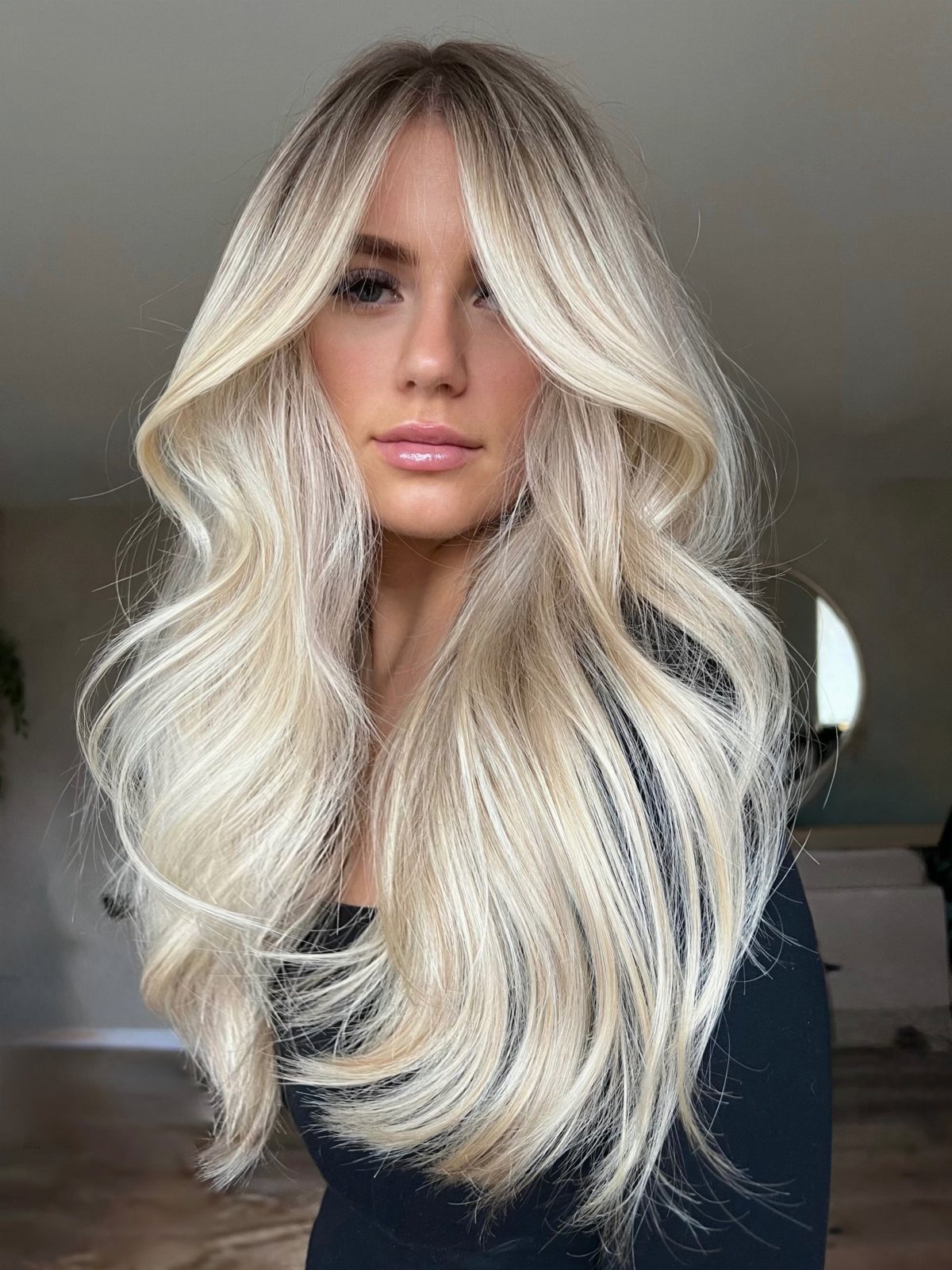
Face-framing highlights lift the front sections brighter than an ash blonde base, adding contrast without warm tones. The cool base and the bright blonde both stay in the same color family, so the shift reads clean rather than jarring.
Ash tones fade toward brassy yellow faster than warmer blondes, so toner becomes routine. Purple shampoo every other wash keeps both the base and the highlights cool, and a gloss brings back the silver-leaning finish when it starts to warm.
On naturally warm or previously lightened hair, getting to true ash takes a strong toner at the bowl and vigilance at home.
9. Beige Blonde Money Piece
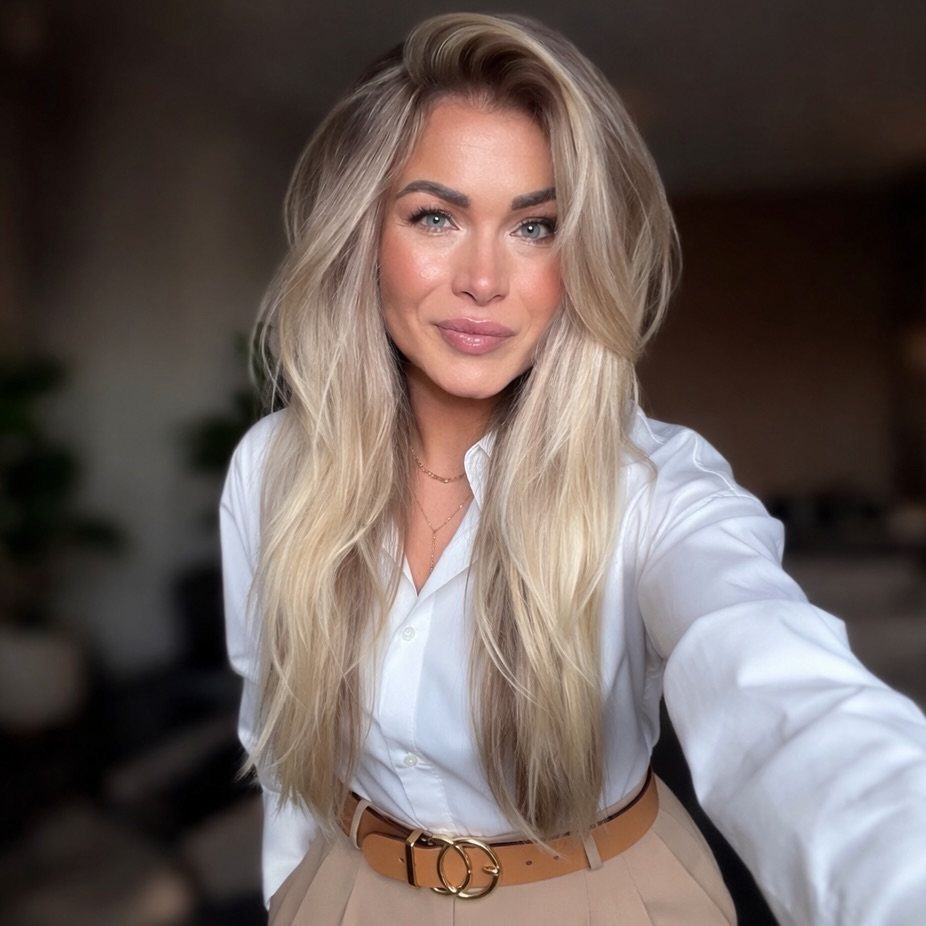
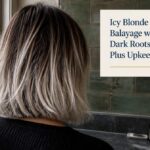
Platinum highlights frame beige blonde hair and lift the front brighter than the base. Beige sits between gold and ash, so the platinum reads cooler by comparison but doesn’t clash the way it might against a warm honey blonde.
Dark roots showing through beige blonde soften the grow-out naturally, and the platinum pieces follow that same gradient. The root shadow means touch-ups can stretch without looking overdue.
If your hair pulls warm when lightened, beige blonde as a base gives you room to go platinum at the front without fighting orange at every appointment.
10. Brunette Bob Money Piece

Blonde face-framing sections on a bob land somewhere between the chin and collarbone, short enough that the highlights stay visible even when hair tucks behind your ears.
The shorter length also means less hair to lighten, so the appointment is faster and touch-ups cost less.
Bobs grow out in a way that shows shape, and the blonde keeps drawing attention forward as the cut settles. If you trim regularly to hold the line, the color refresh can happen every other cut.
The bob also makes the blonde easier to style. A quick blow-dry and the highlights catch light without needing waves or curls to show dimension.
11. Subtle Blonde Money Piece
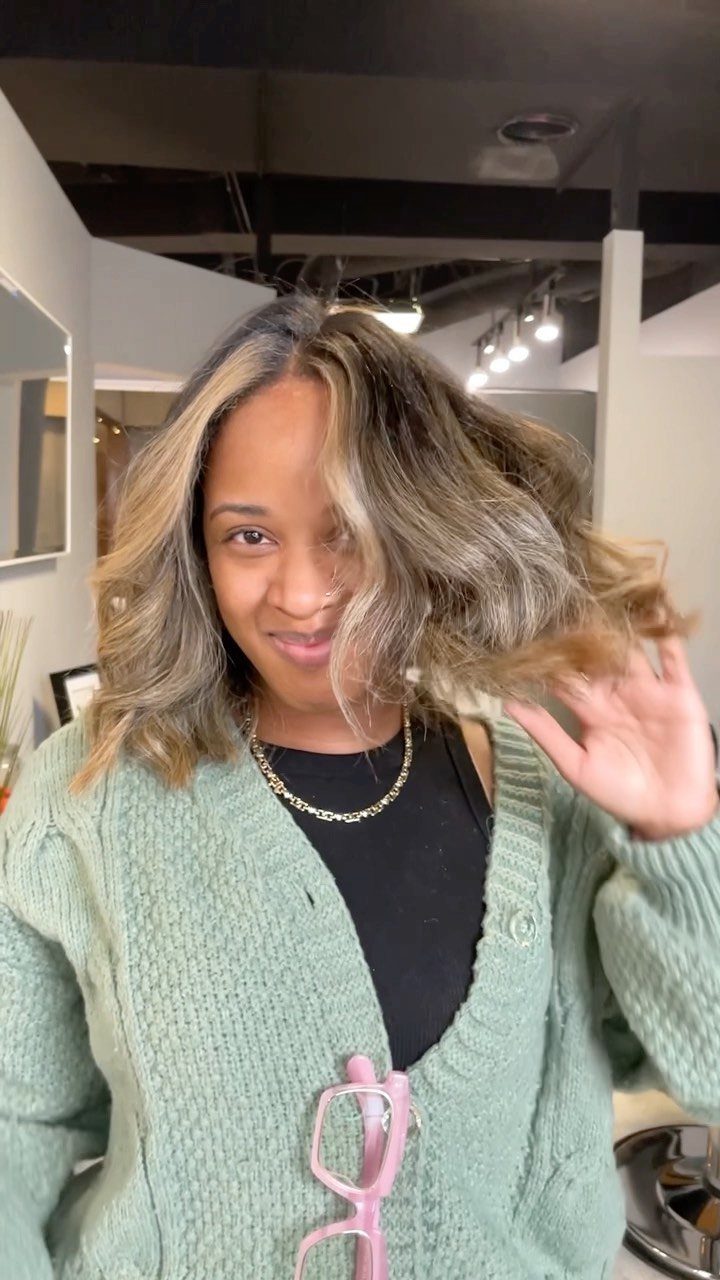
Thinner sections and a softer lift make the blonde less obvious than chunky, high-contrast pieces.
The highlights still frame your face, but they blend faster into the brunette base, so the effect reads more like natural dimension than an intentional pop.
If you’re trying face-framing highlights for the first time, starting subtle gives you a sense of the upkeep and the grow-out before committing to bold contrast. You can always go wider or brighter at the next appointment.
Subtle also means the regrowth bothers you less. The line between blonde and brown softens quickly, and the overall look doesn’t shift dramatically as your hair grows.
12. Lived-in Bronde
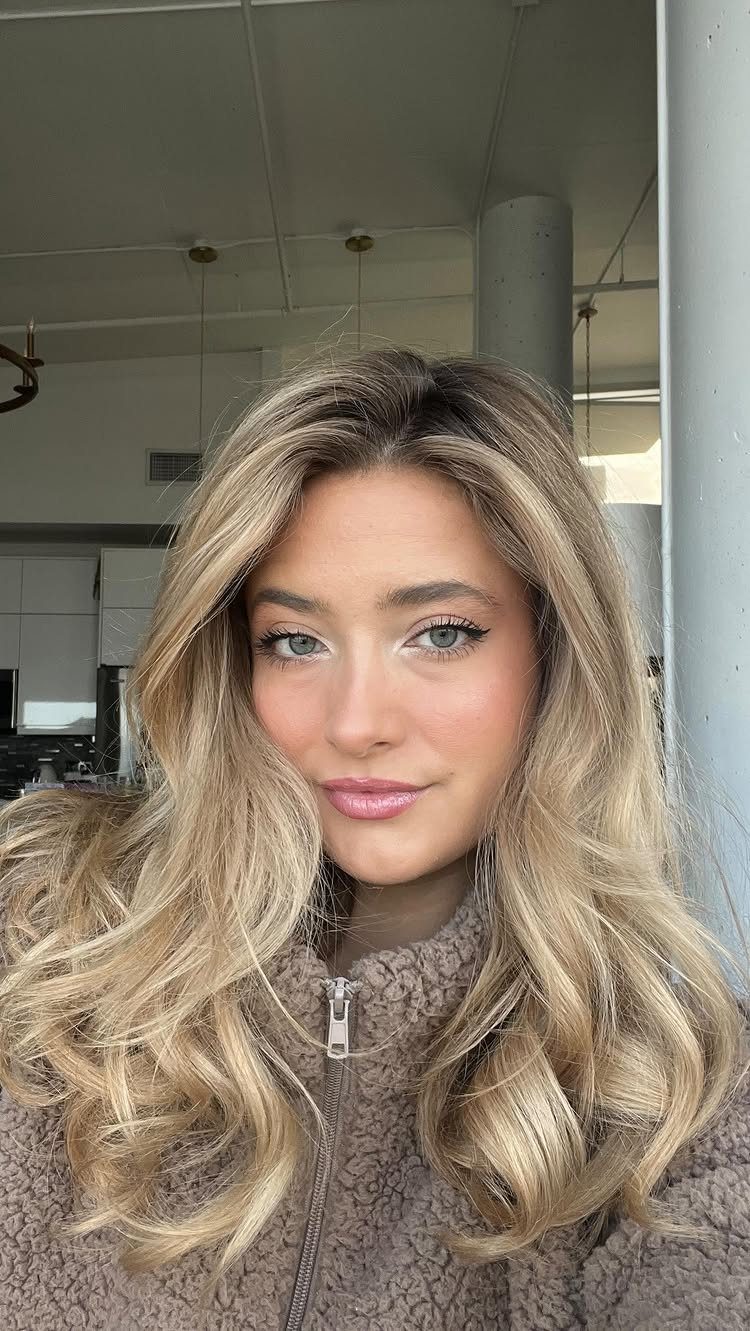
Bronde blends brunette and blonde so the 2 tones fade into each other instead of sitting side by side. The color looks grown-out on purpose, with darker roots melting into lighter ends and no hard lines to maintain.
Balayage is the usual method here, with blonde painted through the mid-lengths and concentrated around the face. The placement is softer than foils, and the color develops with dimension built in, so it reads natural even when it’s fully fresh.
Touch-ups stretch because the root shadow is part of the look. The maintenance is lighter than most blonde, and the grow-out never looks neglected.
13. Cream Blonde Money Piece
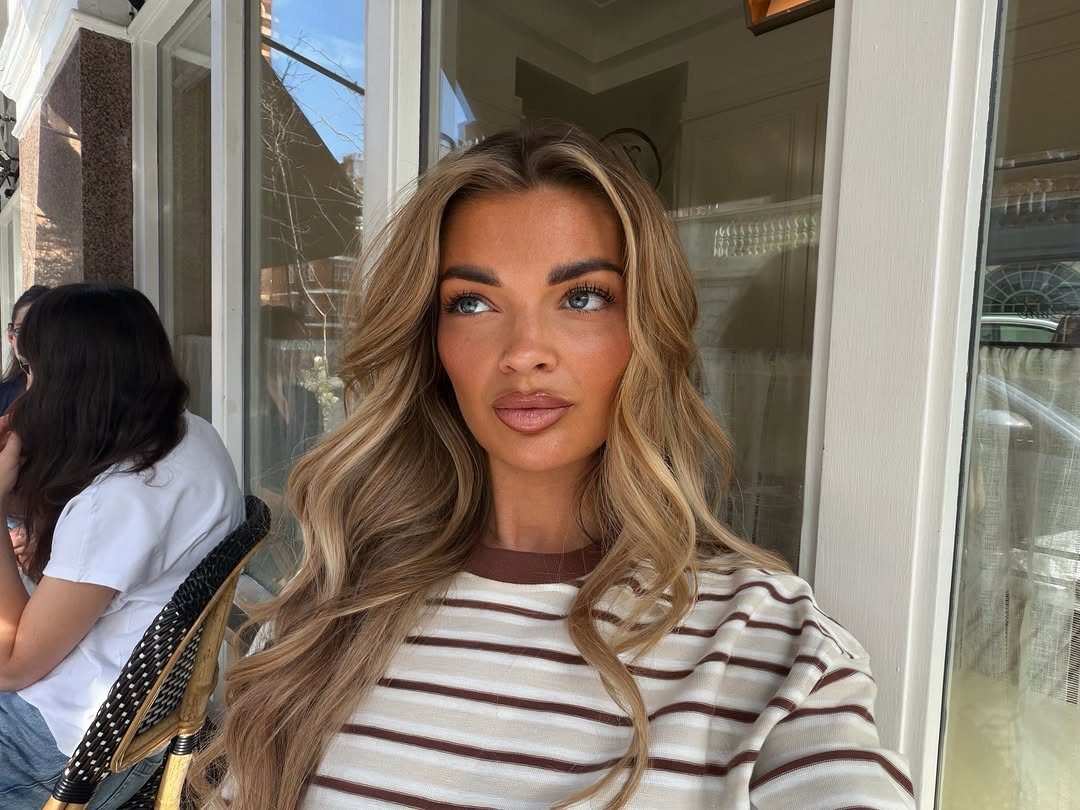
Cream blonde sits warmer than platinum but cooler than honey, so it frames brunette hair without the stark line that comes with icy tones.
The thickness of the highlights gives the contrast enough weight to read clearly, even on wavy hair where the strands cross and blend.
If your brunette base leans warm, cream blonde will lift without fighting your natural undertones. The softer blonde also fades more gently than ash, so the tone between touch-ups stays flattering rather than turning brassy.
14. Black Hair with Scattered Blonde Highlights
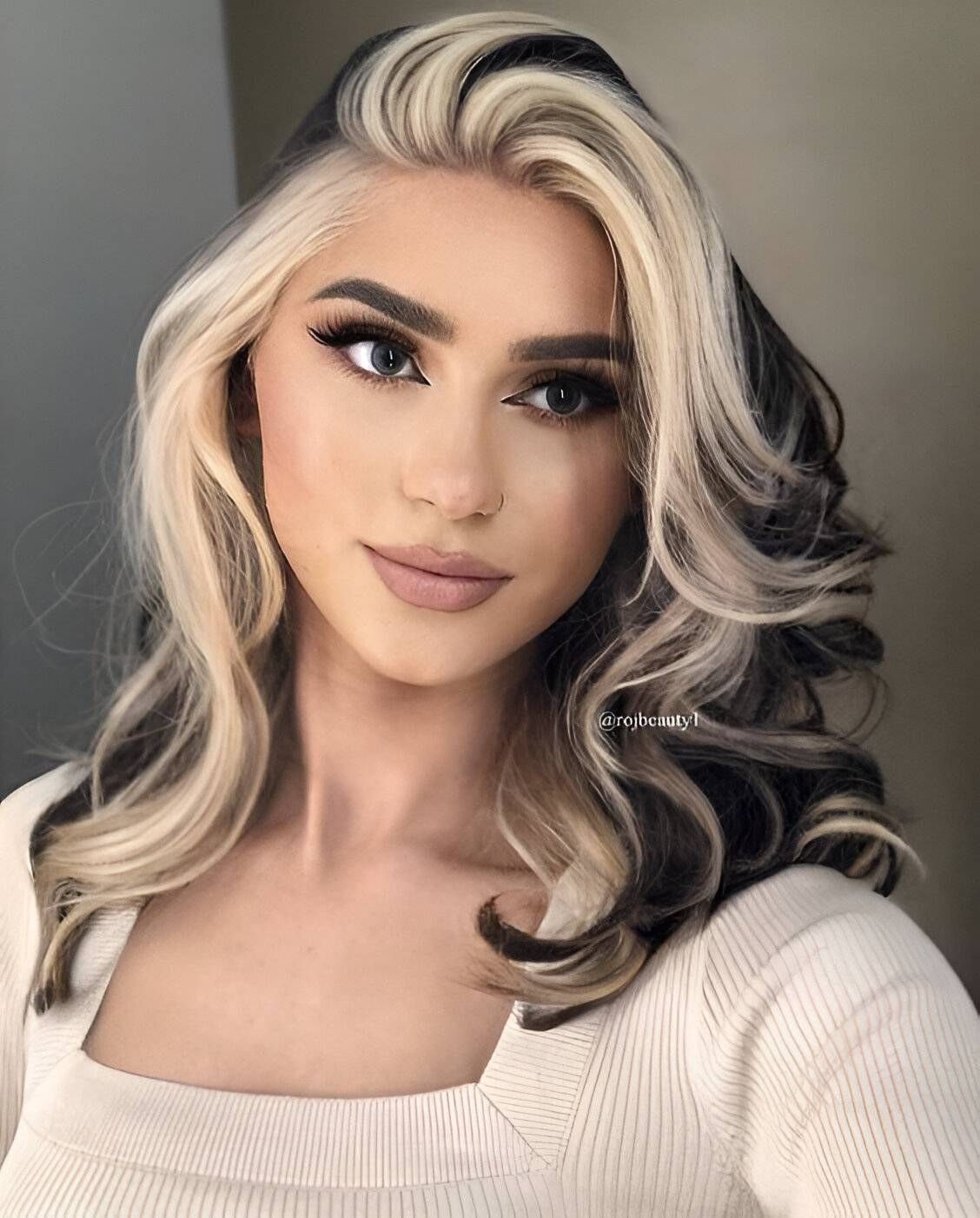
Scattered blonde highlights through the face-framing sections soften the money piece into something less graphic. Instead of 2 bright ribbons, the blonde breaks up and moves through the front in smaller pieces, so the effect reads more blended than placed.
On black hair the scattered placement still gives contrast, but the lighter strands catch differently as the hair moves, adding dimension instead of a single sharp frame.
The grow-out also blends faster, since the highlights sit at different depths and the regrowth doesn’t announce itself all at once.
15. Chestnut Blonde Highlights
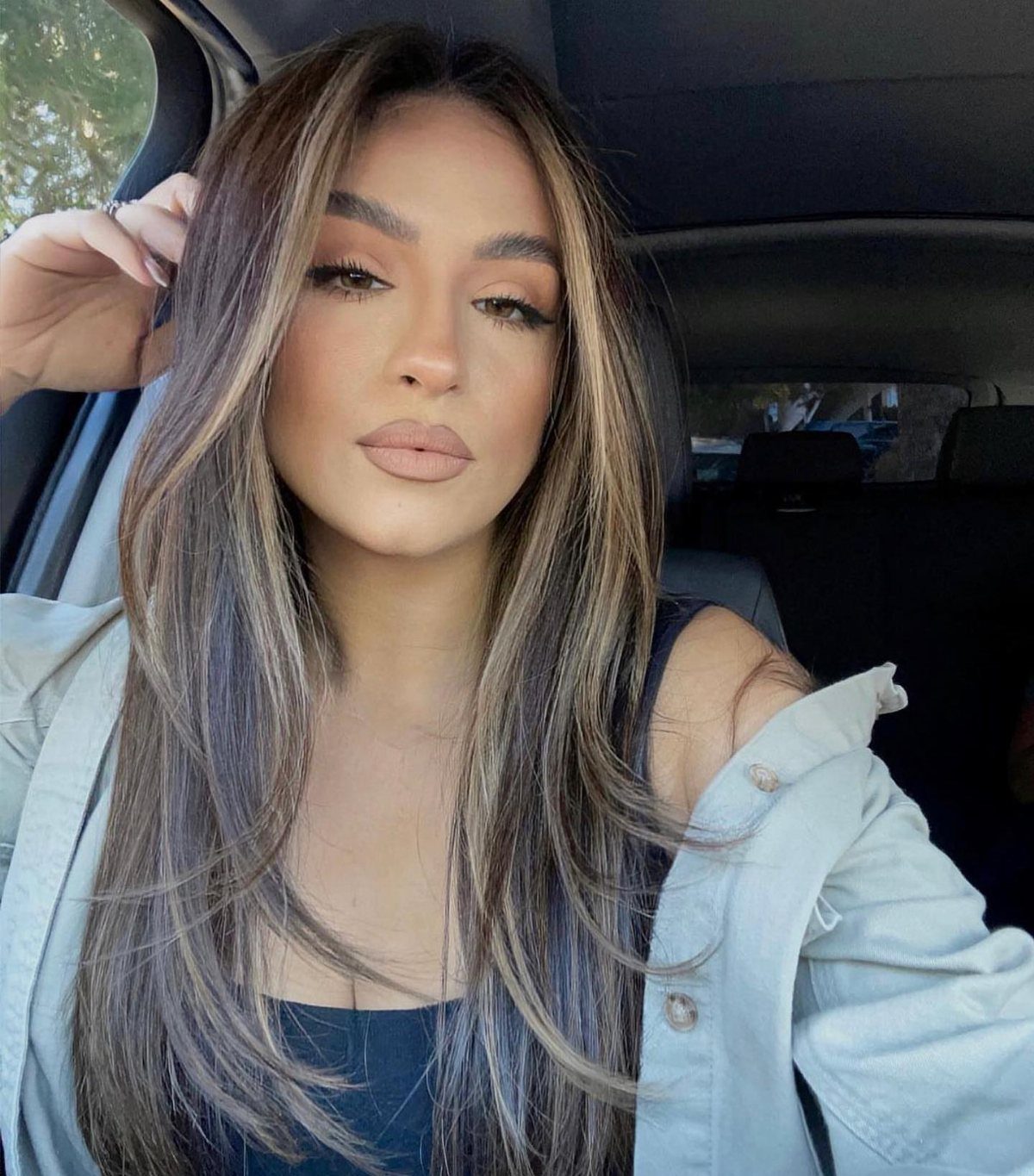
Blonde highlights against chestnut hair stay warm without going orange. Chestnut carries red and brown together, so the blonde lifts brighter but keeps the same temperature, and the 2 tones sit comfortably next to each other.
If your chestnut is natural, the blonde will hold its tone better between appointments, since there’s less dye fading and shifting the base.
16. Blonde Wig with Money Pieces
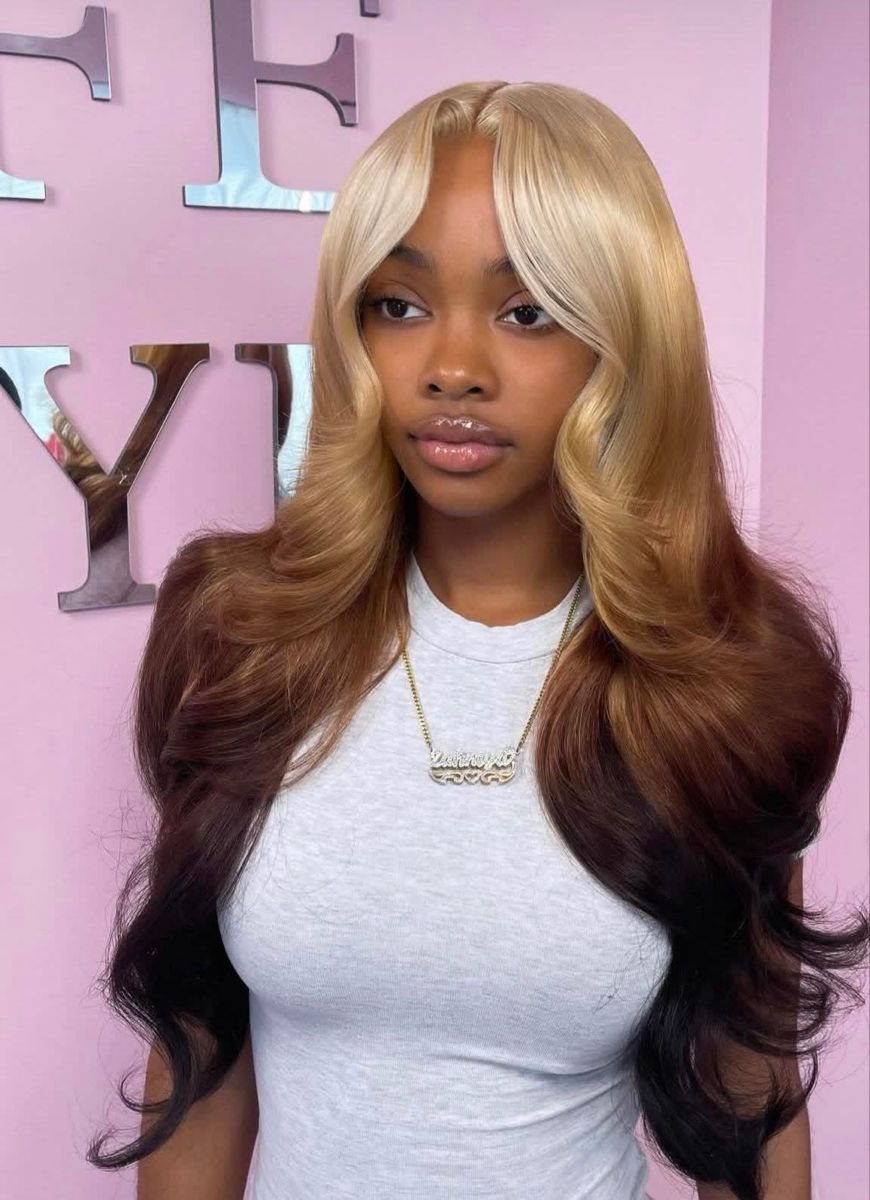
A wig with built-in money pieces gives the look without the lift, the toner, or the wait. The blonde sections are already placed and finished, so the contrast stays sharp every time you put it on.
If your natural hair is too dark or too damaged to lighten, or if you want the option to switch between looks, a wig with face-framing highlights solves both.
The maintenance is different: no color appointments, but the wig itself needs washing, conditioning, and storage to hold its shape and tone.
Money Piece Color Appeal
The appeal sits in placement. Bright sections at the front read as intentional dimension, not regrowth waiting to happen.
The technique also lets you add blonde without committing to full coverage. When your base color works and you want brightness without a complete overhaul, money pieces deliver that shift in a single zone.
The modern angle comes from the contrast between the lighter pieces and the rest of the hair.
Frequently Asked Questions
Why is the hair style called Money Piece?
The front sections frame your face where attention lands first, making them the most visible part of the color.
That high-impact placement earned the name, since those highlights deliver the biggest return on the work and cost. The technique turns a small amount of blonde into a statement by putting it exactly where it reads loudest.
What blonde colors will be trendy in 2026?
Cream blonde, beige blonde, and ash tones are holding strong this year, all sitting cooler than the warm honey shades that dominated a few years ago.
Bronde is also staying popular because the lived-in grow-out fits how people actually maintain their color. Platinum money pieces against dark hair are getting bolder, with chunkier sections and sharper contrast replacing the subtle face-framing that used to be standard.