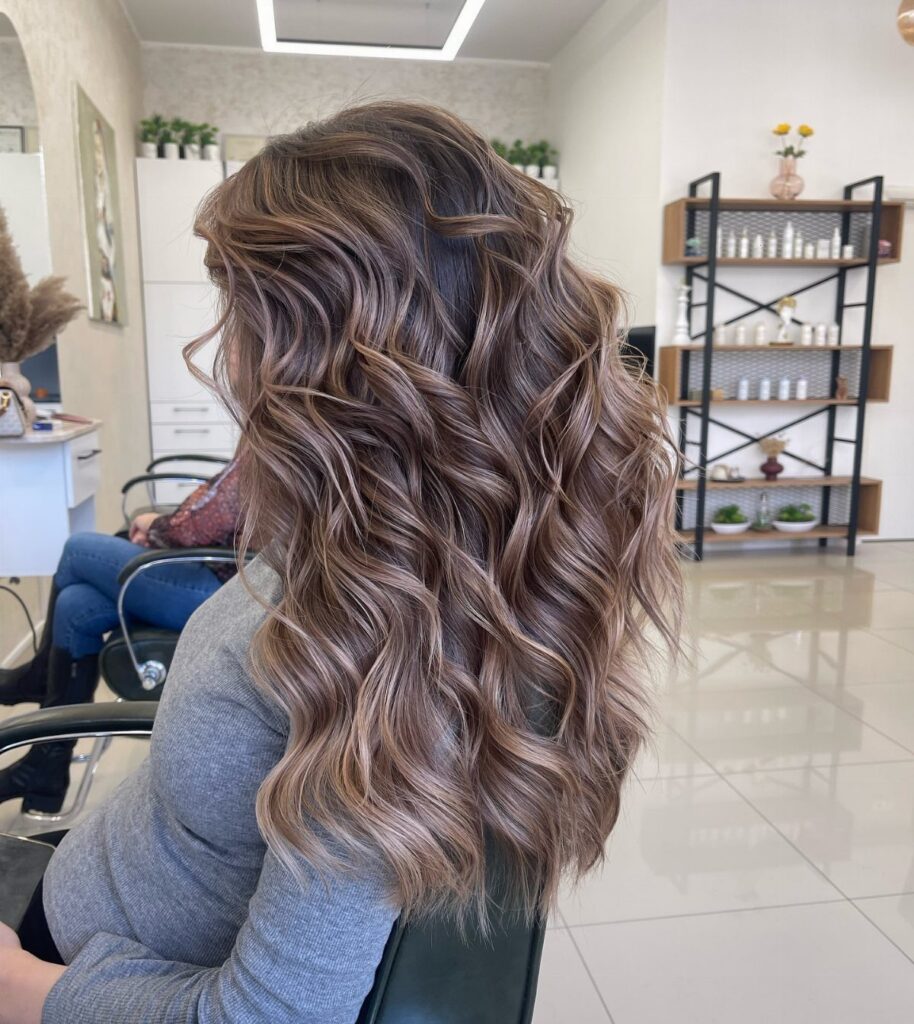
A full balayage chair session can take anywhere from 90 minutes to 3 hours, longer on thick or very long hair, and because the color is painted by hand and stays off the scalp, the grow-out looks planned instead of like a stripe of roots.
If you want a soft, blended look that grows out gracefully, balayage wins over foil highlights because there’s no hard line at the roots to track.
Plan on a refresh every 8–12 weeks; the lighter the pieces, the closer to 8 you will land, since blonde strands go brassy sooner than brunette ones.
1. Brunette Balayage
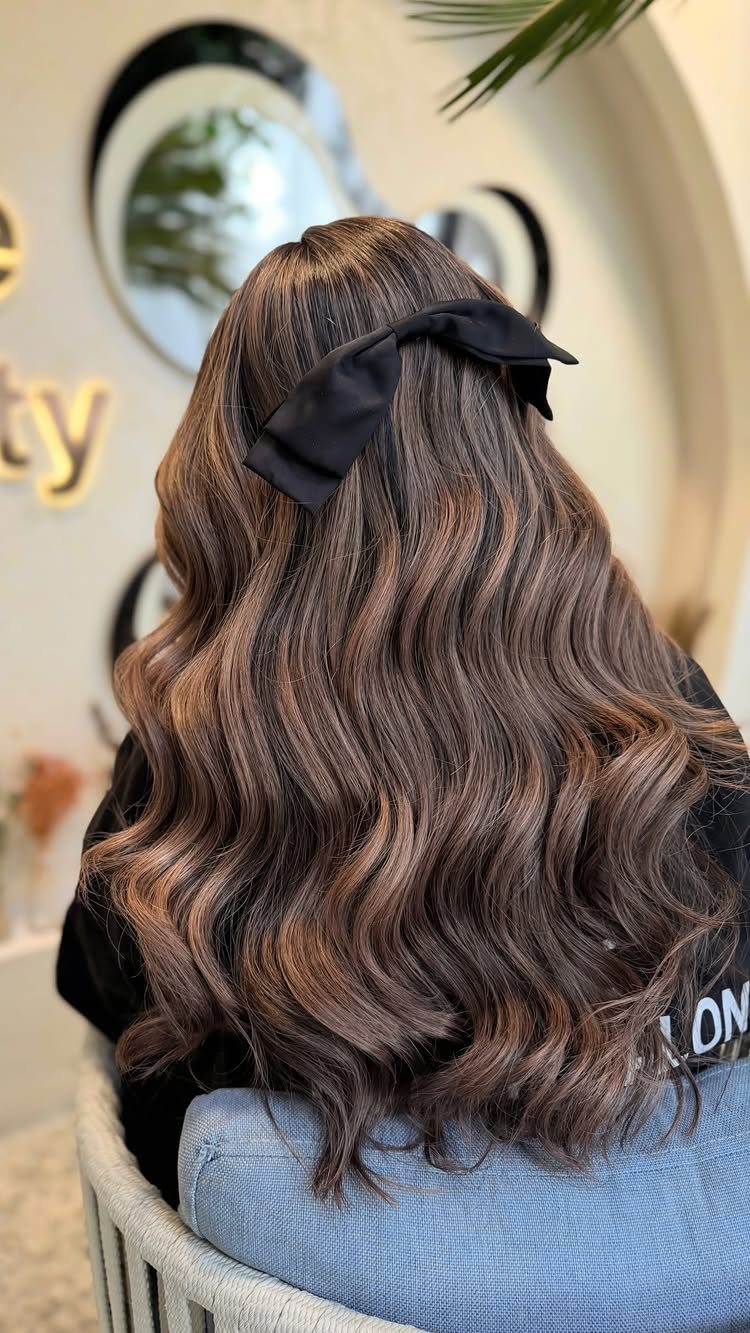
Brunette balayage keeps your base color and paints lighter brown pieces through the lengths, so the shift looks like sun rather than a stripe.
Long waves show it best, because the curve of each wave catches the lighter strands and spreads them out.
Ask for lighter brown, not blonde, and bring a photo so your stylist can see how far up you want it to start.
2. Blonde Balayage
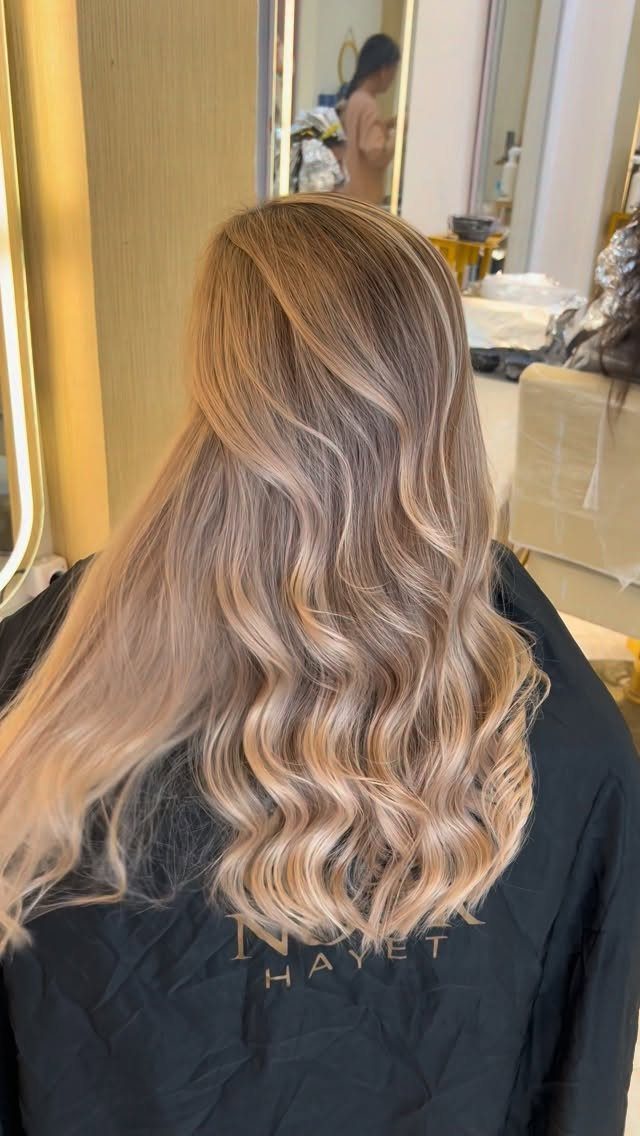
Darker roots with blonde pieces through the lengths is the version I’d pick if you want brightness without a hard line at the scalp. The roots stay deeper, so regrowth reads as part of the design.
Wavy styling helps here, since the bends scatter the blonde and keep the contrast soft. Tell your stylist how much brightness you want at the ends versus the mid-lengths.
3. Burgundy Brunette
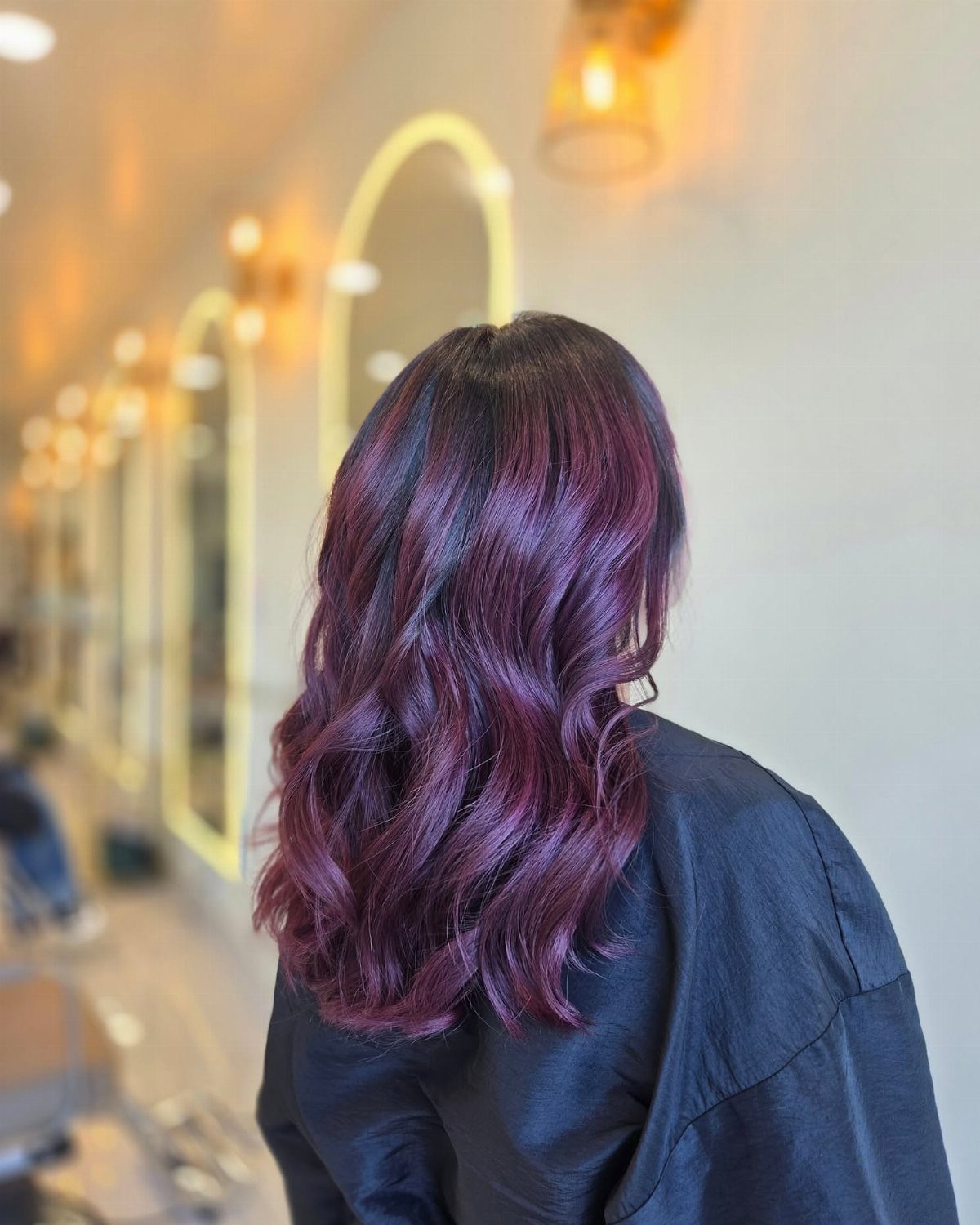
Burgundy laid over dark brunette is a red you mostly notice in movement, deep and wine-like in shade and brighter where light hits the waves. On a dark base it reads rich rather than loud.
Ask for burgundy on the lengths with your brunette left alone near the roots, so the color has a soft starting point. Waves show it off better than flat, straight styling.
4. Icy Blonde on Dark Brunette
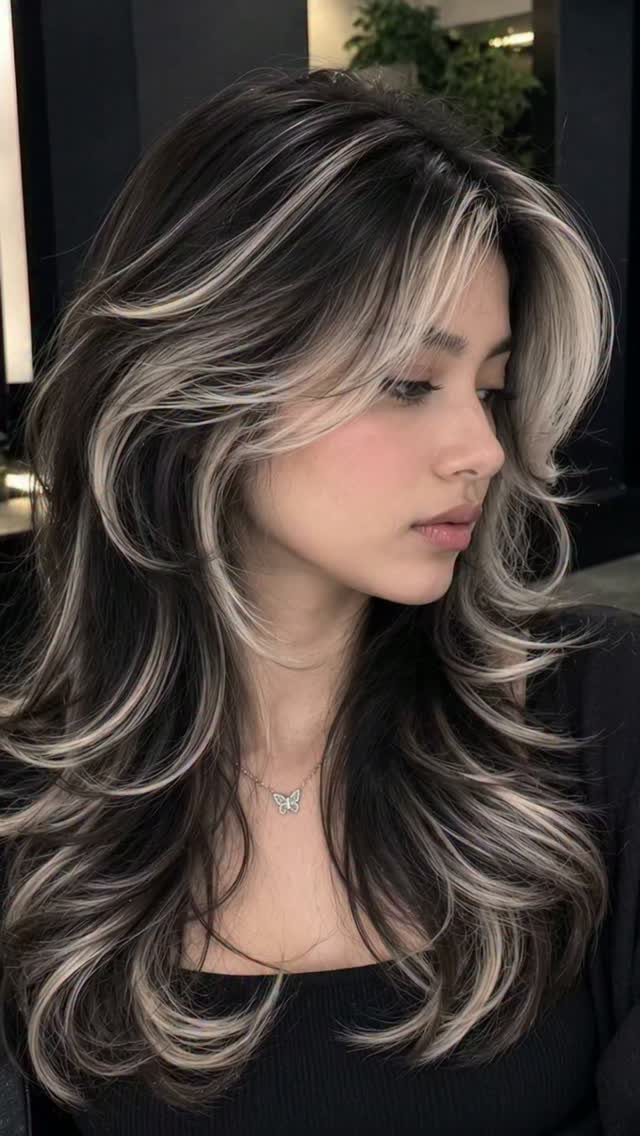
Against a very dark brunette base, icy blonde is the highest-contrast way to lighten without going all-over blonde. Every bright piece stands out, which is the appeal and also the commitment.
Pair it with face-framing bangs and the lightest pieces land right around your eyes and cheekbones. Show your stylist exactly how icy you mean, because "blonde" alone leaves too much room for warmth.
5. Dirty Blonde
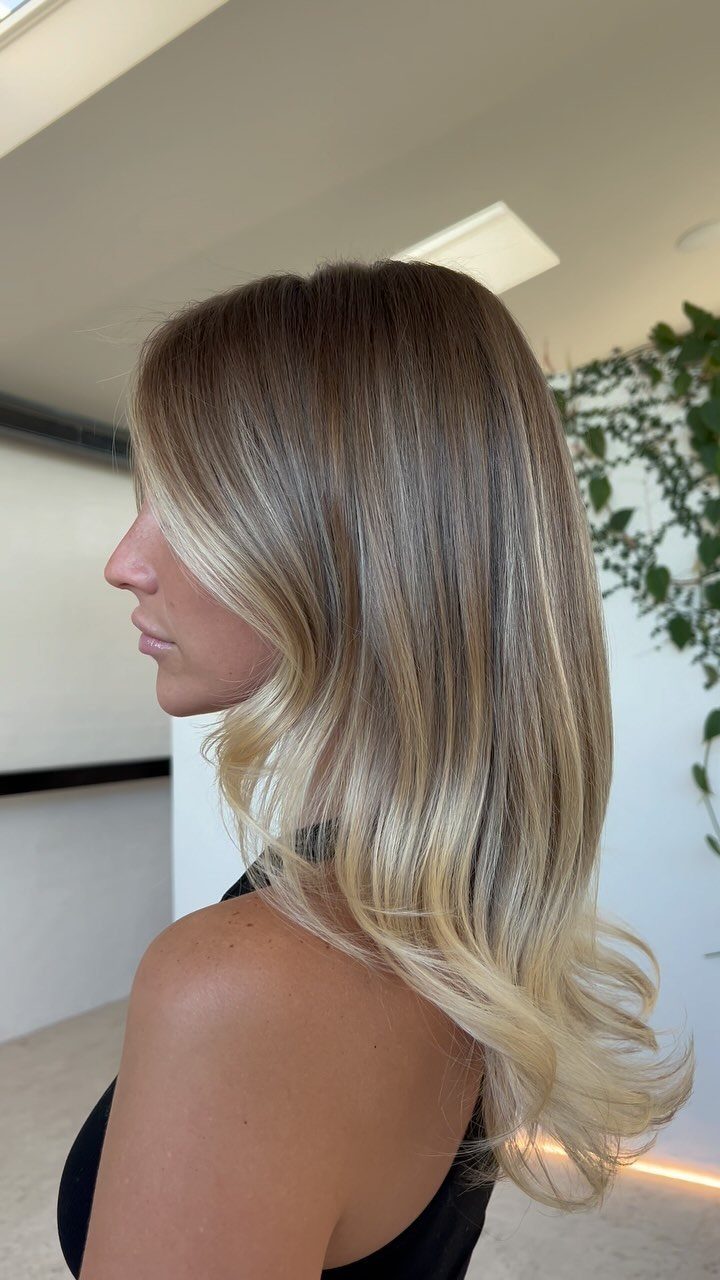
Dirty blonde works because it is not one shade. Beige and golden tones sit side by side, with darker roots melting into the lengths, so grown-out hair looks planned.
If you are mostly brunette and want lighter without going bright, this is my pick. Ask for neutral beige mixed with some gold, and keep the roots visibly deeper for the lived-in effect.
6. Caramel Balayage
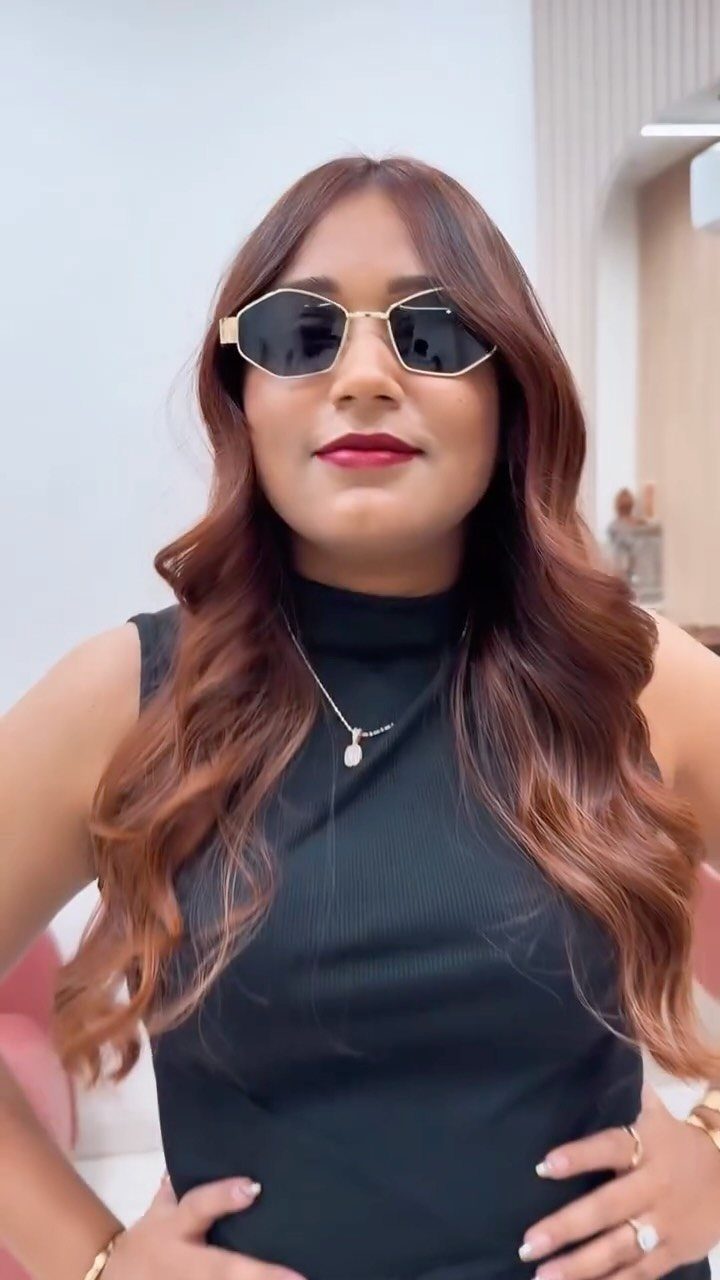
Caramel is the warm option for darker hair, adding golden-brown dimension where flat brown would sit. On brown waves with an auburn cast, it gives glow without a big jump in lightness.
Ask for caramel specifically, not "honey" or "gold," and bring a photo. Warm tones suit people who like a sun-warmed look, and I’d choose them over ashy shades if you want softness.
7. Balayage Babylights
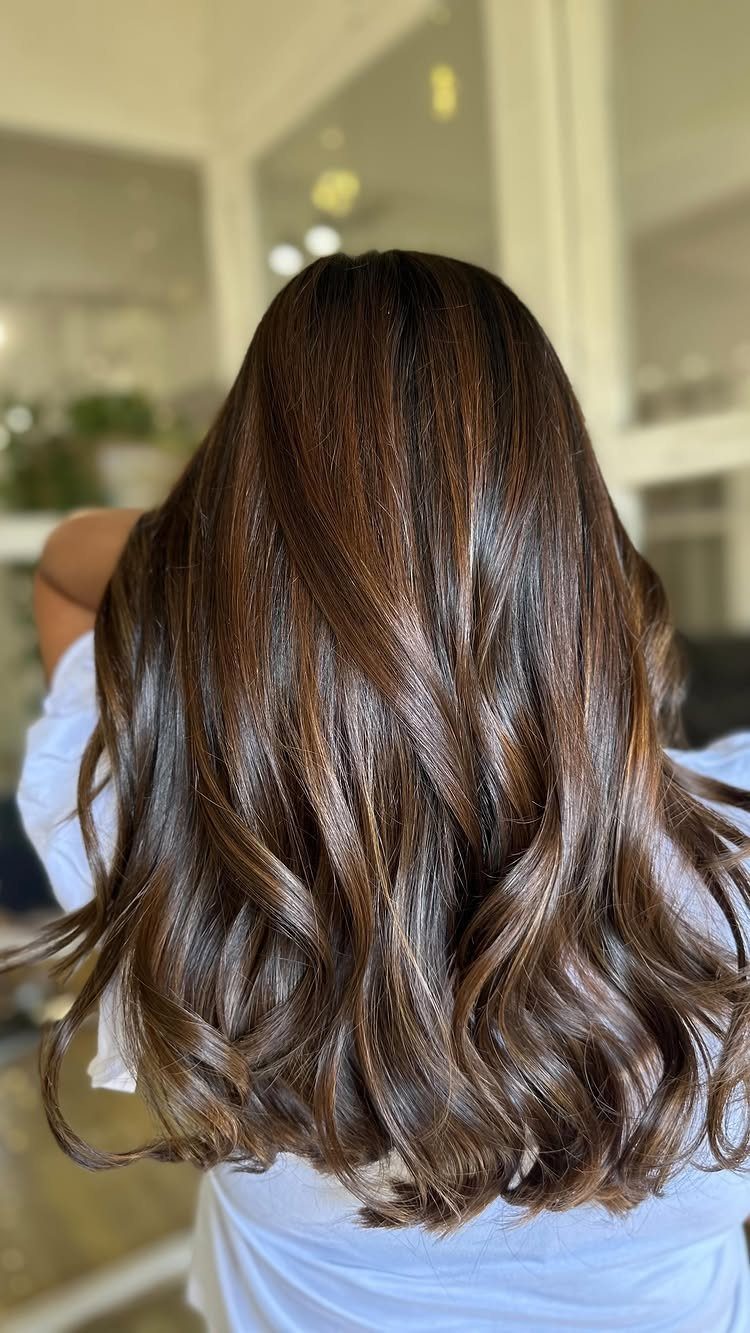
Babylights are the finest version of balayage: thin, wispy strands that melt into brown hair instead of standing out as stripes. On long waves with a glossy finish, the caramel reads as a soft warmth that shifts with the light.
Pick this if you want the lightest possible change. Caramel babylights work best as thin, soft pieces, so a photo of the exact level of subtlety you want saves a lot of guessing in the chair.
8. Balayage Bob
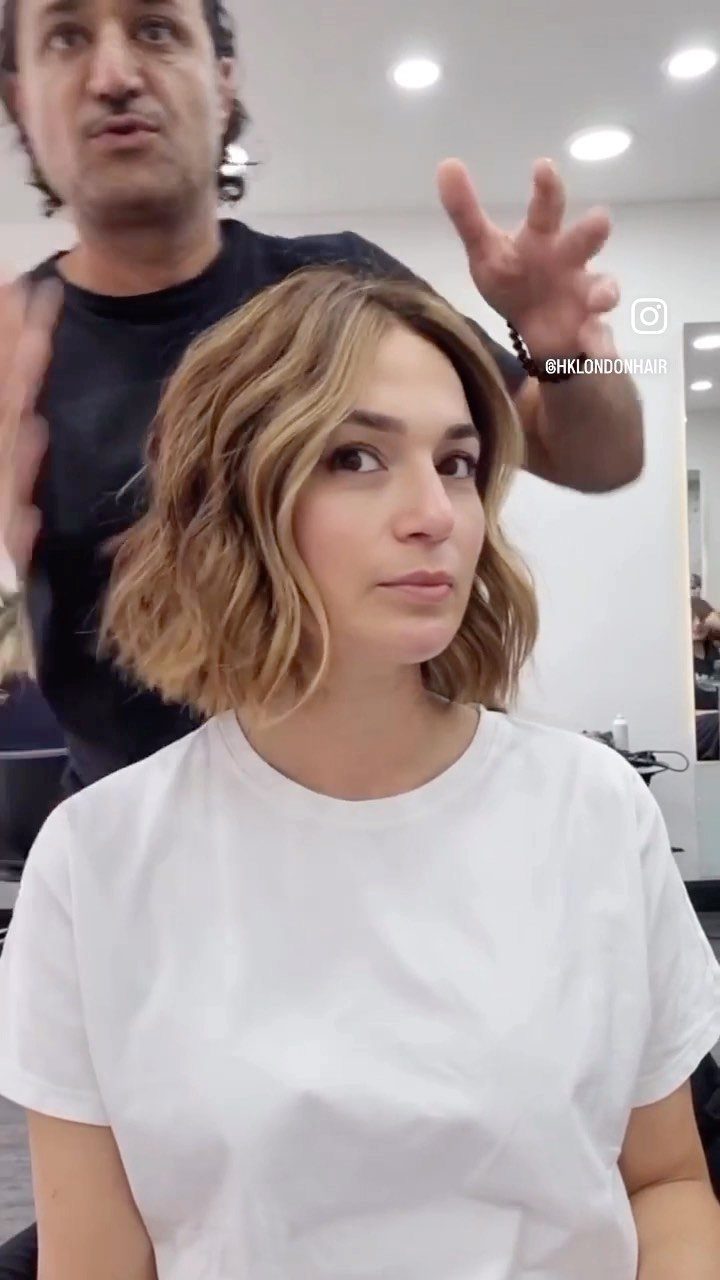
A bob has little length to hide behind, so balayage does the work of adding depth. Blonde pieces painted through a short cut give it dimension that a single flat shade can’t.
I’d choose this for anyone who wants a short cut to look fuller and more interesting. Ask your stylist to place the lighter pieces where the bob’s edge falls, and show a photo of the blonde level you want.
9. High-Contrast Balayage
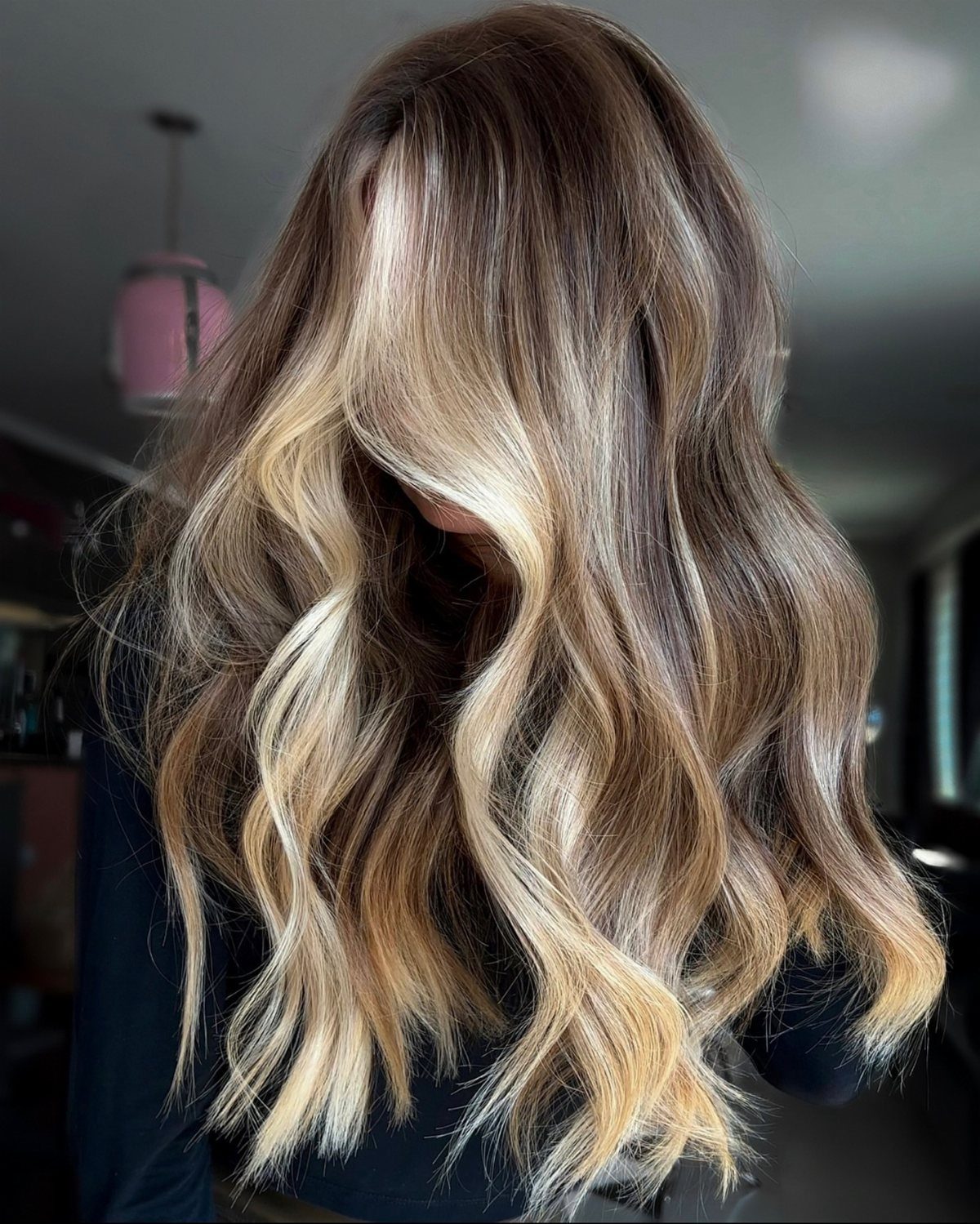
High-contrast balayage pairs deep brown with clearly lighter blonde, and the whole look depends on the blend. Without a smooth transition, you get stripes; with it, the brightness reads as intentional.
Wavy styling helps, since the bends show off both tones.
Tell your stylist you want strong contrast with a soft, blended shift, and point to where the blonde should begin. It’s bolder than my softer picks, so expect to notice it every day.
10. Blonde Highlights
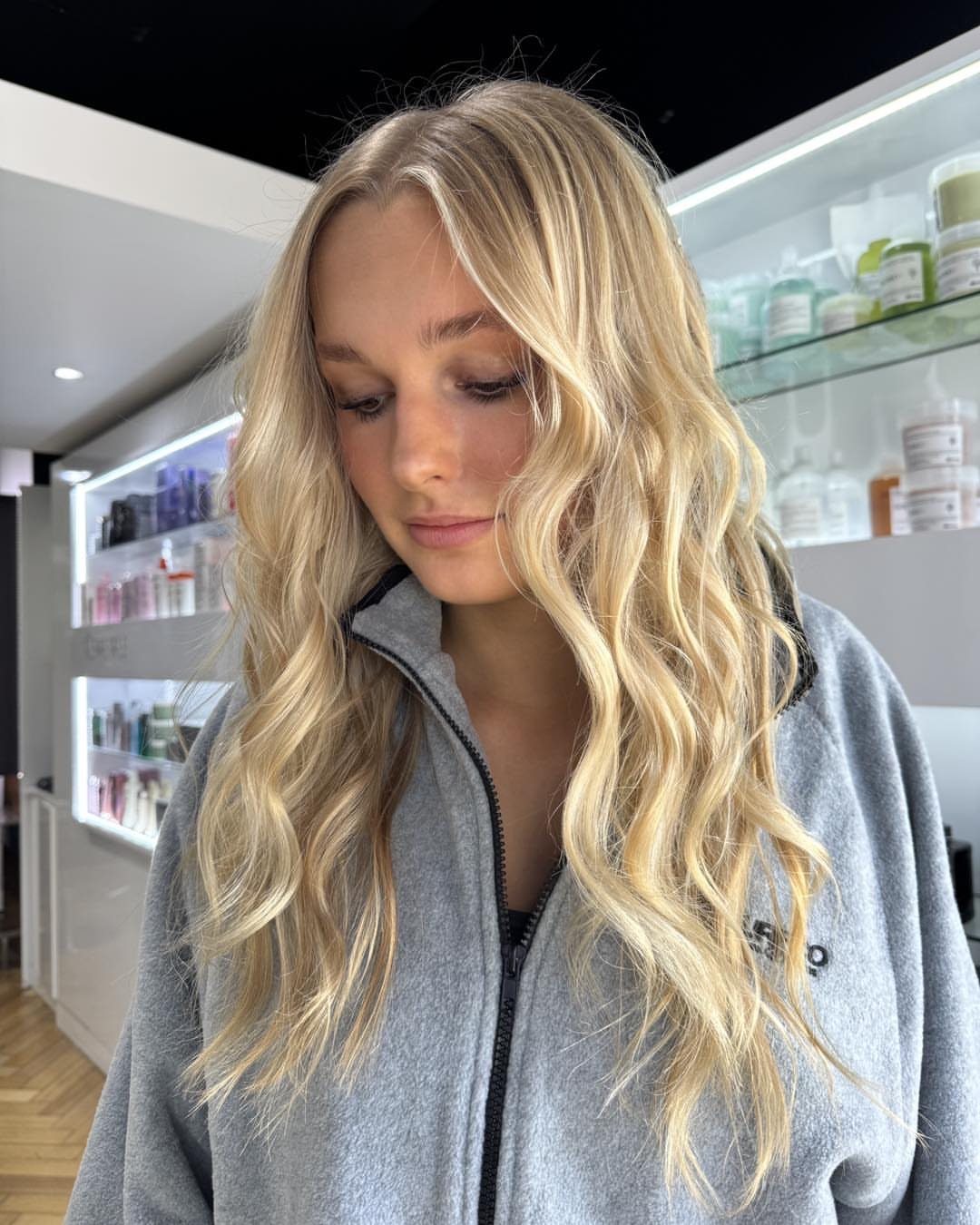
Chunkier blonde pieces give a brighter, more obvious finish than fine babylights. Against darker roots, the lighter sections stand out in long waves and make the color the first thing people notice.
If you want your lightening to be seen, this is the version I’d go for over subtle options. Ask for wider pieces, and keep the roots darker so growth looks like part of the plan.
11. Balayage Curls
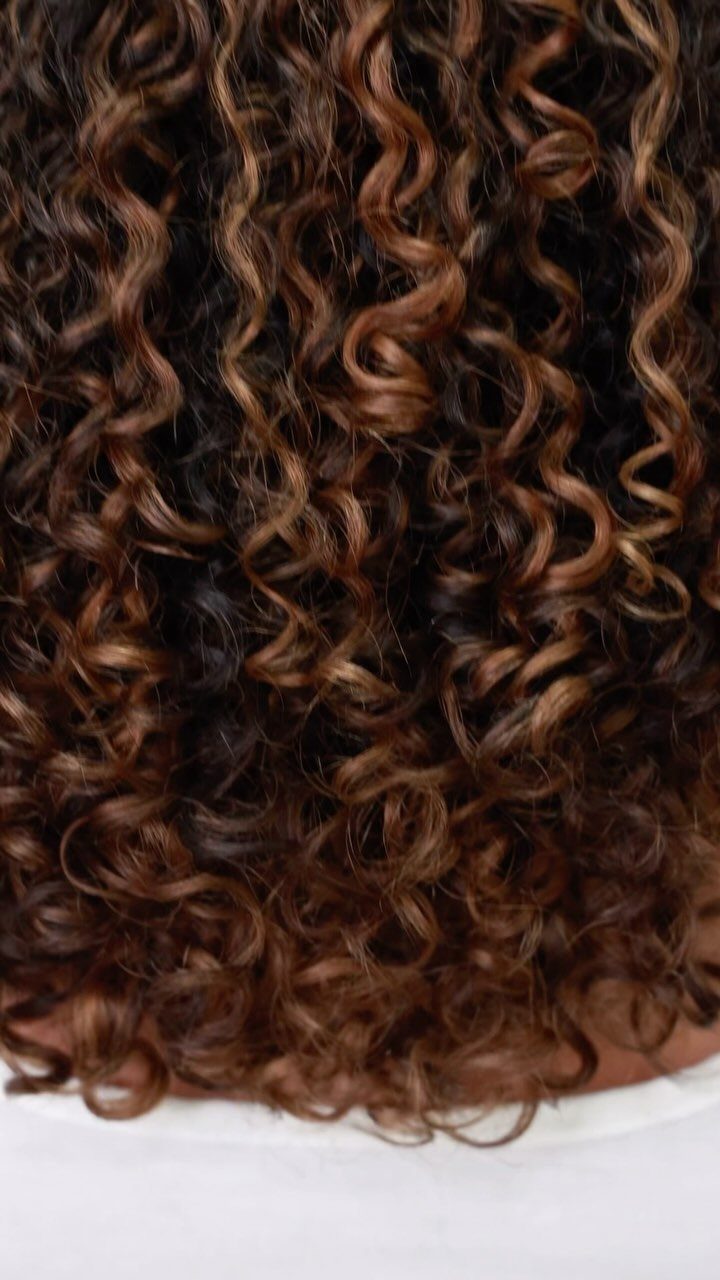
Honey-colored lengths on tight curls pick up every bounce, because each curl turns a lighter section toward the light. Warm caramel against brunette gives the pattern extra definition.
Ask for honey tones painted through the curls, with the base left brown. Show your stylist photos on curly hair rather than straight, since the same color looks different once the curls spring up.
12. Coily Balayage
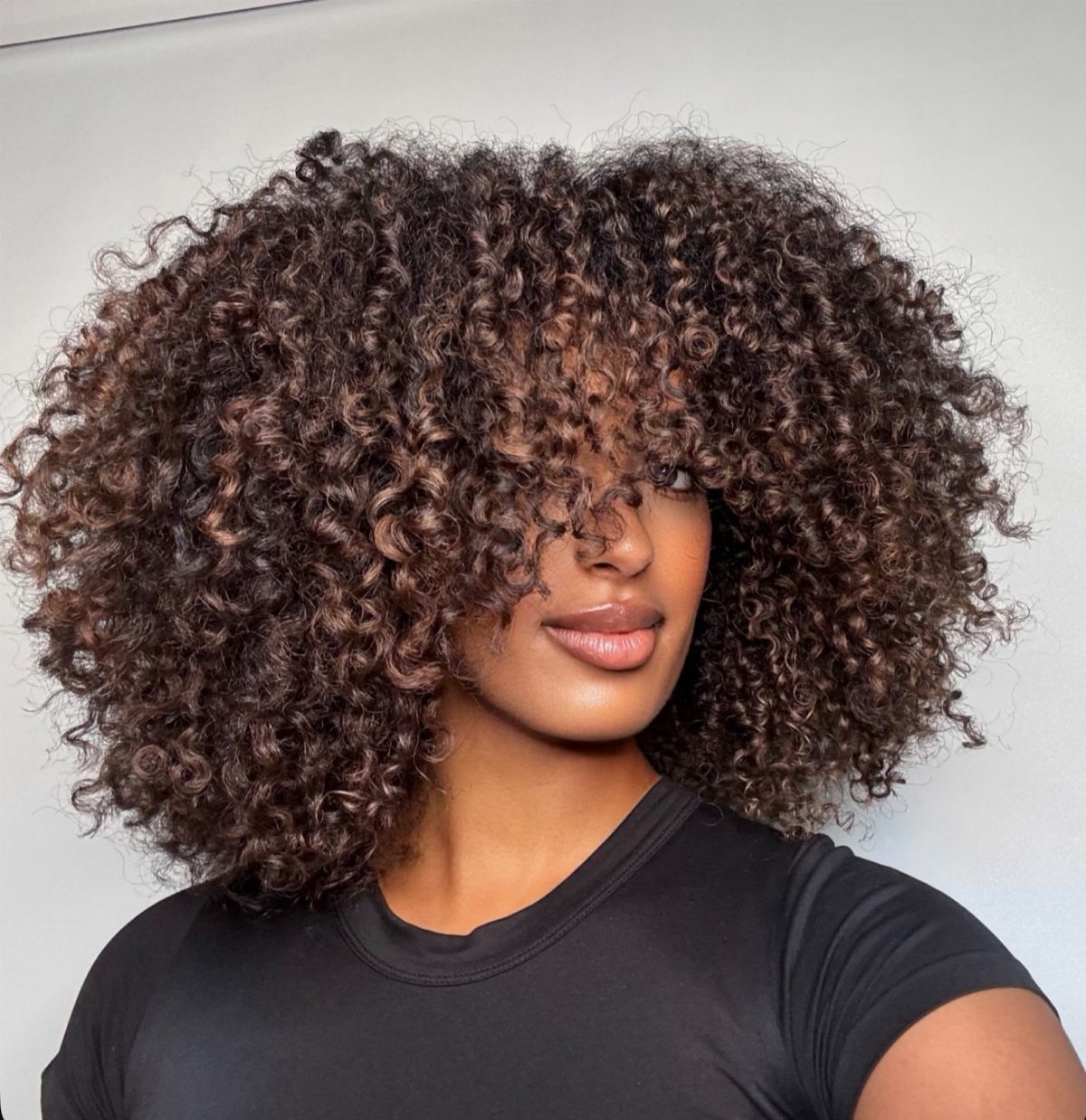
Painted highlights on coils trace the curl pattern, so each loop of hair gets its own flash of golden brown. The effect is gentle and adds shape to a voluminous shape.
I like this look kept close to the base shade, since it gives dimension without a stark break. Ask for hand-painted, golden-brown pieces and have your stylist place them on the outside of the coils, where they show most.
13. Balayage Updo
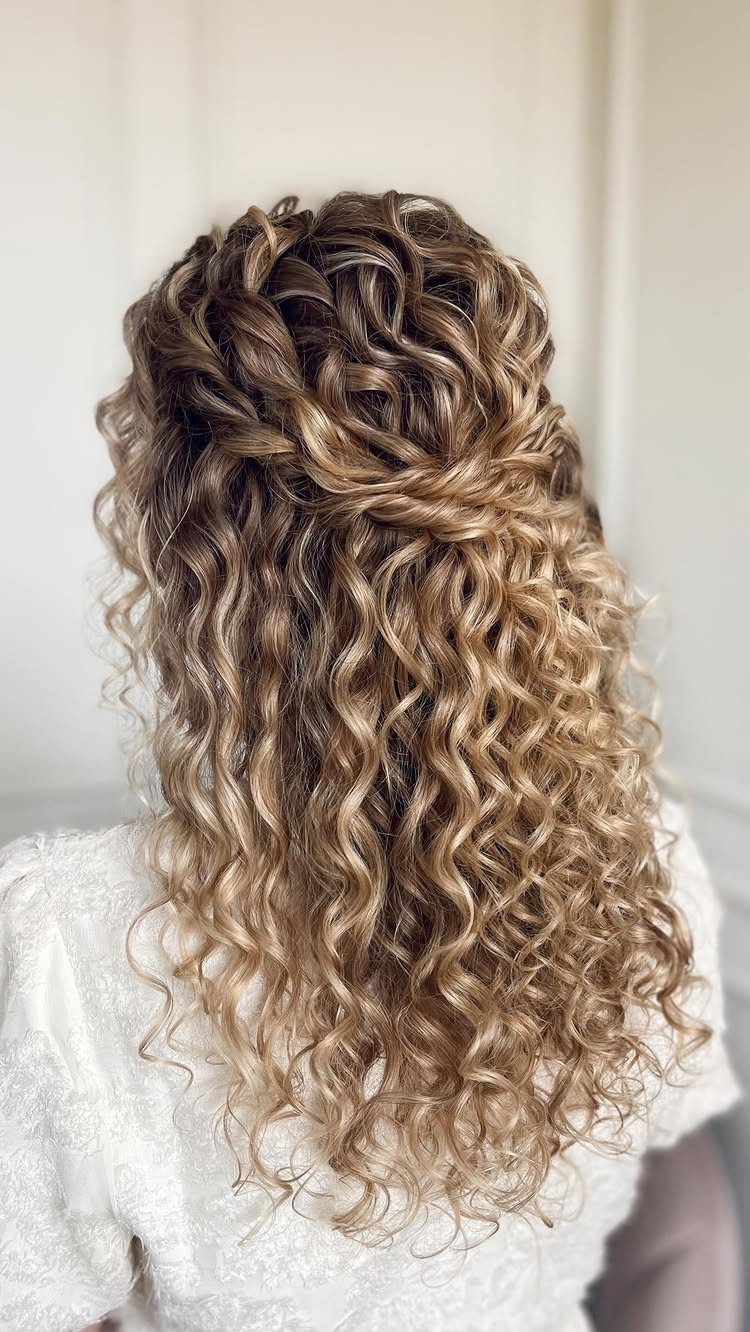
When your balayage is gathered into an updo, the lighter pieces land where curls loop out and catch the light.
A half-up style shows off blonde ribbons through the lengths while keeping the bulk of the color visible in loose curls below.
Pick this when you want the updo to look intentional rather than hidden, because the contrast between brown and blonde still does the work even when hair is off your shoulders.
14. Face-Framing Balayage
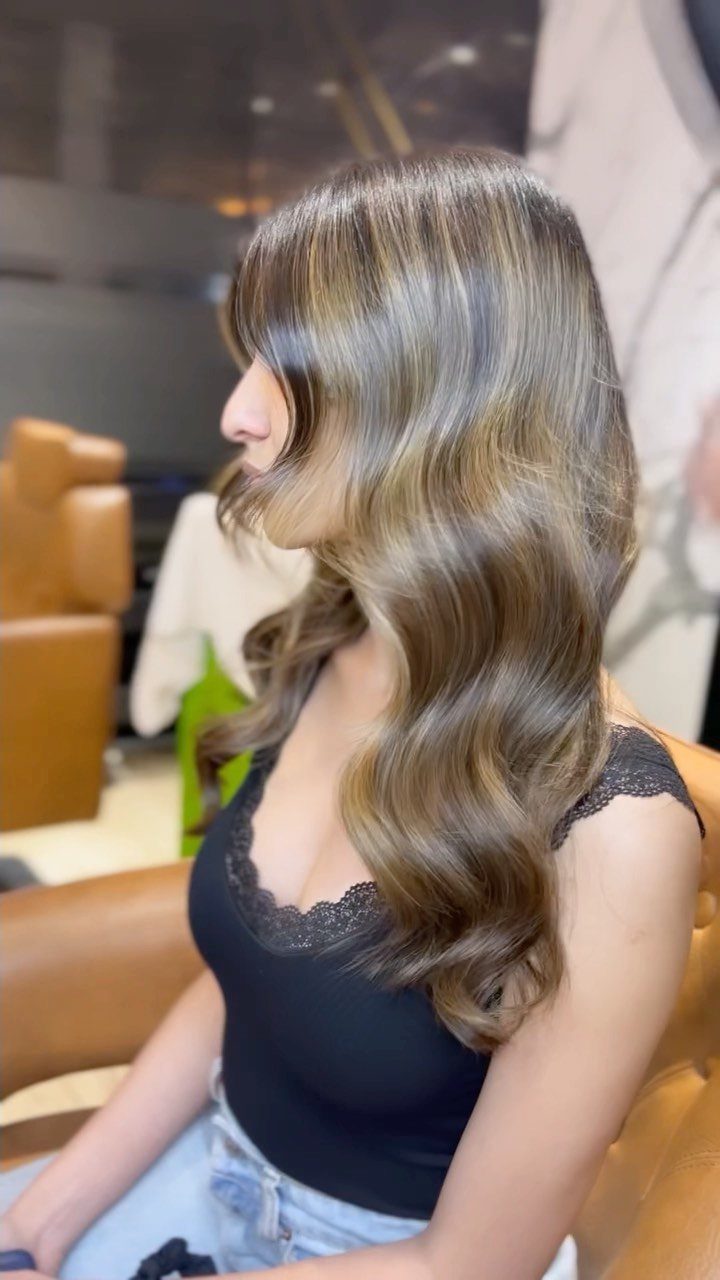
Blonde pieces around your face lift the whole look without lightening the back, so the color lands where it brightens your complexion most.
On long brunette waves, it keeps the bulk of your hair darker while pulling light toward your cheekbones and jawline.
Ask your stylist to concentrate the blonde from cheekbone level down, and keep it thicker near your face than through the back. If you want color but not full-head maintenance, this is my choice.
15. Subtle Balayage
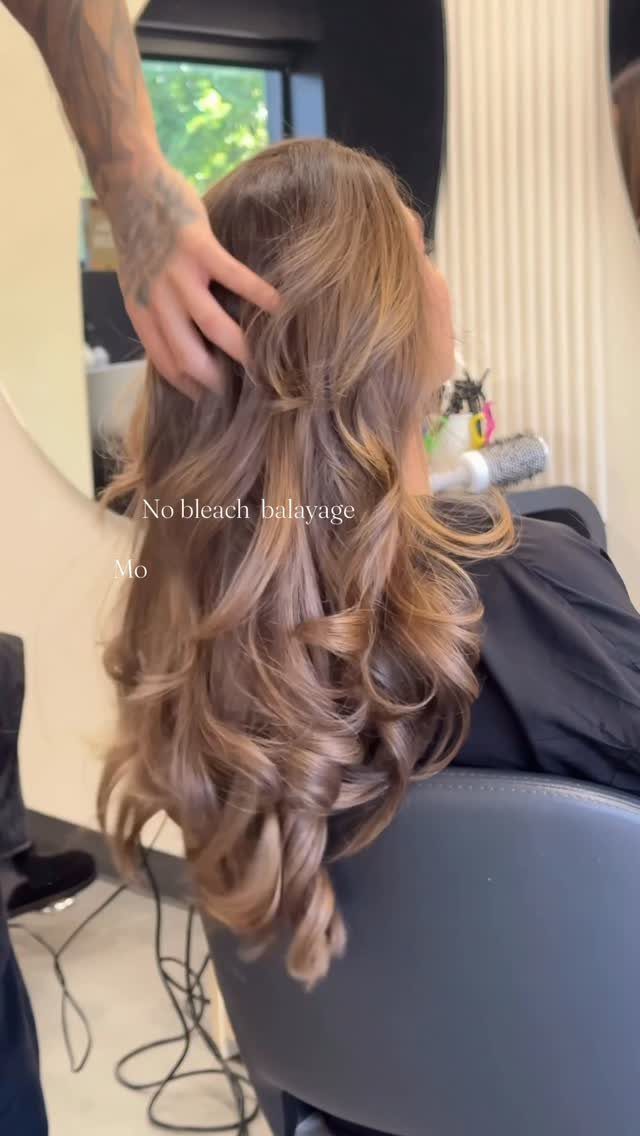
A no-bleach option uses high-lift color to lift brunette hair 2 to 4 levels into caramel or warm chocolate tones, so the change reads as sun rather than a new color.
On long waves, the shift is soft enough that you notice the glow before you spot individual strands.
Pick this if you want dimension without being tied to a standing salon appointment, since the result grows out almost invisibly. Tell your stylist you want subtle and warm, not bright, and ask for high-lift color rather than bleach.
“Balayage is a great low-maintenance colour option because it gives minimal lines of regrowth, allowing for a subtle, soft grow out.”
16. Mermaid Waves
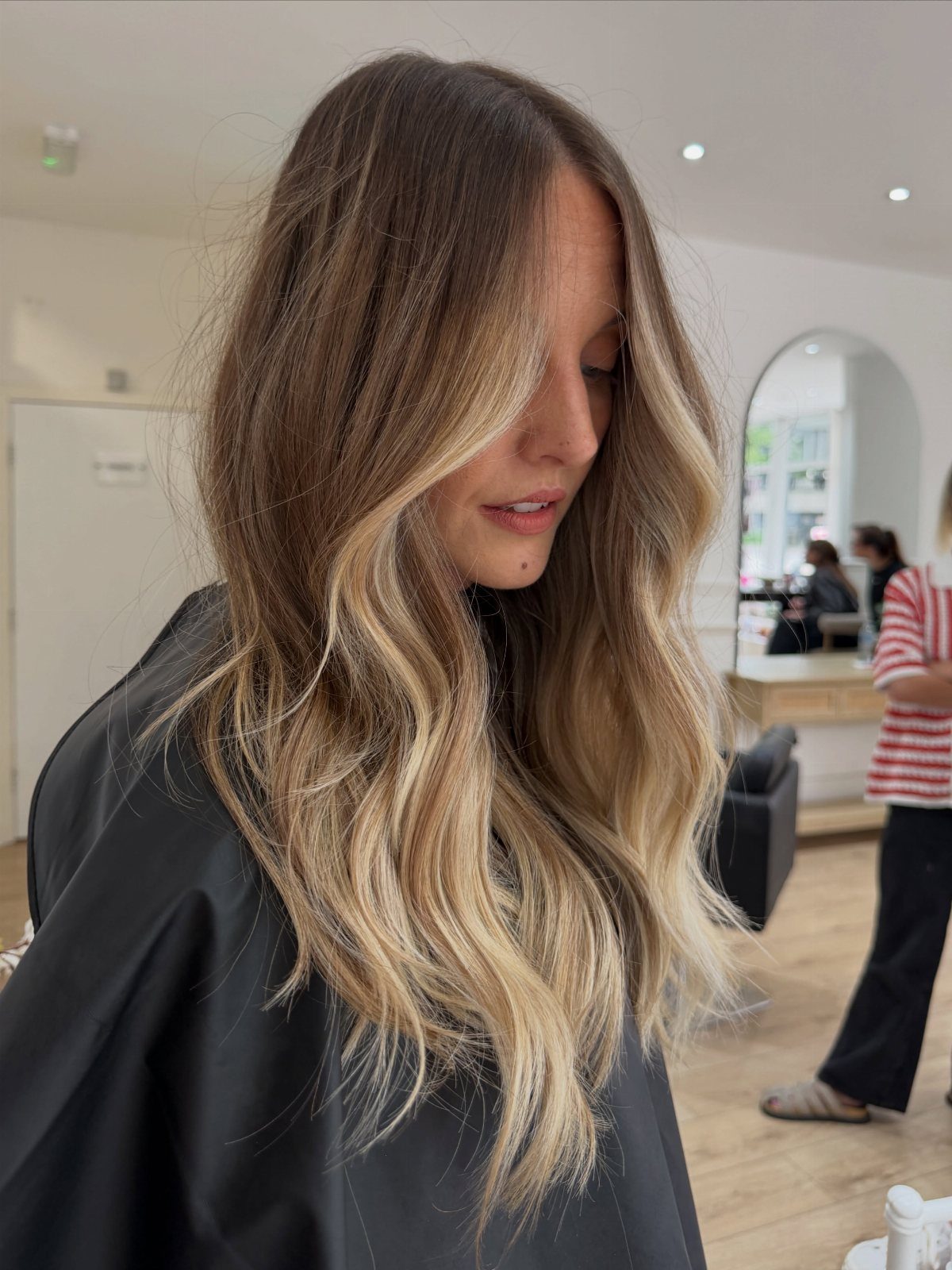
Blonde balayage ribbons painted through wavy brunette hair frame the face in wide, soft bands that follow the curve of each wave. The lighter sections land near your cheeks and temples, so the brightness moves with your hair.
I like this version when you want the balayage to feel like part of the wave pattern rather than sitting on top of it.
17. Warm Chestnut
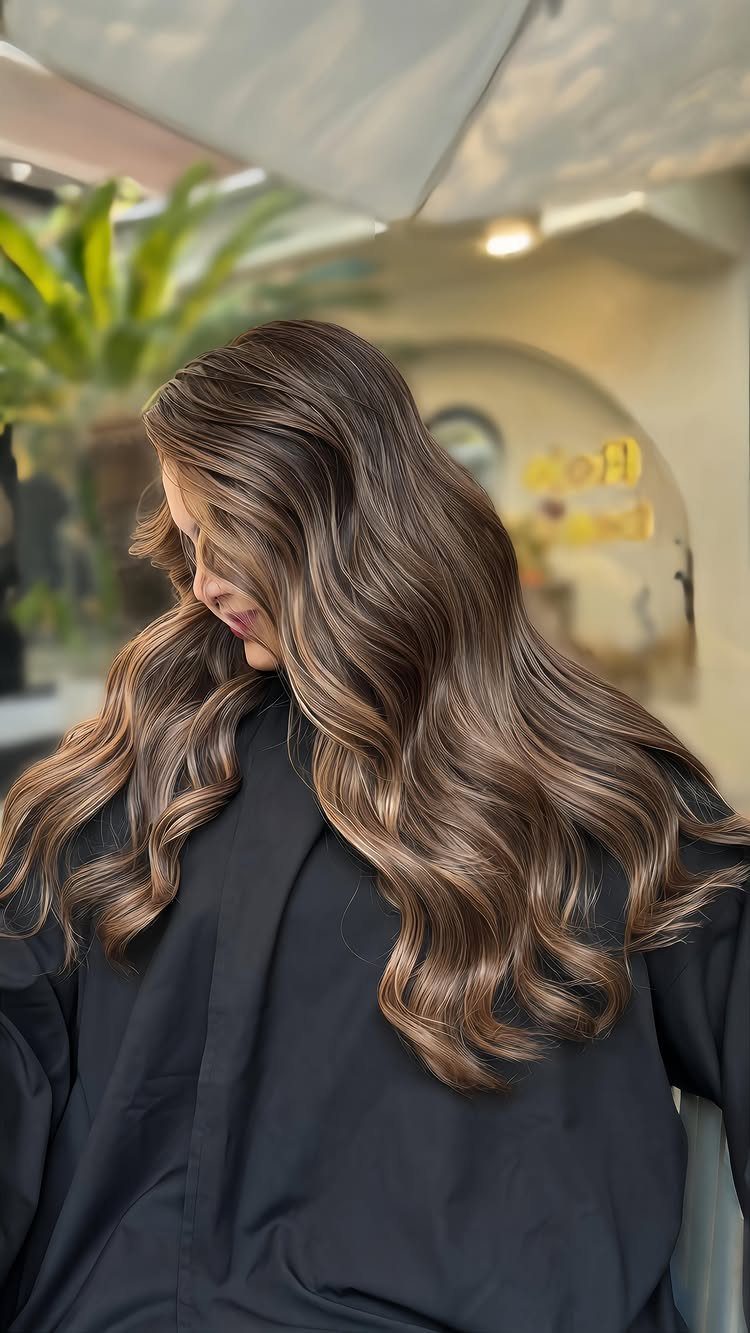
Chestnut balayage is a no-bleach way to add warmth to dark brunette hair, lifting the ends into reddish-brown without a harsh line at the roots.
On long waves, the color melts from deeper brown into warm, lighter lengths that shift in the light.
If you want a change but bleach is off the table, this is what I’d choose.
18. Auburn Ends
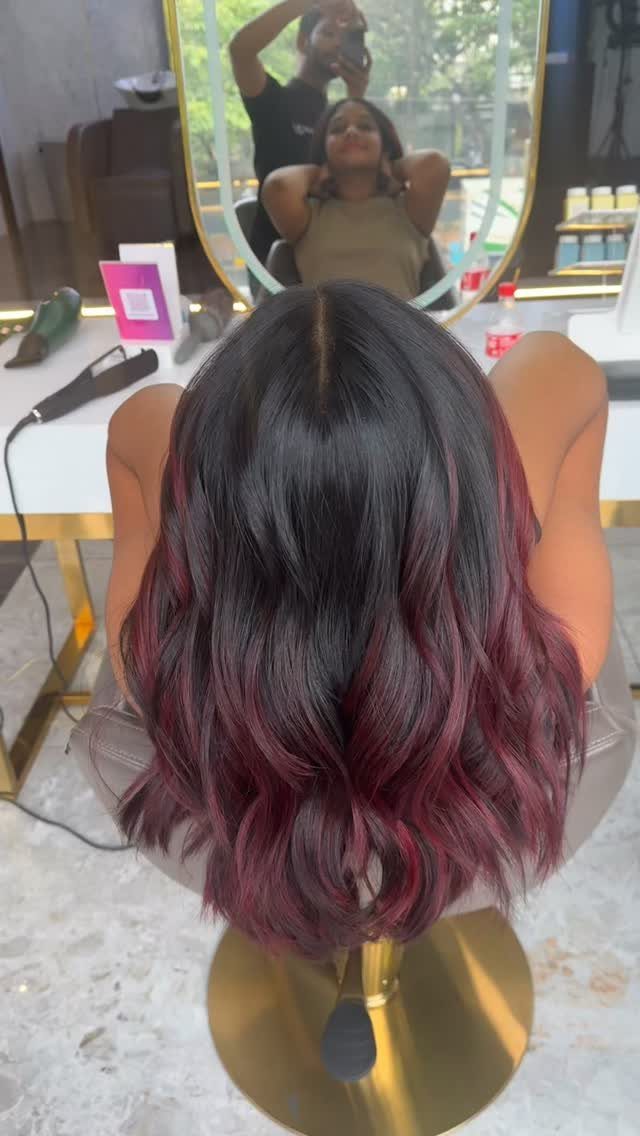
Auburn painted onto the ends of dark hair gives a burgundy-red finish that starts halfway down and deepens toward the tips.
On wavy lengths, the red sits where movement shows it off, so the color reads as intentional rather than grown-out.
Pick this if you want red without dyeing your whole head, since the dark base stays untouched. Ask your stylist where you want the auburn to begin, and expect the red to fade faster than brown tones.
19. Sun-kissed Balayage
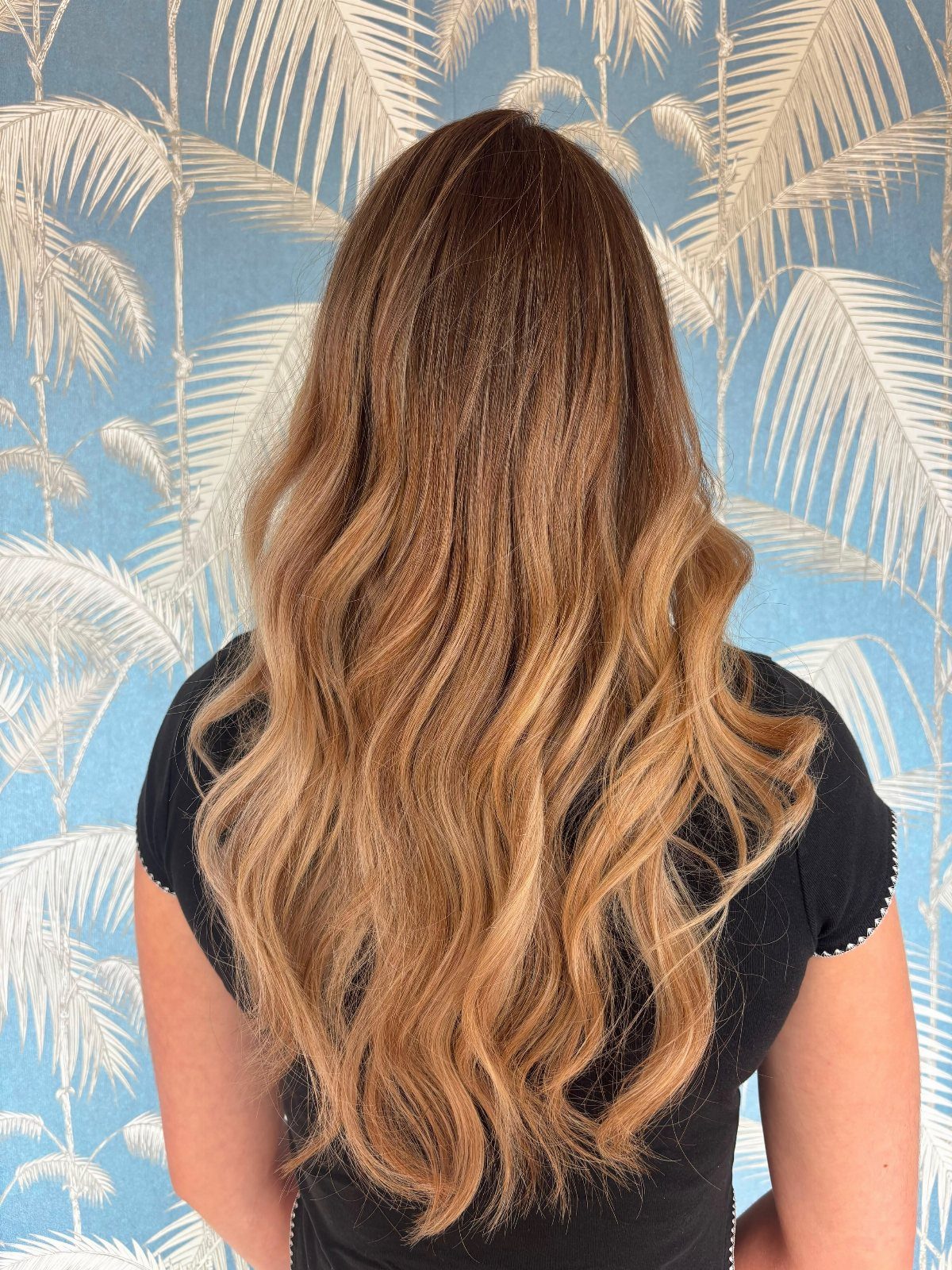
Golden blonde pieces melting out of brown waves are what "sun-kissed" means to me: lightness that looks earned outdoors, with no visible line where it starts. Against a palm-patterned wall the gold reads warm and natural.
20. Brown Hair Balayage
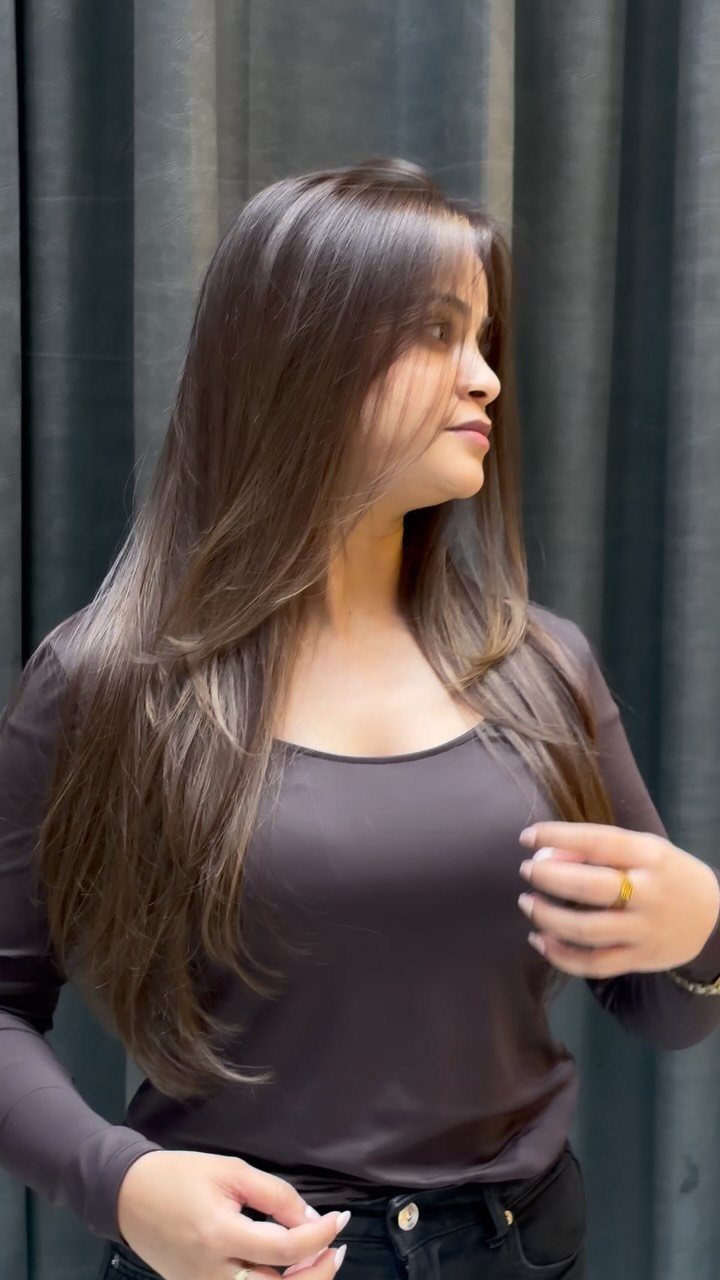
Lighter brown pieces through long brown hair add dimension without changing who you are as a brunette. Straight or softly waved, the lighter strands catch the light and break up one flat shade.
I’d pick this if you want the gentlest way into balayage.
21. Copper Balayage
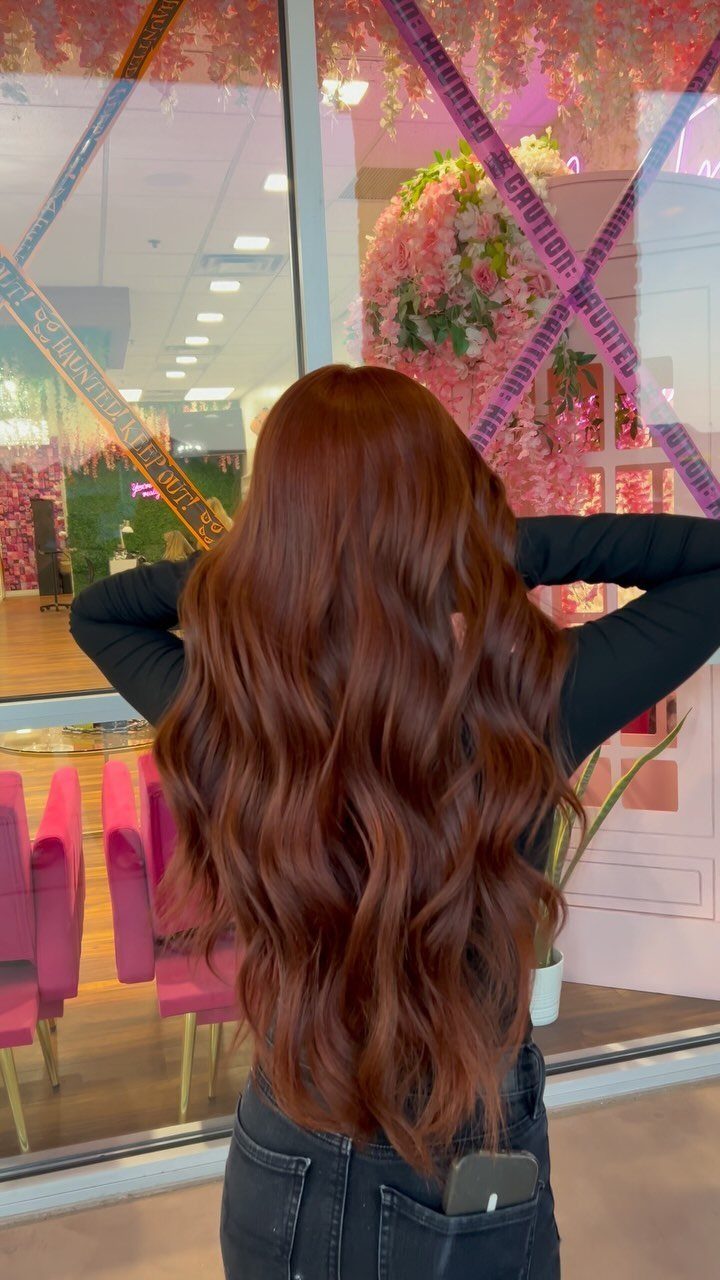
Copper turns brown hair into something warm and red-toned, and on long waves the reddish highlights flicker between copper and auburn as the hair moves. It is a bolder choice than caramel.
Ask for copper and ginger tones by name, and bring a photo, because red shades read very differently from one stylist’s idea to the next.
22. Root Fade
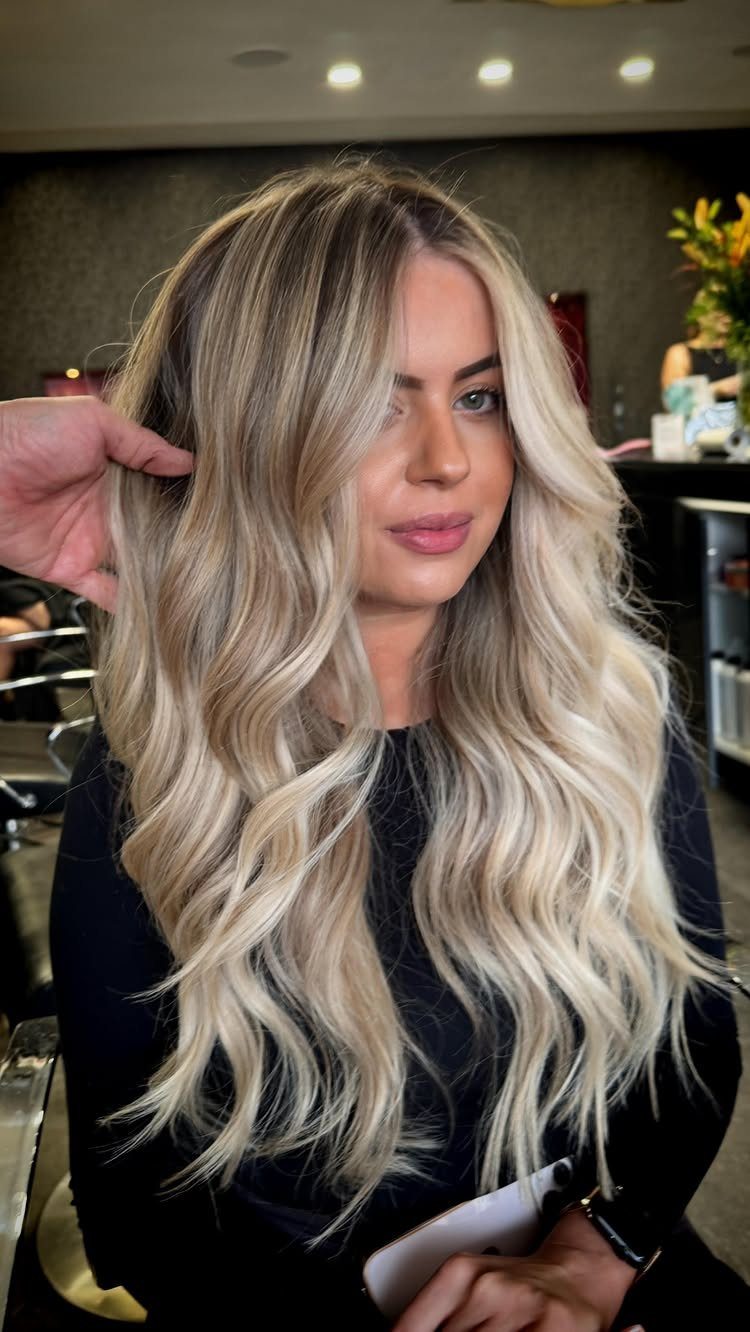
Dark roots that gradually lighten into blonde lengths are a root fade, and the graduated blend is why grown-out hair never shows a line. Long waves display the shift from deep to light nicely.
This is my pick if you dislike regrowth panic. Ask your stylist for a smooth, graduated blend from roots to ends, and say how far down the dark should reach before the blonde takes over.
23. Balayage Ponytail
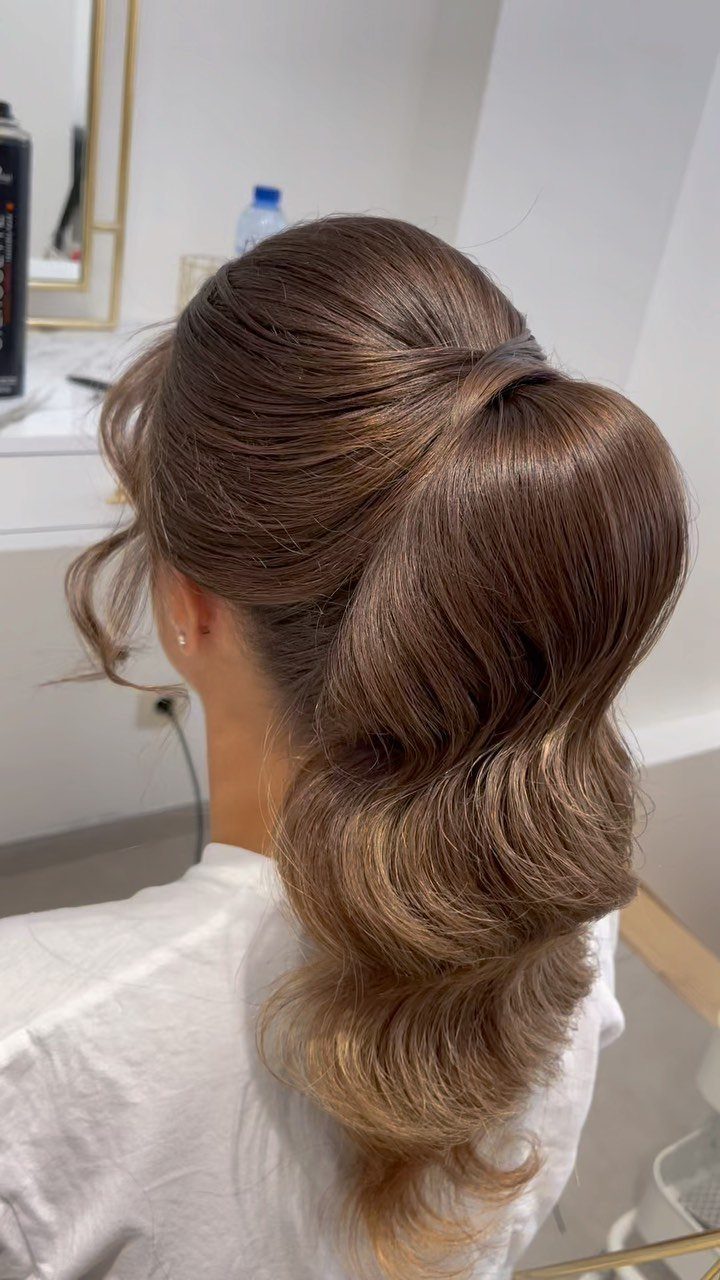
Gathering hair into a high, curled ponytail puts the lighter ends on display, so the caramel at the bottom becomes the focus. Curls add volume and spread the color out.
Ask your stylist to keep the brightest caramel toward the ends, since that is the part a ponytail shows. It is a quick style for mornings: curl the lengths, tie it up, and the balayage does the decorating.
24. Balayage and Bows
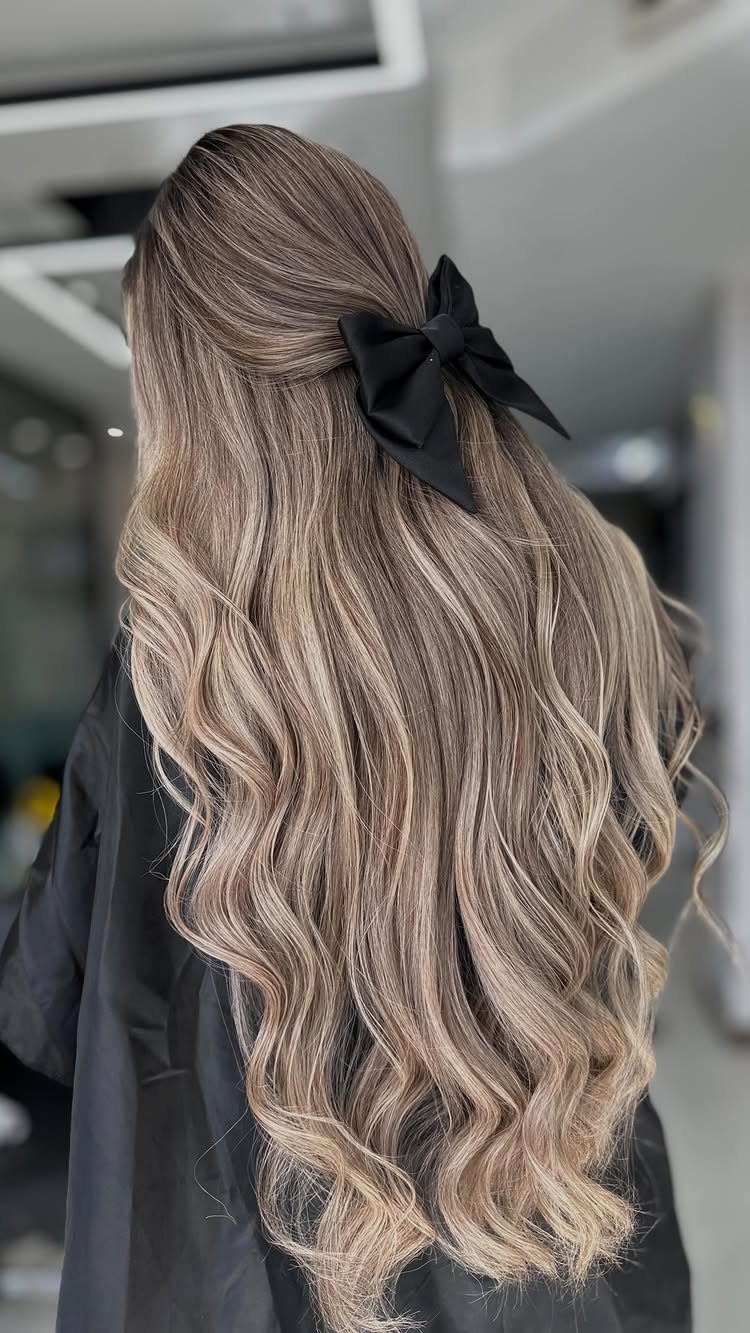
A large black bow against balayage hair gives a clear contrast: dark fabric next to lighter waves makes the color look brighter. Gathering the hair at the back shows the blend running down the lengths.
I like this as a no-effort finish for hair you already colored. Pick a bow in a deep shade, since it sharpens the lighter pieces, and keep the waves loose so the balayage still moves.
25. Balayage with Fringe
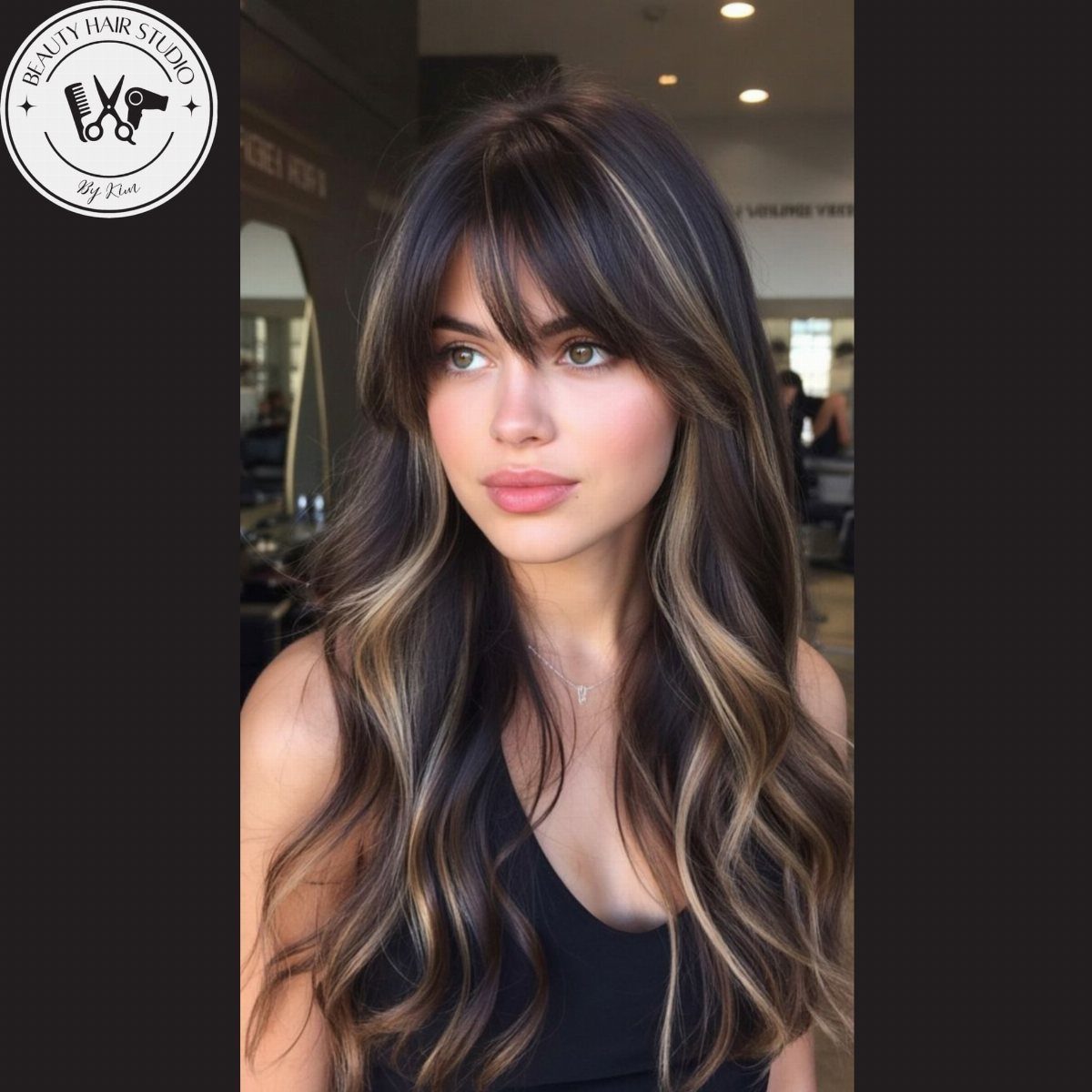
A thick, wispy fringe changes where balayage shows up: the blonde pieces curl in around your face, so the fringe itself becomes part of the color.
For a fringe, have the lightest pieces around your face woven right into the bangs so the color flows across instead of stopping at a line, and bring a reference photo that shows the exact brightness you want.
Wavy lengths with a softer, wispier fringe look easiest to match.
I’d choose this if you want the color to feel cut in, not just painted on.
26. Balayage Claw Clip
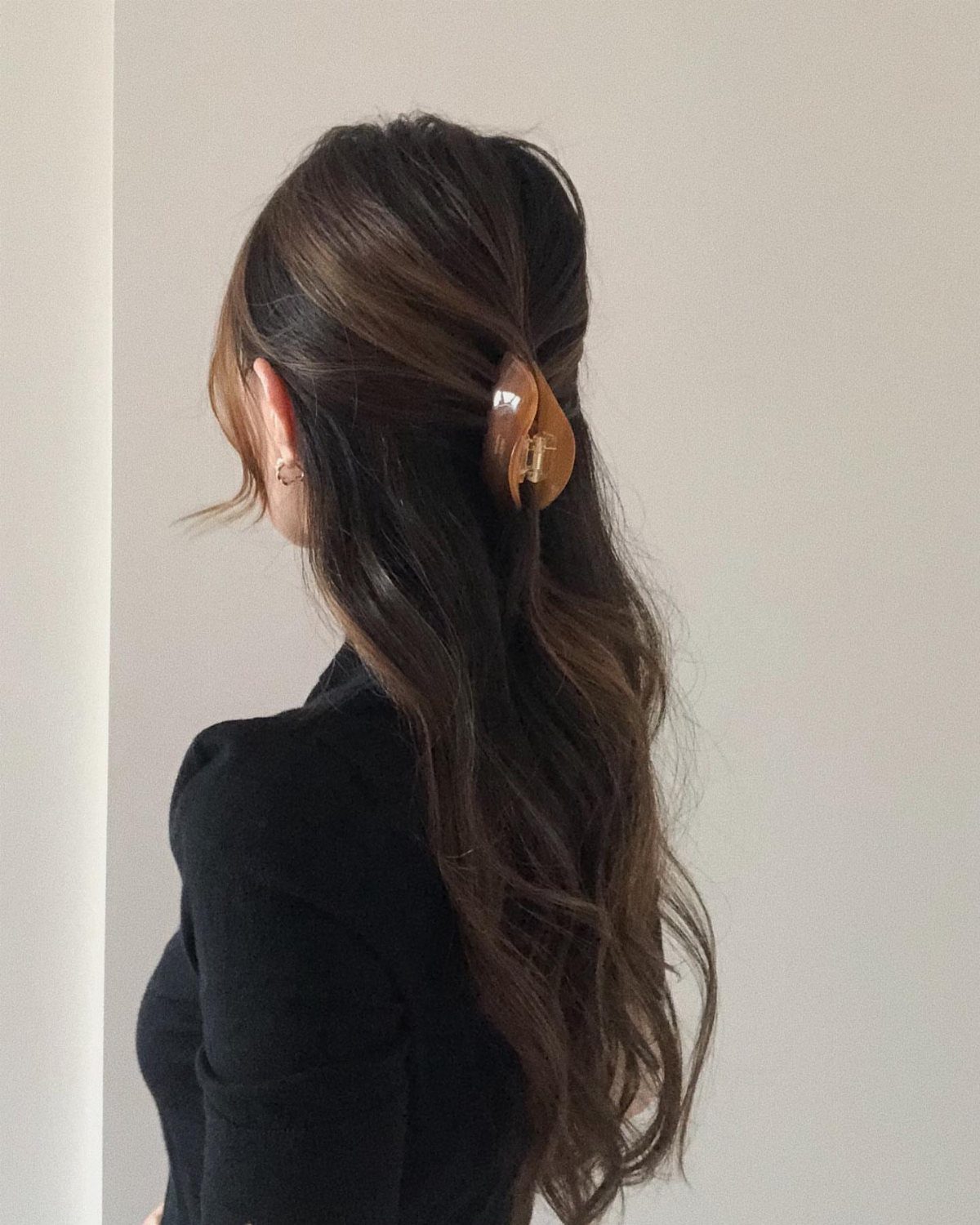
Half-up in a claw clip is the quickest way I know to style balayage: twist the top section, clip it, and leave the lighter lengths falling loose below.
A tortoiseshell clip sits well against brown hair with soft blonde pieces, since its warm tones echo the color instead of fighting it. Keep the waves loose so the blend still shows.
It takes under a minute, which suits busy mornings.
27. Pumpkin Spice
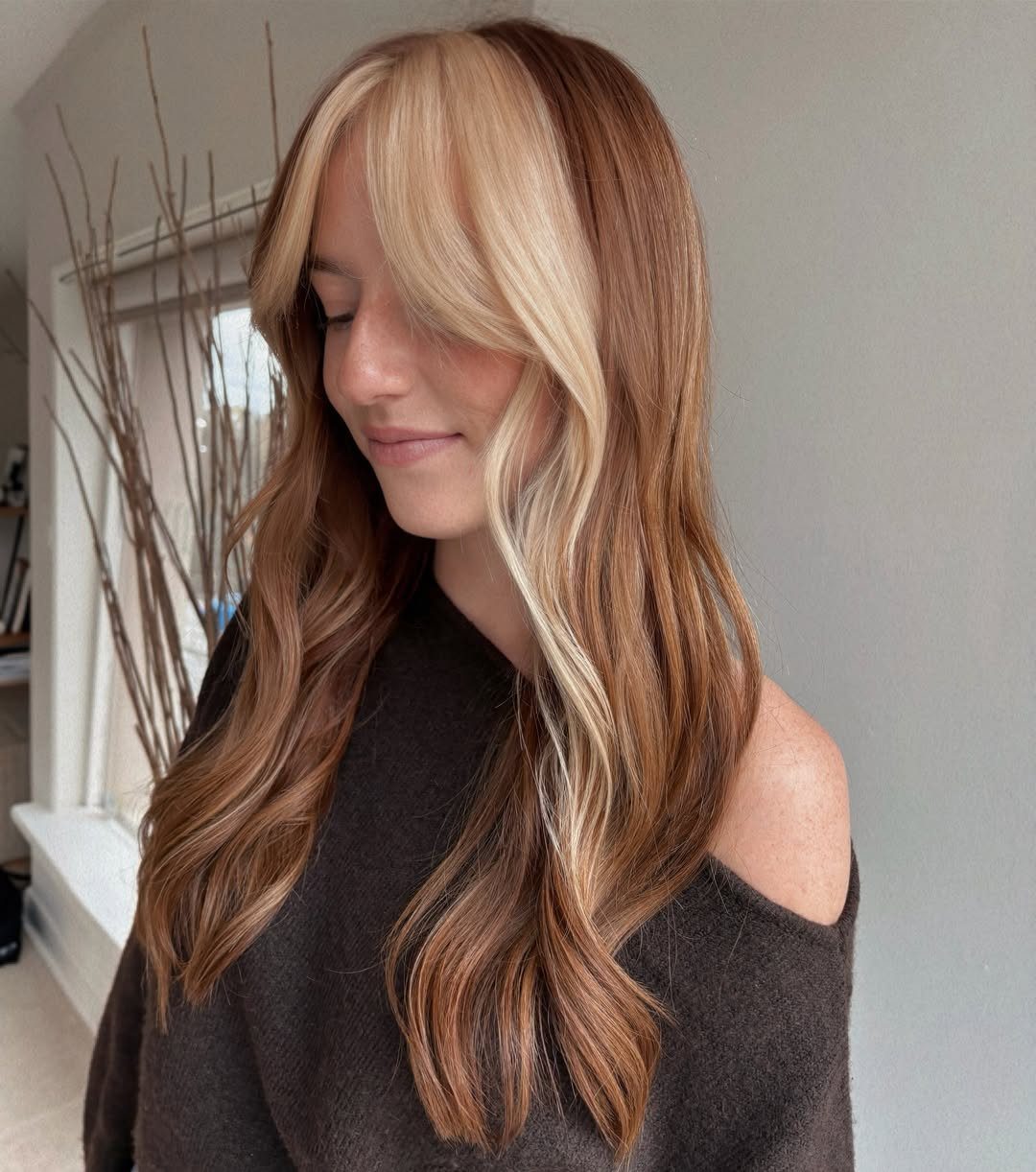
Pumpkin spice is a mix of copper and blonde through brown waves, and the variety of tones is what makes it read as autumn.
Ask for copper as the main tone, with blonde pieces woven in for brightness.
Copper and other reds get read so differently from one colorist to the next that a saved photo does more than any shade name, so show it before anyone mixes a bowl.
I like it on wavy hair, where the tones keep shifting. Expect it to be warmer and bolder than caramel.
28. Marbled Blonde
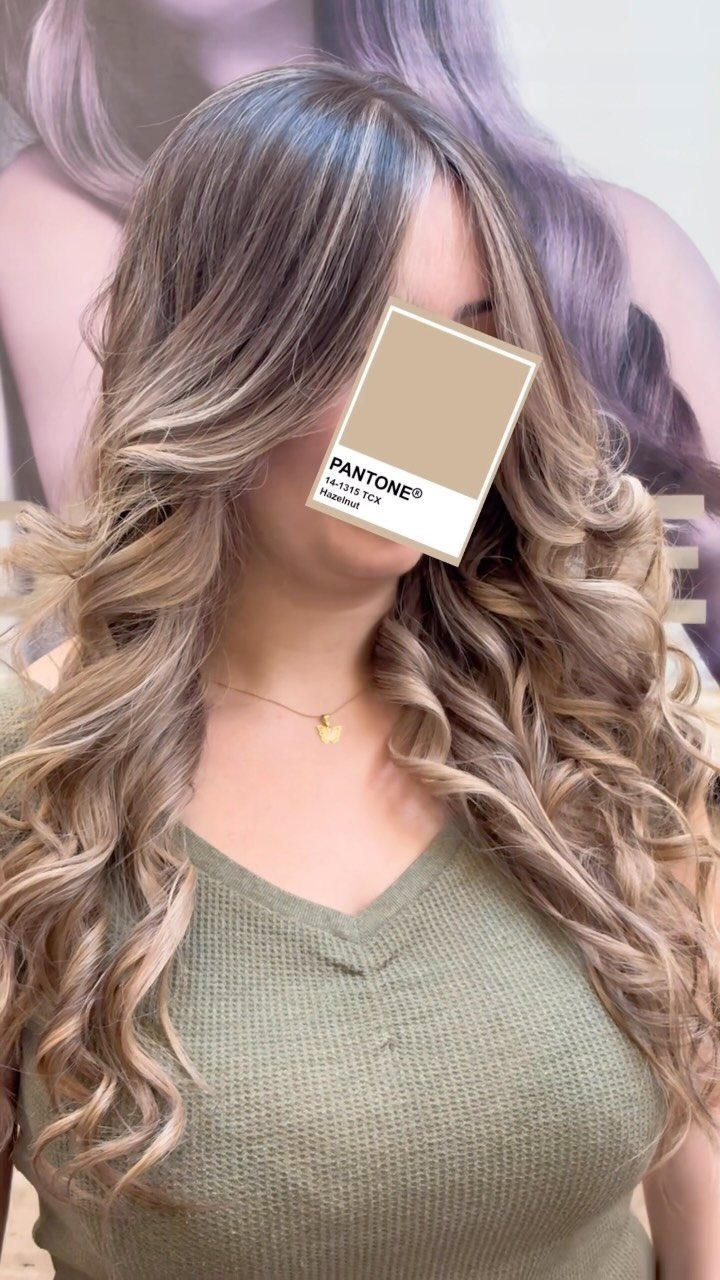
Marbled blonde uses broad blonde streaks on brown curls, so the hair sits between brunette and blonde without going fully either way.
Wider strands hold their blonde better than fine ones, and they show clearly in curls. Ask for lighter strands around the face too, and keep the base a warm hazelnut brown so the contrast stays soft.
I’d pick this if you want visible blonde but still want to be called a brunette.
29. Mocha Balayage
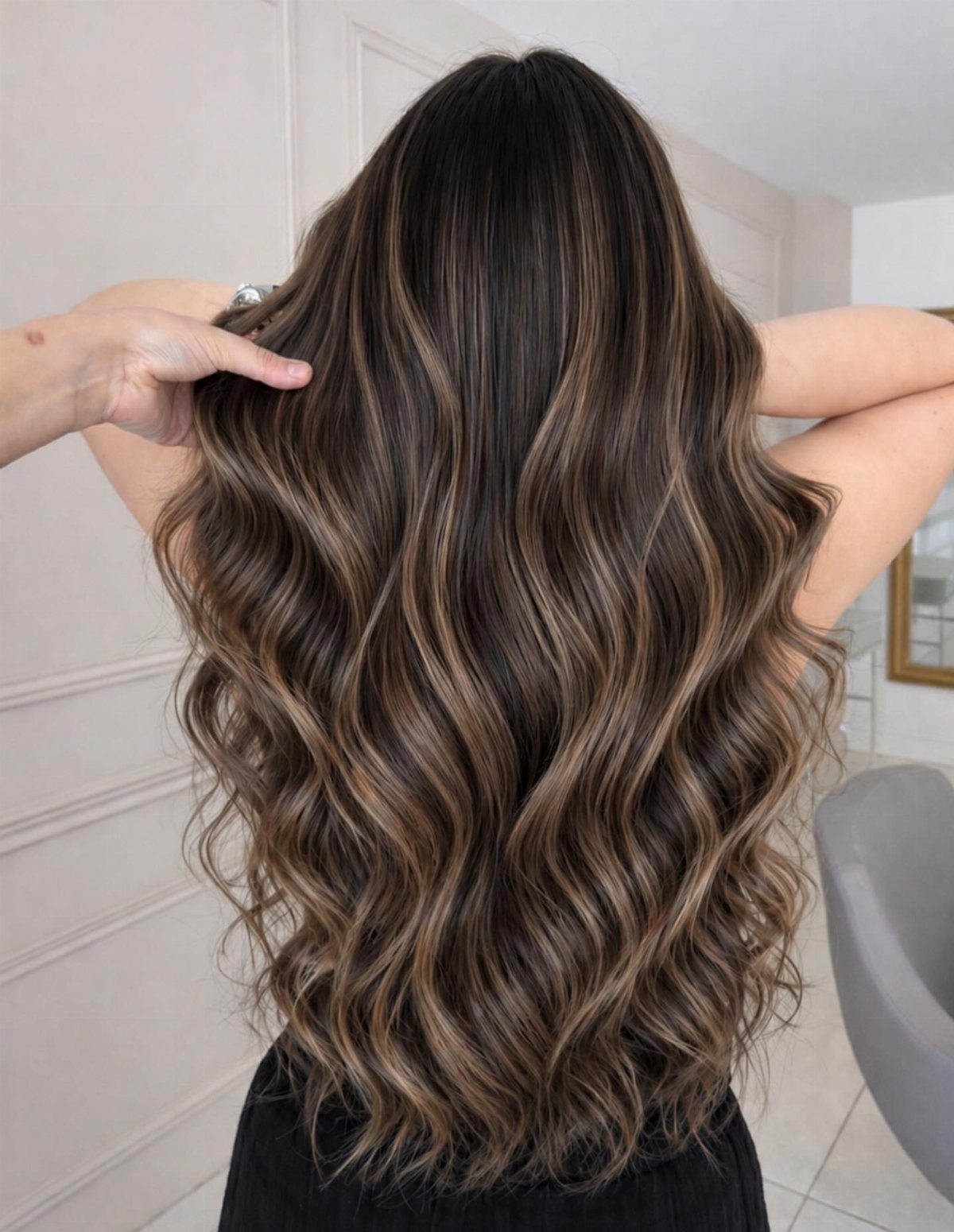
Mocha balayage layers one slightly lighter and one slightly darker brown over your base, so long waves gain depth without any obvious highlight.
Ask for mocha tones by name, and show your stylist a photo that matches the level of subtlety you want. Because the shades sit so close together, it’s a quiet change.
This is my choice if you want brown hair to look richer, not different.
Balayage Application and Result
Balayage is French for "to sweep," and the technique is just that: a stylist paints lightener onto the hair freehand in long, sweeping strokes, with no foils or caps to set the pattern.
Your stylist paints it by hand, with no foil grid and no cap, so every head ends up a little different.
Color usually starts around the mid-lengths and gets heavier toward the ends. It stays off the scalp, which is why the top of your hair reads as your natural shade and gets lighter as it moves down.
Your stylist may also skip sections on purpose. Those gaps are what give the gradient its natural, multidimensional look instead of an even coat.
Because the painting is freehand, you control how bold it gets. Say whether you want a soft wash or clear contrast before anything is mixed.
Regrowth and Salon Upkeep
Blended roots make balayage grow out more gently than foil highlights, since there is no line at the scalp to track. Even so, plan on a touch-up somewhere between 8 and 12 weeks.
Booking much sooner than that works against you. Too-frequent visits stack color and cost you the natural finish that made you choose balayage.
If you go blonde, expect to lean toward the shorter end of that window, because blonde turns brassy quickly. Purple shampoo between visits helps cancel the yellow, and a toner at the salon refreshes the shade.
If you can stretch past 12 weeks, your hair will usually still look planned. I’d pick the interval by how much contrast you have, not by the calendar.
Balayage Appointment Duration
Block out 90 minutes to 3 hours for a balayage appointment. Where you land depends on the look you want, your length, how thick your hair is, its texture, and how experienced your stylist is.
The freehand painting itself runs about 30–60 minutes, depending on density and length. Then the color needs about 1 hour to process, followed by toner and a protective treatment.
Plan for the long end if your hair is thick, long, or previously dyed. Dyed or damaged hair may also need prep treatments first, which can stretch the visit.
Some salons run closer to 4 hours, so ask about timing when you book. I’d clear the whole afternoon and bring a charger.
Frequently Asked Questions
How to section hair for balayage at home?
The sources here don’t give a sectioning method for home use, so I won’t invent one.
What they do describe is the salon approach: lightener is painted on freehand with a brush, cotton strips or plastic wrap keep color off the hair that should stay untouched, and some sections are skipped on purpose for a natural gradient.
Because the result depends so much on that hand placement, I’d bring a photo to a stylist rather than guess.
Why is balayage hair so expensive?
You are paying for time and skill. Balayage is painted freehand, so every head is custom, and an appointment runs 90 minutes to 3 hours once painting, processing, toner and a protective treatment are counted.
Balayage usually costs more than other color methods for that reason, but blended regrowth means fewer visits, which can even out the cost over time.
What is the difference between foilyage and balayage?
Balayage is painted by hand with no foils, while foiling sections the hair and wraps each section in foil for more precise, uniform placement.
Foilyage isn’t covered in what I have, so I can’t say more about it. The clear contrast is freehand softness versus controlled, even placement.
Is balayage full hair color?
No, balayage is not a full-head color. Stylists also skip sections on purpose, so the top of your hair keeps your natural shade.
What are the benefits of balayage over traditional highlights?
You choose how bold or soft it looks, and because the color melts into your natural shade, the grow-out is far kinder than with foils. Foil highlights start at the roots, so regrowth shows as a line.
Who does balayage suit?
Hair type, skin tone and length rarely rule it out; the placement just gets adjusted for each.
Longer hair gets more of the low-maintenance benefit than a short pixie, since there is more room for the blend. Because it is so tailored, know the exact look you want before you sit down, and bring a photo.
How should I style my balayage hair? Should I curl my balayage hair?
Yes, curls and waves are a good choice, since the bends scatter the lighter pieces and show off the blend. Keep waves loose so the color still moves.





