How dark your starting hair is decides which of these ombre hair color ideas fits you: the closer your base sits to the shade you want at the ends, the gentler the fade, the fewer sessions and the longer you can wait between appointments.
The range runs from the Warm Brunette Gradient and Natural Brunette Root Melt, which barely show regrowth, to Ash on Black, which can take multiple sessions of lightening and steady toner upkeep to hold its cool shade.
Most refreshes land every 3–6 months, and the ends, not the roots, set the schedule.
1. Brown to Blonde Ombre
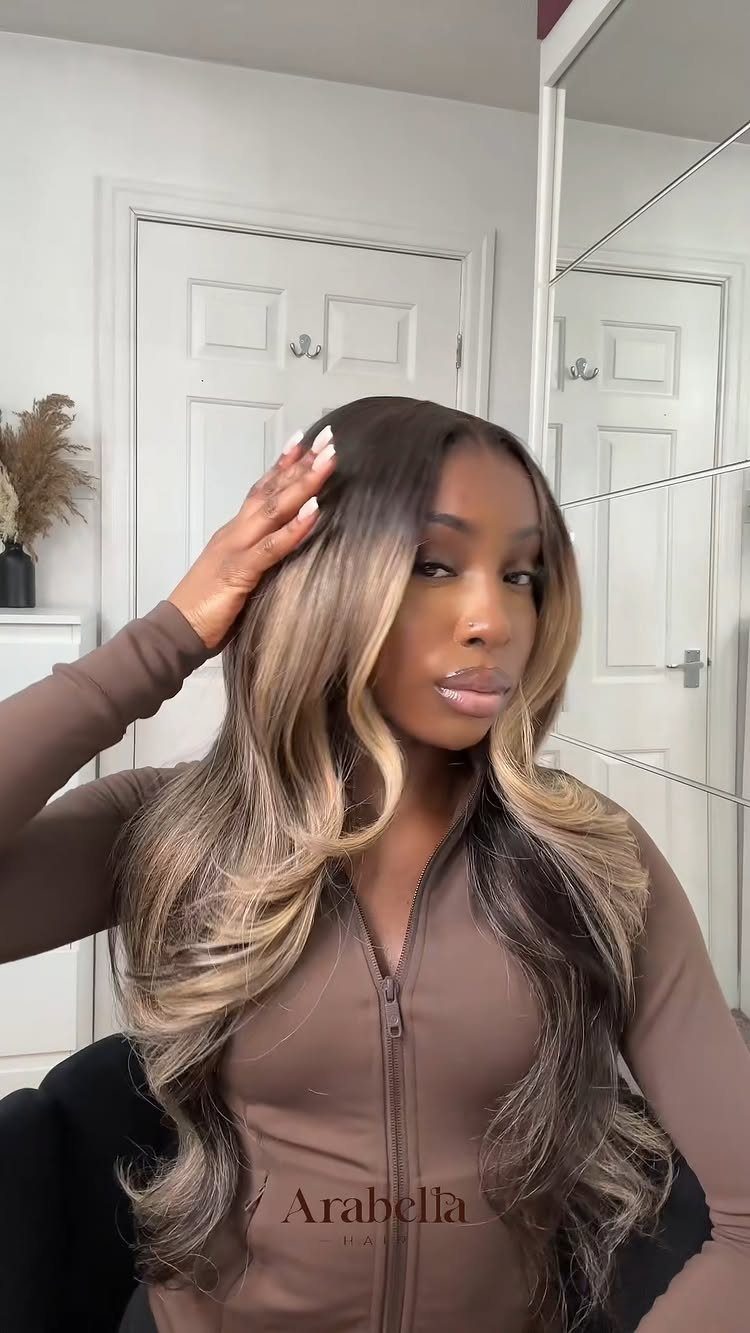
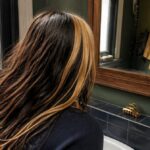
Dark at the top, blonde at the ends, and the fade between them can go gentle or sharp depending on how far apart those 2 shades sit.
Ask for the transition to start around ear level for a soft gradient, or lower for a dramatic split. The darker your natural brown, the more sessions it takes to get the ends properly blonde without turning them orange.
2. Pink Ombre
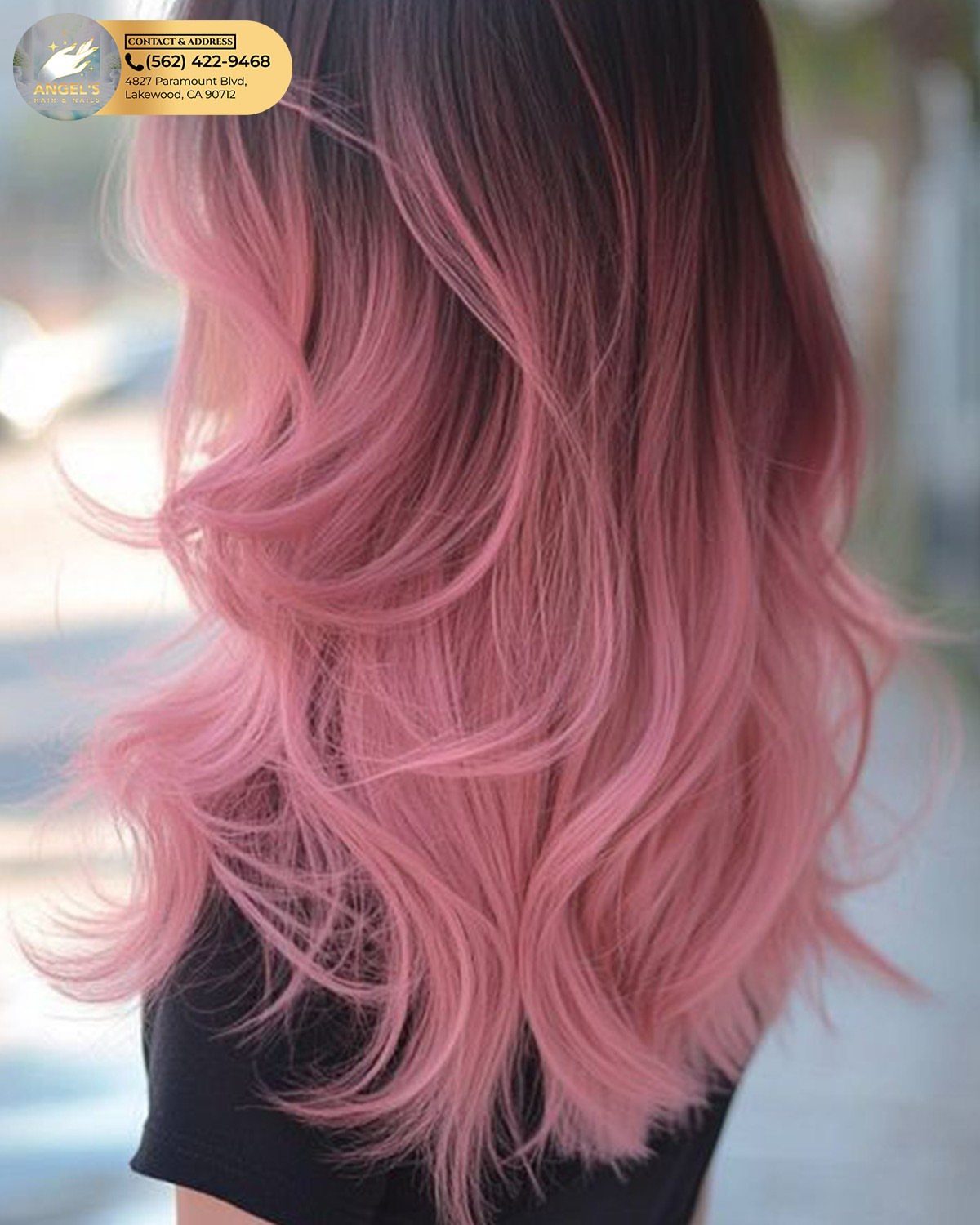
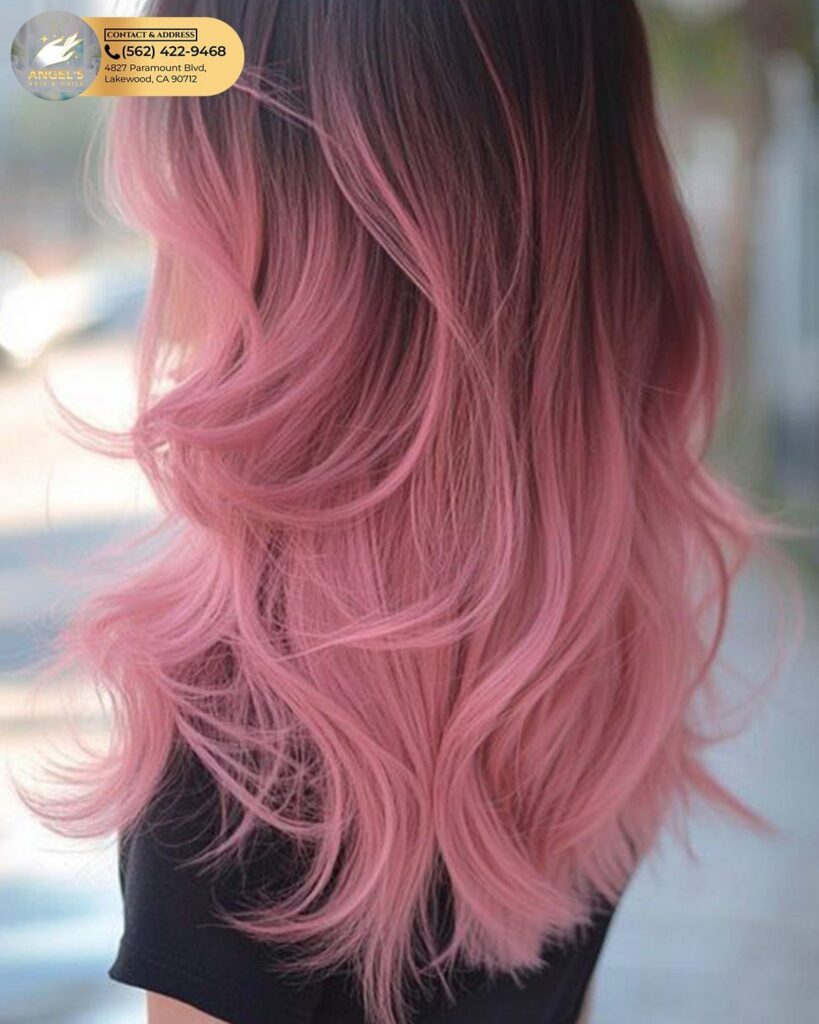
Pink ends on dark roots give you a bright, temporary gradient that fades out over a few weeks if you use semi-permanent color.
Most salons bleach the ends first, then tone them pink, so upkeep depends on how often you refresh the pink rather than how fast your hair grows.
Doing this at home, pastel pink shows up clearest on hair that’s already lifted to pale yellow.
Darker bases need a brighter, more saturated pink to read as anything other than a warm tint. The fade is gradual and washes out to a peachy blonde before it disappears completely.
3. Ash Blonde Ombre
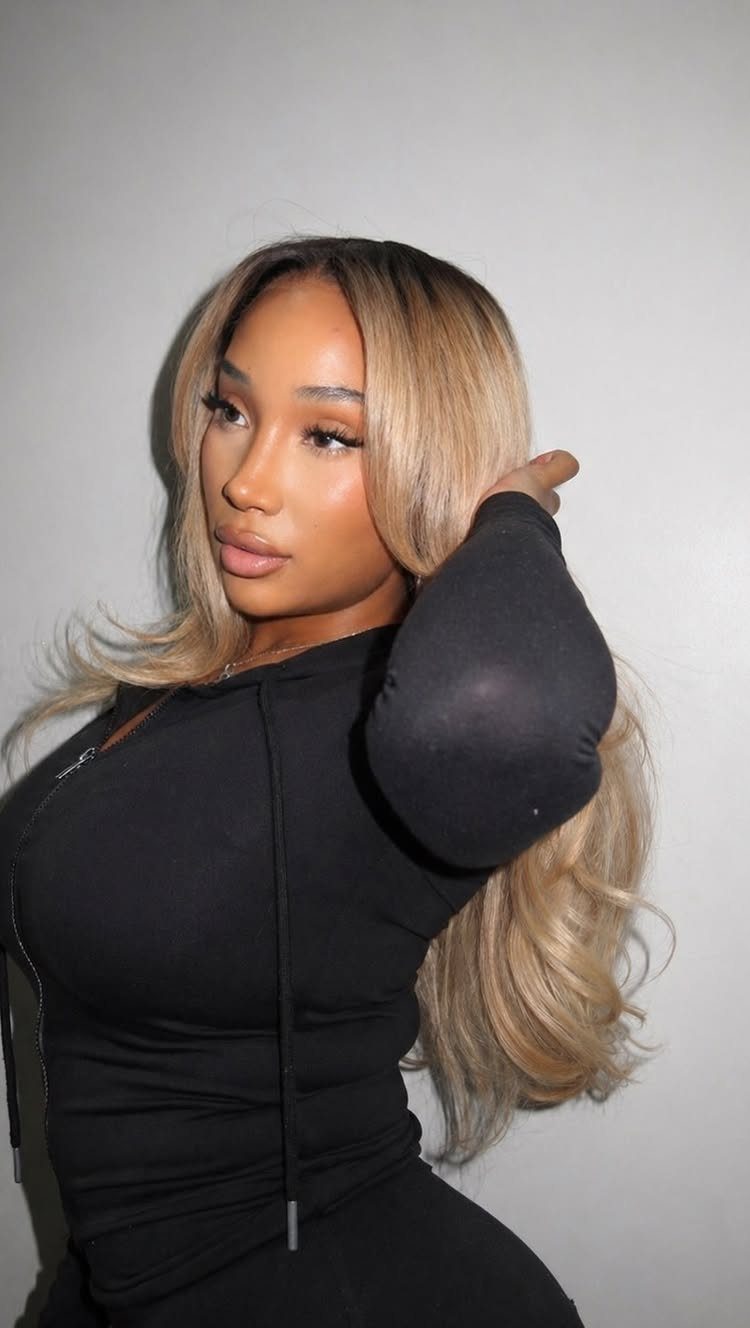
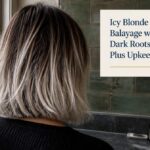
Ash blonde ombre keeps the ends cool-toned rather than warm, which means no brass or gold creeping in as the color settles.
The stylist lifts the lengths to pale blonde, then tones them with a violet or blue-based toner to cancel out any yellow.
This one suits cooler skin tones better than warm, and it needs purple shampoo every few washes to hold that ashy finish.
The base stays natural so regrowth is invisible, but the toner fades and the ends can shift warm when you skip it.
4. Blonde Ombre
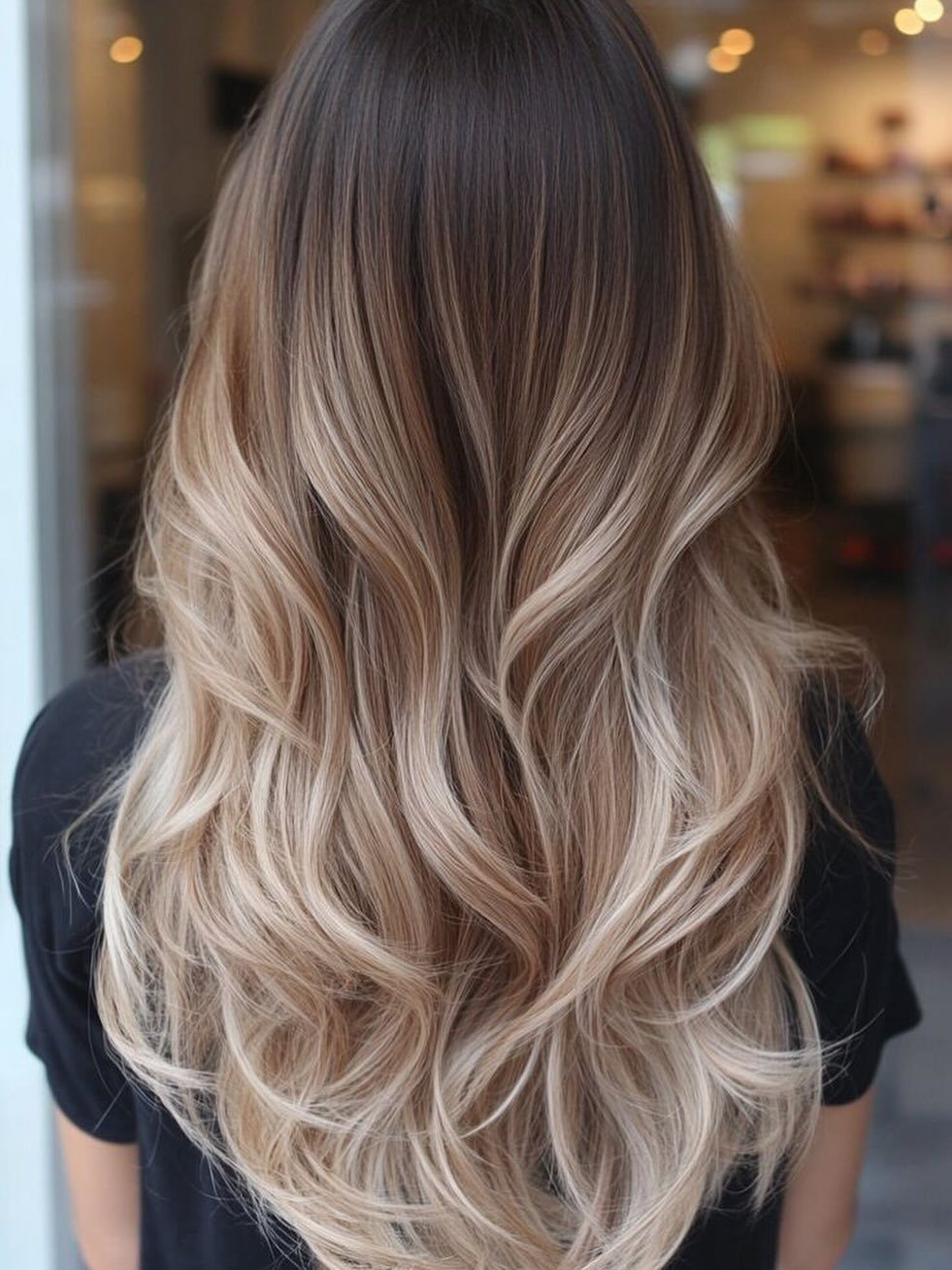
Blonde hair that goes lighter at the ends rather than starting from a dark base. The base is already blonde, so the contrast is softer and regrowth barely shows.
This works if you have naturally light hair and want dimension without committing to root touch-ups. The stylist lightens the ends past your base, then tones everything to match.
5. Light Brown Curly Ombre
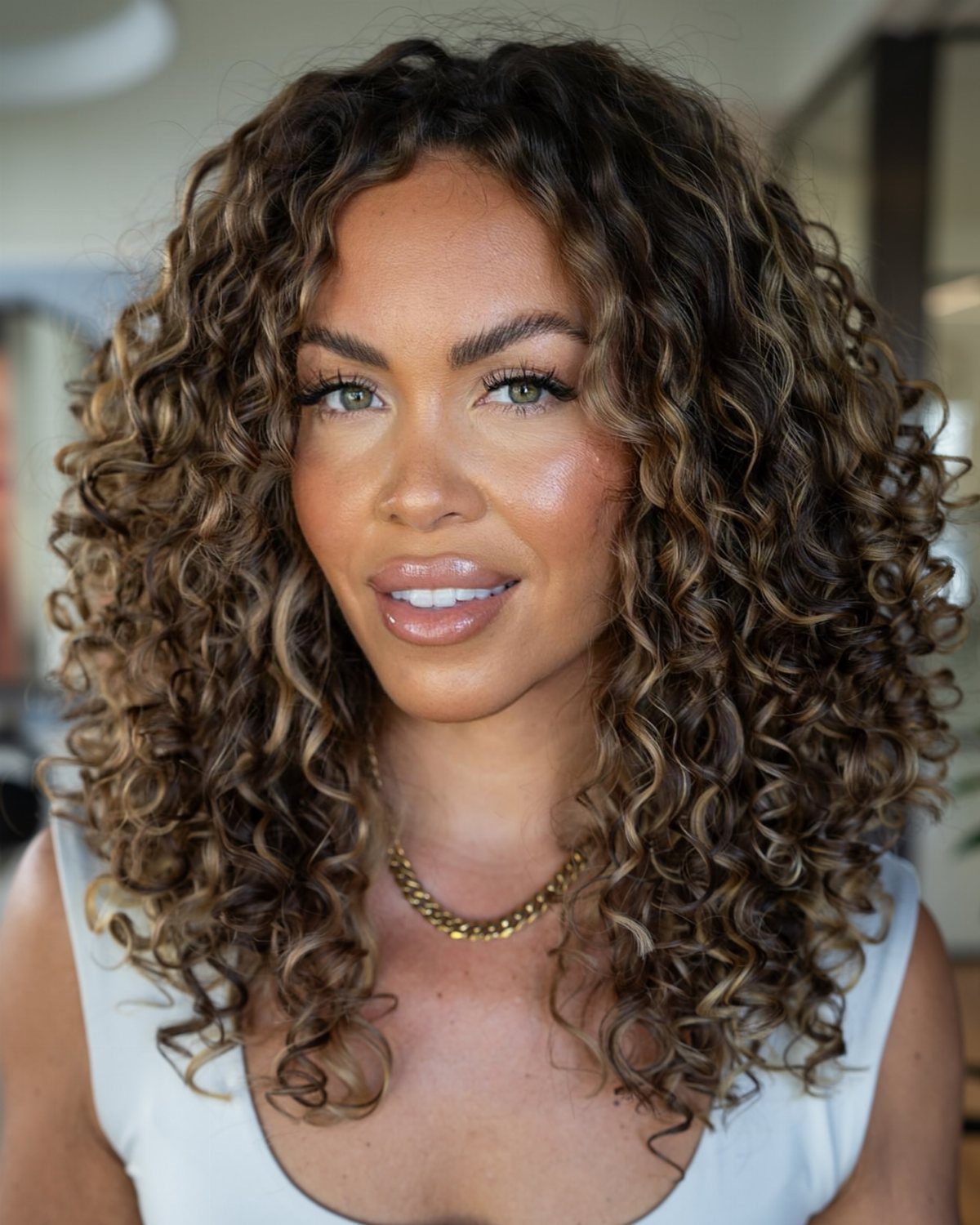
Light brown curls with blonde pieces woven through create a dimensional, retro-leaning look that plays up texture. The blonde sits in ribbons rather than a straight gradient, so it catches light differently as the curls move.
Curly hair tends to be drier and more porous than straight hair, so the color on those ends needs a little extra care to keep it from fading.
Ask for a mix of highlights and lowlights rather than a single-tone ombre if you want the color to feel lived-in.
LC’s hair color is a creative take on a traditional ombré. There’s that heavy root with the transition between dark and light starting up high towards her crown, perfectly blending in the shades.
— Allure
6. Caramel Ombre
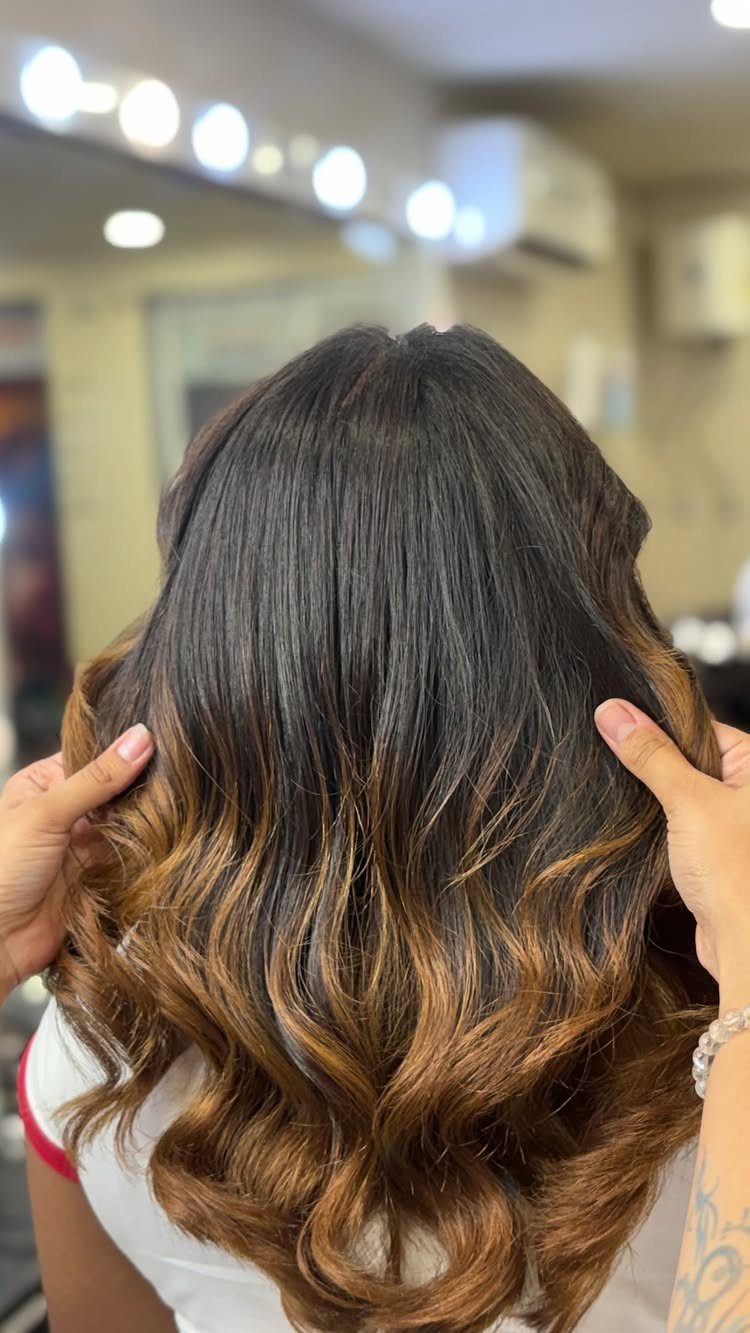
Caramel ends warm up a dark brunette base without the commitment of going fully blonde. The color sits in the gold-to-copper range, so it softens the overall look and adds movement to long, wavy hair.
Most stylists start the fade around mid-length and concentrate the lightest caramel at the very ends.
If your base is close to black, expect 2 sessions to get a true caramel rather than orange. Regrowth is forgiving since the base stays untouched, and the caramel holds its tone before it starts pulling brassy.
7. Short Caramel Balayage
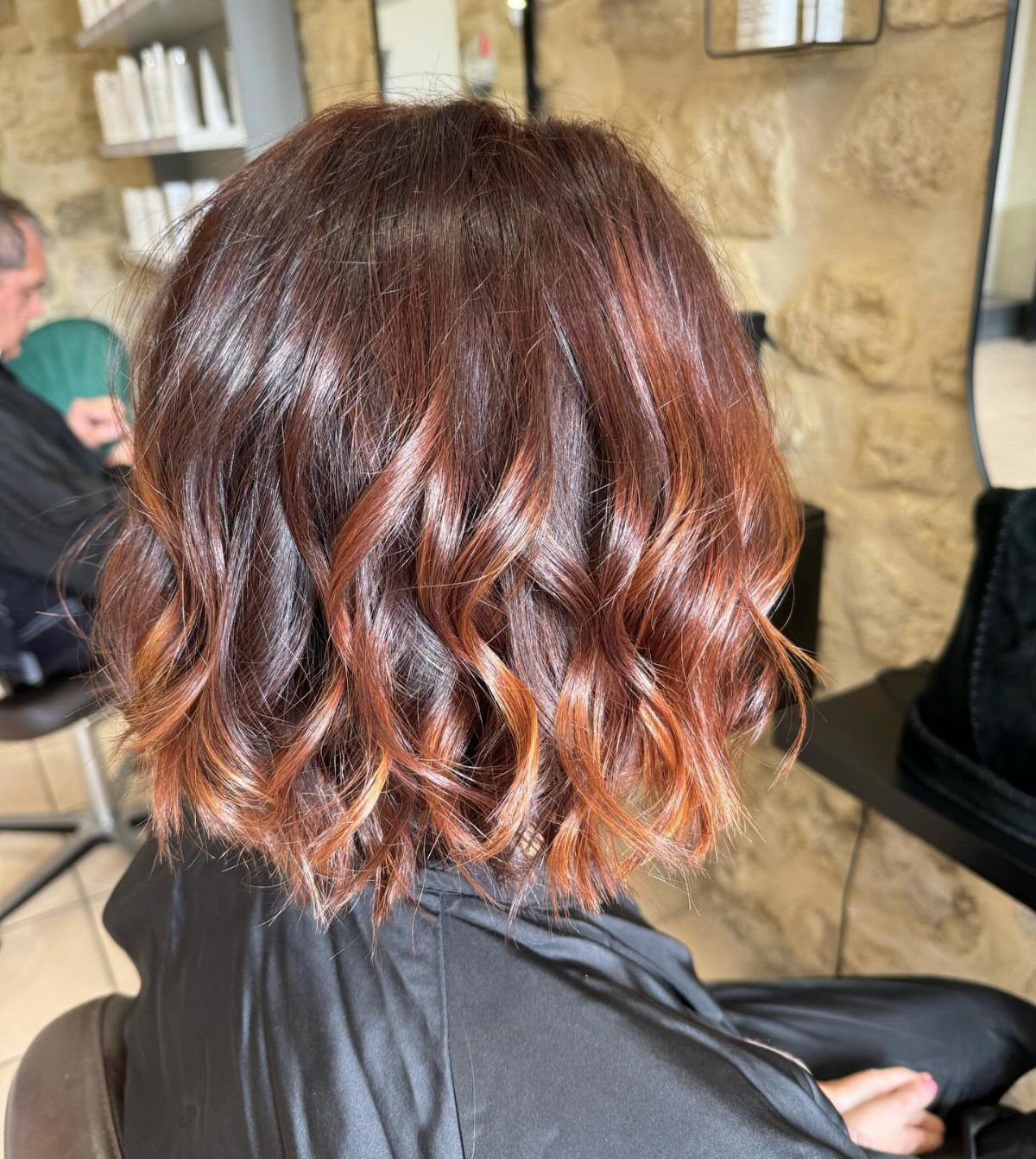
Short hair gives balayage less length to work with, so the caramel has to land exactly where the cut moves.
Ask for the brush-painted pieces to sit around the ends and the layers, with the root left darker and a little reddish.
On a short wavy cut, soft caramel strands show up with every bend of the wave. Regrowth stays gentle because nothing starts at the scalp.
Bring a photo that matches your length, since the same color reads very differently on a bob than on long hair.
8. Red Ombre
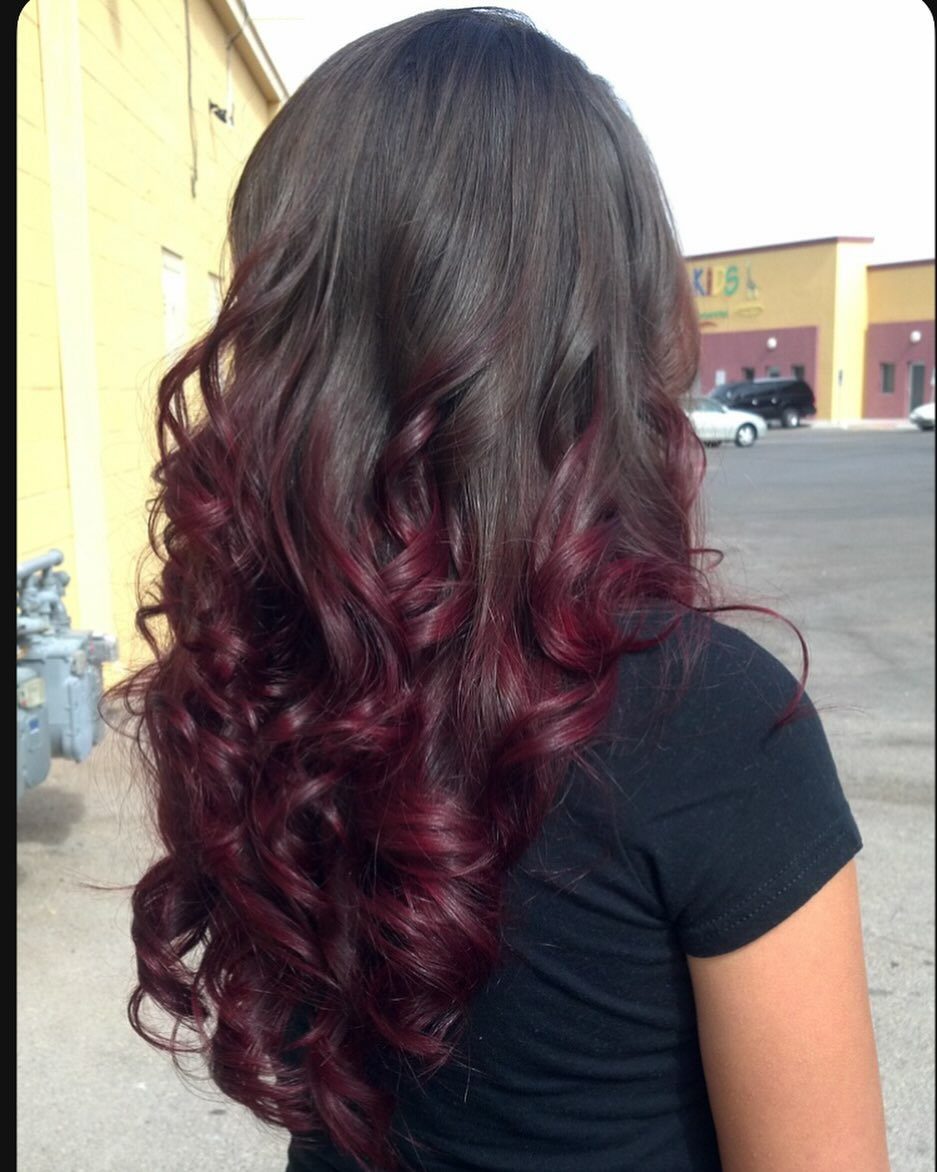
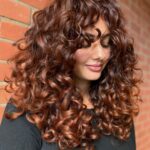
On curls, the red breaks up into the spirals instead of sitting in one flat band.
Ask your stylist where the dark ends and the red begins, and keep that line well below the roots so regrowth stays easy.
Red is the shade I’d choose for adding warmth to a brunette base, though I’d expect it to need refreshing as it fades.
9. Auburn Ombre
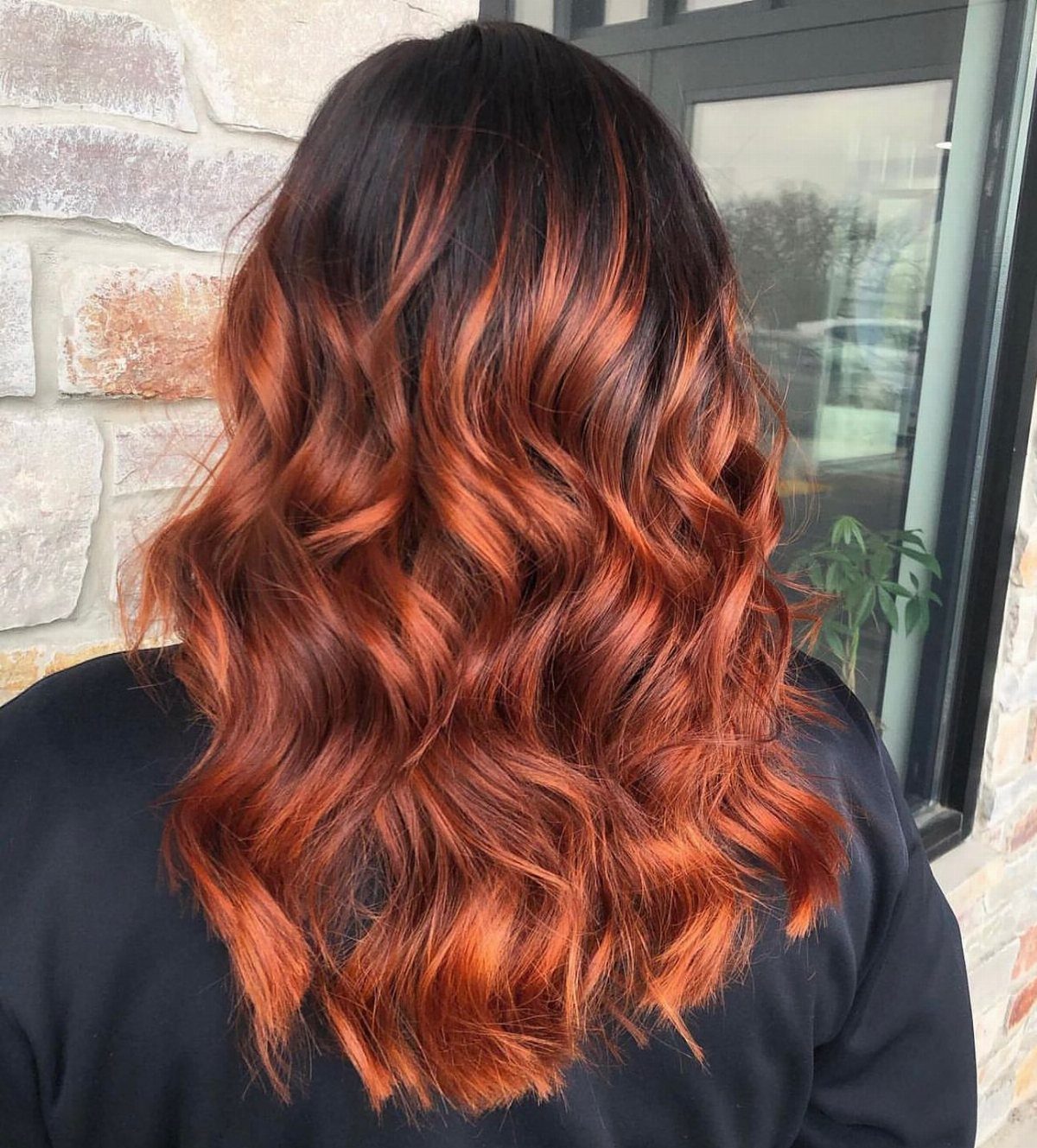
Copper-leaning auburn through the lengths and ends gives dark wavy hair a warm, reddish glow while the dark root stays put. It reads richer and less bold than a true red.
Ask for the auburn to build toward the ends so the shift looks gradual. I like this best on waves, where the copper catches light along each bend.
If you’re unsure about commitment, start with auburn only on the ends. You can always add more.
10. Honey Ombre
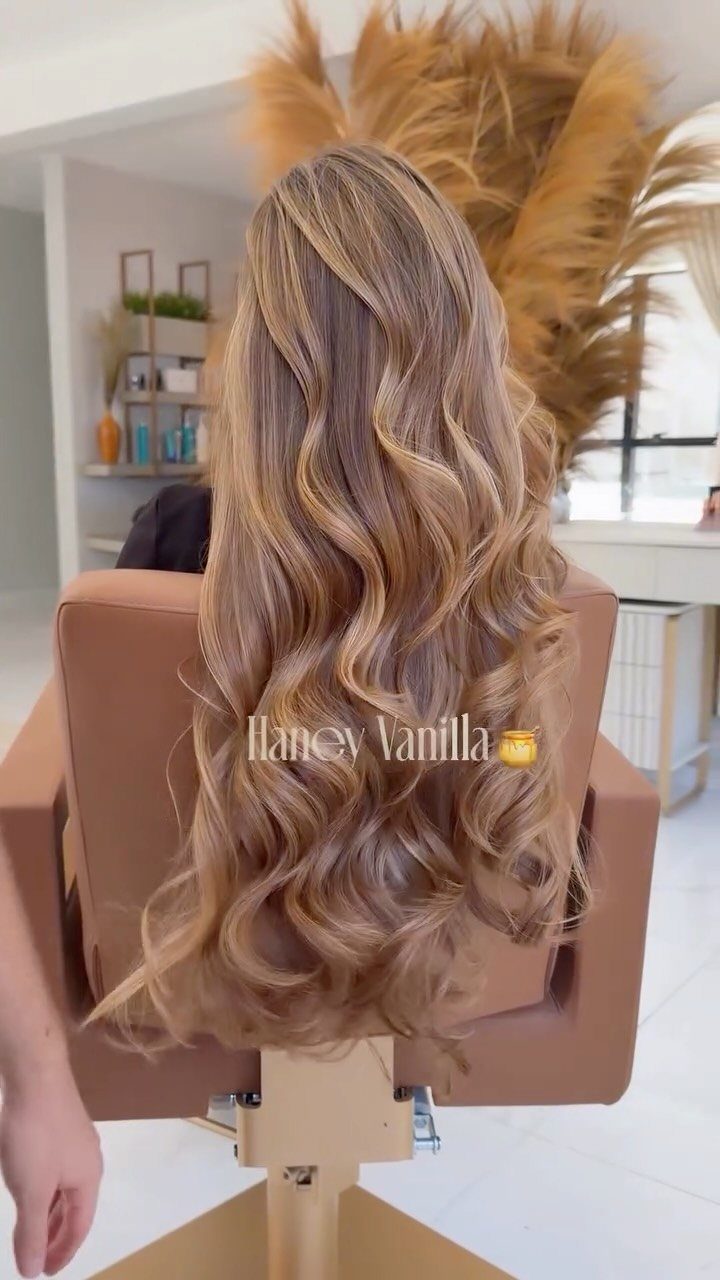
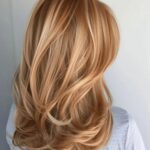
Honey sits between brunette and blonde, so this blend suits anyone who wants lighter hair without a hard line. The brown melts into long honey-blonde ends, and the warmth keeps the whole thing soft.
Ask for a blended, not banded, transition, and say "honey" rather than just "blonde," since blonde can drift cooler or paler. Wavy hair shows the blend nicely.
I’d pick this over a stark ombre for easy grow-out, because the shades are close enough that the base never fights the ends.
11. Auburn Blonde Honey Melt
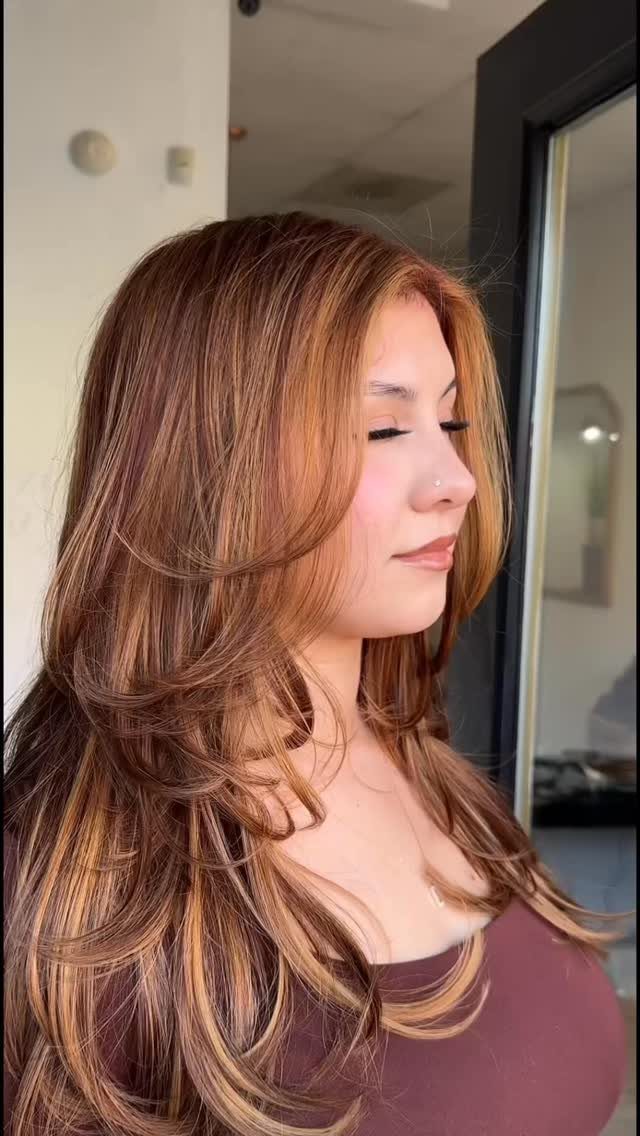
Auburn at the top that lightens into blonde with honey notes is a melt, not a split: the red-brown slides into gold instead of stopping at a line. Layers help, because each one catches a slightly different shade.
Ask for the honey tones specifically so the blonde stays warm and matches the auburn. A cool blonde would clash with it.
This takes more blending than a simple two-tone ombre, so I’d bring a photo and point to where the auburn should end.
12. Silver Gradient
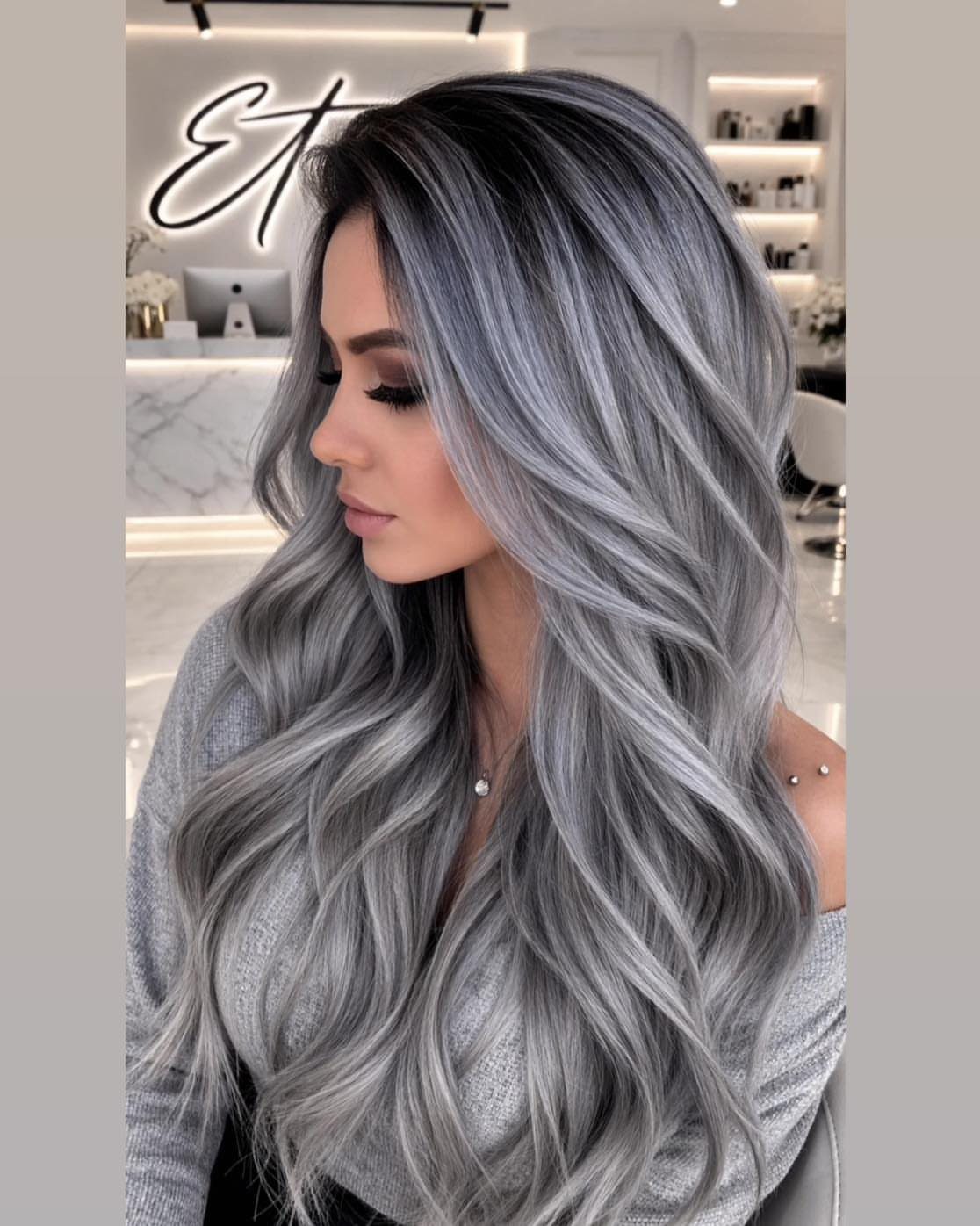
Silver-gray waves with lighter blonde highlights give a gradient that looks soft rather than stark. The highlights add depth, so the silver doesn’t look flat.
Ask your stylist for gray tones with blonde pieces woven in, instead of one solid silver. That mix is what makes the color read as dimensional.
I’d choose this for long, wavy hair, where the highlights have room to show. Silver does take careful toning, so it’s worth talking through upkeep before you book.
13. Peach Strawberry Melt
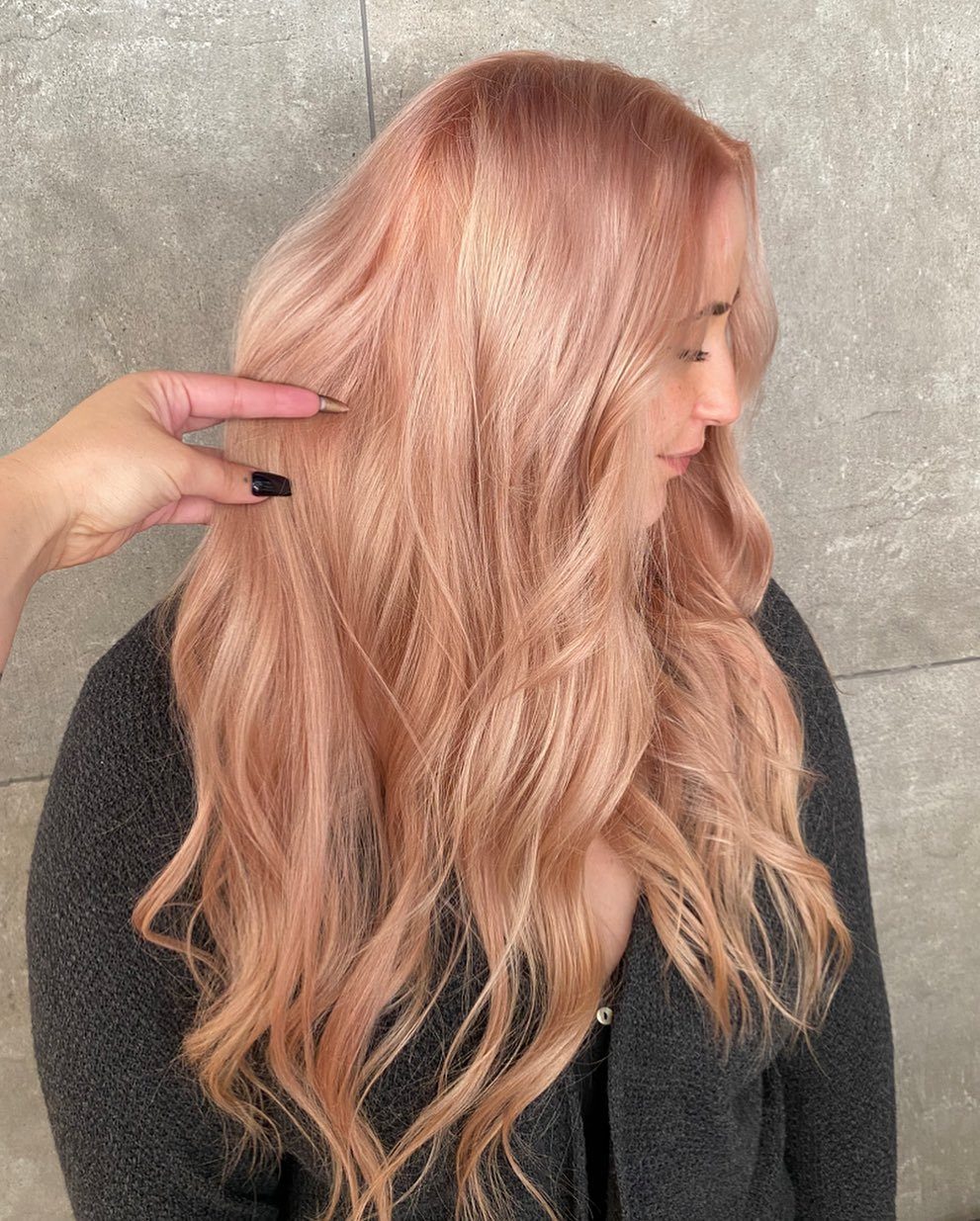
Reddish roots that fade into warm blonde with a peach overlay give this a softer, more blended look than a sharp coral or a plain strawberry blonde.
The warmth runs all the way through, so it reads cohesive rather than split.
Ask for peach tones rather than pink if you want something that fades gently and stays in the warm spectrum. On wavy hair, the color shifts with the light and looks different depending on how the waves fall.
I’d choose this for someone who wants color that feels lived-in from the start.
14. Short Cool Bronde Gradient
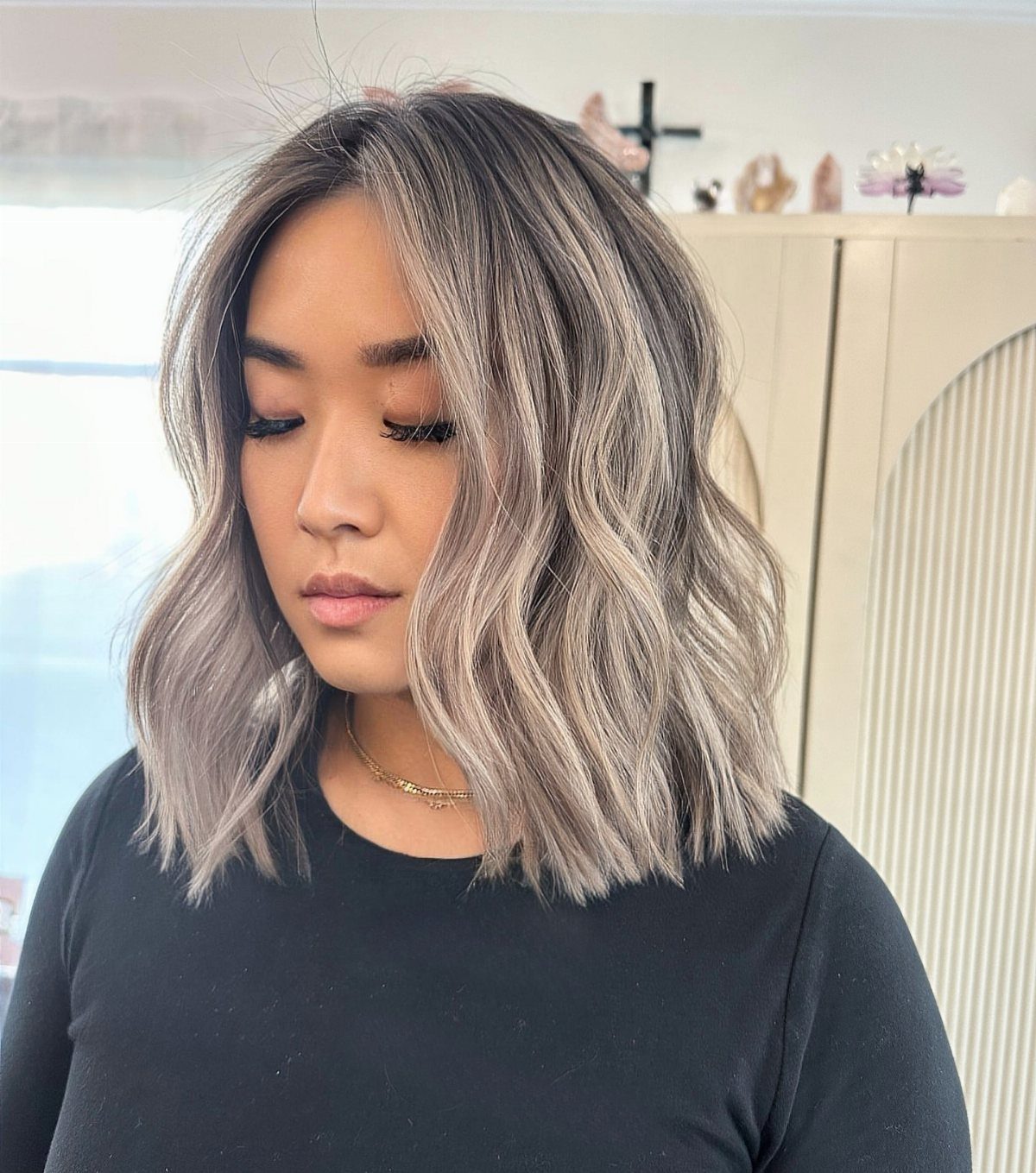
A short bob with dark roots and cool blonde ends gives you contrast without the length to soften it, so the transition has to be smooth or it looks banded.
The stylist tones the ends ash or silver-blonde to keep them cool, and leaves the root dark for dimension.
Short styles show regrowth faster than long, but with a gradient the root is meant to stay dark, so you only refresh the ends when the toner fades.
This works best on wavy or textured hair, where the blend has movement to work with.
15. Natural Brunette Root Melt
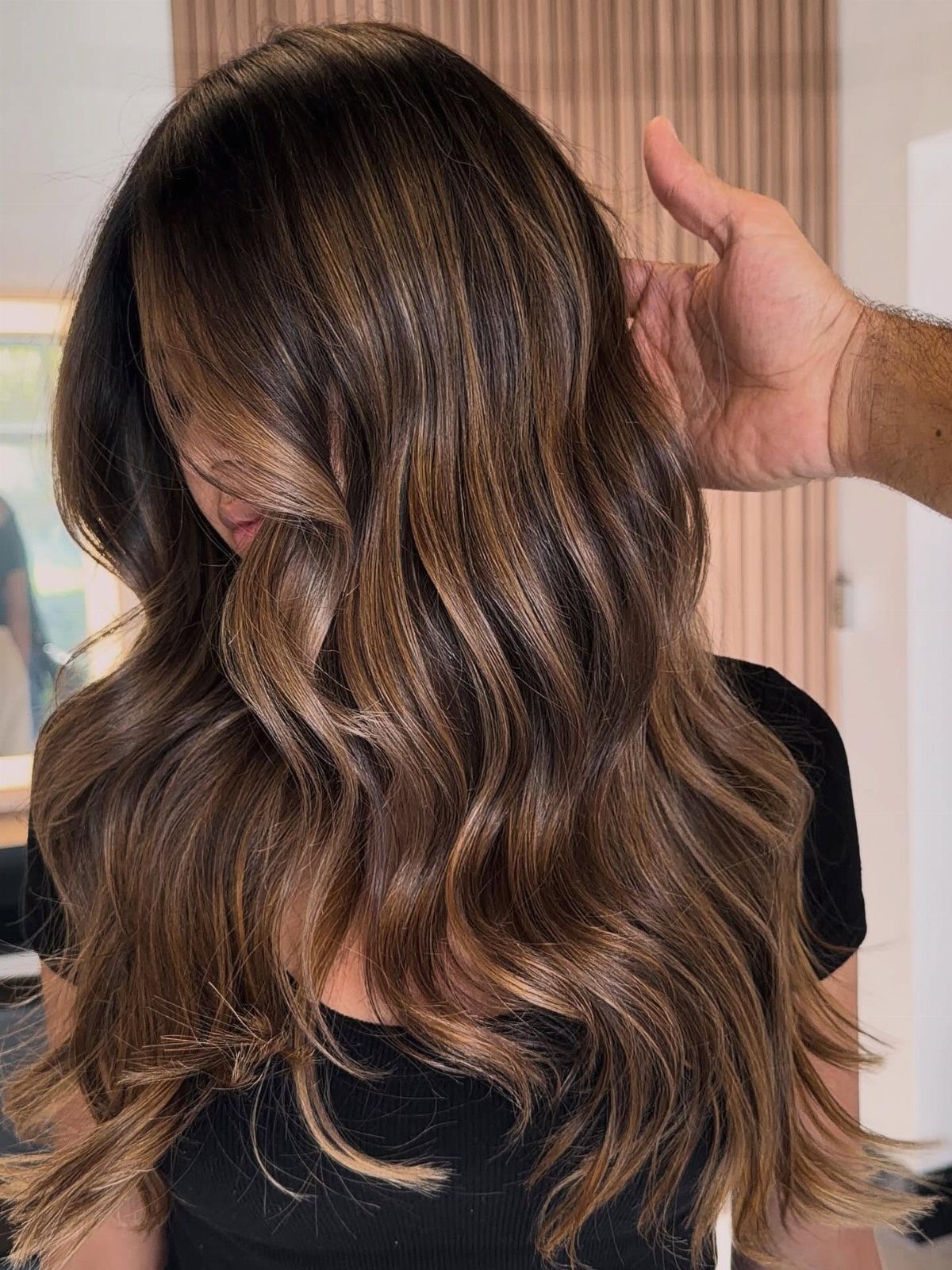
Brunette roots that melt into subtle blonde pieces at the ends look almost natural, like your hair lightened on its own over a summer.
The blonde sits in thin ribbons rather than one block of color, so it adds movement without announcing itself.
A root melt blends your natural shade down into the lighter lengths with no hard line at the part, so it’s the better request if you want the grow-out to go unnoticed.
The stylist blends the color from your natural base, so there’s no hard line to maintain and no touch-ups until you want more blonde.
16. Ash on Black
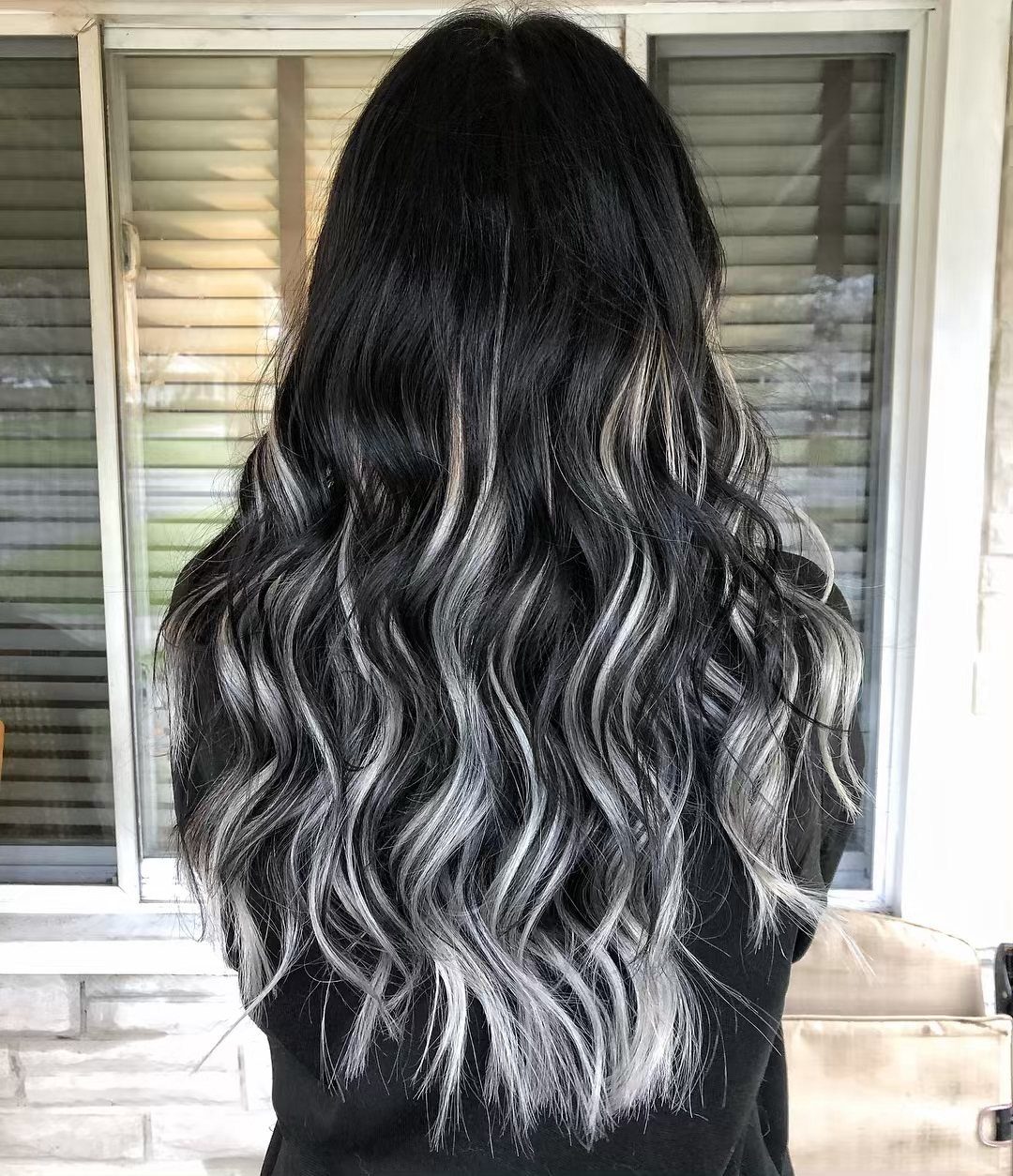
Black hair that lifts into ash gray and silver toward the ends is a high-contrast gradient that needs serious lightening to get there.
Black hair pulls warm when it lifts, so the ends get bleached up several levels and then toned with a cool gray to neutralize the orange and brass.
This one suits cooler skin tones and looks striking on long, wavy hair where the silver has room to fade gradually. Expect multiple sessions if you’re starting from natural black, and plan on purple shampoo to hold the ash.
17. Platinum on Dishwater Blonde
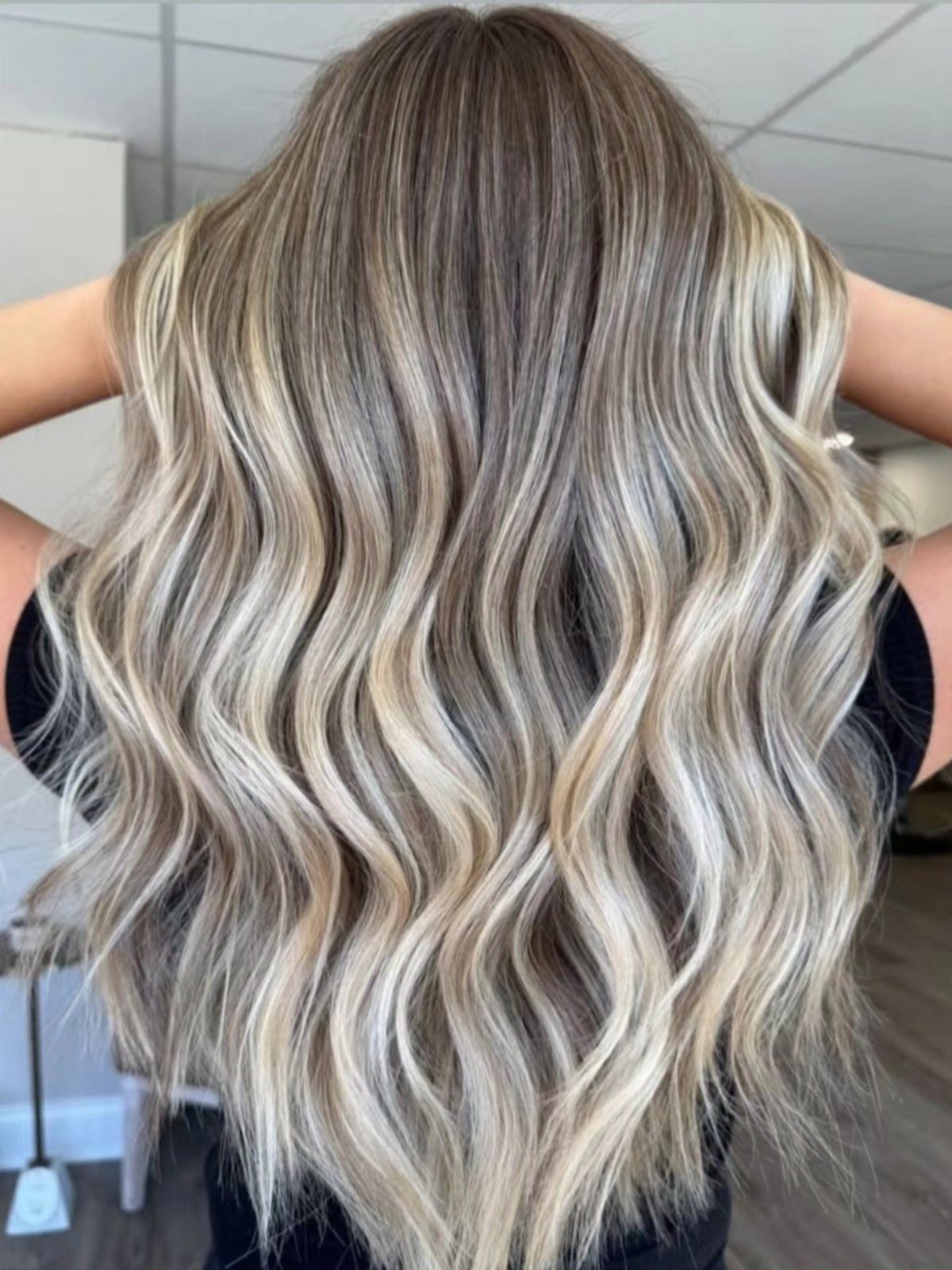
Dishwater blonde roots that fade into platinum ends brighten the whole look without touching the scalp. The platinum sits only on the lengths and ends, so regrowth stays subtle and you skip the constant root touch-ups.
Ask for platinum rather than just "lighter blonde" if you want the ends to read as crisp and bright.
On wavy hair, the contrast between the 2 shades shows up along every wave, so the color feels dimensional rather than flat.
18. Long Golden Bronde Hair
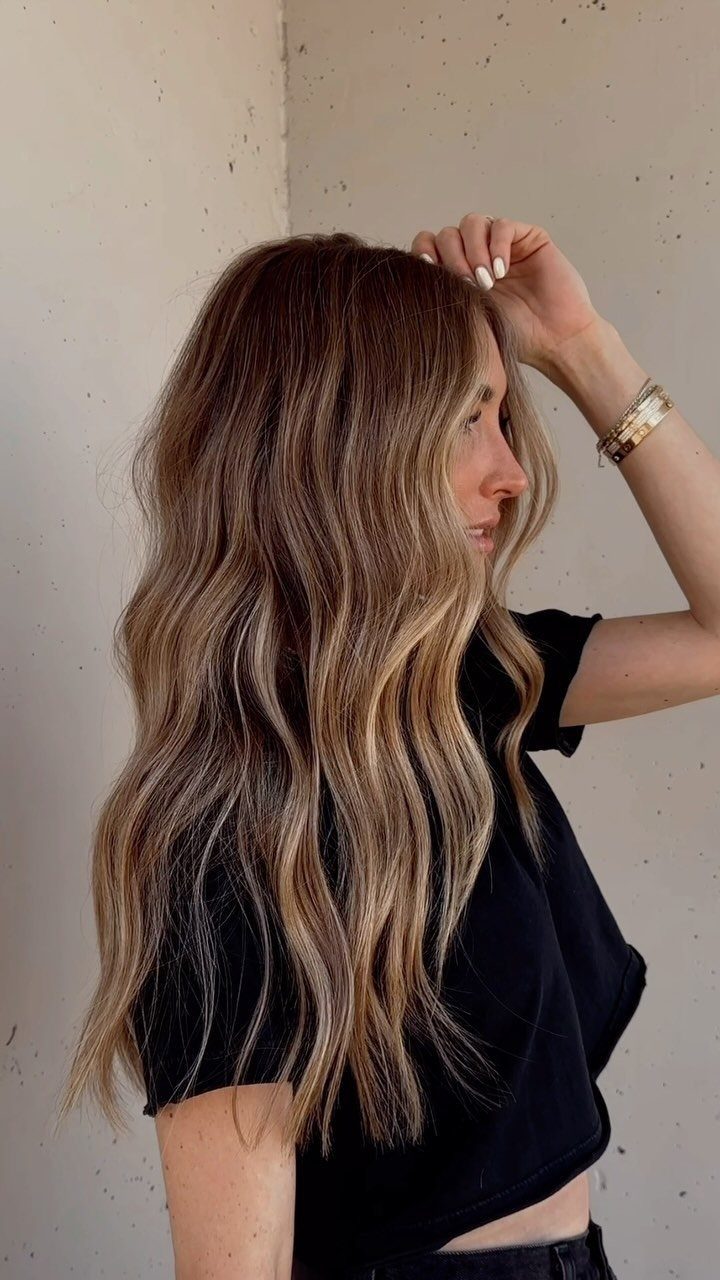
Long bronde hair with golden highlights through the ends gives you warmth and dimension without committing to full blonde. The dark root keeps it low-maintenance, and the golden tones soften the overall look so it reads natural rather than processed.
Ask for golden rather than ash if your skin tone leans warm. On long, wavy hair, the highlights break up with the waves and catch light differently as you move, so the color never looks flat.
19. Blue Ombre Hair
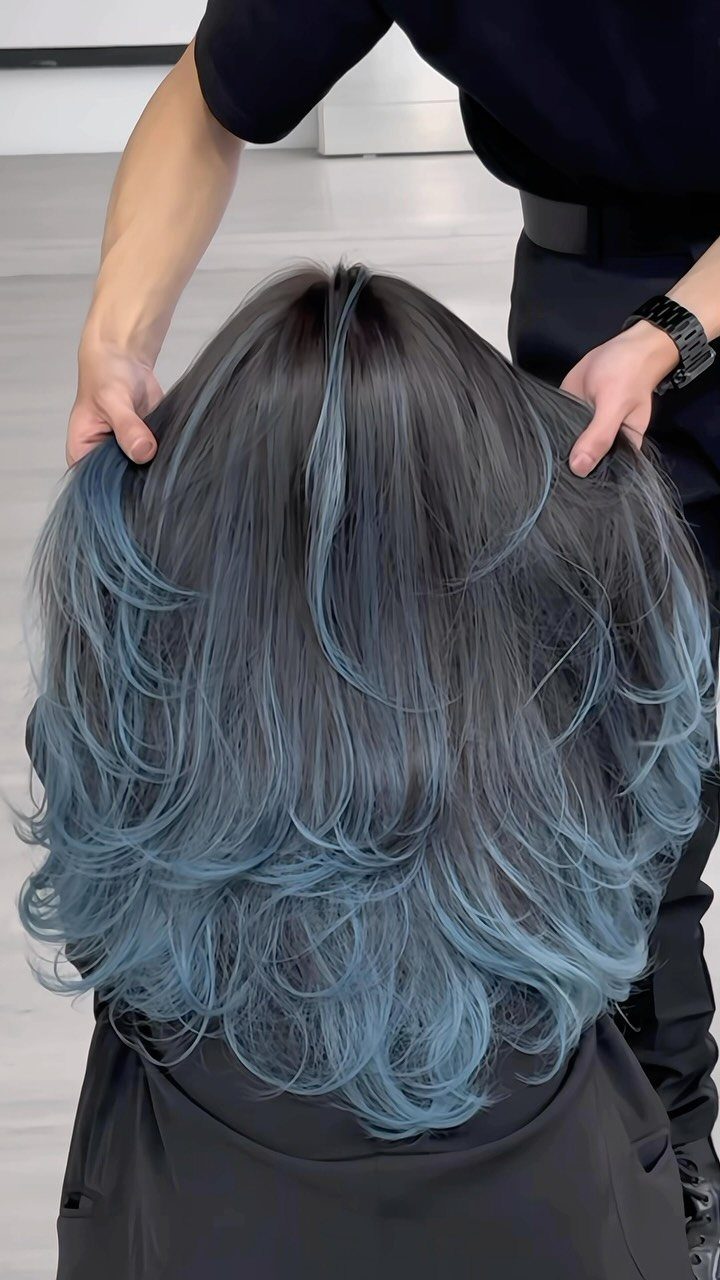
Dark gray roots that turn blue-gray at the ends read as a moody, smoky blue rather than a bright one. The gray base keeps the top of the head quiet, so the blue only shows once the hair moves.
Ask for layered blue-gray, not one flat shade, so the ends have depth.
Blue is a fashion color, so I’d expect it to fade with washing and need refreshing at the ends. The roots stay put, which keeps grow-out easy.
20. Caramel Beach Waves
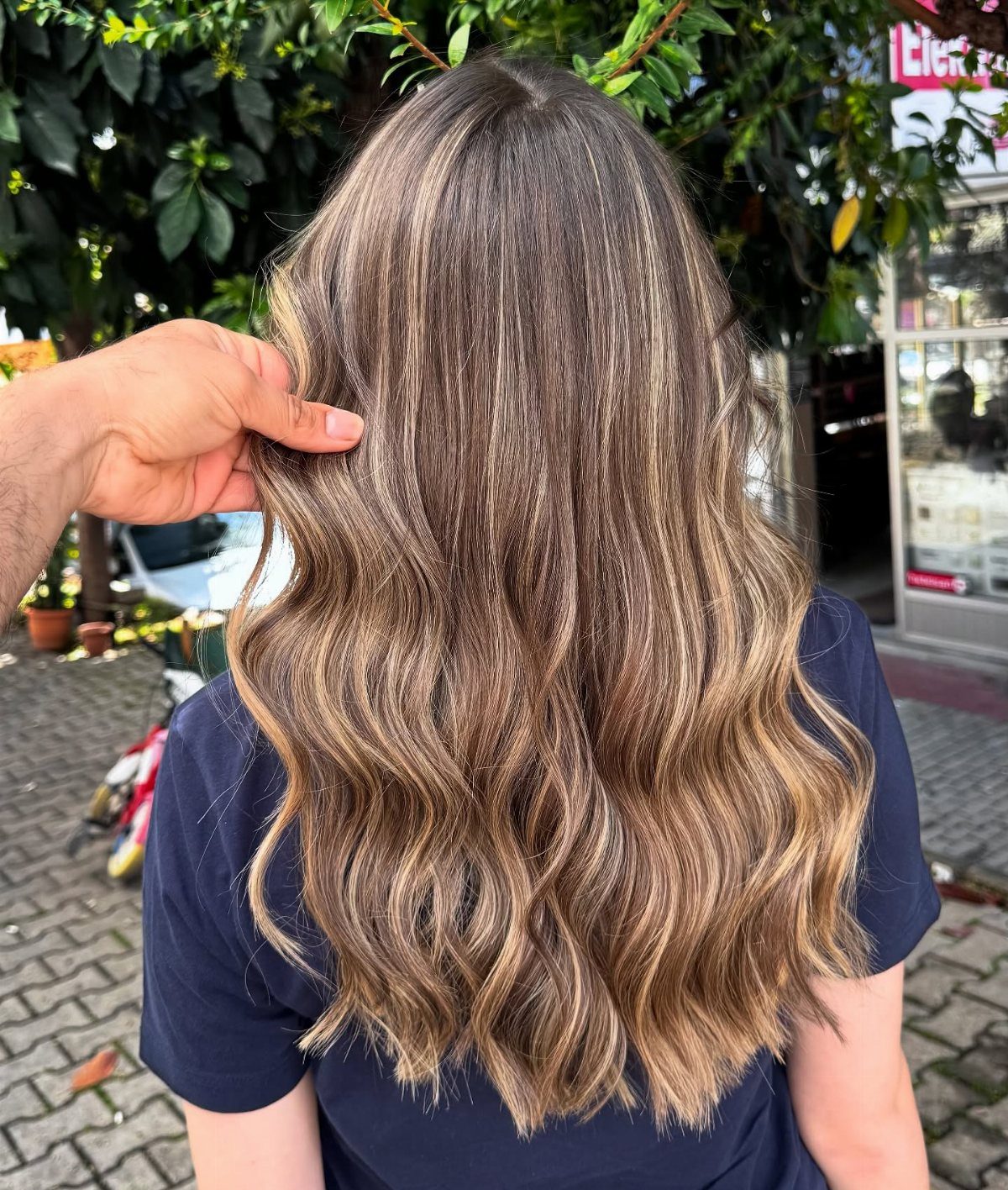
Soft brown that warms into caramel through relaxed waves is the easiest version of this I can think of to wear day to day. The gradient stays gentle, so the waves do most of the work.
Ask for caramel that starts below the roots and deepens toward the ends.
Keep the waves loose; wrap a curling iron around small sections, then brush them out for that undone shape. I’d pick this for anyone who wants light without a bleached look.
21. Beige Gradient
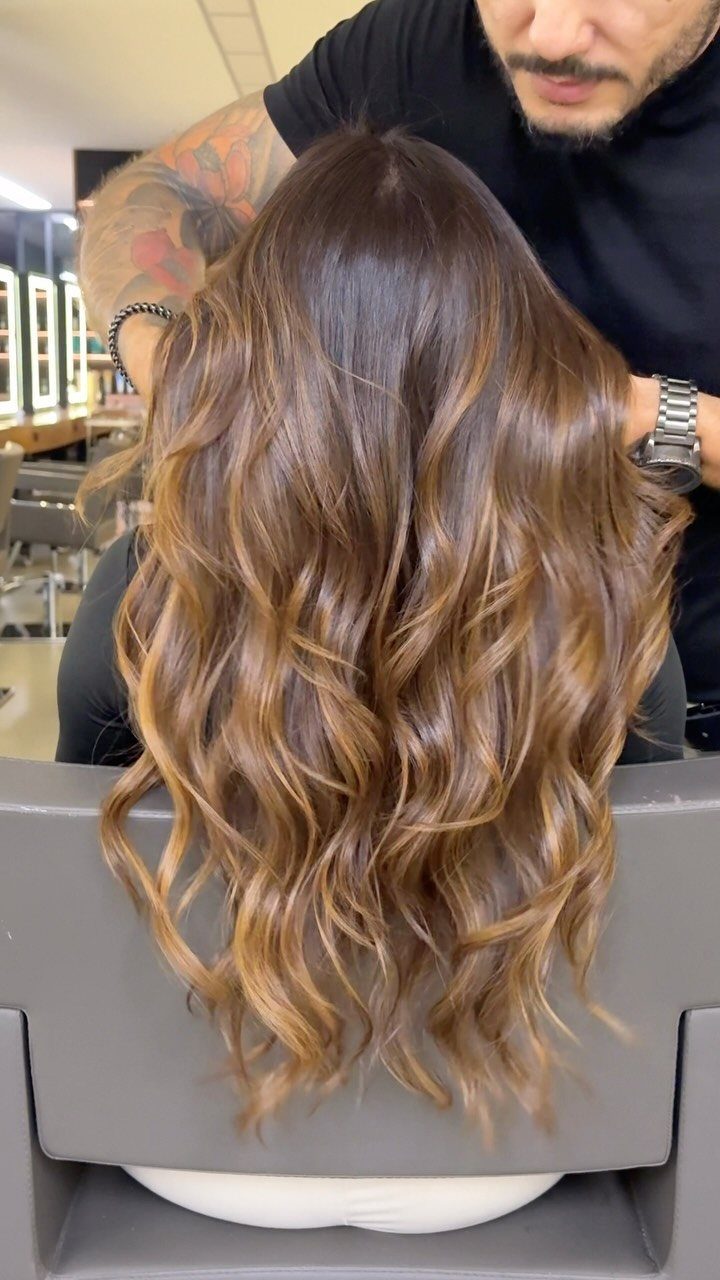
Warm brown that melts into beige gives a gradient with no hard edge, because the 2 shades sit close in depth. Beige is the muted, sandy middle between brown and blonde, so it avoids both brassy gold and icy ash.
Ask for a blend, not a line, and name "beige" in the consultation so the stylist doesn’t lean too yellow. On long curled hair the transition shows in every curl.
22. Dimensional Blonde Blend
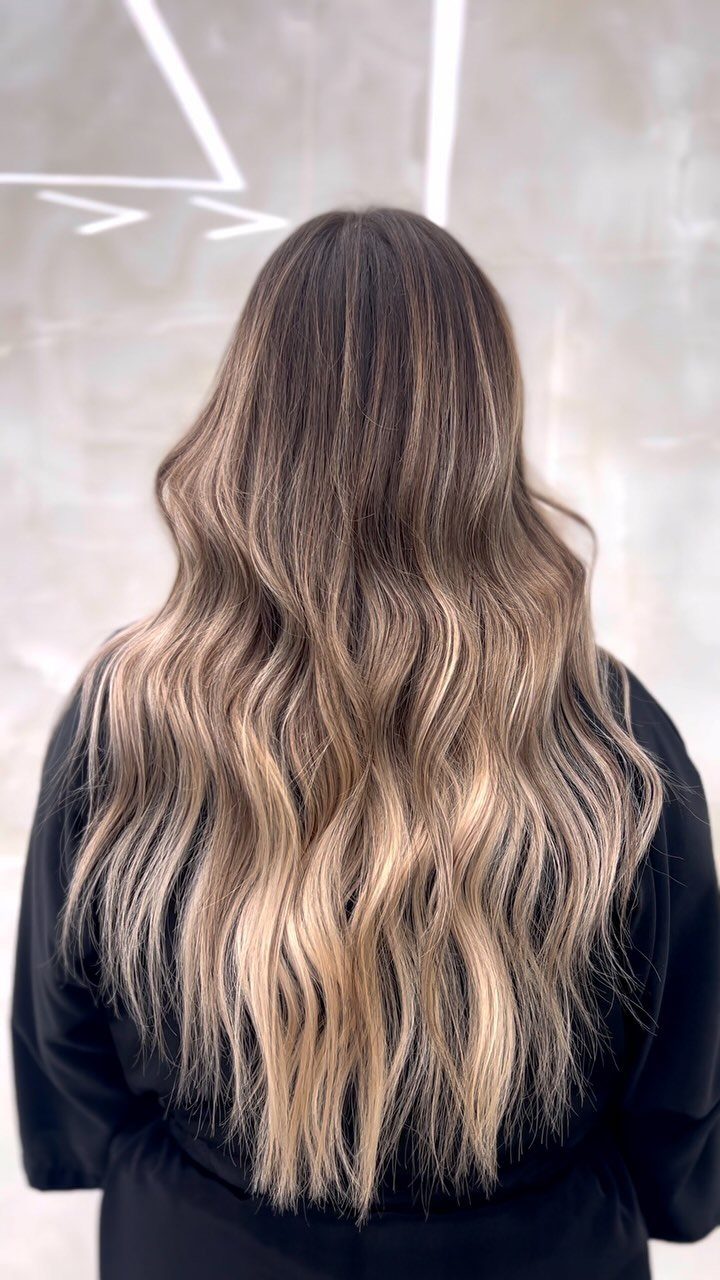
Brunette lengths that blend into beige and blonde ends rely on toner and uneven color placement, not one even coat. The mix of light and dark pieces is what keeps it from looking flat.
Ask for toner on the blonde sections so they land beige instead of yellow.
Show your stylist where the lightest pieces should sit, since placement decides how dimensional it looks. I’d choose this over a clean two-tone ombre for a more natural finish.
23. Warm Brunette Gradient
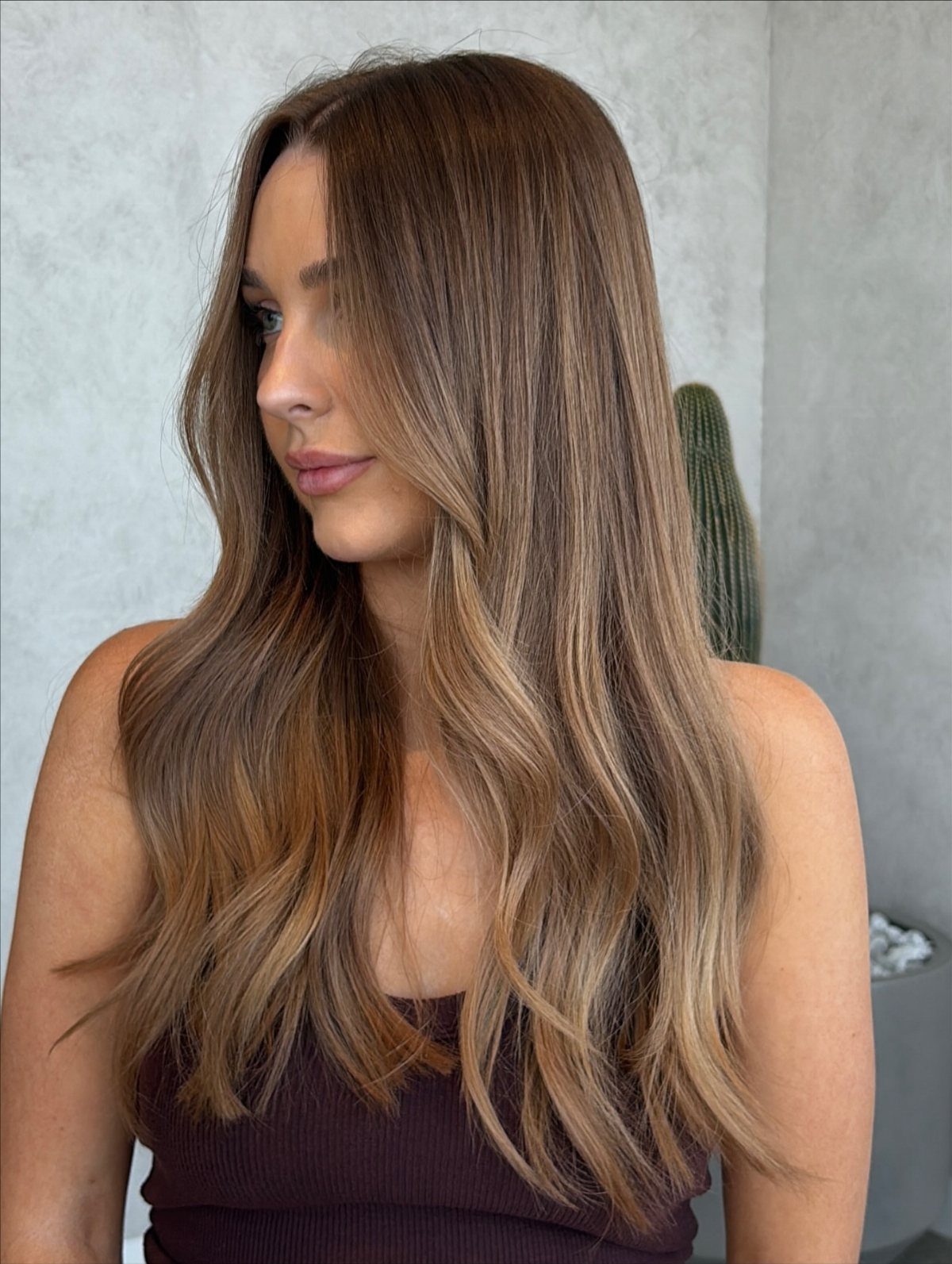
Warm brunette roots that ease into lighter brown or dark blonde make the quietest gradient of the group. The change is gentle enough that it reads as healthy, sun-warmed hair.
Ask for warm tones throughout so the lighter ends match the roots instead of clashing.
Because the shades are close, regrowth barely shows and touch-ups can wait. On long, wavy hair the lighter lengths pick up the light with each wave.
Ombre and Balayage Differences
Ombre is the look; balayage is one way to get it.
A stylist can paint balayage so it reads as a soft, hand-painted blur, or push it into a visible gradient, and that second result is what most people mean by ombre.
So calling an ombre a balayage isn’t wrong, but the 2 words can point to different placement.
Ombre puts an even fade from dark to light. Balayage scatters freehand highlights that look sun-kissed.
Because the words get swapped so often, a photo does more than a name. Bring one or two pictures of the finish you want, and say whether you want an even fade or scattered, softer pieces.
Salon Process and Lightening
Salon ombre is a skilled technique, and I’d leave it to a professional rather than trying it at home. Still, knowing the steps helps you describe what you want.
Face-framing highlights can be added, then the hair is rinsed, toned, and styled. Some stylists also shade the root first, using a separate formula from the one on the ends.
Lightening is chemical processing, and it can dry hair out. Start with hair in good shape.
If damage worries you, ask whether a bond-strengthening additive can go into the lightener. You can also ask about a gentler, ammonia-free demi-permanent color to finish.
Color Care and Upkeep
A refresh is typically due every 3–6 months. A well-done ombre can grow out with no visible line, which is why it counts as low-maintenance.
There are exceptions.
If you’re covering gray or using fantasy shades, expect root touch-ups much like an all-over color. The ends rarely need work often, so this is one of the gentler ways to go lighter.
Dryness is the real upkeep problem, since it can harm strands and dull the color too. Use color-protecting shampoo and conditioner, a nourishing treatment, and a heat protectant before any hot tool.
A toning mask once a week stops the color from shifting before your next appointment.
Frequently Asked Questions
What is ombré hair?
Ombré fades one color into another, with the deeper shade at the roots and the lighter one at the ends, blended so no hard stripe shows.
You can keep the shades close for a soft blend or push them far apart for a dramatic split. It works on brunettes, blondes, redheads and fashion shades alike.
How do you do ombre hair at home with box dye?
I’d leave ombre to a professional, because lightening is chemical processing and the blend takes skill to get right.
Pastels only read as pastels on hair lifted to pale yellow first; anything darker turns muddy. On a darker base, pick a more saturated shade, or the color will look like a faint warm tint.
Is ombre still in style?
Yes, though the current version is softer and more natural than the stark two-tone look.
Face-framing pieces and a gradual blend from your natural root are what people ask for now. Ombre also grows out gently, which is a big reason it keeps getting requested.
What colors work best for ombre hair?
A classic ombre sits between soft brown and dark blonde, such as brown to caramel, honey or beige.
Closer shades blend more easily and grow out with less fuss. You can also go bolder with pink, blue, red or silver ends, though fashion colors fade faster and need refreshing.
Will ombre damage hair?
Lightener is chemical processing and dries hair out, so begin with hair that’s in good shape. Ask for a bond-strengthening additive in the lightener, then a gentle ammonia-free demi-permanent gloss to finish.
How do you get a modern ombre at the salon?
A good stylist checks your natural root color and skin tone before picking a shade that blends with both.
Request a blended transition instead of a line, and name the tone you want, such as honey, beige or ash. Bringing a photo and pointing to where the color should start helps most.