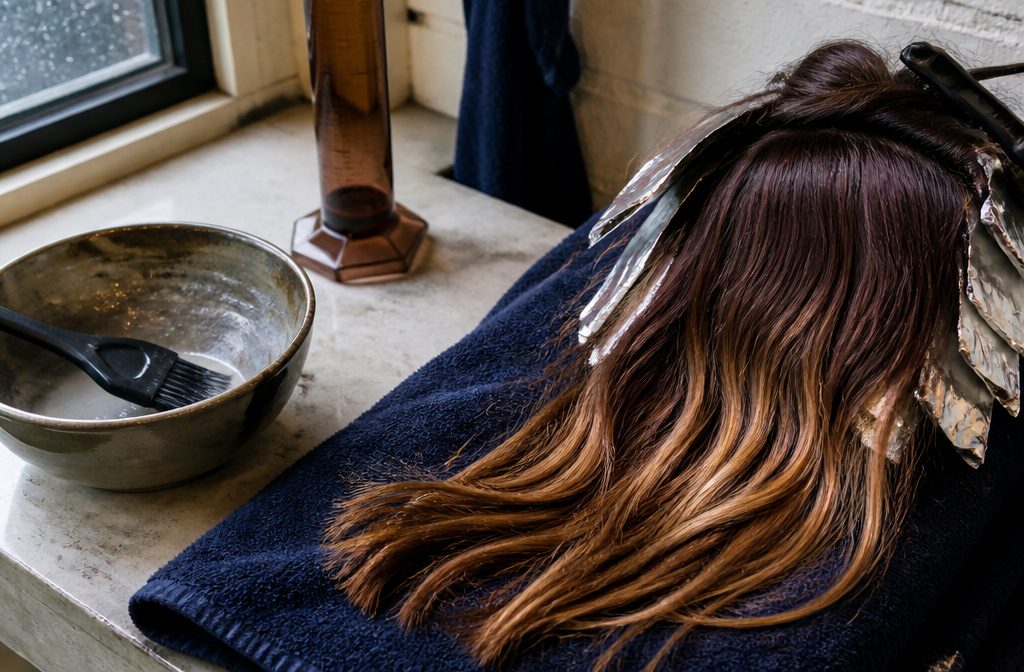
Mix the dark brown one level lighter than your target, and mix the root formula separately from the one for the lengths.
The same brown lands differently on virgin regrowth than on 55/65 red-violet. For the caramel, lift to yellow with 20 volume developer before toning, or the result drifts copper.
Moving from red-violet to dark brown with caramel highlights depends on what was in the hair before
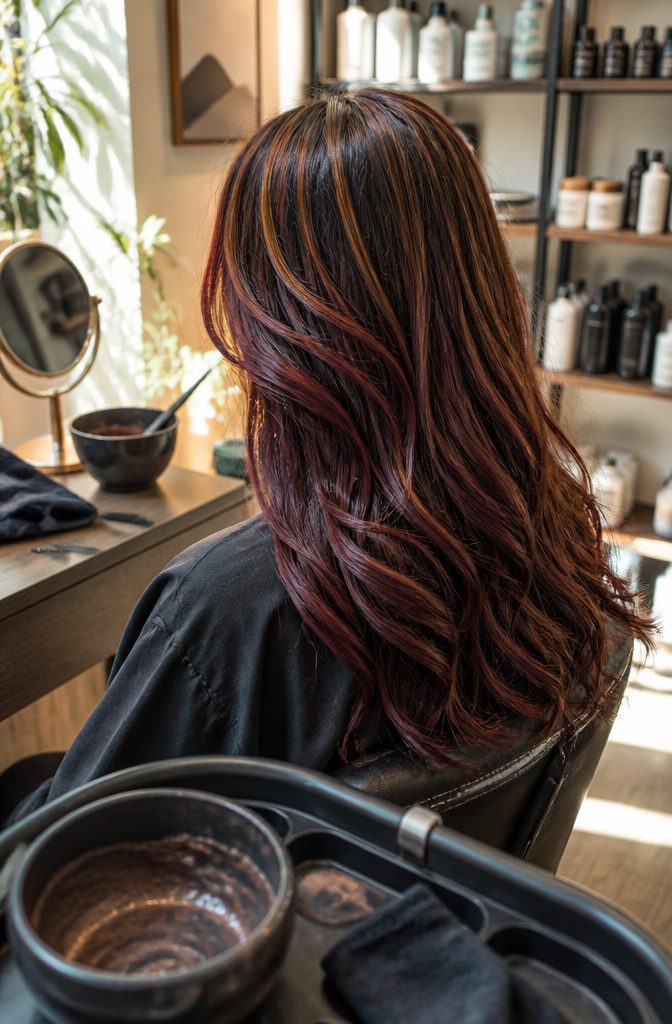
There is no single agreed formula for taking red-violet hair to dark brown with caramel highlights, and the advice shifts with three things.
The first is the color history before the 55/65, a very red/violet shade put on six weeks ago.
The second is the exact dark brown the client wants. The third is that one formula behaves differently on natural regrowth than on lengths covered in red-violet.
The quick answer is to pick a brown, go a level lighter than the target and adjust for regrowth.
I don’t buy it as a full plan. The same brown will not land the same on virgin regrowth as on top of red-violet, so one formula can’t be right for both.
What color was in the hair before the 55/65
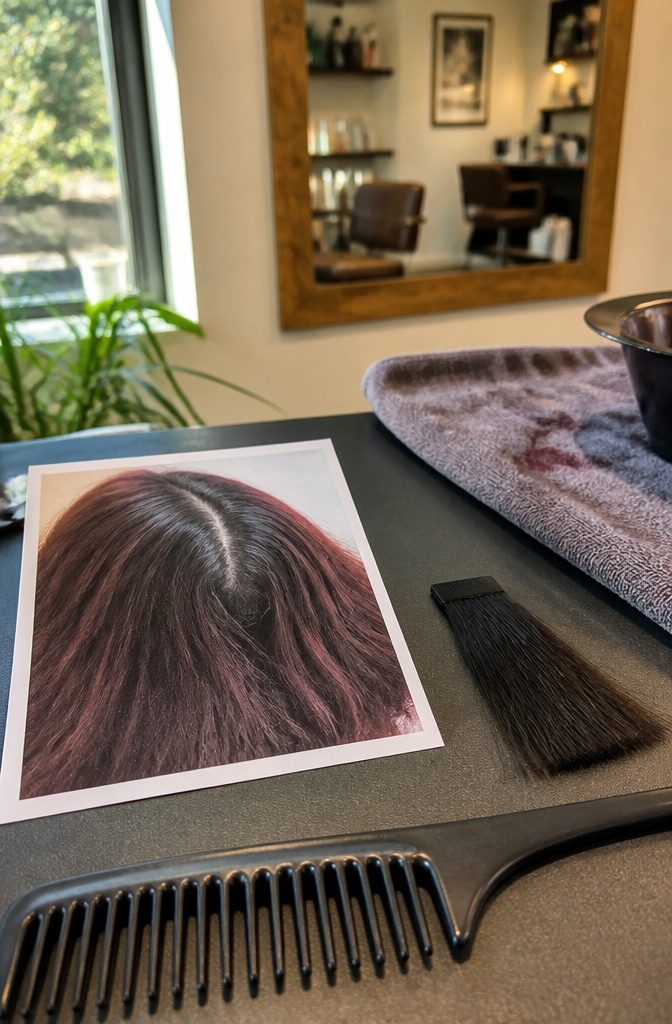
A current photo and the color that sat under the 55/65 are the two things to have before anyone can say how red-violet will behave on its way to dark brown.
Red-violet over a natural dark base behaves differently from red-violet over hair that was already lightened or colored, and the regrowth at the roots often shows which one you’re dealing with.
I’d shoot the photo in daylight with the roots visible, then write down what the hair was before the red-violet went on.
Without that history, any plan for caramel highlights is a guess, and I’d be wary of a quote that skips the question.
What dark brown means to the client
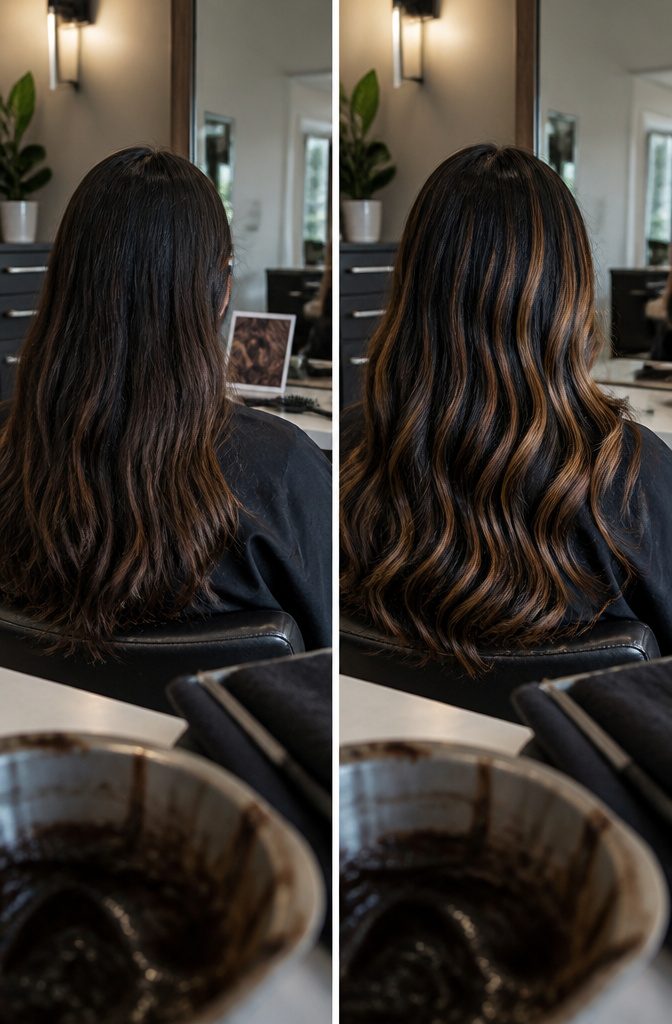
Dark brown covers a wide stretch of the level scale, and the answer changes the whole plan.
On the standard 1–10 scale, where 1 is black and 10 is the lightest blonde, a level 3 is a deep brown that sits close to black. Levels 4 and 5 read as medium to light brown.
Pin down whether you mean a level 3, and do it with a photo instead of the word. One person’s dark brown is another’s near-black.
A level 3 base makes caramel pieces look bold and high-contrast, while a lighter brown gives a softer, blended result. I’d pick the target before touching the red-violet.
How to handle the brown and regrowth
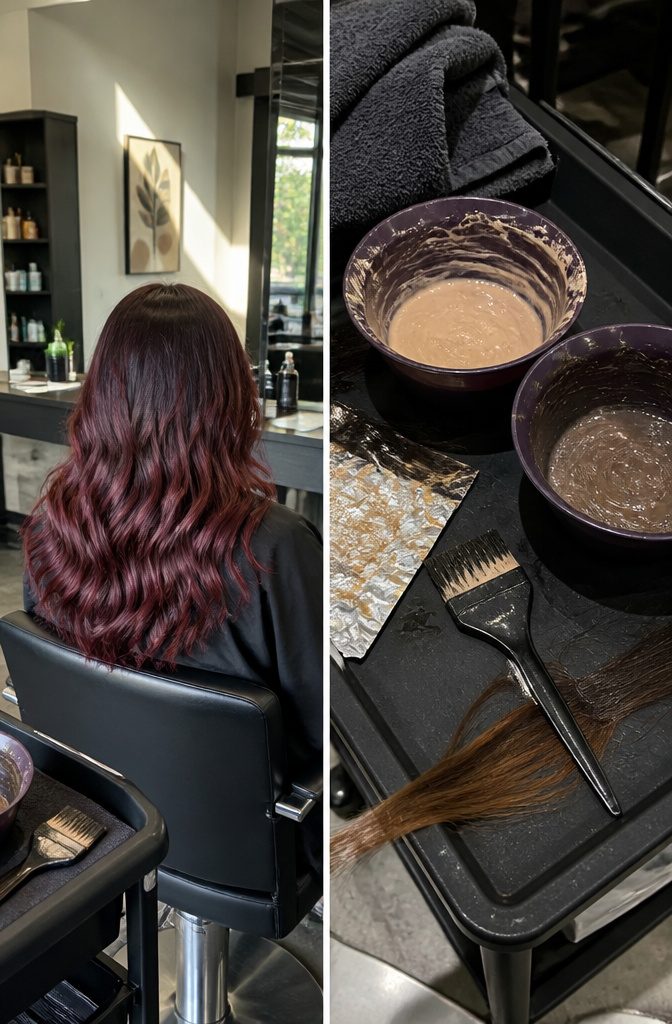
The common advice is to pick the brown you like and mix it one level lighter than the shade you want, then adjust the formula at the regrowth so it matches the lengths.
A lighter start leaves room to deepen later, and I’d rather correct up than recover from too dark.
The regrowth step is where the plan gets shaky. Natural roots and red-violet hair are two different starting points, so the same brown can land differently on each.
A single formula slapped on everywhere is a gamble. I’d mix the root formula separately from the one for the lengths, and judge the match once the color has developed, not on the mixing bowl.
How to create the caramel highlights
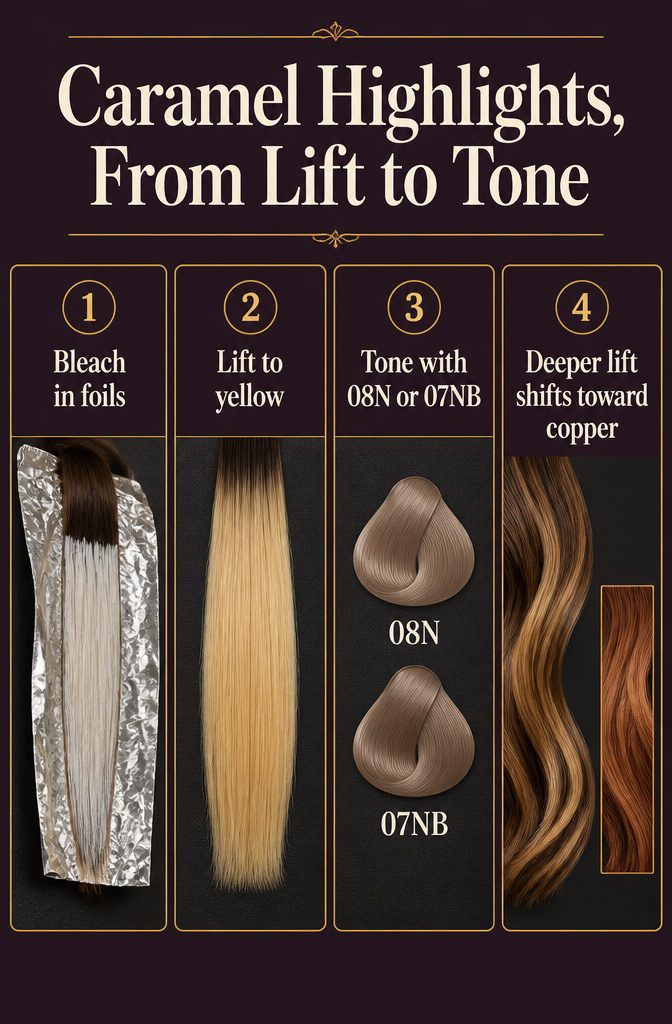
The method on offer is simple: bleach in foils with 20 volume developer, lift to yellow, then tone. For the caramel itself, the toners named are Redken Shades EQ 08N and 07NB.
Stopping at yellow gives the toner a pale gold base to work on, and a lift that stalls at a deeper, warmer stage will push the result toward copper instead.
That formula comes from one stylist’s advice. Nobody else weighed in to confirm it or poke holes in it.
I’d treat 08N and 07NB as shade names to bring to your colorist, not a recipe to copy at home, because how far your hair lifts decides how the toner reads.
Frequently Asked Questions
Can you put caramel highlights on red hair?
Yes, but the red base needs to be managed first. Caramel highlights are created by lifting sections to yellow with bleach in foils, then toning with a neutral or beige shade.
The red underneath can bleed warmth into the bleached sections, so the toner choice and lift stage matter more than they would on virgin or brown hair.
How do you transition red hair to brown with highlights?
Pick your target brown shade, then apply a formula 1 level lighter than you want to allow room to deepen later. Mix a separate formula for natural regrowth, because the same brown reads differently on virgin roots than on red-dyed lengths.
Add caramel highlights by bleaching foils to yellow and toning with a neutral beige shade like Redken Shades EQ 08N or 07NB.
What level is dark brown hair?
Dark brown sits between level 3 and level 5 on the 1–10 scale, where 1 is black and 10 is the lightest blonde.
Level 3 is a deep brown close to black, while 4 and 5 read as medium to light brown. Pinning down the exact level changes how bold caramel highlights will look against the base.
What was in the hair before the 55/65?
The color history before the red-violet matters because red-violet over natural dark hair behaves differently from red-violet over previously lightened or colored hair.
A current photo showing the regrowth and a written record of what was there before are needed to predict how the red-violet will take the brown.