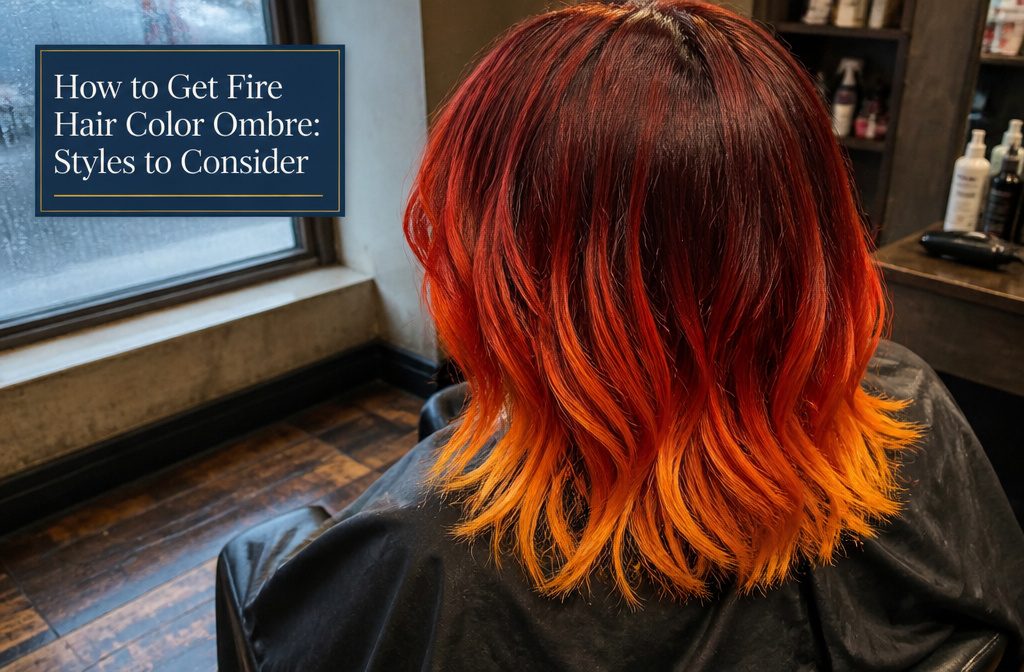
Fire ombre stacks orange, red and yellow through the lengths like layered flame, and the look ranges from office-safe auburn to neon tangerine depending on how many tones your colorist builds in and where the blend starts.
The version that trips people up is neon red: it anchors itself in vivid, near-fluorescent red rather than moving smoothly through the spectrum, and it lasts around 8 weeks when washed only in cold water.
What Fire Ombre Hair Is
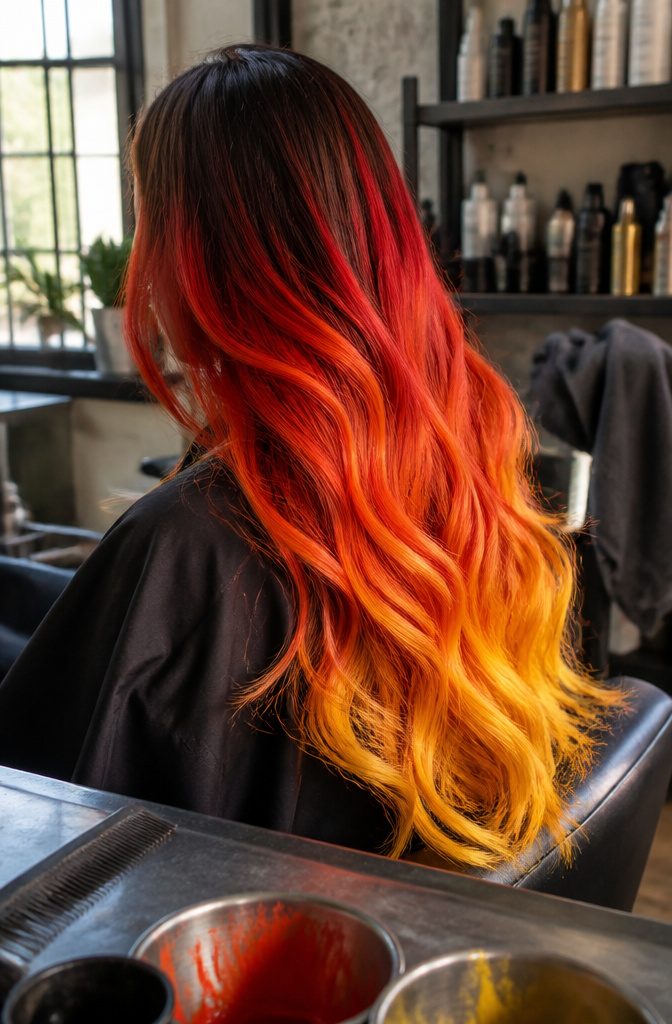
Fire ombre takes the basic ombre idea—dark roots blending into lighter ends—and swaps the single-color fade for a blend of orange, red, and yellow shades that stack like flame.
The technique builds depth by layering warm tones instead of walking one color from dark to light, so the result reads as fire rather than simply lighter hair.
The look is entirely customizable. I’ve seen versions that stay close to natural auburn with just a whisper of copper at the ends, and versions that hit neon red and tangerine mid-shaft and keep climbing.
How subtle or blazing you want it depends on how many tones your colorist layers in, how saturated each one is, and where the blend starts.
A fire ombre can make a statement or sit quietly enough for an office, and that range is the reason it works for so many starting points.
1. Fire Ombre With Platinum
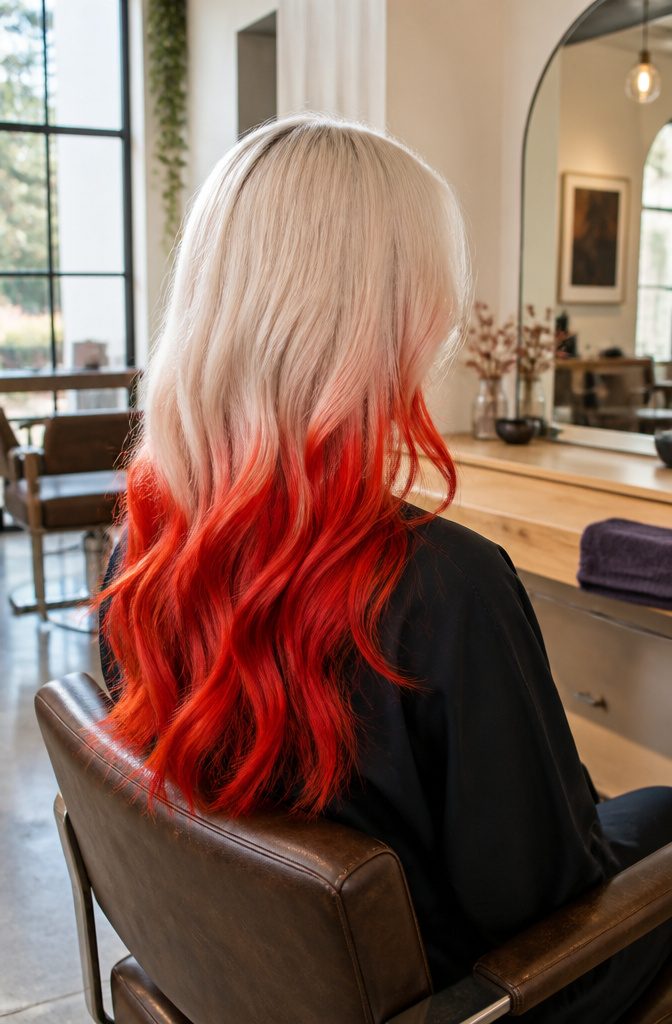
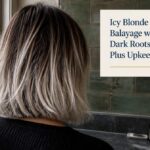
Pairing fiery reds with platinum blonde creates one of the sharpest, most dramatic versions of this look.
The cool tone of platinum sits opposite warm reds on the color wheel, so the transition from root to tip reads as deliberate rather than blended.
Stylist Alfredo Valero, a Redken artist, prefers fire ombre paired with cool blonde colors like platinum or beige for exactly that reason.
The contrast works especially well if you already have very light hair, since the color can go straight onto blonde ends without pre-lightening.
If your base is salon blonde, a shampoo and conditioner designed to keep brightness intact will help the platinum stay crisp between appointments. The look radiates warmth at the ends while keeping the top cool and controlled.
2. Auburn and Copper
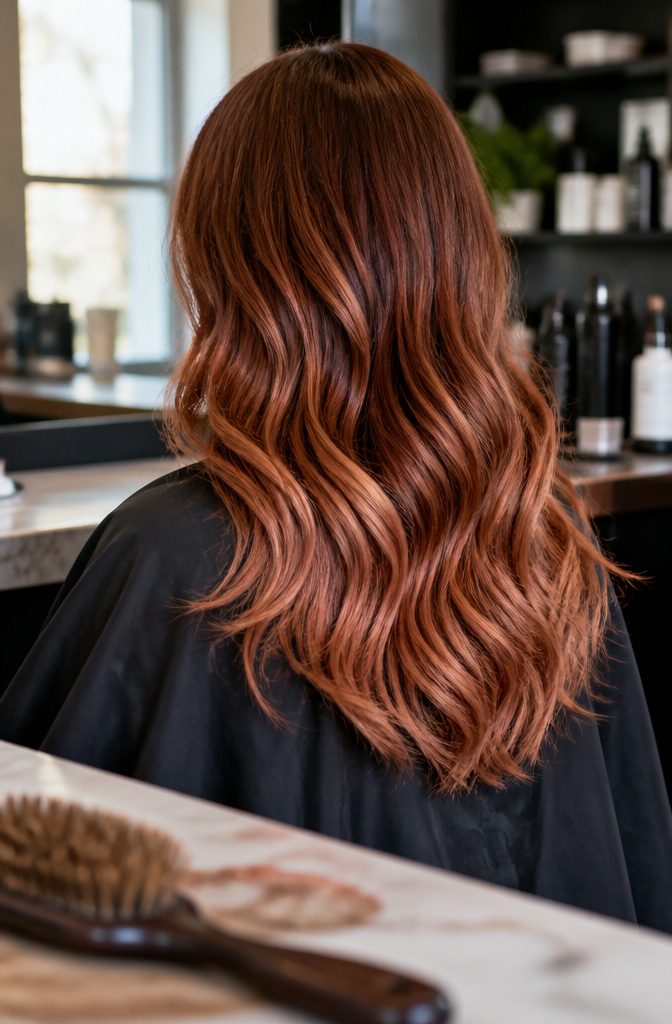
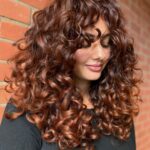
Auburn and copper give you the fire ombre palette with the volume turned down.
Instead of the intense red-to-orange gradient that announces itself across a room, this blend stays softer and more neutral, leaning into warm browns and rose-toned copper rather than pure flame.
The result reads as dimensional color rather than statement hair, which makes it easier to wear if your workplace skews conservative or you’re testing the water before committing to a full fire look.
I’d call this the gateway version. It keeps the warm undertones that define fire ombre but pulls back on the brightness, so you get depth and movement without the maintenance load of vivid red.
Auburn anchors the base, copper catches the light through the mid-lengths and ends, and the whole thing grows out more gracefully than anything with magenta or neon in the mix.
3. Fire Ombre With Mid-Length Hair
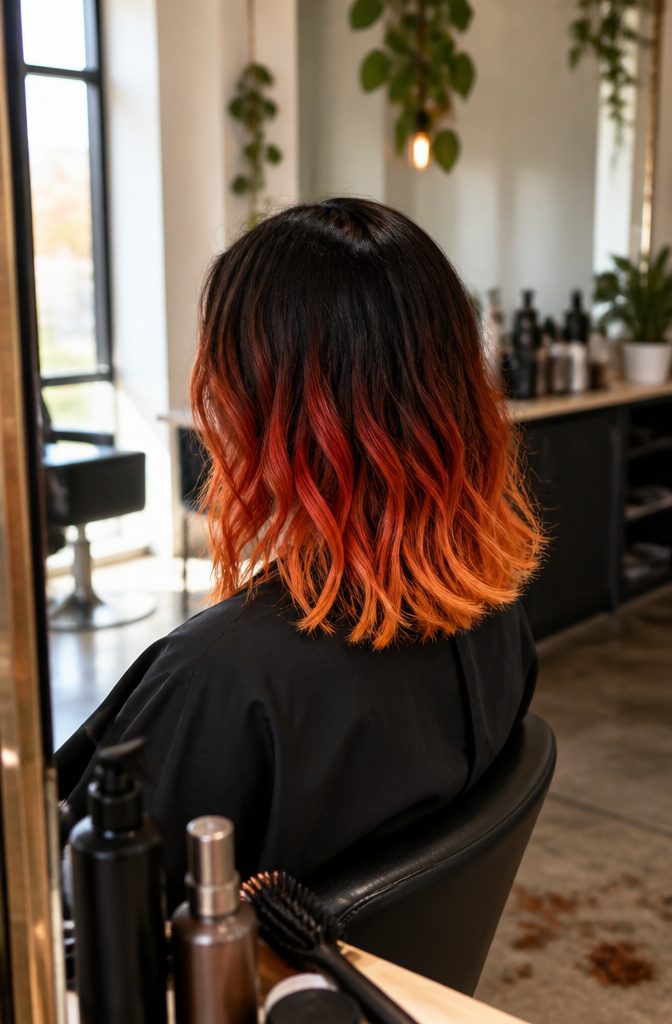
Mid-length hair gives you enough canvas for the full gradient without needing anything close to waist-length.
The transition from dark roots through orange and red to lighter tips fits comfortably on shoulder-to-collarbone hair, and the color zones still read as distinct rather than muddled together.
I actually prefer fire ombre at this length because the ends tend to take more damage from bleach and heat styling, and you can trim them without losing the whole effect.
On longer hair, you might wait months between cuts to preserve the fade; here, you keep the shape fresh and the color still works.
The placement adjusts slightly compared to very long hair: your colorist will start the dark-to-bright shift closer to mid-shaft so the warmest tones hit near the ends, but the logic stays the same.
4. Fire Ombre on Black Hair
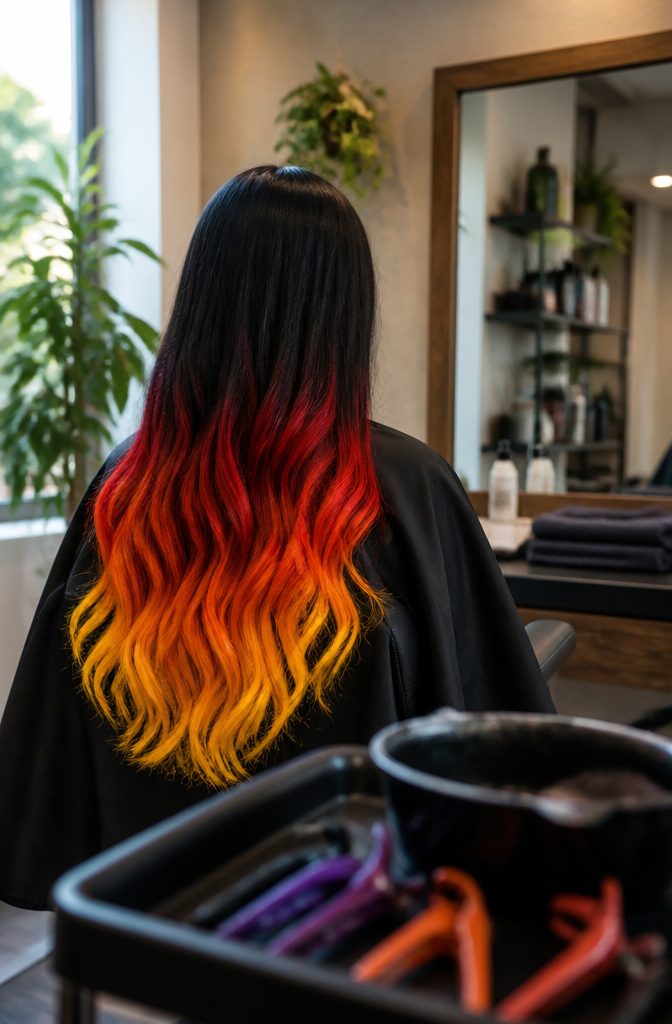
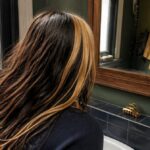
Fire ombre on black hair keeps your natural dark base untouched and concentrates the lift on the mid-lengths and ends.
Your colorist will leave the top half alone and transition the bottom through red, orange, and yellow in sequence. The dark base stays put, which matters if you want the look without committing to full-head bleaching.
For black fire ombre, your colorist will maintain your dark base tone while lightening your mid-lengths and ends. The bottom half of your strands will transition through red, orange, and yellow.
— Hair.com
That means grow-out does not show roots the way a full-head color would. The line where the color starts stays in the same place, and when new growth comes in it blends straight into the dark base you kept.
You get the fire gradient without the root maintenance cycle that comes with lifting everything from the scalp down.
5. Fire Ombre With Magenta
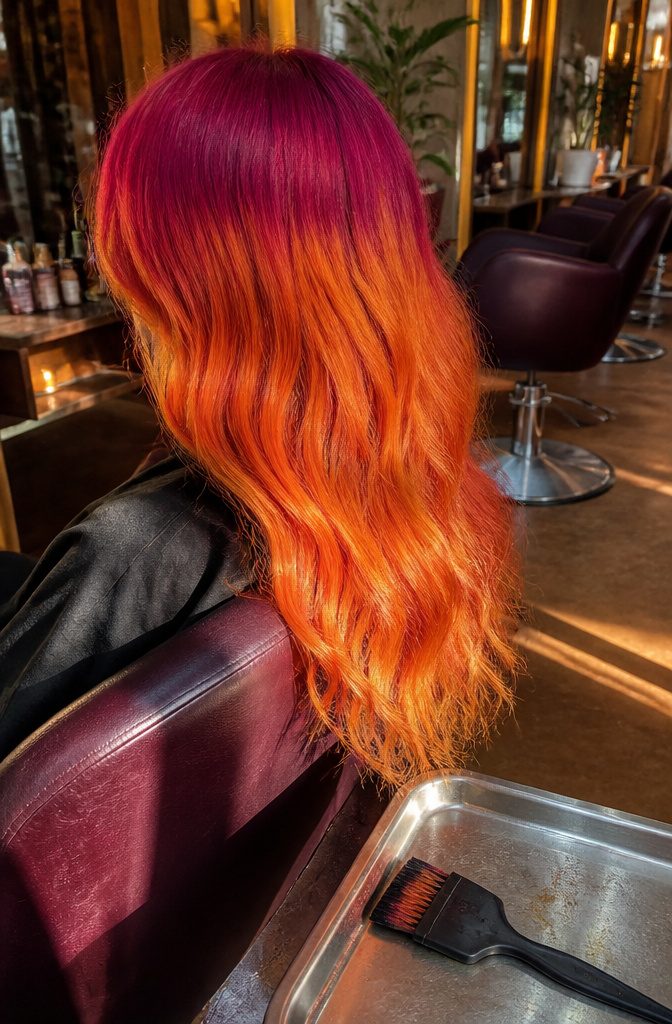
Magenta roots shift the entire palette, pulling in a cool undertone that balances out the warm gold and orange through the lengths.
The color sits somewhere between fuchsia and berry, and it works because it creates tension rather than blending smoothly into the fire tones below.
You get a deliberate break at the root line instead of a gradual melt, which makes the look feel more graphic and less sunset-gradient.
The magenta fades faster than the warmer shades, so you’re looking at root touch-ups every four to five weeks if you want to keep that contrast crisp.
I think this version works best on medium to dark base colors, where the magenta has enough depth to read as intentional rather than just another pink phase-out.
If your natural color is very light, the magenta can look washed out by week three, and you lose the point of the contrast entirely.
6. Flame Ombre
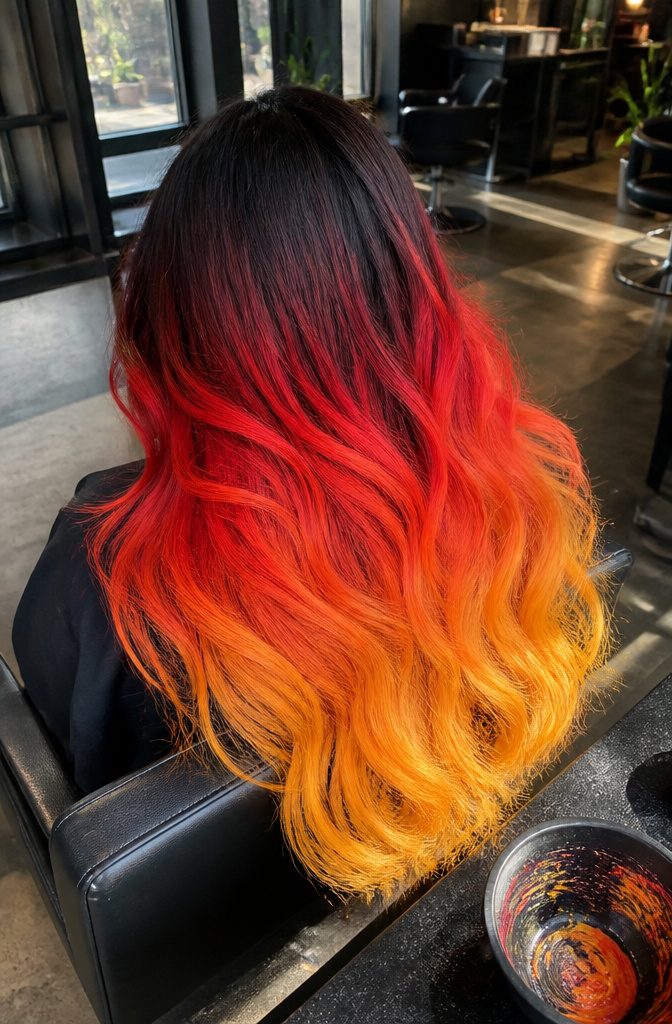
Flame ombre leans on neon red with deep amber undertones, building intensity through orange and finishing in warm yellow. Your colorist starts with the darkest shades at the roots and transitions through those brighter tones as the color moves down.
The effect is sharper than other fire variations because the red skews neon rather than auburn or rust, so the contrast is higher and the look reads as more saturated.
It suits thick hair best, where the color has enough surface area to show the full gradient without the transition feeling rushed.
Expect the yellow ends to lighten faster than the red mid-lengths, which means the gradient can stretch and lose definition between salon visits if you’re not prepared to tone at home.
7. Fiery Mermaid Ombre
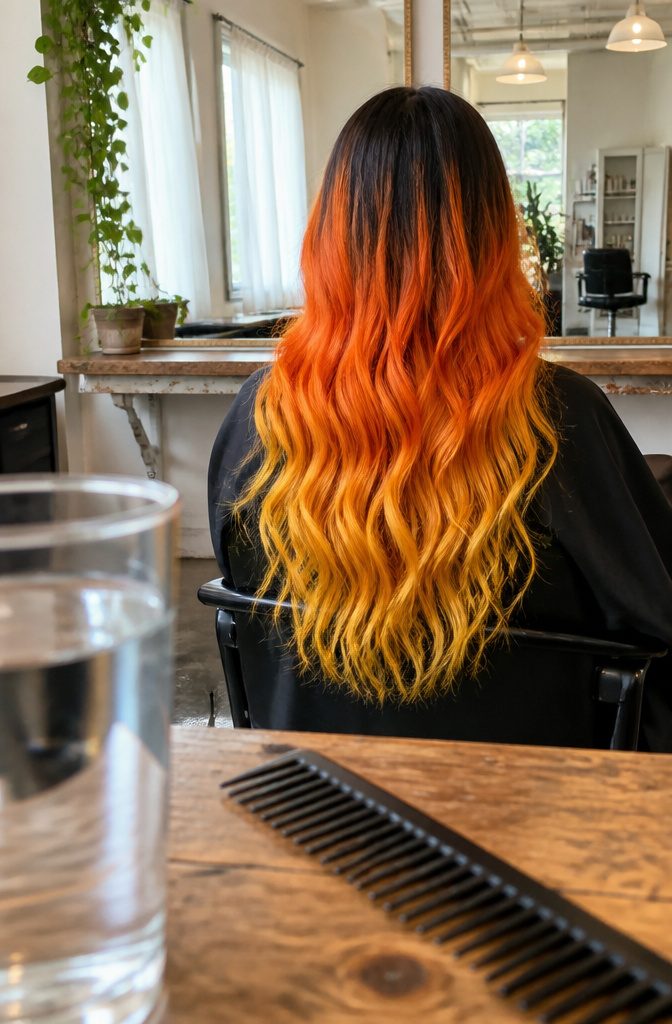
Fiery mermaid ombre flips the script on mermaid hair by swapping aquatic blues and greens for shades of orange and yellow. The gradient still moves from dark roots to lighter ends, but the palette runs warm instead of cool.
Orange takes the lead here, with yellow brightening the tips, and red steps back compared to flame ombre. The result feels lighter and less intense, more ember than bonfire.
The reduced red content keeps this look from reading as full fire. It lands somewhere between sunset and citrus, warm enough to feel bold but not as heavy as the deeper flame styles.
If you want that gradient drama without committing to the smokier red tones, this version gives you the transition with a softer color story.
8. Dark Auburn Fire Ombre
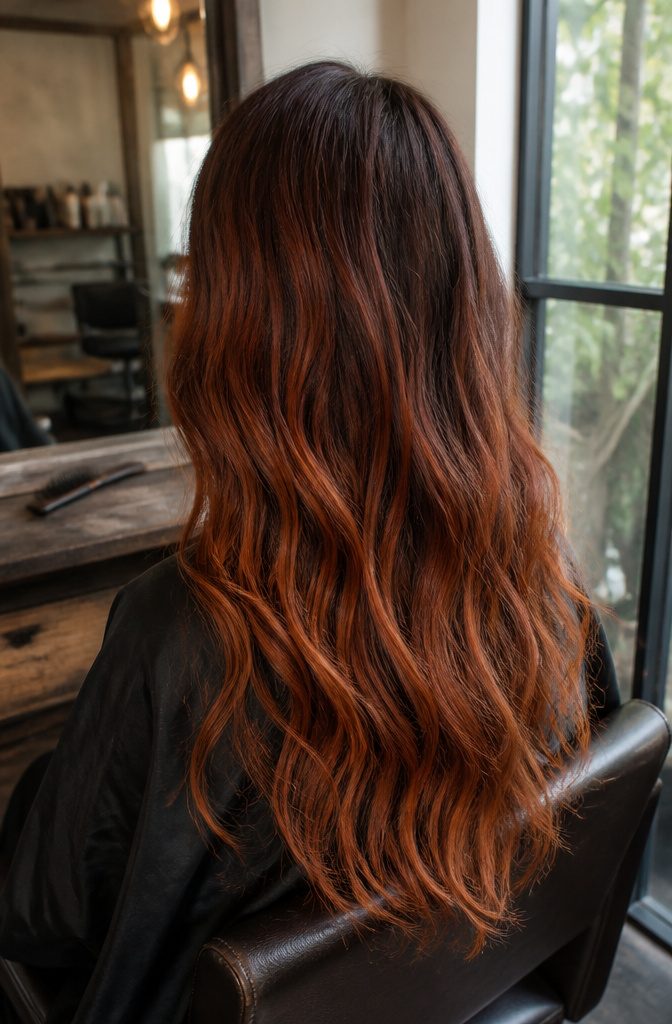
Dark auburn takes fire ombre in a quieter direction. The base is a deep red-brown that combines copper warmth with chocolate depth, and the blend reads less dramatic than pure orange or crimson tones.
I find it works across a wider range of complexions because it borrows from both red and brown without committing fully to either.
The transition here leans on auburn and copper shades blended softly rather than stacked in high-contrast bands. That softer gradient makes it easier to wear if your workplace or routine doesn’t suit something louder.
You still get the fire ombre structure, but the palette stays closer to what people read as a natural red rather than fantasy color.
If you want fire ombre without the maintenance or visibility of brighter tones, dark auburn is the version to ask for.
9. Dark Red Fire Ombre
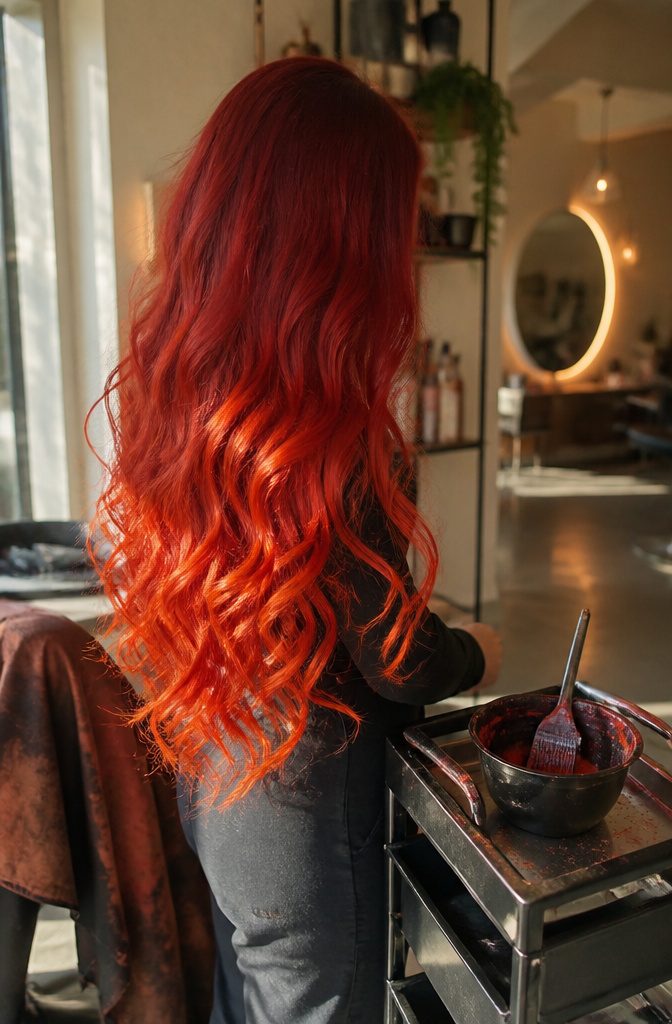
Working from a natural red base changes the game. Instead of bleaching dark hair to make room for the fire shades, your colorist starts with what you already have and layers bright red and tangerine through the mid-lengths and ends.
The transition feels smoother because the tones already sit in the same family, and the grow-out is gentler since you are not fighting a lift from brown or black.
The effect reads instant and warm without the high-maintenance bleach appointments. Your natural red stays at the root, the brighter fire tones build through the body of the hair, and the whole thing looks deliberately bold rather than corrective.
If you have been looking for a way to amplify red hair without starting over, this is the version that works with your base rather than covering it.
10. Dark Brown Fire Ombre
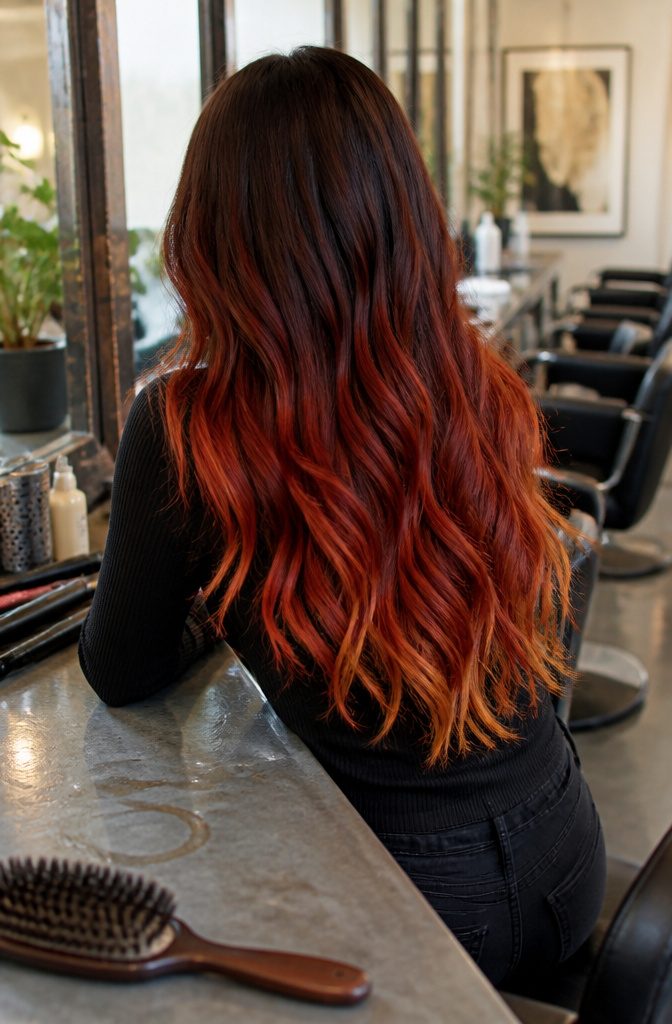
This one sits on the calmer end of the fire ombre range, and if you’re working with dark brown hair it can look seriously good.
The colorist’s job here is to build medium red through the mid-lengths rather than pushing straight into gold or orange. You get warmth without the full blaze, and the transition reads more controlled than some of the wilder fire looks.
A hint of gold on the very ends finishes it off, but it stays subtle. The red does the heavy lifting, and the gold just catches light at the tips.
I like this version for anyone who wants the idea of fire ombre but doesn’t want to look like they walked out of a bonfire. It gives you movement and dimension without announcing itself from across a room.
11. Neon Red Fire Ombre
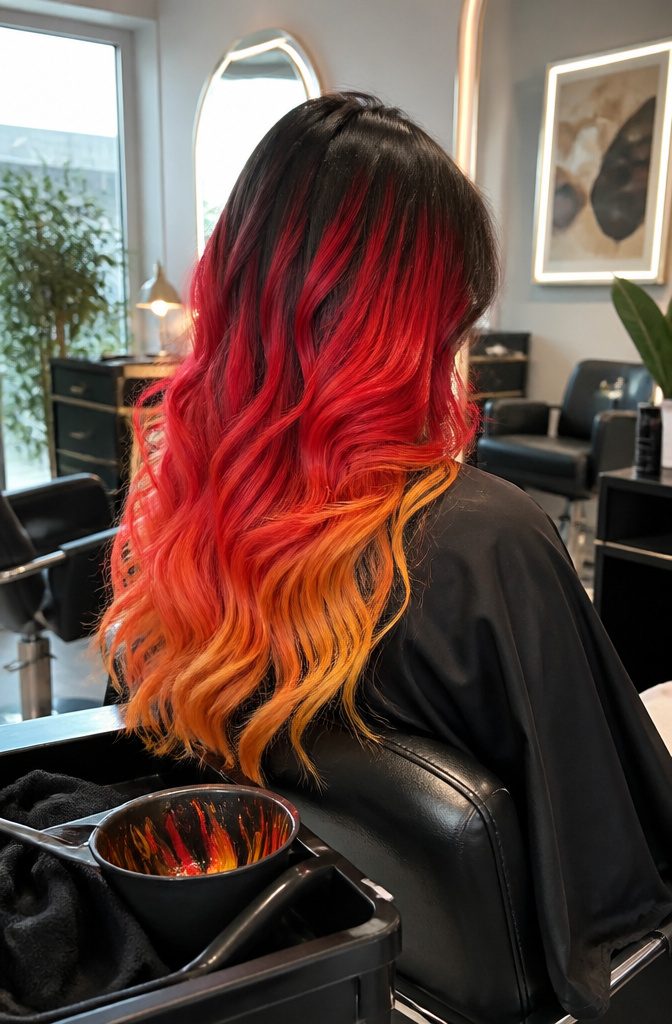
Neon red sits at the center of this look, turned up to full brightness and impossible to miss.
Where most fire ombres lean on a spectrum that moves from dark roots through orange into lighter tips, this version anchors itself in vivid, near-fluorescent red that holds the eye before anything else.
The red occupies the mid-lengths, often applied with a direct dye like Joico INRR Really red intensifier over pre-lightened hair, and it reads as electric rather than warm.
Orange and yellow still frame the gradient, but they take supporting roles. The result is bolder than flame ombre and less natural than auburn variations, which makes it the choice when subtlety is not the point.
One stylist working with this palette notes the red lasts around eight weeks when washed only in cold water, which matters when the whole look depends on that punch of color staying sharp.
12. Pink and Gold Fire Ombre
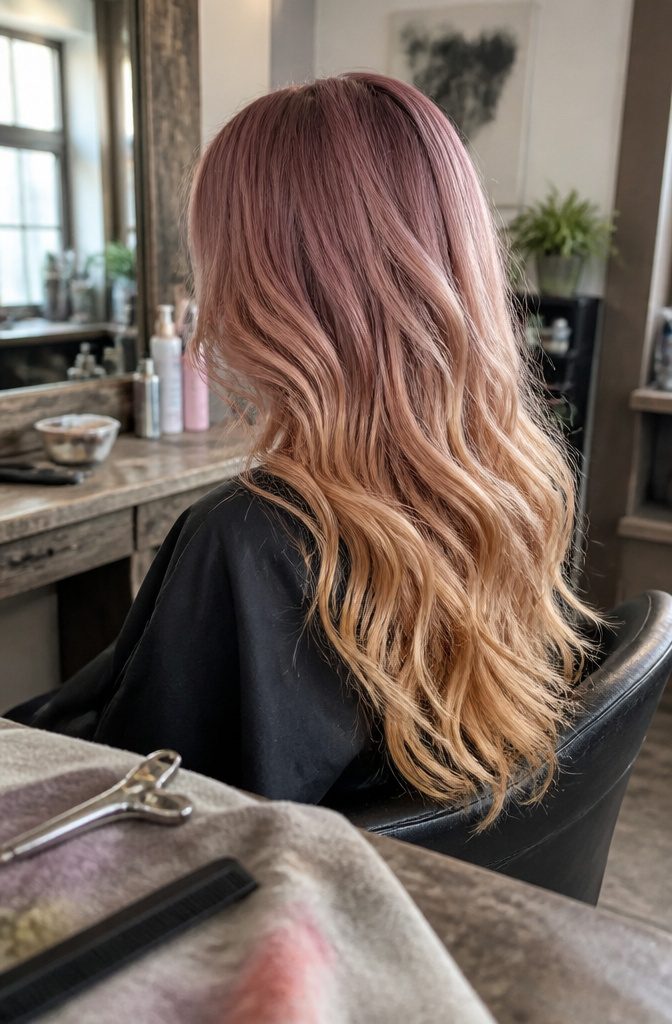
This version starts with dusty mauve roots and transitions into a rich gold at the ends instead of stopping at bright yellow.
The mauve brings depth without the intensity of pure pink, and the gold reads warmer and more luxurious than a standard blonde finish. The fade between the two lands somewhere close to rose gold territory, but softer and less metallic.
The look works well if you want the fire ombre structure but prefer something closer to pastel. The mauve stays subtle enough to avoid looking costume-y, and the gold keeps the ends from going too cool.
Your colorist builds the gold gradually rather than jumping straight from pink to yellow, so the gradient holds together without a visible line where one color stops and the next begins.
13. Copper Fire Ombre
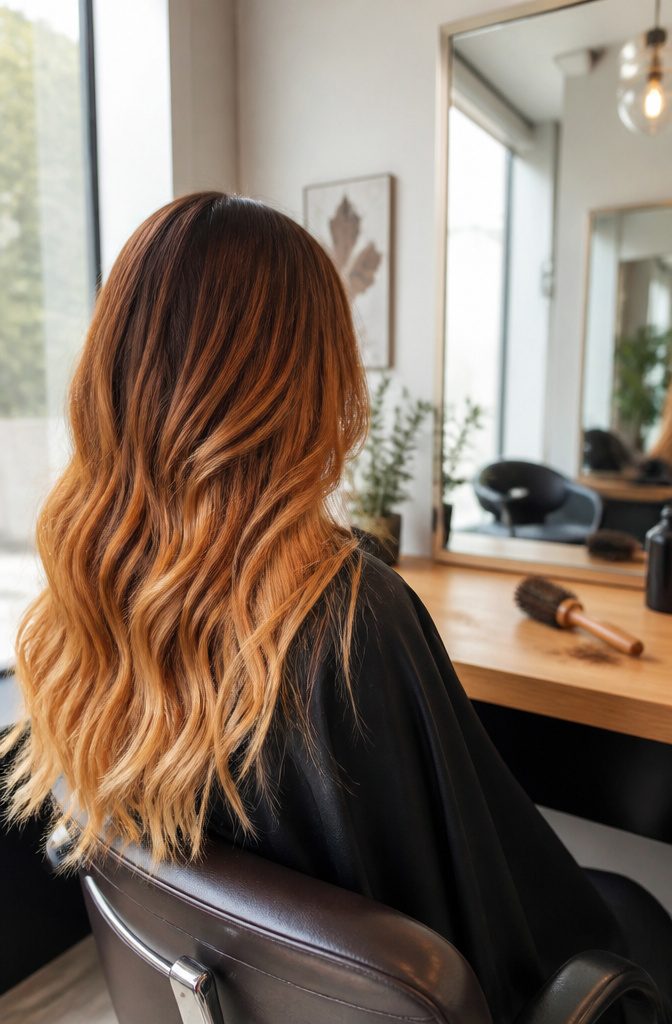
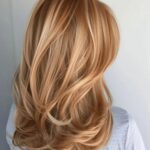
Copper sits right at that warm, dimensional edge where brown meets red, and when you pull it through to golden blonde the effect stays grounded without looking flat.
The progression starts at chestnut roots, moves into true copper at the midlengths, then tapers to golden blonde at the ends.
There’s not much outright red in this version, but the warmth is constant and the hints at fire are there in every shift. It reads as natural even when it’s not, which is exactly what makes it wearable.
Fair, medium and dark skin tones all handle copper well, so you’re not locked into a narrow range the way you are with some of the cooler or more extreme fire ombre builds.
14. Sunset Hair
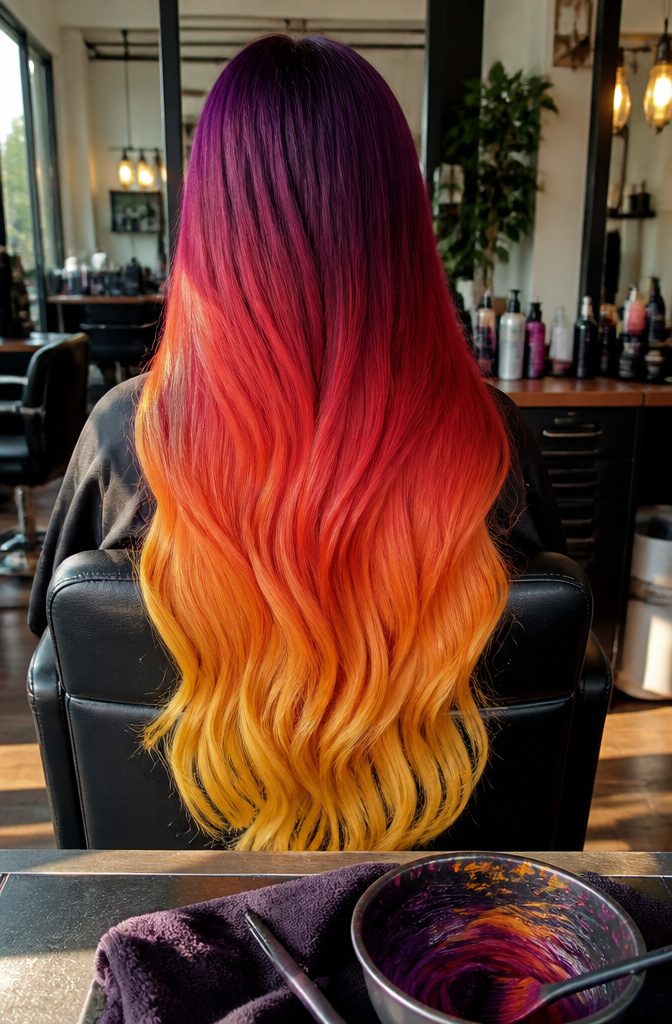
Sunset hair runs purple into red into orange into gold, stacking the full spectrum of a tropical sky at dusk in one sweep down the length.
The effect depends on having enough hair to let each shade breathe, so this is the look that earns extra-long lengths their keep. A colorist working with shoulder-length hair has to compress the palette, and the transitions read rushed.
Give them waist-length canvas and they can place each band where it belongs, building the gradient the way light actually moves when the sun drops.
The cycle through electrifying tones makes sunset hair harder to maintain than a straightforward fire ombre that leans on two or three warm shades.
Purple fades fastest, orange can go brassy, and gold needs regular toning to stay clean rather than slipping toward yellow. I’d book this knowing the first refresh comes faster than it does with copper or auburn alone.
How Your Stylist Chooses the Right Fire Ombre
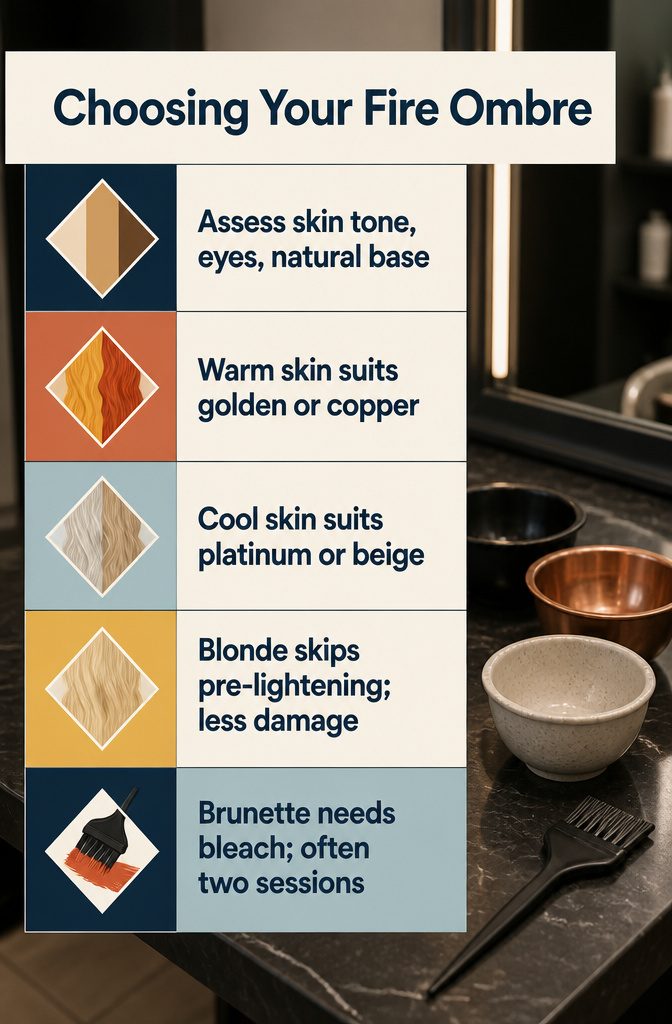
Your stylist will look at skin tone, eye color, and your natural base before mixing anything.
Warmer skin tones lean toward golden or copper flames, while cooler tones pair better with platinum or beige blondes at the root. The contrast dictates how dramatic the red reads.
Naturally blonde hair skips the pre-lightening step entirely, which means less damage and a faster appointment. The fire tones sit straight on top, and the contrast between pale roots and red-orange ends comes through cleanly.
If your hair is brunette or darker, expect bleach. Pre-lightening opens the cuticle enough for the red and orange to show up, but it does cause damage.
Your colorist will tone and condition before you leave, and you can ask exactly how much lift you need based on how vivid you want the result.
Darker hair often needs two sessions to get a bright yellow base at the tips before the color goes on.
Care and Salon Refresh Schedule
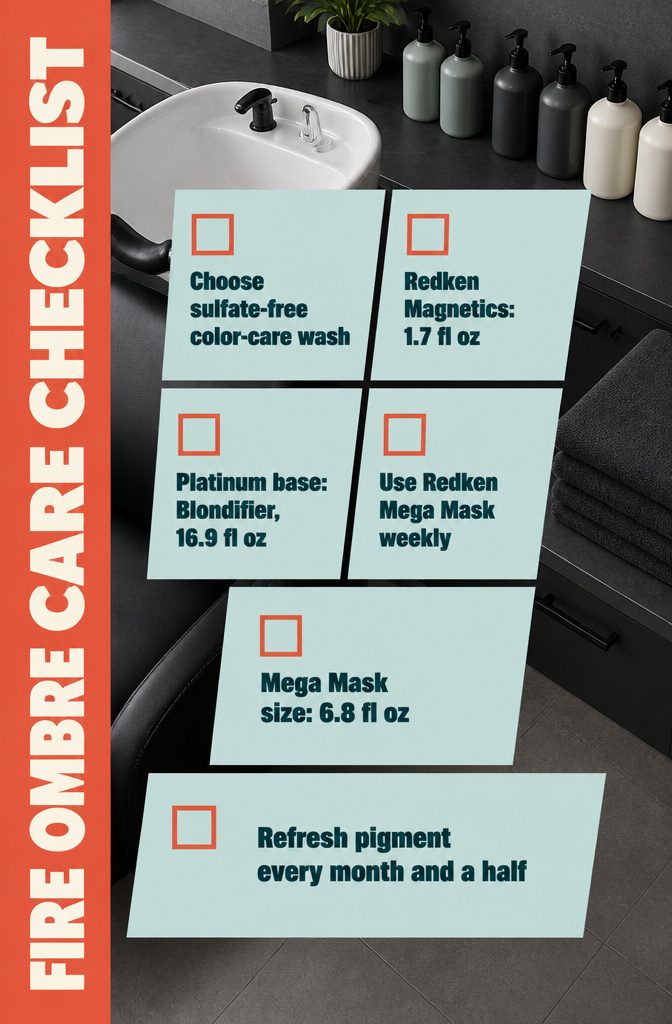
Fire ombre lives brightest when you keep the color saturated and the ends glossy, and that takes a lineup for color-treated hair plus a salon appointment every month and a half to refresh the pigment and bring back luminosity at the tips.
Start with a sulfate-free shampoo and conditioner made to hold salon color. I reach for Redken Color Extend Magnetics Shampoo and Conditioner (1.7 fl oz each) to lock in the hue from root to tip.
If your fire ombre starts from platinum, L’Oréal Professionnel Blondifier Illuminating Shampoo and Conditioner (16.9 fl oz each) keeps the blonde multidimensional while the warm tones stay clean.
Add a weekly mask to the routine:
- Redken Color Extend Magnetics Mega Mask (6.8 fl oz) works as both color extender and deep treatment, keeping vivid shades from washing out between salon visits.
Frequently Asked Questions
What is fire ombre hair?
Fire ombre hair stacks orange, red, and yellow shades from dark roots to lighter ends, creating a layered gradient that looks like flame instead of a single-color fade.
The look can range from subtle auburn with hints of copper to vivid neon red and tangerine, depending on how many tones your colorist layers in and how saturated each one is.
It works for many starting points because the blend is completely customizable.
How do you care for fire ombre hair?
Use a sulfate-free shampoo and conditioner made for color-treated hair, like Redken Color Extend Magnetics, to hold the salon color from root to tip.
Apply a weekly mask such as Redken Color Extend Magnetics Mega Mask to keep vivid shades from washing out, and book a salon refresh every month and a half to restore the pigment and bring back luminosity at the ends.
Is ombre hair still in style in 2026?
Ombre remains popular in 2026, with fire ombre offering a current take on the technique by layering warm tones instead of a simple light-to-dark fade.
The style’s flexibility lets you choose anything from office-friendly auburn to bold neon red, which keeps it adaptable to personal taste and workplace expectations. Its customizable nature is why it continues to work for so many people.