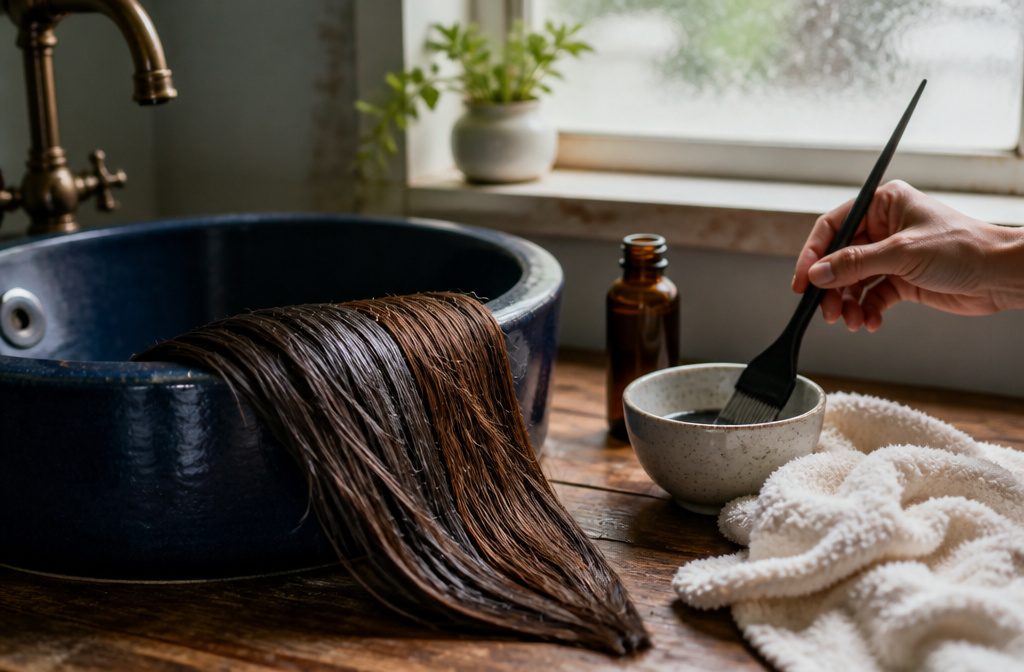
Toner is a semi-permanent, pigment-depositing product that shifts the tone of brown hair, cutting brassy orange or yellow, without changing its level.
It won’t lighten or darken, so match the shade to your base: a level 10 toner on level 6 hair is the most common mistake. Level 8 in a blue-based formula suits bases at 5–7.
What Toner Does
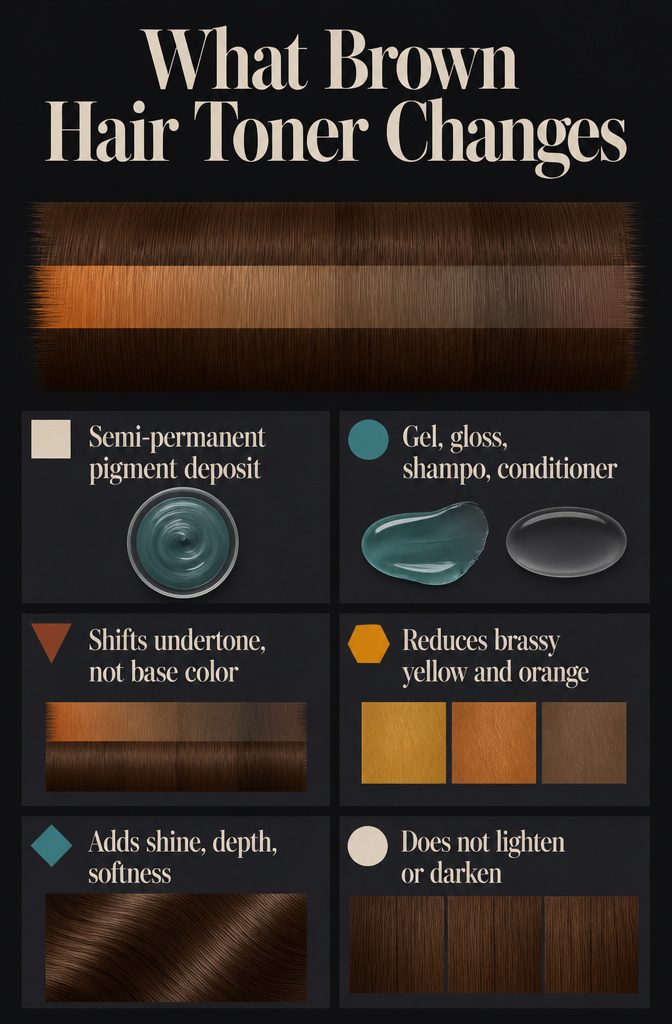
Toner is a pigment-depositing, semi-permanent product that adjusts the tone of your hair without usually changing the base color.
It works level-on-level, so brown stays brown; what shifts is the undertone sitting on top. Most formulas come as a gel or gloss, and tinted shampoos, conditioners and demi-permanent colors all count as toners because they carry pigment.
On brown hair, toner cuts the brassy, yellowish or orange cast that creeps in after bleaching, highlighting or just time. It also adds shine, depth and softness, which is why a toned brown looks polished instead of flat.
Toner corrects tone; it won’t lighten or darken your brown. I’d treat it as the finishing step after any lightening service, not an optional extra.
Spot the Unwanted Tone
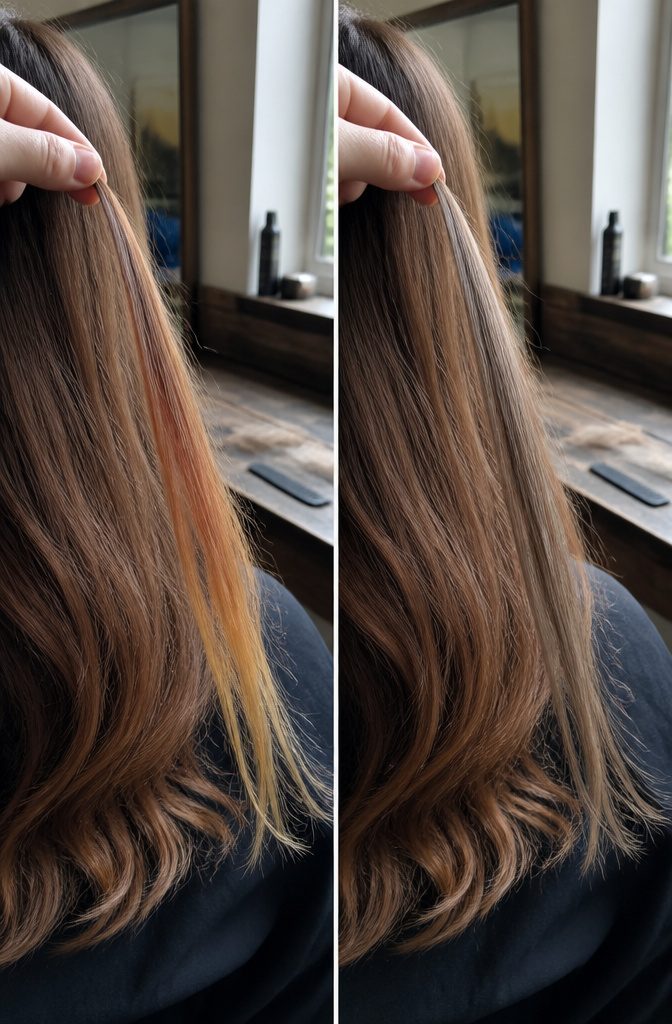
Hold a strand up to a window and name what you see. Orange or copper is the classic brassy look in brown hair, yellow reads as straw, and golden is the same warmth when it looks intentional.
Red sits deeper, with a rusty cast. Then decide where you want to land: warm, neutral, cool or ash, or just a richer or brighter brown with the tone left alone.
Sunlight and harsh water are the usual reasons brown drifts toward orange.
Frequent washing and heat styling fade color as well, which exposes the warm tones underneath. If your hair turned brassy over a few months, I’d suspect the shower and the flat iron before the dye.
Pick the tone you want to remove before you pick a product, because a brassy fix and a richness boost are different jobs.
Match the Toner Level
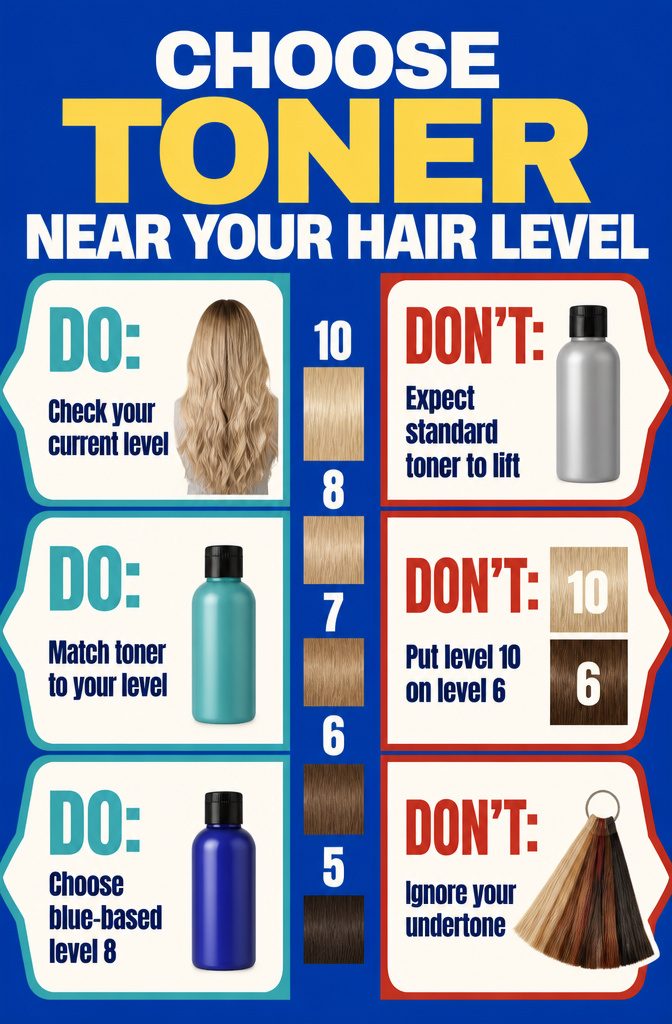
Most toners work level-on-level, so they shift tone without lifting much. A few permanent or high-lift formulas do both, but I wouldn’t count on a standard toner to make brown hair lighter.
A level 10 toner on level 6 hair is the most common mistake, and the surest route to an imperfect result. Work out your current level before you pick anything.
Bases at levels 5, 6 and 7 can take toner, but they need a darker one.
Level 8 is about right, in a blue-based formula. Your current shade and its undertone should set the final choice.
Choose a Format
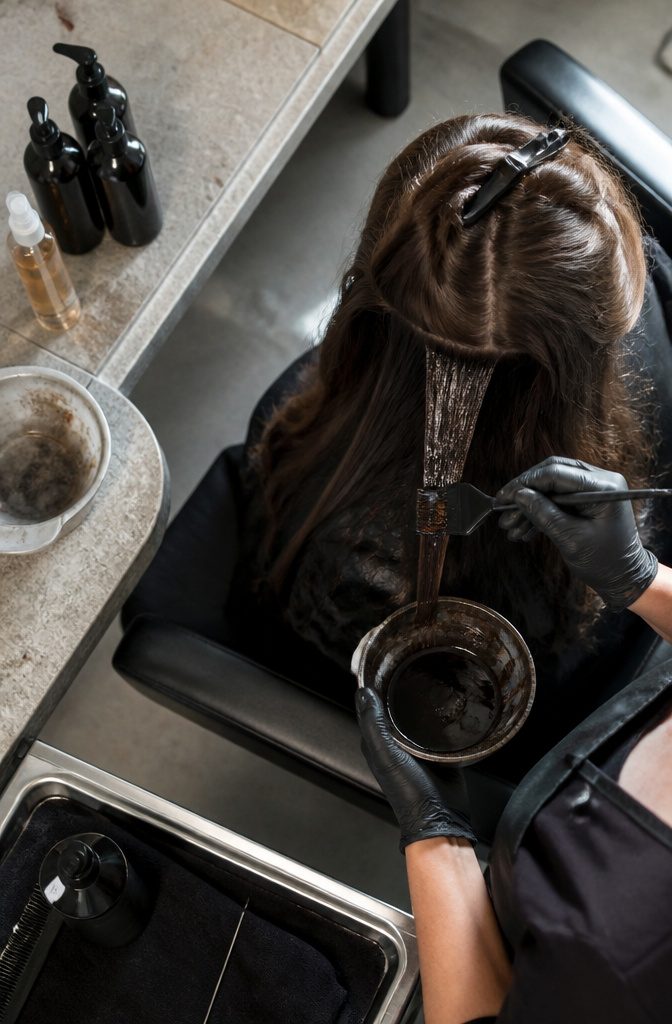
Demi-permanent gloss is where I’d start with brown hair. It is ammonia-free and tones without lifting much, so the level stays put.
Kristin Ess Signature Glosses (8 shades, clear to dark brown-black) are gentler than salon color, and L’Oréal Paris Le Color Gloss (13 shades) needs no mixing. Redken Shades EQ Gloss, TIGI Copyright Colour Gloss and Wella Color Charm are salon options.
Side by side:
| Format | Ammonia | Lift | Staying power |
|---|---|---|---|
| Demi-permanent gloss or liquid | No | Little | Built for frequent refreshes |
| Permanent cream | Yes | More | n/a |
| Tinted shampoo or mask | n/a | Surface only | Temporary |
Permanent cream suits very brassy hair that needs lifting too. Joico Color Balance Blue shampoo and conditioner are upkeep, used after toning.
Apply Toner
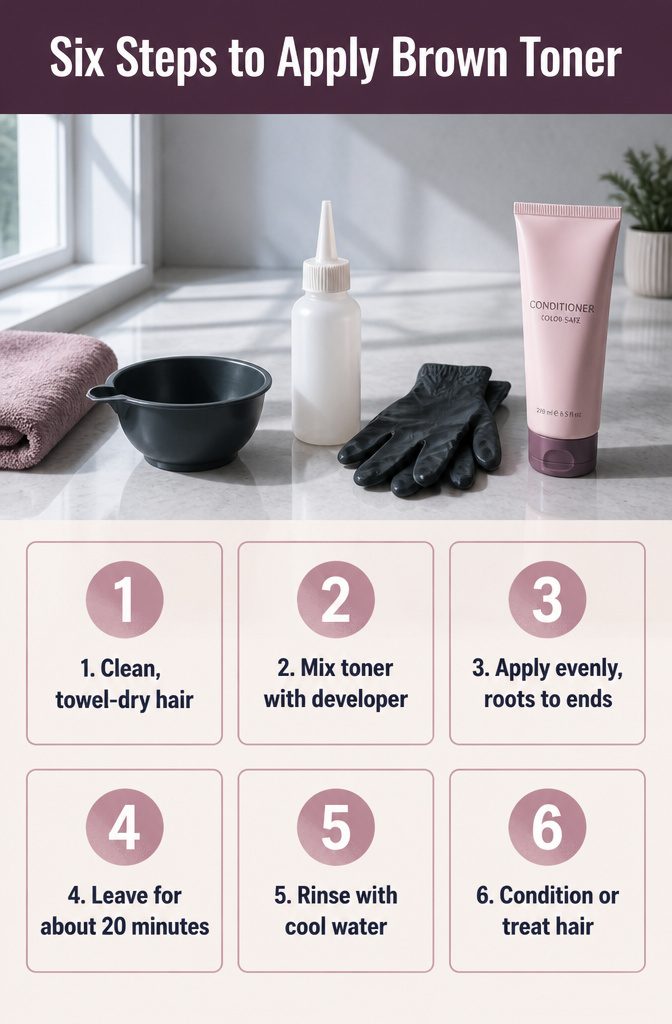
- Start with clean, towel-dried hair.
- Mix the toner with developer. Cream toners need a coloring bowl and a smooth paste. Use 20-volume developer; I only drop to 10-volume when the hair is already well lightened and the job is purely tone correction. Cream toners mix at 1 part toner to 2 parts developer, while Blondify liquid gel toners mix 1 part to 1 part and can simply be shaken in an applicator bottle. If your product prints a different ratio, follow it.
- Put on gloves and apply evenly from roots to ends. A tint brush helps.
- Leave it on for the stated time, usually 5–20 minutes. For brown hair, plan on about 20.
- Rinse with cool or cold water.
- Follow with conditioner or a color-safe treatment.
Maintain the Result
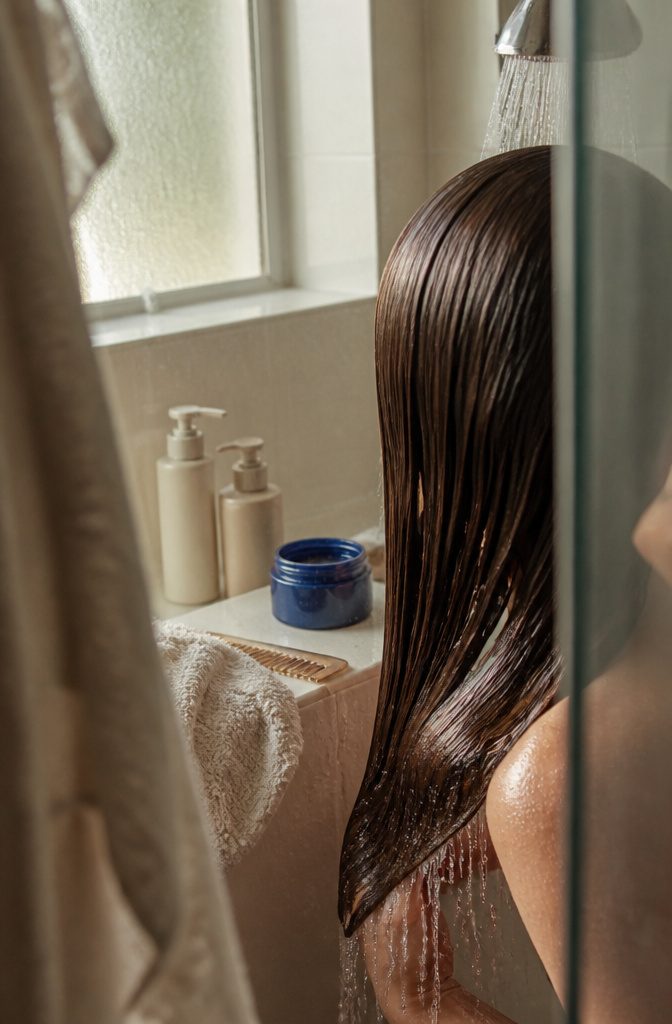
Toned brown hair keeps its shade longest on a gentle routine. These are the habits I’d hold to:
- Use a sulfate-free, color-safe shampoo and conditioner. Toner lasts about 2–6 weeks, and how often you wash is a big part of where you land in that range.
- Choose acid-based formulas when you can. They help the cuticle close, and hair looks healthier for it.
- Keep a purple or blue toning shampoo or mask for brassy patches. I’d treat them as upkeep only: they work on the surface, so they fade faster than the toner itself.
- Cut back on heat styling, and keep your hair covered or shaded in strong sun. Both fade color.
- Add a bond-protecting line if your hair is lightened and fragile.
Blue and Purple Pigments
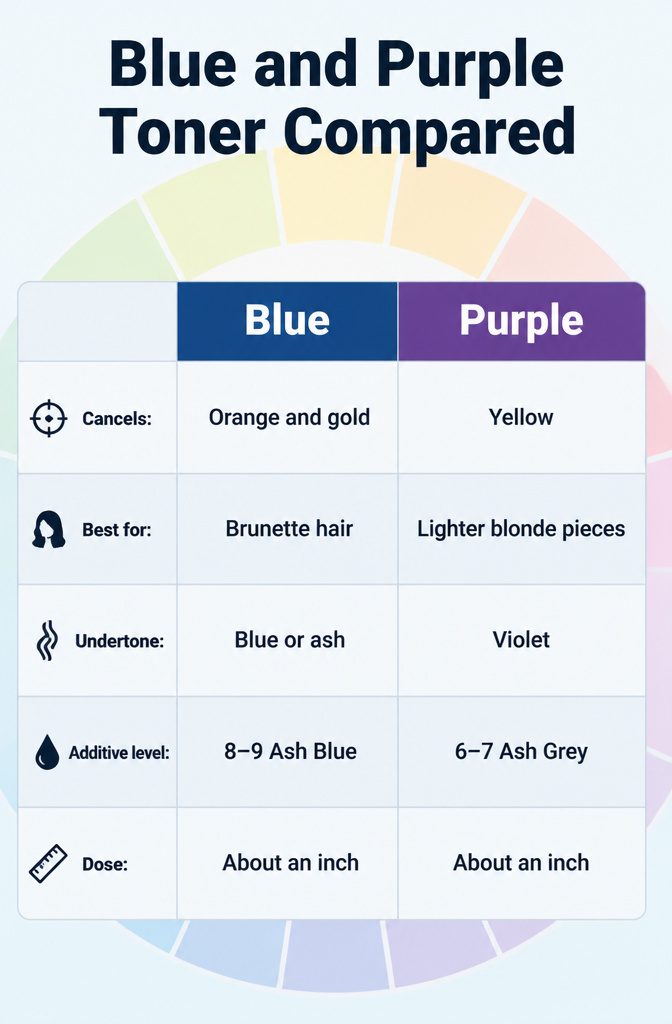
Orange and gold sit opposite blue on the color wheel, which is why a blue or ash toner cancels them and why blue products suit brunettes, whose lightened hair tends to pull orange.
Purple or violet works the same way on yellow, so it belongs on lighter, blonder pieces.
Ugly Duckling 09B is a blue-based level 9 toner, heavily pigmented, that neutralizes yellow, orange and even some red. For stronger correction, two additives get stirred into your regular toner and developer mix.
Ash Blue Additive goes with level 8 and 9 toners; Ash Grey Additive goes with level 6 and 7. Use about an inch from the tube, since both can make hair darker.
Shine, Depth and Dimension
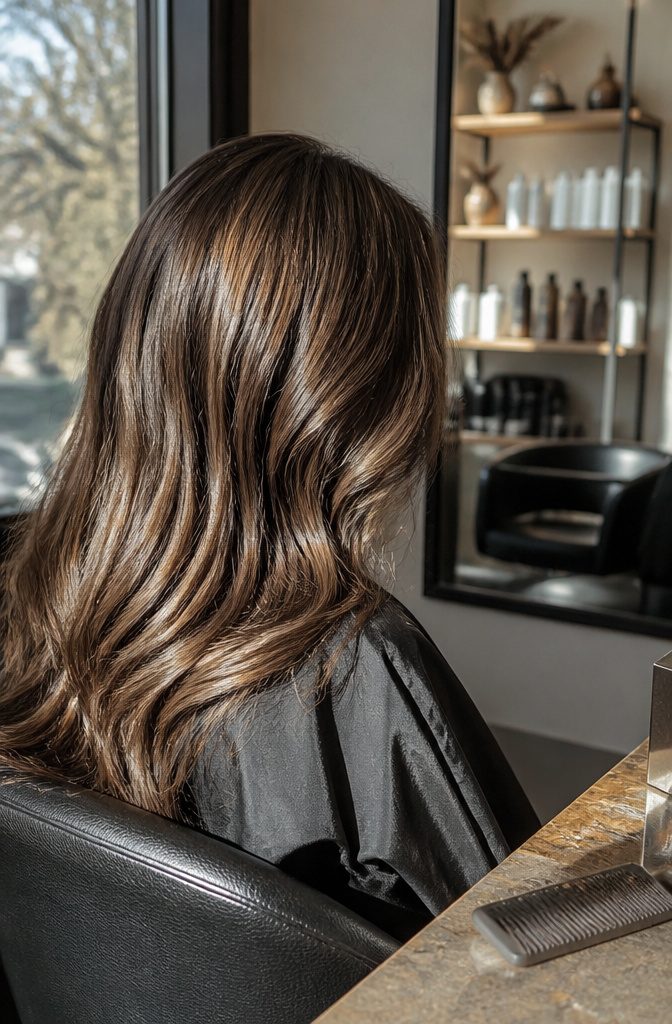
Toner is an enhancer as much as a corrector.
On brown hair it adds richness and depth, and it seals the cuticle so the surface reflects light, which is where that salon-toned gloss comes from. It also plumps the cuticle, so strands look fuller and feel softer.
Highlights are where I think toner earns its place.
Ammonia-based color can leave warm, brassy tones, and sun exposure shifts and fades the lightened pieces. A toner chosen to counter that warmth pulls the color back together.
Many also contain conditioning agents that soften strands left dry and dull. For a cooler finish, an ash toner is the one to reach for, since it neutralizes unwanted warmth.
How Long Toner Lasts
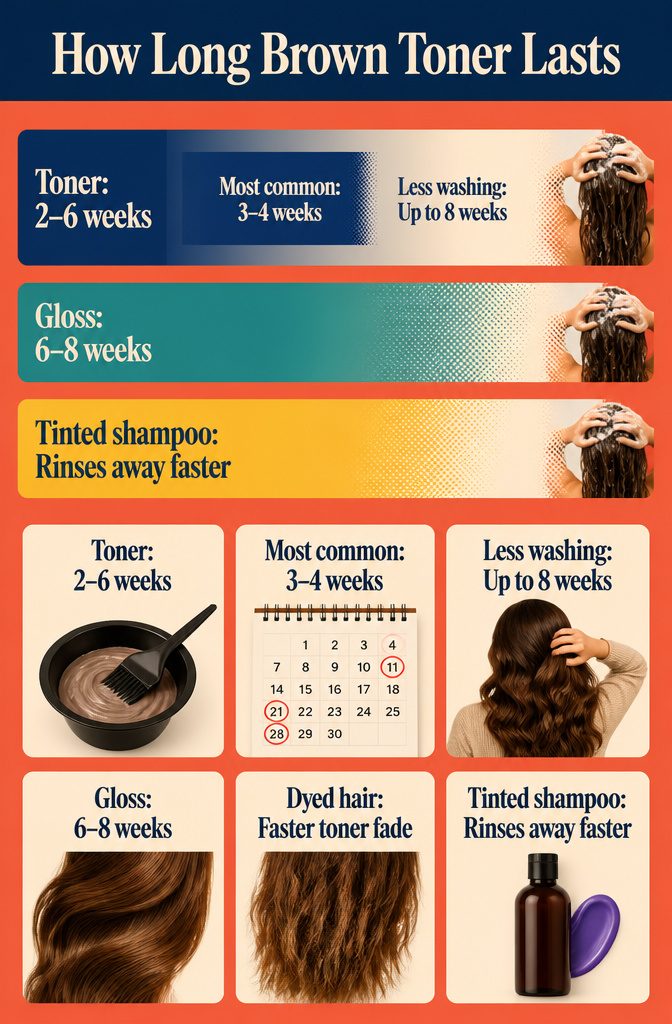
Toner typically lasts 2–6 weeks, though the range widens depending on how often you wash and what your hair holds onto.
The most common window sits at 3–4 weeks, and some people stretch results to eight weeks if they wash less frequently and their hair grabs pigment well. Previously dyed hair can let go of toner faster, which means more frequent touch-ups.
Glosses, a category of demi-permanent toners, last longer: 6–8 weeks. They fade gradually without leaving a visible grow-out line, which makes them a good fit if you switch color often or want something temporary that still looks polished.
Surface products like tinted shampoos and masks work differently.
They sit on the hair rather than depositing pigment deeper in, so they rinse away faster. I think of them as maintenance tools after a real toning session rather than standalone toners that hold for weeks.
Hair Condition and Texture
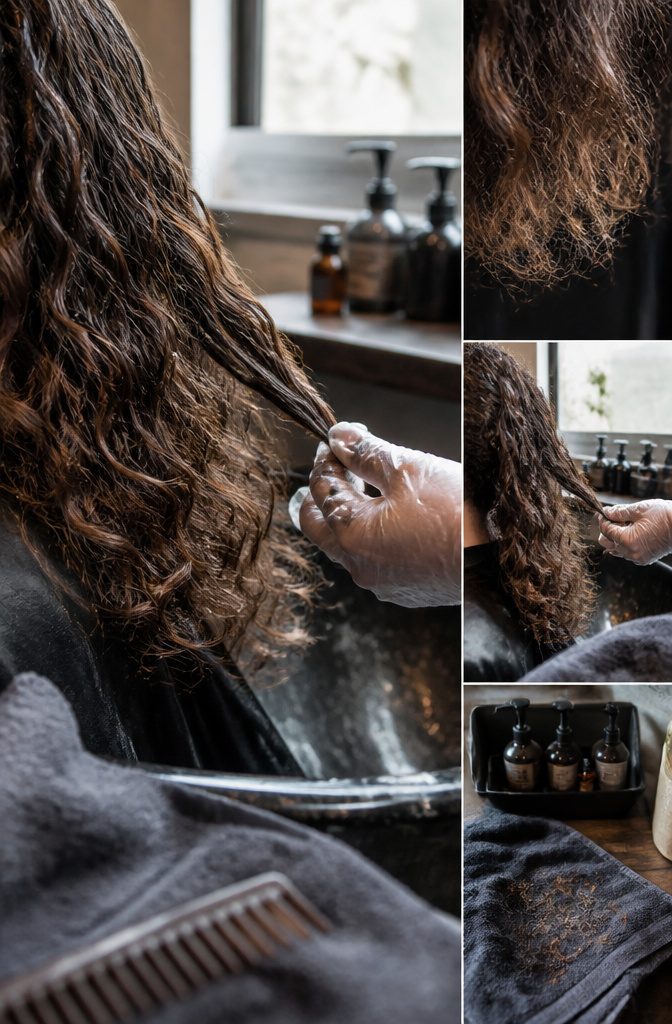
Texture barely limits the choice.
Straight, wavy, curly or coily, color-treated hair can take a toner, and many formulas work on any pattern, so shade matters more than curl type. Condition matters more than either.
Dry or damaged strands are where a toner with conditioning built in earns its place, and I’d pick it over a plain formula every time. Rough, frizzy ends can dull even a well-matched shade.
Frizz and flyaways come from humidity, heat styling and low moisture, so pair a hydrating shampoo and conditioner with an anti-frizz serum or oil.
Split ends and breakage call for regular trims, a wide-tooth comb on wet hair, and deep conditioning.
Home Toning With Caution
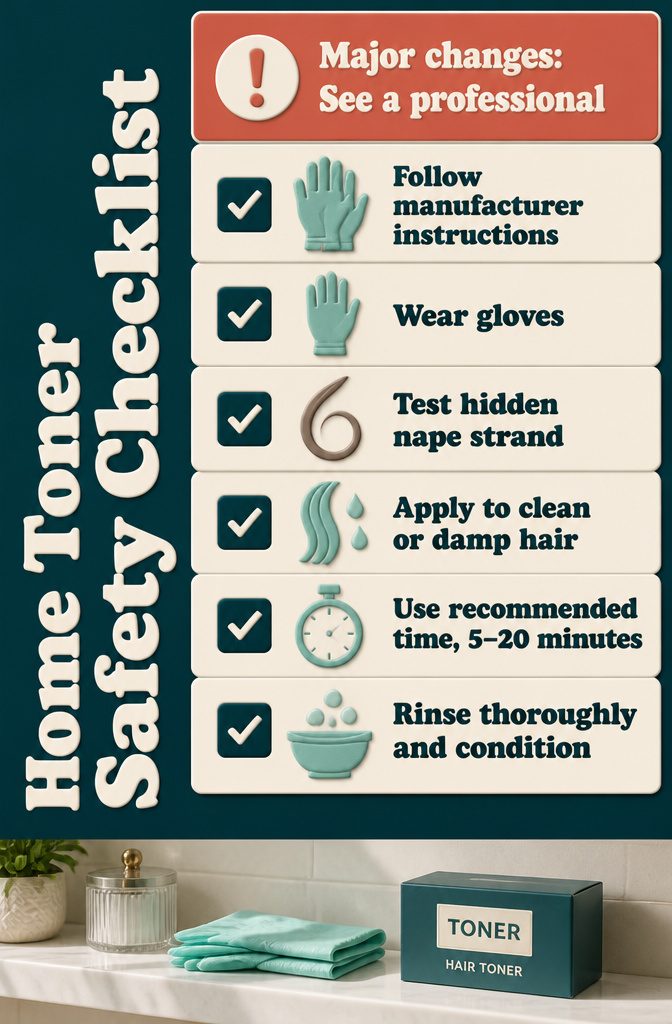
Home toning works if you follow the manufacturer’s instructions closely.
Major color changes or an uncertain choice of toner belong with a professional. The practical safeguards make the difference:
- Wear gloves to protect your hands and avoid staining.
- Run a strand test on a small hidden section at the nape before applying toner all over. This shows how the color will develop.
- Apply to clean or damp hair as directed on the product. Some toners move more evenly through damp hair; the label tells you which.
- Leave the toner on for the recommended time, usually 5–20 minutes depending on the formula and the result you want.
- Rinse thoroughly and follow with conditioner.
If the result is not what you wanted, unwanted tones fade with washes. There is no instant fix at home for a toner that went wrong.
Frequently Asked Questions
What is brown hair toner and what does it do?
Brown hair toner is a pigment-depositing, semi-permanent product that shifts the undertone of brown hair without usually changing its level.
It cancels the brassy, yellow or orange cast that shows up after bleaching, highlighting or fading, and it adds shine, depth and softness. It won’t make your brown lighter or darker.
What are the different kinds of hair toner?
Demi-permanent colors and glosses, tinted shampoos, conditioners and masks all count as toners because they carry pigment. A demi-permanent gloss is the best starting point for brown hair since it has no ammonia and lifts very little.
Permanent creams suit very brassy hair that also needs lightening, while tinted shampoos and masks only work on the surface and fade fastest.
What toner is best for brown hair?
A blue-based or ash toner is the best match for most brown hair, because blue cancels orange and gold. Purple or violet works on yellow, so it fits lighter, blonder pieces better.
On level 5, 6 or 7 brown, choose a blue-based toner at about level 8, since a toner much lighter than your base, like a level 10 on level 6, tends to give a poor result.
How do you tone brown hair at home?
Start with clean, towel-dried hair, mix the toner with 20-volume developer (cream toners usually mix 1 part toner to 2 parts developer, but follow your label), and wear gloves.
Apply from roots to ends, leave it on for about 20 minutes, then rinse with cool or cold water and follow with conditioner.
Can you use a toner at home, or should a professional do it?
Home toning works if you follow the manufacturer’s instructions closely, wear gloves and do a strand test on a hidden section at the nape first.
A major color change, or any doubt about which toner to pick, is a job for a professional. A toner that goes wrong has no instant fix at home; the unwanted tone fades with washing.
How long does toner last on brown hair?
Toner typically lasts 2–6 weeks, with 3–4 weeks the most common result.
Some people stretch it to 8 weeks by washing less often, while previously dyed hair can lose it sooner. Glosses last longer, about 6–8 weeks, and a sulfate-free, color-safe shampoo helps any toner hold.





