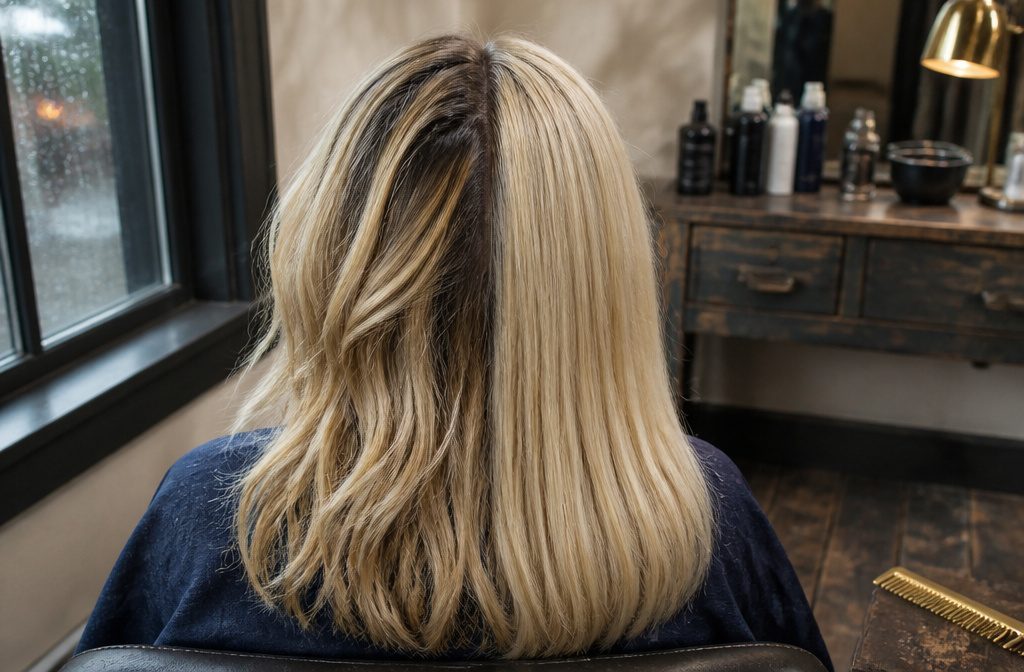
Highlights win for most people: they grow out without a hard line, so you rebook every 6–8 weeks instead of every 3–6.
All-over blonde wins when gray passes roughly 40 percent, because painted techniques can’t give full coverage. On dark hair, lifting every strand is the costliest choice, and AARP calls icy blonde there "just about the most damaging thing you can do."
Application and Placement
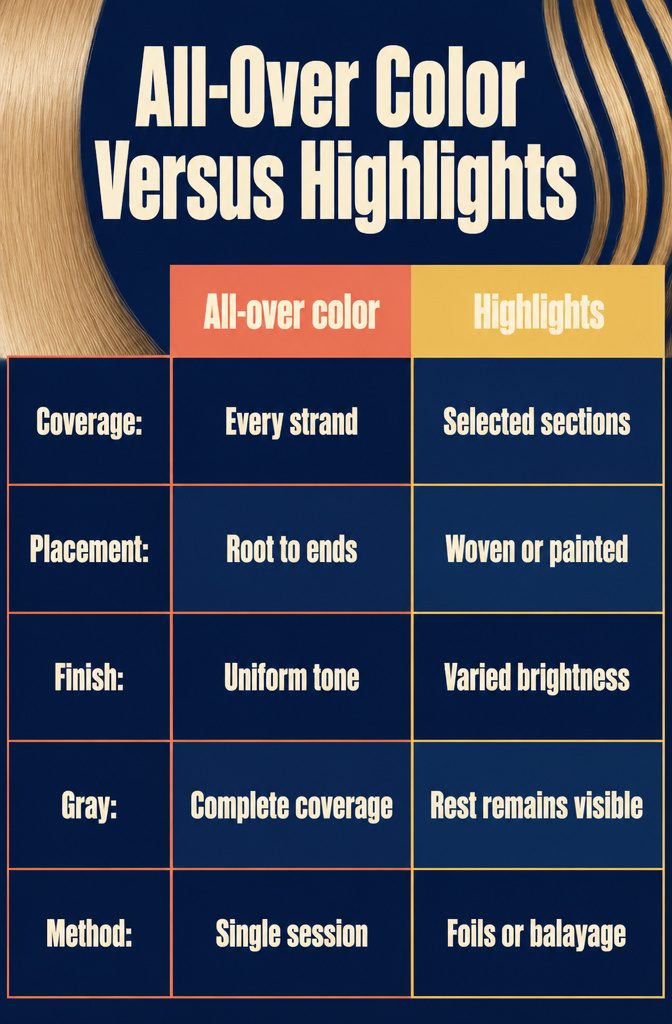
All-over color applies pigment to every strand, root to ends, in a single session.
Your colorist starts at the scalp, then pulls the formula through mid-lengths and ends. The result is uniform: no ribbons, no variation in tone, no untouched base peeking through.
It covers gray completely and shifts your overall level in one go. Highlights lighten woven, sliced, or painted sections while leaving the rest of your hair untouched.
Traditional foil highlights isolate precise pieces with aluminum, then saturate them root to tip. The foil traps heat, which accelerates lift and delivers defined, consistent brightness.
Balayage, from the French "to sweep," paints lightener freehand onto the surface without foils. The result is softer, more graduated, and brighter at the ends than at the root.
Both methods can add toner or gloss afterward to neutralize warmth and control the final shade. Lowlights work in reverse, weaving deeper tones back into hair that has grown too uniformly light or lacks contrast.
Overall Result
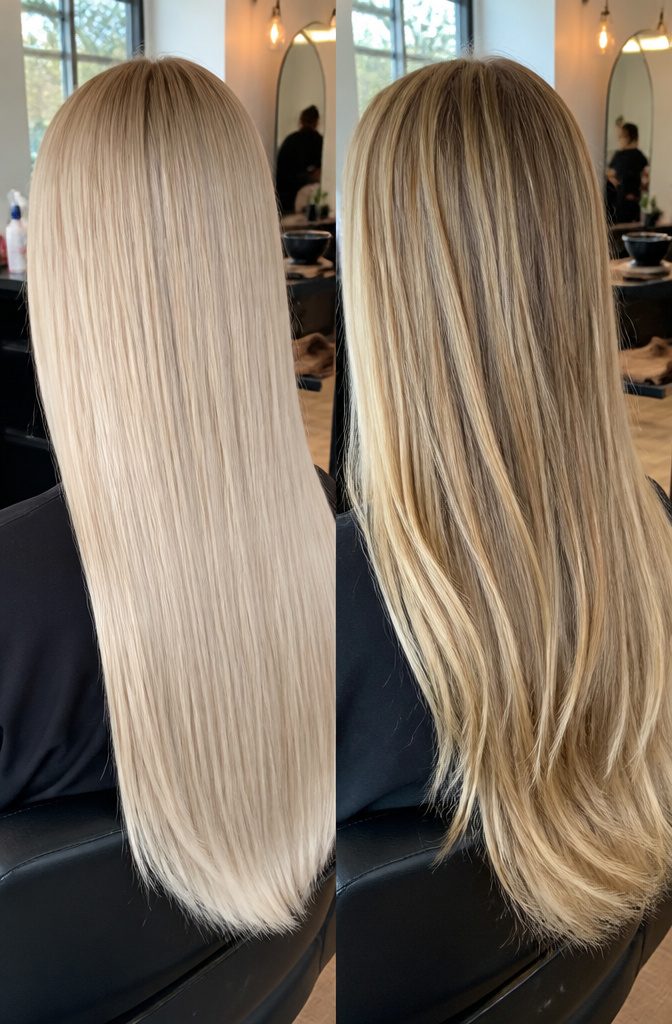
All-over blonde delivers one polished, glassy finish from root to ends. Highlights give you ribbons of brightness, movement through the lengths, and that sun-kissed effect straight color cannot replicate.
If your hair has uneven patches from previous color or faded ends that need pigment restored, all-over color unifies the base before you consider adding dimension.
Highlights range from subtle to dramatic; you can ask for just a few face-framing pieces or go bright across the entire head.
Straight hair shows placement more clearly than textured hair, so if you want a flawless, sleek result without visible edges, all-over color is the safer route.
On darker hair, single-process color reflects light in one clean plane and delivers a shine that painted highlights cannot match.
Root Grow-Out and Upkeep
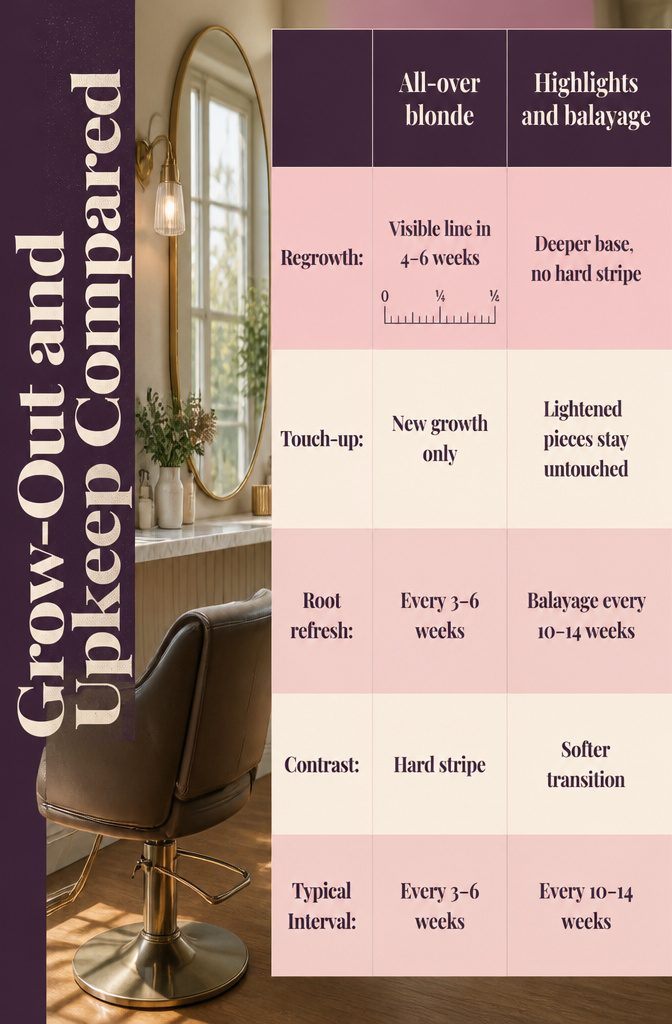
The difference in grow-out is one of the biggest practical dividers between these two routes. All-over blonde puts lightener on from root to end, so every quarter-inch of regrowth shows as a visible line within four to six weeks.
Highlights and balayage start off the root, so new growth reads as a deeper base rather than a hard stripe.
A root touch-up applies color only to new growth, never over previously lightened hair. Overlapping causes banding and added stress at the line where old and new meet.
| Service | Typical Interval |
|---|---|
| Gloss or toner only | Every 4–6 weeks |
| All-over root touch-up | Every 3–6 weeks |
| Traditional highlights | Every 6–8 weeks |
| Face-framing brightness | Every 8–10 weeks |
| Balayage refresh | Every 10–14 weeks |
Around the three-month mark with balayage, the contrast can start to feel heavy at the top. That is when a few freshly painted pieces bring back the balance, not a full redo.
Gray Coverage
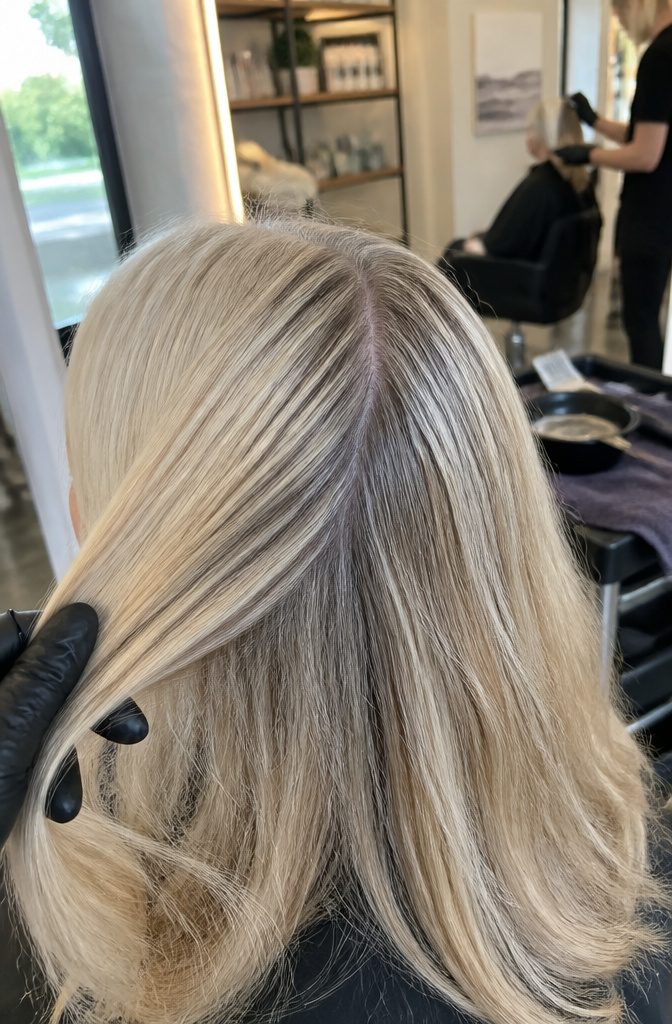
All-over color wins this one outright if you need real coverage.
The formula goes on at the root and delivers full opacity, which matters once gray reaches roughly forty percent. Past that threshold, painted techniques start to fall short because gray hair has a different structure and resists pigment.
Highlights, lowlights and balayage disguise gray rather than cover it.
They soften the contrast and add dimension, so scattered silver reads as brightness instead of age. That approach works beautifully when gray is still light or scattered, but it cannot deliver the uniform result all-over color does.
If at 50-plus your hair is pretty much a light gray/white tone, then champagne and creamy blond highlights are a great idea. Ask your colorist to add sparkling highlights and a pearly toner to elevate your already light hair, brighten up your skin and banish any yellow or dingy tones.
— AARP
For light gray or white hair, the goal shifts from coverage to elevation. Champagne and creamy blonde highlights with a pearly toner blur the boundary between gray and blonde, lifting what is already there instead of hiding it.
Hair Health and Damage
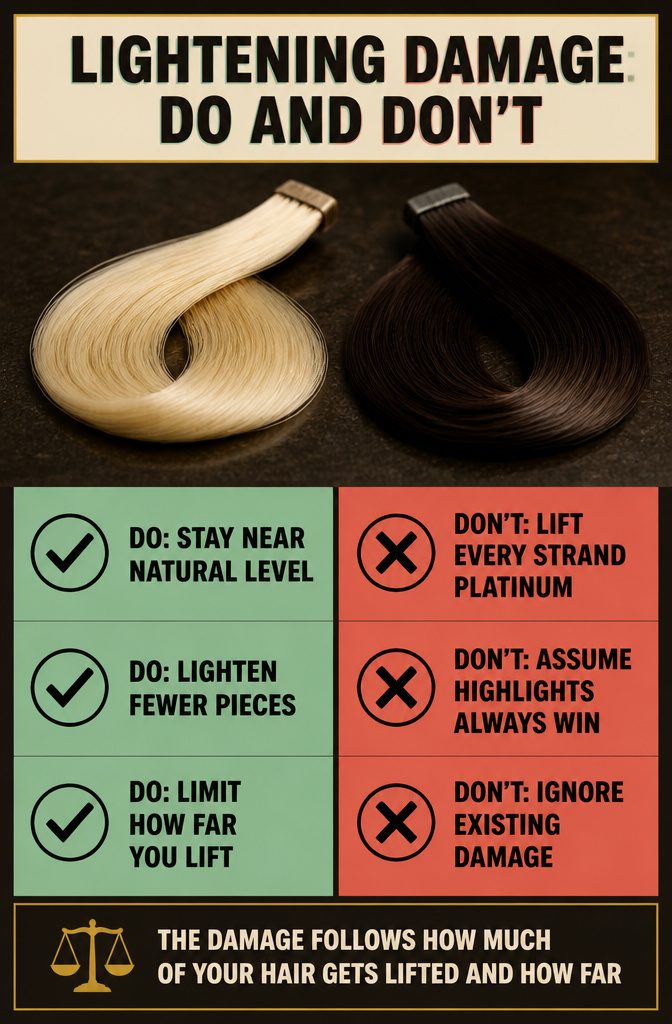
Any lightening changes the structure of the hair shaft. All-over color that stays near your natural level can add richness without any lift, so it asks the least of your strands.
All-over blonde is different.
On dark hair it means lifting every strand from root to tip, and AARP calls icy blonde on dark hair "just about the most damaging thing you can do." I’d skip it.
Balayage doesn’t saturate the strand from root to tip the way foil highlights do, which generally means less overall damage.
Between all-over blonde and highlights, though, neither wins across the board. The damage follows how much of your hair gets lifted and how far, so a few softly lightened pieces and a full head of platinum are not close.
Cost and Appointment Commitment
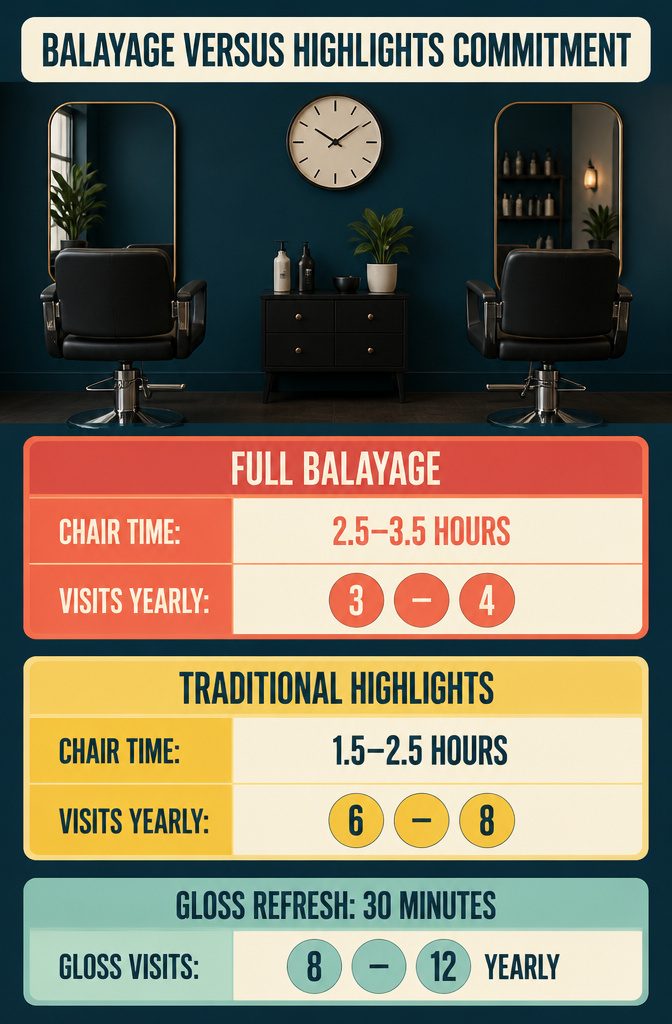
A full balayage takes 2.5 to 3.5 hours in the chair, while traditional highlights run 1.5 to 2.5 hours. A gloss or toner refresh sits at about 30 minutes.
Balayage costs more per session because of the freehand technique, but you visit less often: roughly 3 to 4 times a year against 6 to 8 for highlights. The annual cost often evens out or tips in balayage’s favor.
One forum poster mentioned paying £160 for highlights and a trim, stretched to about ten weeks between visits.
The grow-out matters less with balayage because the lightest pieces start below the root, so new growth reads as intentional depth rather than a mistake you need to fix right away.
| Technique | Chair time | Visits per year |
|---|---|---|
| Full balayage | 2.5–3.5 hours | 3–4 |
| Traditional highlights | 1.5–2.5 hours | 6–8 |
| Gloss or toner refresh | 30 minutes | 8–12 |
Choosing the Right Option
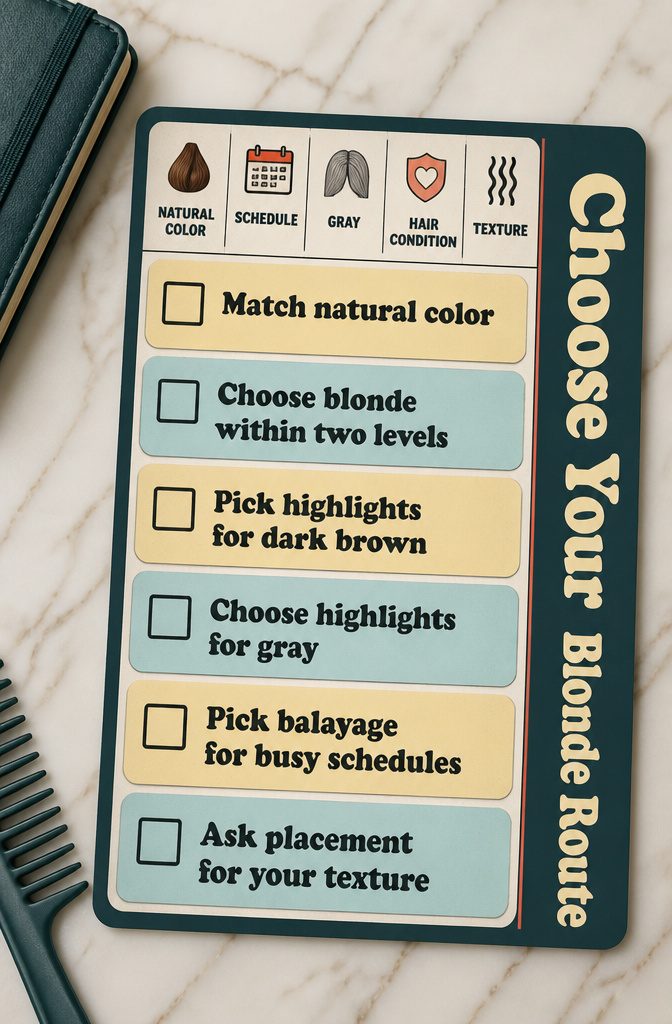
Start with your natural color and your calendar, then pick the side that fits both.
- All-over blonde: choose it if you want one even, bright finish and your natural shade is within about two levels of the blonde you’re after. Going further than that in one visit is where hair pays for it.
- Highlights: for dark brown hair, I’d pick these. A darker base with lighter, cooler pieces looks natural, and it skips the big jump.
- Gray: soft blonde-and-brown blends hide it well, so highlights win here.
- Busy schedule: traditional highlights show regrowth at 4–6 weeks. Balayage leaves no visible root line, so it suits travel and skipped appointments.
- Fragile hair: highlights, since only some strands get lightened.
- Texture: fine, coarse and curly hair each take lightener differently, which changes placement. Ask your stylist where to put it.
Hybrid Options
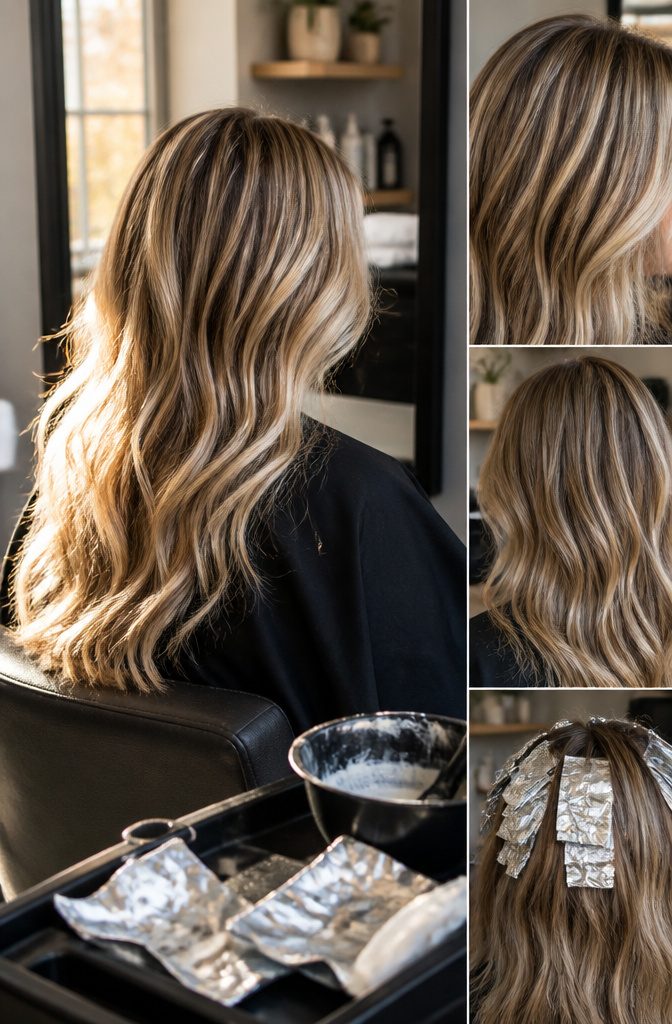
If you want brightness where it shows but less frequent upkeep than all-over color, the answer sits between highlights and a full head of blonde.
Foilayage puts foil highlights around the face and part line for lift where you see it first, then switches to freehand balayage through the mid-lengths for softer dimension.
The foils deliver more contrast than balayage alone, the painted ends grow out without a hard line, and the whole thing reads as deliberate rather than grown-out roots.
Babylights are another middle route: micro-fine woven highlights placed at the hairline and part. They use very little hair and almost no spacing between foils, so the result stays subtle even as it grows.
I like them for anyone who wants contouring brightness but dreads the maintenance cycle of traditional highlights. They soften as they grow rather than showing a sharp regrowth line.
Lowlights work the opposite direction. A colorist weaves darker sections into your base to add depth, and the contrast can make hair read as thicker.
Pair them with highlights and you get the bronde effect: blondish-brownish ribbons that blend grays and suit most skin tones. The less contrast between the shades, the more natural the finished look.
The money piece is bolder.
It’s chunky gold or blonde ribbons framing the face, sometimes just at the front, sometimes carried through if you wear your hair up. The contrast is intentional and the warmth reads as glamorous without committing to blonde everywhere else.
Blonde Shade and Undertone
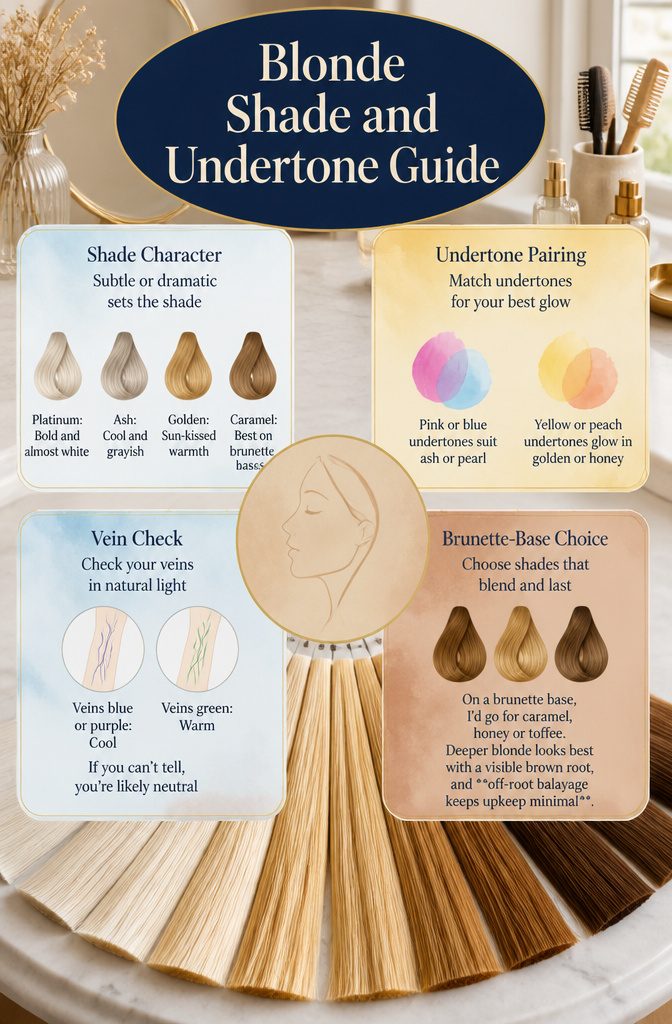
Subtle or dramatic is the first call, and it sets the shade. Platinum is bold, bright and almost white.
Ash is cool and grayish for a sleek finish, golden reads sun-kissed, and caramel melts into darker hair. Pink or blue undertones suit ash or pearl, while yellow or peach undertones glow in golden or honey.
Neutral skin can wear nearly any blonde. Check your veins in natural light: blue or purple means cool, green means warm, and if you can’t tell, you’re likely neutral.
On a brunette base, I’d go for caramel, honey or toffee. Deeper blonde looks best with a visible brown root, and off-root balayage keeps upkeep minimal.
Toning Between Visits
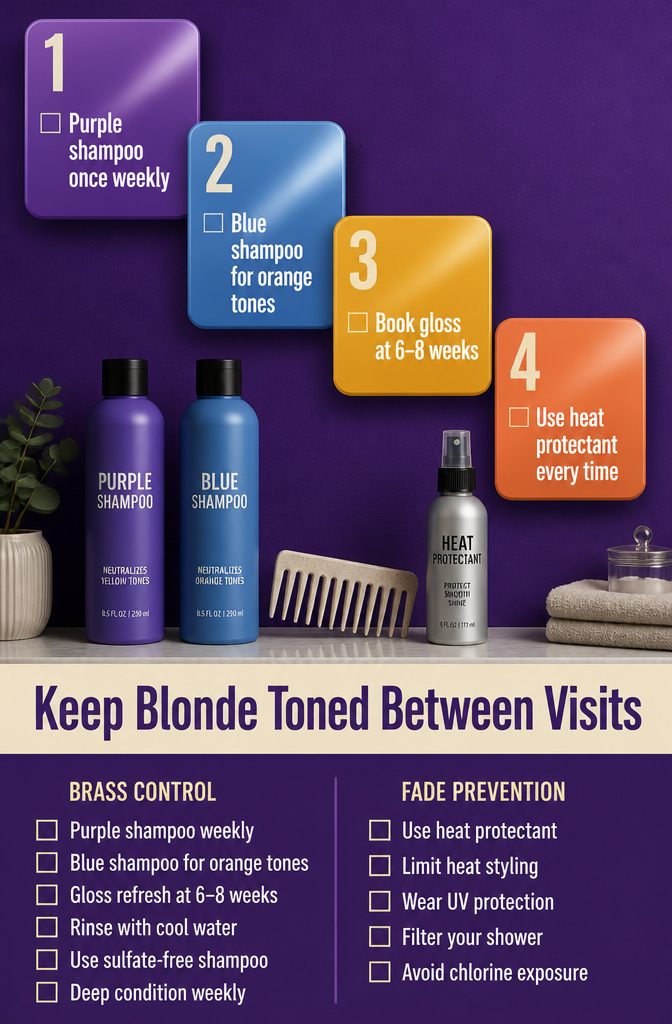
Tone fading, not regrowth, sets the real schedule for either choice, since brass shows up before roots do. Here’s what keeps it in check:
- Use purple shampoo once a week to cancel yellow brassiness. If you wash often, a violet or blue toning product every third wash does the same job.
- Switch to a blue-pigmented shampoo when hair turns orange, which is common on lightened dark hair.
- Book a gloss or toner refresh at the 6–8 week mark, even if the roots still look fine. I’d choose this over chasing brass with shampoo alone.
- Slow the fade itself. Oxidation, hard water, sun and heat all brass blonde, so use heat protectant before every hot tool.
Protect Lightened Hair
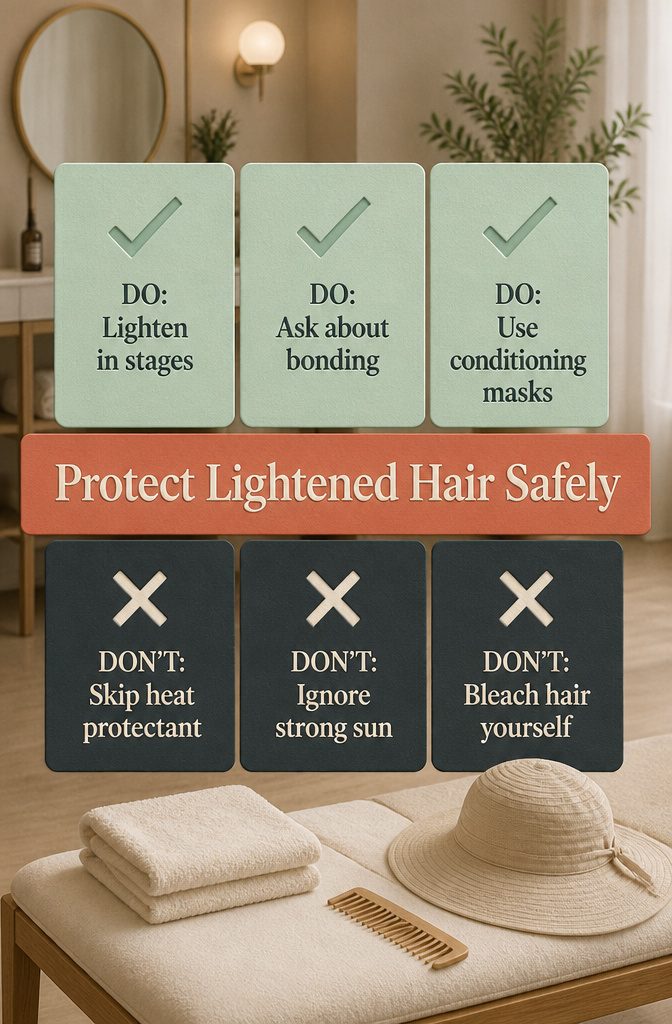
Fragile, dry, thin or already-processed hair needs a gentler route to blonde. These are the moves I’d put first:
- Lighten in stages. Gradual transitions keep hair healthier and look more natural than one big jump.
- Ask about bonding during the service. Tangerine adds Aveda’s Botanical Repair™ to every lightening service, so the strand gets strengthened while it processes and again afterward.
- Use a conditioning mask regularly. Lightening changes the structure of the hair shaft, and a mask replaces some of what it loses.
- Apply heat protectant before every hot tool.
- Cover up or use UV protection in strong sun, which dries out lightened strands.
- Leave bleach to a professional. DIY bleaching is risky and can leave hair damaged.
Talking to Your Stylist
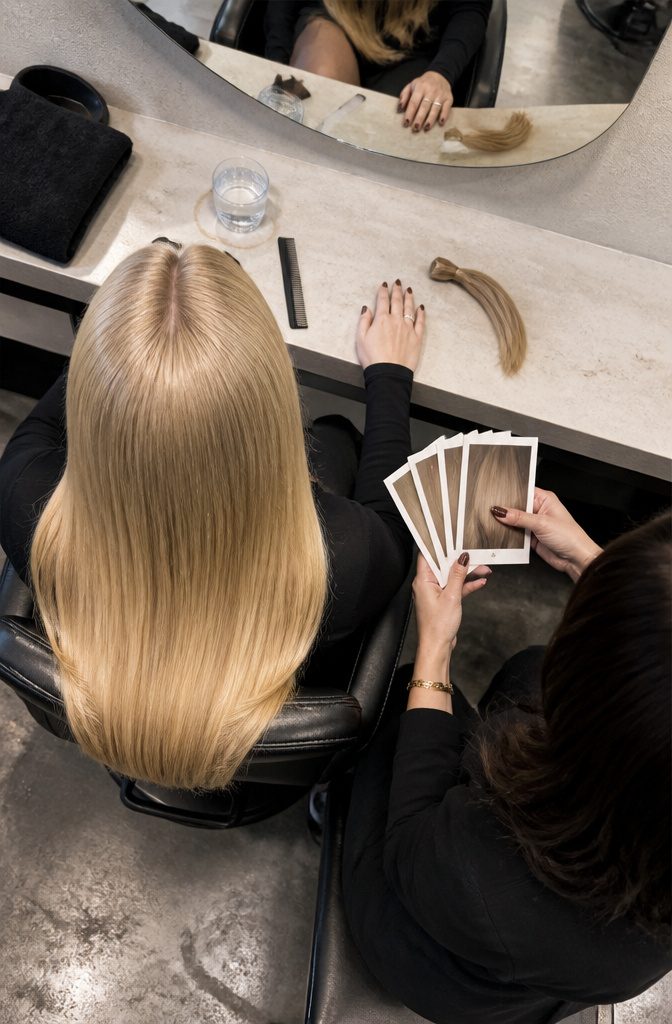
Bring photos, and more than one. They show the brightness you want, while your hair history shows whether you can reach it, so mention past box dye, earlier lightening and how much gray you have.
Say how often you will realistically rebook and how much styling you’ll do each morning.
Texture changes the plan. Fine hair needs finer, more frequent sections or it looks patchy, while coarse hair handles wider ribbons.
Straight hair shows every edge, so I’d ask for well-blended placement, or pick all-over color for a flawless, glassy finish. Wavy and curly hair scatters lighter pieces naturally, which makes highlights forgiving there.
Frequently Asked Questions
What is the difference between balayage and all-over blonde color?
All-over color covers every strand from scalp to ends, while balayage is hand-painted on selected sections and leaves the root untouched.
The practical difference is grow-out. All-over regrowth shows as a visible line within 4–6 weeks, and balayage grows in without a hard stripe.
Is balayage or all-over color better for dark hair?
Balayage is better if you want warmth and movement without lightening the whole head, and caramel, honey or toffee tones add natural-looking dimension to brunette bases.
All-over color is better if you want dark hair richer, glossier and more even. Going all-over icy blonde on dark hair is the harshest route for your strands, and many people with dark hair end up using both approaches.
Which lasts longer, balayage or all-over blonde, and which needs less upkeep?
Balayage lasts longer and needs less salon time.
It usually goes 10–14 weeks between refreshes, while all-over color needs a root touch-up every 3–6 weeks and traditional highlights every 6–8 weeks. You still need home toning and heat protection to keep the blonde from turning brassy.
Can balayage brighten blonde hair without coloring the roots?
Yes. Painted pieces through the mid-lengths and ends add brightness while your natural root stays as it is.
Because the lightest pieces start below the root, new growth looks like intentional depth, and a few freshly painted pieces around the 3-month mark restore the balance.
Should straight hair get balayage or all-over color for the most natural result?
Straight hair shows every edge of the placement, so balayage on it needs fine, well-blended sections to look natural. If you want a flawless, glassy finish with no visible edges, all-over color is the safer pick.
How long does a balayage appointment take?
Plan on 2.5–3.5 hours for a full balayage, depending on your hair’s length, density and starting color.
Traditional highlights run 1.5–2.5 hours, and a gloss or toner refresh takes about 30 minutes. Hybrid techniques land between balayage and highlights.
Will balayage damage my hair?
Any lightening changes the structure of the hair shaft, but balayage generally causes less overall damage than foil highlights or all-over blonde.
It doesn’t saturate the strand from root to tip. How much harm you see depends on how much of your hair is lifted and how far.
What are the main differences between balayage and highlights?
Traditional highlights use foils to isolate precise sections and saturate them root to tip, which gives defined, consistent brightness.
Balayage is painted freehand without foils, so it looks softer, more graduated and brighter at the ends. Balayage also needs only 3–4 visits a year, against 6–8 for traditional highlights.
Who can pull off blonde hair?
Nearly anyone, because there is a blonde for every undertone. Pink or blue undertones suit ash or pearl shades, yellow or peach undertones glow in golden or honey, and neutral skin can wear almost any blonde.
To check your undertone, look at your veins in natural light: blue or purple means cool, green means warm, and no clear color means neutral.
What highlights suit blonde hair?
It depends on your base. On hair that has gone uniformly light, lowlights add depth and contrast, and a bold money piece frames the face with chunky blonde or gold ribbons.
For light gray or white hair, champagne or creamy blonde highlights with a pearly toner look best. Light hair can also go bolder with icy platinum or baby blonde.