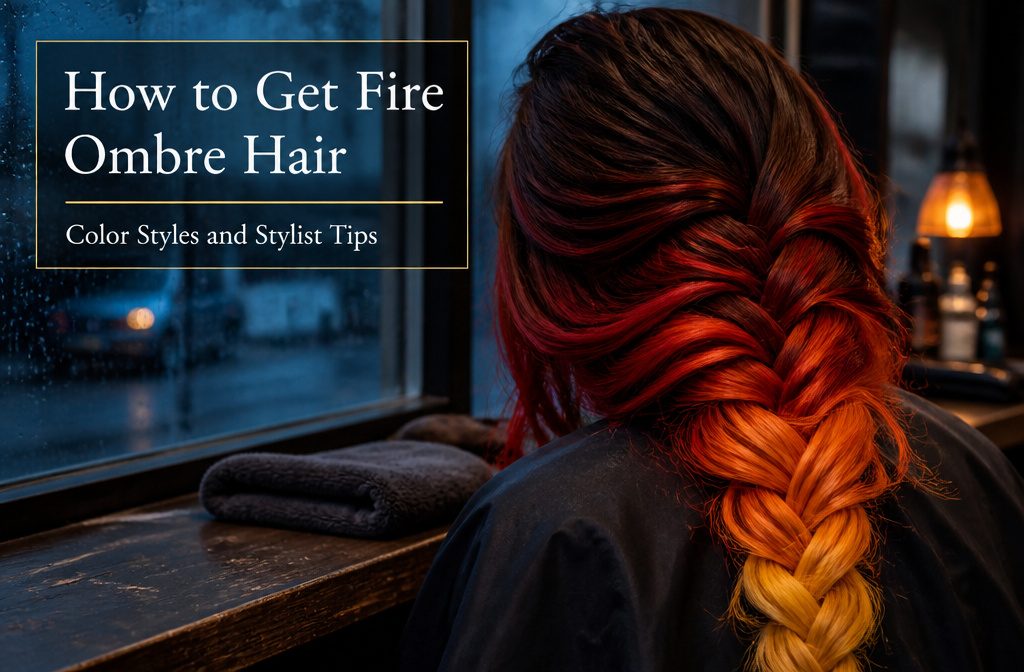
Fire ombre moves through orange, red and yellow in a single gradient rather than fading one shade from dark to light.
The color fades fast, so expect a salon refresh every six weeks and a sulfate-free system at home to hold the brightness.
Brunettes need pre-lightening before the warm tones will show, which means bleach and the damage that comes with it, while naturally blonde hair skips that step entirely.
1. Fire Ombre With Platinum
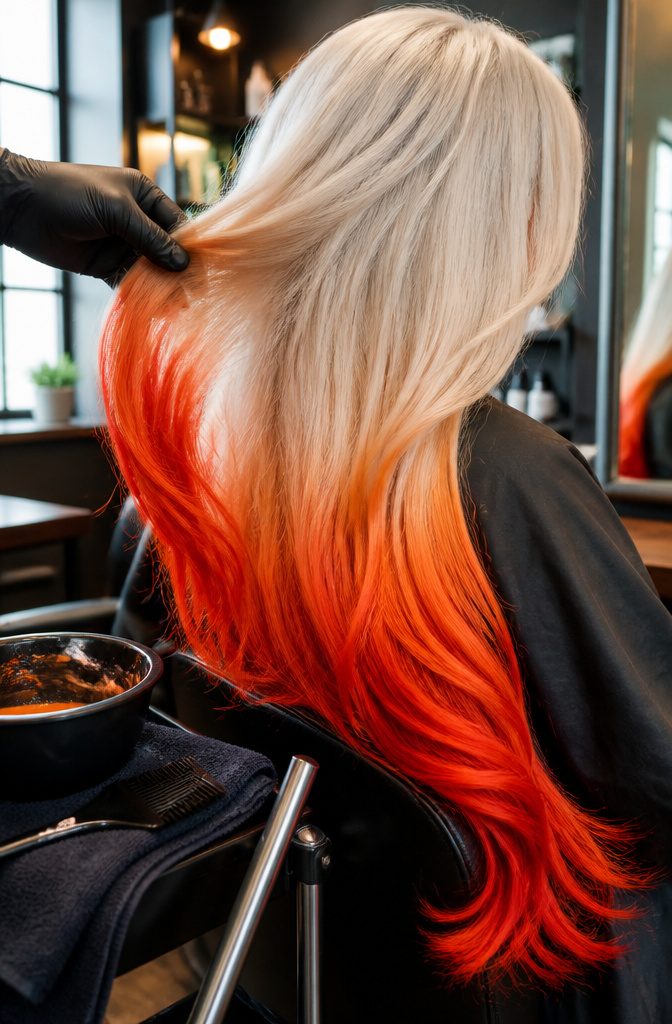
Platinum under a flame is the highest-contrast version of fire ombre, and it’s the pairing I’d point most people toward.
Cool blondes work best: stylist Valero likes fire ombre with platinum or beige, and I agree, because an icy base keeps the red-orange ends looking sharp.
This look suits someone who wants maximum contrast and accepts the lightening it takes.
Naturally blonde hair skips pre-lightening, so it’s the easiest start. Brunettes can still get there, but bleach can damage strands, so expect more lightening and a colorist who works to restore the feel of your hair before you leave.
A salon-blonde base needs its own care. L’Oréal Professionnel Blondifier Illuminating Shampoo and Conditioner is one option for keeping it bright.
2. Auburn and Copper
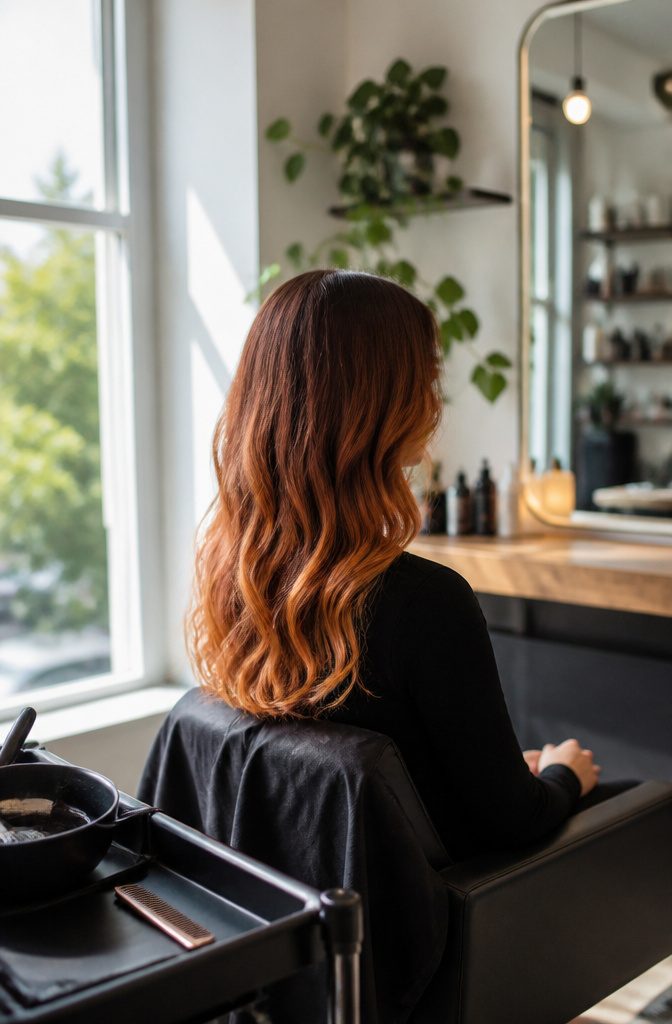
Auburn and copper is the version to ask for when full red or orange feels like too much.
The two shades sit close together on the color wheel, so the blend reads as a warm, soft glow rather than a flame.
Tell your colorist you want a soft blend of auburn and copper, and you’ve named the whole look.
I’d pick this one for anyone who wants the ombre idea without the heat of a true fire palette.
It’s the most neutral of the fire looks, and that makes it easier to wear to an office, a classroom or a family dinner.
Because the shades are so near each other, the transition should look gentle, not dramatic. Bring a photo anyway so your stylist can see how much copper you want at the ends.
3. Fire Ombre on Mid-Length Hair
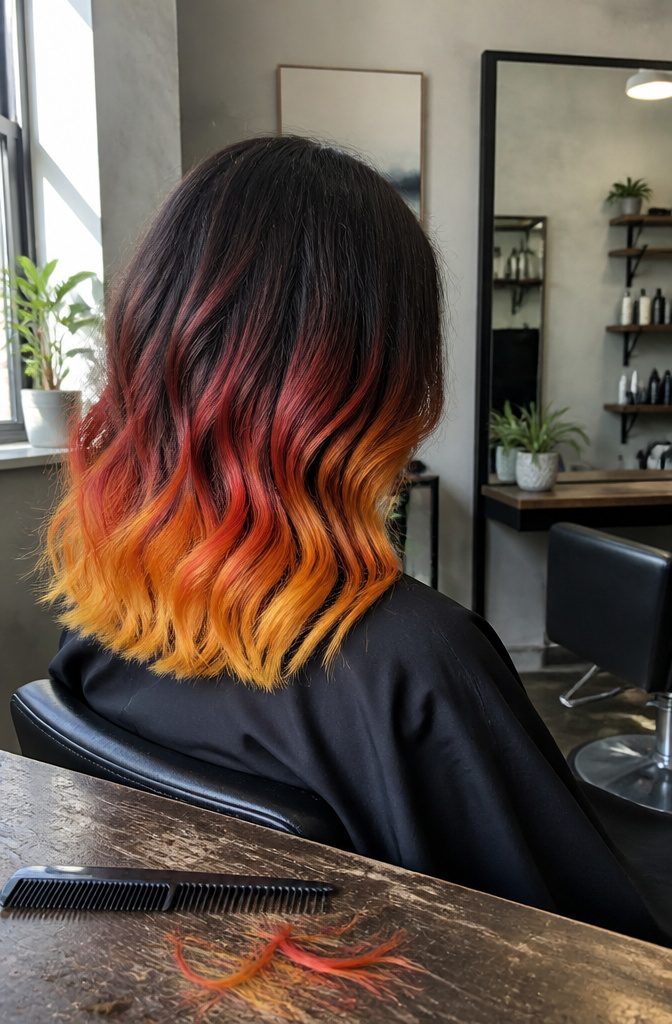
Fire ombre doesn’t need waist-length hair.
On mid-length strands it looks just as striking, and the color sits in the bottom half of the hair while the top stays your natural shade. A dark base shows that placement best:
For black fire ombre, your colorist will maintain your dark base tone while lightening your mid-lengths and ends. The bottom half of your strands will transition through red, orange, and yellow.
— Hair.com
On a shorter cut, the bottom half has to hold all three colors, so point to the spot on your own length where the red should start.
I’d steer mid-length readers toward this version because growing out leaves no roots to show.
4. Black Fire Ombre
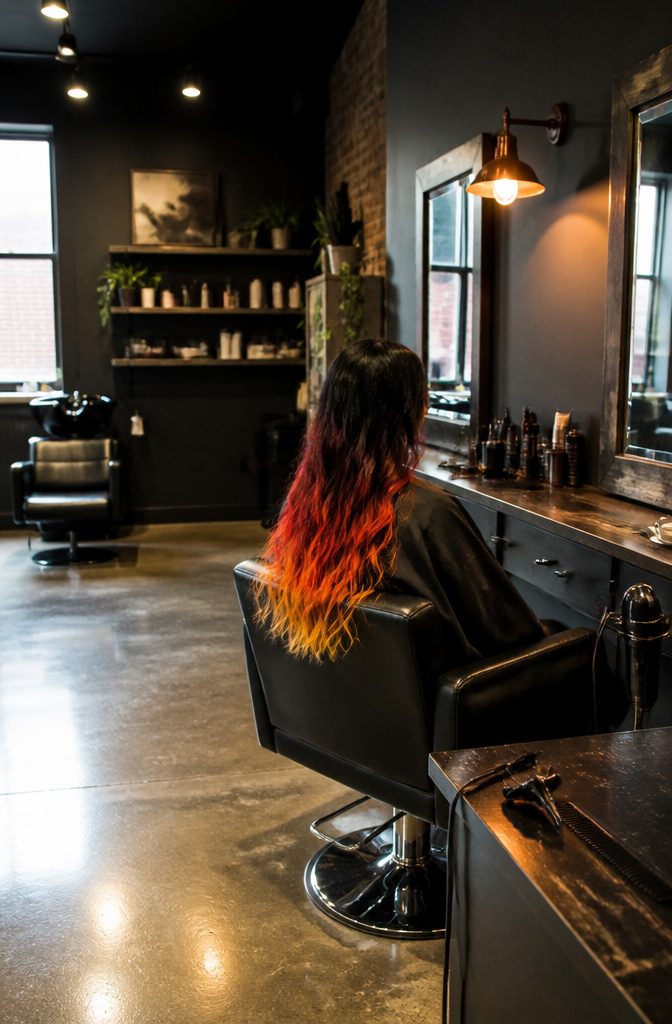
Black fire ombre keeps your natural dark base completely untouched while your colorist lifts only the mid-lengths and ends through the red-orange-yellow gradient.
The effect is still full fire, but you skip the damage of lightening your entire head. Your roots stay dark, the transition starts somewhere around your chin or shoulders, and the warmest tones build toward the ends.
Your roots stay hidden as they grow out. Because the base is left alone, there’s nothing to touch up as new hair comes in.
That makes this the low-maintenance pick if you want fire color without booking another lightening session every six weeks. Your ends will need toning and care as the bright shades fade, but the roots never give you away.
5. Fire Ombre With Magenta
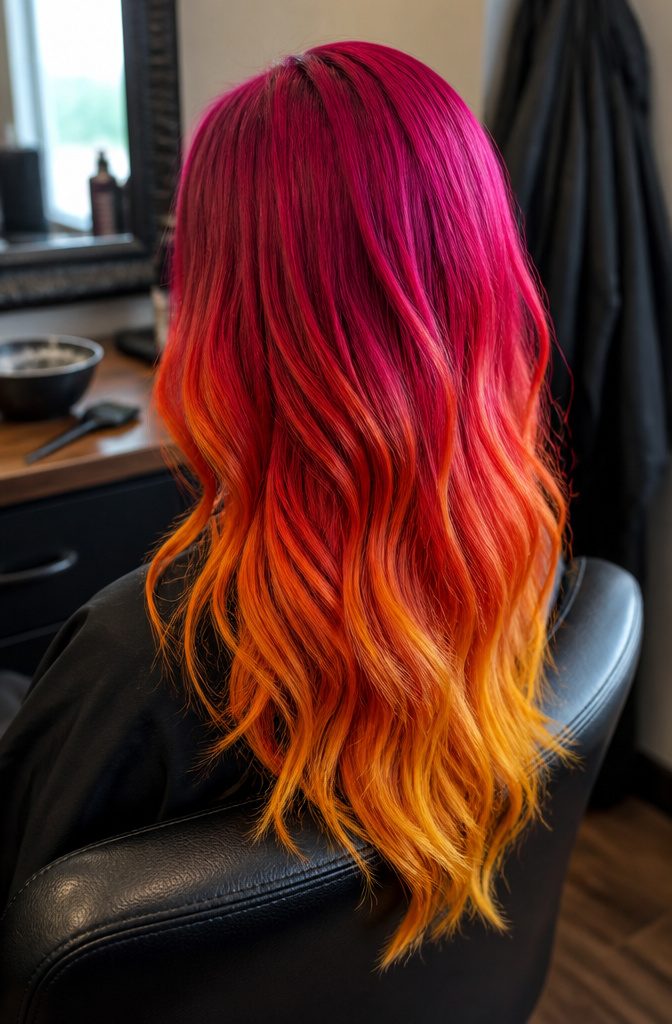
Magenta roots blended into orange, red and gold lengths bring a cooler pink-red base that sits differently from the usual dark start.
The magenta at the top reads closer to fuchsia or berry depending on the formula, and it pulls the whole gradient into slightly cooler territory even as the mid-lengths warm up.
That matters if your natural coloring leans cool or if you want something that feels less grounded in brunette logic.
The look suits people who already wear jewel tones well and can handle a root section that commands attention on its own.
The magenta announces itself before the fire palette even starts, so the effect is bolder at the crown than a shadow root would be. If you prefer the ombre to build slowly from something quiet, this is not the version.
But if you want the gradient to feel intentional from the scalp down, the magenta does that work without needing a full head of vivid color.
6. Flame Ombre
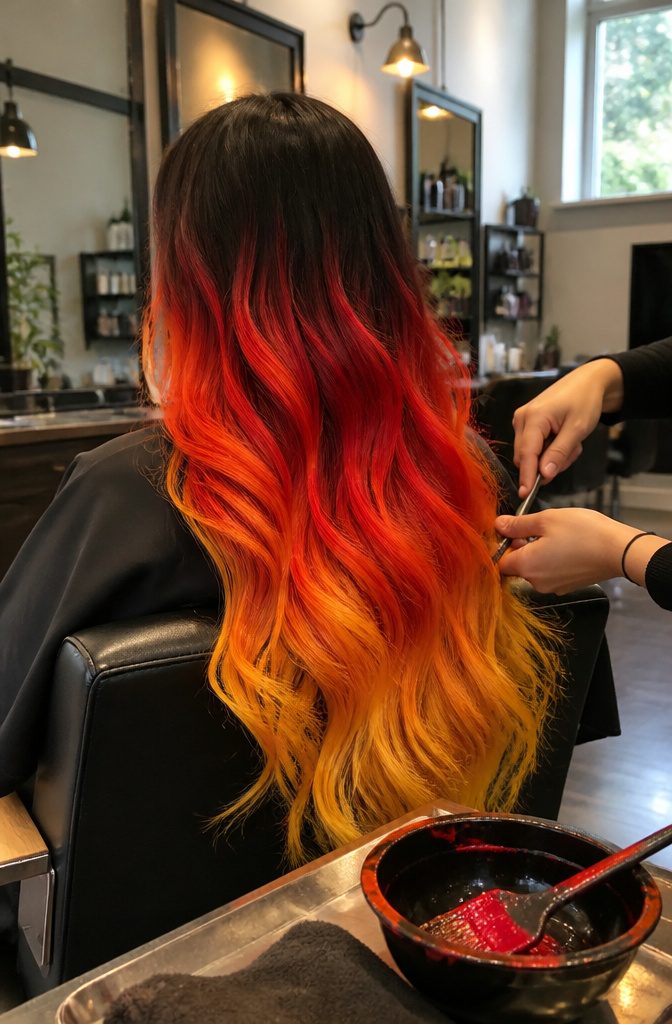
Flame ombre is the version most people picture when they first hear the phrase fire ombre: dark roots that slide through neon red with deep amber undertones, then shift into orange and warm yellow at the ends.
The neon red does most of the work here. It sits in the midlengths, saturated and electric, and that intensity is what separates flame ombre from quieter copper fades or the cooler versions coming up next.
The progression follows actual fire. Dark at the root, the brightest reds where a flame burns hottest, then the softer orange and yellow glow at the tips.
Your colorist builds that gradient by layering tones rather than blocking them off into bands, so the shift reads as continuous even though the palette runs across five or six distinct shades.
The amber undertones keep the red from looking flat or too primary, and they help the orange phase feel deliberate instead of accidental.
7. Fiery Mermaid Ombre
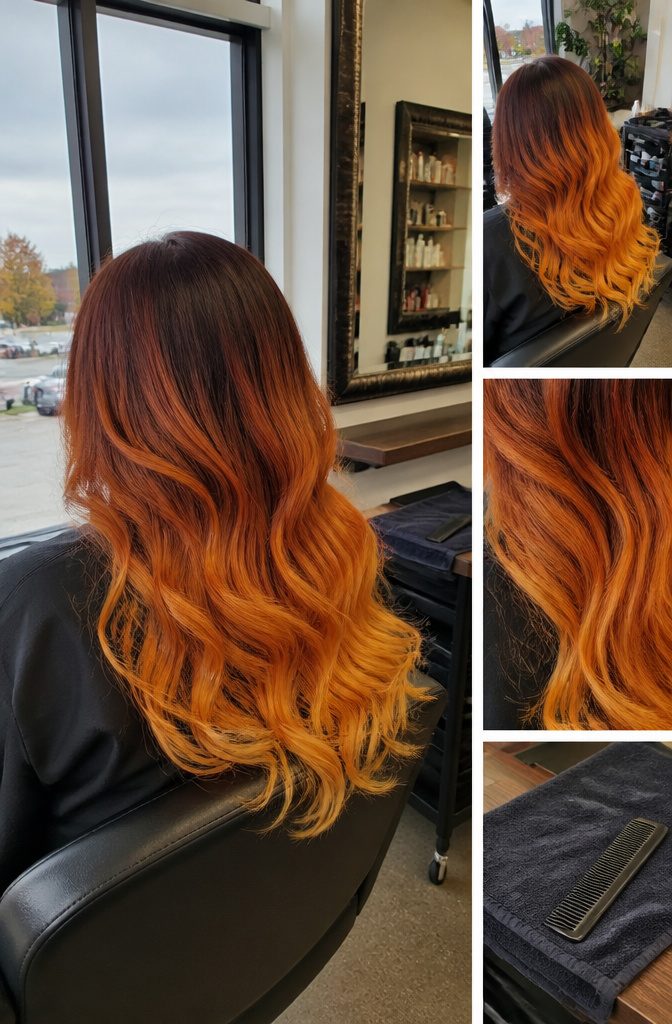
Fiery mermaid ombre builds the gradient from orange and yellow rather than heavy red, which is what sets it apart from flame ombre.
If you want the warmth without quite as much neon intensity, this is the version to ask for by name. The look still reads as fire-inspired, just dialed back to something a little more wearable day to day.
The gradient still starts dark at the roots and moves through orange into warm yellow at the ends, but the red that dominates flame ombre takes a backseat here.
That shift in balance softens the overall effect without losing the drama. I think of it as fire ombre’s slightly cooler cousin, the one that works when you want the concept but not the full molten glow.
8. Dark Auburn Fire Ombre
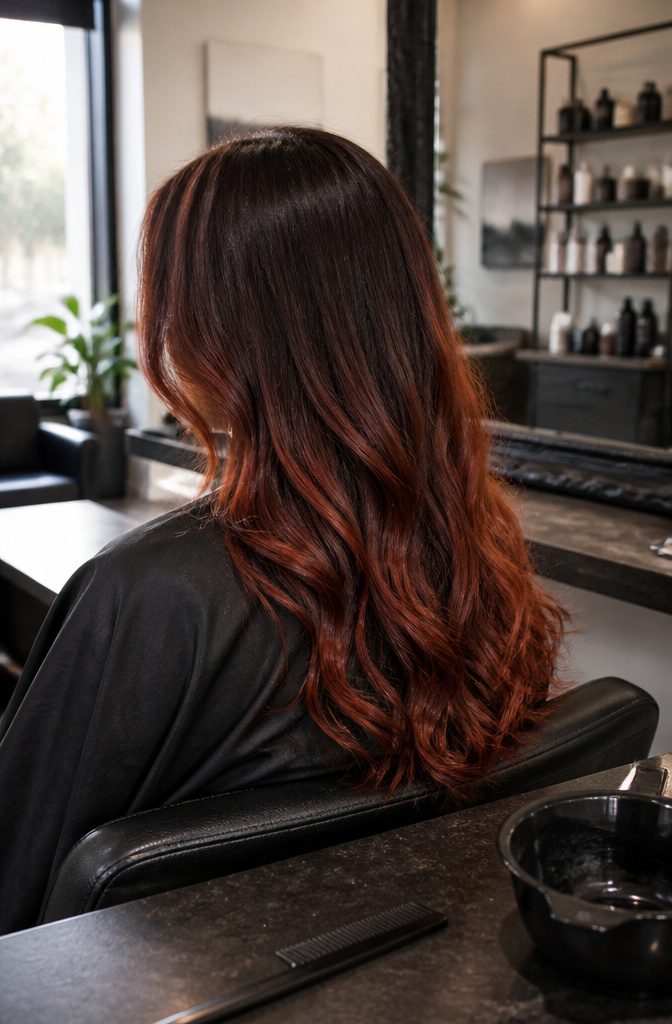
Dark auburn sits between copper and chocolate, and the result feels moodier than the bright flame tones that climb straight into orange.
The depth comes from layering red and brown in equal measure, so the shift from roots to ends reads as low contrast rather than sharp division.
Skin tone matters less here because the shade keeps enough brown to anchor it, and that makes it flattering across a wider range of complexions than the cooler burgundy shades or the hotter copper looks.
I think of this one as the fallback for someone who wants movement and dimension but isn’t ready to commit to the high-maintenance brightness of full fire ombre.
It grows out softer, and touch-ups stretch longer because the base already carries warmth.
9. Dark Red Fire Ombre
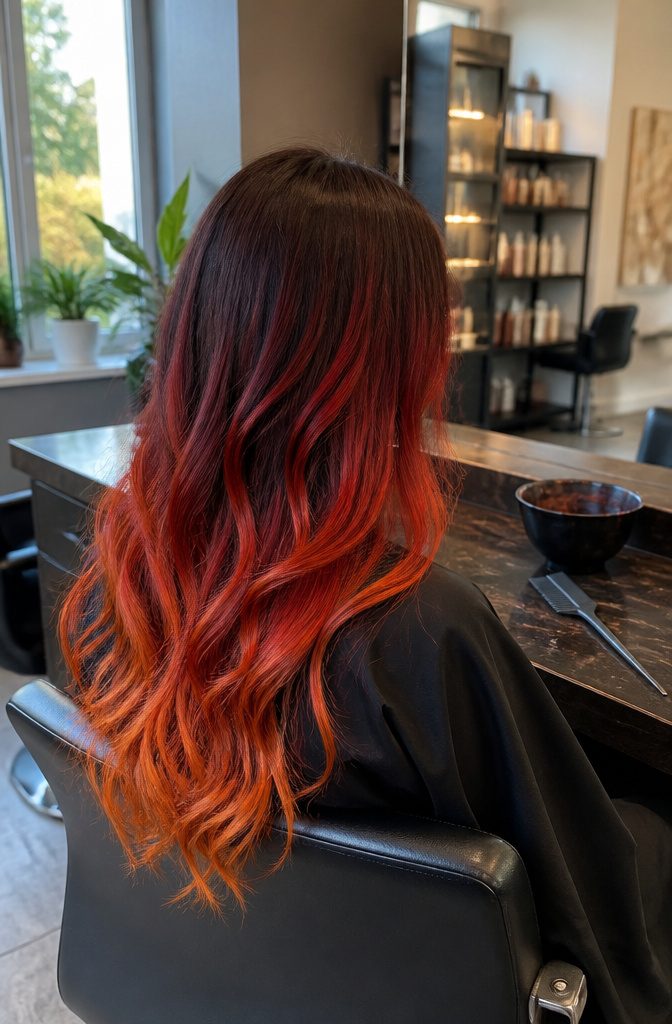
Dark red fire ombre starts where you are.
If your base is already red, the colorist builds from there rather than fighting it, layering bright red and tangerine through the mid-lengths and ends while the top stays grounded in your natural shade.
That believability at the root is what makes the brighter lengths read as real color rather than costume.
The mid-lengths are where the shift happens. Bright red arrives first, then tangerine pushes through toward the ends, so the progression feels like a gradient rather than a hard line.
The natural base anchors it, which means you skip the full-head lift that blondes and unnatural reds require. Less damage, faster application, and the grow-out is gentler because the root was never altered in the first place.
10. Dark Brown Fire Ombre
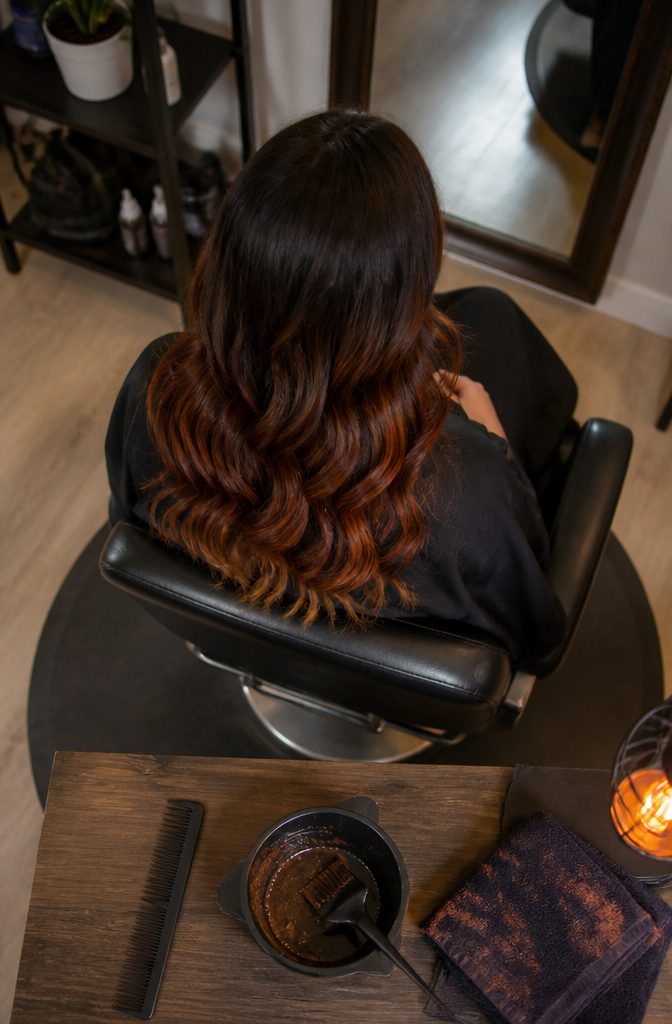
Brunettes who want warmth without a big color statement have a version built for them.
Dark brown fire ombre keeps the drama low: the focus sits on medium red through the mid-lengths, with only a hint of gold at the ends rather than the significant gold you see in the lighter versions.
The transition is restrained, which means it reads as depth and dimension instead of a full color change.
I find this one works well for anyone testing fire ombre for the first time, since the red does the work and the gold barely announces itself.
A good colorist will build the red carefully through the middle section and save the gold for just the very ends, so the overall effect stays brunette with warmth layered in.
11. Neon Red Fire Ombre
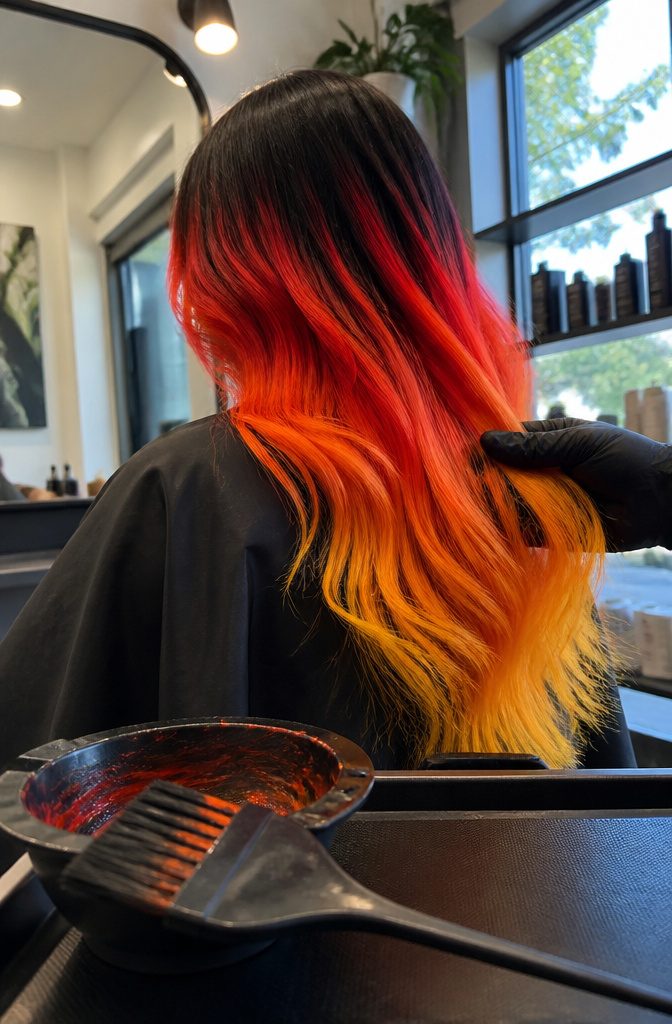
This is the loudest look on the list. Neon red fire ombre takes the fire concept to its furthest extreme, swapping the amber and rust tones of traditional flame hair for pure neon shades of red, orange and yellow.
The palette skews electric rather than natural, and the contrast between a dark root and those bright mid-lengths is sharper than any other version here.
The look reads closer to editorial color than everyday wear, which matters if you work somewhere with a dress code or prefer subtlety.
Red and orange are also the shades that fade fastest, so neon fire ombre sits at the high-maintenance end of the spectrum.
The upkeep section ahead covers what that actually means in salon visits and home care, but expect more frequent toning and refresh than you would with auburn or copper.
12. Pink and Gold Fire Ombre
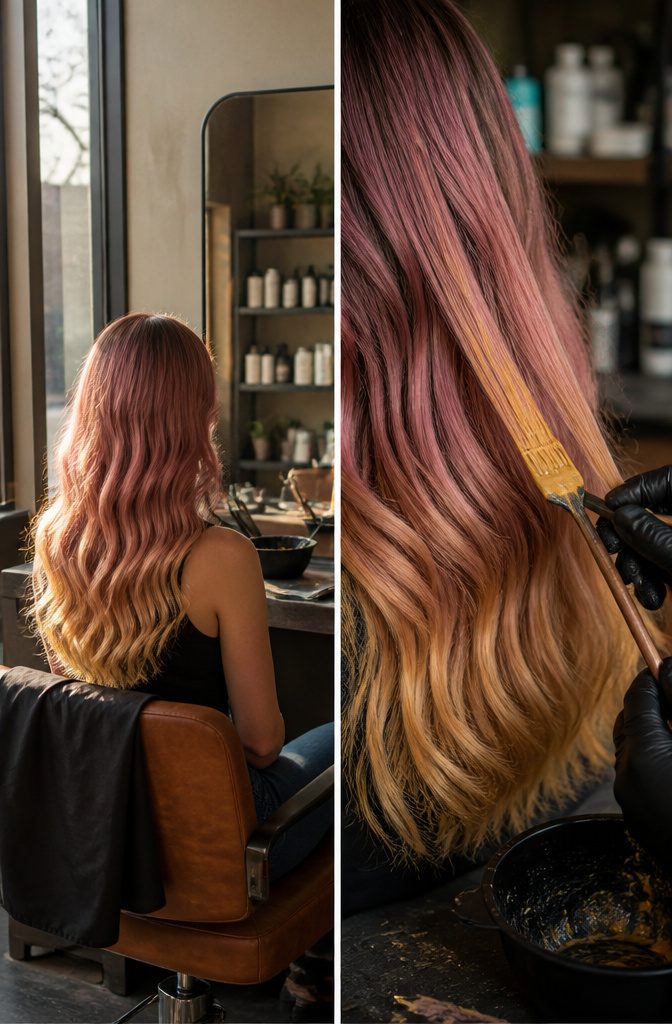
This version starts cooler than most fire ombre looks, with dusty mauve at the roots rather than bold cherry or orange-red. The mauve brings down the intensity right from the start, so the overall effect reads softer and more lived-in.
From there the color shifts through rose-toned midlengths and finishes at a rich gold rather than bright canary yellow. That gold ending keeps the palette warm without tipping into neon territory.
The result splits the difference between pastel and statement color, which makes it easier to wear if you want something in the fire ombre family but need the palette dialed back for work or just prefer a more muted hand.
The fade itself still follows the same root-to-tip gradient logic as brighter fire ombre styles, just built on a quieter starting point.
13. Copper Fire Ombre
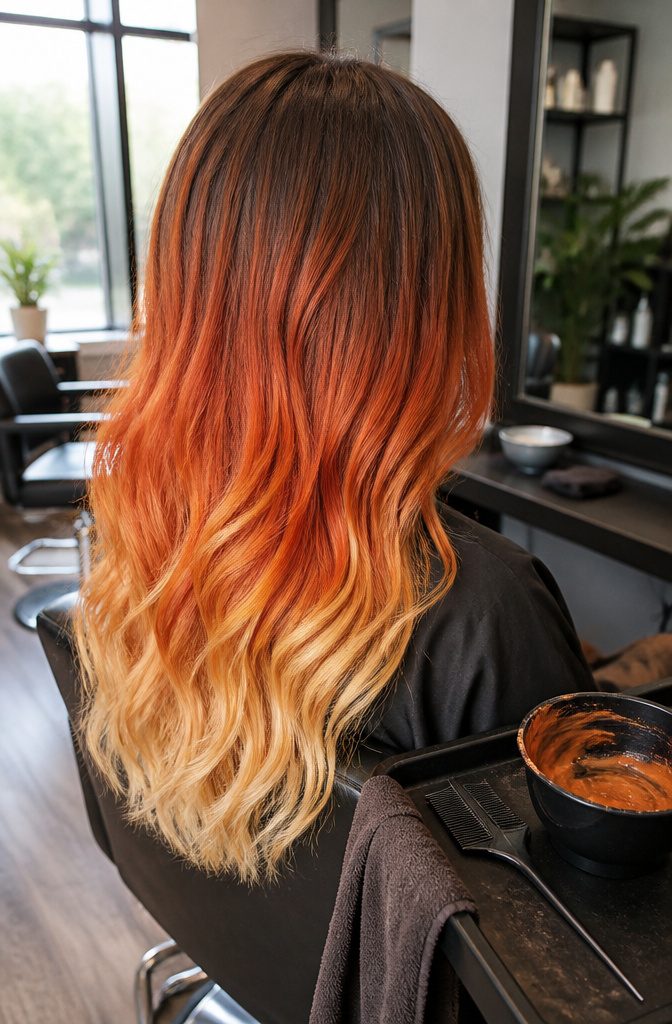
Chestnut roots shift to true copper, then taper into golden blonde.
Very little of it is actually red, though the copper reads as a warm hint of the shade all the way down, and that’s why it feels softer than a classic flame look.
I’d pick this version for almost anyone.
It suits fair, medium and dark skin tones, which is rare for a color with this much warmth in it. Ask for true copper in the middle, not red, since the red-leaning version is a different style on this list.
Bring a photo that shows the copper band clearly. The jump from chestnut to copper is where most of the look lives, so your stylist needs to see that step before the blonde ends.
14. Sunset Hair
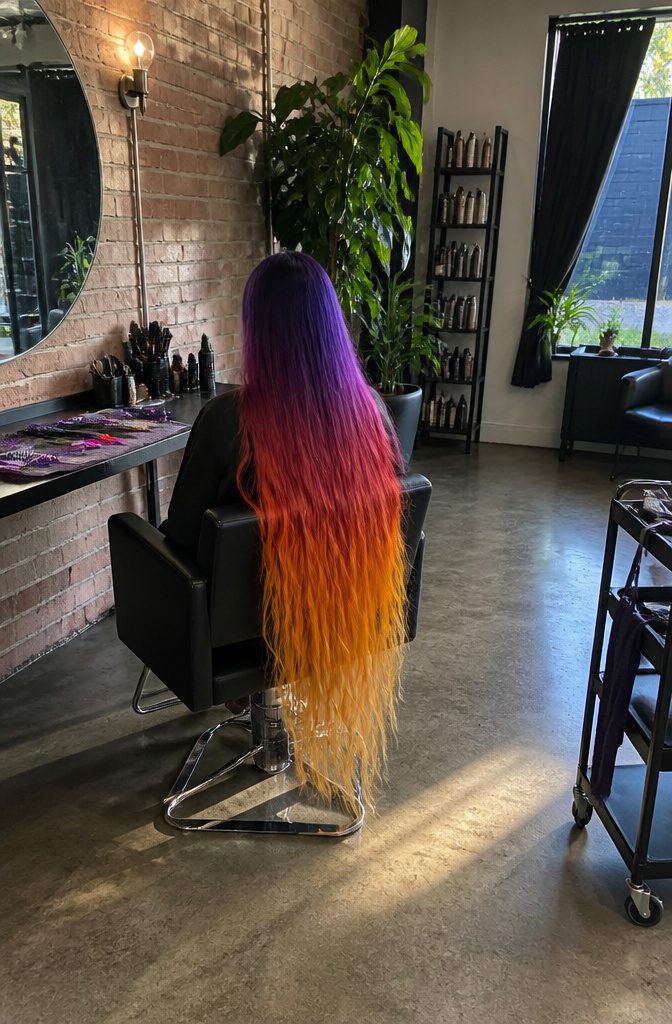
Sunset hair cycles through purple, red, orange and gold, the colors of a tropical sundown.
Four shades need room to sit side by side without muddying, so extra-long hair is where this look works best. With that much length, a colorist can give each shade its own band and blend the edges.
Shorter hair has less room for all four to show, so I’d keep two or three and lead with red and orange, which carry the fire.
Cram all four into a short length and the purple and gold end up touching.
What Fire Ombre Is
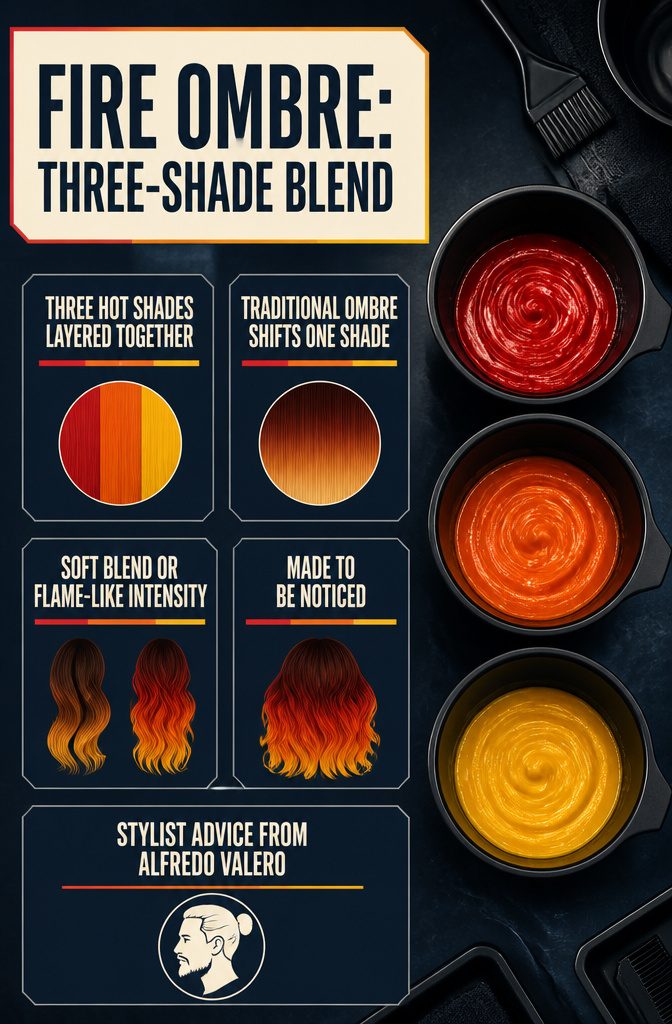
Fire ombre blends orange, red and yellow, so the ends look like a blaze instead of one shade fading out.
Traditional ombre moves a single color from dark to light. Fire ombre layers three hot shades into each other, and that is what sets it apart.
No single version fits everyone.
You can keep the blend soft, with the orange and yellow barely showing, or push it until the hair looks like flames. Either way, this color exists to be noticed, and I’d only choose it if you want that.
The stylist advice in this guide comes from Alfredo Valero, a Redken artist.
Planning the Color With a Stylist
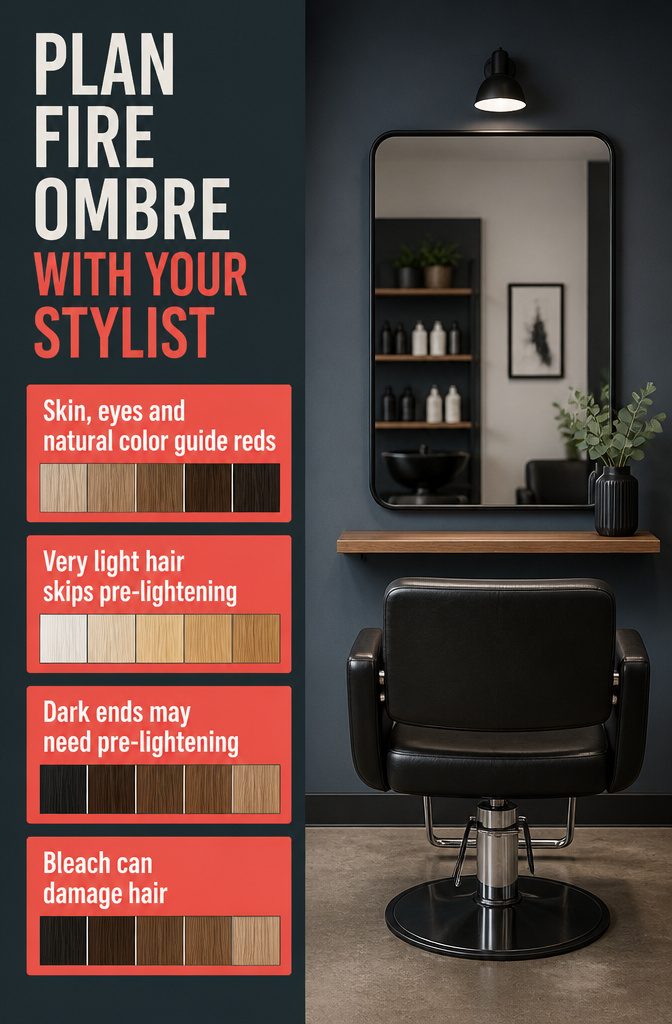
Bring the photo, but expect the stylist to look at you first. Skin tone, eye color and natural hair color all shape which reds and oranges will look intentional on you rather than too drastic.
Natural blondes have the easiest route. Very light hair needs no pre-lightening, and the contrast between pale roots and red tips is dramatic.
Brunettes and other dark-haired clients can still wear the look, but the ends may need pre-lightening before the color will stand out. Bleach can cause damage, and I’d count that as a real cost of going from dark to flame.
A good colorist works to improve how your hair looks and feels before you leave the salon, so ask how they plan to do that for your strands.
Fire Ombre Upkeep
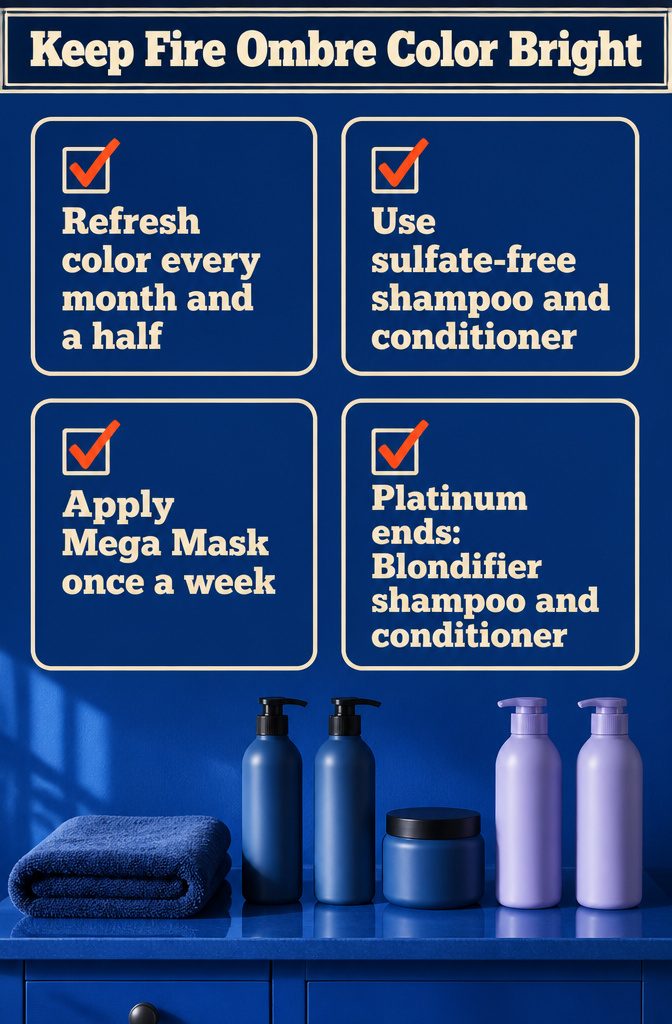
Red, orange and yellow shades fade fast, so I’d build the routine around these four points:
- Book a salon visit every month and a half to refresh the color and bring back luminosity to the tips.
- Wash with Redken Color Extend Magnetics Shampoo and Conditioner. The sulfate-free system treats hair from root to tip and seals in the salon shade.
- Use Redken Color Extend Magnetics Mega Mask (6.8 fl oz) once a week. It works as a treatment and as a care extender for color-treated hair.
- If your ombre ends in platinum, add L’Oréal Professionnel Blondifier Illuminating Shampoo and Conditioner (16.9 fl oz each). It cleanses and conditions while bringing out the shine of blonde hair.
Frequently Asked Questions
What is fire ombre hair?
Fire ombre hair blends orange, red and yellow through the lengths of your hair so the ends look like flames instead of a single shade fading out.
The style layers three warm tones into each other rather than moving one color from dark to light. You can keep the blend soft or push it until the hair looks like an actual blaze.
How do you care for fire ombre hair?
Book a salon visit every month and a half to refresh the color and bring back luminosity to the tips, since red, orange and yellow fade fast.
Wash with a sulfate-free shampoo and conditioner made for color-treated hair like Redken Color Extend Magnetics, and use a hair mask once a week. If your ombre ends in platinum, add a blonde-specific shampoo and conditioner to keep it bright.
Is ombre still in style in 2026?
Yes, ombre remains a current style in 2026, especially versions like fire ombre that layer multiple warm tones rather than a single color fade.
The technique has evolved past the sharp two-tone looks of earlier years into more blended, customizable gradients. Fire ombre specifically exists to be noticed, so choose it only if you want a color that commands attention.
What is the best ombre hair color?
The best ombre color depends on your skin tone, eye color and natural hair base, which is why a stylist looks at all three before starting.
Fire ombre works across a range of complexions when the right shades are chosen: dark auburn and copper suit almost everyone, while neon red and magenta-rooted versions read louder and work best on people who already wear jewel tones well.
Bring a photo so your colorist can see which version of the gradient you want.





