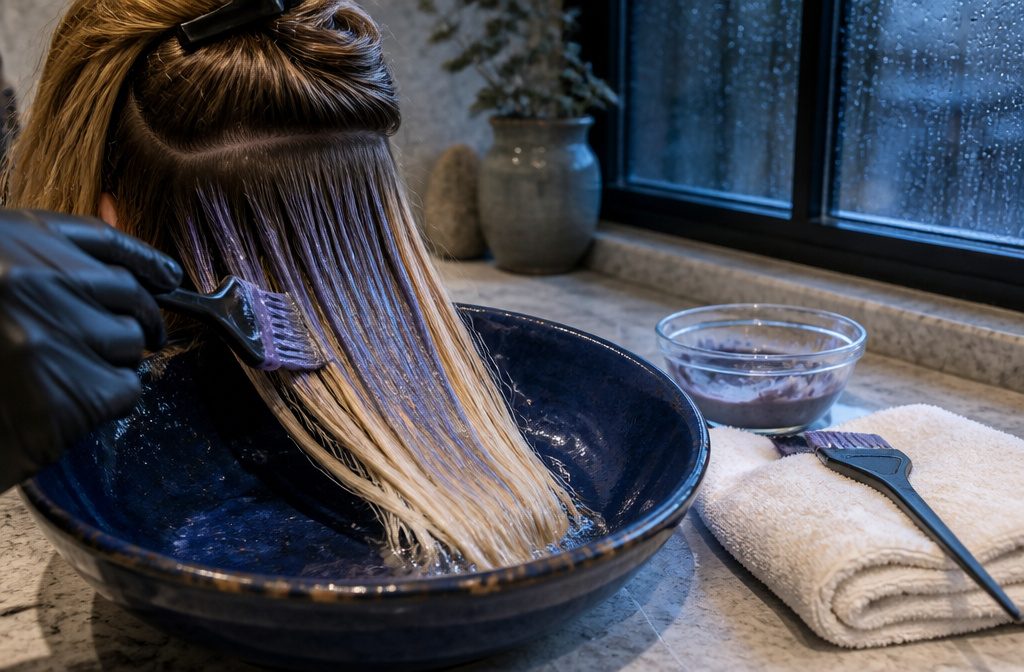
Toner neutralizes brassy yellow, orange or red tones in lightened hair and holds for three to four weeks before you repeat.
Most people apply it all over when only the mid-lengths need it, since roots and ends lighten differently and one formula won’t cover them evenly. Salon-level toners are mixed 1:2 with developer and process in 10 to 15 minutes.
1. Choose a Toner That Matches Your Hair Color and Goal
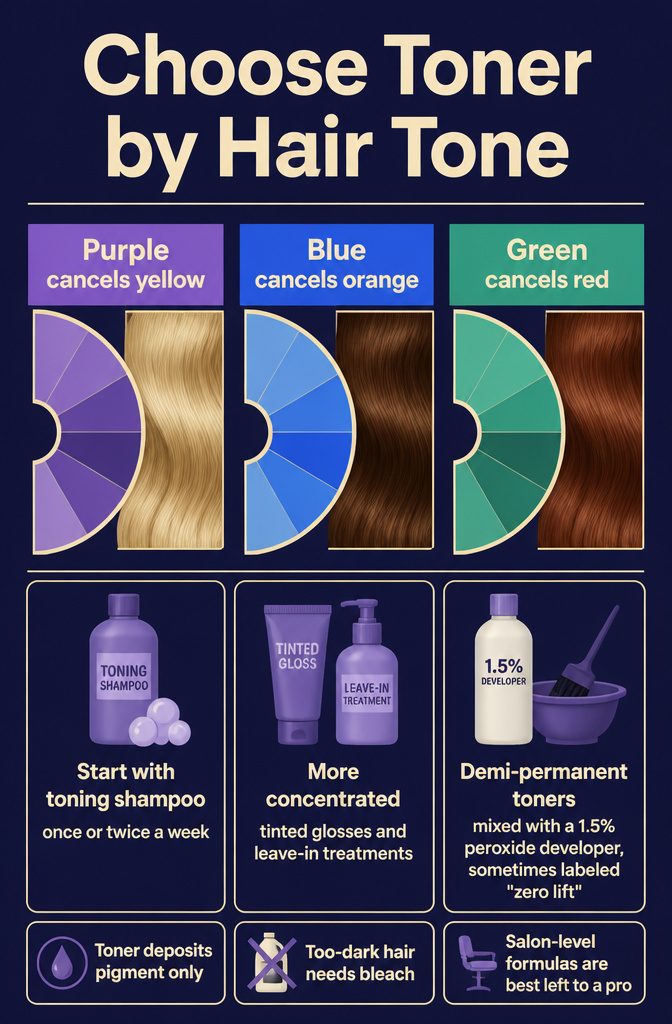
Match the toner to the tone you want gone, then reach for the opposite color on the wheel. Purple cancels yellow in blonde hair, blue cancels orange in brown hair, and green cancels red, including the red in reddish-brown.
Toner only deposits pigment, so it never lightens anything. If your hair is too dark for the shade you want, you need bleach first.
For home use, I’d start with a toning shampoo once or twice a week. Tinted glosses and leave-in treatments are more concentrated.
Demi-permanent toners are mixed with a 1.5% peroxide developer, sometimes labeled "zero lift," and salon-level formulas are best left to a pro. I’d skip both until a shampoo proves too gentle.
2. Shampoo First and Start With Damp Hair
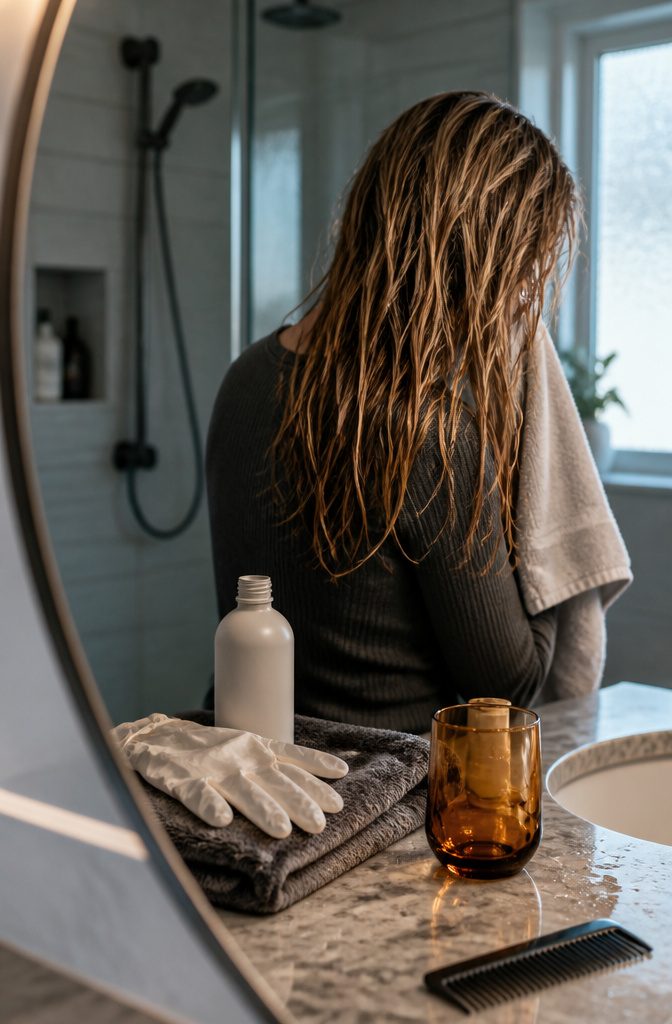
Shampoo first, so the toner meets hair that is as clean as you can get it.
Then towel-dry gently: hair should be damp, not soaking wet, because a gently towel-dried strand takes up more pigment. Gloves go on before you touch the bottle.
Prep shifts with the product.
A salon-level toner wants that damp, towel-dried base. Purple shampoo works differently: you lather it onto wet hair, rinse and repeat, and the second lather can sit for 3–5 minutes.
Some glosses fall somewhere between the two. I’d rather you spend a minute on the label than end up with purple or blue hair by accident, so read it before you wet anything down.
3. Mix Salon-Level Toner With Developer at a 1:2 Ratio
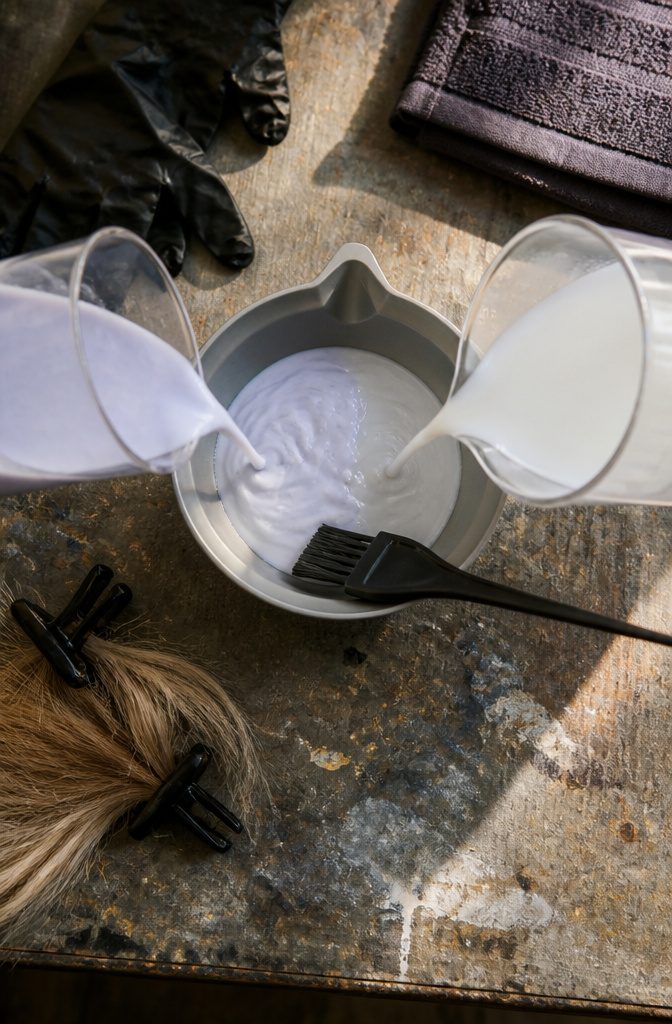
Salon-level toners need to be mixed before you can use them.
The standard ratio is one part toner to two parts developer, measured in the mixing bowl. If you picked up a ready-to-use gloss or a toning shampoo, you skip this step entirely and apply straight from the bottle.
Most toners work with a 1.5% peroxide developer. Different brands name it differently: some call it zero lift, others label it 6 volume or 7 volume, and a few just print "demi-permanent developer" on the bottle.
All of those do the same job, depositing tone without lifting the hair any lighter.
High-lift permanent toners are the exception. These are built for hair that is still quite brassy or for anyone aiming for a totally white ash blonde result.
They contain a boost ingredient that lifts by one level while toning, and they need 20 Vol developer to work. Processing time runs around 15 to 20 minutes for these stronger formulas.
4. Brush Toner Onto Target Areas and Apply All Over
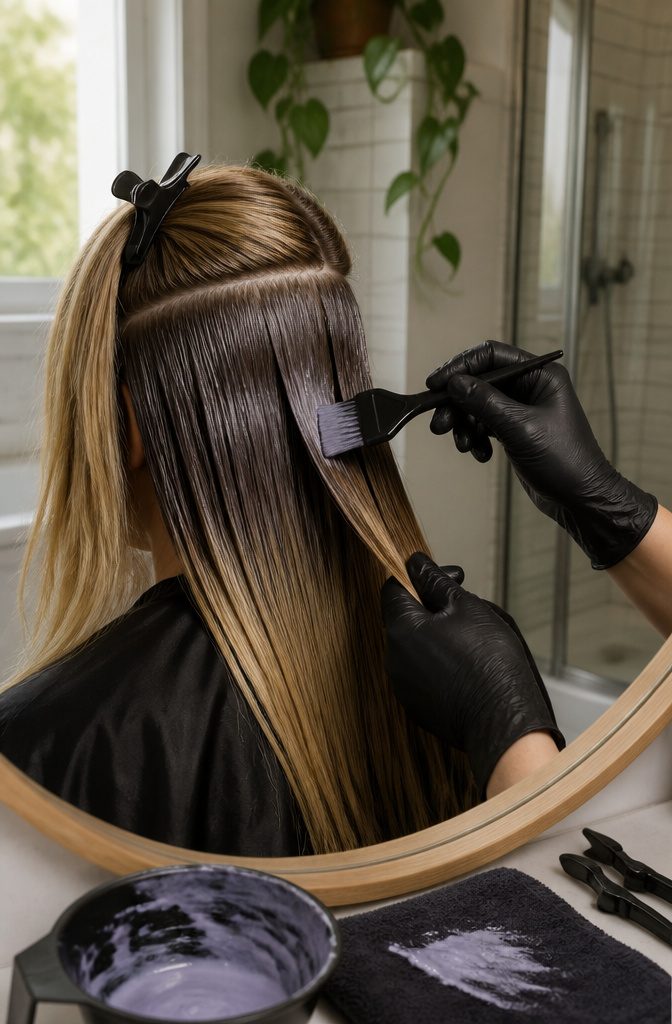
Wearing gloves, brush the mixed toner onto the areas where the tone needs correcting, or apply it all over if the whole head has drifted the same way.
Roots, mid-lengths and ends may need different formulas, because one mix will not cover them evenly. A darker mid-section under lighter roots and ends is the classic case: mix that section separately and treat it on its own.
Some products simplify the application. Féria Power Toner goes on in one five-minute application, and Joico LumiShine SB is an aerosol you shake vigorously and spray onto clean, dry hair.
5. Process for 10 to 25 Minutes Depending on Product Type
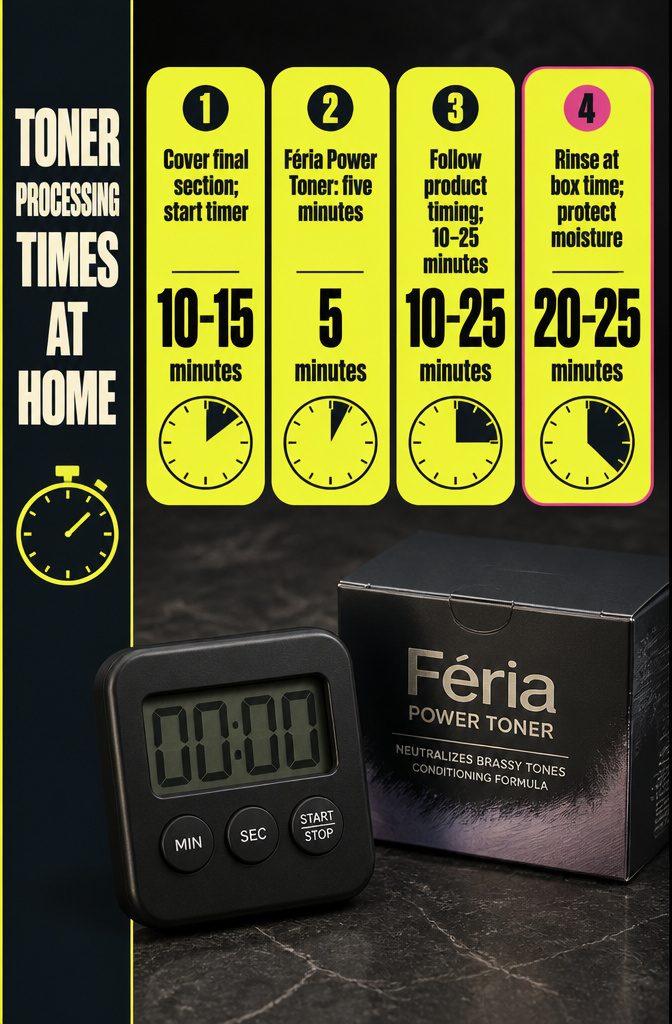
Timing follows the product. Salon-level toner processes in 10–15 minutes, demi toners in 10, and high-lift or regular permanent toners in 15–20.
An all-over toner waits longest, 20–25 minutes. I’d set a timer the moment the last section is covered.
Féria Power Toner is the quick one:
The conditioning formula applies easily and neutralizes brassy tones in one five-minute application, with results lasting up to three weeks.
Crystal Glow Toner also lasts up to three weeks, so a short wait doesn’t mean short wear.
Rinse at the time on your box, because leaving toner on longer than required only costs you moisture. Toning products can dry out your strands.
6. Rinse With Moisturizing Shampoo and Deep Condition
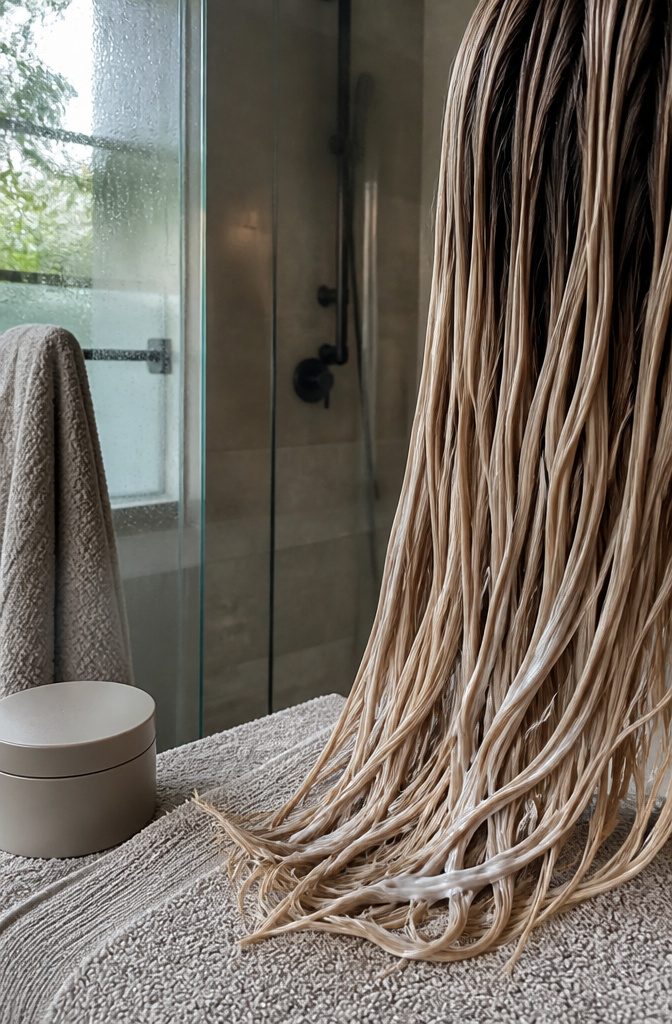
Once the toner has processed, rinse it out and follow with a moisturizing shampoo to restore hydration.
Toning formulas can leave strands feeling dry, so a nourishing cleanser helps counteract that. After shampooing, condition thoroughly, working the product through from mid-length to ends.
If you used a system like Joico’s LumiShine, rinse after processing is complete and reach for Defy Damage Shampoo.
Follow that with Pro Series 2, leaving it on for five minutes. This step locks in the color while regenerating bonds that can weaken during the toning process.
A deep-conditioning treatment after you towel off makes a noticeable difference, especially if you tone regularly.
The extra moisture helps keep hair soft and prevents the brittle feel that sometimes follows chemical services. Skip this and you’ll notice dryness within a day or two.
Why Brassiness Appears and What Causes It
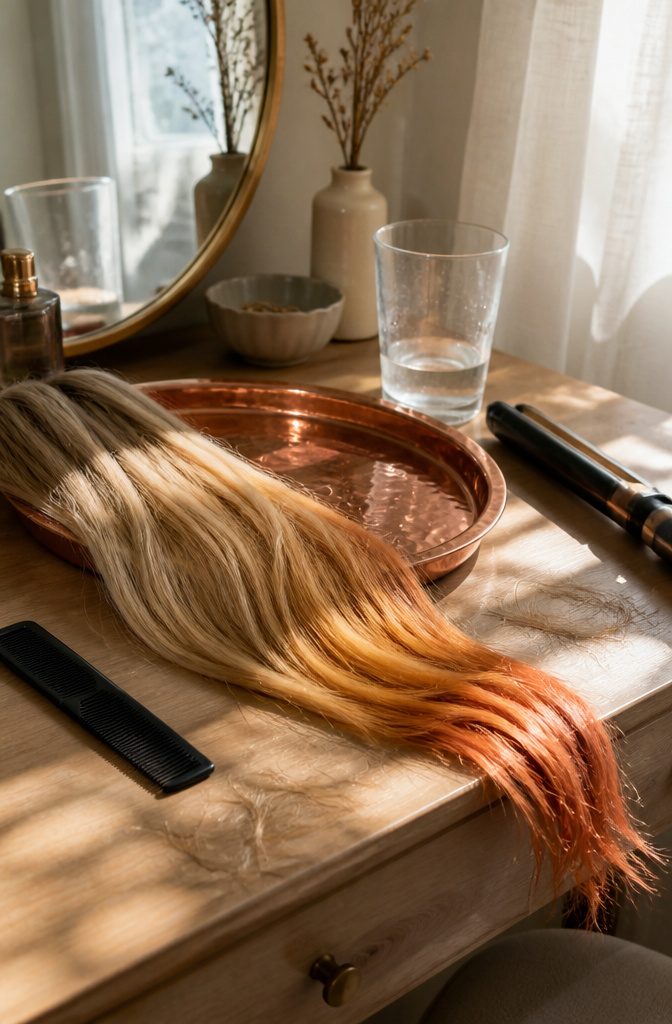
Lightening works by lifting out your natural pigment, and what sits underneath is warm: yellow, orange, even red.
That holds for an all-over color, full bleach, highlights, and balayage alike. As the color fades or oxidizes, those undertones show through, so a blonde turns yellow and a brunette pulls orange or red.
Brassiness often arrives weeks after the appointment, not the day of.
Sun exposure, hot tools, and shampoo not made for color-treated hair are the biggest culprits. Frequent washing, hot water, chlorine, skipping heat protectant, and mineral-rich water add to it.
I’d call warmth in lightened hair a matter of when, not if. That is why toning exists: it neutralizes those tones without drastically changing your shade.
How Often to Tone Based on Product Type
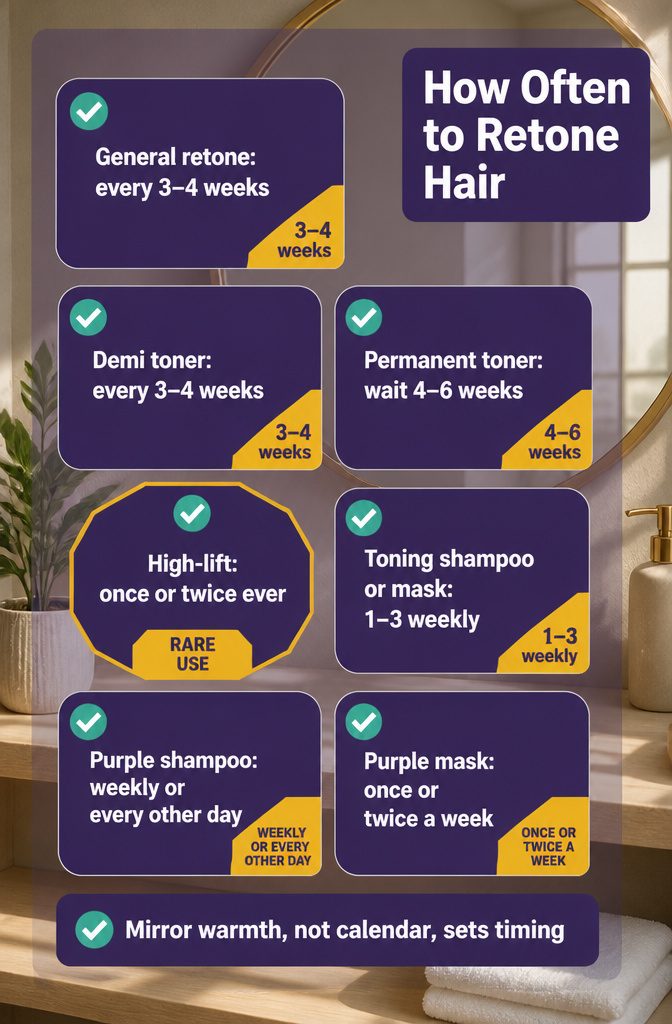
Toner fades over a few weeks, and how fast depends on the product:
- General rule: re-tone every 3–4 weeks, or when the color starts to drift.
- Demi toners: repeat every 3–4 weeks.
- Regular permanent toners: leave 4–6 weeks between applications.
- High-lift permanent toners: once or twice in the lifetime of the hair, no more.
- Toning shampoos and masks: 1–3 times per week.
- Purple shampoo: once or twice a week, or every other day.
- Purple mask: once or twice a week.
Washing frequency, sun exposure and the rest of your routine move all of these numbers.
Hair that gets shampooed often and sits in sunlight loses tone sooner. I trust the mirror over the calendar: when warmth creeps back, it’s time.
Maintain Tone With Sulfate-Free Shampoo and Cooler Water
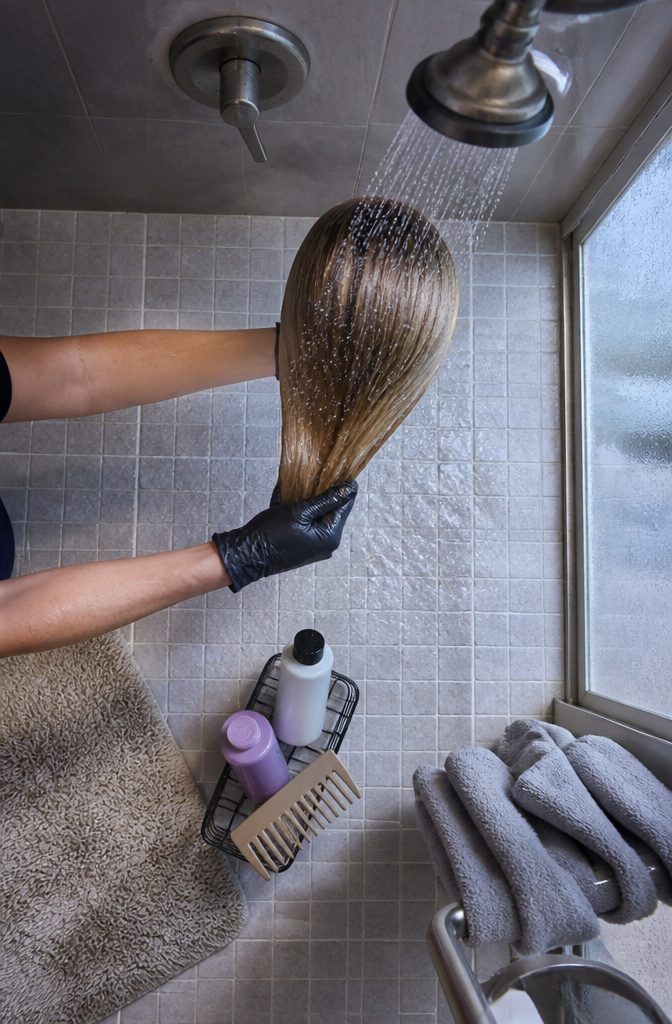
A color-protecting, sulfate-free shampoo and conditioner pair is the cheapest insurance for a fresh tone.
Hot water lifts the outer cuticle, one of the most common reasons color fades, so I’d drop the shower to lukewarm or cool, even though it’s less pleasant.
Wash less often and keep the water cool, since every skipped wash is one less chance for the toner to rinse out.
Heat tools fade a shade the same way sun and hot water do, so a protectant goes on before any blow dryer or iron.
L’Oréal Paris EverPure Sulfate-Free Weightless Blow Dry Primer protects from temperatures up to 450°F. For the rest of the routine, I’d favor products free of ammonia, resorcinol, PPD, parabens, and SLS.
Natural Toner Recipes Using Herbs and Household Ingredients
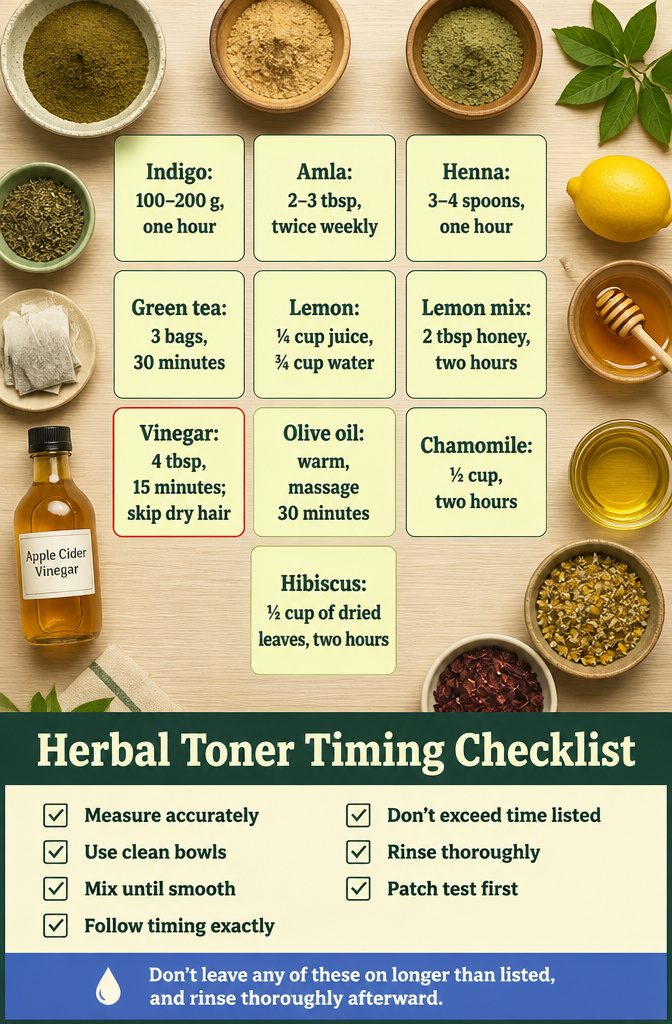
These nine kitchen and herb options each have their own timing:
- Indigo: 100–200 grams of powder in warm water, left on for 1 hour.
- Amla: 2–3 tbsp of powder mixed with water, left on for 1 hour, twice a week.
- Henna: 3–4 spoons of powder with water, left on for 1 hour.
- Green tea: brew 3 bags, then rinse after 30 minutes.
- Lemon mixture: ¼ cup lemon juice, ¾ cup water and 2 tbsp honey. Wait 2 hours, at least 3 times a month.
- Apple cider vinegar: 4 tbsp with water, left on for 15 minutes. Skip it if your hair is dry.
- Olive oil: warm extra virgin and massage in for 30 minutes.
- Chamomile: ½ cup, left on for 2 hours.
- Hibiscus: ½ cup of dried leaves, left on for 2 hours.
Don’t leave any of these on longer than listed, and rinse thoroughly afterward.
Layering Toner Twice to Build Depth on Pre-Lightened Blonde
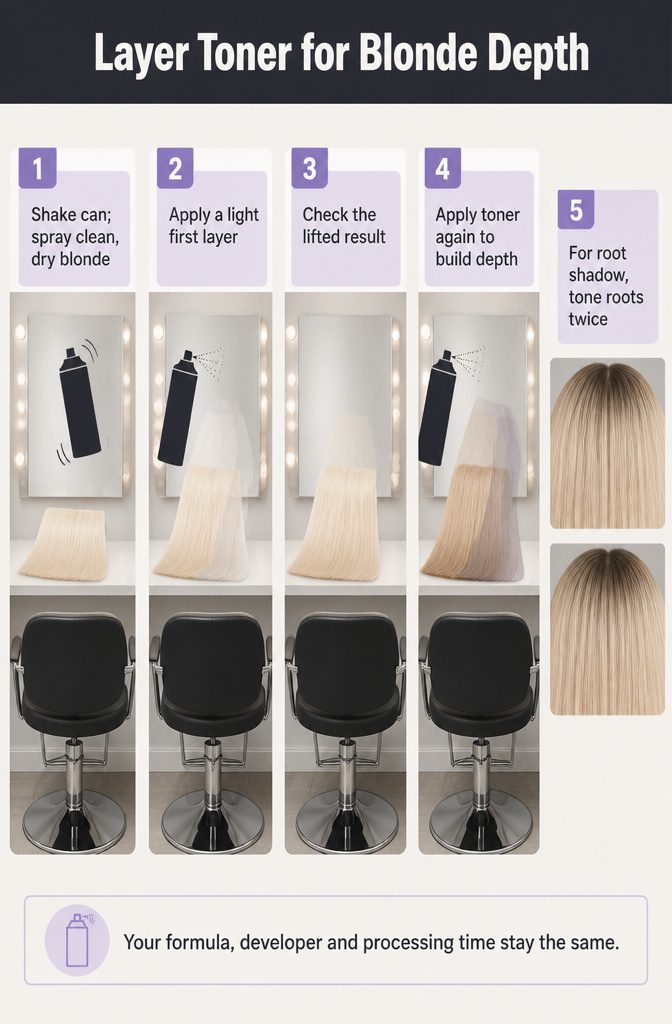
- Shake the can vigorously. Spray onto clean, dry hair that is already lightened to blonde.
- Apply a light first layer. Starting light gives you time to watch the color and keeps it from going too dark.
- Check the result. Hair’s true lifted level is often a guess, and a light first pass shows it.
- Apply toner again to build depth. Layering in two passes matters most with ash shades, which can turn dull, muted and dark because of their blue or green base.
- For a root shadow, apply toner twice at the roots rather than switching to a darker level.
Your formula, developer and processing time stay the same.
Frequently Asked Questions
Can I just put toner on my hair?
You can apply toner at home, but your hair needs to be pre-lightened first.
Toner only deposits pigment and won’t lighten dark hair, so if your base is too dark for the shade you want, bleach comes first. Start with damp, freshly shampooed hair and follow the processing time on your product.
Should I shampoo before toning my hair?
Yes, shampoo first so the toner meets clean hair.
Towel-dry afterward until hair is damp but not soaking wet, since slightly damp strands take up more pigment than soaking ones. Put gloves on before you open the toner bottle.
How to neutralize brassy hair at home?
Match the toner to the opposite color on the wheel: purple cancels yellow in blonde hair, blue cancels orange in brown hair, and green cancels red.
For home use, start with a toning shampoo once or twice a week. Tinted glosses and leave-in treatments offer more concentrated results if a shampoo proves too gentle.
Is toner the same as purple shampoo?
Purple shampoo is a type of toner, but not all toners are purple shampoo.
Toner is any product that neutralizes unwanted undertones, including toning shampoos, glosses, leave-in treatments, and salon-level formulas mixed with developer. Purple shampoo is the at-home toner made for blonde hair that wants yellow tones gone.
What is a hair toner and why do we need it?
Toner neutralizes unwanted warmth that shows through when color fades or oxidizes. Lightening lifts out your natural pigment and reveals the warm undertones underneath, so a blonde turns yellow and a brunette pulls orange or red.
Toner deposits the opposite color on the wheel to cancel those tones without changing your shade drastically.
When should I use a hair toner?
Use toner as a touch-up between salon appointments or when warmth creeps back into your color.
Brassiness often arrives weeks after the appointment due to sun exposure, hot tools, frequent washing, and shampoo not made for color-treated hair. Re-tone every 3–4 weeks for most products, or when the mirror shows the color drifting.
How often should you tone your hair?
Frequency depends on product type. Demi toners are repeated every 3–4 weeks, regular permanent toners every 4–6 weeks, and high-lift permanent toners once or twice in the lifetime of the hair.
Toning shampoos and masks go on 1–3 times per week, while purple shampoo works once or twice a week or every other day.
Can you tone your hair twice in a row?
Yes, layering toner in 2 passes builds depth on pre-lightened blonde hair. Apply a light first layer, check the result, then apply toner again to reach the shade you want.
This approach matters most with ash shades, which can turn dull or dark because of their blue or green base if you go too heavy at once.





