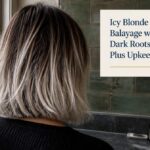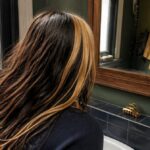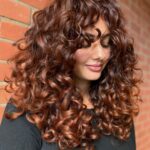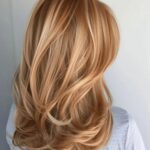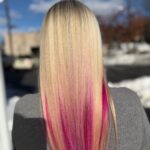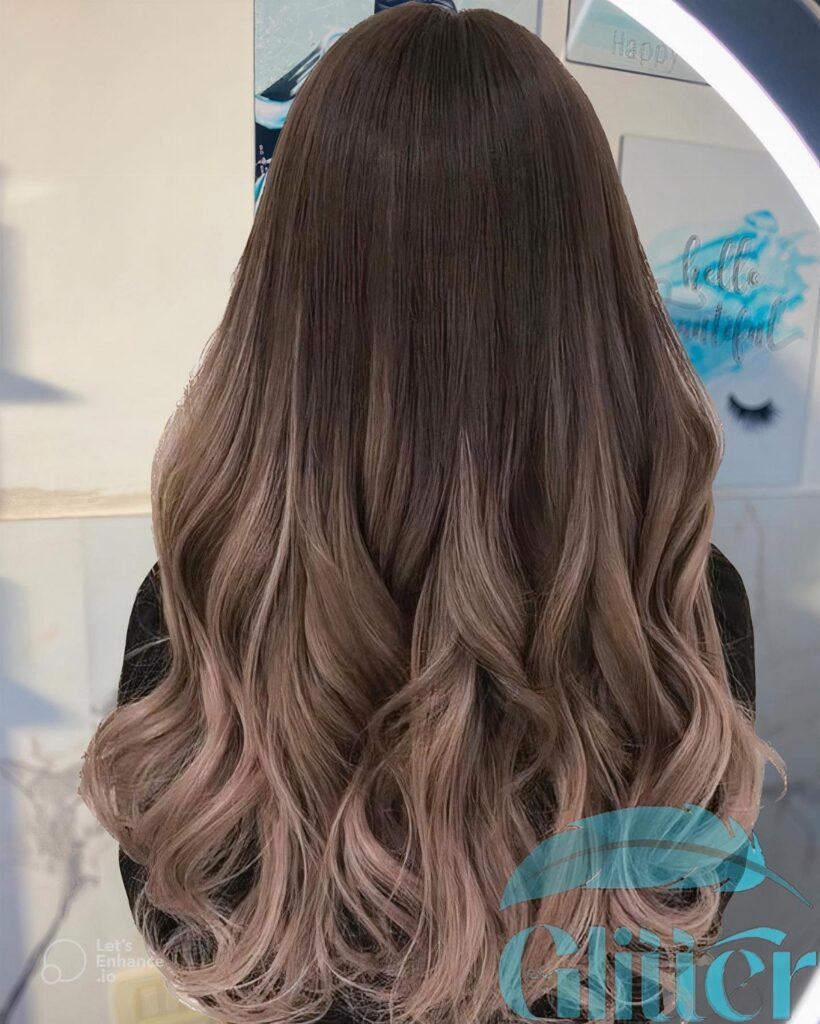
The gradient can fade your natural dark base into caramel or honey 8 weeks before regrowth shows, or it can layer pink, purple, blue or rainbow sections that wash out unevenly within 3 weeks.
If your hair is naturally cool-toned or you’ve had brassy color before, ash brown, silver or gunmetal gray can keep things looking intentional rather than oxidized.
If you want pink, purple, blue, pastel or rainbow color, expect the ends to be pre-lightened to pale blonde first, and plan on a depositing conditioner between salon visits to slow the fade.
Copper holds 5 to 6 weeks, pink and rose gold soften toward champagne in 3, and purple washes out gradually toward silver.
1. Caramel Ombre
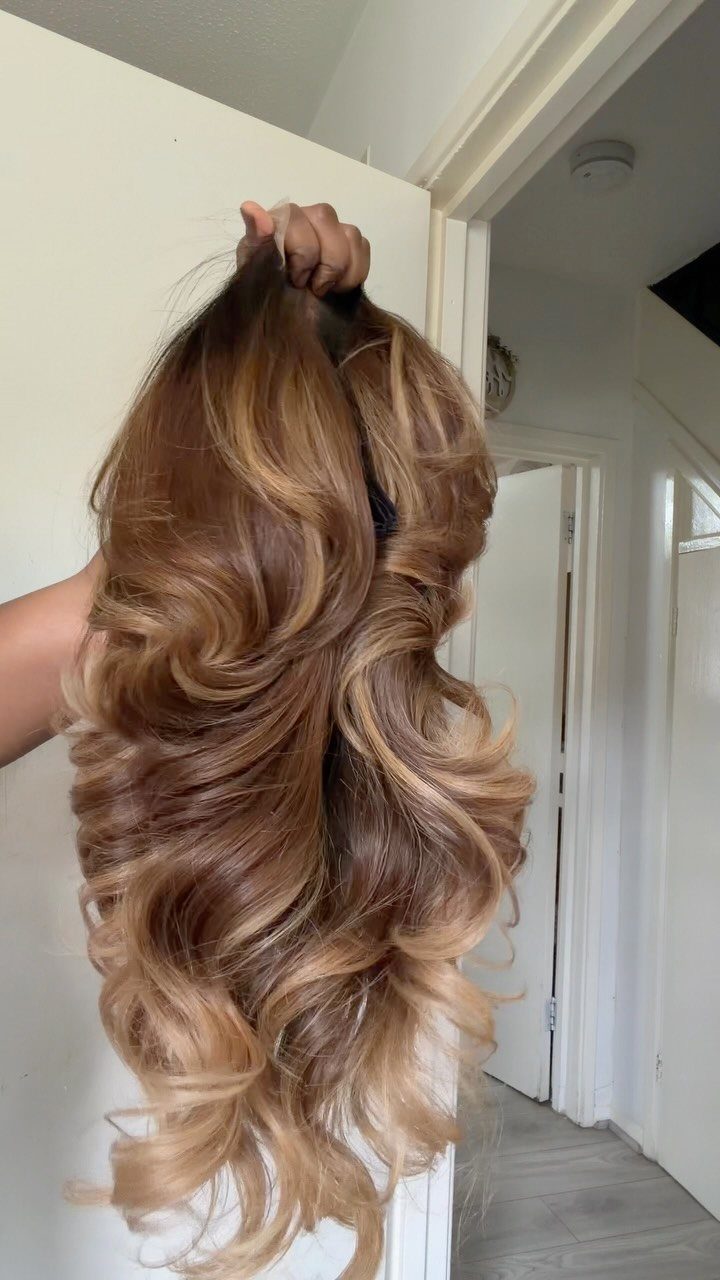
Caramel sits in that space between chocolate and honey, and as an ombre it gives you warmth that grows gradually from dark brown roots down through golden ends.
The shift reads natural enough that regrowth blends in without a hard line showing up after 8 weeks.
If your base is already dark or medium brown, the colorist lifts only the lengths and ends, so the process takes less time and causes less damage than lightening your whole head.
Ask for caramel tones rather than just "light brown" to keep the gold from sliding too orange or brassy.
2. Ash Brown Ombre
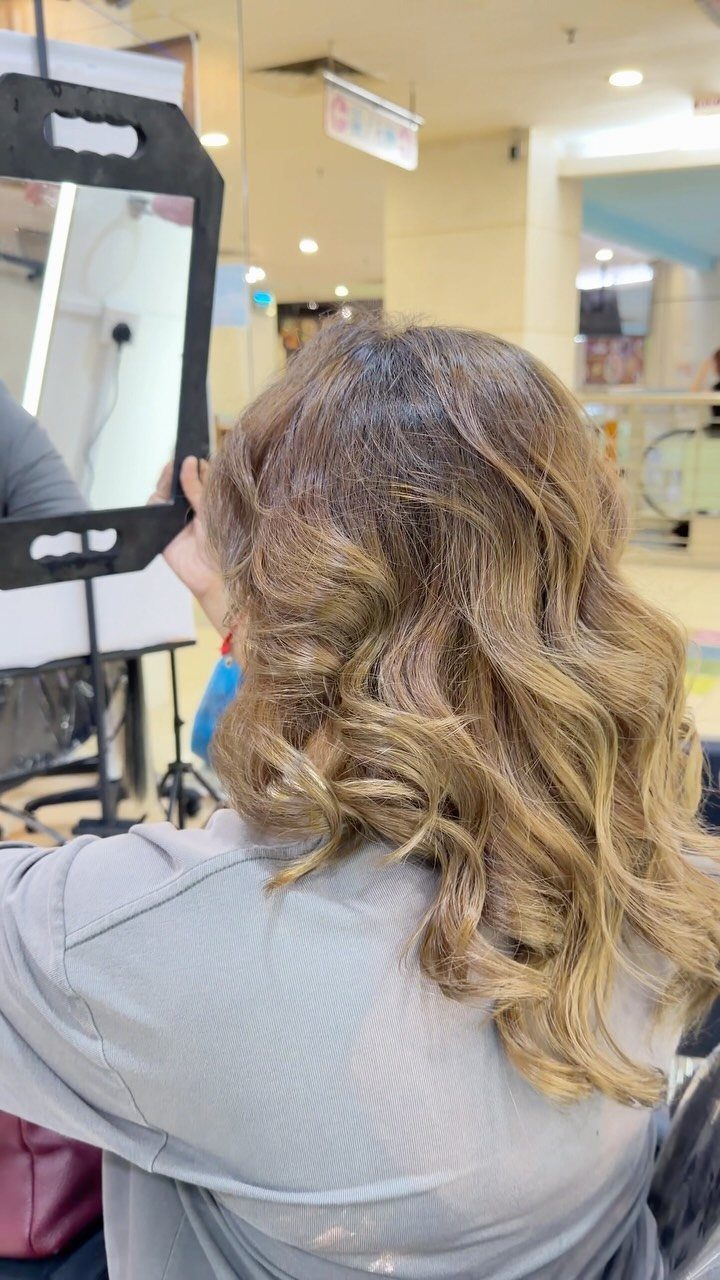
Ash brown pulls the warmth out of a standard brown ombre and replaces it with cool, muted blonde that leans slightly gray. The transition feels softer than high-contrast platinum or caramel because the tones stay in the same temperature family.
This one works well if you have naturally cool-toned hair or skin, or if you’ve had brassy ombre before and want something quieter.
The ash keeps the blonde from looking yellow, but it also fades faster than warm tones, so plan on purple shampoo twice a week and a toner every 6 to 8 weeks to hold the color.
3. Dark Red Fire Ombre
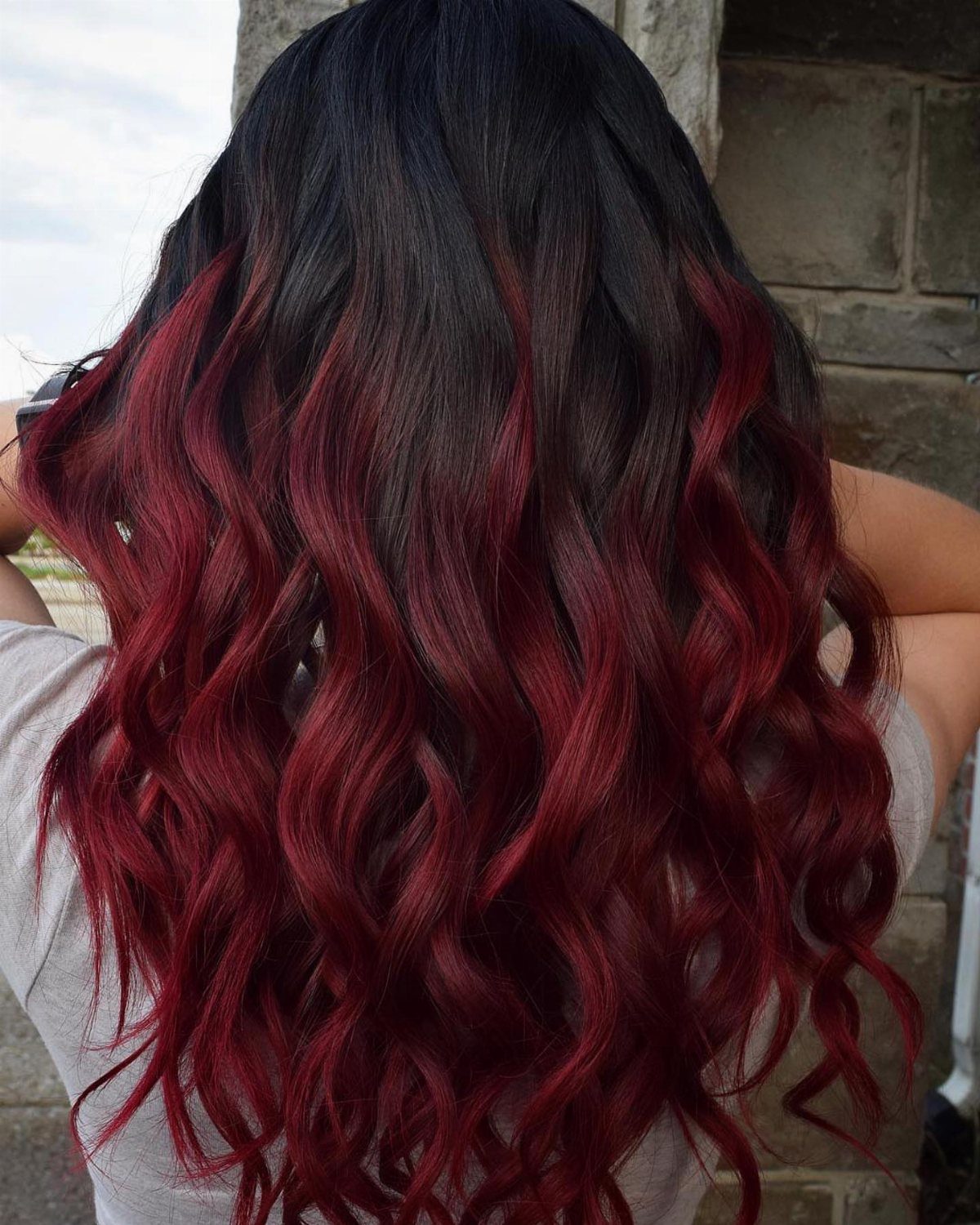
Dark red gives you fire without going full bright cherry. The roots stay close to black or deepest brown, and the red builds through the mid-lengths into burgundy or wine at the ends.
Because red fades faster than any other color, expect the vibrancy to soften after 3 to 4 weeks even with color-safe shampoo.
A red-depositing conditioner between salon visits keeps the tone from slipping toward orange or pink. If your hair is naturally dark, the colorist may lift the ends slightly before applying the red to get the color to show clearly.
4. Ash Blonde Ombre
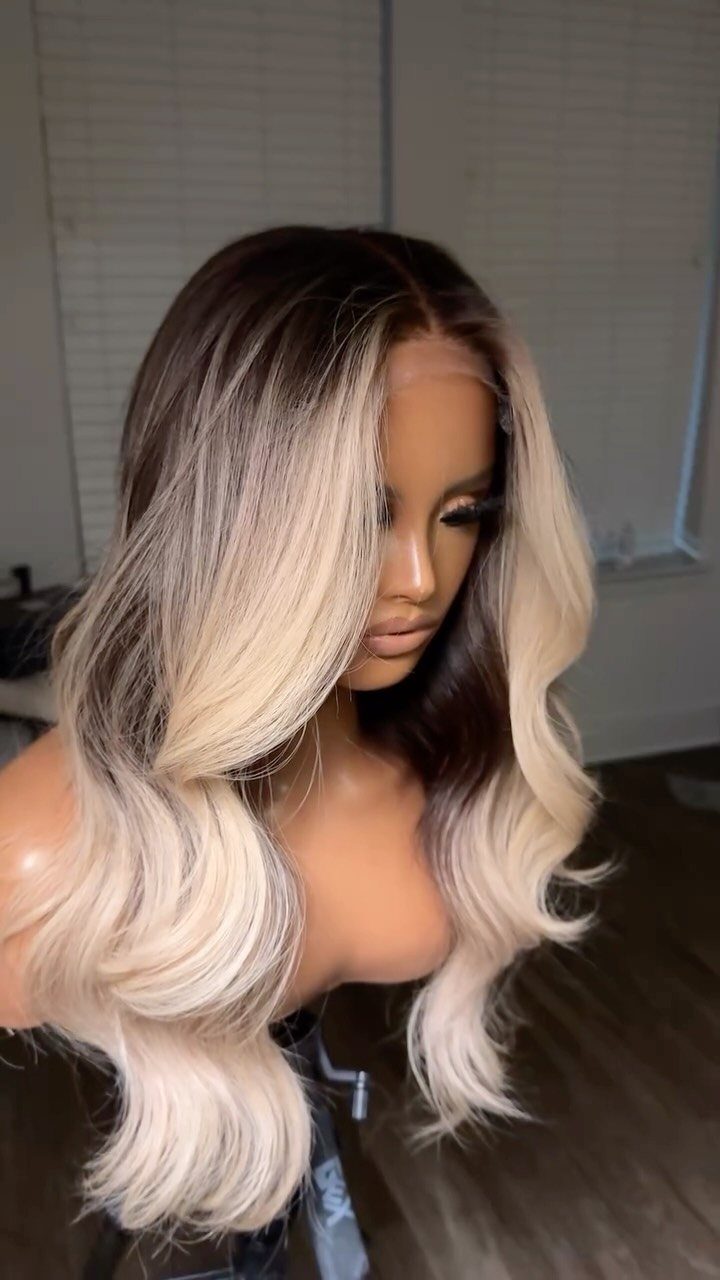
Ash blonde ombre moves from dark roots into pale, cool blonde ends without any gold showing through.
The contrast is sharper than ash brown, so it reads more dramatic and requires more frequent toning to keep the blonde from warming up.
Lifting dark hair to ash blonde usually means 2 or 3 rounds of lightener on the ends, which makes this one of the higher-maintenance options both in the chair and at home.
Purple shampoo becomes a staple, and you’ll need a toner refresh every 4 to 6 weeks to maintain the cool tone.
5. Rose Gold Ombre
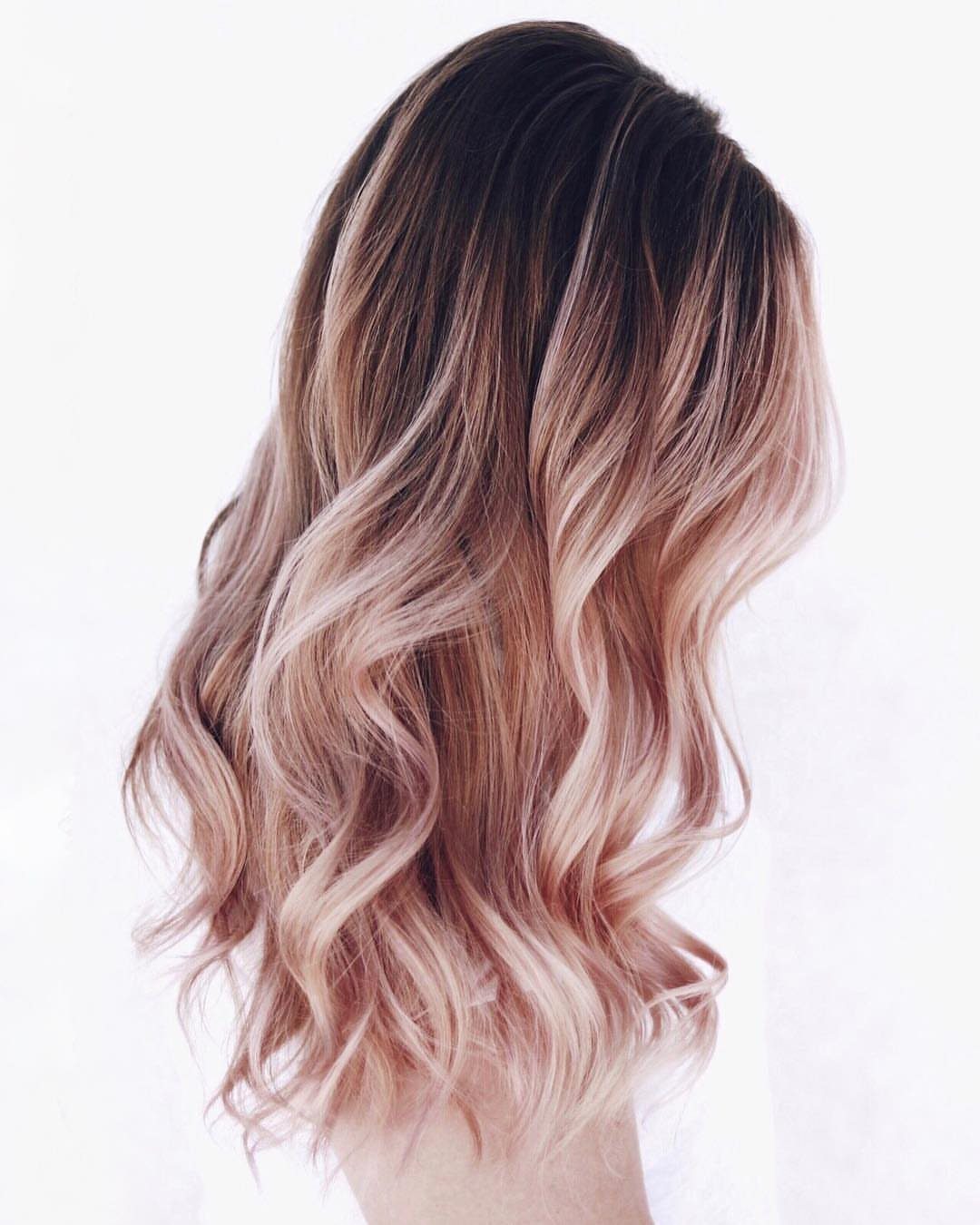
Rose gold reads as a soft pink with a metallic sheen, and as an ombre it fades from dark or medium roots into peachy-pink ends that catch the light.
The color stays subtle enough for most workplaces but still registers as intentionally dyed.
The pink fades quickly, usually within 3 weeks, and as it lightens it shifts toward champagne blonde.
If you want to maintain the rose tone, a pale pink gloss or deposit-only color every month keeps it from disappearing entirely. The look works best on hair that’s already been lightened to pale blonde at the ends.
6. Icy Blonde Ombre
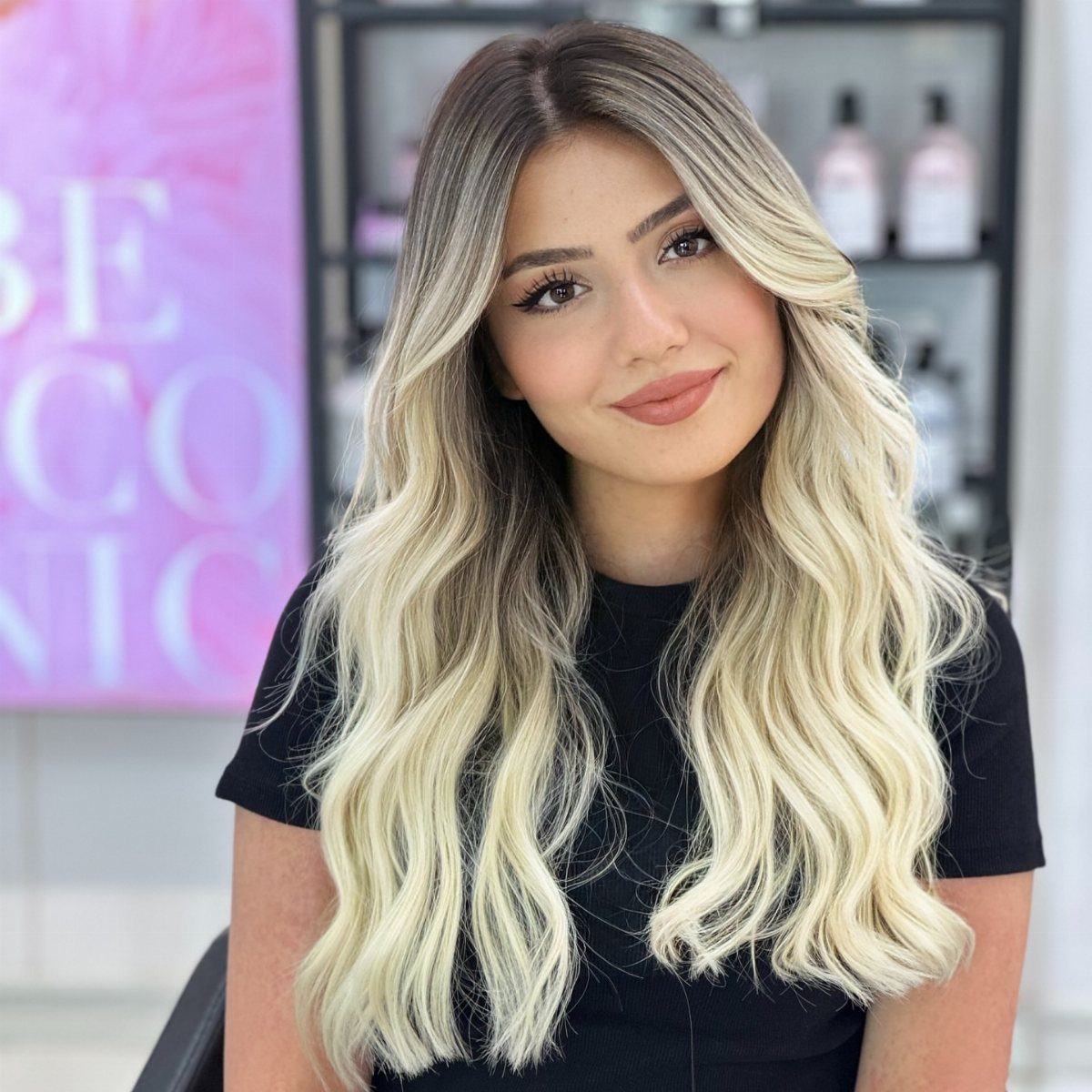
Icy blonde starts from nearly black roots and runs through ash brown in the mid-lengths before hitting pale, almost white blonde at the ends. The contrast is high, so the line where dark meets light becomes the defining feature.
This one requires serious lightening on the lower half, often bleach applied multiple times to reach that level of brightness.
Plan on deep conditioning treatments every week and a toner every 4 weeks to keep the blonde from turning brassy. If your natural color is dark, expect to spend 3 to 4 hours in the chair for the initial color.
7. Ombre with Highlights
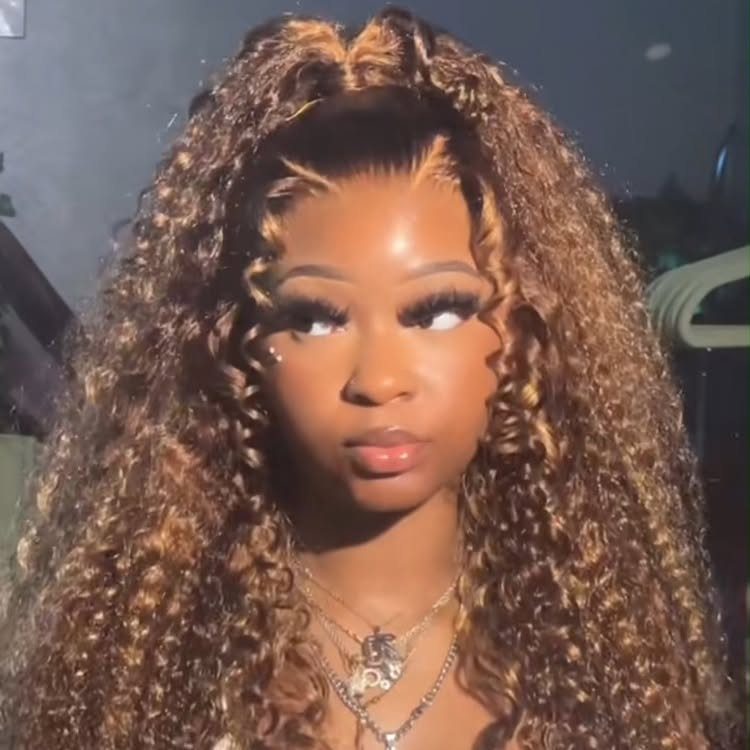
Ombre with highlights puts finer pieces through the face and crown, layering in brightness where the base melt has already set the transition. The highlights catch light closer to your roots without requiring color right at the scalp.
This setup gives you dimension that reads more detailed than a straight ombre fade. The colorist places the highlights where you’d naturally lighten from sun, so regrowth looks softer than a single-process all-over color.
If you already have ombre and want more contrast, face-framing highlights are the easiest add. They sit in foils while the rest of your color processes and freshen the whole look without redoing the base.
8. Honey Blonde Ombre
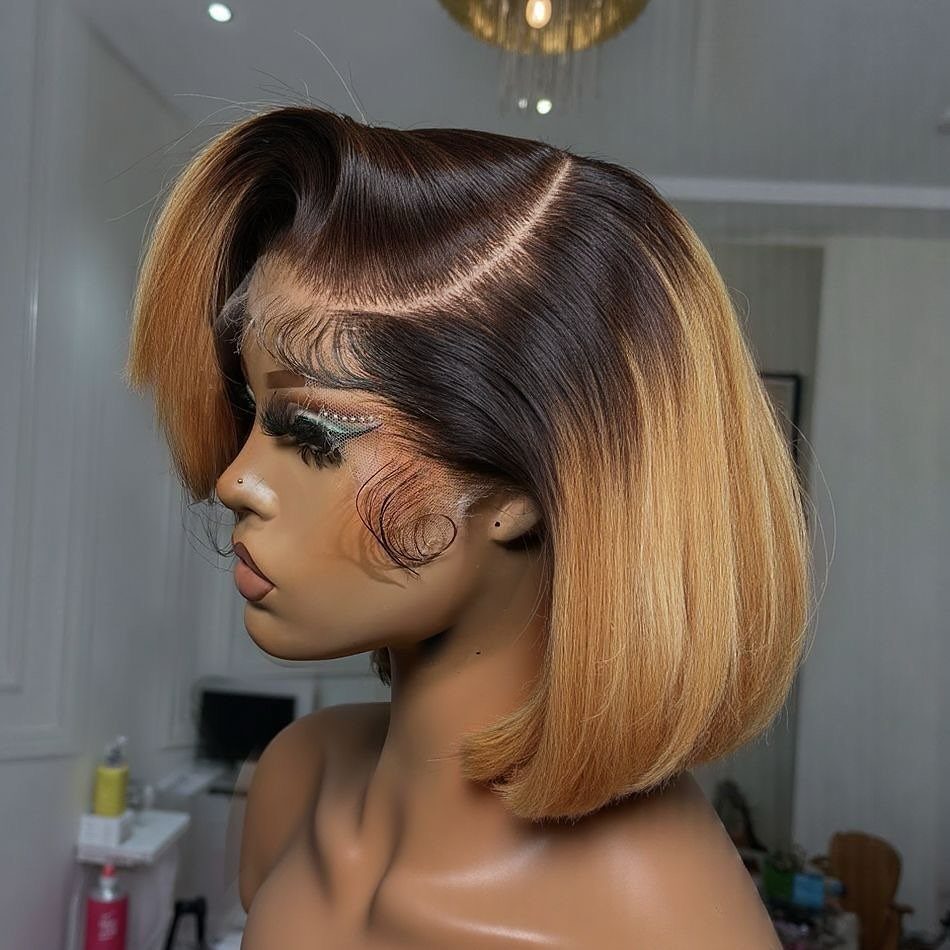
Honey blonde brings warmth into the fade without going as light as platinum or as golden as caramel. The shade sits between the two, reading rich rather than stark.
On a short bob, the ombre transition happens faster because there’s less length to work with.
The colorist places the darkest tone close to the roots and moves into honey by mid-shaft, so the gradient stays visible even when the hair is chin-length or above.
The shorter cut also means less damage to the ends, since you’re trimming away lightened hair more frequently anyway.
9. Reddish Brown Ombre Hair
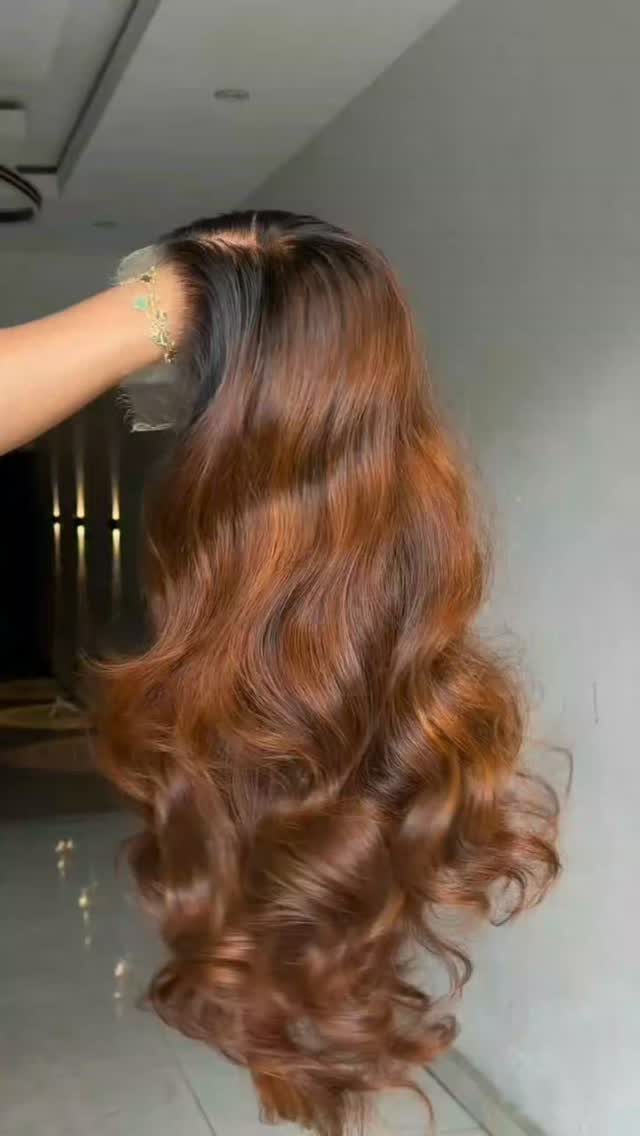
Reddish brown stays closer to your natural depth than a full red ombre but adds warmth that catches copper and auburn when light hits it.
The color builds gradually from deep brown roots into ends that read rich rust or mahogany.
Because the shift is subtle, regrowth blends in longer than high-contrast ombre. The red tone fades faster than brown, so expect the ends to soften toward warm chestnut after a few weeks.
10. Pink Ombre
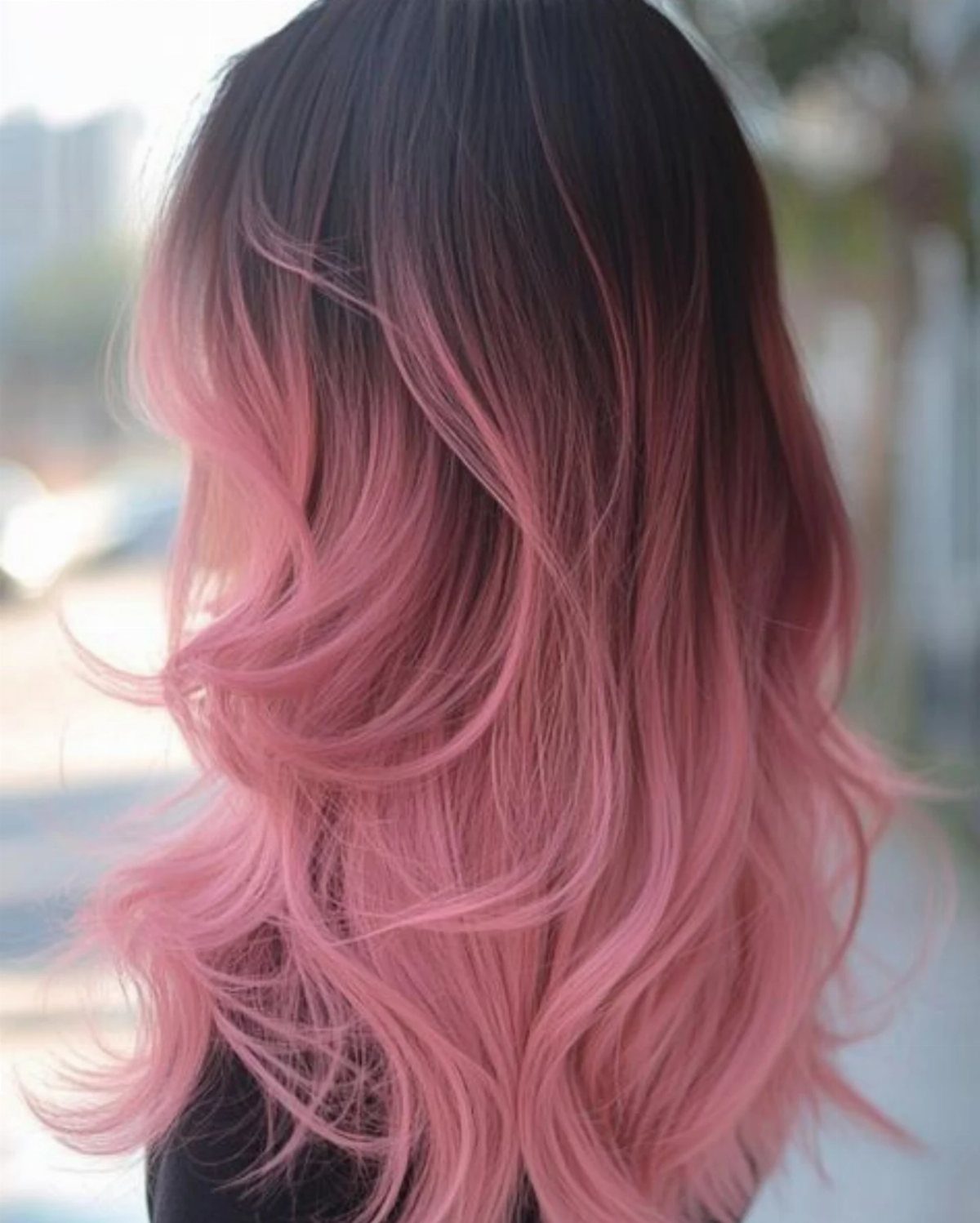
Pink ombre fades from your natural dark or medium base into pastel or bubblegum ends. The color reads soft when it’s fresh and shifts lighter as it fades, moving toward pale rose or champagne blonde.
The ends need to be lifted to pale blonde before the pink goes on, so plan on bleach and a toner first.
Semi-permanent pink washes out gradually rather than leaving a hard line, which makes regrowth easier to manage than permanent color. A pink gloss brings the tone back when it starts to wash out.
11. Silver Ombre
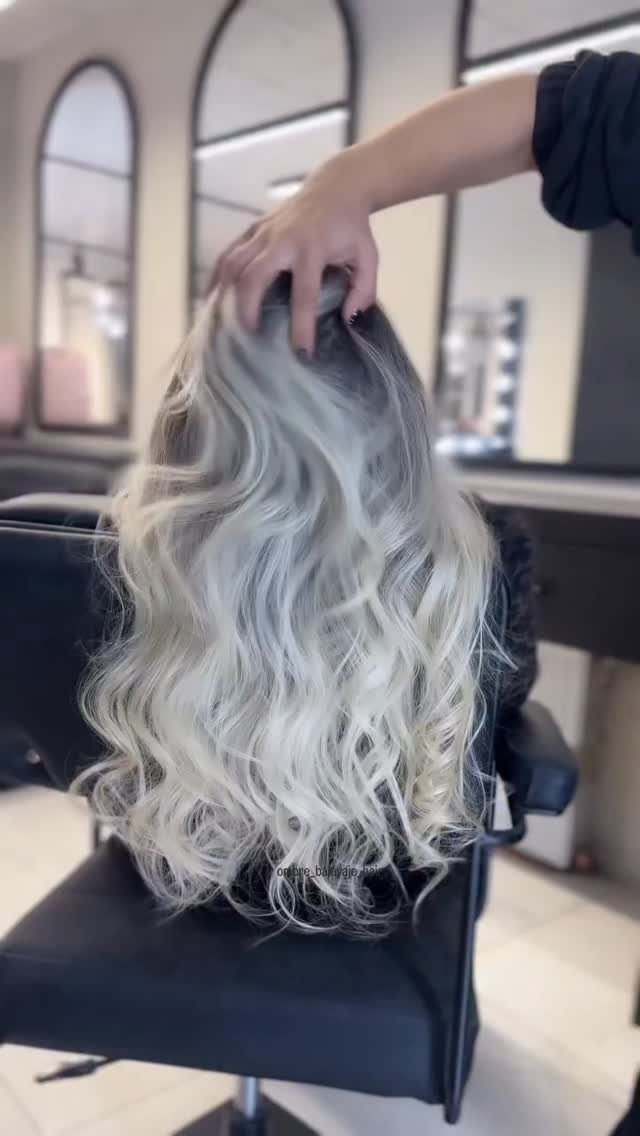
Silver ombre moves from dark roots into pale gray or platinum ends that read almost metallic.
The cool tone stays free of warmth, so it works well if you have naturally ashy hair or want to avoid any gold showing through.
Lifting dark hair to silver requires multiple rounds of lightener on the ends, and the color needs toning to keep it from warming up to yellow.
Purple shampoo twice a week holds the tone between salon visits. The contrast is high, so this one reads more dramatic than brown or caramel ombre.
12. Copper Ombre
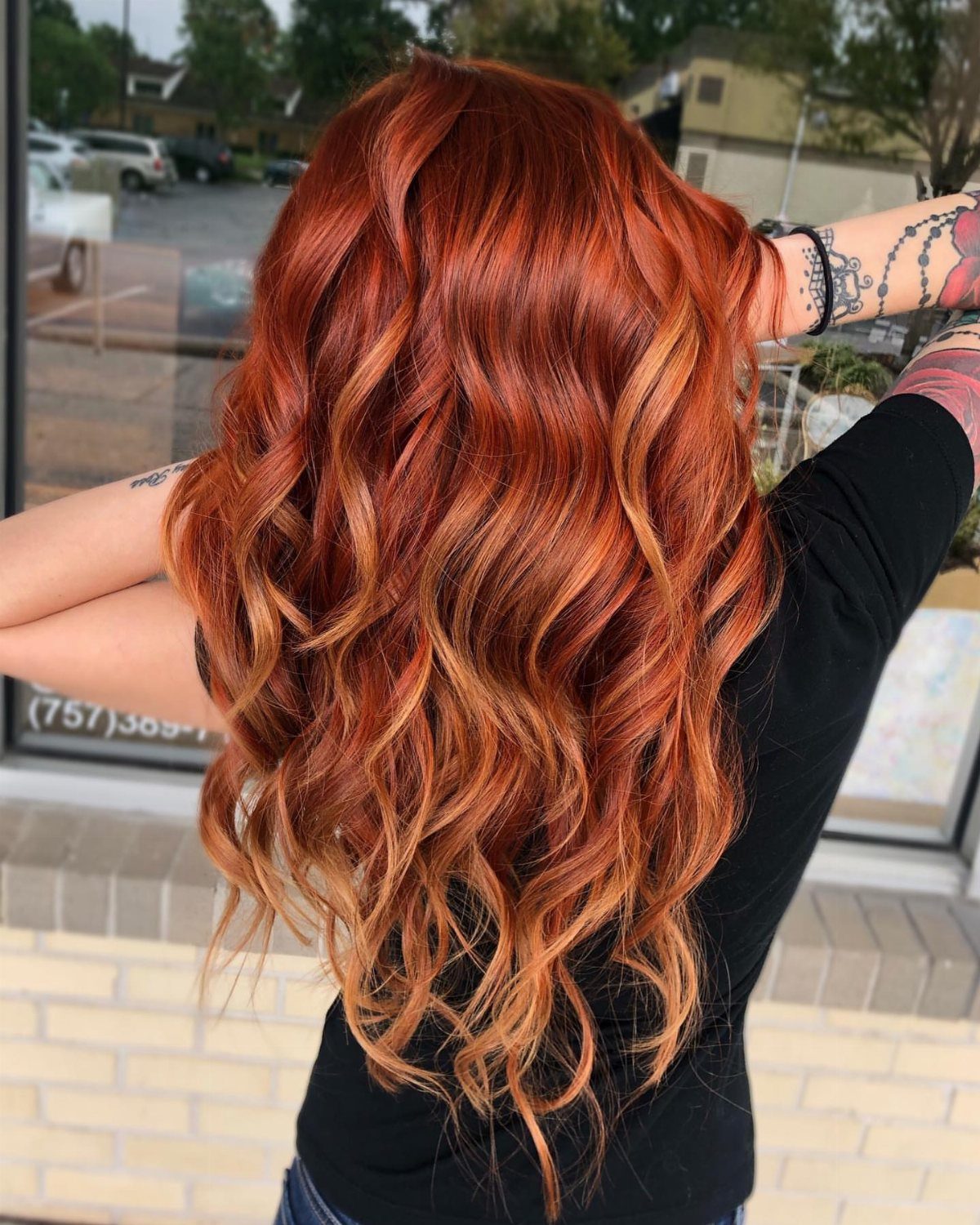
Copper reads fiery without going full red, adding warmth that catches orange and bronze tones through the ends.
The color sits deeper than bright orange but lighter than burgundy, and it builds gradually from dark roots into rich copper at the tips.
Copper fades faster than brown but holds longer than pink or purple, so expect to refresh the tone every 5 to 6 weeks.
13. Curly Ombre Hair
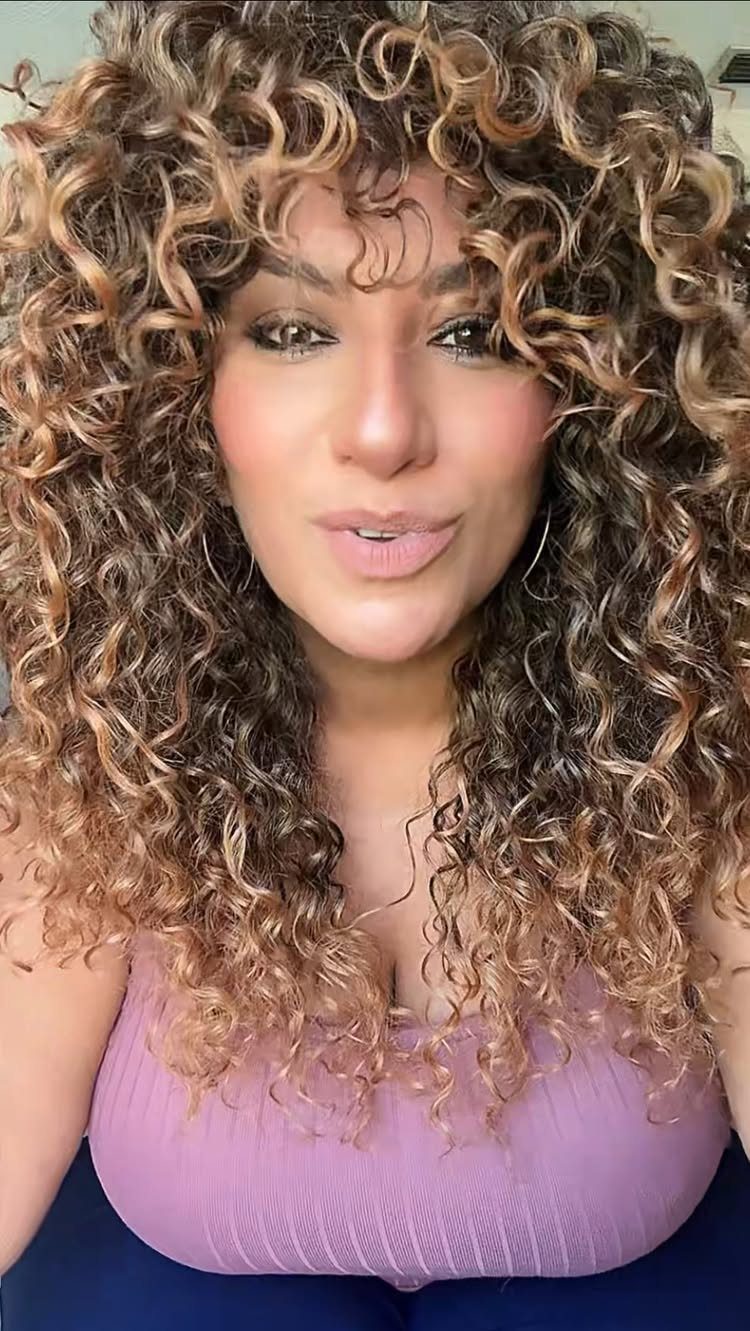
Curls break up the ombre transition into smaller sections, so instead of one smooth fade you get color that shifts piece by piece as the hair moves.
The effect reads softer and more dimensional than the same gradient on straight hair.
Because curls sit at different heights when they spring up, the color placement needs to account for where each section will land once it dries.
A colorist working with curly hair applies the lighter tones slightly higher on the strand so they fall where you want them after the curl forms.
The texture also hides regrowth longer, since the curls overlap and the line between colors stays less visible than it would on a blunt, straight cut.
14. Pastel Ombre
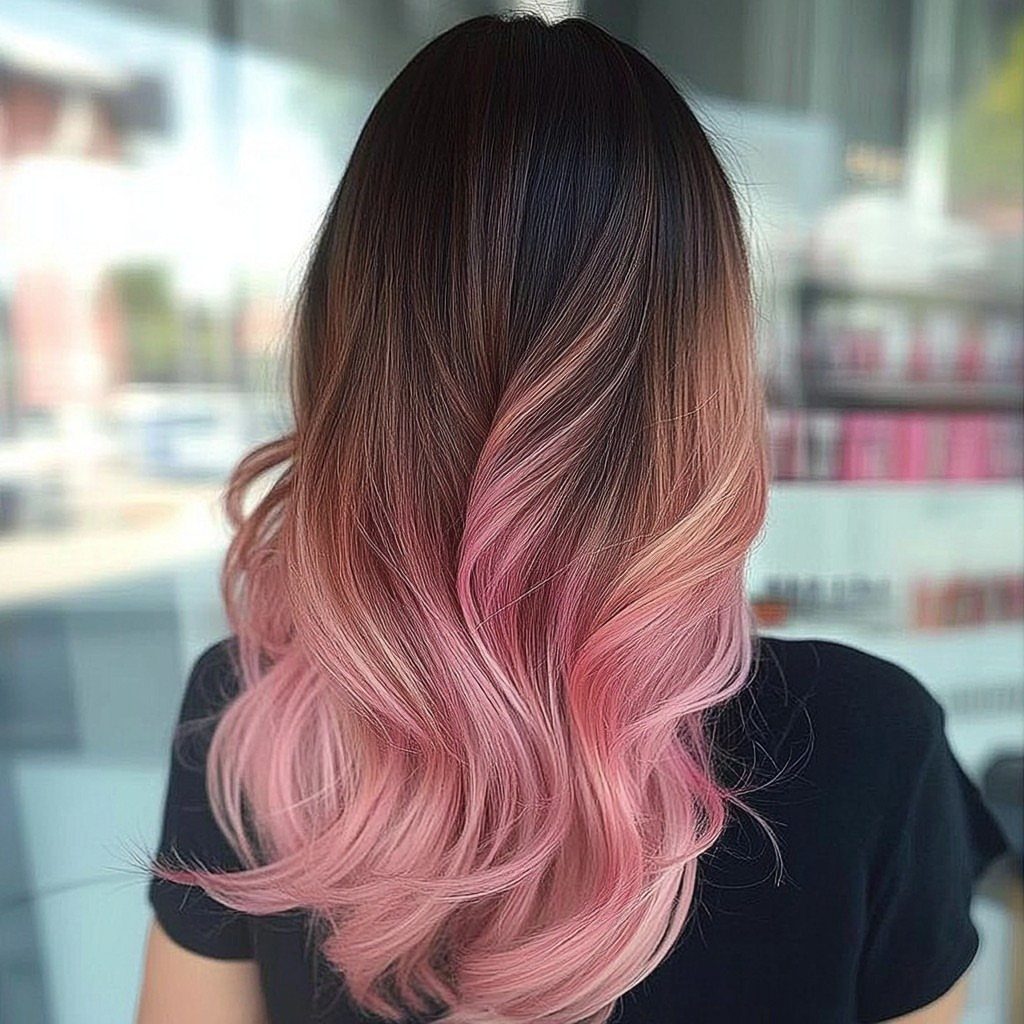
Pastel ombre keeps the contrast low by fading into soft pink, lavender, peach or mint rather than vivid color.
Pastel washes out faster than deeper shades, and as the color lifts it turns back to pale blonde. A pastel gloss between salon visits brings the color back without redoing the whole process.
15. Orange Ombre
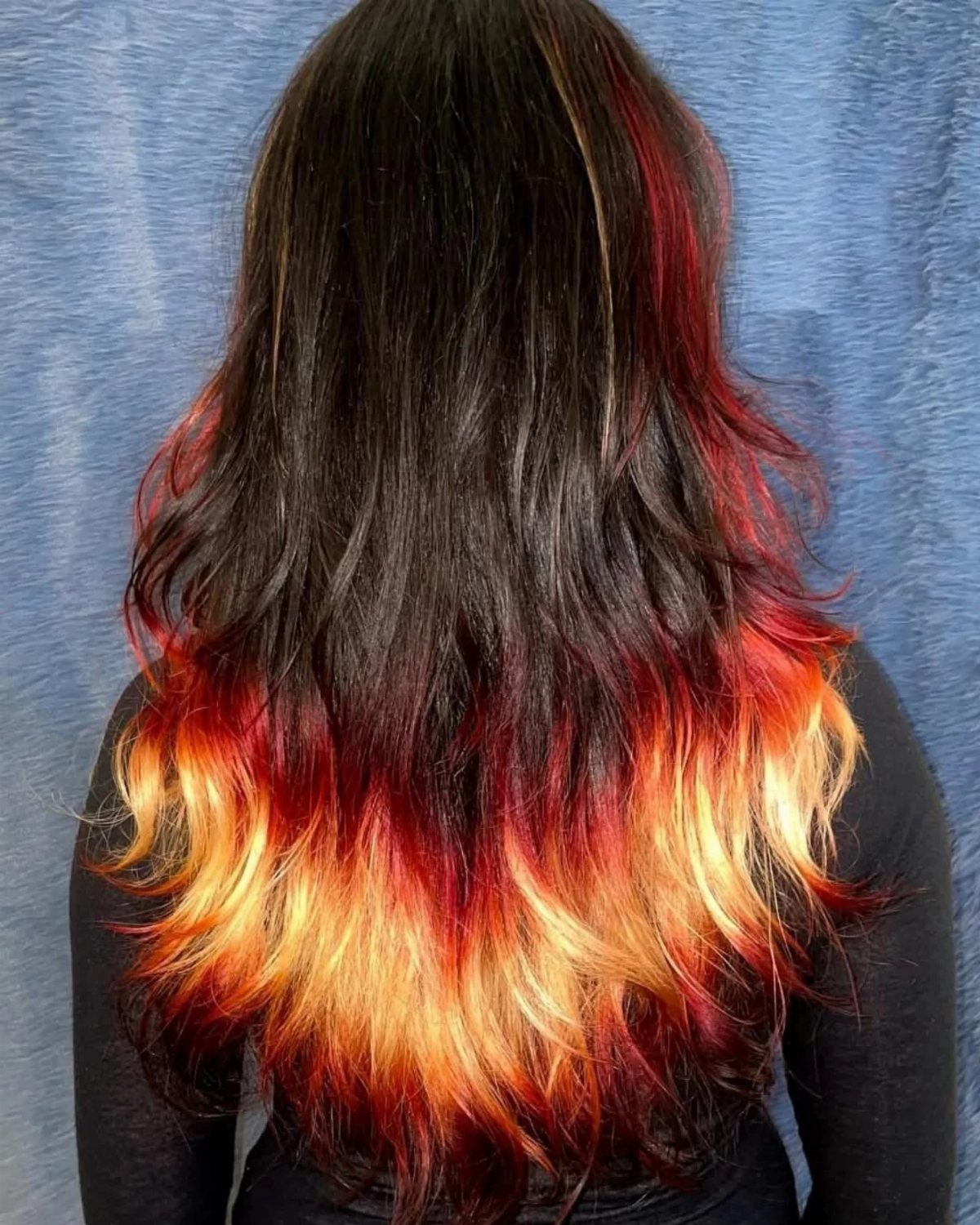
Orange ombre reads fiery and saturated, and when it blends into red or wine at the tips the gradient stays bold rather than soft. The warmth catches copper, gold and rust tones depending on the light.
Orange loses its punch as it fades, so the ends soften into a peachy tone even when you use color-safe shampoo.
A red-depositing conditioner helps slow the fade, but the color will still shift toward peach or coral as it lightens.
16. Gunmetal Gray Ombre
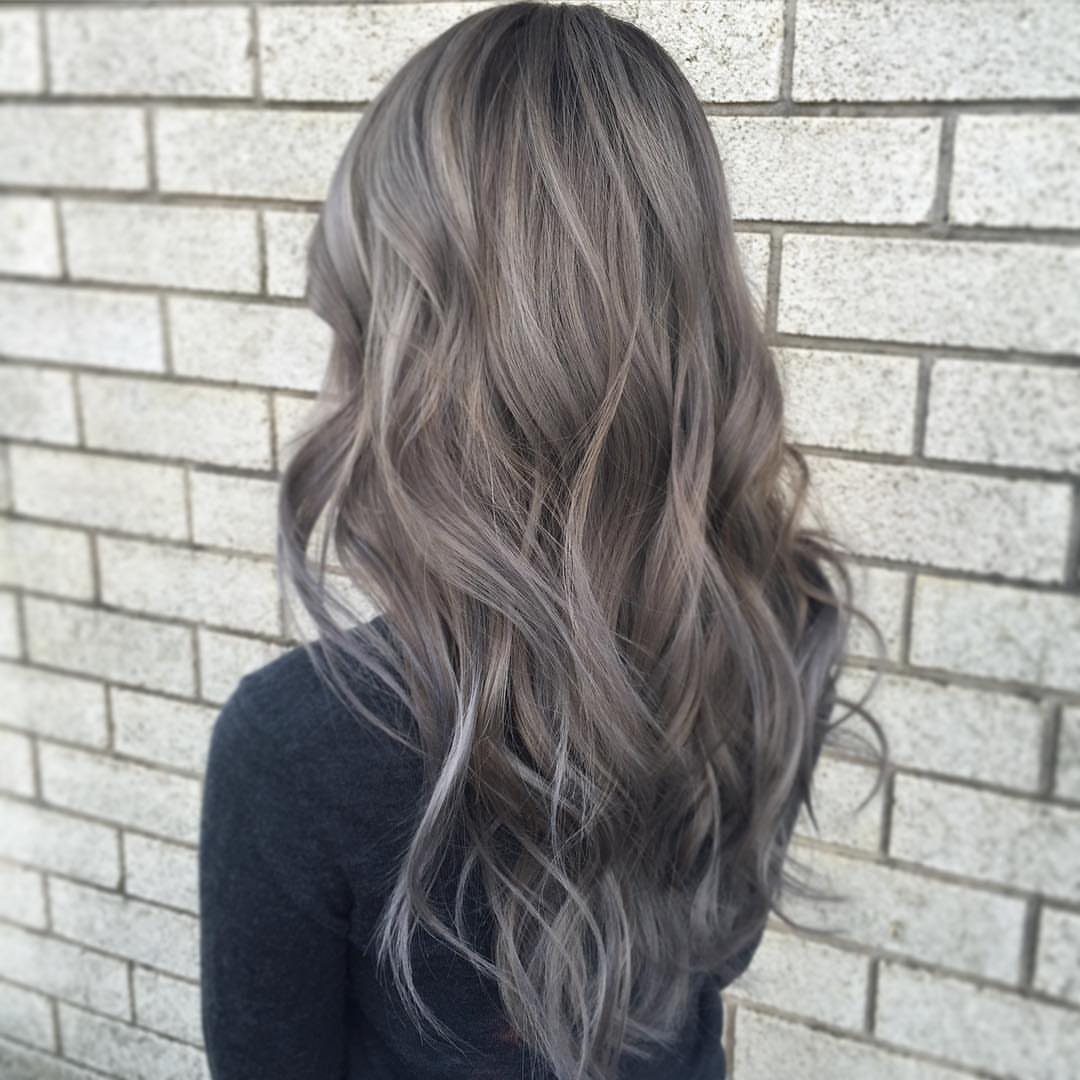
Gunmetal gray adds cool, muted tone to brunette without the high contrast of silver or platinum. The color stays close to your natural depth but shifts the warmth out, replacing it with soft gray that reads subtle rather than dramatic.
This one works well if you want an ashy look without committing to full gray or if your natural color is already cool-toned.
The gray fades gradually back toward brown, so regrowth blends in without a hard line. A purple shampoo keeps the gray from turning brassy between appointments.
17. Platinum to Pink
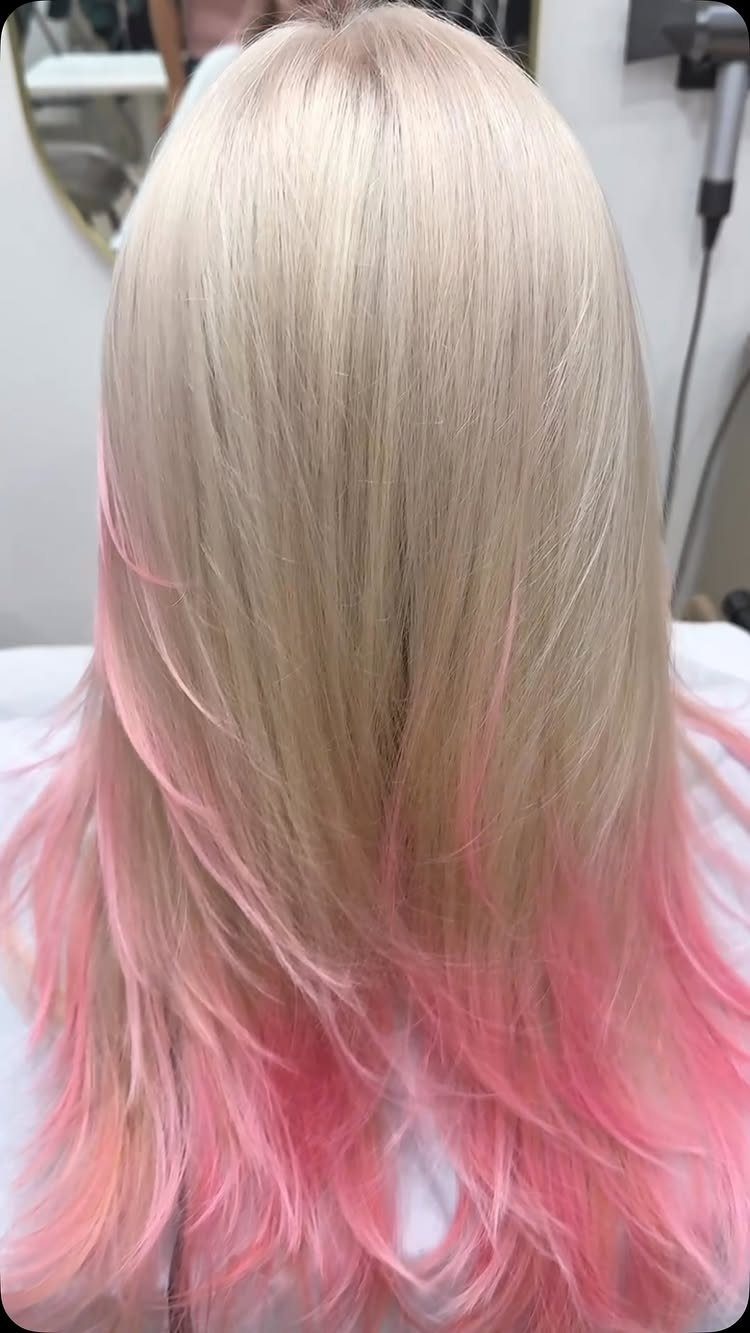
Platinum to pink moves from the brightest blonde into soft or vivid pink ends, giving you contrast without going dark at the roots. The shift reads more playful than a standard ombre because both tones sit outside natural color.
The pink fades toward pale champagne as you wash it.
18. Brown Ombre

Brown ombre keeps the gradient in the same color family, moving from deep chocolate or espresso roots into lighter caramel or chestnut ends. The transition reads natural, so regrowth stays soft and the look holds longer between appointments.
This one works well if you want dimension without stepping into blonde, red or unnatural tones. Ask for warm or cool brown depending on your skin tone, and book a refresh when the line starts to look grown out.
19. Purple Ombre
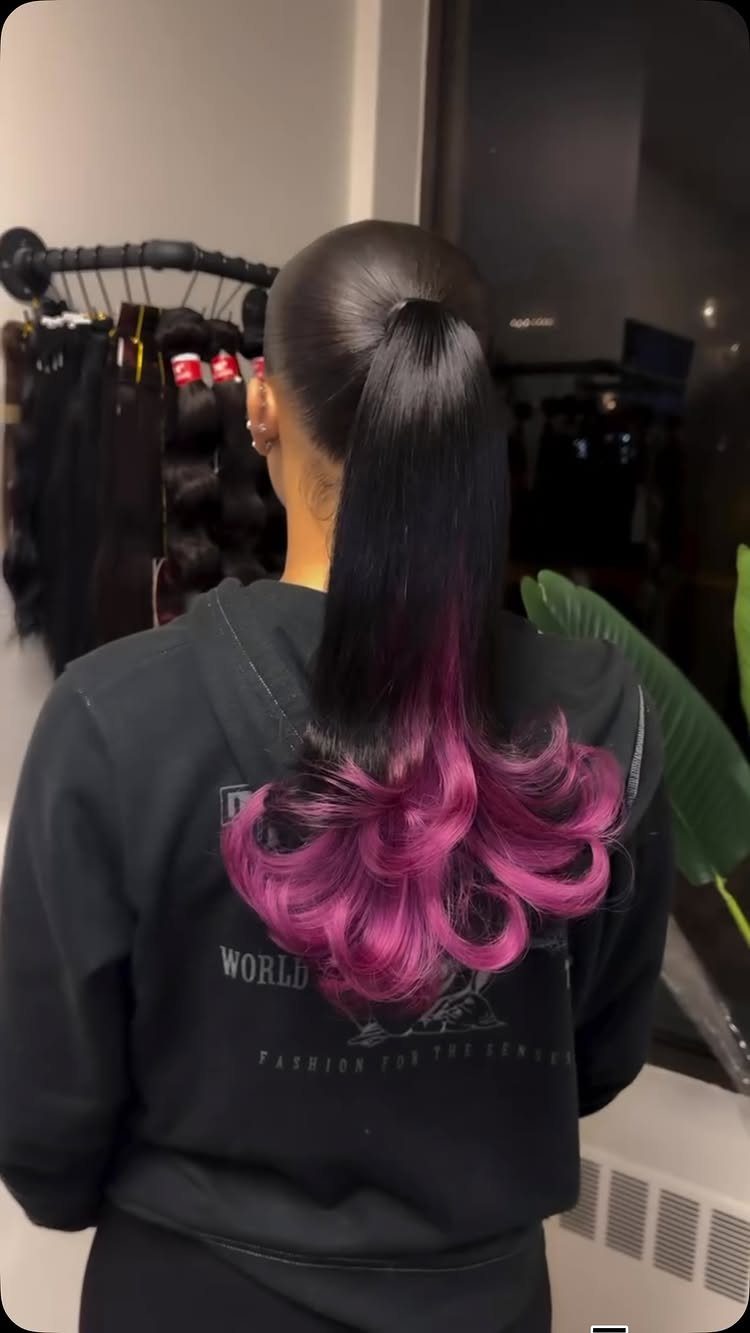
The roots stay dark while the lengths shift through violet, plum or soft lavender at the ends. The color holds longer than pastel shades but still fades gradually toward silver or pale blonde after a few weeks.
Semi-permanent purple washes out softer than permanent dye, so regrowth stays less obvious as the color lightens.
20. Blue Ombre
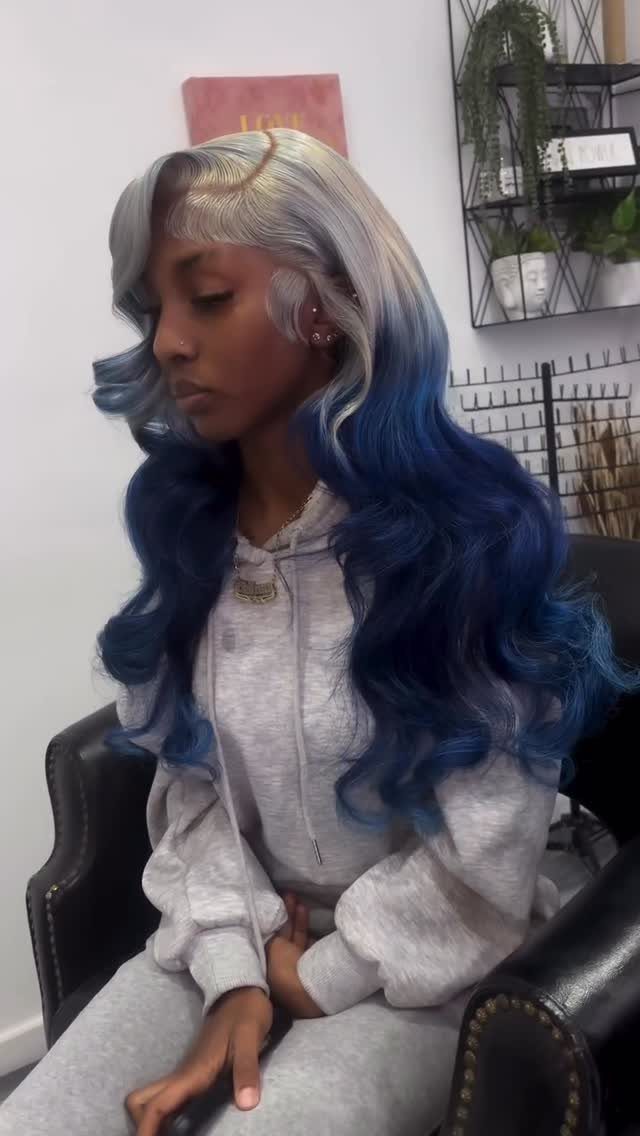
The roots hold their natural depth while the ends pull toward anything from teal to cobalt or electric blue. The color reads cooler than most fashion shades and pairs well with naturally ashy hair or gray undertones.
Blue fades toward green or pale silver depending on the base tone, so expect the shade to shift as you wash it.
A blue-depositing conditioner slows the fade, but most blues lighten noticeably between salon visits. The ends need to be pre-lightened to blonde for the blue to show clearly.
21. Wavy Ombre Hair
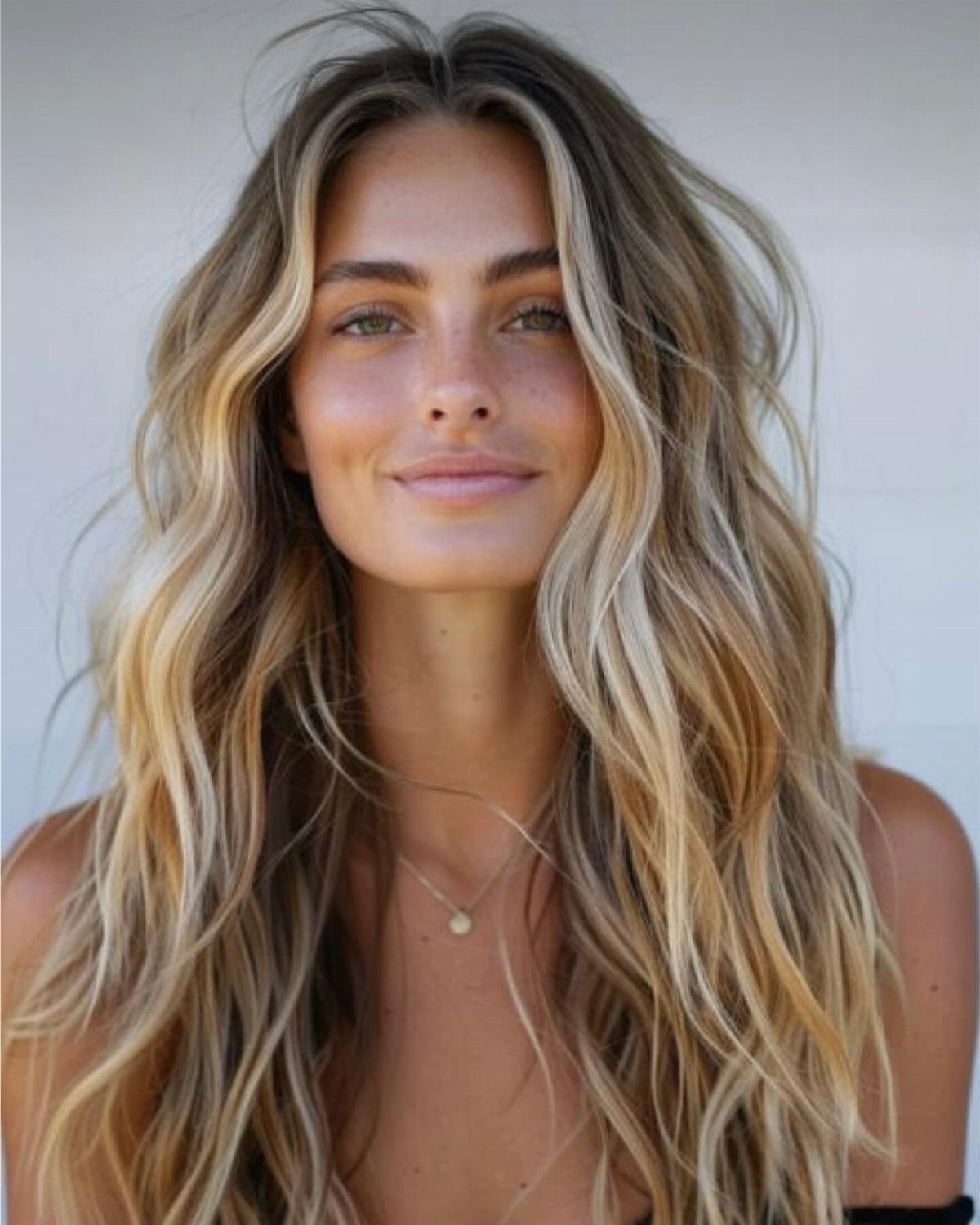
Waves show off the ombre transition better than straight hair because the color shifts as the hair moves. Each wave catches light differently, so the gradient reads more dimensional and less like a single flat line.
If you style with a curling iron or wand, the heat can pull warmth into lightened ends, so a heat protectant helps the color last.
22. Balayage Ombre
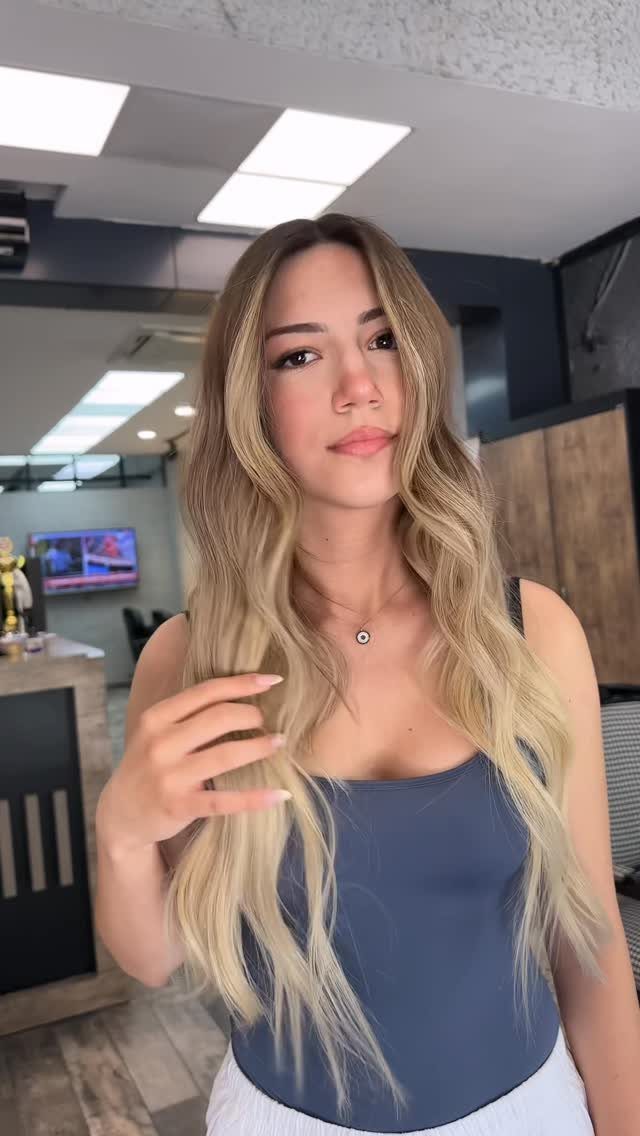
Balayage ombre combines hand-painted highlights with a traditional ombre fade, layering finer pieces through the darker section before the color fully transitions.
The result reads more textured than a straight gradient because the lighter tones start higher and taper into the ombre below.
The hand-painted sections blend regrowth softer than foil highlights, so you can stretch appointments longer. If you want dimension without a hard line, this setup gives you both techniques in one pass.
23. Rainbow Ombre
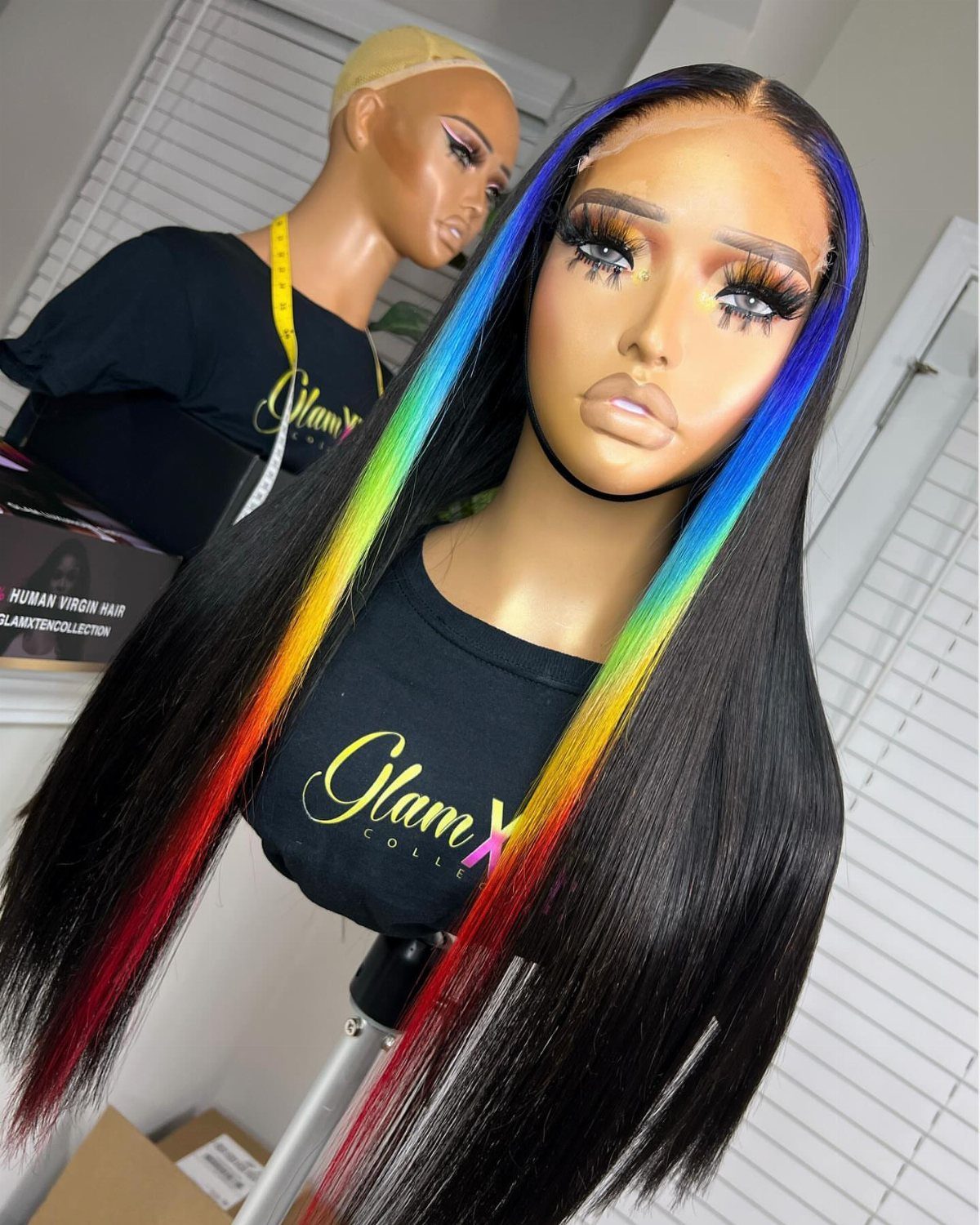
Rainbow ombre layers multiple vivid colors into the gradient, moving through red, orange, yellow, green, blue and purple as the hair transitions from dark roots to the ends.
The effect reads bold and intentional, and each color sits in its own section rather than blending into the next.
Each shade fades at a different rate, so expect the rainbow to soften unevenly.
24. Reverse Ombre
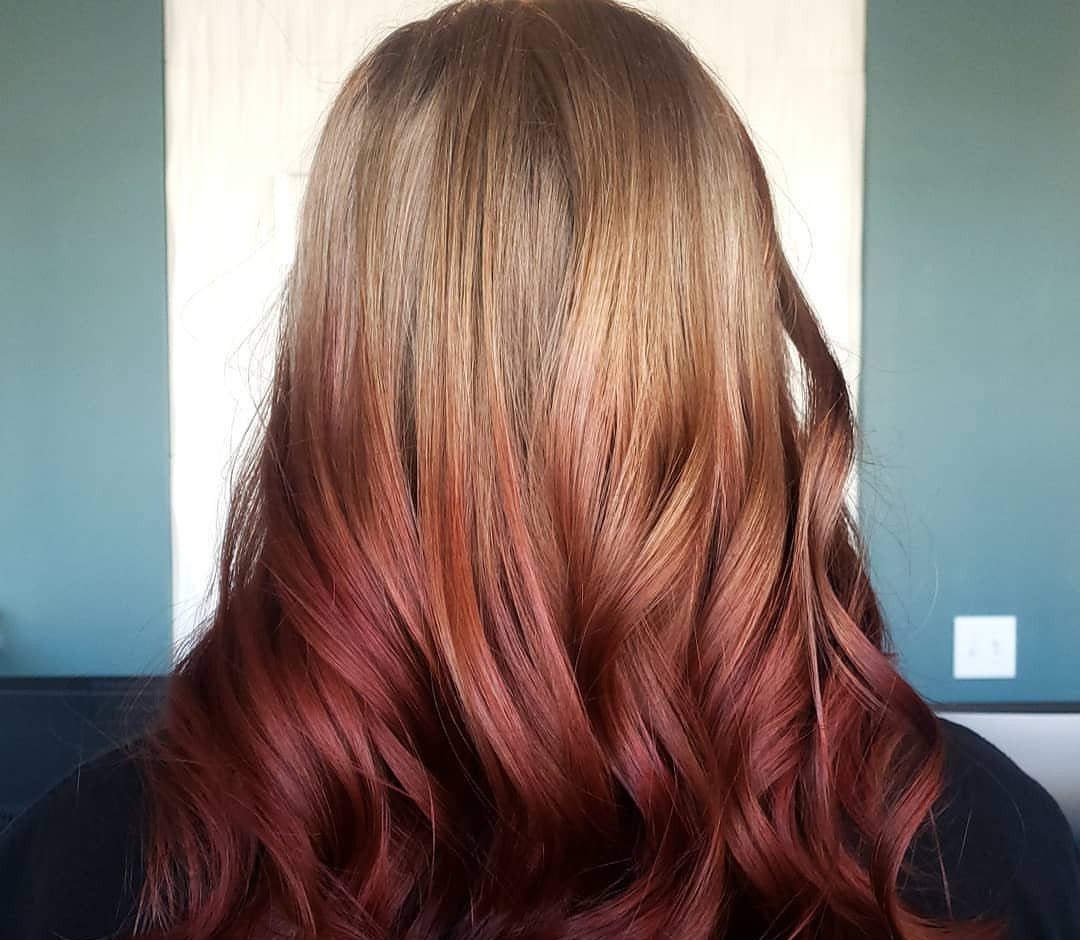
Reverse ombre starts with lighter roots and fades into darker ends, flipping the usual gradient.
The look works well if you want to grow out blonde without the contrast of dark regrowth or if you prefer depth at the ends rather than at the scalp.
Because the roots are lighter, regrowth shows faster than traditional ombre. When you start with dark hair, the colorist lifts the roots and mid-lengths first, then runs deeper color from the ends up to meet them.
25. Flame Ombre
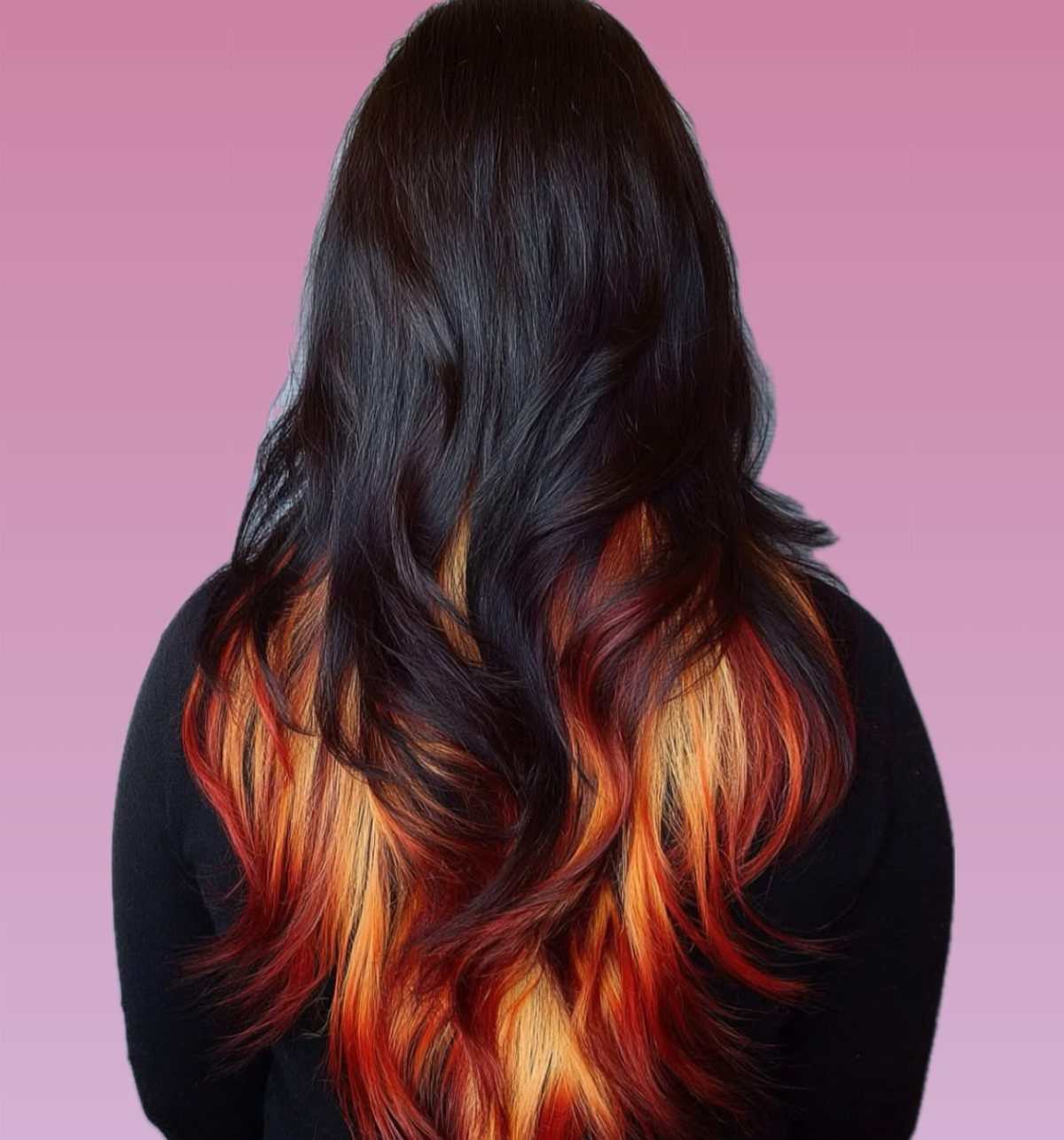
Flame ombre layers red, orange and yellow through the ends, building heat as the color moves down the strand. The gradient mimics actual fire by stacking warm tones rather than blending them into one continuous fade.
The colors shift unevenly as they wash out, with yellow fading first and orange holding longer.
This one reads boldest on dark hair because the contrast makes the warm tones pop.
26. Golden Blonde Ombre
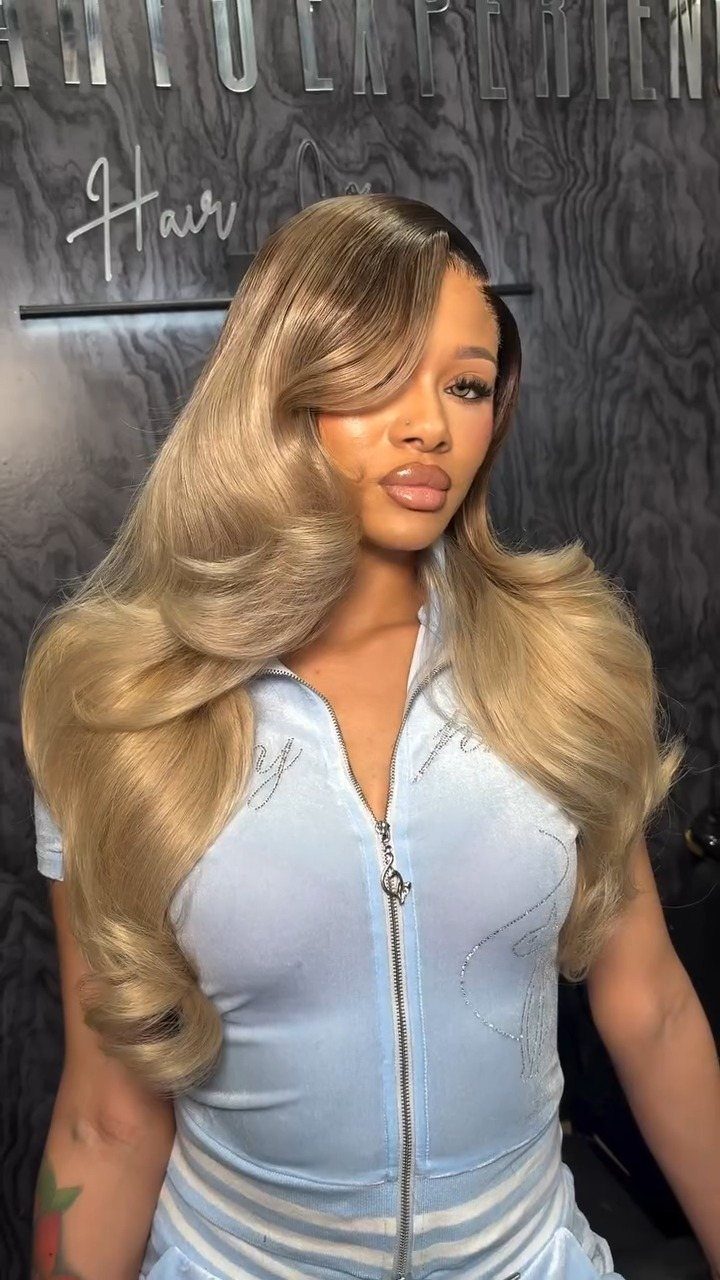
Golden blonde pulls warmth into the ends without going platinum or ashy. The color reads rich rather than cool, catching honey and bronze tones as it moves from dark roots to lighter lengths.
If you have warm skin tones, this suits you better than icy blonde. The gold fades back toward caramel instead of turning brassy.
The transition can sit lower on the strand if you want a subtle shift, or start higher for more contrast.
27. Champagne Blonde Ombre
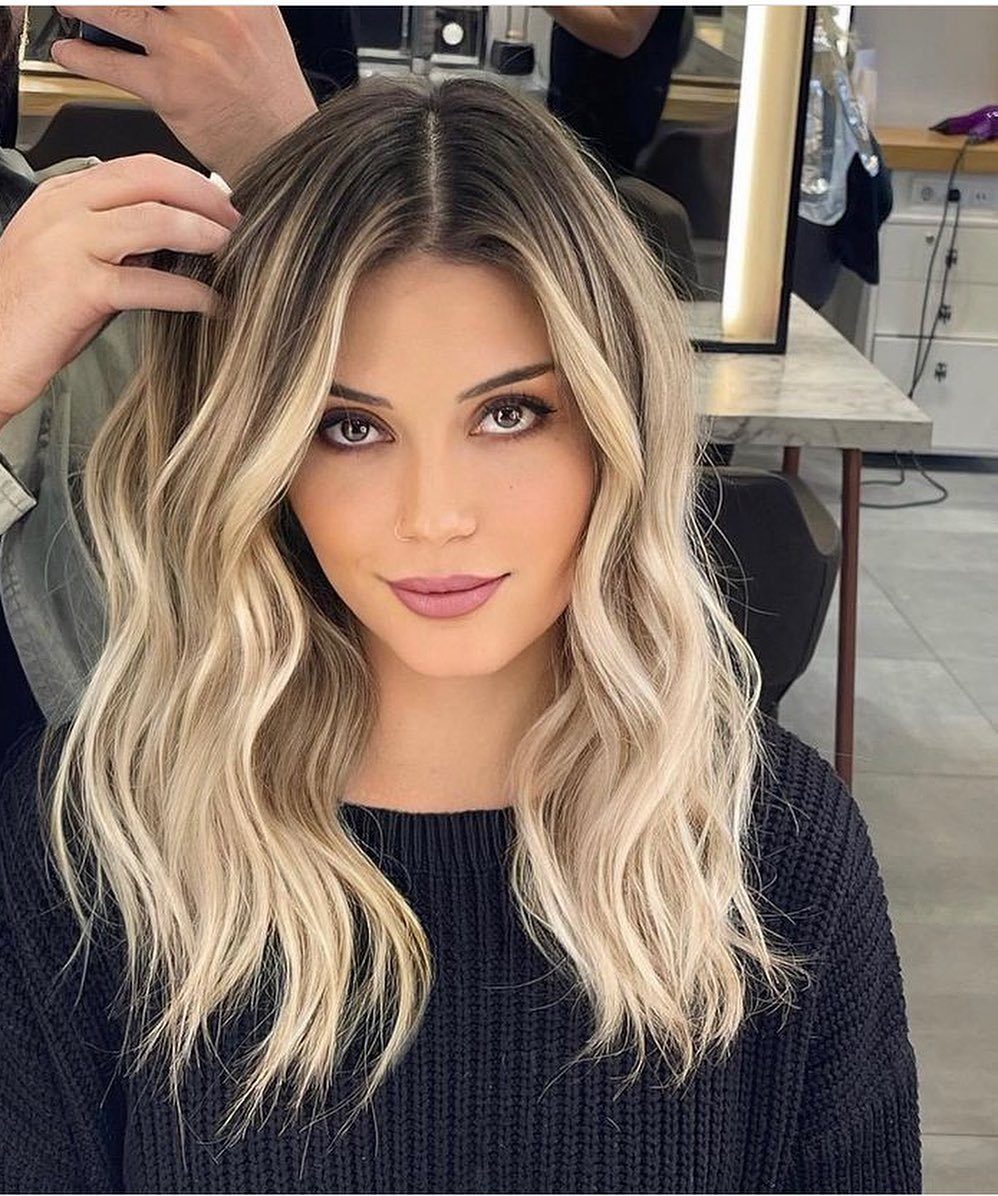
Champagne blonde sits between golden and platinum, adding softness without leaning too warm or too cool. The shade reads neutral and understated, fading from dark roots into pale blonde that stays free of heavy gold or ash.
This one works well if you want a lighter look that grows out softer than high-contrast ombre. The color holds tone longer than platinum and requires less purple shampoo to keep it from warming up.
28. Ombre Braids
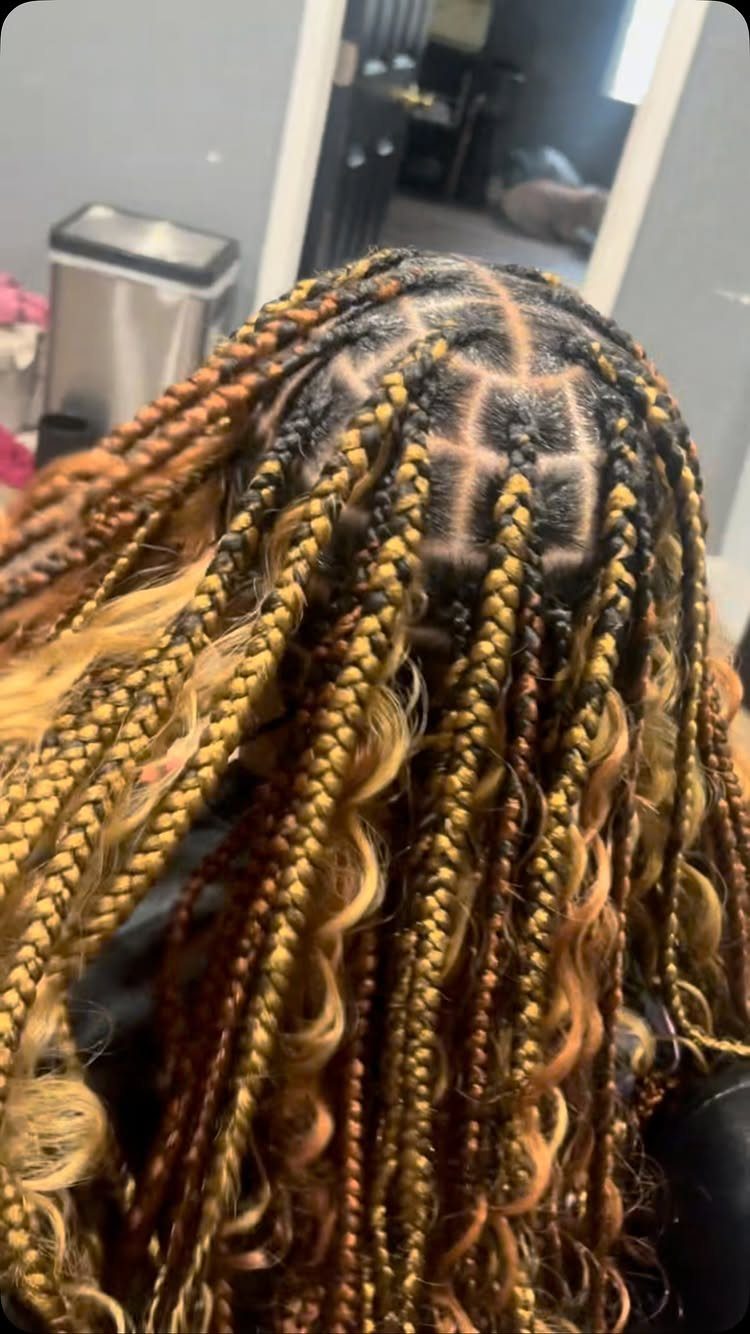
Ombre braids bring color into protective styles by using extensions that fade from dark roots to lighter ends. The gradient shows through the braid pattern, so the color shifts piece by piece rather than sitting in one smooth line.
This setup lets you try ombre without bleaching your natural hair. The braids hold the color in place, and when you take them out your own hair stays undamaged.
Kanekalon and synthetic braiding hair come pre-colored in ombre shades, or you can blend 2 tones yourself by mixing packs.
29. Ombre Hair with Bangs
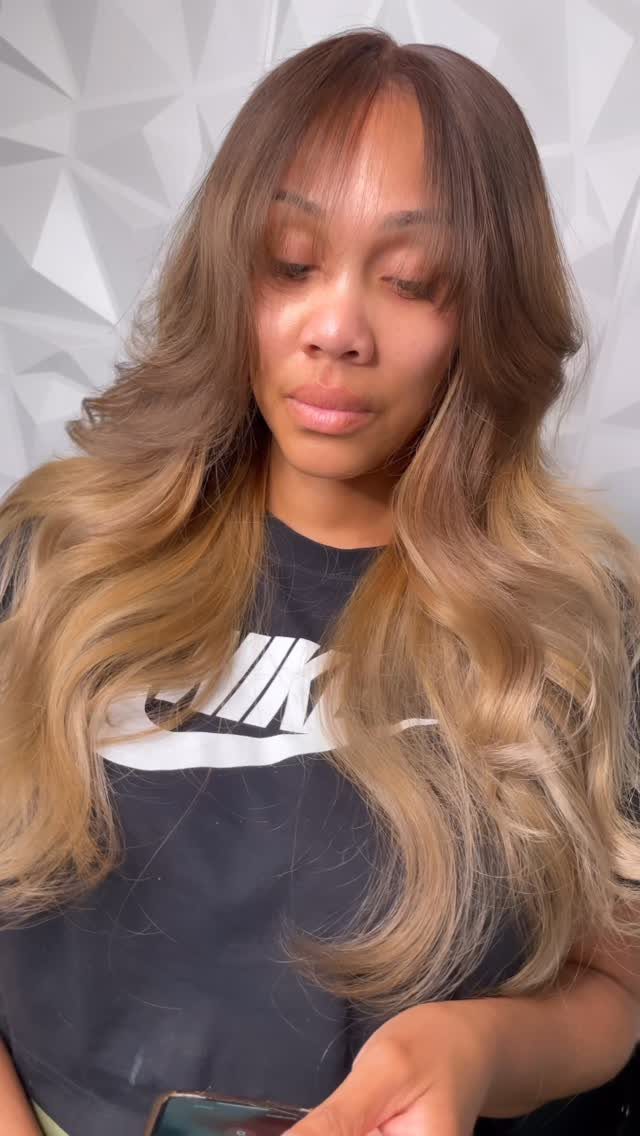
Bangs sit above the ombre transition, so they usually hold the darker root color while the rest of the hair fades lighter. The cut frames your face with depth and keeps the focus on the gradient through the lengths.
If you want the bangs to blend into the ombre, ask the colorist to lighten them partway so they sit between the root tone and the lightest ends.
Full bangs stay darker than curtain or wispy bangs because there’s more hair covering the forehead.
30. Ombre Hair Color for Black Women
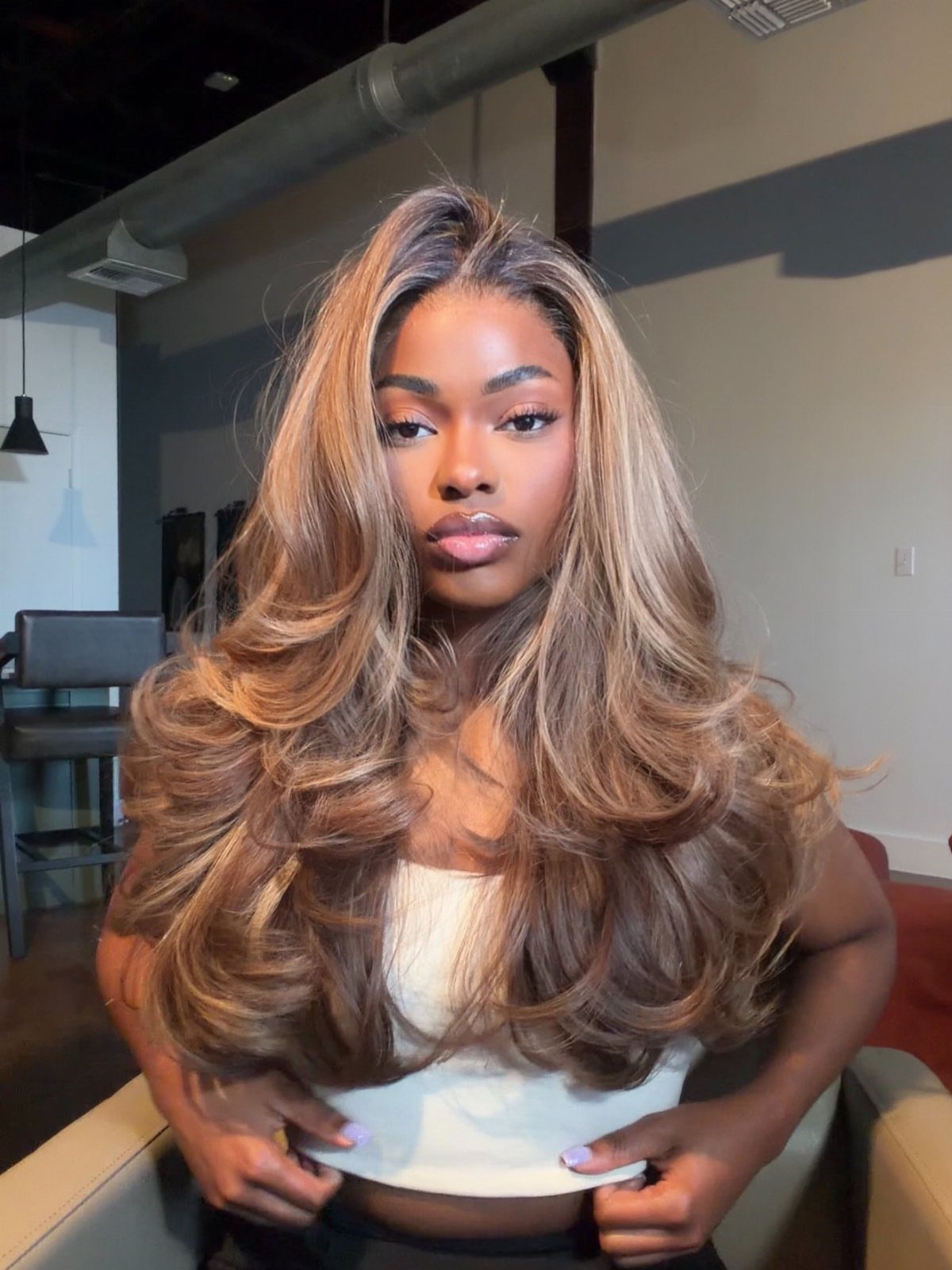
Ombre on natural or relaxed hair moves from dark roots into caramel, honey or copper ends, adding dimension without lifting the entire head.
The gradient works well with coils, waves and straight textures, and it highlights curl patterns by catching light at different points along the strand.
Because Black hair tends to lift toward warm tones, caramel and golden blonde ombre hold better than ash or platinum without extra toning.
A deep conditioning treatment after lightening keeps the ends soft, and regular trims prevent breakage where the color sits.
31. Tri-colored Ombre
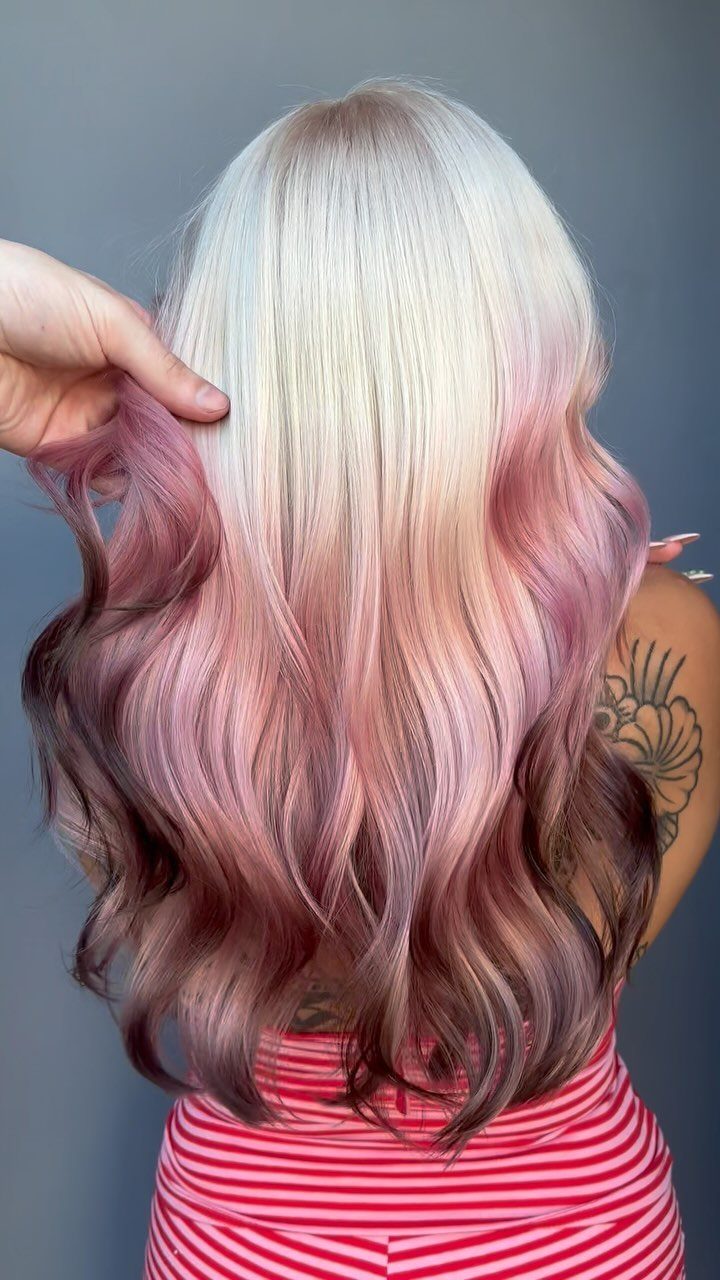
Three colors layer into one gradient, stacking pale blonde at the roots, pink through the mid-lengths, and mauve-brown at the ends. Each shade sits in its own zone rather than blending completely, so the transition reads segmented instead of smooth.
The colors fade at different rates, with pink washing out faster than the mauve.
Expect the middle section to lighten toward peachy blonde after a few washes, while the ends hold darker. Pink conditioner slows the fade, but expect the gradient to warm or cool as each band lifts at its own pace.
32. Teal Ombré
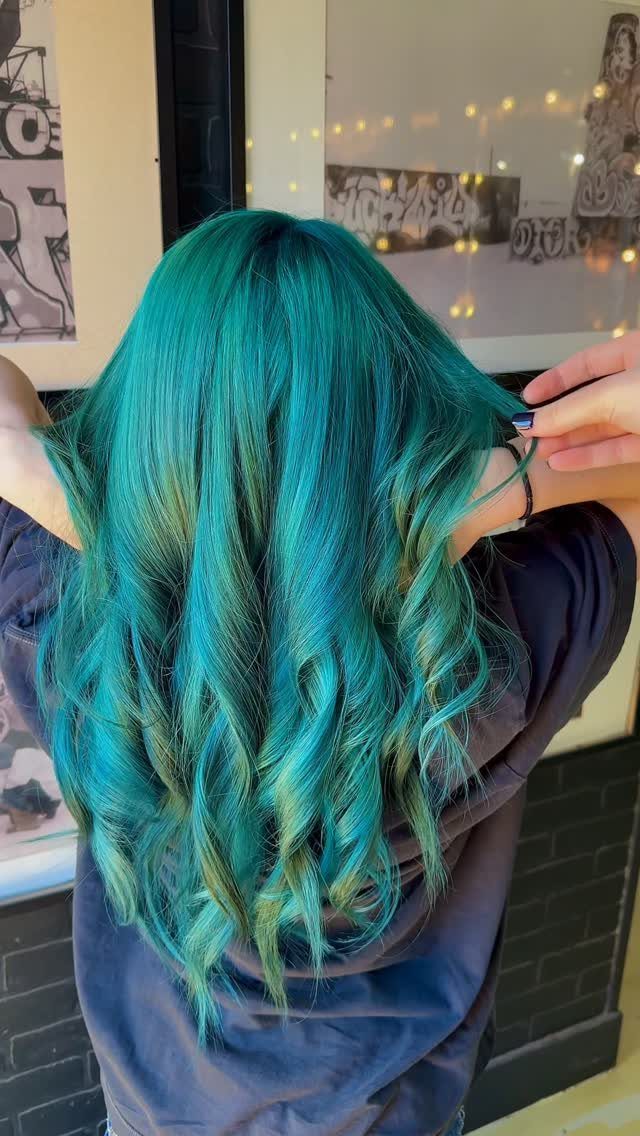
Dark roots transition into vivid teal and turquoise lengths, building cool, saturated color through the ends. The teal holds longer than pastel shades but still fades toward pale aqua or mint after several washes.
Any remaining warmth in the base pulls the color toward green as it fades, so a blue or teal-depositing conditioner helps keep the tone from shifting too far.
33. Teal and Purple Ombré
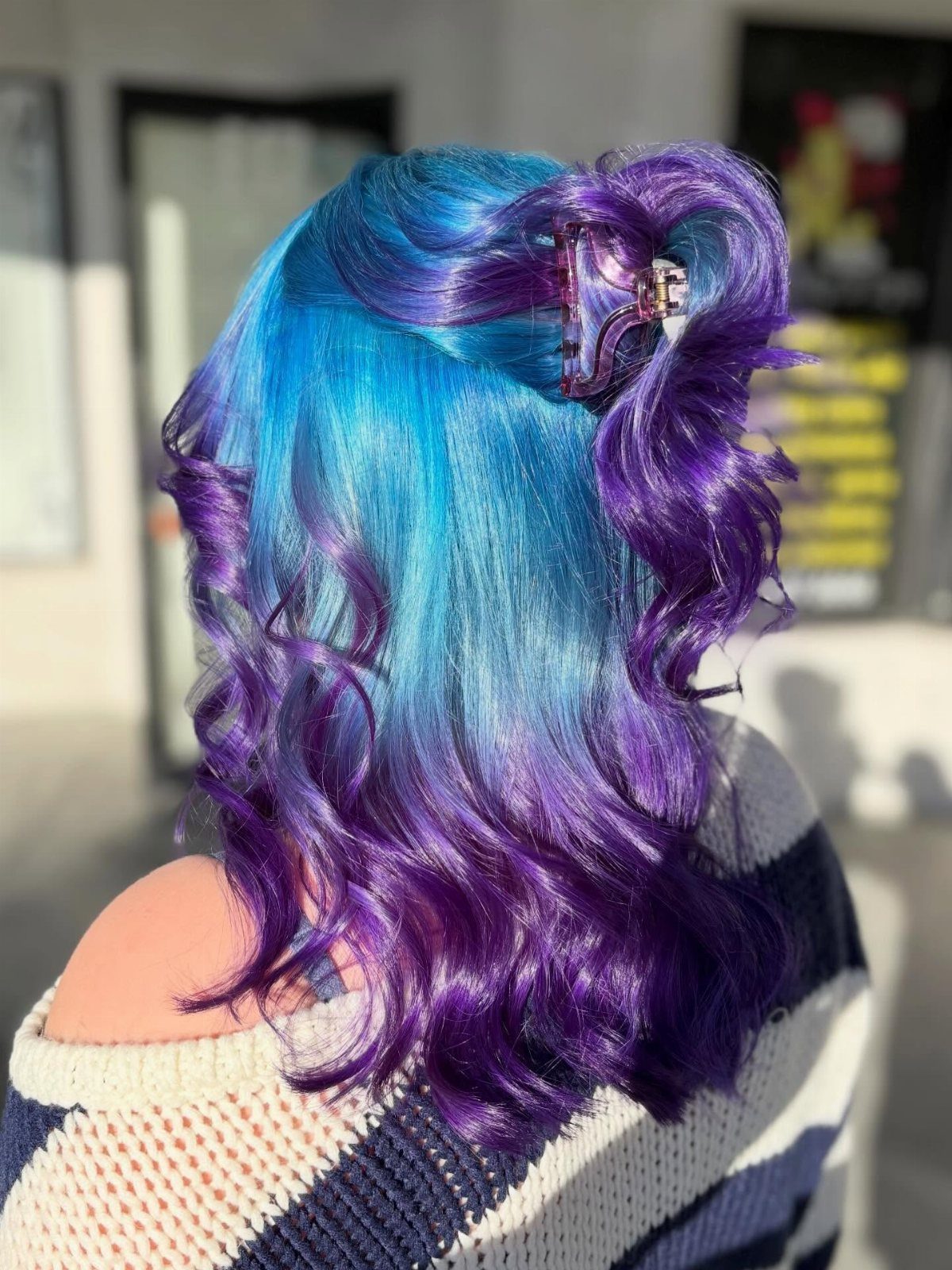
Bright turquoise starts near the crown and shifts into violet and purple at the ends, layering two vivid cool tones into one gradient.
The transition reads more segmented than a single-color ombre because each shade holds its own zone before fading into the next.
Both colors fade toward lighter versions of themselves, with the turquoise pulling toward mint and the purple softening into lavender. The gradient stays visible as it lightens, but expect the contrast between the two to shrink after a few weeks.
Maintenance and Color Care
The dark roots that define ombre let you stretch appointments longer than single-process color. Wella puts refresh timing at 3 to 6 months, though vivid shades like pink, purple or blue fade faster and need a gloss or toner sooner.
If your base is dark and the ends pull warm, a blue-toning shampoo once a week will keep orange from creeping back in.
Lightened ends dry out faster than the rest of your hair, so a weekly mask or oil treatment keeps them from turning brittle. If bleach was involved, a bond-repair product rebuilds the structure and cuts down on breakage.
Ombré allows you to stretch out the time between salon trips—because the lighter color starts past your roots, you avoid getting a harsh line of demarcation as your hair grows out.
Ombré Versus Balayage
You can combine both in one session.
If you want boldness with clear contrast, ombre alone does the job.
Balayage gives you that softer, grown-out finish if you want something that looks less like a line. Ask for both when you want texture layered into the gradient.
Lightening and Hair Health
Lightener gets applied to mid-lengths and ends to create the ombre fade, and those sections take more stress than roots that stay untouched.
If your hair is already damaged or brittle, a conditioning treatment or mask before you color gives the strands a stronger base to work from.
Bleach lifts the cuticle to remove pigment, which leaves the hair more porous and prone to breakage. Wella’s BlondorPlex is one example, though most professional colorists have a bond treatment they prefer.
After the color is done, a repair mask once a week keeps lightened ends from drying out.
If your hair feels rough or tangles easily, a leave-in serum smooths the cuticle and adds slip. Toning between appointments holds the color, but it also deposits moisture back into bleached hair.
Frequently Asked Questions
What is ombré?
Ombré is a color that darkens at the roots and lightens through the lengths, so the change happens gradually instead of stopping at a line. While most ombré moves from dark to light, reverse versions and fashion-color gradients also work.
What is the difference between balayage and ombré?
Ombré creates a smooth gradient from dark roots to lighter ends, while balayage uses hand-painted highlights that become heavier toward the tips and leave the underside darker.
Balayage gives you dimension and a sun-kissed effect, while ombré focuses on the transition itself. You can add balayage through the upper half for dimension before the ombré gradient starts.
Is ombré better than highlights?
Neither is universally better. Ombré gives you a blended gradient that starts away from the roots and grows out with minimal upkeep, while highlights distribute brightness from root to tip for an all-over glow.
Choose ombré if you want a soft fade and low maintenance, or highlights if you prefer light pieces throughout.
What is the best ombré hair color?
The right ombré depends on where you’re starting, what your skin tone can handle, and how dramatic you want the fade.
Caramel works well for warm tones and dark bases, ash blonde or silver suit cooler skin, and brown ombré keeps the gradient subtle and natural.
Fashion colors like rose gold, purple or copper add dimension if you want something outside the neutral range.
Will I look good with ombré?
Ombré flatters any hair type when it’s customized for your base color, texture, and skin tone.
A colorist can adjust the placement, contrast, and shade to match your natural features, so the gradient reads intentional rather than grown out. Warmer tones suit golden or caramel ends, while cooler tones work better with ash or silver.
Is ombré low maintenance?
Yes. Fashion colors and high-contrast gradients fade faster and need toner or gloss every 4 to 6 weeks, but natural ombré can go 3 to 6 months between salon visits.
How do you maintain ombré hair at home?
Stick with sulfate-free shampoo and conditioner made for color, and use a toning treatment weekly if the lighter section starts to shift.
Blonde ends need purple shampoo to prevent brass, while lightened brunettes use blue toner to neutralize orange. If the ends feel dry from lightening, add a weekly mask to restore moisture.
Is ombré hair still in style in 2026?
Yes. Ombré remains a timeless technique because it grows out naturally, suits any base color, and can be customized with neutral or fashion shades.
The low-maintenance regrowth and ability to layer dimension into curls, waves, or layered cuts keep it relevant even as other trends shift.