Lifting black hair to light brown can take 1 or 2 sessions depending on whether your base is virgin or previously dyed, and the shade you choose matters more than how light it goes.
Warm browns like caramel and chestnut suit warm or olive skin, while mocha and ash work better on cool pink undertones. Retro chunky highlights need more frequent touch-ups because color sits closer to the root.
1. Caramel Balayage
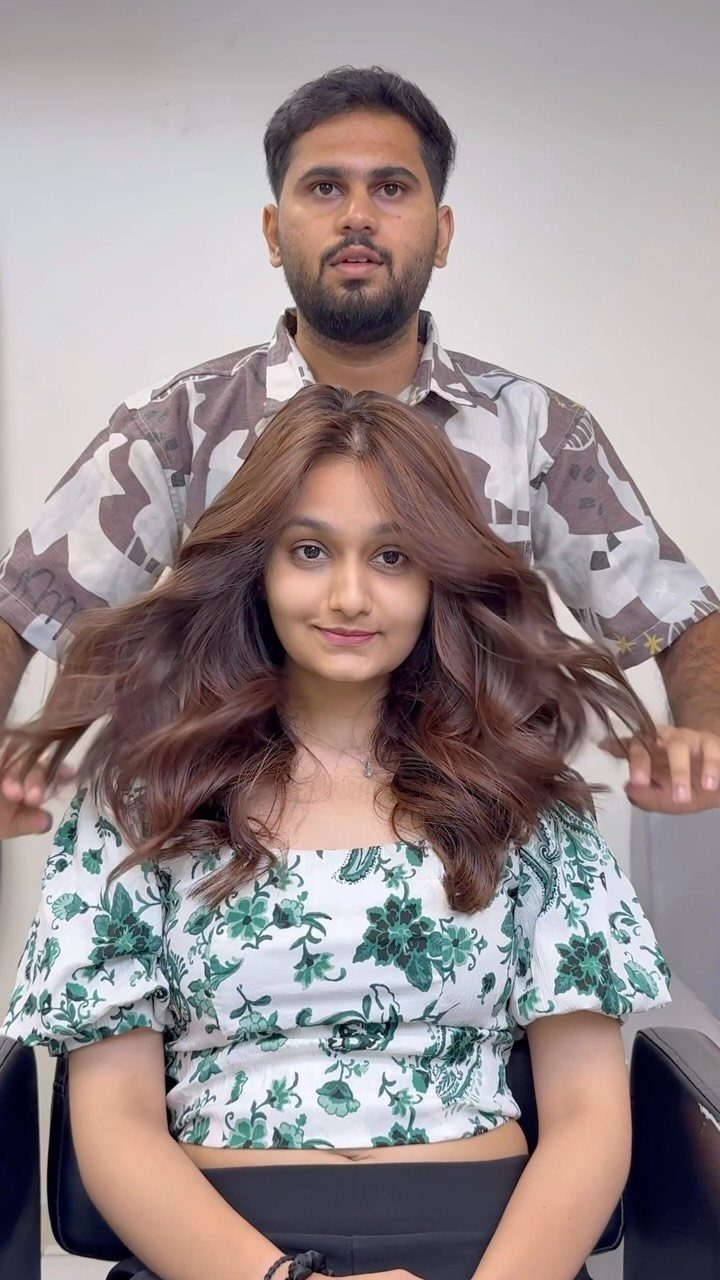
Balayage is hand-painted color applied in sweeping strokes, which means the warm caramel tone builds gradually through the mid-lengths and ends instead of sitting in foils from root to tip. The result reads as natural dimension rather than obvious stripes.
The dark root means you can stretch appointments to 12 or 16 weeks without a hard line of regrowth showing. If your hair is naturally black, expect 2 sessions to lift it cleanly to caramel without orange.
Ask for caramel or honey tones if your skin leans warm, and concentrate the lightest pieces around your face and through the very ends where they catch the most light.
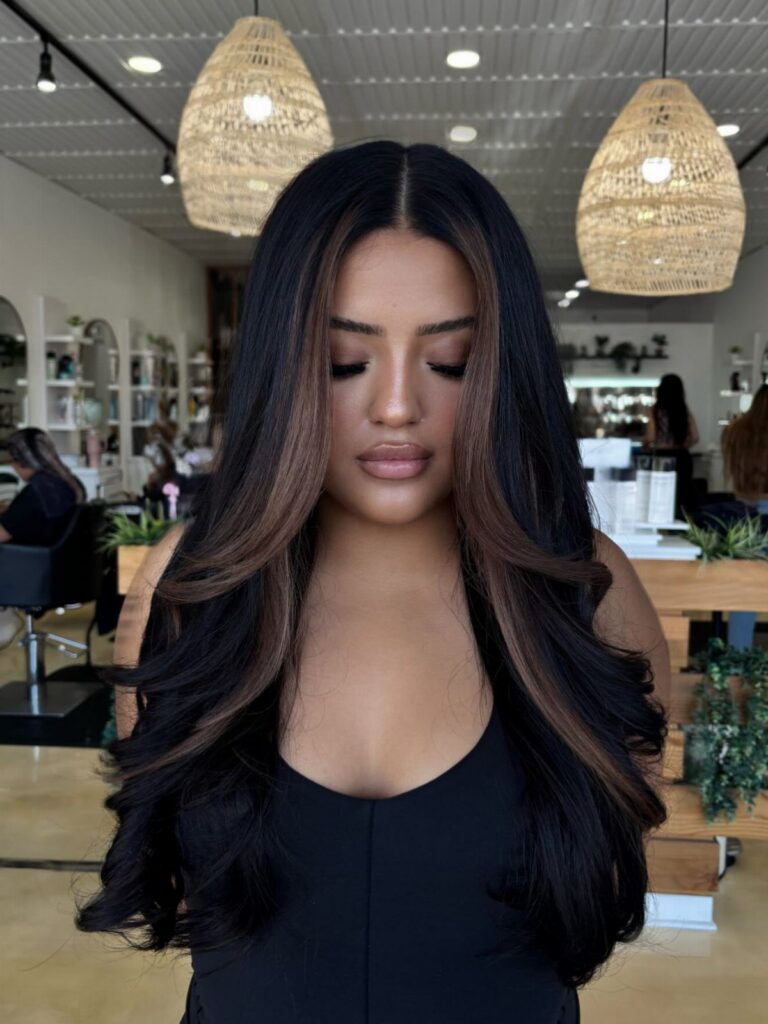
2. Caramel Money Piece
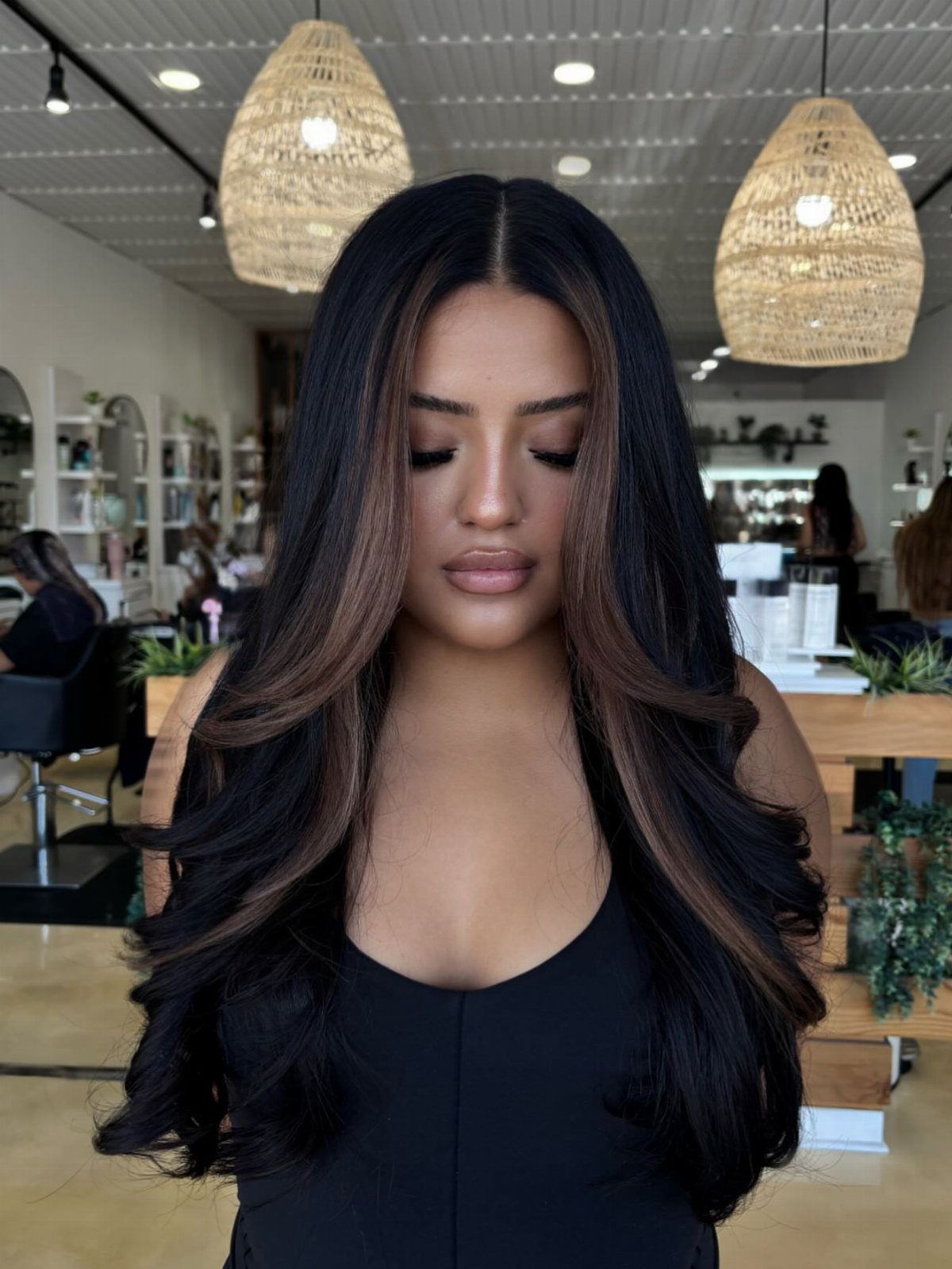
A money piece is the 2 sections of hair that frame your face, lifted several shades lighter than the rest.
The placement brightens your complexion and draws attention forward, which makes it popular for anyone who wears their hair down most days.
Caramel works best if your skin runs warm or sits somewhere in between. If you have cool undertones, mocha or ash brown will read better against your face.
Everything else stays untouched, so upkeep is lower than full highlights. Plan for a root touch-up when the contrast starts to fade.
3. Chestnut Highlights
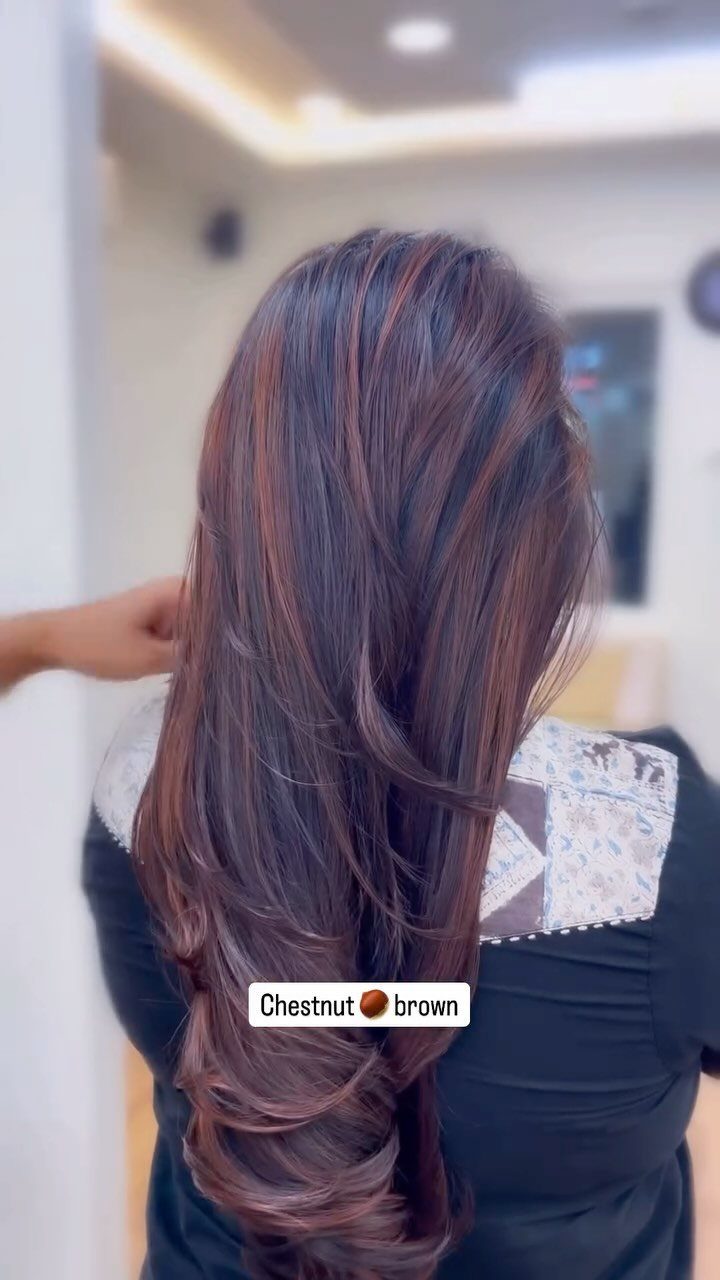
Chestnut falls right in the middle of caramel and chocolate, a medium brown with warm red undertones that adds shine and movement to black hair without pushing into blonde territory.
The color works on most skin tones and reads as subtle in dim light, more obvious in sun.
Foil highlights give you even, repeatable pieces.
Balayage gives softer, varied placement. Either method works; foils are faster and easier to replicate if you switch stylists.
If your base is naturally black, one session usually lifts cleanly to chestnut. Virgin hair takes color more evenly than previously dyed hair, which can grab patchy.
4. Mocha Money Piece
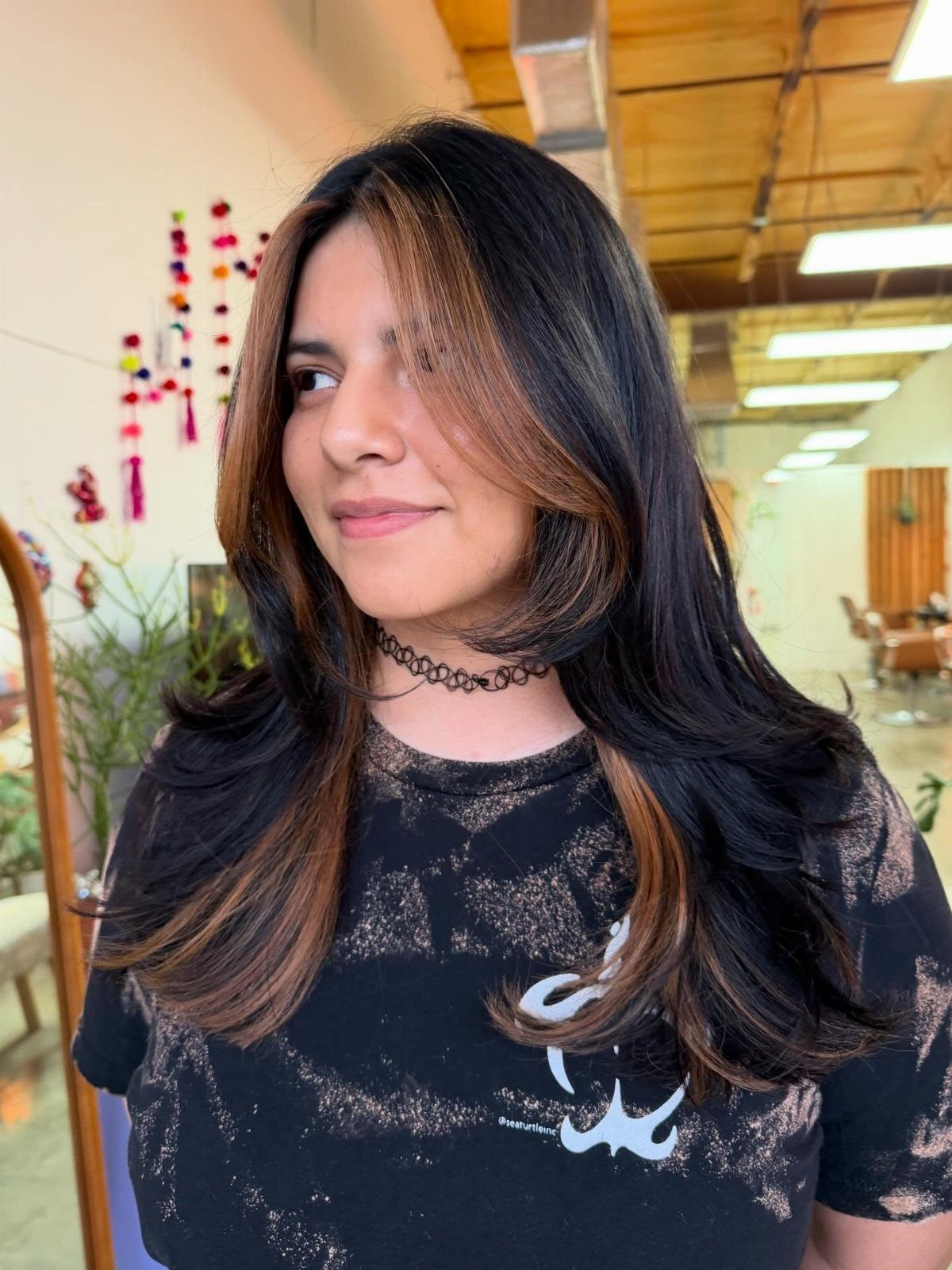
Mocha is a cooler brown than caramel, with less gold and more neutral or ash tone. That makes it flattering on cool and neutral skin tones, where warmer highlights can pull brassy.
The money piece placement keeps color focused at the face, so you skip the time and cost of highlighting your whole head. 2 foils or a balayage stroke on each side is faster in the chair than full highlights.
Mocha fades cleaner than warm browns, which can turn orange as they oxidize. A purple-toning shampoo once a week keeps it from going muddy between appointments.
5. Chocolate Bronze Ombré
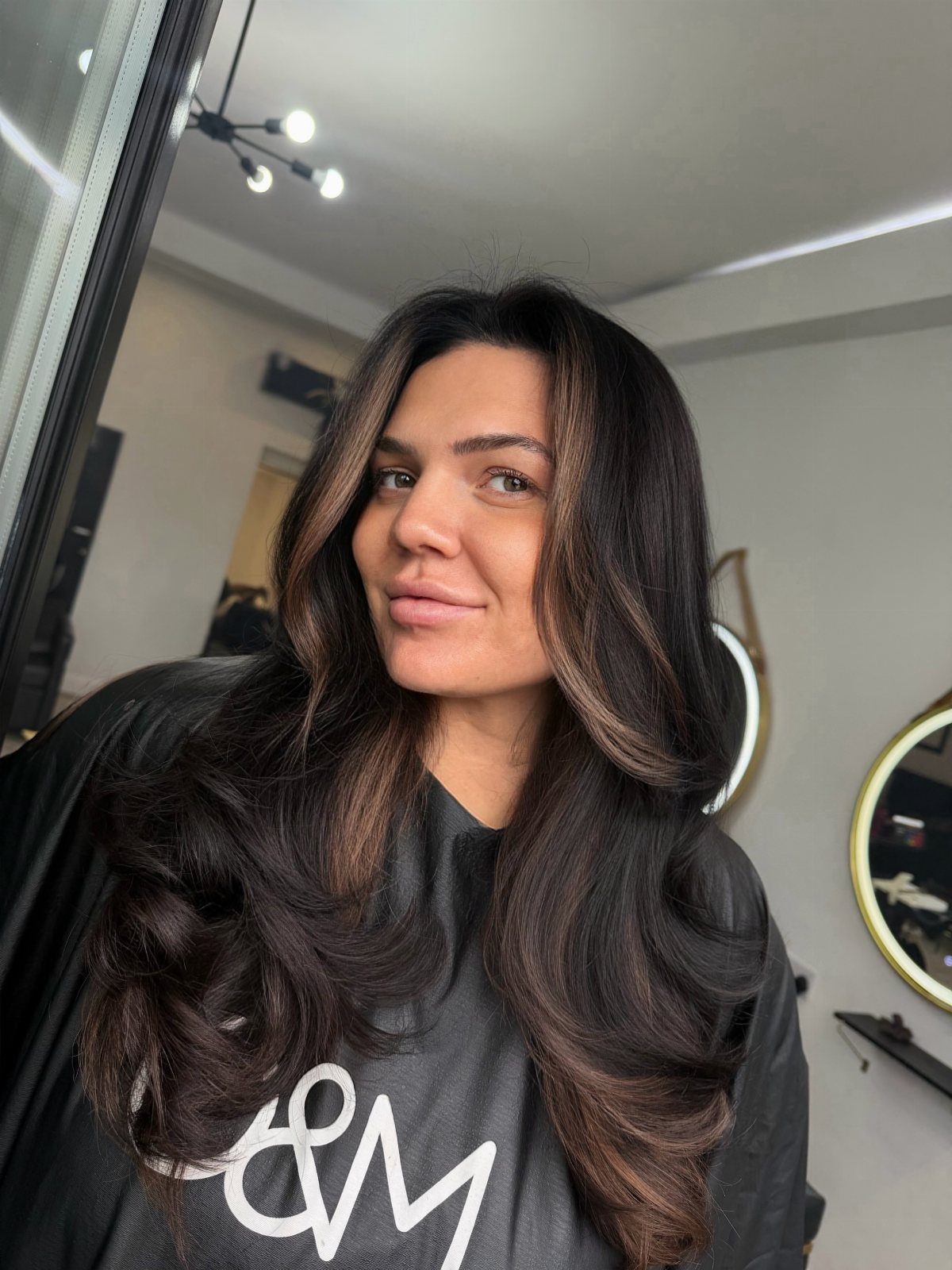
Ombré is a gradient, darker at the root and lighter through the ends, with the color transitioning smoothly between the two rather than sitting in distinct highlights.
Chocolate bronze starts with a black or deep brown root and melts into warm bronze by the time it reaches the ends.
The transition usually begins around ear level. If your hair is shorter than chin length, there is not enough room for a true ombré and you will get more of a shadow root instead.
On cool skin it can read orange. Plan for a refresh when the bronze ends start to fade flat.
6. Chestnut Natural Curls
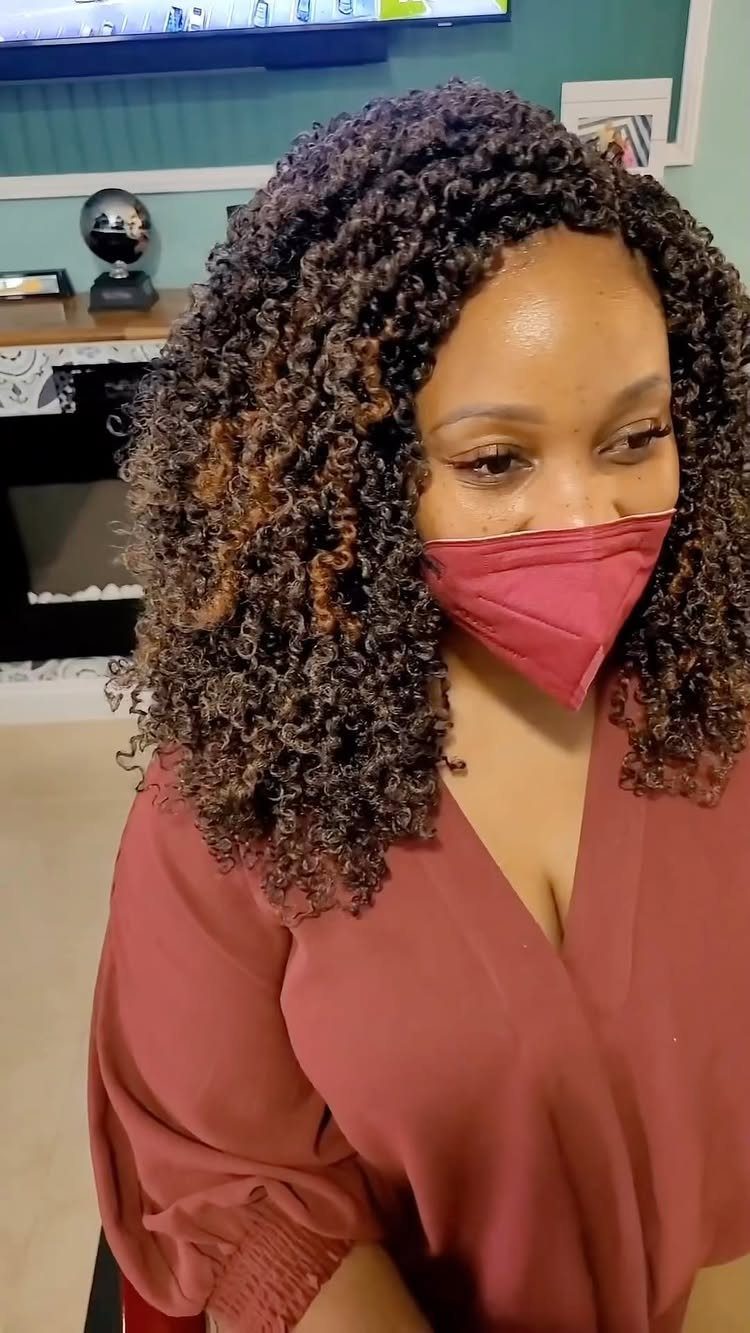
Chestnut highlights on natural curls catch light differently than they do on straight hair. The curl pattern breaks up the color, so even full highlights read as dimension rather than stripes.
Curly hair is more porous and lifts faster, which means your colorist should use a lower volume developer and check the color regularly to avoid over-processing.
Dry, damaged curls will not hold color well, so deep condition for 2 weeks before your appointment if your ends are rough.
Placement matters.
Highlights concentrated at the crown and around the face frame your features. All-over color gives more movement but takes longer and costs more.
7. Brunette Balayage
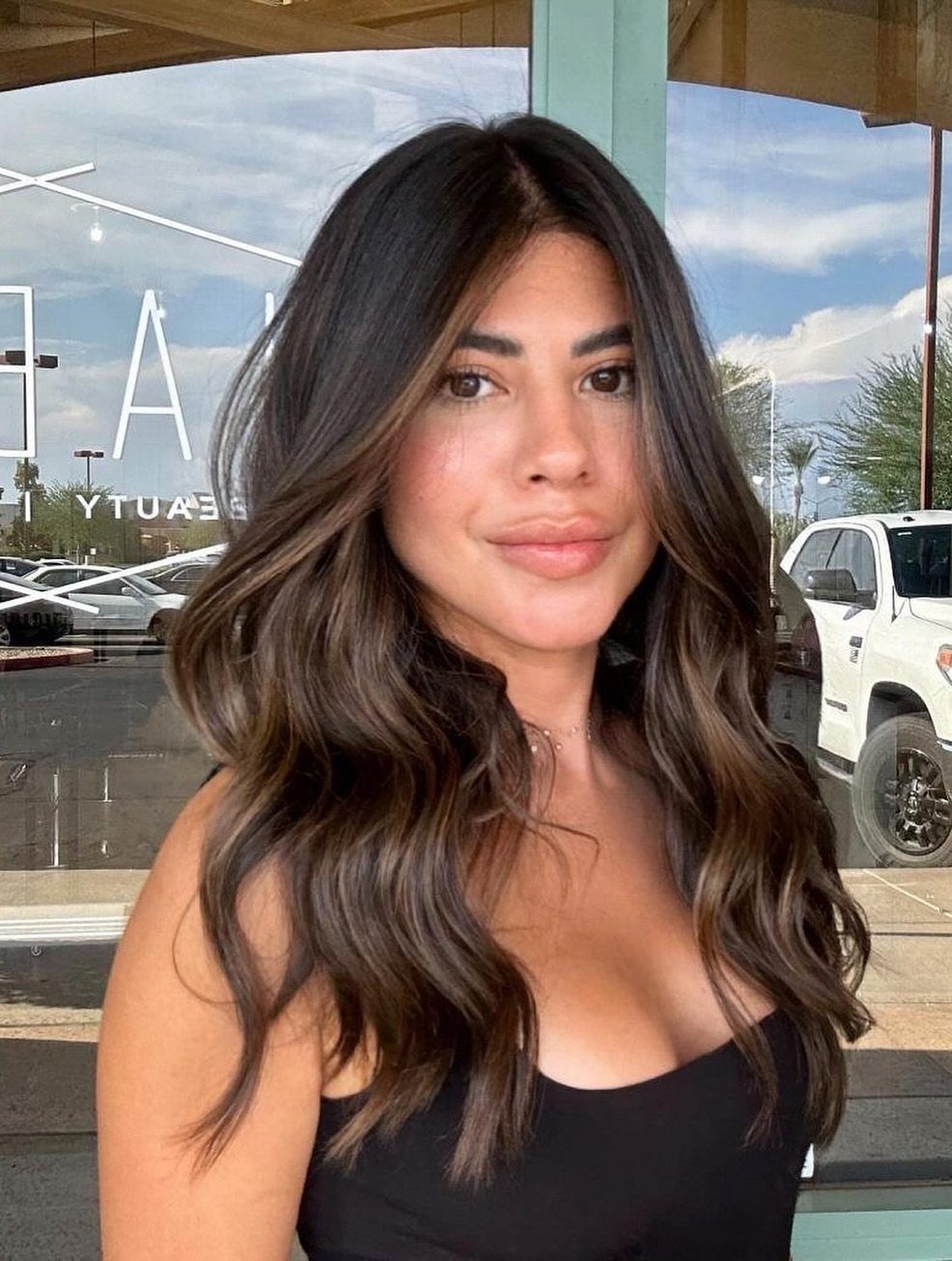
Balayage lets you layer multiple brown tones into one look instead of committing to a single highlight shade. The caramel and chestnut pieces sit at different depths, so you get dimension that shifts depending on how the light hits.
If your base is natural black, ask for warm browns concentrated through the bottom half and around your face. The root stays untouched, so regrowth blends in naturally and you can stretch your appointments longer.
This works on most skin tones because the mix of tones gives you range. If one shade pulls too warm or too cool on you, the others balance it out.
8. Chocolate Highlights
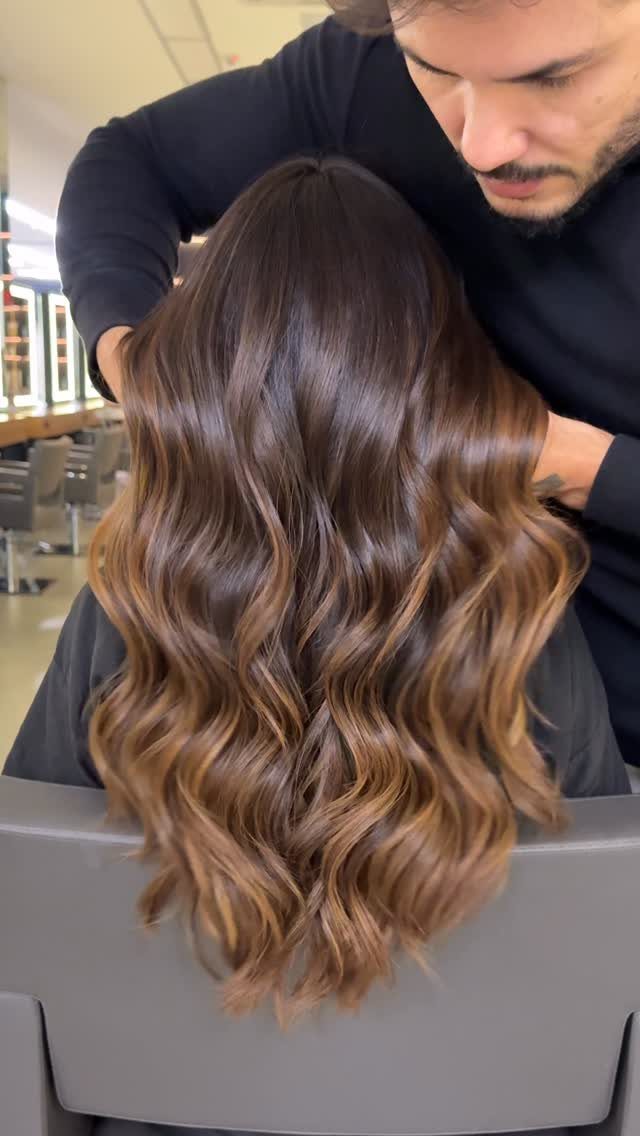
Chocolate brown sits just a shade or two lighter than black, so the contrast is subtle. In low light the highlights almost disappear, but in sun they add movement and catch the light without announcing themselves.
The narrow lift makes this lower-maintenance than caramel or chestnut. One session usually gets you there if your base is virgin black, and the color fades cleanly without turning brassy.
If you want dimension but do not want people asking if you colored your hair, this is the version to ask for.
Set contrast by depth: Go 1–2 levels lighter than your base for subtle dimension, 3–4 levels for a bolder look on black hair.
9. Mahogany Highlights
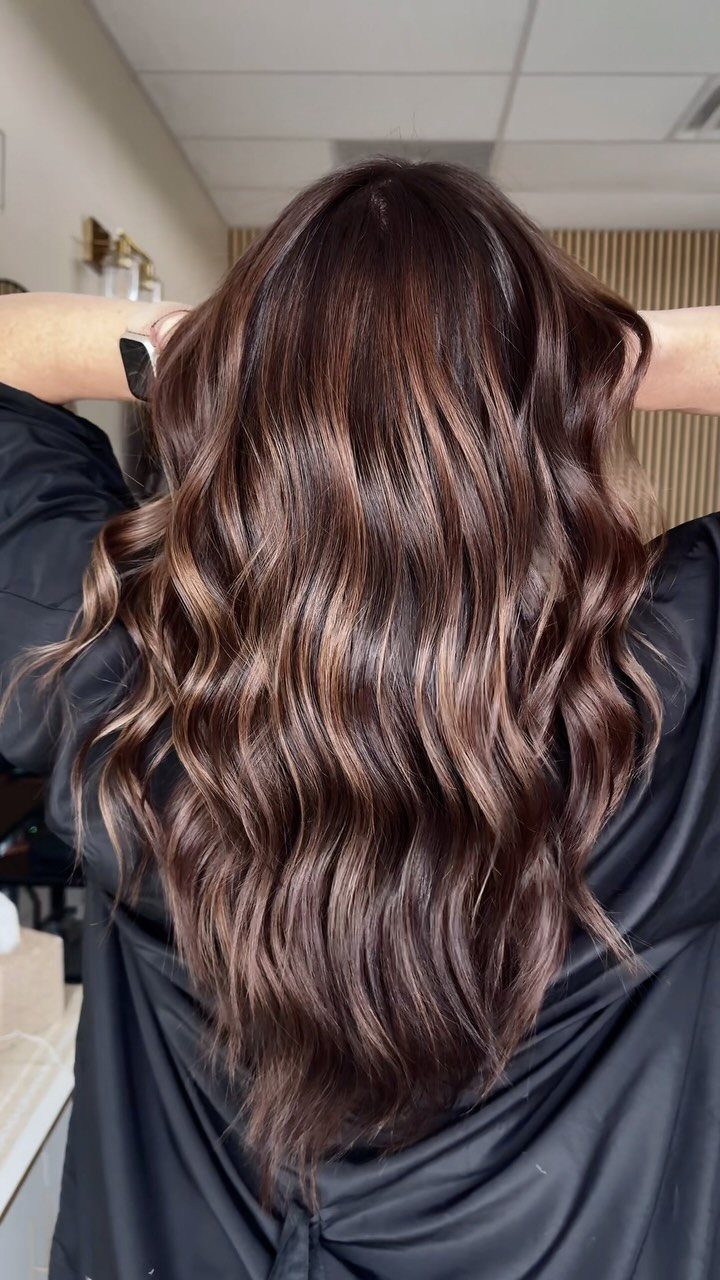
Mahogany is a red-brown that reads warm without going orange. The red undertones show up most in natural light and add richness to black hair that straight brown does not.
This shade works best on warm or neutral skin. On cool skin the red can clash, so ask for a cooler chestnut or mocha instead.
Mahogany fades faster than neutral browns because red pigment oxidizes quickly.
10. Soft Mocha Balayage
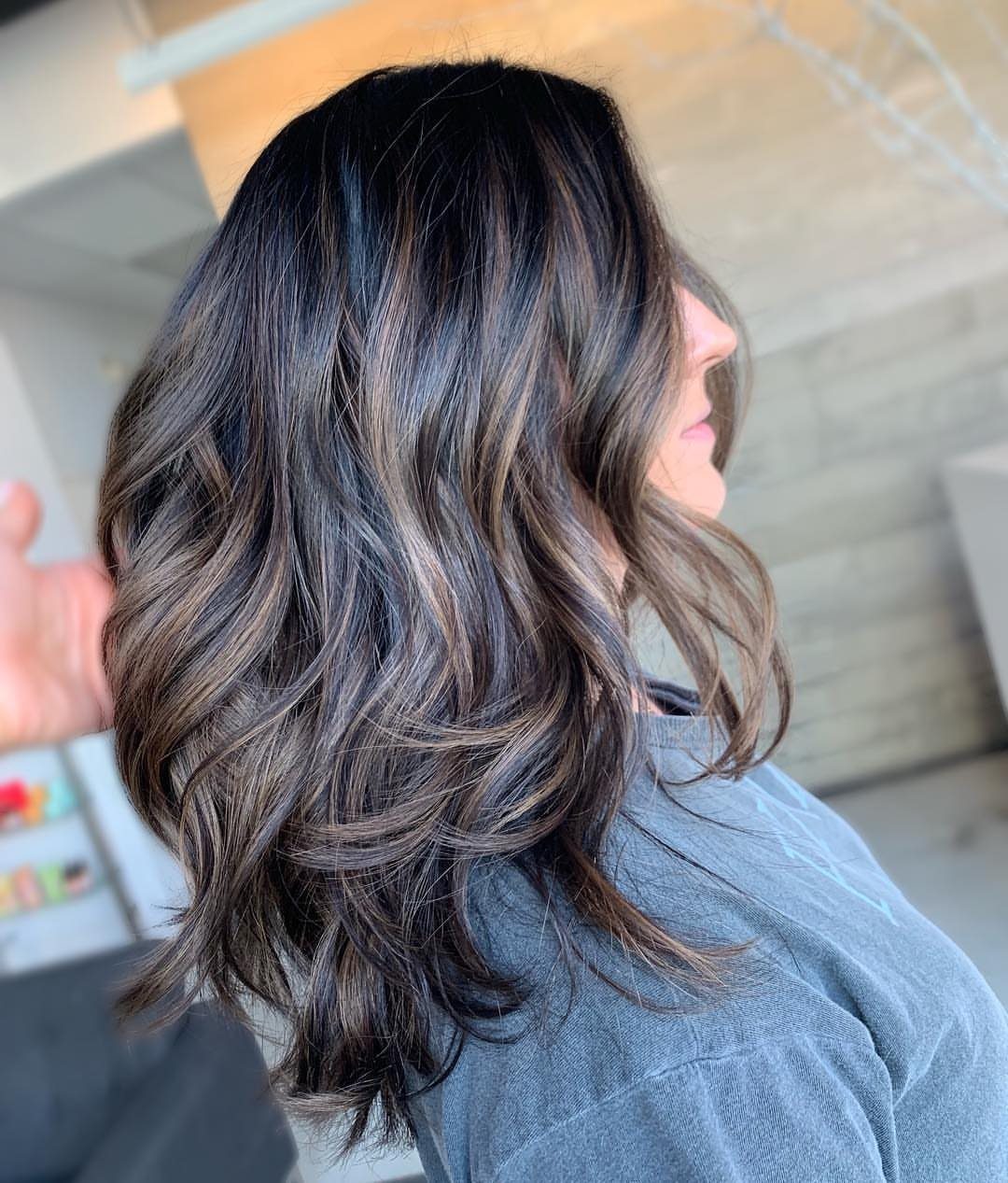
Mocha with grey undertones is the coolest brown you can lift black hair to before it crosses into ash blonde territory.
The wide, diffused strokes give you soft dimension instead of defined ribbons, so the color melts into the base rather than sitting on top of it.
Cool browns suit cool and neutral skin tones better than warm caramel does. If your skin pulls pink or your veins look blue, this is the safer choice.
One session lifts black hair to mocha without brassiness, and it fades cleaner than warm tones.
11. Warm Espresso Melt
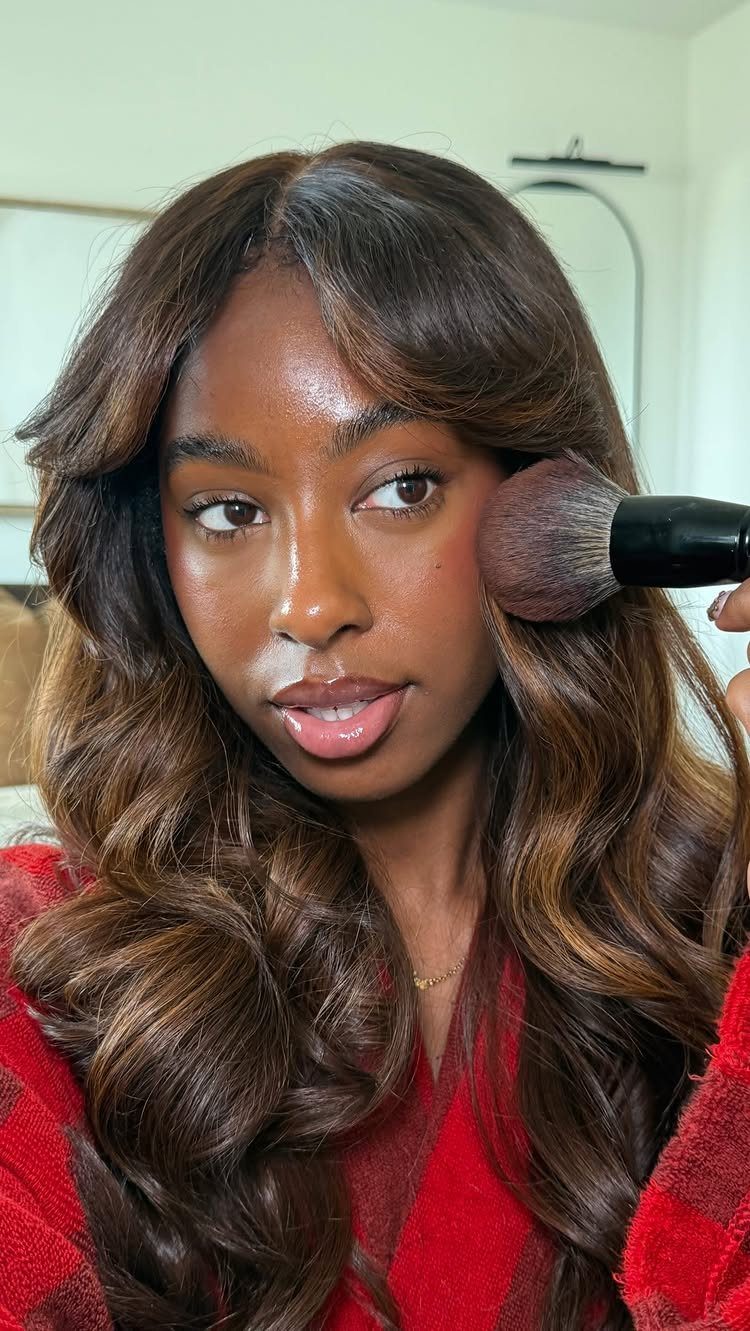
A color melt transitions gradually from dark roots to lighter ends without a visible line where one shade stops and the next begins.
Espresso at the root shifting to caramel through the ends gives you brightness where it matters most while keeping the top low-maintenance.
The transition usually starts around mid-length. If your hair is shorter than shoulder length, the shift will be faster and the difference between the 2 tones more obvious.
This grows out gracefully because the root is already dark.
12. Copper Brown Balayage
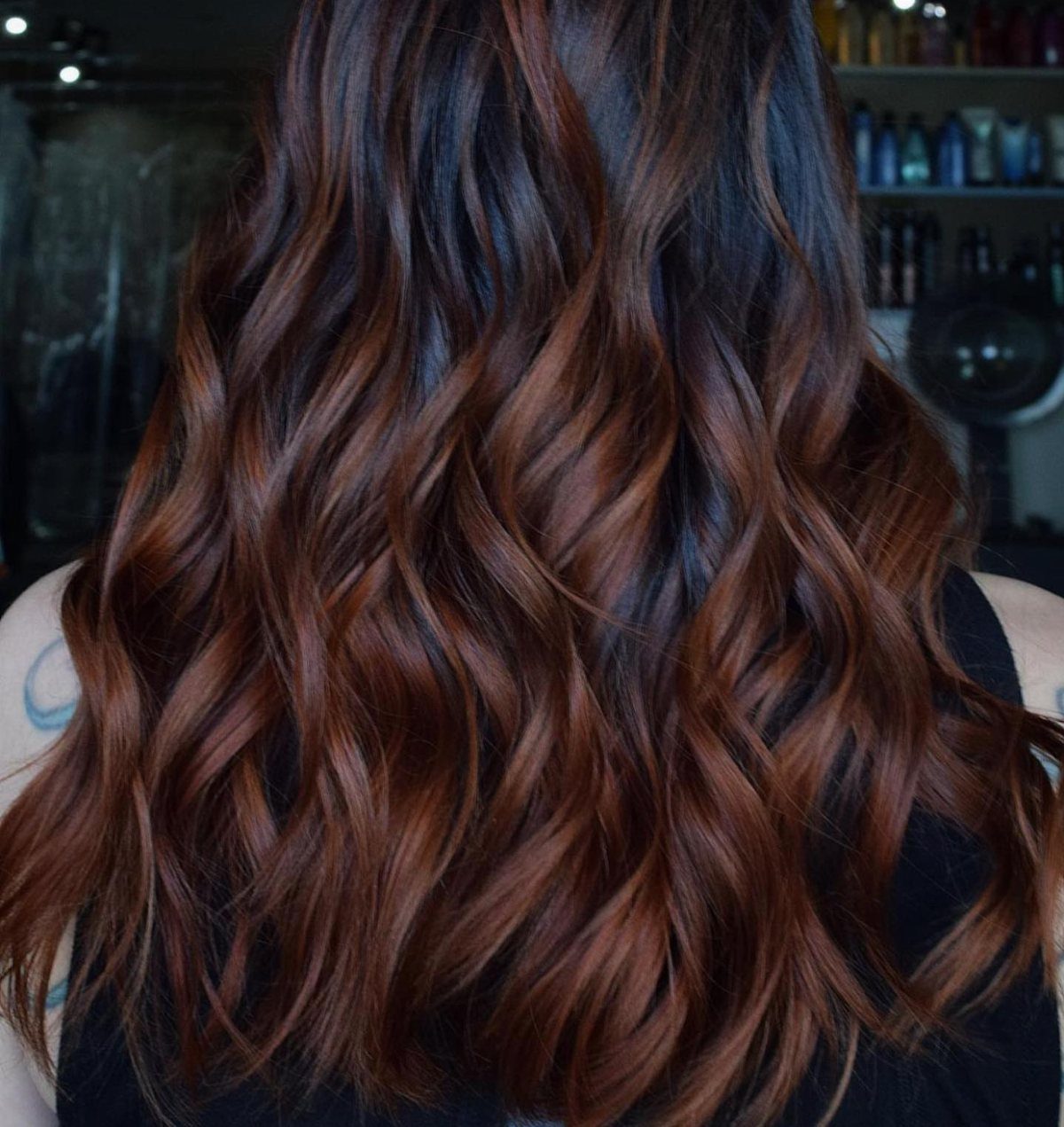
Copper brown is warmer than chestnut and more orange-toned than mahogany, which gives black hair a sunlit effect that reads as dimensional rather than flat. The balayage placement keeps the brightest copper through the ends and around the face.
Copper works best on warm skin. On cool or neutral skin it can pull brassy, so test the shade on a money piece before committing to full balayage.
13. Caramel Protective Style
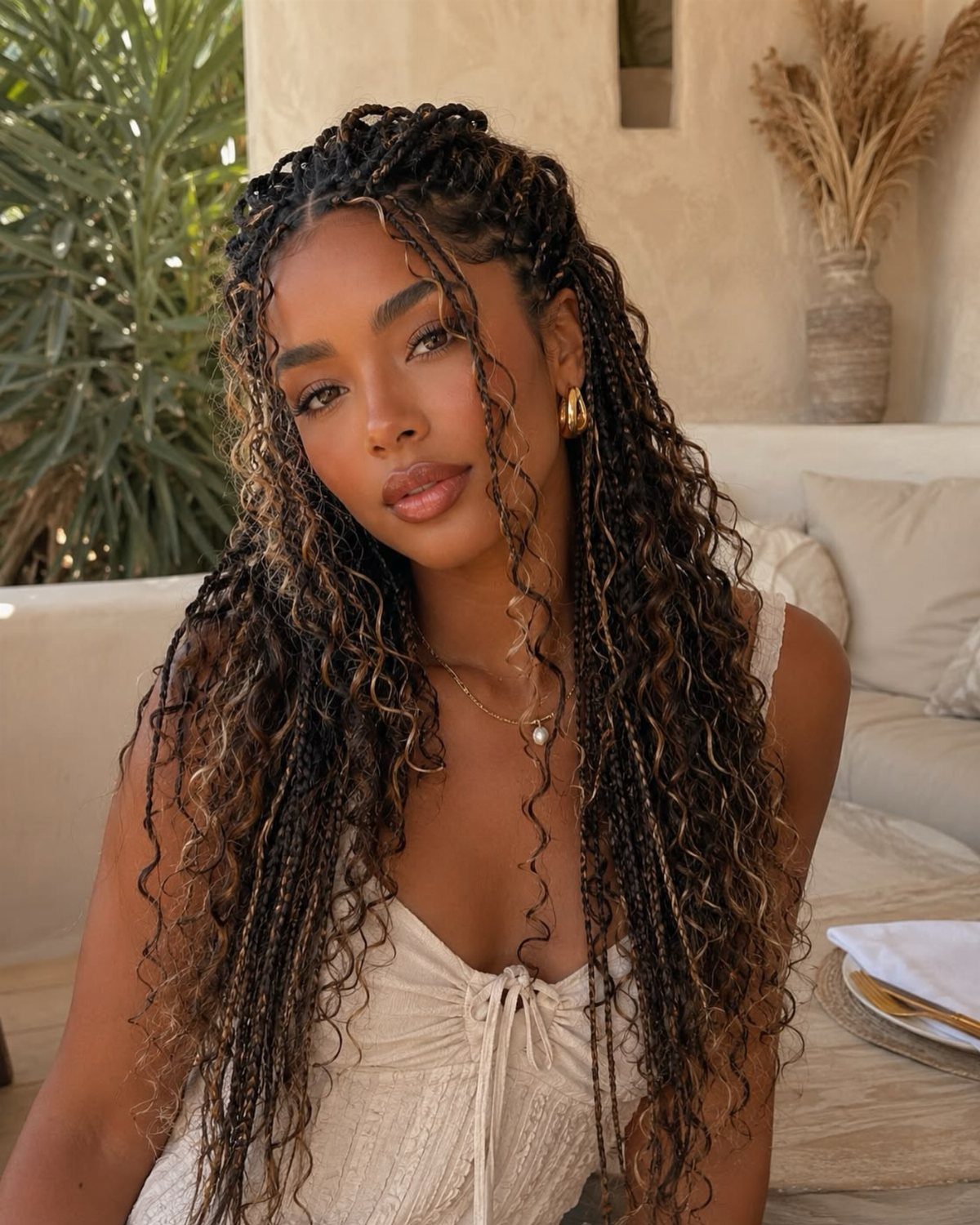
Protective styles take pre-braided or pre-twisted hair, which means the color is built in before installation rather than applied to your natural hair. Caramel pieces frame the face and add brightness without any chemical processing.
The contrast shows best when the caramel sits against a black or dark brown base. If you want dimension through the full length, ask for caramel strands mixed throughout instead of concentrating them at the face.
Maintenance is whatever the protective style itself requires. The color does not fade because it is not dyed.
14. Subtle Brown Ribbons
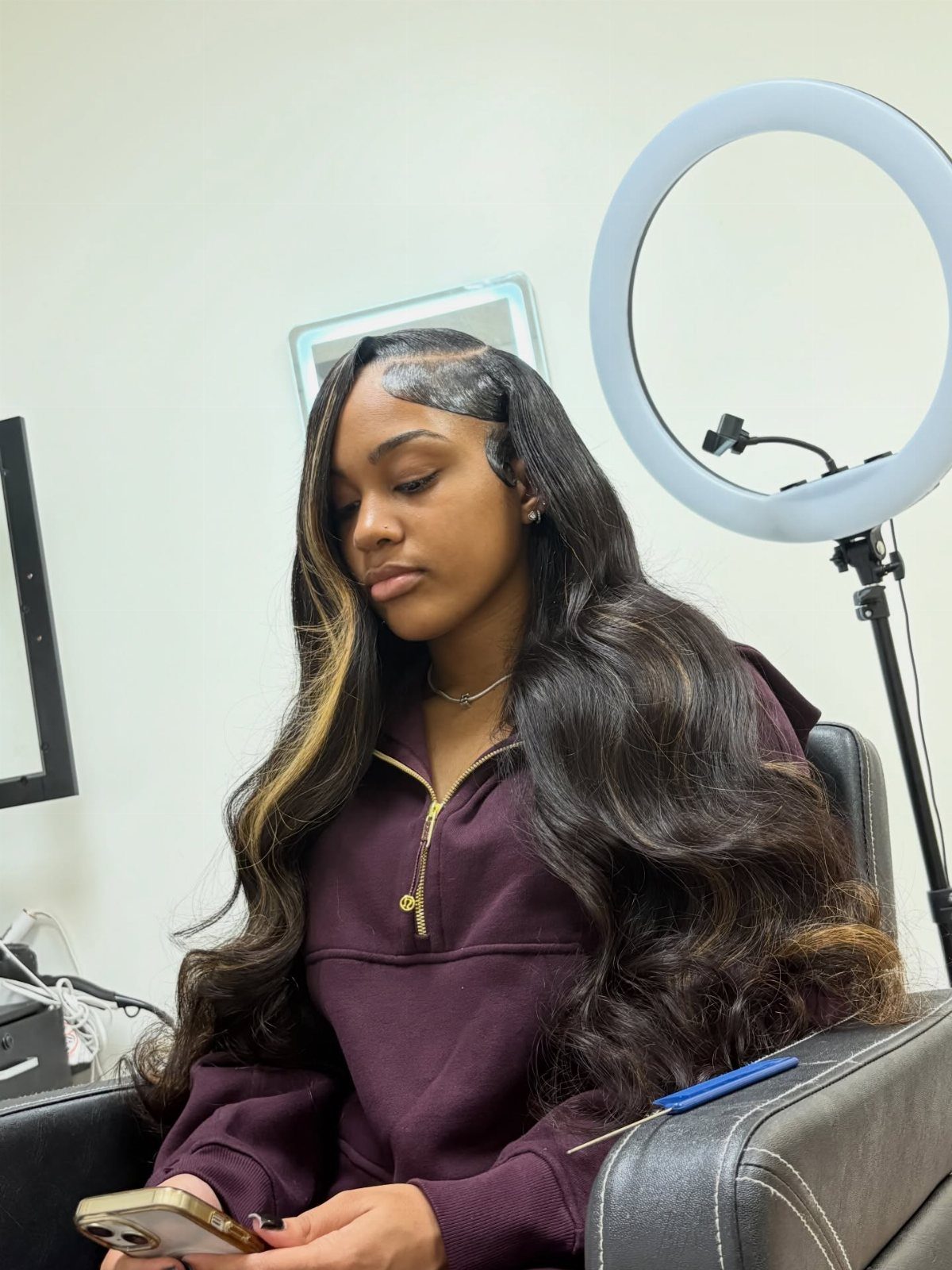
Ribbons are fine, vertical sections of color that run from root to end, spaced far enough apart that the base color dominates.
When the lift is only a shade or two, the ribbons blend into the black instead of standing out as separate stripes.
A side part shows more contrast on the heavier side, where more ribbons fall into view. Center parts distribute the color more evenly.
15. Mocha and Milky Brown
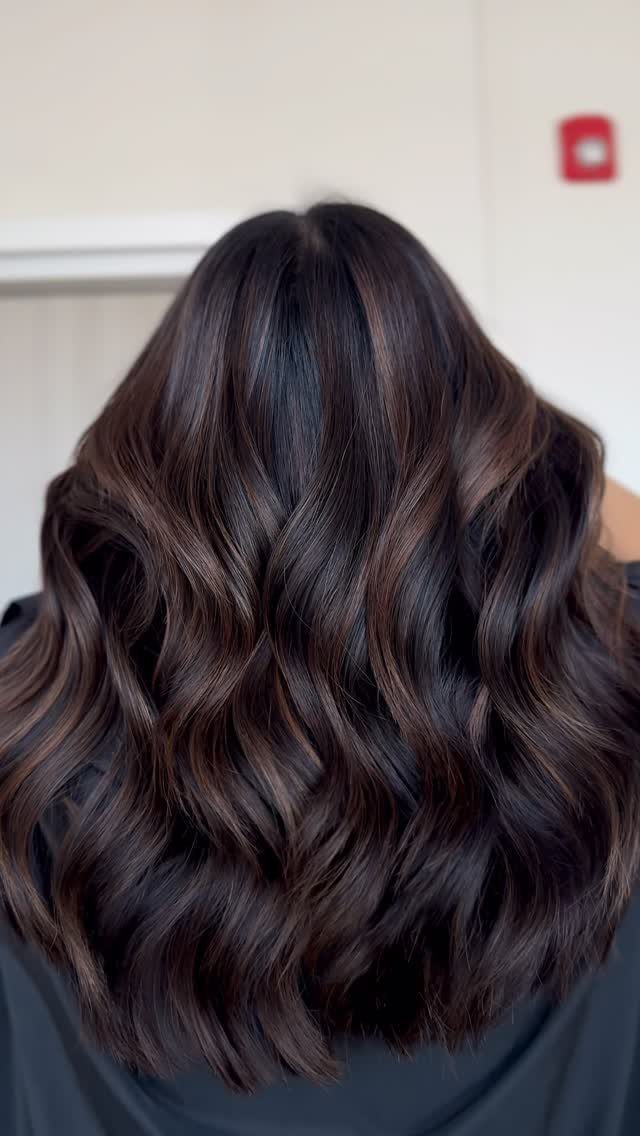
Layering two brown tones instead of one gives you dimension that shifts with movement. Mocha sits deeper and cooler, milky brown lighter and softer, so the two together read as natural variation rather than a single applied highlight.
Balayage placement keeps the lightest pieces through the ends, where they catch light and add lift without making the whole head look colored. If your base is naturally black, lifting to milky brown without brassiness usually takes 2 sessions.
16. Chocolate Streaks
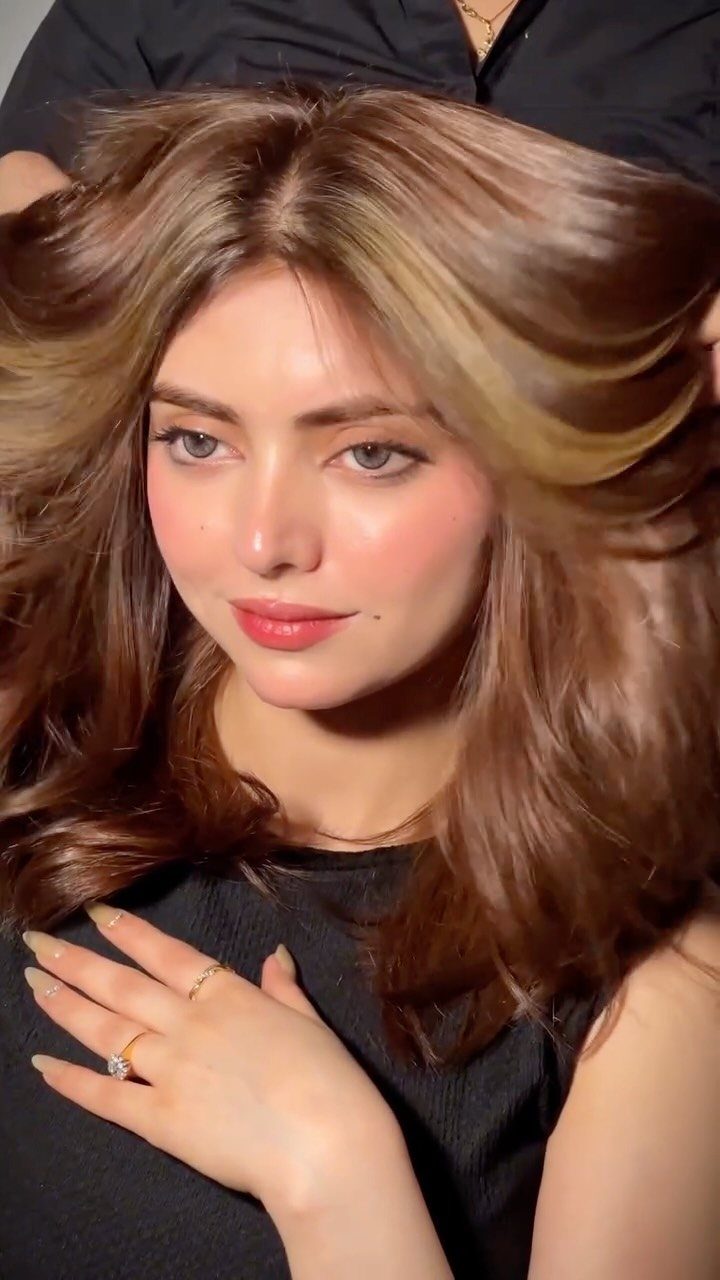
Streaks are thicker than ribbons but narrower than chunky highlights, which makes them visible without dominating the base. Chocolate brown lifts black hair just enough to add definition, and hazelnut tones warm it slightly without pushing into caramel territory.
The close lift means this grows out gracefully. Regrowth blends in naturally, so you can stretch appointments without a visible line.
If you want movement but prefer understated color, this is a safer starting point than caramel or chestnut.
17. Chunky Retro Highlights
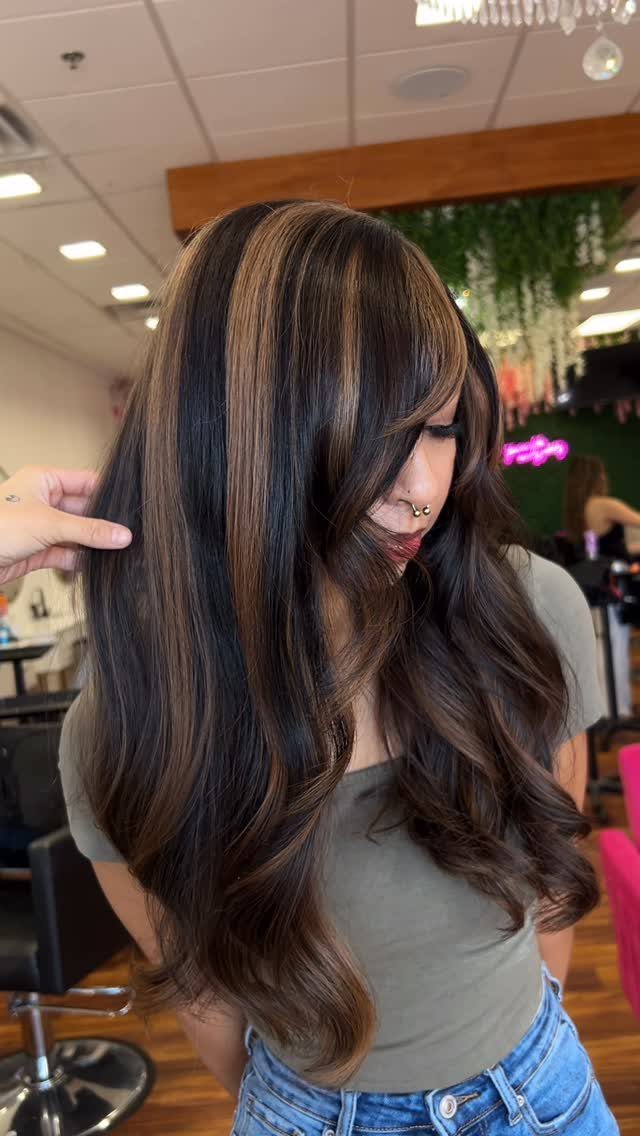
Chunky highlights are wide sections of color, usually foiled from root to tip, that create high contrast instead of blending in.
The 90s version sat in thick, evenly spaced stripes, and that is what makes this look read as intentional rather than unfinished.
Light brown on a black base gives you maximum contrast without going blonde. The effect is bold and works best if you want the color to be noticed.
Upkeep is higher because the highlights start at the root. Plan for touch-ups when regrowth becomes visible.
18. Brown Ombré
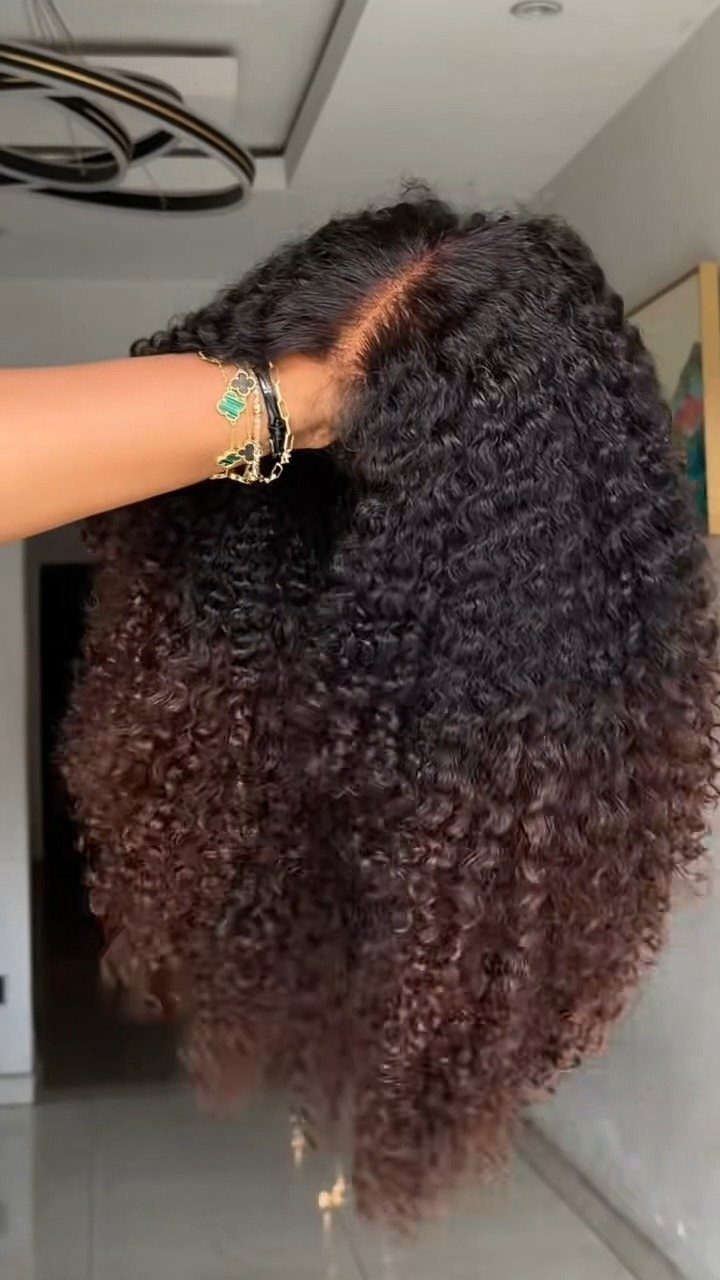
The gradient runs from black or deep brown at the root to lighter brown through the ends, with the shift happening gradually rather than in a single line.
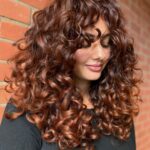
On curly hair the transition gets broken up by the curl pattern, so it reads as soft dimension instead of a hard band of color.
The reddish-brown tone visible here works on warm skin. If your skin runs cool, ask for a neutral or ash brown instead.
19. Bronze Melt
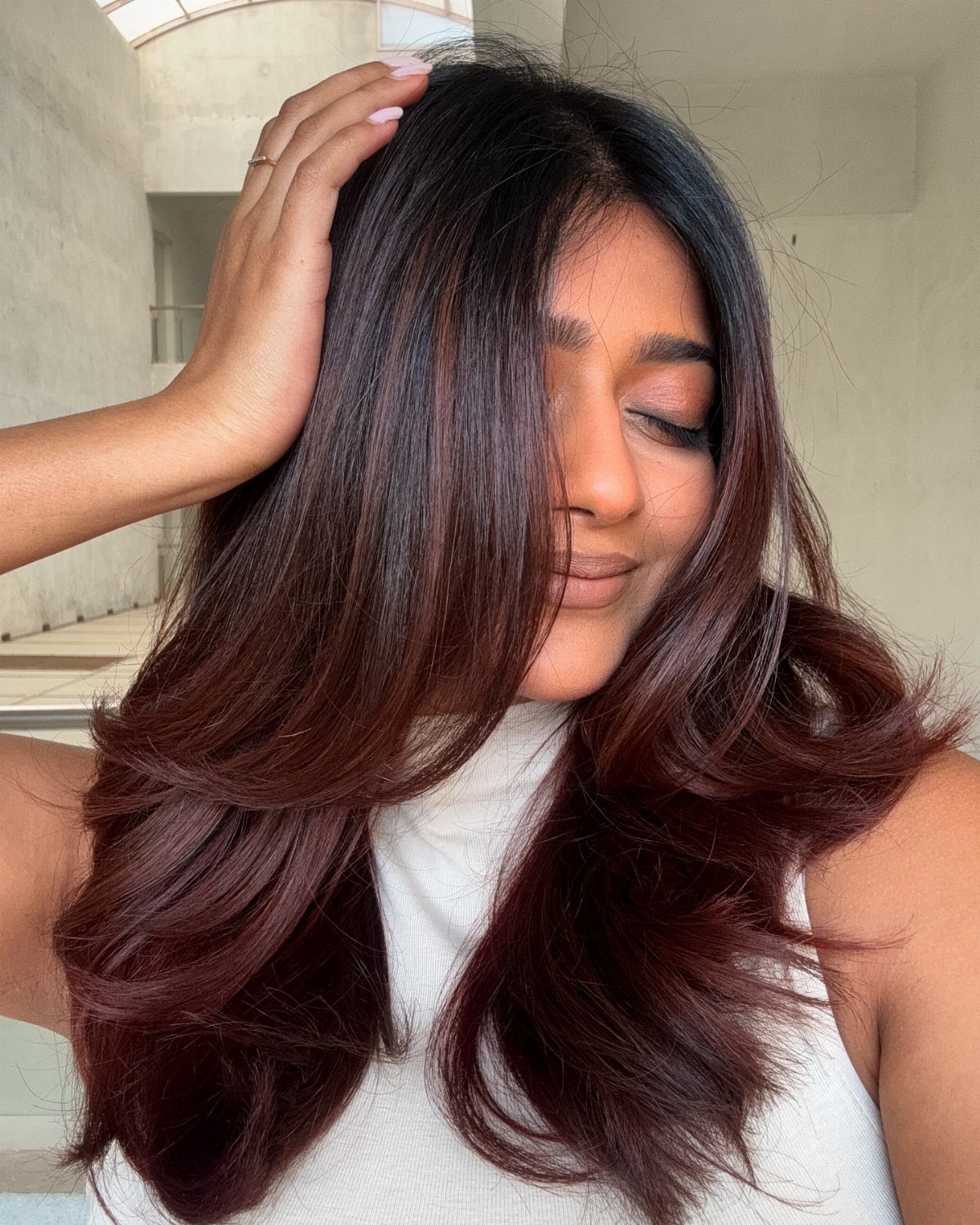
A color melt fades from espresso at the root into warm bronze through the ends, with the shift starting around mid-length and no visible line between the two.
The bronze tones show up most in natural light and add warmth without the high contrast of chunky highlights.
The dark root makes regrowth invisible for months. If your skin has cool pink undertones, bronze can look orange; stick to neutral brown.
20. Two-Tone Box Braids
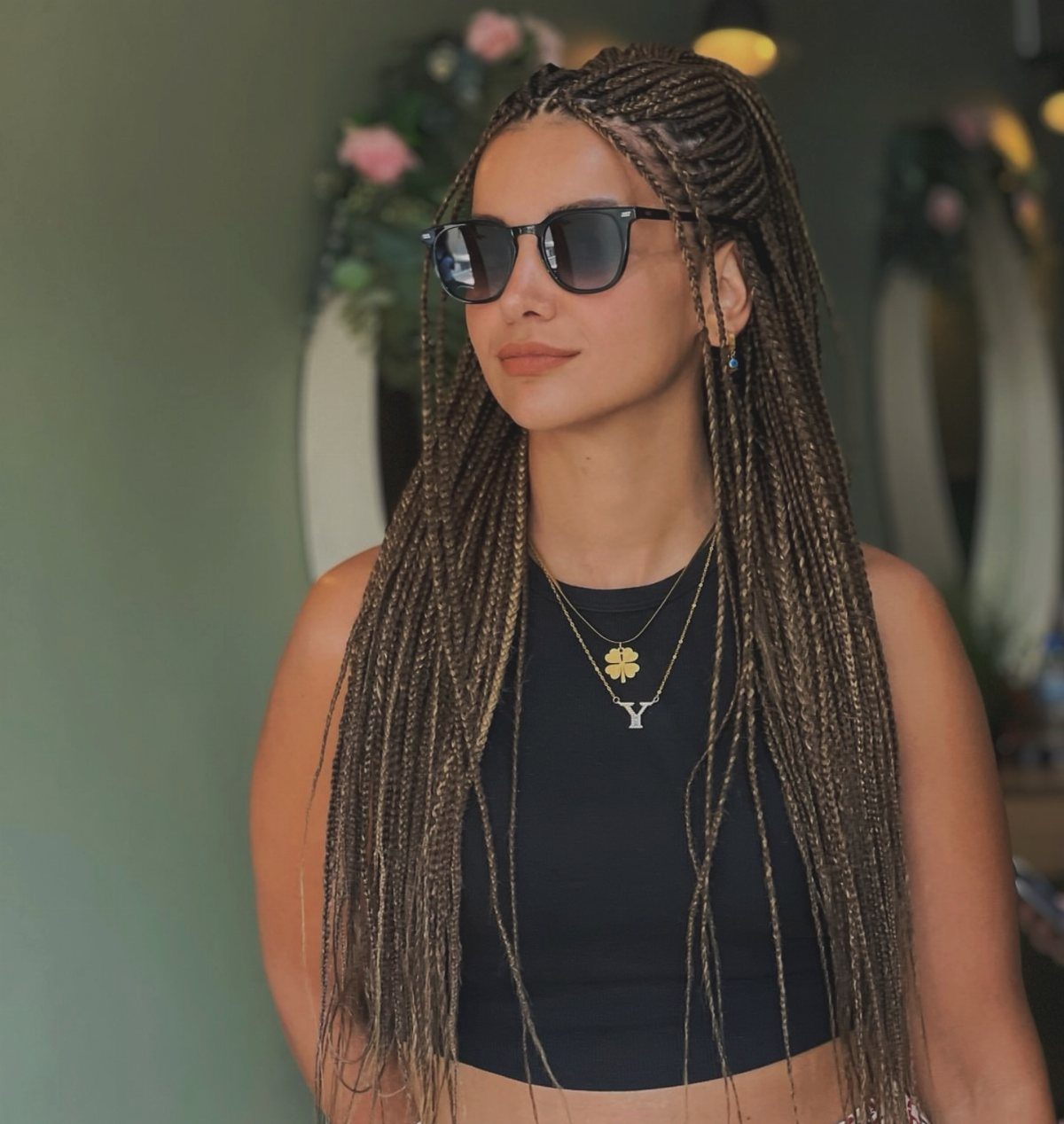
Two-tone box braids use light brown and dark brown braiding hair alternated or blended through the install, so you get highlight-like dimension without any chemical processing. The synthetic hair comes pre-colored, so no dye touches your own strands.
The contrast shows best when one shade is several tones lighter than the other. You maintain the braids, not the color, which stays put because nothing was dyed.
21. Toasted Almond Highlights
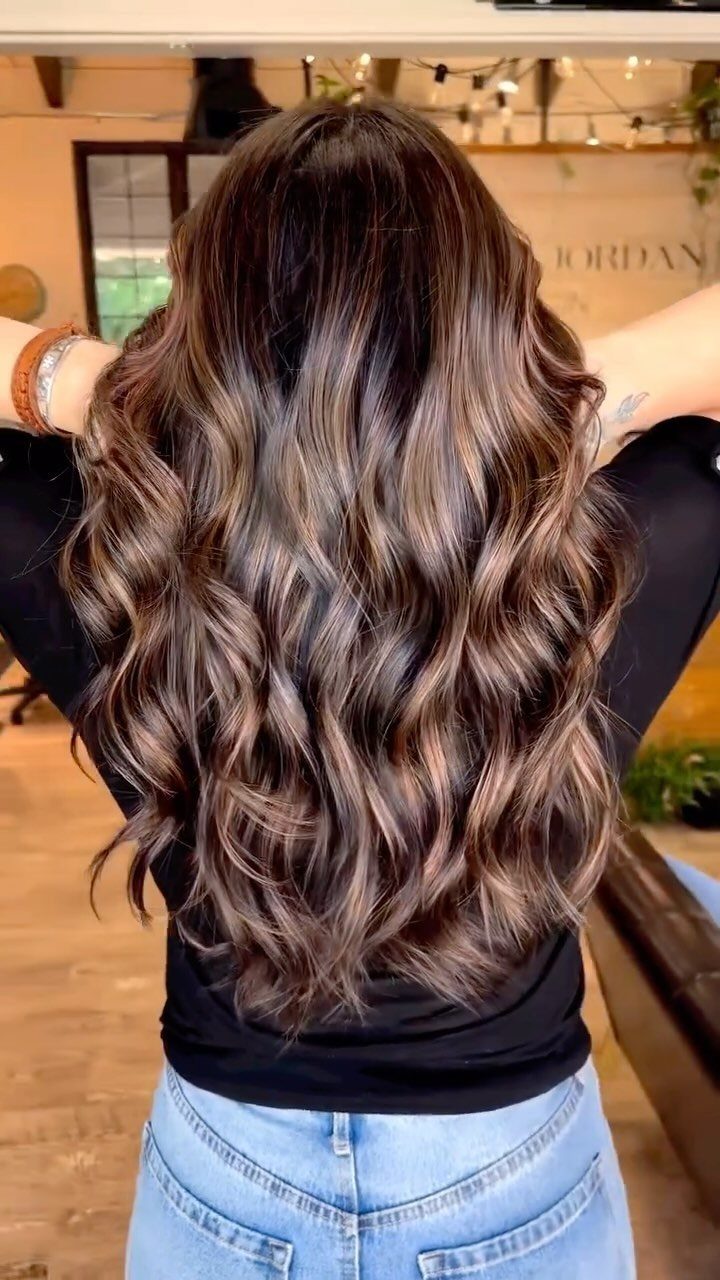
Toasted almond is a light brown with neutral undertones, warmer than ash but cooler than caramel. The soft, diffused placement keeps the highlights from reading as distinct stripes, so the lift blends into the base instead of sitting on top.
On black hair this usually takes 1 session if your base is virgin. Neutral tones suit more skin types and fade without the brassy shift warm browns get.
22. Hazelnut Sombre
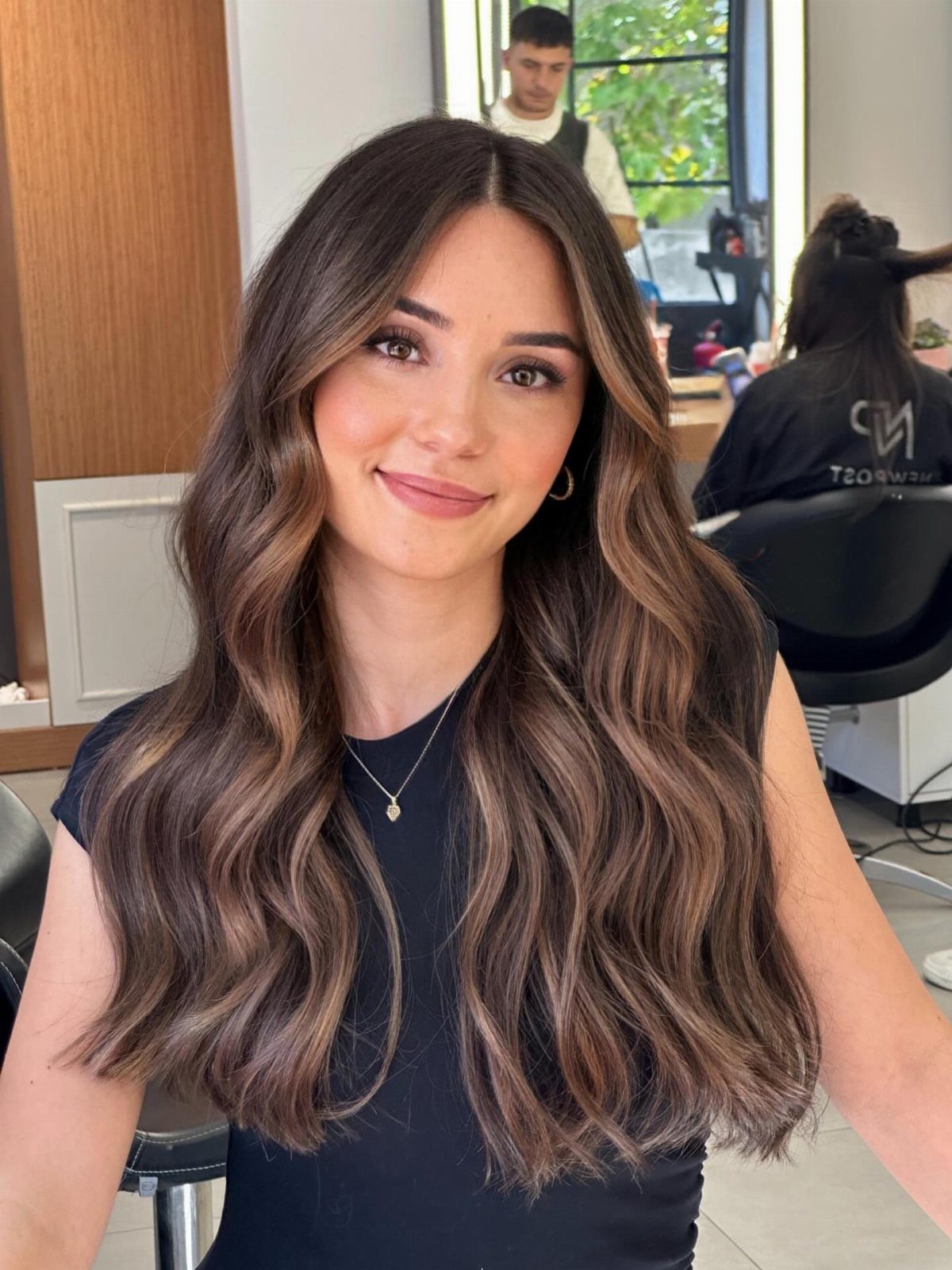
Sombre is a softer ombré, with a more gradual transition from dark roots to lighter ends so the shift is subtle rather than obvious.
Hazelnut sits in the mid-brown range, warm enough to add brightness but not as gold as caramel.
Because regrowth disappears into the gradient, you can go longer between salon visits. On very dark hair the lift to hazelnut usually takes 1 session.
23. Subtle Highlights on Straight Hair
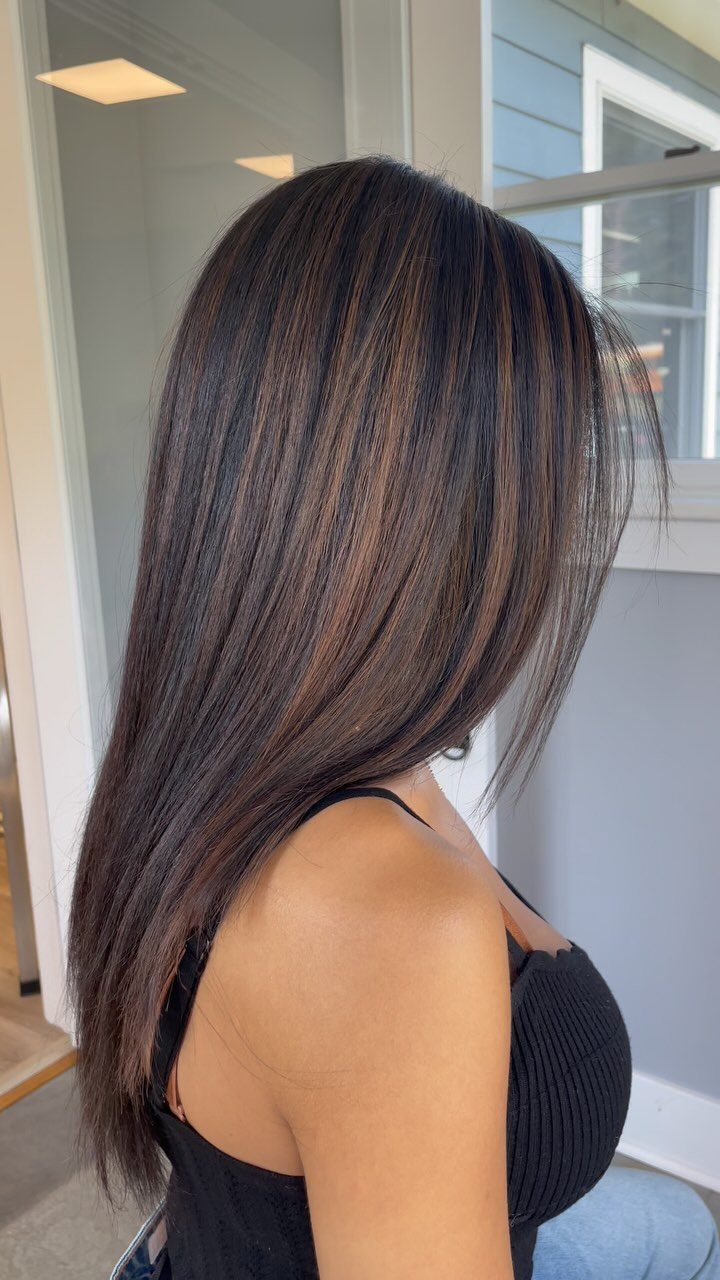
Fine highlights spaced far apart give you dimension without changing the overall darkness of your base. On straight hair the ribbons stay visible from root to tip, so even a subtle lift adds movement that catches light.
On straight hair, color sits flat and visible, so where it goes matters more. Concentrate the highlights around your face and through the top layers for maximum effect without highlighting your whole head.
24. Highlighted Wavy Layers
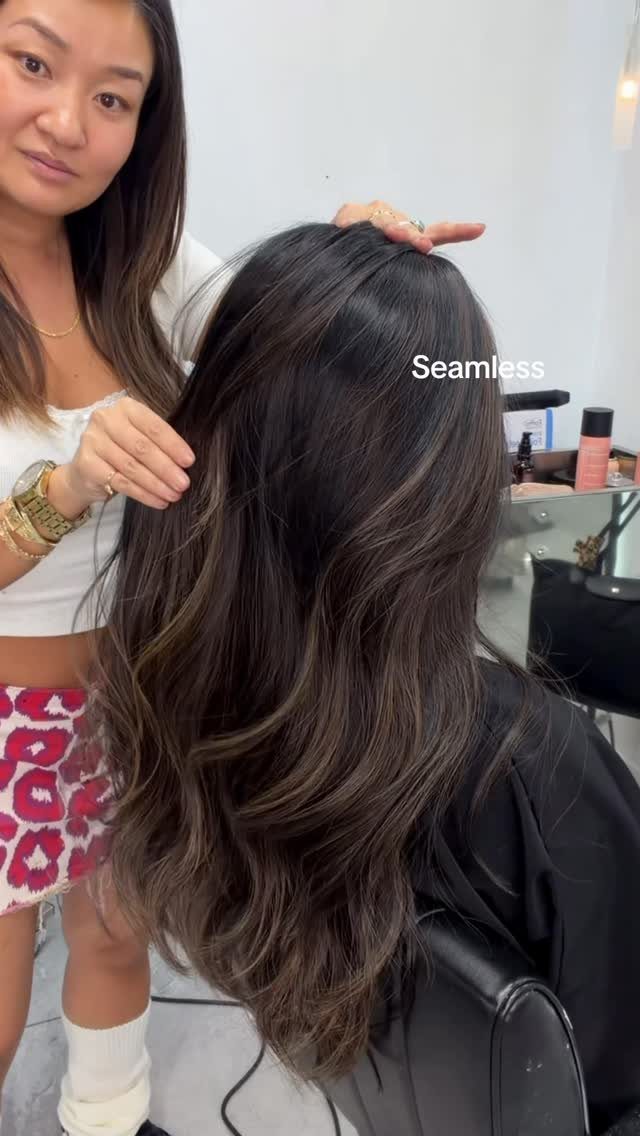
Layers give highlights more surface area to catch light, so even a moderate lift reads as dimensional. The waves break up the color so it shifts with movement rather than sitting in fixed stripes.
On layered cuts, place most of the highlights through the top and front sections. The shorter pieces frame your features and the color shows most where it matters.
25. Bold Brown Highlights
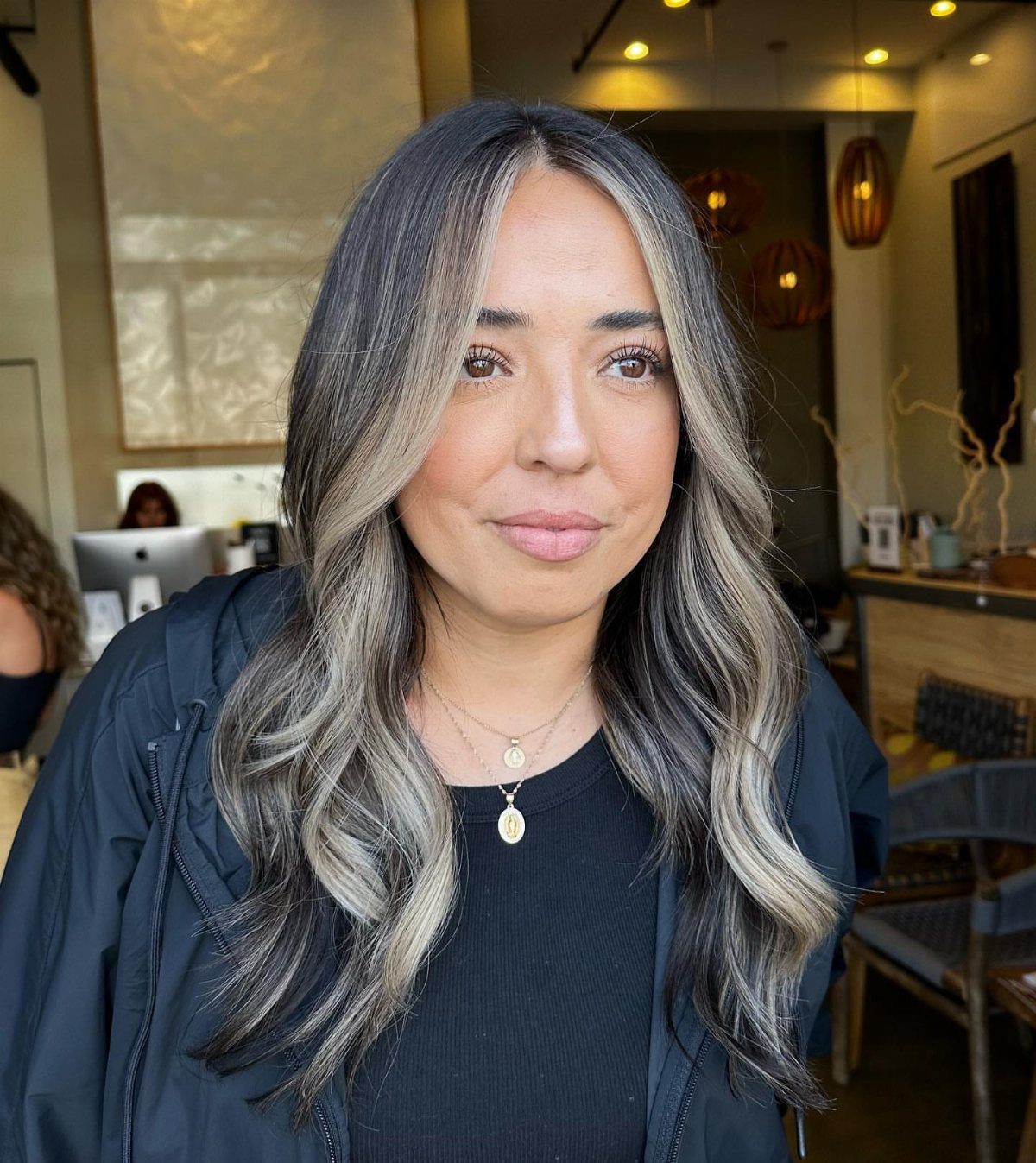
Wide sections of light brown and ash create contrast you can see from across the room. The thickness and the tone make the highlights the main feature instead of background dimension.
This works if you want color that registers immediately rather than blending in. The wider the sections, the more the color shifts with movement.
On wavy hair the highlights catch light differently depending on how the waves sit, so the contrast changes as you move. This look makes a statement rather than blending in.
26. Highlights with Blunt Bangs
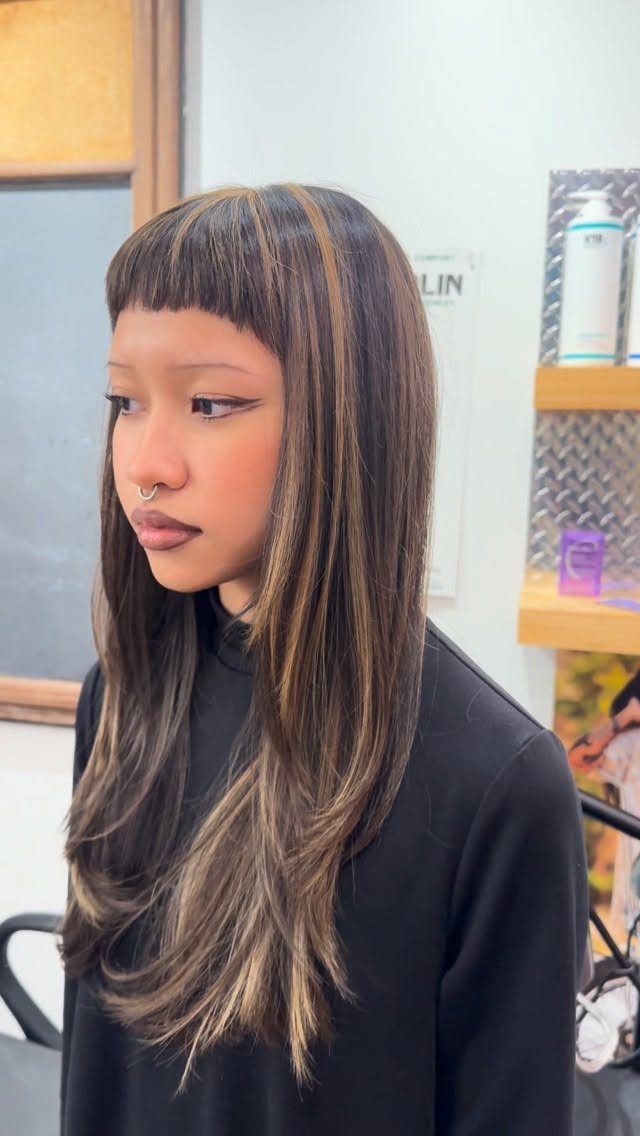
Blunt bangs concentrate focus at eye level, so placing highlights through the bangs themselves keeps the color visible where it matters most. The straight cut shows the ribbons of color cleanly instead of breaking them up.
If your bangs sit heavy or solid, ask for fine highlights through them rather than leaving them untouched. A black fringe with highlighted lengths behind it can read as disconnected.
The bangs require regular trims to stay blunt. Sharp bangs need regular trims to keep their edge.
Choosing a Brown Shade
Gold and olive undertones pull caramel, chestnut, and honey into their best light.
Cool pink or rosy skin sits better with mocha, ash, or taupe. Neutral undertones let you pick from the whole ladder, chocolate and bronze included.
Lifting 1 or 2 levels above your base keeps the shift readable but not loud. 3 or 4 levels gives you a bolder shift, which on black hair means moving into mid-brown territory rather than staying close to your root.
Eye color can guide you if you are stuck between 2 shades. Hazel and green eyes gain from caramel and copper; blue and gray often snap harder with ash and mushroom.
Check the shade in natural daylight before you leave the salon. Indoor lighting shifts how brown reads, and a toner adjustment can pull warmth down or add it back if the first pass is not quite right.
Lightening and Strand Tests
Black hair usually needs bleach or high-lift color to reach brown. How many sessions depends on your starting level and whether your hair has been relaxed or colored before.
A strand test shows how your hair will lift and how long each session needs to run. Relaxed hair lifts faster and less evenly than natural coils, so timing and developer strength matter more.
Keep the lift between 2 and 4 levels in a single session.
Going further risks damage, especially on fine or chemically treated hair. Your stylist should avoid overlapping lightener on strands that were lifted in an earlier session, since double-processing turns ends mushy.
Jet black takes longer to lift than soft black, so factor that into your timeline.
Highlighted Hair Aftercare
Sulfate-free shampoo and cool water 3 or 4 times a week hold the tone longest. Hot water opens the cuticle and lets color rinse out faster.
A bond-building conditioner helps reinforce the structure after lightening. Follow it with a weekly glossing mask to keep shine up and fading slower.
Limit heat styling, and when you do use it, apply a heat protectant first. High temperatures on lightened hair dry it out and dull the color.
If you relax your hair, schedule coloring at least 2 weeks before or after a relaxer. Doing both in the same window weakens the hair and increases breakage.
If your highlights are warm-toned, stick to a color-depositing formula matched to your shade.
Frequently Asked Questions
Can you do light brown highlights on black hair?
Yes. Brown on black shows up without taking over, and you’ll get there in 1 session if your hair is virgin or 2 if it’s been colored before.
Match the shade to your undertone so the warmth or coolness flatters your complexion instead of pulling brassy or ashy.
What color highlight looks best on black hair?
The best shade matches your undertone and how much time you want to spend on upkeep.
Caramel, chestnut, and honey suit warm skin, mocha and ash suit cool skin, and chocolate works on most tones because it sits close enough to black that the lift stays subtle.
How to pick the right brown highlights for your black hair?
Start with your undertone: warm skin pulls caramel and chestnut into their best light, cool skin suits mocha and ash, and neutral skin can wear the full range.
Go 1 or 2 shades lighter if you want something low-key, 3 or 4 if you want real contrast, and put the color where your schedule allows. A money piece is faster and lower-commitment than full balayage.
Why do brown highlights look amazing on black hair?
The contrast adds movement and catches light without the high-maintenance regrowth line that comes with blonde.
Brown tones can be tuned warm or cool to suit different undertones, and the close lift fades more cleanly than a dramatic shift, so you can stretch appointments longer.