Purple toner cancels yellow, and blue cancels orange. Pick by the warmth you see in daylight, not by which bottle sounds better, because purple won’t fix orange brass and blue won’t fix yellow.
Ugly Duckling’s Intense Pearl Blonde 100V lifts yellow hair at least 2 levels while toning it, which makes it the fastest route to platinum from very yellow roots.
What Toner Does for Blonde Hair
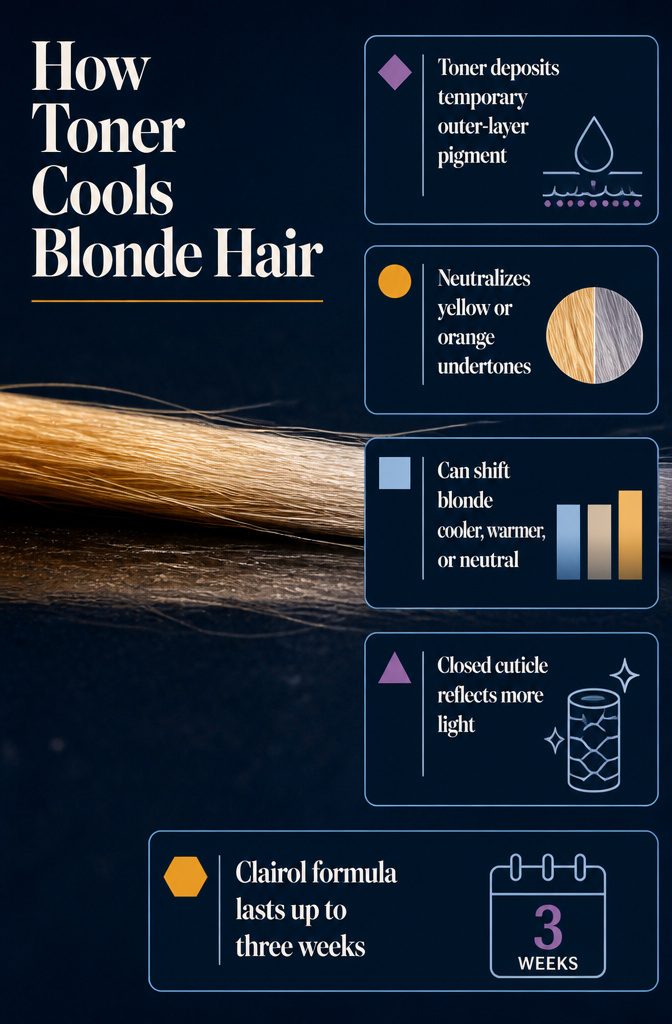
Bleach lifts pigment out of the hair, and what remains often leans yellow or orange.
Toner is the polish step after lightening: it deposits temporary pigment on the outer layer of the strand to correct that undertone and push the result cooler, warmer, or more neutral.
It also closes the cuticle, so hair reflects more light and looks glossier. As washing lets warmth break through again, toner keeps blonde close to its first-day color.
Clairol puts the job plainly:
An easy way to neutralize brassy tones is with a hair toner.
— Clairol
That sheer veil is temporary, and Clairol’s own formula lasts up to three weeks.
How Purple and Blue Pigments Cancel Yellow and Orange
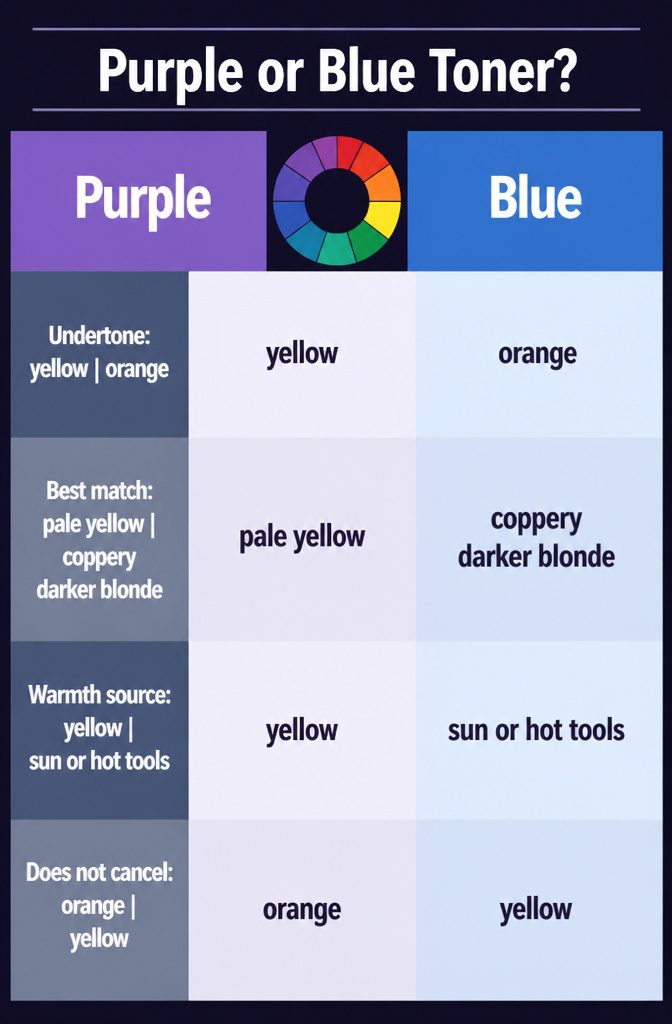
Purple sits opposite yellow on the color wheel, so violet pigment cancels yellow. Blue sits opposite orange, so it cancels orange warmth.
Choose by the undertone you can see in your hair, not by which bottle you like better. Pale yellow strands want purple.
Darker blonde or balayage that has turned coppery from sun or hot tools wants blue. Purple isn’t opposite orange, so it won’t cancel it.
Most blonde toners blend purple, blue and gray pigments.
That mix works on yellow, pale yellow and yellow-orange at once and pulls the color toward a cooler, ashier tone. I’d check your hair in daylight first, since indoor bulbs hide the orange.
1. Permanent Toners With Extra Lift
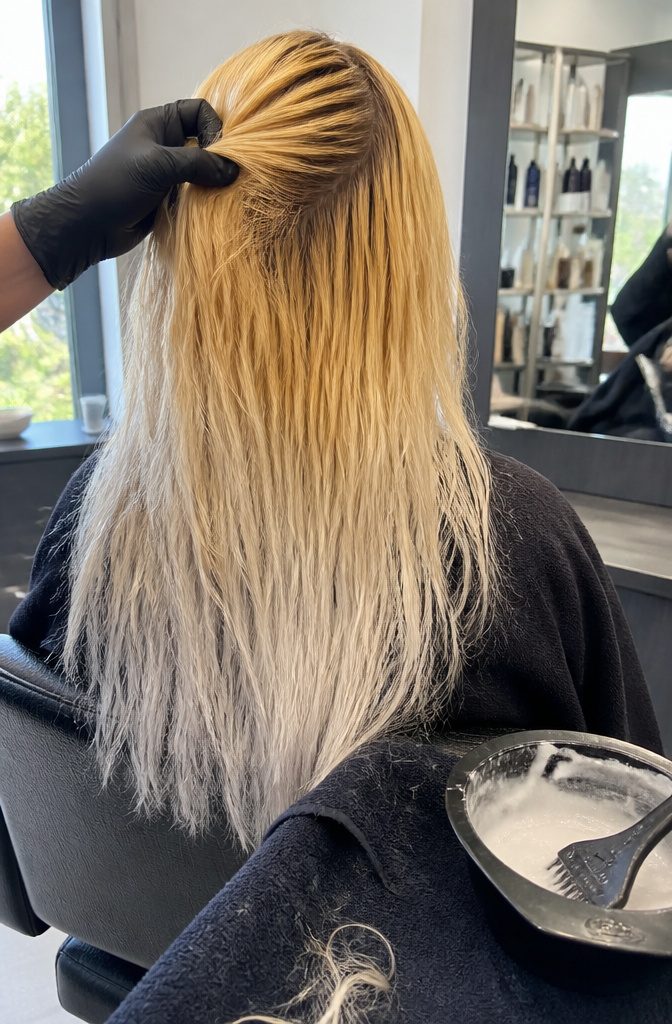
Permanent toners with built-in lift are the strongest and fastest-acting kind, and Ugly Duckling’s "booster" technology is what gives them the push.
They’re designed for hair that is very yellow, and they lift the hair at least 2 levels while knocking the yellow out. Ugly Duckling makes two, Intense Pearl Blonde 100V and Intense Silver Blonde 100B, both $19.00.
Lift has a ceiling, though.
Black or very dark regrowth is beyond even a high-lift toner, so bleach the roots first. Then put the toner on the yellow roots and mid-lengths, and pull it through the rest of the hair for the last 5 minutes.
That order is how a dark-rooted, yellow head reaches white platinum. I’d skip this type for mild brassiness, since the extra lift is more than that job needs.
2. Regular Permanent Toners
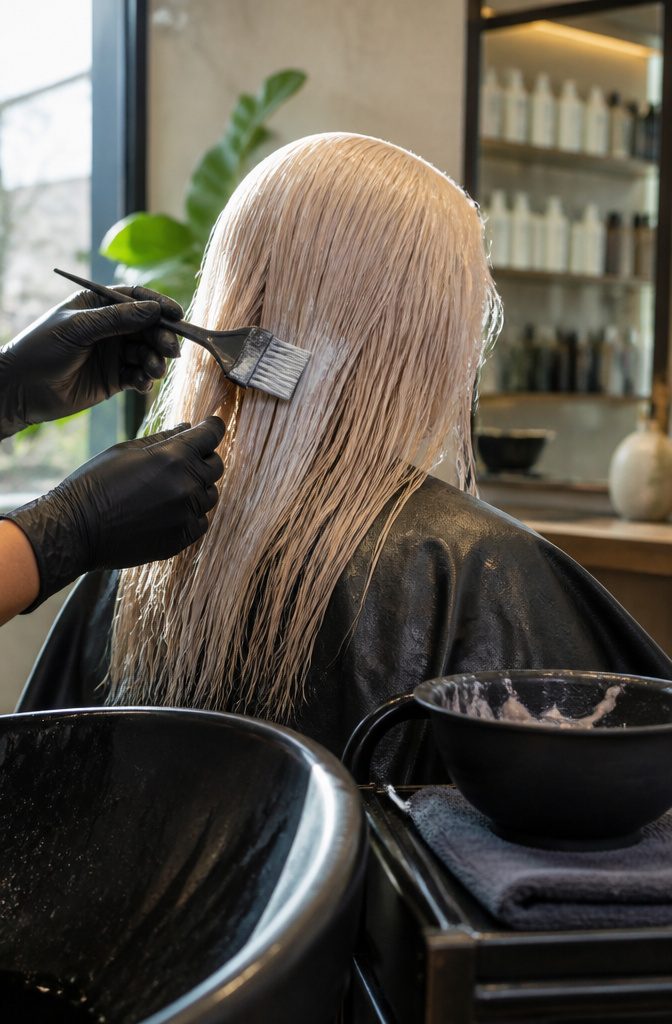
Regular permanent toners carry the same heavy pigment as the intense versions, but with only 1 level of lift built in. That makes them the better pick when your hair is already bleached and the only problem left is color.
Totally yellow hair is where they earn their place, because they pull it toward a cooler, ashier blonde without lightening much further.
Ugly Duckling makes two: Pearl Blonde 10V and Silver Blonde 10B. I’d treat them as a choice between two cool finishes, pearl or silver, and pick the one that matches the photo you saved.
The routine is simple. Rinse the bleach out, towel dry the hair, then apply the toner and let it process.
3. Demi-Permanent Toners
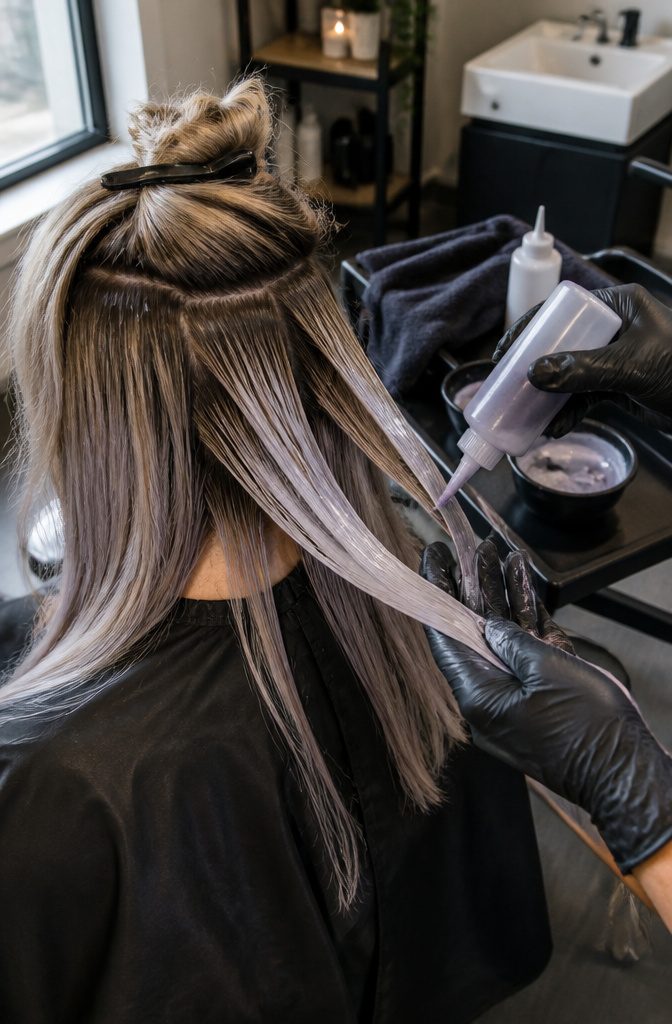
Demi-permanent toners contain no ammonia, so they smell better and open the cuticle a little less. They don’t lift either, so I reach for them whenever I want tone without changing the level.
The pigment is intense, and they can tone in under 10 minutes. A low-strength developer such as 10 Vol works well with them.
They suit refreshing bleached highlights while leaving the base and lowlights alone. They can also get you to a medium ash or cool blonde.
Ugly Duckling makes two: Blondify Natural Ash Blonde 010A and Blondify Natural Violet Blonde 010V. Both are liquids, so you mix them and apply straight from an applicator bottle.
4. Purple Shampoos and Masks
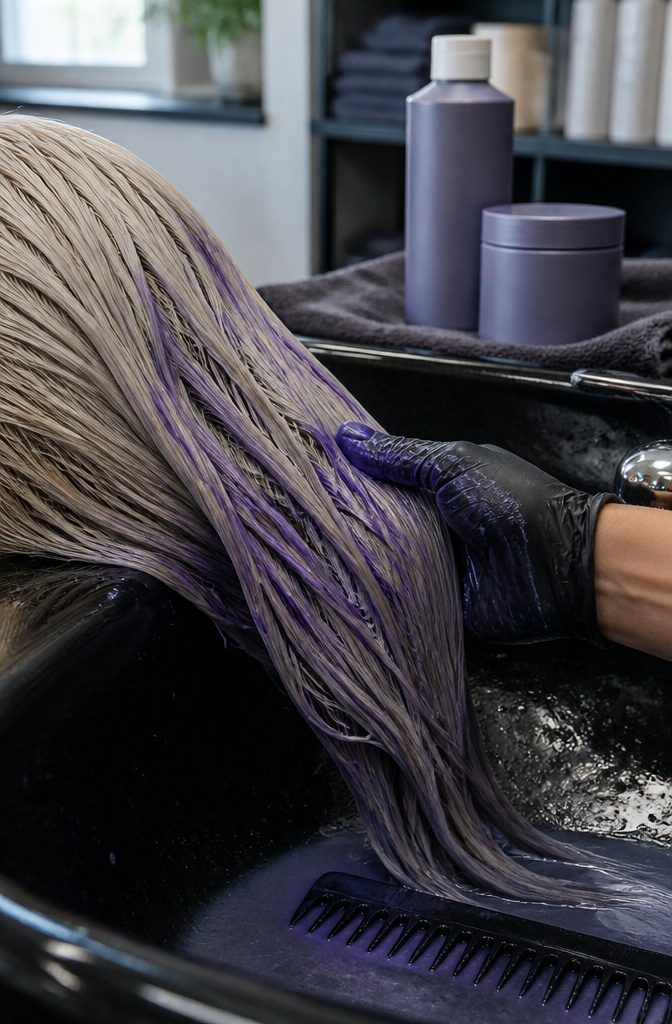
Purple shampoos and masks lift nothing and never penetrate the cuticle.
They leave purple pigment on the surface, so they work as ongoing at-home correction rather than true toning. Use them whenever hair drifts toward yellow, up to 3 times a week.
Warm golden or caramel blondes may need only a biweekly wash, while platinum and ash blondes, who want no warmth at all, may do better weekly. Start at the low end and add a wash only when brass returns.
Processing time varies by brand, so check the label. With Shimmer Lights Purple Shampoo, lather, rinse, then lather again and leave that second round on for 3–5 minutes before following with Shimmer Lights Purple Conditioner.
5. Purple Toners for Yellow Warmth
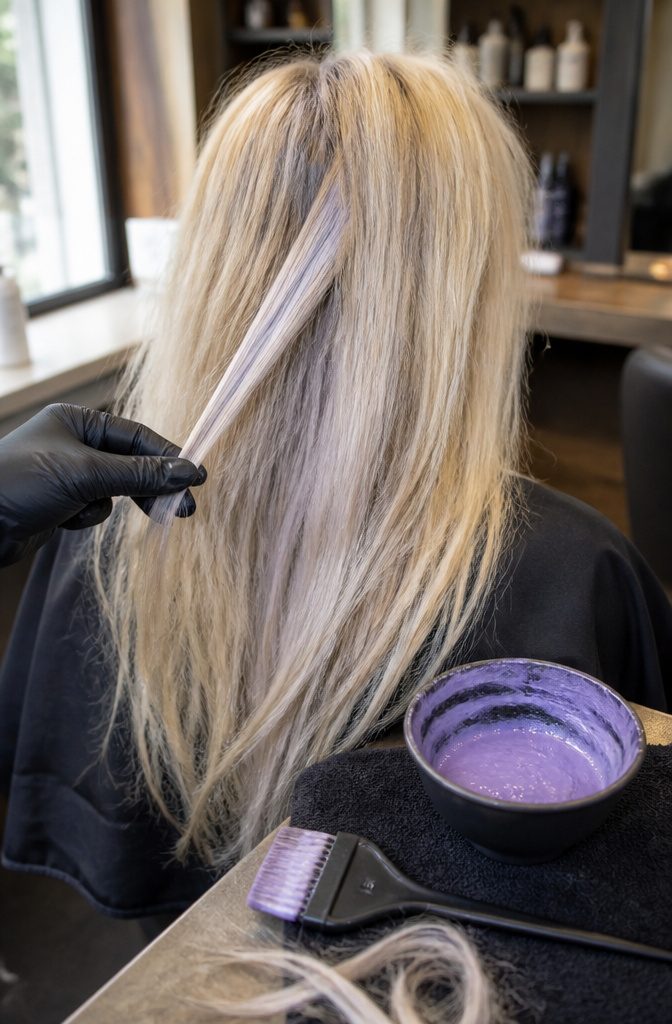
Purple sits opposite yellow on the color wheel, which is why violet pigment is the one that cancels yellow warmth in blonde hair.
Purple toner is the right pick for beige blondes, cool blondes and icy blondes, shades that look best when no yellow creeps back in.
Apply it once or twice a week to keep the color bright. More isn’t better, and I’d start at once a week and add a second round only if yellow is visibly returning.
If your blonde drifts toward orange instead of yellow, purple won’t fix it. That job belongs to blue.
6. Blue Toners for Orange Warmth
Hair holds two pigments: eumelanin, which gives brown or black shades, and pheomelanin, which gives yellow, orange, or red.
Bleach usually strips the eumelanin, so the warmth left behind is pheomelanin, and dark hair that gets lightened tends to land on orange rather than yellow.
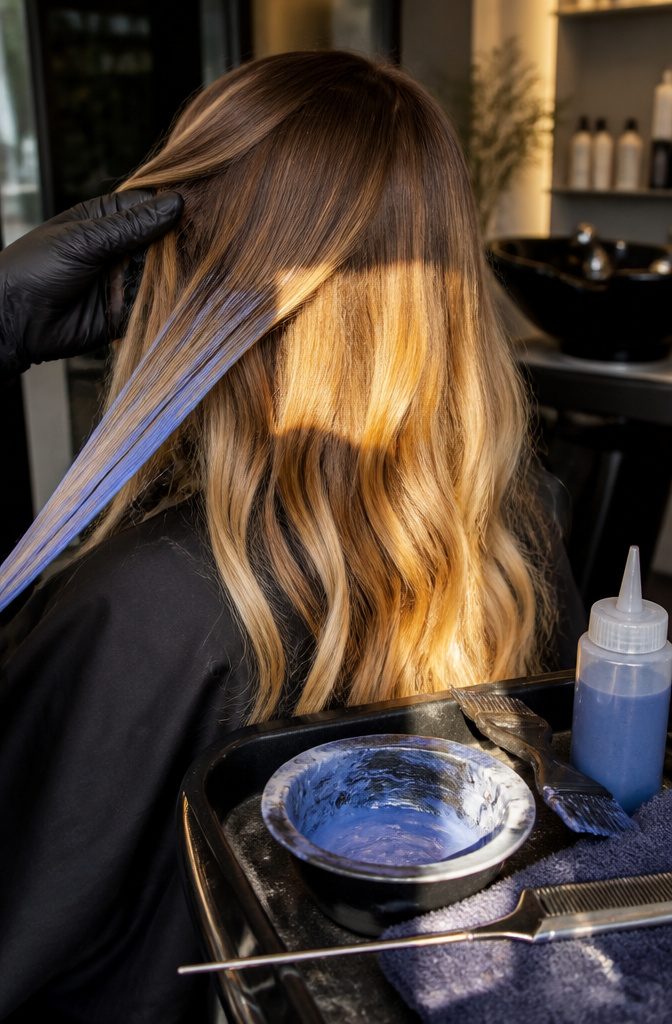
Blue sits opposite orange on the color wheel, which is why blue toner is the one for orange warmth. It deposits pigment on the outer strand and cancels the orange instead of covering it.
I’d choose blue for darker blonde and for balayage, and reach for purple only when the brass reads yellow. It also earns its place after sun or heat styling brings copper back into the lighter pieces.
7. Glosses and Glazes
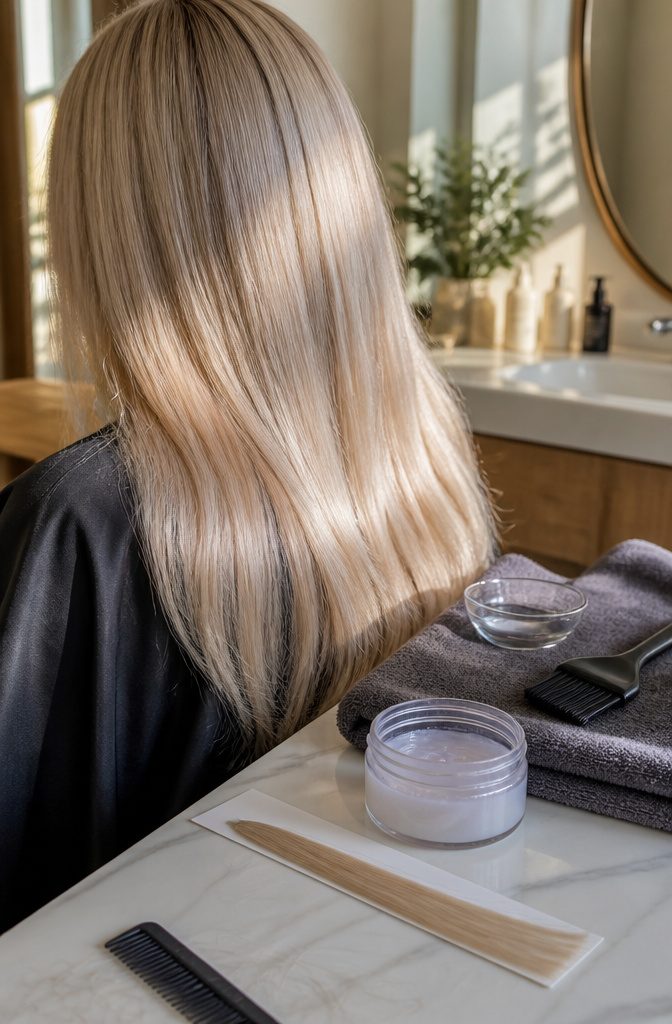
Glosses and glazes work on texture more than tone. They add shine, moisture and smoothness, and they leave a glass-like finish.
A clear gloss carries no pigment, so it adds shine, moisture and softness without changing your shade. I’d reach for it first on dry or delicate blonde hair, where it also helps tame frizz.
For a hint of color with the shine, Clairol Blonde It Up Crystal Glow Toner is a no-ammonia formula that leaves a sheer, pearlescent veil lasting up to 3 weeks.
Luminous Pearl and Radiant Opal are the blonde shades, and Rose Quartz is the bold one. Run an allergy test and a strand test before the first full application.
Matching Toner to Your Blonde Shade
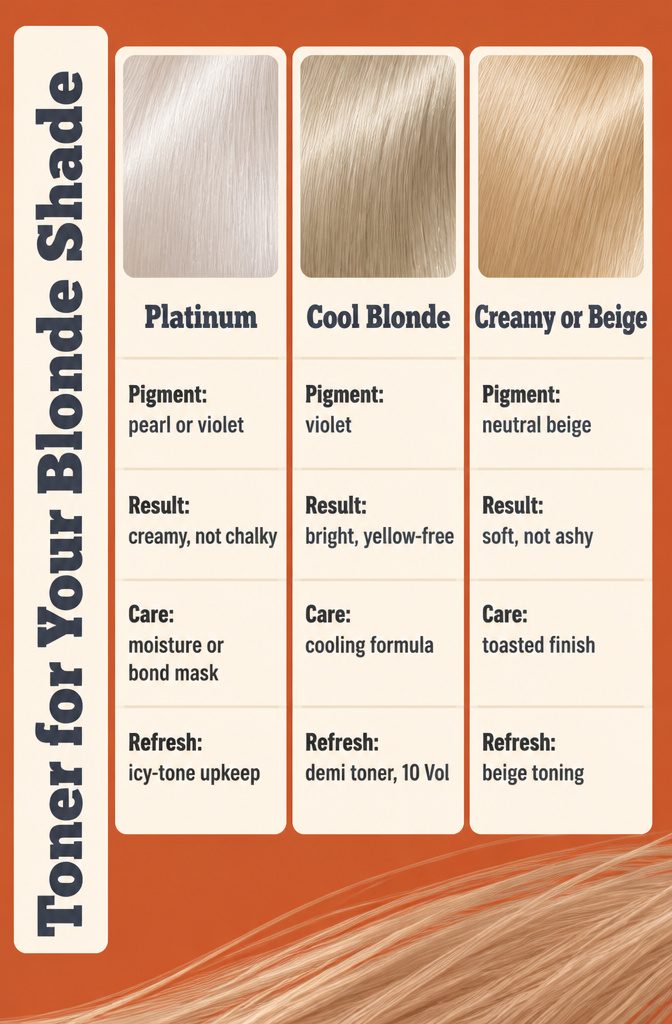
Cool blondes need violet-based formulas, which erase yellow while keeping brightness. Creamy or beige blondes want neutral beige pigments, which soften brass without turning hair ashy and keep a toasted, soft finish.
Platinum is the least forgiving: pearl or violet pigment keeps icy hair creamy instead of chalky, and a moisture or bond care mask belongs in the routine.
Decide first what you want: cooling, warmth, clarity, shine, or upkeep without lift.
For that last one, a demi-permanent toner mixed with 10 Vol developer refreshes highlights without touching the base. Natural pigment, visible warmth, the tone you’re after and your blonde shade should all steer the pick, not the front of the bottle.
Applying Toner at Home or in the Salon
Major color correction belongs in a salon chair. Between visits, an at-home blonde or silver toner is the better tool for the yellow or orange that creeps back as color fades.
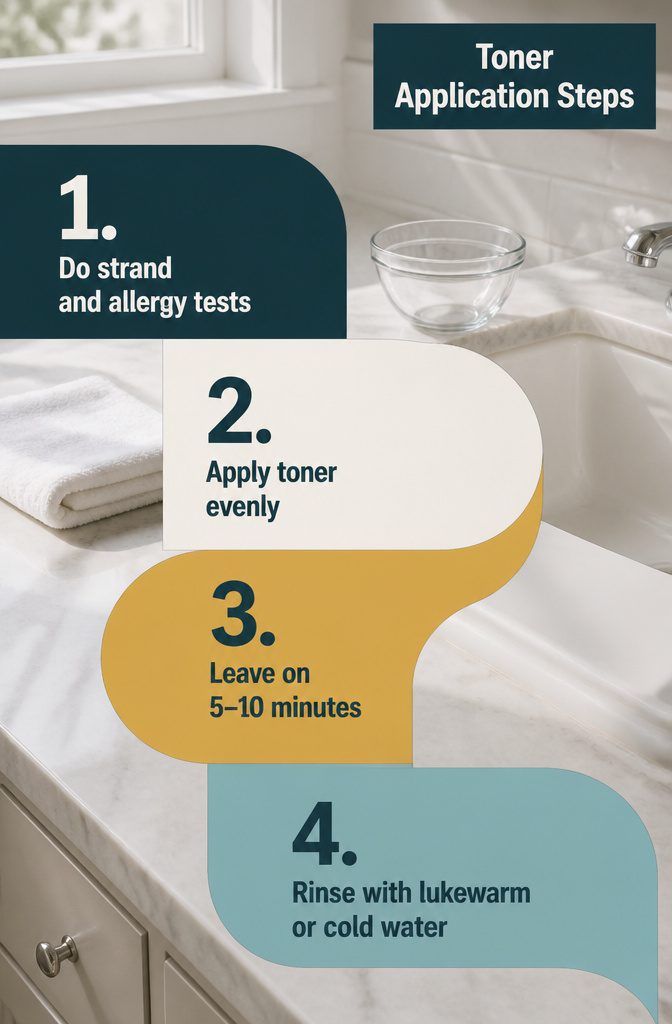
At home, apply the product evenly and leave it on for 5–10 minutes, then rinse with lukewarm or cold water. Follow the directions on your particular product, and do the strand test and allergy test wherever the box asks for them.
I’d treat the strand test as non-negotiable on lightened hair, because patchy application is easy to see on pale strands.
In the salon, toning usually comes right after bleaching. The colorist often pulls a more intense toner through the rest of the hair for the last 5 minutes.
How Often to Use Toner
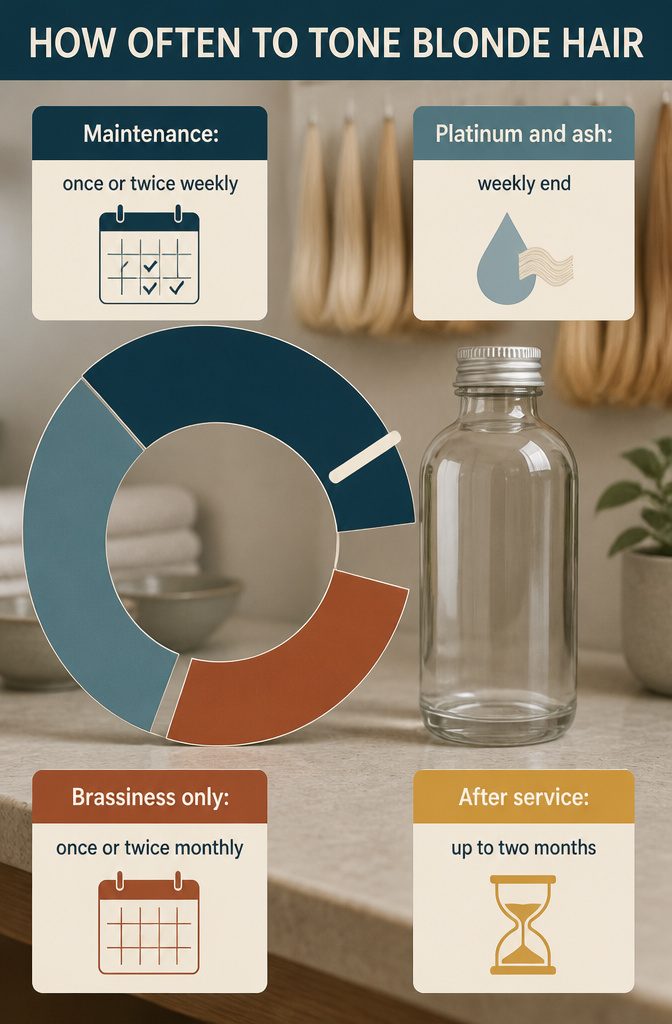
Frequency depends on the product and on how much warmth your blonde carries. For maintenance, once or twice a week works, depending on your shade and how often you wash.
Platinum and ash blondes belong at the weekly end, because any warm tone shows on them; warm golden and caramel shades can stay lighter.
If brassiness is the only complaint, once or twice a month is enough to keep it down.
After a color service, toner may hold blonde brightness for as much as a week, and with proper care it can last up to 2 months. I’d start low and add a wash only when yellow creeps back.
What Causes Blonde Hair to Turn Brassy
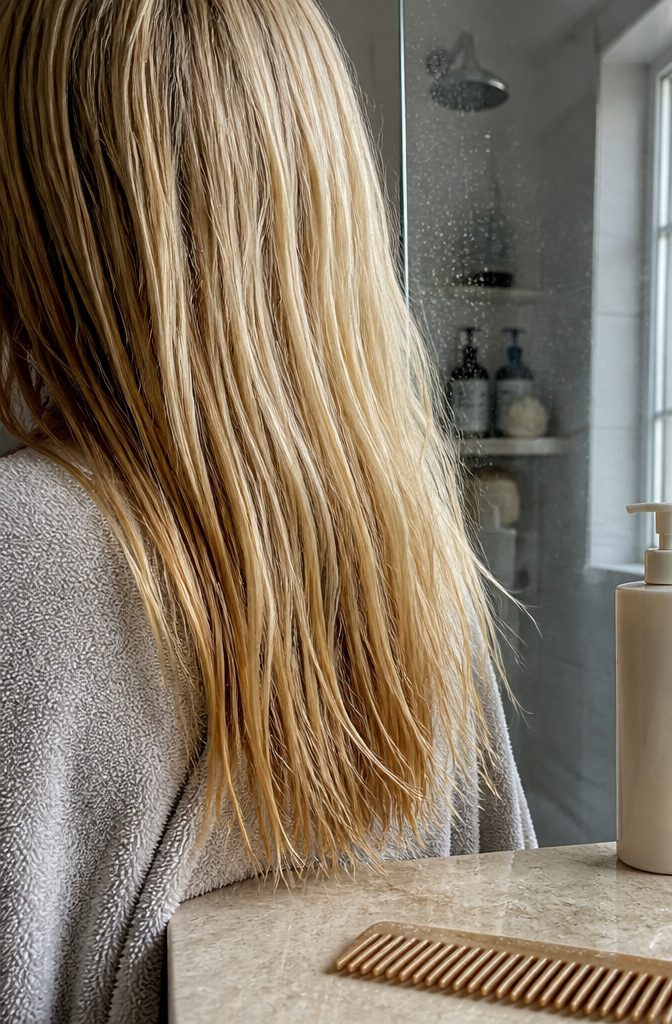
Bleach doesn’t add yellow. It lifts your natural color and leaves the warmth that was underneath.
Everyone carries some, and when the lightener doesn’t clear every bit of underlying pigment, yellow, orange or red shows through. Brassy hair means unwanted warm tones, and in blonde they usually read yellow or gold.
Then the tone itself fades. Sun, heat styling, chlorine, hard water, pollution and frequent washing all wear it down.
I’d suspect the shower first, since hard water and daily shampooing reach every strand. Natural blondes aren’t exempt either: heat or sun damage can warm their hair too.
Mistakes and Aftercare
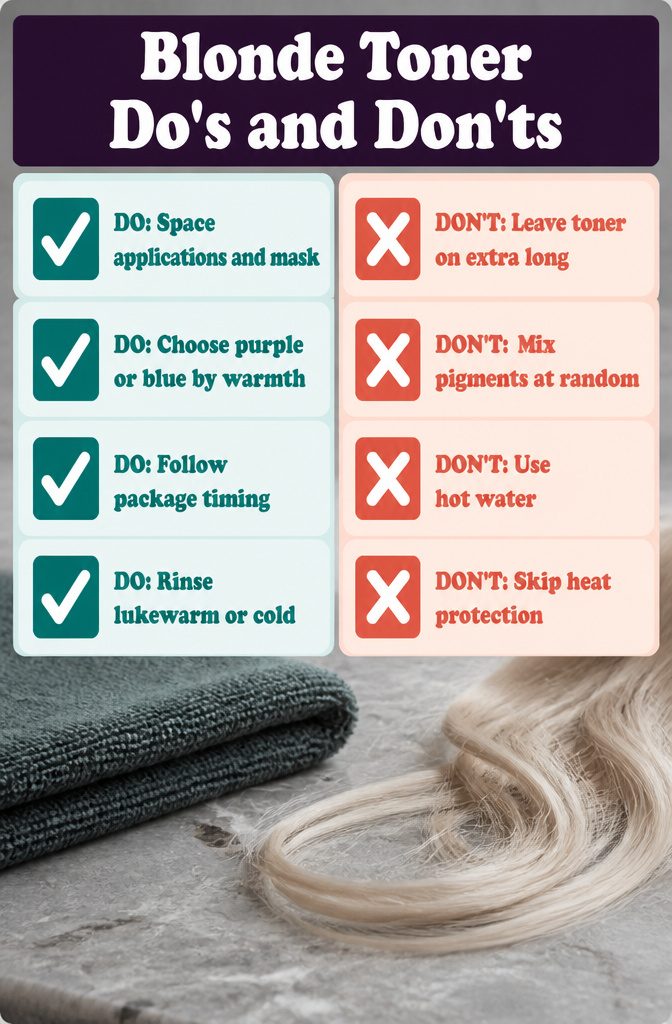
Most toner trouble comes from habits.
- Overuse leaves hair dull or patchy, so space applications and add a mask or light oil.
- Choose purple or blue by visible warmth; random mixing turns muddy.
- Wash off buildup first and follow the package timing, because extra time shifts the shade.
- Rinse lukewarm or cold, since hot water lifts the cuticle and fades toner.
- Use Moehair Thermal Shield Spray before hot tools; toner can’t fix heat-dried brass.
- Wash with Moehair Color Alive Shampoo and Conditioner.
- Use hair SPF, wet hair with clean water before swimming, and add a swim cap, sun hat or scarf.
- Consider a shower filter for hard water.
- Moehair Color Infuse Blonde Toner suits warm blondes; Color Infuse Silver Toner suits cool ones.
Frequently Asked Questions
What does toner do for blonde hair?
Toner is the finishing step after lightening. It deposits sheer pigment on the outer strand to cancel leftover yellow or orange and moves the blonde cooler, warmer, or more neutral.
Most blonde formulas blend purple, blue and gray pigments, and toner also smooths the cuticle for extra shine.
Will toner make my hair lighter?
Usually not.
Demi-permanent toners, purple shampoos and masks, and glosses add no lift. Permanent toners with built-in booster are the exception: the intense versions lift at least 2 levels, and the regular permanent versions lift about 1.
What is brassy hair and what causes it?
Brassy hair is blonde that has turned an unwanted warm shade, usually yellow or gold.
Bleach lifts your natural color but leaves some underlying warmth behind, and sun, heat styling, chlorine, hard water, pollution and frequent washing then wear the tone down further.
Should I use purple or blue toner to fix brassy hair?
Match the pigment to the warmth you see.
Use purple for yellow and blue for orange, since each sits opposite its target on the color wheel. Purple won’t cancel orange, so check your hair in daylight before you buy.
How often should you use purple shampoo?
Up to 3 times a week, depending on your shade.
Warm golden or caramel blondes may need it only biweekly, while platinum and ash blondes may do better with a weekly wash. Start at the low end and add a wash only when brass returns.
How long should you leave purple shampoo in your hair?
Follow the label, because processing time differs by brand.
With Shimmer Lights Purple Shampoo, you lather, rinse, lather again and leave the second round on for 3–5 minutes. Going well past the label time risks a purple tint.
How can I prevent brassiness?
Rinse with lukewarm or cold water, since hot water lifts the cuticle and fades toner.
Use a heat protectant before hot tools, wear hair SPF or a hat in the sun, and wet your hair with clean water before swimming. A shower filter helps if you have hard water.
How do I choose the best toner for my blonde shade?
Cool blondes do best with violet-based formulas.
Creamy or beige blondes want neutral beige pigments that soften brass without turning ashy. Platinum needs pearl or violet pigment to stay creamy rather than chalky, plus a moisture or bond care mask.
How often should I use toner on blonde hair?
For maintenance, once or twice a week, with platinum and ash blondes at the weekly end.
If brassiness is your only complaint, once or twice a month is enough. Add a session only when yellow or orange visibly returns.
Can toner damage hair?
Used carefully, toner is gentle, but overuse can leave hair dull or patchy.
Space out applications, add a mask or light oil, and protect hair from heat styling. Demi-permanent, ammonia-free formulas open the cuticle less than permanent ones.
Can I use a gloss without color?
Yes.
A clear gloss carries no pigment, so it adds shine, moisture and softness without changing your shade. It works well on dry or delicate blonde hair and helps tame frizz.
Should I tone my hair at home or in a salon?
Go to a salon for major color correction, and use an at-home blonde or silver toner between visits to handle creeping yellow or orange.
At home, leave the product on for 5–10 minutes and rinse with lukewarm or cold water. Do a strand test and an allergy test first.
Can I mix different toners together?
Not at random, because careless mixing turns muddy.
Pick one toner based on the warmth you see; most blonde formulas already blend purple, blue and gray pigments. If you want a custom tone, a colorist can blend salon formulas to match.
Is toner the same as purple shampoo?
No.
Purple shampoo leaves purple pigment on the surface without penetrating the cuticle or lifting, so it works as ongoing at-home correction. Toner is the true toning step after lightening, and it delivers a stronger, longer-lasting color shift.