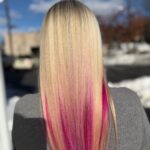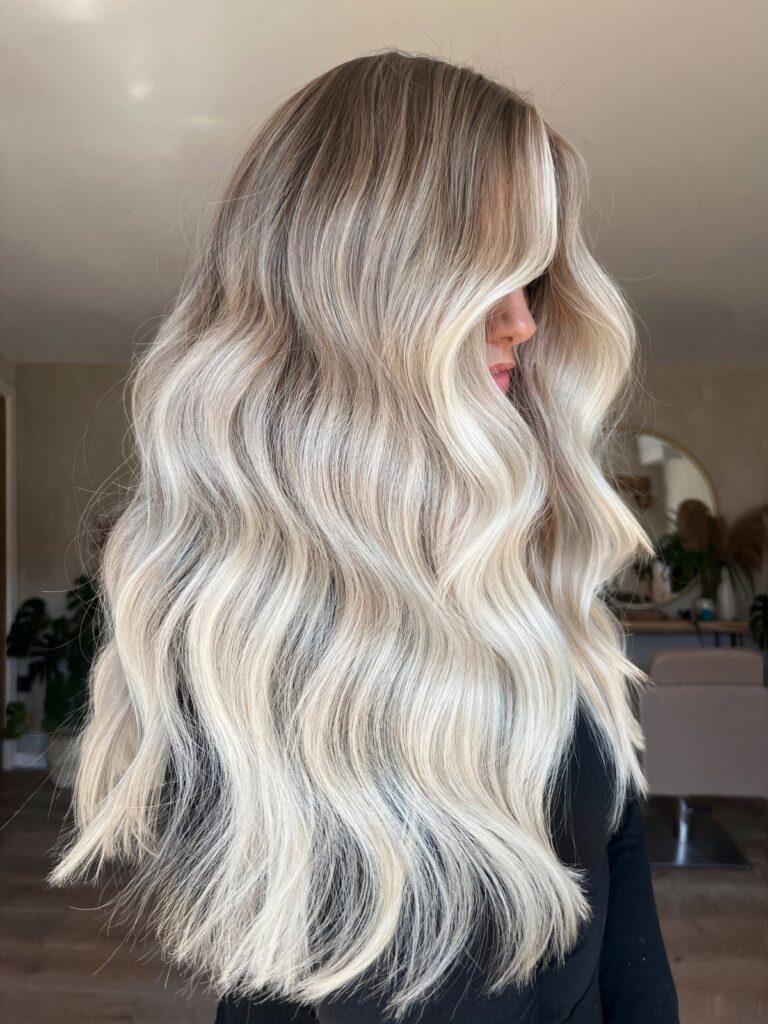
Blonde balayage ranges from low-maintenance dark roots that stretch appointments to 6 months, all the way to platinum that needs toning every few washes.
The right placement depends on how much time you want to spend at the sink: warm honey and beige tones hold longer between glosses, while ash, silver and platinum shift fast without purple shampoo.
Face-framing highlights lift attention without processing your whole head, dimensional blends keep some pieces deliberately darker for contrast, and reverse balayage adds depth back into blonde that went too light.
1. Face-Framing Highlights
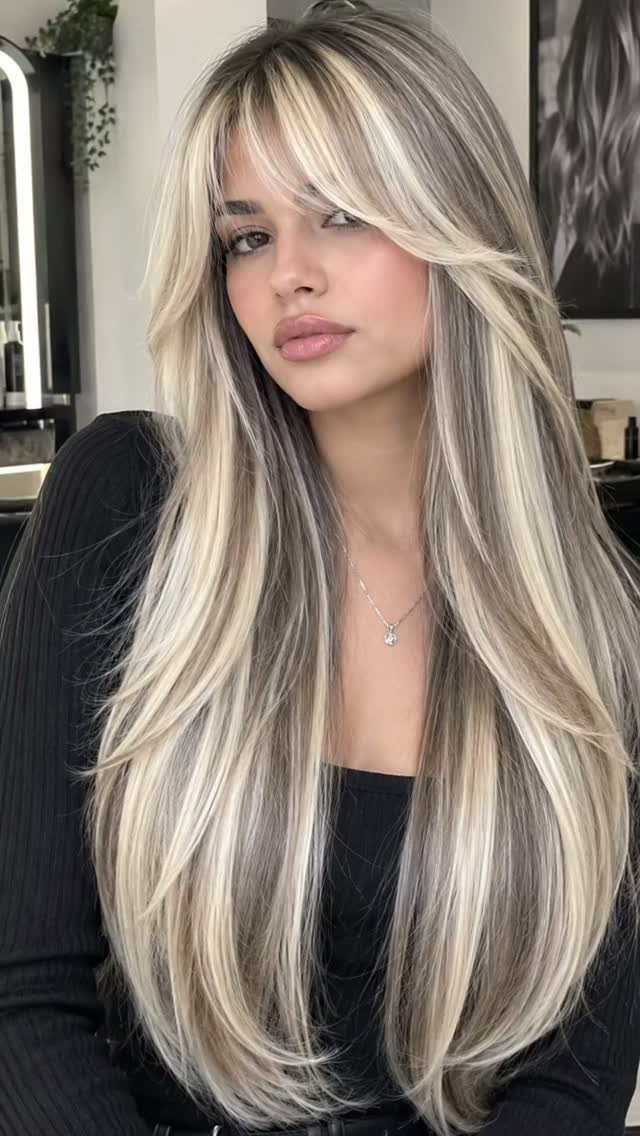
Bright blonde pieces sit just around the face, paired with balayage through the rest. The placement lifts attention upward and keeps regrowth less obvious, since the lightest color sits away from the root line.
Dimension plus brightness at eye level, both in one technique. It works on long layers or with bangs that can take a few light ribbons.
Ask for face-framing highlights blended into balayage, and specify how far back the brightness should reach.
2. Ash Blonde Balayage
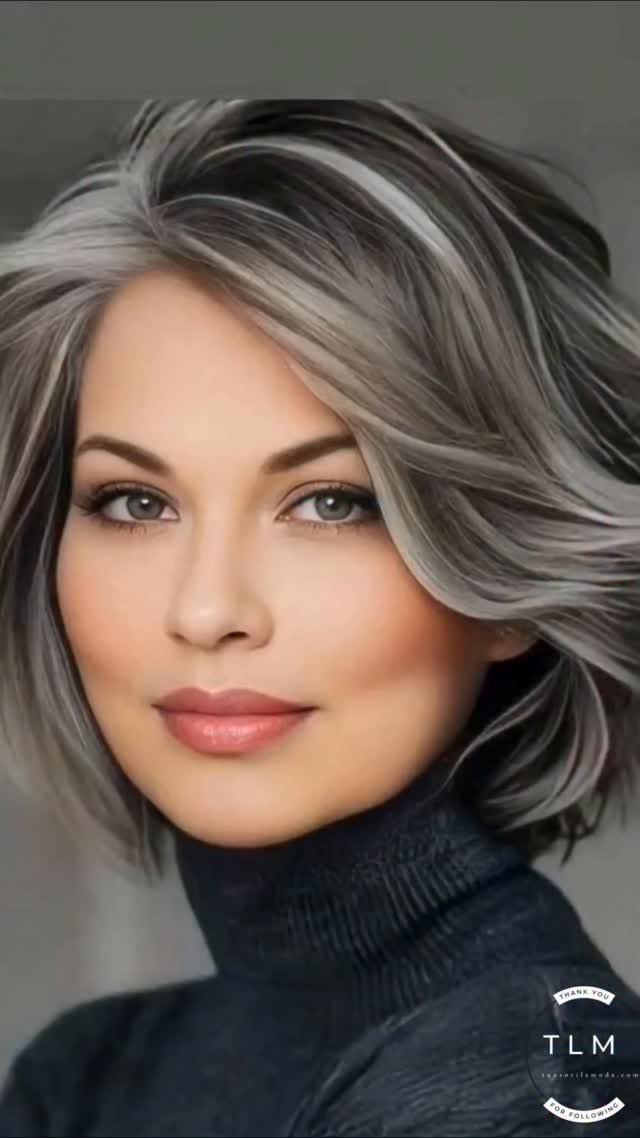
Cool ash and platinum tones sweep from a darker root or brown base, keeping violet or silver undertones instead of warmth.
The color reads almost silvery in some light, especially on shorter cuts where the blonde sits closer to the face.
Ash balayage suits cooler skin tones and skips the gold entirely. It does need more upkeep than warmer blondes, since any brassiness shows fast against that cool base.
If you have warm undertones, a beige or mushroom blonde may sit better. Otherwise, plan on purple shampoo every few washes.
3. Beige Blonde Balayage
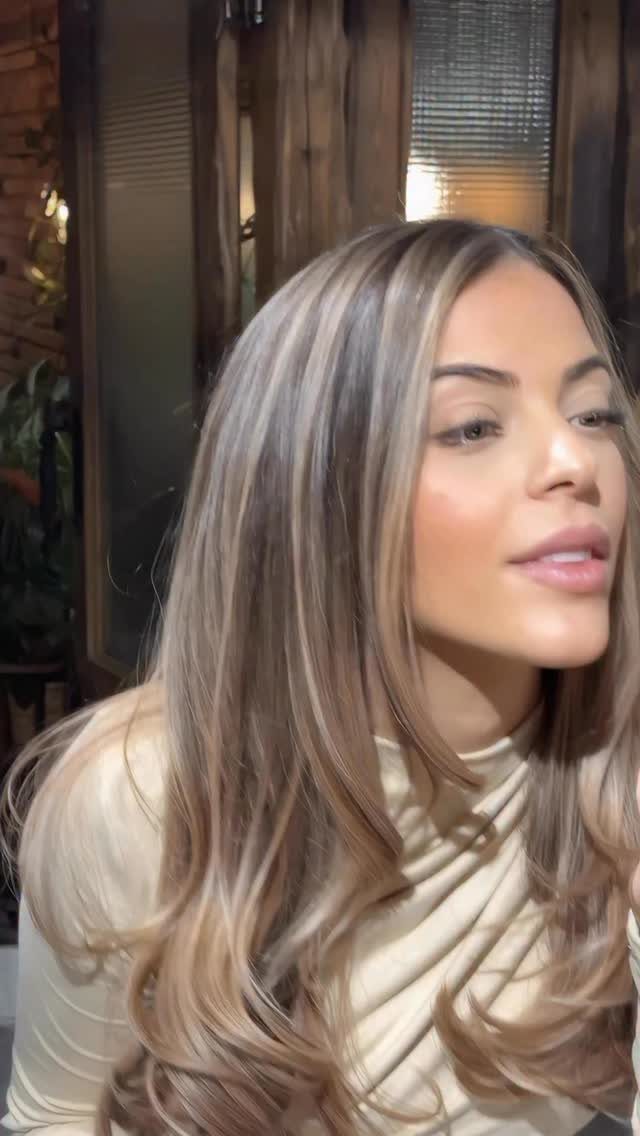
Creamy, neutral blonde ribbons sweep through mid-lengths and ends, with no strong gold or ash pull. Beige sits somewhere between cool platinum and warm honey, which makes it easier to match to more skin tones.
Beige balayage grows out softly and doesn’t demand as much toning as ash or icy platinum. Long cuts let the ribbons stretch and blend gradually.
Ask for beige or neutral blonde, and bring a reference photo if your stylist tends toward warmer tones. Soft and blended, not stark contrast.
4. Platinum Blonde Balayage
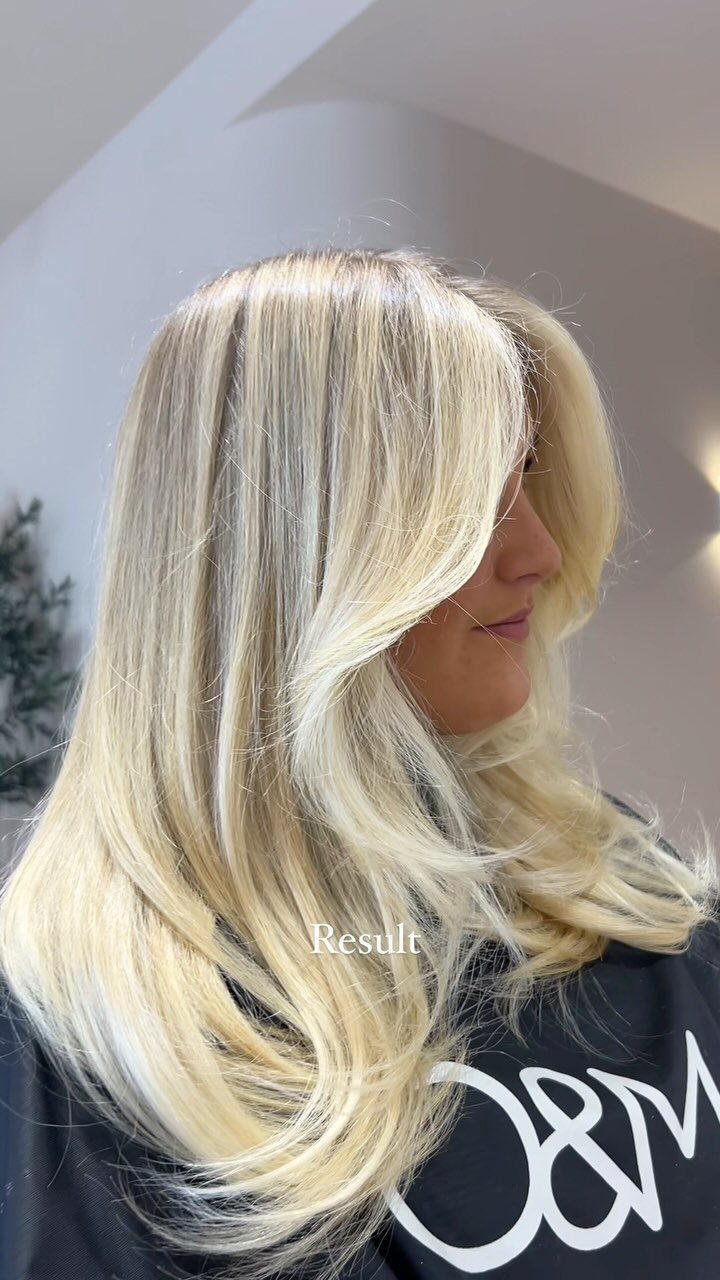
Icy, pale platinum highlights start a few inches down from the root and blend into darker lengths or a shadow root. The contrast is stronger than most balayage, so the effect reads bright and intentional rather than sun-kissed.
Platinum balayage takes more time in the chair and more maintenance at home.
If your base is dark, expect multiple sessions to lift without damage. If you’re already blonde, one session may get you there.
Plan on toning regularly and a bond treatment each time you wash. The color is striking, but it asks for effort.
5. Dark Root Blonde
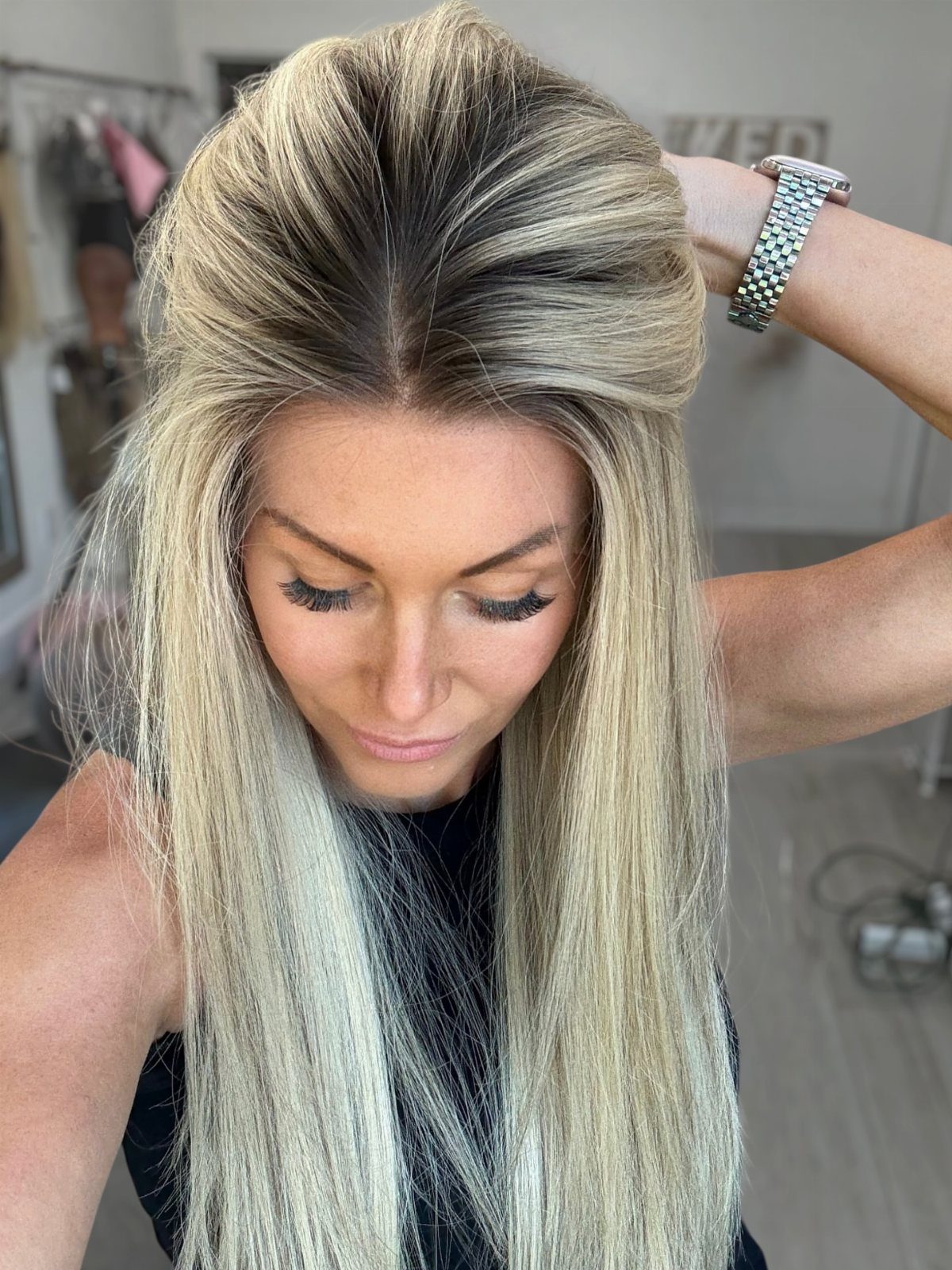
A darker root or root melt transitions into lighter blonde through the mid-lengths, giving a grown-out look that doesn’t actually need a touch-up yet.
The root can be your natural color or a deliberately placed shadow, and the transition is soft enough that regrowth blends for months.
This is the lowest-maintenance blonde option.
Appointments stretch out, and the color still looks intentional. It suits anyone who wants blonde but doesn’t want to live at the salon.
If you’re going lighter for the first time, start here. The darker root keeps damage minimal and gives you time to decide if you want more brightness later.
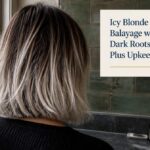
6. Sleek Ash Blonde Bob
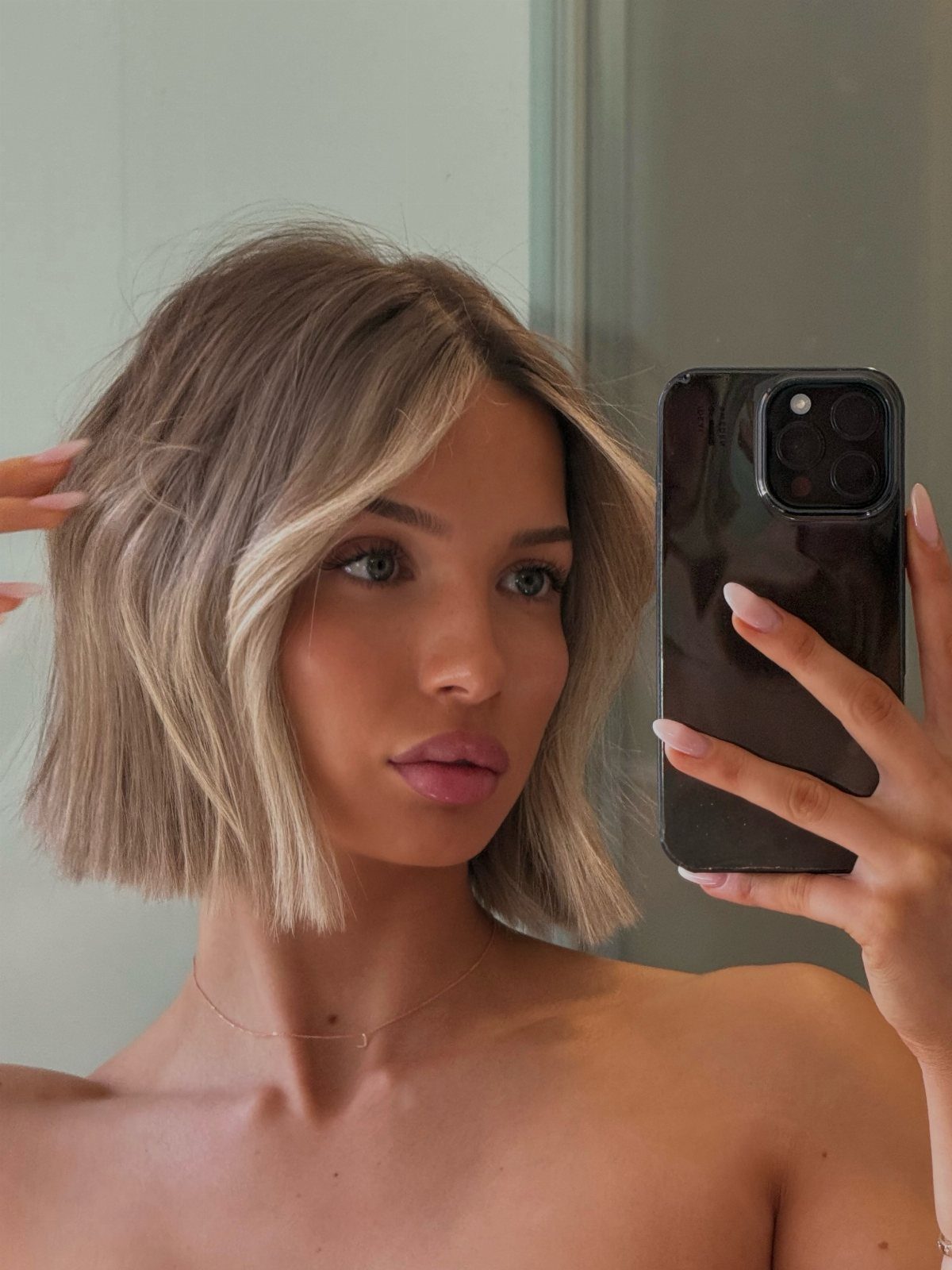
A sleek bob cut to chin or jaw length, colored with rooted ash blonde balayage that keeps the lightest pieces around the face. The cut sits blunt or slightly textured, and the color follows the same clean line.
The bob length shows off the color transition more than long hair does, so the balayage needs to be placed carefully. Face-framing strands lift the whole look without reading as highlights.
This works best on straight or wavy hair that can hold a sleek shape. If your hair is very curly, the color will still show, but the precision of the cut may soften.
7. Mushroom Blonde
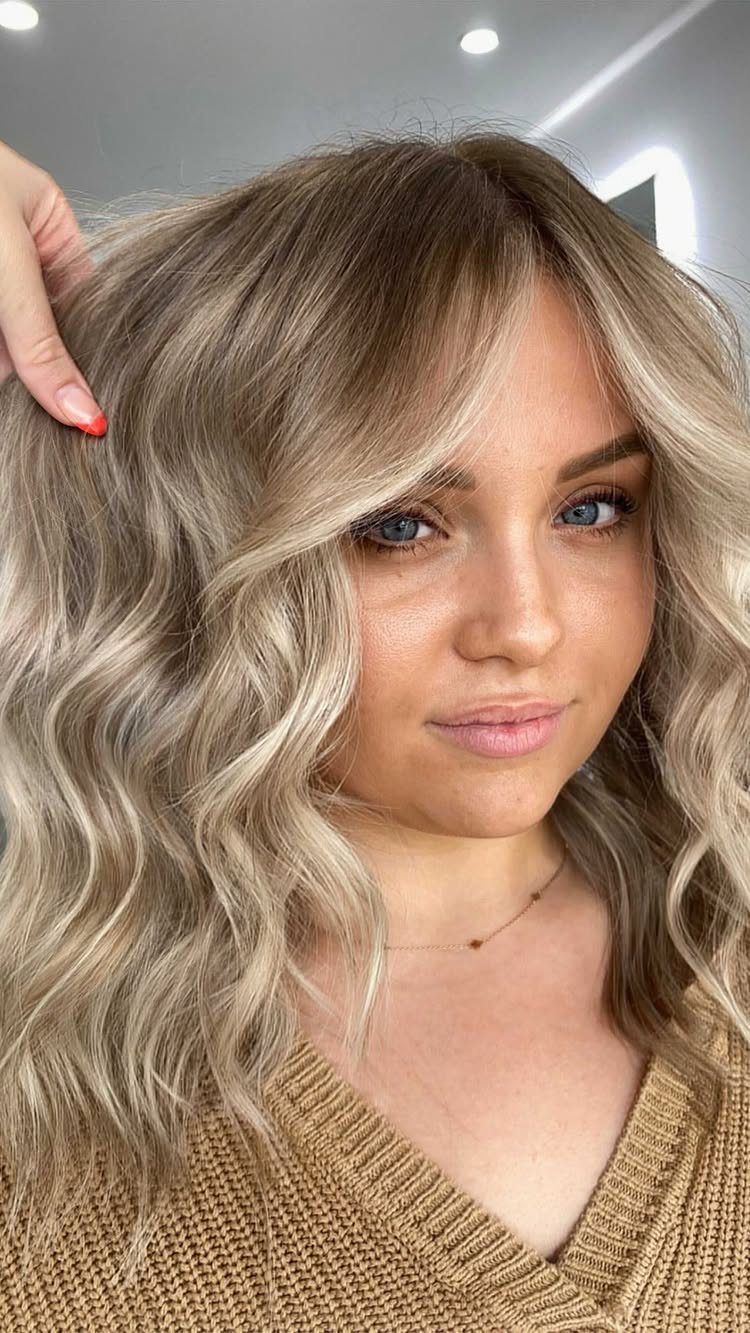
Ashy beige blonde with gray and brown tones mixed through, muted enough to read almost taupe in some light. The color skips warmth but stays softer than true ash or silver.
Mushroom blonde suits neutral or cool skin tones and grows out gently, since the base isn’t far from the lightened pieces. Long waves show the blend better than short cuts do.
Ask for mushroom blonde or greige balayage, and expect purple shampoo to keep any warmth from creeping in. The color reads earthy rather than icy.
8. Dimensional Blonde
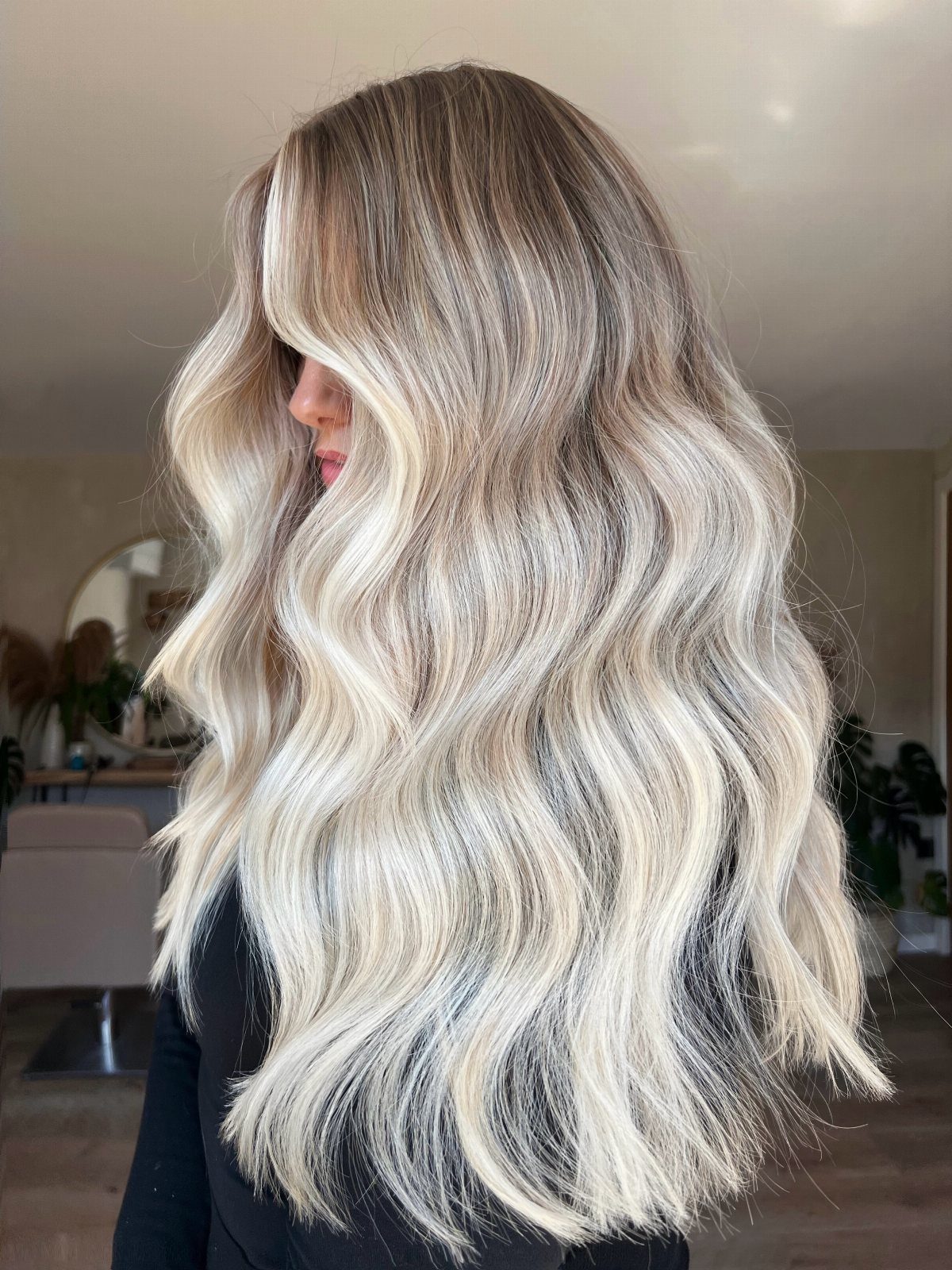
Ribbons of light blonde woven between darker lowlights and mid-tones, so the color shifts as hair moves. The contrast is stronger than a single-tone balayage, and the depth comes from keeping some pieces darker on purpose.
Dimensional color suits medium to long hair, where the strands can stack and show the variation. Shorter cuts may look stripy unless the placement is careful.
Bring a reference photo that shows the amount of contrast you want. The effect depends on keeping dark pieces in the right places, not just lifting everything blonde.
9. Warm Blonde Balayage
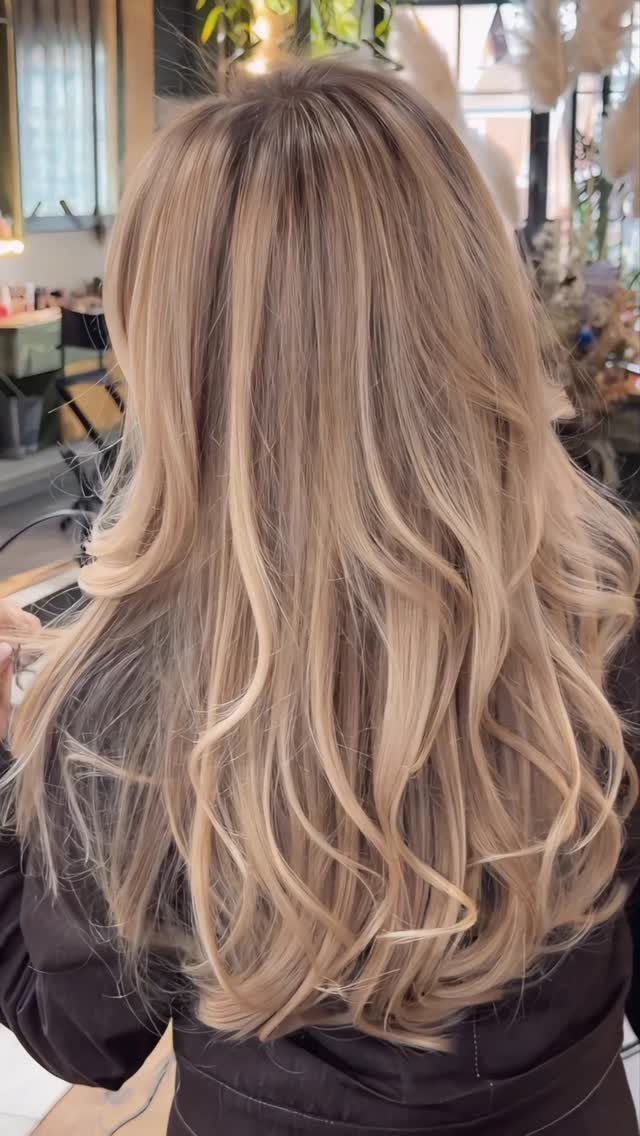
Golden blonde highlights sweep through darker blonde roots and mid-lengths, keeping honey or buttery tones instead of ash. The warmth sits close to natural sunlit blonde, so regrowth blends easily.
Warm balayage suits warm or neutral skin tones and needs less toning than cool blondes. Long hair lets the color stretch and transition gradually from root to end.
Starting from blonde often means finishing in a single appointment. If you’re lifting from light brown, expect a longer appointment.
10. Golden Caramel Balayage
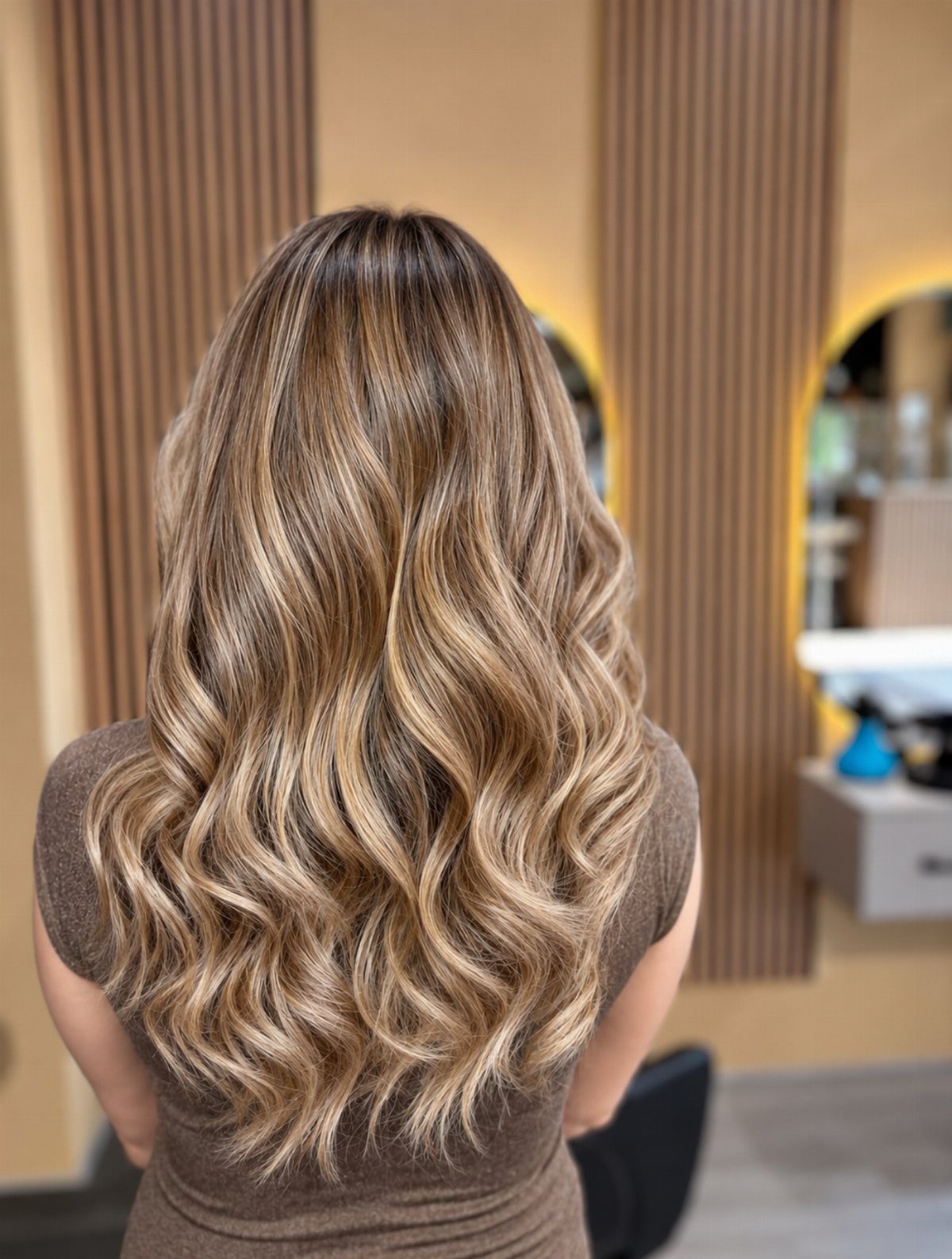
Rich caramel ribbons with gold undertones blend into darker roots, keeping warmth through the transition. Waves pick up the light unevenly, which is where that bronze flash comes from.
Golden caramel suits medium to dark blonde bases and grows out softly, since the tones stay close. The warmth flatters warm or olive skin tones.
Long hair shows the blend best. If you want this on a bob or lob, ask for fine ribbons rather than chunky pieces, so the color doesn’t sit in blocks.
11. Frosted Silver Lob
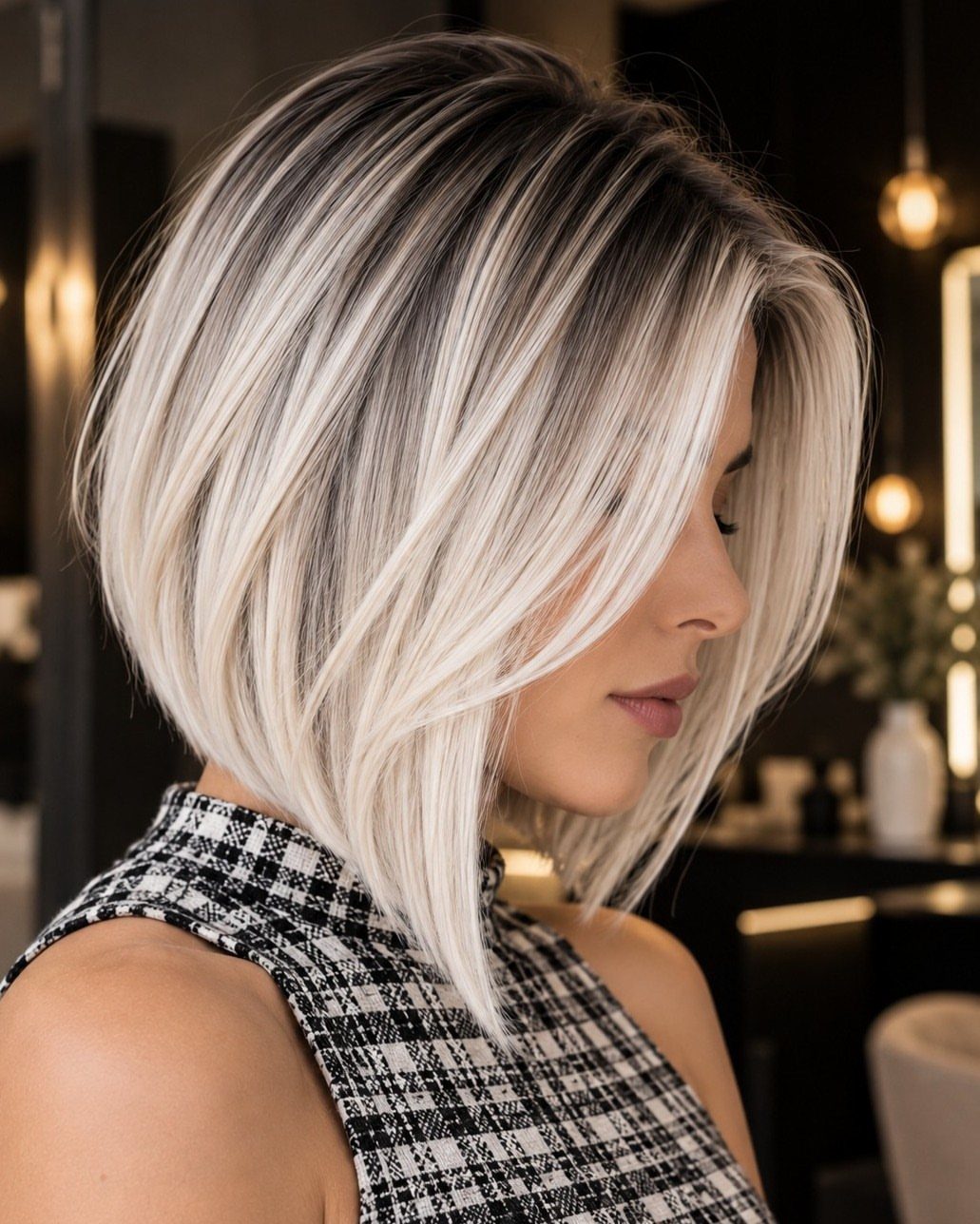
Cool silver highlights sit over a dark ash-blonde root melt, cut to a straight lob at collarbone length. The highlights are fine and close together, so the color reads silvery overall rather than striped.
The lob length keeps the color close to the face, and the straight cut shows off the precision.
Silver tones need regular toning to stay cool. Plan on purple shampoo and a gloss every few weeks, or the color will warm up fast.
12. Mushroom Half-Up Twist
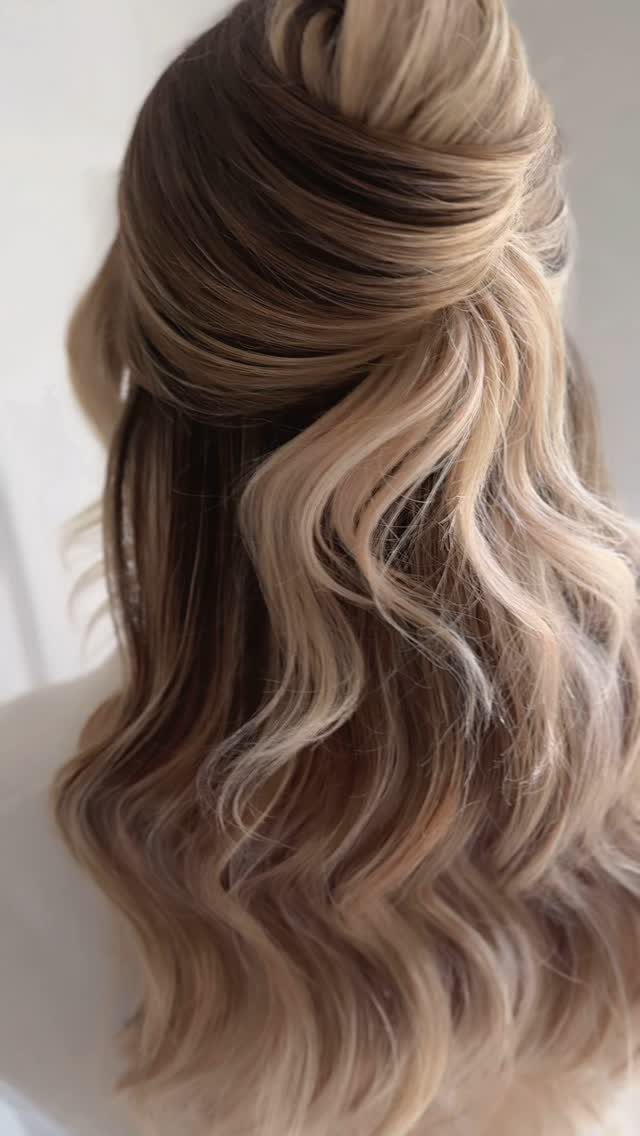
Smoky brunette roots blend into silvery beige highlights, styled with the top section twisted back and pinned. The half-up style lifts the lighter pieces away from the face and shows the color transition clearly.
The twist suits long hair that can hold a pin without slipping. Waves add texture and keep the style from reading too formal.
Color first, then style. The half-up twist works with most balayage placements, but it shows off cooler tones and root melts particularly well.
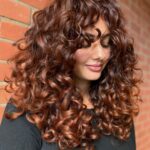
13. Warm Copper Balayage
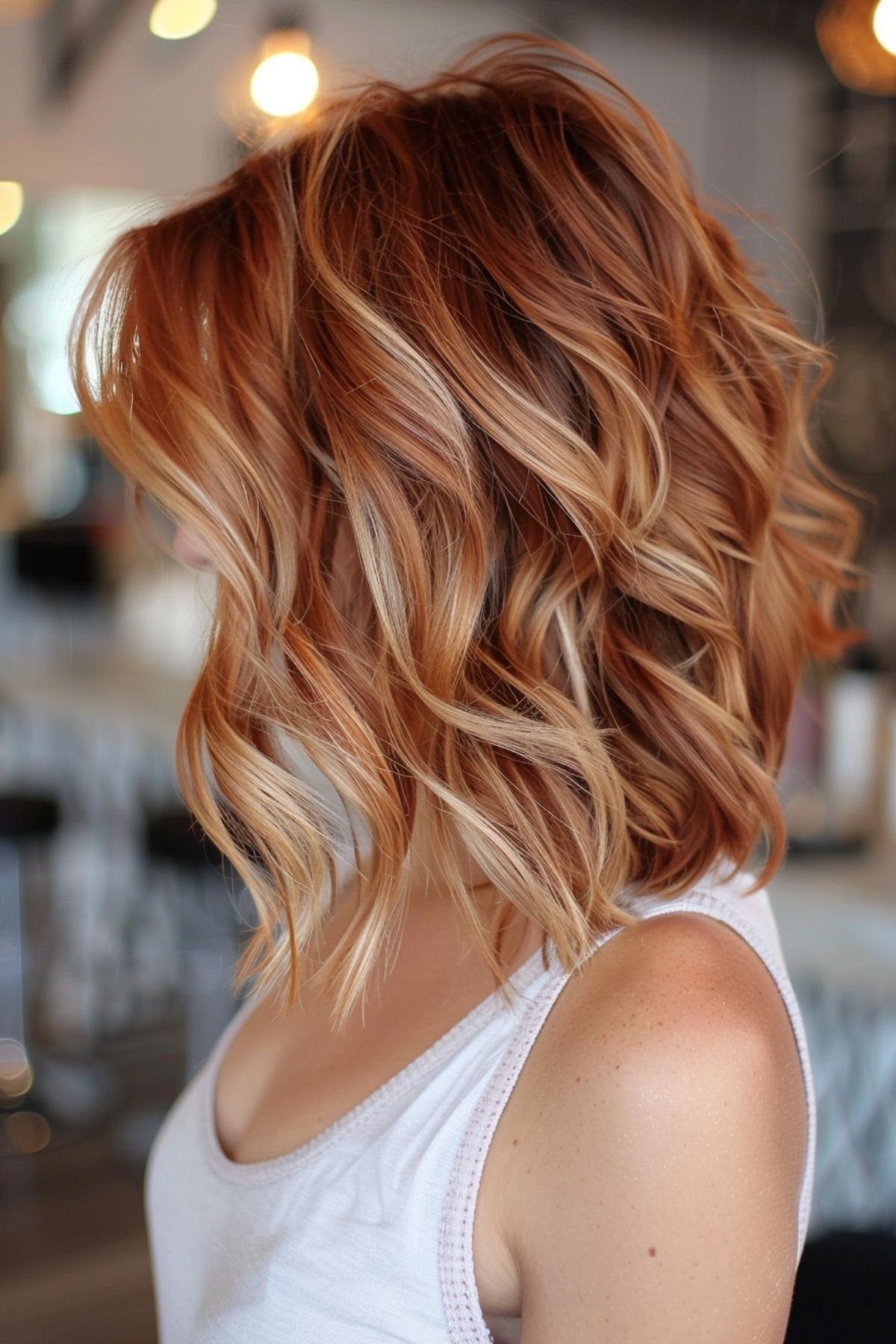
The copper runs through the mid-lengths and fades into pale gold at the tips, so the warmth doesn’t drop off halfway down. The color suits long waves or shoulder-length cuts, where the transition can stretch and catch the light.
This balayage reads warmer than caramel and softer than red, so it flatters warm skin tones without going full auburn. Regrowth blends easily, since the root stays close to the lifted pieces.
If your base is dark brown, expect a longer session to lift the ends light enough for that pale gold finish.
14. Honey Caramel Highlights
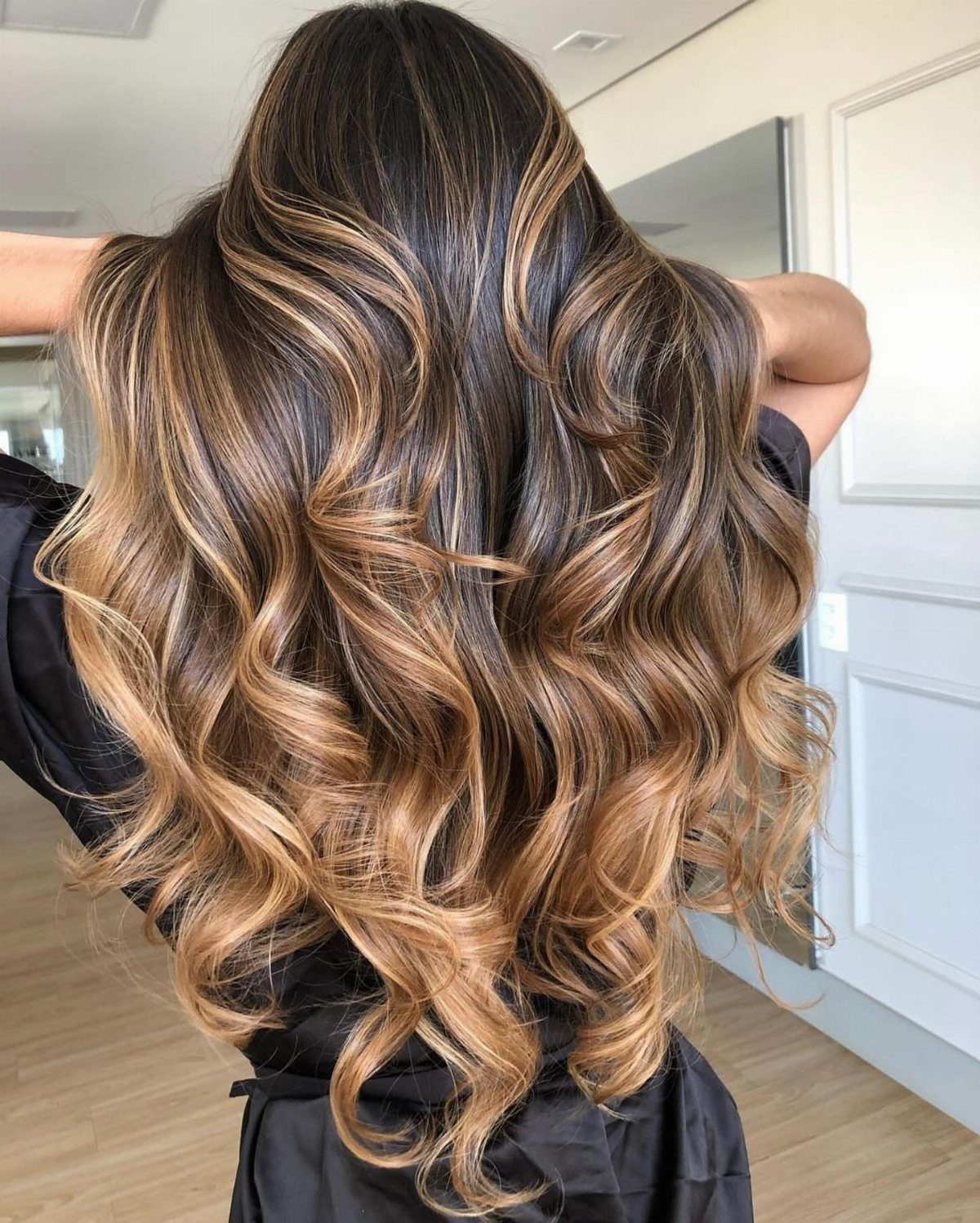
Honey-caramel ribbons brighten brunette hair without lifting the whole head. The highlights sit through mid-lengths and ends, keeping warmth and dimension where long hair moves.
Long curls show off the variation better than straight hair, since the ribbons catch the light unevenly.
Ask for honey or caramel balayage, and specify how much contrast you want. The more ribbons, the brighter the overall effect.
15. Rose Gold Balayage
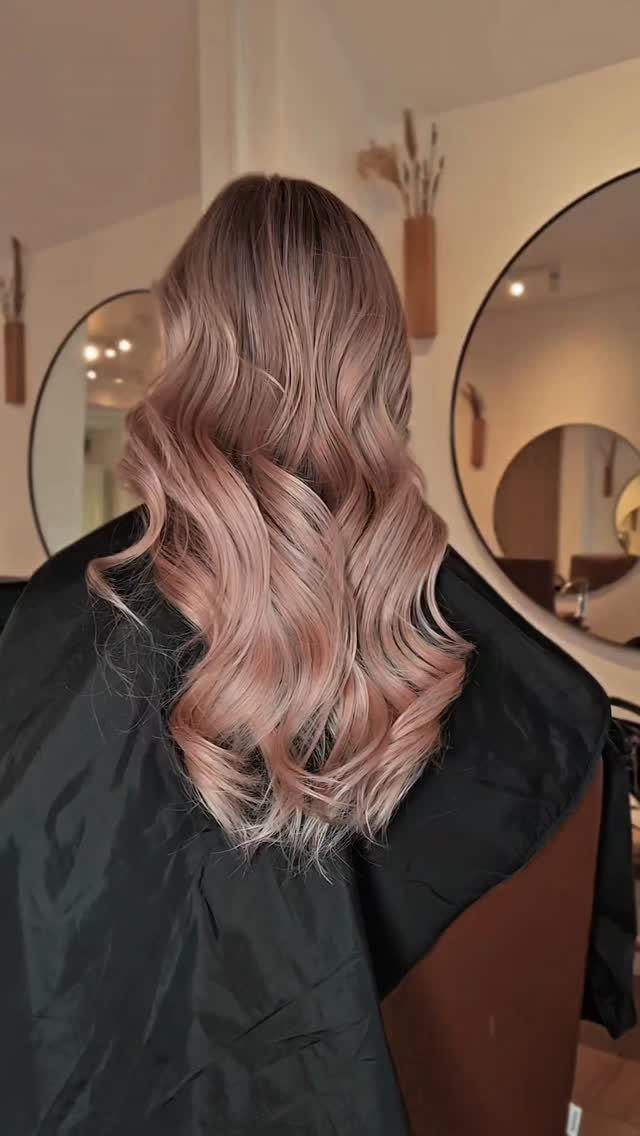
Peachy blonde and rose-gold ribbons blend from a rose-brown root, keeping a soft, warm finish through the ends. The color reads more neutral than copper but warmer than beige.
Rose gold suits warm or neutral skin tones and grows out without harsh lines. Long waves let the color transition gradually, and the peachy tones stay soft even in bright light.
This balayage needs a gloss to keep the rose tone from fading warm. Plan on refreshing the color every few months, or it will shift toward plain blonde.
16. Teddy Bear Bronde
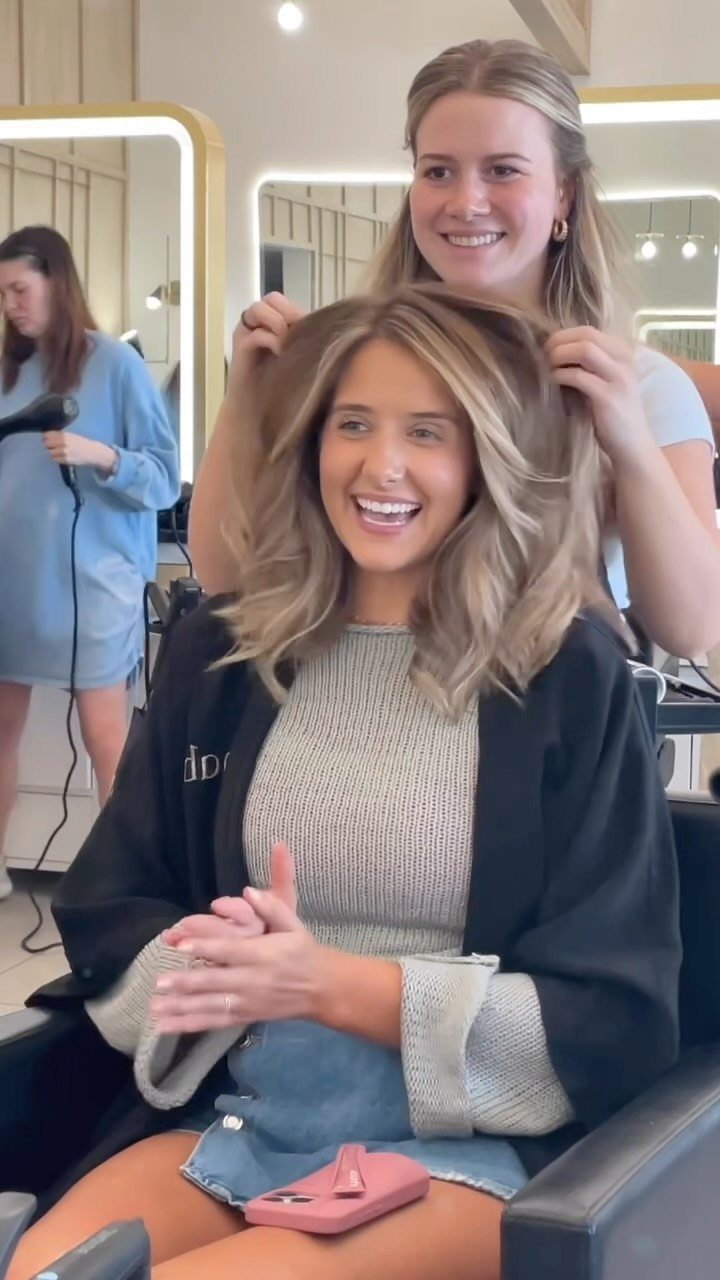
Warm brunette roots melt into soft beige-blonde highlights that frame the face and lighten through the ends. The contrast is gentle, and the color reads somewhere between blonde and brunette.
Teddy bear bronde suits anyone who wants brightness without committing to full blonde. The darker root keeps appointments spaced out, and the beige tones stay neutral enough to suit most skin tones.
Long waves show the blend best.
17. Champagne Blonde Waves
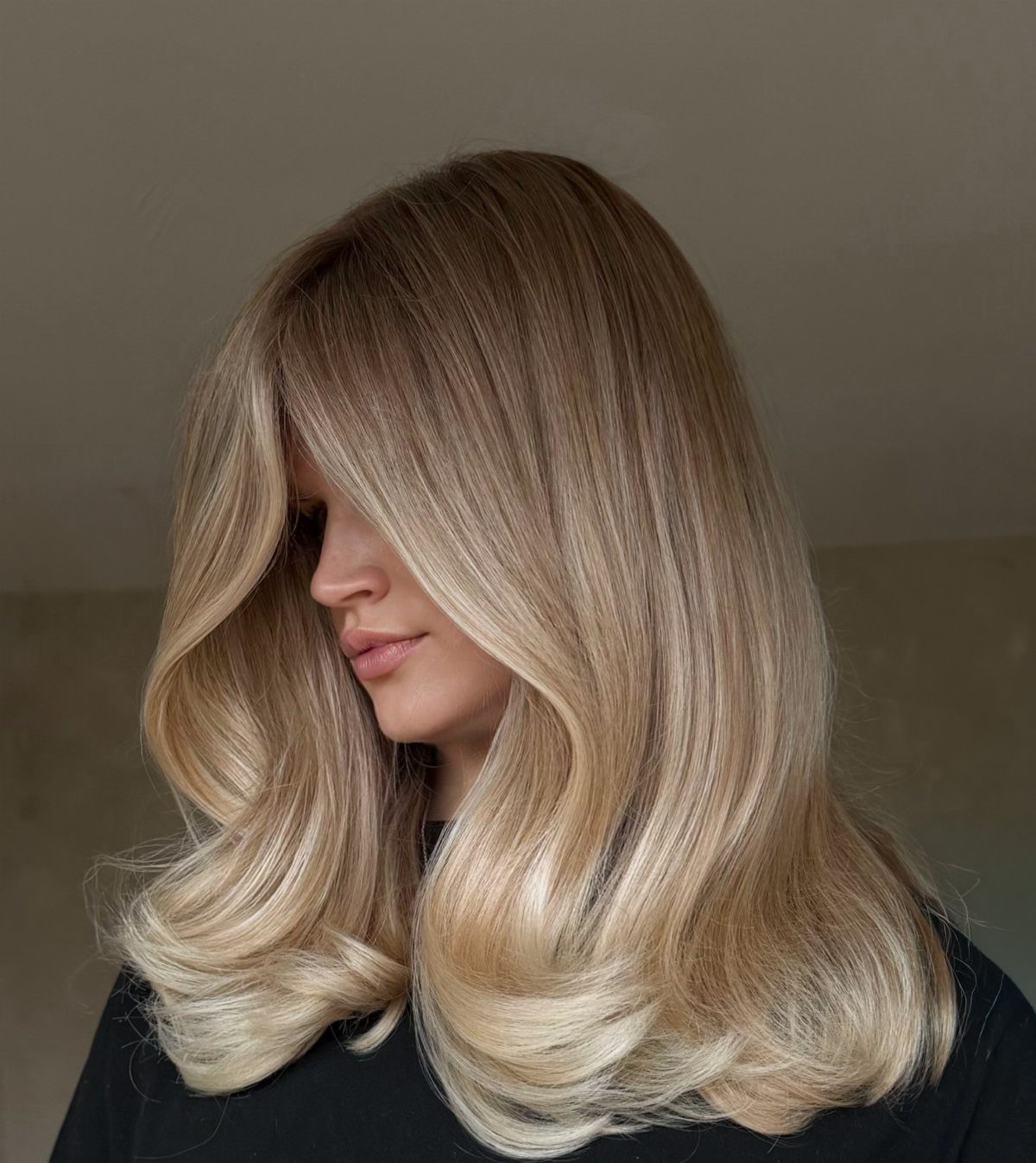
Dimensional champagne blonde flows through long soft waves, with brighter face-framing pieces and a gentle root melt. The color shifts between pale gold and creamy beige, so it reads lighter overall but never flat.
18. Dirty Blonde Lob
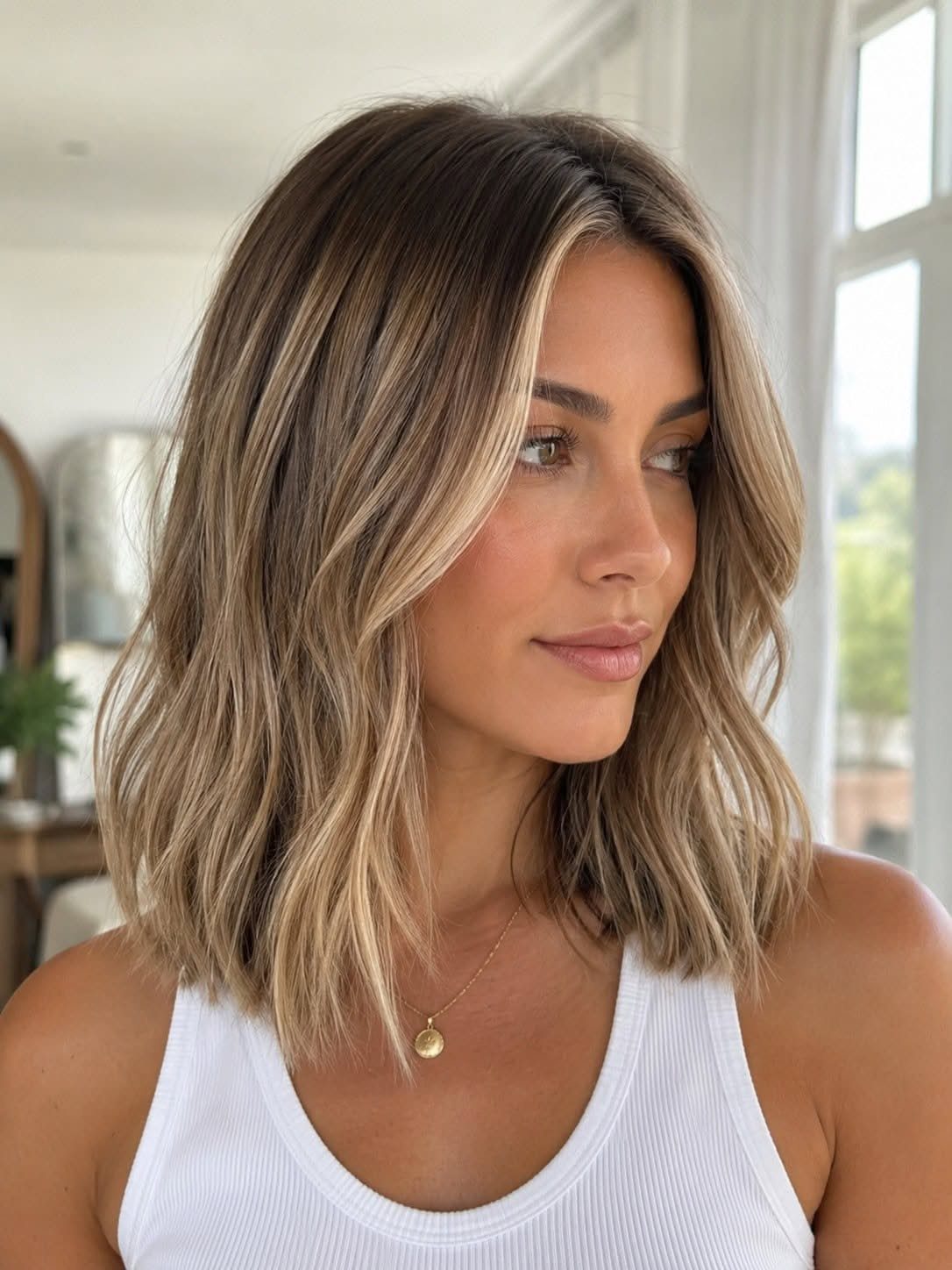
A medium-length lob sits just below the shoulders, colored with dirty blonde balayage and lighter face-framing layers. The cut keeps some weight at the ends, and the color lifts the front without going platinum.
Dirty blonde balayage grows out easily and suits neutral or cool skin tones.
Waves add texture and keep the look from sitting too flat. Straight hair will show the color transition more sharply.
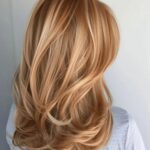
19. Fall Blonde Bob
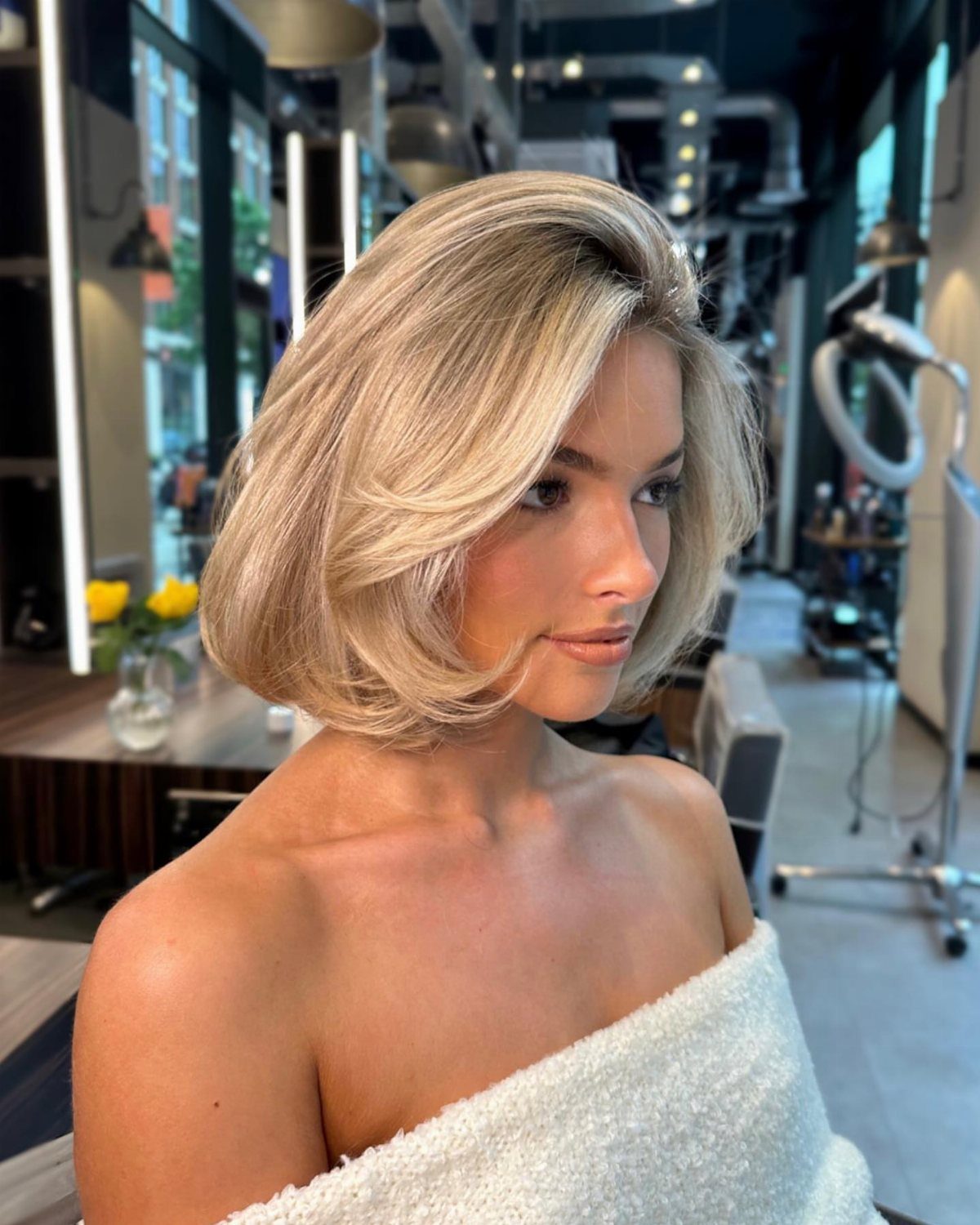
Warm honey and champagne highlights blend through a wavy bob that sits at shoulder length, keeping the color rich without going too light. The waves add movement and show off the dimension.
This suits anyone who wants blonde warmth in a shorter cut. The bob length keeps the color close to the face, and the waves soften the line.
Tell your colorist you want champagne or honey and point to the sections that should catch the most light. The warmth grows out easily and needs less toning than cooler blondes.
20. Vanilla Blonde Waves
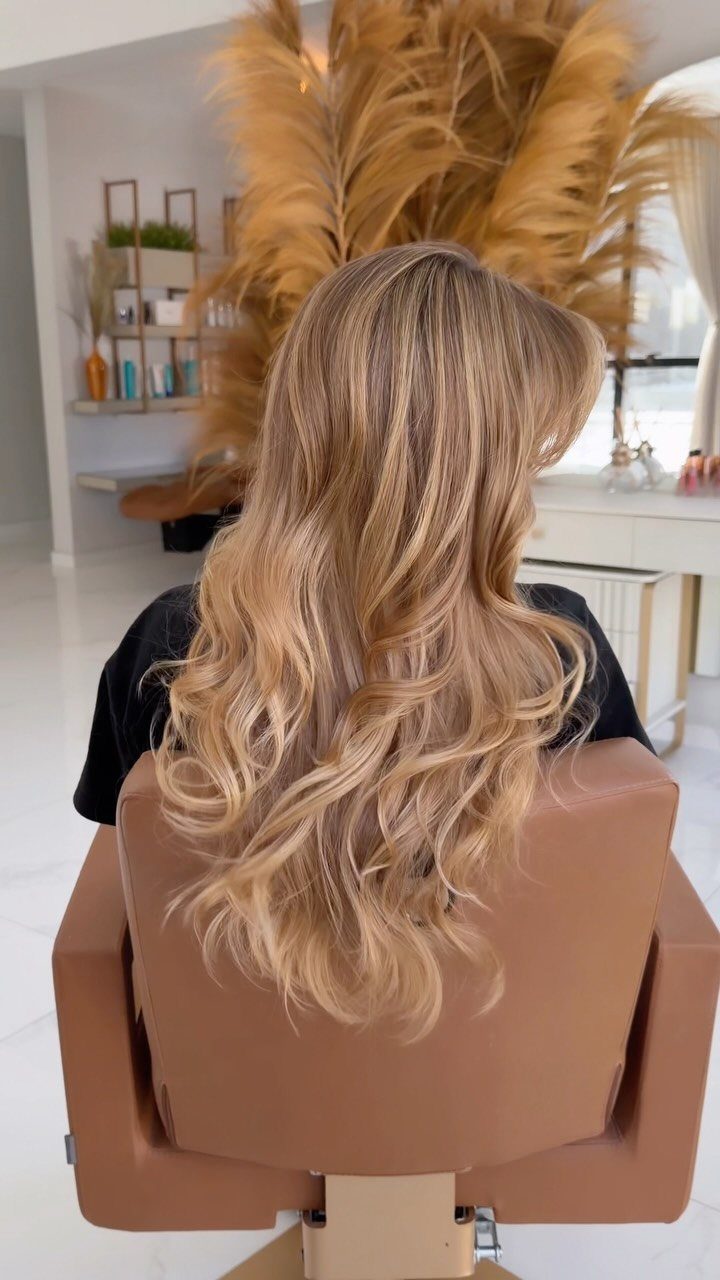
Soft vanilla blonde brightens long waves without going icy or too warm, keeping a neutral creamy tone from root to end. The darker root keeps regrowth soft, and the color transitions gradually through the length.
It flatters neutral undertones and the regrowth blends itself over several months. Long hair lets the waves stack and show the color shift as they move.
Plan on toning every few washes to keep the vanilla tone from warming up.
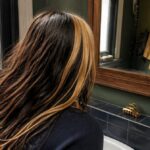
21. Chunky Platinum Highlights with Soft Beach Waves
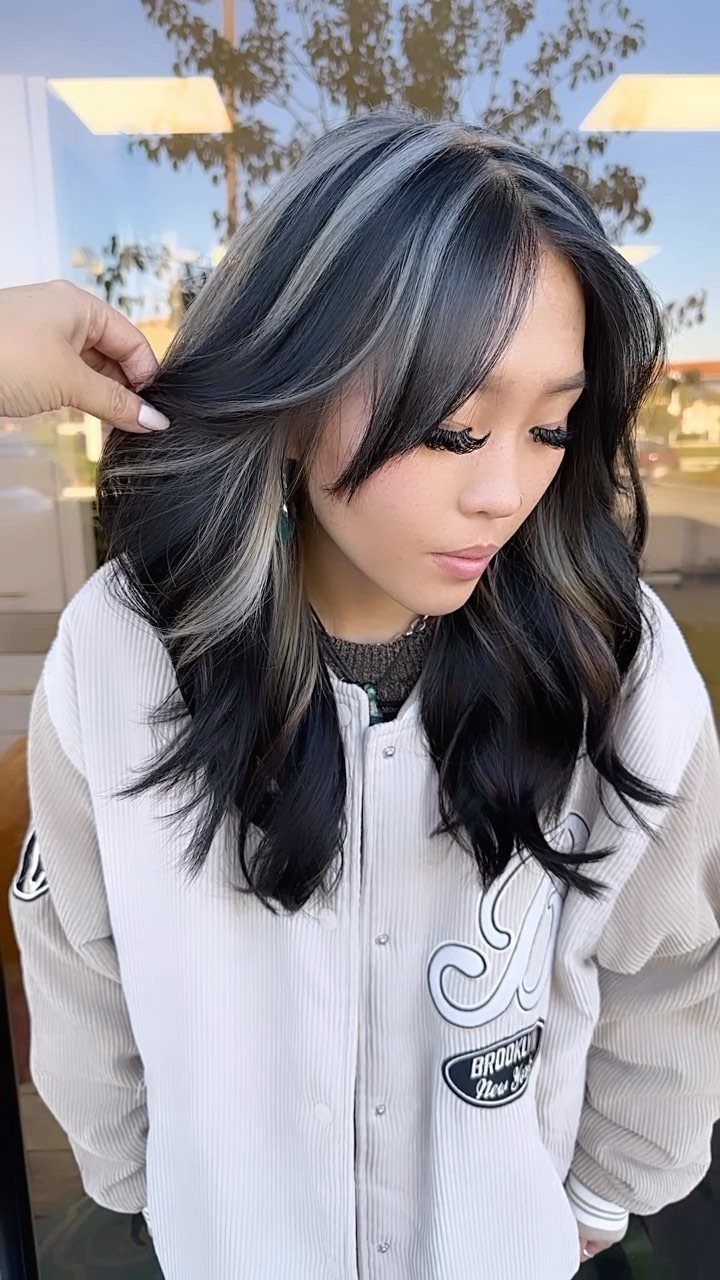
Wide platinum ribbons contrast with dark waves, placed around the face and through the ends. These sections are wider than a typical balayage sweep, so you get contrast instead of a melt.
Chunky highlights suit long hair where the contrast can spread out. Beach waves soften the stark color difference and keep the look from sitting too graphic.
The contrast needs regular toning to stay cool.
22. Blonde Claw Clip
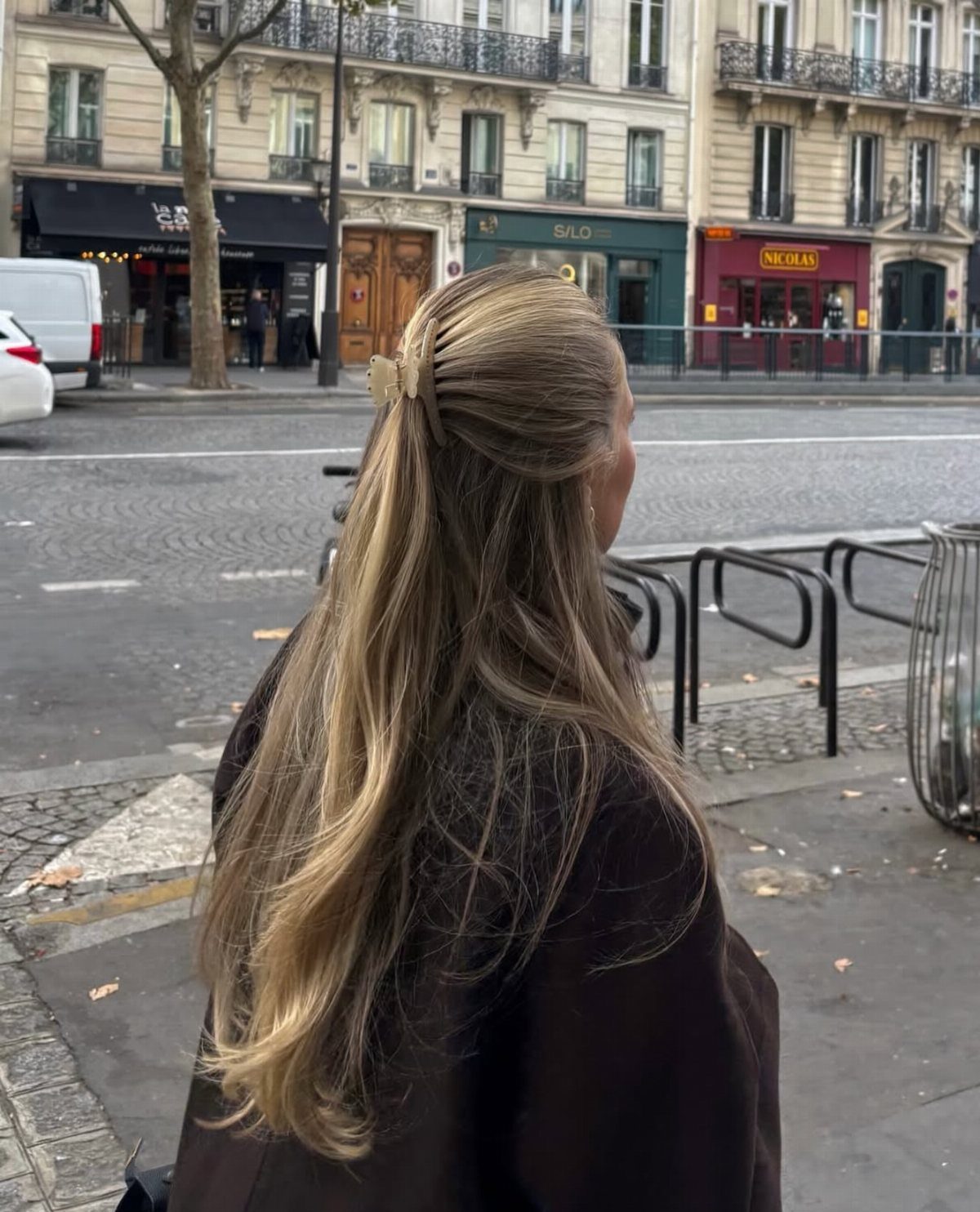
Long balayage waves pulled half-up with a cream claw clip, keeping face-framing pieces loose and the rest gathered at the crown. The clip holds the top section back without flattening the volume.
You need enough length to anchor the clip without it sliding by lunchtime. The half-up style shows off the balayage placement and keeps hair off your face without going full updo.
Pick a clip in a neutral tone that blends with your blonde. The style takes seconds and works on second-day hair.
23. Creamy Beige Reverse Balayage
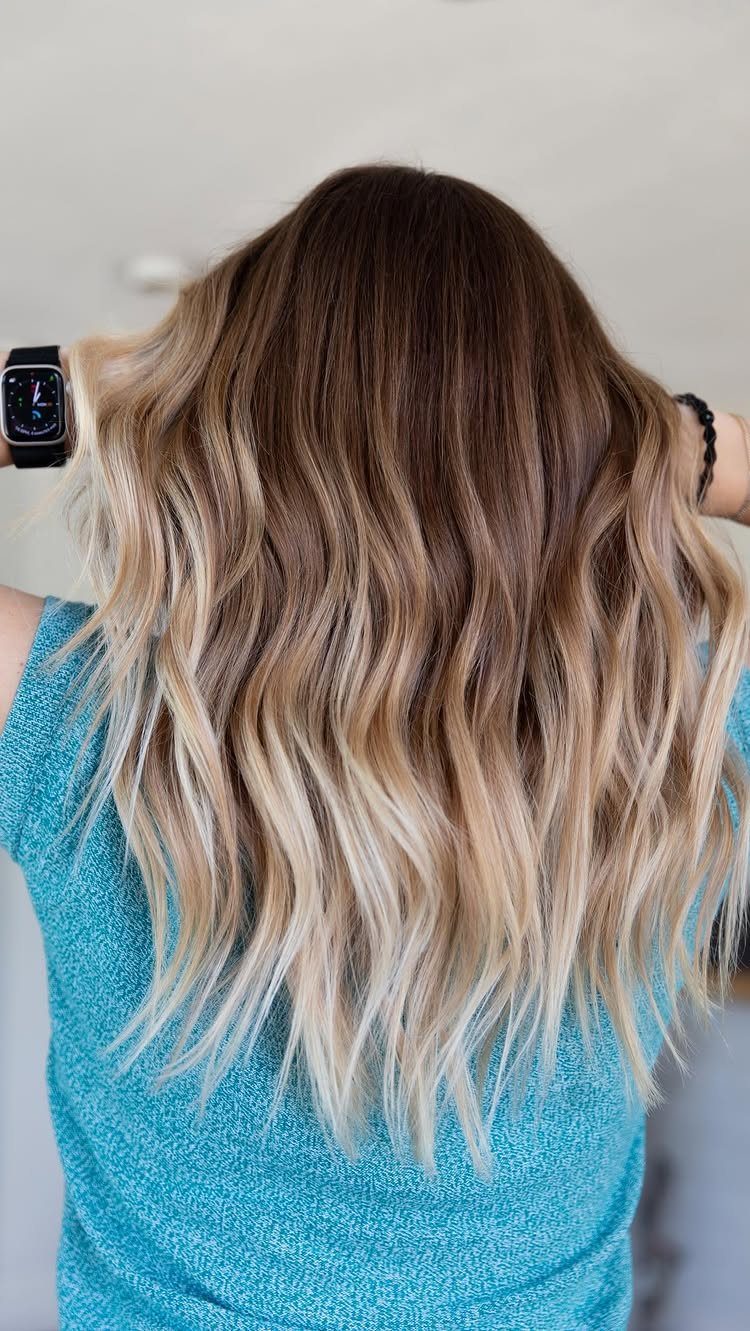
Reverse balayage adds darker pieces back into blonde hair, blending a dark root into creamy beige ends. The color moves from brown to blonde instead of lightening up, which deepens the overall tone without losing the blonde.
This suits anyone who went too light and wants dimension back. The root shadow disappears as it grows, and the beige midlengths work across most complexions.
Ask for reverse balayage or lowlights, and bring a photo showing how much depth you want added back in.
24. Lowlight Blonde Hair
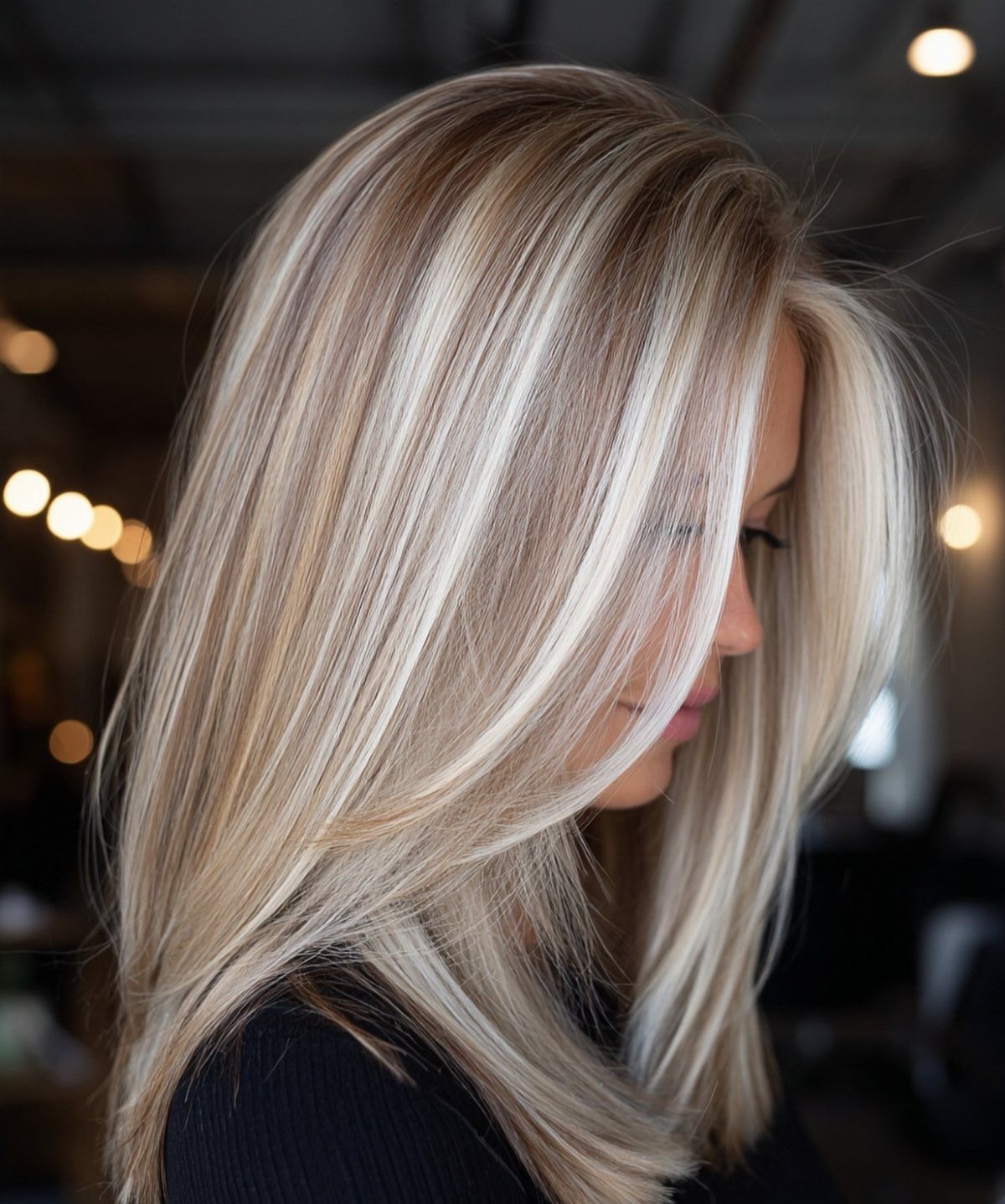
Darker blonde lowlights woven through lighter blonde add depth and keep the color from sitting flat. The contrast is subtle, and the lowlights blend into the root so regrowth softens over time.
Lowlights suit blonde hair that reads too one-note or brassy. They add dimension without lifting anything new, so there’s no damage to worry about.
Ask for lowlights a shade or two darker than your base. The more you add, the deeper the overall tone.
25. Cool Blonde Lob
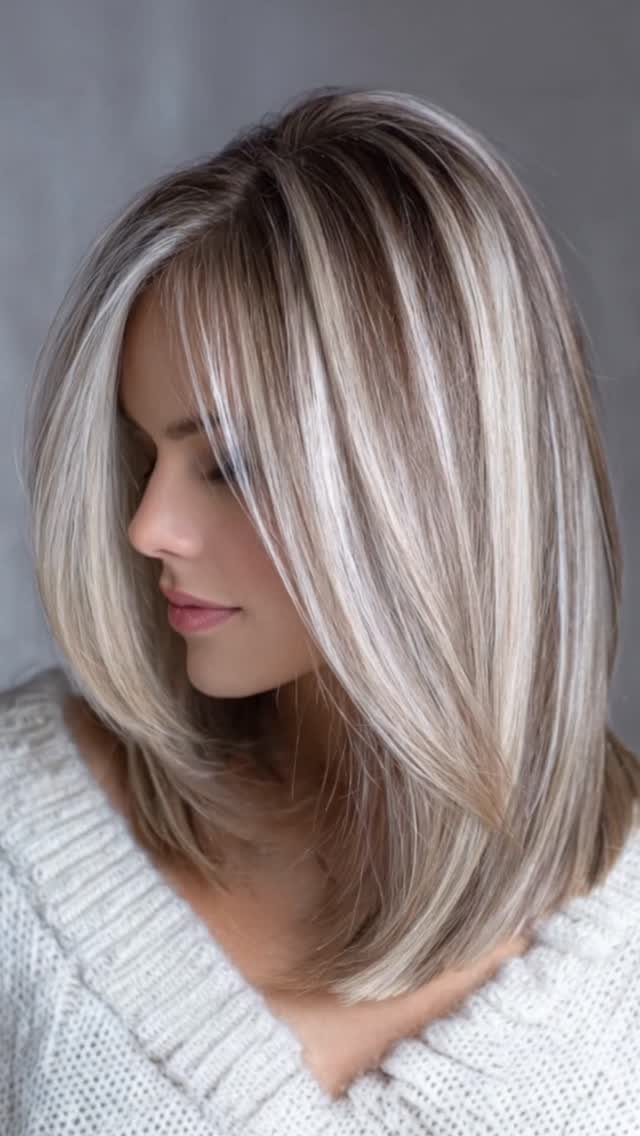
Fine beige-blonde highlights sit over ash-brown in a shoulder-length angled bob, keeping the color cool and the contrast subtle. The strands are woven close enough that the whole thing looks like one smooth color instead of separate ribbons.
An angled cut gives the lob structure on its own, so you’re not stuck curling it every time. Straight hair shows the precision, while texture softens it.
Because the base and highlights sit only a shade or two apart, regrowth blends in rather than announcing itself. A weekly purple shampoo stops it from going brassy between salon visits.
26. Milk Tea Blonde
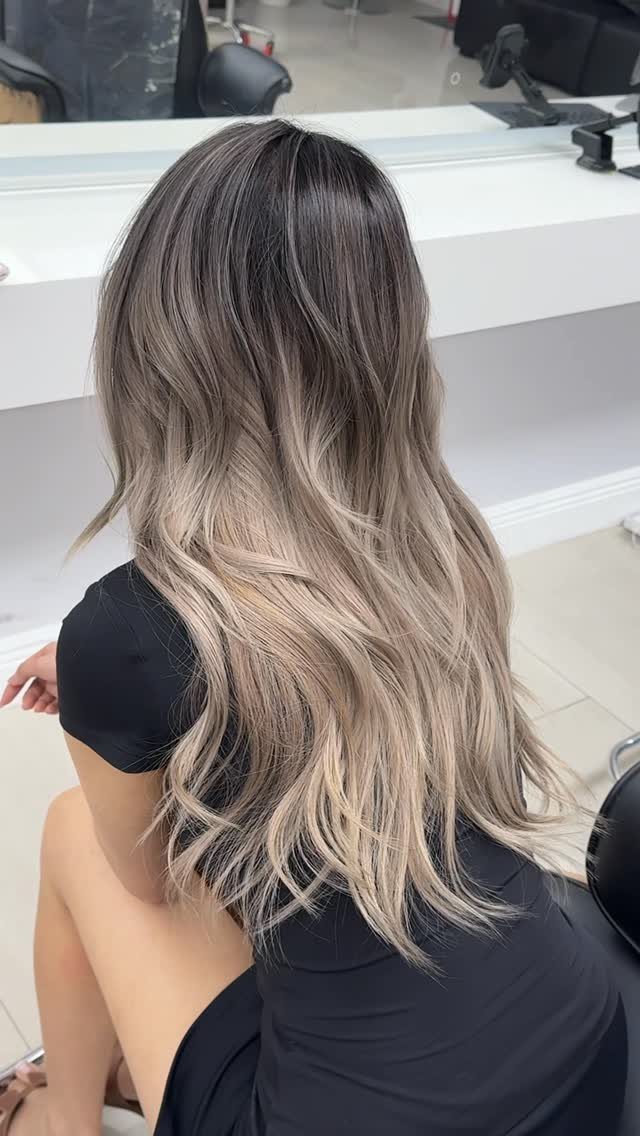
Cool beige-gray roots blend into pale beige-blonde ribbons, keeping the color soft and neutral through the transition. The tone reads somewhere between mushroom and champagne, muted enough to suit cool skin tones without going icy.
Long waves show the blend clearly, and the darker root keeps regrowth spaced out. The color grows out over months without a harsh line.
Ask for milk tea blonde or cool beige balayage. Toning keeps the blonde from warming up, so plan on purple shampoo between appointments.
Low-upkeep Cool Blonde
Purple shampoo keeps any warmth from creeping in, but you won’t need it as often as you would with platinum or icy ash.
Frequently Asked Questions
What hair color looks best with blonde highlights?
Blonde highlights work across most base colors, but the placement and tone matter more than the starting shade.
Face-framing ribbons lift attention upward and suit warm or cool skin depending on whether you go honey or ash, while darker roots paired with beige or champagne ends grow out softly and blend for months.
Dark brown hair often needs 2 sessions to reach the pale blonde ends that make balayage look natural.
Does a balayage have to be blonde?
No, balayage is a placement technique that works with any color. The hand-painted ribbons can be caramel on brown hair, copper on auburn, or even darker lowlights woven back into blonde.
Blonde is the most common choice because the contrast shows easily, but the method itself just describes where the color sits and how it transitions.
Which blonde hair is most attractive?
The blonde that suits your skin tone and fits your maintenance schedule wins.
Warm honey and caramel flatter warm undertones, cool ash and beige suit cooler skin, and neutral champagne or dirty blonde work across most complexions. Keeping a darker root means you can go 4 to 6 months between appointments instead of 8 weeks.
Can you do strawberry blonde balayage?
You can, though peachy rose gold and warm copper are closer to what most people mean when they ask for it.
The color needs a gloss to hold the rose tone, or it shifts toward plain blonde within a few months.