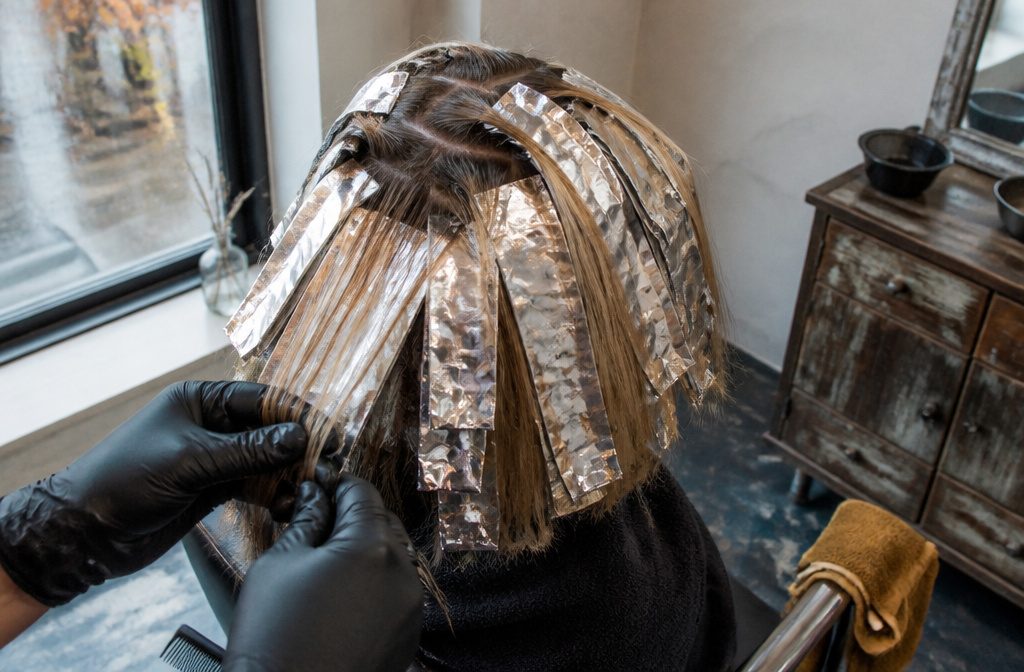
Full foil highlights are sections of hair lightened throughout the entire head and wrapped in foil to process, not just at the crown or face frame the way partial highlights work.
They give you the most even, all-over brightness of any highlight method, but regrowth shows up as a hard line at the scalp around six weeks.
The foil traps heat to speed processing and keeps each strand separate for consistent lift from root to tip.
What Full Means
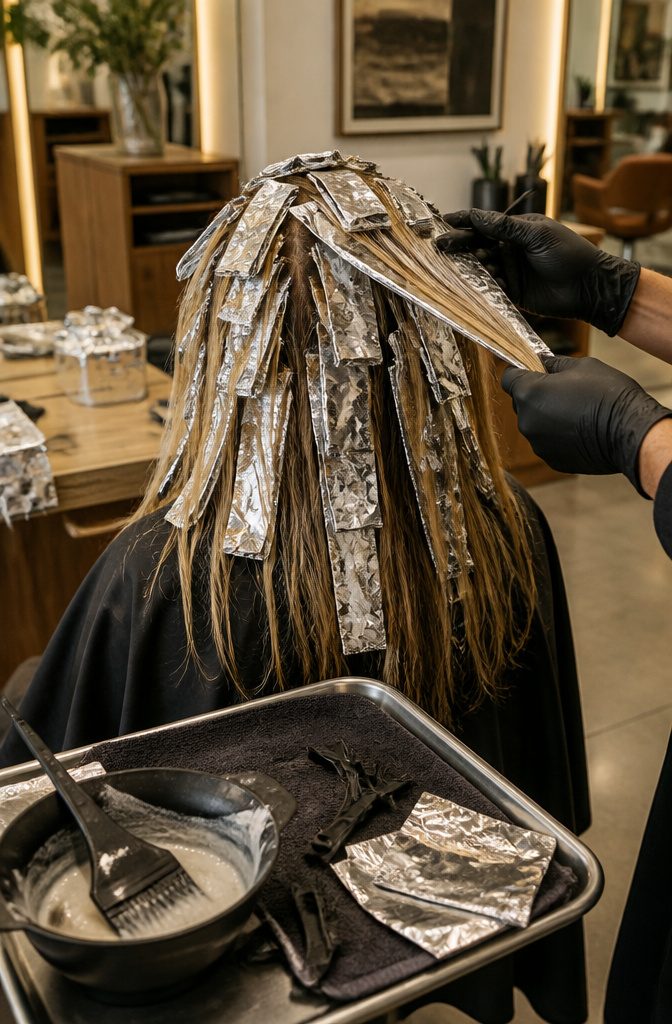
Full foil highlights means lightened sections distributed throughout the whole head, not just the crown or the areas around your face. This is what separates them from partial highlights, which cover fewer zones and leave the back or underlayers untouched.
The foil itself does two jobs. After each strand is coated in bleach, it gets wrapped in a sheet of foil to develop:
This process helps to separate each highlight for a more uniform look and speeds up the lightening process by trapping heat.
That trapped heat cuts the processing time and gives you a cleaner, more consistent lift from root to tip.
Foil highlights typically run the entire length of each strand, which gives you brightness all the way down rather than concentrated dimension at the ends.
How the Service Works
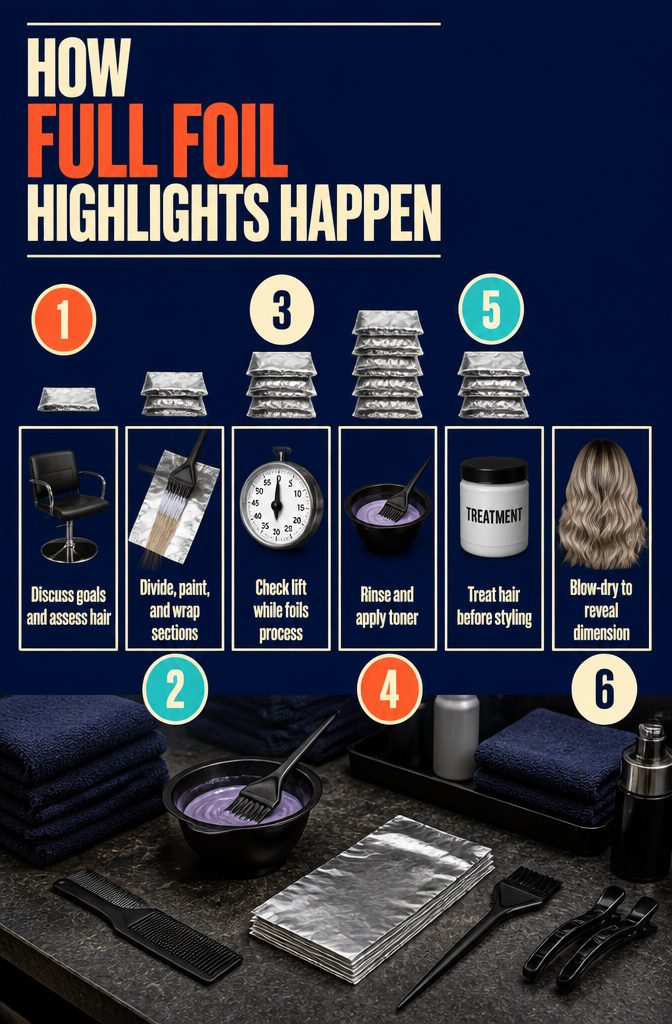
- Consultation and color selection. The stylist asks what you want, examines your base color and condition, and decides how many levels of lift you need and whether pre-lightening is required. This conversation sets the formula and developer strength for everything that follows.
- Sectioning and foiling. Hair is divided into four to six zones, then sliced horizontally within each zone. Lightener is painted onto each slice, wrapped in foil, and stacked from nape to crown. Full foil means every section gets highlighted, not just the top layer.
- Processing. The foils stay on while the lightener works, typically checked midway to gauge lift. Timing depends on your starting color and how light you want to go.
- Toning. Once the foils come off and hair is rinsed, toner is applied to neutralize brass and adjust the final shade. Toning only works after lightening because it deposits color onto the newly lifted base.
- Conditioning treatment. A mask or protein treatment goes on before styling to address the dryness lightener causes.
- Blowout and styling. Hair is dried smooth so you see the final color placement and dimension.
Results and Tradeoffs
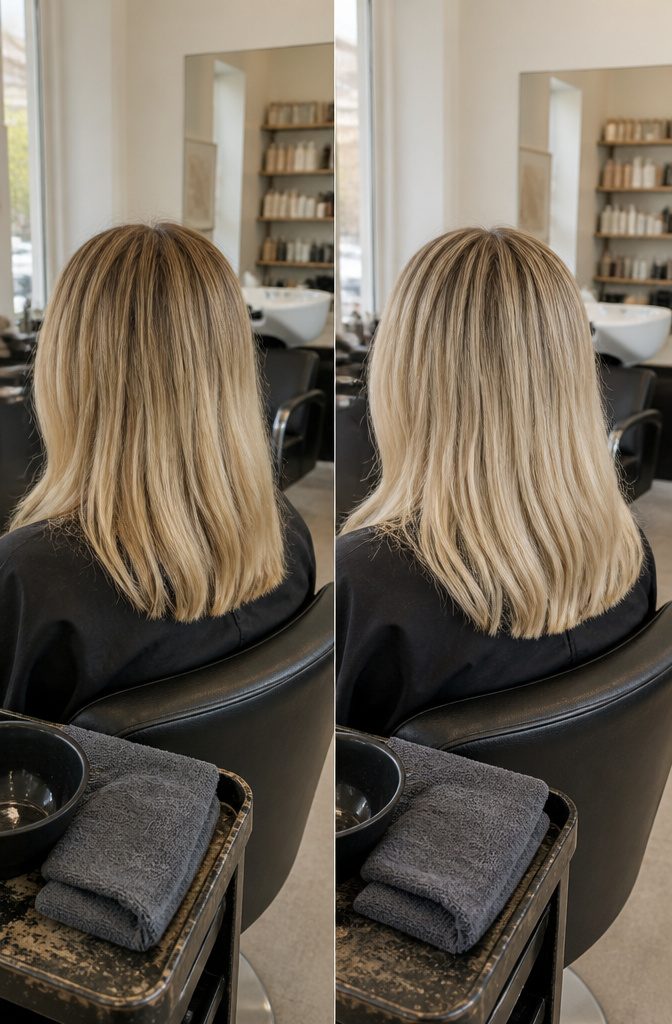
Full foils deliver all-over brightness and dimension, the kind of lift that reaches from the surface down through every layer.
The result reads as more even than balayage or partial highlights because every section is wrapped and lightened from root to tip in the same repeating pattern.
That uniformity pays off if you want even brightness with no darker pockets underneath, or if you are lifting far away from your natural base.
The tradeoff arrives at the root. Full highlights grow from the same starting line, so regrowth shows up more noticeably than with hand-painted methods.
Balayage avoids that hard line by placing color below the root, which is why it earns the "lived-in" label. Full foils also involve more overall lifting, so the hair needs more support afterward.
This look suits anyone chasing maximum brightness and willing to book touch-ups more often. If the idea of visible regrowth at six weeks sounds annoying, balayage will frustrate you less.
Full Foils Against Other Techniques
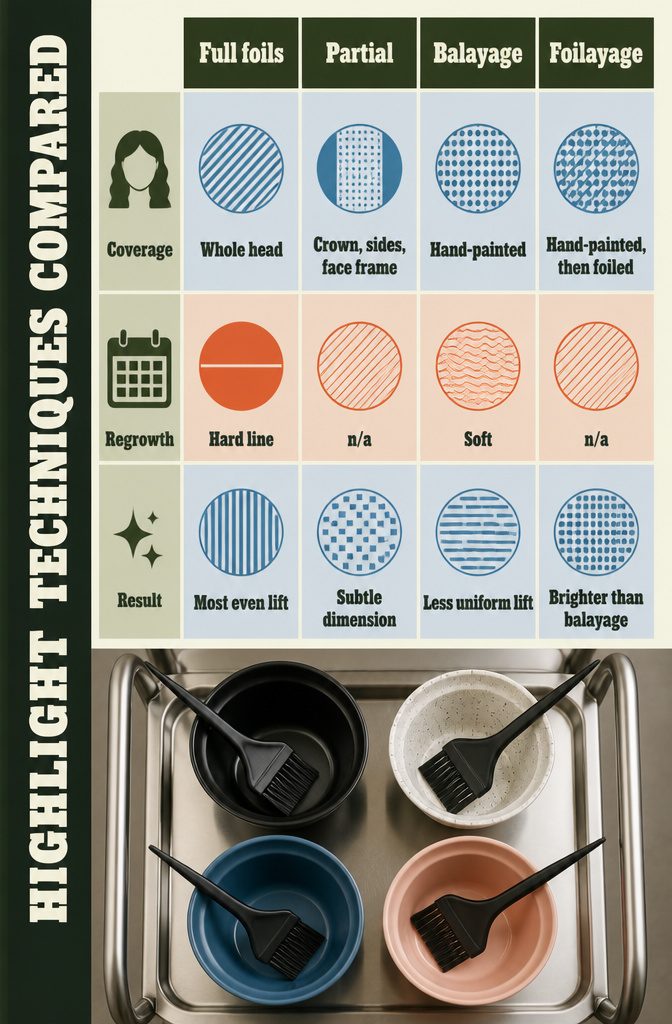
Full foils win when you want every strand lighter with no darker pockets underneath.
The cost is a visible line at the scalp once regrowth starts. Balayage is painted by hand below the root, so there is no hard starting line to grow out.
| Option | Coverage | Regrowth | Result |
|---|---|---|---|
| Full foils | Whole head | Hard line | Most even lift |
| Partial | Crown, sides, face frame | n/a | Subtle dimension |
| Balayage | Hand-painted | Soft | Less uniform lift |
| Foilayage | Hand-painted, then foiled | n/a | Brighter than balayage |
For a dramatic change, I’d book full foils.
For easy upkeep, partial. If you want balayage’s softer look with more brightness, foilayage paints first, then wraps each section in foil.
Foil Placement Patterns
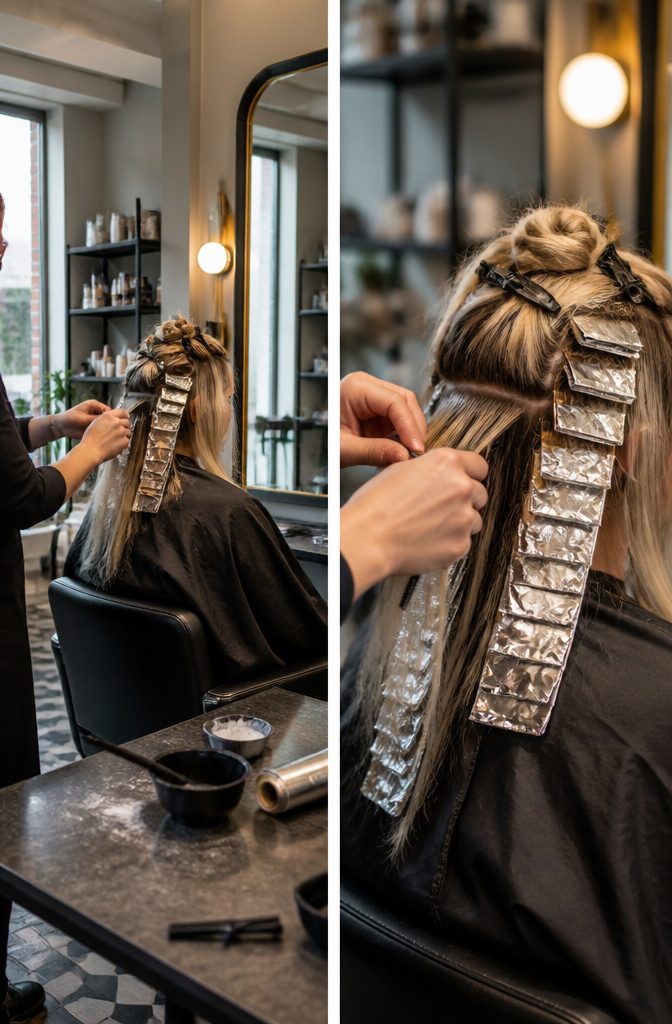
Foil direction decides how the finished color reads, and two placements are clearly laid out for full-head work:
- Horizontal placement gives a soft, natural, well-blended result across the whole head. It’s the one I’d choose to blend out a large regrowth.
- Work in quadrants, starting at the nape and moving up toward the crown. Repeat on the other side.
- For the two front sections, begin at the face frame and work horizontally toward the part.
- Vertical placement gives a more defined, high-contrast look, so it suits a clear blonde against darker hair.
- Section in a mohawk pattern and start at the crown, working toward the forehead. Stacked foils fan out and resemble a mohawk.
- On the sides, place foils vertically or slightly angled back, from the face frame toward the crown. Repeat on the other side.
Consultation and Hair History
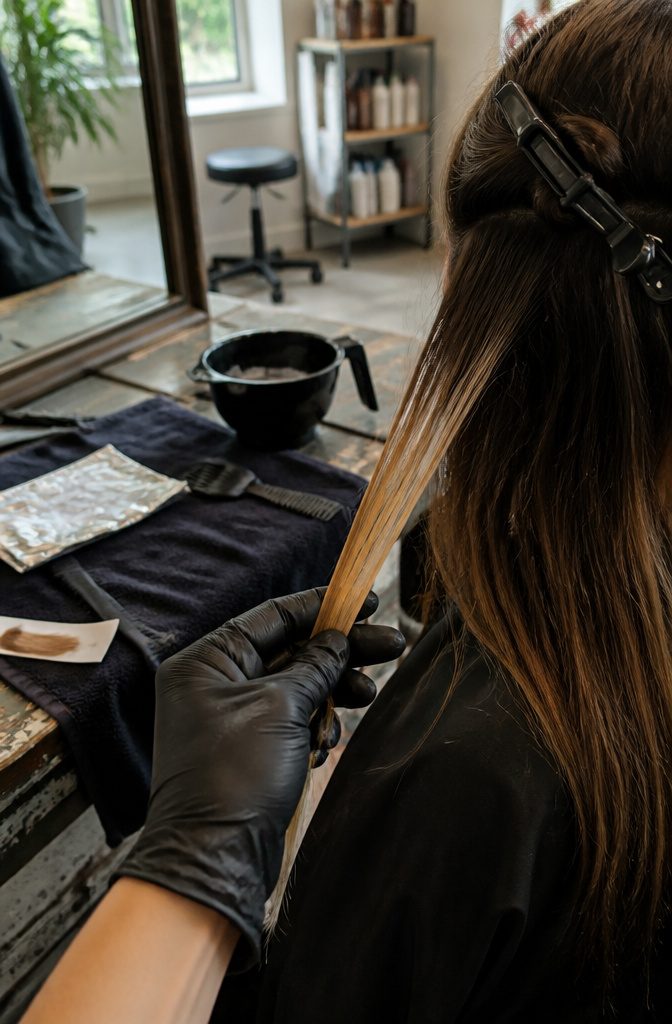
Bring the photo, but bring the history too. Your stylist needs the shade of blonde you want and a straight account of what your hair has been through.
Box dye counts, even a box from years back. Past color and porosity both change how hair takes lightener, so a vague "just a little color once" can send the plan in the wrong direction.
Ask for a strand test before anyone commits to the full head. A small test strand shows how your hair lifts before foils go in, and it’s the easiest moment to change the plan.
Starting color and goal also set how long processing runs, so a dark base aiming for a light blonde needs time, not a rush.
Care and Upkeep
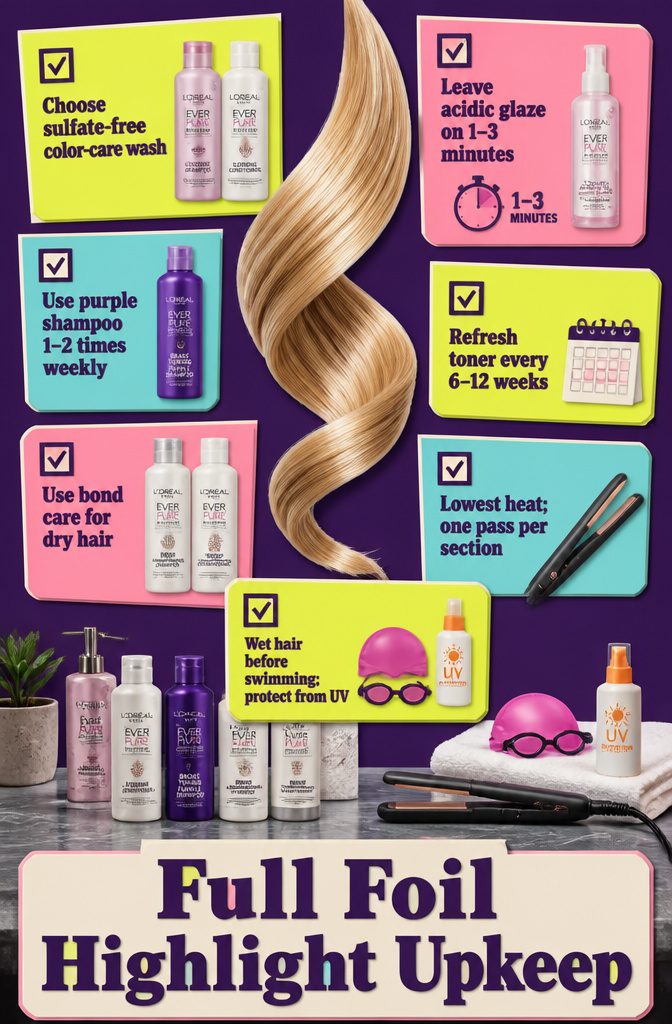
Full foils pay off only with a routine behind them, and this is the one I’d follow:
- Wash with a sulfate-free shampoo and conditioner made for color-treated hair, like L’Oréal Paris EverPure Glossing Shampoo and Conditioner.
- After shampooing, spray the EverPure In Shower Acidic Glaze on wet hair, leave it 1–3 minutes, do not rinse, then condition. Swap in a mask weekly.
- Use EverPure Brass Toning Purple Shampoo once or twice a week. Trade the conditioner for the Anti Brass Purple Mask once weekly.
- Book a toner or gloss every 6 to 12 weeks, before the tone shifts.
- Bleached or dry hair does better with the Bond Strengthening shampoo and conditioner.
- Use the lowest heat setting and one pass per section.
- Wet hair with clean water before swimming, rinse right after, and wear UV protection.
Timing and Price
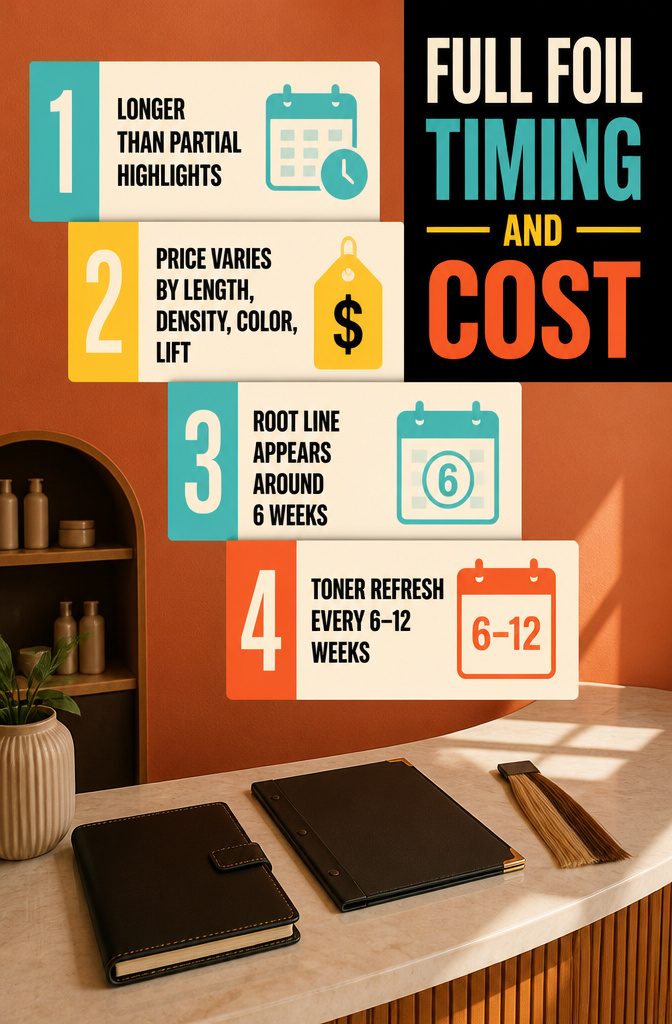
Full foils take a longer appointment than partial highlights, because foils go through the entire head and the visit ends with a toner or gloss. How much longer depends on your hair and your starting color.
Price follows the same variables: length, density, current color, and how much lift you want.
Toning and product sit inside that number. Pricing is also often tiered by stylist level, so check the service menu before you book.
Expect a visible root line around the 6-week mark, depending on how fast your hair grows. Gloss or toner refreshes run every 6 to 12 weeks, and I’d budget for those visits too.
Frequently Asked Questions
What does a full head of foils look like?
Full foil highlights create all-over brightness and dimension across your entire head, with lightened sections running from root to tip in every layer.
The result reads as even and uniform because every section is wrapped and processed the same way, so you get consistent lift without darker pockets underneath.
Regrowth shows up as a visible line where your natural color meets the lightened section, usually around the 6-week mark.
What are the differences between foilayage, balayage, and highlights?
Full foil highlights wrap every section in foil and lighten from root to tip for the most even lift, but they grow out with a hard line.
Balayage is hand-painted below the root for a softer, lived-in look with no visible regrowth line, but the lift is less uniform.
Foilayage paints first like balayage, then wraps each section in foil to get brighter results than balayage while keeping a more natural placement than full foils.
Are highlights more damaging than full color?
Full highlights often involve more overall lifting than other techniques like balayage, so hair needs more support afterward.
The foils cover your entire head and lighten every section from root to tip, which opens up the cuticle more than methods that paint below the root or skip underlayers.
Bond-repair care and hydration help keep lightened hair shiny and healthy.
How many foils should be in a full highlight?
Full foil highlights go through your entire head, not just the crown or face frame, so the number depends on your hair density, length, and how much lift you want.
The stylist sections hair into 4 to 6 zones, then slices horizontally or vertically within each zone and wraps every selected strand. There is no fixed count, because coverage matters more than hitting a specific number of foils.





