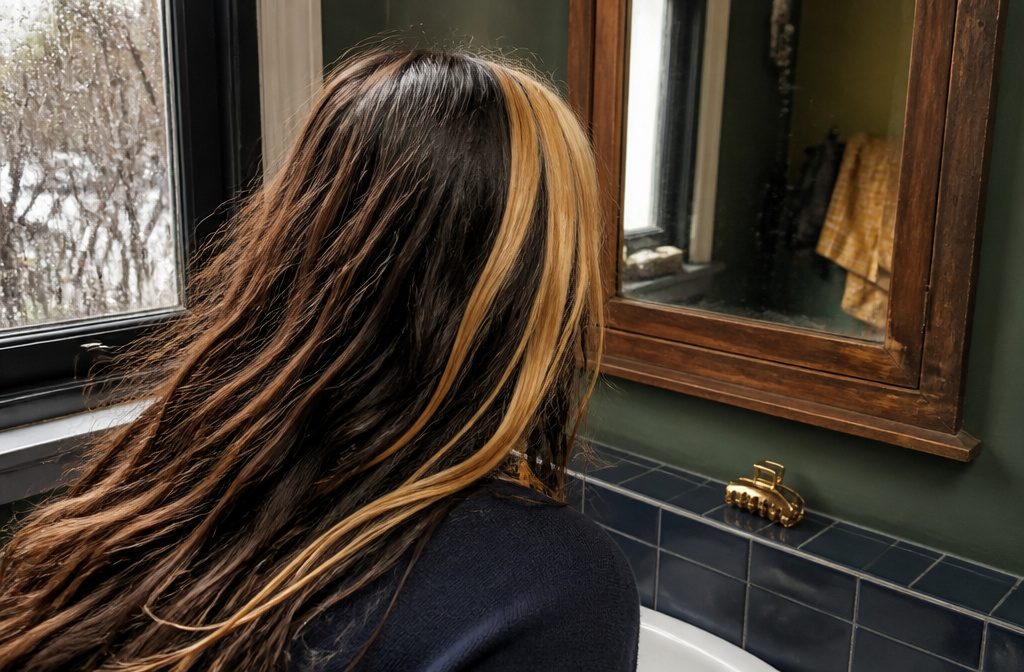
90s chunky highlights are bold, clearly separated sections of light and dark color placed to read as visible stripes rather than anything blended.
The modern version keeps the contrast but lets you control where it goes, usually as thick face-framing pieces that give you lightness without committing your whole head.
Jessica Gonzalez calls them "Pepé Le Pew streaks," and they work on any texture or color combination.
What 90s Chunky Highlights Actually Look Like
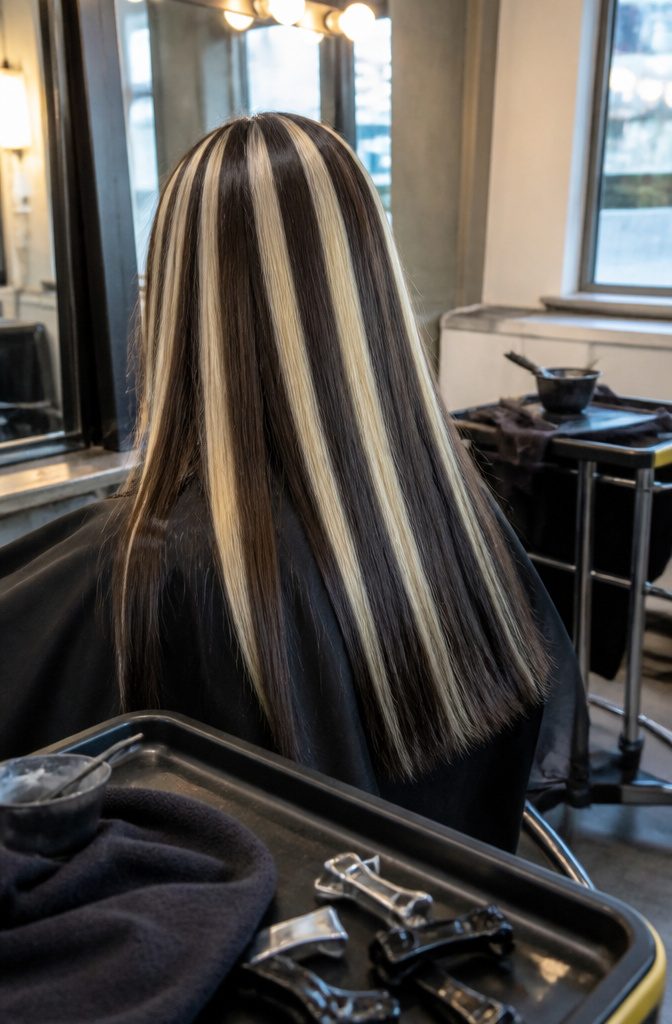
The original look meant bold, clearly separated light and dark sections that read as stripes rather than anything soft or blended. Picture big slices of platinum blonde running through dark brown hair, or bleached chunks cutting through black.
The contrast was high and the placement was obvious. You could see exactly where one color ended and the next began.
This was the two-toned style that Jessica Simpson, Kelly Clarkson, and Christina Aguilera wore in the late ’90s and early 2000s.
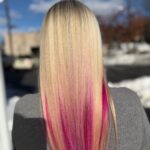
Light on dark was the most popular combination, though Aguilera pushed it further with pink, black, and white all at once.
The effect was stripe-like, sometimes compared to chunky streaks painted into the hair. Nothing about it was subtle, and that was the point.
How the Modern Version Differs
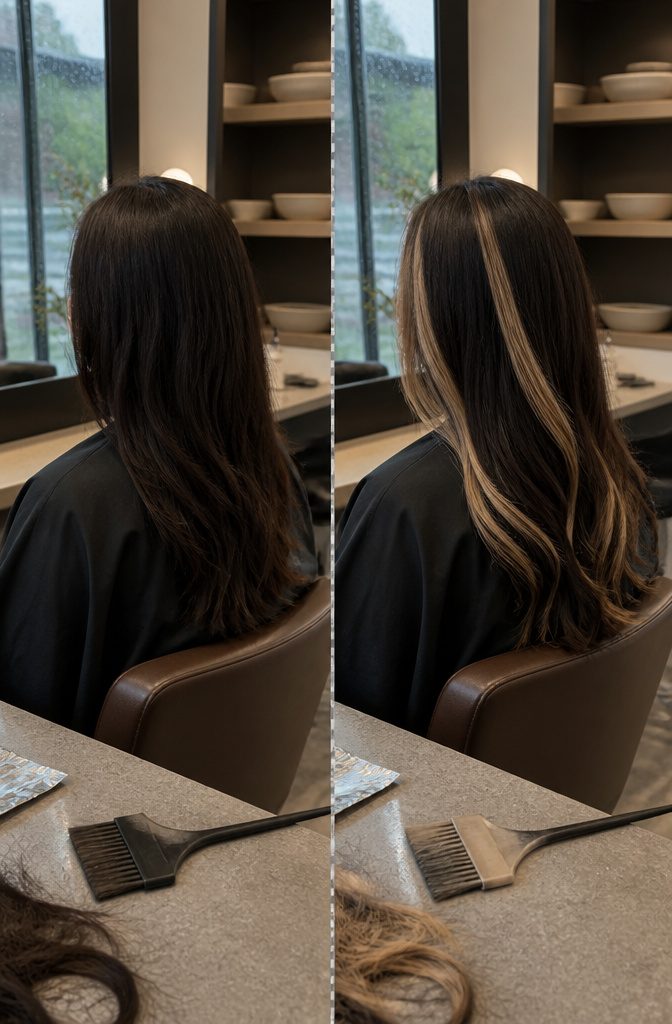
The bold contrast is back, but this time you control exactly where it goes.
When colorists started pulling away from balayage in 2019, they began experimenting with chunkier placement and higher contrast. The modern version keeps that drama but ditches the all-over striping that made the 90s look so literal.
Lately, people have been getting a thick streak of blonde on one or both sides to create a contrasting frame around the face.
— Allure
That face-framing approach gives you the lightness without committing your whole head.
The difference from the original 90s formula is adjustability: you decide how subtle or bold the contrast looks, where the highlight starts (right at the root or slightly away, which works better for textured hair), and whether it tapers toward the back or stays strong all the way through.
For anyone with dark hair who wants to try blonde, this version lets you test it on a fraction of your hair in a fraction of the time.
Face-Framing Strips and Placement Options
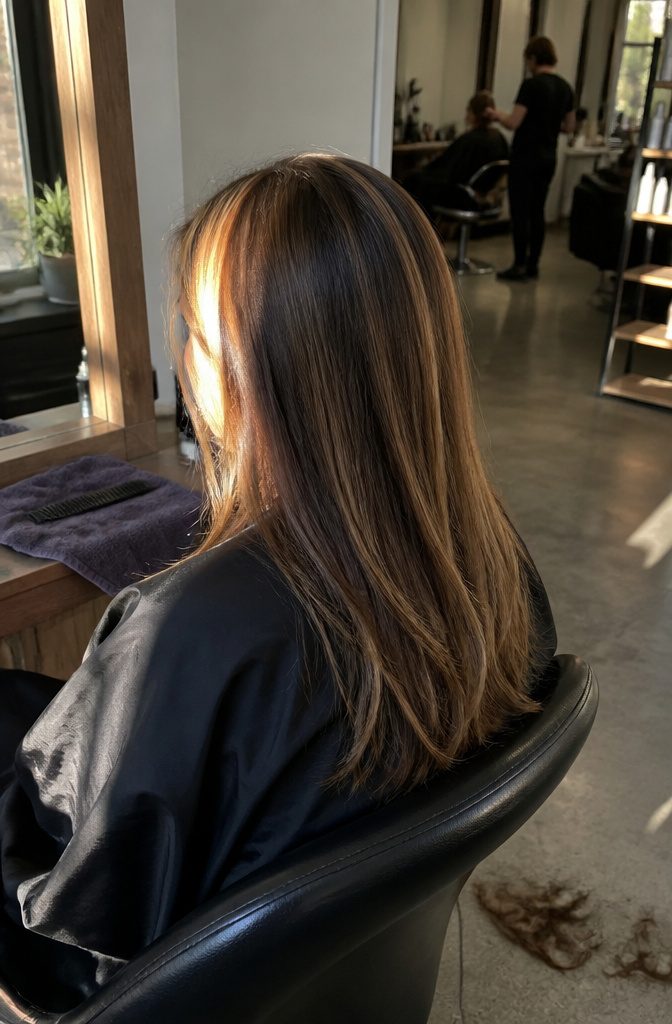
Face-framing strips sit at the heart of the modern version.
Los Angeles colorist Jessica Gonzalez calls them "Pepé Le Pew streaks," while Cherin Choi names them "’90s bangs" and Rachel Bodt prefers "supermodel highlights" after the way Cindy Crawford wore auburn everywhere and golden blonde around her face.
Sable Yong, a former Allure editor, uses "flaps" for hers and credits Rogue from X-Men and Smashing Pumpkins’s James Iha as her inspiration.
You can place them bold or subtle.
For a quieter take, Bodt suggests asking your colorist for a gradient toward the back and end lights to avoid a sharp Ginger Spice line. The strips work on any hair texture and any color combination.
If you’re not ready to go fully blonde, the face-framing placement reads as lighter overall without touching the rest of your head. Gonzalez and Choi both note that it gives dark-haired clients a low-commitment entry point into lightening.
Color Choices Beyond Blonde
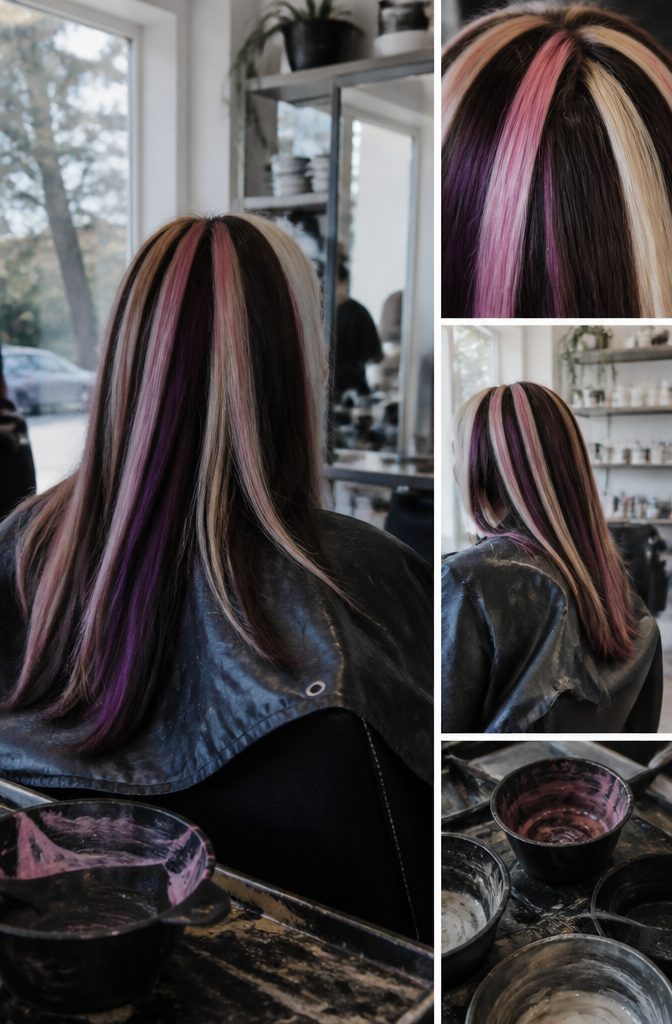
Blonde was only the starting point. Christina Aguilera worked pink, black and white streaks into rotation through the late 90s and early 2000s, changing the look almost every red carpet.
Kelly Clarkson leaned into dark-on-light contrast when she won American Idol in 2002 and kept it going for years.
Jessica Simpson and Britney Spears both ran with the trend, mostly in blonde but open to variation. The original crew set a template: any color that showed high contrast against your base worked.
The modern version keeps that open attitude. Dua Lipa, Kim Kardashian, Kylie Jenner and Beyoncé have all worn chunky face-framing pieces, and the palette now includes green, blue and plum alongside blonde and pink.
Kits and dyes are available in all those shades, which makes the look easier to try at home than it was the first time around.
The rule still holds: chunkier is better, and any color goes as long as it reads distinct from a distance.
The Salon Technique: Diagonal Foils and Pinwheel Pattern
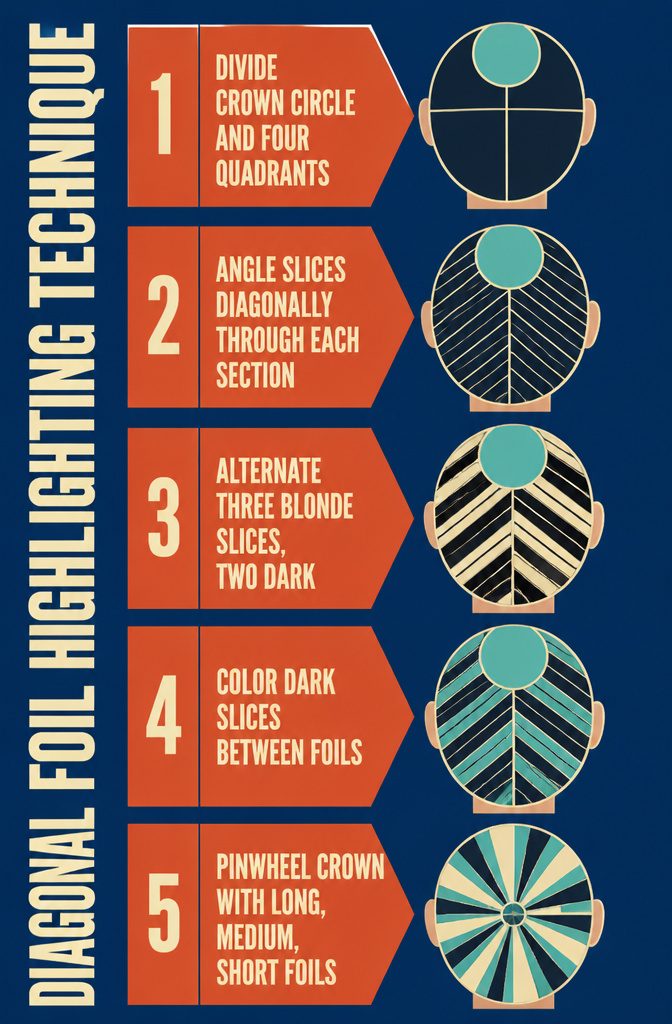
The diagonal foil pattern keeps these highlights from reading as horizontal stripes. Stylists divide the hair into a top circle and four quadrants, working through each back and side section on a diagonal angle.
The ratio matters: three blonde slices followed by two slices of dark, which are colored directly rather than placed in foil.
The dark slices sit between the lightened ones, and a thin veil of darker color around the perimeter softens the grow-out.
The top section uses a pinwheel pattern to scatter the highlights and avoid congestion at the crown.
Foils alternate in length: a long foil reaching the center of the head, a medium foil stopping shorter, then a small foil closer to the hairline. The same three-blonde-to-two-dark ratio runs through the pinwheel, and the diagonal direction continues.
Colorist Hannah Yoo foils back-to-back slices of lightener, then applies the contrasting dark color between them. The slices are colored whole, not woven, which gives the chunky definition the look needs.
Toning to Finish the Color
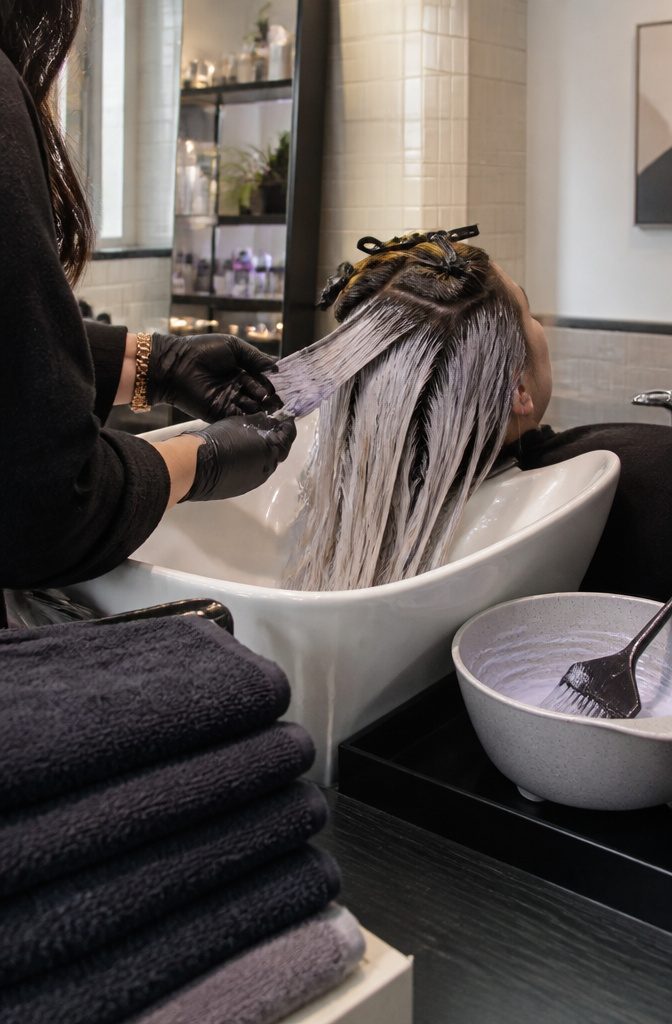
Once the lightener has done its work, toning neutralizes any unwanted warmth and locks in the shade you’re after.
The stylist applies toner straight to every piece that was lifted, root to tip, to even out the tone before washing everything out.
Matrix 9P toner delivers an icy finish, the kind that reads more platinum than yellow.
If your highlights came out brassy or pulled too orange, switch to a violet or blue-based toner instead. Those pigments counteract warm tones directly and bring the color back to neutral or cool.
The toner needs to process fully before the wash-out step.
That wait matters. Rinsing too early leaves you with color that drifts warm again within a few washes, and you’ll be back at the sink sooner than you planned.
At-Home Kits and Professional Application
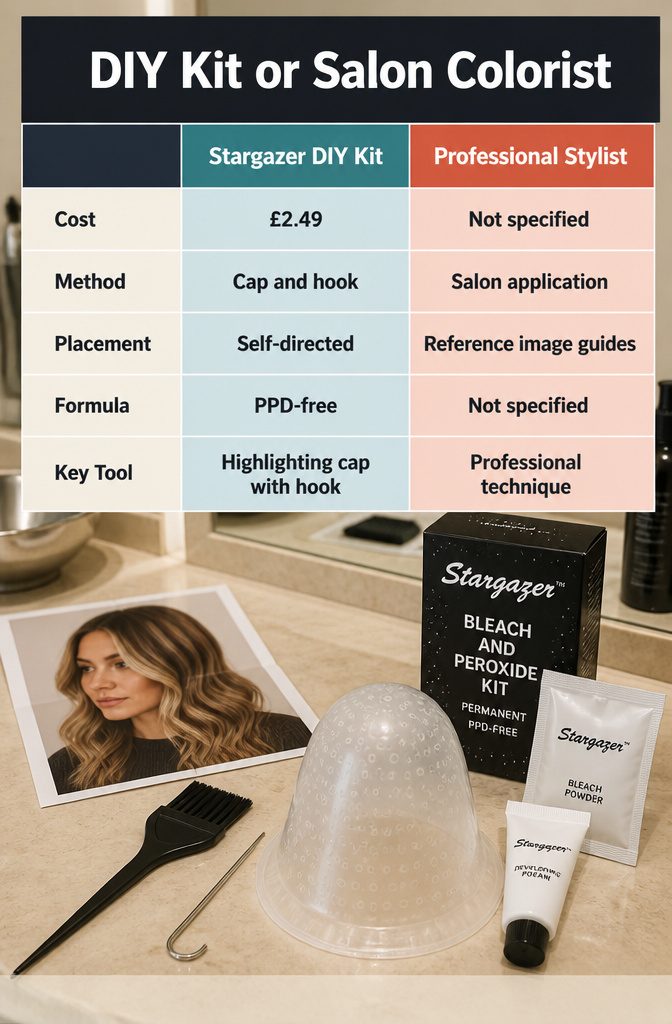
The Stargazer Bleach and Peroxide Kit runs £2.49 and includes powder, developing cream, a highlighting cap with no pre-punched holes, and a brush with a hook to pull sections through.
It’s permanent and PPD-free, which means less irritation for anyone with sensitivities.
You mix, pull strands through the cap using the hook, apply the bleach, then process until you reach the level of lift you want. The cap method gives you control over placement without needing foil.
That said, some prefer to hand the job to a stylist. If you go that route, bring a reference image showing exactly where you want the chunks and how bold you want them.
Placement and intensity vary widely, and a photo keeps you and your colorist aligned from the start. The difference shows most around the face, where a few millimeters forward or back changes the framing completely.
Conditioning and Weekly Strengthening Care

Bleached hair is porous and fragile, and chunky highlights leave enough contrast that the lightened pieces take the brunt of any damage.
I treat highlighted hair as weakened from the start and give it weekly strengthening care to keep breakage in check.
A deep conditioning mask once a week makes a measurable difference. OGX Coconut Miracle Oil Hair Mask at £8.99 does the job without weighing hair down, and it smells better than most protein treatments.
Heat styling compounds the problem. Cutting blow-drying and flat-ironing by around 30% gives bleached hair a chance to recover between washes.
OGX Flexible Hold Frizz Defying + Coconut Miracle Oil Air Dry Cream, also £8.99, lets you skip the hairdryer entirely and still get frizz-free results. It works especially well on curly hair that would otherwise need serious heat to smooth out.
Purple shampoo keeps brassiness at bay, and Jessica Gonzalez recommends Olaplex Hair Perfector No. 3 once a week to rebuild broken bonds in bleached strands.
Between the mask, the air-dry cream and the Olaplex, the highlights stay soft instead of turning straw-dry by week three.
Salon Touch-Up Intervals
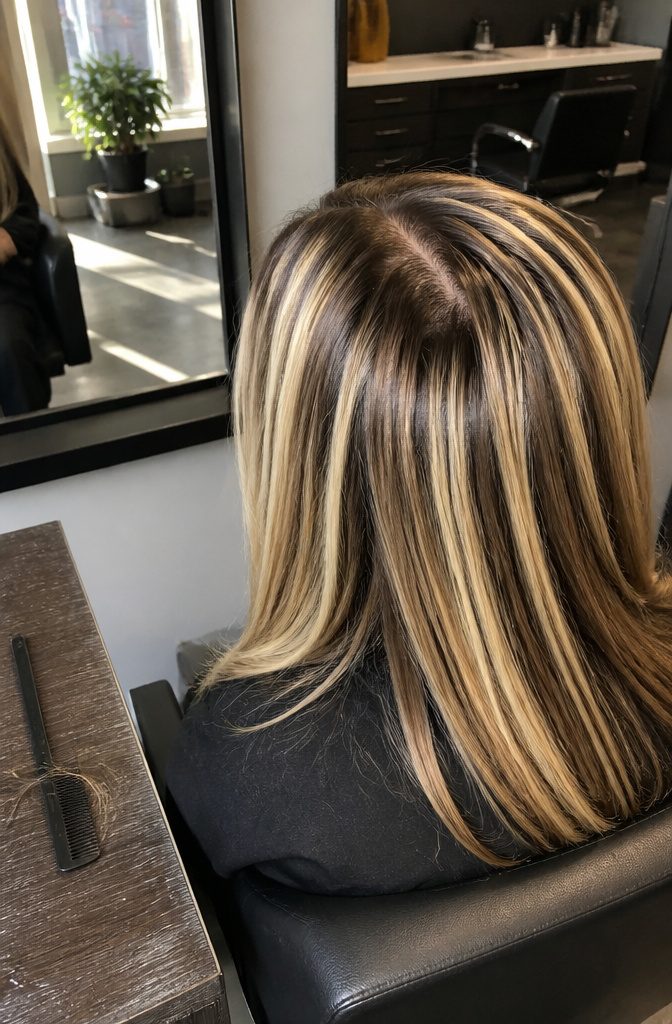
Blonde chunky highlights that start near the scalp need attention every four to six weeks once the darker root comes through.
The contrast that makes the look work in the first place is the same thing that shows regrowth clearly, and half an inch of natural color changes the whole effect.
If the highlights were painted farther down or wrapped around only the mid-lengths, you can stretch appointments closer to eight or ten weeks before the line between old and new color becomes obvious.
The interval tightens if your natural shade sits several levels darker than the blonde. Someone going from deep brown to platinum sees a harder line faster than someone lifting medium brown only a few shades.
That doesn’t mean the look costs more upkeep than other highlighted styles, just that the drama comes with the same maintenance clock as any high-contrast color that reaches the roots.
Frequently Asked Questions
Are chunky highlights in style in 2026?
Yes, chunky highlights are back in style with a modern update.
The bold contrast remains, but placement is more controlled than the 90s original, with face-framing strips being the most popular current version. Celebrities like Dua Lipa, Kim Kardashian, Kylie Jenner and Beyoncé have all worn the look recently.
What year were chunky highlights in style?
Chunky highlights were first popular in the late 90s and early 2000s, worn by Jessica Simpson, Kelly Clarkson, Christina Aguilera and Britney Spears.
The trend came back starting around 2019 when colorists began moving away from balayage and experimenting with chunkier placement and higher contrast again.
What are chunky highlights called?
Modern chunky highlights go by several names depending on the stylist.
Face-framing versions are called "Pepé Le Pew streaks" by Jessica Gonzalez, "’90s bangs" by Cherin Choi, "supermodel highlights" by Rachel Bodt, and "flaps" by former Allure editor Sable Yong.
The salon technique uses diagonal foils with whole slices of color rather than woven sections.
What hair colors were popular in the 90s?
Platinum blonde on dark brown or black hair was the most popular 90s combination, creating high contrast stripes.
Christina Aguilera expanded the palette with pink, black and white streaks all at once, while Kelly Clarkson wore dark-on-light contrast. Any color that showed strong contrast against the base worked, which is still the rule for the modern version.